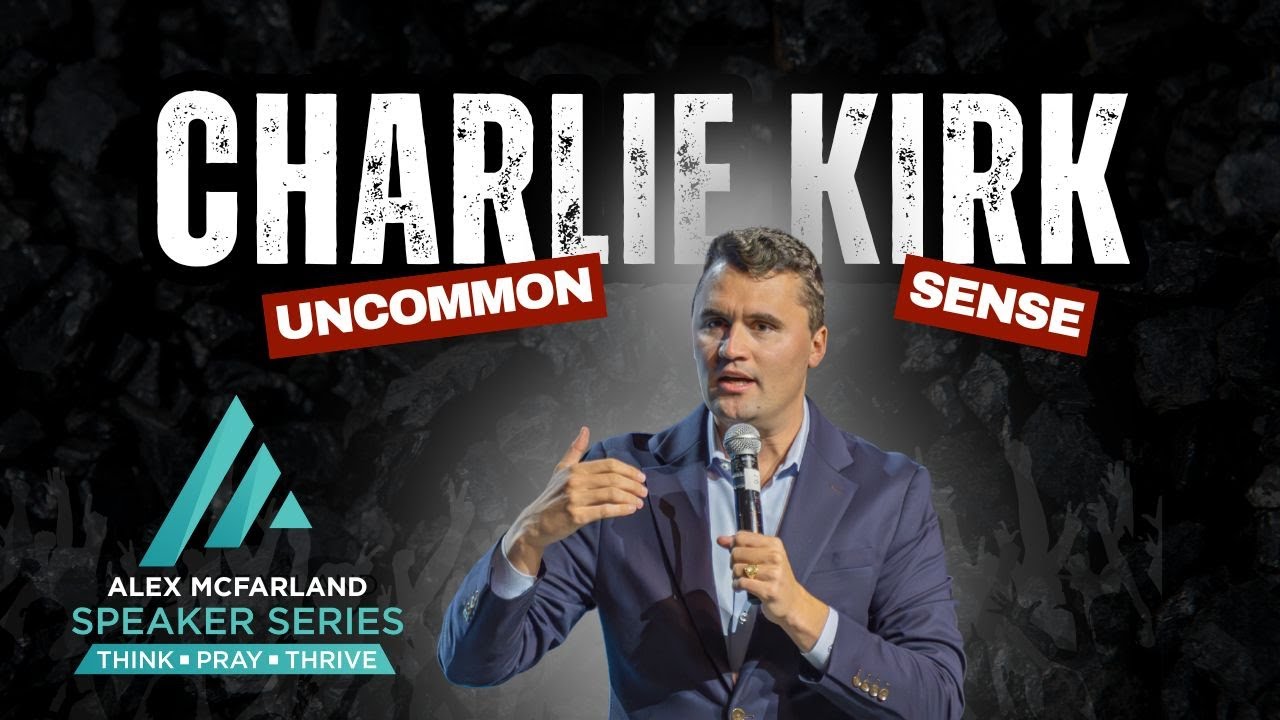
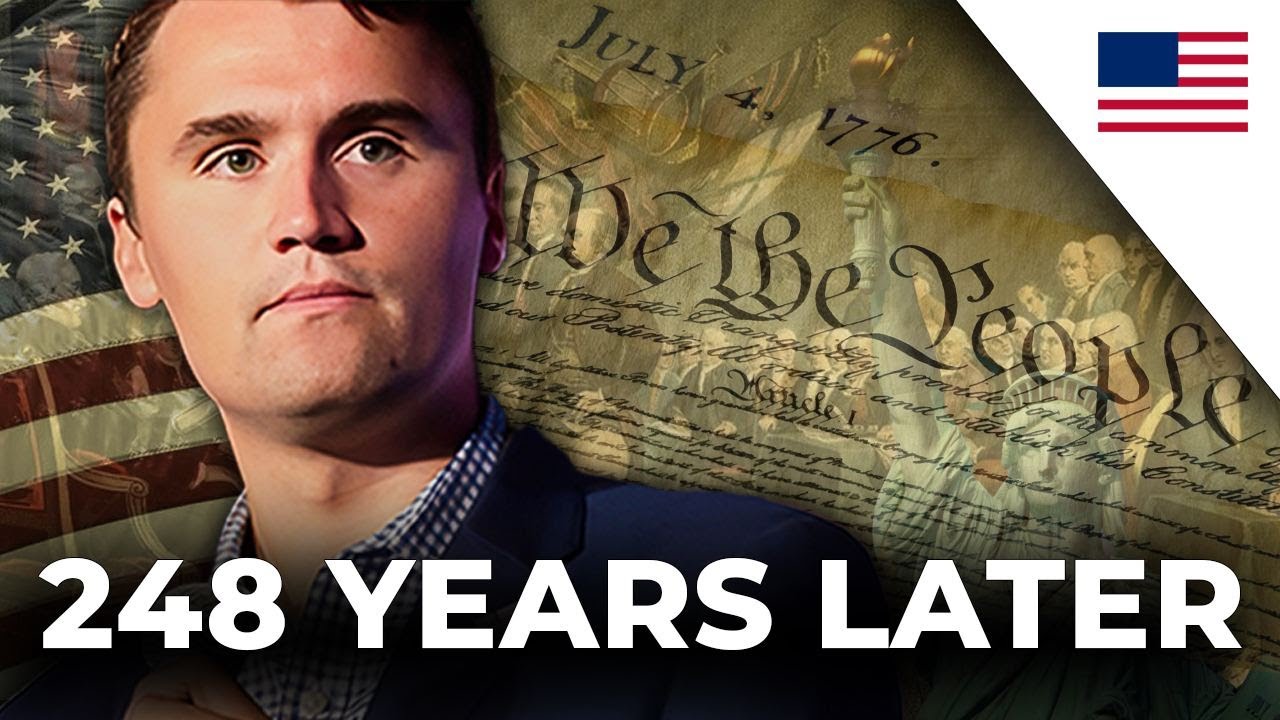
Charlie Kirk Reveals Five Critical Lessons From A Year of Lockdowns and What the Church Must Do Now
Enjoying this? Share it with someone who needs to see it.
Up Next
Charlie Kirk Explains Why the Church Must Rise Up to Preserve American Freedom and Liberty
51:21
Charlie Kirk on Bill Maher Interview and Why the Death of Christianity Fuels Wokeism in America
5:23
Charlie Kirk on America's Founding Documents, Christian Courage, and Why July Fourth Matters to Believers Today
1:37:01
Charlie Kirk Reveals Five Critical Lessons From A Year of Lockdowns and What the Church Must Do Now
Charlie Kirk delivers a message at Legacy Church in New Mexico about the five transformative lessons learned during pandemic restrictions. Speaking to a packed congregation, Kirk addresses the weaponization of science, the importance of state sovereignty, the weakness of the modern American church, humanity's resistance to freedom, and the critical crossroads facing believers. Kirk challenges pastors who remain silent on cultural issues, defends Pastor Steve Smothermon's decision to keep his church open despite government orders, and makes the case that Christians must actively contest in every sphere of society, from school boards to Congress, or risk losing religious liberty entirely. He argues that the church built America and warns that secular forces fear nothing more than an active, engaged body of believers who recognize that their ultimate authority comes from God, not government officials.
Charlie Kirk opens by addressing a phrase he hears repeatedly from pastors who refuse to engage politically: "separation of church and state." Kirk argues this concept is neither biblical, constitutional, nor moral. He challenges pastors to flip the script: if they truly believe in this separation, why aren't they demanding the state stay out of the church? Kirk emphasizes that historically, the threat has never been the church taking over the state—it has always been the state taking over the church.
Kirk identifies as an evangelical Christian and states that his faith is the most important thing in his life. He explains the gospel simply: Jesus took his place, substitutionary atonement, grace. He distinguishes between justice (getting what you deserve), mercy (getting less than you deserve), and grace (someone else serving the punishment you deserve so you can live free). This foundational belief, Kirk says, drives everything he does at Turning Point USA and motivates him to speak in churches across America.
His mission is twofold: spread the gospel and preserve the freedom necessary to continue spreading it. Without that freedom, Kirk warns, Christians will be sharing the gospel from prison—a pattern that has repeated throughout history.
Lesson One: Science and Reason Are Dying
Kirk's first lesson centers on the phrase "trust the science," which he calls one of the most pathological developments of the past year. He argues that those demanding blind trust in science have abandoned actual scientific inquiry, which requires constant questioning and challenge. Kirk points out that the more we explore the scientific world, the more it proves biblical truth. He references Thomas Aquinas and notes that concepts like a spherical earth, quarantining the sick (not the healthy), and life beginning at conception all appear in the Bible thousands of years before modern scientific discoveries.
Kirk singles out Dr. Anthony Fauci as someone with "no wisdom, zero." He explains that wisdom begins with the fear of the Lord, as stated in Proverbs, and argues that removing God from schools has eliminated wisdom from public discourse. Fauci, according to Kirk, represents this perfectly—full of facts but devoid of wisdom, operating instead on power, fear-mongering, and what Kirk calls "safetyism."
He challenges the audience with simple questions: If you've already had coronavirus, why must you get vaccinated? Why did mask guidance constantly change? Kirk clarifies that he is "mask agnostic"—people who believe masks work should wear them, those who don't shouldn't be forced to. His opposition is to mandates, which he finds philosophically ironic coming from people who say "my body, my choice."
The scientific method, Kirk argues, has been replaced with unchallenged premises enforced at all costs. While he acknowledges the initial uncertainty justified a brief pause, once mortality rates and risk factors became clear, every school should have reopened immediately. The phrase "trust the science" has become a conversation-ender designed to prevent legitimate inquiry—the exact opposite of how science should function.
Lesson Two: The Difference Between States Matters More Than Ever
Kirk's second lesson focuses on federalism and how different state responses to the pandemic have produced drastically different outcomes. He points out that New Mexico, California, New York, and Illinois remained shuttered while states like Florida, South Dakota, and Texas opened fully—without masks, social distancing, or mandates—and saw better results.
Florida, with the second-oldest population in the country, has lower hospitalization and death rates than many locked-down states. Kirk emphasizes that rates matter more than total numbers, mocking someone who compared Florida's total deaths to New Mexico's without accounting for Florida's vastly larger population.
The consequences of New Mexico's approach are severe: increases in crime, carjackings, violent crime, teenage mental health crises, drug overdoses, suicides, and the permanent closure of 40% of small businesses. Kirk directly addresses New Mexico's governor (refusing to use her name because "she's not worthy of remembering") and says she will have to answer for keeping schools closed, for the overdoses, for the suicides, for the destroyed businesses.
Kirk praises the American federal system, explaining that the states created the federal government, not the other way around. This is different from European models where centralized governments issue orders to powerless provinces. Supreme Court Justice Louis Brandeis called states "laboratories of democracy," and Kirk argues this past year has provided a powerful civics lesson: elections have consequences. New Mexico has not had a Republican legislature in 90 years, and the results speak for themselves.
He notes that elected officials who impose strict mandates constantly violate their own orders—like California Governor Gavin Newsom dining at the French Laundry with friends while keeping restaurants closed. This proves they don't actually believe what they're preaching.
Lesson Three: American Christians Have Lost Ground to the Left
Kirk's third lesson is sobering: over the past hundred years, American leftists have been far more successful than American Christians. The fastest-growing religion in America is leftism. Evidence of this includes the number of churches embracing Black Lives Matter Incorporated and pastors adopting secular ideologies.
The secularization of America has reached a critical point. Kirk argues that if you don't believe in God, right and wrong become merely opinions. This drives atheists crazy, but he insists it's true. When he asks college students whether people are naturally good or bad, most say naturally good—a foolish belief that only comes from growing up in a wealthy, benevolent society like America where things generally work.
The Bible clearly teaches original sin and distance from God. Kirk proves this with a simple observation: you must teach goodness to a three-year-old, but they naturally know how to lie, steal, cheat, and manipulate to get what they want. Creating good people requires schools, academies, repetition, and discipline because it's hard work—something most countries have failed to do.
In the 1940s and 50s, America taught young people "you are the problem and America is awesome." Now we teach "you're awesome and America's the problem." Students are no longer told to improve their lives but to destroy the country around them. There's no gratitude for what came before.
The American church has grown weak, complacent, and complicit with sinister political movements. Kirk acknowledges this is a tough realization, but the church founded this country—that's not debatable. The Founders were God-fearing, Bible-inspired, courageous men and women who built a nation on Judeo-Christian principles drawn from Blackstone, John Locke, and biblical teaching.
Kirk calls out pastors by name, starting with Rick Warren of Saddleback Church. While Warren had an impact on Kirk's journey to faith, Kirk says Warren is currently failing the test. Warren claimed God doesn't care how you vote and there's no difference between the two parties. Kirk counters that God cares about everything you do—what you say, who you marry, how you act, what you eat, where you travel, what work you do. The idea that God gives a moral pass on any action is completely antithetical to belief in an omniscient, omnipotent Creator.
Voting reflects your values. It's getting into the public square and saying "this is what I believe." And voting is the bare minimum Christians should do in the public square. When pastors like Rick Warren or Andy Stanley from Georgia say Christians shouldn't be involved in politics, Kirk calls it "the enemy whispering in your ear." It's unbiblical.
He references Daniel, Mordecai, Esther, Jeremiah, Nehemiah, and Joseph—all examples of God's people influencing secular government for His purposes. In Daniel 6, the king forbade following Jewish law and prayer. Daniel responded by going home, opening his window to the city, and praying publicly. This was Pastor Steve Smothermon's "Daniel moment"—defying the governor's order and opening the church.
Christians are called to be counselors to the king, always influencing secular government for God's purpose. They should run for office, vote, run candidates, participate in media, and constantly engage. The left fears an active church more than anything because an active church means people spending 30 minutes worshiping something other than government. When believers worship, they acknowledge that the governor matters less than the Lord—they take orders from God, not from politicians.
Lesson Four: People Don't Want to Be Free
Kirk's fourth lesson is philosophical and sobering: most people don't actually want freedom. He proves this biblically through the story of Moses liberating the Israelites from slavery in Egypt. Just two chapters after their liberation, they complain and ask to return to Egypt because "at least we had meat." They preferred comfortable slavery over dangerous freedom.
Freedom is hard. Freedom and responsibility are directly tied together. Many students claim to care about freedom but define it merely as putting whatever substance they want into their bodies or making any moral decision without consequence. That's not true freedom—that's slavery to impulse and appetite.
What makes Christ philosophically unique is that everything He stood for was about liberating people from past choices. This is extraordinary. The purest form of torture is dwelling on a past mistake without redemption. Jesus offers liberation from sin, setting people free from their past—but that word "free" is difficult for many to accept.
Christians understand freedom differently than the rest of the world. Most people, given the choice, would rather be taken care of than be free. Dennis Prager argues that freedom is not natural—left to their own devices, people become either terrorists or terrorized, slaves or masters, oppressors or oppressed. Western civilization changed this pattern, but freedom must be taught.
Having children is also a value that must be taught. America is on pace to have 500,000 fewer births this year than last. Experts predicted a baby boom during lockdowns but got the opposite because children are no longer valued. Why have children if you don't believe in replicating your values? People participate in the act but use technology to prevent conception.
We are on the verge of population collapse because we haven't communicated the need to have children. Christians have a biblical answer: it's commanded to be fruitful and multiply. But for the secular world, if you believe America is terrible and the world is broken, why bring another life into it? Everything is a value—freedom, children, all of it must be actively taught and chosen.
Lesson Five: This Is Either the Beginning or the End
Kirk's final lesson is the most important: America is at a critical crossroads. Almost every institution has been delegitimized—news media, tech companies, colleges, teachers, curriculum, even many churches have gone astray. When God scatters and chaos reigns, what should believers do? Hide and retreat, waiting for Jesus to return?
Some Christians use eschatology as an excuse for inaction, believing Jesus is coming soon so engagement is pointless. Kirk respectfully disagrees. Instead of saying "the house is on fire, get the kids out," he asks: why not put out the fire and rebuild?
People are searching for truth more than ever. This is the moment when the church, Christians, and freedom-loving Americans must be courageous and bold, not fearful and cowardly. Kirk offers concrete action steps:
Run for school board
Run for mayor's races
Start taking terrain
Take the education of your children seriously
Homeschool if possible
If retired, help homeschooling parents
Support private schools doing good work
Volunteer in education
Education comes from the Latin "to lead forth." What happens on college campuses soon happens in Congress and corporate boardrooms. If America doesn't reverse educational decay, nothing else will be solved.
Kirk references the Genesis 11 principle—when people push the boundaries of what God allows, He scatters them like at the Tower of Babel. The question is whether Christians will hide in caves and catacombs or contest and occupy by building new companies, starting new endeavors, getting married, having families, and refusing to be intimidated by local tyrants.
When believers step into the public square—the ecclesia—they participate in what Jesus called for. The word Jesus used when He said "on this rock I will build my church" was "ecclesia," a Greek word for a political gathering unified around freedom and equality. Jesus was calling for public square engagement, not compartmentalized Christianity.
Kirk calls for comprehensive Christianity across every sector: if you don't like the music your kids listen to, support Christian artists or become one yourself; if you don't like their education, step up and provide better. Christians must be participants, not spectators.
This is a moment for not just a great awakening but a revival unlike anything America has seen before. But it will only happen if believers step into the public square. Kirk encourages those who haven't been to church in a while or don't believe in God to consider that the most fulfilling thing a human being can do is come into relationship with their Creator. After that, everything makes more sense.
The Bible is the greatest book ever written, the Word of God. Kirk recommends starting with Proverbs or John. He urges believers to be courageous because this time is for them—this kairos moment, a Greek word meaning "action point." Kirk asks the audience to subscribe to the Charlie Kirk Show podcast, explaining that subscriptions help him stay uncanceled and uncensored. If everyone subscribes, he says, they would beat the New York Times podcast by morning—which he calls "a moral thing to do."
An Altar Call for Action
Following Kirk's message, Pastor Steve Smothermon gives an altar call. He addresses those who may attend churches "doing nothing" and expresses sadness that people support institutions that aren't standing for anything. He declares that Legacy Church has taken off all shackles and will be who God called them to be.
Smothermon emphasizes that the progressive left is unashamedly pushing immorality and ungodliness, so Christians must be equally unashamed in proclaiming truth. He clarifies that while many claim to believe in God, there is only one true God—the Father of the Lord Jesus Christ. Only through Jesus do people get to heaven; there is no other way.
The pastor explains that too many people want to be saved without making Jesus Lord. The Bible says you must believe in your heart and confess with your mouth the lordship of Jesus. Salvation requires submitting your will to His. Smothermon challenges the congregation: if you don't have courage to stand for Jesus in a church that supports you, how will you walk with Him when you leave and face a hostile world?
He leads those who raised their hands in a prayer of salvation, asking them to confess Jesus as Lord and commit to following Him with intention—not just seeking fire insurance from hell but genuinely serving God, making church a priority, and getting into the Word. The service concludes with dozens across the sanctuary, balconies, and online raising their hands to receive Christ and begin walking with God.
Video Transcript
i really want to focus on the five things i learned in the 15 days to slow the spread which has been a whole year and it's been very interesting but one thing i've heard a lot of pastors say that don't want to get involved is they say well it's separation of church and state we don't do politics around here first of all that's not biblical it's not constitutional it's not moral but let's take their unbiblical unconstitutional immoral phrase at face value let's just pretend they're right for a minute why don't we keep the state out of the church then why don't we say hold on the government has no business what happens in here because under their own belief they've always been worried about the church taking over the state when reality the threat has always been the state taking over the church and so that's what i want to focus on here and just so everyone has a little bit of a baseline i am a evangelical christian a bible believing christian is the most important thing in my life for those people that are here that have never been in a church before welcome and i encourage all of you and throughout this speech i'm gonna hopefully make a case that you need jesus in your life there's a god who made you in his image and he wants to get to know you and he wants to get in a relationship with you and why i do what i do at turning point why i speak at churches is of course to spread the gospel but i believe that's the most important thing you can do but if you don't have the freedom to spread the gospel we're all going to be sharing the gospel from prison and i am not exaggerating it has happened time and time again that pattern replicates itself and so the gospel in four words as jesus took my place in three words it's him for me and two words is substitutionary atonement one word grace mercy grace what's the difference justice you get what you deserve mercy you get less of what you deserve grace someone serves the punishment for what you deserve so you can live free that's what we believe that's what gets us into action every single day so one thing i'm called to do is to try to activate churches and christians to stand up in this moment it's a kairos moment it's a greek word for action point it's a biblical word so what are five things i learned in the last year of the 15 days to slow the spread first of all number one science reason are dying if not dead one of the most pathological things we have seen in the last year is people say trust the science and in reality they have no business whatsoever ever caring about the science i'll prove it to you science i believe the more we explore the scientific world the more it actually proves the word of god thomas aquinas was the first person that actually wrote about this for example a spherical earth quarantining the sick not the healthy are all biblical ideas you could find that in leviticus the idea of life beginning at conception all of these things are in the bible thousands of years ago before the scientific discoveries were ever done the more we learn the scientific realm the more we realize that belief in the world around us without an intelligent creator takes far more faith in that than faith and believing that there was actually an intelligent creator that created you in his image i don't have enough faith to be an atheist so science and reason trust the science they say they never believe that what they're really saying is trust the scientists that we put on television that are wrong about everything dr fauci should be fired immediately it's true not going to get into his personal character i don't know the man but he has no wisdom zero this is one of the greatest disservices that we have ever done to young people we fill them with convenient facts that fit a narrative yet there's no wisdom why where does wisdom begin what does it tell us in proverbs the fear of the lord then you get wisdom there's no god in our schools there's no wisdom and dr fauci is a perfect representation of it there's no wisdom in that man zero just power fear mongering and what i call safetyism so let me prove it to you trust the science they say okay if you've already had the chinese coronavirus why do you have to get vaccinated it's a simple question i have the antibodies they say first they say masks don't work then they say wear mask when you shower then they say wear two masks and by the way i am mask agnostic i don't mean if you're wearing i really am no i mean this non-sarcastically and there's people here wearing masks and there's people not wearing masks and i mean this we should never insult people that were mass i say that non-sarcastically because we believe in liberty if you believe they work then wear a mask if you don't believe they work then don't wear a mask it's really not that hard it's not hard what i what i came up against is the mask mandates that you're going to go into a private place of worship or enterprise and say i'm going to force you to do something which is so incredibly philosophically ironic for the people that say my body my choice reason and revelation the mixture of both built western civilization reason is our capacity to solve problems in a chaotic natural world math yes science what is the scientific method are we using it we're using the opposite we're using an unchallenged unquestioned premise at all costs and so i understand the initial the first two weeks where we slowed down we said we don't know what we're dealing with here what is this virus what are the mortality rates the infectious rates who's most at risk but when two weeks became a month and it became two months and we realized who was at risk what we needed to do to protect those people provide services for those people every school in the country should have opened instantaneously and so what ended up happening under the guise of well trust the science you see that's a conversation ender because no one ever wants to be on the wrong side of science but science is always about constant and persistent inquiry always so galileo afraid again our children don't learn any of this stuff they learn about like angela davis or nicole hannah jones or frank marshall davis galileo who challenged the predominant view of the he of the of the gravitational uh how how the earth or the sun interact who's are we the center of the universe is this is the sun the center of our galaxy and he challenges the heliocentric theory and he was actually imprisoned for it and the idea of challenging something that is dogma is always the right thing to do now what's amazing is the more you challenge the truth of the bible the more it actually proves itself to be true we should never be afraid of inquiry of the bible i tell people all the time go find me a cheerful successful happy person that is not living consistent with the tone and ten or the bible they might not be saved but the truths of the bible are always true that there is a god that created you in his image and he wants to get back in a relationship with you and he sent an intermediary for you to make that possible so that you might have eternal life because we are broken and you're not going to get there on your own and so instead the idea of challenging what is said on tv from fauci or from our public health officials and i say this completely honestly i don't remember your governor's name because she's not worthy of remembering her name i mean no it's actually true true so if you if you study the bible names mean a lot simon peter rock right one who struggles with god i don't i don't care about her name because she has not done anything wise or moral for me to remember it so the tyrant who runs your state that's how she will be referred to for the next next couple days and i hope she's watching and i hope her public health office is watching i hope i hope they're all watching every one of them steve is loving all this by the way you could just tell [Applause] she will have to answer for what she did for the children of this state by keeping schools closed she will have to answer for the drug overdoses she will have to answer for the suicide rate increases she will have to answer for the 40 of small businesses that will never open again she will have to answer for that and our whole team of people that say trust the science now here's how you know that they actually don't believe what they are saying because they constantly violate their own orders they eat at french laundry with all their friends like gavin newsom he keeps restaurants closed and then he dines amongst his other friends if they actually believed in the mandates they were putting forward they would live by them this goes to number two and i have to stay on schedule here because usually around like 40 minutes i just start to get warmed up so i have so got to work within the framework here okay number two the difference between states matters more than i ever realized and i come here to new mexico and you guys are a victim of this and i don't like saying people are victims is actually against one of my main messages but it's unmistakable that you have been abused by your governor and your government in this state truly other states like florida with the second oldest population in the country have lower hospitalization rates virus death rates right rates are more important than total macro number i was arguing with someone on the left and they said well florida has more deaths than new mexico and i said well yeah because they have 10 times the population it's a little bit of a again wisdom it's not exactly total attempt so and this state has failed the test it has you're seeing increases in crime carjackings violent crime teenage issues the likes of which that will take a generation to solve where other states have decided the new mexico california new york illinois model they remain shuttered what about states that are open florida's a great example south dakota is another example texas opening no masks no social distancing no orders [Applause] and i know this hurts in new mexico but let me tell you how it could be worse imagine the whole country was new mexico now i know this is a very important point the states created the federal government the federal government did not create the states we are a federation of states that give up our sovereignty to a federated government the german model the belgian model the french model the italian model it doesn't work that way when an order comes from the centralized government everyone follows it the provinces have no say whatsoever so liberal justice louis brandeis talked about the laboratories of democracy the differences between states so now hopefully this is a great teaching lesson to a lot of your friends here in new mexico the fact that you have not had a republican legislature in 90 years i think since you officially became a state that elections have consequences that you pay all this in property taxes you pay all this in sales tax for shuttered schools declining education rates meanwhile your neighboring states have open schools and open businesses and lower virus death rates and i would hope this is an awakening moment for the people in new mexico i hope this is a moment where we say we're not going to take this any longer and i want to actually i want to i want to build on that point which is people have said that steve and your church is in violation to the governor's orders in fact one of the other pastors here who runs a calvary chapel he's a complete fool i must say he really is you know he's a total fool and i i know i read what he wrote and he has no wisdom because he attacked your pastor for opening and he says how dare you violate the governor's orders i say hold on a second the governor is violating his freedom and your freedom you got it all wrong [Applause] the idea that the sovereign is somehow the government is so backwards it really shows and i'll get into this in a second that too many pastors in this country have no idea why we were founded our foundational ideas how exceptional this country is how it actually is a gift from god the greatest experiment in civil government in world history so to believe something like that you must believe that the governor is in charge and you're the subject what makes the american model different is that the citizens are in charge and the government works for us it's completely different therefore and this is why the constitution is the greatest political document ever written in the history of the world it says it comes from the belief that you naturally made in god's image have rights a right to consciousness right to movement right to speech a right to protection right to buy and own property and the biggest concern the founding fathers had was not first and foremost what you would do with that freedom you know the first concern they had is what would happen if someone tried to take your freedom away so therefore the compact that we have in this country the partnership if you will the way it was designed and a way a pastor should articulate it is they took the teachings of the bible the revelations of the enlightenment articulated them in a document where the governor has absolutely no right to come into a private religious assembly and tell you what you have to do with your own assembly [Applause] now people say well what about public health if everything in life was about sacrificing liberty for safety then we must have a very different conversation of what we have in our country i wrote a sarcastic piece that actually unfortunately satire is quickly becoming reality dr seuss is banned no man no men no women men and women sports aunt jemima gone with the wind no it's like i i things that would have been sarcasm five years ago i cannot tell if i'm reading the new york times or the onions sometimes i mean that it's true and so something i wrote sarcastically that i guarantee you will be pushed by somebody is if we were serious about saving lives and liberty is not a value we care about let's get rid of driving seriously and though they will argue this because of the environment because of climate change all these things 50 000 people die on the road every single year 50 000 people but no rational or reasonable people that has actually benefited from motorized transport the liberty of having such would argue that the abolition of all transportation is something that a mature or wise society would do instead we'd say well let's figure out a safer way to transport ourselves seat belts airbags traffic lights removing licenses from people that get multiple accidents you that's what a mature society does yet our handling of the pandemic or what just happened here was the exact opposite it was as if at all costs we must embrace a belief of safetyism that freedom and liberty does not matter and this is a very difficult thing to tell you liberty comes at a price when you have liberty here's the promise people will abuse it there will be consequences there will be things you might not like but however we accept all of that because the benefits far outweigh any of the costs the same with gun ownership we love the second amendment right we make this argument all the time that private gun ownership there will be people that abuse that technology but the benefit of owning it and having it far outweighs the potential cost and we have lost that all together which i find so amazing for all the people on the left that are constantly arguing for drug legalization and all the other things they say oh we should be allowed to do whatever we want to do whenever we want to do it but you must wear a mask when you're inside like at some point the leviathan government implodes upon itself okay i have to stay on schedule over the last hundred years who has been more successful american christians or american leftists american leftist and it's not even close the fastest growing religion in america is leftism it's not even close people say really yes do you see how many churches are embracing blm incorporated you see how many christian pastors are embracing this sort of belief over the last hundred years we are now seeing the secularization of america if you don't believe in god then right and wrong is merely an opinion this drives atheists nuts when i say it so i will repeat it for emphasis if you do not believe in god right and wrong is merely an opinion and people say well i know what's right through life experience you see this is exactly this is a huge missed opportunity by the american church you ask most college kids you go to university of new mexico and you ask someone there and you say do you believe people naturally are basically good or basically bad they will say people are basically good you must have gone to a college to believe something as foolish as that it's true you see if you grow up in a wealthy generous benevolent society as america where things generally work it's easy to get desensitized to the belief that people are just naturally generous to each other this is the exception we know this the bible tells us this clearly original sin distance from god it's who we are naturally and i can prove it to you do you have to teach goodness to a three-year-old yes do you have to teach a three-year-old to lie steal cheat or manipulate to get what they want no it's built into their dna they figured it out we have all schools and academies repetition and discipline to teach goodness to our children why because creating good people is hard and most countries have not been able to do that so in the 1940s and 50s we used to teach young people you are the problem and america is awesome now we teach young people you're awesome and america's the problem where now young people students are not told you might have to improve your life instead go destroy the country around you and that will create a better place no gratitude for what came before them but the point i really want to make here which is the more condensed point i asked about the religion of leftism and christianity and christianity in america this church aside has grown weak complacent and quite honestly complicit with some of the most sinister political movements that i could possibly put my finger on the church and this is a tough realization is far weaker than i thought it really is the church founded this country it's that simple people say this this country is not founded on judeo-christian principles anyone who said that has no understanding whatsoever of blackstone of john locke of the writings of thomas jefferson the belief of the founders george washington regular church attending god-fearing bible-inspired courageous men and women abigail adams but i should we should be unafraid to say men without having to like qualify so courageous men i think that's an okay thing to say right and so this is going to be a deciding moment for the church so rick warren who played an impact on my life my life and some pastors don't like the fact i call out these pastors by name tough rick warren who uh runs a church saddleback church and he had a really big impact on my life on finding jesus and the gospel but he is failing the test currently unbelievably so rick warren comes out and this is so unbiblical it's hard to even unpack in the 16 minutes i have remaining where rick warren says god does not care how you vote in fact he said there's no difference between each side now i'm not here just going to say that republicans are awesome and democrats are awful i'm not going to say that i'll get close to it but i'm not going to say that specifically right no but the second part of it the point is god cares about everything you do what does god not care about what you do god cares about what you say who you marry how you act what you eat where you travel what work you participate in this kind of idea that god somehow gives a permission slip a moral past to any one of your actions is completely antithetical to the idea of an omniscient omnipotent creator that cares about everything you do more importantly voting is a reflection of your values voting is you getting into the public square and saying this is what i believe and i want to at least have a singular moment where i can reflect that that's the least by the way let's just be clear voting is like the minimal that a christian should be doing in the public square so some pastors like rick warren will come out or andy stanley from georgia they'll come out and they'll say well christians should not be involved in politics who's heard this before this is the enemy whispering in your ear it is unbiblical daniel mordecai esther jeremiah nehemiah joseph what are we supposed to do with god's people influencing secular government for his purpose what are we supposed to do about that now your pastor here had a daniel moment and he passed remember what happened and daniel he did and daniel daniel was a counselor to the king that is the role of christians counselor to the king remember that we're always supposed to say there's a sovereign government we are the sovereign we have given our permission to this government we should be influencing that government for god's purpose we should be running for office we should be voting we should be running candidates we should be participating watching broadcast we should always be influencing secular government for god's purpose so what how did your pastor pass his daniel moment well in daniel i think it's daniel 6 the king who he he was a counselor to multiple kings i think it was nebuchadnezzar said basically you're not allowed to follow the traditional jewish law you can't pray so you know what daniel did went home and opened up his window to the city and say watch me that's your pastor passing the daniel moments so this is the moment it's this simple and i'll get to it in my final and my final one but the church built this country the left the secularists the nihilists the people that believe there's no difference between men and women the people that want your borders open the people that want to keep you shut down you know what they fear more than anything else is an active church they fear it this is why they try to like snakes come into the church and say don't get involved in politics there's no difference between the two parties abortion's not that important you don't have to do that and they just say calm down your involvement and you know what some pastors say is i only care about the gospel so do i that's why i care about politics for example the gospel what does it mean good news if all of a sudden the church is deemed non-essential how exactly are we supposed to spread the good news and they always come for the church now understand they first come for the churches they don't like you see the calvary chapel down the street with the pastors who name i forget who writes bad things about your pastor who attacks your pastor they won't touch him like it's hilarious they actually find him for doing the candlelight thing but they'll touch you first they want the disagreeable church to be silenced here's why is they know the only thing between them and their power grab is people that spend 30 minutes worshiping something that isn't government you just spent 30 minutes admitting whether you realized it or not if you participated in that worship is you governor don't matter as much as my lord therefore i take my orders from them and not from the governor it's true [Applause] thank you so this is a great opportunity for the church i'm gonna blitz through the last two number four it's a little bit of a depressing more philosophical one i'm going to build this out in the next services so if you guys want to come we're doing three of these tomorrow right i'm gonna i'm gonna do this one really quick which is people don't want to be free it's a tough one i could prove it to you biblically you ready moses who god used for his purpose the minister of the law liberates god's chosen people the israelites they were working as slaves they were literally slaves you want to talk about slavery the liberation of slaves they're in the wilderness what do they do like two chapters later they start complaining and they say take us back to egypt because at least we had meat i kid you not they said we prefer comfortable slavery over dangerous freedom it's right there freedom is hard really is freedom and responsibility are directly tied together what a lot of students say that i care about freedom it's like maybe you do but if your perception of freedom is just putting whatever substance you want into your body what making any moral decision you want and somehow that is going to bring you to a place of peace you're going to be a slave to that entire process what makes what makes christ so different even just from and obviously i believe jesus is the son of god and an equal part of the trinity but just from a purely philosophical point is that everything christ stood for was about liberating you from your past choices it's unbelievable when you think about it there's nothing else like that it's always about like self-improvement all that stuff is great proverbs can be applied to most of it but what real you want to torture somebody you know what the purest form of torture is dwelling on a past mistake that you have made and never getting redemption think about that there's nothing worse jesus says i will liberate you from that decision i will liberate you from that i will set you free from the sin but however that word free is a difficult word for some people so we as christians understand freedom in a different level right most of the rest of the world isn't ready for that therefore they would rather be taken care of and so we have to understand that in order to communicate what we believe in we must say that freedom is a value dennis prager talks about this is a provocative thing freedom is not natural left to their own devices people will be terrorized or terrorists they'll be slaves and there will be masters there will be oppressors and oppressed it's western civilization that changed all of it so freedom must be taught you have to tell a three-year-old that you must demand freedom but you also make good you must make good choices or else you're going to be a slave to your decisions you know what else is a value children this is a very we don't talk about this enough having children is a value do you know that we're on pace to have 500 000 less children this year than last year every expert was wrong go figure so they figured this they said a lot of people at home not a lot to do we're gonna see a baby boom opposite why because children's not a value why would i have children if i don't believe in the need to replicate my values why have children i'll participate in the act of having children but we have the technology to allow me technology to allow me not to have children so i'll choose not to so we are on the verge of a population collapse why because we have not we have not properly communicated the need to have children thankfully we as christians have a pretty easy answer to that it's biblical to have children and to multiply but for the rest of the world they'll say why do i need to recreate myself this world is so broken it's terrible if i believed what the left believed which is this is the worst country ever we're gonna die of global warming everything's racist why would i have children i mean that what a terrible place to have kids why would you want to bring another life into this broken world we say you know what no we're commanded to do it you must replicate your values you must pass down your ideas and we'll be fruitful and multiply you see everything is a value we take so much for granted and you're going to see 20 years from now all of a sudden they're going to be like the earth's population is decreasing not increasing remember they said oh it's going to be a population boom no no if you do not have a reason to multiply people will not same with same with freedom okay last point is this this is the biggest point for the church for america for all of us this is either the beginning or it's the end it's really that simple so almost every institution that came before us has been completely delegitimized in the eyes of america i don't trust any new service basically anymore i don't trust the tech companies i don't trust the colleges i don't trust the teachers that teach our kids there's some great teachers out there but generally i don't i don't trust the curriculum a lot of the churches have gone astray okay what does that mean what's the biblical thing to do in a time like this when god scatters when all of a sudden there's chaos and confusion do we hide and retreat and we kind of wait and so some people have a firm belief eschatologically that jesus is coming next thursday you might be right that is not an excuse for inaction some people and i'm going to be this as loving as i can they use eschatology as an excuse not to contest in the public square and there's a lot of robust debate in there i don't get into any of it to be honest here's what i do know people say the house is on fire we got to get the kids out protect our own little circle how about you put out the fire how about you put out the fire and you build new and that's what we must do in this moment so in this moment we are at a time where people are going to be looking for truth more than ever this will either be the moment where the church or christians or even people that have never come to a church before people that love freedom or our country will be courageous and bold or will be fearful and cowardly so what does that look like people say well then what do i do what's the action step cause i always like i don't like just giving speeches and then people like why that was nice but what exactly do i do here's the action step we got to start taking terrain you got to run for school board you got to run for mayor's races you got to start taking terrain number two you have to take the education of your children unbelievably seriously if you can homeschool if you're retired help a homeschooling parent if there's a private school that's doing a good job like your academy then maybe volunteer do whatever you can to help the education education comes from the latin word to lead forth are we leading forth well right now no what happens on college campuses will soon happen in the halls of congress and in corporate boardrooms and so if we do not reverse the educational decay in our country then nothing will get solved but here's the other thing that i think is so exciting is and it's the genesis 11 principle and you guys would understand this better than anyone else they are pushing the boundaries of what god has allowed human beings to do on this planet god will scatter them like he did the tower of babel he will the question is will we be hiding in our caves in our catacombs or we be contesting and occupying building new companies starting new endeavors getting married and having families and having children and yes being unafraid of whatever the local tyrant might say because you're hosting a religious service and here's what's going here's the amazing thing is that when you step into that public square the ecclesia the ecclesia is a biblical word where if i said jesus said to his disciples on this rock build my and we say church right the word is ekklesia what is an ecclesia an ecclesia was a greek word for a political gathering were they unified around two other greek words ella eutheria issonomia freedom inequality so jesus use the word on this rock build my public square engagement center on this rock build my go forth in every sector this idea of compartmentalized christianity has got to stop we should have comprehensive christianity where we're saying you know what i don't like the music my kid's listening to i'm gonna go support a christian artist or i'm gonna do it myself i don't like the education of my kids i'm gonna step up and do it myself where we're not going to just be spectators but we're going to be participants in the culture of what's happening right now and so this this is a great moment it really is i know a lot of people are down i know a lot of people are feeling depressed but we are on the precipice of what can be not just a great awakening in this country but a revival the likes of which we've never seen before but it's only gonna happen it's only gonna happen if we step into that public square and so for those of you that are here and you just came for a political speech you got some of that too but i encourage you this and maybe you're you haven't been to church in a while maybe you don't go to a church maybe you don't believe in god i could tell you that the most fulfilling thing that a human being can do is to come in a relationship with your creator after that everything starts to make more sense and so the bible's the greatest book ever written in history of the world it is the word of god read proverbs read john if you have never opened up the bible before but be courageous this time is for us and so if i could just give one shameless plug if that's okay um some of you guys listen to our podcast and some of you guys uh thank you for that some of you guys have never heard me before or heard of us the way that we are able to stay uncanceled the way that we're able to stay uncensored is if you just take out your phone every single iphone has a podcast app and you push it you type in charlie kirk show and you hit subscribe that helps me more than i could ever tell you that is like a gift and if everyone in this church did it right now or watching at home and that subscribe button becomes subscribed we would beat the new york times and podcast by tomorrow morning which is a moral thing to do and so please uh please consider doing that we have three services tomorrow but i'm so blessed to be here i came here for a reason because this pastor and this church has passed the test stay strong everybody thank you guys charlie carr guys wow that was incredible you'll be seated for just a few more moments if you're online the one thing we do here and what charlie how great was that you know i have this on my heart and i'm going to say it before we get into asking you if you want to get right with god so often times and i don't know who's here today there's a lot of people that probably don't come to our church but you'll go home and you'll go back to your church that's doing nothing and i say this unashamedly it's a sad state of affairs when we support things that aren't doing anything and there's a lot of them in our city tons of them some big ones some small ones but then there's some small ones that are really standing tall but only only some small ones and what i think is a shame is if we could gather like this all the time just imagine how god could use us to make a difference and change this state and i believe i have taken off all the shackles if you would and i believe we need to be who god's called us to be and that's why i'm so happy charlie curr came i'm so grateful i loved what he said because we need to be who we are unashamedly because the left the progressive left is unashamedly just pushing immorality ungodliness murder i mean you name it absurdity but the god that we serve or the god that maybe you don't serve but you could is a god that loves and cares and will change your life if you'll give them your life too many christians give their life to god and they take it back from them when everything when things go wrong or things don't go their way or someone says something to us we're so easily offended but there's a god in heaven who i believe is the father of our lord jesus christ and the bible says only through jesus do you get to heaven there's no other way you say well there i can go this way or that way no there's no other way people say they believe in god all the time and now i ask them what god do you believe in and almost none of them can tell me well you know no i don't know there's only one true god and they don't know how to articulate i believe in the god that is the father of our lord jesus so you can believe in god all you want but if you don't believe in the only god you're lost forever there's only two places people go heaven or hell and charlie kirk just did his speech sermon if you want to call it on why you need to go to heaven and if you're here with every head about it one moment an online steal wherever you're at in the gym area still wherever you're at can you say preacher would you pray with me i've walked with god but i've walked away but i'm inspired today and maybe the things that i believe that maybe i was criticized for man when he spoke i i just i just understood that he gave me courage to say i was doing the right thing but i walked away discouraged but i want to come home today god wants you and his family or you're hearing you say pastor would you pray with me i've never truly given jesus my life see what's happened in america today is too many so-called christians they they want to be saved and there's nothing wrong with being saved but the bible says you believe in your heart and confess you the mouth the lordship of jesus and then you'll be saved he has to you have to be willing to submit your will to his then he said i'll save your life forever it's the lordship of jesus believing in your heart confessing with your mouth that jesus is lord just so i know i'm praying for in here and online i will i can't see you but god can i'm going to ask you to do you heard charlie say that that man there needs to be an action this is the action and so many people cringe and say i don't want to be looked at i don't i don't i don't want to be seen i don't want to be embarrassed listen god's not going to bear you but you need to be bold enough in a house that's for you to say i want god in my life because when you go out those doors there's going to be a world that's against you and if you don't have the courage to stand i mean to to make jesus lord of your life in here how are you going to walk with them when you leave this place so with every head bad just for a moment you say preach would you include me in your prayer i'm ready to truly ask jesus to be lord of my life you may say well i prayed a prayer years ago but it really didn't do much you know why because you didn't have any intention to do anything you wanted jesus to save you and you do nothing after that do you think god invests in us so we can just be do nothing be lackadaisical we don't support the church we don't serve the church and the church we don't do we don't serve god anywhere the bible says if you give your life you'll save it but if you keep your life you'll lose it for eternity this is the moment you can give your life with the intention to follow through and do what god wants you to do if that's you right here where i'm looking and in the gym and then online if you say preacher would you include me in your prayer here's what i'm asking you do quickly it's not hard but it's something if that's you in jesus holy name would you just lift your hand in this place anybody here says preacher pray with me god bless you god bless you god bless you as a look across the church god bless you this is the time god bless you god wants your heart and if you don't give him your heart you're going to die one day and you'll leave this earth and go to hell god bless you i'm a look across the balconies god bless you anybody else on the balcony say preacher god bless you thank you so much anybody else in the balcony say this is my day you say i don't belong this church i don't care what church you belong to god bless you ma'am i don't care what church you belong to because you can belong to a church and go to hell but you can't belong to christ and lose your life for eternity someone do it one more time is there anybody else that says i'm ready to give god my heart my life and whatever that means i'm gonna look across one more time unless you just lift your hand thank you sir thank you thank you god bless you and look across the balconies anybody else thank you sir god bless you i'll look across the other side of the baptism am i right anybody else on the floor anybody else father in the powerful name of jesus thank you i pray for each one that gave or that lifted their hand to say i want god in my life that father this would be a defining moment for them that they will invite you in and then begin to serve you get to know you make church a priority where they can get in the word a bible-believing church where they can get to know you and you can work on their life for all those online that i cannot see god that you can see for all those in the gym that i can't see but you can see god i'm going to ask you to manifest yourself in such a tangible way that they would truly know you and know your ways it's in jesus name i pray for each one if you lifted your hand i'm going to lead you in a prayer right now if you're online i want you to pray this prayer out loud if you're in the gym area i want you to pray this out loud and everybody that's right with god i'm going to ask you to pray with us you say well they don't do this at my church that's a problem that's a problem because the whole reason for having a church service is to come down to this one moment what are you going to do with jesus and churches tell me i'll say well i'm too busy i don't want to offend people if jesus offends you there's nothing we can do if i offend you because our bathrooms are dirty i'll apologize if you're offended for the word in this house i'll never apologize because it's not my word it's god's word and so if you're ready to pray let's pray maybe you didn't lift your hand it's time you took an action and prayed the prayer and asked god to come in your life would you pray with me right now all over this place would you pray father i choose to believe in jesus and i believe he is your son and i believe he is lord of all now according to your word i believe that in my heart and now i willingly confess with my mouth jesus be lord of my life thank you for saving me thank you for forgiving me it's in jesus name amen and amen let's thank god church gambling what a great night