2,422 videos 1,389,747,653 views US Joined Aug 30, 2018
Charlie Kirk is the Founder and President of Turning Point USA, the largest and fastest growing conservative youth activist organization in the country with over 250,000 student members, over 150 full-time staff, and a presence on over 2,000 high school and college campuses nationwide. Charlie is also the Chairman of Students for Trump, which aims to activate one million new college voters on campuses in battleground states in the lead up to the 2020 presidential election. His social media reaches over 100 million people per month and according to Axios, he is one of the "top 10 most engaged" Twitter handles in the world. He is also the host of “The Charlie Kirk Show,” which regularly ranks among the top news shows on Apple podcast charts.
Charlie Kirk's DNC Encounter with Arthur: Can a New Catholic Swing Voter Be Persuaded to Support Trump?
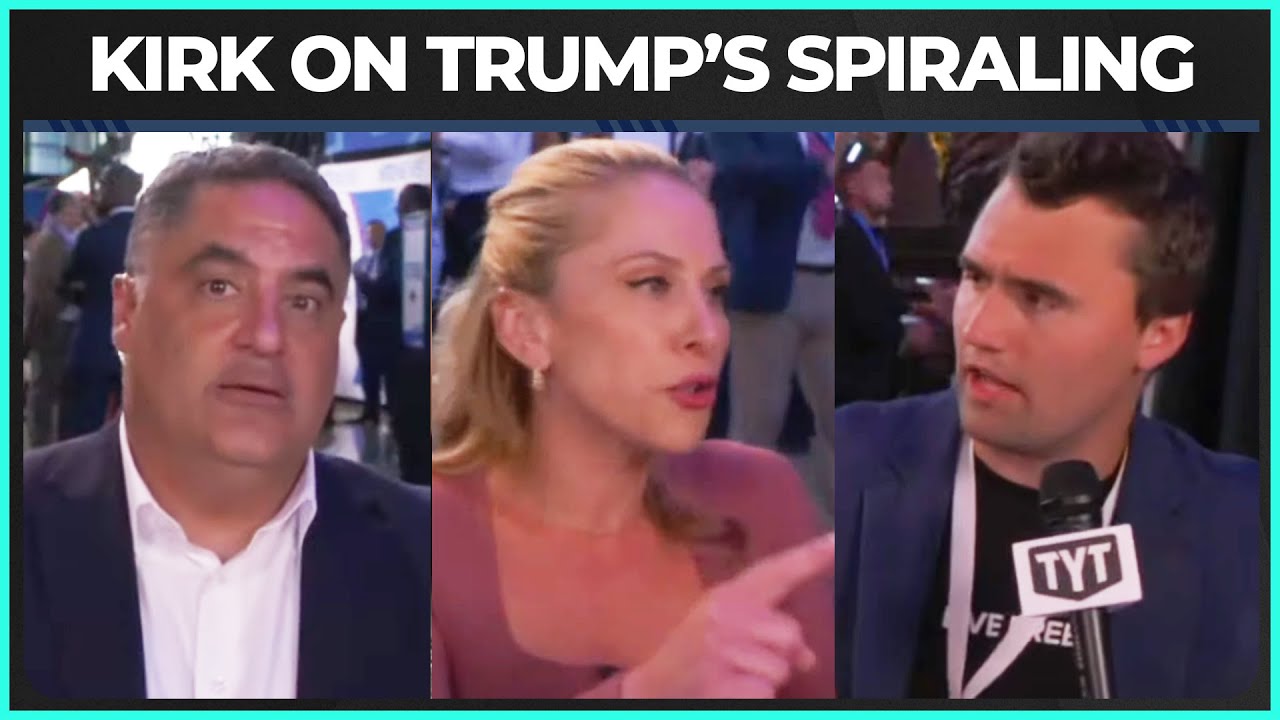
Charlie Kirk approaches a young swing voter named Arthur wearing a Kamala Harris button at the Democratic National Convention in Chicago. What follows is a compelling exchange about faith, worldview, and politics. Arthur, a recent convert to Catholicism, explains how his newfound faith is reshaping his political perspective. He's ideologically at odds with Democrats on migration, debt, and trade, yet hesitates over Trump's personal conduct. Kirk challenges him to separate policy outcomes from personality, arguing voters should choose based on worldview and results rather than personal affinity. The conversation explores whether presidential actions matter more than character, and whether Arthur will ultimately cast his vote for Trump or Harris.
Charlie Kirk shares a conversation he had at the Democratic National Convention in Chicago with a young man named Arthur. Despite wearing a Kamala Harris for President button, Arthur identifies as a swing voter, making him open to persuasion from either side. Kirk introduces the video by emphasizing the polite and mutually respectful nature of their exchange, hopeful that it might change Arthur's voting decision.
Arthur's recent conversion to Catholicism has begun shifting his political views, a fact that Kirk notes should excite Catholic viewers. The discussion serves as an example of why Americans should not shy away from difficult political conversations, even in seemingly hostile environments like a convention for the opposing party.
Worldview Versus Personality
Kirk opens by asking Arthur a fundamental question: does he vote for the person or the worldview? Arthur responds that it's a mixture of both, believing that a person's actions generally reflect their worldview. He expresses concern about Trump's past behavior, specifically referencing payments made to cover up affairs, and worries that Trump might be using Christianity as a political prop rather than genuine conviction.
Kirk counters by emphasizing that voters should focus primarily on worldview rather than personality. He argues that a worldview outlasts any individual person, making it the more important consideration. A vote, Kirk suggests, is not a valentine for someone you want to spend time with, but rather a chess move determining the type of world you want to live in.
Arthur's Ideological Conflicts with Democrats
Despite wearing a Harris button, Arthur admits he's often ideologically at odds with the Democratic Party. He believes Democrats need to focus more on debt reduction, though he acknowledges Republicans have also abandoned fiscal responsibility. On migration, Arthur thinks Democrats could be stronger. He particularly appreciates Trump's protectionist trade policies, noting that Democrats have been somewhat weak in this area.
What draws Arthur toward Democrats, he explains, is a perceived sense of decency they project. However, he contrasts this with Trump's controversies, finding the situations surrounding Trump's legal troubles sketchy even when the actual crimes might not be significant.
Biblical Examples of Flawed Leaders
Kirk addresses Arthur's concerns about Trump's character by pointing to biblical precedent. He reminds Arthur, who recently became Catholic, that the Bible is filled with people who did deeply flawed things yet were still used by God. King David killed a man to take Bathsheba, and God came to Samson while he was in bed with a prostitute, yet David is described as a man after God's own heart.
The implication is clear: personal moral failings do not necessarily disqualify someone from effective leadership, especially when judged against the outcomes they produce. Kirk is essentially asking Arthur to apply a biblical framework to his political decision-making.
Comparing Presidential Records
Kirk shifts the conversation to tangible results, asking Arthur to compare the four years under Trump versus the four years under Biden and Harris. He lists Trump's achievements: everyone was getting richer, borders were secure, wages were rising, and the economy was stronger. While acknowledging that COVID-19 handling could have been better—Kirk himself wishes there had been fewer restrictions—he argues that no presidency is perfect.
Arthur concedes these points but notes that presidents have less direct control over the economy than people assume. However, Kirk counters that presidents do have direct control over border policy. When Arthur mentions a proposed bill requiring presidential authority to shut down the border, Kirk responds that the president already has that authority and points to specific actions Trump took like the Remain in Mexico policy and eliminating the CBP One app.
Border Policy and the "Kids in Cages" Controversy
Arthur raises concerns about Trump's immigration policies, including the controversial separation of families and children in cages. Kirk clarifies that the "kids in cages" policy actually started under the Obama administration, though he acknowledges that doesn't make it right. The purpose, Kirk explains, was to verify that families crossing the border were legitimate and not trafficking situations.
Arthur maintains that Trump changed the law to mandate separation of parents and children, showing he's done his homework on the issue. This demonstrates that Arthur is not a low-information voter but someone genuinely wrestling with competing values and policy positions.
The Influence of Arthur's New Catholic Faith
A significant revelation in the conversation is Arthur's recent conversion to Catholicism from atheism and progressivism. When Kirk asks if this faith change has affected his politics, Arthur confirms it absolutely has, and continues to do so. This represents a profound ideological journey for someone who previously held very progressive views.
Arthur's primary remaining concern centers on personal conduct. He believes Trump needs to publicly acknowledge and show genuine repentance for sketchy things he's done in the past. Arthur feels Trump often denies wrongdoing when he should be more humble and contrite about his failures.
Looking Twenty Years Ahead
Kirk presents Arthur with a thought experiment: even if Trump never publicly atones for his past actions, if he had a successful presidency, wouldn't his policies matter more than his personal conduct twenty years from now? Arthur agrees that the policies would outlast the person, acknowledging the logic of Kirk's framework.
However, Arthur also points out that Trump made promises he didn't keep, such as advocating for term limits in Congress without actually working to implement them through constitutional amendment. Kirk concedes this is true but notes that passing such amendments is extremely difficult in practice.
Depersonalizing Politics
Kirk concludes by encouraging Arthur to think about what kind of world he wants to live in twenty years from now, rather than focusing on the person. He argues that the political system wants voters to over-personalize politics, making everything emotional and vibe-based rather than strategic and outcome-focused.
The conversation represents exactly the kind of dialogue Kirk advocates for: respectful, substantive, and focused on persuasion rather than condemnation. Arthur is clearly intelligent, well-informed, and genuinely wrestling with difficult questions. Whether he ultimately votes for Trump or Harris remains uncertain, but Kirk has given him a framework for thinking beyond personality to policy outcomes and long-term consequences.
Kirk thanks Arthur for the conversation, wishes him well, and blesses him on his journey of faith, demonstrating that political disagreement need not preclude mutual respect and genuine goodwill.