Up Next
Charlie Kirk's Advice to a 13-Year-Old Homeschooler on Becoming an Informed Citizen and Courageous Adult
2:11
Charlie Kirk Debates College Student on Whether Higher Education Is a Scam in America
7:22
Charlie Kirk Defends Trade Schools Over College Degrees in Heated University of Wyoming Debate
9:59
Charlie Kirk's Life Advice for Young People: Building Character, Reading Books, and Finding Success Without College
Charlie Kirk shares his philosophy on success, education, and building a meaningful life with young people across America. From starting Turning Point USA at 18 without a college degree to emphasizing the importance of reading 100 books a year, Kirk challenges conventional wisdom about higher education while stressing the critical role of character, self-control, and courage. He addresses questions about career paths, dating, politics in schools, and what it truly means to live a fulfilling life in modern America.
Starting Young and Building Something Meaningful
Charlie Kirk started Turning Point USA when he was 18 years old. He never went to college, and it ended up being a great decision for him. He took a gap year and has since built one of the most influential conservative youth organizations in America. His perspective on education challenges the conventional narrative: not everyone in this country needs to go to college. In fact, Kirk believes there are way too many people going to college in the country.
When asked about advice for young people who want to make a similar impact, Kirk emphasizes several core principles. First, strive to be a better person every single day because character is a reflection of the soul. Learn something new every single day. It doesn't matter where you go to college or if you go at all—it's just a piece of paper. What matters is who you are as a person.
Success requires willingness to keep pushing on and enduring when things get really, really tough. Kirk stresses the importance of taking relationships with people older than you very seriously and memorializing those conversations forever. While he believes smartphones are destroying the country, he acknowledges one thing they're good for: recording. They're excellent at capturing voice memos or conversations. Next time you sit down with a grandparent or a business person, record those conversations. You're going to want them.
The Power of Personal Responsibility
When you encounter difficulty, train yourself to blame yourself. Train yourself to say, "It's my fault. What did I do wrong?" Kirk acknowledges this is hard. It's really easy to blame others, and it might actually be somebody else's fault. But find something you could have done differently. If you get in the practice of doing that, you'll be a stronger person.
Kirk encourages young people to immerse themselves in eternal knowledge. There are two types of knowledge: practical knowledge and eternal knowledge. Practical knowledge is knowing who the governor is. Eternal knowledge encompasses things that never change—also called wisdom. The more wise you are, the more cheerful and happy you will be.
Despite the country's problems and ridiculous leaders, Kirk reminds young people that they live in a wonderful country and have been given a tremendous gift. Don't get into the habit of complaining that everything around you is terrible and awful. Believe that your actions matter, apply yourself accordingly, work harder every single day, and after a decade of that, you'll be in a pretty good place.
The Reading Revolution: 100 Books a Year
When a 17-year-old high school student and Turning Point USA chapter member asked for advice on debating more, Kirk's response was direct: debate less and read more. You need to read at least 100 books a year. If you aren't reading 100 books a year, you're not serious about your intellectual journey.
Kirk acknowledges some might say that's too many books, but points out you can listen to them too. His advice is to spend less money on booze, alcohol, drugs, and nightclubs and more money on audiobooks. Your life will be better. He tries to be a living example of that, attempting to read 100 to 120 books a year. He's always listening to stuff, always reading stuff. While he doesn't remember it all, he remembers a fair amount of it, and it creates you into a happier, deeper, wiser person. The more you dedicate yourself to reading, debating will become easier.
Teaching Wisdom Over Knowledge
When an after-school teacher for fourth and fifth graders asked about giving advice to youth in a corrupted society, Kirk highlighted what he considers the most important element of education: it should be about developing wisdom, not just knowledge.
Wisdom is the understanding of things that do not change. It's the most important thing you can teach a young person. The country is filled with knowledge-based institutions but lacking wisdom-based institutions. Wisdom is understanding the deeper permanent topics that will be true 200 years from now and were true 200 years prior. For example: Are human beings naturally good or not so good? What is good? What is evil? What is mercy? What is compassion? What is justice? What is truth?
These questions are much more important for people to grapple with than being able to name the five members of the California legislature. That's fine—that's knowledge. But the West is experiencing a crisis of wisdom. The remarkable thing about wisdom is that anybody can access it at any time. It doesn't require a college degree or special credential. Anybody can be wise.
The most common way people get wisdom is through suffering. That's why old people are so wise—they've suffered a lot. Through suffering, you end up getting wisdom. Good times do not make you wise. Difficult times do.
Living a Happy and Fulfilling Life
Kirk believes students don't hear enough on college campuses about how to live a happy and fulfilling life. People should be thankful for life—it's a gift, a beautiful thing. True appreciation of the deeper and eternal things starts with wonder. When landing in the area, Kirk saw incredible natural beauty and mountains that looked like they were literally on fire. This kind of beauty makes you wonder what else out there is beautiful and worth preserving, what else is eternal and elevated, what else should we try to go above and beyond to make sure doesn't get corrupted or destroyed.
This appreciation starts with gratitude—being thankful for life, consciousness, existence, and things that are deeply objectively good. Conservatives want to design a society that gives preference to choices, actions, and behavior rather than complaints, grievances, or the mobilization thereof.
Kirk emphasizes that the greatest battle people experience in life is the struggle within. Young people must be told that self-control and the improvement of their own character is the thing they must prioritize above anything else. It's a disservice to tell young people the greatest struggle in life is against racism or other external forces. The greatest struggle is whether you can control your own impulses, wake up early to go to work, and commit to becoming a better and more developed human being.
Conservatives believe that happiness is a choice. People can be happy regardless of how bad things are falling apart in the country. They're happy to be alive and thankful for their existence. Happiness is a choice. If you go around trying to find happiness, you'll seek pleasure over virtue. If you try to find happiness as a state, it's nonsense. Happiness is a choice, a state of mind, something you must commit yourself to and work at.
Kirk encourages people to ask themselves daily: "What am I thankful for today?" While not trying to diminish suffering—everybody is going through something serious—the question remains: What does it mean to live a fulfilling life? Walking around always looking for something worthy of protesting, tearing down, deconstructing, or disassembling is not the answer. Instead, consider whether making certain choices—stopping drinking, stopping drugs, stopping complaining—might improve your life a little bit. Taking responsibility for your actions leads to seeing the fruits of those choices.
The Real Struggle: You Against You
At the core of Kirk's philosophy is the belief that the real struggle is you against you. If you devote yourself to saying you'll be happy as soon as there's universal healthcare or as soon as a certain person is elected, that happiness will never come. The reason so many people are searching for purpose is because students have been told not to go find responsibility, but to go find immediate pleasure and gratification.
Instead, people should prioritize things that challenge them. Character is developed in the challenge. Strength rejoices in the challenge. Sometimes it's a good thing to live through tougher circumstances as a 17, 18, or 19-year-old. It'll make you a tougher person in the long run.
Making College Work If You're Already There
When a college senior expressed concern about not knowing what to do with life while spending money on school, Kirk clarified an important point: When people say college is a scam, they're saying institutions are charging too much money and the value proposition is inverted. But students shouldn't use that as a victim mentality and say they can't get any value out of it. Find the value. Hold onto the value.
Kirk asked the student about their skills. The student revealed they love talking, dialogue, and exchanging differences. Kirk pointed out this puts them in the top 1% of the country—99% of people hate talking. The greatest fear in America is public speaking, more than death. Every single company on the planet needs somebody good at communicating. Whatever you do, try to gravitate toward the thing you like and you're good at.
Kirk's advice to the senior was clear: finish the degree. After investing that much, it would be foolish not to. If it were a freshman, the conversation might be different. Get your degree in whatever it is, and then if it's useful, great. If not, so be it. Try to find things at the intersection of your skill and your passion—that's where you'll succeed best in life.
The biggest thing is to be a lifelong learner. Don't stop learning just because you might not be in college.
Dating, Relationships, and Being a Man
On the topic of dating for young conservatives, Kirk is not a huge fan of dating apps. He holds an opinion that will surprise many: you should not date people with different politics than you. Date with the intent to marry. Dating is not a hobby—it's an interview process. Kirk acknowledges this is a minority opinion on most college campuses, where dating is a mechanism for companionship amongst other things.
The advice is to hopefully only date people in alignment with your values. That doesn't mean you can't have friends who disagree with you, but dating is very serious. Try to associate or marry or date somebody who shares your deeply held values.
Kirk addresses what he sees as problems with men in general who have difficulty finding women. Most men are beta males with very little to any detectable testosterone. Men, especially in this time of moral and societal chaos, need to get back into what it means to be a physically and mentally strong man. Kirk believes this includes stopping watching pornography and working out on a regular basis.
According to surveys Kirk references from listeners, the most desirable quality young ladies look for in men is self-control. Young ladies say they cannot find a young man who can control himself. That's a big deal.
Kirk's advice: try to be the best version of yourself. Then be very clear with women, respectfully, about what you want and your intent. A lot of men are intimidated by women, partly because the entire culture has basically trained men to be intimidated by women—they might accuse you of something or whatever. Kirk encourages men to be very direct rather than trying the friend approach for a while. Just be a man and say, "I like you. I want to take you on a date."
Politics, Age, and When to Start Having Important Conversations
A Turning Point USA high school chapter member who drove an hour to see Kirk shared that his parents immigrated from Vietnam with basically no money and now own their own private business—a living example of why white privilege does not exist, according to the student. His question centered on trying to open up controversial topics at school when no one wants to talk about them. Are politics just not for everyone? Should there be an age when people should be able to have these conversations about politics?
Kirk's response: all ages should talk about politics, though the voting age should not be lowered. He applauded the student for his leadership at Turning Point and pointed out the audience standing for hours just to hear about political philosophical debates as evidence that interest exists. In high school, Kirk suggested, there's something refreshing about the fact that not everyone wants to talk about politics all the time.
As for what age conversations should open up, Kirk suggested around 12 years old—fifth or sixth grade—is when politics should start to be discussed, though not too deeply at first, just at a surface level.
The Courage Crisis and Building Character
When 13-year-old Grace, who has been homeschooled since kindergarten and watches online Hillsdale College courses on the Constitution, asked for advice on becoming a more informed and involved citizen, Kirk's response focused on character and courage.
He encouraged her to learn something new every single day and focus on what it means to be a good person with strong character, especially when entering the world of social approval. Courage is what's missing in the country right now—there's a courage crisis. Moral courage is the most necessary yet absent characteristic in men.
George S. Patton and Aristotle both emphasized courage. Aristotle said courage is the ultimate virtue, and without it, there are no other virtues. Think about that: if people aren't courageous, you don't have honesty, justice, beauty, or wonder. If people don't have courage to act, nothing else follows.
At age 13, Kirk wants young people to commit themselves to a life of courage. Courage is doing the right thing when you don't know how it's going to work out. Courage is committing yourself to the correct course of action regardless of the cost associated with it.
Kirk finds hope in the amount of young homeschooling children rising up in the country. He defines success with a hypothetical New York Times headline in 2050: "America's sudden, shocking, and inexplicable right turn can be traced back to homeschooling explosion during COVID-19." That's what success looks like.
Video Transcript
What advice would you give to a young
kid that wants to do something similar
to what you've done with their career as
far as uh starting Turning Point USA and
just impacting people?
>> So, I started Turning Point USA when I
was 18. Uh I never went to college and
ended up being a great decision for me.
I took a gap year. Not everyone in this
country needs to go to college. We have
way too many people going to college in
our country. Strive to be a better
person every single day because your
character is a reflection of your soul.
Learn something new every single day.
Doesn't matter where you go to college.
It's just a piece of paper. Honestly,
what matters is who you are as a person.
If you want to succeed, you also must be
willing to keep pushing on and enduring
when things get really, really tough.
Take the relationships with people that
are older than you
very seriously and memorialize those
conversations forever. So, those
smartphones, I think, are destroying our
country. But one thing they're good for
is they're really good at recording.
They're good at recording voice memos or
conversations. Next time you sit down
with a grandparent or a business person,
record those conversations. You're going
to want them. When you encounter
difficulty, train yourself to blame
yourself. Train yourself to say, "It's
my fault. What did I do wrong?" That's
hard. Trust me, it's really easy to
blame others. It might be somebody
else's fault. But find something you
could have done differently. And if you
get in the practice of doing that,
you'll be a stronger person. The final
thing is this. Immerse yourself in
eternal knowledge. There's two types of
knowledge. Practical knowledge and
eternal knowledge. Practical knowledge
is who's the governor? Eternal
knowledge. Things that never change. We
also call it wisdom. The more wise you
are, the more cheerful and happy you
will be. You live in a wonderful
country. We got problems. We got
ridiculous leaders. Got all that stuff.
Man, what a gift we've been given. Don't
get into the whole complaining that
everything around me is terrible and
awful. We talked about many of that. But
believe that your actions matter. apply
yourself accordingly, work harder every
single day, and after a decade of that,
I think you'll be in a pretty good
place.
>> Um, I wanted to clarify what I what I
screamed earlier. I screamed the word
yes. Um, I was just really excited. Um,
but my parents immigrated here with
basically no money from Vietnam.
>> Okay. Cuz you said your parents were
super rich from Vietnam.
>> You screwed up my moment, man.
>> I know. I'm so sorry. I was just really
excited.
>> So, just to be clear, they came with
almost no money from Vietnam.
>> Yeah. And now we
>> Honestly, God bless your parents.
They're they're great patriots. I'm glad
I'm glad you're here. We own our own
private business and I'm a living
example of why white privilege does not
exist.
>> So, let me get to my point. I'm a
17-year-old high school student. Um, I
drove an hour over here just to see you.
>> Um, I'm a member of the Turning Point
USA chapter at my high school and we
actually hope to get Isabelle Brown
there soon.
So my question is is whenever I try to
open up conver whenever I try to open up
controversial topics at my school, no
one ever really wants to talk about it
because they just don't want to. And my
question was is is it because politics
just aren't for everyone or not? And is
there should there be a age to when
people should be able to talk about and
have these conversations about politics?
>> All ages should talk about it. Only we
shouldn't lower the voting age though.
That's that's a very bad idea. But we
should not lower the voting age. But um
I I just want to applaud you man for
your leadership at turning point and I'd
say look a lot of just look around
though. Look how promising this people
are standing here for hours just to hear
about political philosophical debates.
That's a good thing regardless of where
you approach these issues. Um in high
school honestly enjoy the fact that not
everyone wants to talk about politics
all the time because that that's it's
actually kind of refreshing to hear that
that there's still a remnant of that.
But uh
>> yes and no I would say. Um, and I just
wanted to ask like this is a bit of an
extreme example, but um, what age should
the conversation be opened up though
through politics? Like should eighth
graders be talking or debating about
abortion?
>> Yeah, I think that probably like 12
years old. Like let me think 12 would be
fifth or sixth grade. I think fifth or
sixth grade is where politics should
start to be discussed. Yeah.
>> Okay. And then my
>> not not too deeply like a surface level.
>> Yeah. Yeah. And then my final question
is is for people who are still learning
and growing their minds like me. I'm 17.
What would your advice to be for people
who just want to debate more and
>> Yeah. So debate less and read more. So
you got to read at least 100 books a
year.
>> Okay. 100 books a year. If you if you
aren't reading a 100 books a year,
you're not serious about your
intellectual journey. You might say
that's too many. You can listen to them
too, right? Uh the best spend less money
on booze, alcohol, drugs, and nightclubs
and more money on audiobooks.
>> Your life will be better. Trust me. Uh I
I try to be a living example of that. I
try to read 100 120 books a year. I'm
always listening to stuff, always
reading stuff. I don't remember it all,
but I remember a fair amount of it. And
it just creates you into a happier,
deeper, wiser person. Um, and the more
you dedicate yourself to reading,
debating will become easier.
>> Okay.
>> Um, I work as an after school teacher
for fourth to fifth graders. One of my
questions is, is there any advice that I
could give to the youth to help Oh,
sorry. Do you have any advice to give to
the youth because of our corrupted
society that we have now of this social
norm of the west especially? How can I
help them and give them the wise
especially as a religious man? I
>> I love that. Is that basic economics?
>> Yes.
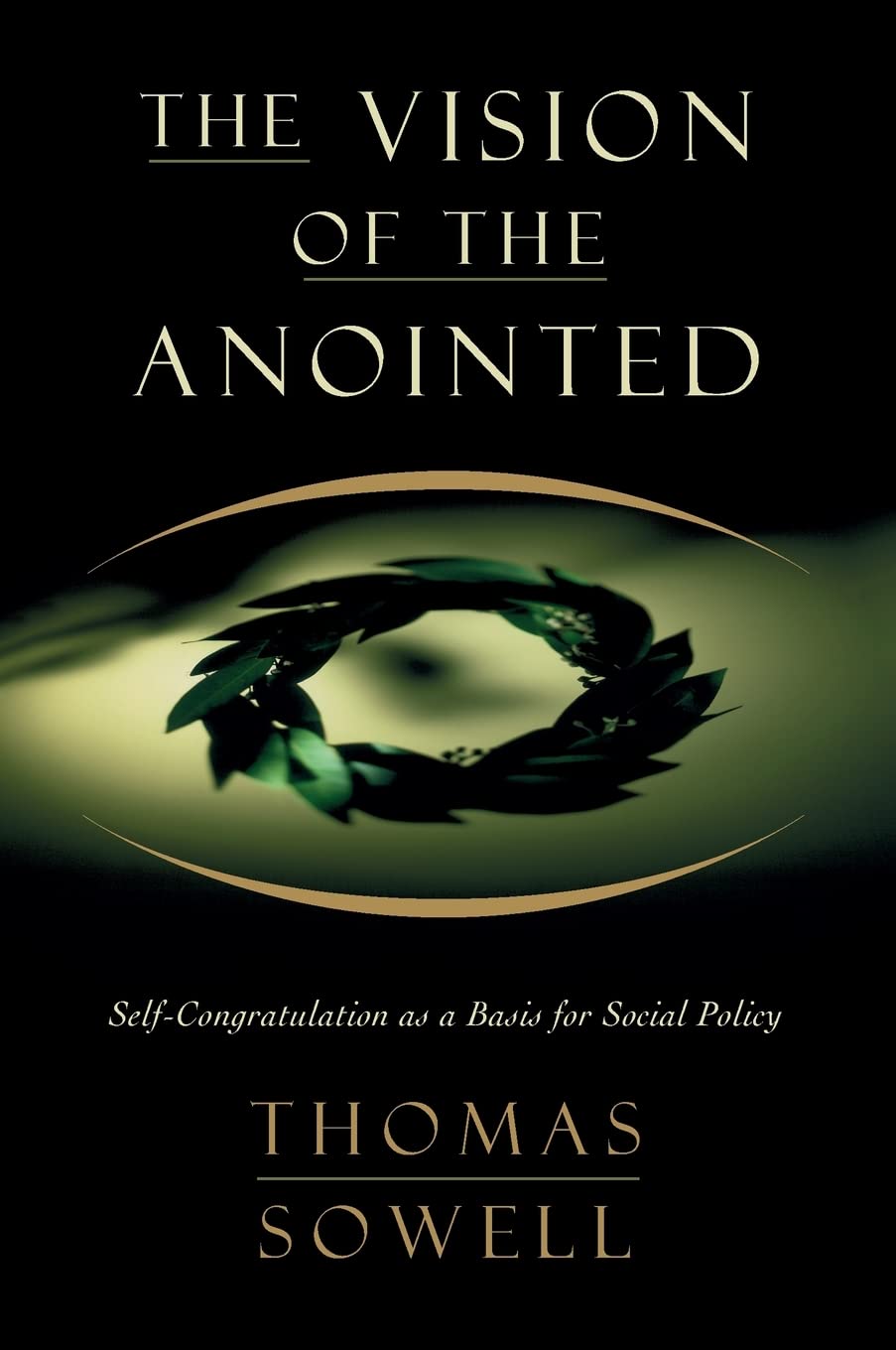
>> Can I can I see that? That is a great
book. You are a great teacher. Everyone
should read this by Thomas Soul, by the
way. Good for you, man. That's awesome.
You want me to sign it? Yeah.
>> All right. All right.
[Applause]
>> That's right. Um so great question. So
let's you uh you you hit the most
important element of education. So it
should be about developing wisdom, not
just knowledge. So wisdom is the
understanding of things that do not
change. It's the most important thing
you could teach a young person. We are
we are filled with knowledgebased
institutions and we are lacking wisdom
based institutions. Wisdom is
understanding the deeper permanent
topics that will be true 200 years from
now and they were true 200 years prior.
For example, are human beings naturally
good or not so good? What is good? What
is evil? Right? What is mercy? What is
compassion? What is justice? What is
truth? This is much more important for
people to grapple with than well, I
could tell you who the, you know, the
the five members of the California
legislature are. That's fine. That's
knowledge. But we are lacking in wisdom
in the west. It is a crisis of wisdom.
And here's the cool thing about wisdom.
Anybody can access it at any time. It
does not require a college degree. It
doesn't require a special credential.
Anybody can be wise. It just so happens
the most uh common way people get wisdom
is through what? Suffering. That's why
old people are so wise because they've
suffered a lot. And through suffering,
you end up getting a lot of wisdom. Good
times do not make you wise.
Sucky times do. But I I just want to
talk a little bit about life, which is
um I I think that one of the things that
students don't hear enough on college
campuses is how do you live a happy and
fulfilling life? Should be thankful for
life. It's a gift. It's a beautiful
thing. It it's it
a true appreciation of the deeper and
eternal thing starts with wonder. When I
was landing here today, I saw incredible
natural beauty. I saw, you know,
mountains that looked like they were
literally on fire. You guys hear that
all the time? It makes you wonder what
else out there is beautiful and worth
preserving.
>> What else out there is eternal and
elevated? What else out there is
something that we should try to go above
and beyond and make sure it doesn't get
corrupted? That make sure that it
doesn't get destroyed. And that starts
with gratitude. It starts with being
thankful. And the first thing is being
thankful for life, thankful for
consciousness, thankful for existence,
thankful for things that are deeply
objectively good. And we want, we as
conservatives, then I kind of just say
this in general that we want to design a
society that gives preference on your
choices and your actions and your
behavior, not on your complaints or your
grievances or the mobilization thereof.
Now, don't get me wrong. I I'm I'm
perfectly, you know, kind of on board
with breaking up certain companies and
using political power to try and make
that easier. But generally, I think that
it's very important for people to try
and prioritize that the greatest battle
you'll experience in life is the
struggle within that we must tell young
people. that we must understand that
it's self-control,
that the improvement of your own
character is the thing that you must
prioritize above anything else. And it's
a disservice to tell young people, you
know what, the greatest struggle in life
is you against racism. The greatest
struggle in life is you against no, the
greatest struggle in life is you going
to be able to control your own impulses,
to work up early to go to work, to be to
to say that I want to become a better
and more developed human being. And put
very simply, we as human beings, thank
you.
We as conservatives
believe that happiness is a choice.
We're happy regardless of how bad things
are falling apart in our country. We're
happy to be alive. We're thankful for
our existence. Happiness is a choice. If
you go around trying to find happiness,
all of a sudden you'll seek pleasure
over virtue. If you try to go find
happiness as a state, it's nonsense.
Happiness is a choice. It's a state of
mind. It's something that you must
commit yourself to. You must work at it,
too. You must say, "Man, what am I
thankful for today?" And I'm not trying
to diminish suffering. Let me be very
clear. Everybody here has something
you're going through, and it's a serious
thing. But that's not to say, "What does
it mean to live a fulfilling life?" To
walk around always looking at something
worthy of protesting, tearing down,
deconstructing, disassembling, or
saying, "Man, if I made these 10
choices, if I stopped drinking, if I
stopped doing drugs, if I stopped
complaining, maybe my life will improve
a little bit. Maybe if I all of a sudden
start taking responsibility for my
actions, I'll start to see the fruits of
those choices. That's a fundamental
difference because at the core, and I'm
not I am not saying there are not public
policy changes that need to be made.
Trust me, there's plenty. But the real
struggle that we must all understand is
that it's you against you. That if you
devote yourself to saying, you know
what, I'll be happy as soon as we get
universal healthcare. I'll be happy as
soon as we get this person. That's never
going to happen. The reason we have so
many people searching for purpose in our
country is because we have said to so
many students, don't go find
responsibility. Go find immediate
pleasure and gratification. That we must
instead prioritize things that make you
have to all of a sudden challenge
yourself. Character is developed in the
challenge. Strength rejoices in the
challenge. And we sometimes need to say,
you know what? It's a good thing that
you got to live a little bit tougher of
a circumstance right now as a 17, 18, or
19-year-old. It'll make you a tougher
person in the long run.
>> All right. What's going on, man? First
of all, just two points. Uh, coming from
someone in a situation like you that you
never went to college, but you became
very successful, please. Yeah.
>> Coming from someone in a situation like
you that you've never gone to college,
but you're successful doing Turning
Point USA. How what do you recommend to
someone who's in a situation where I
don't know what I want to do with my
life, but unfortunately I'm at school
spending a bunch of money cuz I'm
stupid.
>> No, that's okay. So, I want to be clear.
Can I interrupt? You guys can make
college into a success. When we say
college is a scam, that's us saying that
they're charging you too much money and
the value proposition is inverted. But
don't use that as a victim and say, "Oh,
I can't get any value out of it." Find
the value. Hold on to the value. But
please continue. What about Well,
how do you become successful without
college?
>> Okay. Yeah. So, first of all, I don't
want to put you on the spot, but I'm
sure I'm sure you're good at something.
What is your skill? If you had to say
the thing I'm the best at.
>> I do love talking. I love dialogue. I do
love I want to say arguing, but I do
like exchanging differences.
>> Great. So, now you're in the one you're
already in the 1% of the country. 99% of
people hate talking.
>> Fair.
>> In fact, that the the greatest fear in
America is public speaking more than
death.
So now all of a sudden you're in like a
whole different
single company on the planet needs
somebody that's good at communicating.
Right? So whatever it is that you do try
to gravitate towards the thing that you
like and that you're good at which is to
explain right whatever that is in a
company because there's a lot of people
that might be really good like I don't
want to give the presentation you know
and that so you just kind of answer your
own question. Here's the biggest thing.
Be a lifelong learner. Don't stop
learning just because you might not be
in college. Are you freshman, sophomore?
>> I'm actually a senior.
>> Okay. Get your degree. That's my finish
it. It's like, you know, you've already
invested this much. Get your degree in
whatever it is. It'd be stupid not to.
If you were a freshman, we might have a
different discussion. Okay? So, finish
that out. And then whether if it's
useful to you, great. If it's not, then
so be it. Um, and then try to find
things that is the intersection of your
skill and your passion. That's where
you're going to succeed the best in
life.
>> Dating is a struggle. What's your advice
to young conservatives? And also, how do
you feel about dating apps?
>> Yeah. So, um,
>> yeah, I'm not a huge fan of dating apps,
but um, so I will have an opinion here
that will really get people. You should
not date people that have different
politics than you. You should not um,
and I'm not. So, and the the reason I
believe you should you should date with
the intent to marry. I don't think date
is a hobby. I think dating is an
interview process. Um, and I know that
is a minority opinion on most college
campuses where date is a mechanism for,
I don't know, companionship amongst
other things. It's be tough. You're
going to have to hopefully only date
people in alignment with your values,
right? That doesn't mean you can't have
friends with people that disagree with
you, but dating is a very serious thing.
So, how do you go about doing that? Try
to associate or marry or date somebody
that does share your deeply held values.
I think that's very, very important. Um,
and secondly, I will say this, which is,
um, men in general who have difficulty
finding women generally have a couple
problems. And this is not directed
towards you. I just met you, okay? So,
please, we're good if I say this, okay?
Most men are beta males, okay? With uh
very little to any uh very little to any
detectable testosterone like the radar
is trying their best. Um, men, I
believe, especially in this time of
moral and societal chaos, uh, need to
get back into what it means to be a
physically um, and mentally strong man,
which I believes, uh, I which I believe
includes stopping watching pornography.
Uh, which I believe uh, means working
out on a regular basis. And I believe
also understanding that the most
desirable quality that young ladies look
for in men according to my big survey of
all of our listeners uh is self-control.
Is that young ladies say that they
cannot find a young man who can control
himself. Um that's a big deal. So put
that all together. What are you supposed
to do? Try to be the best version of
yourself. Um, and then be very clear
with women and respectfully about what
you want and your intent. Um, a lot of
men are intimidated by women. And I get
it. It's because our entire culture has
basically turned men to be intimidated
by women. They might accuse you of
something or whatever. Um, I would
encourage you to be very direct. Don't
try this all like, "Yeah, we're going to
try the friend thing for a while." Like,
just be a man and like, "I like you. I
want to take you on a date." Like, does
that happen anymore? Maybe it does.
Probably not a lot. My name is Grace.
I'm 13 and I've been homeschooled since
kindergarten.
I really appreciate your podcast.
Politics can be difficult for me to
fully understand, but the way in which
you present ideas makes it easier to
grasp. My younger sister and I recently
started watching the online Hillsdale
College course regarding the
Constitution,
[Applause]
which we've been enjoying. So, this is
my question to you. What advice do you
have for me as I move into adulthood in
order to become a more informed and
involved citizen?
>> Well, first of all, thank you for being
here and
I uh I have hope thanks to people like
you. How old are you again?
>> 13.
>> 13. So, here's a couple things I want to
encourage you to do. learn something new
every single day and focus on what it
means to be a good person and a person
of strong character and especially when
you get into the world of trying to be
around social approval and kind of
everything around you. Courage is what's
missing in our country. We have a
courage crisis right now. Moral courage
is the most necessary yet absent
characteristic in men. George S. Patton
Aristotle who you will learn about if
you continue on the wonderful Hillsdale
courses and I'm glad you're already
taking us. You're already well on your
way. Aristotle said that courage is the
ultimate virtue. Without it, there are
no other virtues. Think about that. If
people aren't courageous, you don't have
honesty. You don't have justice. You
don't have anything else that you don't
have beauty. You don't have wonder. If
people don't have courage to act and so
at age 13, I want you to commit yourself
to a life of courage. Courage is doing
the right thing when you don't know how
it's going to work out. Courage is
committing yourself to the correct
course of action regardless of the cost
associated to it. And I'm given hope by
the amount of young homeschooling
children that are rising up in our
country. Now, let me tell you this.
People say, "Charlie, what does success
look like?" New York Times headline in
2050.
America's sudden, sudden, shocking, and
inexplicable right turn can be traced
back to homeschooling explosion during
CO 19.
That's what success looks like.