Up Next
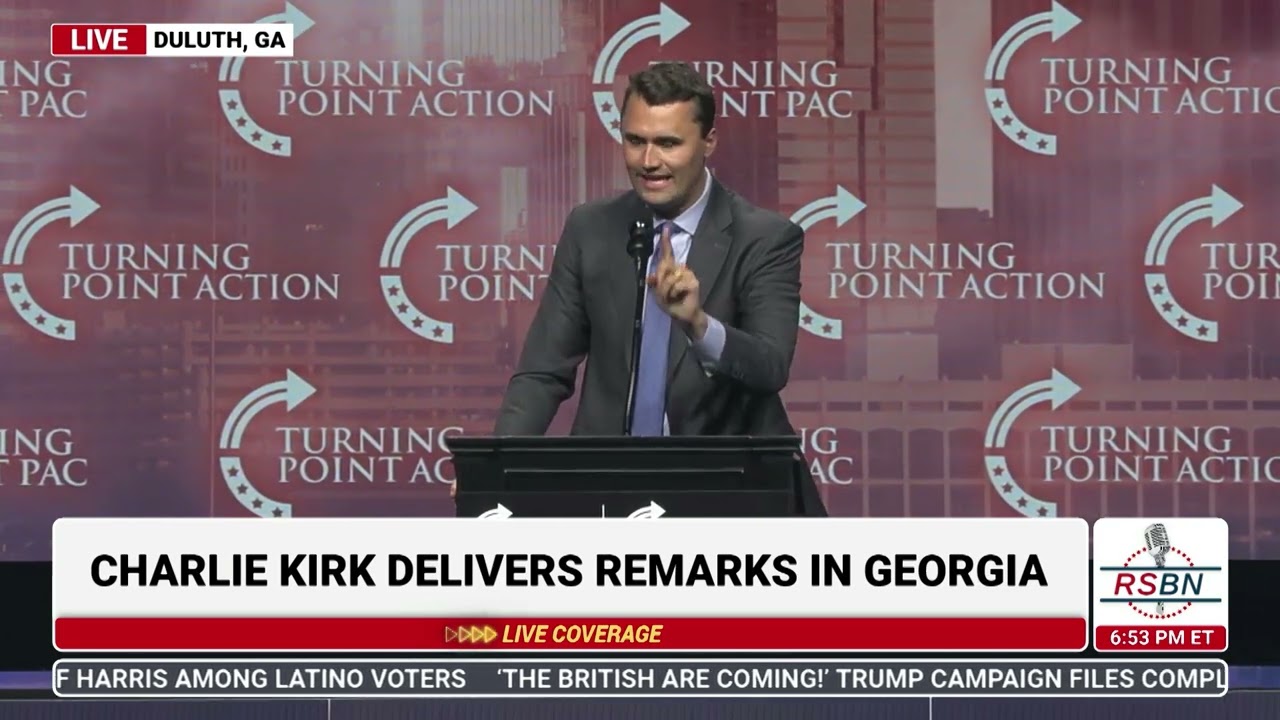
Charlie Kirk Rallies Georgia Voters: Twelve Days to Define the Future of American Republic
14:44

How the Media Treats Political Violence Differently Depending on the Victim's Ideology
20:18

Ben Wittes on Alexei Navalny's Death Tucker Carlson's Grotesque Putin Propaganda and GOP Moral Collapse
49:05
Charlie Sykes and Adam Kinzinger Break Down Trump's Third Arrest and 641 Years in Potential Prison Sentences
Charlie Sykes sits down with former Illinois Congressman Adam Kinzinger to dissect Donald Trump's third arrest and arraignment in Washington DC. As Trump faces 78 felony charges carrying a maximum sentence of 641 years, Kinzinger reveals how the January 6 committee's work directly led to this moment and why the Justice Department should have started investigating on January 7th. The conversation explores the dangerous escalation of political rhetoric, why Mike Pence and Ron DeSantis continue to struggle with their Trump responses, and whether a conviction before the election could finally change Republican minds. Kinzinger doesn't hold back on his disappointment with former colleagues and explains the sunken cost fallacy keeping GOP members trapped in Trump's orbit. With new polling showing half of Republicans would abandon Trump if convicted, this deep dive examines whether accountability is finally coming or if the system faces catastrophic failure.
Trump's Third Arrest and the Mountain of Felony Charges
Charlie Sykes opens the August 4th, 2023 episode by reflecting on a week that truly mattered. Donald Trump was arrested for the third time, booked, arraigned, warned against committing crimes or bribing witnesses, and released on his own recognizance. The former president now faces 78 felony charges with maximum sentences totaling 641 years in prison. This figure doesn't include civil lawsuits for fraud, defamation, and sexual assault, or what's coming from Georgia. Yet Trump remains the frontrunner for the Republican presidential nomination.
Sykes brings in Adam Kinzinger, former congressman from Illinois, co-founder of Country First, and crucial member of the January 6 committee, to break down the week's events and their broader implications for American democracy.
The January 6 Committee's Role in Trump's Indictment
Kinzinger confirms that without the January 6 committee's work, Trump would not have been arraigned in Washington DC. He expresses disappointment that the investigation should have started on January 7th, including the president. While the DOJ pursued those who directly broke the law, Kinzinger noticed a shift when the committee's first hearings revealed the coordination and depth of Trump's actions.
The Justice Department initially tried to deflect, claiming they wanted the committee's transcripts. Kinzinger had to spend a month answering questions about why DOJ didn't have the transcripts, explaining the legal complications around discovery. But the DOJ should have had their own transcripts and been on this investigation long before the committee began its work.
Reflecting on watching Trump's arraignment, Kinzinger admits he felt no sense of closure. He remains nervous that somehow the case won't go to court or that a Trump supporter on the jury could let him off, potentially doing more damage. While there's satisfaction knowing the Justice Department will adjudicate this before the American people, Kinzinger won't feel real peace until a guilty verdict comes down from the jury.
The Dangerous Scenarios Ahead
Kinzinger outlines the divergent futures facing the country. The hopeful scenario sees the rule of law vindicated and Trump held accountable. But other scenarios include a hung jury or even an acquittal, which could slingshot Trump back into the presidency. At that point, this would represent a catastrophic failure of the system.
He expresses concern about whether the trial will be completed before the election. While the judge has considerable power to set timelines and limit motions, Trump's team will try to adjudicate the election in Georgia and Pennsylvania, attempting to prove election fraud. If the judge shuts this down as already litigated 60 times, it gives Kevin McCarthy and others a talking point about being silenced.
In a perfect world, Trump would get all the time needed to prove Michigan was stolen, fail to do so, and this would be presented to the American people. But this would delay the trial past the election. Kinzinger notes there's a better than nothing chance that Trump could win the presidency again, and the second he does, he won't go to jail. He'll either pardon himself, shut down the trial, or have the DOJ drop the charges.
The All-Out Attack on Democratic Institutions
The darker scenario involves the escalating rhetoric attacking the legitimacy of the entire system. Lindsey Graham claimed the judge in the case hates Trump, that you could convict Trump of kidnapping the Lindbergh baby in DC, and demanded a new judge and change of venue. This represents an all-out attack from alleged former grown-ups in the Republican party, not just on the FBI but on the Department of Justice, judges, and the jury system itself.
Kinzinger reflects on the sad lesson that when you violate a norm, you never go back to the old way. Congress used to always do the NDAA on time until they didn't, and now they never do it on time. They never showed naked pictures in committee until Marjorie Taylor Greene did. They never questioned the rule of law or attacked a judge, and now it's commonplace.
He struggles with how there could ever be an agreement where everyone gets together and says they're going back to the old way of doing things. Trump has thrown so much at America that people's outrage capacity is exhausted. He can do anything now because everyone has already spent their capacity to be outraged.
Kinzinger describes the emotional progression that Will Saletan discusses in his podcast about how people moved from barely accepting to fully accepting to actually leading the Trump movement. As someone who lived through it in Congress, Kinzinger experiences almost flashes of PTSD listening to these descriptions because he can sense and feel it happening.
He explains the sunken cost fallacy: you lost ten thousand soldiers in Vietnam, so you can't come home now. People like Lindsey Graham have given an ounce of their soul, then five ounces, then a pound, and it continues because stopping at any point means reckoning with what you've done. It's much easier to keep going.
The Rising Danger of Violent Rhetoric
Sykes emphasizes the danger of rhetoric that delegitimizes the system. If something is not legitimate, there's no reason to respect or obey it. Talk of imprisoning Democratic politicians and their families in acts of revenge is now standard. Even floating the execution of Joe Biden, as Charlie Kirk did, is accepted in the world of MAGA media where the audience has been conditioned through years of programming to welcome such vile rhetoric.
The language has moved beyond routine political demonization to suggest the need for violent resistance. If you don't believe in the integrity of democratic institutions, if you believe elections have been stolen, how do you expect people to react? There's constant escalation without concern for where this leads or who might act on these ideas.
Kinzinger agrees they've been talking about this danger for a while but must keep talking about it. People dismiss warnings about the whole system collapsing and leading to violence as hysterical, but Kinzinger believes the danger is real. Five years ago, even saying the words about assassinating the president would trigger a Secret Service visit. Now Charlie Kirk says this openly.
If the Secret Service visits Charlie Kirk, what does the right say? Do they say he never should have implied assassination, or do they claim it's a First Amendment violation and a two-tiered justice system? People float this around constantly now, and it's become normalized and dangerous.
Kinzinger's message to the left and center is that the right believes their only option is to gain power and maintain it through any means necessary. Barbara Walter's book on how civil wars start mentions that when groups in the majority become groups in the minority, that's when civil wars have the highest risk. So the key becomes never giving up power, leading to authoritarianism.
While the left has every right to be angry and match the rhetoric, Kinzinger hopes they don't. The only way out of this moment is creating unnatural alliances between the left, center, and some on the right who oppose authoritarianism but support democracy. This is the only way historically to defeat authoritarian movements.
Why Jack Smith Didn't Charge Trump for Inciting Violence
Regarding Jack Smith's decision not to charge Trump directly for inciting the January 6 violence, Kinzinger expresses some disappointment. Every time they mention January 6, he emphasizes that people died. This is not theoretical. The committee referred Trump for inciting violence, so why didn't the Justice Department pursue it?
After pondering the indictment for 48 hours, Kinzinger has come to see Jack Smith's point. Charging Trump with the attack and violence may be much harder to prove. Not charging other people at the moment simplifies the case to just Donald Trump with fewer charges, making it more likely this gets done before the election.
Stacking people and charges gives the defense legitimate ways to push this past the election. This doesn't mean Smith couldn't come out with further charges or bring a separate case later, as seen in the documents case.
Kinzinger's biggest takeaway from the January 6 committee was that January 6 was a symptom. It was a terrible day, but it was a symptom of illegal things and actions that preceded it. It was a symptom of the president saying the election was stolen, of sitting with Justice Department members saying just say the election was corrupt and leave the rest to me and Republican congressmen.
The president told the acting attorney general: just say it was corrupt, that's your only part of the deal, and leave the rest to me. If you sow a bit of doubt, we can use that to destroy the election's legitimacy. All of this happened before January 6. For 187 minutes on January 6, Trump actively resisted pressure from everybody to make a statement stopping the violence. Only when he saw law enforcement turn the tide did he begrudgingly make a statement.
While Kinzinger wants to see Trump charged for that day, it's important for Americans to see that January 6 was simply a symptom of much bigger things that happened before. The indictment represents that culmination. Rather than charging incitement, they say he was exploiting the violence, which blunts First Amendment arguments.
Trump Never Learns His Lesson
Sykes points out that Trump never learns his lesson, never backs away. The lies he told about the election and everything that happened will be central to his 2024 campaign. He's not backing off, hedging, or apologizing. Same with the attempted extortion of Volodymyr Zelensky in Ukraine. Trump is now continuing to push dirt about the Biden family from Ukraine, getting the House committee to do what Zelensky wouldn't do that resulted in the first impeachment.
On the free speech question, it became the Republican talking point that Trump was being attacked for his speech. Jack Smith made clear that Trump absolutely had the right to say anything about the election he wanted, but speech in furtherance of a conspiracy to violate the law is not protected. All conspiracies involve speech. All acts of fraud involve speech. The notion that using words creates a bubble zone to break the law is absurd.
Kinzinger explains that many Republicans are pretending to take this seriously. Pulling back the curtain on what it's like to be a Republican member: when the president does something basic and you want to vote no because it's better for your district, you're waiting for a talking point from leadership that you can convince yourself is a good enough reason or can convince your constituents.
There were members, including one from Sykes's home state whose name rhymes with "Gallagher," who were close to voting to impeach Trump in the second impeachment but found some nuance in the impeachment article to convince themselves not to. The speech argument gives an answer when asked by the media. You can say "free speech" and move on, buying time.
As Sykes points out, if you hired someone to kill somebody for money, that's not a free speech issue. That's what they're arguing Trump did.
The Hollow What-About-ism Defense
The flood of what-about-ism from Republicans was predictable. Tom Cotton said every time a Republican won the presidency this century, Democrats tried to stop certification, yet none faced criminal charges over what is obviously First Amendment protected activity. Kevin McCarthy made the same argument about Hillary Clinton, the DNC in 2016, and Democratic leadership saying Al Gore won over George Bush.
Sykes remembers Al Gore in a very tough, questionable, close race conceding the 2000 election and presiding at the Joint session of Congress where he counted the electoral votes certifying his defeat. He remembers Barack Obama inviting Donald Trump into the White House. What he doesn't remember is any leading Democrat summoning the mob to attack the Capitol.
There were a few outliers who voted against certification, but this attempt to make an equivalency is false. Sykes encourages everyone to watch Kevin McCarthy's statement because he gets progressively angrier. Kinzinger knows McCarthy well enough to know he's theatrical. McCarthy is a man who has always tried to be "smiley McGee," as Kinzinger calls fake politicians, but he's burning inside from having to continue lying and making up stories.
Marco Rubio tweeted about Hollywood people doing a video trying to convince electors in 2016 to be faithless and vote for Hillary Clinton. That's totally legal, and nobody paid attention. It's completely legal in most states for an elector to become faithless and switch their vote. But it's not legal to send fake electors and incite a mob.
Van Jones, to his credit, said on their CNN panel that yes, the left tried to delegitimize Trump's presidency and he condemned them for that when it was happening. Republicans also claimed Obama was illegitimate because he never produced a birth certificate. There's a history of this and it's wrong, but there has never been anything like what happened in 2020. Everybody knows that, but they're trying to salve their own conscience and buy time for their careers.
They're all waiting for the man on the white horse to save them, except they're all on white horses. They're all the people who are supposed to do it, but instead they're busy covering their own backsides.
The Irrational Loyalty and Sunken Costs
Sykes agrees about sunken costs: once you've gone this far, you might as well go the whole way. But there's also the normal human and political instinct to cut your losses and stop digging. This is the extraordinary thing—they've had so many chances to move on, to take the off-ramps.
Trump is credibly accused of fraud, rape, violating the Espionage Act, and attempting to overthrow the election. You would think politicians wouldn't rush to cameras every time to defend this. Republicans should have optimism about the election for various reasons, yet they're going into a campaign where their candidate will spend much of it in a courtroom facing felony charges.
No other Republicans can figure out how to use the rape, Espionage charges, fraud charges, and everything else to gain traction against Trump. The rest of the field should be running against Trump by pointing out these things if they want to be elected president.
Kinzinger is shocked every day that with the exception of Chris Christie, Asa Hutchinson, and Will Hurd, everybody is profusely defending Trump. This is the guy beating you in the polls.
For rank and file members of the House, imagine old Vietnam prison camps where all the GIs are sitting around with four armed guards. Everyone knows that if everybody rushes the guards at the same time, they'll be able to overcome them and be free. The problem is if just one guy stands up and rushes the guards, he's killed. If one guy starts trying to talk to people about organizing, somebody dies.
It's the same in the GOP. Look what happened to Liz Cheney, Adam Kinzinger, Jeff Flake, and others who stood up and told the truth—they got politically killed. Now everybody's worried. There's no way to organize a big group without Trump finding out about it.
Members look around and say: Do I want to stay in Congress? Yes. Then I have to suck it up because there's no other way. If you hit a point where your conscience won't allow it, you're not going to go on TV and say that. You simply won't run again. When you're out of Congress, you probably need to lobby to make a living, and you have to lobby people who are still huge Trumpers. You don't want to alienate them.
Kinzinger wouldn't be a successful lobbyist now because if he went back to talk to former Republican colleagues, they'd say they don't want to listen to someone who's been throwing them under the bus, don't want to be seen with him, don't want to be anywhere near him.
Rating the Key Players: Pence, Barr, Christie, and DeSantis
On Mike Pence, Kinzinger is a little bitter because Pence could have basically been the Chris Christie on January 7th. He'd be the number two guy right now and would have made a huge impact. Pence still won't say if what Trump did was criminal, claiming he's not a lawyer. This nuance drives Kinzinger nuts.
But Kinzinger will embrace Pence with open arms if this is a new Mike Pence going out to tell the truth. They need his voice to say he was all in on the Trump agenda but this is too much. There's nobody, even the hardcore Trump fan, who doubts that Pence is to an extent pretty honest, so his voice is important.
Pence still drives Kinzinger nuts because he's always lukewarm. He'll say something to please Trumpers a little or qualify what he's about to say that's anti-Trump. He does it in a sandwich: positive Trump comment, then goes after Trump, then comes back with another positive Trump comment. If he can stay strong, Kinzinger will be excited, though he won't support him for president.
Olivier Knox wrote in the Washington Post that Pence has become the symbol of the kind of conservative the Republican electorate has rejected. He represents everything conservatives said they were before 2015, yet he's being rejected. It's worth noting he hasn't yet qualified to be on the debate stage.
On Bill Barr, if Kinzinger could only think of him post-January 6, he'd say Barr is a hero of the truth-telling movement. Kinzinger doesn't have as much bitterness toward Barr as many people do. There's a lot Barr did that Kinzinger is still upset about, but Barr has been speaking out. Kinzinger wishes he wouldn't have held on for his book, but he's glad Barr is out there speaking with some authority.
Sykes is pretty bitter about Barr, but it's extraordinary taking Pence and Barr together. It would have been great had they been earlier and stronger, but this is a reminder that almost all the crucial evidence comes from Republicans—people who were Trump appointees. These are voices from within the room.
More than 90 percent of the committee's witnesses were Republicans, people from the Trump Administration. Many key players were the dead-enders who hung on to the bitter end after the election. When they said no to Trump, they ended their careers in government.
Mike Pence, when he said no to using his power to overturn the election, defeated himself. He was the vice president and gave up his job. Some Justice Department officials would have been in ongoing positions of real authority and power, and they destroyed their own futures by doing this.
So far this doesn't seem to have made much difference for Republican voters, but it's striking how many cabinet members and administration officials, whatever their opinion on criminal charges, are saying this whole scenario is another indication of why Trump should never be allowed near power again.
When the trial comes and witnesses are called, Mike Pence will probably be a witness against Donald Trump. That's insane. It always drove MAGA folks nuts when Kinzinger said the January 6 committee was very partisan because they only had Republicans testifying.
Kinzinger notes that if they want to start seeing the MAGA movement or Trump collapse, they'll have to embrace a lot of people who were once all in but are now out. They're the only ones left, the ones they have to win over.
On Chris Christie, Sykes mentions that unlike others, Christie went to Ukraine for meetings, which is courageous. Kinzinger loves Christie's "I don't give a bleep" attitude right now, which is fantastic. Christie really is a magnificent beast.
Sykes was extremely skeptical considering Christie's role in 2016. He has respect for Asa Hutchinson and Will Hurd, but right now it is Chris Christie. One reason Trump will never get on a debate stage is he won't get on stage with Christie ever.
Kinzinger agrees but thinks Christie's view is that maybe not the first debate, but then Trump won't be able to resist. Kinzinger thinks Christie is going to slice and dice Trump so much that Trump will just tweet from afar.
Kinzinger was pretty aggressive against Christie a few months ago, and they exchanged barbs on Twitter. But the second Kinzinger saw Christie on the CNN town hall or his announcement, he thought Christie is serious, means it, and is better than anybody at exploiting Trump's weakness in front of the people who need to see it. Christie is legitimately having a good time doing it now.
Sykes loves watching Christie with no restraint, not making calculations, having fun. Christie is saying everything he should be saying and going everywhere—liberal shows, right-wing shows, MAGA shows. He's utterly fearless. It's one thing to go to Ukraine, another to go on Newsmax.
The contrast with Ron DeSantis is stark. DeSantis cannot figure out how to run against Trump. His campaign reset is going nowhere except making his rhetoric cruder and more brutal. In New Hampshire, he said on day one he's going to start "slitting throats." What is wrong with this guy?
Kinzinger says everything DeSantis says shows the inauthenticity. He's trying too hard. It's like the kid who got invited to the party to hang out with the cool kids and says "I pounded a beer too last night, I had 80 beers." People told DeSantis to go against the Deep State and bureaucracy, so he emotionally says they're going to start slitting throats.
It's insane, and there's somebody out there who's going to listen and think about slitting throats because there are crazy people. Kinzinger knew DeSantis in the House. The funny story everyone tells is that DeSantis never talked to anybody. One time in the cloakroom they were having a conversation, and mid-conversation DeSantis picked up his phone and literally walked away without saying anything.
DeSantis's campaign view, which isn't terrible if done right, is that at some point Trump will collapse and DeSantis will be the Trumpiest guy to pick up the pieces. But he's done it so awkwardly and stupidly that he won't be that guy.
That scenario was plausible six months ago—that through some magic DeSantis becomes the nominee without actually running against Trump, that somebody else takes Trump out. But every time somebody tries to take Trump out, DeSantis runs to his defense.
Sykes was reminded that when the first indictment came down, DeSantis popped out of the governor's mansion saying Florida won't help extradite Trump. He was prepared to turn Florida into a sanctuary state for Trump.
Six months ago it was plausible that Trump would go away and DeSantis would be the logical next candidate, but that's obviously not happening. Sykes doesn't know what this reset is. DeSantis is just as awkward as ever, incapable of talking for more than 30 seconds without using the word "woke," keeps digging himself deeper on the slavery debate, trying to play the Trump thing but only Trump can do that.
Trump can double down on unpopular things to look tough. That's what DeSantis is trying to do on slavery, and he can't. He doesn't have the ability. He just looks dumber and stupider.
What Could Change the Dynamics?
On what happens next, Kinzinger doesn't think it's super likely, but if the court case gets done prior to the election, that changes things. You can read an indictment, but when you see people testify and evidence laid out, if Trump is convicted, a poll today showed 50 percent of Republicans would turn or consider turning against Trump if convicted of these crimes.
That number will lower as people rally around the flag, but Kinzinger thinks if the trial is done publicly and Trump is convicted, that actually has the opportunity to turn things. He's not betting all his money on it, but it could happen. Standing around while the guy is indicted and defending him is one thing. When he truly is a convicted felon and you realize there's no chance he can win the presidency, that's another thing.
That won't happen before the primaries are over and the nominating convention in Milwaukee. It's possible because they're talking theoretically about May, but that would maybe have to be a case where Trump is replaced at the convention. Kinzinger gives it very little chance but thinks that's the only thing that could change dynamics.
The reality is they're going to have to defeat Donald Trump in the general election.
The Reuters/Ipsos poll is worth pausing on. About half of U.S. Republicans would spurn Trump if convicted. Among Republicans, 45 percent said they would not vote for him if convicted of a felony, more than the 35 percent who said they would. The rest didn't know.
Asked if they would vote for Trump if he were currently serving time in prison, 52 percent of Republicans said they would not, compared to 28 percent who said they would. It's shocking that 28 percent of Republicans would vote for him even if he's in an orange jumpsuit in prison, but those numbers suggest it's impossible for him to win a general election.
The question is when that begins to be felt in the Republican world.
On whether there's time for someone else to get into the race to play the role DeSantis clearly won't play—like Glenn Youngkin coming in as a consensus candidate—Kinzinger thinks that is a possibility. Putting aside personal feelings on Youngkin, this is part of why Kinzinger was always against DeSantis from the beginning.
People in the lead early on are never in the lead later. President Walker, President Jeb Bush—it never happens. Right now there's massive baggage on DeSantis. If you could hit a reset button with someone like Youngkin who can come in and be kind of Trumpy but a little more polished, there is a possibility as they get more into this that he could take that position.
Kinzinger isn't a huge Youngkin fan for any number of reasons, but analytically, it's possible. Somebody like him who can come forward with a track record showing they can win on the issues MAGA cares about—which is only woke issues—could potentially break through.
Video Transcript
foreign
[Music]
[Applause]
[Music]
work podcast I'm Charlie Sykes it is
August 4th 2023 and as I wrote in my
newsletter this morning morning shots
let's just take a pause from the Doom
Loop of nothing matters punditry to note
how much this week mattered the former
president of the United States was
arrested for the third time booked
arraigned warned against committing
crimes or bribing Witnesses and then
released on his own recognizance uh
Donald Trump now faces 78 felony charges
and potential prison sentences that you
have to measure in centuries rather than
decades I had to look this up this was
literally true the maximum sentences on
all the charges if he's convicted would
put him behind bars for wait for this
641 years okay I understand that's
unlikely but 641 years and that does not
count the civil lawsuits for fraud
defamation and sexual assault or what is
coming from Georgia
and yet of course he is the
front-running candidate for the
Republican nomination for president a
lot to dive into today and we are
fortunate to be joined by one of the key
players in this whole Saga Adam
kinzinger former congressman from
Illinois co-founder of country first and
of course member of the January 6th
committee Adam how are you
[Music]
what a what a week it's like if by the
way if the devil had been president I
don't think he would be guilty of as
many crimes and probably would be facing
less than 600 years in prison 600 years
in prison I mean that's that's a chunk
that sounds serious so let's start with
the obvious question
um uh it seems obvious to me that were
it not for the work of your Committee of
the January 6th committee we would not
be having this conversation today Donald
Trump would not have been arraigned in
Washington DC yesterday your thoughts
about that
yeah I think that's 100 true
you know and it's disappointing to be
honest with you I mean this
investigation should have started on
January 7th you know to include the
president I get that you know the doj's
been going after the the people that
broke the law directly great
um but yeah I think you know what we
felt you felt it both like kind of from
the media sphere and from the doj sphere
is that when we came out with some of
those first hearings where people's eyes
kind of popped open and it's like oh my
gosh this really was you know
coordinated the president knew this is
deeper than just like some accidental
violence on January 6th that's when you
started to see doj move and you know
they kind of this is a bad on them
because they tried to like kind of toss
it onto us for a little bit they're like
well look we want to investigate for the
January 6 committee won't give us their
transcripts you know at the time I had
to answer for a month the questions of
how come doj doesn't have the
transcripts and there's a whole bunch of
legal reasons like then it opens up
Discovery and then you know but it's
like doj should have had their own
transcripts they do now but they you
know they should have been on this far
before us but yes it's it does feel good
to know that the work we did isn't just
about setting history straight but
actually set Justice on the right path
so how did you feel yesterday as you
were watching slash listening to the
arraignment of of Donald Trump after all
of this time what was going through your
mind I mean were you wishing that you
were in the courthouse we wishing you
were in the courtroom yeah and uh yeah I
mean I would have loved it but in the
courtroom you know just to see it but I
don't think there was any sense of
closure at all because you know we're
still looking at this year-long trial
could be longer it's a close race for
some reason still and so for me it's
more of just like nervousness that
somehow this actually doesn't end up
going to court or he's going to be let
off because of some you know Trump or on
the jury and it could actually do more
damage so while I don't feel closure
there is a nice sense of knowing at
least that the justice department this
will be adjudicated before the American
people one way or another because you
know look we never want to be a country
that just locks up former presidents
that's that's a very dangerous path but
we all also and I think great or so
can't be a country that lets what Donald
Trump did go unpunished because then
there's no incentive to not do that in
future administrations because if you
fail you can't be prosecuted because
you're a former president if you succeed
well you succeeded so you're not going
to be prosecuted anyway so we have to
hold that standard but I don't think I'm
going to feel real like peace until that
guilty verdict comes down from the jury
you're suggesting this the Divergent
Futures out there and the range one
scenario the one that I think that we're
hoping for is that the rule of law is
Vindicated that Donald Trump is held
accountable but there are other
scenarios as well including hung jury or
even an acquittal things that could
actually slingshot him back into the
presidency at that point we would look
at this as a catastrophic failure of the
system wouldn't we yeah I mean truly and
uh you know that's it's a risk it's not
a risk that we should be adverse to
because again he should be held
accountable but that's like the worst
case scenario by the way but I'm also
concerned that this thing I you know
there's some people that have some
optimism that this gets done before the
election and I know that the judge has
quite a bit of Leverage in a court I
just actually learning this yesterday
quite a bit of Leverage in the courtroom
to be able to set the timeline and only
give a certain amount of time for
motions and so you know potentially
Trump can only delay so much but here's
what they're going to do they're going
to
try to adjudicate I've been using
adjunicate a lot that's also a new word
but they're going to take on you know
the election in Georgia the election in
Pennsylvania they're going to try to
pretend like they want to prove that
there was election fraud and that's
going to buy time and if the judge which
the judge ought to in essence shuts that
down and says that's been litigated
already 60 times then that just gives a
talking point to Kevin McCarthy and his
ill to go out and say see they're trying
to silence us so in a perfect world you
would give them all the time they need
to prove that quote unquote proved that
Michigan was stolen and then of course
it wouldn't be and you could put that
out in front of the American people but
that would delay us to pass the election
and of course look Charlie there is a
better than nothing and I think frankly
better than there has been chance that
Donald Trump could win the presidency
again and the second he does he's not
gonna be put in jail he'll be either
pardon himself the trial will be shut
down or he'll just have doj drop the
charges so you know there's a lot out
there that could go wrong there's some
that could go right still they're not
making much of a secret about that I
mean Maggie Haberman actually wrote that
yesterday that in Trump World there's a
full expectation that you know if Trump
wins the election all of this goes away
and maybe that is their great hope that
they are actually pursuing that
particular line so among the darker
scenarios and I want to go back to a
more positive scenario in a moment but
among the darker scenarios of course is
all of this rhetoric attacking
legitimacy of the system you had Lindsey
Graham saying the judge in the case
hates Trump you can convict Trump of
kidnapping Lindbergh's baby in DC you
have to have a change of venue we need a
new judge he doesn't trust the jury
system so you have this all-out attack
from a lot of the even the alleged
former grown-ups in the Republican party
not just on the FBI but also in the
Department of Justice on the judges on
the jury system all of this and I think
it was Ann Applebaum who said you know
if the right wing succeeds in
delegitimizing the rule of law all of
these constitutional institutions it's
hard to see how we come back from that
and it does seem as if the rhetoric is
getting more Reckless is escalating all
the time
oh 100 and it's one of the sad lessons
that I took away from Washington which
is
when you violate a norm you know we
always wanted to do the ndaa the
National Defense authorization act we
could shut down the government but we
always did the ndaa on time until we
didn't a few years ago and now we never
do the ndaa on time again you know we
never showed naked pictures in a
committee until Marjorie Taylor green
does and now others are going to you
know you never question the rule of law
you never attacked a judge and now it's
like commonplace to do it I don't know
how there becomes then an agreement
sometime in the future where everybody
gets together and says we're we're now
going to go back to the old way of doing
things of helping government
institutions maybe you know some
literally miraculous intervention can
happen which can change that but I don't
see how we ever go back when enormous
violated and Donald Trump has so this is
the thing I was struggling with even
yesterday while I was on CNN is like
Donald Trump has thrown so much garbage
at America and done so much that our
outrage glands can't be Juiced anymore
we're empty of outrage because he could
do anything now and he's we've already
basically spent our capacity to be
outraged and you see somebody like
Lindsey Graham and I used to be friends
with Lindsay by the way the will Saladin
both kind of like small book and his
podcast are incredible and I will say as
a member of Congress when he talks about
the emotional reasons and and kind of
how people progressed from like barely
accepting to fully accepting the
actually leading he is a hundred percent
right and I have like almost flashes of
pts listening to it because I can sense
that I can feel it but you see these
people that have given an ounce of their
soul
and now I have to get five ounces and
now a pound and it just continues
because at any point when you stop I
mean look I'm about as anti-trump as you
can get now and I still have people that
are like well you voted for him once and
you voted against the first impeachment
the point is you have to come to reckon
with what you did and it's much easier
in the sunken cost fallacy you know you
lost ten thousand soldiers in Vietnam
you can't come home now and uh it is
very very frightening and that's why I
think the only way out of this is a
conviction for Donald Trump because I
think as that stuff is exposed which is
why I'm not all for cameras in the
courtroom but in this case I think there
has to be I think when people see that
when he's actually putting the orange
jumpsuit that can help and then when
frankly the Republicans and especially
Donald Trump get they have to get their
backside handed to him this next
election otherwise this is just going to
continue well and I do think that it's
worth pointing out that this is really
really dangerous I talked with your
colleague CNN Oliver Darcy about this
yesterday and I made the same point on
Morning Joe that this morning in all of
this rhetoric that you're getting from
people like Lindsey Graham that
basically says the system is not
legitimate the kinds of rhetoric that
you're hearing about the FBI this is
dangerous because if something is not
legitimate then then there's no reason
to respect it there's no reason to obey
it Oliver Darcy wrote you know talk of
imprisoning democratic politicians and
even their families in Acts of Revenge
is now par for the course even floating
the outright execution of Joe Biden as
Charlie Kirk recently did is accepted in
the warp world of Maga media where the
audience has been programmed through
years of conditioning to welcome such
vile rhetoric into their homes and again
we can't get numb to buy all of this and
he writes none of this is an
exaggeration it's the reality of what is
being broadcast in millions of Home
across the country and then you know he
asked me what I thought I said I think
it's hard to overstate the dangers here
because the language moves Beyond you
know your routine political demonization
because it does suggest the need for
violent resistance I mean if you don't
believe in the Integrity of the
democratic institutions if you actually
believe they are all illegitimate the
elections have been stolen then how do
you expect people to react there's this
constant escalation without any concern
about where this leads or who might act
on the idea that your opponent isn't
just wrong that they're evil dangerous
and illegitimate and I pointed out you
know all let's talk about you know the
FBI being the Gestapo well one doesn't
argue debate or disagree with the
Gestapo you go to war against them you
know I feel like you and I have had this
conversation now for some time but it's
like people do you understand what is
being said and what the consequences are
of this kind of rhetoric and it's coming
from people like Lindsey Graham and
Kevin McCarthy and other people who
really ought to know better Tim Scott oh
Tim uh you know I'm friends with him and
my goodness it's just so disappointing
and like yeah I've been talking about
this for a while you have too and we
have to keep talking about it because I
think there's a sense among people that
like if we say that there's real danger
in the whole system in essence
collapsing in this leading to violence
it's like oh you're just being a little
hysterical you know well maybe I hope so
but I don't think so because you know
let's take Charlie Kirk floating
assassinating Joe Biden I mean
five years ago if I'd have even said
let's take Charlie Kirk talking about
assassinated Joe Biden I get a little
nervous that like me even saying the
word assassinating Joe Biden is going to
lead to like a visit from the Secret
Service well Charlie cook now says this
let's say the Secret Service decides to
go visit Charlie Kirk what does the
right say do they say well he never
should have implied the assassination of
Joe Biden or did they say they're
violating this First Amendment right
there's a two-tiered system of justice
and now people float this around all the
time and the reporter on uh right side
broadcasting has a whole tens of people
that watch that at any given moment but
you know he starts floating I agree with
you to somebody that says we want to
kill them all and this is just par for
the course today and this is dangerous
this is my message then to I'll say the
left or the sinner or anybody that's not
on the right is I think they believe
their only option is to gain power and
maintain it through any means necessary
because as Barbara Walter who wrote the
book how Civil War start mentions you
know when kind of groups in the majority
become groups in the minority that's
when Civil Wars have the highest risk
and so the key is never to give up power
and I am concerned with what that leads
to which is an authoritarian message an
understanding that we have to gain and
maintain power at all costs because I'll
tell you if the left does it they will
have every right to match the rhetoric
of the right I hope they don't but
they'll have every right to do it and so
then my message to the left is this is
like look you guys have a right to be
very angry you have a right to match the
rhetoric I hope you don't because the
only way to get out of this moment is to
create these unnatural alliances between
the left the center and some you don't
like their policies on the right but
therefore democracy that's the only way
historically and I think in this moment
that we can defeat this authoritarian
movement since we're on the subject of
of the danger of violence
let's talk about the decision that Jack
Smith made not to charge Trump directly
for inciting the violence that took
place on January 6th and you know by the
way every time we mentioned January 6
we've got to mention that people died as
a result of this this is not theoretical
you have expressed some disappointment
that there were not more charges
directly linking Donald Trump to the Mob
attack on the capitol of course this was
one of the referrals from your committee
to the justice department so why do you
think he did it and why do you disagree
with it well what I disagree with and
what I hope to see is more people
charged I would love to see the
president charged with the actual attack
on that day I want to see that second
and third tier insurrectionist the
Jeffrey Clark types charge as well which
I think could happen as I have pondered
as I've kind of sat on you know this
indictment for the last 48 hours I've
come to see Jack Smith's point a little
bit which is I think charging Trump with
attacking the capital and the violence
may be a much harder thing to prove I
don't know that's up to lawyers to
decide but it may be a little harder to
prove and not charging other people at
the moment simplifies the case to just
Donald Trump just a few charges and I
think it makes it more likely that this
actually gets done before the election
whereas if you start stacking people and
stacking charges you probably have a
legitimate way then that the defense can
push this to pass the election and that
doesn't mean I mean we've seen what he's
done in the documents case he could
still come out with further charges
bring a separate case that's different
than Donald Trump but I'll make a bigger
Point too which is the thing that my
time on the January 6 committee showed
me that was probably one of the biggest
surprises or I guess things I guess that
I didn't realize going into it which is
January 6th was a symptom that was a
terrible day I'm not trying to minimize
it I was there but that was a symptom of
a whole bunch of illegal things and a
whole bunch of crap that preceded it it
was a symptom of the president saying
the election was stolen it was a symptom
of the president sitting with members of
the justice department and saying just
say the election was corrupt let's parse
this for a second Charlie
the president United States said look
all I need from you all I need from you
is to say to the active attorney general
just say it was corrupt that's it that's
your only part of the deal and then
leave the rest to me in the Republican
Congressman because if you sow a bit of
a seed of doubt we can use that to
destroy the legitimacy of the election
all of this was stuff he was doing and
on January 6th for 187 minutes he
actively resisted for the first time in
his life pressure from everybody to make
a statement to stop the violence only
when he saw that the law enforcement
turned the tide of the fight did he
begrudgingly make a statement and so why
I want to see him charge for that actual
day I think it is important for
Americans to see that that day was
simply a symptom of much bigger things
that happened prior in the indictment of
course that is the culmination and they
chose that rather than charging it with
incitement they say that he was
exploiting the violence and I think that
probably blunts some of the First
Amendment arguments that you'd expect
there are Supreme Court decisions that
make it very I would say you know
difficult as a high bar to get around
Free Speech questions when you're
talking about incitement let me just
sort of parenthetically as a digression
just since I was listening to what you
were describing Donald Trump the one
thing about Donald Trump that we just
need to recognize is that he never
learns his lesson he never backs away
you think about the lies that he told
about the election
um and everything that's happened since
the 2024 campaign is going to be about
the same thing he is going to make his
campaign about the big lie everything
laid out in the indictment will be
Central to his campaign no backing off
no no hedge no apologies whatsoever same
thing with the attempted extortion of
Vladimir zielinski in Ukraine what is he
doing now he is continuing to push dirt
about the Biden family from Ukraine he's
getting the house committee to do what
zielinski would not do that resulted in
the first impeachment he learns nothing
but on this question of free speech I
did think it was interesting how that
became the talking point that that he
was being attacked for his speech Jack
Smith made it very clear that he
absolutely had the right to say anything
about the election that he wanted but
that that did not mean that speech that
was in furtherance of a conspiracy to
violate the law was protected because
all conspiracies involve speech all acts
of fraud involve speech this notion that
simply because you are using words that
somehow that creates this bubble zone
for you to break the law is absurd it's
amazing to me how many Republicans seem
to be taking that seriously or
pretending to take it seriously well I
think that's a key is pretending to take
it seriously because again pulling the
curtain back a little of what it's like
to be a republican member when the
president let's just take something
basic when he says countries
for instance and you know it's going to
be a center against him and you want to
vote no because it's better for your
District all you're waiting for is a
talking point that you get from
leadership that you can actually
convince yourself may be a good enough
reason or you can convince your
constituents there are a number of
people by the way including a member of
Congress from your home state his name
rhymes with blaliger who you know was
very close to voting to impress Donald
Trump and the second impeachment and
then found some Nuance in the
impeachment article oh you can't really
prove incitement or whatever that is to
now convince yourself to be able to do
that and to buy that argument and so
that's what you're seeing in this speech
thing is first off about half of the
people that believe the speech argument
or don't believe it and don't care but I
think the other thing is it just gives
you an answer when you're asked by the
media you can say free speech and move
on and that's how you buy your time by
the way as your point if I hired you to
kill somebody for me and I told you
Charlie I will give you money if you
kill somebody for me that's not a free
speech issue and that's in essence what
they're arguing Donald Trump did oh he
only hired somebody and paid money like
no that's yeah everything involves
speech yeah that's why it is so Hollow
then of course you get and this is no
surprise to anyone who's been paying any
attention over the last seven years this
flood of what about ISM and got that
from Tom Cotton and Kevin McCarthy Tom
Cotton says well every time a republican
won the presidency this century was it
beat twice Democrats tried to stop the
certification yet none of them face
criminal charges over what is obviously
a First Amendment protected activity and
then of course my cab Evan says he does
the same thing it's the same thing that
Hillary Clinton said about her election
that she lost I can say the same thing
about the DNC who said at about the 2016
race I can say the same thing about
those in the Democratic party the
leadership on down about George Bush not
winning that Al Gore did but were any of
them prosecuted were any of them put in
jail yeah deep breath here because I
kind of remember Al Gore in a very very
tough very very hard contested race very
questionable very close
conceding the 2000 election presiding at
the Joint session of Congress where he
counted the electoral votes that
certified his defeat I remember Barack
Obama actually inviting Donald Trump
into the White House right and sitting
with him what I don't remember was any
of leading Democrats summoning the mob
to attack the capital yeah you had a few
outliers who voted against certification
but this attempt to make an equivalency
what is Kevin McCarthy doing I would
encourage everybody to go watch his
statement because he gets progressively
angrier as he's talking and you know I
know Kevin well enough to know that he's
theatrically theatrically he is a man
that is very much has always kind of
tried to be a smiley McGee is what I
call like fake politicians but I think
he is just burning inside of having to
continue to lie to continue to make up
these stories to continue to come up
with things but again he knows that he
only has to convince his base and get
past that question in the media but to
say I mean I saw Marco Rubio for God's
sakes tweeted something about how there
were some Hollywood people that did a
video uh trying to convince the electors
in 2016 to be faithless and vote for
Hillary Clinton and it's like well
that's totally legal to do there's
nobody paid any attention to so right
nobody paid any attention to and by the
way it is completely legal if you're an
elector in most States to become
faithless them switch your vote but it's
not legal to send fake electors and
incite the mob and so yes like you know
van Jones said yesterday on the panel we
were on he goes yes the left did try to
delegitimize Donald Trump's presidency I
condemn them for that and to Vance
credit he actually did when that was
happening yes also Republicans the whole
time claimed Obama was illegitimate
because he never produced a birth
certificate so to speak and so yes
there's this history of that and it's
wrong but there has never been anything
like what happened in 2020 everybody
knows that that is out saying
differently but they're trying to both
put Sav On Their Own conscience and
they're trying to buy time for their own
career for the man on the White Horse
that's going to come and save all of us
except they're all on white horses
they're all the people that are supposed
to do it and instead they're busy
covering their own backside and it's sad
you know all you can do Charlie is have
a commitment to truth and go out there
and speak from whatever platform you can
and I will do it from whatever platform
I can and hope that there is some twinge
of Consciousness in some of these people
and hope that people stand up and say we
are sick and tired of being lied to but
I have lost faith that any smart person
that is currently elected in the GOP is
going to have kind of a stroke of
Consciousness and come out and tell the
truth well I I agree with you but you
know to your point about sunken costs
you know once you've gone this far you
might as well go the whole way I
certainly understand that and I think
that explains a lot what's going on here
but also there's the normal human and
certainly political instinct to cut your
losses
stop digging yeah this is the
extraordinary thing because they have
had so many chances to move on to take
the off ramps you don't need to rush to
the cameras every single time and here
you have someone who is
incredibly acute I'm talking about
Donald Trump credibly accused of fraud
of rape of violating the Espionage Act
of attempting to overthrow the election
and you would think that on the agenda
of you know politician would be you know
what maybe I'll just let that go I'm not
going to defend it it may not attack him
for it but I'm not gonna I feel like
we've asked this question 100 times but
there is a certain irrationality of just
sticking by him going into an election
that I think Republicans
ought to have some optimism about
you know for a variety of reasons and
yet they're going to go into a campaign
in which their candidate for president
is going to spend much of the campaign
actually sitting in a courtroom where he
faces felony charges
and no other Republicans can seem to
figure out how to use the fact the rape
the Espionage charges the fraud charges
all of this in order to get traction
against them I mean you would think that
the rest of the field would go okay here
are things that we really ought to be
using if I want to be elected president
I should really run against Donald Trump
by pointing out X Y and Z yes well like
there is no excuse in my mind for
anybody that's running for president to
be as sick of fanatical as they are
right I am shocked every day with the
exception of Chris Christie ASA will
Hurd everybody is just out profusely
defending him yeah like what this is guy
that's beating you in the polls but
here's the thing with again let's take
the rank and file member of of the house
so imagine a scenario where you're
sitting you know you see like the old
Vietnam prison camps right and all the
gis are sitting around and there's like
four guards that are armed you know that
at any time if everybody at the same
time rushes the guards they'll be able
to in essence kill kill them and be free
the problem is if just one guy stands up
and rushes the guards he's down and if
one guy starts trying to talk to people
about rushing the guards somebody's
gonna die it's the same thing in the GOP
I mean you saw what happened to Liz and
I and some of the others Jeff Flake that
have stood up and said the truth they
get basically politically killed and so
now everybody's worried there's no way
to organize a big group without Donald
Trump finding out about it and so you
look in your side and say look okay do I
want to stay in congress yes I do then I
have to suck it up because there's no
other way or if you hit a point where
it's like I can't do this anymore my
conscience won't allow you're not going
to go on TV and say that you're simply
not going to run again because by the
way when you're out of Congress you
probably need to go Lobby to make a
living and you have to Lobby a lot of
these people that are still huge
trumpers and you're gonna have to work
with some of them and you don't want to
alienate them I'm not I wouldn't be a
successful lobbyist right now now
because I go back and talk to some of my
former Republican colleagues they'd be
like I don't want to listen to you
you've been throwing us under the bus I
don't want to be seen with you
I don't want to be anywhere near you
this is a quasi-lightning round it
doesn't have to be really fast but I
want to just get your sense of the
various actors and players right now
what do you make of Mike Pence the much
tougher mic pens and you know that Mike
Pence is turning a corner because he's
actually putting out merch I find this
really extraordinary that they're
actually gay people have missed this
they're actually marketing hats and
t-shirts saying too honest now because
according to the special counsel's
indictment Trump called Pence up on you
know New Year's Day and berated to him
you know when and Penn says I don't have
the authority to throw out the election
Trump says you're too honest so now
they're actually marketing that merch
what do you make of Mike Pence what took
so long okay so I'm a little bitter at
Mike Pence because you know he could
have like basically on January 7th been
the Chris Christie and actually I think
he'd be like the Rhonda not Rhonda Sands
but he'd be like the number two guy
right now and would have made a huge
impact he still won't say if what Donald
Trump did was criminal he's like I'm not
a lawyer which is a little bit of nuance
that drives me nuts but I will Embrace
him with open arms if this is a new Mike
Pence and he's going to go out and tell
the truth we need him we need his voice
to go out and say look you know I was
all in on the Trump agenda but this is
too much and I don't think there's
anybody even the hardcore Trump fan that
doesn't doubt that Mike Pence is to a to
an extent pretty honest and so I welcome
his voice he still drives me a little
nuts because he's lukewarm always he'll
say something to please trumpers a
little bit or qualify what he's about to
say that's anti-trump and he does that
in like a sandwich so he does that then
he goes after Trump and then he comes
back with a positive Trump comment if he
can stay out there and stay strong I'll
be excited to see it I won't support him
for president but you know that his
voice is very important I thought it was
interesting I think I think it was it
was Olivier Knox writing in the
Washington Post that really he has
become Mike Pence has become kind of the
uh the symbol the Avatar of the kind of
conservative the Republican electorate
has now rejected I mean you go down in
just in terms of issues checking the
boxes and he represents everything that
conservatives said they were before say
2015 and yet they're being rejected and
it's worth noting that he has not yet
qualified to be on the debate stage
which is uh amazing okay so Mike Pence
number one bill Barr number two so if I
could only think of Bill Barr kind of
Post January 6 I'd be like man he is a
hero of the you know the truth-telling
movement I don't have as much bitterness
to Bill Barr as a lot of people do I you
know I think there's a lot that he did
that that I still am a little upset
about but
um to me he's been I wish he wouldn't
have held on for his book and all that
kind of stuff but I'm glad he's out
there speaking and he can speak with
some Authority that's my view on him and
I'm not as bitter against him as some
but I can see why some are okay I'm I'm
pretty bitter but it is extraordinary
and let's let's take pens and bar you
know and put them together at least in
this category I mean it would have been
great had they been you know earlier and
stronger but this is just another
reminder that almost all of the crucial
evidence in this case comes from
Republicans it comes from people who
were Trump appointees these are the
voices from within the room and you
think about that and this is a point
that I think needs to be made you know
strongly this is not the resistance this
is not Democrats who are coming forward
with this evidence these are people who
were literally in the room who dealt
with Donald Trump and you know your
committee the testimony of in your
committee I would say that what more
than 90 percent of the Witnesses were
Republicans were people who were part of
the Trump Administration and many of the
key players were not just part of the
Trump Administration they were the dead
Enders they were the ones that hung on
to The Bitter End after the election you
know and who when they said no to Donald
Trump were also ending their career in
government I mean Mike Pence for all of
my criticism of him remember when he
said no I'm not going to use my power to
overturn the election he was defeating
himself he was the vice president he he
basically gave up his job some of those
officials of the Department of Justice
would have been in ongoing positions of
real Authority and power and they were
destroying their own Futures by doing
all of this so I don't know whether this
makes a difference so far it doesn't
seem to have made that much of a
difference for Republican voters but it
is striking how many members of this
cabinet members of this Administration
whatever their opinion is on the
criminal charges are saying that this
whole scenario is another indication of
why Donald Trump should never be allowed
near power again
at all and by the way when this trial
comes and we see who's actually going to
be called the witness stand I mean Mike
Pence will probably be witnessing a
witness against Donald Trump that's
insane you know Mark Meadows it always
drove the the Maga folks nuts when I
would say like because it'll sometimes
be like yeah you're right the January 6
committee was very very partisan we only
had Republicans come in and testify uh
well that's not to say you know they'd
get all upset but I think it's important
to note too and I kind of just thought
of this as we were having this
discussion which is if we actually do
want to start seeing the Maga movement
or Donald Trump start collapsing we're
going to have to be embracing a lot of
people that were once all in that are
now out because they're the only ones
left they're the ones who we have to win
over this thing contenders okay so since
we're running down the list of people
let's talk about Ron DeSantis I
understand is who unlike say Chris
Christie and by the way can we just
mention about Chris Christie Chris
Christie went to Ukraine his meeting was
today good on him that's awesome and
that is it's courageous intense did it
to it is courageous it's important for
people to see that and I love Chris
Christie's I don't i d g a f attitude
right now which is just fantastic he
really is a magnificent beast and I I
was extremely skeptical considering his
role and you know like I have a lot of
respect for ASA Hutchinson and will
heard but right now it is Chris Christie
one of the reasons why there's no chance
that Donald Trump is ever going to get
on a debate stage is he's not going to
get under debate stage with Christianity
ever it will never happen do you agree
with me on that yes I do now Chris's
view is that maybe not the first debate
but then he won't be able to resist I
think Chris Christie's gonna slice him
and dice him so much he'll just tweet
from afar uh what a bleed he'll bleep
from afar bleach and that's about it and
it's funny because I actually was pretty
aggressive against Chris Christie as of
a few months ago and uh he and I
actually experienced some kind of barbs
on Twitter and now I would consider him
a friend because the second I saw him
out there on I think it was the CNN town
hall or maybe his announcement I'm like
you know what yeah I'm pissed that he
was the first guy that endorsed Donald
Trump in 2016 but he is serious he mean
means it and he is better than anybody
I've seen at exploiting Donald Trump's
weakness in front of the people that
need exploited in front of and I think
he's just legitimately now having a good
time doing it so I I love watching him I
love it and there's no restraint I mean
he isn't a lot of bleeps to give and you
can tell that he's not making the
calculation he is having fun I look at
him and I go well what should he be
saying he's saying everything that you
should be saying he's also going
everywhere right I mean he goes on
liberal shows he goes on right wing
shows he goes on Maca shows I mean this
guy is utterly Fearless I mean it's one
thing to go to Ukraine it's another
thing to go on Newsmax you know I mean
he's going everywhere doing all this
stuff laying it out and I I got to say
it it is rather extraordinary so here's
the contrast with Ron DeSantis who just
cannot figure out how to run against
Donald Trump has done this campaign
reset that is apparently going nowhere
except one of the elements seems to be
that he's making the rhetoric uh even
cruder and more brutal it's up in New
Hampshire yesterday saying that on day
one he's going to start this is his term
slitting throats
I mean so I'm sorry what what is wrong
with this guy I mean everything he says
is like it's like the inauthenticity is
like you're faking it and it's just come
you're just trying too hard it's just
too ridiculous it is like the kid that
like got the invite to the party to hang
out with the cool kids you know drinking
in high school right and he was like
yeah I I pounded a beer too last night
and you know I had 80 beers and it kind
of goes over because of that no and
that's like so people said to Santa's
look you need to go against the Deep
State and the bureaucracy and so it goes
out and emotionally says we're gonna
start slitting throats first off I laugh
because it's just so insane that's also
like I mean there's somebody out there
that's gonna listen to that and be like
I'm gonna go slit some throats because
there are some crazy people out there
Ron DeSantis look I knew him in the
house the funny story I have about Ron
is like and everybody will tell you the
same story like this he never would talk
to anybody but there was one time in the
cloak room we're sitting back there and
I actually had a bit of a conversation
with him and if I'm sitting you know
across from you face to face we're
talking and if I get a phone call I have
to take I'll pick up my phone look at it
and be like hey Charlie would you excuse
me for a second I gotta take this call
yeah we're talking in the middle of
something he picks up his phone and
literally walks away it doesn't even say
anything and I'm like all right well fu2
man see ya and that's just him he
doesn't know how to react to people his
campaign View and it's probably not a
terrible thing if he would do it right
is at some point Donald Trump will
collapse and I will be the trumpiest guy
so I'll be there to pick up the pieces
right but he's just done it so awkwardly
and stupidly that he's not going to be
that guy that scenario was plausible say
six months ago right that yeah that
something something something unicorn
magic I become the nominee right you
don't actually have to run against
Donald Trump that somebody else will
take him out of course every time
somebody tries to take him out Rhonda
Sanders runs to his defense I mean
that's right it's not it is not by the
way I was reminded yesterday I'd
actually forgotten about this Donald
Trump actually you know surrenders in
Washington DC goes there goes to the
arraignment and one of the commentators
was saying you know this was not
necessarily for certainty because you
remember when the first indictment came
down Rhonda Sanders popped out of the
governor's mansion and said you know the
State of Florida will not help extradite
Donald Trump right
he was prepared to turn Florida into a
you know an orange Caligula Sanctuary
estate and so yeah six months ago it was
perhaps plausible that Donald Trump was
going to go away and he would be the
logical next candidate but that's
obviously not going to happen and I
don't know what this reset is because
I'm not seeing any kind of of a reset
he's just as awkward as ever he's
incapable of talking for more than 30
seconds without using the word woke
keeps digging himself deeper this debate
about slavery which I don't want to get
into I mean you can make the case that
some of the criticism was unfair that
it's one sentence out of 200 pages and
everything but Rhonda Sanders won't let
go of his own shitty issue I mean he
just keeps going and going he's trying
to play the Trump thing but only Trump
can do that I mean I'll give Trump
credit like he can do things that nobody
else can one of those is you know double
down on unpopular things to look tough
and I think that's what Ron's trying to
do on the slavery thing and he can't do
it he doesn't have the ability to do
that he just looks dumber and stupider
and Dumber okay so what do you think is
going to happen we started off by you
know talking about the
the Doom Loop of nothing ever matters
punditry let's let's go back to all of
that because the conventional wisdom is
that despite these indictments that
Donald Trump is the overwhelming
favorite to get the Republican nominee
do you see anything that changes the
Dynamics to this so now I don't think
it's super likely but if this court case
gets done prior to the election now
let's let's say a couple factors first
off again you can read an indictment but
then when you see people testify we'll
see that evidence laid out and if he is
convicted
I just saw a poll today that 50 of
Republicans would turn in essence turn
against or consider turn against Trump
if in fact he was actually convicted of
these crimes now that's going to lower a
little bit as people rally around the
flag but I do think that this trial if
it's done in a more public way and he's
convicted actually does have the
opportunity to turn it now I'm not
sitting here you know betting all my
money on that but I think it could be
because you know it's one thing to stand
around and this guy's been indicted and
we're going to defend him it's another
thing when he truly is a convicted felon
and you all of a sudden realize there's
not a chance in blazes he can win the
presidency I think that's the only case
but that won't happen before the
primaries are over and the nominating
convention is held here in Milwaukee
yeah it's possible because I think
they're talking in theory in May but
you're right and that would maybe have
to be a case where he's replaced at the
convention again I give it very little
chance but I think that's the only thing
that exists that's gonna I think the
reality is is we're going to have to
defeat Donald Trump in the general
election that's what I think the reality
is well the poll you mentioned and we
had to at least you know pause on that
for a moment this is the new uh Reuters
ipsos poll about half of U.S Republicans
would spurn Trump if he is convicted um
let me read you from the article the
two-day uh Reuters ipsos poll asked
respondents if they would vote for Trump
for president next year if he were
convicted of a felony crime by a jury
among Republicans 45 said they would not
vote for him more than the 35 percent
who said they would hmm the rest said
they did not know so only 35 percent of
Republicans say they would vote for
Donald Trump if he was convicted of a
felony by a jury asked if they would
vote for Trump if he were quote
currently serving time in prison
52 of Republicans said they would not
which is an amazingly low number when I
think about it I mean it's like hello
but compared to 28 who said they would
okay so it is shocking that there are 28
percent of Republicans say yes I would
vote for him to be president even if he
is actually in an orange jumpsuit in
prison but those numbers would suggest
that it is impossible for him to win an
a general election I guess the question
is when that begins to be felt in the
Republican World okay one last question
do you think there's time and room and
opportunity for someone else to get into
this race to play the role that Rhonda
Sanders is clearly not going to uh play
by which I'm obviously referring to a
Glenn youngin or somebody like that
coming in being the consensus candidate
we have to stop Trump we have to have
some alternative can that happen
well so putting aside my personal
feelings on on youngkin I do think that
is a possibility because if you think
about it it was part of the thing I was
always against DeSantis from the
beginning is which is and we've talked
about on this show you've said it a
hundred times you know you think of
President Walker president Jeb Bush you
know the people that are in the lead
early on are never in the lead later and
right now you have this massive baggage
on DeSantis if you could hit a reset
button with somebody like Glenn Younkin
and he can come in and be kind of trumpy
but a little more polished at it then I
do think there is a possibility as we
get more and more into this mock admirer
that he could take that position I'm not
a huge Glenn Junkin fan for any number
of reasons but just speaking from an
analytical point of view I do think that
is a possibility and somebody like him
or like him that can come forward and
has a track record to show they can win
on the issues that Maga cares about
which is only woke issues you know it's
possible Adam kinziger who I think needs
no introduction for our audience former
congressman from the Illinois crucial
member of the January 6 committee a
senior political commentator for CNN and
has a new book coming out this fall
Renegade my life in faith the military
and defending America from Trump's
attack on Democracy it is always great
to talk with you Adam
you too thanks a lot and thank you all
for listening to this weekend's bulwark
podcast I'm Charlie Sykes we will be
back next week we'll do this all over
again
[Music]
thank you
the bulwark podcast is produced by Katie
Cooper an engineered and edited by Jason
Brown
[Music]
Related Books
Browse Conservative Books