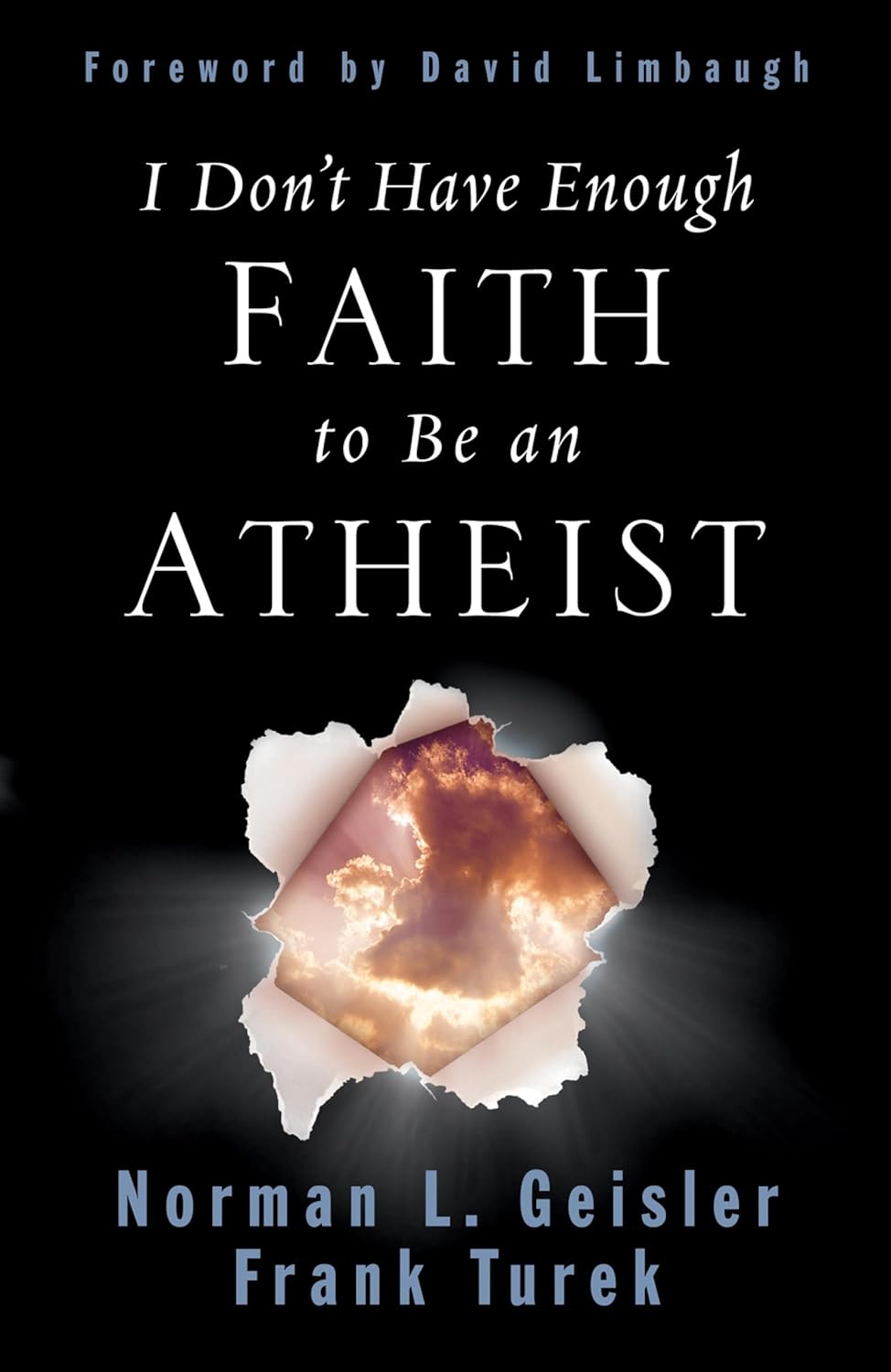
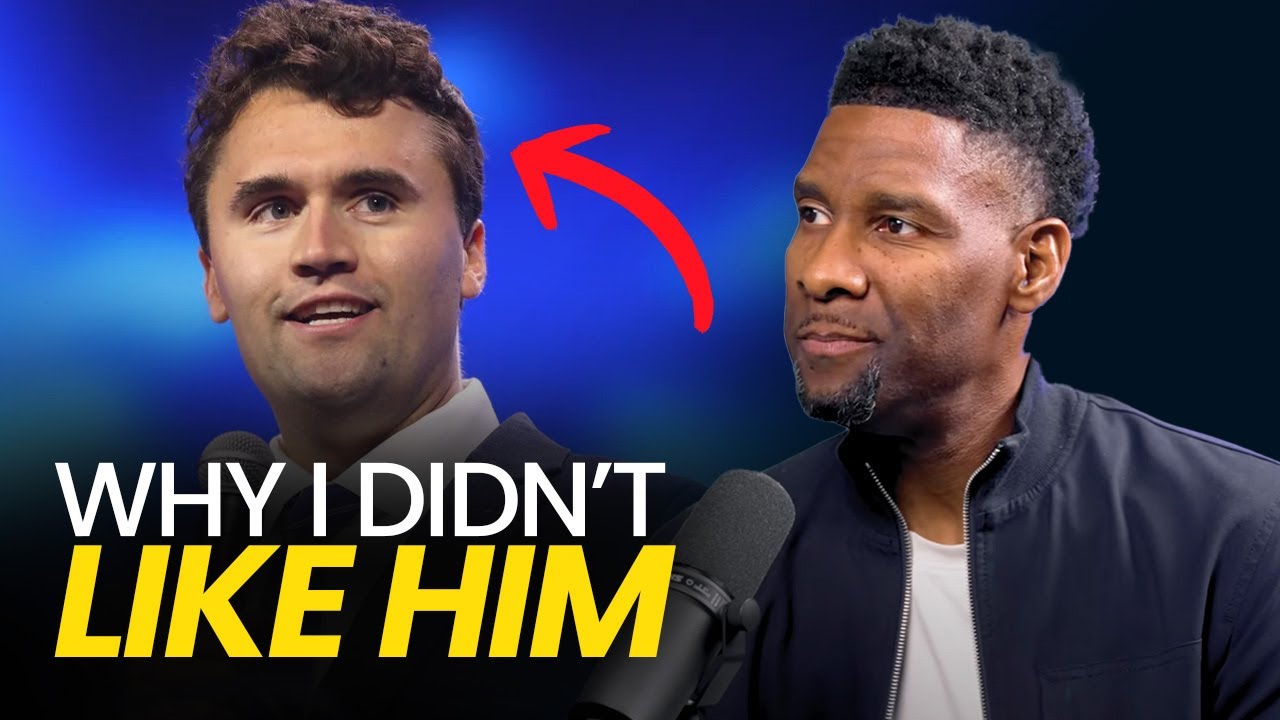
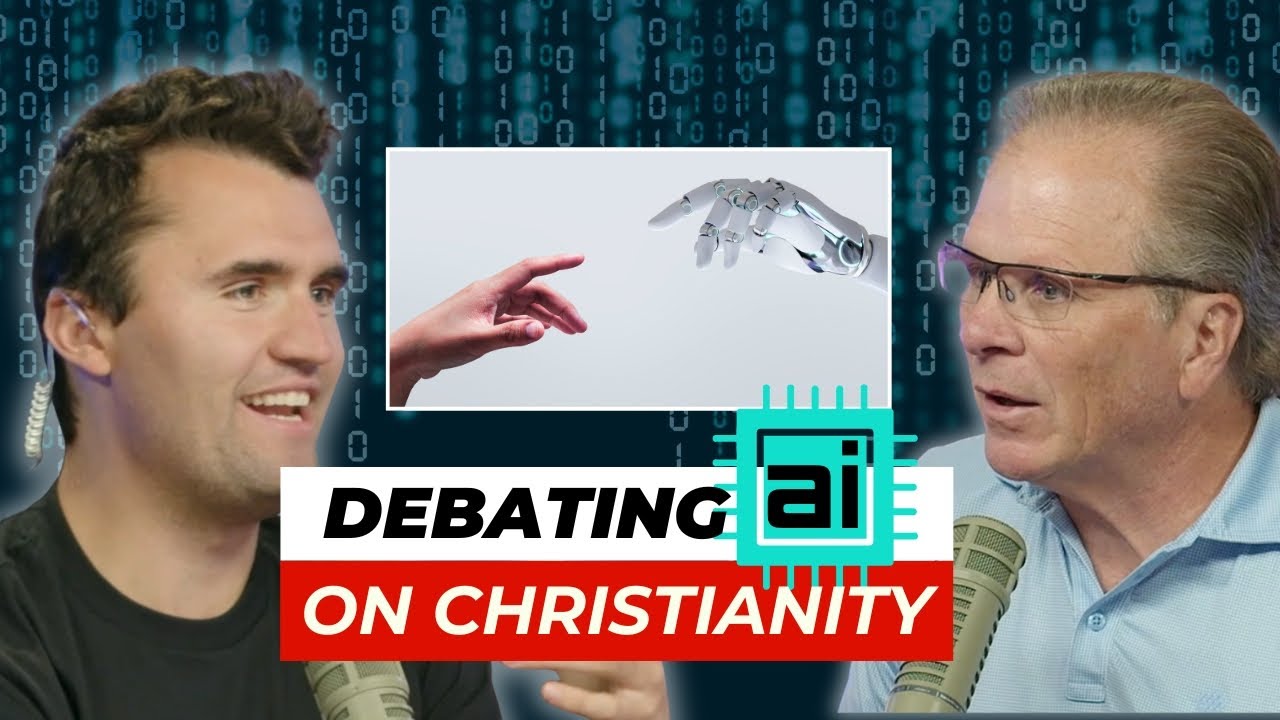
Hi, I'm Graham Lynch and welcome back to Fearless. Before we begin today's episode, I need to pause and acknowledge the heartbreaking moment we've all experienced and that we're all facing. And as you know, just days ago, our friend Charlie Kirk was tragically assassinated before the world. And our nation is still processing. Families are still grieving. And many of us are left stunned asking many questions and seeking God's comfort in this time of darkness. And in this episode you are about to hear, it was recorded just a week before Charlie's death. And my guest is Dr. Frank Turk who was a great friend to Charlie. And in fact, Frank was standing only a few feet away from Charlie when the murder took place. And that reality in itself makes this conversation all the more sobering and all the more urgent. And what you're going to hear today is not a reaction to the tragedy because when we sat down to record this in our studio, we had no idea what was about to unfold. But I believe with all my heart that God knew. And in his providence, this conversation speaks directly to the very moment we are in. And in this episode, we talk about why so many young people are walking away from faith, the hostility Christians face in today's culture, and how you and I can stand with confidence and clarity when the world seems bent on shaking our foundations. We talk about courage, conviction, and the cost of truth. And now listening back, these words land with a new weight because Charlie lived fearlessly. He spoke the truth no matter the cost. And Frank's call to this episode is to equip ourselves, our children, and our churches to defend the faith. And it is exactly the call we need to answer right now. So as you listen, I want to ask you to lean in. Hear these words, not just as theory, but as a charge for you today. Pray for Frank. Pray for Charlie's family. And pray that God would make each of us bold and fearless in the days ahead. This conversation is timely and it is challenging and it is desperately needed. Let's go now to our interview with Dr. Frank Turk. [Music] Welcome to Fearless. I'm Graham Lynch. Research shows that over 70% of Christian young people leave the church after high school, often because they aren't equipped to answer those skeptical questions and views that they encounter when they leave home. And college professors are five times more likely than the general public to identify as atheist. Statistics also show that more than half view evangelical Christian students unfavorably. And I can personally attest to that. I've talked about that here on Fearless, and we're going to talk about that here shortly. So today here on Fearless, we're talking about the biggest challenges facing believers in America, the youth exodus from the church. And to do so, I have brought back Christian apologist Dr. Frank Turk. So Frank, thank you for joining me again on Fearless. it's great being in studio with you. Last time we were on Zoom, but here we are at the Billy Graham Center, by the way. >> Yeah, I'm excited for our new studio. You're one of our first guests here in the studio, but I think the last time I had you on, we were to talk about Harry Potter. Yep. >> And everybody loved that. But today we're going to talk about um people leaving young people leaving their faith. >> Um but before we get into that, you know, Christian apologetics isn't usually something kids or even adults even think, "Huh, I'm going to do that when I grow up." >> Um I'm so curious, how did you become a Christian apologist? >> Well, first of all, most people don't even know what the word means, right? Like >> that was actually my next question. So just jump into it. Explain to those who are listening, what does it mean? >> Well, apologetics doesn't mean you're saying you're sorry. It actually comes from 1 Peter 3:15. In Greek, the word is apologia, which means to give a defense or give an answer. Always be ready to give an answer for the reason that you have. You know, give some evidence as to why you're a Christian. In other words, and actually when Peter was writing that, he was writing that in the context of suffering. People are persecuting you. Are you going to give them a reason as to why you're a Christian? So, apologetics means you're given evidence that Christianity is true. But just knowing that Christianity is true is not enough to have your sins forgiven because even the demons believe that, right? I mean, the demons know Yeah. >> that Christianity is true. >> They recognize Jesus, >> right? Right. Yeah. They even call him God. Isn't that interesting that, you know, there's a lot of people running around now going, "Oh, Jesus never claimed to be God." And in the scriptures, the demons are saying he's claiming to be God, right? So, they acknowledge that. In any event, it's giving evidence for what you believe. And the reason I got into it was because I grew up in New Jersey. And since I grew up in New Jersey, I was Catholic because it's the law. Okay? Look, if you're from New Jersey, you're either Catholic, you're Jewish, or you're a skeptic. You don't you don't really care. I was Catholic. I always believed in God. I knew there had to be a first cause, but I just didn't know who Jesus was. And it wasn't until I got into the Navy that I ran into the son of a Methodist minister. And I had so many questions for him, I kept asking him questions and he finally said, "Look, you just need to get Josh McDow books, >> Evidence, De Man's a Verdict, and more than a carpenter." Those were books written in the 70s. And so, this is about 1985 when he said this. So, I got those books. I read those books and I realized Christianity was true. After I got out of the Navy, I ran into Norman Gistler, who at the time was sort of the Michael Jordan of apologetics. And uh he was starting a seminary here in Charlotte, North Carolina in 1993. So my wife and myself and our three sons moved here in 1993 to attend seminary. And then I started writing books with him. One of them is called I don't have enough faith to be an atheist. And now I go to college campuses, high schools, and churches. through a ministry we developed called cross-examine.org which you mentioned. So we go to these places and we give them evidence that Christianity is true. And then we ask them what are you gonna do with this? It's true. It's up to you what you're going to do with it. >> Even growing up in a Christian home and when I thought of the word apologetics, I thought that was for the pastors and the theologians um and not for not for me. Is apologetics for everyone? >> Of course it is because we're told to always give a reason. It's not just >> apologists or not just pastors. It's everybody's supposed to give a reason. You're supposed to know why you believe what you believe. So from from a biblical perspective, we are to have evidence for what we believe. And also from just a pragmatic or rational perspective, I mean, why should we be a Christian and not a Muslim or why should be a Christian and not an atheist or a newager or a Hindu or a Buddhist or make up your own religion as so many people do today? The reason we ought to be Christians is because it's true. There is a God. Jesus came and rose from the dead. And by trusting in him, your sins will not only be forgiven, but you'll be given his righteousness. And there is an afterlife. And that's how you access the afterlife through the blood of Christ, which is of course what your grandfather and your dad and your whole family is all about. Showing people that this is really true and you need to make a decision. This it's it's it's not just somebody's philosophy. It's not just somebody's hope. It's true. You can look at it and see the evidence for it. >> Yeah. What I appreciate is you going to college campuses. We were just talking before we started and you said the first time you went to a college campus was at Appalachin State where Corey and I um >> You were there at the time? >> Didn't know that. Yeah. 2007 was right before I graduated and Corey was graduating in December of 2007. But it was so interesting because when I was in college, I had my own moment of reckoning with faith and it was I had went to Liberty University for two years. I'd fallen in love with a very handsome football player and decided I was going to transfer to App State. Well, my first class I walk in and it's a professor and she looks down at her nose like threw her glasses at me and calls me Miss Liberty. She hated Jerry Fwell Senior at the time. So reading these statistics about how professors, you know, are unfavorably to um evangelical Christian kids. But it was in that class I really had to learn uh to know what I believed and why. Being a Graham just wasn't going to cut it anymore, >> right? >> And Liberty really did help me prepare that because Liberty does want their students to know what they believe and why. >> But I had to gain her respect. And once she knew that I wasn't just some kid saying something my dad had I had heard my dad say, she really respected and we gained a relationship over time that she really loved me and I loved her and we became we were two polar opposites but because I could sit there and defend my faith in her class which was open debate all her I had her five times. >> What was her initial objection do you think? Or did she bring up objections? Did she try and say, "Well, it's silly for you to believe the Bible." Or >> No, I think she had these preconceived ideas already of who I was. And also, I remember one of her debate classes was the um it was this legal case that went on with Jerry Fwell senior and um Hustler magazine at the time, Larry Flint. >> Oh, yeah. >> Well, I had studied that at Liberty, so in her, it was journalism class. I was able to defend that. And when I did it with grace though and truth, >> when you do it with respect, there was nothing she could say against me because, you know, some kids would open up their mouths and had no clue what they were saying. >> How did she grade you? Remember? >> Oh, I don't remember now that I'm going to show my age. It's been a while since I've been in college campus. >> Uhhuh. But I mean, you don't remember her grading you down because of your beliefs? >> No, not at that time. things weren't as heated in college campuses as you're seeing today. >> But you know, and at the first she didn't even know I was a Graham. She later found out somebody said, "I hear you have Graham in your class." >> And she couldn't believe it. And you know, I eventually brought her to eat lunch with my dad. But as I said, it wasn't great. My dad can talk to anybody. >> Yeah. Yeah. >> So with all of that saying is how do we you know so I saw that urgent need at that time and you know we're this is over 15 years ago now. college campuses are more heated and we see kids >> walking away from faith. So with this episode, I want parents I want grandparents to see this need that we need to be teaching our children because I didn't grow up with that in our home. I wasn't being apologetics in our I mean I know all of us people think us grams might be learning and studying that on our side job but I didn't. I had to really dig deep because also as a woman there's not I don't feel like apologetics was been made for women and maybe maybe in ministry the church has weakened women I should say we weren't really teaching they would do an apologetics class for men but not women we can do this too >> like this is for everybody because it starts with us as women in the household with our children and those conversations we're having around our kitchen table and in our car rides. I wanted to acquip people, but studies show that more than half of college professors view evangelical Christian students unfavorably and professors are five times more likely than the general public to identify as atheist. So my question to you is how should students respond when they face professors who are openly skeptical or even you know on now college campus hostile to their faith? >> The best way rather than making statements is to ask questions. Like for example, if a professor says, well, science says that, you know, uh there is no God. Don't go into a dissertation as to why that's not true. Ask the professor, what do you mean by science? Because in reality, science doesn't say anything. Scientists do. There's no such thing as science says. In fact, when someone uses that phrase, science says, you ought to stop them and say, what do you mean by science says? Science doesn't say a word. It's scientists that say things. And many times the reason they say things is because they have a philosophical presupposition, a philosophical assumption that they bring to the data. Because look, all data needs to be gathered. And all data needs to be interpreted. And who does that? Scientists do that. Scientists science doesn't do anything, right? And when we look at the world around us, there's only two possibilities. Either this universe was created by intelligence or it wasn't. Those are the only two possibilities. And when you look around the universe and you see how fine-tuned it is, and you see how designed life is, in fact, there is in every living thing DNA, which is a a program. It's a code. It's a it's a software program. And wherever we see a program, we know there's a programmer. Wherever we see a code, we know there's a coder. Wherever we see a message, there's a mind. And I always I always give the example to kids on college campuses. I'll say, um, if you're walking down the beach and you see in the sand, John loves Mary, what do you assume did that? Do you think the waves made that message? Do you think crabs came out of the water and etched that into the sand? No. You're going to say that that had to be the product of intelligence because you know that John loves Mary. A message like that only comes from a mind. Well, if John loves Mary requires a mind, how about a word or a sentence that's 3.2 billion letters long? That word is in every one of your 40 trillion cells and every one of my 40 trillion cells in DNA. So, if John loves Mary requires a mind, a message 3.2 billion letters long requires a mind. Right? So, I would just ask the person or the professor questions. Well, what do you mean by that? And how do you how do you define science? And why do you think how do you think science has disproven God? And how do you define science? You know what many of them will say? Some some of some of them will say, well, science is the study of cause and effect inside the natural world. I'll say, well, if we take that definition, which is a philosophical definition, right? All definitions are philosophical. Science doesn't define itself. People define what science is. If you're saying that all causes or or science is just the study of causes inside the natural world, how could it tell us that there's no cause outside the natural world? Well, it couldn't. So, it depends on the definition. So, I would just ask a lot of questions. And the reason you don't make statements as much as you ask questions is because you're the student, the professor's the professor, and you want to challenge his or her assumptions and see if that person has any evidence for their position. If they try and flip it back at you and they go, "Oh, Miss Graham, you probably believe the Bible's true. Why don't you stand up here and just tell everybody why the Bible's true. Don't take the bait." Why? Because the professor controls the microphone. The professor at any point could say, "That's enough, Miss Graham. Sit down." Or can go in another direction or do whatever the professor wants. So, you don't have the freedom to actually make the case. So, what you want to do is poke holes in the case of the professor by asking the right questions. And you know what's going to happen after the class is over? They're going to go, "Hey, that was a really good question. He didn't really answer it, did he?" Or, "She didn't really answer it, did she?" No. So, ask questions. What do you mean by that? How'd you come to that conclusion? Why do you think that's true? How do you define science? See what they say? >> Research shows that 70 to 70% of Christian youth leave the church after high school. Is that still true? >> I think it is. Although >> even though we see this revival happening >> although things may be changing thankfully for the better right now but still look somebody's discipling your kids. You know what's probably discipling our kids more than any? A screen somewhere, >> right? An iPhone, an iPad, a Droid, YouTube, Tik Tok. Those things are discipling our kids. And so if we don't make an overt effort to show kids why Christianity is true, they're going to be pulled away by distractions. They're going to be pulled away by skepticism online. They don't have the capacity. Even adults don't have the capacity to decipher truth from error online, right? I mean, it's there's too much going on. >> I'm already having those conversations. My kid doesn't even have a cell phone. Why am I not going to give her a cell phone? And I have these conversations of how old is truth? Uh she's 12. >> Oh, yeah. Of course, she wants a cell phone. our kids have or friends have it, right? >> And not going to happen. But why? And I said, even for mom, there's some dangerous information out there that sometimes I don't know if it's true or not. >> That's right. >> And so, you know, to protect her mind. But when we look at, you know, those going into college and leaving their faith and if we're going to introduce apologetics to our children to help reverse that trend, at what age is a good time to introduce? >> Very early. We have curricula at cross-examine.org down to second grade. on apologetics. In fact, the book that I co-wrote with Dr. Gser called I don't have enough faith to be an atheist. We've put it in a second to fifth grade level and a sixth to eighth grade level and then ninth grade and up can handle the regular book and the regular curriculum called I don't have enough faith to be an atheist. But you have to start very early and it's easy to start early because kids naturally believe in cause and effect. What I mean by that is when a kid sees a butterfly or a hummingbird, they go, "Mom, who made this?" Like they they intuitively know this is a created being. In fact, even kids in atheistic homes believe that the atheist parent has to talk their kid out of their natural intuition about cause and effect. And so you can start very young with kids saying, "Look how beautiful a day we have here. Look at the the sky and the trees and the and the deer and the you know the birds and wow isn't it beautiful? Isn't this amazing creation that God created? And this is just trading on what Paul says in Romans 1, right? He says God's invisible qualities and divine attributes are clearly seen from what has been made. >> We we know there's a creator because there's a creation. And this is what we do. And you know people people ask me, "Well, Frank, how do you know that God exists?" And I say I know God by his effects. Right? If there's a creation, that's the effect. I'm reasoning back to a cause of creator. If there's design in the universe and design in life, that's the effect. I'm reasoning back to a cause of designer. If I have a moral law written on my heart, that's the effect. I'm reasoning back to a moral lawgiver. If I have the capacity to know things outside of my skull, I can reason. There's these laws of logic, and I can use mathematics to describe the universe out there. That's the effect. I'm reasoning back to a mind. If there's evidence a man predicted and accomplished his own resurrection from the dead, that's the effect. I'm reasoning back to who could have caused that? Only somebody like God. In fact, we even do that in our personal lives when we think God has answered our prayers or something. The effect is the is the prayer and the cause we say, "Oh, God must have caused that." We're always reasoning from effect to cause. And that's what science scientists do. They have an effect. They're trying to figure out what the cause is. And the queen of all sciences, long before you and I went to college, used to be theology. Why? Because it gives you the big picture of truth among all academic disciplines. If God exists, and he does, then how does physics and biology and anthropology and psychology and philosophy and all of these attributes, all of these academic disciplines, how do they fit under one big rubric of truth? So, we understand what reality is all about. You know, when you went to university, you used to get unity and diversity. Now, we don't get that anymore. Right? People can know the mating habits of the South African subsaharan fruitly. That's what they study. But they have no idea what the meaning of life is, right? They're they're really specialized in this very specific discipline, but they can't see the big picture. And what theology does, it gives you the big picture. >> Would you have said one of the trends early on with people walk kids walking away from their faith would have been science. >> They say what the tool would have been. >> Yeah. They say that but >> and is that trend changing now? >> Well, yeah. I think it's changing and here's why. >> And what what do you see as the biggest stumbling block for youth today? >> Okay. It used to be 20 years ago, we used to go on campus and give people evidence that, you know, say the universe had a beginning, so they must have a beginner. And we'd get a lot of push back on that. We don't get that much push back on that anymore. In fact, most people are agreeing, okay, the universe had a beginning. Do you know what the top three objections to Christianity are today? morality, morality, and morality. In other words, they don't want to be there to be a moral standard outside of themselves because then they're accountable to it. This is why when I go to a campus and somebody gets up to the microphone, if they're not a believer, I'll normally ask them this question. If Christianity were true, would you become a Christian? And I've had atheists stand at that microphone in front of hundreds of people, and they'll say, "No." No. >> Why not? Wait, I thought you claimed to be reasonable. How is it reasonable you wouldn't believe something that was true? Because it's not a matter of reason. It's not a head problem. It's a heart problem. They don't want it to be true. They don't want there to be a God. >> They don't want to come face to face with their sin, the consequences of their sin. >> They want to be God over their own lives. They're not on a truth quest or on a happiness quest. And they're just going to believe whatever they think is going to make them happy. And the problem is you can make yourself, you know, kind of happy over the short term, doing a lot of fun, but ultimately selfish and sinful things, but over the long term, it's a disaster. And every parent watching us, everybody over 40 watching us knows that this is true because many of us have tried it ourselves, right? I'm going to live live my life my only, you know, my way, do whatever I want to do, whatever I want to do it with whomever. No, you're not. Not long term. If you do that, you're going to wind up divorced, addicted, broken, alone, and probably prematurely dead. Because if you want contentment, you got to go straight through truth. And Jesus is the truth. But people don't figure that out until later in life after they've, you know, there's a whole bunch of bodies in their past. >> I haven't really looked into this yet. Something I keep seeing on social media pop up. And like I said, I haven't researched what, but I feel like what some young people are struggling with is like the authorship of the Bible >> that this is almost like a trend. And I think a few social media influencers have kind of talked about it. And I I've talking to this one young kid um or he was talking to my husband and just started questioning things because he had seen it on social media about the authorship of the Bible. Is that a new >> It's got to be true then, right? If it's on social media. >> Yeah. Just like anything they follow in politics, it must be true. I say that is as we're talking about different trends that they struggle with, whether it was science now, morality. And I remember the first time I never struggled with questioning the authorship of the Bible. It just wasn't something I personally struggled with, so I didn't really look into it. Mhm. >> Then I remember this first time this a family member went to college, came back after their freshman or sophomore year. And that was the first time I heard a Christian challenge authorship of the Bible. You know, just who put it together and what boy. And then fast forward, I see that happening a lot now with young people. Do you see that as a trend? Yeah, there are some people that will question that, but >> I've just seen that on social and I know that's something you've dealt with, but I almost feel like that is a new like a rise. >> Yeah, let's just look at the gospels for a second. >> I think Joe Rogan talked about it, so maybe that's why it's so popular. >> Well, it Yeah, in fact, yeah, he did have somebody on there recently who didn't know what they were talking about, but yeah, let's just look at the Gospels for a second. If you were making up biographies of Jesus, would you pick Matthew, Mark, Luke, and John to be the authors? >> Would I? I mean, just from an evidentiary perspective, no, you you wouldn't pick them. You might pick maybe you wouldn't pick Matthew. Matthew's a tax collector, right? He's he's hated. He's a traitor to the Jews and he's writing a gospel to the Jews that you're not picking him. Mark, who's he? Mark's a guy that, you know, abandoned Paul on one of his missionary journeys. And Paul was so disgusted with him, he said, "I'm not taking that guy again." What does he wind up doing? He winds up uh writing down the recollections of Peter, right? Luke, who's Luke? Luke's a medical doctor. He's not even an eyewitness. And by the way, neither is Mark. They're not eyewitnesses, but they know eyewitnesses. So Luke interviews eyewitnesses. John, okay, John, you might pick John. John's a disciple of Jesus, a young man. If you were making up the authorship of the Gospels, you wouldn't you might pick John. You wouldn't pick the other three, right? You would pick Peter. You might pick Thomas, right? You might pick somebody that had prominence in James, maybe. How about James the half brother, right? You would pick the big dogs, wouldn't you? Gospel writers aren't those people. You know what happens? A hundred years after the gospels are written, we find a gospel of Peter pop up. We find a gospel of Thomas pop up. A gospel of Judas pop up. A gospel of Mary Magdalene pop. Why are these these name big names popping up later? These people have been dead for hundred years. Well, because people later are trying to pass off their writings as authoritative by putting these names on those gospels when they weren't written by those eyewitnesses. There has been no manuscript ever found that has a cover page on it by Matthew, Mark, Luke, or John that didn't have their name on it somewhere or that were anonymous. You hear this, "Oh, the gospels were anonymous." No, they weren't on on the on the manuscripts that we have that have cover pages. Their names are on there. We we know who wrote them. And you wouldn't pick those people if you were making this up. You would pick other people. You might pick John, but not the other three. So, just from that evidence alone, and by the way, across the ancient world, those gospels were never attributed to any other name. They're consistent across the ancient world in distant locations where you know you couldn't text someone, hey, make sure you call the Gospel of John the Gospel of John. Okay, they this is hundreds of miles away and they're still calling those Gospels what they were originally called. So, no, I don't have any problem with the authorship. We know we know all the books that Paul wrote. And by the way, the evidence or some of the creeds in the text predate the books themselves. What do I mean by a creed? A creed is something that was memorized orally when it first happened. Like the most famous creed is 1 Corinthians 15:es 3 to8 where Paul says what I received from others I'm passing on to you. That Christ died that Christ rose from the dead according to the scriptures that he appeared to all these people. That creed even skeptics like Bartman admit go back to the event itself the crucifixion itself. Paul just wrote it in First Corinthians in 55 AD, but that thing existed for 20 years. So, the sources of the of what's in the the documents are earlier than the documents themselves. Gary Habermass at Liberty University. I don't know if you ever ran into him while you were up there. He's discovered at least 41 creeds in the New Testament. And he's probably now known as the top scholar in the world on the resurrection. Gary Habermass. He's written now three out of four thousandpage books on the resurrection. His magnumopus mag Gary's in his 70s now and he's at liberty been there for many years. Um and he points out all these creeds. No, the scholars who are skeptical of all this are just not getting their facts straight. >> Well, I asked that question just because I see it as a trend on social media that young people might, you know, click on and see. What are some other trends that might be almost like a little red flag if a parent heard their child saying that right now? Like, hm, where did they where did my child hear that? >> Like, what are some red flags? >> The big trend is from the so-called progressive Christians that the atonement was divine child abuse. You may have heard that, right? That um it's all about social justice and it's all about affirming LGBTQ because love is love, you know, >> which I say is the greatest stumbling block. >> It's morality believers. Yeah. >> Yeah. It's all morality. Um, but look, if Christianity is true, and it is, then you don't help people by affirming things they want to do that are not right. You help people by trying to help them move away from that behavior. Uh, Thomas Soul, who is now like 95 years old and says everything, well, I don't even think Thomas Soul is a Christian, but he said this. He said, "When you want to help people, you tell them the truth. When you want to help yourself, you tell them what they want to hear. How often do we tell people what they want to hear rather than what they need to hear? The reason we tell them what they want to hear is because we're protecting ourselves. We don't want them mad at us. We don't want the blow up. We don't want the consternation. We don't want the the tension. So, we sacrifice them for our comfort rather than sacrificing our comfort for their benefit by telling them what they need to hear. for parents, you know, getting ready to send their kids off to to school. How can they help equip their children to stand in confidence to be able to and and I know you said ask questions when they're in there, but to be able to really prepare them to stand in confidence with the challenges and ask questions and be challenged, but do it with grace. >> Well, if they haven't started young and they're now about to go to college, it's going to be hard. Let me just tell you that >> they can invite them to invite you to their church. >> Yeah, I can go to their church or they can go to our website crossexamine.org. We have a lot of we have 25 2600 videos on our YouTube channel. Many of them are complete presentations of I don't have enough faith to be an atheist on a college campus. But here's what you you shouldn't do. Hey, here's a book. Read it. The only way you should do that is if you read it with them. You know, you know how many times, in fact, our mutual friend Jay Warner Wallace and I do a lot of presentations together and when we're giving our presentation, we're at the book table afterwards, they'll say, "Oh, my son went off to college and now he's an atheist. Do you have a book he could read?" You know what we say? No. Not going to matter. Should have thought of that before. Just being honest, right? You're not going to give a kid a book and tell him or her to read it while you don't read it. Right? If you want to ground your kid in the truth, then go through it with him or her, right? Let's let's go through the whole thing together. Take the I don't have enough faith to be an atheist online course, which we have, or read the book together and work through it together. But don't just think that, oh, my kid needs to know this, but I don't. It's not going to wash. That's why I love my kids at this age was relearning things whether it's the history book with them or we're doing science terms and my son they are in a really hard school. He was coming up with terms I had no clue. I do not remember these words. >> And he goes why are you laughing mom? I'm like I don't know when you're going to use these words again but you got to know them now. But I love relearning it with them. >> Sure. And I think back like just I've um watched some videos with them or going I haven't gone through their curriculum but to do it with them is we weren't taught that you know growing up in the '9s. I wasn't learning how to answer these questions because some of these questions really weren't being asked in a in a school classroom at the time. I grew up in a public school. I had the majority of Christian teachers and I can remember the ones that weren't. I I remember some things happening as a kid, but they just weren't as forceful as they are now, or as aggressive, I should say. >> Well, the reason for that though is when you think about it, I think it was either 2007 or 2008, that's when the iPhone came out. Now, everybody has the world of skepticism on their phone and it's being pushed at them every day. Now, the advantage of that, of course, is we can also put positive messages on that as well. And that's of course what we do and other people do uh to try and give them evidence that Christianity is indeed true and answer these questions. But 30 years ago when we went to school, we didn't have to deal with this kind of stuff because it wasn't accessible or as accessible as it is now. Now every kid knows every skeptical argument against Christianity because it's fed to them every day on Tik Tok or YouTube or wherever Instagram. So we have to counter that by putting the positive messages out. And that's what we try and do at crossexamine.org. So, >> going back to some of the trends you're seeing. Yeah. Whether um you know, justice, love, >> has there ever been a moment, you're in a college campus and a question is getting asked and what is like the wildest question I should ask that you've been >> Oh, wow. Well, it's so wild you wouldn't It's You're never going to hear it. I had one guy say, "I think Jesus was a mushroom." >> Oh, cuz he's been smoking mushrooms. >> Yeah. I guess that's my Maybe that's what you're doing, man. Yeah. Right. Exactly. I mean, really bizarre stuff. That's not the kind of stuff you need. >> Okay. What was there one that you said in that moment? Like, Lord, I need you to give me the wisdom to answer this. >> Oh, sure. I mean, you know, the hardest questions to answer really, are in fact, let me put it this way. Questions aren't hard to answer. They're just hard to answer in two minutes. You know, like, why does God allow certain evils? I know why God allows evil in general because we live in a fallen world and we have free will. And if he were to stop every evil, this wouldn't be a free world. But, you know, why does why did God allow the uh those kids in the church last week to be killed, right, in the shooting or whenever that was? Um, I don't know why he allowed that to happen. But I know why I don't know why because I'm inside of time. I know very little of the past, very little of the present, and nothing of the future. However, God can bring good from evil, even good we can't see. And and the greatest example of that is Jesus himself, right? He is the only truly innocent person in the history of the world. And he is treated severely unjustly and murdered so we could have our sins forgiven and be given his righteousness. That was the greatest evil ever done to a completely innocent human being. And yet it brought forth the greatest good. So God can bring good even when we can't see it. And there's always a ripple effect. You know the ripple effect that every event today ripples forward to affect trillions of events later. We can't trace all those ripples, but God can. Maybe a baby dying today ripples forward to bring forth a great evangelist who 500 years from now saves millions of people. Can we trace all those ripples? No, we can't. But God can. Now, can I exhaustively go into that answer in two minutes? No. I can just give them what John Lennox would call a doorway to an answer. But those are the hardest questions to answer or questions about, you know, Old Testament slavery or uh it's not the kind of slavery we had here, but it's still an issue, right? Um or why did God kill the Canaanites? Or, you know, these kind of questions. I can give a two-minute answer, but it's not a complete answer. And a lot of times, you need to know the context of the passage. You need to know the original language. Did you need it? I mean, you can't do all that in two minutes. That's the hard thing. And so, a lot of times I'll just say, "Well, you need to get this book or you need to get that book or I'm just starting an answer. The answers completed in this book." So, those are the harder questions to answer. >> As much as we see going on college campuses right now, are you starting to see a shift? >> Yes. >> In this next generation? >> Yeah. And >> what are they hungry for? Well, I think that part of this is due, believe it or not, I think the shift maybe began around COVID. And why do I say that? Because evil became more real during COVID. Not just the pandemic itself, but what people did in the pandemic in the sense of well, we're going to shut everything down and and you're not going to be able to interact with people. you know, your friends, your family are basically biohazards. And people got depressed, they got anxious, and they began to look for stability. And where do you get stability? You get stability from things that are eternal, that don't change. And so now people started realizing there's a lot of evil in the world. If there's evil, there has to be good. What is the source of good? Things aren't supposed to be this way. If they're not supposed to be this way, there must be a way they're supposed to be. But that can only be true if God exists. And so people are now looking for stability. They're looking for security. They're looking for something that doesn't change because things change so quickly. And there's so much uncertainty and anxiety in the world. And Christianity now people are beginning to investigate. In fact, my friend Charlie Kirk, I don't know if you know Charlie, but he's doing a lot of work on college campuses. In fact, he and I are teaming up on a few things right now. And Charlie's been primarily in the political world. And one thing I always love about your dad is that he just tells the truth no matter who's listening. And Charlie does the same thing. And Charlie, despite the fact he's very deep in the political world, his number one goal is to get people converted, to get to get people to be saved, to get them to be discipled. He says, "Politics is peanuts compared to the gospel." And it is. But you know where we're finding on college campuses and even off college campuses, people are going, "Hey, man. This guy Charlie Kirk is really smart." And he's an evangelical Christian. I didn't think evangelical Christians were smart. He must know something. I don't know. Maybe I ought to check into this. I mean, he's had billionaires call him who say, "Charlie, you're one of the smartest people I know in politics. How come you're a Christian?" And now they're investigating Christianity. And there's a lot of people out there who are conservative politically, but they don't know Jesus. And you know what they're seeing? They're seeing people like Charlie Kirk being an on-ramp to Christianity. They're going, "If this guy's a Christian, I'm already conservative. Maybe I ought to check into Christianity. I can get fellowship at this church. I'm going to check this out." So we now see people moving to Christianity because of politics. And it's always been thoughts the other way. You know, if you get political, people are going to run away from the church. Well, some will, but many more may be coming to the church now precisely because of that. >> I think too when we look at in the world we're in with politics and social media, that we have to be careful even as Christians or conservatives, whatever you want to claim to be, is not to be sheep. >> Yes. not to do what the conservative talk show host is doing, not to be doing because to me >> and anybody that's followed me for a long time knows I I love politics. You know, politics and faith are two things you're not supposed to talk about. >> That's right. >> But where I've seen a danger is and where people I want my listeners to understand is is that we are to be sheep to our shepherd and that's Jesus. not to talk show host here, not to a social media influencer here, because I see so often Christians, strong believers, will say something that I hear so out of there. >> And I'm like, where'd you get that? And it's because, well, so and so said this, you know, and they believe them to be. So, I just want to encourage those who are listening, no matter how old we are, I know we've been talking about youth, but we as believers have to know God's truth so we can decipher what we're seeing and hearing. Mhm. >> that we have to be able to stand strong in this world to be able to know God so intimately that we'll be able to stand in strength and take action. >> And I say that is because I, you know, we're talking about youth, but we're also talking about ourselves. It doesn't matter how old we get. Oh, >> yeah. >> That we have to be able to um stand in that because it is an avenue. The world is watching >> and the world does seek truth. That question of what is truth? you know that Pontius Pilate asked before Jesus, they're still seeking truth. And whether it's through our actions, through the things that we say, can we give an answer to what we believe, we'll all point a hungry world, a world that is searching, a world that is dark to the one true light, and that's Jesus. >> That's right. That's where we want to turn them to. And by the way, I I know that politics can be a minefield for some, but I think there's a way of pointing out that first of all, we take it for granted here in America, but whenever I want to show people that politics are important, you know, they say, "Oh, I just preached the gospel." And I say, if you think the gospel is important, as I do, you better think politics are important. Why? Go to North Korea. Can you preach the gospel in North Korea? No. Why? Because politically they ruled it out. Go to Iran. Go to Saudi Arabia. any churches in Saudi Arabia? No. Why? Because politically they've ruled it out. We take it for granted here. We have religious freedom. That's not the way it is around the world. And if we don't protect religious freedom out here, then the the gospel is going to be muffled here. You say, "Well, sometimes the gospel >> this is going to be my biggest pet peeve to hear what you're about to say >> advances through suffering." And my my answer is sometimes it does, sometimes it doesn't. But our role is to fight evil and leave the results to God. We don't wish suffering upon ourselves. We fight evil and leave the results to God. I I mean I don't think the church in North Korea is is blossoming right now. Okay. >> I say to whom much is given, much is expected. And we've been given the gift of freedom. Freedom to preach the gospel. And God is going to hold us accountable to that. >> Do we preach the gospel? And that's the simple gospel, the truth. So clear >> and if we don't, that has consequences. And it's just like you said earlier, we might sacrifice that to comfort ourselves, but if we are to know truth, we are to save those people. We have the lifeline and we've been given that gift to preach it. >> That's right. >> And so I believe God holds us accountable to that. >> He does. He does. And by the way, um there's one other thing that I think is important to point out here because you know when we get behind certain politicians like people say, "Well, you know, you've supported Trump, right? and look at all the bad behavior that Trump's engaged in. And they'll say, "Well, Trump is evil." I think the way to respond to that is say, "Yeah, of course he's evil. So are the Democrats. So are the Republicans. So are you. And so are me. We're all evil. That's why we need a savior. I'm I'm here to show you the way to the savior. Uh, of course we're all evil, but that doesn't mean that certain people might not be better at protecting innocent people from evil and punishing wrongdoers, which is the number one role of government according to Romans 13, than other politicians. And in my view, Trump is way better at that than the Democrats have been. They've got Democrats have an open border. Democrats are allowing criminals to go free. Democrats don't even have bail or that it's there's no bail anymore. Just let them go, right? They're not taking criminals off our streets. The number one role of government is to protect innocent people from evil. That's what the Bible says. That's what James Madison famously said that if men were angels, no government would be necessary. I mean, if we were angels, we need a government. No. The very reason we need a government is to protect innocent people from evil. One party, it appears wants to do that and the other party doesn't. >> And I say, look, I'm a Christian. I'm not a Republican or a Democrat. If 20 years from now those roles are flipped, I'll be voting Democrat. Yeah, I say the same thing. What is going to protect my freedoms the longest, >> right? >> That freedom is to worship God. And >> that's right. >> I think when you want to look at politics, >> one side has been very strategic in entering our college campuses. And that's what we came to talk about today. >> And that we I think so many as the Christian families were on our heels and not ready to fight that battle. And Satan has been fighting that battle on our college campuses for not just on the last 10 years. This has been going on for the last, you know, 50, 60 years in the academic world. >> That Satan had a strategic plan and that we have to have a game plan to go to battle and God gives us his word, which is the game plan. And I'm thankful for you at cross-examine to give us tools to help to quit parents, to help equip grandparents because I can't tell them enough like and I I'm in this stage. My kids are getting ready, you know, 12 years old, 9 years old. It's not just okay, that's facts. They want to know why. >> That's right. >> Now, and that's at the moment. I got to be able to answer those questions. They ask >> they ask me questions all the time I can't answer. >> But I'm like, I'll get back to you on that one. >> Well, that's good. That's what you need to say, If you get a question you can't answer, you say, "Well, that's a great question. Let me go find out. >> Let me go to you or Jay Warner or Wallace and find out that answer real quick. >> Let's look it up together. Let's do some research. >> Yeah. And I think that's so important for parents to know that they're going to Our kids are so smart. My 2-year-old can ask questions sometimes. I'm like, that was really good. I didn't even know how to answer that one. But we have to be ready. We cannot sit because God expects us to take action for him. >> We are the primary disciplers of our kids. Not the youth pastor, not the pastor, not Sunday school. >> And I think people are starting to wake up to that. >> Yeah. our parent the parents are >> yeah we're we're waking up and seeing that our time with our home is very critical and I say our children are like olive shoots around our table well scripture says that I don't say that let me clarify >> uh in Psalms it says that and olive shoots have like 12 to 15 years before they sprout and to produce on their own >> that's right >> and we have that short time with our kids so thank you my daughter's just asking these questions so I'm looking forward to getting some of your youth curriculum um for my kids because it makes it exciting to them too when they can answer questions like that Oh, I got to tell you one last thing. We have this program called Train Your Brain. It's about logic, and it's for sixth to eighth graders. So, we tell parents to take it, too, because it's written for sixth to eighth graders. Anyway, >> yeah, I need it. I'll take it. >> If your sixth to eighth grader takes this class, I'm warning you right now, >> she is going to become impossible to live with because you're going to say something and she's going to say, "That's a genetic fallacy, Mom." >> Well, they're in Christian school and she's already too smart. like you argue with I'm like, "Oh my gosh, Corey, she is actually right." So, she I'm already there. She's a smart cookie. And I I am thankful. I tell my kids all the time, their school is a privilege to be able to go to. And it's the school that goes back to the old school way of teaching. Oh, good. >> So, you know, first it's memorization. Just memorize. Yep. >> And then what does that scripture say? >> And then why does it say it? >> This is in Boone. You're doing this >> in Boone. And I mean, they're they're already taking, you know, being able to do public speaking. So then they can defend their faith when it >> picking rhetoric. Oh, it is tough. >> Classic. >> We just moved there and my kids were like, "Whoa, what is this?" >> But it's so important and I I've seen the origins of going back to the old way the kids were taught. So, thank you so much for joining me today here on Fearless at the Billy Graham Evangelistic Association. We will have you back because you're local here in Charlotte. So, I encourage anybody listening today, thank you for joining Frank and I's Conversations. Check out Crossexamine, as you said, on YouTube. They have so many resources there. but also encourage you if this is something that's been on your heart or your friend's heart, look to inviting him to your church, youth groups, or hey, maybe our college student, invite him to your college campus. Once again, thank you for joining. [Music]