Does the Right Have a Censorship Problem Like the Left When It Comes to Critical Race Theory
Enjoying this? Share it with someone who needs to see it.
Up Next
Charlie Kirk Explains Why the American Church Must Rise Up Against Tyranny and Technocracy Before It's Too Late
2:09:55
Charlie Kirk on Critical Race Theory's Attack on Free Discussion and Civil Discourse in America
1:34
Charlie Kirk on Christianity, Conservatism, and Critical Race Theory at UNC Charlotte Campus Event
51:23
Does the Right Have a Censorship Problem Like the Left When It Comes to Critical Race Theory
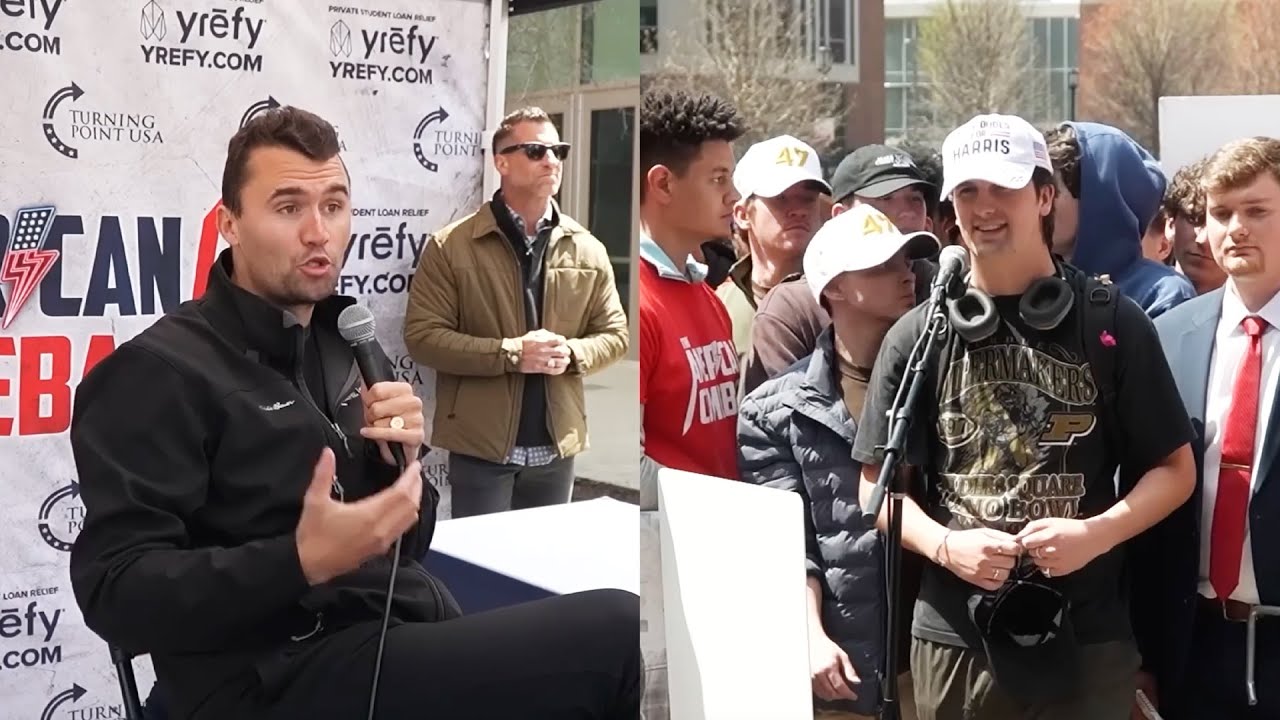
A student challenges whether banning critical race theory in schools represents censorship similar to what the left practices. The conversation explores the distinction between curriculum control and free speech, using provocative examples like eugenics and Nazi ideology to test the boundaries. The exchange reveals how taxpayer funding creates a different standard than pure censorship, showing why citizens have the right to determine what their tax dollars support in public education without violating free speech principles.
A student posed a pointed question about whether conservative efforts to restrict critical race theory in schools mirror the censorship tactics commonly employed by the left. The question cut to a fundamental tension in American education: where does curriculum control end and censorship begin?
The student framed the issue around professors who might want to include critical race theory in their teaching, suggesting that preventing them from doing so could violate their free speech rights. This framing placed the burden on defenders of curriculum restrictions to explain how their position differs from the speech suppression they criticize on the left.
Curriculum Versus Free Speech
The response drew a clear distinction between banning speech and controlling curriculum content. Curriculum represents the official, tested, and taxpayer-funded content that schools are required to teach. It's determined through democratic processes and represents collective decisions about educational priorities.
Free speech, by contrast, protects individuals from government punishment for expressing ideas. A professor maintains the legal right to express views on critical race theory or any other topic. However, that right doesn't automatically translate into a taxpayer-funded platform or inclusion in official curriculum standards.
Critical race theory, according to this view, should not be part of the curriculum in taxpayer-funded schools. This position doesn't prevent professors from discussing it, but it does mean schools aren't required to include it in official teaching materials or testing standards.
Testing the Principle with Extreme Examples
To clarify the distinction, the conversation employed provocative hypothetical examples. The first involved eugenics, the discredited pseudoscience used to justify racial hierarchies and forced sterilization programs throughout history. Should taxpayers be required to subsidize the teaching of eugenics simply because a professor wants to include it?
The second example pushed even further: what if a science teacher in a taxpayer-funded school declared that Hitler was right? Should that teacher continue receiving public funding? The student acknowledged that probably wouldn't be acceptable.
These extreme cases illuminated the core principle: having the right to say something doesn't create an obligation for taxpayers to fund it. The government cannot arrest someone for expressing odious views, but citizens have no duty to subsidize those views through public education budgets.
The Taxpayer Funding Distinction
The resolution to the apparent contradiction lies in understanding the role of taxpayer funding. Citizens who fund public schools through their taxes have a legitimate say in what those institutions teach. This isn't censorship in the traditional sense because no one is being silenced or punished for their speech.
Instead, it represents democratic accountability over public institutions. When parents and taxpayers object to curriculum content, they're exercising their own rights to control how their money is spent and what values their children are taught in public schools.
A professor remains free to write books, give speeches, post on social media, or discuss any topic outside of the official curriculum. The restriction applies only to what schools are required to teach as part of their taxpayer-funded mission.
Why the Comparison Fails
The original question suggested that conservative curriculum restrictions are equivalent to leftist censorship. However, the conversation revealed why this comparison doesn't hold up under scrutiny.
Leftist censorship typically involves deplatforming, demonetizing, or punishing individuals for expressing ideas—attempting to silence them entirely. Curriculum decisions, by contrast, simply determine what schools will officially teach and test. No one is being silenced, fired for their views outside the classroom, or prevented from expressing their ideas in other forums.
The student's acknowledgment that the distinction "made a lot of sense" suggests the argument successfully reframed the issue. What initially appeared as hypocrisy—condemning censorship while restricting certain teachings—actually represents a consistent principle: democratic control over taxpayer-funded institutions doesn't constitute censorship.