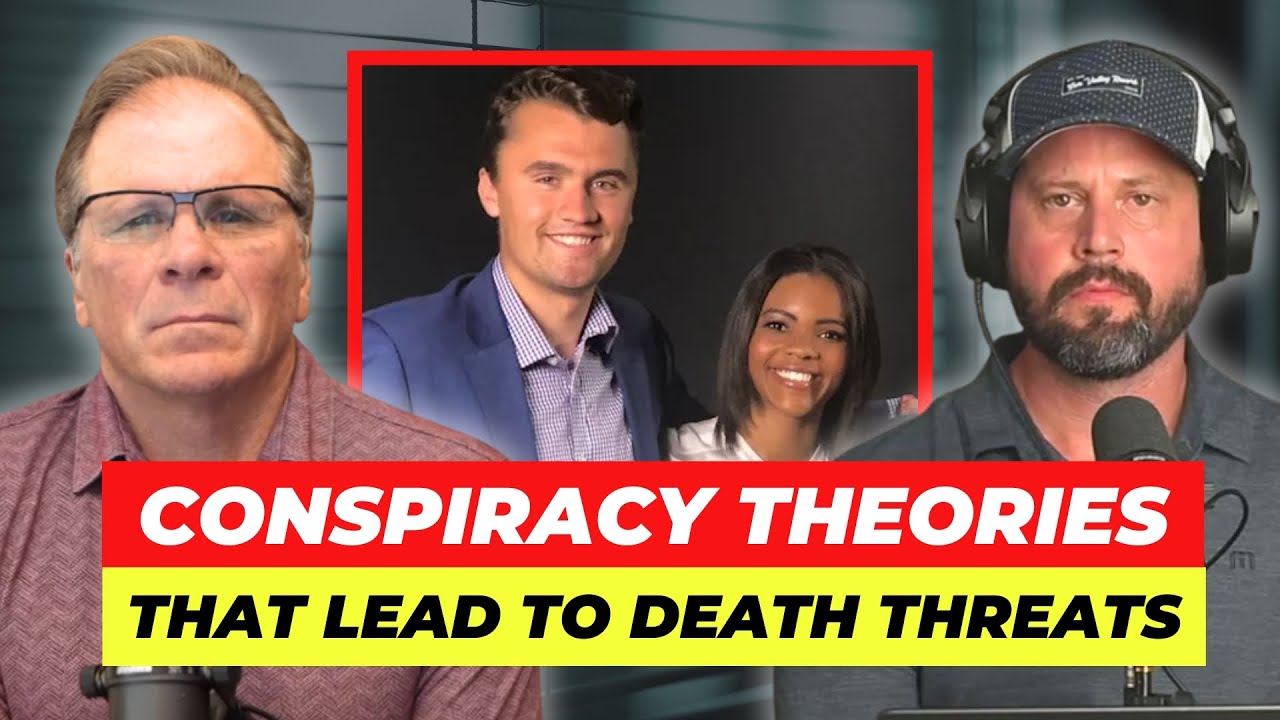
Frank Turek Reflects on Charlie Kirk's Martyrdom and Addresses Conspiracy Theories Surrounding His Death
Enjoying this? Share it with someone who needs to see it.
Up Next
Candace Owens Exposes Turning Point USA's Psychological Manipulation After Charlie Kirk Assassination and Questions Official Narrative
1:04:08
Candace Owens Breaks Internet With Hunter Biden Interview and Questions Erika Kirk CEO Video Authenticity
51:07
Josh Hammer Speaks Out After Murder of Friend Charlie Kirk and Candace Owens' Accusations
22:19
Frank Turek Reflects on Charlie Kirk's Martyrdom and Addresses Conspiracy Theories Surrounding His Death
Frank Turek opens up about the aftermath of Charlie Kirk's murder, addressing the conspiracy theories that emerged, including false accusations about himself signaling a shooter. Turek explains why evil's existence actually proves God rather than disproves Him, defends Charlie's unwavering support for Israel, debunks claims that Charlie was converting to Catholicism, and describes Charlie's legacy as a combination of Rush Limbaugh and Billy Graham. He emphasizes that Charlie was killed for his faith, not just his politics, because his political views flowed directly from his Christian worldview.
Frank Turek begins by addressing how he has processed the nearly two months since Charlie Kirk's death. His answer is rooted in classical Christian apologetics: the existence of evil actually proves God's existence rather than disproving it. Turek explains that we can only recognize evil because we know what is good, and we can only know what is good because there is a standard of good outside ourselves—God's nature. Evil, he argues, is a privation or lack in a good thing. This philosophical framework has helped Turek make sense of an event that defies easy explanation.
The conversation establishes that Turek views Charlie's death not as a random tragedy but as an evil act that ultimately points toward divine truth. This perspective becomes the foundation for everything else discussed in the interview.
Addressing the Absurd Conspiracy Theories
One of the more bizarre aspects of the aftermath involved conspiracy theories targeting Turek himself. For the first 36 hours after Charlie's death, Turek was unaware of the online chatter because he was in a bubble with the family, JD Vance, and Air Force 2. When he learned about accusations that he had signaled a shooter by adjusting his hat, Turek found the theories not just hurtful but illogical.
He points out the obvious flaws in the conspiracy: if someone is looking through a high-powered rifle from 200 yards away, they couldn't even see someone 25 feet to Charlie's right. More importantly, why would anyone need to signal a shooter about who Charlie Kirk is? He was the person under the tent with the microphone. Turek also reveals that he had just been handed that Trump 47 hat moments before—he didn't even arrive at the event with it. Someone gave it to him because he and Charlie were flipping hats into the audience, and Turek wanted some shade from the sun.
The FBI did call Turek to ask about the conspiracy theory, which he dismissed as nonsense. He explains that law enforcement must investigate such claims not because they have merit, but because defense attorneys at trial will ask whether investigators checked into every theory. The prosecution's job is to secure a conviction based on evidence, not to quell every internet rumor.
The Candace Owens Situation and the Problem with Evidence-Free Accusations
Turek addresses the painful situation with Candace Owens, who Charlie had once mentored. He notes that Charlie never spoke ill of anyone privately unless he had first tried to correct them personally. Turek draws a distinction between asking questions and making accusations. It's reasonable to suggest possibilities—maybe this happened, maybe that happened—but crossing the line to strongly suggest someone is guilty without evidence causes unnecessary pain and dissension.
He specifically addresses Owens' claim that she had a dream about Charlie telling her things, and her suggestion that TPUSA betrayed Charlie. Turek emphasizes that dreams are not evidence. He also takes issue with her analysis of people's reactions based on video footage, including her statement that Turek's was the only genuine reaction. He points out that even psychologists with patients sitting in front of them can't always diagnose people accurately. You certainly can't diagnose people from fragmentary video and determine whether their behavior was "normal" in an abnormal situation that none of them had experienced before.
Turek brought Detective J Warner Wallace onto his podcast two weeks after Charlie's death to explain how murder prosecutions actually work. The prosecution rarely tells the public anything they have, much less everything. Their job is to get a conviction at trial, not to respond to internet speculation. Revealing information prematurely could jeopardize both the case and the jury pool.
The key distinction Turek makes is between possibilities and evidence. In Christian apologetics, people often say "maybe this happened to Jesus' body" to explain away the resurrection, but those are just possibilities without first-century evidence. Similarly, anything is possible regarding Charlie's death, but accusations require evidence.
Those Final Moments at the Event
When asked about what went through his heart and mind during those moments, Turek recalls that he was FaceTiming with his son and daughter-in-law. His daughter-in-law told him later that the first thing he said was "No, no, no." He took a step toward Charlie, but Charlie's team was already there. Then he ducked because he thought more shots might be coming.
Within seconds, they were carrying Charlie out. Turek ran with them to the car. He had always feared that someone might take a shot at Charlie, and he had decided beforehand that he would do everything possible to save him if that happened, because he couldn't live with himself if he didn't try. Turek notes that any father would do the same—no father stays back while someone carries away a person who was like a son to him.
If this tragedy had to happen, Turek says, he's grateful he was there because now he knows with certainty that there was nothing he could have done. Charlie was gone when they got him in the car. That knowledge, however painful, provides a measure of peace.
How This Has Challenged and Strengthened His Faith
Rather than challenging Turek's faith, Charlie's death has further cemented his belief that evil exists and therefore God exists. He knows God can bring good from evil—He does it constantly. They've already seen it since Charlie's death in the revival and spiritual outpouring that has followed. Turek is quick to clarify that if he could go back and change things, he would. But he believes Charlie is looking down thinking "that was worth it" because Charlie's life was about leading people to faith.
If given the choice to become a martyr so that 100 people would come to faith, Charlie would have signed up immediately. Of course he wouldn't want to leave Erika and the kids, but he understood that God works everything together for good for those who love God and are called according to His purpose. Charlie kept his eyes on the eternal, as Paul instructs in 2 Corinthians 4.
Answering the Toughest Question: How Could a Loving God Allow This?
On Megyn Kelly's show, Turek was asked how a loving God could allow the devil to take this angel from us. His answer cuts to the heart of Christian theology: How would a loving God allow Jesus to be killed? Jesus was the only truly innocent person in history, yet He was brutally murdered. Yet the most good came out of that evil than any other evil in history—the salvation of billions of people.
Turek explains that an infinitely just God cannot allow sin to go unpunished. If He did, He wouldn't be infinitely just. But He also doesn't want to punish us because He's infinitely loving. To remain just, He must punish an innocent substitute in our place. Where can He find an innocent substitute? Not in any of us—we're all sinners. The only place He can find an innocent substitute is in Himself. So He adds humanity to His deity, comes to earth, and allows the creatures who rebelled against Him to torture and kill Him so He could take our punishment upon Himself.
By trusting in Jesus, we are not only forgiven but given His righteousness. As Paul says in Romans 3:26, God remains just and is the justifier of the one who has faith in Jesus. That's why Turek said at Charlie's memorial that there are only two things you can get in the afterlife: justice or grace. He doesn't want justice—that would mean damnation. He wants grace, and that's what Jesus offers.
God allows evil because He allows free will, and free will is the only way love can exist. We're not robots. We live in a world where our choices make a real difference, whether for good or for evil.
Debunking Misconceptions About Charlie's Beliefs
Since Charlie's death, various misconceptions have circulated about his beliefs, particularly regarding Israel and Catholicism. Turek addresses both directly.
Regarding Israel, Charlie was absolutely not changing his views. The day before he was murdered, they had a Zoom meeting with two people in Israel and another person to discuss how Charlie could better answer college students' questions about the Israel-Hamas situation. Charlie was frustrated that some people thought disagreeing with any Israeli government policy made him anti-Semitic. Turek agrees this is a false standard. Blessing someone doesn't mean approving everything they do. If you want to bless your child, you tell them the truth and correct them when necessary. Love doesn't mean approval—it means seeking what's best for the other person according to God's will, which requires correction.
Charlie was also frustrated by the argument that because Israel's current government is apostate, Christians shouldn't support Israel. Turek points out that the entire government of Israel in the Bible was apostate. Every single king from the northern kingdom was evil, and only a handful from Judah followed Yahweh. God judged them repeatedly. The idea that we can't support Israel because the government is apostate would mean we couldn't support any government of Israel throughout history. But supporting Israel doesn't mean agreeing with everything any Israeli government does. God didn't agree with the governments of Israel even though He appointed them.
As for the claim that Charlie was becoming Catholic—absolutely not. Charlie had great respect for the Catholic Church, as does Turek, because much of what the Catholic Church has done is good. They have a great intellectual history, and evangelicals agree with Catholics on many essentials, though there are serious disagreements. What Charlie appreciated about Catholic churches was that nobody would bother him there. At Protestant churches, everyone wanted selfies all the time. He enjoyed the beauty and reverence of Catholic churches. Turek, who came out of the Catholic faith himself, admits Catholics know how to build churches, unlike Protestants who build boxes that look like warehouses with fog machines and pastors in skinny jeans who look like they just came from cleaning the garage. But appreciating Catholic aesthetics and liturgy doesn't mean Charlie was theologically Catholic. He was not.
Continuing the Mission: Campus Events in Charlie's Honor
Despite the tragedy, Turek and the team are not backing down. They didn't cancel any events. A week after the murder, they held their scheduled event. Since then, they've done five campus events with more coming: Ohio State on November 3rd, Berkeley on November 10th (where Charlie and Turek were supposed to go together—now Turek is going with Rob Schneider for a TPUSA event), Alabama on November 13th, and Boise State on November 20th. That's just this semester; a whole slate is planned for next semester.
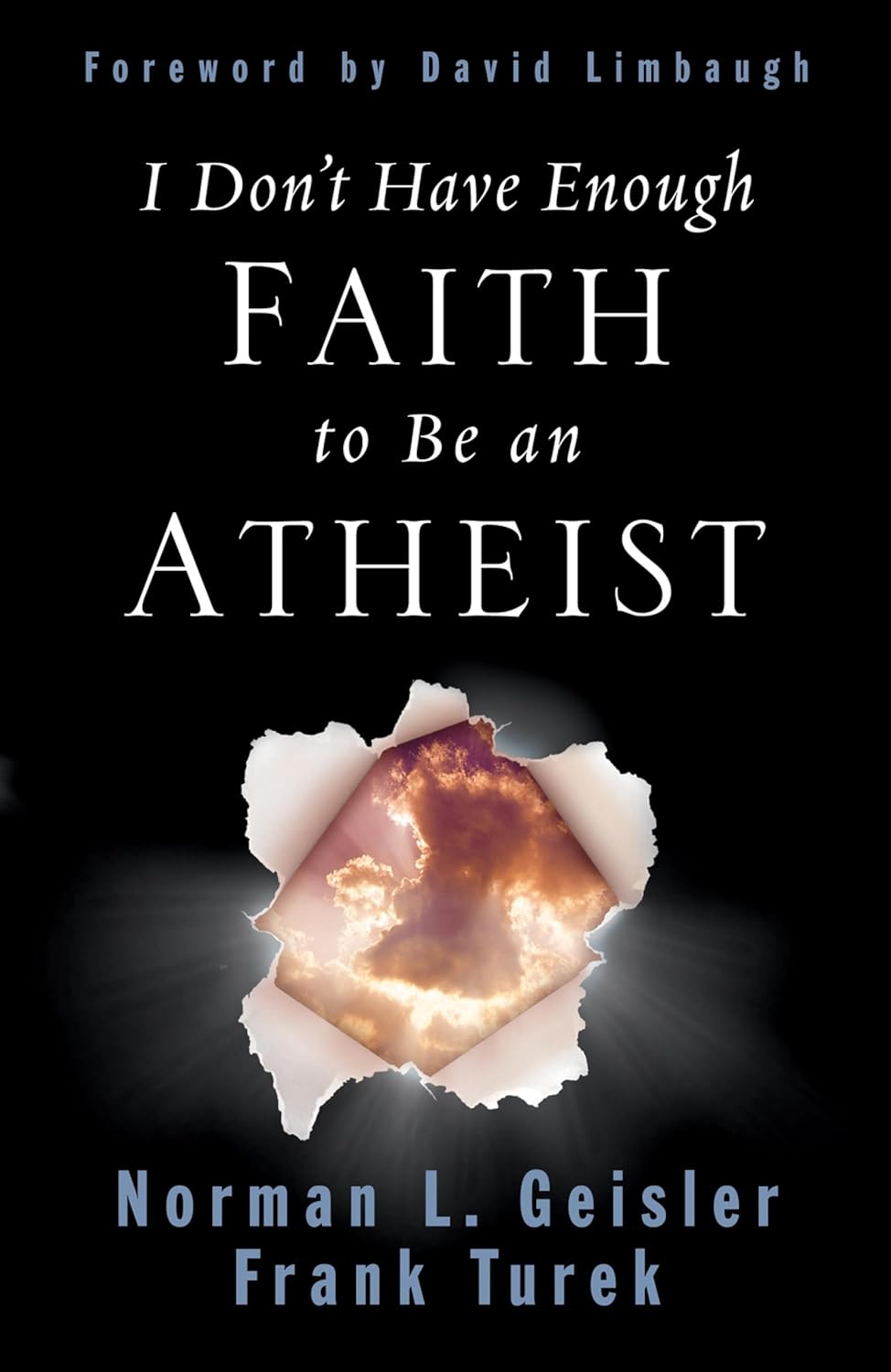
Turek has been doing these campus events for almost 20 years. Normally they present "I Don't Have Enough Faith to Be an Atheist," based on the book he co-wrote with Dr. Norman Geisler. Now they're doing "If God, Why Evil?" and mostly Q&A in honor of Charlie Kirk. They're dealing with the question of why God would allow evil and then taking questions from students.
Hearts and minds are open right now. Hearts are tender. There's a window of opportunity where people are receptive to hearing about Christianity. The Charlie effect is strong, and they're going to do everything they can to reach people during this time.
Charlie Kirk's Lasting Legacy: Rush Limbaugh Meets Billy Graham
When asked about Charlie's legacy, Turek describes him as a combination of Rush Limbaugh and Billy Graham. He knew his politics and he knew his faith well. But what motivated his politics was his faith. He wasn't a conservative because he was conservative first—he was a conservative because he was a Christian first. Conservative means to conserve what we know is true and beautiful, and that's what Charlie fought for in the public square. But his first love was Jesus. That's what motivated everything.
A month before he died, Charlie said in an interview that "politics is peanuts compared to the gospel." Politics is important because it helps us take care of people—we're supposed to love people—and it helps us maintain religious freedom so we can preach the gospel. When people say they just preach the gospel and don't get involved in politics, Turek responds that they must not think the gospel is very important because politics affects your ability to preach and live the gospel. If you don't believe that, try preaching the gospel in North Korea. There's no First Baptist Church of Riyadh. There's no Calvary Chapel of Tehran. Why? Because politically they don't allow it.
Charlie understood this. Politics isn't our first priority, but it helps us do our first priority. That's why he knew it was important to be politically engaged.
Turek believes Charlie's legacy is already cemented as a martyr because he was killed for his faith. Some might say he was killed for his political views, but why did he have those political views? Because of his faith. Because he knew what the truth was. He was trying to reach people with that truth in an open forum because he wanted them to know Jesus. And he knew that to do that, he had to put himself in harm's way to some extent because you can't reach people while protecting yourself with 100% security. On the morning of the event, Turek told Charlie he didn't like the location because there were too many buildings. Charlie just shrugged it off because people were there who wanted to hear what he had to say, and he wanted to try to convince them of the truth. That's what a loving person does.
The Irony of Calling Charlie Kirk a Fascist
It infuriates Turek when people call Charlie a fascist. It's exactly the opposite. How many fascists offer their opponents the microphone and say, "Go ahead, make your case. Let me hear what you have to say"? None. That doesn't happen. The person who murdered Charlie is the fascist.
Many on the left talk about inclusion, tolerance, and diversity, which means exactly the opposite of what you think. It means if you don't agree with them, they won't include you. They won't tolerate you for holding diverse views. In fact, they may even murder you. Of course, not all leftists are like this—thankfully, most won't murder you. But the oppressor-oppressed worldview that has emerged in recent years, this critical theory worldview that says regardless of your personal behavior, if you're in a certain category you're an oppressor, is motivating people toward violence. If you're an evil oppressor, you need to die. That's what many people think.
That's not Christianity. Christianity teaches that people are judged by their own personal behavior, not by what identity group some leftist professor has stamped them with.
Where to Learn More
Those interested in Frank Turek's work can visit crossexamined.org. His podcast, "I Don't Have Enough Faith to Be an Atheist," is available on YouTube (CrossExamined channel) and wherever podcasts are found. More information is also available on Instagram and other platforms, all accessible through the main website.