Up Next
Candace Owens Uncovers Financial Concerns and Unanswered Questions Surrounding Charlie Kirk's Death Investigation
46:11

Brandon Tatum on Charlie Kirk's Assassination, Israel Obsession, and the Fractured State of the Right
42:15

Candace Owens Exposes Josh Hammer's Mysterious Public Execution Tweet Hours Before Charlie Kirk's Assassination
1:15:44
Seth Dillon Addresses Death Threats and Conspiracy Theories Following Charlie Kirk's Murder
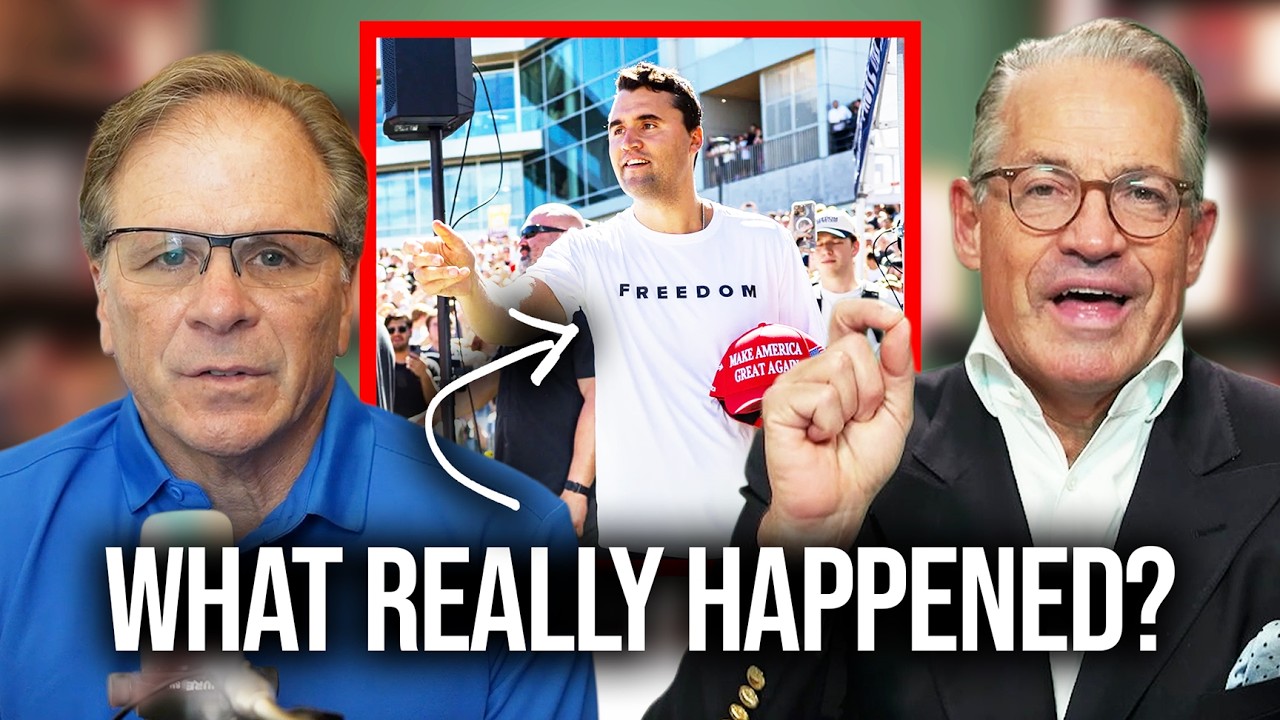
Seth Dillon, CEO of The Babylon Bee, discusses receiving death threats after being falsely implicated in conspiracy theories surrounding Charlie Kirk's assassination. Dillon explains what actually happened at the August Hamptons retreat that sparked wild speculation, why baseless accusations against Charlie's team are dangerous, and how the desire for clicks has led some to exploit grief and distrust. He and Frank Turek examine the difference between healthy skepticism and destructive conspiracy thinking, why the FBI hasn't released all evidence, and how human depravity fuels our fascination with evil.
The Threats Begin
Seth Dillon never expected that running a comedy website would lead to death threats, yet that's exactly what happened after Charlie Kirk's assassination. A 28-year-old man from Houston, Texas named Nicholas Ray was arrested by Florida authorities after threatening Dillon and several other conservative figures. The threats stemmed from conspiracy theories claiming these individuals had pressured, blackmailed, or even conspired against Charlie Kirk.
Governor Ron DeSantis stepped in to ensure Dillon's protection. As Dillon explains, the accusations were rooted in a completely distorted account of what transpired at a retreat Charlie organized in the Hamptons in August. What was actually a thoughtful discussion about threats to Western civilization became twisted into a narrative of intervention, coercion, and betrayal.
What Really Happened at the Hamptons Retreat
Charlie Kirk invited Dillon and other conservative influencers to the Hamptons for what he called a "Saving the West" retreat. The purpose was to discuss threats to Western civilization from various ideologies and to get input from different voices. Charlie actively sought feedback, often calling on quieter participants to share their perspectives.
According to Dillon, Charlie was genuinely interested in hearing from everyone. He wanted to understand where people stood on various issues and how they could best address threats to civilization. There was robust discussion and debate on multiple topics, which is exactly what Charlie wanted.
However, someone at the retreat leaked information to publications like The Gray Zone, and Candace Owens picked up the story. The account was grossly distorted. The retreat was characterized as an intervention staged by people more loyal to Israel than America, who allegedly strong-armed Charlie, offered him $150 million, and even had Israeli Prime Minister Benjamin Netanyahu on the phone pressuring him.
Dillon categorically denies these characterizations. He was invited by Charlie to attend. Everyone was there at Charlie's request. There was no intervention, no coercion, no blackmail, and no offers of money. It was simply a Turning Point USA event where Charlie facilitated important discussions.
The Price of Disagreement
During the retreat, Dillon and Charlie did disagree on one point. Charlie felt there was a price to be paid for criticizing Israel—that people were too quick to label such criticism as anti-Semitic. Dillon's perspective was different. He argued that he had paid a much higher price for defending Israel and criticizing those who unfairly attack Israel or cross the line into actual anti-Semitism.
This was a respectful disagreement between friends who valued honest dialogue. Charlie never shied away from debate. In fact, he thrived on it. He saw it as a way to sharpen his own thinking and responses. The idea that he was being pressured or that anyone would need to stage an intervention is absurd to those who knew him.
Why Conspiracy Theories Are So Attractive
The discussion turned to why people are so susceptible to conspiratorial thinking right now. Both Dillon and Frank Turek acknowledge that Americans have legitimate reasons to distrust official narratives. We've seen actual conspiracies come to light—the lab leak theory being one example of something dismissed as conspiracy that turned out to have validity.
The government has lied. The media has been dishonest. There's justification for healthy skepticism. However, there's a crucial difference between rational skepticism and what Dillon calls "irrational skepticism" or cynicism—the mindset that everything you've ever been told is a lie.
This extreme skepticism becomes self-contradictory. As Turek points out, if everything is a lie, then that statement itself must be a lie. Moreover, you can't identify a lie unless you know what truth is. The person claiming everything is false must have access to truth in order to make that claim.
Human Depravity and Our Fascination with Evil
Turek makes a theological observation: This entire situation demonstrates why the Bible is uniquely true among religious texts. Only the Bible accurately describes human depravity. While most people, including many Christians, believe humans are inherently good, situations like this reveal the truth of human nature.
People are capable of terrible things for sex, money, or power. Yet there's also a disturbing dynamic at play—our fascination with evil from a distance. The most popular podcasts are true crime shows. People are drawn to evil when it's happening to someone else, but horrified when it touches their own lives.
This explains part of the conspiracy theory phenomenon. Those who weren't at the murder scene are fascinated by different theories and videos. Those who were there, like Turek, can't even watch the footage. Evil is attractive from afar but horrible up close.
The Exploitation of Distrust
Dillon believes some people see an opportunity in the current climate of distrust. They realize they can position themselves as the one voice of truth in a sea of lies. They drop breadcrumbs and tease revelations, taking people on a journey where only they can be trusted.
This becomes cultlike. Followers are told to distrust everyone except this single source. The conspiracy theories don't follow Occam's Razor (the simplest explanation is usually correct). Instead, they embrace what Dillon calls the "inverse of Occam's Razor"—the most outlandish, improbable, difficult-to-falsify explanation that happens to cast suspicion on people you already don't like.
There's incentive in this approach. Wild conspiracies generate clicks, engagement, and a devoted following. But the cost is high. Innocent people receive death threats. Families grieving the loss of a loved one have additional pain compounded by baseless accusations.
The Case Against Mikey McCoy
One of the most troubling aspects of recent conspiracy theories involves Mikey McCoy, Charlie Kirk's 23-year-old chief of staff. McCoy has been subjected to intense scrutiny and accusations based solely on how he appeared to act immediately after the shooting.
Critics point to footage showing McCoy on his phone rather than rushing to Charlie's side. This is offered as "evidence" of suspicious behavior. However, the reality is much simpler. For five years, Charlie drilled specific emergency procedures into his team. If something happened to Charlie, Mikey was to immediately call Erica Kirk. That's exactly what he did.
As Turek explains, there were specific roles during the emergency. The security team's job was to get to Charlie. That's why Turek himself didn't reach Charlie despite being only 25 feet away—security was already on him, and Turek ducked thinking there might be more shots.
Candace Owens suggested there are only three ways people respond to danger: run toward it, run away from it, or freeze. Therefore, anyone not doing one of these three things is suspicious. But this ignores the fourth option: following established emergency protocols, which is exactly what McCoy did.
The Unfalsifiable Accusation
Dillon highlights the impossible position innocent people are put in by these conspiracy theories. If you don't respond to accusations, you're hiding something. If you don't respond quickly enough, you're hiding something. If you do respond, you didn't respond the right way. Your statement was too well-crafted, suggesting lawyers were involved. You waited too long. Your eyes looked shifty during your denial.
Any behavior can be twisted to confirm a predetermined conclusion. This is the hallmark of unfalsifiable conspiracy thinking. The conclusion is baked in from the start. Any evidence that contradicts the theory is dismissed as part of the cover-up. Any evidence that might support it, no matter how thin, is amplified.
Dillon didn't initially respond to Candace Owens when she reached out asking for a statement about the Hamptons retreat. This was interpreted as proof he had something to hide. When he did release a statement, it was criticized for being too polished or coming too late.
The Difference Between Possibility and Evidence
Turek emphasizes a crucial distinction: the difference between a possibility and evidence for a possibility. Yes, it's theoretically possible that various people could have been involved in Charlie's death. It's possible there was a second shooter. It's possible there were Israeli agents involved. It's possible Turning Point USA staff were complicit.
But possibility is not the same as probability, and neither is the same as evidence. You can speculate about anything you want, but unless you have actual evidence, you have no business accusing people of complicity in murder.
To illustrate the absurdity, Turek offers a thought experiment: What if we said Candace Owens had Charlie killed because she was upset about not being invited to major events anymore? What if she thought that with Charlie gone, she could take over TPUSA? What if her intense investigation is actually a cover for her own involvement?
Of course, there's zero evidence for this, and neither Turek nor Dillon is actually suggesting it. But it demonstrates how easy it is to construct a conspiracy theory around anyone when you start with a conclusion and work backwards.
Biblical Manipulation and Psychological Operations
When Turek addressed the situation at a Bible study, he quoted Proverbs about not causing dissension among brothers—something the Lord hates. He pointed out that accusing people without evidence does exactly that.
Owens responded by accusing Turek of "biblical manipulation" and engaging in a "psychological operation." She suggested that invoking scripture to tell people not to make baseless accusations was a form of control, comparing it to what she calls "Operation Mocking Pastor"—an alleged military infiltration of churches.
The irony, as Dillon points out, is that Owens herself frequently cites scripture and invokes what God wants to justify her positions. She has used Christianity as justification for her views on Israel. The accusation of manipulation applies equally, if not more so, to her own methods.
Owens also accused Turek of presenting himself as an academic authority when he explained that there's no "normal" way to react in shock. She mocked this idea, suggesting everyone has a baseline response. But Turek's point stands—people in traumatic situations don't always respond predictably, especially when following pre-established protocols.
Personal Experience with Misperception
Dillon shares a personal anecdote that illustrates how actions can be completely misperceived. As a teenager, he and his brother got into a confrontation with some rowdy moviegoers. After the movie, these individuals were waiting to fight them. As they approached an escalator, the group crowded behind Dillon's brother. Dillon bolted—but not away from the confrontation. He ran to a nearby stairwell so he could meet them at the bottom and be there to help his brother.
To anyone watching without full context, it looked like Dillon was running away in fear. Even his own brother and friends thought he had abandoned them. They were surprised to see him at the bottom of the escalator. To this day, they still joke about the time he "ran away."
This demonstrates how crucial context is. A five-second video clip can create a completely false impression. Without knowing Mikey McCoy's training, his relationship with Charlie, the established protocols, and what he was actually doing, it's impossible to judge his actions from a brief piece of footage.
The Question of Motive
One of the most glaring problems with conspiracy theories implicating Turning Point USA staff is the complete absence of motive. Why would anyone within the organization want Charlie Kirk dead? He was the inspirational leader who built an amazing organization. He was, by all accounts, well-loved. His death represents an incalculable loss to the organization.
Conspiracy theorists try to manufacture motives. Perhaps Jewish donors were upset with Charlie's positions and threatened to pull funding. Perhaps there was money offered to get him "back in line." Perhaps making Charlie a martyr would grow the organization and increase donations.
But these theories collapse under scrutiny. Charlie Kirk helped elect the most pro-Israel president in U.S. history. Days before his death, he was in meetings with Israelis asking how he could better answer questions about the Israel-Hamas situation. He wasn't turning against Israel.
As for financial motives within TPUSA, these make even less sense. The organization's growth and success were directly tied to Charlie's unique leadership and vision. His death creates a void that cannot be easily filled.
Why the FBI Hasn't Said More
Many people are frustrated that the FBI hasn't released more information about the investigation. Some interpret this silence as suspicious, suggesting a cover-up. However, as cold case homicide detective Jim Warner Wallace explained to Turek, law enforcement's job is not to quell every conspiracy theory. Their job is to prosecute and convict the actual killer.
Revealing too much information too soon would jeopardize the case in several ways. First, if they announced they were investigating a second shooter, any witnesses who came forward afterward would be tainted. The defense could argue these witnesses were influenced by knowing what investigators were looking for rather than reporting what they actually saw.
Second, revealing evidence would taint the jury pool. Third, it would tip off the defense about the prosecution's case. Fourth, it could compromise ongoing investigative techniques and sources.
The autopsy, which is mandatory in all homicides, will reveal crucial information: the angle of the shots, how many times Charlie was shot, and other forensic details. But this information won't be released until pre-trial hearings or the trial itself. This is standard procedure, not evidence of a cover-up.
The FBI Does Investigate Conspiracy Theories
Despite not releasing information publicly, the FBI does investigate various theories that emerge. Turek knows this firsthand because he was questioned about the conspiracy theory that he was signaling the shooter.
This wild theory circulated online, claiming Turek was pointing out Charlie to a shooter 200 yards away. The theory made no sense—why would a shooter need someone to identify Charlie Kirk? Why would Turek, who was 25 feet from Charlie, be visible to a shooter 200 yards away? The whole premise was absurd.
Nevertheless, Charlie's attorney facilitated a conversation between Turek and the FBI. They asked if he was signaling the shooter. Of course not. The theory was quickly dismissed, but it demonstrates that investigators do follow up on theories when they emerge.
This is necessary because the defense will raise these theories at trial. They'll ask: Did you investigate the possibility of a second shooter? Did you check out the guy in the truck? Did you look into this or that theory? By investigating these claims now, prosecutors can honestly say yes, we looked into it, and here's what we found.
The Cost of Baseless Accusations
Throughout the conversation, both Dillon and Turek emphasize the real human cost of conspiracy theories. Dillon has received numerous death threats. He has a wife and children at home. He's done nothing to deserve this treatment.
Turek is receiving threatening emails and phone calls. People demand he call them back, insisting his silence is suspicious. They accuse him of not caring about Charlie, of trying to move on too quickly, of being complicit in covering up the truth.
The reality is that Turek thinks about Charlie constantly. He wakes up thinking about him. He goes to bed thinking about him. He wakes up in the middle of the night thinking about him. He went through something traumatic. He was there when his friend was murdered.
Mikey McCoy, a brilliant 24-year-old (23 at the time of the shooting) who acted heroically that day, is being accused of complicity in his mentor's death. The grief of Charlie's family and colleagues is being compounded by baseless accusations during what should be a time of mourning.
The Responsibility of Public Figures
While acknowledging the right to free speech and the right to ask questions, Turek draws a line between speculation and accusation. There's a difference between saying "this is a possibility worth investigating" and saying "these specific people are probably guilty."
When public figures with large platforms make accusations or strong insinuations without evidence, they put innocent people in danger. Their followers, some of whom may not be mentally stable, take these accusations seriously and act on them.
This is exactly what happened with Nicholas Ray, who threatened multiple people based on the false narrative about the Hamptons retreat. It's what's happening with the threats against Dillon, Turek, and McCoy. Words have consequences, especially words spoken to millions of people.
The Nature of Truth-Seeking
Dillon emphasizes that honest truth-seeking doesn't start with a predetermined conclusion. You don't begin by deciding that something nefarious happened and then look for anything that might confirm that belief while dismissing everything that contradicts it.
Real investigation follows evidence where it leads. It considers multiple possibilities but doesn't treat all possibilities as equally likely. It updates beliefs based on new information. It acknowledges when theories are disproven.
The conspiracy theories surrounding Charlie's death fail these tests. They begin with the conclusion that there was a larger plot, that people close to Charlie betrayed him, that the official narrative can't be trusted. Then they cherry-pick anything that might support these conclusions while dismissing mountains of contradictory evidence.
As Dillon notes, even if he or others provide detailed explanations and evidence, true believers won't accept it. They've already made up their minds. Any response, no matter how thorough, will be dismissed as part of the deception.
Charity and Trust
One principle both Dillon and Turek advocate for is charitable interpretation of people Charlie trusted. If Charlie trusted Mikey McCoy enough to make him chief of staff, shouldn't we extend some trust to Mikey? If Charlie invited Dillon and others to the Hamptons retreat, shouldn't we assume he valued their input rather than assume they were his enemies?
Was Charlie really so deceived, idiotic, and blind that he surrounded himself with traitors plotting his death? The suggestion is absurd to anyone who knew him. Charlie was brilliant, discerning, and had excellent judgment about people.
Beyond charity toward those Charlie trusted, there's a basic principle of justice: innocent until proven guilty. Accusations require evidence, not just possibilities. Speculation is fine, but when it crosses into accusation without evidence, it becomes slander.
What Would Charlie Want?
While Dillon is hesitant to claim to know exactly what Charlie would want, one thing seems certain: Charlie valued honest debate and discussion. He wasn't afraid of disagreement. He actively sought out different perspectives.
Charlie also valued truth. He built his career on seeking and speaking truth, even when it was unpopular or costly. He would want the truth about his death to come out through proper investigation and legal processes, not through baseless speculation and conspiracy theories that tear apart the movement he built.
Most importantly, Charlie loved people and brought people together. The conspiracy theories tearing apart the conservative movement and turning allies against each other is the opposite of what Charlie worked for. It's exactly what those who opposed Charlie would want—his allies destroying each other while his actual killer faces justice.
Moving Forward
As the conversation concludes, both Dillon and Turek acknowledge the difficulty of the situation. They understand people's desire for answers. They share the grief over Charlie's death. They want justice.
But they also recognize that justice requires patience, proper procedures, and respect for the legal process. It requires distinguishing between legitimate questions and destructive conspiracy theories. It requires protecting the innocent while pursuing the guilty.
The FBI will continue their investigation. Evidence will be presented in court. The truth will come out through proper channels. In the meantime, those who loved Charlie can honor his memory by upholding the values he stood for: truth, charity toward others, robust but respectful debate, and unity in the face of real threats to what we hold dear.
The alternative—tearing each other apart based on speculation and suspicion—only serves those who wanted Charlie silenced. It dishonors his memory and destroys what he built. That's the real tragedy beyond the assassination itself, and it's one we have the power to prevent.
Video Transcript
[music] If the allegations are made and you don't respond or even if you don't respond quickly enough, it means you're hiding something. If you do respond, you didn't respond in the right way. You know, like [music] it's always there's always some way that you can try to twist something. Even the conversation that [music] we're having right now, you know, like, oh, you know, your eyes are darting around too much while you're talking, Frank. What can we make of that? You know, you look a little you look a little nervous. Why [music] are you nervous, Frank, while you're talking about this stuff? Do you have something to hide? If you really want to, you can find any reason, any reason to try to cast suspicion on somebody, [music] but but why would you want to do that? Why wouldn't you want to look for, you know, the truth by being um uh not just charitable to people who are close to Charlie because I think they're owed that [music] charity, right? If Charlie trusted them, shouldn't we at least have some trust in them? Like is Charlie really such a a deceived and an and idiotic and blind person that he's surrounded by traitors who are just looking for an excuse to [music] kill him? You know, like, you know, there should be a little bit of trust and charity there. Ladies and gentlemen, why am I and other people associated with Charlie Kirk getting threats as if we had something to [music] do with his murder? What's going on? Why are conspiracy theories so interesting and attractive? [music] And what's the difference between the right to free speech and the responsibility not to speculate in such a way without evidence so that people innocent people are put in harm's way? What is also the difference between a possibility and evidence for a possibility? And why isn't the FBI telling us more about the Charlie Kirk uh murder? Why aren't they coming out with evidence? Why aren't they quelling these theories that are all over the internet internet right now? That's really suspicious. And isn't it kind of suspicious that the government is telling us one line of things when we know the government has lied to us before? Maybe they're lying again. We're going to get into all this. And we're gonna get into all this with my friend Seth Dylan, the CEO of the Babylon B, who by the way, and this is no joke. Seth has gotten death threats himself. And in fact, Governor DeSantis of Florida stepped in. They arrested someone. So, Seth, tell us a little bit about what's going on in your life and how why are you getting death threats? >> Well, uh, kind of wild, right? You wouldn't think. It's certainly not one of those things that I predicted would ever happen when I um when I started running a comedy website on the internet, you know, that >> that's that satire. First of all, you know, that we were going to end up in this fight for free speech, which has been something that was also unexpected, but then of course that we would be um you know, caught up in in so many of these other things that are just unrelated to what we do. But um you know, there's everyone's looking for a line and an angle of attack. In my case, um, the guy that you're mentioning, his name is Nicholas Ray. He's a he's a Texan. He lives in Houston, Texas, 28-year-old. Um, was accusing me and others. It wasn't just me, by the way. It was >> uh a number of other uh several other conservative influencers who, you know, I don't even know if it's if it's important important or necessary to name them because that only draws more negative attention to them potentially, you know, where people are are going to start targeting others. uh uh continually. But um he was he was threatening several different people uh along the lines of the argument that you know there's uh there's complicity. There's uh there's stuff that's being hidden. Um you know there is uh uh you know u a dishonest attempt to portray ourselves, me and these other individuals, a dishonest attempt on our behalf to portray ourselves as being close friends of Charlie when we were actually traitors. we were actually um you know pressuring him and blackmailing him behind the scenes. All of this comes back of course to Israel. You know these theories are usually rooted in Israel and what the Jews are doing behind the scenes. Um and so you know was it it initiated uh at the start following this retreat that myself and a bunch of other uh conservative influencers I I put that in quotes because I I don't consider myself an influencer. You know I run a media company. I'm I have I happen to have a large following online, but I'm not one of those people that's just like a social media influencer. Um, not that there's anything wrong with that, but I don't consider myself an influencer, but I was invited by Charlie to this retreat. It was called an influencer retreat. And the the idea of this retreat was um focused on the problems, the threats to Western civilization. The theme of the retreat was, you know, saving the West. And you know, Charlie, as you know, because you know him very well, knew him very well. Uh man, it sucks to say that, doesn't it? To switch from saying you know him to you knew him. >> Um you know Charlie was deeply concerned about uh threats to Western civilization uh you know from wherever they come you know whether they're coming from ideology on the left um you know whether it's communism or uh you know Islam or um whatever the threat may be. He wanted to talk about what these threats were get a handle on where we all stood. Have a conversation. we draw a bunch of people together and talk about a wide range of topics um and get everybody's feedback and input. Uh I think he was looking to influence our thinking with his positions, but also hear from us and and understand, you know, where we were coming from and get our insights. He he seemed very, you know, genuinely open in hearing from us and what we had to say. He kept, you know, he threw it to me several times when I was keeping my mouth shut during these meetings. He's like, you know, Seth, what do you have to say? You know, try you've been quiet for a while. Chime in. Say something. What do you think about this? Um, so he was he was seeking feedback and input and uh and uh and and and wanting to find out, you know, how we can best address these issues and how we can get the message out to speak the truth and and uh and defend Western civilization against its greatest threats. So that was really the purpose of this retreat that was being set up uh in the Hamptons back in August and uh and I was invited there by Charlie. what it's been characterized as and this and this init this initiated originally I think there was some report in a publication called the gray zone and you know Candace Owens picked it up and started talking about it on her show um you know there was somebody at this retreat uh that began talking about what happened there and I don't know this is something that I don't know and I'm not going to speculate as to what actually occurred behind the scenes and in the you know um revealing of what happened at this retreat but somebody that was there uh started, you know, talking uh to sources about what uh what took place there. And either they misrepresented it horribly, dishonestly, grossly, or the people who received the input from this person, the report from this person exaggerated and uh and uh and distorted it themselves. I'm not sure which is true. I don't know. um because you know it hasn't been it hasn't been publicly known yet who it was that was you know leaking this information to reporters or whatever >> but whoever it was that person was >> wrong [laughter] >> well they were very wrong because here's what they said they said that what happened at this retreat was um you know an intervention was staged uh for Charlie where people who have more alliance and allegiance with Israel than with the United states, people who care more about, you know, Israel first, not America first. People um were, you know, very concerned about some of Charlie's comments or some of the people that Charlie was having on the stage at Turning Point USA events. Uh and because of those concerns, they wanted to have an intervention with Charlie and say, "Hey, look, you know, we don't like this. We consider this anti-semitic. Uh you know, you need to get back on board with supporting Israel, no questions asked." um and strong armed and blackmailed him at this intervention. And the whole point of this thing was to get Charlie back in line. And when and even it was even it's alleged um there was even an offer of money, a substantial offer. It was uh I think the figure that Candace put out there was $150 million. Apparently, you know, BB himself was on the phone. Uh there was these heated conversations behind closed doors. I was named as being a part of these conversations and all this money was thrown at Charlie and Charlie turned the money down and then he winds up dead and uh you know so what do you make of that Frank? You know what do you what do you what do you do with those dots? How do you connect them? What does that what does that mean? You know of course the the spotlight of sus suspicion is cast on on people who were at this event uh at Charlie's invitation. No one staged an intervention with Charlie. It's just ridiculous to suggest that that was what was happening there. you know, I I didn't know this event was happening until Charlie told me it was happening and he asked me to be there. Um, so everybody was there at his at his request. It was a turning point event. Um, and uh, and so, you know, but it was the it was the conspiracy theory itself that there was something nefarious going on here uh, malicious intent on the part of some of these participants, uh, including myself. Um, that has led to, you know, all this animosity and hatred towards me. you know, if I'm if I if Charlie is feeling all this pressure and he's being blackmailed and he's uh you know, under duress in his last days, uh and then, you know, he winds up dead because he didn't go along with what we wanted, uh of course people are going to start looking at me and thinking, you know, I had something to do with that and that this and that, you know, I'm I'm like complicit in his murder. and uh and so people who bought into some of this stuff which is just wild and outlandish um uh you know distortions of of what happened um you know they've some of them have started to level threats so I I've been receiving a number of threats many of them have been reported that one guy has been arrested so far um thankfully he has you know I have a wife and kids at home you know I don't uh I don't want to I don't want to put anybody in danger I'm not I certainly haven't said anything to deserve that uh or done anything to deserve that But of course, that's kind of the natural outworking of of some of these wild speculative conspiratorial claims is that, you know, you get people riled up and they get angry. There are a lot of people, as you know, Frank, a lot of people, millions of people who love Charlie. They loved Charlie. >> Uh and and when they when they when they come to learn, and some of them, you know, not everybody is perfectly mentally healthy. There's people out there who are deranged. Um, and and uh, you know, when when they learn that there's a name in a face of somebody who may have played a role in Charlie's death, uh, it enrages them and, uh, and they feel like they need to do something about that, either to intimidate, harass, or to threaten them. Um, and so that's really kind of the long and short of it. Um, >> so who was it that publicly said that this happened in such a way that Charlie was offered $150 million to do something for Israel and he denied? Who was it that put that out there? Is it known? >> Um, I think the first time that was reported, I'm not sure if that that dollar figure was reported by Max Blumenthal or Candace Owens first. I think she may have gotten that from him. Um, but I'd seen him do some interviews where he was talking about this and yeah, there's a there's this fabricated story that there were these heated discussions. You know, Charlie was pressured, Charlie was coerced, Charlie was dragged into these private meetings, these personal meetings between myself, Bill Aman, you know, uh, BB Netanyahu's on the phone and uh, and we're throwing money at him and he's and he's refusing it and then he winds up dead. That's kind of the throwing money at him to do what? >> Throwing money at him to get him back in line with his support of Israel. There's there's you know the I guess you the what the what the theory is is that the people like me um because I'm a supporter of Israel I of course I'm a supporter of them in the in in the sense that I defend them and their right to defend themselves their right to not be wiped off the map right >> um >> you know people like me uh uh the the as the story goes are so concerned with Israel that we're willing willing to do anything that it takes to punish anybody who is not on board with supporting them and will and will want to coersse them and will want to blackmail them and whatever. And it's like, you know, it's it's also ridiculous. If I have disagreements with Charlie, and there were a couple of things that I disagreed with Charlie on, there were things I disagreed with him on at this retreat in the Hamptons, but but the whole purpose of that retreat in the Hamptons was to have discussion and debate. Charlie wasn't afraid of debate, you know, that >> what he was all about. >> That's what he was all about. He loved having discussions with people that didn't necessarily see eye to eye with with him. And he he saw it as a way not just of trying to persuade them, but also to kind of sharpen himself in his response to some rebuttals and and uh and objections. And so, you know, he invited us there and challenged us. And when he wasn't getting challenged enough, like I said, he would pick people out of the room and say, "What do you have to say about this? What do you think? Give me your input. Let's talk about it." And so, you know, he was inviting this debate. There was no sense in which, you know, he was being pressured on anything. This was in in August or late July of this year because I remember that. >> And I saw Charlie right after that in August. We were together in California and then he and I went to Phoenix together to do some more training. >> And then let me add to this, the day before he was murdered, I was with him for the three days, his last three days of his life. And um we were in a meeting, a Zoom meeting right there at TPUSA. Josh Hammer was one of the people who was on Zoom and a couple other folks from Israel. when we were talking about uh Charlie wanted to know how could he better answer questions on campus uh that he got about the Israeli Hamas situation and he wanted to know from the Israelis what their perspective was. He was asking them >> he wasn't turning on Israel. He was asking them for their opinions on questions he might get. >> Yeah. >> Uh so the idea that somehow Charlie was turning on Israel is nonsense. Charlie helped elect the most pro-Israel president in human in in in US history. Um, and you can speculate all you want, but is there any evidence that this took place? And you were an eyewitness in this meeting and you say it never happened. >> No. And there were a lot of other eyewitnesses that spoke up. Of course, Bill Aman put out his own statement. I put out a lengthy statement about this. Several others, I think there were at least eight or nine others that were in attendance there who said, you know, there was none of these heated, you know, back and forth. There was nobody coercing or pressuring anybody. I didn't see any of that. I personally didn't witness any of that and didn't partake in any of that. Um, you know, it's even if you can see the point, let's for for for example, let's let's say for example that that Charlie was um reconsidering his position on Israel and having a conversation about that with people in the room and they're giving him arguments and saying, "Well, have you thought about this or you know, this is my opinion on it?" You know, that's debate and discussion. It's still not coercion and blackmail and you know um some kind of like >> egregious and unethical or evil um uh pressure campaign being applied to somebody. Everybody has a right to give their opinion, Frank. And when you're invited to um you know and and you're and you're you're you're asked to be there to give your opinion, you're going to give your opinion. Um >> but you know, the the conversation wasn't one where where Charlie was like, I'm against Israel now. Try to change my mind. It wasn't like that at all. And we did discuss the topic of Israel. Um, and there was some discussion about that. You know, one of the things that that Charlie and I did disagree on during these discussions, and I talked about this some, but there was like um, you know, he was he was concerned about the fact that there is um there is right now in the discourse like a price to be paid for um uh in in from from his perspective at least, there's a price to be paid for criticizing Israel. You know, if you're if you're critical of Israel, then automatically people snap to this line of, "Okay, you're being anti-Semitic." Some do. You're being anti-Semitic. And apparently Charlie, you know, I I didn't see or I'm not aware of anybody who was calling him an anti-semite, but apparently Charlie of all people was being called an anti-semite, which is just, as you know, ridiculous. >> You know what that did? That hurt him personally. >> Yeah, I'm sure it did. No, it it wasn't true. Right. >> Charlie was trying to rightfully, as anybody would, and here's what I said to him about this whole bless Israel thing. I said, Charlie, um, let's assume that's true. We need to bless Israel. Bless doesn't mean you agree with Israel on everything. Just like if you're going to bless your son or your daughter, you don't agree with your son or daughter on everything or a friend. You tell them what they need to hear, not what they want to hear. You correct them when they're wrong. And he he said that's he said that was that was worth the price of the whole trip when I went out there because people they misunderstand what bless it doesn't mean you agree on everything. If you're going to bless somebody tell them the truth. Correct them when they're wrong. You know there's that proverb that says >> uh the enemy enemies multiply kisses but wounds from a friend are helpful. >> Yeah. >> You need wounds from a friend >> when you're out of line. >> Right. And uh so Charlie was fair-minded. He was trying to work through issues. >> I'm sorry. Go ahead. >> Yes, he was. Yeah. And and this was a the one point of disagreement where we really kind of went back and forth and not an extended way but only for a couple of minutes was on this issue of, you know, do you pay more of a price for for criticizing Israel or for criticizing the critics of Israel? Because that was my argument. You know, I was like, "Well, look, Charlie, you know, uh, of course, depending on the context, you know, if you're you're running a large nonprofit organization, if you do happen to have some large donors who are Jewish or supporters of Israel, um, and you come out and you start being very critical of them, you know, of course, you know, you're going to face push back from people who are like, "Well, Charlie, you're no longer aligned with our views or values," or something like that. You know, you might get push back. Um and and depending on your cont the context that you're in, yeah, you're going to see some some negativity and and push back on those things. You may even get called an anti-semite, which is ridiculous, but you might and and that happens. Sure. Um in my case, and I told him, you know, in in my case in particular, um I've received most of the push back and and hatred and uh and you know, uh cancellations of subscriptions and and threats and all of these things because I've criticized the people who are criticizing Israel. Not Israel. I haven't criticized Israel. I've criticized the people who are criticizing Israel in an unfair way where they're not actually criticizing Israel. They're actually going far beyond that in many cases and and actually being anti-Semitic themselves. You know, where they're just looking for any excuse they can to blame Jews or Israel for every bad thing that happens in the entire world. You know, if I push back on those people, they turn on me. You know, they've attacked me. uh they they've they've called me a betrayer and a traitor and uh and they keep bringing my name up and trying to drag me through the mud and smear me and lie about me and accuse me of course like the conspiracies that we're talking about. Um they've done all of that and so I've prayed I've paid a high price for doing the opposite of that. Uh and so it's really it's just a matter of any time that you take a stand on a controversial issue on either side of it, yeah, you're going to get push back. So that was one of the things that we disagree on. But uh you know, one of the things that I was accused of was calling >> Charlie anti-Semitic, which is ridiculous. I would never do that. I I I didn't I didn't I've never even considered the possibility that there might even be an anti-Semitic bone in his body. So, >> lad ladies and gentlemen, if if you don't believe in spiritual warfare, you haven't been paying attention what's been going on at Charlie's murder and since. People are at one another's throats and they're often saying, "Well, we just care about who really killed him." We're going to get into the FBI and what they have revealed and reasons why they might not re be revealing certain things, but um I I want to I want to deal with this issue of the difference between a possibility and evidence for a possibility. I got asked a question last week at a Bible study I was doing about Candace Owens and I said there's a difference between a possibility and evidence for a possibility. And if you don't have evidence for this possibility and people are implicated in it, shut up. >> Okay? Because you're I I I don't I don't mean shut up that you don't have the right to speculate on possibilities, but when you go beyond possibility and you're insinuating that someone who is innocent is guilty and you have no evidence that they're guilty, I think you've crossed a line. and certainly a line in Christianity, if not a line in just human decency. What are your thoughts on that? >> Well, yeah. I mean, the word I used when I was talking about this on Piers Morgan show the other day was despicable. I find it I find it despicable to do this. I think it's um I I don't know ultimately what motivates some of these things. It's hard to it's hard to guess at that. You know, you never know what what someone's motivations are unless they tell you what their motivations are. >> However, that's what Candace Owens is doing. And she's questioning everyone's motivation. >> Yes. Yeah. Yeah. That's what she's doing. Yes. But I I don't like to do that with other people. I don't like to question their motives. But I I do see that there is a lot of um there's a lot of incentive. Let's just say that there is incentive to putting out uh wild conspiracies. You know, first of all, let's let's take a step back and just talk about why conspiracies are so attractive to people. You know, people are very, I think, susceptible right now uh to conspiratorial thinking because I mean, we've seen conspiracies come true, Frank. It's it's just about >> Yeah. I mean, we've se we've seen conspiracies come true >> by the government. >> By the government, we've also seen things that, you know, were treated as wild conspiracies, like, oh, the lab leak theory. You know, we bring up that's a good example. You know, like things that you would that that people were were putting out there as that were perfectly reasonable that were treated as conspiracy theories um that turned out to actually have validity to them to be true. um you know we've seen a lot of that. So there there is a lot of distrust. There's a lot of um there's a lot of skepticism uh when it comes to narratives that come from the government that come from official sources that come from the media. I get it Frank. You know like I the the Babylon B has been the subject of a lot of misinformation. Uh uh you know the when the New York Times said that we were trafficking and misinformation under the guise of satire. They were actually trafficking and misinformation under the guise of journalism. >> [laughter] >> you know, we've we've seen a lot of this stuff over the years where the media is dishonest, the government is dishonest, um less so with the Trump administration, you know, than than when the Democrats are in control and they're just trying to shape their own narratives, uh in my opinion. But, um we've seen a lot of it. So, I do think there's there's justification for having some skepticism. I've I've always been a believer though and I'm I'm sure you would agree with me on this that there's there's a crucial difference between um you know rational skepticism where you're like you know I I want to have good reasons for believing that this is true um if I'm not going to believe that it's true you know if there's reasons to doubt that it's true there's got to be good reasons for that you know like skepticism can be perfectly rational but there but there is a an extent to that you can go to where you reach you start driving off this path into very irrational skepticism where you become skeptical of everything. Like >> you're cynical of everything. >> Cynical of everything, you know, and you hear it a lot. I'm sure you've heard this where people have said, you know, everything you've ever been told is a lie. >> Mhm. Is that a lie? >> Everything. Yeah. That's [laughter] not No, that's not true. Everything else besides the statement I just made that you've been told ever in your life is a lie. And that's, you know, of course that that extends to uh historical record. Um all the history that you've been told. Oh, well, you know, that was just a narrative propped up by so and so, you know, whether it was the Jews, you know, it was something. >> Can I can I can I stop right there just for a second? I just want to make two quick points. First, in order to say that, in order to say everything that you've been told is a lie, you'd have to know what the truth is because you can't detect a lie unless you know the truth. >> And secondly, this entire discussion shows another reason to believe the Bible because the Bible is the only religious book in the world that gets human depravity right. In other words, everybody thinks and even many Christians, a majority of Christians think people are inherently good. >> Yet, when you look at this situation, people are rightfully questioning the FBI. They're rightfully saying, "Well, there could be a conspiracy out there." Because we know human depravity is true, right? We know that people will will do crazy things for sex, money, or power. We know they will do that. And yet part of the reason these conspiracy theories are fueled to such an extent on the internet is because we personally enjoy thinking about evil from afar. I mean, why are the top podcasts out there all these crime podcasts? Why are people fascinated with evil from afar? But as soon as it happens to them personally, they're horrified by it. Evil is attractive from afar, but up close in real life, it's horrible. So, those of us who were at the murder, we're horrified. I can't watch the videos. I can't look at them. You know, when I had Jay Warner Wallace on, my my cold case homicide detective, I said, "Jim, there's so many different conspiracy theories out there. Would you watch all the videos and give me your opinion? People can go watch the the podcast from about three or four weeks ago with him on. I can't watch them, >> but people who are weren't there, they're fascinated by this." And it, by the way, it's just showing uh that there's something inherently wrong with our nature. We're fascinated by evil and we're we're hoham at good. We don't we don't report good things in the newspaper. It's always evil. If it bleeds, it reads, >> right? >> Right. And and so those two observations are are should also make us skeptical of people who are coming up with wild theories about how Charlie was actually killed. We're going to get to the reason why you haven't heard from the FBI here a little bit later in the program. But it's not because they're not looking into these things. It it's there's there's another reason for it. But sorry I interrupted. I just I just had to make that point. Go ahead. >> No, no, it's fine. It's a it's a it's a it's a good point. I what where I was going was just to say that you know I think that because of the the skepticism and the distrust that's there um there are people who see an opportunity in that you know there are people who see an opportunity in um exploiting the distrust >> and uh and when I say that what I mean is they're they realize that they can say look you know because everything you've ever been told is a lie you can't trust the narrative and I'm going to I'm going to be the one who's going to open your eyes and enlighten you to the truth. truth and I'm going to drop these little breadcrumbs along and tease these things and one episode after another, you know, I'm going to take you on this journey to the truth. >> Um, and expose all of the lies. >> Um, >> so we have to distrust everybody but you then, >> right? The person doing that, right? >> You become, yeah, it's that's where it's very cultlike is you become the trusted source >> uh that people rely on for the truth. Um, to the point where, you know, they they don't trust anything else. They just trust that one voice. M um and that's a very that's a very dangerous thing especially if you know if there's the possibility that somebody's exploiting your distrust of everyone else to take you down these dark paths and these speculative paths. What you're what you're not getting is an honest search for the truth because what you see with a lot of these conspiracies is that they're not stringing together things that are, you know, that actually make sense. they're they're they're kind of picking out of the air all of these different potential dots, these points, you know, that they're trying to map together um that don't necessarily have much of a connection, if any. But if there's even a possibility of a connection, then that's floated as a as a probability that there likely is a connection and then make of what you make what you will of that. >> Um and so, you know, I've I've likened it to uh you know, like the inverse of of AAM's razor, which is the simplest explanation is probably the best, right? uh in most yeah [clears throat] usually that's the it's not always the case. We know that it's not always the case but but it's a great place to start when you're interested in the truth. Um to go to the radical extreme of that where the most uh outlandish and improbable and and uh and wild and speculative explanation that is uh most difficult to falsify by the way extremely difficult to falsify because of how crazy and outlandish it is. Um, but that also happens to just cast suspicion on all the people you don't happen to like. >> Uh, you know, those types of theories, there just isn't any reason to find them credible. Um, but there is a captive audience for it for the reasons that you gave, you know, the depravity of of of of ourselves, our hearts, you know, the the the types of things that that that get our interest. Um, you know, we the the the true the true crime thing is is a good example because those those shows are like wildly popular and it's all about like these dark and terrible crimes and people just can't look away. You know, they they want to hear about these things and read about these things and um you know that's what you're that's what you're giving people with that. So I think there's an exploitative element to this and I it's not about you I'm not trying to guess at people's motives. I'm just trying to reach the most rational and and plausible explanation for why anybody would do this. Especially when you're casting suspicion on people like yourself uh or myself or or even other than me, you know, people like you and others who are really close to Charlie. Close Mikey McCoy. >> Close friends of Charlie's who were there with him at the end. They're with him every day. Colleagues of his were with him every day. His own family. You know, a lot of suspicion has been cast on Turning Point and Erica. Um, and these are things that just compound the grief when people are are mourning the loss of a loved one and you're casting suspicion on them. U, you better have really good reason for doing that and not just because you want clicks and engagement because people are eager to hear stuff like that. I I would bet my life Mikey McCoy has nothing to do with any of this. And yet he is being um he is being falsely I think insinuated that he had something to do. People are insinuating things particularly Candace it seems are insinuating that somehow Mikey didn't act a certain way so somehow he's guilty. We're not quite sure how. In fact, I want to play a clip here. This is >> Before you do though, just real quick, that that somehow he's guilty. We're not sure how. >> If you if the allegations are made and you don't respond >> or even if you don't respond quickly enough, it means you're hiding something. If you do respond, you didn't respond in the right way, you know, like it's always there's always some way that you can try to twist something. Even the conversation that we're having right now, you know, like, oh, you know, your eyes are darting around too much while you're talking, Frank. What can we make of that? You know, you look a little you look a little nervous. Why are you nervous, Frank? While you're talking about this stuff, do you have something to hide? If you really want to, you can find any reason any reason to try to cast suspicion on somebody, but but why would you want to do that? Why wouldn't you want to look for, you know, the truth by being um uh not just charitable to people who are close to Charlie? Because I think they're owed that charity, right? If Charlie trusted them, shouldn't we at least have some trust in them? Like is Charlie really such a a deceived and and idiotic and blind person that he's surrounded by traitors who are just looking for an excuse to kill him? You know, like, >> you know, there should be a little bit of trust and charity there. Um, but beyond that, even if you don't have that and aren't willing to offer that, you still need good reasons. You still need good reasons other than just, you know, your eyes were a little shifty while you were talking just now. >> Yeah. You got on the phone as soon as he was shot. Yeah. Because that's what he was told to do. >> Right. Right. >> And and Mikey for five years had been drilled by Charlie on certain procedures. >> That's true. I know that's true. >> And Candace said something like, "Well, >> well, we'll get into it." >> Yeah. Well, I I didn't I didn't uh I didn't make a statement initially. I didn't respond to Candace when she first reached out to me asking for a statement on what happened at the Hamptons. And of course, that was an indication to her that I had something to hide. >> And then, you know, I put out a statement and they're like, "Oh, well, this statement's too wellcrafted. It sounds like attorneys were involved in this. It sound, you know, or it came out too late, you know, you waited too long to make this statement. You know, why did you wait so long? It's like, you know, you you it's it's heads I win, tails, you lose. >> No matter what you do, you're guilty. You're already >> Exactly. It's a predeter that's the and that's the problem with these with the really crazy conspiracies like I'm talking about. It's not just it's not just the inverse of AAM's razor where it's so, you know, it's it's it's the least probable or whatever. Um, it's just you're you're not you're just not seeking the truth. You're not seeking the truth >> and under the guise that you are, >> right? >> But look, let me let me let me be as graceful as I can with Candace. Maybe she is seeking the truth. I just think the way she's going about it is unnecessarily putting people in danger. Um, and Mikey's one of them. I might be next because some of the emails and phone calls I'm getting are, you know, you never know what could happen to you. you know that kind of stuff and you need to repent and if you don't call me back that's suspicious. Do >> you know how many phone calls and texts and emails I've gotten from people I don't know you know you need to call me. You need to you need to How come you're not looking for Charlie's real killer? >> Right. Right. Do you not care? Why are you trying to move on? Have you forgotten about him already? >> Yeah. Yeah. >> I heard you say the other day, you know, when you wake up in the morning, you're thinking of Charlie. When you when you go to bed at night, you're thinking of You wake up in the middle of the night, you know? Yeah, I'm you know it's you went through something traumatic, Frank. I I don't think a lot of people I think some of people have heard your story, but not everybody has heard the story of you know your proximity to this not just your proximity to the event to to his assassination but your proximity to Charlie is a friend of yours. Uh you know I don't think a lot of people really understand or have taken that on board or know that. Uh certainly not people who are just now being introduced to you through podcasts. They've never heard of you before. You know, you're just some character who is there. M >> um so they they they don't understand that. >> Yes. And it's causing a lot of stress and pain in lives of people that love Charlie and would never do anything to hurt Charlie. We were there to help Charlie. Um and uh so if you want to speculate about certain things, you you have the the right to do that. But I'm simply asking that unless you have evidence, please don't insinuate anybody who is innocent until proven guilty is guilty by insinuation. >> And the >> And I think you're being generous with the truth. You know, maybe she, you know, maybe she is seeking the truth. You know, this isn't how truth seeeking works. >> Yeah. >> It's not. You don't start with a predetermined conclusion, Frank. M >> when you start with a predetermined conclusion that something is wrong and then and then try to find anything that you can oh you know someone didn't behave appropriately that validates my predetermined conclusion that something is wrong. >> Uh you know that's that's not how truth seeeking works. >> Yeah. >> It's not honest truth. >> Yeah that's true. You have a predetermined conclusion. All right, let's um let me play a clip from you're going to hear first uh Alex Marlo on the Charlie Kirk show from late last week. He's on with Andrew Kovvet and uh and Blake Nef. And uh Blake is going to talk about uh essentially what Candace has done. And he first says, "Look, I don't know why she's doing this. It could be this." and then Candace is going to respond and then we'll comment. This is a probably about a twominute clip. Here it is. There's a suggestion online that Mikey Charlie's chief of staff, one of the most sincere people you'd ever meet, brilliant, Christian, kind, everyone who's he ever met in his entire life, couldn't hurt a fly, was part of a conspiracy to murder Charlie. That's what's going on. >> It's it's vile. It's it's utterly vile. >> Who would do this? What type of individual just to create content, do we think, or is there some What's the >> I don't know. I think a lot of this mindset just sort of fuels itself. Uh it's it's sort of addictive in the same way a lot of social media stuff is addictive or in the way like uh honestly something like pornography is addictive or something like they get really they they almost get they get a high off of like the idea of like that they're doing something that's daring or out there. >> So that right there is a psychological operation. And because we're reading about Sigman Freud, they diagnose you. When they don't want you to look into something, they diagnose you. So right there, he's going, "Oh my, are they just doing this to create content? Are these people akin to drug addicts? They're just high on the conspiracy theory. They're gaslighting you and then they're diagnosing you." So we all just watched Charlie die. We are having a perfectly rational response to watching that and then watching the strange reaction of his peers or the non-reaction of his peers who just want our money, right? and are are are asking for Susie Wilds. I This is the craziest part of this whole thing for me. It was like, why is Suzie Wilds? I know. It just feels really weird, like a weird pick for her to eulogize him. Uh but yeah, and and not maybe his parents, maybe they didn't want to. Actually, they were quite private people. But all this happens, and we're having a natural reaction, which is we feel alarmed, we feel suspicious. And they're going, "Oh, [snorts] you're a drug addict. You're You know what? I get it. You kind of like porn. You're into that. you're into the porn thing. It's I get it. No, I I get it. If if you want to watch porn all day, you want to watch porn all day. That, my friends, is a psychological operation. Steal yourselves against this. >> Ladies and gentlemen, do you happen to notice that when Candace said they're diagnosing you, that's exactly what she's been doing to Mikey McCoy. She's trying to diagnose him from afar. And psychologists will tell you it's hard to diagnose somebody when they're on your couch, much less one 5second piece of video at a murder scene. She's diagnosing Mikey McCoy from that and she's claiming that Blake Nef is diagnosing her when he initially said, "I don't know, but it could be this." What's your response to this, Seth? >> [sighs and gasps] >> Yeah. Well, it's all diagnostic. Uh the entire response that she just gave was a diagnosis of the commentary that she had just listened to and and what is it psychologic what is what is the game that's being played here? You know, what are their true she's trying to get at their true intentions uh and divine them from what was said. >> Um you know, and that's it's that's it's the same. It's it's it's kind of um it's it's beyond I guess disingenuous I guess is the right word because she's hoping I guess that maybe nobody notices that right that she's doing the very thing she's accusing others of doing. >> Um and it's not it's it's not that we can't it's not that we can't ever speculate as to what somebody's thinking or intending or what their motives are. It's it's not that we can't do that. Um, but I just think it's it's a very dark place to go to to start with that predetermined conclusion that there's uh that that this that nothing that anybody says can be trusted, that there has to be something else there and then you try to nitpick and and and find anything that they say or that they do that will confirm that. >> Um, that's a little bit different. Uh, it's a little bit darker and a little bit different. >> Okay. As I mentioned earlier, uh, at our Bible study, someone brought up Candace Owens. I haven't spoken at about Candace Open at Candace Owens at all recently until someone asked me the question. So, I uh responded to the question and on her show, she played some of the clip, not all of it, and then she responded. Here's that clip. Then we have Frank Turk who engages in this same sort of act of uh psychological manipulation in my viewpoint and he defends Mikey McCoy. I think this is on his own show. Here's what he had to say. >> There's a difference between a possibility and evidence for a possibility. You can speculate on anything you want, but unless you have evidence, shut up. Okay? Because all you're doing is causing dissension among the brothers. which is something the Lord hates. If you want to present a possibility and say, "Well, this could be true." Okay, it could be true. But don't accuse people for doing something for which you have no evidence. I heard today, I guess I hadn't seen it myself, but I heard today she was judging people who um didn't act the right way. I don't know if anyone did anyone seen this video. She did. They she according to Candace Owens, these people did not act the right way after Charlie's death. Like my friend Mikey McCoy, the brilliant 24year-old who at the time when Charlie was shot was 23 and was a hero that day. He apparently didn't act the right way according to Candace Owens. He didn't act normal. News flash, there is no normal when you're in shock. There is no normal when an abnormal thing happens. Some people are going to act one way, other people going to act another way. You don't know how you would react. I didn't know how I would react. The only reason that I did what I did is cuz I thought about it beforehand. I was afraid somebody would take a shot at Charlie. And I thought to myself, if it does happen, what am I going to do? Decide now. And what I want what I wanted to do was do anything I could to save him. couple of psychological manipulations happening there. First is like the academic one where he's trying to present himself as an authority on a topic and saying to you like there is no, you know, no, everybody can do anything when shots are fired. We don't know when you're shocked by shots being fired. Some people just, you know, start doing the hoke pokey. We don't know. Do we? I mean, look, some people literally they hear shots fired. They get on a table and they start dancing and singing and saying, "Shoot me. shoot me. You know, like George Zin, that's no. Hey, we don't know. He was in shock. George Zin, I did it. I did it. That's a normal, hey, we don't know, right? Like, we do actually know that we all have a baseline response to danger. You run towards it because you want to rescue people. These are the heroes in the story. Or you run away from it. That's a baseline. Or you freeze. You literally just are paralyzed by fear kind of. Maybe I'd say three baseline things that you can expect, right? I don't know what to do. I'm running away from this or I know exactly what to do and I need to rescue other people. So, don't do that. The other thing he's doing, of course, is the biblical manipulation which seems to me to to me to be that there has been a military infiltration into the churches. I think we've covered that enough this year. I've termed that operation mocking pastor where they just try to find some scripture and justify it. And he's a pastor. He's earned trust. He's saying she's judging people. The Lord says this. The Lord says she shouldn't look into the trust. The Lord says you shouldn't ask questions. The Lord thinks that people should just shut up, right? That to me is like the sickest form of manipulation. The sickest form of manipulation is to try to present it uh via the lens of what God would want. You don't have to do that. Just say what you think, say what you mean, and try to manipulate people the old school way. Okay. >> Yeah. We wouldn't want to bring any scripture into this. >> [laughter] >> And and we wouldn't want any academic information into our analysis here. We got to go just with our gut. Or maybe a dream we had. Seth. >> Yeah. Uh I mean I doesn't she cite um scripture uh and and and what God wants uh in her as justification for a lot of what she's doing. You know, I think I think that she she does that all the time. you know, she she invokes um she invokes Christianity as the reason for her animosity towards Israel and the Jews all the time. >> Um the other thing that struck me as I was listening to that is, you know, you don't you don't know how people are going to behave. People are very unpredictable, especially in situations where they're in shock and there's something really dramatic that that's happened. You know, I've I've been in situations where something crazy happened and I didn't know how to respond. um and wouldn't have been able to guess how I would respond ahead of time, especially if you're not prepared for it, you know. >> Um the more preparation you have, I guess the more it's likely that you're going to respond in the way that you prepared to respond, but that's not necessarily the case, right? Like it's still u a wild and panicked situation. I would say, you know, it's I would have never guessed if you asked me how I thought people who were close to Charlie would respond when he died. I would have never guessed that anyone would respond the way that Candace has. >> Interesting. That's very unusual and and wild and um unpredictable. I'm using the most charitable terms I can think of. >> In fact, behavior in the p the passing of your friend, what's going on right now? Who would have ever predicted that somebody close to Charlie who calls him a friend would be doing what she's doing right now? Could you have predicted that? >> Seth, let me let's let's do a thought experiment here. Seth, what if we were to say that, look, we're connecting the dots and we think that Candace had Charlie killed. Do you know why? Um because she was mad that Charlie wasn't inviting her to the big events anymore. And she thought that with him out of the way, maybe she could even take over TPUSA because early on, Charlie always used to talk in glowing terms of terms of Candace, like she is the model of what we're trying to develop here. And I think Candace, we could say we think Candace is investigating this so intently and casting suspicion on everyone else in order to cover her own tracks. M. Now, Seth, if we had said that and we're not saying that, we would be completely out of line because there is absolutely no evidence for that. And then if Candice began to get began to get >> But to your point earlier, it's possible. >> Of course, it is a possibility. >> Yes. >> But that's not enough. >> No, it's not enough. And friends, listen to me. I'm not saying that at all. This is a thought experiment. Do not do not threaten Candace Owens. I don't think she had anything to do for that. They'll clip off they'll clip off the first part of that where you say it's a thought experiment and the last part where you reiterate that it's a thought experiment and present it as your theory. >> Right. Right. Right. Which is nonsense. I'm just saying this is this seems to be what she's doing because there's no evidence that Mikey Mc and by the way by the way she said there are three three ways to respond. You can run toward the danger, away from the danger, or freeze. No, there are several other things that can happen. And Mikey did exactly what he was told to do. The third, the fourth thing you can do is in an emergency procedure, which Charlie drilled into them all the time, is call Erica immediately. That's what he was supposed to do. Why did he not run to the body to Charlie? because that was the role of his security team who was already there. That's why I didn't get to Charlie. I was 25 ft away. I took one step toward him. His security team was on him. Then I ducked cuz I thought, "Oh, maybe there's going to be more shots." And then within a second, I was running to the back of the tent and the security team was coming around on the other side of the tent with Charlie. >> So, you can see that on video. and and to and to suggest that you have the only three ways people could have reacted and anybody that doesn't react in one of those three ways is somehow complicit perhaps in his murder >> is is unconscionable and and that is what I think she's been doing and I and maybe she doesn't know she's doing it. I'm trying to give as much grace to Candace as I can. Candace, >> you need to pull back on this. Mikey's getting death threats. I'm getting threats and none of what you're saying is true. Now, could there be another shooter? Yeah, there could be. And in a minute, we're going to talk about why the FBI FBI hasn't told you anymore. But but but comment on on what we what I just said there if you want. >> Well, uh, you know, any any effort to say that, you know, you need to stop what you're doing, uh, you need to back off, uh, will be met with, um, no, I'm going to double down because you want me to back off. You know, like the fact that >> I want you to back off from >> the fact that you want me to back off means that I need to keep digging and dig harder. That's the that's the response. >> You can dig as hard as you want, but don't insinuate people are guilty without evidence. >> Yeah. Um I'll give you a quick personal anecdote of of situation. Um nowhere near as dramatic, traumatic, or tragic as what happened with Charlie. Uh but there was a a situation that my brother and I got into. We were at a movie theater when we were teenagers. We were watching a movie and there were some rowdy people in the theater that kept like kicking our seat behind us and you know we were upset by that and we had some back and forth with them and you know they were kind of getting rowdy and like you know we'll we'll see you outside when the movie's over you know we'll see you outside and it was like this we're going to we're going to fight you outside let's go kind of thing you know and this is how kids are these were other kids too >> and um >> and so you know we knew when we were walking out of the theater that they might we waited after the movie ended so that we wouldn't we're not confrontational first of all I was a scrawny little kid. There was no way I wanted to get into a fight, you know. I wasn't I wasn't looking for fights. I I weighed all of like 118 lbs, you know. >> Um but you know, so we wait for these guys to leave because we don't want a confrontation. And of course, we come out and and we don't see them. We're looking around for them and we start heading towards these escalators that take us down to the lower level where the parking is. And uh and as we're getting closer to the escalators, they kind of come out of nowhere. you know, they were kind of like waiting for us and they kind of come out of nowhere and they crowd in behind my brother. I was off to the side a little bit. They crowded in behind my brother on the escalator and I hadn't gotten on yet. So, I was behind them and there's a stairwell that I could see, you know, out in front of me a little ways. And so, I bolted for that stairwell to try to get to the bottom of the stairwell so I could be there at the bottom when my brother got to the bottom with these guys coming behind them. Frank, to anybody who was watching that, it looked like I was just running away. Mhm. >> If you didn't have like a wide enough angle lens where you could see that I was running to the stairwell and if you didn't have a camera at the bottom where you saw that I came and met them at the bottom, it looked like I was just scared and was bolting >> after they crowded onto this escalator behind my brother. >> So, you know, there's ways that things can be perceived when you don't have the full picture when you don't know. Just seeing a little piece of something. Well, yeah, you if you saw a video of me running, wouldn't you reach that conclusion that I was scared and I was running away? What else would you conclude? >> [clears throat] >> Yeah. Well, what happened? You got to tell us what happened now. Did you make it down there? Did you >> I Well, we'll leave that for another day. Uh, no. [laughter] Nobody got arrested. It didn't end up turning into a physical altercation. It remained verbal, thankfully. >> Um, but I did make it to the bottom of the stairwell. And my brother and my a couple of my friends who were also there thought that I was running away. That's what they thought. [laughter] And so, they were actually surprised to see me at the bottom when I was down there because that's what it looked like. That's the impression that it gave. And so they actually still give me a hard time about that. My brothers joked about that over the years. You know, remember that time when those guys were trying to fight us and you ran away like I was running for the stairwell. [laughter] >> But that's that I think it's a good illustration of exactly how things can be, you know, uh can appear one way when they're really another way. And if you don't know, Frank, you don't know. >> That's right. And you would have to have a whole ton of evidence to suggest that Mikey McCoy was complicit in Charlie's murder other than him just being on his phone uh immediately after the murder or >> do you think these things require response, Frank? I you know it's you know I I understand the desire to address it and deal with it and say you know this is what really happened. I know him really well. You know it's not like this. I I I I guess I guess there I felt the need to issue a response after this Hampton's thing. I'll tell you why I felt the need to respond because >> um you know, first of all, Charlie was a friend of mine as you know. >> Uh I did know him personally and I had just seen him recently uh when this happened >> and you know to be accused of something like that, you want to clear your name for a number of reasons because you know you >> it's it's it's a it's such a heinous thing. It's such a it's such a um uh you if if it were true, it would mean that you are a despicable, terrible, evil person, a traitor >> uh to someone who is supposed to be your friend if it were true. >> And so letting that hang out there, I can see how that is like, you know, we feel this strong need to address it. Um but with the extent to which these things are just so outrageous and so unfounded, I wonder sometimes whether or not it requires a response. What do you think? Yeah. Uh, it's so absurd that it probably doesn't. And for somebody to say, um, well, you haven't said anything, therefore it shows you're guilty. That's that's just nonsense. I mean, I'm getting people calling me or emailing me and leaving me voice message. If you don't respond, it looks suspic. Okay. >> Those people, I promise you this, Frank, if you do write them a message and explain to them your response, they won't accept that either. >> Yeah. >> They won't accept that. they've already reached their conclusion. The conclusions baked in to the conspiracy itself. That's the starting point of the conspiracy. >> And so it doesn't matter any evidence that you present. It doesn't matter. It can be dismissed. They'll pick and choose, cherrypick whatever they want to latch on to that confirms the theory and they will reject and dismiss and downplay as dishonest or deceptive or whatever anything that contradicts it. Also people know need to know there there have to be motives which you can't judge from afar. What motive would would anybody within TPUSA have to get rid of the most inspirational leader that built this amazing organization by all uh accounts a very well-loved man. Why would anybody within that organization want to kill Charlie Kirk? It makes absolutely zero sense. And yet to even insinuate those people were involved is is just beyond the pale. And yet, >> well, you can come up with possibilities, can't you? You can imagine possibilities, you know, financial reasons. Oh, well, the Jewish donors were giving so much money and he was turning off the Jewish donors and so you got to get rid of him if you want to keep that money coming in. I mean, you can come up with stuff, >> but you need >> We could come up that Candace killed him, >> right? You could come up with that, but of course she didn't. I'm not suggesting that. But you could you could you could come up with >> you can make the argument Frank Turning Point has grown substantially. How many chapters are there now compared to how many there were? [clears throat] You know, I'm sure donations are rolling in. You know, if you order something for the store right now, it's backlogged for months because so many people are buying these shirts, you know, and it's like uh you can you can make the argument that there's, you know, there was a financial incentive to get rid of. You make Charlie a martyr and the organization goes through the roof. you know, you draw this attention to the organization and then we'll be bigger and and and more profitable than ever and like, yeah, you can come up with anything that you want to. >> Well, let's talk about why the FBI hasn't said much. And this is from my friend Jay Warner Wallace, the cold case homicide detective who we had on the program a few weeks ago because he has prosecuted many murders, some of them cold case murders. And he pointed out, which it appears people don't seem to realize, that the job of law enforcement is not to quell every possible conspiracy theory. The job of law enforcement is to prosecute and get a conviction on the real killer. if they were to come out and reveal everything they have right now, they would do several things that would hamper their opport or their ability to get a true conviction. Number one, if they were to come out and say, "We're investigating a second shooter." >> If a witness then comes forward and says, "Oh, I saw the second shooter." They don't know if that witness really did see the second shooter or just wants to make a name for him or herself because the FBI said, "We're looking for a second shooter." >> So, they have to keep that close to the vest. Also, they don't want to taint the jury pool and they don't want to tip off the defense. They have to keep things close to the vest. You know, people are saying, and as as as Jim rightfully said, all this is going to be revealed by the autopsy. And an autopsy is always done on a homicide. It's state law. The autopsy will tell you from what angle he was shot, how many times he was shot, and they're not going to reveal that either until they get to a pre-trial hearing or they get to the trial. There is no motivation for the prosecution to reveal any of this stuff. Now, if all of these questions do help reveal uh something that the FBI is not aware of themselves, they're going to look into it. How do I know? Cuz they already looked into me >> because you remember the crazy conspiracy theory that I was signaling the killer, you know, it was all over the internet that >> I think I was the first person to falsify that and say, "I know that guy." That's that's Frank, by the way. And and Frank loved Charlie to the point where he would have put himself between Charlie and that bullet if he could have. you know, that's that's Frank's not your suspect. >> So, so, uh, I was with Charlie's attorney who flew in right after the murder, and he facilitated a conversation with the FBI because after we were at the hospital, the FBI showed up and first of all, they interviewed me and everybody else as they're supposed to do. And then the next day, um, this theory came out that I learned about when I first got back to Phoenix, I don't know, 36 hours or so after the murder, 30 hours after the murder, we got back to Phoenix after JD Vance took Charlie and in Air Force 2 to Phoenix and my wife goes, "Do you know you're the subject of a conspiracy theory?" I'm like, "What? What are you talking about?" And she told me the whole thing. A couple of days later, I get a phone call from Jeff, which are Charlie's attorney, >> and he he he said, "The FBI just wants to ask you a couple of questions about this, >> and they need to do that to track down every single possible situation out there." And Jim later said, >> "Well, yeah. I mean, you were a close eye witness. You had your phone up. You were recording, weren't you?" I mean, it's like >> I was not recording. I was FaceTiming. I was FaceTiming my my my son-in-law. I mean, my son and daughter-in-law, so there there's nothing on my phone. There's no recording of it. >> But, um, so the FBI is on the phone with me and Jeff, and he he just asked me, "Were, you know, were you signaling the shooter?" Of course not. It's stupid. Why I mean, and why would anybody two 200 yards away need somebody to point out, oh, this is Charlie Kirk? Shoot him. You know, he can't even see me anyway. I'm 25 feet off his right elbow. So, the whole thing is stupid. Anyway, it shows you how stupid these conspiracy theories are. Um, so they will track down some of these conspiracy theories and ask questions about people because the prosecution, let me put it another way, the defense when you get to the to the trial is going to bring these up. Well, did you check into the second shooter? Did you check into the guy in the truck? Did you check into this? Cuz maybe that >> to raise any kind of doubt that they can, >> right? And and so the FBI and the police are checking into all this right now, but they're not going to reveal what they found because that's going to jeopardize the case. >> Mhm. >> Yeah. >> So, [sighs] you know, I mean, some of these some of these people think it's up
Related Books
Browse Conservative Books