Up Next

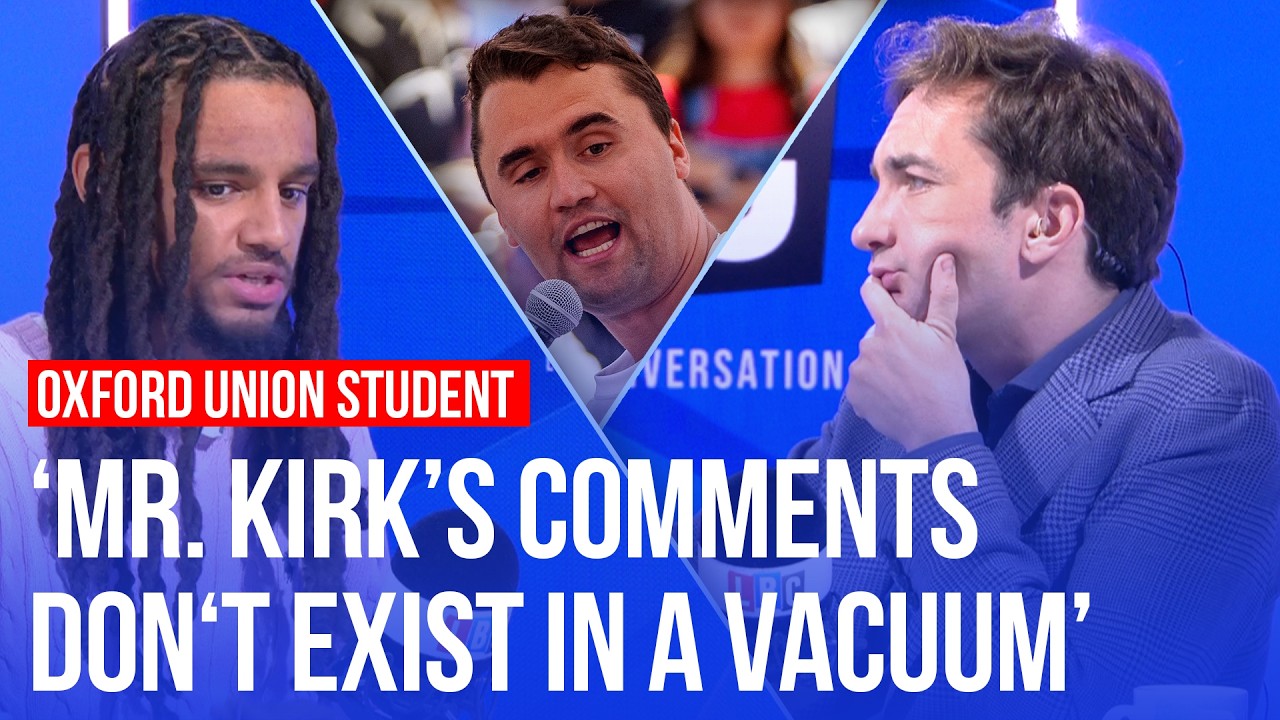
Oxford Union President-Elect Contests Ousting After Celebrating Charlie Kirk's Assassination in WhatsApp Messages
19:12
Elon Musk Explains the Woke Mind Virus and Why Free Speech Matters More Than Ever
21:21

Luke Beasley Debates Twenty Trump Supporters on Economics, January Sixth, and Patriotism in Heated Roundtable
1:36:38
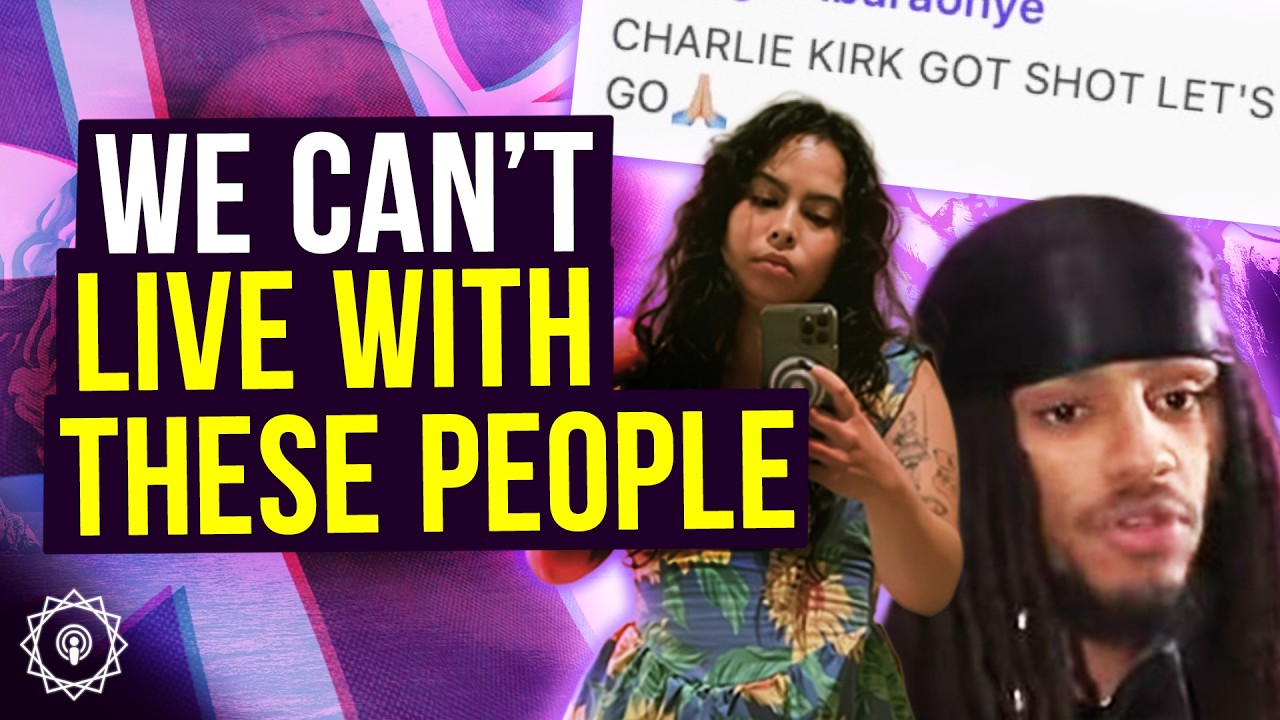
George Abaraonye Breaks Silence on Controversial Reaction to Charlie Kirk's Murder and Media Firestorm
George Abaraonye, the Oxford Union president-elect who faced international condemnation after his reaction to Charlie Kirk's murder went viral, sits down for his first interview to explain what really happened. From debating Kirk at the Oxford Union to becoming the target of Elon Musk tweets and calls for expulsion, Abaraonye shares his perspective on the shooting, his poorly-timed social media posts, and navigating political violence in an increasingly polarized world. This conversation explores identity, debate culture, political radicalization, and whether a 20-year-old student deserves to have his life defined by a single moment.
The Debate That Started Everything
George Abaraonye never planned to debate Charlie Kirk. The Oxford Union president-elect recalls sitting in the audience, dressed casually in a tracksuit rather than formal attire, initially convinced that engaging with Kirk would be unproductive. He had known for weeks that Kirk was coming to speak, and a friend had been encouraging him to challenge the conservative commentator. But Abaraonye resisted, believing there was "no winning in a debate against Charlie Kirk."
As he sat listening to Kirk field questions from other students, Abaraonye grew increasingly frustrated with what he saw as softball questions and points he felt he could challenge more effectively. "I'm sitting there and I'm stirring. I'm like, 'Should I do it? Should I go and talk to him? Like, should I go and debate him? Is it productive?'" he recalls. Finally, he decided to put his hand up. "What's the worst that could happen? You know, like at that point, what happens? So what if I get embarrassed a little bit? Like at least I had an opportunity to go and do something interesting, talk to someone that I disagree with."
The exchange was spirited but respectful. Abaraonye describes finding the mental challenge enjoyable, even as he disagreed fundamentally with Kirk's positions. He began to see value in engaging across ideological divides, recognizing that these conversations were becoming increasingly rare. "I think in that moment I really started to see the value in engaging with people on platforms and being able to have that respectful debate with people," he explains.
From Fulham to Oxford
Abaraonye's path to Oxford was unconventional. Growing up in Fulham and attending a state school in Chelsea, he was the only student in his year to go to Oxford. His teachers told him that his success would mean something to his community, that people back home would look at him and think "that could be me one day." This sense of responsibility has stayed with him throughout his time at university.
The Oxford Union, with its reputation as a breeding ground for future politicians and journalists, initially seemed like yet another elite institution. But Abaraonye saw it differently. "This is a society that turns over a million pounds in revenue yearly and it's completely student run. That is insane to me," he says. He wanted to prove that he could succeed in that environment while remaining authentic, without conforming to the expected mold of polished, upper-class decorum.
His casual attire at the Kirk debate wasn't just comfort—it was a statement. "I find authenticity is key and I'm not trying to change myself to fit into an institution that wants to dress me up in a certain way," Abaraonye explains. This refusal to perform respectability politics, to dress and act the part expected of Oxford Union participants, was itself a form of resistance to an institution historically "populated by certain groups of people"—specifically, posh, middle-class, Home Counties private school students.
The Day Charlie Kirk Was Murdered
Abaraonye was on holiday when he first saw the news. His reaction was immediate and, by his own admission, poorly considered. He hadn't watched the video of the shooting. All he saw was a headline about a shooting at a Charlie Kirk event. Within moments, he posted to a private Instagram story: "Charlie Kirk got shot lol." In a group chat, he wrote something similar with "let's go."
"I reacted very quickly. Again, at the time I didn't know anything about the situation," Abaraonye says. He didn't know Kirk had died. He hadn't seen the horrific footage. His comments, he insists, weren't celebrating death but were a visceral, thoughtless reaction in the heat of the moment. As soon as he watched the actual video and understood what had happened, he deleted his posts and issued an apology on his social media accounts.
But the damage was done. Screenshots of his posts began circulating. News outlets picked up the story. Within days, Abaraonye found himself at the center of an international media firestorm, portrayed as someone who celebrated a political murder.
The Media Firestorm and Its Aftermath
What followed was overwhelming. Elon Musk retweeted criticism of Abaraonye. The former British Prime Minister called for his expulsion from Oxford. Journalists, politicians, and commentators around the world weighed in. "I've got every news outlet under the sun talking about me, calling for my head," Abaraonye recalls. "I had people hurling abuse at me. People turned up at my parents' shop. They were shouting at my parents."
One American journalist even suggested Abaraonye should be shot, saying it would be worth a 50-year jail sentence. For days, Abaraonye was afraid to leave his house. The 20-year-old student, who had simply been trying to navigate university life and his role as president-elect of the Oxford Union, suddenly found his name and face dragged through the international news cycle.
Adding to the complexity was how his appearance—a young Black man with dreadlocks in casual clothing—seemed to factor into the intensity of the backlash. "Part of the reaction is because of the way I look, the way I present," Abaraonye observes. "It's something you're aware of, but I guess you almost don't realize just how serious it can be until it hits you."
Context and Qualified Apologies
Abaraonye's apology, while genuine about his remorse, included context that many interpreted as justification. He explained that his reaction didn't exist in a vacuum—it came after listening to Kirk advocate positions Abaraonye found deeply harmful, including comments about gun violence being a "necessary sacrifice" for Second Amendment rights, and remarks suggesting Black Americans were better off during the Jim Crow era.
"There have been 340 mass shootings in America this year alone. 390 people have died, thousands are injured, and these are mostly children, people with families, people with lives," Abaraonye explains. "Someone like Charlie Kirk who goes on these platforms and says these things—you would have never thought that he would have been a victim of it. And then he is."
This qualified apology—"I'm sorry, but here's the context"—didn't land well with many observers. It seemed to some like Abaraonye was suggesting Kirk bore some responsibility for his own death through the rhetoric he promoted. Abaraonye pushes back on this interpretation: "I'm not saying he bears responsibility, but as a political commentator, when you speak into a political climate that is becoming desensitized, becoming more polarized, it can be inflaming."
Political Violence and the Coarsening of Discourse
The conversation touches on broader concerns about political violence and the temperature of political discourse. Recent events—terrorist attacks at synagogues, mosque burnings, ongoing protests—reflect a society where "every identity feels that they are the victim of some form of subjugation or oppression," as one interviewer notes.
Abaraonye agrees that the political environment has become dangerously inflamed. He points to economic anxiety as a root cause: "A lot of that fear is stoked by uncertainty around cost of living, around the future. It's harder to go to university, harder to buy a home. Life is more expensive. These things weigh on people's minds."
When people are struggling economically and turn to news and social media for answers, they encounter narratives designed to blame and divide rather than solve problems. "You end up with a lot of people who are just scared and trying to protect themselves and as a result fall into a lot of these harmful ideas that are used to turn people against each other," Abaraonye observes.
The Value of Debate and Engaging Across Divides
Despite everything, Abaraonye maintains that engaging with people like Charlie Kirk is important. He criticizes the left's tendency to refuse to platform or debate controversial figures, arguing that this approach is self-defeating. "These people don't exist in a vacuum. They have platforms. Charlie Kirk was a massive influence on the US election. To pretend like he has no influence or impact is foolish."
He points to examples like Zach Goldsmith and others who are direct in their messaging and clear about their policy positions, arguing that the left needs to be more willing to meet opponents where they are rather than attempting to shut down debate entirely. "If people aren't going to engage with these ideas, these ideas are going to go unchallenged," he says.
At the same time, Abaraonye is critical of how debate has shifted in recent years, with platforms like Jubilee hosting content where progressive voices are vastly outnumbered by far-right participants. "The Overton window of debating has shifted so far right," he observes, describing scenarios where debaters openly identify as fascists and Nazis.
Labels, Rage Bait, and Loss of Nuance
The interviewers challenge Abaraonye on the left's tendency to throw around terms like "fascist" and "racist" too liberally, potentially creating more polarization than it solves. Abaraonye acknowledges this is a problem: "Often times the labels of fascist or racist are kind of thrown around to kind of act as a catchment, and I think they mischaracterize the issue."
He argues that while fascist ideologies may inform some of the fear-based politics that drives people to the right, calling everyone a fascist alienates potential allies and drives them further into right-wing spaces that are more welcoming. "You just increase the polarization because now someone's offended that you've called them a fascist, and who's going to accept them? The right that looks to bring anyone into their umbrella."
Gary Stevenson's recent commentary on this issue resonates with Abaraonye: the need to find common ground with people, even those voting for parties like Reform, rather than simply calling them racists. "If you center economic struggle, if you focus on that, you can build something positive. You can win them over. If you focus on what divides you, all you're going to do is make this country more divided."
Moving Forward
The experience has been transformative for Abaraonye, though not in the way he expected. He describes feeling like he was "mourning that loss of opportunity to be able to go and now make something of myself and improve the world around me." The international condemnation felt like it might define him forever, closing doors before they ever opened.
But he's determined not to let this moment be the end of his story. "I don't want this to be the end of me. I had big aspirations of wanting to improve the world around me. I went to Oxford not just because it's Oxford, but because I want to represent my community, because I want to be the change that I hope to see in the world."
Now back at Oxford, working to fulfill his responsibilities as president-elect of the Oxford Union, Abaraonye is trying to learn from the experience. "This might even be an experience that I'm able to use to then more effectively make the change I want to see, more effectively engage in those debates, more effectively be able to help people in a way that is productive."
At just 20 years old, Abaraonye has experienced the sharp end of online mob justice and the consequences of living in an era where every private comment can become public, where context collapses, and where mistakes are permanent. Whether this experience will radicalize him or make him a more thoughtful participant in public discourse remains to be seen. But his willingness to sit down for this conversation, to explain himself and engage with difficult questions, suggests someone still committed to the principles of debate and dialogue that brought him to that Oxford Union stage in the first place.
Video Transcript
I'm at home and I see the news and I react, you know, and I think the >> instantly. >> Yeah. Yeah. >> Instantly. And the media has kind of >> So, had you seen the video then? >> No, I had not seen the video. >> You just saw the I didn't even know, you know, all I saw was shooting at Charlie Kirk event, you know, and the media has kind of painted it as this celebrating his death or I'm celebrating the shooting. Um, but it's kind of a massive misrepresentation of what happened. And you know when you see the headline you you said you were shocked when you saw the headline. I can understand that reaction. You know you see someone celebrating death and you go like that's that's quite visceral but it's again like a massive misrepresentation of like what happened. >> All right. I saw a screenshot of it saying Charlie Kurt got shot. Let's [ __ ] go. >> And then an Instagram one which was Charlie Kurt got shot lol. >> Yeah. So the Charlie Kurt got shot lol was on an Instagram note. I think Charlie Kurt got shot. That's when it was on a private story. >> Okay. And you know I I reacted I reacted again poorly. I reacted very quickly. Again at the time I didn't know anything about the situation. And you know I I retracted and deleted my comments and then the stories come out a day later talking about I celebrated his death. What's left? Back again in the stew. This episode is a bit of a mad tink. We might be getting in a bit of trouble with this one, >> but you know, I'm saying independent media, man. We just got to do our thing. >> We just got to do our thing. >> Today, we're going to be talking about the murder of Charlie Kirk. As many of you know, we had Tilly Middlehurst, also known as Blonde Practice, on this podcast. It's kind of the thing that started getting people to listen. Uh, a month later, um, Charlie Kirk was murdered in America doing what had made him famous, debating university students at UVU. Uh, as I'm sure many of you who have seen the video, we were shocked, disgusted, um, >> horrified, >> horrified. It's really concerning I think for uh a lot of people in this political moment that we're in who look to America closely because there are allied that this world's superpower um and think that the kind of growing political violence is really creates an unsafe world and I and I think that for us and I'm not trying to import as the British commentator in American context into our politics but you know I look on at society that really does not sit well with itself and there was a sense that this unavoidable sense that Charlie Kirk had been murdered for his political beliefs that because he was a provocator, because he was this person who had engaged in discourse in this way, that that's what they were trying to do. That's what they were trying to shut up. Um, and I think when the salience of political violence rises, when people think that violence is an effective means to be able to make a political argument, that's when politics heads in a really dangerous direction. Um, and so today we've got George Aberon on the podcast. Um, some of you might know George um as one of the people who debated Charlie Kirk, but in some ways George, you've kind of become notorious for your reaction to um Charlie Kirk's death. Now look, we're going to get into all of those things um through this through this podcast today. You know, I think it's really important actually to give you the space to kind of articulate and and uh express and uh and give your side of the story because a lot has been said about you on social media. You've been retweeted by Elon Musk. You've been had your name and face uh really dragged through the mud of the internet in a in quite a shocking way. Um >> and I don't think people have heard yet your side of the story. Can I ask just before we get into that why you chose us to be the first place you've given this your interview for? >> Yeah. No, absolutely. I mean, firstly, I'd just like to kind of thank you guys for also reaching out to me. Um, I think I chose you guys cuz I'd obviously seen the interview with Tilly, I'd kind of seen some of the other stuff you guys had done. And I really appreciated a the fact that you guys came to me openly and instead of you know trying to give a platform to say catch me out or give bad faith interview, you guys are very open that look we kind of just want to have a very open conversation about what happened you know let you be able to speak to your side of the story and you know be very fair and you know hold me to account in a certain degree but also allow me to be able to explain myself and explain the context surrounding the situation explain everything that happened. I really appreciate that. Of course, man. Of course. Look, we we firstly we believe in free speech, right? And um look, I I personally found, you know, your reaction was quite shocking to me at first. And and >> but look, I'll be real. Like, I've also been a 20-year-old guy >> and um you know, every single person that I've spoken about to tell them that we're doing this interview in the media world, basically said something along the lines of if every if all my private views from 20 years old had been in the public eye, you know, it wouldn't be look very good on me either. And those are people in positions of power. uh there's the politicians uh there's the media personalities >> and I just think as politics is evidently just becoming more volatile and emotions are becoming more kind of public >> and there is just an easier scope by which you can say certain things and then be held kind of accountable in a way that you probably or anybody would really expect. It is just important not just in the interest of free speech but to actually kind of somber some of the conversation that surrounds the environment the febral environment that we're in and kind of demonstrate what democracy I think is all about which is articulating communicating exploring ideas and trying to center it in kind of a human aspect of it where really kind of unhuman and vile things are taking place all around us and we're just trying to work about kind of what the hell is going on in a very crazy society where it's becoming more unknown I think by the day. >> So George take us back. How did you come to be debating Charlie Kirk? Did you did you make a decision that day that you were going to go and challenge him when he came? >> It's actually quite funny. So I had known that Charlie Kirk was coming you know a couple weeks in advance. Obviously as part of the committee that term we help as a committee you kind of help build out the term card. You invite speakers. One of the people who I knew was coming was Charlie Kirk and I'd been talking to a friend of mine and he'd been egging me on, you know, you have to go debate Charlie Kirk. You have to go debate him. And I was like, why? I don't I don't see I don't see a purpose in debating Charlie Kirk. You know, I don't agree with him on many things at all. And I thought that's that's not someone that, you know, is really going to engage me in productive debate. And so I thought, what's the point? You know, there's no there's nothing to there's no winning in a debate against Charlie Kirk. I thought and so I thought, you know, I'll go to the event regardless. He's a massive political commentator. I've seen some of his content. I'm curious what he has to say. And you know, so I was I was there studying and much has been said about the attire I wore. I did not plan on debating Charlie. >> You came in a chis. >> The thing is I know about that though in Oxford. I think for people who are from kind of a normal background, there is a sense that identity wise, you want to you want to look, I'm not here to play your game about these these, you know, old spires and and stone walls. I'm from a place that's not here. >> Exactly. And so I got why you were dressed like that in a way and that's part of what offended them was cuz I think it is a little bit punk and it's a bit of a middle finger to the institution >> and they're like well how dare how dare this person not respect you know the I don't know pump of >> definitely because I find like I find authenticity is key and I'm not trying to change myself to fit into an institution that wants to dress me up in a certain way. You know, I was there just to enjoy myself, to enjoy the debate, and listening to Charlie Kirk speak, listening to some of the stuff he some of the stuff he said and I disagreed with and I went, "Right, like I I disagree with this and I disagree with this." And I'm sitting there and I'm stirring. I'm like, "Should I do it? Should I go and talk to him? Like, should I go and debate him? Is it productive?" And I'm hearing other student speakers go up and kind of softball him with questions or, you know, not really push him on points that I feel like I could really push him on. And I'm like, >> what's the worst that could happen? you know like at that point like what happens so what if I get embarrassed a little bit like at least you know I had an opportunity to go and do something interesting talk to someone that I disagree with because I think it's very easy often to you know surround yourself in these bubbles of people that you agree with and then not really engage with anyone else in terms of the views you hold and like actually have a debate and so I thought why not man and so I put my hand up obviously to ask a question and in a way it was a really fun experience you know I mean do I Do I think Charlie Kirk engaged in good faith debate? I don't think, you know, then much has been said about, I think, the way Charlie Kirk often uses certain debate tactics in order to make certain points. >> So, what do you what do you what do you be substantive? >> Yeah, I mean, um, I think I think often times Charlie Kirk is straw man. Um, or for example, even at certain points in time when I was making certain points, he would go on, you know, kind of tangents to kind of mislead or Yeah. deflect or kind of take you away from the substantive points you're trying to make. Um, but I found the challenge of it all quite fun. You know, I had engaged in debate before, but not really in any kind of formalized setting. And so, it was really fun for me to kind of engage myself in that way, kind of play that like mental back and forth. And engage in what I did think at the time was quite respectful back and forth debate between him. And, you know, in that moment, I kind of be began to understood partly why he did it. I just don't necessarily agree with anything that he said, but you know, I think in that moment I really start to see the value in a engaging with people on platforms and b being able to have that respectful debate with people. Just what you said seems to be an art of debating and politics that has been lost so much so that we value that in the way that you're talking about is indicative that the spirit of the debate that he was trying to foster and that you engaged with is kind of becoming few and far between and that is a bit of an indictment surely on the type of societies that we claim to live in that are kind of free speech open >> but that was his attack on that was Kirk's attack on the universities themselves were that they weren't open to like you robust adversarial debate and discourse. I I what I found fascinating about that was that George in real time it sounded to me like you were you you'd been kind of of the view that nothing can good can come out of a debate with Charlie Kirk. You know, maybe I'm just giving him more kind of cannon foder to its fans. Um, and then seeing in real time that actually what you what you had play out before you was the democratic way of doing argumentation and you were like actually no this is this is an opportunity to firstly um stress test my own views but also maybe try and like you know confront his views and and I think that in the Cambridge stuff what they did really effectively was I think that I think they were stronger in argumentation actually than the Oxford uh people uh >> going back and forth with Charlie >> and like I don't I think also again like why did Tilly like break out and become this star? >> It's because she held her own and she made them whole corn. Do you know what I'm saying? So like the the whole the whole thing of you know blunting these people's power is about having to actually meet them where they are. The the right have been way more adventurous than than the left have been in terms of going into those spaces where they're uncomfortable and having those discussions. >> Yeah. And in all of that they've set the de the debate on their terms. Yeah. And I think that's to a point what you're kind of getting at is that in his kind of tangents and in his um attempt to meander the conversation more towards his kind of ideological worldview, >> it's to catch people off guard and to entirely set the conversation where he wants it to be and then further advance his own line of argument. >> Yeah, 100%. And I think this is kind of the push and pull that I often have with debate content and debate content online which is that a lot of it has kind of been engaged especially early on by the right and because of that they set the debate on their terms and you know you look at like say even Jubilee for example and some of the content they produce and you've got like the one v20 with Hassan and he's debating kind of like >> 20 fascists >> 20 fascists essentially >> and if that autocrat kills you and your family you're fine with that. >> Well I'm not I'm not going to be a part of the group that he kills because that's a whole thing. How do you know? Autocrats tend to kill everyone even makes this point very well in his work. It's the friend enemy distinction, right? You >> the Nazi theoretician. >> Absolutely. I don't care. >> Are you a fan of the Nazis? >> I don't I frankly don't care being called the Nazi at all. >> I didn't say that. I didn't say that. I said, "Are you a fan of the Nazis?" >> Well, they persecuted the church a little bit. I'm not a fan of that. But >> what about the persecution of the Jews? >> Well, I mean, I I certainly don't support anyone's human dignity being assaulted. I'm a Catholic, >> but you don't condemn Nazi persecution of the Jews. >> I I think that there was a little bit of persecution. >> Rename the show cuz you're a little bit more than a farright Republican. >> Hey, what can I say? >> I think you can say I'm a fascist. >> Yeah, I am. >> Two. >> Absolutely. >> I'm just checking who's clapping just to get my set of where everyone is on this because you know that millions of people are going to be watching you on YouTube and checking out who the fascists and the Nazis are. I'm I'm not ashamed of that whatsoever. >> The like the over to window of debating even has shifted so far right that it's like >> some of these issues some of these topics I don't even want to engage in you know like people people who are >> but I think that's a self-defeating attitude though. I mean I I do get it. I mean the principle like when we were growing up I think that was very much that was the attitude like you don't debate a fascist sort of thing. And now what's happened is that >> that was very prevalent when I was at uni. >> Exactly. And and I think basically what's happened is that the free speech argument was lost by the left because they were trying to find some arbitrary line about where you could you know where debate was acceptable and wasn't acceptable plus you had this wild west of the internet so the debate was actually happening. So even though you were trying to shut it down on an institutional sense because you didn't want to give it legitimacy it was still going on anyway. Yeah, absolutely. And I think this is something that actually, you know, um in in that group chat that we'll probably come on to later. This was something that actually was raised um you know, people asked me why the hell did Charlie, why the hell was Charlie Kak even, you know, invited? We had, you know, Jordan Peterson the term before, Ben Shapiro in my first year. People always ask me, why the hell did you guys even invite these people? And I think I understand I I very much understand the point of not debating fascist, not engaging with fascist, not platforming certain, you know, fringe views that are really harmful and dangerous. But I think with someone like Charlie Kirk, you can't stick your head in the sand. Like these people don't exist in a vacuum. They have platforms. Like Charlie Kirk was a massive influence on the US election. And to sit here and pretend like he has no influence or to sit here and pretend like that man doesn't have impact um in the things that he says in some of the policies that he helps push, you know, is is foolish. And so I think this was a point that even like you said in listening in sitting there and listening to him talk, I kind of realized in real time that like >> if if people aren't going to engage with these ideas, these ideas are going to go unchallenged and unf. >> I'll just kind of put it to you then. So, we've done a lot on kind of rage bait and >> I mean, we're doing this [ __ ] podcast. There you go. >> I don't think we can escape the rage bait accusations now. >> But I I feel as though the left has a propensity to throw around these terms and we've just used them, I think, quite liberally around fascists and fascism and things of that sort. And I mean, Charlie Kirk would identify himself as a Democrat who wanted to inspire conversation, who wanted to enrich the conversation that he, I guess, thought wasn't being had on um kind of university campuses. >> How helpful is it to just call people fascists, the people who we disagree with, because >> undoubtedly there are going to be fascists who will like Charlie Kirk. >> You like Charlie Kirk. Yeah, of course. And then there will be a whole >> There's plenty who didn't, right? Nick did exactly a whole range of people who are curious by what he has to say, who want to listen to him to kind of further develop their own views, who are right of center, who may have a whole range of challenges and problems with where they perceive society is going or where it has been. >> So I put it to you. What do you think of the kind of rage baiting Lexus that the left kind of employs sometimes willy-nilly? It's interesting you you describe it as like rage baiting, Alexis. I think I think often times and especially what we're seeing with internet kind of discourse now is a loss of nuance. People it's people want to find an easy solution or an >> 140 characters. >> Yeah, exactly. An easy label to kind of um describe a whole group of people that they want to argue against. I think often times, you know, the labels of fascist or um even kind of racist to some degrees are kind of thrown around to kind of act as a catchment and I think they mischaracterize the issue which is not to say those principles aren't there in some argumentation that those ideologies don't feed into a foundation of say fear that leads people into these circles that leads people into these pipelines. But I think often times blanket calling someone a fascist because they agree with some policy positions and maybe haven't done research or you know engaged with other policy positions I think mischaracterizes the problem you know and you don't end up engaging those people in any meaningful way. you just increase the polarization across the internet because now someone's offended that you've called them a fascist and well who's going to accept them the right that look to kind of bring anyone into their umbrella while you know I think often times the left can can fall into this almost purity checking kind of culture which you know I think is another issue to kind of get into eventually >> your purity check are the ones who say don't platform Charlie Kirk you know I think the same thing like Steve Bannon I remember being at the Oxford Union There's like mass massive protests. Um, and it's like guys like he just masterminded the election of Trump and you don't want to hear what he has to say. You don't want to have to challenge him. Like this is a it's it's it's a self arandisement I think actually that and a bit it's hubris that makes people think that we don't need to look into this sort of stuff. But I think you know as you said right like if you use the word racist to just you know label anyone who disagrees with you. I've literally been told by reform people, campaigners, that's a like that's a recruitment drive for them. We're helping them recruit by doing that. So, this is really not in our interest. And Gary Stevenson actually came out recently basically to kind of challenge the left on this. >> I think there is a risk that the left gets very very angry and starts to be really really aggressive and accusatory towards people who might be voting for reform. I want to show you a clip which I saw on Politics Joe the other weekend. So, let's run it. wealth tax or no wealth tax? >> It's a very hard one. I mean, I come from a working-class town. Everything in kind of reforms policies would maybe leaning more towards no wealth tax. >> So, for me, if the wealth tax was possible, I'm at a stage in my politics where I would actually support it. >> There are a lot of reform voters who' be supportive of wealth taxes. If you want to get progressive change in the next election, you need to win people over. And I think you need to be really careful to resist the temptation to go around shouting at people, calling them racists. Um, listen, there are racists in this country. There always have been racists in this country. I totally understand the instinct of people on the left to worry about increasing racism in society. I think it's happening. I can feel it happening. You need to be pragmatic. You need to be sensible. Reform are going to win the next election. And you are not going to stop that by turning around and calling people racists. You need to be relentless and aggressive in your pursuit of common ground and unity. And that means you're willing to go to people who you might not agree with everything about and say, "Listen, I know we don't agree on everything, but let's find the thing that we do agree on and let's fight for that." Because those people at those protests, they just like you are struggling to pay the rent. Their kids are struggling to pay the rent. They're struggling to find economic futures. If you center that, if you focus on that, you can build something positive. You can win them over. If you focus on what divides you, all you're going to do is make this country more and more divided. >> And I had a comment from one person being like, "How dare Gary Stevenson as a white person tell people what racism?" I'm going, "Bro, if I said that, you would be pissed off. So don't act like it's about his whiteness. You just don't want to be told that you have to try and empathize with people who disagree with you." That's my view. >> I think I think again though with these things push and pull because it's difficult to tell. I mean, even me, for example, who's been like a victim of racial abuse on the internet for the past 3 weeks, I think it's difficult to then go and be like, I need to now empathize with the same people who have made death threats against me and my family. You know, I think I think what Gary Stevenson I think was trying to get at, which I don't think he quite so eloquently put is I think the racism necessarily that might be going on especially in the country right now when you look at kind of the cultural climate is separate from the fear. I think the fear triggers the racism instead of the racism triggering the fear which I think is kind of a misalignment of the way people see that relationship. You know, like it's hard, especially, you know, as someone who if you you know, you're you you go out and you're working your 9 to5 or a 9 to7 and then you come back home, you're tired, you're busy, you've got kids to feed, you've got family to provide for, and then you go on the internet and you see, you know, from mass media outlets that, you know, immigrants are this and immigrants are that >> in a hotel. >> In a hotel, sure. or even that, you know, all of these kind of misleading stories that paint immigrants or paint people of color in a certain way. And it creates this culture of fear that you know people aren't people aren't they're not tackling like the Labour party is failing in that sense to kind of tackle these issues and the only people that are trying to speak to those issues you know and I disagree with many of the policy platforms but you can you cannot deny the effectiveness of the reform party in being able to a stoke that fear and then b capitalize on that fear and I think you know when you talk about kind of racism in this country and you talk about kind of the institutionalized history of it and you talk about kind of where it's going now and it's this culture of I think fear and constant kind of bashing of different groups and you go well of course they're going to blame these people because there is no one you know the left the left wing of the UK government isn't out here trying to tackle these narratives not out here trying to say actually it's not that immigrants are taking people's jobs or it's not that immigrants are a danger to people instead they're feeding into the exact same narratives they're talking about closing down the tells they're talking about strengthening the border and all of these kind of narratives and all of these kind of talking points just become absolutely like storms of fear and they come become storms of almost disinformation and misinformation where people then start to hold all of these misaligned views and misaligned beliefs that are very t are very difficult to tackle because once you're in that mindset your your priorities completely shift you know you're not >> so so in an absence of it seems like you're calling there's an or stating there's an absence of leadership or of kind of um yeah a political leadership that you think needs to steer us out of what we're in. >> Absolutely. >> Where do people go given the kind of brazen alternative is reform and there are new kind of political synergies emerging but it seems as though you're looking for something possibly a bit more radical in that. >> I do think so. I think radical is an interesting way to describe it. I think when you look at someone like Zach Palansky, I think he's a very good example of a new age way to kind of tackle tackle these narratives. Zor Mamani as well as well in the US I think is great in terms of >> making it very very clear what a your policies are making it very clear the kind of messaging you want to provide and then being very direct in how you attack not making these kind of you know large scale um generalizations. >> Yeah, he's just a populist though. >> Who >> is that Pansky? >> No, I mean he he described himself as an eco population. Yeah, but that's but I think that's about grabbing media attention. When you hear about the way he talks about the environment, when you when you when you hear the way he talks about class politics, like he has some very clear kind of policy ideas. And I think Zoran is probably a better example of this in terms of like with his um state sponsored supermarkets and stuff like this like he has very clear kind of solutions to certain problems and he stays laser focused on them. And I think you know from an institutional level I think that's one way to tackle it. I think when you look at the people, I think a lot of it will start to come from community building. I think kind of one thing I've kind of learned throughout kind of my time in university is the power of the community of people being able to come together actually have discussions because I think a lot of the time as well, you know, in this climate of fear, people aren't coming together, you know, like people are scared to go outside because Union Jack flags and because people aren't able to engage each other in the pubs or at the parks, people aren't able to empathize as easily. people aren't able to even, you know, in a in a low stakes environment engage with debate or engage in a topic. I mean, like, it's kind of crazy that one of the only places where I can really go and test myself in a debate is on a national stage debating Charlie Kirk. There aren't many other spaces that kind of give you the the platform or the framework to be able to even debate or engage with other ideas. I think you know it will come from a shifting culture that is less about finding a reaction and more about finding a solution. I think it will come from a shift in people you know taking a more active role in the politics that they seek to put forward taking a more active role in community organizing or community projects or helping out those in need. And I think that's something that takes time, but I think that's something that also like cultural leaders, you know, pop culture, celebrities as well as politicians also have to take full force in terms of being able to push because I don't think it just comes from the government, especially when you look at how disillusioned some people are with these broad institutions and you look and you see the influence of influencers and celebrities in the political climate and you go, well, these are the people that also are going to make change. Let's let's go back cuz um we we've spoken about some big issues here and um we can we can sink our teeth into them, but I think it's important that we kind of still track what happened. So post so post Kirk uh debate >> I imagine you become a little bit of a local celebrity. >> Yeah. Um people know you as the guy debate Charlie Kirk etc etc. you, as I understand the story is you've at the last moment kind of decide to run to be president of the Oxford Union. Is that correct? >> Um, yeah, I'd say I put my I put my hat into the ring pretty late. Um, >> so what was that was the decision-m process there? >> Yeah, I think kind of I'd spent spent a lot of time around the union. I'd seen >> that's interesting to me as well because the union in my head was and we've spoken about this before in the podcast. It's it's a bit of like a I don't know it's quite shallow as an institution and a lot of people see it as a vehicle to then becoming like a politician or a journalist or whatever and we know about those kind of like well trodden paths and stuff. >> Um so what was your attraction to the union as as well? >> So I didn't know about the union before I came to Oxford. Um I kind of got here and you know the union is the biggest society in Oxford and so you get there and you hear a lot of buzz from students immediately. You know it kind of has a reputation amongst the student populace. you know, you hear so many different things, so many different massive characters and obviously just as well the huge array of speakers everywhere. I mean, Tom Hanks came like in my first term. That was pretty cool to see. >> Um, and so you kind of hear all of this about the union and you get intrigued. And for me, I mean, >> even the reason why I applied to Oxford in the first place, my teachers told me that, you know, you're you're bright, you could go to Oxford. That means something to the people around you. That means something to the community. when you go people people back home in school will look at you and go that could be me one day and so I went okay bet like I hear that and then I got to the union and the union especially again amongst the student has this very kind of like there you know there's an assumption of the kind of people that might succeed in the union or like a way of acting within the union a way of moving in the union and I thought well I mean this is a really cool space firstly like where regardless of the reputation that world-class speakers come, you get to engage in debate. This is a society that turns over a million pounds in revenue yearly and it's completely student run. That is like insane to me. I'd never heard of anything like that and I wanted to be involved. And then I got more involved, you know, I was convinced to run by a good friend of mine who ended up becoming president. And in seeing kind of the environment, I went, well, I want to be able to move through this environment with authenticity. I like to think that if I'm genuine and if I if I'm true to myself, you know, I can succeed in a place like that. I backed myself. I thought if if a space like the Oxford Union, which you know is historically this paragon of almost like almost like British politics and British journalism, if I can move through that space and navigate that space in a way that I feel is authentic to me, then who's to say I can't go and do that in British politics or who's to say I can't go do that in a corporate environment, you know, kind of again want to stress test myself. Um, and so I got involved. I started running with various different people. I thought, you know, these people share in the same kind of ideas of wanting to shift the culture of the union away from some of the toxicity, away from some of the imagery that the union has been steeped in. And >> what is that toxicity? I think often times elections can be, you know, people people want to win and people and I think often times you can see you can see people get very emotionally invested in things and often times people can you know end up feeling slighted or feeling pained by elections which is understandable you know they're competitive everyone wants >> popularity contest >> oh to a degree yeah and I think >> as our lives get sharpened in a way in a sense. Yeah. I think sometimes, you know, people aren't able to engage in goodnatured competition. And >> for me, who's someone someone who's always moved through that space, I've always wanted to engage in that good nature competition. You know, I've never quite understood why things need to be such that they are. And so, that's kind of something I've always tried to push. especially with others is something I've always tried to push is aiming to detoxify the union, aiming to make it as safe a space as possible, aiming to make it as culturally inclusive as possible, aiming to talk about as many different things and topics as possible within the union and you know within that then open it up to the student community even more because I think it's it's such a melting pot right now of different political ideologies, different groups, different cultures which I find so fascinating and I want to only expand that further. Did like did you want your left-wing politics to be more represented in the union? >> I don't think so. No. I think I think often times actually what's quite interesting in the union is especially when people run the political faction, the political ideologies kind of aren't necessarily what people run on, you know? I mean, it's not to say it doesn't have impact. It's not to say that, you know, your political leanings don't affect to some degree the way you move through the union, but like I I have never run in the union on a leftist platform or vote for me because like because I'm a leftist or whatever, >> you know what I mean? That's never really been it. I think my politics might inform some of the other kind of ideas I have for the union in terms of a wanting to say make it more inclusive or >> What do you mean by inclusive though? like what which which debates are not being included by the union or which people aren't being included. Say for example, I started an event last year in the union called Sab Chess, which was a partnership with the African Caribbean Society, which was very much centered around having having a space to have discussions that are primarily focused on the African Caribbean community that are primarily focused in the black community in Oxford as well, and talking specifically about topics and identity and issues within the black communities in across university, for example, which is something that didn't really exist in the union before then. Um, >> so do you think black people don't feel comfortable in the union? >> I wouldn't say that. I think the union has historically been >> hosted Malcolm X back in the day. >> It did. It did. You know, and that that's that's a that man that man's a massive idol of mine and a big inspiration to me. I think, you know, the union the union has historically been an institution that is populated by, you know, certain groups of people. I think. >> Go on, call them out. >> You don't want to get in trouble. I'll do it for you. It's posh, middle class, comb counties, private school people. It is. It is. I'm sorry. It's just a fact. I mean, um, people who've basically been told that the world is is theirs to a certain degree in terms of like go and go out and get it and do whatever you want. And then they see the union as an institution where they can raise their personal profile and that's what they go and do. So that's why I wasn't into it when I was at uni. >> And I think when you look at kind of the way demographics are changing in Oxford and you look at kind of the increase in, you know, people of color at Oxford, you know, I think the union is moving in that direction of becoming a lot more inclusive of those people, a lot more inclusive of those spaces. Um, and I think part of that shift is about, especially me as a black person who felt like I could succeed in union, being a visual marker of someone who moves through that space in a way. Exactly. in a way that is authentic to me which is again kind of going back in the track >> and even for people who have been through the kind of university system I still found it quite inspiring that >> you could be yourself I mean >> I recount some of my experiences and I would have felt I would have to compromise an aspect of myself in order to fit in >> to something like that and I guess seeing you >> just being yourself was quite inspiring having been through that system years ago So, so you so can you give me a little bit of background about where you're from? So, it sounds like the school that you went to, not many people went to Oxbridge. So, you went you're from Chelsea, is that right? >> I'm from Fulham. >> From Fulham. Okay. Right. Right. Right. So, Southwest Boy. >> Yeah. >> Um, so like give me a sense of your like community where you're from. >> Yeah. Yeah. Yeah. I mean, so it's a very kind of multicultural community. I went to a state school in Chelsea, um, which is also a very vibrant multicultural school. Um but again we don't have the highest number of kind of follow ons to Oxbridge. I think in my year group I was the only person in my year to go to Oxford and we had two in my year that went to Cambridge which you know is good. >> That's better than most. >> It's good. It's good but again it's not I wouldn't say it's a factory of people that go to Oxbridge. >> Um >> and so >> you know in again in in going to that school and being in that space I was kind of told you know you're someone that could do things. you're someone that's bright, you should you should use that. You should you should be able to put on for your people. You should, you know, use the opportunities that you might, you know, might be able to access and to go and to go and try and make something of yourself so that people can look back and go, this is something I could do as well. And that's something that's always really stuck with me. >> You then go to you you run, you get elected. >> Um, so that must be like the back end of last year. Yeah. Yeah. Okay. So, the summer happens. Look, I was on holiday actually the week that Kirk was murdered. >> Talk me through that day for you. >> Yeah, I mean obviously I'm at home and I see the news and I react, you know, and I think the >> instantly. >> Yeah, instantly. And the media has kind of >> So, had you seen the video then? >> No, I had not seen the video. >> You just saw the headlines. I didn't even know, you know, all I saw was shooting at Charlie Kirk event, you know, and the media has kind of painted it as this, you know, I'm celebrating his death or I'm celebrating the shooting. Um, but it's kind of a massive misrepresentation of what happened. And, you know, when you see the headline, you you said you were shocked when you saw the headline. I can understand that reaction. You know, you see someone celebrating death and you go like that's that's quite visceral, but it's again like a massive misrepresentation of like what happened, >> right? I saw a screenshot of it saying Charlie Kirk got shot, let's [ __ ] go. >> And then an Instagram one which was Charlie Kurt got shot lol. >> Yeah. So the Charlie Kurt got shot lol was on an Instagram note. I think Charlie Kurt got shot. This one was on a private story. >> Okay. >> And you know I I reacted I reacted again poorly. I reacted very quickly. Again, at the time I didn't know anything about the situation and you know I I retracted and deleted my comments and then the stories come out a day later talking about I celebrated his death and I'm like well hold on >> and you didn't know he was dead. >> I had at this point I had no watch. >> Yeah, exactly. And you know >> do you think if you'd watched the video you wouldn't have said that? >> Yeah, absolutely. I mean you know like again when we when we talk about that group chat you know and I think one thing that's kind of lost in all this is like a lot of other students were also dox in that group chat which is like kind of horrible and they've had to go through some horrible things as well and like it's a group chat that was being used to talk about many different political issues like many different political discussions like I said earlier we' even talked about the idea of whether or not to platform Charlie Kirk >> and you know this is a group chat where a lot of discussion happens and we talk about many different things we talk about you the efficacy or the ethical nature of debating someone like Charlie Kirk. And I was advocating for challenging these people, challenging their views that I disagree with. One of which being gun reform. You know, this is a man that at various different points has said that, >> you know, gun deaths were a prudent deal or a necessary sacrifice to be made for the right to arms. Exactly. Which, you know, that man's 30, that man was 31. I'm 20. as a 20-year-old to hear someone talk about life in such a callous nature was difficult you know I mean people people have died like there have been 340 mass shootings in America this year alone like 390 people have died thousands are injured and these are mostly children these are people with families people with lives and you know someone like Charlie Kirk who goes on these platforms and says these things and you know you think this is someone that would never be you would never have to deal with these kind of issues This is someone who he he goes around university with an ensemble security team. you would have never thought that he would have been a victim of it and and then he is and the immediate reaction was one of like immediate like oh my god like shock like what the hell happened and you know in this conver in this group chat where we're talking about various different things and I go Charlie Kirk got shot lol and it's an immediate like visceral reaction and it's not even me celebrating you know like >> did you say so you didn't say let's [ __ ] go was that not that's not real that screenshot >> no no so this was this was part of a different like this is like kind of when I went when I reacted kind of on various different like platforms I kind of went into the group chat said it and then on my private story again kind of here at the moment you're not really thinking very things through very much and you kind of react instantly >> yes you've said a throwaway comment the thing is I'm I'm not trying to do this to like catch you out like this is what people have seen right so I would look like a chump if I didn't if I didn't bring up the the >> I can understand as a 20-year-old guy >> saying something [ __ ] stupid. >> Sometimes performatively in a in a group chat. >> Obviously, people don't know you. >> People see you as this person who's president-elect of this massive institution. People see you as a person who debated him. So, it's like, >> wo, like, how is that somebody's instant reaction to it? And and I think I think what's going on here is a little bit like there's been so much desensitization >> that as a generation that we've gone through that someone getting shot is not like >> for some people and I think especially for young for younger guys I do think like there's a little bit of like you learn more empathy the older you get. You you you realize more about like the the kind of importance and the weight of certain actions and certain stuff like that. And I accept as well you hadn't seen the video and I don't think you would have reacted that way. You know, judging you as as the person that I've I'm seeing before me today that that you would have reacted like that. But there is a sense of like that callousness in politics that really concerns people and really concerns me about when we see escalating political violence >> and the callousness that I guess was embodied to a point in the message that was sent around but then the subsequent callousness around you which was kind of you're the president-elect of the Oxford Union with dreads and with trackies on and a whole kind of barrage of abuse that was sent your way >> and I guess you've had to a point a chance to articulate >> how this kind of timeline of events came about, >> but there seems to be to a point a kind of a nuance in how all of these things intermingle and play with each other. Um, and how would you have been met with the same hostilities were you someone else? And I mean that is >> yeah that's the counterfactual. I think that that does rest on some people's mind. I mean what do you think? Do you think you would have been treated differently if you weren't a black guy with dreads from from Fulham? >> I mean, I think it's a topic that especially whenever I talk to friends and I talk to family, it's something that is always kind of brought up is this idea that, you know, part of the reaction is because of the way I look. It's the way I present. And kind of going forward, it's something, you know, you're aware of, but I guess you almost don't realize just the just how serious it can be until kind of it hits you. And you know, like when when when certain comments or certain things you say are taken out of context, it's very hard to kind of close that bottle up again. And I think, you know, you're seeing a lot of kind of different misconceptions now about who I am. I think you're even seeing people clip up parts of speeches I made in which kind of they're trying to paint me out as this kind of violent person, >> violent revolutionary >> to effectively create change in the world we desire. inside prop will argue that at times there is simply nothing else that can be required other than violent retaliation and this is a view I wholeheartedly agree with this view the view that some institutions are too broken too regressive too oppressive to be reformed like cancers of our society they must and they should be taken down by any means necessary >> and then quite literally 20 seconds later in that same speech I go on to then advocate for peaceful protest in saying that >> sometimes violence violent protests plant the seeds of their own demise. Revolutions may overthrow oppressive regimes, but what follows? History has shown us that extremism in the pursuit of justice often stumbles after its apparent triumph. A battle won, but the war often lost. A victory undermined by the chaos that comes next. See, this house believes moderation in the pursuit of justice is no virtue. Yes, I argue tonight that moderation is not just a virtue. It's a strategy, a necessity, and the key to sustainable change. I think the problem with that specific speech was that it was really unclear in the way that you said your argument what you what you stood for. So that mean that clips I feel like you can use the words like >> again this is the problem when you kind of take when you can take things out of context so clearly in the full context of what I said I think it was quite clear actually my view which was that you know at the end of the day peaceful protest I do think is the most productive way to kind of go about making institutional change at least currently in the world we live in and I think I think again when you're able to take words out of context they lose their meaning and if you took the context out of you know something that everyone said at a certain time, you know, any like any anyone could find themselves in this situation. I think >> I think the graciousness to a point has been lost of >> what the union and what debating is about, which is to develop your ideas and they will they won't always be coherent and astute in the way that you would aspire for them to be. >> Yeah. 20 years old. Yeah. No, Tim Stanley defended you in the Telegraph on that point. >> Yeah. Exactly. And I just think that that has been lost in all of it. I mean, I would argue it's kind of become a bit too serious, the kind of debating chamber of Oxford. And I understand the kind of the credence of it all and its place within kind of British culture and history. >> Um, >> but at the end of the day, it is a student union designed to foster debate, discussion. >> Yeah, I get it. I do. But I also see the other side of the like it's Oxford. It's like one of the biggest exports of this country. You know, Oxbridge is it's kind of like how we part of how our national images on the world stage. You know, there's a famous story about Hitler reading about 1930s emotion that, you know, Oxford students wouldn't fight for king and country and thinking that that means that they were ready to attack, you know. Um, so of course it has it has this steeped history about of political importance and it it's where a lot of politicians cut their teeth. So I I do see the other side of that of that ledger. I think one of the problems, George, was that in the aftermath of it when you apologized, you qualified your apology. And I think for a lot of people, if you say, "I'm sorry, but it doesn't sound like an apology, right?" And it sounded like you doubled down. Could you explain a little bit more what you wanted to get across with that statement? And do you feel like that was misinterpreted to any degree? I mean, I think one thing that's kind of lost in all of this, especially in the news stories that, you know, don't like misrepresent the situation, is that again, my comments were retracted and deleted immediately after seeing the video, which was horrific. And also, I had then apologized on my social medias to the people that kind of had seen that, you know, and I talked about the need for empathy in our politics and our discussion. And I think when giving a qualified apology, I'm very much coming at it from a point of not only not only do I want people to obviously see that I'm remorseful for the comments I made and for the way people interpreted them and understood them, but also that that reaction comes in a context. you know it doesn't come in a vacuum and like the reaction comes as a result of the political climate with which Charlie Kirk you know spoken the political climate with which Charlie Kirk stoked and you know when you this is someone that you know had had various different views that again don't exist in a vacuum you know some of the some of the kind of rhetoric which was espoused could be very harmful I mean he said he said he said in a jubilee debate that um black people were better under the Jim Crow era when black people were being lynched in America. Like we were like subjugated to like some of the harshest discrimination that's been seen in the world. >> Blacks in America did not have the same rights they had today. There were less they were less murderous. There was less break-ins. Why is that? >> So I'm sorry. Are you trying to say that blacks thrive under subjugation? >> No, I'm not. I'm saying they I'm asking you the question. The data shows they were actually better in the 1940s. It was bad. It was evil. But what happened? Something changed. They committed less crimes. >> Maybe they were afraid. I mean, 4,000 black men, women, and children were killed in violent lynch. >> That's your explanation. But I just >> racial terror permeated American culture for hundreds of years. >> Black America is worse than it has been that affected the generational psych of an entire group of people. >> I'm sure it did. I'm not discounting that. I'm just trying to understand why is it the more social welfare we've done, so we've spent 20 trillion dollars on uplifting black communities. 20 trillion. and black Americans are poor. We've done everything that's been asked. >> That context doesn't just disappear. And you know, my comments again, they were rash and they were illconsidered. But >> they weren't considered. >> They were illconsidered. >> They illconidered. >> They were illconsidered. >> Yeah. >> But they don't exist in a vacuum. And I think that has kind of been lost on all of this. So do you think that some people will hear that as you saying to a certain extent Charlie Kirk bears responsibility for his own death? >> I'm not saying he bears responsibility but well I'm not saying he bears responsibility but as a political commentator it's not it's not that you it's not that you deserve what you get. That's not what I'm saying at all. But when when you when you when you speak into a political climate, when the way in which we talk about politics, as you're saying, is becoming desensitized, is becoming more polarized, it leads to >> it can be inflaming. >> Exactly. Like it can be inflaming. It can it can it can be difficult to tease apart individual influences. It can be it can be difficult to te apart why exactly someone has done something and you look at the overall environment and you go or people aren't willing to engage with each other. people are are spreading these like spreading these these kind of ideologies or they're spreading these kind of points of thinking that subjugate certain people that you know call for the non-existence of others and that's difficult for a lot of people to deal with and I think again I'm not saying violence is the way to kind of go about acting out those frustrations I think they're much more engaged and much more healthy ways to do that but I think this is I guess especially post death. Something that all of everyone in the political commentary space needs to I guess start to consider is the a the messaging and b what exactly is the end product of that messaging like is is that messaging something that could then be used to justify doing really really hateful things because I think that's something that we should then be considering why exactly we're putting out that messaging. >> Yeah, I think um I think there's I think there's an ar there's an element of the kind of leftist discourse that wants to make an argument along the lines of, and I saw Shan Ramse say this, who um is a Tik Tocker, but this idea that the chickens came home to roost for for Charlie Kirk. I think that there's something quite unnerving about that narrative. Whilst look, I I completely accept that there's been some revisionism on who Charlie Kirk was. You know, Charlie Kirk bust people to um the capital insurrection. you know, he said, I I haven't seen that specific clip, but um I'll take your word for it, but you know, there's plenty of things, you know, this idea that women, you know, shouldn't have jobs, etc. I think it's like it's ludicrous. But there were all things that ultimately Kirk was saying out loud and you could go, you literally could physically go to him and make your case in the opposite direction. And I think the concern that I have is that whilst you can hold on the one hand that Charlie Kirk was involved in some coarsening >> of political discourse in America, we I I'm really really nervous about the idea that like we we kind of stoop to that level to a certain degree. And I think that that there's you have to always think that anytime someone looks like they've been killed for their beliefs, that's an assault on all of us. That's that's an attack on all of us who believe in in in democratic norms. Um, and that's not to say that, you know, rhetoric and and and uh political discourse hasn't changed in a really unnerving and kind of concerning way in America. I think it has and I think we're importing some of that over here. Um, but I think we still need to be really kind of robust in calling that out >> and a level of kind of cautiousness because to me in some senses it could be read that what you're advocating is permitting that even to happen on a different side which as you've said Freddy I mean I'm not saying that's that's what you said but I think it can be read into as such >> but they're definitely reading that that's their argument that would Yeah, that is >> um >> and as you said, the kind of coarsening of kind of political discourse is an affront to all of us. But not only is it an affront to all of us, it completely erodess the integrity of a democracy >> going forward. And as we lurch into kind of an unknown kind of territory around how democracies traverse this weird new world that I think we're on the cusp of >> the inflammation of conversation and debate and discussion is possibly only going to become >> more inflamed. And I think just to add to that right I think you know we've just seen a terrorist attack at a synagogue this week. >> Awful. And and then you know the day this is obviously like a very controversial thing but like the day uh I think that evening right there was pro Palestine protests in in the UK. Uh I personally think that those were ill judged in my view because >> we need to lower the temperature of discourse right and at the moment what I'm seeing is that every identity in this country pretty literally every identity feels that they are the victim of some form of subjugation oppression on the other side the Jewish community you saw if you saw the clip of David Lammy giving his speech outside blood in your hands you're all guilty of You have allowed two haters in Manchester on the street. You have allowed You are all guilty. You do not want speaking here today. You do not want shame on you. Shame on you. >> They were attacking him, saying that you were responsible for this by allowing those marches. Right. On the other side of those marches, those people are saying, "Well, you're allowing this." And then you see a then you see a burning attack at at a mosque, which I'm which is absolutely heinous. the the thing that everyone, you know, when we make a call for unity in the face of stuff like that, no one wants to hear it, which to me talks to a febral environment that actually should be alarming all of us. And also, what is it? And, you know, you made this point earlier about the communications environment being radicalizing to a certain degree, right? But if that is the case, then we really need to be even more upfront about how we like turn that dial down in my view. >> I mean, you touched upon it a bit earlier, this kind of grievance politics. At least that's how I read it to be. And for all of the kind of identitarian woes and challenges that I think the country are in, and they're not just kind of the trivial kind of wokeish leftist identitarianism, but deep-seated sense of people who are not accommodated by government in any way, be it for their ethnicity and their race or their class or whatever it may be. To me it seems and not to be too marxian about it but there's we're in an economic crisis which is fueling some of this stuff. >> Yeah. >> And so >> that's that fear to exactly and the underpinning aspect of it is the fact that as a country we are struggling with the reality that people are getting poorer and the promises of meritocracy and social democracy no longer manifest for most people. >> What do you say? I mean is that is that a fair observation? >> We're not asking you to solve that by the way. No, >> you still haven't finished your degree. But um you know >> in 5 years time you can. >> But do you see I think like what like what I'm trying to I think what we're both trying to say is that we there's a there's one side that I think we are you know I can see your point of view but on the other side I think like in a way what you had come in was the the reality crashed at your door about how much that you are actually like by being president-elect of the union you're actually someone with some political capital in this country. No, absolutely. I think you know 20-year-old you don't you don't think what you're going to say will ever reach national news. Um I think you're absolutely right and I think it's a very apt kind of analysis of things things happening in a country like like I said talked about a lot of fear and a lot of that fear is stoked by uncertainty around like you said cost of living around kind of the future like like it's harder to it's harder to go to university it's harder to it's harder to buy a home. life is more expensive. Like these things weigh on people's minds and like you said like when when all of these things are more difficult and then you go on the news and then or you go you read in the papers and you see people trying to score political points by blaming and blaming and you see you go online on the internet and you see more and more people just angrily engaging with each other. It becomes very difficult to again pass apart what is true, what is not, pass apart what is what is almost productive and what is not. And you end up with a lot of people who again are just scared and trying to protect themselves and as a result fall into a lot of these kind of really harmful ideas I think that often times are used to kind of turn people against each other. And you know, you saw, I guess, the really sharp end of that afterwards. You're getting retweeted by Elon Musk. >> You've got essentially the I mean, the former prime minister calling for you to be expelled from university. >> You know, really crazy levels of like um uh of online scrutiny. I mean, the highest you could probably possibly argue in the world level of scrutiny. >> Yeah. Um, I mean, how was like how has that affected you? >> I mean, it was insane. Like the first couple days especially like was so difficult. I mean like it's it's kind of you know you you're not really a public figure and then all of a sudden I've got like every news hated like I'm hated and every news channel under the sun is is >> talking about me calling for my head. I had people hurling abuse at me. People turned up at my parents shop. They they they were they were shouting at my parents. I had, you know, a journalist in America call for me to be shot saying that it would be worth the 50-year jail sentence. And it's like, >> exactly. And you read all of these things and like it's so difficult to sit here and and take that, you know, on the chin. I was like I was lowkey scared to leave the house for like days on end. And >> and you're kind of it's it's it's diff it was really difficult. It was really difficult. Like I won't lie. Um, and in all of this, I'm trying to take things day by day. And like I'm obviously, you know, you learn, you grow from that experience. And I'm just like, you know, I don't want this I just I don't want this to be the end of me. Like I want to be like I had I had big aspirations of wanting to improve the world around me. Like I went to Oxford not not just because it's Oxford, but like I said, because I want to point for my community because I want to be the change that I hope to see in the world. and a lot of a lot of not just the hate and the death threats and everything, but like almost I felt like I was mourning that loss of opportunity to be able to go and now make something of myself and improve the world around me. Um, and I think that was very difficult. And I think in coming to Oxford and then trying to get back on that horse and trying to kind of do do work and start to kind of help help help mend and amend things kind of has kind of helped put me back into a better mindset of look at the end of the day like you're still 20 and you know if every 20-year-old ever was blasted on international news, you know, I don't think anyone would make it. But this is this is a learning opportunity at the end of the day. You know, in the same way anyone who says something dumb on a group chat and then gets held accountable by their friends, I'm going to take it in the same way, you know, and develop some tough skin. And you know, this might even be an experience that I'm able to then use to then go and more more effectively make the change I want to see. More effectively engage in those debates, more effectively be able to help people in a way that is producti
Related Books
Browse Conservative Books