How Charlie Kirk's Critique of Catholicism Undermines His Own Protestant Defense in Discussion with Michael Knowles
Enjoying this? Share it with someone who needs to see it.
Up Next
Charlie Kirk Dismantles College History Professor's Comparison of Donald Trump to Adolf Hitler
4:59
Trent Horn Analyzes Charlie Kirk's Debate With 25 College Students on Abortion and Fetal Viability
17:18
Michael Knowles Debates 20 LGBTQ Activists on Marriage, Transgenderism, and Social Contagion in Heated Surrounded Episode
1:40:23
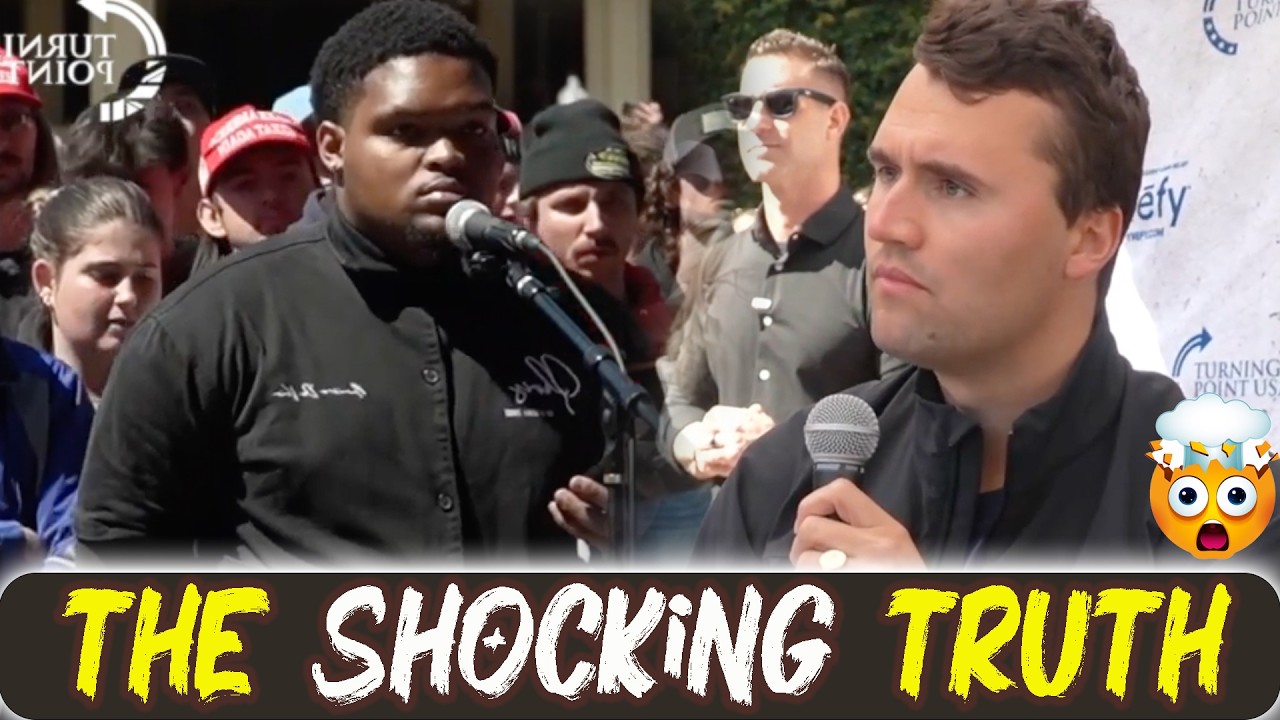
How Charlie Kirk's Critique of Catholicism Undermines His Own Protestant Defense in Discussion with Michael Knowles
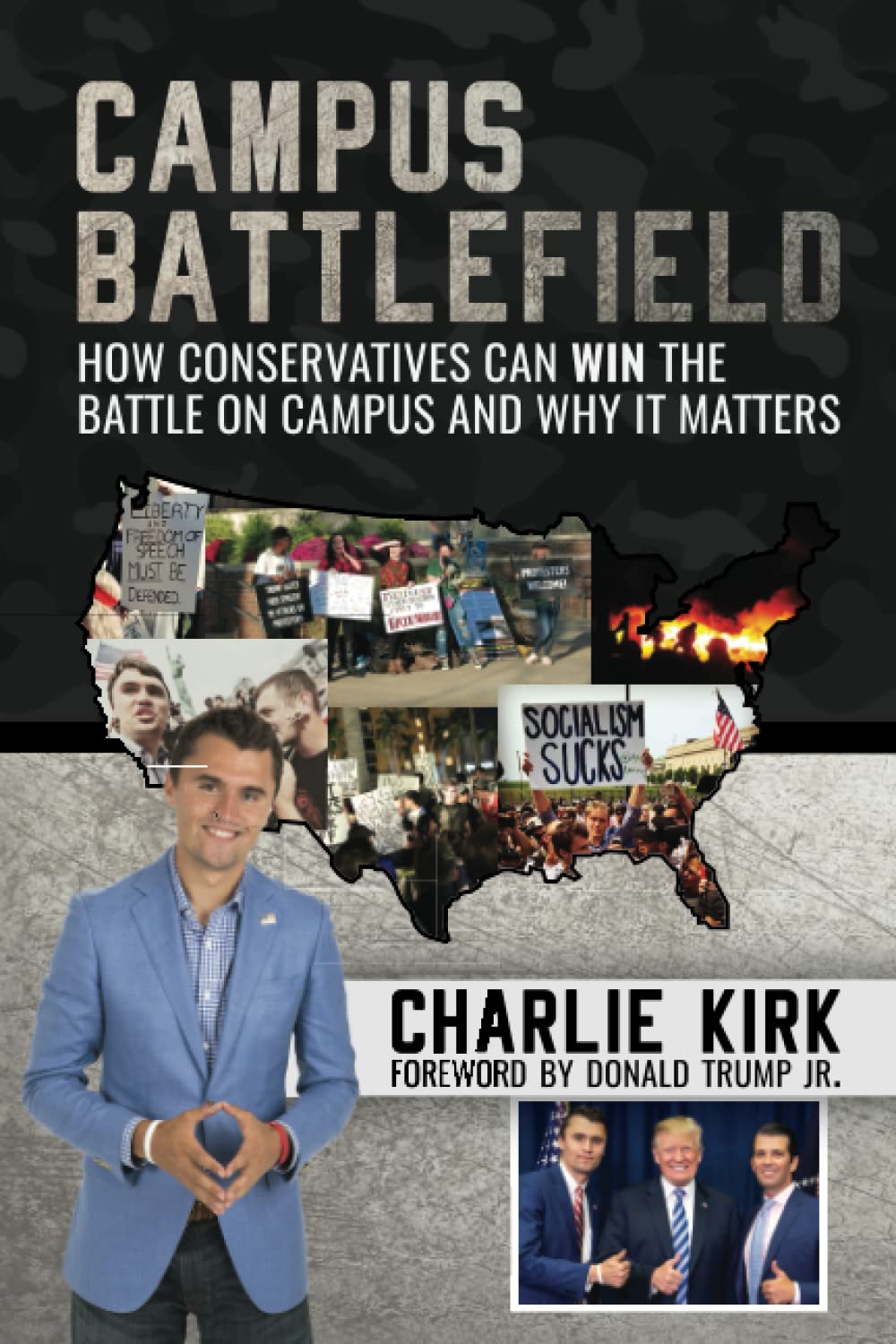
Michael Knowles took an audience question at a live event about fostering a greater love for the Eucharist, which prompted an impromptu theological discussion with Charlie Kirk. The exchange revealed fundamental tensions in Protestant thought: Kirk argued that Christians should focus on bringing people to Jesus rather than a specific denomination, yet his own objections to Catholicism, particularly regarding the papacy and authority, exposed the very problem Knowles highlighted. Without a clear teaching authority, Protestants cannot agree on essential doctrines, the canon of Scripture, or even what makes someone a Christian. This analysis examines how Kirk's freedom to choose or leave any pastor he disagrees with contradicts biblical teaching on submission to church leaders, and why the Protestant rejection of Church authority creates the theological chaos it claims to avoid.
The discussion began when Michael Knowles responded to an audience question about fostering a greater love for the Eucharist. Charlie Kirk interjected with a common evangelical refrain: "Your goal should be to bring people to Jesus, not Catholicism." Knowles immediately pressed back: "What's the difference?"
Many evangelicals promote the idea that a person should follow Jesus rather than a certain denomination, hence the widespread popularity of being a non-denominational Christian. But imagine if Kirk heard someone say you shouldn't bring someone to Christianity, you should bring them to Jesus—he'd ask, "Well, what's the difference?" That seemed to be the point Knowles was making.
Since Jesus is fully present in the Eucharist according to Catholic teaching, the original query about promoting a love for the Eucharist is fundamentally about bringing people to Jesus. For some Protestants, what matters is so-called Mere Christianity or the essential doctrines that every Christian must believe. They want people to at least believe the Jesus stuff and not worry so much about denominational differences.
The Problem of Essential Doctrines
This approach raises an issue that Knowles would soon note: it assumes everyone on the Protestant side agrees on the essentials and that an external teaching authority isn't needed to settle disputes among the faithful. Kirk asked, "Am I a Christian if I don't believe in Mariology?"
Knowles responded that a Christian is someone who has a valid baptism and believes in the Trinitarian God—Father, the Son who also became incarnate, and the Holy Spirit. If you deny that Mary is the Mother of God, you could end up embracing the Nestorian heresy, which denies that Jesus was always God, and thus you would deny the Incarnation. So yes, you might not be a Christian if you deny some of the Marian dogmas, or you might be a heretical Christian depending on what you exactly deny.
If you deny other Marian dogmas like Mary's perpetual virginity, then you could be a Christian who is still guilty of heresy. But your culpability for the sin of heresy would vary based on whether you are ignorant of the truth because of sinful attitudes like laziness or pride, or other factors like having a faulty understanding of the Marian dogmas.
Protestants may not like hearing that they embrace heresy if they willfully deny Marian dogmas, but they think the same thing. Many of them would say that a Christian must believe that Mary did not have sex even during pregnancy before Jesus was born—a Christian must believe in the dogma of the Virgin Birth. So Protestants would still bind people to a Marian dogma.
Who Defines Essential Beliefs?
Protestants will probably fire back by saying that the Virgin Birth is clearly taught in Scripture and they would claim that the other dogmas are not clearly taught in Scripture. But that's not the point. Calvinists think that Calvinism is clearly in Scripture, but Calvinists do not say that non-Calvinists are heretics or not Christians for denying Calvinism.
Nearly all Protestants believe there are dogmas one must accept to be a Christian beyond the mere facts related to Jesus's passion, death, and resurrection. The question is: what are those dogmas, and who has the authority to determine them?
For example, what makes someone a Christian? The Bible doesn't explicitly say what are the essential beliefs of Christianity, and Protestants don't agree on what those essential doctrines are. C.S. Lewis wrote in his book Mere Christianity: "When two Christians of different denominations start arguing, it is usually not long before one asks whether such and such a point really matters and the other replies, 'Matters? Why, it's absolutely essential.'"
One of those essential doctrines would be the definition of Christianity itself, and Protestants don't agree on whether Catholicism falls under that definition. For example, Gavin Ortlund has been criticized for saying that Catholicism is in error but it's still Christian, whereas other Protestant apologists are more prone to say Catholicism is not Christian or it does not possess the true gospel.
Transubstantiation and Required Beliefs
Kirk then asked, "Am I a Christian if I don't believe in transubstantiation?" Knowles responded that you are a little confused if you don't, but you can have sincere faith. Kirk interjected that bringing people to Catholicism is fine, but that is hopefully a means to the ultimate end.
The word transubstantiation itself is not dogma because it's a medieval theological term that is not found in the deposit of faith. You could object to the term and not be a heretic, but you could not object to the theological ideas that the term represents—specifically the substantial presence of Christ's body, blood, soul, and divinity in the consecrated elements.
It isn't just Catholics who think that there are required beliefs to be a Christian beyond just facts about Jesus—it's all Christians who think this. So this line of questioning by Kirk to try to make Catholicism look like it unjustly imposes dogmatic burdens simply doesn't work.
The Church Attendance Question
Consider this example: Can I be a Christian and not go to church and only attend occasional Bible studies? Many Protestants say no, you can't, but they don't have firm ground to say that Christians must attend church weekly. They might cite Hebrews 10:24-25: "Let us consider how to stir up one another to love and good works, not neglecting to meet together as is the habit of some."
Of course, this verse doesn't say anything about meeting every Sunday to hear a 40-minute sermon preached in a church. To say this verse shows you must attend church or you're not a Christian is classic eisegesis—reading into the text. Do you have to follow every exhortation or good judgment in Scripture or you're not a true Christian? What about 1 Corinthians chapter 11's stronger exhortation for women to veil their heads when they pray? Are women who don't veil at church not Christian?
This shows that when Protestants chide Catholics for demanding that Christians believe too much, or they take offense at being called heretics, they often hop over their inability to define heresy and essential doctrines in the first place.
The Need for an Interpretive Authority
Knowles sensed this problem, which is why he took the conversation in this direction when he asked about what Christians are supposed to do when there's theological disagreement among them: "What happens when someone has a question on something really important, like is Christ God, the divinity of Christ? There has to be an interpretive hermeneutic to figure it out." Kirk responded, "Of course, yeah."
This is a great point, but unfortunately it got sidetracked when Kirk said he agrees with a lot of Catholic teachings but that his big hangup is with the papacy: "I can't get over the idea of this Marxist who calls himself the head of your church being a representation of Christ our Lord. I mean that as someone who loves the Catholic impact on the world, that says it openly, and by the fruit you will know it, and you have very Marxist fruit. Why should I care at all what that guy from Argentina has to say?"
Knowles responded, "Well, because you care what your pastor has to say." Kirk replied, "Yes, but if my pastor starts saying crazy things, I find a new pastor." Knowles countered, "So if your pope starts saying crazy things, maybe he's not the pope, and like maybe that's a bad representation."
The Problem with Pastor Shopping
Knowles continued: "Well, I guess if your pastor says crazy things, you go to a new pastor and then you have division in the church. It used to be in the old days, if the pastors disagreed, they'd go to an elder or a bishop or someone, right?" Kirk said, "You go up." Knowles added, "Bishop is corrupted and then you take it up higher." Kirk responded, "Yeah, and then maybe the pope is corrupted and we write 95 points of complaints and hammer them to a door and get back to the Word."
Notice that the essence of Kirk's objection to Catholicism is basically this: I should be free to be under any pastor I want, and if I'm Catholic then I'd have to be under the pope, so I don't want to be Catholic. But where does the Bible teach that Christians have this kind of freedom? Nowhere. In fact, the Bible teaches that this kind of attitude promotes sinful factionalism.
St. Paul says in 1 Corinthians chapter 1: "I appeal to you, brethren, by the name of our Lord Jesus Christ, that all of you agree and that there be no dissensions (or the Greek schisma, from which we get the word schism) among you, but that you be united in the same mind and the same judgment. For it has been reported to me by Chloe's people that there is quarreling among you, my brethren. What I mean is that each one of you says, 'I belong to Paul,' or 'I belong to Apollos,' or 'I belong to Cephas,' or 'I belong to Christ.' Is Christ divided? Was Paul crucified for you? Or were you baptized in the name of Paul?"
In the year 107, Ignatius of Antioch said: "It is fitting, then, not only to be called Christians, but to be so in reality, as some indeed give one the title of bishop, but do all things without him. Now such persons seem to me to be not possessed of a good conscience, seeing they are not steadfastly gathered together according to the commandment."
Biblical Teaching on Submission to Leaders
This coheres with Hebrews 13:17, which says: "Obey your leaders and submit to them, for they are keeping watch over your souls, as men who will have to give account." This doesn't mean you have to do everything your priest tells you to do, but it does mean that Christians must give their pastor the authority he is due, which will differ based on whether he is the local pastor (a priest), the regional pastor (a bishop), or the universal pastor (the pope).
Even in that case, the obedience isn't unquestioning unless it is something the pope or all of the bishops have infallibly defined. However, the Bible never says a person can become a pastor on his own authority. Instead, a pastor must receive his authority to oversee the faithful from someone else who is connected to the apostles, who lays hands on him.
Notice in Kirk's examples that one thing is always taken for granted: he is not the one saying crazy stuff. Kirk always needs to be able to flee from a church that fails his theological standards instead of allowing the church to form his theological standards. Under his view, a pastor is never in a position to tell Charlie Kirk, "Actually, you think I'm saying crazy stuff, but the truth is that you are the one saying crazy things that contradict the faith."
The IVF Example
Here's one example. In a Q&A, Kirk was asked if he believed IVF was wrong or not. He responded: "IVF done correctly is moral, which would have to be one fertilization of an egg at a time." If Kirk's pastor condemned in vitro fertilization, then it seems like Kirk would just leave that church and find a pastor who agrees with him, instead of allowing the church to convict him of his sinful belief and urge him to repent.
It's no wonder some Catholics say that under Protestantism, every man is his own pope who can be judged by no one. Knowles was also on the right track by saying that if your priest says something crazy, you go up the chain of command—you don't just leave the church. Kirk's response is that, well, what if the craziness goes all the way up to the pope?
The Doctrine of Infallibility
But Jesus told the apostles He would not leave them as orphans, so the Holy Spirit guides the church to not allow it to infallibly bind the faithful to craziness. That's the doctrine of infallibility. There's also the doctrine of indefectibility, ensuring the church's correctness in its general teaching methods.
You can have this kind of doctrine in the Catholic Church, but not in the church (lowercase C) espoused by Protestants, that is just an invisible collection of Christians who believe contradictory doctrines on essential issues like salvation or sacraments.
Kirk has this same problem because an atheist could tell him: "If you follow a book and it starts saying crazy stuff, you get a new book," and then they point to allegedly crazy things in the Bible like the kosher laws in the Old Testament or slavery regulations to justify getting rid of the Bible. I bet Kirk would say that the Bible needs to be interpreted and not everything in the Bible is a permanently binding belief on the faithful.
Well, that's true of church teaching and what the pope says, especially when it's something the pope said off the cuff above 35,000 feet. But then this raises the question of why we should trust Kirk's foundational source of doctrine in the first place: the Bible.
The Canon of Scripture Problem
Kirk stated: "I think that if you have the Bible as any sort of semblance of a bedrock, you're going to last." Knowles asked: "But who canonizes the Bible? Where did we get it from? Our Lord didn't leave us a Bible. He left us a church, and the church canonized the Bible."
Kirk responded: "Sort of true. I mean, I think our Lord, as part of His Godship, God is the author of all 66 books, right?" Knowles interjected: "Wait, oh, you slipped that in. Hey, come on, you can't do that to me. Hold on."
This exchange reveals a critical issue. Kirk asked: "Why is it that Catholics acknowledge divine books that Jews themselves don't think are divine? The keepers of the Torah don't even agree with your canon."
The response is: So what? Why should we care what the Jews of the second century who rejected Christ and His apostles thought was or wasn't Scripture? The New Testament alludes to deuterocanonical books like Wisdom and Maccabees as being divine Scripture, and the early Christians, many of whom were Jews, believed these books were Scripture.
In the first century, Jews like the Sadducees and the Pharisees disagreed about what constituted the Old Testament canon. Plus, the Greek translation of the Old Testament that Christ and the apostles primarily quoted from contained the deuterocanonical books of Scripture.
The Achilles Heel of Sola Scriptura
But this gets away from the main issue, which is why it was unfortunate that Kirk pivoted away from Knowles's question about the canon of Scripture. If you're saying the Catholic Church demands that people believe too much and we should use sola scriptura instead, well, where does Scripture say that? And where does Scripture say that what you call Scripture is Scripture?
This is a huge problem for Protestants that even they recognize. James White writes in his book Scripture Alone: "For many, the issue of the canon is the Achilles heel of scriptural sufficiency." Douglas Wilson writes: "The problem with contemporary Protestants is that they have no doctrine of the table of contents. With the approach that is popular in conservative evangelical circles, one simply comes to the Bible by means of an epistemological lurch. The Bible just is, and any questions about how it got here are dismissed as a nuisance. But time passes, the questions remain unanswered, the silence becomes awkward, and conversions of thoughtful evangelicals to Rome proceed apace."
Cameron Bertuzzi also raised this problem in a recent episode on his channel, and Gavin Ortlund and other Protestants have responded to him, though in the next few weeks there will be episodes showing why the canon problem is still a huge problem for Protestantism.
Understanding Papal Authority
Kirk continued: "We all rebel against corrupt institutions. We don't like an unjust law is no law at all." Knowles agreed: "It's not, it's a..." Kirk added: "An unjust pope is not a pope." Knowles responded: "Yeah, but what's...there's nothing unjust about the pope talking about like climate change. You just don't pay attention to it, you know."
Kirk objected: "Okay, so you just like, you pick and choose what? It's like a buffet line? No, like I like what he says about this but not about that, but yes, he is the inheritor of St. Peter?"
Knowles clarified: "Sounds like...no, no, no. The papal authority is that he speaks infallibly when speaking ex cathedra on faith and morals. It doesn't talk about climate change at all. So the pope can say things that are crazy."
Kirk pressed: "Yeah, so this is perfect. Then why have one?" Knowles explained: "In order to speak infallibly ex cathedra on faith." Kirk asked: "Okay, so that has not happened since what, Vatican II?" Knowles responded: "No, it's a little bit..." Kirk continued: "When was the last time the pope spoke...was part of the...when was the last time, like 50, 60 years?" Knowles answered: "The last probably ex cathedra infallible teachings from a pope were probably Pius the Ninth, you know, like 150 years ago."
Kirk concluded: "Okay, so then therefore there really is no functional use for a pope for 150 years." Knowles countered: "No, no, he's the leader of the church, you know. He's the..." Kirk finished: "Exactly. Your figurehead, your top leader is not good."
Beyond Infallibility: The Ordinary Magisterium
This reveals a common misconception about the authority of the church and the authority of the pope. Some people, including Catholics, think that the only teachings we are bound to accept are those the church has infallibly defined. It's true that if you personally deny teachings that have been infallibly defined as part of divine revelation (or dogma), then that is a grave act that can be a mortal sin. But that doesn't mean everything else is up for grabs or is mere personal opinion that Catholics can ignore whenever they feel like it.
In fact, some people claim that they can reject the Second Vatican Council because it didn't infallibly define anything. However, between infallible teachings and pastoral personal opinions or prudential judgments, there is the church's ordinary teachings.
The Second Vatican Council put it this way in the document Lumen Gentium: "In matters of faith and morals, the bishops speak in the name of Christ and the faithful are to accept their teaching and adhere to it with a religious assent. This religious submission of mind and will must be shown in a special way to the authentic magisterium of the Roman Pontiff, even when he is not speaking ex cathedra. That is, it must be shown in such a way that his supreme magisterium is acknowledged with reverence, the judgments made by him are sincerely adhered to, according to his manifest mind and will. His mind and will in the matter may be known either from the character of the documents, from his frequent repetition of the same doctrine, or from his manner of speaking."
So Catholics can't just say, "Well, the pope wasn't speaking infallibly, so you don't have to worry about anything else that he says." Kirk is correct that if that's all that mattered—infallible definitions—then why even have a pope when his last ex cathedra statement (setting aside things like canonizations) was in 1950 to define the bodily Assumption of the Blessed Virgin Mary?
Distinguishing Doctrine from Prudential Judgments
The pope's primary way of teaching the faithful is through his ordinary magisterium in documents like papal encyclicals. But even in this context, we have to distinguish between the pope making a doctrinal statement and him making non-doctrinal exhortations or prudential judgments in the same documents.
For example, in his encyclical Laudato Si', which discusses the environment, in some parts Pope Francis affirms church teaching or doctrine found in the Catechism that "it is contrary to human dignity to cause animals to suffer or die needlessly," along with affirming other church teachings. But in other parts of the encyclical, the pope offers non-doctrinal statements related to science or practical proposals to improve the common good that do not require the religious submission of mind and will.
This is evident in the wording used in other parts of the encyclical, which say: "The church does not presume to settle scientific questions or to replace politics," and "On many concrete questions, the church has no reason to offer a definitive opinion. She knows that honest debate must be encouraged among experts, while respecting divergent views."
So Knowles is correct that the pope's practical proposals on things like climate change are not a part of church teaching, though they should be given due consideration in virtue of the pope's office. And the pope and the church's ordinary teachings that require the religious submission of mind and will are not necessarily gravely sinful to fail to assent to, like the teachings that have been infallibly defined to be a part of dogma.
Addressing Concerns About Pope Francis
Kirk's other objection seems to be that the pope has shortcomings, like the pope allegedly being ambiguous on the teaching related to homosexuality or him being a Marxist apparently. Those issues have been addressed in episodes on same-sex blessings and liberation theology, but let's grant Kirk's point: the pope is not perfect and he says and does things that might make him not look desirable.
Well, no successor of St. Peter is perfect, and some of them are downright scandalous, including St. Peter himself. Imagine an early Christian saying: "Your leader St. Peter sucks because he denied Jesus three times, and Peter was afraid to dine with the Gentile Christians and St. Paul had to rebuke him. That guy is a coward. He denies the truth of who Jesus is, so I'm going to follow a new leader instead."
Or imagine an ancient Israelite saying: "Look at the sins of Moses or Gideon or David. I'm going to go follow the priests of Baal instead." The leaders that God chooses for His people often have shortcomings, but that never invalidated their divinely given authority to lead God's people.
The 90% Agreement Myth
Kirk stated: "Look, to be very clear, like nine out of ten of Catholic dogma, evangelicals hold nine out of ten, right? And that is why I believe Catholics are Christian, even though you don't give me that same..." Knowles interjected: "I would...no, I'm giving you a hard time."
Kirk continued: "I actually think the world is a better place because of faithful Catholics. I've spoken out with great criticism of how evangelicals remained quiet here in Arizona on Prop 139, while the Catholic diocese was so courageous on the fight for life while evangelicals were silent. I want a better Catholic Church, and I personally would not be able to be part of an institution with the head, the figurehead, with a worldview that is so corrupted and opposite of what I think the Bible teaches. And I wouldn't give him the benefit of the doubt. I'd be like, no, I'm actually not part of this. I'm leaving."
We've already addressed how a leader's shortcomings don't invalidate his authority. Knowles does a good job of asking Kirk to give specifics on what's wrong with Pope Francis, and Kirk stonewalls because his objections to Pope Francis are about what's described in headlines related to the pope, not the pope's actual teaching.
But let's take the discussion away from Pope Francis and note that Kirk and Knowles disagree on a much more fundamental issue. It's just not true that evangelicals and Catholics agree on 90%, and the last 10% are secondary issues. Lutherans, Anglicans, and other mainline churches don't have as much disagreement with Catholics on some of these issues, but evangelicals usually disagree with Catholics on important doctrines like:
Baptismal regeneration
Whether infants should be baptized
Who has the authority to be a pastor to lead the church
Who oversees those pastors
If the Eucharist is truly Jesus
Whether salvation can be lost
All of these doctrines dramatically affect how we live out our faith.
The Real Question: Idolatry or Truth?
Instead of just saying "Yeah, Catholics are great, it's just the pope who bothers me," the question should be: What do you think of Catholics who adore the Eucharist as Christ Himself? If Kirk is right about Catholicism, then Catholics are idolators who should flee from their false religion. But if Michael Knowles is right, then Charlie Kirk should repent from his rejection of Christ and His church and receive Jesus in the Eucharist.
Ecumenism that correctly identifies what Catholics believe and where Catholics genuinely have common ground with Protestants is valuable. But sometimes the discussion can be more fruitful with rabid anti-Catholics than with lukewarm Protestants. Lukewarm Protestants often see the Catholic Church as just another Christian denomination—maybe it has too many statues. Their objection is just "Well, Catholicism is not my thing" or "The pope freaks me out," and so an intellectual argument about Christian foundations won't move them.
But anti-Catholics who say the church is a work of the Antichrist force the issue to come front and center. Are Catholics idolators when they worship Christ in the Eucharist, or are Protestants heretics for denying this truth? We need to figure out which group is correct and embrace the truths that God has revealed through His church. The best way to do that is to have more discussions between those who disagree about important issues related to faith and morals.
And if Charlie Kirk would ever like to sit down to have a respectful chat about that, the invitation remains open.