A Year-Long Investigation Into America's Border Crisis
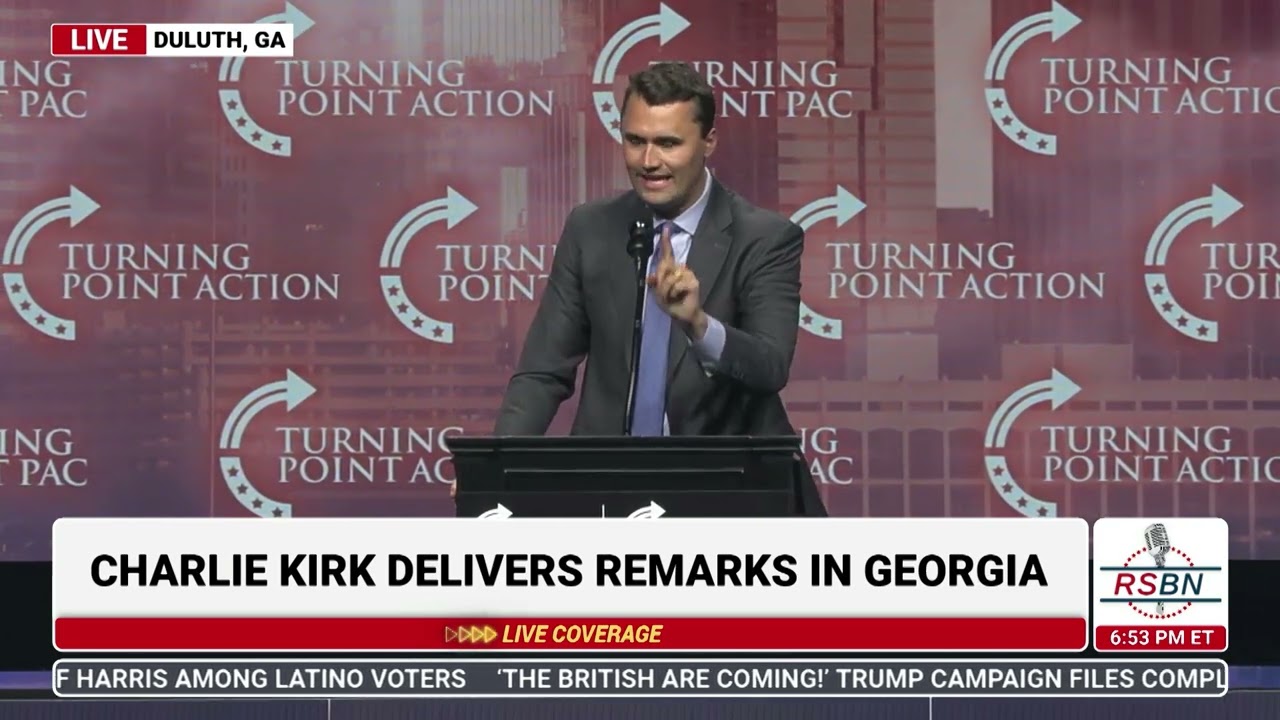
James O'Keefe appeared on The Charlie Kirk Show to unveil his new documentary "Line in the Sand," releasing October 10th exclusively on Tucker Carlson's platform. The film represents a year of immersive journalism that took O'Keefe from cartel-controlled territories in Mexico to secret facilities housing unaccompanied minors across the United States.
Unlike traditional documentaries that rely on retrospective interviews or hired actors, O'Keefe embedded himself directly in the migration journey. He rode the dangerous "Beast" freight train with Venezuelan migrants, witnessed mothers throwing babies onto moving trains, was detained by the Mexican Army, and saw his colleague kidnapped by cartel members who put a hood over his face and destroyed cameras with a crowbar.
"This is a very unique film," O'Keefe explained. "It follows the journey of the illegal immigrants from their origin to their final destination. It's called Line in the Sand because it's about the border, but it's not really about the border. It's about people doing things they don't want to do to earn a living."
Border Patrol Whistleblowers Break Their Silence
The documentary features rare on-camera testimony from Border Patrol agents in uniform, which violates agency policy. Agent Zach describes how girls under 14 are processed without biometrics and sent to unknown sponsors, creating what amounts to a government-facilitated pipeline that potentially feeds sex trafficking.
"A lot of these guys really can't live with themselves," O'Keefe said. "It weighs on them very heavily. It's a crisis of conscience."
Aaron Vey, a 19-year veteran of Border Patrol in the Tucson sector, provided never-before-seen footage of children suffering in makeshift facilities in Ajo, Arizona. Despite witnessing children burning up in desert heat and freezing in winter, Vey says supervisors ordered him to continue processing.
"When my granddaughter is old enough and she comes to me and says, 'Grandpa, weren't you in the Border Patrol back then?' I can look at her with a straight face and say, 'Baby girl, I was trying. I fought and I tried. I did my best," Vey said in an interview with O'Keefe.
Both whistleblowers have been sent cease and desist letters from Border Patrol leadership despite going through proper whistleblower channels with the Office of Special Counsel.
The Cartel Controls the Border
O'Keefe documented a stunning scene in California where cartel members cut through the steel border wall while a Border Patrol agent stood watching. The cartel members threatened O'Keefe, telling him he had to let them finish their work.
"I'm standing there, they're cutting through the beam, they're threatening me, and the Border Patrol agent is just standing there watching," O'Keefe recounted. "I'm a layman and I'm thinking, why don't you just shoot those guys?"
Border Patrol agents told O'Keefe that the cartel runs the border. If the cartel wants to send 1,000 people across, Border Patrol processes 1,000 people. Agents say they've become a processing organization rather than a law enforcement organization.
The cartel charges approximately $10,000 per person to facilitate border crossings, creating a multi-billion dollar operation. O'Keefe was told by agents that this system won't end because too many people are making money from it.
Following the Money Trail
The film exposes the financial incentives driving the border crisis. Health and Human Services, a trillion-dollar agency, funds facilities operated by NGOs like Southwest Key to house unaccompanied minors. Transportation companies, security contractors like GS4, and various other businesses profit from the constant flow of migrants.
One individual caught on hidden camera in New York City admitted making money by providing fake residencies to illegal immigrants, charging $100 per person. Another source told O'Keefe directly: "We need the children to keep coming so that we can keep making money."
O'Keefe went undercover as a Ukrainian immigrant at the Roosevelt Hotel in Manhattan, where he received a free bracelet with a number, free plane tickets, and an ID—all funded by taxpayers in a post-9/11 America.
"It's all about money," O'Keefe emphasized. "Everyone's making money off of this. Everyone's enriching themselves off of this. You have to take away all these people's money for it to end."
Half a Million Children Moved Without Questions
Tera Rodus, an HHS whistleblower featured in the film, delivers what O'Keefe calls a "mic drop moment": "You can't move 500,000 unaccompanied migrant immigrant children in three years if you're asking a lot of questions."
Unlike the system for American children in foster care, sponsors for unaccompanied immigrant minors are not screened for criminal backgrounds or legal status. Children are placed into homes with no follow-up, creating conditions where they can be exploited, trafficked, or forced into labor.
O'Keefe and his team snuck into secret facilities like Sunny Glenn and Southwest Key that most Americans don't know exist. These facilities house children who crossed the border alone, many destined for sponsors about whom Border Patrol knows nothing.
The Moral Question of Complicity
Throughout the interview, Kirk and O'Keefe grappled with the moral culpability of Border Patrol agents who continue processing migrants despite knowing the consequences.
"Are you telling me that the American government, AKA Border Patrol, are told to help facilitate young girls to go into sex slavery potentially?" Kirk asked.
"That's how they feel. That's what they're telling me," O'Keefe confirmed.
Agents told O'Keefe they continue because of pensions, mortgages, and family obligations. They want to do the right thing but fear retaliation, job loss, and financial ruin.
"Everyone's making money off of this," O'Keefe said. "The only reason they're doing it is because of the pension and the money. That's what they tell me."
O'Keefe believes the only solution is for dozens of agents to blow the whistle simultaneously, creating safety in numbers. His Citizen Journalism Foundation covers legal fees for whistleblowers, and he's working to organize a mass revelation.
A Humanitarian Crisis Told Through Human Eyes
Despite the damning evidence against Border Patrol and government contractors, O'Keefe insists the film is apolitical and focuses on the human cost of the crisis.
"I took all politics out of the film," he said. "It's just about—it's a humanitarian issue. You have to be inhuman to not care. I saw these women with babies strapped to their chests climbing aboard a moving freight train. They throw the babies on the train. Sometimes the Beast train has no floor and people get mutilated."
The film shows the dangerous journey migrants undertake, the exploitation they face, and the moral compromises of those who profit from their suffering.
"I think this film will create a movement of people to blow the whistle," O'Keefe said. "You see people doing things they don't want to do to earn a living, and you contrast the cowardly people with some of the brave people at the end of the film."
Where to Watch
"Line in the Sand" premieres October 10th exclusively on Tucker Carlson's streaming platform at TuckerCarlson.com for 60 days before wider release. The film includes hidden camera footage, never-before-seen government facility recordings, and emotional testimonies from whistleblowers risking everything.
O'Keefe spent four months in a Los Angeles editing room personally directing the film, making it his first theatrical documentary. He describes it as immersive journalism that must be experienced rather than simply discussed.
"I think it shows people something they've never seen," O'Keefe concluded. "The question is: what is your price? At the end of the day, you got a few brave men here leading the way, and I think other people will follow."










Comments
Be the first to comment on this video.