James O'Keefe Exposes Massive Voter Registration Fraud Operation on LA's Skid Row
Enjoying this? Share it with someone who needs to see it.
Up Next
Senator Eric Schmitt Plays Charlie Kirk's Video Warning About Antifa Violence at Senate Hearing
13:08
Candace Owens Defends Conservative Values and Black Community Empowerment Before Congressional Committee Hearing
5:10
Lindsey Graham Challenges Defense Officials on Iran, China, and Pakistan's Role in Regional Conflicts
5:06
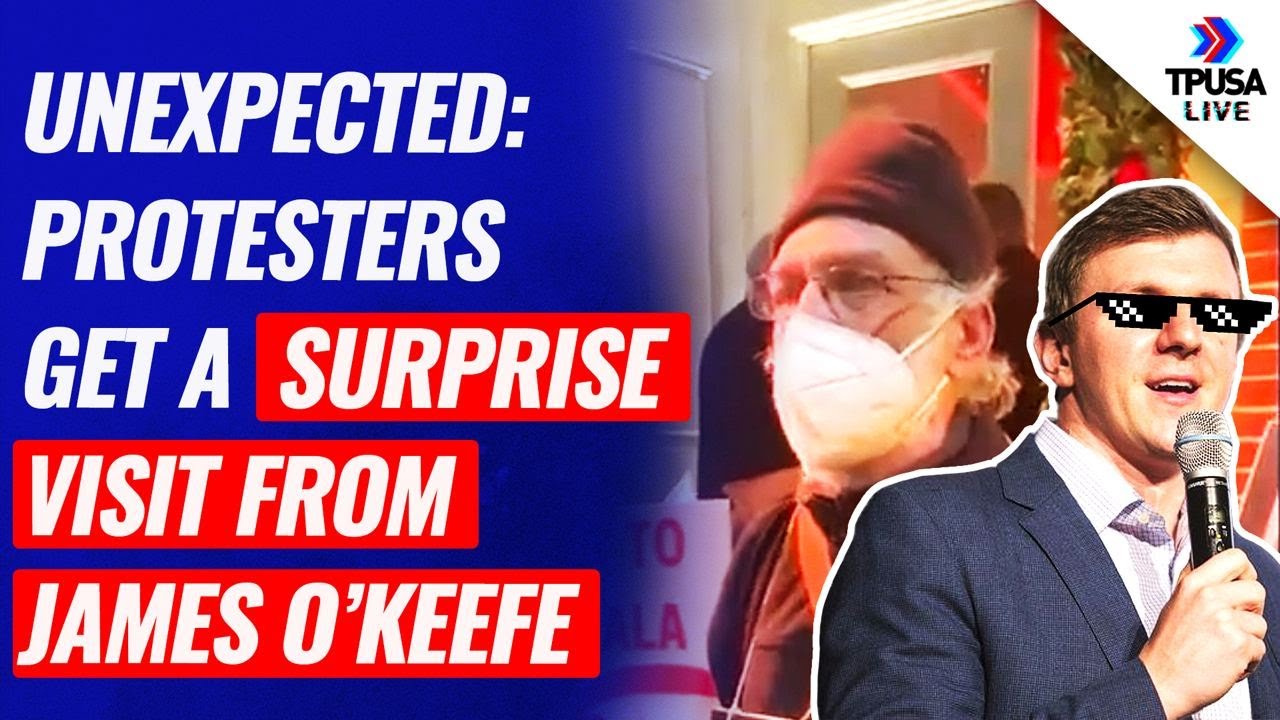
James O'Keefe Exposes Massive Voter Registration Fraud Operation on LA's Skid Row
James O'Keefe testified before Congress about his undercover investigation on Los Angeles' Skid Row, where he documented a widespread voter registration fraud scheme. Disguised as a homeless person, O'Keefe captured petition circulators paying cash and distributing marijuana in exchange for signatures and voter registrations, federal crimes that undermine election integrity. His investigation led to federal prosecution, yet local fraudsters remain free. O'Keefe's testimony reveals a troubling reality: without enforcement and consequences, fraud flourishes unchecked. His work with fellow citizen journalists exposed not just the criminals, but a system that protects fraudsters while intimidating those who expose them. The evidence isn't circumstantial, it's all on tape.
James O'Keefe testified before Congress about his February 2026 undercover investigation on Skid Row in downtown Los Angeles. Disguising himself as a homeless person, O'Keefe approached a petition circulator near San Pedro and South 6th Street. What he witnessed was immediately suspicious: cash clipped to the circulator's shirt and an offer that would prove to be criminal.
The petition circulator told O'Keefe, "We're going to need 14 signatures and we're going to pay you $2." When O'Keefe's colleague, disguised as a heroin addict with track marks, asked homeless individuals what was happening, they all responded with a single word: "money."
O'Keefe's team recorded a woman named Brown handing over cash as payment in exchange for homeless people registering to vote in a federal election—a clear violation of federal law. Congress has expressly criminalized payments to people to register to vote because, as O'Keefe explained, "the vote is sacred. It's an act of conscience, of judgment. And when it becomes contaminated by incentives, when it is for sale, it undermines the sanctity and fairness of the process designed to elect those who represent us."
Federal Prosecution and Systemic Fraud
O'Keefe's investigation led to federal criminal prosecution. US Attorney Bill Asailia stated, "Once I saw these videos, I went to work." Brown herself described the operation as a "pyramid game," revealing the organized nature of the fraud.
The irony of the situation wasn't lost on O'Keefe. In a neighborhood filled with NGOs supposedly designed to protect the vulnerable homeless population, the person being confronted wasn't the fraudster—it was the reporter exposing the fraud. Minutes after documenting these felonies, O'Keefe was approached by a man who identified himself as being with the LAPD and began recording him. When pressed, the man admitted he was actually with the LA Homeless Authority. Under California law, falsely identifying oneself as law enforcement is a crime, making this yet another form of fraud—one designed to cover up the fraud happening across the street.
Marijuana, Threats, and Violence
The investigation uncovered even more disturbing practices. O'Keefe witnessed petition circulators giving marijuana in exchange for signatures on petitions. When the fraudsters spotted his camera, they threatened violence: "I'm going to knock your bleeping ass. Don't come over here again. I'm going to beat your ass."
Rather than backing down, O'Keefe formed what he called a "citizen journalism Justice League" featuring Savannah Hernandez, Cam Higby, Anthony Rubin, and John Trout. Over the following weeks, this team documented dozens of cash and drug exchanges for petition signatures.
Their collective reporting prompted an unexpected response from California's governor, who didn't attack the journalists but instead stated that their work was important and that the criminal activity should be prosecuted to the fullest extent of the law.
Identity Theft and Voter Disenfranchisement
The fraud extended beyond simple payment schemes. O'Keefe's team found petition circulators asking homeless individuals to sign other people's names. Recording over the shoulder of one petitioner, they captured him accessing an online database to pull voter rolls and addresses.
In one instance, a homeless person said, "I have an Idaho address." The petitioner responded, "I'm going to give you an address to write. Your name is Robert." Another circulator told a homeless individual, "I'm giving you a new name."
O'Keefe visited the actual residents whose identities had been stolen. One victim was supposedly named Vicky Walker. The homeowner at that address reported that for nine years, he had received election mail in Vicky Walker's name. He'd received so many ballots for this fictional person that he eventually named his cat Vicky Walker.
Physical Assault and No Consequences
When O'Keefe's team returned to confront the petitioner who had been offering drugs for signatures—the same individual who had previously threatened them—the man grabbed his petitions and hid them in his car. As they caught up to him, one of his associates charged and punched O'Keefe's producer in the neck. Both men then charged at O'Keefe himself.
Just before they could strike, Cam Higby deployed pepper spray. Even with pepper spray in their eyes, the two men continued attempting to assault the journalists. O'Keefe and his colleague Braden had no choice but to run for their lives.
Despite video evidence of multiple state and federal crimes, O'Keefe testified that "to this day, all the fraudsters that committed state crimes roam free."
The Real Question Before Congress
O'Keefe emphasized that his testimony wasn't about debatable political issues or conspiracy theories. "This is not a political issue. It's not a partisan issue. It's not a conspiracy theory, and it is most certainly not circumstantial evidence," he stated. "Everything I've testified to you here, all the quotes and many more, are all recorded on tape."
The question before the committee, O'Keefe argued, isn't whether fraud exists or whether it's happening. "Oftentimes in politics, y'all debate the facts. Facts are what they are," he said. "The question is why the incentives allow it to flourish."
O'Keefe explained the perverse incentive structure: "There is money in fraud, but there's no money in exposing the fraud. And when laws are ignored without consequences, fraud becomes the incentive. Fraud becomes the model of life."
Tony Moore, one of the coordinators for the ballot petitions, captured this reality perfectly when he told O'Keefe's team: "If there's no consequences, it doesn't matter."
A Call for Accountability
O'Keefe concluded his testimony with a sobering observation about the limits of journalism and the necessity of enforcement. "I don't have subpoena power. Us journalists don't have the power to do anything but expose," he stated.
He challenged the committee on the gap between political rhetoric and reality: "They campaign in this building about freedom and protecting democracy and preventing disenfranchisement, and how nobody is above the law. But if those principles are not enforced, when they are violated in broad daylight, they're not principles at all. They're slogans."
His final warning was clear: "Without accountability, our notion of freedom is just an illusion."