John Fund Reflects on Charlie Kirk's Assassination and the Dangers of Political Violence in America
Enjoying this? Share it with someone who needs to see it.
Up Next
Tulsi Gabbard Honors Charlie Kirk After Assassination: A Champion of Freedom Who Lived What He Preached
7:31
Susie Wiles Speaks on Charlie Kirk's Death, White House Response, and America's Growing Violence
12:15
Memorial Service Security Preparations for Charlie Kirk at State Farm Stadium in Glendale Arizona
5:00
John Fund Reflects on Charlie Kirk's Assassination and the Dangers of Political Violence in America
Political journalist John Fund discusses the assassination of Charlie Kirk at age 31, describing him as a political phenomenon whose voter registration efforts may have changed the 2024 election. Fund examines the suspected Antifa connection to the killing, Vice President JD Vance's escort of Kirk's body home to Arizona, and President Trump's response. With vigils held internationally and the assassin still at large, Fund warns this represents a dangerous turning point for America, calling it a "warning bell in the night" that demands a national conversation about political polarization and violence.
Charlie Kirk's assassination at age 31 has sent shockwaves through the political world and beyond. Political journalist John Fund, who knew Kirk personally, describes him as a rare talent who accomplished more in his brief lifetime than most politicians achieve in entire careers. Despite never finishing college, Kirk demonstrated what Fund calls "a complete genius for political organization and leadership and inspiration."
Fund recalls that many who met Kirk believed they were witnessing a future president of the United States or at minimum a major political figure. Even if Kirk had never pursued elective office, his voter registration and turnout efforts in the 2024 election may have altered the course of history in what turned out to be a closely contested race.
Vice President Vance and the Trump Administration's Personal Loss
The tragedy has hit particularly close to home for the Trump administration. Vice President JD Vance personally escorted Charlie Kirk's body back to Arizona, describing Kirk as a true friend. Kirk was a constant presence in the White House, with many top administration figures regularly appearing at his conventions and rallies.
Fund emphasizes that Kirk's strategic insights on reaching young people commanded attention throughout the Trump administration. The 2024 election saw two demographic groups swing most heavily toward Donald Trump: Hispanics and young people under age 30. According to the best available estimates, Trump narrowly carried the youth vote, an unprecedented achievement in recent American elections that Fund attributes directly to Charlie Kirk's influence.
Details of the Assassination
The FBI has released footage of the suspected killer, who remains at large. The rifle used in the assassination was discovered in a group of trees near the university, wrapped in a towel. Investigators found three unspent cartridges, each engraved with what appear to be Antifa and transphobic messages. In a chilling irony, Kirk was killed while answering a question about transphobic shooters.
President Trump, when asked if he believed the killer was a trained assassin, responded forcefully, calling the suspect "an animal" and expressing hope for swift justice. Trump described Kirk as "a great person, a great man" and emphasized what Kirk accomplished, particularly with youth.
The Antifa Question
Fund addresses the potential Antifa connection head-on, acknowledging the longstanding debate about whether Antifa constitutes an organized group. While agreeing there is no single leader or hierarchical structure equivalent to a "president of Antifa," Fund describes Antifa as "a group of thuggish, intolerant leftists" that poses a danger comparable to the Ku Klux Klan.
Fund criticizes the failure to take Antifa seriously during the Portland, Oregon unrest in 2020 following the George Floyd protests, or when they disrupted cities across the country. With a potential Antifa member or adherent possibly behind Kirk's assassination, Fund argues the threat must now be confronted directly.
Trump's Response and National Concerns
When asked about beefing up his own security following the Kirk assassination, particularly given previous attempts on his own life, President Trump redirected the focus. His primary concern, he stated, was not for himself but for the country. Trump pointed to "a radical left group of lunatics" and vowed to solve that problem, emphasizing his worry about America's future.
A Fork in the Road for America
Fund characterizes Kirk's assassination as a potential turning point for the United States. While America has experienced incidents of violence and individual killings before, this represents the assassination of a major political figure. Fund warns that political assassination emerging in a society signals a dangerous level of polarization.
Drawing comparisons to countries Americans typically associate with political instability, Fund notes that political assassination is what people think of when considering Latin American nations or countries that have lost their democratic foundations. While America still maintains a strong civic culture and free and fair elections, Fund calls this "a warning bell in the night" and "the wakeup call" for a serious national conversation.
The Path Forward
Fund calls for political leadership across the ideological spectrum to address their own followers directly. The time for what he calls "performance art" has passed. This moment demands that leaders from left and right engage in a conversation about maintaining political differences without personalizing them to the point of violence.
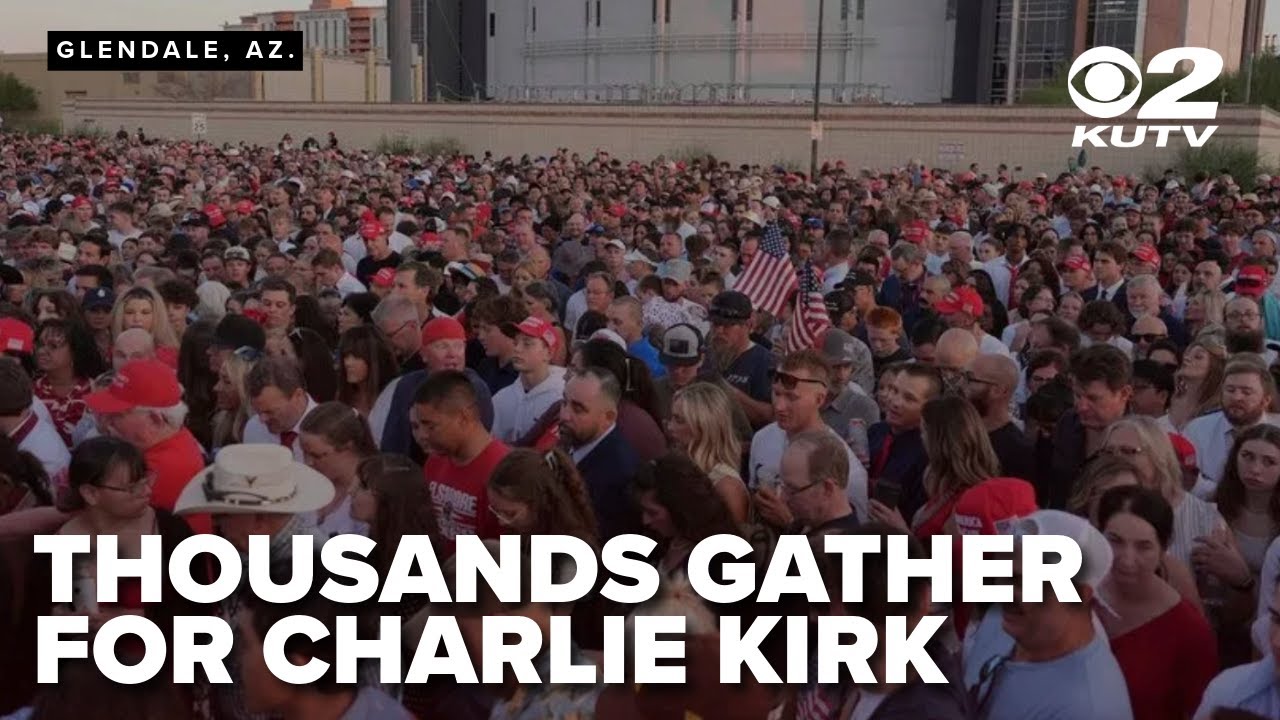
As vigils for Charlie Kirk take place internationally, including one in Sydney, Australia, the tragedy underscores how far Kirk's influence reached. Fund's sobering message is clear: America must confront its political polarization before more lives are lost, and that conversation must begin immediately with the entire political leadership taking responsibility for the tone and direction of national discourse.