Judge Delays Ruling on Family's Request to View Enhanced Video Evidence in Court
Enjoying this? Share it with someone who needs to see it.
Up Next
Judge Tony Graf Rules on Transcript Release and Press Access in Tyler Robinson Case
1:40
Court Hearing Addresses Media Access, Publicity Orders, and Preliminary Hearing in State of Utah versus Tyler James Robinson
1:16:14
Jonathan Turley Breaks Down Court Rulings on Media Access and Public Transparency in High-Profile Criminal Cases
4:24
Judge Delays Ruling on Family's Request to View Enhanced Video Evidence in Court
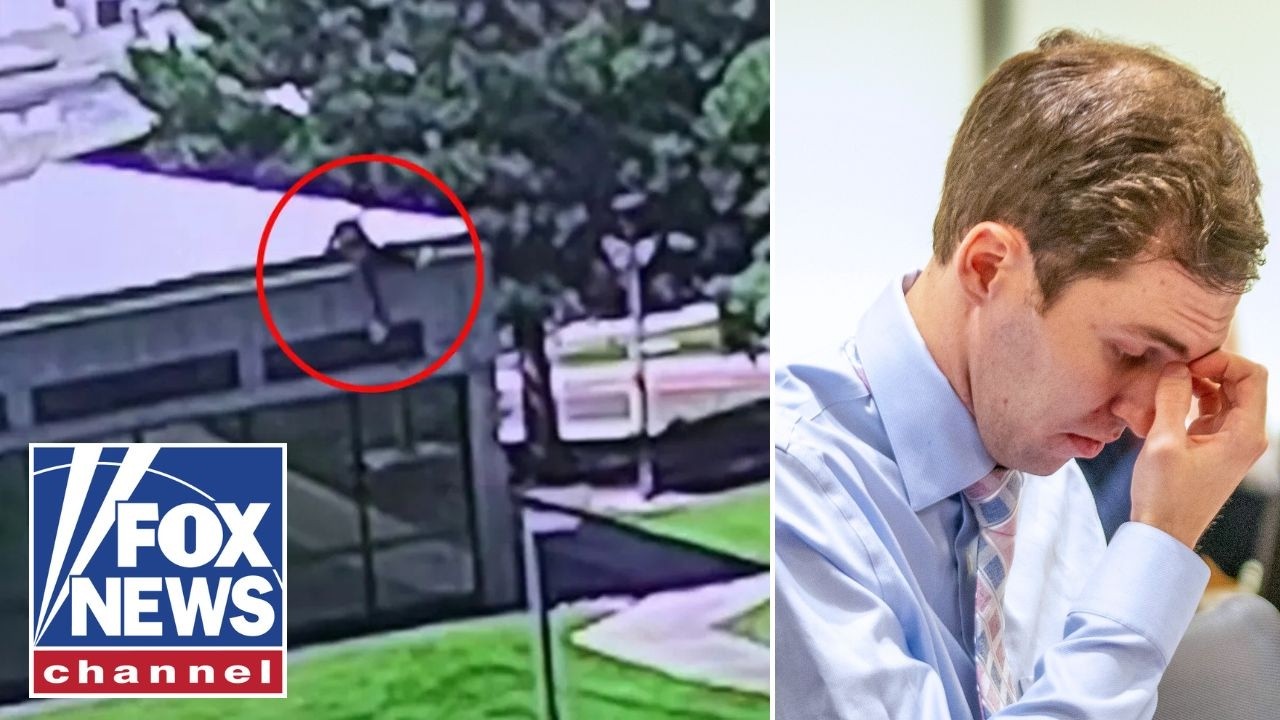
A courtroom exchange unfolds as the Erika Kirk's family attorney requests the court reconsider allowing them to view enhanced video evidence (Exhibit 12.1) presented during a probable cause hearing. The defense objects, arguing the focus should remain on determining guilt rather than educating the public or family, while noting witness availability constraints. The judge reserves ruling on the matter until the following day, prioritizing completion of testimony from a time-sensitive defense witness.
The victim's family attorney addressed the court with a significant request for reconsideration of a prior ruling. The family had previously asked that all exhibits admitted into evidence be shown in open court, and while the court had granted this request for many exhibits after careful analysis, the attorney now sought access to one specific piece of evidence: Exhibit 12.1, an enhanced video.
The attorney acknowledged that reconsideration is always a substantial ask but argued that the family should have the right to view the enhanced video (12.1), as the version played in court (12.4) was extremely difficult for the family to view. The attorney emphasized that while the court could address concerns about proper jury selection through various tools at its disposal, denying the family access to this video would be irreversible—they would either get to view it or they wouldn't, with no remedy available later.
State's Position on Transparency
The state's representative, Mr. Grunander, responded briefly to the request, stating that the state did not oppose publishing the evidence. He emphasized that throughout the case, they had favored openness and transparency as much as appropriate, submitting the matter to the court without further argument.
Defense Objects to Request
Defense attorney Mr. Burt presented a strong objection to the family's request. He argued that the court needed to maintain focus on the purpose of the hearing, citing the Estes case to point out that the purpose of a trial—and by extension, this hearing—is to determine the defendant's guilt, not to educate the public, the victim's family, or the world about what evidence the government or state possesses.
The defense highlighted several practical concerns, including witness availability problems. He noted that the bulk of the current and previous day had been spent arguing about matters unrelated to the evidence in the case, specifically regarding the rights of third parties. While acknowledging the court's duty to consider such matters, he urged the court to return to the hearing's core purpose: expeditiously hearing evidence and determining probable cause.
Mr. Burt further pointed out that the victim's representative, Ms. Kirk, had been holding press conferences where she revealed evidence, claiming the state as her attorney and having access to all evidence that had been publicized. He argued that under the court's protective order, they were free to hold press conferences outside the courtroom and announce what they believed the evidence showed. Therefore, granting this request would serve no purpose related to the hearing itself.
The defense attorney emphasized the witness availability constraints and requested that if the court were to allow revisiting or replaying evidence solely for the purpose of informing the world or Ms. Kirk, it should be done at the end of the process rather than at this point, where it would interfere with their ability to call witnesses who had limited availability.
Family Attorney's Rebuttal
The family's attorney attempted to respond to the defense's characterization of the situation, beginning to address what he called untrue statements. However, the judge intervened to keep the proceedings focused on the probable cause hearing, expressing concern about the discussion straying into matters outside the hearing's scope.
When allowed to proceed briefly, the family attorney clarified that the family had not seen the video and did not have access to the evidence the state possessed. He characterized the defense's suggestion that Ms. Kirk and the family had the same access as the state as a complete distortion of reality. He emphasized that this request was not about educating anyone but about allowing the family to see evidence gathered during a 10-month investigation following what he described as the assassination of a father and husband. He asked the court to allow the family to view the video as the court itself had viewed it, to enable the family to process this moment.
Court's Ruling
The judge acknowledged the Utah Constitution's Article 1, Section 28, which recognizes victim's rights, and stated that the court respects those rights while balancing them with the constitutional rights of all parties. However, given the time constraints and the need to hear testimony from a witness whose availability was expiring that day, the judge reserved ruling on the family's request.
The judge clarified that he was not denying the request but was deferring consideration until the following day. He emphasized the immediate need to focus on getting the defense witness on and off the stand and invited the parties to remind him to revisit the matter the next day. The judge made it clear he was neither approving nor denying the request at that time, but simply prioritizing the completion of time-sensitive witness testimony.