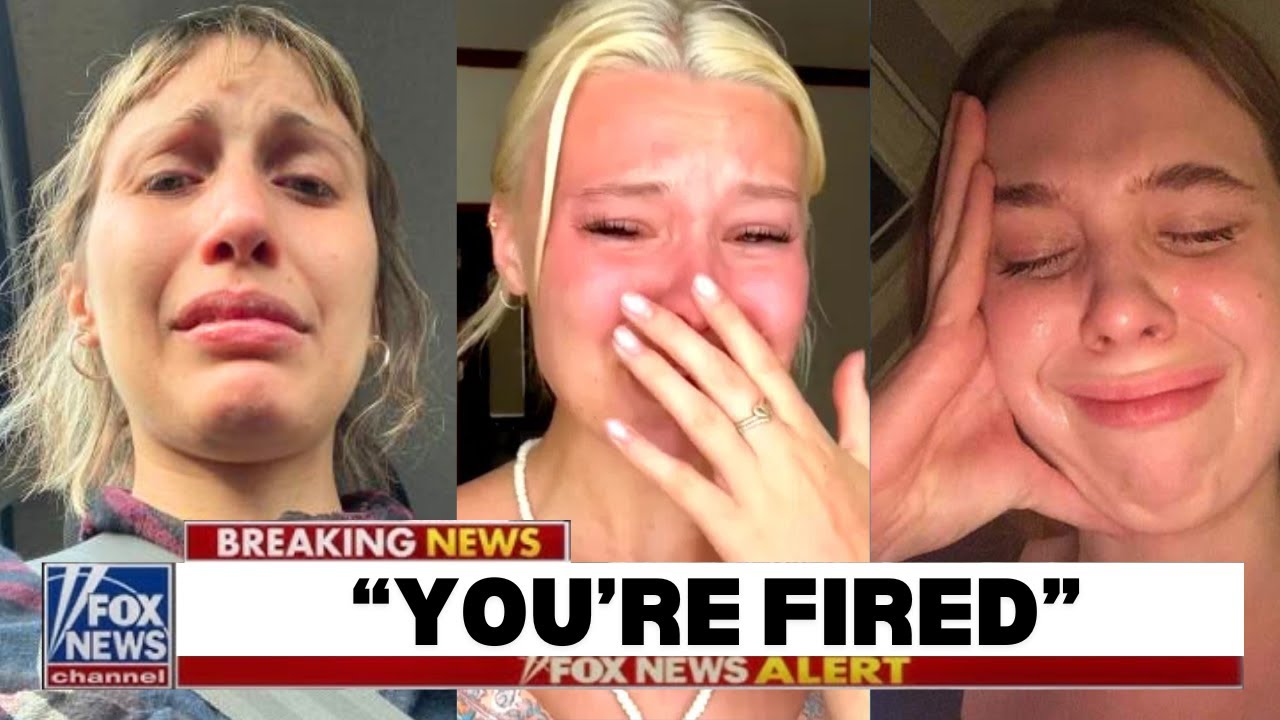
Mass Firings Erupt as Social Media Posts About Charlie Kirk Lead to Terminations Nationwide
Enjoying this? Share it with someone who needs to see it.
Up Next
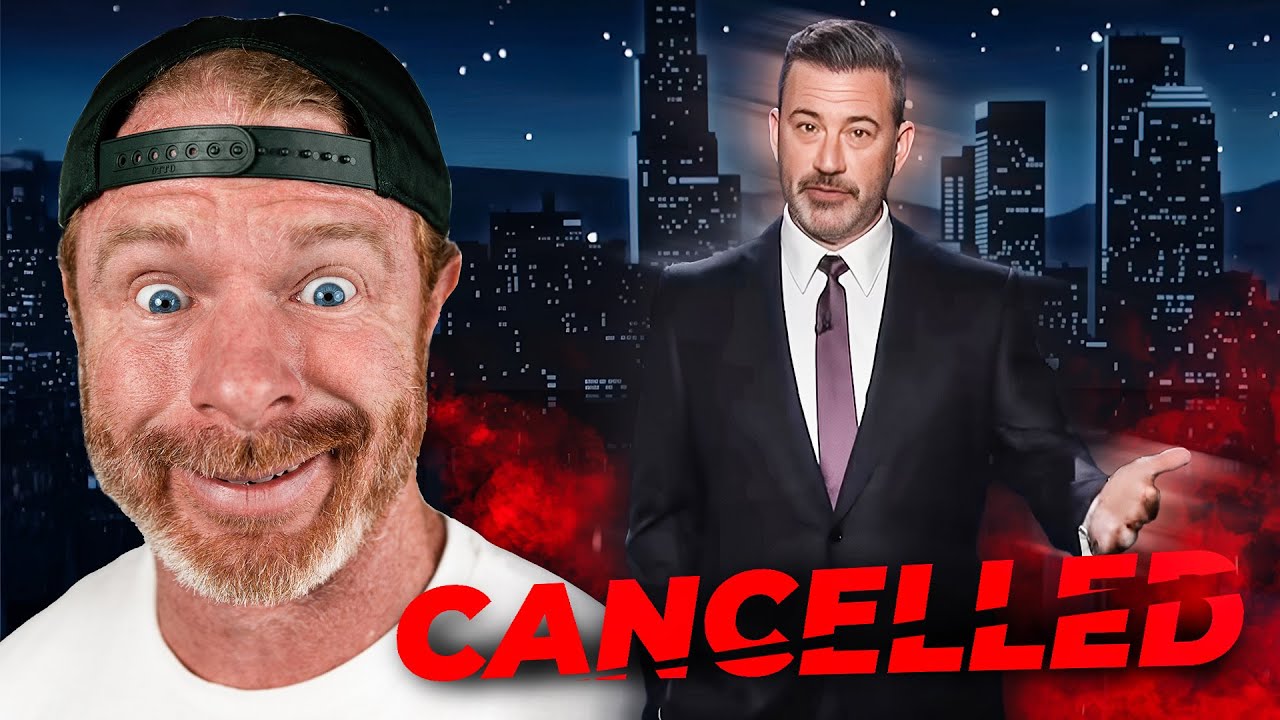
JP Sears Questions Whether ABC's Suspension of Jimmy Kimmel After Charlie Kirk Comments Threatens Free Speech Principles
23:27
Melanie King Exposes The Left's Celebration of Charlie Kirk's Assassination and Mass Firings Across America
20:46
Bari Weiss and Ben Shapiro Mourn Charlie Kirk After Assassination at Utah Valley University
1:24:32
Mass Firings Erupt as Social Media Posts About Charlie Kirk Lead to Terminations Nationwide
A wave of employment terminations has swept across the United States following social media posts about Charlie Kirk. From Clemson University professors to K-12 teachers, employees face immediate consequences for their online commentary. Nancy D., an education equity professional, documents her first day of unemployment after being doxed by a pardoned January 6th participant, while digital vigilantes compile lists of hundreds of individuals they've targeted. The situation raises urgent questions about free speech, employer rights, and the escalating consequences of online expression in an increasingly polarized America.
Nancy D. begins her video with a stark statement: she was fired on Friday for saying she was having a hard time finding empathy for Charlie Kirk. Her name and company information were posted online by what she identifies as a convicted and pardoned January 6th participant on Twitter. Her employer was then flooded with calls demanding her termination. This is day one of unemployment.
The terminations are not isolated incidents. Across the country, teachers, professors, and staffers are losing their positions after single posts expressing opinions about Kirk. The refrain echoes: play stupid games, get stupid prizes.
Clemson University Under Fire
Clemson University faces significant backlash after three professors posted controversial statements. Robin Newberry, one of the longest-serving professors at Clemson making over six figures annually, posted: "In a world full of Charlie Kirks and Brian Thompsons, the United Healthcare CEO, be a Tyler Robinson or a Luigi Mangione."
Melvin Earl Villa, an assistant professor of audio and global black studies, also celebrated, stating: "The day that Charlie Kirk passed, today was one of the most beautiful days ever. The weather was perfect, sunny with a little breeze. This was such a beautiful day." He followed with derogatory remarks that required censoring.
Initially, Clemson acknowledged the professors' statements but defended their right to free speech. However, following intense public pressure, the university suspended one professor and called an emergency board meeting. People are demanding all three employees be fired.
K-12 Schools Face Parent Outrage
At the College of Sequoia, a student captured video that sparked controversy. In Mariposa County, parents angrily addressed the school board during its monthly meeting, confronting allegations that a teacher stated they were glad Charlie Kirk was dead and told MAGA kids to go home and cry.
Parents argued there is no room for such comments in classrooms, stating these comments send a harmful message that individuals who share Charlie Kirk's opinions or beliefs are somehow deserving of violence or death. The Mariposa County Unified School District issued a statement confirming they are investigating alleged comments made by a high school staff member.
Accusations of Fascism and Thought Policing
Critics argue this represents fascism, pointing to teachers being fired over personal social media posts. States like Florida and Texas have established hotlines to report teachers, which opponents characterize as witch hunts. The argument centers on First Amendment rights: social media should be protected speech, while comments in classrooms represent a different conversation.
Some draw historical parallels to the 1930s, when authoritarian regimes targeted educators first—silencing teachers, firing professors, and banning books. These critics warn this is not about protecting kids but about policing thought, cautioning that today it's teachers and tomorrow it could be anyone who disagrees.
The School Shooting Context
The situation intensified following a school shooting in Denver where three students were injured. Charlie Kirk was also shot while speaking at a school. Some commentators expressed more sympathy for the innocent children than for Kirk, citing his history of controversial statements. They referenced Kirk's own statements suggesting some deaths are worth it to preserve Second Amendment rights and that some amount of gun violence is acceptable to maintain gun ownership rights.
One individual explained their position: "I lose my sympathy a little bit when someone uses his entire life and his entire platform to spread racism, hate, bigotry, misogyny, anti-trans, anti-gay rhetoric." They offered "thoughts and prayers"—the same phrase often used after school shootings—while hoping Kirk would recover and become a gun violence and gun control advocate.
Digital Vigilantism and Data Mining
The response has escalated beyond employer complaints. One individual brags about tracking down anonymous profiles, explaining that TikTok copies virtually everything on users' phones—photos, text conversations, DMs, GPS data, home and work locations. According to this person, a site on the dark web allows users to input any username and retrieve all associated data for a fee.
This vigilante claims the numbers have grown from 15 to 278 individuals targeted. Two businesses are reportedly going under, and three people in the UK have been arrested (where, the vigilante notes, saying mean things on social media can lead to jail time, not just job loss).
The individual proceeds to list terminations: Caleb from Minnesota, Natalie from Maine, Maline from Connecticut, Owen from Washington, Lily from Oregon, Juan from Massachusetts, Victoria from New York, Henry from Colorado, Amelia from Hawaii, Sebastian from Vermont, Zoe from Maryland, Miles from Rhode Island, Ella from Delaware, Levi from New Mexico, Scarlet from California, Mason from Illinois, Grace from Michigan, Wyatt from Texas, and Savannah from Florida. Three individuals in various European countries have been not only fired but arrested.
Specific Cases Under Scrutiny
Among the cases being highlighted, Jasmine works as a suicide prevention follow-up coordinator for the Colorado Department of Public Health and Environment according to public information. Her social media post criticized those speaking up for "a white man who spewed horrid blank against every marginalized community."
An Idaho cheer coach lost her job after posting video celebrating Kirk's shooting. The school district released a statement: "Like many in our school community, we are shocked and saddened by its content. She violated school district policy and she has been terminated."
Another individual claiming his job is on TikTok stated in video that he would support and even commit such violence himself, though his account cannot be located.
Personal Impacts of Termination
Nancy D. provides an intimate look at her first day of unemployment. Previously working at a nonprofit teaching reproductive health to LGBTQ youth and youth in foster care in Dallas, Texas, she felt proud of work focused on increasing educational equity to all students—work she describes as her identity, not just her job.
Tearfully, she explains the painful irony: she wasn't fired for what she said (everyone on her team agreed with her sentiment and she could have said it in the team chat), but because she was doxed by someone who knows her. That person posted her job and LinkedIn information to what she calls "white supremacists," resulting in her termination.
She describes her plan for the day: applying for unemployment, talking to a lawyer, dropping off depot packages, grocery shopping, and beginning a job search. Her coworkers have reached out offering to serve as references, which provides some comfort. She was on track for promotion before this happened.
Days later, Nancy reports receiving calls to her personal cell phone and fears not just her name and employer information is public, but also her phone number and home address. She doesn't know where to look for this information or what to do.
International Cases and Platform Threats
The phenomenon extends beyond US borders. One Australian individual reports being doxed on X (formerly Twitter) and receiving a large number of threats. The Australian Federal Police and the E safety commission have been contacted. This person expresses frustration at the irony: "All I did was say some words that offended some people and now people have decided to take that into the real world and start threatening and harassing and abusing people based on their inability to manage their emotions."
They defend their position as free speech: "The ability to speak even if that's something that personally offends you or you find distasteful. We don't all have to agree on things. In fact, we shouldn't all agree on things."
Legal Perspective on Employment Rights
Employment lawyer Paige Sparks clarifies widespread misunderstanding about First Amendment protections. The constitutional rights in the Bill of Rights, including First Amendment freedom of speech, primarily protect citizens from the government, not from individual people or private entities. The US Constitution limits government power; it is not meant to regulate private behavior between people or businesses that have nothing to do with the government.
Sparks provides an example: if someone makes a public post saying "Fuck the government," a cop cannot arrest them for that—it would be a First Amendment violation. However, as a private employer, if her law clerk posts "Fuck P. Sparks" online, she could fire that person and there would be nothing they could do about it.
Exceptions exist, such as when a private entity acts on behalf of the government or when someone is a municipal employee technically working for a government entity employer. But in general, freedom of speech is protected against the government, not other people. Sparks notes she has sued the government for freedom of speech violations, and that protected speech includes not just spoken words but actions like burning the flag or flashing headlights to warn of police.
The Consequences Argument
Multiple voices emphasize that freedom of speech does not mean freedom from consequences. Universities and school districts are moving quickly to HR decisions. The internet mob doesn't debate—it erases. When people celebrate violence, they shouldn't cry when consequences arrive. Actions have consequences.
The argument extends deeper: the left isn't defending dialogue but defending depravity, then posing as victims when blowback lands. Academia and K-12 bureaucrats who post vile content face employer reactions based on brand concerns, liability, and basic decency. This is characterized not as fascism but as market and community standards pushing back. Those who wanted attention got it with interest.
Critics note the inconsistency: the left says words don't hurt until their own words get them fired, then suddenly they're victims. The call is to pick a lane.
Economic Irony of Mass Firings
One commentator highlights an irony for conservatives supporting these terminations: conservatives typically oppose unemployment benefits, welfare, food stamps, and government assistance. Yet by calling to get people fired, if successful, they become the ones paying those bills. Terminated employees will file for unemployment, and because their employer fired them, they'll receive it. Those who hate when progressives, leftists, and liberals use government assistance are pushing them to do it more by threatening livelihoods over different opinions.
Street Confrontations Escalate
The rhetoric has spilled into physical confrontations. Video shows an incident in Pensacola where someone attempted to spray paint a memorial and was physically attacked by a group. Voices shout: "This is what happens when you fuck with proud Americans. You get your ass beat." The person appears to have been maced or covered in paint, lying on the ground while being taunted: "George Floyd over here. I can't breathe."
The attackers express no regret: "We're getting tired. When will you guys learn?" They question what the person thought would happen when coming to the memorial. During the confrontation, political arguments emerge about caring selectively for causes, with references to Palestine and Gaza, and accusations about Charlie Kirk's past statements regarding his daughter.
The Response: Fired for Freedom
In response to the wave of terminations, a website called "Fired for Freedom" has been created at firedforfreedom.visisual.com. The site lists businesses and schools terminating employees for freedom of expression and provides a link to email for those targeted by what they call "doxing white supremacists." The creators promise: "This sword will cut both ways."
The Bottom Line
Legally, the situation is straightforward: the First Amendment restrains the government, not private employers. An employer judging public posts is not a First Amendment violation but risk management. HR departments are not bound by constitutional protections. When people scream fascism because their boss terminates employment, that's not tyranny—it's employment law and at-will employment cause.
The analysis points to hypocrisy: keyboard warriors demanding firings also rail against unemployment and welfare, yet pushing someone out of work means they file for benefits, funding what they claim to hate.
The rhetoric continues escalating with street confrontations, taunts, and threats. Those who mock a man's death online act shocked when chaos spills offline. Freedom of speech does not mean freedom from consequences. If people don't want real-world blowback, they shouldn't post what others characterize as real-world bile.
The call to action: email receipts, document everything, like, comment, and share so people can see what's happening, as mainstream media is not expected to cover it. The promise is to keep breaking down events and showing how to fight back.












Comments
Be the first to comment on this video.