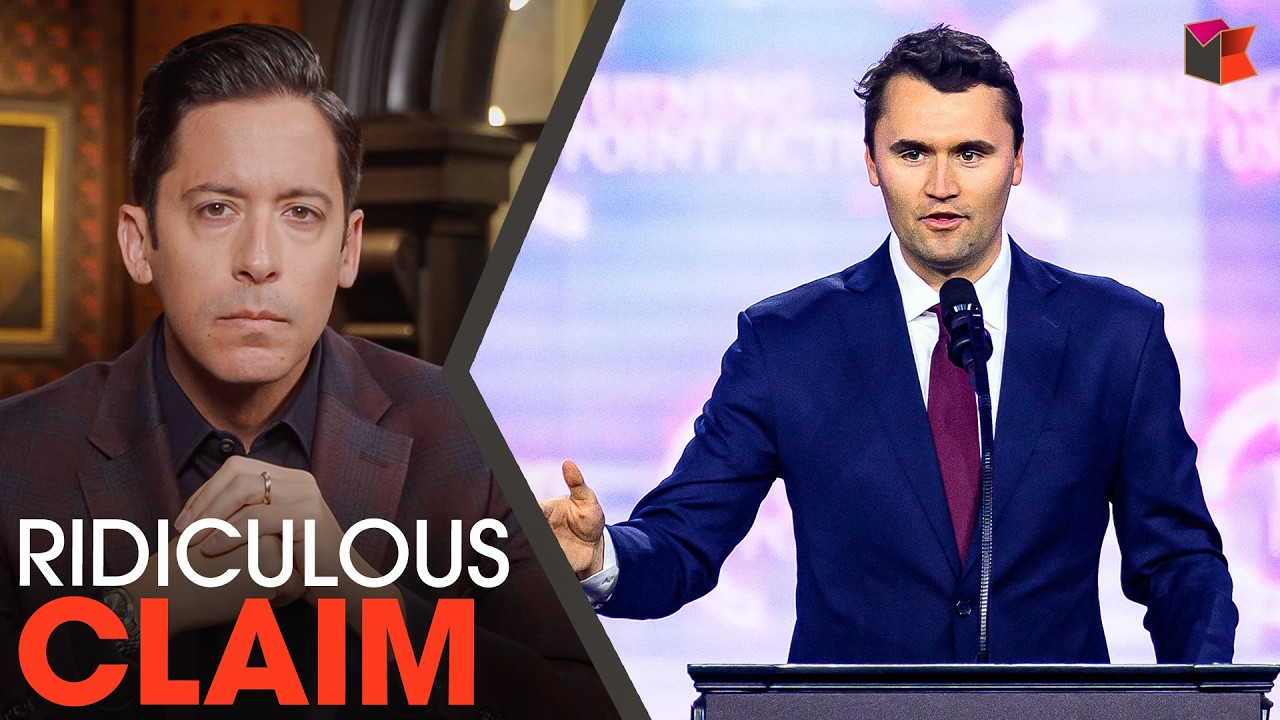
Michael Knowles Explains Why Trump's Tribute to Charlie Kirk Offers Rhetorical Lessons for Right-Wing Influencers
Enjoying this? Share it with someone who needs to see it.
Up Next
Alisa Childers on Charlie Kirk's Memorial and the Shift in Her Ministry Approach
45:48
Students Rise Up Against Woke Indoctrination, Defend Free Speech After Charlie Kirk's Assassination
12:44
Charlie Kirk Receives Presidential Medal of Freedom on His Birthday at White House Ceremony
1:00:42
Michael Knowles Explains Why Trump's Tribute to Charlie Kirk Offers Rhetorical Lessons for Right-Wing Influencers
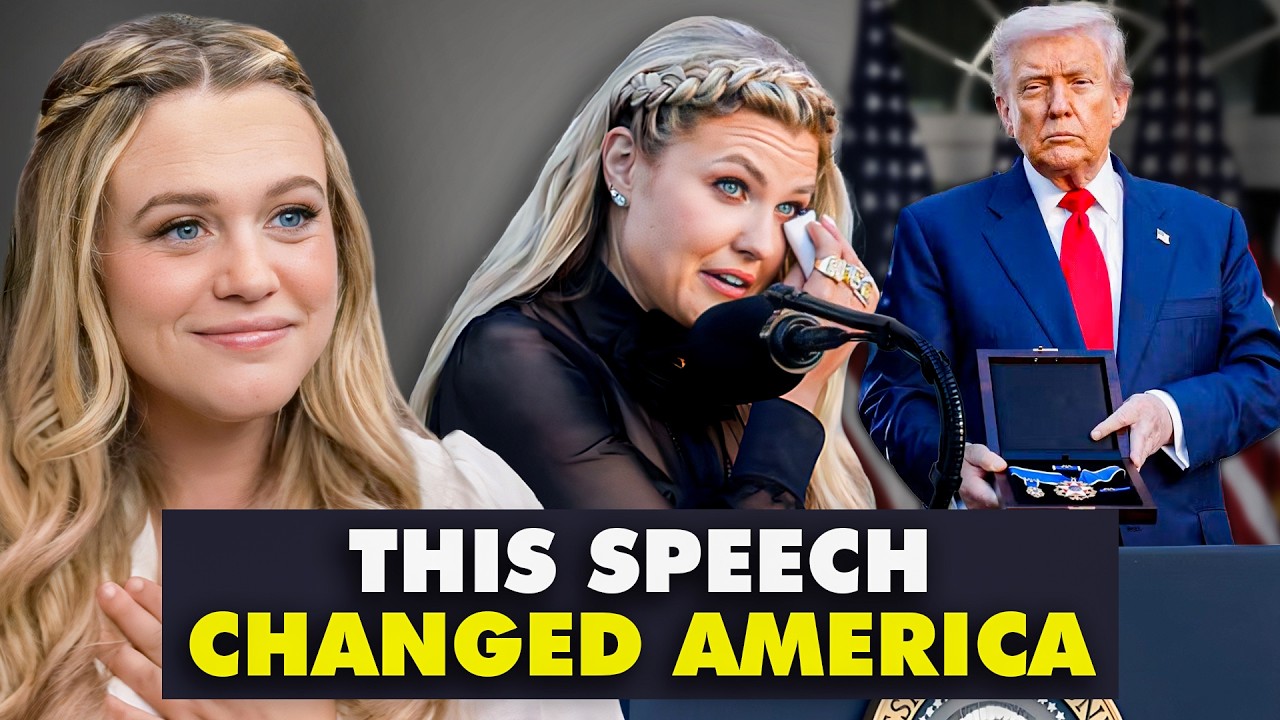
Michael Knowles examines President Trump's tribute to Charlie Kirk during a recent speech, arguing it demonstrates superior rhetorical strategy that right-wing influencers should study. Knowles critiques those who believe the best way to honor Kirk's legacy is by constantly engaging with critics like Candace Owens, suggesting this approach is counterproductive and misguided. Instead, he highlights Trump's message discipline, focus on persuasion over posturing, and ability to connect political violence to broader threats facing Americans. The analysis reveals how Trump's approach, focusing on positive tributes rather than antagonists, offers a masterclass in effective political communication.
During a recent speech, President Trump delivered a powerful tribute to Charlie Kirk, who was assassinated six months prior. Trump acknowledged Kirk's role in what he described as a tremendous renewal in religion, faith, Christianity, and belief in God during his presidency, particularly among young people.
"This is especially true among young people and a big part of that had to do with my great friend Charlie Kirk. Great guy, great man," Trump said, before acknowledging that Kirk "was violently murdered by an assassin and martyred really martyred for his beliefs."
Trump called for Erika Kirk, Charlie's widow, to stand and receive applause from the audience. "Thank you, Erika. Been through a lot," Trump said. "In Charlie's memory, we must all come together to reaffirm that America is one nation under God, and we must totally reject political violence of any kind."
Michael Knowles praised this as a beautiful tribute from President Trump to his late friend and to Erika, noting that her presence at the event was important both as a matter of justice and as a powerful visual reminder for Democrats and Republicans alike.
Rhetorical Lessons from Trump's Approach
Knowles argues that this entire episode offers rhetorical lessons from President Trump that many Republicans and right-wing influencers could learn from. He specifically calls attention to what he sees as a misguided strategy among some right-wing influencers who believe the best way to honor Charlie's legacy and support Erika and the family is to spend their time talking about people criticizing and antagonizing them.
"There are people who seem to think the best way to honor Erika and TPUSA and Charlie is to focus all of the attention all the time on the relatively few people who are criticizing and antagonizing Erika," Knowles observes. "The most famous, of course, being Candace, who I guess has a new series about Erika, but some other people too, some smaller accounts as well."
Knowles questions whether this strategy makes sense, regardless of one's opinion of Candace Owens. He argues that constantly publicizing content that antagonizes someone is not an effective way to support them.
The Ineffective Strategy of Online Whining
Knowles identifies a meme that has cropped up among right-wing influencers: "We must stop Candace and others, but she's the most famous one. We must stop Candace by whining about her on the internet all the time."
He poses a critical question about rhetorical strategy: "Is there any evidence that has ever worked? Has anyone ever stopped Candace especially, but other people as well. Has anyone ever stopped these guys from saying something by whining about them more on the internet? That I don't think that's ever worked even one single time. That seems like a bad strategy."
While Knowles makes clear that he considers Erika a national hero who deserves immense support and sympathy, and disagrees with Candace Owens on this matter, he remains hopeful that Candace and others might be persuaded to change their position. However, he is certain that "no one will ever get Candace to say or do anything by whining more about her on the internet."
Feeling Good Versus Doing Good
Knowles identifies what he sees as the root of this counterproductive strategy: "I think a lot of people would rather feel good or seem good than actually do good. I think a lot of people would like would rather feel emotional catharsis, screaming, yelling, this is so awful, this is terrible."
He suggests that many people prefer to posture and present themselves as the most moral rather than actually doing good, even when their approach promotes the very things they claim to oppose and results in totally counterproductive strategies.
Trump's Approach: Persuasion Over Posturing
In contrast to this pattern, Knowles points out that Trump never engages in such counterproductive behavior. "When Trump has a disagreement with someone, he tries to persuade them. He doesn't just excoriate them all the time. He doesn't pin. He tries to persuade them. He's got all sorts of different tactics for persuading people. Art of the Deal. That's his book."
Knowles emphasizes that Trump is interested in getting things done rather than presenting himself as a paragon of philosophical or moral purity. He quotes someone named Drew from Trump's first term, who said Trump is "kind of like a plumber" who just wants to fix things rather than make beautiful, eloquent speeches and look nice and coiffed.
"He wants the effect," Knowles explains. "And the rhetorical effect of this speech was magnificent."
Basic But Effective Rhetorical Strategy
Knowles outlines what he sees as Trump's basic but effective rhetorical approach:
Put your opponents in a bad situation
Focus on the good things
Focus on what you want to talk about
Don't let your opponents dictate your agenda
Provide clarity on the political situation because clarity is charity
Following Trump's statement that "We're a nation under God and we should all reject political violence of all kinds," all the Republicans stood up, along with some Democrats—but notably, not the more extreme members of the Democratic party. Knowles found this telling, as it demonstrated which politicians were unwilling to reject political violence.
Connecting the Dots on Democratic Threats
Knowles argues that Trump effectively connects various political issues to frame Democrats as a threat to Americans. While Republicans currently lead on immigration, border control, and crime, they're underwater on issues like the economy, health care, government reform, and defense of democracy.
"How do you tie it all in? Democrats are threatening you," Knowles explains. "They're threatening you at the border. They're threatening you with the criminals they're releasing onto your street. They're threatening your 401ks. They're threatening your economy. They're threatening you certainly economically, but they themselves are a threat."
The fact that two-thirds of Democrats remained seated when Trump called for rejecting political violence, Knowles argues, essentially communicated: "Yeah, we want to kill you." This puts the focus back on Democrats rather than on right-wing infighting or influencer wars.
Trump's Unrecognized Message Discipline
Knowles concludes by praising Trump's message discipline, which he believes receives no credit. "They say he wanders off and he's undisciplined. Not so," Knowles argues. "Trump is not a guy who lets his emotions run away with him. Trump is not a guy who would rather feel good and seem good than actually do good. Trump that was real discipline there."
He predicts that the clip of Democrats refusing to stand against political violence will be played throughout the midterm elections, demonstrating the lasting political impact of Trump's strategic approach.