Up Next

John Schneider Reflects on Charlie Kirk's Legacy and Faith: How He Should Be Remembered
6:00
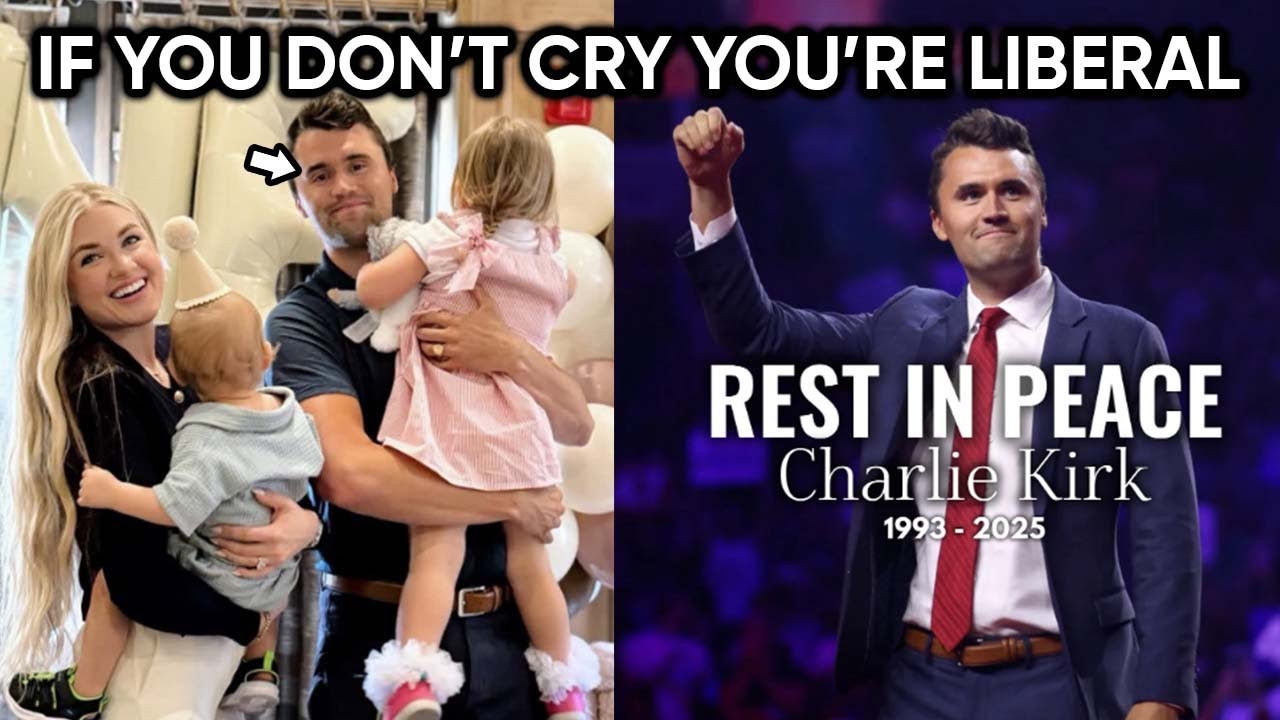
Charlie Kirk Reflects on Courage, Faith, and His Legacy in Powerful Tribute Video
9:16

Tulsi Gabbard Honors Charlie Kirk After Assassination: A Champion of Freedom Who Lived What He Preached
7:31
Musical Tribute to Charlie Kirk: Matthew West, Cole Swindell, John Rich, Abe Parker, and Ann Wilson Honor His Legacy
Isabel Brown hosts a powerful musical celebration of what would have been Charlie Kirk's 32nd birthday, featuring heartfelt tributes from Matthew West, Cole Swindell, John Rich, and Abe Parker. These artists share how Charlie's life and tragic death inspired them to write original songs, speak truth boldly, and embrace unashamed faith. From Matthew West's moving prayer "Be Close" to Cole Swindell's anthem "Make Heaven Crowded" and Abe Parker's emotional "How to Love," this episode reveals how Charlie's courage sparked a revival across the music industry. Each artist reflects on what it means to live with significance over success, to choose boldness over comfort, and to pick up the microphone Charlie left behind. This isn't just about honoring one man, it's about a generation finding their voice.
A Birthday Tribute to Charlie Kirk
October 14th would have been Charlie Kirk's 32nd birthday. To honor his life, his extraordinary impact, and to encourage his family and the millions worldwide who followed and loved him, this special episode of the Isabel Brown Show offers a musical tribute unlike any other. The episode features conversations with artists who were devastated by Charlie's death and inspired to use their platforms to share his message with the world.
Isabel Brown brings together artists across multiple genres and generations: Matthew West, Cole Swindell, John Rich, Abe Parker, and Ann Wilson. Each shares their personal reactions to Charlie's death, their creative process in writing tribute songs, and their commitment to living out the legacy he left behind.
Matthew West: Be Close to the Brokenhearted
Matthew West was in a songwriting session ironically writing about joy when his wife rushed in with the news about Charlie. The wave of heaviness was immediate. As a longtime fan of Charlie's videos, Matthew had watched him demonstrate bold faith combined with respectful discourse on college campuses across America.
Matthew has teenage daughters who need young influencers like Charlie showing them the way. In the days following Charlie's death, Matthew sensed a stirring while touring across the country. At an arena in Pennsylvania, he sang "Unashamed" in Charlie's honor and asked the crowd if they felt that same stirring to be bold in their faith. Thousands stood and cheered, honoring a man who showed what it means to run the race well.
Matthew explained that Charlie embodied 1 Timothy 4:12: "Do not let anyone look down on you because you are young, but set an example for the believers." Charlie possessed a deep well of knowledge combined with undeniable compassion for those he debated with.
The hatred that surfaced after Charlie's death revealed the spiritual warfare constantly raging around us. Matthew noted that Christians aren't promised to be loved by the world. When we follow truth—and truth has a name, Jesus—we're actually promised to be hated by the world.
Matthew felt convicted about the other 23 hours of his day beyond performing on stage. The stirring wasn't just about singing songs about Jesus to applause, but about being a light in daily life, on social media, and in every interaction. His song "Unashamed" includes the line: "I don't answer to the crowd, I answer to a king. So the louder they shout, the louder I'm going to sing."
On September 10th, after hearing about Charlie, Matthew gathered his wife and daughters to pray for Erica and the family. That night, he heard his 19-year-old daughter singing "It Is Well With My Soul" from her bedroom. Early the next morning, he woke with Psalm 34:18 on his heart: "The Lord is close to the brokenhearted and saves those who are crushed in spirit."
Matthew went to his studio and wrote "Be Close," a simple prayer claiming God's promise to be present in grief and turmoil. In a world filled with promise makers who don't deliver, we have a God who keeps 100% of His promises. The song acknowledges the pain—"I can't unsee what I've just seen"—while anchoring in the certainty of God's nearness.
Cole Swindell: Make Heaven Crowded
Cole Swindell was with his wife Courtney and their newborn baby girl when they learned about Charlie through a text and immediately turned on the news. As a new husband and father, the tragedy hit differently. The emotions were overwhelming: shock, sadness, fear, and anger all mixed together.
Cole noticed that tragedy brings people together temporarily before they drift apart again. But this time felt different. Many people drew a line—this was it. A man was assassinated for believing what millions of Americans believe, except he was bold about it.
The situation made Cole look in the mirror. Charlie was living the way Cole should be living, using his platform to spread the Christian message. Cole acknowledged that people like John Rich and Jason Aldean had led the way in country music, speaking out despite the cost. Now Cole felt it was time for more artists to step up.
Cole had never met Charlie, but one clip changed everything. He saw Erica's first speech after Charlie's death, where she said Charlie was now alongside Jesus doing what he always wanted to do—making heaven crowded. That phrase hit Cole harder than anything else.
The clip made Cole wonder: if something happened to him tomorrow, would Courtney say he was doing what he always wanted to do? He didn't think she would. That realization compelled him to use his platform through lyrics and words from his heart.
Cole wrote "Make Heaven Crowded" not for his career but to honor Charlie and spread Jesus everywhere possible. The song had no plans for release—his album came out in June—but this was something on his heart that he felt led to write.
The song begins with Cole calling himself out: "I've blamed my sin and on I ain't no saint. I've bit my tongue, said that it ain't my place. And I've kept Jesus in the back seat. But I can't any longer after what we all saw last week." He knew he couldn't write this song without acknowledging his own shortcomings.
Playing the song live has been powerful. American flags and freedom shirts are showing up in the crowd. If the song helps one person or changes one heart, it's done its job. Cole's message to other musicians: take chances and write what scares you. You'll find so many others feel exactly the same way.
John Rich: Success Versus Significance
John Rich had played several Turning Point USA events, including the major one in Arizona, so he had gotten to know Charlie personally. As an American, John faced the decision all public figures eventually confront: Am I willing to say what I really think and stand for what I really stand for, knowing I'll take a horrible bloody nose or worse?
John wrestled with this for years. His American dream was to play country music, be on the radio, play the Grand Ole Opry, and write hit songs. He knew the industry was liberal, and coming out as a Christian conservative patriot would likely end that dream. He was right—he's not on the radio anymore and doesn't get invited to fancy industry parties. But he has no contracts, no record deal, no publishing deal. He's a free agent who can speak the truth.
Charlie represented what it means to be a real Christian. Real Christians don't just speak truth when it's comfortable. Jesus said in the New Testament that His followers would be persecuted for bearing His name. When an evil world despises you, that's actually a stamp of approval that you said something correctly. Nobody set that example better than Charlie.
John's sons, ages 14 and 15, had been watching Charlie Kirk videos on YouTube. Their reaction to his death was serious and profound. They felt compelled that now it's their turn to put on red ties and jackets, to walk in like young men, to be leaders. John believes this will become a revolution of Christianity, of young people wanting to get married, have kids, and work hard. They're realizing how shallow culture has become and want to do things that count, things that create legacy.
Charlie's mission to revive the family resonated deeply with John. God created man and woman to procreate and multiply. That's always been human tradition, yet it's been downplayed, ridiculed, and demonized in modern media. The greatest feeling anyone can have is being a good parent, but the culture never talks about the benefits you receive when you become a good dad or mom.
John warned that when Charlie died, both righteous people and wicked people accelerated their pursuits. The word of God is sharper than any two-edged sword, dividing between spirit and soul. That truth divided people that day, and we'll see more of it—wicked people becoming more wicked and righteous people becoming more righteous.
John drew a parallel between Charlie and Stephen from the New Testament. Stephen was a young man going town to town preaching the gospel, converting thousands. The Romans targeted him and stoned him to death. Before the first stone hit, Stephen looked up and said, "God, please receive my spirit." He saw Jesus stand up at the throne to receive his spirit, and he fell asleep before the first rock hit him.
Right after Stephen's death came an explosion of Christianity—churches in Corinth, Ephesus, Thessalonica, and Philippi. Saul became Paul on the road to Damascus. Over 100 million people saw an altar call at Charlie's memorial service. Billy Graham's largest event had about two million people. How many lifetimes would Charlie have had to live to reach 100 million people with an altar call?
John's final message: Stop concerning yourself with success and start concerning yourself with significance. Don't live to be successful—live to be significant. Say things, do things, and put things into motion that will outlive you. That way, long after you're gone, somebody somewhere gets to hear or see something you did that impacts them.
Abe Parker: How to Love
Abe Parker had been following Charlie for years, watching his videos and content. When he heard the news, he was wrecked and devastated. But the biggest reason he wrote his tribute song came from seeing people's response on social media—people cheering, celebrating, and making TikTok dances about a man who was just assassinated.
Abe didn't want to live in that kind of world. He doesn't typically do political or Christian content in his music—he is a Christian, but it's not usually his focus. This felt like something that needed to be done. He couldn't be silent in a place where people celebrate assassination without consequences.
Abe wasn't initially planning to release a song. It felt like gaining momentum on the back of something terrible. But seeing people celebrate changed his mind. For his own sake and for his son's sake, he didn't want his child growing up in a world where political assassination is acceptable.
The verse and chorus came in about 30 minutes. He teased it on social media and it did really well. Then he spent two entire days trying to write the second verse, wanting it to really mean something. He filmed a simple TikTok video sitting in front of the TV with the lyrics going over top.
Including Charlie's voice in the song was a last-minute decision. The second verse contrasts people laughing at the tragedy with the truth that "the blackest night brings out the sunlight's glow" and "when you try to silence someone, you only make it grow." Abe wanted to give a hat tip to Charlie, and that moment has become one where listeners consistently break down emotionally.
Abe credits his career to TikTok and social media platforms like Reels. The whole landscape has changed in the past three or four years. Labels are realizing they're not as needed as they used to be. Anyone willing to work hard and make content can build a career.
Abe was fairly certain his label wouldn't let him drop the song, but they've been supportive the entire time. Though they're not a Christian label and many on his team probably don't share his beliefs, they've allowed him to do good work across the aisle.
For conservatives, Abe's message is to speak the truth but speak it in love. Most people he meets disagree with him politically, but they genuinely care about people and have empathy. Unfortunately, that empathy has been weaponized. The ultimate answer is Jesus—knowing that the creator of the universe loves you enough to die for you changes everything.
The response from Charlie's family and the Turning Point USA community proved this. There were vigils, prayers, and gatherings—not riots or burned buildings. That's a powerful testimony to what happens when people chase goodness.
Abe's final message: Be brave. He's been confronted with his own fear of feedback, of losing followers. After actually losing followers, he realized it's not that scary—it's just a number on a screen. Being brave is something we all could do more of, inspired by Charlie and his family. Speak the truth, but speak it in love.
A Legacy That Lives On
This episode represents far more than a birthday tribute to one man. It captures a moment when the music industry—often resistant to bold expressions of faith and conservative values—united to honor someone who lived and died for truth. Each artist shared their personal awakening to the significance of their platform and their renewed commitment to use it for something beyond success.
The common threads throughout these conversations include the importance of being unashamed in faith, speaking truth with love, prioritizing family and marriage, choosing significance over success, and recognizing that tragedy can spark revival. Charlie Kirk's death at 31 mirrors the martyrdom of Stephen in the New Testament, and the resulting spiritual awakening touches millions.
For Erica Kirk and her children, for the Turning Point USA family, and for everyone who knew and loved Charlie, these musical tributes offer comfort in grief while carrying forward the message he lived for. As Matthew West sang, "Be still and know I'll always be close." As Cole Swindell declared, we must "Make Heaven Crowded." And as Abe Parker asked, we must remember "How to Love."
Happy birthday, Charlie. Your voice has been multiplied far beyond what one lifetime could achieve. The microphone you carried has been picked up by millions ready to continue the race you ran so well.
Video Transcript
Today, Tuesday, October 14th, would be Charlie Kirk's 32nd birthday. To honor his life and his incredible impact, and to give encouragement to his family and the people all over the world who followed and love Charlie and who, like us, are hurting today. We wanted to take this episode of the Isabelle Brown Show to offer a very special tribute in his memory. I have been and we all have been deeply moved watching the musical community use their special talents to speak out for Charlie and to offer us comfort as we process our grief. And that is what this episode is all about. We have spent time talking to artists who were so moved by Charlie's life, devastated by his death, and inspired to pick up his microphone and to help share his message with the world in whatever way they could. Today we are going to be joined by artists across a variety of genres and generations alike. Matthew West, Cole Swindell, John Rich, Abe Parker, and Anne Wilson. It's a powerful, moving reflection on Charlie Kirk, and you are not going to want to miss a minute. Happy birthday, Charlie. We love you. We love Erica and the kids, and we love our whole worldwide Turning Point USA family. This Charlie is for you. [Music] You guys know I have been traversing the country. I think this is my fourth state in four days. So, one of our artists actually was not able to join me at the same time in person, but we recorded something remote. I am so unbelievably grateful for this first person you're going to hear from today, Matthew West, who guided by the light of the gospel and the impact of Charlie Kirk, has taken time to write a very special tribute song in his memory, dedicating it to Charlie's family and the legacy that will only continue to live on in his memory. Let's take a look. Matthew, thank you so much for being here today and helping us to celebrate Charlie's birthday and the legacy that his life is leaving behind for an entire generation. Talk to me about what hearing the news felt like for you and this shift that we're seeing in our country. Was it obvious to you right away that we would really never live in the same world again? What was your immediate reaction? >> Yeah, thanks for having me, Isabelle. It's an honor to be here and uh on a special day to honor the life of an incredible young man who left this world way too soon. Uh man, September 10th sure seems like it's going to be a day that we'll always remember where we were. Um the first thing that I felt was just a a shock and a heaviness, just a wave of heaviness over the entire West household. I was actually in a songwriting appointment that day in my studio and we were ironically we were writing a song about joy and the reason that we have joy and my wife rushed into the studio and and uh told us the news about Charlie and uh yeah so I think that initial wave of heaviness was quickly met uh with with grief and questions and you know I had been a fan of Charlie's for a long time just watching his videos and just being inspired by his bold stance but also the way that he exercised his right to free speech in such a respectful way. Um, and I have teenage daughters, you know, who who need young influencers like Charlie showing them the way and speaking into their lives like Charlie had done on one college campus after the other. So, um I I think though you could quickly sense things beginning to to shift in the the hours and days that follow, just the outpouring of support and really I've just sensed a stirring in the weeks following as I've toured across the country and I'm I was just, you know, on stage in in an arena Sunday night in Pennsylvania and I sang the song Unashamed and I I sang it in honor of Charlie Kirk and I just asked the crowd, "Are you feeling a stirring like I'm feeling a stirring in the wake of Charlie Kirk? Kirk's death to be bold in your faith. And how many of you want to hear the words that I believe Charlie got to hear when he stood before the Lord, which is well done, thou good and faithful servant, and the entire crowd of thousands standing up on their feet and cheering and honoring the life of a man who showed us what it looked like to run his race well. So I definitely have felt um just a stirring taking place and a spiritual awakening uh as well as just a cultural awakening of going what kind of voice am I going to have in the world and am I willing to use it even if it comes at a cost. >> What do you think stood out so uniquely about Charlie in embodying courage and boldness and encouraging so many other young people to run that race, too? Well, there's a verse in the Bible that says, "Do not let anyone look down on you because you are young, but set an example for the believers." I think it's 1 Timothy 4:12. Um, I'm sure you have fact checkers, though. Um, but that that scripture is one that I always thought about when I would watch this young guy get up and just armed with an incredible deep well of knowledge, but also a clear compassion for the people that he was debating with. I think that's that's just something that like it was just undeniable. And even in the wake of Charlie's death, it was it's been crazy to see like, you know, I posted uh on social media just, you know, feeling a stirring. I wanted to use my platform and any platform God's given me, whether it's through writing a song or a social media post to to honor someone like Charlie, who I believe is a Christian martyr. And it was unbelievable just how uh even how much hatred came my way, you know, or anybody who voiced support for Charlie and his family in the wake of this. It's just it's crazy when you think about how many people um just settle for taking little clips out of context. And I mean context is everything, right? And so that's one of the things that I noticed so much about even in these weeks that have followed just people they'll either choose to dig further into their beliefs and just take some sort of a clickbait quote that was taken completely out of context and then just put that stamp on who they think Charlie Kirk was. But when you pull back the curtain and dare to actually do your research and read and watch and literally see with your own eyes how he demonstrated what it looked like to be a Christian and a light in a dark world. Uh I mean I can think of few greater examples than the one that he set for all of us. That hatred is getting really loud in the last couple of weeks and I'm seeing almost this veil being lifted of the legitimate spiritual warfare that we as Christians do believe were is constantly raging on around us at all times and we're constantly fighting in even if we can't see it with our naked eye. But I'm also watching this boldness and unashamed proclamation of belief in God come from young people especially. And it's reminding me that as Christians, we're not promised that we're going to be loved by the world or accepted by the world. When we follow truth and we believe truth has a name and that name is Jesus. And when we share that with the world, we're actually promised to be hated by the world. Christ himself promised us that over and over again. What does that mean for you in your career as a musician? And as you're seeing all this hatred come to the surface, do you think we're not going to care so much about the idea of being cancelled or or ostracized by the world? Well, that's just another thing that inspired me about Charlie. He was not afraid uh to be hated and and I think, you know, I'm I'm in a profession that like, you know, I started singing songs and the first time somebody clapped for me, I was like, "Hey, that feels pretty good." You know what I mean? And it's like I can get up on stage in a safe environment with like-minded people and sing songs about Jesus and have people cheer for me. Um, but the stirring that I felt in the wake of Charlie's death is to be unashamed in my faith. And people say, "Well, that that's weird because you sing about Jesus everywhere you go." But what I'm talking about is the stirring that I felt, the conviction that I felt in my heart is is the other 23 hours of my day, not when I'm just standing up singing a song for an audience and hearing them cheer for me. That's the easy part. It's about the when I go through the rest of my day. It's it's about how I engage on social media. It's about looking for opportunities uh when God puts somebody in my path to be a to be a light and to not, you know, spiritually fall asleep, but to be awake and to think, how many people can I take to heaven with me today? How many people can I be a light to in the other 23 hours of my day? Not just seeking the applause of man. There's a line in one of my songs called Unashamed, and it's made me think about Charlie. And every time I find myself singing it on stage since Charlie's death, I I think about him and I think about like I I just I almost sing it kind of angry and it the line says I don't answer to the crowd. I answer to a king. So the louder they shout, the louder I'm going to sing. And then it poses a question. What's going to be said of me when it's all said and done? Did I stand for my beliefs or did I turn around and run? Well, let the whole world hear me say I'm unashamed. So yes, I think hear it from me personally and what I'm seeing all around me is I think there's a whole lot of people are saying, you know what, am I willing to be unashamed even if it comes at a cost? Am I willing to stand up for truth and what is right and good and pure even if it doesn't even if it doesn't uh even if it's not met with the applause of the crowd? The answer has to be yes. Because as you said, Jesus told us they hated him first. And by us choosing to become a follower of Christ and to stand up for what is right and good is true. There's there is a whole world that hates everything that you're going to stand for. But that's what it means to be counterculture. In fact, we should be alarmed if we're not getting push back. We should be that that should make all the the bells go off to say, "Am I being bold enough?" You know, if all I'm ever doing is getting applauded, that could mean one of two things. my message is watered down or I'm only surrounding myself with like-minded people and I'm not seeking out ways to go into the to go into the world, right? That's the great commission, right? To be the light of the world, not just the light of your your small little like-minded group of believers. And Charlie demonstrated that as well, didn't he? He he he left the four walls of the church. He left the safety of his studio. And day in and day out, he took a light into a dark world. And it was a dark world that didn't want that light to expose the darkness, but he did it nonetheless. >> As Charlie used to always say, we have to go right into the heart of culture and try to change it from the inside out. And I never met anyone who was as skilled as him at doing that. I'm also starting to see that in the music industry. And you and so many other musicians have penned tributes to Charlie through new songwriting. You've dedicated songs to Charlie while you've been singing. I understand you have a song to share with us today in honor of Charlie for his birthday. Can you share with us a little bit of background about the song and then we would love to hear it. >> Yeah, >> absolutely. Um September 10th um after we found out that Charlie had gone home to be with the Lord. Uh I gathered my wife and my two daughters together and uh we talked about it and we prayed and we prayed for Erica and his family. And um later that night, I heard a song coming from my daughter's bedroom and she was just up there, my 19-year-old daughter with her guitar, and she was singing uh when peace like a river attendeth my way. She was singing this old hymn from my childhood. It is well, it is well with my soul. And I went to bed that night and the verse that uh a Bible verse woke me up early that morning. I don't want to romanticize it, but literally that's what happened. And I woke up early in the morning and I was thinking of Psalm 34:18. And that is such a powerful scripture that reminds us where God is. I think so many scriptures in the Bible are focused on proximity, on God's closeness to us, on God's search for us, that he would leave the 99 to find the one. And Psalm 34:18 is such a powerful promise of where God is when we hurt, when we grieve, when we're brokenhearted, when we're crushed in spirit, when we wonder where he is. He tells us quite clearly, the Lord is close to the brokenhearted and saves those who are crushed in spirit. And so, um, I did what I always do when I'm trying to work out my feelings and my emotions. I went to my studio. I picked up my guitar and just sang a simple prayer, um, claiming the promise of scripture to be a promise that is true. And that's one thing I believe in a world filled with promise makers that are not as good at keeping the promise, we have a God who's given us his word and he keeps 100% of his promises. And so in times of grief, in times of turmoil, in times of trial, in times of questions, we can build a firm foundation on promises that God will always deliver. And so this was the song that came out. It's just an acknowledgement of like, man, the first line says, I can't unsee what I've just seen. And I think we've all had moments like that in recent weeks where we're just watching one headline after the other going, "Oh man, I wish I never had to see that. I wish this world wasn't so broken. God, where are you?" Oh, wait a minute. I remember where he is. He's close. >> I cannot wait to hear it. Matthew West, take it away. Be close. I can't unsee what I've just seen. I can't make sense of one more senseless tragedy. Another light put out by dark. This wicked world just makes me wonder where you are. Jesus, be close to the brokenhearted. Save those who are crushed in spirit. We know that you've always been our only hope. Be near when our minds are flooded with fear. Be the hand that's wiping our tears and the voice that whispers wey. So be still and know I'll always be close. Where there is hate, let there be peace. And where I don't see a change, let change begin with me. Where there is evil, be not dismayed. Give me the strength to stare that evil in the face and say, "Jesus, be close to the brokenhearted. Save those who were crushed in spirit." We know that you've always been our only hope. Be near when our minds are flooded with fear. Be the hand that's wiping our tears and the voice that whispers wey. So be still and know I'll always be close in our hurting. Be close in our grieving. Be close in our crying. Be close. We need you, Lord. We need you in our families. Be close in our country. Be close in this lost world. Be close. Oh, we need you. And Jesus, be close to the brokenhearted. Save those who are crushed in spirit. We know that you've always been our only hope. Be near when our minds are flooded with fear. Be the hand that's wiping our tears and the voice that whispers wey. So be still and know I'll always be close. [Music] Lord be close. >> Matthew, that was so so beautiful. And you know, I've been reflecting on this in the last few weeks that in the midst of what can only be described for those of us that knew and love Charlie as the most painful heartbreak we've ever experienced, we also weirdly are still seeing so many miracles work through this. and to see the light and feel the love and closeness of God. You articulated that so perfectly. As we let you go today in celebrating Charlie's birthday, do you have a message of encouragement or support for other people who are thinking to themselves, how can I live like Charlie Kirk today? >> It's a great question and thank you for having me here. Um, I'm so honored to be able to share that song and um, you know, what you just said I think is important and it makes me think of another promise of God in Romans that reminds us and this is one of the hardest promises to believe sometimes is that God really can and does work all things for the good of those who love him and are called according to his purpose. And so I would pose a question to your listeners today. Do you love him? Do you believe that you're called according to his purpose? Well, if if you believe those things are true, then you can build your house, your life, your story on a firm foundation, knowing that storms will come, tragedy will come, tears will come. We are broken people living in a broken world. But we do not grieve as the world grieavves because we know that weeping may last for a night, but joy comes in the morning. When we begin to look at our lives and this world through an eternal lens, we get a whole new perspective. And it's a perspective that's dripping with hope. Even in grief, we can grieve with hope. And we can take one step after the other into this broken and this dark world. And we can do that with hope, knowing that God is with us. That he is for us and not against us. That he will take even the bad things and turn them into something good. And then that ultimately our final resting place is an eternity in heaven. And may we run our race in such a way that we get to hear the same words Charlie Kirk got to hear. Well done, thou good and faithful servant. >> Matthew West, thank you for being with us today on the Isabelle Brown Show and we are absolutely planning the next stop on your tour to try to come find you as soon as we possibly can and hear more of your beautiful music. >> Thank you. Keep up the great work and thanks for letting me be a part of this. >> Whole Swindell, I am so excited to have you here on the show today. I have been a huge fan of yours for a very, very long time. And in the last couple of weeks, going through some of these really dark moments. It made me so excited to see your name pop up as someone taking time and space to honor the beautiful Charlie Kirk and his life and legacy. walk us through how you found out that this tragedy had happened and what your feelings were right afterwards. >> Yeah. Well, first off, thank you for having me. This is um such a special special thing and to I'm honored to be a small part of it. But yeah, I was uh getting ready to go on the road and I was literally me and Courtney and our brand new baby girl. We were just laying around and talking and we had the, you know, the news on and all of a sudden she got a text from a friend and that told us the new and we were like, "No way, no way." And so we flipped on the news and we're following it. And um it's just, you know, I just the the feelings. I don't know that you can actually put, you know, what you were feeling into to words other than just couldn't believe it, you know, just uh shock and, >> you know, sad, scared, mad, uh just a lot of it, you know, and that's kind of just that's how we we found out um the news. And it's just like I said as a you know we just celebrated our first wedding anniversary as a husband just uh had our first kid as a father it just you know I think it hit everybody a little little different >> it did and I was really shocked obviously for those of us in the more political world who knew Charlie and who worked with him for a long time we were completely devastated but I'm still shocked to see the global impact and the outpouring of support and loss and heartbreak and just raw emotion that people from across the board are experiencing, especially in the music community. >> What are you seeing in your own communities and what people are talking about? >> You know, I I think, like I said, for I hate that something like this had to happen to I've said it before. I feel like, you know, bad things happen, it brings us all together and then we slowly drift back apart. And this is just something that I think this is, you know, a lot of us drew the line like this is this is it, you I mean, a guy just, you know, got assassinated for believing how I believe, except for he was a little more bold about it. And I think that's what um got me. It was just, you know, made me look in the mirror, you know, somebody that's living like I should be living and and spreading the word as a Christian, you know, what I should be doing with the platform that I have. And I think um you know, you're seeing that and and like I said, I am by no means the first one. obviously John Rich people the al Deans I mean people that have led uh the way in that and now like I said I just think a a lot of us are just you know fed up with feeling like we can't say how we believe I mean that's there's no harm in that you know and I like I said I'm a loving person I'm not judgmental I kind of stay out of the way and do my own thing and try to be good to people and that's just not it's not good enough anymore you know I I have to influence other people to be good to people and just just keep trying to >> do all we can Like I said, I never had a chance to meet Charlie. Uh, but I'm learning a lot more about him every day. I mean, the clips, the the things I'm seeing. I mean, even this song was inspired. I happened to run across a clip of Erica the first time she spoke um afterward. And that that really is what uh is is what hit me the hardest. You know, I had heard make crowded. I'd seen the phrase, but it never never hit me like when I watched her say that. You know, Charlie, you alongside Jesus doing what you always wanted to do. >> Kevin Crowed, >> in the country music world, you kind of alluded to this over the past few years, there have been a few people who have been a little more outspoken on some of these cultural issues we're dealing with. And almost immediately, I see the music community respond as if they're no longer as a list or as big of a deal as they are. they're suddenly treated less seriously or they're considered, you know, more fringe and and not associated with the big names in country music. As you've watched the last few weeks unfold and people being a lot more honest and raw and authentic about their beliefs, do you think we're about to see a pretty big pendulum swing or change happen here in Nashville or just around country music in general? >> You know, I hope so. And I hope it's not just in country music. I do feel like, you know, we're all uh going for the same thing here. And, you know, I just, like I said, I hate that something like this had to happen, but I I feel like those that know Charlie and that that knew him best, um, you know, the fact that this has sparked this and you keep seeing the word revival and stuff, and I I believe it. I mean, this is I've never seen anything like it in my life. And if there's ever a chance for us to stand up and to keep this going, we cannot lose this feeling right now. I just feels like everybody knows that we've we've got to do something and and Charlie is a a huge part of that. And I just like I said, my heart breaks that that his family and and kids, it's just uh it's heartbreaking. So, we that's the least we can do is just honor him and keep uh you know, spreading the good word and um being good to people. >> That word revival is one of Charlie's favorite words. Always has been. And Erica shared in her response to everything at the memorial service that Charlie's ultimate dream, especially if he were eventually to become the president, which I don't think any of us doubted eventually he would, was to revive the American family. You just mentioned that you are a new husband and a new dad. I'm a new mom and a new wife. What does that mean to you with that legacy? And how can more young people tap into that? >> I mean, it I've I've been thinking about this lately. I'm so glad you asked. I have chills because you know that is something I see him talk about like get married have kids and you know I I don't know that until you do that you really understand now I understand why he was saying that you know even just the getting married part for me you know that took me a little longer but once I've done it it's like man I wish I would have found this or this feeling is incredible but then you go you have kids and uh we just had our first little daughter uh two months ago and just oh my gosh I mean now you want to go tell people you have to do that. There's nothing else like it. It's no matter what you do for a living, what you've accomplished, it does not h I mean looking into her eyes knowing that nothing else matters. I mean that why would you not want to share that with people? Why would you not want people to feel that? And that just shows you I mean even now I I never knew him but the fact he was pushing people for that feeling it's because he knew what it felt like and he knew it was the best feeling in the world I would have to think. and just to want people to be happy. I mean, that's truly all he was after. And to see, you know, the mixed reaction, it's just it's unbelievable to that he uh like I said, I he's definitely made an impact on me. Uh so is Erica. And I will, you know, anything I can ever do. If I'd have never seen her say that and her talking about, you know, what he always wanted to do, that part of the speech hit me harder than the make heaven crowded because it made me look in the mirror and say, would Courtney say that about me if if I was gone tomorrow? And >> I didn't think that she would, you know, and I just think that, you know, that that's what hit me and said, I I have to use my platform and if that's lyrics, if that's words from my heart, then that's what it's got to be. And uh just to see the reaction just gives me hope. The song can't do anything unless we, you know, put it into action. And and Charlie, uh, like I said, he's a big inspiration to me. >> Those words did come to you in the wake of his death. And you put together one of the most beautiful tribute songs I think anybody has written about Charlie. I'll try not to get too emotional. I've only been able to listen to it two or three times because I break out in tears every time. But your song, Make Heaven Crowded, is about the legacy of Charlie and his mission to tell the truth to the world and what we can do in the wake of this tragedy to keep that going and pick up the torch moving forward. How did you find the inspiration to write this? Was it different or the same from your normal songwriting process? Uh, and I'm excited to react to it here in a few minutes with you, too. >> Yeah. Um, you know, it's like I said, it's it's unique the situation. I I've never I just put out an album in June. and I had no plans of putting music out, but obviously nobody had any plans of this happening. So, just to, you know, to write a song that it was something that was on my heart, you know, and like I said, I really um when I heard Erica say those words, um I had heard Make Heaven Crowded, but it just didn't it didn't hit me like it it did now. And it just uh it was just a wakeup call. And like I said, I've, you know, I've never been in a situation where I've just felt, you know, led to write a song. And like the idea like I knew it was from like I've literally been praying and praying about just personally like what, you know, do I still need to do this? Can I should I hang it up? Be a dad. And like I said, this song um the reaction I think it was the Lord telling me, "Look, you're you know, your career is not over. You're just not going any further without me." My wife told me that and I I believe it. I I think that, you know, Charlie has, you know, the way he lived his life has sparked something in all of us, no matter what it is you do. I think, you know, for me, this song, it it means the world. And to play it live and to see the reaction now, the to see the American flags, the freedom shirt start showing up in in the crowd, it's just it's real. And um man, I I like I said, this song is if it helps one person, if it if it changes one person's heart, then it's it's done its job, I feel like. And like I said, I'm just um just honored to be here and on such a special day, man. I wish I wish I could have met him. >> Well, for those that have not yet heard your song, I'm incredibly excited for you guys to hear Cole Swendell's Make Heaven Crowded. Let's listen to it together and then pick up on the other side. >> Yeah. [Music] I've blamed my sin and on I ain't no saint. I've bit my tongue, said that it ain't my place. And I've kept Jesus in the back seat. But I can't any longer after what we all saw last week. I can't help but wonder what if churches had a longer line outside and all them bars on Friday nights. What if people prayed for people who ain't on their side? What if good ran off the bad streets of gold up there? This whole world will look a lot better than we found it. [Music] If we make heaven crowded, [Music] what would the headlines and TV men say if we didn't give them no bad news to break? We all quit throwing punches and held out a helping hand. That devil couldn't touch us. No, he wouldn't stand a chance if all them churches had a long line outside and all them bars on Friday nights. What a people pray for people who ain't on their side. What a good round off back them streets and go up their feet. This old world will look a lot better than we found it. Yep. So that's >> Wow. >> You start the song, Cole, with these words that I think are a real big gut punch to a whole lot of people of I've kept Jesus in the back seat. I've said it's not my place to say anything. >> What does that mean to you? >> It's I knew to write this song, like I said, I just Who am I to to write this song? and just the pressure of that idea. I just knew it could, you know, hopefully bring people together, but I knew I couldn't write it without calling myself out and and just like it it it was the truth. I mean, I literally it made me look in the mirror at my own life. >> And I just think there's a lot of other people I knew that if it didn't catch you right off the bat and let people know I'm not preaching. I'm just, you know, we we've got to do something. And I don't have all the answers, but you know, I've blamed it on well, I never said I was perfect, but that's just that's not good enough, you know. And I have kept Jesus in the back seat now thanks to my wife and my baby girl. It's just uh he is the Lord is, you know, working on me like he never has. And it's just like I said, all this um I just hope that the song it finds people and helps people out cuz I just uh like I said, I didn't get to meet Charlie and I I hope I get to tell his uh you know, all of his people someday how much I just um admire him. >> Yeah. Do you have a message for other musicians andor people who love music, your fans, on how we can live like Charlie Kirk and make heaven crowded every day? man, I've, you know, I've always tried to live by the, you know, the golden rule, just, you know, treating people the way you want to be treated. But, um, as far as music, I think anytime I've ever taken a chance and and written something, I was scared to maybe put out there, it just you find out there's so many other people that that feel just like you. And until you take that step and put that out there, you just you may never you may never know. And like I said, I have I've not been one in the past that ever done that. And this song is is not about me or my career. This literally is, you know, to honor Charlie and to spread um Jesus everywhere we can. And that's that's why I do believe I, you know, have a platform and just people that do, you know, just use it for good. You know, who am I to tell you how to use it? But it's just there's so many people out there hurting that need it and and they may look up to you. And the fact that, you know, if you can ever let them know like, hey, I've been through stuff, too. Um, and that's all we're trying to do. We're trying to connect through music. So, if you can do that, um, that's as a songwriter, as a singer, that's kind of I think that's what I'm called to do from here on out. >> That's what it's all about ultimately. Cole, thank you for your bravery and your courage. Thank you for taking your platform to honor such an incredible man and for joining us here today on Charlie's birthday. It means the absolute world to us. >> Thank you so much. As we continue to see the pursuit of truth re true in the music industry, it is shocking to me that more people haven't considered the same in journalism media, too. And how many people haven't heard of YAF's National Journalism Center? There is not a more consequential or important pipeline from college into conservative media than the NJC. They boast a 12-week internship training program that is fully paid and gives you access to the best reporters and personalities in the business. It also sticks you right in a working newsroom in the very first week. If you want to be at the heart and center of the nation's biggest political stories, NJC is the fastest way to do it. We have had several reporters here at the Daily Wire who have even attended NJC and launched their professional careers immediately. Our NJC alumni have pursued stories relentlessly like taking pictures from a helicopter to expose illegal immigrants and so much more. Their reporting was actually featured on Ben Shapiro's podcast, Fox News, and a whole host of other prominent media outlets. This reporting from Daily Wire's NJC alum has created real tangible change and puts concrete wins on the board for all American patriots. It all traces back to NJC's internship journalism boot camp, which covers everything you need to break into media. Whether you're interested in podcasting like me, video production, print reporting, or independent journalism, more importantly, if you are just tired of the fake news liberal media, and you want to win, get off the sidelines and into the game, you can submit your application to the National Journalism Center today. Joining us now on the Isabelle Brown Show to pay tribute and homage to our friend Charlie Kirk is our friend John Rich. John, thank you so much for being here today on this tough but very special and important day to honor our friend. >> I appreciate the invitation to talk about him. What a great man and uh a guy that I had gotten to know because I'd played several of of their big events, including the big one out in Arizona. So, to be able to come in and say a few words about him is quite an honor. >> Yeah. You know, earlier in our conversation with Cole Swindell, he referenced you as a source of inspiration for somebody in music who really blazed the trail along with Jason Aldine to shake things up and be unapologetic about the things that you believe in, to be honest about your values even when you knew that would come at a cost. What encouraged you to do that originally and did Charlie have anything to do with it? You know, I think as as an American, you always have this you have this decision to make at some point, especially in today's culture. And that is, am I willing to say what I really think and stand for what I really stand for knowing I'm going to take a horrible bloody nose in my career or or possibly worse. And I wrestled with that for many years because my American dream was to play country music, be on the radio, >> play the Grand Opry, write hit songs, all of that. And so knowing that the industry was so liberal if I came out swinging uh as a Christian conservative patriot, I'm probably going to be short-lived from that point forward, at least in that part, that part of the world. And sure enough, that was the case. I'm not on the radio anymore. I don't get invited to their big fancy parties. But on the other hand, I can say whatever I want to. >> I don't have a record deal, a publishing deal. I have no contracts. So I'm a free agent. I can speak the truth. I can speak what's important to me. And you know, Charlie represented that. I mean, you see a guy who knew that walking into those situations was going to be uncomfortable at the least and potentially dangerous, which now we know it was actually deadly to walk into those situations. But he represents what it means to be a a a real Christian. Real Christians don't just speak the truth when it's comfortable. Matter of fact, quite the opposite. In the New Testament, Jesus said, uh, you will be persecuted for bearing my name. Basically saying, if they're going to come after me, they're going to come after you. But at the end of the day, you're not here to make the world happy. You're here to make him happy. And and when an evil world despises you, that's actually a check of approval that you set it correctly. And I think nobody set that example better than Charlie. H as you're watching in the aftermath of his death, so many people come out of the woodwork in the music industry to pay tribute to him and write songs about him. Do you think that we're about to see a seismic shift here in Nashville and across the music industry at large with people being a bit more unapologetic? And what can we expect from that? >> I think you are going to see not only in the industry, but I think in the young people in America. So I have two sons, 13 and 15, 14 and 15 now. They had a really serious reaction to what happened because they had been watching Charlie Kirk videos on YouTube. You know, they would check in and listen to him. And to them, they just couldn't believe he was gone. And they felt compelled that now it's our turn. It's our turn to put on red ties and jackets. It's our turn to walk in like young men, not like kids. It's our turn to to be leaders in our country. I think you are going to see this become a a revolution of of Christianity of guys and girls wanting to get married and have kids, go out there and work. I think they're realizing how shallow culture has become. How how shallow and meaningless the things that they spend their time on most of the time mean. They don't mean anything. And I think now their attention is I want to do things that count, things that are legacy, things that mean something in the world. I don't think that's going away. Matter of fact, imagine when my sons are having kids and this whole generation start having their own kids and they're teaching them the truth. Yeah. I think it could have impacts on our country for the next 50 to 100 years potentially. >> Charlie had a mission really to revive the concept of the family because he loved his children so much. He loved his marriage so much and he wanted so many other young people to experience that too. I owe my family to Charlie. I met my husband working at Turning Point USA and our daughter only exists because of him. Do you think that we're going to see this marriage revival and family revival really transcend across just America and across Western civilization as well? >> Well, are we still the human race? >> Yes, we are. We are still the human race. God created man and woman and for them to procreate, go forth and multiply as he said. That's always been the tradition of human beings is to is to find your partner and go multiply and have your own kids. It's the greatest. It's literally the greatest feeling a person can ever have as you know and as I know. And I think that that has been that has been downplayed, ridiculed, demonized even to go out and and get married and have kids. I mean, we've seen it in in in the media. Oh, you don't need to do that. You need to be a Kardashian. You need to be a pro alete. You need to be this, be that. What about just being a regular good dad or a regular good mom? and they've never really talked about the the benefits you get back back to yourself when you become a good dad or a good mom. But there's nothing in the world that compares. And so I do think with Charlie's death, the the mask of shallowess has been pulled back >> off of our culture and that people like Cole Schmandell, who you just talked to, it's it's giving people a line of sight into the real deep things of life that really matter and I think they will take advantage of it. You said earlier that it was kind of a wake-up call for all of us who've been involved in this political world that these ideas that we are standing for aren't just dangerous, they can be deadly. And for those of us that have been working in Charlie's orbit for years and years, I think we knew this was a possibility, but we never wanted to acknowledge that it was a legitimate possibility until it now happened. But we're also watching this revival of courage and people saying, "I don't care what the consequences are." the we are Charlie Kirk movement. We are all Charlie Kirk now. How does that feel for you knowing that we are outspoken? We are out there in the public eye. We're unapologetic about our values. And what message can we send to those who want to silence us by any means necessary? >> I mean, I had a death threat three days ago and they referenced Charlie Kirk's name and the threat. Yeah, I'm sure a lot of us have these stories now if you're a outspoken uh conservative. Um you know, the New Testament says put on the whole armor of God. Well, that's the spiritual armor for the spiritual battle. But if you go look at King David, he prayed that he would stay that God would keep him safe, but he also carried a bow and a sword. >> You know, he physically kept himself safe. My advice to people out there is is keep your eyes peeled because >> when Charlie Kirk died, righteous people began pursuing righteousness at light speed. And wicked people began pursuing wickedness at light speed. They both happened at the same time. It says also in the New Testament, it says the word of God is like is sharper than any two-edged sword, dividing even between the spirit and the soul. That's how sharp the the true truth is. And when that truth came down that day when we saw what happened that day, it did divide. And you are going to see more of that. You're going to see wicked people become more wicked and righteous people become more righteous. And and to me, this is when you talk about the cultural shift that is now happening, it's in both directions simultaneously. You know, you're supposed to pray for your enemies. Pray that they'll turn. Pray that they'll repent before they die. And we should pray for them because I think a lot of them can come around at some point. And at the same time, be very careful and and and keep your eyes and ears open. >> Yeah. You know, Erica really shocked the world in that regard as well during the memorial service in publicly forgiving the man who killed her husband. A lot of people weren't bought into that. They said, "But I'm angry. I want to hold on to my anger. We should be angry." And of course, we should be. You wouldn't be a human being if you weren't angry about what happened to Charlie. But to see her Christian faith and her steadfast fortitude in the Holy Spirit prevail in the face of what obviously could be the easiest catalyst into more hatred, I think really inspired a lot of people. So, how can we continue walking in that vein as well and try to make this world more like the next one as the wicked get even more wicked? >> You know, everything we need to know about how we're supposed to live is written in the book. You can't trust your own opinion. You can't trust the opinion of people you see on TV or hear on the radio. You can't fully trust any human being's opinion or advice. What's written in the book was written there on purpose. It is all right there in plain English. And you can read it and apply it to yourself. As you've seen, lots of people saying, "I bought my first Bible today." Or, "I pulled the Bible down off the shelf for the first time in 10 years today and started reading it." I've had >> lots of friends that have that have actually become Christians, gave their life to Jesus in the past month >> that I never thought in a million years would happen. And they asked me, "What should I read? what's the first thing I should read? I said, "Well, everything Paul wrote in the New Testament were basically letters to brand new churches." You know, there is a parallel, I think, that runs with with Charlie Kirk and with Steven in the New Testament. So, Stephen was a young man. He was going town to town. He was preaching the gospel and he got targeted by the Romans and they didn't want him talking about that. He was converting thousands and thousands of people and they stoned Steven to death. It says before the first stone hit him though, he looked up and said, "God, please receive my spirit." Said he looked up and he saw Jesus Christ stand up at the throne next to next to the father and received Steven's spirit and he fell asleep before the first rock. >> Wow. >> Hit him. And right after that is when you saw the explosion of Christianity. That's when you saw Corinth and Ephesus and Thessalonica and Philippi all these churches started started exploding. And then Paul Saul becomes Paul on the road to Damascus. And you saw that type of explosion in Christianity. I really do think there is a parallel to that. We don't get to live and die based on our own calendar. If we did, we'd all live to be 150. You know, God makes his moves when he makes them for specific reasons. And and the title wave we're seeing right now back towards him is unbelievable. >> You know, I never knew this or I guess I perhaps knew it, but I didn't put it together in my own head that at the memorial when Benny Johnson was speaking, he referenced St. Steven. And Steven was the same age as Charlie was when he became the first martyr of the church. And I totally agree that parallel is astounding. And I think for those of us that knew and loved Charlie were devastated. We're heartbroken. It is very difficult to see the greater purpose in all of this. But at the same time, we are all starting to see the greater purpose in this because look at the response that has happened. And this is so much bigger than a conservative movement or electing the right person to the presidency or reviving conservative political principles. This is bringing millions of people to Christianity in a way I don't think we've ever seen in my lifetime. >> Well, over 100 million people saw saw an altar call. >> Over 100 million people. So, the biggest ones that ever existed prior to that happening would have been like Billy Graham. People like that. Billy Graham in in in South Korea had like two million people at one point. How about a hundred plus million? I don't even know the number. Got to hear an actual sermon and and give an actual altar call to over 100 million people. How many lifetimes would Charlie have had to have lived to get a 100 million people to hear an alter call? >> Yeah. Oh my gosh, it's crazy to think about. >> In our last few minutes together, before I get way too choked up, um do you have a message for other people in public eye and the people who follow all of the people in the public eye of how we can live like Charlie Kirk? How can we be courageous and bold? How can we go out of our way to be unapologetic about the things that we believe in and be willing to lay our life down if that's the cost? Ultimately, >> people need to stop concerning themselves with success >> and they need to start concerning themselves with significance. There is a difference. There is a distinction between success and significance. Don't live to be successful. Live to be significant. Say things that are significant. do things that are significant. Put things into motion that will outlive you. That way down the road when you're no longer here, whether you die at 31 or 110, somebody somewhere gets to hear or see you do or say something that impacts them long after you're gone. I think a lot of a lot of people in my line of work or that are that are famous people are constantly focused on success, success, success. How many viewers can I get? How many clicks can I get? How much money can I make? Whatever it might be, climbing the ladder, that's fine. It's okay to go be successful, but your focus should be significance in your music, in your art, in what you say, in your speech, in shows like this. Say things that will outlast you. That would be my advice. >> I love that advice so much and I hope it resonates with a whole lot of people watching today. John, thank you so much for your courage for a very long time that has always been inspiring other people, but your renewed commitment to that significance in the wake of Charlie no longer being with us. We're so grateful you were here to celebrate his birthday with us. >> Thanks for having me. >> Abe Parker, the man who started this entire idea behind a musical tribute episode for Charlie. Welcome to the Daily Wire. Welcome to Nashville and the show. We are so excited to have you here today. >> Thank you. Yeah, it's awesome to be here. >> Absolutely. So, this all got started when we were circulating your amazing new song that you wrote in tribute to Charlie Kirk the last few days when a gal who's on our PR team named Gloria, she's the goat, had the idea of putting together a tribute to Charlie from a musical perspective because we've just been so blown away at the outpouring of support and love and inspiration coming from musicians and songwriters like yourself. Uh far more that transcends than the political world that, you know, we've been working with Charlie for years and years. We all know him. We all have worked with him. Uh we can all post video montages of him. But there's something about music that really speaks to the soul and transforms how people experience emotion, how we connect with other human beings, and how we bring these values forward uh into the future. So, let's just start with asking what Charlie meant to you and why you felt so compelled to write this beautiful song. >> Yeah, I mean, I I had been following Charlie for years. Um you know, watching a lot of his video and a lot of his content. Um, yeah. I think the song for me was um it was really just kind of like a response to how I felt like things were in society. Like I was I was wrecked and devastated um when I found out what happened. And um I think the biggest reason though that I wrote this song was actually uh right after um just seeing people's response just going on social media and seeing people like cheering and celebrating and like making Tik Tok dances to this guy that just got assassinated and I'm like I just don't want to live in a world like that. Um and that was the reason I wrote the song. I to be honest I don't do a lot of political stuff. I don't do a lot of even Christian stuff in most of my music. Um I am a Christian, but um but yeah, I just felt like it's something that needed to be done and um yeah, like it was just like I just don't want to be I don't know in a place where like people can celebrate something like that and and not have consequences, you know? >> Yeah, absolutely. And that certainly was still is one of the bigger shocks I think to those of us that have been so impacted by this is to see John Rich put this really well earlier. The righteous becoming even more righteous, but the wicked becoming even more wicked in the aftermath of this in the last few weeks. And to see people openly celebrating the death and destruction of a man whose really only crime was to want to have conversations with people that he disagreed with was really jarring. If anything, I think I almost expected the music community to respond in that way, not with honoring Charlie and being so outspoken and supportive of him and his legacy. >> Um, and you mentioned you don't really do much political or religious oriented music. I think most people don't. That's just not what's interesting in the music industry, but I'm wondering if we can expect to see more of this type of content in the future, especially from people who are a little bit more indie or songwriting oriented like yourself. >> Yeah, I mean, I hope so. Like I I really do hope that it does seem like you said in the music industry as far as anything that's not super super left or super um on that area like there's nobody that's talking about anything. There's maybe like three artists that come to mind. Um and that's kind of it. >> You know, it's like I think >> for starters that's one thing that Charlie really meant a lot to me was that he was a voice for people that didn't know how to speak up for themselves. Um, and um, I feel like in the music world, there's like no voice for people who have those beliefs. Um, and it's not like there's there's just a slim amount of people that have those beliefs. There's a lot of people that that believe the way that Charlie did, um, believe the way that I do, and there's just nothing that represents them. You know, there's no one that speaks up for them. And so, I hope so. I hope there's I hope that the music industry can find a way to do that. um to speak the truth, but then also to speak the truth in love. I think that's what I really want to do. And if I do, you know, go into more of that kind of stuff, then that's what I'd love to do is like >> you have to be honest and you have to speak up, but you also have to be like loving and that's the hard part. You know, >> it's always the hard part, especially the more divided and angry everything in our society tells us to get. Mhm. >> Charlie had a really unique knack of encouraging people to use their voice in unexpected ways. And I certainly owe my career to that. I think a lot of people across our country do. And I'm starting to see this movement in the music industry to using your voice in a more authentic way. Not what your record label is telling you to say, not what the industry is pressuring you to say or what you think might perform well uh based on the way things have always been done. But especially thanks to the dawn of Tik Tok, like real people making great music and really disrupting and transforming the industry from an independent creator perspective from music. That certainly is a bit of your story. And I know with some of your music lately has absolutely exploded on TikTok and inspired people in ways that you couldn't necessarily reach as big of an audience from in listening to songs on the radio or relying on uh record label distribution the way things have been done in the past. How do you see more independent voices and free expression continuing to shake up the music industry? >> Big time. I mean, it's like it's totally it's totally different now. Um I mean, I definitely owe my career to Tik Tok. I owe my career to >> um not just Tik Tok, but also reals, like the whole new social platform. Um, I just see a lot of people that, you know, if you're willing to put in the work and, you know, make make the content that everybody hates making, you know, like to get up and make the cringy content, um, like if you're willing to work hard, um, you can make a career for yourself. Um, and yeah, especially what you said as far as with the record labels, like there's just like a 180 at least in the past like three or four years where um where labels are starting to see like, hey, like like we we aren't as needed as we used to be, you know, and so um I do have to shout out my label with this song, too. I I do remember writing the song and teasing it and being pretty certain that my label wasn't going to let me drop it. I was I was fairly certain they probably wouldn't. Um, and they've been supportive um this whole time. They are not a Christian label. You know, they're not I would imagine a lot of the people on my on my team probably don't have the same beliefs that I do. You know, don't feel the same way, but they've been supportive and that has been really really awesome. Um, and just really encouraging, you know, that there are people on both sides of the aisle that are willing to u I don't know, do good work. Yeah, >> it's a turning point, for lack of a better term, in our country to let people come back together again and find our common shared humanity. I hate that something like this had to happen in order for so many people to wake up to that. But I think those of us who are believers and those of us who can see God working all things together for good. In many ways, we are kind of starting to see the bigger plan in all of this with the impact people have had. And so much of that boils down to love and loving other people, which is what your song, How to Love, is all about. So tell us what inspired you to write this specific song and where some of these lyrics came from. >> Yeah, I mean the song came well, let's see, the verse in the chorus came in about 30 minutes. >> Um, so when I first heard the news, I to be honest, I didn't I wasn't planning on releasing a song. I didn't want to write a song about it simply because I don't know, sometimes it just feels hard to justify. It feels like you're you're gaining momentum on the back of something terrible. And so I didn't want to do something at first. And to be honest, I probably wouldn't have if it wasn't for seeing people celebrate. Like seeing people celebrate what happened. That for me was the moment was like, okay, I got to I got to do something like for my sake, but then also for like my my my son's sake. Like I don't want him to grow up in a world where like he can't >> you he has to like like political assassination is okay, you know, like I don't want that. Um I don't think anybody does if they really look deep. Um but yeah, and that was the moment that I was like, "Okay, I got to do something." Um wrote the verse, the chorus, teased it, and did really well. And um and then I spent probably like two entire days trying to write the second verse and the chorus just cuz I wanted it to like mean something, you know. Um >> yeah. And so that's kind of how it came about. Um you know, I just uh filmed a Tik Tok video, something super simple, just sitting in front of the TV with the lyrics going over top. And that's kind of I think um that's that's what people need to hear. Yeah, >> I will be honest. I've only been able to listen to your song three or four times without balling my eyes out because I think of Charlie with every word that you're singing. And the part that really impacts me and I think has shaken a lot of people in a powerful way has been your choice to include Charlie's voice in the song. Was that an intentional choice? Did it come out later that you wanted to do that? Why is that part of the exact song? >> Yeah, I mean that was a kind of a last minute thing. Um, I wrote the second verse and the second half of the second verse really talks about um how like it talks about how people are laughing at this, but then I kind of contrast that by saying like that's not funny, but it is funny how you know when you try to uh like the blackest night brings out the sunlight's glow and like when you try to silence someone, you do only make it grow, you know. And then I was like, you know, I just feel like it would be really cool to just give a little hat tip to him. Um, and um, yeah, so I just put that in like kind of a little bridge section and um, it means a lot to me and I know for the people that um, were a supportive of him, it means a lot to them too. That's one of the moments that people have been posting about a lot. It's like how they just break down in that that area. And I do too. >> We all do. For those that have not yet had a chance yet to hear your song, How to Love, we are incredibly excited that you are going to play us a rendition of it today on the show. So, let's take it away. >> Let's do it. [Music] I saw someone laughing at a man who lost his life and left behind two toddlers and a newly wided wife. I think it's time we take a deeper look inside and ask, "Who are we? What am I?" I watched the news machine spin up again and make us all believe that he deserve what came to him. Am I the only one who's crawling in my skin? half terrified of what's inside. So what kind of world do we want? What kind of world are we in? Good guy, wait till we go wrong. How do we so quickly forget how to love? How to love? How do we forget how to love? How to love? How do we get so brainwashed to believe that it's okay to end a heartbeat if they disagree? Chiring in the face of broken people while they grieve. Oh, I don't know. It's not a joke. But it's funny how by silence and a voice you make it grow. And it's funny how the blackest night brings out the sunlight's glow. And it's funny how the devil's been trying the same thing since 2,000 years ago. So what kind of world do we want? What kind of world are we in? Good guy, where did we go wrong? How do we so quickly forget how to love? How to love? How do we forget? How to love? How to love? How do we forget how to love? How to love. Abe, I'm so so moved by the lyrics that you wrote there in speaking to all of our hearts and this opportunity not just to acknowledge that what happened was so shocking, so jarring, and so evil, but also that there's so much evil within all of us that we've bought into this division, this hatred, >> this almost impassible divide between all people in our society because of the news machine, because of the algorithms on social media, or just political divide. What does it mean to you for us to move beyond this? How do we look in the mirror? How do we prevent a society like this for our kids? I know you're a relatively new dad. Your son's almost two. >> I have a beautiful new daughter, just offset. Hopefully, it's not going to start crying. Um, but what what can we do to look in the mirror as all of us to participate in changing our society for the better? >> Yeah. I mean, as if I have the answers. Um I think the biggest thing I think um on one side of the aisle I think is to as if you view yourself as a conservative or uh some someone on that side I think the important thing is a to like we talked about speak the truth like there's just a lot of people myself included that it's um that are scared to speak up and to say what they believe and what they feel. Um, and um, so that's the first thing, speak the truth, but then also speak the truth in love, uh, like we talked about before. Um, I do a lot of, uh, you know, a lot of my music has been for people that have maybe different political views than I do. And, um, I do have to say like probably most those people, like almost everybody I meet, like they disagree with me. I think, you know, maybe they have the wrong opinion on something, but um, they really do care for people. like people um of the left on that side um they really do care and they have like empathy you know for people. I think unfortunately that's been just weaponized you know like people have just kind of taken advantage of their empathy and um yeah um and then I mean I think the final thing if anybody's listening I mean the the ultimate answers is just Jesus like um looking into um I mean just when you know that the creator of the universe loves you know and like cares enough for you that he's willing to die for you that changes everything you know and it you're you're able to deal with anybody or anything. Um, I think the the response um from Charlie's family and from like the people in that whole realm was just proof of that. like you know all the vigils and the the prayers and the gathering they had in Arizona like um you know there wasn't buildings being burned down and there weren't riots and like like I think that is such a great testimony and like what you said too like like how it just made people that were already chasing goodness even goodter you know even better um and u yeah I think if we could all just learn how to love that would be great In our last couple of minutes in our episode honoring Charlie on his birthday today, do you have a message for people watching today on what it means to live like Charlie Kirk and how we all can pick up that microphone in whatever way we can. Whether you have a podcast, you're a musician, or you're just somebody living their day-to-day life. >> Yeah. Be brave. I think that's the biggest thing. That's the biggest thing I have been confronted with since hearing the news. Like there's just a lot of things that I'm just I'm just scared of feedback, you know? I'm scared of losing followers. Um and um on someone on the other side after losing a lot of followers, it's not that scary, you know? It's like, okay, so what? It's just a number on a screen. Like um I think being brave is something that um I want to get better at and I I really do credit that to Charlie and his family. Um I think um that's something that I think we all could do more of. Uh, and then just like I said before, be more loving and um speak the truth, but speak it in love. >> Abe, thank you for teaching us how to love one one rendition of your song at a time and for your bravery and your courage. Truly, the way that you are honoring Charlie's life is so beautiful to behold. And I think you inspired a whole lot more people than you know in releasing this song of other musicians, too, to write songs of their own. So, I cannot wait to see the bravery that comes out of that in the music industry. >> Thank you. Thanks for having me on. >> Of course. We are so excited to be joined by an Wilson, an amazing Christian musician who I have been following for a very long time. So so excited for you to join us today, Ann, and to
Related Books
Browse Conservative Books