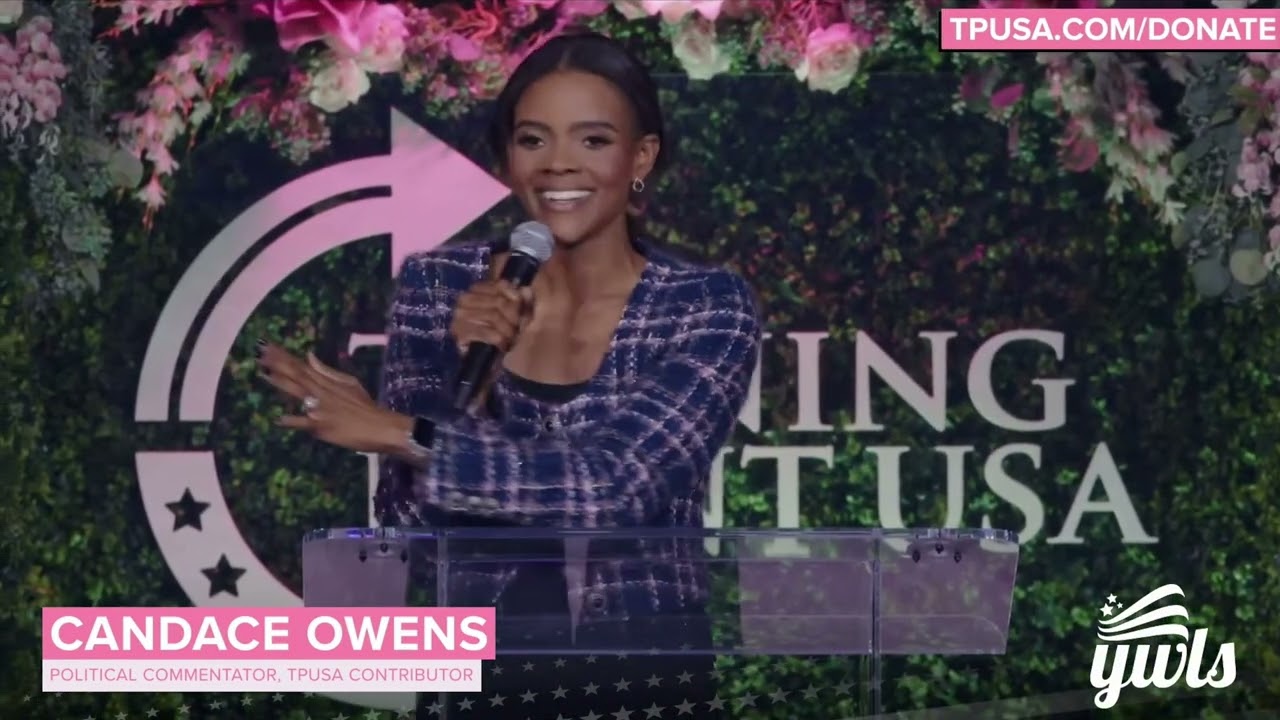
Nick Shirley Responds to Candace Owens Criticism Over Brazilian Favela Journalism and Charlie Kirk Assassination Coverage
Enjoying this? Share it with someone who needs to see it.
Up Next
Nate Freedman Confronts College Students About Charlie Kirk Assassination to Expose Campus Attitudes Toward Political Violence
29:02
Nick Shirley Reveals He Was Charlie Kirk's Last Guest Before Assassination in Utah
9:11
Charlie Kirk and Candace Owens Ambushed by Antifa Mob During Breakfast in Philadelphia
6:43
Nick Shirley Responds to Candace Owens Criticism Over Brazilian Favela Journalism and Charlie Kirk Assassination Coverage
Nick Shirley addresses the controversy surrounding Candace Owens' public criticism of his Brazilian favela journalism. Owens questioned the authenticity of Shirley infiltrating gangs as a young white journalist, suggesting he had handlers or was representing undisclosed interests. The confrontation escalated when Owens attempted to verify details about Shirley being the last live guest on Charlie Kirk's show before Kirk's assassination. While Owens later fact-checked some claims and offered a partial apology, she never retracted her skepticism about the favela reporting, leaving tensions unresolved in the conservative media landscape.
Nick Shirley found himself at the center of conservative media controversy when Candace Owens publicly challenged the authenticity of his Brazilian favela reporting. The incident, which occurred following one of Shirley' videos from the previous summer, sparked a debate about the credibility of young journalists doing on-the-ground reporting in dangerous locations.
Owens expressed her skepticism bluntly in a video response, stating: "Okay, I'm just going to say I don't believe that at all. I'm sorry. I just I I I just it's so stupid. I'm not even going to tell you why I don't believe it. It's like it's like if you don't know that that's stupid that he infiltrated the gang in 48 hours. It's like it's just that's so dumb. I'm so tired of dumb."
She continued her criticism by questioning the fundamental premise of Shirley' reporting method: "That's not how that works, okay? You don't just go up to gangs on the street as a nice-looking white boy with a camera and say, 'Hey, I just want to sort of like see what you're doing here. What's going on?' Okay, this just stop. That's stupid."
Allegations of Handlers and Hidden Agendas
Owens' criticism went beyond questioning the logistics of the reporting. She suggested that Shirley might be working with handlers or representing undisclosed interests, comparing him to actor Sean Penn's controversial journalism attempts. "I'm sorry, Nick. I know you're young. I hope you know, whoever is your contact that has you infiltrating antifa and infiltrating El Salvador at the age of 23 years old. It just feels like Sean Penn young to me," Owens said.
The implication that Shirley had handlers or was representing somebody behind the scenes added a layer of conspiracy theory to the criticism. Owens appeared to be suggesting that the young journalist's access and reporting seemed too convenient or orchestrated to be genuine independent journalism.
Shirley Defends His Journalism Approach
In response to Owens' criticism, Shirley defended his work by suggesting that more commentators should engage in actual field reporting rather than remaining in their studios. "Well, maybe if these podcasters would actually leave their podcast studios and go and like do journalism, like they'd actually see like stuff just sometimes just happens," Shirley responded.
He emphasized that the Brazilian favela video represented the most risky journalism he had undertaken at that point in his career. His defense centered on the idea that field journalism often involves spontaneous opportunities and situations that may seem implausible to those who haven't done similar work.
The Charlie Kirk Assassination Connection
The controversy took another turn when Owens attempted to verify information about Shirley' connection to Charlie Kirk's assassination. Shirley revealed that he had been the last live guest on Charlie Kirk's show before Kirk was assassinated, a fact that Owens was apparently trying to confirm.
According to Shirley, Owens brought up his name in this context and then addressed the topic in a subsequent episode. "She like brought me up. And then like next episode she kind of apologized. But, uh I didn't take it. I didn't take it to heart. I thought that was kind of silly of her honestly," Shirley explained.
Partial Apology and Unresolved Tensions
While Owens did offer a form of apology in a later episode, it was limited in scope. Shirley clarified: "She did apologize. Um not apologize about that, but she said, 'Well, Nick came in and fact-checked about uh what the instance with Turning Point.' But, she didn't apologize about that."
The apology appeared to focus on factual corrections regarding Turning Point USA details rather than retracting her skepticism about the Brazilian favela reporting. Shirley indicated he wasn't personally offended by the situation, though he found Owens' approach questionable.
Conservative Media Support and Stability
Despite the criticism from Owens, Shirley appears to have support within conservative media circles. During the conversation, it was noted that compared to other young journalists attempting similar work, Shirley stands out for his emotional stability and balanced approach to controversial reporting.
One observer commented that Shirley "has been raised well" and is "emotionally, you know, balanced. It doesn't sound like you get rattled. And it's very obvious you're enjoying what you're doing." This stability appears to differentiate him from other young journalists who struggle with the pressures of confrontational field reporting.
The incident with Candace Owens highlights the tensions within conservative media about authenticity, journalistic methods, and the role of young reporters taking on dangerous assignments in foreign locations.