2,422 videos 1,389,747,653 views US Joined Aug 30, 2018
Charlie Kirk is the Founder and President of Turning Point USA, the largest and fastest growing conservative youth activist organization in the country with over 250,000 student members, over 150 full-time staff, and a presence on over 2,000 high school and college campuses nationwide. Charlie is also the Chairman of Students for Trump, which aims to activate one million new college voters on campuses in battleground states in the lead up to the 2020 presidential election. His social media reaches over 100 million people per month and according to Axios, he is one of the "top 10 most engaged" Twitter handles in the world. He is also the host of “The Charlie Kirk Show,” which regularly ranks among the top news shows on Apple podcast charts.
President Donald Trump Confronts South African President with Evidence of White Farmer Killings in Oval Office
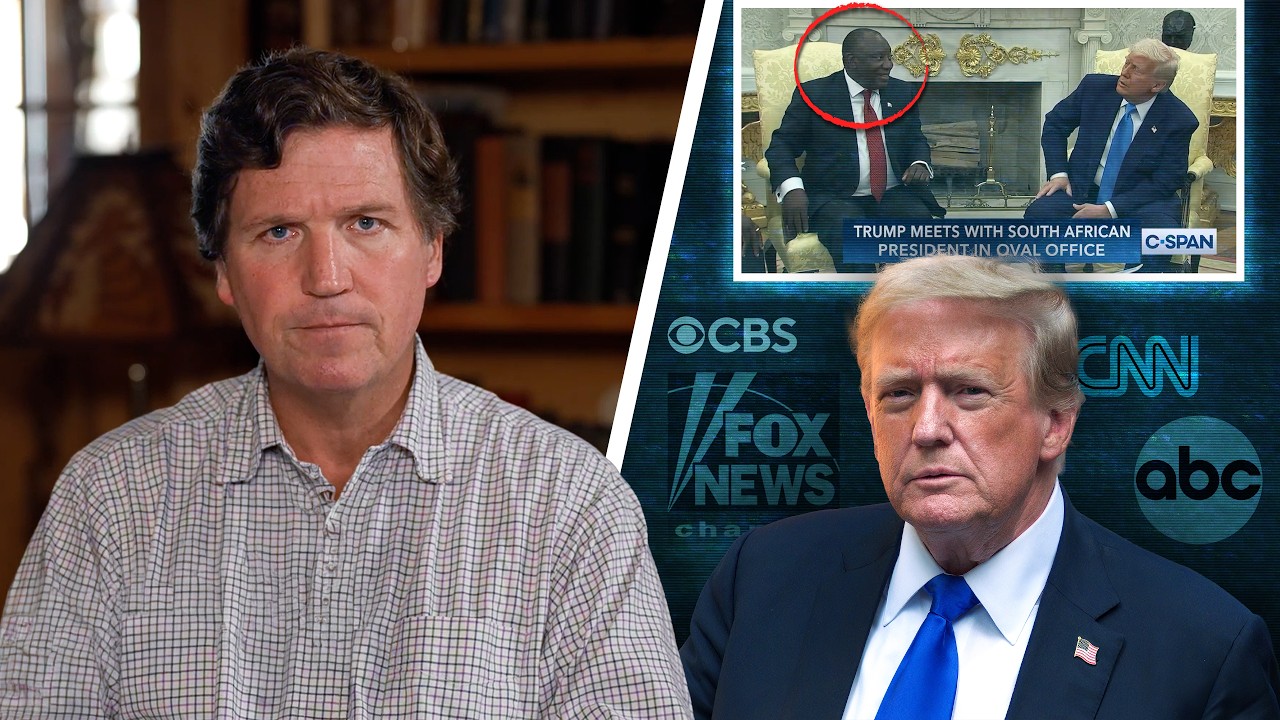
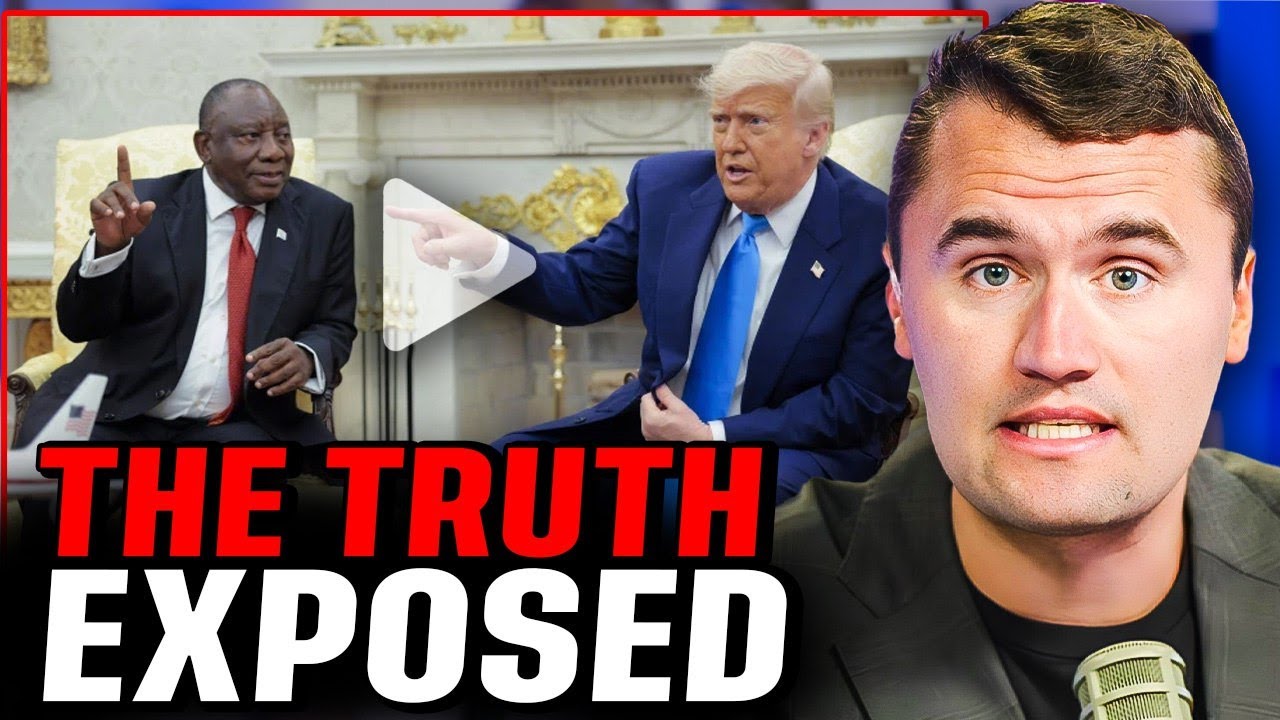
President Donald Trump took an unprecedented approach during a meeting with South African President Ramaphosa in the Oval Office, directly confronting him with documented evidence of white farmer murders in South Africa. Instead of diplomatic pleasantries, Trump dimmed the lights and showed footage of South African political leader Julius Malema leading crowds in chants of "Kill the Boer," presented burial sites of over a thousand murdered white farmers, and handed Ramaphosa a thick file documenting recent deaths. While mainstream media outlets like CNN dismissed Trump's concerns as false claims lacking context or historical understanding, the raw footage speaks for itself. This bold diplomatic move highlights a stark divide between those willing to acknowledge targeted violence against white South Africans and those who refuse to call it what it is, even as the body count rises.
During a meeting with South African President Ramaphosa in the Oval Office, President Donald Trump made an extraordinary decision that broke with traditional diplomatic protocol. Rather than engaging in the usual back-and-forth pleasantries about bilateral relations, Trump chose to confront the reality of what many believe is a targeted campaign against white farmers in South Africa.
Trump's approach was direct and visual. He instructed staff to dim the lights in the Oval Office and played video footage showing Julius Malema, leader of a major South African political party, addressing a crowd. In the footage, Malema can be heard saying there's nothing parliament can do to stop people from occupying land, that they require no permission from anyone, not the president, not anyone.
The presentation included devastating imagery of burial sites containing approximately one thousand white crosses, each representing a murdered white farmer. The footage showed cars lined up on a Sunday morning to pay respects at these graves. Trump made it clear what he was showing: "These are burial sites right here. Over a thousand white farmers."
The Kill the Boer Chant
Perhaps the most striking element of Trump's presentation was footage of Julius Malema leading massive crowds in chanting "Kill the Boer, kill the farmer." The video shows over 100,000 people screaming this chant in unison. Trump presented this not as abstract political rhetoric but as evidence of dangerous incitement that has real-world consequences.
Trump also addressed the legal framework enabling land confiscation, stating: "We have hundreds of people, thousands of people trying to come into our country because they feel they're going to be killed and their land is going to be confiscated. And you do have laws that were passed that gives you the right to confiscate land for no payment."
Media Dismissal and Calls for Context
CNN and other mainstream media outlets quickly moved to dismiss Trump's concerns. Their coverage focused on providing "historical context" for the "Kill the Boer" chant, suggesting it was an anti-apartheid song that only appears literal to those without proper understanding of South African history.
One CNN commentator explained: "There are many who grew up under those years of white minority rule who understands the historical context of this song, Kill the Boer, kill the farmer that Julius Malema has made popular again. It sort of fell into disuse. It's not been that commonly sung after the end of apartheid in 1994, but he's brought it back again to reanimate the issue of the majority of land in South Africa still being owned by white farmers."
Another CNN panelist went further, characterizing the entire issue as fabricated: "So you have these two issues, these two false claims. And this meeting in a way was the culmination of for years now these Africana groups have been traveling to Washington talking to Republicans also talking to this White House and you're seeing the culmination of that lobbying campaign and the amplifying of these false descriptions of the reality on the ground in this country."
The Physical Evidence: A File of Deaths
Trump didn't rely solely on video evidence. He handed President Ramaphosa a large file containing documentation of white farmers who have been murdered. When Trump presented the file, he stated clearly: "Those are all recent and those are all deaths."
Ramaphosa's response was to emphasize the partnership between the United States and South Africa, seemingly eager to move past the uncomfortable confrontation and focus on securing a trade deal.
South African Media Reaction
South African media figures acknowledged that the meeting represented a significant challenge to their government. One commentator, Michael Ore, discussed whether South Africa's delegation was adequately prepared for Trump's approach.
"I have interesting views about whether I felt that South Africa's delegation was prepared or at least prepared enough. I do think that they knew that they were walking into a trap," Ore stated. He continued: "The one thing that's a marker of the US president right now is uncertain, unpredictable and we tend to know that he relies on tricks to prove a point."
Ore's characterization of presenting evidence of murdered farmers as "tricks" reveals the perspective of those who would prefer these issues remain unaddressed on the international stage.
The Broader Pattern of Denial
The contrast in how media outlets treat different situations is striking. While some are quick to use the term genocide in other contexts, when it comes to the targeting of white farmers in South Africa, the response is dismissal, demands for context, and accusations of conspiracy theories.
The question posed cuts to the heart of the matter: "Whether you call it a genocide or not, the facts are white farmers in South Africa have been murdered. A lot of people have tried to cover this up. So my question is if it's not a genocide today, how many do we want to let get murdered so that people around here can be satisfied? Okay, now it's a genocide, let's let a few more. I don't understand."
The media's playbook, according to critics, is to attribute concern about these issues to lobbying campaigns rather than acknowledging the documented violence. The same tactic is used in other contexts when inconvenient facts are presented.
Race-Based Land Confiscation
At the center of this controversy is South Africa's policy allowing land confiscation without compensation. Critics characterize this as "race-based envy-driven political reconfiscation" that punishes descendants for the actions of their ancestors.
The argument is straightforward: Why should a grandchild be punished for what a grandfather did? And not just punished through policy, but targeted for violence and murder? The white farmers in South Africa today are productive, skilled agriculturalists who had no role in apartheid-era policies, yet they face both legal dispossession and physical danger.
Leadership on the World Stage
Trump's willingness to confront an ally with uncomfortable truths represents a particular approach to international relations. Rather than sweep difficult issues under the rug for the sake of maintaining cordial diplomatic relations, Trump chose to use the platform of an Oval Office meeting to shine a spotlight on what he clearly views as injustice.
This is leadership that refuses to accept the premise that certain topics are off-limits or that certain victims don't deserve advocacy because of their race. By bringing receipts, playing footage, and handing over documentation, Trump made it impossible for President Ramaphosa to claim ignorance or for the media to dismiss the issue as unfounded.
The meeting stands as a clear example of using the power and platform of the American presidency to speak for those whose voices are being silenced and whose suffering is being minimized or denied entirely.