Up Next

Jordan Peterson Debates 25 Atheists on God, Morality, and What Atheists Reject Without Understanding
1:28:44

Allie Beth Stuckey Defends Biblical Marriage and Abortion Ethics Against Twenty Liberal Christians in Intense Dialogue
1:40:34

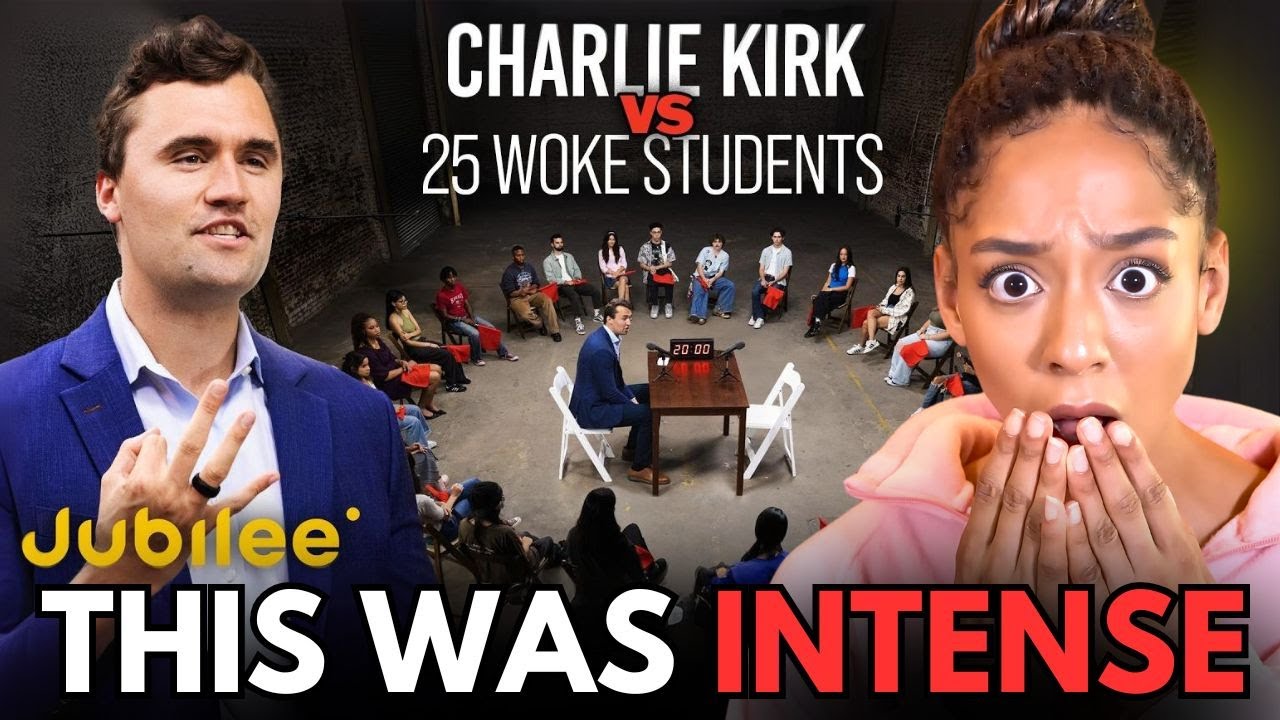
Charlie Kirk Debates 20 Woke College Students on Abortion, Kamala Harris, and Border Security at Jubilee
2:03:23
Retired Police Officer Kevin Donaldson Faces 20 People Accusing Cops of Racial Profiling and Excessive Force
Retired New Jersey police officer Kevin Donaldson sits across from 20 individuals who challenge his claims about police accountability, use of force, and racial profiling. The debate grows heated as participants share personal stories of harassment, brutality, and trauma at the hands of law enforcement. From the Sonya Massey shooting to allegations of systemic racism in South Central LA, Donaldson defends police training and accountability while acknowledging problematic officers exist. The conversation explores mental health responses, sexual assault victim treatment, qualified immunity, and whether most cops truly are honorable and selfless. Both sides grapple with deep pain, mistrust, and the question of whether healing between communities and police is even possible.
The Debate Begins: Lethal Force and Accountability
Kevin Donaldson, a retired police officer from New Jersey, opened the debate by claiming that cops only use lethal force as a last resort. The statement immediately drew pushback from participants who cited numerous cases where officers appeared to use deadly force prematurely. One participant referenced the Sonya Massey case, where a woman holding boiling water was shot after saying "I rebuke you in the name of Jesus." Donaldson acknowledged that particular officer was "100% wrong" and that the woman was too far away to pose an imminent threat.
The conversation turned to Derek Chauvin and George Floyd, with one participant claiming that before Chauvin murdered Floyd, police officers weren't being held accountable. Donaldson strongly disagreed, calling this "a statement straight out of the news media's mouth" and insisting officers had accountability before that case. However, another participant countered that Chauvin was "the first cop that I can think of in my lifetime that actually went to prison for the crime he committed."
Discussion about the use of force continued as participants brought up cases of officers shooting people in the back. A participant from East Los Angeles described a young boxer he trained who was shot four times in the back after taking a swing at an officer and running away. Donaldson stated unequivocally that shooting someone in the back is illegal unless that person is actively shooting back at officers, and that such officers would face jail time.
Training Deficiencies and the Need for Better Preparation
Multiple participants raised concerns about inadequate police training, particularly regarding de-escalation and physical skills. Donaldson agreed with these criticisms, stating he has been saying for years that every cop should be "at least a purple belt in Jiu-Jitsu." He explained this would accomplish two goals: giving officers the physical ability to handle confrontations and building the confidence that comes from knowing you can handle yourself physically.
The conversation about training expanded to include mental health response. A participant who had been a 5150 hold as a 16-year-old described being treated like a criminal for being suicidal, handcuffed to a hospital bed, and placed in rooms with much older patients. The participant mentioned Christian Hull, who was shot seven times by state troopers in 2020 after holding his hands up for 14 seconds during a mental health crisis.
Donaldson acknowledged that until about 15 years ago, police officers lacked proper training on what he called EDPs (emotionally disturbed persons). He agreed that training remains insufficient and called this "unacceptable." He emphasized that more money needs to be invested in resources to train officers on handling people experiencing mental health episodes, as this has become a "growingly identifiable issue."
Qualified Immunity and Officer Accountability Systems
The discussion turned to qualified immunity and the protections officers receive. One participant questioned how officers could get away with shootings because of these legal protections. Donaldson responded that to the best of his knowledge, qualified immunity was taken away "quite some time ago for good cause," emphasizing that "nobody including police officers is above the law."
He cited the example of Steve Carr and Lou Eppolito, who were mob hitmen for the NYPD for years before the law eventually caught up with them. However, he acknowledged it "just took too long." Donaldson argued that police are held to a higher standard than everyone else, pointing out that if he as an officer took a swing at someone, he would lose his job, whereas a civilian might only spend a night in jail.
Participants challenged whether internal investigations provide real accountability. One asked how many times investigations are conducted by outside agencies versus the department itself. Donaldson said that in New Jersey, every shooting is investigated by an outside agency, and he believes this is the standard in most places. He also mentioned that his friend was under indictment for murder for 15 weeks even though the shooting was captured on video and proven to be completely justified.
The Problem of Bad Cops and Department Transfers
The Sonya Massey case came up again regarding officer Shawn Grayson's history of working at six different departments. A participant from the city demanded to know how an officer with such a problematic record could keep getting hired. Donaldson called this "red flag number one," stating that constantly hopping departments clearly indicates a problem.
Donaldson repeatedly emphasized throughout the debate that "nobody hates a bad cop worse than a good cop" because bad officers make everyone else look terrible. He acknowledged there are "certain people that should never be cops" - people who were "shoved in lockers in schools" and have a complex about authority. He stated that the cops who should be officers know exactly who these problematic individuals are because they have a "God complex."
When asked about officers who get fired from one department and simply move to another, Donaldson acknowledged this happens and shouldn't. One participant pointed out that even after misconduct is revealed, officers can sometimes find work in a different county despite having a history of discriminating against Black and brown people.
Racial Profiling and Treatment of Communities of Color
The most heated exchanges came when discussing racial profiling. A participant from South Central Los Angeles stated directly: "I think you guys get trained to do that and on top of that you humiliate our people, the brown and the blacks. That's your job." Donaldson asked what training would teach officers to racially profile, to which the participant responded it "goes without saying" and described being stopped constantly just for walking down the street, especially humiliating when it happened in front of his kids.
Donaldson asked if the participant had ever done anything wrong that officers didn't catch him for. When the participant acknowledged this had happened occasionally, Donaldson asked why police can't claim the reverse - that they didn't catch him when they should have. The participant described cops coming into neighborhoods, causing damage, and leaving without any care for the community.
Discussion turned to why Black and brown people are disproportionately incarcerated. Donaldson attributed much of this to economics, explaining that people with expensive lawyers are more likely to avoid conviction, while those from lower socioeconomic classes cannot afford high-priced attorneys. He called the legal system flawed because it's run by humans, and "the one universal truth about human beings is they're flawed."
Gang Units and Aggressive Policing Tactics
A participant from Los Angeles specifically called out gang unit divisions, saying the majority of those officers are bad and "put a bad name on cops period." The participant described seeing cops "allow it" when their colleagues act improperly. Another participant accused police of acting like gang members themselves, even using slang to talk to community members.
When asked if police academies teach officers the difference between ex-gang members and active gang members, the conversation became tense. The participant argued that reformed gang members still get pulled over and harassed. Donaldson responded that if someone gets pulled over while doing nothing wrong, they should "thank the police" because officers are looking out for the community, trying to reach those who haven't changed their ways yet.
This response was met with strong disagreement. The participant said officers rarely have a reason when asked why they made a stop, and attributed it to his appearance and skin color. Donaldson countered by describing his own experience being pulled over in Alpine, New Jersey, a wealthy neighborhood, while driving his friend's Infinity, and being ripped out of the car. He maintained that "if you're not doing anything wrong and you get stopped then nothing's going to happen to you."
Sexual Harassment Within Police Departments
A female participant from North San Diego shared a story about a friend going through the sheriff's academy who experienced significant sexual harassment from instructors and peers. She challenged Donaldson's claim that most officers are selfless and honorable, asking how to tell the difference between good officers and those who harass colleagues.
Donaldson acknowledged that female officers are "so essential to police departments" because male officers cannot search female suspects. He praised female officers as "Dynamite at what they do" and "way tougher than I am." However, he suggested that in the highly male-dominated field, female officers sometimes feel pressure to be "one of the boys" and engage in inappropriate workplace conversation, which then gets reciprocated, leading to someone getting angry and filing harassment claims.
The participant pushed back, noting her friend's harassment came from instructors with years of experience, not fellow recruits. Donaldson acknowledged that instructor harassment is "never okay." When the participant said her friend felt she couldn't speak up due to fear of retaliation, Donaldson offered to teach her "how to use her voice very loudly" and said the friend should call him. He explained that while internal policies exist for reporting harassment, the problem exists across many professions, not just policing.
Media Coverage and the 0.0001% Narrative
Donaldson repeatedly argued that the public only sees the worst of policing because media doesn't cover the 99.99% of positive interactions. He stated that a cop saving a two-year-old with CPR or helping an elderly woman with groceries isn't newsworthy on a national level, but a cop doing something wrong gets covered by every station in the world.
One participant strongly challenged this, asking why we see "so many incidences over and over and over on the news daily across the country" if it's really just a few bad apples. Donaldson responded that with approximately 700,000 police officers in the country, even 70 bad incidents represents a tiny percentage. The participant countered that 70 is still a lot and that police have a different role than office workers - they have weapons and power and are supposed to protect and serve.
The participant shared that from his personal experience, "the majority were on a power trip and treated people shitty over time." He accused Donaldson of asking cops to be perfect. Donaldson responded he wasn't asking for perfection, just reasonableness, and maintained the real percentage is closer to 0.0001%. The participant insisted that before Derek Chauvin, cops weren't being held accountable, a claim Donaldson called "straight out of the news media's mouth."
The Psychological Toll and Lack of Mental Health Support
Donaldson opened up about the psychological impact of police work, revealing he had "that gun in my mouth" and understood suicidal ideation personally. He explained that the average person experiences between two and six critical incidents (worst days of their life) in their entire life, while police officers see upwards of 800 such incidents during a 20-year career - "your worst day times 400."
He acknowledged that this takes an enormous toll and identified a huge problem within police departments: the stigma around mental health. Donaldson explained that when he was on the force, if an officer went to his boss and said he was having wicked nightmares, they would take his gun and put him on desk duty rather than simply letting him talk to someone. He called these "institutional problems on the police force."
Multiple participants noted that cops become hardened over time, similar to how criminals do. One participant, who had done time, explained that criminals get hardened from dealing with cops frequently, and cops have the same experience - they cruise around, target people, and over time stop liking dealing with the public. Then they pass their attitude on to new recruits, creating "a pile of you guys" with the same mentality.
Sexual Assault Victim Treatment and Changing Protocols
One of the most emotional moments came when a participant shared her experience of being kidnapped and raped for 12 hours at age 19. She described being found by police but feeling interrogated rather than helped. Still covered in her attacker's urine, she was taken to an interrogation room where officers asked questions like "was it his left hand or his right hand?" without any trained professional offering empathy.
She explained the experience was so traumatizing that after being admitted to the hospital and released, she attempted suicide and told her mother she wished she hadn't survived. She was then required to return weekly to provide more details and have her injuries photographed, each visit feeling like "an out-of-body experience."
Donaldson acknowledged that officers asking questions like "what were you wearing" - while intended as factual information gathering - could be perceived by victims as victim-blaming. He explained that police departments are now implementing new training specifically on sexual assault that approaches cases from a victim's or survivor's perspective (noting he doesn't like the word "victim"). The goal is to help officers approach survivors with more sensitivity, which makes survivors feel more comfortable and understood, leading to better information and stronger investigations.
The Power Dynamic and Civilian Rights
A particularly passionate participant accused police of being "predators" who are "seeking and destroying" rather than serving and protecting. He argued that officers "rip apart the very fabrics of the community" and act entitled because of their badge. He pointed to cops using lights to avoid traffic, intimidating people, and clicking their gun open when people invoke their rights.
The participant emphasized: "We don't need you. We have our own rights. We have our own rights to carry. We pay our own taxes." He pointed out that citizens pay for the very things police use against them, including officers' salaries. He accused police of acting like they can get away with anything and justifying it because their word is believed over civilians' word.
Donaldson responded by asking what the participant does with his life and why he hasn't chosen to change the system from within. The participant explained that cops made him who he is - he felt like a criminal because of how they treated him based on his appearance. However, he also shared that one police officer changed his trajectory when he was young and stealing everything he could. That officer asked "what are you doing with your life?" and that single statement made him want to change direction.
The Judge Police Harshly Claim
When Donaldson claimed police shouldn't be judged so harshly, participants pushed back hard. One pointed out that cops have the highest divorce rate of any profession, questioning how "honorable and selfless people" could have that distinction. Another stated their tax dollars pay officers' salaries and also cover lawsuits when officers commit misconduct, so harsh judgment is warranted.
This participant made a clear distinction: "If it was somehow provided by private funding I feel like they shouldn't be judged as harsh, but my money is going towards the police department. That's why I judge so harshly." Donaldson acknowledged this was fair and said he tried to hold himself to a high standard knowing he represented the community. He described the weight of seeing 800 critical incidents over a career and called it "a cry for help to fix this, fix us internally so we can avoid these lawsuits."
One participant insisted cops are not honorable at all - "they're just a bunch of cowboys and we're just the cattle." When Donaldson challenged this person to join the force to change it, the participant explained he used to want to be a cop as a kid, but his experiences changed that. Donaldson emphasized the importance of teaching the next generation to go into policing to fix the broken parts, stating "if you see the system as being broken and you stand by and you're silent, you're complicit."
The Force Continuum and Fighting Fair
When participants accused police of harassment and creating terrifying situations even when there's no immediate threat, Donaldson stated plainly: "We don't fight fair. Police aren't paid to fight fair." He explained that policing "isn't take off your badge and put your gun down. This is a job. Our job is to protect the streets."
He elaborated that when officers see something, they're pulling people over because "we're looking for something. You might not be that person but we're looking for something." He insisted there's no reason to be terrified of police and that the fear people feel is taught to them by whoever raised them, because "police are there to protect you, they're not there to terrorize you."
This perspective was met with disbelief by several participants. One pointed out they've watched cops driving down the street and seen parents pick up their kids in fear. Donaldson attributed this to parents teaching children to fear police. When pressed on why officers call for backup so frequently - "25 people to pull over one guy on a bike" - Donaldson reiterated that police have radios to call other people "so we don't have to fight."
The Question of Racism and Bigotry
One of the most confrontational exchanges occurred when a participant stated directly: "I hate cops." Donaldson asked if the participant was racist, clarifying that he was asking because "the definition of racism is treating a group of people differently by the way they look or what they do." He noted it's actually bigotry, then explained that hating all cops because of bad interactions with some cops is irresponsible.
The participant explained that police killed his cousin - he was having sex with a girl in a park when officers assumed he had a gun and shot him. When Donaldson suggested maybe the cousin was "well endowed," the participant wasn't amused. The participant insisted: "Most of us getting killed every day." Donaldson challenged this mathematically, pointing out that if the Black population is about 17% of 320 million Americans (roughly 50-60 million people), then "most" would mean over 25-30 million people getting shot by cops, which clearly isn't happening.
Another participant challenged Donaldson's claim about judging by appearances, pointing out that Donaldson judged her the moment she walked in. Donaldson agreed completely: "Everyone judges appearances. The moment I saw you walk in I knew you were the cop." He mentioned his white skin, American flag tattoo, and arriving early as giveaways. He acknowledged everyone judges everyone, but emphasized that he treats people with respect and expects respect back, though "if you're going to be a dick to me, boy I can sure be a dick."
Finding Common Ground and Moving Forward
Despite the heated exchanges, moments of genuine connection emerged. The participant from South Central LA who had been most hostile to police acknowledged: "You guys made me stronger. You guys made me who I am today, but I would have liked to have gone in a different way." He mentioned spending nine months in jail for marijuana possession for something he didn't do, saying "it's time to change all this."
Donaldson responded: "The beautiful thing is brother, you and I still got some air in our lungs right? We're not dead yet. You and I have a chance to sit down at the table and work together and that is where things start to get fixed." He emphasized: "As long as I have air in my breath I'm never going to give up. I will never give up on you. I don't care what you did. Everybody has a chance to change their life."
The participant acknowledged there needs to be "a lot of reparation towards the people" and that pain still exists in communities that hasn't healed. Donaldson pointed out that the participant had already gone from "victim to victor" by not letting cops live in his head rent-free. He praised the participant's work with the next generation, noting that while he's "on the back nine" of life, what both of them can accomplish with young people is "amazing."
Reflections After the Debate
In post-debate interviews, participants reflected on the experience. One noted that the majority of comments came from watching videos and being "spoonfed information without having to develop their own personal opinions from firsthand experience." However, those with firsthand experience "really impacted me more." Several participants acknowledged that Donaldson was "clearly a reasonable guy" and that's why he was good at arguing - he was "a little more compassionate, a little more open-minded" than cops they'd typically encountered.
One participant said that if Donaldson had been the responding officer during any of their crisis situations, they would have "felt a lot safer." Another appreciated learning that "real good cops hate bad cops," saying "that was like something that hadn't caught my attention before." However, this same participant concluded: "Because Kevin is a cop I can't see him more than that. We can't be friends. We can't go any much further than that in that aspect and it's sad to say but that's just how I feel."
Donaldson reflected that he appreciated "everybody bringing up the deficiencies within the police because believe it or not police officers see the deficiency in the police department and there's steps being taken actively to erase those things." He concluded: "I'm always going to be one-sided towards the police cuz I've done that job, but I think listening to the other side is really how you get a well-rounded perspective on something. By approaching things with an open mind - say hey listen I'm here, teach me something, I'm not going to be resistant to it - I think you can get a lot of stuff accomplished and I think that's how discussion should be had."
Video Transcript
until Derek chovin murdered that dude George Floyd people were not being held accountable cops were not being held accountable that's not true it's not a false statement it's you're telling me there's the police officers before Derek chovan had no accountability very little no very little wrong very little accountability wrong I'm Kevin Donaldson a retired police officer from New Jersey and today I'm surrounded by 20 criminals my first claim is that cops only use lethal Force as a last [Music] resort so I don't know how many times I've seen instead of them try to deescalate the situation they just pull out the gun they maybe say a couple commands and if things don't go their way they use a weapon I saw a video where some lady was picking up some boiling water she's obviously not okay in the head and the cop took it upon himself to threaten lethal force and the woman like I said wasn't all the way there she threatened to use the the sculling want to throw it on him and he just immediately shot her do you want me to tell you the the parts of that video that were wrong I least you hear your say yeah oh yeah okay so the cop was 100% wrong on that one from what I've seen but we also got to remember there's always more to the story than you see on video those of you out here Rodney King okay Rodney King there was a lot of footage there where Rodney King who's 6 foot7 who is high on PCP who led the police on a chase and he won't stop he won't follow command so there's more to that story this one unfortunately from what I've seen that cop is 100% wrong and I will call that cop out that woman was too far away she had boiling water and she said something about uh in the name of the in the name of Jesus I do I bless you something like that is that not youth using lethal Force when it wasn't necessary yes yeah so that just defeats the the whole I actually agree with you the only time you can use lethal force is when your life or somebody else's life is an imminent threat of death or serious bodily harm his life was doesn't meet that criteria yeah there's always gray area like for example do you remember that one time that some lady she went lady cop she went to pull some guy out of the car instead of grabbing her taser she used her gun well the threat level on a woman going against a guy say say if there's a Foot Woman going did she not use lethal Force when it wasn't necessary she but her Threat Level different she was trying to use her taser and she ended up using her gun well I was I was in an ER I was in an era before tasers so I can't speak to that however A Woman's Threat Level is different than a man's Threat Level yeah but that's your experience but I mean we're talking about facts here facts are she went and used her gun instead of using her taser so I didn't see the video so I'm trying to go on what you're what you're telling me but I am telling you there is a force continuum there is constructive Authority that's a good one let's [Applause] go well crazy thing about it you just went back with a statement right now by saying that he shouldn't have shered in the original statement you said cops don't use lethal Force until they have to but then you said that was a case where he shouldn't have used lethal force and he did there's plenty of cases I'm I'm sure you've seen them where cops use lethal fortun they shouldn't have I get it sometimes they may be scared for their life even though the situation doesn't deem it to for for wom to be scared for their lives sometimes they are but I feel like that's all in training now that's where training should be more because there's lots of cops that are just so jittery and so trigger happy when they shouldn't be when people are just doing regular things you're 100% correct my friend you're 100% correct I've been saying this for years that cop should be at least a purple belt in Jiu-Jitsu that's going to do two things it's going to allow you to be able to handle yourself but it's also going to be the confidence that's instilled within you in order to be able to handle yourself the vast majority only use lethal Force as a last resort but there are occasions where let's face it there are certain people that should never be cops I'll be the first one to tell you that they got shoved in Lockers in schools they have a complex about them trust me the cops who should be cops know EX exactly who those people are they have a they have a God complex and they shouldn't they should have never got that job so I'll be the first one to tell you that and the thing is once something happens where that cop that should have never had that job shows they should never have that job a lot of times they never get fired and if they do get fired they can somehow just go to a different department and still work and I'm not sure if that's true but from what I've heard accounts people can let's say get fired from one County go to the next even though he has history of going to black and brown people discriminating them he still can have work or he can be paid leave I paid leave is crazy to me because you can shoot somebody and then get paid just to sit at home that's crazy to me but what do you think on that what do you think that's something that should happen so that particular cop you're talking about that video he's in six different departments that should have been red flag number one yeah okay you don't just keep hopping departments there's obviously a problem there paid leaves something different you sign a contract on this particular job and that contract states that you are working until you either retire or you're terminated so paid leave is you're basically out on an injury I was out on an injury because there are wounds Beyond gunshot wounds that will screw you up way worse than being shot and trust me on that one definitely might as well raise your flag this too much talking bro thank you all right brother [Music] I come from the city of East Los Angeles police officers are shooting them in the back a kid who I train as a little boxer took a swing at officer yes took off running and has four gunshots in his back and then other videos are coming out shot in the back so they don't have to run after them okay and what happened to that officer who shot the gentleman in the back on paid leave okay pending investigation If he if he truly shot that person in the back and with all the cameras around here the truth will come out if he truly shot that person in the back he's going to jail he's giving up his freedom all right you cannot shoot somebody in the back the only time I've ever seen that past grand jury is when somebody was had a gun shooting back at him like this it's the only time I've ever seen that so why does it continue I mean yeah why does it why there's too many cases whether it be East Los Angeles whether it be everything and it's not just beating it's you guys are shooting them in the back we're not not all police shootings happen in the back it does happen but not all you're you're generalizing again you can't say all police shootings happen in the back enough that just causing attention to us is is bringing attention if something is not serious and it doesn't bring attention but obviously this debate is happening because it is happening if we don't admit there's a problem how can we fix a problem if a police officer shoots somebody in the back without probable cause without justification they are going to jail they are losing their job their family gets embarrassed and they are spending the rest of their life in prison here's what it is we have to take it to Cil court because law [Applause] thank s how how do you feel about qualified immunity qualified immunity you're talking about police officer being indemnified for their their crimes but can you give me an example so I can defend it a little bit better I I started off with that cuz I feel like some officers even though they might not want to like shoot I feel like nobody wants to kill nobody right that's like the last option but I feel like they they they can like get away with it because of these protections that they have uh so the best of my knowledge qualified immunity was taken away taken away quite some time ago for good cause for good cause um nobody including police officers is above the law you can't just go out and kill people have they done it 100% uh Steve car and Lou EPO were mob hitmen for the n ipd for years but guess what the law eventually C caught up to him it just took too long qualified immunity it should have been something that's never there because police are held to a higher standard than everybody else are they absolutely so gentleman prior to you said the the young man took a swing at a police officer well what happened if this police officer just went up to somebody and took a swing at them they're going to lose their job now the person who took a swing at them yeah he might spend a night in jail if he gets caught but other than that there's really no real consequences I'm I'm just saying though like they they have these protections and they have these uh resources for them like uh most like investigations when you said you said something about uh paid leave right and there's an investigation how how many times is that investigation from like an outside agency versus like the department you know in in New Jersey every time so it's it's internal right no it's every time it's an outside agen right but would you say that's like the standard for everywhere else you know most of the time it is most cops they get away with it because of like they they make excuses like even um in the case recently where like the the lady with the boiling water she threw it towards the cop that was wrong everybody knows it was wrong but then there's still people trying to fight and and defend that so you can't say that they don't have protection you know well of course they have protection they they you know every every defense attorney is hired by their client even though their client might be guilty as hell every defense attorney has a duty to defend their client whether it's a union attorney or whether it's a private attorney it doesn't matter they're going to have to protect their client and now sou but the internal investigation they will go harder on you my my very good friend was under indictment for murder for 15 weeks even though everything was on video and it was a totally clean shoot totally clean shoot proven still 15 weeks with a murder indictment hanging over his head so there's really not qualified immunity the the the oversight over top of police shootings is so much more than everybody sees I [Music] TR how you doing so on the same topic of I believe Sonia bless her soul because that was pretty bad so this is what I heard he had two DUIs he was transferred and the guy that was responsible for him the sergeant said he didn't do was due diligence and do what he was supposed to to make sure that he was supposed to be on that department that's a problem and then the other problem is why didn't the officer pull his gun on him and tell him hey dude chill they knew that that lady had schizophrenic Tendencies and the mom even asked to said that she said can you send somebody that will deescalate and they sent a hotthead over there and that guy didn't take no responsibility and you see how that doesn't help your standpoints when you're trying to make a difference and then this guy won't take responsibility and and that other cop there too he didn't even say nothing so I'm like I'm like what would you do in that situation if an officer was because you knew that was wrong right absolutely this is why I'm going to say it again I'm going to probably say it a dozen more times nobody hates a bad cop worse than a good cop because what that guy did looks bad on everybody okay now everybody has to Bear the brunt of his poor decision that Sergeant who was there or the other officer who was there on scene he has to live with the fact that he did not act trust me when I tell you the punishment for that crime will go far beyond what the media is going to say it'll go far beyond what you think and what everybody in this room thinks he's got that that woman's soul on his heart for the rest of his life I agree that is and there was a second part of your question which escapes me the guy that's in charge of putting that Deputy in in that department said he didn't know about his past I I believe I I heard the statement and he's like well I didn't I didn't know what kind of answer is that that is not an answer it's not an acceptable answer police are held to a higher standard which we should be held to a higher standard okay they need to do their due diligence on who they're bringing in because that police officer has an enormous amount of responsibility soon as they hit the street and he said it with so much desensitized attitude I I'm sorry but like I I've met good and bad and that was kind of like bro you're giving more fuel to this to this whole argument of there's good Cod bad cop we don't see it when we see that and the media loves to bring that up which they do because now we have all of Technology now right we could see everything I'm sorry to cut you off but if you look at the George Floyd thing okay the officers that were standing around they lost their job for failure to act the failure to act if I was in a murder if I was in a car with a murder would I not be charged in that murder you would be charged as an accessory and I believe they were charged I I do believe they were charged now now I have been in situations where one in particular where there's a car chase everybody's adrenaline's ripping and everybody in this room who's had their adrenaline ripping it's hard to dial it down I watch rip guy out of the andam him to the P once they got him and you know what I did you know and you can hear it on camera there's actual proof of this I slapped cuffs on this guy and I said he's cuffed it's over okay all right because I knew this guy was going to get it because the their their adrenaline was high he rammed the police car there was a whole bunch of other things involved there I have a duty to protect those who can't protect themselves first person I protect I'm going to tell I'm not going to you here first person I protect is myself of course but beyond that I am willing to be My Brother's Keeper so once he's in custody he is my brother I am his keeper all right and I am responsible for his safety if he dies under in my custody it's on me so that other officer getting back to the video that other officer he's got to live with that he's got to live with that but not every but again human police officers are human beings humans are flawed humans are fallible do you think there's something that we have to break inside the police system about that it's code right no it's not code you guys don't have code what do you mean you're talking about The Thin Blue Line I don't know I I would see I would I would assume you had code but I appreciate you sharing Hi how are you I'm good how are you um since there's only a minute left I just wanted to bring up something you said like oh if a kid that was like shoved in lockers becomes a police officer off like he has an agenda like don't you think there should be more like scanning or training done in order to become an officer how would you do that I mean like other jobs like there's so much more training and like yeah other jobs there's much less training than police officers there's no way if there's these people that are coming through that have an agenda that are going to just shoot someone based off so they haven't inv invented the Mind raing psychologically we go through psychological examinations okay and until we get that and develop that mind reading tool these people are going to slip through the cracks it's a fact of life there are people who just shouldn't be police officers you don't think that there could be more to scan people how I don't know but I just feel like that that's the that's the big question is how because we go through multiple psychological exams we go through the wonderlick test the mmpi which are 500 question tests a piece extensive psychological backgrounds so beyond that what are you going to do yeah there's no way to tell it's unfortunate but guess what those cops who know those guys those who can see those guys that got shoved in lockers they know yeah they know all right thank you hey there I know trying to find a middle ground during a passionate debate can be a bit frustrating and honestly it seems like we're just circling the same points right but when it comes to the unexpected like you've been in a serious accident there's no debating that you need help and that's where Morgan and Morgan comes in no matter who you are and what you believe in America's largest injury Law Firm is always on their client side Morgan and Morgan specializes in a wide range of personal injury cases and have won thousands of big cases just recently Morgan and Morgan has secured verdicts of $12 million in Florida and $26 million in Philly that's up to 40 times the highest insurance offer I'm telling you your case can be worth millions the best part it's all free unless you win your case and working with them is all done from your phone without the need to visit any offices if you've also been a victim of a personal injury or any other serious accidents you can visit ww. forthepeople.com Jubilee found in the description below to start your free claim today thanks to Morgan and Morgan for sponsoring this portion of the episode now let's get back to it most cops are selfless and honorable [Music] people no I don't think these cops are honorable at all I think they're just a bunch of cowboys you know and we're just the cattle and they're just out here to HT us into jail and that's it you know we need people to help us not act like like thugs they're the THS to us they're the the scary monsters so why why wouldn't somebody like yourself who has those views take on that responsibility to change that system I did you know when I was a kid I I would always say I I want to be a cop or a movie star cops made me who I am by the way I look I felt like I was a criminal because of the way they act acted towards me you know until one day I realized you know I'm not the bad guy something you don't know about me I grew up in a neighborhood full of criminals when I was younger I stole everything I could get my hands on and then one day the light clicked on because of a police officer he came up to me and he said what are you doing what are you doing with your life and I watched that police officer take a young kid with that one statement that one simple statement and change me around to want to go the other direction and be it goes back to what I was saying we need more cops like that that that will steer us the right way and that's why I I I I challenge you and I challenge everybody in this room I challenge you to teach your children it might be too late for for all of us I I'm doing that just by being here challenge your children to take on that debt to take on that weight if you f if you see the system as being broken and you stand by and you're silent you're complicit we teach the Next Generation no you need to go into this because you need to change it either teach the Next Generation or teach the cops well the cops right now some of them that's going to be a difficult task the solution will be to just um teach the cops better training and teach these kids what kind of training would you give them uh mental training they need a lot of that you said they need more training jiujitsu which I do believe yeah you're 100% right but also the mental training I I'm I'm in agreement with you there because the mental stresses of this job are why people are getting why they're getting super aggressive on the street a lot of it not all of it are why they're getting super aggressive so we are all we are all victims to becoming what we see police see no we're the victims you guys are are well no everybody I'm talking about everybody is a victim of what they say if you saw death and horor nobody's calling the cops because their kid graduated high school but you know no you know you're trying and twist this around but yet theop cops do victimize a lot of us you know and they make us think that we're just evil people all the time and so they're not honorable but you're victimizing the cops in much the same way a job like that is any honorable like shooting people in the back and having your colleagues like get away with may not not not um go they go to jail if they shoot people in the jaet but there's no honor in being a cop there isn't there is a lot of Honor in being a cop you can't give any man any power like that and then notuse it when you're willing to give your life for somebody who doesn't you don't know who hates you when you're willing to do that that's honor I think they do it for fun honestly no nobody's willing to give their life for fun that's all I gota say about [Music] that I think a more selfless and honorable career would probably be social workers or something that's not so you know rooted in violence and power I mean if you want to help people go to policing they've tried to make social workers First Responders and doesn't work cuz a social worker is going to take two or 3 days to show up to a domestic dispute doesn't work yeah okay they might be coming in as a secondary response as a second responder But First Responders are your soldiers they're they're your they're your Frontline soldiers why don't we need soldiers in our own country we're supposed to be United okay just all you got to do is tell the criminals to stop doing crime okay all right so if you can get the criminals to stop doing crime we can get rid of the police okay this is true okay saan thank [Applause] [Music] you so I have a a personal story actually um I'm from like the North San Diego area and a friend of mine she was actually uh trying to be a sheriff with the San Diego uh sheriff's department and she told me a story how like when she was going through the academy and stuff how her instructors her peers um she was dealing with like a lot of sexual harassment so when you tell me that all officers are most most okay most most are selfless and in honorable how do we tell the difference between those people and the people who were harassed in my friend and and countless other uh female officers and maybe even male officers too I don't know so I did serve at one point um I was in the Army so I know like it happen about morale gear I I do but I I know like it happens you know and you got to like you got to check your people so you can tell me that all cops or most cops right are just these honorable and selfless people like what do you say about that so you're you're talking about specifically with with sexual harassment female officers are so essential to police departments now because I'm going to be honest with you I don't want to I don't want to have to I can't go search a female so we need those female officers to do that stuff most female officers I know are Dynamite at what they do they are way tougher than I am so here's the big problem with sexual harassment I'm going to tell you what happens you you're in a highly male-dominated field the female police officers they feel like they they need to be one of the boys so they start engaging in conversation that is not applicable or not appropriate for the workplace and then what happens the other officers give it back somebody gets pissed off next thing you know there's sexual harassment in the police academy that's kind of a different thing these are how's it different because these are young these are I'm not saying it's right it isn't right but these are the instructors who have years of experience these people Oh I thought I was talking spe I was talking specifically about the other recruits okay the instructors no that's never okay the world is not a perfect place I I know it isn't but you it's just it sets a bad example you know like a lot of people don't want to get in there and um be officers let alone uh serve or do anything for their country because of uh stuff like that and it's really prevalent in in police departments I feel like cuz just from the example I told you about how my friend how she dealt with that so like I had said earlier somebody like your friend sees a problem in there now if she's on the inside it's her but she feels like she can't speak up because like she's going to get retaliated against quit quit Pro have her have her call me I will teach her how to use her voice very loudly I I understand that but it's not that simple for most people so you can see like uh most officers on the outside like I don't know you I assume like you're a good person but then we don't know most days most days we don't we don't know like how an officer is going to treat like a like a female or like another male or something like it's just like any other job okay just like just like when I go in and order a pizza I'm I'm I'm more likely to get harassed or like profiled or you treated differently for ordering a pizza no no no no so it's go into go into a corporate office setting sexual harassment has run rampant over the years yeah there's no Hollywood you don't get shot for it you don't get she didn't get shot for well she didn't but like it's it's a thing like your career can end but the the stakes are higher with police officers because of what you guys can do like and your training now think about it from a M's perspective if I see female getting harassed first of all it's my duty to speak up correct and I would speak up and I have spoken up but think about most police most male police officers if they speak up they're going to be ostracized they're going to be a pariah do you guys have like a system in place then for like uh Representatives that can go like these females or or males or whoever can go and talk and say like hey I'm being harassed against or is it only internal is it an internal thing internal investigation the same thing I believe there's a couple different I can't speak to every place in the country but I believe believe there's internal um policies in place where they can follow right great [Music] J how's it close I appreciate you being here uh my guess is you're probably a reasonable cop because most unreasonable cops probably wouldn't have come out here so I appreciate you here to try to help change because that's why I'm here as well you talk about uh the majority of cops being honorable selfless people why are we seeing so many incidences over and over and over on the news daily across the country why do we see so many examples if it is just such a you know a few bad apples because a cop going and saving a 2-year-old with CPR is not newsworthy not not on a national level the cop going and helping an old lady in with her groceries that is not newsworthy those are the majority of the calls but that but what is newsworthy is that cop who does something they're not supposed to and then it's B this is what every station in the world covers they do not cover 99.99999% of what police do but they'll cover that 0.00001% of what police do especially when it's wrong that's all you see you're being fed that information well we're seeing a ton of it so if there's just a we are every single day we are seeing it on the news every day be a few bad apples so there's 700 approximately 700,000 police officers you're seeing the 001 which is still a lot say it's 70 still a lot right it's more than we should have it's it's still a lot but I want to hear any other profession in the world where you're being judged on that 0.0000001 this profession is different you guys have weapons you guys are in a position of power you guys are doing things that normal jobs you know hey oh I can't categorize an office guys oh they're shitty office guys I don't care if they're shitty office guys you have a different role we you're there to protect and serve our communities so I don't buy the the small you know Bad Apple Theory from my experience it was the majority were on a power trip and treated people shitty over time so asking you were asking cops to be perfect no I'm asking them to be reasonable you are asking cops to be perfect if you're asking to get rid of that 1% you're cuz that's what it is that's what you're asking and that's an unreasonable what I'm asking why is there so much prevalence of it if it's only a few bad apples that's the part that's cuz 70 is still a lot like I said the 700,000 police officers in the country if 70 if you're seeing 70 stories about bad police officers think about the percentages on that one listen I'd love to have zero I would love to have zero yeah they think they'd fire him after or no they don't most do not until dkin murdered that dude George Floyd people were not being held accountable cops were not being held accountable we've already witnessed multiple examples you go from division to division absolutely not true that is a false statement we see it every that is a statement straight that is a straight statement straight out of the news media's mouth it's not a false statement it's Happ tell there the police officers before Derek chovan had no accountability very little no very little wrong very accountability yes that was the first cop that I can think of in my lifetime that actually went to prison for the crime he committed there's tons others we haven't never seen it they've made movies about it we hav never seen it so the point is then you're not looking hard enough no my point is there's not just a few bad apples it's that's a excuse fed by other police officers why is this happening over and over and over if there's just a few you're being fed the worst of the worst because that's what's news words positive things in the news as well my point is it's not a few bad apples it's a large majority criminals become hardened over time because we deal with cops often cops also have that same exact thing you go to ride along you you cruise around you you target people you do your thing and over time you don't like dealing with us and so you start to become hardened and what do you do the next clown that shows up to get trained you're pushing your on him and then there's a pile of you guys that is again a a very irresponsible generalization cops do get hardened over time cops cops do get hardened over time because we see so much if you were exposed to death on a daily basis you would become hardened too now here's the big problem and this is one going to be the big game Cher there is a lack of Mental Health Training inside police departments you want to know that's not my fault they hired here when did I say it was your fault I my point is you you can't blame it on but you're not letting me get to my point this is is never going anywhere unless you let me get to the point so here's the problem because mental health inside police departments has a huge stigma to it so when I got on if I went to my boss and say Hey listen I'm having some really really wicked nightmares you know what they're going to do they're going to take my gun they're going to put me on death Duty when really all I need is to go talk to somebody that's that's institutional problems on the police force I'm talking about the but you're you're asking me why I'm why we're seeing this all the time I'm telling you constantly I'm telling you why also making a claim that they're honorable and selfless I find it very interesting that honorable and selfless people have the highest divorce rate of any other profession that seems pretty odd I don't see a ring not saying you're married but I find that very interesting as well how many men are willing to get a tattooed on them uh a few most of them are [Music] criminals most police officers do not racially profile black and brown people yeah well I disagree with that I think you guys get trained to do that and on top of that like you humiliate our people the brown and the blacks like that's your job I don't know how many mons you get trained for that but you're pretty much there to degrade us what training on planet Earth would have us racially profile black and brown people people it goes without saying I mean that's just how you guys are you know no you said training I'm going to hold you to that statement what training do we get to racially profile black and brown people you see that the training or you guys are just like that so I'm assuming from your statement that you've been racially profiled because you're Brown I mean it happen all the time I mean I think that's the only reason why they would stop me because of the color of my skin I mean I'll just be walking down the street especially when I'm with my kids you know like that's the part that I hated the most being humiliated in front of my family and kids okay have you ever done anything wrong prior to this where you didn't get caught I'm honestly like I was innocent each time they stopped me I not when they stopped you prior to them stopping you have you ever done anything wrong of course you know no no one's perfect okay so how many times would you say on a percentage did you do something wrong where they didn't stop you I mean very low but it has happened correct yeah it it has happened Okay so why why can't police make a claim on the other side of that that they didn't get you when they should have you know I just feel like these cops they don't have any uh remorse for our people you know they just come to our neighborhoods and leave and they cause more damage than and they come so what neighborhood are you from let me start there I'm from South Central LA you're from South Central LA and there's a lot of good people in South Central LA am I correct yeah okay can you imagine what kind of life it would be if the police were not in there and you have certain people looking to do harm certain people looking to do good certain people um just trying to raise all right we'll talk after so the pr Debaters made a claim about your training and I heard your response was so one neighbor neighborhood you're from mhm why not Community why the choice of word was neighborhood H because that's how I grew up and we grew up by neighborhoods if you would rather me say community I'm not beholding to the word neighborhood awesome so with that do saying also okay question you said you don't pick and choose black and brown why do the numbers show that the most incarcerated are black and brown a lot of it has to come from economics okay um those people with good lawyers are more likely going to be able to get off that's the legal system the legal system is run by human beings and the one universal truth about human beings is they're flawed they're flawed so the reason that there are more black and brown people in the system like that is maybe because they're of lower social economical class and they cannot afford to hire the high price attorneys now sticking to the same topic of training all right pause wait a [Laughter] minute you can huh yeah yeah I like it honestly I may be opposed to a lot of people's beliefs here I agree with you um most cops that I've seen for we're talking about the word most generally I've seen more cops be good than none I mean than bad but at the same time in Los Angeles this this part this thing called um the gang unit Division and majority of them are bad majority I've seen encountered horrible cops um they put they put a bad name on the on just cops period and I've seen cops allow it but honestly I feel like um I agree with your statement for the most part a couple big things in what you said there number one nobody hates a bad cop worse than a good cop and that's the truth because that brings me to the second point where we are all in this room we are all judged by our lowest common denominator if somebody with black skin did me wrong am I going to have a favorable view view against black people probably not probably not if you had a cop treat you a certain way are you going to have a favorable view of cops probably not but most cops I'm telling you most cops are out there trying to do a job the best they can they're trying to go home and support their family and live the best life what's you're talking you V out I think you guys do ra show your profilist yeah I give you guys that okay the majority gang members are Hispanics and blacks okay you got to act like gang members yourself you talk to us with slangs too what slang do we use too of course we do yeah did they teach you guys that uh just attack blacks and Hispanics no it seems like it sometimes most of the time the time you're allowed to believe whatever you want to believe but I'm telling you there is no Police Academy in the world that treats go after this race as opposed to this race they they teach you guys too what's the difference between an ex gang member and an active gang member no there are people that are gang members but change their life too and we're still getting pulled over those are the people I love however however if you get pulled over and you're doing nothing wrong you need to thank the police I'm going to tell you why because they're looking out for you they're looking out for your community I'll change my verbiage on that one they're looking out for your community in order to get those who haven't found their way such as those reformed gang members to try to maybe change their way to make an impact on them so they should be they should be thanked it happens to me I had to ask them why you pulling me over they don't even have an answer well most of the time they don't like they don't have nothing to say obviously I know because of my looks I know so laws might be different in California but in New Jersey you always get told while you're pulled over I I'm a clean person you you what you guys see this and my skin color that's all most of my tattoos you guys see that that's when you guys pull up yeah but who's looking at your color so if I go to a a neighborhood that's heavily brown or black are people going to look at me the police won't almost rarely and never pull you over over here oh that's not true uh yes that's absolutely not true because I've been pulled over yeah okay but in a nice way we get y we get uh get your hands on the air you're making a dangerous assumption there my friend friend that is not true I was driving through Alpine New Jersey which is one of the wealthiest neighborhoods in New Jersey I was in an Infinity which was my buddy's car and I got pulled over and I got ripped out of the car I didn't have a problem with it if you're not doing anything wrong and you get stopped then nothing's going to happen to you they uh do embarrass us you get embarrassed every day that's stuff you got to get over I got embarrassed I got pulled out of the car okay so you can V it [Applause] [Music] out I just wanted to touch on how you said it's embarrassing to be pulled out of your car or it was an embarrassing thing it's terrifying for some people especially people that feel like they're being racially profiled and they have a disadvantage to begin with but when I've been interacting with police I'm terrified it's not embarrassing it's scary and I'm white so I mean I can't imagine way it makes other people feel it's kind of harassment I don't think it's right the way the cops handle situations when there's no immediate threat why why are you terrified cuz it's scary you guys are overpowered if you don't have what what are we going to do we don't fight fair police aren't paid to fight fair yeah okay we're not this isn't take off your badge and put your gun down that's not this this is a job of course our job is to protect the streets and if we see something we're pulling you over we're not pulling you over for no reason we're pulling you over because we have something or we're looking for something you might not be that person but we're looking for something so there is no reason to be terrified okay I've watched PE I've watched this cops driving down the street and parents pick their kids up what are you teaching that kid the fact that you're terrified is on whoever taught you to be terrified that's on them because police are there to protect you they're not there to terrorize you I just ran into some bad ones then I guess cuz I've been the right and not than anything what do you do for a living what I do for a living I do only fans you do only fans okay are there some are there some less than ethical only fans people I'm sure it's kind of a sex organ isry so it's the rule of 10% 10% of 10% of every profession in the world is unethical yeah I don't think it's all police I just think that I don't know especially when you get your partners they partnered up you guys kind of have this little I don't know I just witnessed a lot of like high school because we don't fight fair we have radios to call other people so we don't have to fight all right you can Ved out thank you hey Kevin how are you good you seem very nice I don't personally know if you have ever judged someone based on their race their ethnicity their skin color maybe just their appearance in general I mean I judged you everyone judges app appearances The Moment I Saw You Walk in I knew you were the cop you're white American flag tattoo you arrived early I judged you you judge others we all do it I agree I think there are a lot of cases where cops are heavily influenced by those around them everybody's influence were you alive during 9/11 no I got a a front row seat to 911 I Saw The Towers burning I saw the towers fall now there's a large Indian population in New Jersey guess who was getting it worse Indian people because their skin tone was similar to the people who flew the airplanes into the tower not by cops by everybody everybody's side item we all do that but if you're going to treat me with respect you will get the utmost respect for me but if you're going to be dick to me boy I can sure be a dick and I think that's that's rules to live by in everyone's life I can see that but you are not all cops you represent a small portion hate C are you racist no but J is no no you said said you hate cops are are you racist I hate them all of them all right so y killed my cousin for no reason so the reason I ask if you're racist because the definition of racism is treating somebody treating a group of people differently by the way they look or what they do actually it's bigotry okay you said you hate cops because you had a bad interaction with a cop or a small group of cops so for you to hate a group of people by the interactions based on one person it's irresponsible it is yes you should take your own advice how so y'all you just talking about respect right y'all don't respect us at all at all just like he was that's a boldfaced lie no it's not absolutely it's not y'all judge us by just looking at us we don't have to do nothing we don't have to do nothing at all and you're 100% sure of that I'm 100% sure when you're 100% sure of something that's when you're proved wrong I'm not proved wrong baby yes you are we go through it every day all day so throughout my career you're telling me that every black person or brown person that I came in contact with I treated them UNF I don't know who you came in contact with but most of y'all do but you just said all now you're going back to most I don't like none of y'all to keep honest I Ain't Met not one good cop yet so what would you do if a white person came up and said I don't like any black people that's his opinion just like yours yeah just like yours would you say that's an irresponsible statement cuz I would no everybody got their own opinion until your opinions are changed I wouldn't change nothing against none of y'all I don't like cops y'all treat us black and brown people very disrespectful very different most of us getting killed every day most of you yeah y'all just killed that lady for no reason what lady what was her name Sonia you're making some very dangerous generalities no I ain't yes you are y'all killed my cousin you said sex in the park he had sex with a girl in a park they assumed he had a gun by having in a par how you assume somebody having gun by having sex in a park I don't know maybe he was well endowed so you said most 177% of the population as I said before is black okay so that means out of 320 million approximately 320 million people in the in the world if you do the math you're looking at about what I don't know we'll say a nice round number 50 to 60 million black people in the country okay that's what the statistics say statistics aren't going to lie on that one so most of them that would mean over 30% that's 30 that's 25 to 30 million people are getting shot by black people or shot by cops so your claim doesn't hold water J flag hello how are you good how are you very good um I think that opinions and all this is good but when it okay I was seeing how worked up she was getting and overall it affects our lives and that's just period Point Blank it affects our lives and that's our family and then it starts getting into our real lives and it's reality and it's it it hits different so I I I don't want to say we hate all cups when it's something that it's emotional it's hard to let go that's it's a hard op to change and that's good and that's good that's why we're here today yeah yeah thank [Applause] you my next claim is police officers should not be judged so harshly I think you guys should get judged even worse than anybody else cuz you guys are predators you guys are not serving and protecting you guys are seeking and destroying you guys are ripping apart the very Fabrics of the community taking away our rights all police take most of you guys most of us most of you guys so over 350,000 police offic I'm just telling you said most there you go just like everybody else on the field you guys all have the same complex the moment you guys are like called out on your quick what what what just like you did you don't even let me talk feel for it you feel me yes whatever you are correct and I apologize for interrupting you and if you guys are lying to yourselves that you guys are trying to save the world or make a difference what are you doing with your life you could have became a nurse a doctor there's oceans to clean there's pets to save but you choose to run around with a badge that entitles you to act higher than anybody else drive around and avoid traffic because you can flick the lights on you walk around intimidating people holding your vest clicking your gun open the moment people invoke their rights and act hostile to you bro we don't need you we have our own rights we have our own rights to carry we pay our own taxes the moment we fed up is where we let you guys have more power than the people the very things that you use against us we pay for that we pay for your salary you guys go out there freely acting with that badge like you guys can get away with anything over anybody and you guys justify it because it's your word against ours because you guys are supposed to be honorable people selfless people but you guys are not bro you guys can't lie to the rest of the world just as much as you can't lie to yourselves you guys are not honorable people you guys are predators okay all right there's a lot to there's a lot to unpack there um so you've never been helped by a police officer never once now once so who do you call when you don't know what to do to be honest with you I've called 911 but I've been rescued by the fire department I've been extracted from a car by uh the paramedics but it wasn't no police that were helping me it wasn't a police officer helping you okay so in smaller departments everything is routed through the Police Department so the police officers are the first ones on on scene so that one person who has no idea where to call that's what the police are there for now does it happen all the time obviously not they seem to have dropped the ball in your life and for that I'm going to tell you right now I'm sorry and I'll take the hit for all police officers I'm the one sitting here I'm the one sitting in the hot seat and I'm the I'm the focus of that anger that you have towards the police department but judging everybody by your own personal experiences with one two maybe a couple of bad apples of bad police officers it's really doing a disservice to those people who do have the good intentions you guys don't have good intentions see making a general statement like that it's it's wrong it's wrong I mean why why can't you guys do other things with your life because we want to be police officers and we want to help you want to be predators and have a power over everybody like don't lie to yourself no no your statement is false it's just flat outfalls because I spent my life and I damn near gave my life protecting people who I don't know you could have done it in so many other fields but I did it then but I did it that that's this is the way I chose to serve to join the very same people that are reputed to rip apart the communi from your perspective the interactions that I've had there're some they are the most honorable well-rounded levelheaded people that I know but we've had different experiences now you're interrupting me though now you're interrupting me you said you you don't want to be interrupted calling us cowards so we're going to revert to name calling does this Shue fit I'm going to tell you got to call 25 people to pull over one guy on the bike again this isn't this isn't about ego it's not about ego I'm not going to fight you fair guns you guys I'm not going to fight fair you guys got tasers before you guys can click the trigger I never had a taser you guys have night SS before you guys can shoot somebody but yeah you guys are oververt to killing people and there's a force continuum there's laws in place for that it's just as many factors as bringing into the conversation that back up your side cuz you're a police officer that's as many factors as every single person in this room has against the factors that you're saying make it right for you guys to act the way you guys act so [Music] no hello again Kevin hello I don't think any of us should be judged so harshly we all judge I've gotten judged a lot because of stupid stupid things when on 16 just because I was a 5150 I I didn't really commit a crime the only thing that I wanted to do was hurt myself but in that moment I got treated like a criminal and that wasn't the first that wasn't that was the first time not the last well listen to me I too have been in that spot I've had that gun in my mouth it is not a fun place it is an embarrassing place but here's here's what I do know when you get through that initial pain and that in initial harshness of it and you realize the strength that it took to not do it now all of a sudden you start leading with that strength and that becomes your power sometimes people don't get that choice I know they don't and it's a sad State of Affairs I've been on calls where people have either killed themselves or attempted to kill themselves there are a lot of people that have gotten killed I I was 110 lbs 16 definitely not someone that had any power over those cops definitely not a reason for them to keep holding their guns to kind of approach me very quietly just just to search me as they did to Cuff me behind my not everybody has instincts hun I get I swear to God you know and listen I'm not minimized not everybody has instincts in order to judge those feelings and I'm sorry that happened to you there are so many kids there was an in 2020 there was a kid Christian Hull he was a 5150 and after holding his hands up for 14 seconds surrendering state troopers shot him seven times they nothing has happened about that do you know up until about 15 years ago police officers lack training on what they call edps emotionally disturbed persons I think they should get more training I don't know how often you guys re like re up that stuff I don't know how often you guys go over it minim minimally and I agree it's not enough it's unacceptable I I didn't think I was a monster until the cops traded me like I was one handcuffing me to my bed putting security bracelets on me sitting next to someone who chewed off his bracelet took my food and ate it I was 16 I was put in rooms with people that were so much older than me there are other people that have gotten killed I have so many loved ones that suffer from bipolars phrenia in that moment I I would not want to call the cops cuz I don't want to risk their lives I don't want them to get shot if I have other options I'm going to take those options and I get it you you go in blind you don't know what you're walking into I wish they just had better judgment and they didn't judge so harshly because of things like that like just maybe read the room there's there's a 16-year-old and you feel the need to treat them like you're afraid of them to shoot them hold your gun up to them so there there's a balance here to handling somebody with emotional having an emotional episode let's say unfortunately certain people are not very good at this but more money need needs to be thrown into resources to train on this stuff because this is becoming a growingly identifiable issue yeah [Applause] [Music] Hi how are you good okay so this last conversation brought up a lot for me um I was also like very much 50150 as a kid I was having family problems my parents did want to parent me they would call the cops and say I was trying to kill myself I'd be in my room stopping I never got any real help no one listened to me and when I was 19 I was kidnapped raped brutalized for 12 hours straight and then I I was found by police and my first reaction was I just want to go home I don't want to deal with this I felt like I was being interrogated I was taken straight to like an interrogation room I still had like his pee on me but no I had to sit there and they go oh was it his left hand or his right hand and I was like I don't know like there's no like trained professional that could offered me empathy and the police were not offering me empathy they wanted the facts which I get but it was so traumatizing that after that after I I was admitted to the hospital I came home tried to kill myself and told my mom I wish I didn't survive that because I didn't ask for this I have to go through all of this after I tried to kill myself was I given help no I had to go weekly back to get pictures of my injuries to tell them more details and every single time like it was like an outof body experience and I that's changing I'm telling you now that's changing okay so what police departments are starting to do now is they're bringing in training cuz that police officer I do know police officers who who have asked questions like uh what are you wear what were you wearing okay and that while that is a nonissue question for that police officer to he just wants to know what you're wearing you're going to maybe view that as is he trying to say I was asking for it right yeah so the new form of training when it comes to sexual assault okay just sexual assault is being done from a victim's perspective or a survivor's perspective I don't like the word victim all right police officers need to be trained in in order to see it from your perspective that way they can approach you with a little bit more sensitivity and what's going to happen if you feel a little bit more comfortable and a little bit more understood by the police you're going to give more information and you're going to give them a better investigation and they're going to make an arrest yeah so that's a wonderful thing okay what happened to you was an awful awful awful thing unfortunately these new things these new techniques didn't start coming around until very recently I'm glad they're yeah coming around thank [Music] [Applause] you I feel kind of um strong on this opinion because mainly um it's not that I feel like people aren't judging them too harsh because I feel like they do get judged pretty harsh but sad to say my tax dollars is coming out of my pay check to pay police officers so when a police officer does something wrong let's say misconduct or something they arrest somebody they shouldn't have they they get sued that doesn't come from anybody but the tax dollars so when I judge somebody because money is getting T taken out of my check I feel like it's fair sir but if if it was somehow like provided by like private funding I feel like they shouldn't be judged as harsh but my money is going towards the police department that's why I judge so harshly that's a fair statement and I can only tell you from my own perspective I tried to hold myself to that high standard knowing that I was a representative of the community okay and I took a lot of pride in that so let me give you a little statistic here and maybe this will put some perspective on why police officers get a little jaded at the end of their career so the average person will see between two and six critical incidents pretty much the worst day of your life throughout their life throughout a 20-year career police officers will see upwards of 800 your worst day times 400 that's that's kind of what police officers do so that that weighs on your head that weighs on your head it's not an excuse what it is is it's a it's a cry for help to fix this fix us internally so we can avoid these lawsuits so we can avoid your taxpayers paying for that stuff we don't want to be a burden on the community I majority of us don't some of them just don't care but we don't want to be a burden on the community financially like that I'd rather you say I'm glad I pay his salary cuz he's wanted to go on you know and I totally agree because I play Devil's Advocate um I feel like generalization is just ignorance honestly so I don't generalize anything there's good cops there's good cops there's bad cops there's bad cops but the bad ones cost a lot so that's that's the only thing I have a problem with but you are 100% on that one thank you Mario something's calling me to bring you back up here cuz I think there's a lot on the table between you and I well I honestly think that you guys have caused more damage in my life than anything else I have ever dealt with at the end of the day honestly I can't complain you you guys made me stronger you guys may me who I am today but I would have liked to have gone in a different way you know opposed to just getting that tough love you know getting sent to jail for nine months for something I didn't do for marijuana at that fix I just feel like it's time to to change to change all this you know what the beautiful thing is brother you and I still got some air in our lungs right we're not dead yet you and I have a chance to sit down at the table and work together and that is where things start to get fixed you see a problem I see a problem so let's fix it as long as I have air in my breath I'm never going to give up I will never give up on you I don't care what you did I don't care everybody has a chance to change their life and I said this before a true Miracle is a changed life okay and I like to show my kids what a true Miracle is well I think on the damage has been done and there there needs to be a lot of reparation like towards the people like you know what I mean it's a lot of um pain that is still in the communities that that the cops have imposed on us and we still haven't healed and I think we definitely need to talk about that and once that healing starts you did it you did it in your statement earlier you went from victim to Victor I'm sure there's a there's a million other ways that would have been more beneficial to your life but cops made you stronger what you did is you started taking some of that power back you stopped hating the cops so much for what they did and now all of a sudden they don't live in your head rentree the worst thing you can do is let anybody fit sit inside your head rent free and unfortunately some people who have been treated poorly by the police allow that to happen rather than sit there and find the good ones and make the active change and that's why something was calling on on me to bring you over here because I like what you're doing with the Next Generation because listen I'm on the back nine you know I'm going downhill right I don't have a whole lot of time left but what I can do in that time is and what you can do in your time left is amazing if we start bringing that younger generation up yeah definitely I mean I learned from my mistakes and I'm just trying to leave by example and that's it you know that's all I can do you know I think um I think my side can agree that we were wrong at some point and my side can agree that we were wrong at some point well that's a start that's a start and guess what we just take the first step and then before you know it you and I will be rounding mile 16 in the marathon together but you got to take off the Rings no they don't come off but yeah all right sounds good sh man all right brother I think the majority of the comments came from watching too many videos they're being spoonfed information without having to develop a lot of their own personal opinions from firsthand experience however those people who did have that firsthand experience their opinions they really they really impacted me more so I'm not upset at the the cop that they brought he's clearly a reasonable guy and that's why and he was good at arguing I could tell he was a little more compassionate a little more open-minded it's not common for cops at least what I've experienced if he had been the person during my crisis any one of those times I would have felt a lot safer I appreciate everybody bringing up the deficiencies within the police because believe it or not police officers see the deficiency in the police department and there steps being taken actively to erase those things everything that he said about how you know the real good cops hate bad cops that was like something that it hadn't caught my attention before but I guess it's like you know little by little you learn to understand but still like you got to agree to disagree they hate us as much as we hate them Kevin was cool he might have came off a little strong in certain like little topics or whatever but you know he probably feel how we feel but just in a different way because he's a cop because Kevin is a cop I can't see him more than that we can't be friends we we we can't U go any much further than that in that aspect and it's sad to say but it's just that's just how I feel but I think I think today we had a a a breakthrough I think while we got a step in the right direction and I think we definitely uh learned something from each other today I'm always going to be one-sided towards the police cuz i' I've done that job but I think listening to the other side is really how you get a well-rounded perspective on something so by approaching things with an open mind say Hey listen I'm here teach me something I'm not going to be resistant to it I think you can get a lot of stuff accomplished and I think that's how discussion should be had
Related Books
Browse Conservative Books