
Up Next

Stephen A. Smith Sits Down With Candace Owens: Black Conservatives, Harvey Weinstein, and Why Democrats Lost
1:01:59

When Comedians Destroy Hecklers: Rob Schneider, Leonarda Jonie and Troy Bond's Most Savage Confrontations
12:22
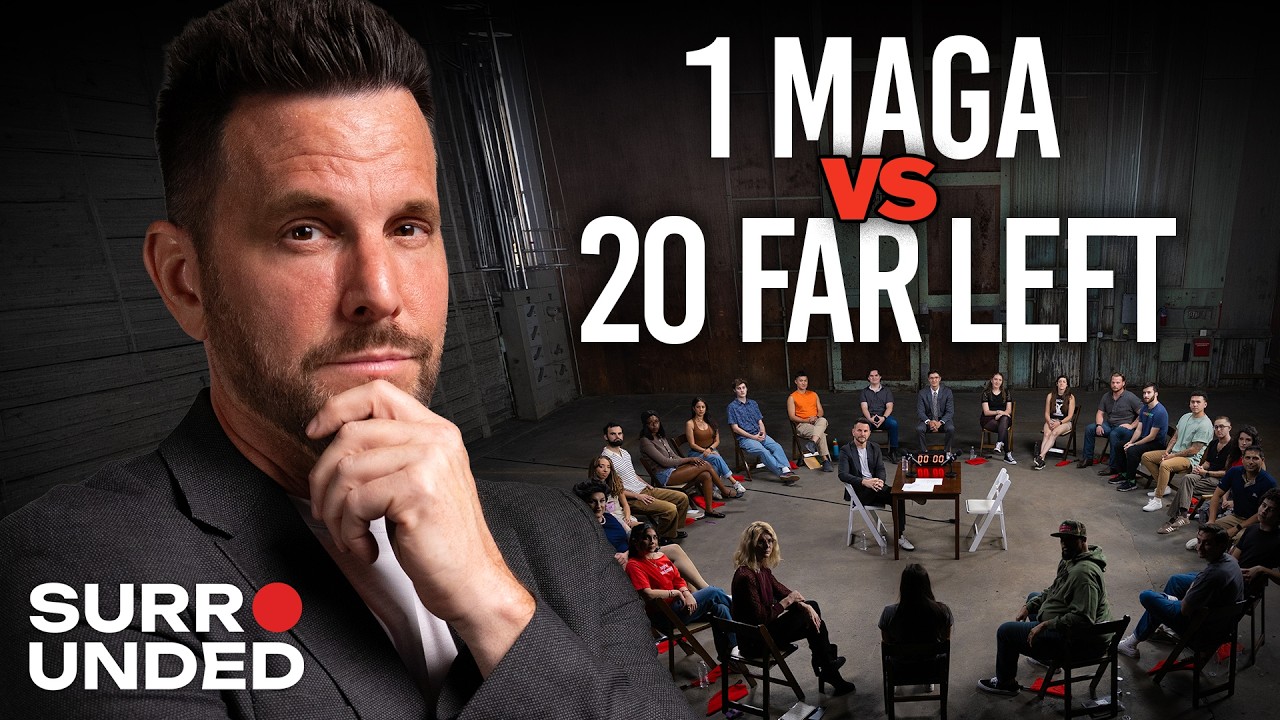
Dave Rubin Faces the Far Left on Wokeism, Broken Cities, and Trump's Legacy in Heated Jubilee Debate
1:41:05
Piers Morgan Confronts Twenty Woke Liberals on Toxic Masculinity, Fascism, and Gender Pronouns
Piers Morgan, author of Woke Is Dead, sits down with twenty self-identified woke liberals to challenge their perspectives on toxic masculinity, cancel culture, and gender ideology. From debating whether masculinity has ever been toxic to questioning the logic behind seventy-four official gender pronouns, Morgan defends traditional liberalism while arguing that modern wokeism has abandoned its roots. He confronts participants on issues ranging from stoicism and mental health to the efficacy of pandemic mandates and the erosion of women's sports. Each conversation reveals deep divides on what it means to be liberal, how language shapes culture, and whether contemporary progressive movements have crossed into authoritarianism.
Masculinity Under Fire
Piers Morgan opens the conversation by addressing what he calls a "completely new phenomenon"—the phrase "toxic masculinity." He notes that before thirty years ago, the term didn't exist, and only in the last decade has it been weaponized against men. Morgan references Chris Williamson's list of behaviors blamed on toxic masculinity: gang violence, climate change, Brexit, Donald Trump's election, not wearing face masks, eating meat, physical fitness, fast food, capitalism, communism, hip hop, body spray, stoicism, risk-taking, religion, atheism, playing board games, being interested in cars, and even saying hello.
Morgan argues that masculinity itself has never been toxic. Instead, some men behave badly—just as some women do—but no one calls that "toxic femininity." When challenged on whether different societies define masculinity differently, Morgan insists the core of masculinity remains unchanged. What has shifted is the interpretation, driven by what he describes as "weak, whiny, woke wastrels" who want to make men hate themselves.
One participant, a self-identified leftist, raises the issue of intergenerational trauma among men, citing World War II and Vietnam veterans who returned with PTSD. Morgan counters that stoicism and competitiveness are virtues, not vices. He points to the American Psychological Association's guidelines suggesting traits like stoicism, competitiveness, and risk-taking should be discarded. Morgan calls these traits "the very best of being a real man."
Andrew Tate and Misogyny
The conversation turns to Andrew Tate, a polarizing figure in discussions about modern masculinity. Morgan acknowledges that Tate says things young men gravitate toward because few others empower them. Tate encourages fitness, hard work, and self-improvement—messages that resonate with disenfranchised young men lacking father figures. However, Morgan also condemns Tate's "blatant misogyny," noting his beliefs that women should stay home, never vote, and never work.
Morgan distinguishes between toxic masculinity and misogyny, arguing that misogyny already has a name and doesn't need to be conflated with masculinity itself. One participant suggests men like Tate hide toxic behavior behind masculine rhetoric, but Morgan insists that's not toxic masculinity—it's just bad people being bad.
Stoicism, Therapy, and Participation Trophies
Parker, who previously appeared on Morgan's show, challenges Morgan on stoicism, suggesting an "overexpression" of keeping emotions bottled up can be harmful. Morgan disagrees, explaining that stoicism doesn't mean being emotionless like Spock. It means reaching inside yourself when dealt a tough blow and handling it with strength.
Morgan quotes a scene from Rocky Balboa where Rocky tells his son, "Life will beat you down and keep you down if you let it. It's not about how hard you can hit, it's about how hard you can get hit, get back up, and keep moving forward." That, Morgan says, is stoicism.
When Parker advocates for therapy, Morgan responds that he's never been to therapy and sees no need. He suggests people talk to friends instead of strangers. Parker insists therapy helps him process emotions constructively, but Morgan counters that society has become "over-therapied," with people constantly analyzing and self-obsessing.
Morgan also criticizes participation trophies, arguing they condition young people to think losing deserves a prize. This, he says, is the worst preparation for the real world, where outcomes matter and not everyone wins.
Social Media and Mental Health
Morgan references Jonathan Haidt's work on smartphones and young brains, noting that since 2010—when smartphones became "smart"—there's been a direct correlation with increased anxiety, depression, and suicide among young people. He blames constant negative dopamine from social media for scrambling young brains and making them believe the world is ending.
Yet Morgan cites Steven Pinker's research showing this is statistically the best time to be alive. There are fewer wars, people live longer and healthier, child poverty is down, and water is cleaner than ever. The problem, Morgan argues, is social media amplifying bad news and making young people catastrophize.
Morgan wants young people given proper mental tools in education to deal with the real world without over-medicalizing or over-therapizing. He believes society has reached a point where losing is deemed better than winning, and people are celebrated for failure rather than success.
Wokeism as Fascism
Morgan's second major claim is that woke ideology has become "anti-liberal and fascistic." He explains that wokeism began in the 1960s in black American music as a positive movement raising awareness for social and racial injustice. By that original definition, Morgan says he's happy to call himself woke. But something changed in recent years.
Morgan argues that wokeism was supposed to celebrate liberalism—being open-minded, respecting differing opinions, and valuing individual rights. Instead, the woke left has said, "We hate fascists and Nazis, and everyone we disagree with is a fascist or Nazi." Morgan warns this demonization is dangerous, citing the assassination attempt on Charlie Kirk by someone who inscribed anti-fascism slogans on bullets.
Evan, one participant, pushes back, arguing that wokeism is being used to distract from class politics. He points to the Department of Government Efficiency (DOGE) under Elon Musk, which he says destroyed institutions like the National Labor Relations Board and the Consumer Financial Protection Bureau while distracting people with culture war issues like trans athletes and DEI policies.
Morgan responds that he supported cutting government waste but didn't agree with everything DOGE cut. He then pivots to trans athletes in women's sports, noting Donald Trump's promise to ban biological males from competing against women resonated with voters. He mentions that Kamala Harris endorsed allowing trans athletes in women's sports, and Trump understood most Americans—and most people worldwide—disagree with that.
Trans Athletes and Women's Sports
Morgan references Algerian boxer Imane Khelif, who was banned from the World Championships after testing positive for male chromosomes. Evan disputes this, citing the International Olympic Committee's position that Khelif was born female with a female passport. Morgan insists all Khelif needs to do is take a sex test to settle the matter.
Evan argues that trans issues ranked last (22nd out of 22) in a Gallup post-election poll, meaning voters didn't care about it. Morgan counters by citing a New York Times deep dive into a Trump campaign ad featuring Kamala Harris endorsing trans athletes. The ad ended with "Kamala is for they/them, Donald Trump is for you." According to the Times, that ad moved the needle by as much as three points.
Morgan also discusses Betty Yee, a candidate for governor of California, who endorsed gender-neutral Olympics for Los Angeles. Morgan calls this "complete and utter insanity," especially for track and field. When asked which sport might work gender-neutral, Evan suggests archery. Morgan argues that a gender-neutral Olympics would result in women winning perhaps two bronze medals total, effectively destroying women's sports.
Fascism and Authoritarianism
Mason attempts to distinguish fascism from authoritarianism, arguing fascism specifically seeks to preserve hierarchy based on shared ethnicity or culture. Morgan disagrees, insisting wokeism has become fascistic because it controls speech, shames dissenters, and in extreme cases, incites violence.
Nick joins the conversation, arguing fascism uses state power to impose opinions. Morgan counters that the woke left deployed state power during the pandemic, mandating masks and vaccines despite changing science. Nick insists people lost jobs for refusing masks or vaccines in public-facing roles, while Morgan argues thousands lost jobs based on mandates later proven flawed.
Morgan admits he was initially sensorious about pandemic measures but now believes the government was wrong about mask efficacy and vaccine transmission. Nick argues erring on the side of caution during a deadly pandemic was justified. Morgan counters that when the state issues mandates based on flawed science, it crosses into authoritarianism.
Gender-Neutral Pronouns Are Pointless
Morgan's third claim is that gender-neutral pronouns are pointless. Jeremiah, a therapist, argues pronouns help people feel validated and affirmed. Morgan responds that if someone's life depends on pronouns for validation, their life is lacking other things.
When Jeremiah explains non-binary individuals use they/them pronouns, Morgan laughs, calling it absurd. "They/them is plural. How can you be more than one person?" Jeremiah says non-binary people embody both masculine and feminine traits, but Morgan dismisses it as nonsense. He references a recent guest who couldn't explain what non-binary means.
Morgan asks how many pronouns exist. Jeremiah doesn't know. Morgan reveals there are seventy-four official ones, including "astral gender," defined as "an affinity with space." Jeremiah can't explain "ze" pronouns either. Morgan also quizzes him on the full LGBTQIA2S acronym, which Jeremiah struggles to recite completely.
Jenny enters the conversation, distinguishing biological sex from gender as a social construct. Morgan asks how many genders exist. Jenny says she doesn't know or care—it's a scale. Morgan presses: where's the limit on self-identification? Jenny deflects, saying pronouns are just English language tools, no different than names.
Morgan argues it's gotten out of hand when there are seventy-four genders and even LGBT experts can't remember all the letters in the acronym. He recounts a debate on International Women's Day where he declared himself a black lesbian to test the limits of self-identification. The black woman on his show was not amused.
Conclusion
Morgan closes by reiterating his position as a "pissed-off liberal" who believes the woke left has abandoned true liberalism. He wants the woke left to return to common sense so they can be electable again. His frustration stems from what he sees as joylessness, intolerance, and authoritarianism masquerading as progressivism. Whether discussing masculinity, fascism, or pronouns, Morgan insists the woke movement has lost its way—and he's determined to call it out.
Video Transcript
Am I carrying >> sucking out my happiness? >> The wokeies are around me. >> Emotions in a positive way is literally participation trophies not being disadvantages of annoying. Look, >> have you been on your own show? You interrupted me the whole time and now you're just getting the same thing. >> So me telling you that you are spreading misinformation. That is not fascism. That is just me telling you you're wrong. >> But you're you're not telling me I'm wrong cuz I'm right. >> Hi, I'm Pierce Morgan and I'm the host of Pierers Morgan Uncensored on YouTube. I'm also the author of a new book, Woke Is Dead. And today I'm surrounded by 20 apparently still alive woke liberals. My first surrounded claim is that masculinity has never been toxic. [Music] >> One second. >> How do you do? >> I'm Pierce. >> So I guess where I want to kind of start is talking about masculinity. So, uh, I view this, do you think that this is like socially emergent? I imagine to some degree. >> Well, I think the truth about the whole toxic debate about masculinity is it's a completely new phenomenon. Before about 30 years ago, nobody ever used that phrase. It's only really in the last 10 years, it's suddenly been amplified and used for absolutely everything. So, I thought it might be useful to just start with something that Chris Williamson, you may know him, uh, great guy, and he came on my show recently, and he said that all the following things have been blamed on toxic masculinity in the media in the last year and a half. Gang violence, climate change, the financial crisis, Brexit, the election of Donald Trump, not wearing a face mask, eating meat, physical fitness, fast food, capitalism, communism, hip hop, smelling of axe, body spray, being stoic, risk-taking, religion, but also secularism and atheism, playing board games, being interested in cars, and saying hello or have a nice day. So I have already committed at least one crime because I've already said hello to you. So my point being come this sorry >> I'm actually very offended by that too. >> No the thing is I think the point I would make is I think in a time when young men in particular I've got three sons from 32 to 24. I think we've got to a weird place where they feel like they are the most downtrodden picked upon people in society with good reason in many cases and a lot of it is down to this where they don't know what masculinity is. My argument is I don't think it's ever been toxic. What's happened is you have men behaving badly but you also have women behaving badly and no one calls that toxic femininity. >> I actually do call it toxic femininity. I think when you look at I do uh when you look at like gender studies and philosophy on this, right? We use this term called masculinities and femininities because we understand that like the like samurai era of masculinity looks very different than maybe the knights of the round table and whatnot. So we understand that masculinity has so much morphed and shifted and in every form of these masculinities or femininities there are unhealthy elements to each of them. Could you grant me that? >> Well, it depends what you mean. I mean what do you think masculinity is? Uh, in our society I think masculinity >> No, no, not in your society. Just generally, what is it? >> Yeah. In North America, we would broadly view it as like >> you can't just say North America masculinity is a thing. It's not it's not like territory specific. It has become that way with a toxic element. But actual masculinity when it was first devised as a word, it's not an American thing. It's a global thing. >> Do you think that Athenian masculinity and Spartan masculinity were the same in the Greeks? >> I think masculinity has never changed. All that's changed is the interpretation of it. And what I can't abide is this modern phenomenon that everything about masculinity. Everything about being a man, which I am currently identifying as, everything about me is supposedly toxic. >> So I would I would reject the idea that everything that masculinity is is toxic. I think that there can be bad elements of anything. >> What do you like about men? >> What do I like about men? Lots of things. I think that like the idea of protectionism is good. I think the like uh willingness to kind of like self-sacrifice is very tied to the version of masculine we have. I think that that's a very good thing. I think the like desire to provide is also a really good thing. Um and stand up for like principles uh and strength. I think all of these things incredible things. Well, the >> you like men to be hunters, providers, protectors. >> I don't really care about them being hunters. >> Really? Well, how are they going to get all these things to help you and protect you >> in this economy? I'd prefer them just to be like fiscally capable. Let's go back to the Athenians. Let's go back to Athenians and Spartans though, right? If you want to say masculinity has always been the same, well the issue is history would disagree with you, right? In Athens, for example, it was completely normal for you to participate in civility and talk and do philosophy. But Spartan men, for example, wouldn't even touch coins, right? They viewed it as a very different thing. Whereas >> what's that got to do with them being masculine? >> Well, because the version of masculinity that they had viewed certain things like commerce as feminine. If you go to samuris, they viewed poetry as masculine, whereas if you go to like Victorian era, poetry is often associated with >> Right. Okay, but what has any of that got to do with toxic masculinity? >> Because if we look at masculinity, we have to acknowledge that it is emergent out of a society that we are participating in. When I said, well, in North America, you rejected that. And I go, well, that's the foundational piece of this. What we're talking about, toxic masculinity, is essentially a North American version of masculinity that we seem to not like. >> Well, no, it's not. It's it's a symptom of, and forgive my phraseiology here, but it's a symptom of weak, whiny, woke wastrols who've decided they're going to revise what masculinity is. I think it's generational. >> Hang on. Hang on. I'll give you a chance to respond. And they're going to make all men feel terrible. They're going to make men hate themselves. They're going to make everybody else hate men. And at that point, I'm like, what are you doing here? Why would why would women, for example, want their men to be weak, whiny, woke wast? >> Well, I think I think the issue that you're neglecting here is the high levels of intergenerational trauma amongst men. I mean, if we go back to World War II, it's followed by the Vietnam War, right? We see men dying by the thousands and then they come back and they have PTSD and then they go off again and die by the thousands. And so when we look at like the lack of masculinity, masculinity and masculine role models, we have to understand this through a lens of understanding that like men have been like scooped out and killed over and over and then when they come back they're destroyed and there isn't really an answer for men. I agree that there's a systemic lacking of answer on the left for men in a lot of ways. The issue is that we can't I think the left hate men. I mean I just to pause you just to pause you. They do. They do. Even movies like Barbie. >> I'm left. >> Okay. Here's a little secret for you. I'm slightly left. I'm a I'm an oldfashioned liberal. You hate men. >> I'm not a You see, they all think I'm probably I'm a right-wing heckbanger. I'm not. I'm I'm an old-fashioned liberal. I believe in liberalism and I believe there's nothing wrong with being feminine or masculine. I hate the way that masculinity has been tred with this brush of everything about it is toxic. >> I agree. And but the issue is that you can't throw the baby out with a bath water. You have to look at things like Victorian stoicism and recognize how that has harmed young men because >> stoicism stoic. >> Hold on. Victorian stoicism, not Greek, not Greco stoism. >> Stoicism generally is a good trade. >> I love stoicism. Hellenistic stoicism, not Greek. >> Well, let me read you something. You've raised stoicism. The American Psychological Association released a set of guidelines to help psychologists work with men and boys in which it stated that male masculine traits like stoicism, competitiveness, achievement, assuel of the appearance of weakness, adventure, and risk should all be discarded. Now, I would categorize all of those things as the very best of being a real man. Why would you want them discarded? >> I don't want most of those things. Let's talk about star system. >> I think we agree. I think we agree with each other. I think you agree with me too much. Anyway, it's lovely to meet you. >> Thank you. >> Hello. >> Hi, Paris. >> How are you? >> Sassy. >> Sassy. Nice to meet you. >> Nice to meet you. >> Okay. Um, first I want to say that I don't think that masculinity is toxic. >> Great. >> I just think that some men use their Wait, >> debate over. >> No, it's not. That's the whole point of MY PROBLEM IS REALLY NO, NO, because you're talking about a trait, right? So, I don't think masculinity is toxic. I think men use their masculinity in toxic ways or hide other traits but that are toxic behind their masculinity. >> I don't agree with that. Here's why. They're not using their masculinity. They're just being bad people. >> So, I think there's a clear difference. >> So, then men like Andrew Tate, when they are bad people, but then stand like I'm a protector. I'm a provider, they're using their masculinity. I've interviewed Andrew I've interviewed Andrew Tate a number of times. Here's what I think about him. I think he says a lot of things which young men gravitate to because very few other people are trying to empower them about the way they look. Hang on. Okay. No, I'm not. Let me finish my sentence. >> I I can have a facial reaction to you if I want to. Right. >> Actually, that's fair enough. You can He can look horrified. Um but here's the point about Andrew Tate is a lot of the things he says I know why they resonate with young men because young men feel sort of worthless. They feel disenfranchised by society. They're not sure where to go. Many of them lack father figures. There's chest beating Andrew Tate saying, "Keep fit, you know, don't abuse yourself too much." >> Just women. >> Well, I'm going to come to that. And so, he says all these things which men go, "Yeah, yeah, that's good. Aspire to be great, aspire to be successful, do this, work hard, and all." And then you get to his his blatant misogyny, right? He is a terrible misogynist. He thinks that women should be left at home, never allowed to vote, never allowed to work. No, but my point is I agree with you about that trait of his, right? I think it's it's horrible. But that's not toxic masculinity. That is actually misogyny is a word for it. >> I guess the reason but I think that all of this was fueled by people like Andrew Tate. Cuz like you said, toxic masculinity, we've never spoke about this before, but I think the reason it's on the table now is because of men like Andrew Tate. It's not because of women calling men. So call it what it is. It's literally because Red Pill podcasters, especially during the pandemic, if you were already a loner, you became even more alone. So, they needed a community. So, everyone's living life online in these what they thought was a community because all these men did was validate their shitty feelings that they already had about themselves. It was an echo chamber and they have to keep them sad and angry, tell them to place the blame on women and minorities so that they get their pockets filled. They monetize in trauma. You can have your official reactions. Time out. Go ahead. >> Politely. Politely. Go ahead. >> Um, I I think what you're talking about is misogyny. There's already a word for that. It's not toxic masculinity. That's the point of my argument. I don't think masculinity has ever been toxic. I do think some men are horrible misogynist and should be called out as I call them out. >> Don't you think some men hide behind their mascul? I'm sick of hearing men say, "We have to protect and provide." >> Why shouldn't we? >> Well, no, no, no. But the thing is is half of you, what are you going to protect me from? Another man. And half of them can't hunt down a job. Like, I don't >> Or other women. >> Or other women. Sure. Yeah, other people. But that's the thing I'm saying is that men I don't understand why I feel like a lot of blame gets placed on women for all of this, but in reality, you've done it to each other. >> I don't blame women for >> you've done it for to blame for any of this. I think that Well, actually, that's not completely true. I blame some women who have deliberately, in my opinion, like a lot of men have done too, taken the word masculinity and they have reduced it into meaning something it was never intended to mean. Like I said, those words which the American Psychological Association have deemed unacceptable and should be discarded are all the absolute foundation of what I believe it takes to be a man. >> Oh, damn it. >> Just when we were getting to know each other. >> Pick me for the last step. I got a lot to say. >> I'll think about it. [Applause] >> How are you? >> Good to see you. >> What's your name? >> Parker. >> Parker. I'm P. >> I've been on your show, bro. >> Yes. I thought I recognized you. >> When was that? >> Uh after the Jordan Peterson Jubilee debate. >> Yes, that's right. You did. >> You has quoted us as gaytheists on Twitter. >> Really? >> Yeah. >> Okay. How do you feel about that? >> Uh well, I mean, I think it was ridiculous. I'm literally straight. But >> Oh, you're straight. Okay. Well, then I can understand why you'd find that annoying. >> Oh, I don't find it annoying. I'm just saying it doesn't make sense to use that as an argument. But >> I will not call you a gaytheist. >> Okay. In general, the point that I would make here is that toxy masculinity is kind of an overexpression of certain masculine traits that we see in this certain context to be harmful. We're not saying all masculine traits are harmful or it's harmful to be a masculine man. It's certain characteristics that we would associate with masculine do you think is harmful? >> Yeah. Like for for example, an overexpression of stoicism. And I think that a lot of red pill, >> wait, hold up. Let me explain. I said an overexpression. >> How can stoicism ever >> be overexpressed? >> Ever be a bad thing? Explain to me. >> Yeah. So again, if you were to specifically hide your feelings and put them underneath specifically for like say the death of a loved one, I don't think that would be harmful or I mean positive specifically for you addressing your feelings in that circumstance, I think you should address those feelings, talk about them, express them to loved ones and people that are comfortable you're comfortable around. >> That doesn't mean you can't still be stoic. >> Well, then what do you mean by stoicism? Because I'm talking about an overexpression of keeping down your emotions and not expressing them and actively positively addressing >> stoicism doesn't mean you have to be an unemotional, you know, Spock from Star Trek. That's not what it means at all. Stoicism means that when you're dealt a tough blow in life, you're able to reach inside yourself and deal with it in a strong manner, right? Which is a good thing. I always quote to my kids, they can all tell you the speech off by heart. There's a scene in my favorite films were the Rocky movies. The first four were great. The fifth one was a turkey. The sixth one came back called Rocky Balboa. And in it, Rocky's son's in his 20s. He's a spoiled brat. He hates being Rocky's son. He's whining about everything. He's kind of pretty woke, weak, whiny, you know, moaning about his lot in life, you know, telling him, "Woe is me all the time." So Rocky eventually has it out with his son in the street. And he says, "Look," he says, "Life is tough. It will beat you down, and it will keep you down if you let it." If you want to win at life, you've got to learn, it's not about how hard you can hit, it's about how hard you can get hit. Get back up and keep moving forward. That's how winning is done. >> No one's arguing against that in general. So that's but that is that is stoicism. >> So but you're misundersting my argument. I'm saying an overexpression of watering down and not addressing your emotions. I think we both agree that would be a bad expression of your emotions. And often times men men view it that way because they say if you address your emotions to any degree there's going to be oh don't be a man don't cry. Be a man. So that's an idea of an overexpression of masculinity and that sense that becomes toxic. >> I hear. So you say does that make sense? >> Yeah it does. And say you >> so that you agree toxic masculinity makes sense. >> No no no that's not what I'm saying. So you would find you would find it objectionable to use the phrase man up for example >> in the context in which like someone is having a positive address of their like particular emotions and in typical I wouldn't use like like that type of phrase you'd say maybe you should address your emotions a more positive way maybe you should go to therapy a lot of people should do that like men should go to therapy it's an important thing that they should do and that would be positive for their >> life I've never been to therapy in my life >> you should >> and I don't cry all the time >> I think the last time I cry was about 12 years ago when my grandmother died I just think this is overdone we've No, we just moved from an incredibly stoic uh generation, say the World War II generation, who were literally sacrificing their lives for their country, but weren't crying all the time to an era now, >> Wait, why are you associating what I'm saying with crying all the time or being weak? >> You're the one who mentioned crying. So, let me just explain what I'm talking about. I don't think it suits anybody to encourage a society to constantly be over emotional either. I'm not saying you should suppress emotions and if you feel emotions about something, I'm all for it. I can get emotional with the best normally about my football team, but I don't spend all my time blinging like a baby and my argument with the Well, hang on, got to finish my point. I think that if you look at the woke world generally, there seems to be a premium on overing and not enough of a premium in my view of stiff upper lip, pull yourself together and crack on because let me tell Yeah, let me tell you there are two things you want to worry about in life. really worry about. I say this to my kids, dying and getting a terminal illness. Outside of those two things, everything is surmountable. You can overcome anything. >> What about if your partner cheats on you? >> What you got? Yeah. Okay. So, there are plenty of examples we can give where people are going to have like legitimate circumstances to cry or be sad. But like I'm asking you in the circumstance. Give us specific what you're referencing in terms of these woke liberals of how they're being too overly emotional. >> Well, you're talking to me about why you want people to be more emotional. I'm telling you, I don't think that's a >> I want them to express in positive manners like go to therapy like how I told you. >> Yeah, but I think we're over therapied. Everyone I know over here goes to therapy. >> You haven't gone to therapy at all. How are you over therapy? >> Why don't you come and talk to me if you want to talk to somebody? I'll soon sort you out. >> I I can talk to my therapist and we can actually engage in positive reconstruction of how I address things. Yes. Actually, it's been very helpful for my mental health and my emotional health to be able to talk them through to be able to like what can I do to like make myself feel better in these circumstances? Am I being genuinely like real here? Like or am I being a little bit too overly emotional in a circumstance? It's totally a question. I ask my therapists all the time. So, if you want to talk about being overly emotional, how to address being a bit being overly emotional, how about you start with therapy? What's your solution? What's your solution? >> Calm down. >> I'm calm. I'm totally >> calm. It may >> Wait, are do you think me talking fast is not being like calm? >> You don't want me to get a word in? Right. And I'll >> finish my statement. >> Right. I just think people go to therapy too much. Sorry. I do. You may not like to hear it because I just think going and talking to some stranger about all your problems all the time. Get a grip. >> It's not all the time. It's every once in a while you go and talk about your problems specifically so you can address them. Do you not talk about your problems ever with anyone? >> I look at Bucker. I look the problem. >> Stop talking. I look at you and I see somebody who's confident. You're a good talker. You're obviously intelligent. You've obviously got a lot going for you. Stop spending all this money going to see some stranger to go over everything. >> It's not that much money to be able to go every once in a while to go see a therapist for me specifically in my life. I've never been to one in my life. >> You can. It's not much money for you. You could easily go with the money that you make and go talk to a therapist. >> No need to go. >> I understand you don't want to. Everyone says that specifically before going into it. I said the same thing, but I'm telling you, you can actually address your emotions in a positive way. And also, here's what I'd rather do. I would rather honestly have groups of people like you in the woke world, right, who clearly are struggling with regular life, right? Everyone's struggling with everything's a calamity. Everything's a problem. Has to be overanalyzed, over dissected, over therapized. And I just think you've all got to be given the mental tools to deal with ordinary life. Ordinary life. We already have them. I actually to do that ordinary. Yeah. But without going to therapy all the time. >> Wait, what's your solution? What what's your solution? >> People should I think at school and colleges, we need to reinforce this comes back to masculinity with men. We need to reinforce the mental tools required for life such as well. I can tell you when I can chart the absolute descent of this into in the wrong way when and I think it began in America when you started giving kids participation prizes for coming last sport. >> Absolute shambles. I mean who ever thought of that? >> How is this have to do with actually like men making their emotions better off? Participation trophies. Oh my god. I'm explaining because if young people are conditioned to think that if you come last at something, you get a prize, it is the worst possible preparation for the real world. >> So what's the actual solution? You're just telling a problem again. Problem, problem, problem. What's the solution? >> If I could finish my sentence, >> start with the solution. >> Solution is you to stop talking for a moment, right? >> How about you actually provide a solution? All you've done is bring about problems. >> How I've just given you a solution. I want to I want that's not a solution. That's a problem. You stop participation prizes. You condition kids to deal with the real world when they become adults. Otherwise, men not having the ability to dress their emotions in a positive way is literally participation. >> Disadvantages are annoying. Look, >> have you been on your own show? You interrupted me the whole time and now you're just getting the same thing. >> Well, because you talking Don't be mad, >> Parker. >> Are are you mad? >> No, I'm trying to finish my sentence. >> It's okay. >> Parker, >> come on. Calm down. You're shaking. >> I'm totally calm. I'm not shaking at all. >> Parker, you're shaking. >> I'm not shaking. Why do you have to act like I'm Why do you have to say something delusional to try to deflect away from the fact that you haven't addressed anything meaningful here? >> Christ, my point is I there's a brilliant book by Jonathan Haye about the impact of smartphones on young brains, right? And it goes back to 2010 when smartphones became smart. In other words, you could access absolutely everything. And I look at what happens on my feed each day and I'm horrified about what hap may happen to younger, more impressionable brains, right? And so young people's brains have got scrambled. So since 2010 there's a direct correlation of young people who get ever more anxious, ever more depressed, in some cases tragically ever more suicidal. And it's been driven by this constant negative dopamine. So partly I understand why what I call the weak whiny work waste rules are like they are because they're constantly getting overloaded with negative dopamine which is making them think the whole world's about to end. In fact, as Steven Pinker has explained in great detail, statistically, this has never been a better time to be alive. There are fewer wars than in recorded history. People are living longer and healthier than in recorded history. There's less child poverty than in recorded history. Water is cleaner than in recorded history, etc., etc., etc. The problem is social media amplifying all the bad stuff going on, making young people think the world's about to end. It's not. So I I would like young people to be given the proper tools in their education process to enable them to deal with the real world and make them catastrophize less. I do think in this country as in my country young people are overmedicated. I think they go to therapy too much. I think they end up overanalyzing and over selfobsessing. I think it can make them quite narcissistic. It's all me me and wo is me, wo is me, wo is me. I think we've got to a place oddly in society where losing is deemed to be better than winning. Where winning is something that should be frowned upon, actually better to be a good loser and get all your mates to like you going, "Oh my god, I just failed my driving test for the 20th time, but I'm so proud of myself." I'm like, "You're a terrible driver. Get better." Right? So, it's all about how you treat these things. And out of it, hopefully, I would produce a nation of people like me. Parker, >> I would love to be able. >> Perfect way to win. >> I'd love to go. >> I'd love to see you. Good to see you. >> My next surrounding claim is that woke ideology is anti-liberal and fascistic. >> How's it going? >> How are you? >> Good. Good to meet you. My name is Evan. >> Evan. >> Yeah. >> Nice to meet you, Evan. >> My issue with this claim is I find associating wokeism with fascism to be quite ironic. Wokeism to me is a term that's used a shorthand pjorative term that's used to describe left-wing cultural politics. And I think the term wokeism and people on the right often use it as a means to deflect and distract from class politics. And there's a very key example of this. So the Department of Government Efficiency, Doge, um this was something that you actually celebrated quite a bit when it initially came into office. Elon Musk was coming in to root out waste, fraud, and abuse. Obviously, they found zero instances of fraud. To the extent they found waste, it was just stuff that they ideologically disagreed with. And there were all these programs they were cutting, for example, like LGBTQ programs in Latin America, etc. And we were celebrating this all as a big victory. But this was all a distraction because what the agency was actually doing was uh destroying the National Labor Relations Board, a board that is designed to protect workers abilities to unionize, the Consumer Financial Protection Bureau, a bureau that is meant to protect consumers from billionaire capitalists like Elon Musk. These institutions along with the IRS, all of these institutions meant to actually protect and put a check on capitalist billionaires like Elon Musk and the consolidation of fascistic power in our state. All of that was being distracted by this term wokeism. And I think that like when when you obsess when you obsess over things like trans people in sports or DEI policies and XYZ, it is a deliberate means to distract from these very real issues. Yes. 100%. Well, let's take let's take what you just mentioned, trans athletes and sports. Do you think it's a good idea? >> Uh, not necessarily. I mean, either or isn't. So, it depends on which sport and it depends on which but notice but notice what you're doing right now, right? >> You mentioned it. I didn't mention it. >> Well, what what I mentioned is that these are all a means to distract from issue. Can you at least very least acknowledge that you did that you that you that you did celebrate Doge despite it rooting out all these institutions that actually impact American? >> I'll answer you. I thought the cutting government waste was a good thing. Do I think it was well executed? Not particularly. >> Sorry, you've got to let me finish. >> Go for it. Go for it. >> Do I think it was well executed? Not particularly. You know, Elon left pretty quickly and the government just carried on spending a ton of money. You know, do I think some of the things they cut were wrong? Yes, I agree with you. Do I think all of them? No. I think they did find examples of ways. So, you know, if you had a proper consistent ongoing Doge mentality which cut genuine things which we all can agree are probably a bit wasteful, I'd be all for it. Do I support everything they cut? No, I don't. But given you mentioned the trans thing, because I hear a lot from the woke left and I try and say to them, look, if you want to know why Donald Trump got reelected, your worst nightmare coming true, and you all sit there on election day thinking, how on earth has this happened? Well, one of the reasons was he just stood there. You can shake your head, but one of the reasons is he stood there and went, >> "Under me, if I get elected, >> then I am going to ban trans athletes from women's sport." >> Yeah. No, no, >> if you wait, can I just respond? >> No, I'm I'm going to add one thing to it, then you can respond. >> If you remember, Kla Harris endorsed it. Thought it was a good idea. So, the first potential female president of the United States thought it was fair and equitable and safe that biological males compete in women's sport. Trump understood that most people in America, most people around the world outside of the woke left do not agree with that. And there's a reason we don't agree with it. Let me finish. The Olympics are coming here, right, to >> You're also wrong about Iman Khalif, by the way. Yeah. >> Well, I'm not wrong about Iman Khalif. Well, Aman Khalif was banned from the World Championships. She's an Algerian boxer banned from the World Championships because of testing positive for male chromosomes. Right. That's not true. Well, it is true. There was there was a right to believe it but it is true. >> So the so the International Olympic Committee said that Iman Khif was both born female. She has a female passport. Algeria you think Algeria the state of Algeria recognizes trans identity. Really peers like let's be honest with ourselves. the the only inst the only institution No. The institution that claimed that she failed an unspecified uh gender or sex identity test was some Russianbacked organization that is not internationally recognized by the International Olympic Committee. But wait, but wait, no, no, no. Let me let me reset. I need >> you can't say something and me not challenge you back if you're I know, but that's exactly what you did earlier. I just I just quickly get all I Khalif has to do is take a sex. They're now bringing the sex in then there's no problem. Why do you think I khif is not >> I don't want you to distract from the fact that the election there is no evidence that people voted based on their opinions on trans. Let me give it to you. No, wait, no, wait. Let me let me let In a In a Gallup 2024 poll in a Yes. In a Gallup 2024 poll, post election, out of 22 issues, trans uh trans issues ranked 22 out of 22. Every in every election in all OCD countries across the world, and the economy, yes, but I just let you go on. >> No, let me just respond to you. >> Actually, if you read the New York Times the week after the election, I did read the New York Times, then you will remember a deep dive they did into Wait a minute. does talking. You you want to talk all the time. >> Sorry. Sorry. >> Show me some respect. >> Sorry. >> There was a New York Times report into a particular commercial ad, you know, campaign ad that the Trump side put out and they originally started it in a few sports readers. It got bigger and bigger and bigger. And the ad was basically a 30-cond mashup of Carla Harris endorsing trans athletes in women's sport and in women's spaces and so on and so on. And it ended with Carmela is for they them, Donald Trump is for you. The New York Times said that they believe that moved the needle their reporting by as much as three points >> based on what information. >> Ask the New York Times. >> No, that's not you. You understand news agencies aren't conducting polling analysis? That same article cited the Gallot poll that I just identified where trans issues ranked 22 out of >> one ad move the needle by three points >> and based on what information? polling pe if you pull people on what issues that they cared about in the in the 2024 election all of it was centered around economy and inflation and this is just obvious because this was a global phenomena every >> and every incumbent party across the world lost election a lot of Democrats and and people on the woke left in particular have tried to assure me that absolutely nobody cares about trans athletes in women's sport >> people care the right cares but your median voter cares more about what's in their pocket question for you And you're doing exactly what I claimed you were doing. Using wokeism to distract from >> My question My question for you is this. I interviewed a woman called Betty Ye a couple of weeks ago on my show. She's a candidate to be governor of California and she endorsed in my interview genderneutral Olympics when it comes to Los Angeles. Now that to me is where the woke mind virus takes you to complete and utter insanity. Because if there was a genderneutral Olympics and this woman might be governor of this state, >> does she have any control over the Olympics or the policies of the Olympics? >> Wait a minute. Wait a minute. I'm talking about the mindset that says that actually gender neutral. Do you agree with me? Can we reach a point of agreement that that would be absurd? >> Uh I I don't you know it. It depends on the sport. It depends on the sport. >> She specified some sport. Sure. She specified track and field. >> But guess what? I don't care what some care about women losing. No, no, no. This is a this is a governor's position. This is a a state representative. Who is it? A mayor. It honestly it doesn't matter. This does matter. No. Because this person has no institutional power. And this is exactly what I mean. When you champion Elon Musk and you're like, "Oh my god, he's correctly identifying the woke mind virus and all and doing X Y and Z." You're distracting from the very real issue that we have an elected billionaire. You're not distracting. >> No. This is my question. We are we exist in the conversation of a larger >> Evan. Answer my question. >> It depends on the sport. >> Give me a sport where it would be fine. >> Uh archery. >> Good to see you ever. >> How are you? >> Good to meet you, Pierce. >> Good to meet you. What's your name? >> I promise. Mason. >> Mason. >> I do not mean this as an insult. >> No, please. >> You seem way more comforting in person. Like you look one you look taller on your show like and you have this like very like >> I'm six foot one. What are you talking about? >> I don't when I saw you walk when I saw you walk in I don't know maybe you you just look like a giant on your on your show. >> Oh, thank you. I don't know how to take that but I'll take it as a com. >> Yeah. Yeah. Yeah. Um so I I really want to make sure that we get our definitions correct first. When you say that wokeism equals fascism, would you say that's like the claim diluted into like a small >> Here's Let me explain what I mean by that. Okay. And I've talked about this a lot in my book Woke is dead. And again, just to remind you, I come at this as a pissed-off liberal who has nothing in common with the woke left and wants the woke left to actually come back to a more common sensical electable position actually. And here's what I think about what wokeism became. It began in the 60s in black American music. In its origin, a great thing. It was about raising awareness for social and racial injustice. By that criteria, I'm happy to say I'm woke. But that's not what's happened in the last few years. in the last few years for a combination of reasons. One of which the pandemic sent everybody nuts and everyone was at home drinking too much on the internet firing off all their ridiculous views and just got into rabbit holes and so on. But we can leave that. But wokeism is supposed to be a celebration. You would, I would think, agree. Well, hang on, hang on. Supposed to be a Hang on. >> You're the person in the center. Can I Can I talk a little bit on my three minutes I get before I'm voted up? >> I I haven't I haven't made my point. Okay. >> Do you agree that it's supposed to be about liberalism, about being a liberal? I would say that the idea of wokeism is kind of an evolution from a bunch of different terms that have been used to throw at the left specifically. So like before wokeism it was critical race theory. Before critical race theory it was social justice. There's there's a lot that the right specifically and I I know you say that you're not the right it's a reactionary it's a reactionary response towards the ev uh elevation of certain groups that has historically been silenced. >> But does it celebrate liberalism? >> I I don't think so. I don't think it has to. I think I think a lot of it also has to talk about class solidarity which typically is >> let me give you a little Latin lesson because the Latin words liber meaning free and also the root of liberty meaning the equality or state of being free and liberalis meaning courteous generous gentlemanly >> I love these definitions can you describe you asked for a definition that's really what I want to talk about >> I know what fascism is >> wait what is it then enlighten me >> can I finish telling you what liberalism is >> no I know what liberalism is >> well you don't think you do because if you're a woke left they don't understand what being a liberal actually means I do what being a liberal I do. So let me explain to you the definition of a liberal include one who is open-minded or not strict in the observance of orthodox traditional or established forms or ways a person who's willing to respect or accept behavior or opinions different one from one's own favorable to or respectful of individual rights and freedoms and concerned with broadening general knowledge and experience. Now, what part of that do you think the woke left have adhered to in the last five years? Because why is it fascist? I'm about to tell you. Okay. So, the woke left have basically said, "We hate fascists. We hate Nazis. In fact, we think everyone we don't agree with is a fascist and a Nazi." Led by Donald Trump, led by the one who voted for Trump, led by Charlie Kirk, led by all these people. Can I tell you what? >> Wait, let me finish my point, then you can respond. That they're all a bunch of fascists. They're all a bunch of Nazis. And I kept warning the woke left as a pissed-off liberal, stop overdemonizing people by using the word Nazi and Hitler and fascist. It is ridiculously selfharming to yourselves and it leads actually to young deranged minds like the assassin of Charlie Kirk to actually put anti-fascism slogans on their bullets and to murder people for their speech. Right? So wokeism in the end in the last few years transformed from what was supposed to be a celebration of liberalism in many ways into a form of fascism. Why do I say that? Because it conditioned people that you either adhere to our narrow world view and if you don't, we're going to shame you, vilify you. All the flags are up. I didn't get to talk about I'm going to let you respond, cancel, cancel you, or in some circumstances, we're going to kill you for your free speech and opinions. And that is where it became, in my opinion, a very dangerous deluded. It sounds like you're trying form of fascism, which is ironic because woke say they hate the fascist. >> It sounds like you're trying to correlate fascism with authoritarianism, which is control of speech or control of how people interact or control of behavior. >> Fascists do control speech, >> right? That that can be a part of it is the authoritarianism. The specific part of fascism is specifically trying to preserve a hierarchy based on either shared ethnicity or shared culture. That is the idea of elevating one specific group into the top. No. Yes, you are. So, you're telling me that Hitler would have been wearing a BLM shirt or Hitler would have been wearing an anti- because wokeism is not fascism. Fascism is specifically dealing with one particular group. They're elevating to the top identity. That's what we saw in Nazi Germany. That's what we saw in Imperial Japan. Mason, none of that correlates with the ele elevation of particular groups that have historically been silenced, which is the the idea of what progressivism is. I I reject the idea of wokeness just because wokeness again is used as that insult that is elevated from different insults that have been thrown in the past. >> Respectfully, I think wokeism has become one of the worst scourges in the world. >> Yeah. Because I think that there's been a successful campaign to uh basically attach by the woke left. >> No, it has been to attach all of these pjoratives to a a a idea of emancipation from silence groups. That's the idea. The idea silent about the idea that we should bring people to the table. >> Any of you? >> No. You never stop. >> That's why I hear so much about cancel culture, about how everybody gets cancelled. When they're millionaires with podcasts, I talk about this [ __ ] every day. >> The best quote I have in my book, Woke is Dead, and clearly it's still slightly alive here. But the best quote, I had an Australian woman come up to me in the streets in London and she said, "Mr. Morgan, do you mind if I just say something about these wokies?" I went shocked. She said, "They just want to suck all the joy out of life." And I went, "God, you're so right. That's exactly what they do. Suck it out. Stop saying slurs and sucking out the joy of life. >> You want to say slurs that bad? >> I don't want to say slurs. That's like >> But you are collectively the most joyless group of people to ever want. >> I'm pretty joyful. I'M SMILING. MY advice cracking jokes. My advice is I can get a beer with you. My advice for all of you is I think you need to relax a little bit. >> Collectively a bit of a bit of I know you love a bit of zen. Zen. Calm down. Take a chill pill, right? See the funny side of life. Respect other people's opinions. respect my right to have different opinions. >> I think that you've dressed this like nightmare scenario around you and then you start cowering. No, then you start cowering at the own demons that you set up. It's funny that like are the woke room. >> You're saying they're the joy in the middle of 20 hardcore. >> They are joyless. They're ruining the joy of life. They're sucking out the happiness. They're sucking out the happiness of society. That's the idea is you're saying Yeah. You're saying the happiness is being sucked out by woke people. >> I think you're just a joyless bunch. You should lighten up a bit. That's an insane overgeneralization. That's how I feel about British people. But good. [Applause] >> Hello. >> Hello. I'm an >> hi. >> You're Pierce. >> I am Pierce. >> Um I do want to kind of touch on the last thing that you and Mason talked about. I think the idea that the woke left is just this soulless, joyless u majority of the left, at least now is what you seem to be making it out to I don't think it's the majority. It's the noisy part of the left. >> Okay. Okay. I actually think I can agree with you there. I think it's a loud loud minority of what you're calling the woke left. >> I think the what really wokeness comes back to is that idea of fighting for equality, speaking up for people who don't have a voice themselves and advocating on their behalf for their rights. >> And I think that you don't >> do you identify as a woman? >> No. But I think that's t >> What do you identify as? >> I that's tangential to this conversation. No, it's actually very relevant to what I'm about about to say. >> No, I don't think my identity is relevant. What do you identify? What if I started bringing up the fact that you're British and you're here talking to a bunch of Americans in America? >> Great. >> That would be completely irrelevant to this whole thing. Very irrelevant. We're talking about American absolutely fine. But I've risen justified. I haven't run to my therapist. I've risen above the slur. I'm not going to report him to very I'm not going to report him to the authorities for using a racial slur. I've moved on. >> That That's great. But I my point in asking you what you identify is is that you're talking about equality. The wokeism is aligned to equality. And yet where does that equality apply if, for example, and we've touched on this already, if you are a woman athlete in sport, where's the equality in having a biological man compete against you when they have a physical advantage? >> Okay. Look, I think Well, that kind of strays away from >> Do you think that's equal? >> Do I think it's equal for men and women to play in sports if there's an advantage that's like far above the threshold? Yes. >> No, I don't think that's >> And you understand that's why we separate the sexes in sport because men have a physical advantage >> to an extent. We >> to an extent. They just do. >> Okay. Then answer the question about archery. What do you think about archery? Do you think that has to be a segregated? >> I've read I've read a report and correct me. Someone I'm sure will correct me on the internet. I read a report that if it was a genderneutral Olympics, women may end up with two bronze medals in the entire Olympics. >> Wait. Okay. Hold on. Hold on. Wait. two two medals in the entire Olympic games. In other words, it would be the destruction but I'm not advocating for >> No, I'm just saying it would be the destruction of women's sport. That's why we separate the sexes and that's why the issue matters. >> Sorry. Lovely to meet you. >> Thank you. >> Excellent. Nice suit. >> Great to meet you, sir. What's your name? >> Nick. Great to meet you. >> Nice to meet you. So look, the the prompt was about the equivalency between wokeism and fascism. The key difference >> Well, to be clear, the prompt actually my real point is if you want to brand everybody fascists, you can't behave like fascist yourself. >> But the key difference is fascism uses the power of the state to impose their opinion. So does wokeism does not. >> Oh, it does. >> Was anybody deported for being woke during the Biden administration? Here's my answer. >> Does anybody get rounded up in the streets for their opinion? Did anybody get cancelled because the FCC said you're being too woke? Can I? No. Can I answer that doesn't happen? >> Can I answer? >> Of course. >> Of course. Actually, the woke left have deployed the power of the state many times. Look at the pandemic. Look at the pandemic. >> How is that wokeism? >> I'll tell you how it's >> diseases are woke now. >> No, woke wokeism is where you take things which are not actually science-based. For example, for example, the efficacy of masks, right? And by the way, I feel guilty of this myself. I'm not I'm not saying I'm whiter than white about this. So masks are woke. >> No, no, they can be. If the woke mentality I I'll explain why. I'll explain why. When a government says that if you're seen without a mask during a pandemic, you can be fined or punished. You're way too smart to wait a minute. I'm giving you the argument which I ended up accepting, right? Which is in a fastmoving pandemic when the scientific advice changes so rapidly, I fell victim to this myself. I was very sensorious to people. But you can't deny that the state had a mindset of you will conform or we will punish you. And it turned out they were making people. It is true. >> You may have felt uncomfortable being unmasked in public because people would say, "Hey, courtesy of other people." I didn't. >> Nobody got fired. Nobody lost their job. Nobody got >> People did get fired and did lose their job. >> All that stuff got overturned because we are a nation of laws. >> People did get fired. They all lost their jobs for not wearing a mask. They were told they couldn't come to work. >> Who? lots of thousands of people. >> Okay. So thou these nebulous people lost their job. >> To be clear, you don't think anybody lost their job in the pandemic for refusing to wear a mask or refusing to be vaccinated. >> I think that people who are in public facing situations where they could have easily taken a a scientifically proven preemptive. >> It wasn't proven. >> Yes, it was. >> No, it turned out not to be proven. That's my point. And yet the state driven by a left-wing Democrat president. >> So me telling you that you are spreading misinformation, that is not fascism. That is just me telling you you're wrong. >> No, no, you're but you're you're not telling me I'm wrong cuz I'm right. >> Okay. No, you're just not. And we we're not going to relitigate COVID. That's now years ago at this point. The the key point is is it fascism? It is not fascism. You gave your very long definition of liberalism. Wokeism is about everything on that list that you described as being liberal. It's about standing up for other perspectives. It's about listening to other people that have not traditionally been listened to. >> Oh, you don't listen to anybody. What are you talking about? Of course you don't. >> You said yourself wokeism started about just acknowledging social problems. I think it's woke middle America's jobs have been shipped overseas. That's woke to recognize that there's larger social problems. Police brutality, recognizing that there's a problem with the institution of policing. That's woke. It's not fascist. You defund the police? >> No. Absolutely not. >> Okay. Well, that's woke. >> What? >> Not defunding the police is woke. >> Calling for the police to be defunded is one of the worst things the woke, including Ma. >> The new mayor of New York City, call for the >> Your first prompt was toxic masculinity has always meant one thing. Now you're saying woke used to mean one thing, but now it means a different thing. So words only have one definition when they suit you. But when they don't suit you, they change and they obviously you said you said that wokeism is a form of liberalism, right? You said that everything I read is a form of just to remind you a person who is willing to respect or accept behavior or opinions different from one's own. The woke left famously, I would say infamously never accept anybody objecting to anything they say. >> We confront bad speech with better speech. >> You confront bad speech with better speech. No, you don't. >> Like denying the efficacy of Max and Vascines and I'm telling you that's wrong. >> I'm not saying you should be cancelled or you should be imprisoned for that. Actually, if you want my honest view, I do not think the efficacy of masks was ever proven. In fact, I think most of the evidence now suggests they were pretty pointless. Secondly, on vaccines, I think they saved millions of lives. But I do think it was completely misleading of the government here and the government in the UK and other countries when they stated as a scientific fact that if you had the vaccine, you couldn't transmit the virus. >> The measure was whether the healthare system would be overwhelmed. The healthare system did not collapse. It worked. That was all it was supposed to wasn't that no one would ever get sick. >> I'm making the point that when you issue government mandates and it turns out you were wrong. For example, when they said you cannot transmit the the virus if you have the vaccine, it turned out that wasn't true. Do you accept that? >> I do accept that. >> So there were lots of things they said which turned out to be wrong. So >> I would rather heir on the side of caution in a with a disease that killed millions of people around the world. That's just me. >> Hey Nick, as I did and in fact I was very sensorious to people who took the position I'm now taking. It's not being sensorious. We're having this debate in a public forum. I'm not saying you're not allowed to speak about this. I'm just going to tell you you're wrong. >> I'm making the point that I was wrong at the time about those particular parts of it. We can agree that the vaccines broadly I think worked, but we can also agree the scientists got it wrong about masks. They got it wrong about the efficacy of transmission with vaccines. These are things we should be a come together on. >> Hey, this is nice to meet you. Great to meet you. >> Really good to see you. Hey, before we go any further, we want to take a moment to say thanks so much to Straight Arrow News for powering the fact checks in this video. Straight Air News is on a mission to raise the bar on journalism in a time of media bias and mistrust. Straight Air News helps you quickly find trusted information you need to understand the news, allowing you to dive deep into the topics that matter to you and the world around you. Their work is trying to break the bias bubble, helping you understand how every side of the political spectrum is reporting on a story so you get a full picture of the news. That's why we're so happy to be partnering with Straight Arrow News. They deliver the facts unbiased, balanced, and designed to make sense of a complex world, getting you the clarity you deserve and news you can trust. Go to s.com/surrounded or click the link in the description to check it out. By clicking that link, you're not just supporting this channel. you also take advantage of a better way to get the news. Welcome back to Trustworthy Journalism. Thanks again to Straight Arrow News for partnering with us on this episode. Now, let's get into it. >> My next surrounding claim is that genderneutral pronouns are pointless. >> Hello. >> How are you? >> Good. How are you? >> Good, thank you. >> I'm Jeremiah. Okay, so Oh, I bet you didn't know that you were coming to a therapy session. I am a therapist. Great. >> Yes. Finally, >> finally getting finally >> a missing link in my life. >> Yes. So, I would argue that pronouns people being want wanting to be referred to the pronouns that they want actually aid them in their self-esteem improving and their validation and affirmation in life. >> Then they then then their lives obviously are lacking a lot of other things. It's like nobody cares about pronouns. >> What what would their what would their life be lacking? >> What pronouns are yours? I'm he him. >> Okay. So, you're a bloke. >> Yes. >> Okay. Why do you need to call yourself he him? I know what you are. You're a You're a man, >> right? But I think that you're talking about people that want you >> feel Do you feel affirmed by the fact you call me he him? >> I'm talking about other pronouns. So, like they them. Z. >> Well, they them. All right. They them. >> There's one person >> saying, "Call me they them." >> Okay. Well, they them is a plural. How can you be more than one person? >> So, guess what? What about What about someone nine? >> I mean, call me stupid, but >> but someone that's non-binary who can engender. nonbinary mean I'm explaining it right now who have who can engender both masculine and feminine traits and that is their third gender if that's what they want to be called why is it so hard for you and other people to call them what they want to be called >> I just think it's all [ __ ] >> but I'm asking you why can't you just call them what they want to be called if that's what they want to be called >> I don't want to >> so then so how are you being empathic if you don't want to call them what they want to be called >> I don't care >> but so empathy so empathy is a muscle that you could develop in therapy so if you went to therapy you'd have developed that muscle I can't think of anything I'd rather less develop. >> Well, >> when some when one human being says to me, "Call me they them." I laugh. It's absurd. It's one of them. >> And and and that shows that you're you're not empathic. >> I asked a non-binary person who was a guest on my show recently, "What does non-binary mean?" She couldn't explain it. >> Okay. >> It was actually torturous. >> So, that's her. But the thing is, what if why don't you get someone on on your show who can explain it? >> How many pronouns are there? >> Um, multiple. >> How many? >> I don't know. Oh, I'm not I'm not an expert in the >> last the last count is there are 74 official ones. Do you know? >> No. Okay. You're going to say cat and dog. I'm a cat. I'm a dog. I'll come to those. No, no, no, no, no, no. Talk about talking about gender pronouns. >> Yes. So am I. >> There are 74. One of them is astral gender. An affinity with space. >> No. Where are you getting this information? >> Official genders. Google literally Google it. >> Have you met Have you had someone on your show who said, "I'm an astral whatever." >> Yes. I actually got one on. >> No. And did you pay that person to go on? Like I I mean utter lunacy the whole thing. It's like kids identifying as cats at school. You know what I would do? >> That does not happen. Some bogus like media presentation. That does not happen. >> No, it has happened. Read my book. Woke is dead. It's all in there. >> I I don't know how that there was a phenomenon called the furries. You know what it was? Kids would go to school and say I know what fries are. >> Fries are not a gender. That that's a that's its own kind of lifestyle. It's like people in outfits. But but this is where, with all due respect, this is where limitless selfidentity takes you. It takes you to the absurd. For example, >> but do do well. Do you believe Let me ask you. Okay. >> Do you believe that you can identify as anything you like? >> Um, no. >> Oh, what are the exceptions? >> I think that most people that when they think about their gender identity, it's he, him, she, her, they, Z. Those are the ones that people are Z is um >> Oh god, now I can't explain it. No, but Z, >> YOU NO IDEA, HAVE YOU? IT'S ALL complete baloney. What's Z? I have no idea. >> AND YOU'RE THE GUY TRYING TO DEFEND THIS NONSENSE. Here's my other question for you. Right. >> So, it used to be LGBT, then it was LGBTQ. What is it now? What's the the >> It's LGBTQ plus or it could be LGBTQI A2S. Two spirit, >> right? And what does it stand for? >> Two spirit or the two >> the whole thing. LGBT read the whole thing. >> Um LG lesbian, gay, bisexual, uh LGBT, trans, queer, >> or questioning, LGBTQ, iA, interex, asexual, twospirit. It's the two-spirited individuals. >> You forgot pansexual and asexual. >> Well, so pan is I did say asexual. Pan is not in there. Nice. >> Nice to meet you. [Applause] >> Hello. >> Hello, Pierers. >> What's your name? >> I'm Jenny. >> Jenny. Nice to meet you. >> Nice to meet you. So, we wanted to talk about I guess your initial claim is that pronouns are silly or purposeful. >> I think we've just established how silly they are. I mean, even the people defending them can't remember what they mean, >> right? So, I just wanted to touch on two things here. So I don't think anyone is denying biological sex assignment at birth, right? Whatever your doctor determines your >> It's not about doctors assigning anything, is it? You're either born with certain genitals or you're not. >> Right. But a do a a doctor has to look at >> when you're a male or female. >> Right. Understanding. Do >> you accept that? >> Yeah. I I that we've got this whole phrase assigned at birth. What does it mean? >> That means a doctor has looked at you as a baby. >> They look at you and they just see what I look at you and see. I don't have to be a doctor to know what you're assigned at. >> Right. But you're just born. Do you accept that the vast majority of people ever in the history of planet Earth are born male or female? >> Yeah, I do believe that. >> But can we stop the phrase assigned at birth by a doctor? Literally, >> I've had four babies. They look at them and they go, "Oh, it's a boy. It's a girl. That's it." >> Right. So, a doctor determines and writes that on your but there's no one assigning. >> Can I finish my point, please? >> Yeah. But they're not assigning anything. It's a ridiculous phrase. >> Please feel free. >> Thank you. So whatever your biological sex is determined by a doctor upon your birth, I don't think anyone's denying that. >> However, gender is a construct that is how we express ourselves. >> How many genders are there? >> For me, I think that it's a scale and however you want to express yourself is up to you. >> Can I express myself as anything I want? >> Well, if you let me finish my point. Okay. So, for example, we talk about masculinity. We talk about femininity. And some days I feel like I want to feel more feminine. So I wear a dress or I do things that are socially constructed and designated as feminine. Or maybe other people have like this idea of masculinity. So they present themselves in that way. So gender is different from biological sex in that it's how you express yourself. To me, somebody's gender expression and how they want to be addressed is no different than using somebody's name. Because I I write. So when we use pronouns, it's with purpose, right? >> What are your pronouns? >> She, her. >> So you're a woman? >> Yes. >> So why don't you call yourself she, her? Well, I that's just how you address women. >> So why why use them as pronouns? >> But pronouns are just used in English language. We >> never used to. This is just only started 10 years ago. Nobody ever >> pronouns has always been used in the English language. >> I'm talking about the new cavalcade of extra pronouns. I think we're making it out to be so much more than it really is. >> If you're a man, you're a he, him. That's it. Right. The rest of it is just a complete construct of the woke left. You've already established none of it makes sense to the point that none of you can even explain half of it. >> No. And I'm still explaining it. So, >> how many genders are there? >> I'm still talking about gender expression. >> Can you tell me how many genders there are? >> I'm talking about >> how many other are. >> I personally don't care. I don't know. >> Do you know a number? >> No, because for biological sex maybe. >> Do you believe in the concept of limitless selfidentity? >> Um, no. So, if >> So, what's where's where's the limit? >> If you would let me continue. >> Where's the limit? >> If you would let me continue. Thank you. So, what I'm saying though is that when you refer to somebody and their pronouns that they ask for, it's just general English language how we use it. There are plenty of languages out there that don't even have pronouns um because that's just how the language works. So, if you can speak a different language and not have to refer to somebody by their pronouns and know exactly who you're talking to, then I don't think pronouns are a big deal. >> I hear you and you and you phrased it very, you know, nicely, but my point being I think it's got completely out of hand. Okay. When there are 74 cited genders, if you Google it as the official list of genders, and one of them is an affinity with space, I'm calling [ __ ] When you have LGBTQ and it now has so many letters that even experts in the field of the LGBT community acronym cannot remember what they all mean. It is ridiculous. And when it comes to limitless selfidentity, I had this debate with someone on women's international women's day on my show uncensored and I had two guests. One was white, one was black. There's a relevance to that. And we were talking about this and I said, "Right, two women." I said, "Um, do you believe in limitless selfidentity?" And the the woke of the two guests said, "I do. And you have to respect what people want." And she said, "Yes." I went, "Okay." In that case, I on International Women's Day, Piers Morgan, am now identifying as a black lesbian. And the black
Related Books
Browse Conservative Books





