Up Next

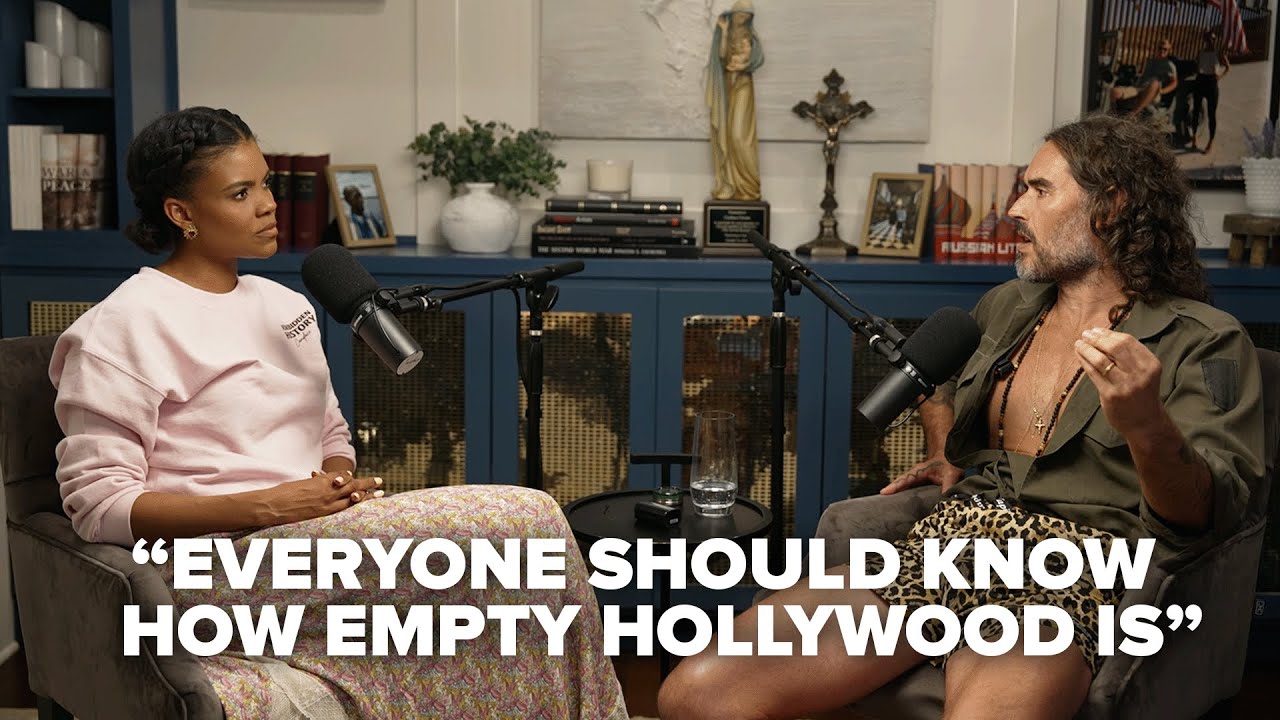
Candace Owens Reveals DailyWire+ Lawsuits, Charlie Kirk's Death Investigation, and Zionist Control in American Politics
4:44:27
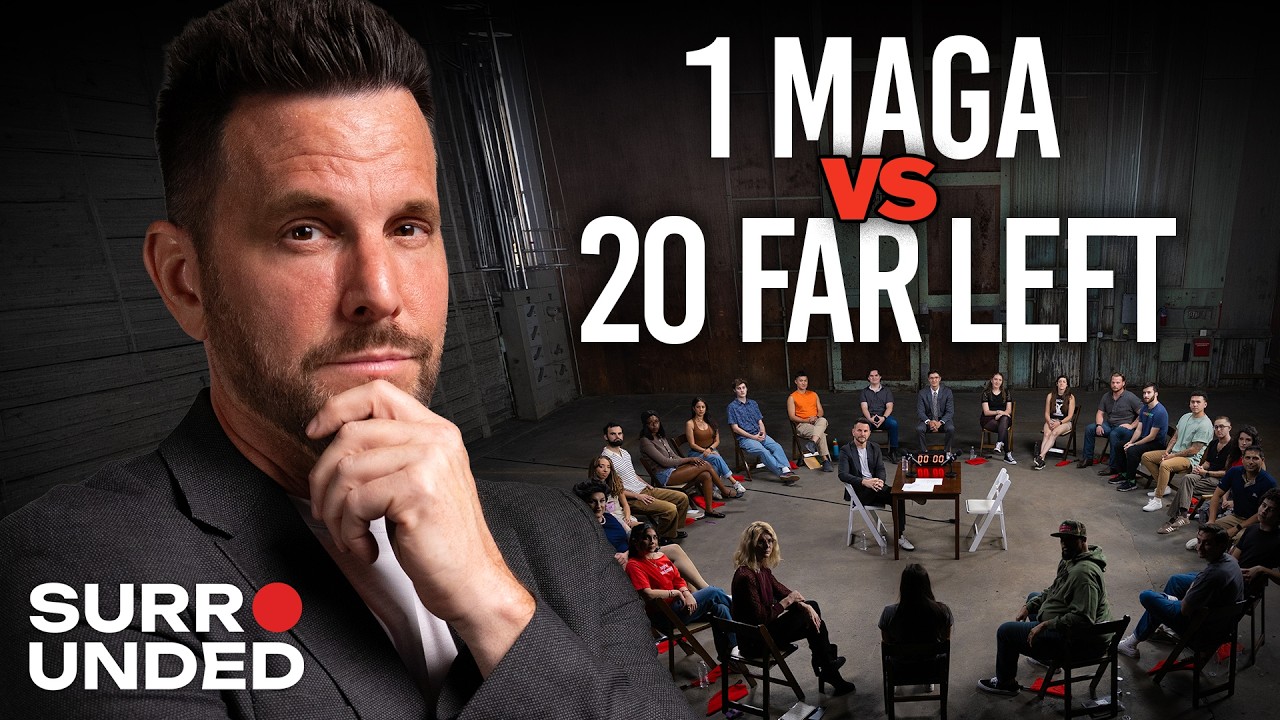
Dave Rubin Faces the Far Left on Wokeism, Broken Cities, and Trump's Legacy in Heated Jubilee Debate
1:41:05

Candace Owens Discusses Outrage Culture, Trump, Black America, and Her Political Awakening on Joe Rogan
2:31:05
Candace Owens and Mark Lamont Hill Clash Over Diddy Scandal, Black Celebrity Silence, and Kamala Harris Identity Politics
Candace Owens joins Piers Morgan alongside Mark Lamont Hill and Lord Jamar for a heated debate about the expanding Diddy scandal and the conspicuous silence from major celebrities. The conversation explodes into arguments about race, identity politics, and whether Barack Obama and Kamala Harris are exploiting blackness for political gain. Owens calls out LeBron James and John Legend for their deafening silence on Diddy's alleged crimes while championing other social justice causes. The debate intensifies as Lord Jamar goes viral for refusing to support Harris, accusing her of disrespecting black voters with word salads and manufactured accents, while Hill defends her qualifications and authenticity.
The Diddy Scandal Deepens
The scandal surrounding Sean "Diddy" Combs continues to expand with new allegations emerging almost daily. Federal charges including sex trafficking and racketeering have been filed, and a slew of new civil lawsuits accuse him of sexual assault against six victims, including a 16-year-old boy. What makes this case particularly disturbing is that it appears to have been an open secret in Hollywood for years.
Candace Owens explains that she's not surprised by any of the revelations. She points out that there was substantial evidence including picture and video documentation long before Diddy's arrest. The mainstream media, she argues, spent years defending this man, allowing him access to presidential candidates and portraying him as a hero while people behind the scenes knew what was happening.
Owens draws parallels to Jeffrey Epstein, suggesting that Diddy may have been collecting blackmail on various Hollywood figures. She believes this is just the beginning of the scandal, with more big names likely to face consequences. The silence from certain individuals, particularly LeBron James, is deafening according to Owens. She notes that James, who claims to care deeply about black lives and has been vocal about social justice issues, has said nothing about his friend Diddy being caught on camera beating a black woman.
Celebrity Silence and Double Standards
Mark Lamont Hill joins the debate, stating unequivocally that everything Diddy has been accused of is despicable and indefensible. He agrees that many people in Hollywood's old boys network, which includes powerful black men like Diddy, have likely known about this behavior for a long time. However, Hill pushes back against what he sees as unfair targeting of specific celebrities like LeBron James.
The conversation becomes heated when Hill reveals that John Legend actually did make a statement about the Diddy allegations months ago. Legend said he was horrified by the descriptions he read before video evidence came out, that his default stance is to believe women when they make accusations, and that what Diddy is accused of is shameful. This revelation forces an acknowledgment that assumptions were made without checking the facts.
Piers Morgan draws comparisons to the Harvey Weinstein scandal, noting that there was an absolute stampede of celebrities rushing to publicly denounce Weinstein when his crimes came to light. With Diddy, however, there's been a marked difference in the number of high-profile black celebrities willing to speak out. This raises questions about whether fear of what might be on Diddy's alleged hidden camera tapes is keeping people silent.
The Race Element
Mark Lamont Hill introduces what he sees as a race piece to the story, arguing that black people are being asked to denounce Diddy by virtue of being black in a way that white people weren't specifically called upon as white people to denounce Weinstein. He suggests there's an assumption that black celebrities should represent blackness in the black community.
Owens and Morgan push back hard on this characterization. Morgan points out that actually, the reverse is true when you look at the Harvey Weinstein scandal, every major celebrity who had worked with him was asked to comment and most rushed to do so. The difference with Diddy is that far fewer high-profile celebrities have been willing to make public statements.
Owens clarifies her position, explaining that she called out LeBron James specifically not because he's black, but because he has consistently used his platform to speak out about black victimization and social injustice. The hypocrisy, she argues, is in being vocal about every other issue affecting the black community while remaining silent when the perpetrator happens to be a friend. She also mentions Ashton Kutcher, who is white, as another celebrity whose silence is notable given his previous comments about Diddy parties.
Understanding the Silence
Hill offers an alternative explanation for why some celebrities might be staying quiet. He suggests that a lot of the subtext around Diddy isn't just about predation, but also about sexuality. Some people in Hollywood may be quiet not because they knew about illegal activities, but because they were at parties doing things that, while not illegal, could ruin their careers in a society that can be homophobic.
Owens agrees to some extent, adding that what many people didn't know was that Diddy was allegedly recording them. According to the lawsuit filed by Rodney Jones, there were hidden cameras throughout Diddy's properties. Celebrities who made comments like "ain't no party like a Diddy party" suddenly learned through the press that Diddy may have been collecting evidence on all of them. This uncertainty about what might be on tape could be buying silence as people hope to keep their heads low and avoid being exposed.
Cat Williams is mentioned as someone who talked about these parties years ago, describing walking around Diddy's house and seeing people engaged in various sex acts in different rooms. At the time, Williams was dismissed as crazy and a drug addict, but his allegations now appear to have been truthful.
Kanye West and New Allegations
The conversation shifts to Kanye West, whom Owens recently visited in Japan. An 88-page lawsuit was filed against Kanye alleging that he drugged and raped an assistant at one of Diddy's parties. The lawsuit comes from Lauren Pisciotta, an influencer and former OnlyFans star who has sued Kanye before.
Owens explains that she hasn't read the lawsuit because she just returned from Tokyo, but she asks whether there are videos and documentation like there were with Diddy, or if these are just allegations. She positions herself as someone who stood up against aspects of the #MeToo movement, specifically the idea that women should be automatically believed without evidence and that men should have their careers destroyed based solely on accusations.
The Diddy situation was different, Owens argues, because there was an unprecedented amount of evidence filed in the lawsuit, including pictures, photos, and documentation. She says she would be a complete hypocrite not to speak out if there was ever anything filed against Kanye as strong as what was filed against Diddy, especially given that Kanye was one of the first to use his platform to speak out against Diddy before it became popular.
As for Kanye's current state, Owens reports that he looked great, had lost weight, and seemed happy and healthy. He told her he needed to get out of Los Angeles, which Owens completely sympathizes with because she believes Hollywood is a demonic town that has been established by gangs since its founding.
Obama's Controversial Comments
The debate takes a turn toward electoral politics when discussion shifts to Barack Obama's recent comments essentially telling black men they have a duty to vote for Kamala Harris. In the clip, Obama suggests that some black men are coming up with excuses not to support Harris and that part of him thinks they just aren't feeling the idea of having a woman as president.
Lord Jamar, host of BET News and Upfront, responds forcefully to Obama's comments. He makes it clear that nobody should vote for anybody based on identity politics and that you should never vote for somebody just because they're black. Obama is wrong, according to Jamar, for trying to shame black men into voting a certain way.
Mark Lamont Hill agrees that Obama is wrong but clarifies what he believes Obama was actually arguing. Hill says Obama wasn't arguing that people should vote for Harris because she's black, but rather that as black people, they should vote for the person who best represents their interests, and that person is Harris according to Obama. Hill's issue with Obama's statement is that it frames black people and black men in particular as pathological and as people who act against their interests.
The Kamala Harris Question
Lord Jamar's viral comments about Kamala Harris become a focal point of the discussion. He expresses frustration with what he sees as Harris's disrespectful approach to black voters, accusing her of giving word salads and nonsense, acting like she doesn't have to answer questions, and being an artful dodger. When pressed on whether she deserves to be called derogatory names, Jamar explains that the platform where he made those comments was a different kind of platform, more hip-hop oriented and looser in its language.
Candace Owens goes further, arguing that there is nothing about Kamala Harris or Barack Obama that is genuinely black in terms of their lived experience. She goes through Obama's history in detail: he spent the first eight years of his life in Indonesia with his white mother and Indonesian stepfather, then went to Hawaii which had a population of just 5,000 black people, attended a school that cost $31,000 per year and was all white, was raised by his white grandparents, had a white roommate in college, and dated a white woman.
According to Owens, there is nothing about Barack Obama's history that gives him the standing to speak to "the brothers" about the black American experience. She sees a pattern of politicians being "blackified" right before they run for office, suddenly changing their story and leaning into stereotypes. To Owens, it feels like both Obama and Harris are wearing blackface.
Owens says she can't sort through all of Kamala Harris's various accents. In front of a Latina crowd, suddenly she's Selena speaking like a Latina. In front of a Jamaican crowd, she's dropping her voice and changing her affect. In front of a white crowd, she's speaking like a California valley girl. This slipping through so many personalities is something Owens doesn't trust.
Mark Lamont Hill's Defense
Hill strongly disagrees with the characterization of Harris as unqualified or inauthentic. He points out that she has many responsibilities beyond just the border, including serving as President Pro Tempore of the Senate and domestic policy adviser. While there are legitimate reasons to criticize Harris, particularly her support for what Hill calls a "vicious genocide in Gaza," framing her as unqualified is simply not accurate.
On the question of Harris's blackness and her code-switching, Hill offers a passionate defense. He explains that what Owens and others are calling "personalities" are actually codes, and black people code-switch from place to place all the time. He jokes about how he talks differently to his accountant versus his agent versus people at the local soul food spot versus the Five Percenters in New York.
Hill argues that when Harris says someone is her aunt, she's not lying even if they don't share blood because black people use fictive kinship and call people "auntie." Going to Howard University is a black experience. Pledging Alpha Kappa Alpha is a black experience. These are fundamental parts of black American culture that Harris participated in.
In a pointed comment directed at Lord Jamar, Hill notes the irony of someone who believes in Five Percenter theology, which holds that the black man is the Asiatic black man who came from North America by himself, questioning whether someone who went to Howard is black enough. It's a sharp critique of what Hill sees as inconsistent standards for determining blackness.
The Misinformation Question
Hill argues that part of the reason Trump's popularity is growing with black voters while Harris's support falls is due to what he calls a steady disinformation and misinformation campaign. He believes people are being fed information that is simply not true, including some of what was said during this very debate.
Morgan plays a clip of Harris talking to Roland Martin, listing all the reasons Trump is dangerous for black people: he was sued for not renting to black families as a landlord, he took out a full-page ad calling for the execution of the Central Park Five who were innocent black and Latino teenagers, he promoted birther lies about the first black president, and he claimed legal Haitian immigrants in Springfield, Ohio were eating pets.
Morgan's question is simple: if Trump is so dangerous to black people, why is his popularity growing with them, particularly black men, while Harris's support is falling from where Joe Biden's was? Hill attributes this to misinformation, while the other panelists clearly believe it reflects genuine dissatisfaction with Democratic policies and identity politics.
Code-Switching and Authenticity
The debate concludes with Owens mockingly demonstrating code-switching by putting on a British accent and suggesting that if it's so normal and acceptable, she should be able to run for president and put on a different accent every time she speaks to someone else. It's a sarcastic point about the difference between natural code-switching and what she sees as calculated performance.
The fundamental disagreement comes down to authenticity and representation. One side sees Harris as a qualified candidate with genuine connections to black American culture who naturally code-switches like many black Americans do. The other side sees a wealthy woman with an Indian mother who grew up with an Indian experience, was sworn into Congress as an Indian American, and only began emphasizing her blackness when running for president.
Both sides agree that identity politics shouldn't be the determining factor in how people vote. Both sides agree that Diddy's alleged crimes are despicable and that more celebrities should speak out. But they fundamentally disagree on whether the racial dynamics at play in celebrity silence, political endorsements, and voter outreach are examples of legitimate community advocacy or cynical manipulation.
Video Transcript
behind the scenes. Everyone knew that [music] this is what he was engaged in. This was an open secret in Hollywood. Did you know about Diddy Pierce? No, I didn't. No. You really are just getting to the beginning of everything. [music] People at the upper echelons of society and politics knew about this and they were okay with it. I said there's a [music] race piece to this and people by virtue of being black are asked to denounce Diddy because they're supposed to be representing blackness [music] in the black community. It's amazing, Mark, that you always see a race angle here. I'm I'm rejecting the matter that I've introduced [music] race into this conversation. The conversation, you literally said you wanted to bring race. You did. [music] I didn't say random white people. I didn't say random white people in the street. I said I said I said white people in Hollywood. To me, it feels like they're [music] both wearing black face. I can't sort through all of Camala's various accents. There's so many of them in front of a Latina crowd. Suddenly, she's Selena, you know, and she's speaking like a Latina, you know. I I I can't deal with it. As a black person, you should vote for the person that uplifts the black community. [music] That's her. How does she disrespect you? By plating to me by giving me uh word salads and all kind of nonsense, acting like she doesn't have to answer questions, being the artful dodger, and if she wants to get down, act like she's black. Well, the next US president will either be an accomplished state prosecutor and senator, or a billionaire real estate mogul who served four years in the Oval Office. At least that's how I and many other people see it. But the laws of identity politics, this is actually a contest between a mixed race woman and a very privileged white man who's intrinsically racist and race has inevitably become a lightning rod in miselection. This week, Carla Harris said that she's open to taxpayer funded reparations for slavery. She also unveiled an opportunity agenda for black men, which included legalizing weed and offering 1 million forgivable loans to black business owners. Most black voters will support it. Nobody doubts that. which is on track to win a much smaller share of black voters than Joe Biden did in 2020. Donald Trump, meanwhile, is on course to make substantial gains amongst black voters. In a little while, we'll debate why that is. But first, we're going to focus on P. Diddy, whose scandal deepens daily. Already facing federal charges, including sex trafficking and racketeering, Shan Combmes has been hit with a slew of new civil lawsuits accusing him of sexual assault against six victims, one of them a 16-year-old boy. Well, to debate this, I'm joined by the host of the Candace Podcast, Candace Owens, and the host of Bet News and Upfront Zero, Professor Mark Lamont Hill. Welcome to both of you. Uh, Candace, good to have you back on Uncensored. Pete, Diddy, uh, this seems like every day the scandal gets bigger and worse for him. Yeah, it certainly does. And I'm not surprised whatsoever. I mean, I think I was on your show before he got arrested and I I I brought up what was going on with him and because I had read through the lawsuit and it was just one of those things that was unavoidable because there was so much evidence. I mean, there was picture documentation, there was video documentation and I also want to be clear that the the press and the media and the public at large is is shocked by what's happening. But we really are just getting to the beginning of everything. There are a lot of people who have been named that have not been brought to heal. people that were above him, music executives. And none of this is shocking really. I think, you know, yesterday a a report came out that showed that faith in the mainstream media is at an all-time low, right? I think something like uh 65% of Americans no longer trust the mainstream media. The Diddy case is a perfect example as to why that is. You know, you you have people that spent so much time defending this man. This man was allowed to be with every presidential candidate. He was allowed to throw parties. He was hailed as a hero. And yet behind the scenes, everyone knew that this is what he was engaged in. This was an open secret in Hollywood. In fact, when Kanye last year said that he was a fed and started speaking about some of these allegations, he was simply dismissed as crazy. People at the upper echelons of society and politics knew about this and they were okay with it fundamentally because he was acting apart. I very much believe what Kanye alleged that he was acting apart like Jeffrey Epstein in which he was collecting blackmail um over various people that were in Hollywood. And so like I said, we're at the beginning. We're scratching the surface of this scandal. There are some more big names um that are going to have to answer for it. And I think also the silence of certain individuals like LeBron James is quite deafening. A person who uh claims to care so much about black life, you know, black lives matter on the ground taking a knee. Okay, that's fine. But now you have a friend of yours who has been on camera beating a black woman. Okay. You said nothing when that happened. You also know that you have various black people speaking out about how they were abused by him and you have said nothing. So I I don't like the hypocrisy behind that. Yeah, I think it's a good point. I mean, Mark, there are lots of big names being dragged into this. We don't know where the truth lies with that yet, but certainly people like LeBron have been deafening with their silence for the reasons that Candice just articulated. Uh, you know, it reminds me a little bit of Epstein in relation to all the apparent taping of videos and pictures and stuff that was allegedly going on. And we'll see what what that plays out like in a courtroom. Uh, but it also reminds me of Harvey Weinstein in the sense that there you had somebody, you know, in the movie industry as big as P. Did he think the most Oscar nominated person in the history as a producer in Hollywood, uh, where everyone must have known something about him, right? I mean, I knew that Harvey was a pretty bad bully and all the rest of it. Uh, and it must have been more than an open secret amongst a lot of those celebrities and Hollywood crowd. Did you know about Diddy Pierce? No, I didn't. No, wait a minute. Well, I didn't I didn't know. I only met I met Diddy. I met I tell you I met Diddy a couple of times. I mean, here's what I The point the analogy I'm going to make is I met Diddy twice for about 10 minutes. Um, Harvey I knew a lot better and I knew an there was an unsavory side to him. I didn't know about all the rape stuff that then emerged. But I do believe there must have been a lot of people who did know that stuff, who were around Harvey Weinstein at a close enough level to know that. And I certainly believe with P. Diddy that there were a lot of people that were going to these freak freakoff parties and so on who must have known for many many years that all this stuff was going on. That's the parallel I'm drawing. No, I I understand the parallel you're drawing. The idea that that I'm disputing is just the idea that everyone knew or they knew. Yeah, I don't mean everyone who knew. I mean, look, I just think a lot of people must have known. Of course. Of course. We're not in disagreement about a few things. First, uh, everything that Diddy has been accused of is despicable and indefensible. And I hope that he is held accountable in all the ways that are fair and just and reasonable. There are I mean who knows how many victims. You know there are lots of allegations. Uh I have no doubt that lots of the allegations are true and as Candace said I have no doubt that lots of people have known for a long time. Uh and there are lots of reasons why people didn't come forward. Some of it is good old-fashioned uh you know Hollywood culture which is people are getting exploited, people are getting hurt, people are getting harmed. Uh, but as long as it's the Old Boys Network, we don't care. And Diddy became one of the old boys network. The Old Boys Network isn't just old white men. It also includes powerful rich black men. Uh, not in the same way, but certainly uh people like Diddy are in that mix. I I don't disagree with that. I'm very uncomfortable throwing LeBron James' name out there as someone uh who knew something or or or has some fair. Yeah, but on that I think Candace was quite careful how she worded that. She didn't say that he knew. She just said he's been deafening by his silence, which he has. He's been very vocal about a lot of other issues involving the black community in America. Why is he so silent just because it happens to be somebody he used to party with? It's just interesting. It is interesting. But I I want to caution the audience not to jump to any conclusions about why LeBron hasn't. Again, let me be very clear. LeBron should speak out about this because something awful happened and he has a duty. duty. I think all public figures have a duty to speak out against awful, morally, atrocious things that happen. I just don't want to leap to a conclusion. I'm not saying Candace did. I'm not saying you did, but I don't want to leap to a conclusion um that that there's some other sort of uh reason why why he may have done this. The other thing here is I just remember on that I just remember I I just need I just need to hear I just need Go ahead, Pierce. I'm Well, the point I was going to make just on the point you made, all I was going to say is sorry. All right. Okay. This is Let me get Let me go first. Let me go first. The point I was going to make about the You go first. You go first. You just made a really good point which I want to make a point of, which is I think that the point I would make was when Harvey Weinstein went down, there was an absolute stampede of celebrities in Hollywood who rushed to distance themselves and publicly denounce him. And I've just noticed that with P. diddy. There's been a very very very small number of high-profile black celebrities, including sports stars, entertainers, and so on, who have chosen to do that yet. So, there's a marked difference between the way these two scandals have played out in terms of how many high-profile people are prepared to go, this is disgusting. Well, I I I think there's another thing here, right? Harvey Weinstein was a predator full stop, right? Diddy is based on the evidence a predator full stop and some other stuff. And there are a lot of people based on what I've know what I know people I've spoken to the stories I've heard and the rumors I've heard for 20 years now about Diddy that aren't always about predation. And and that's the complicated thing here, right? A lot of the the a lot of the gossip, a lot of the nastiness, you just hear me out, you'll understand. The thing is, a lot of the stuff, a lot of the subtext around Diddy isn't about predation. It's around sexuality. And so, a lot of people aren't aren't really outraged, especially in the hip-hop community, that Diddy uh was praying on underage girls allegedly or that he's beating up Cassie allegedly. Some people are just weirded out that he may have been having sex with dudes. And so there's a co there's a there's a multiple things happening here. And so a lot of the people in Hollywood who are being quiet on Diddy, they're not being quiet because they knew he was doing something illegal. Some of them are quiet because they were at the parties. They were at the freakoffs doing freaky stuff. And the freaky stuff isn't illegal, but it can ruin your career in a society that's homophobic. So I'm saying it's a lot of things mixed in. Okay, Candace, you're raising your hand. I think I know why, but go ahead. Yeah, you know, I I agree with you in some ways. Uh what I would just add is it's without question because they did not know that he was recording them. I mean when I read through that lawsuit uh uh Rodney made it very clear that he had hidden cameras. And if you are a person like LeBron who says ain't no party like a Diddy party, you got Ashton Kutcher talking about what happens at Diddy Party stays at Diddy parties and suddenly you learn via the press that actually uh Diddy has been collecting evidence on all of you and you don't know where those tapes are. that will buy your silence for quite some time because you're hoping that if you keep your head low, you're not going to be revealed as one of these people that was engaged in some of these acts. Whether they were heterosexual or homosexual, it doesn't matter. Maybe you're just cheating on your wife and you don't want that to get out into the public. Maybe you were, as Cat Williams described it, in one of the rooms. He said you could just walk around the house. He said this on stage years ago that you could walk around the house and you would see people engaged in various sex acts. And again, Cat Williams was someone who was dismissed as crazy and dismissed as a drug addict. And it turned out that or it seems that these allegations are proven to be true, and I believe they are. Um, then he was telling the truth. And I think that is the reason that so many of them are silent because they were doing things. They thought that he they were his friend, that they were bad boys for life, and that he would keep things silent when in reality he was just another Jeffrey and Epstein typed character. and they're they're scared for their lives. Yeah. Especially if you're someone like a LeBron James, and I'm not alleging that he is caught in something terrible, but if he was caught in anything and you're LeBron James and you've made your mark on talking about the ills of society and you, you know, have minted yourself a king and you're speaking out on the black community and they find out you're the room over uh while someone's getting raped potentially. Not going to look good. Well, I I just think, look, we don't know, as you say, where the truth lies with this and we're not inferring anything against LeBron or Ashton Kutch or anybody else. You know, I had Jaguar Wright on who made a number of allegations against Beyonce and Jay-Z which we were not able to independently substantiate which were vigorously which was ridiculous that they sent you a cease and desist. Just Well, they they just said they just said these allegations are completely sent you a cease and desist. Well, no, I'll tell you what they sent me. [laughter] It was sent actually it wasn't even that. What they No, I'll tell you I'll tell you what happened. They just said, "Look, these allegations are completely untrue and we will sue you if you don't take them down." We had no way of independently verifying anything she said in relation to Jay-Z and Beyonce. Now, you know, who knows where this scandal goes or where or what names get dragged in and in what way. But what it's taught me is you just have to be careful when a story like this breaks that when we put big names into the scandal, you just don't infer they've done anything wrong yet. The only thing we can say which is I think pertinent to this comes back to what we said at the start. When people who are as normally vocal as LeBron, who can be as condemnatory as he's been publicly about all manner of issues, when they're completely silent about something as big as this, and you know they were good friends with B. Diddy and were at the parties and so on, you just raise an eyebrow, right? And and you would about everybody and it may well be what as Candice says, Mark, it might be a sense of unknown, not knowing what's on tape here, not wanting to get involved at all. I totally understand it. But I do remember by marked contrast the number of people in the Weinstein scandal who raced to publicly disown him. And interestingly with Epstein that didn't happen with him because he also had a lot of because it's interesting. It's an interesting point Pier. I mean again Diddy is very interesting in that for the last 30 year he 30 years he has taken pictures and partied and hung out with everyone. Yes, he's hung out with politicians but I guarantee you a lot of them politicians. I ain't saying all of them, but a lot of them politicians had no idea what was going on behind the scenes. When you go to a Diddy party, there's levels to the Diddy party. There's the Diddy Party at the club. There's the Diddy Party at his house, then there's the after party, then there's the after afterparty, right? I ain't I haven't been to any of those after parties or after after parties or, you know, I mean, any of those parties, in fact. So, I'm I'm I'm just speaking as a researcher here and as a journalist. I'm saying um that there are levels to them. So, there are lots of people who go to the Diddy Parties that don't know any of that. But if you find out that all these awful things happened at diddy parties at 4 am, it's hard to go to the media and say, "Yo, I was at the Diddy party, but I left at 12. I was in the Hamptons, but I didn't go to the the next location." And so, I think a lot of it is fear of public relations. And I think to Candace's point, I don't think it's a coincidence that Diddy has all these strategic alliances with every single person in Hollywood, black or white. And I think Harvey Weinstein didn't have those types of relationships. So it was much easier for people to run from from him. You know the kind of you know the kind Yeah. You know the kind of hypocrisy though Candice which really gets my go with this. Take somebody like John Legend right who decided to rewrite the lyrics to Baby It's Cold Outside because it endorsed sexual uh misconduct which obviously was completely preposterous. It's one of the most innocent flirtatious videos ever made back in the 60s about a beautiful love song and it was completely misappropriated by by legend. [laughter] IT WAS RAPEY. KNOCK IT OFF. It's not rapey at all. Beers, baby, it's cold. Do you want to come in for a drink? It's cold outside. Do me a favor. And anyway, and even if you keep saying no and he keeps trying to get in harmless flirtation, which completely misconstrued deliberately by John Legend to tick all the right virtue signing boxes. But here's my point. What has John Legend said about that in court? What has John Legend said about P. Diddy? He was enraged by a 1950s video of harmless flirtation. So much so he rewrote the lyrics, Candice. But he's not enraged enough by what he's reading about P. Diddy, someone he knows well, to make any comment that I've seen so far. Right. That's ex and that is the reason why people can't stand the Hollywood types and rightfully so. I mean, John Legend has always been a walking contradiction. He speaks often, oh yes, the bullying of this cute Christmas song that everybody loves and I'm still going to play the original lyrics forever. Uh but his wife is sliding into the DMs notoriously of teenagers and telling them they should kill themselves and offering like this small apology like I'm really going to take some time off and think about this. So you married a bully. You are have been at so many parties friends with these people. You constantly purport that you're fighting for social justice on every cause. Like I said the real litmus test was the video which Diddy owned. That was him beating Cassie on tape. Okay. So, forget if you're like, you want to play the card of, well, it's it's innocent until proven guilty. I know people are making all these allegations, but I'm going to wait. Where were you on the topic of Cassie being beat to a pulp on camera? And did he offer this little meandering apology about that? [laughter] No, I I would just like to finish if you don't mind. You're allowed to. There we don't seem like there doesn't seem like there's a buzzer here, so I think I can finish my thought. Um, but you know, and that's what has become so problematic is they are constantly virtu signaling to the public about how great they are because they're not voting for Donald Trump. Donald Trump's such an awful person because uh he maybe cheated on his wife 16, 20, 30 years ago, whatever it is, and they just cannot muster that same energy when they are looking at proof, which somebody comes out and says to take full accountability. I did beat her. That's me. Yeah, it's ridiculous. Okay, monk. So, so here, so here's my response. And I and I didn't mean to interrupt you, Candace. Again, there's a sound delay. I didn't I thought you had paused. I wasn't trying to be rude. Forgive me. Um, we're saying that John Legend didn't respond to uh to Cassie or to the Diddy parties. And we're saying this as if it's true, but it's it's not true. And so, I just I I just want to read to you what John Legend actually said in response to this. And he said it months and months ago. He said, "I was horrified by the descriptions that I read before the video evidence came out." Meaning, he believed Cassie even before the video. He then said, "And absolutely, it's something that needs to be brought to light when it happens." He said, "My default stance is to believe women when they make these accusations and to make sure that we do whatever we can to support women." He also said that he was specifically horrified of this. And then he said regarding to the other diddy stuff, he said what he's accused of is shameful. And he said all the other victims that have alleged that he's abused them, it's sh it's quite a shame for them, too. I really just want accountability and healing. So, I think this is an opportunity for us to say this is why we shouldn't jump to judgment. were on national international television castigating John Legend for not doing the very thing that he actually did. Then all I had to do is type John Legend diddy and it came UP FIRST. SO YOU GUYS OWE JOHN LEGEND AN APOLOGY if you don't edit this. Yeah. Okay. So here's what I would say to that. That it's right that you've pointed that out. My understanding is that that were comments he made back in May. Not since we've had the raft of charges against Diddy, which is what I'm talking about. So there's been nothing. It's been a deafening wall of silence since the charges. That's what I'm talking about. We were just talking about Cassie. We specifically just said he didn't say anything about Cass. No, I think look Candace was talking about Cassie. He clearly did make a statement in referring to that and that should be acknowledged. So that's fair enough to point out I actually did not see the statement that he made about Cassie and read it in its entirety. So if I if I miss that, I'm I'm more than happy to own it. I did not see him make a statement and and typically when he makes a statement, it's everywhere. So I guess they just hadn't picked up on what he said about Cassie and he did great. I'm glad that he's one person in Hollywood who said something because that was the most troubling for me with LeBron James is I'm like we actually have video evidence of this like everybody should be saying something about this if you purport to care about women and him and Chrissy Tegan are typically very loud on topic his wife especially. Um so if I missed that and he said something about Cassie good for John Legend that makes he he and I are on the exact same side on that. But it's not enough that it's just John Legend. Like there needs to be a lot more people in Hollywood that are speaking out about what's happening. Let me ask you u there's a race piece to this too though. Can we talk about the race piece of this though? I'm sorry. Go ahead. I was literally about to ask you about that. So So you go ahead Mark. Go on. Because it's it's really fascinating here, right? So we're saying Diddy does this awful thing. Again, Diddy despicable monster. No defense of Diddy. We're asking all all the prominent black people to speak out against it, right? But there is never a call for white people to denounce the like no one says everybody who ever met every white guy who's ever met Harvey White to say something or [laughter] or or of course there was no no literally everybody who ever wor with him was asked to condemn it and most of them rushed to do it. Pierce Pierce Pierce I want you to listen to what I said again because you just disagreed with the point I did not make. I didn't say that everyone in Hollywood was not challenged to to address Weinstein. I said there's a race piece to this and people by virtue of being black are asked to denounce Diddy because they're supposed to be representing blackness in the black community. I'm saying that white people by virtue of their whiteness. No, no, no. That that's exactly what Candace said. That's exactly what Candace JUST SAID. I SAID CANDACE, not you. I'm not saying every black person has to comment on it because they're black. I'm saying I've been struck by the fact there is a massively smaller number of high-profile black celebrities who have spoken out comparative to what happened when Weinstein went down. So you're right that there is a race element to this but it's the reverse hang on let me finish. It's the reverse point to the one you're making. It actually is skewed against the white guy. He got more of a lambasting from celebrities than the black guy who's done arguably worse stuff. I wish I had the same race goggles. It's amazing, Mark, that you always see a race angle here. The reason why I specifically called out LeBron James and these types is because they themselves are wearing the same race goggles. They purport to be the superheroes in the black community that every time there's some sort of a social injustice playing out against a black victim, they use their platforms to speak out about it because they say, "Oh, it's so unfair that black people are not being believed. It's so unfair. # George Floyd # this person." So, if you are going to assert yourself as a leader when black people make claims before they're proven in court, this might be a good time to do it. When you have a man who had so much power in Hollywood and you just have an onslaught of black artists coming out saying that they were victimized by him, it might be a good time to use your platform. I'm calling out the hypocrisy and the double standard of that. If LeBron James had kept his mouth shut on every other issue and said nothing, I wouldn't be like, "Hey, why is LeBron James being quiet on this issue?" I'd say he doesn't typically weigh in on anything. So, it wouldn't make sense to put pressure on him to do it. That would be the scenario in which what you are saying would make sense. It's the exact opposite. I'm saying keep the exact same energy that you have had on every other black issue when it comes to your door and it pertains to a friend of yours that you were partying with. I think that's pretty sensible. Yeah. Um Mark, where is Do you mind if I respond to that because I I just there are three points that were made that like to respond to. First thing is I'm I'm rejecting the narrative that I've introduced race into this conversation. The conversation You literally said you wanted to bring race up. You did. You literally said I want to bring I'm literally started the talk with Henry. You did it. I want to ask you to allow me to finish a sentence uninterrupted the way you have Candace. Then you can hear why you're actually not correct. Hear what I'm saying. When I said I want to bring race into this, it was in response to the point that Candace had made five minutes prior. When you watch this on TV, y'all on YouTube, rewind and you'll see this. When she said LeBron James has spoken out for the black community, right? And historically, but isn't saying anything here. That was the first time that race was mentioned. My invocation of race was in response to that. And as you conceded just a moment ago when you disagreed with me, you were saying that you weren't asking all you you you were saying that there's a relatively lower response from the black community on this issue than prior issues. Black community of race, not black community, highprofile celebrity, black celebrity. Fair enough. Fair enough. Fair enough. That's a much smaller part of the community. I agree with you. But the fundamental point here is when I said I'm introducing race, it was to respond to a claim that was already race racialized around LeBron James. 5 to 10 minutes prior. Now, to actually address the issue that I was responding to because I didn't introduce race into the conversation. The idea here for me is when Harvey Weinstein does something, Hollywood has to respond. When Diddy does something, black people have to respond. Now, I happen to believe that as a black person with a public platform, an athlete, an actress, or a journalist, we should respond to the Diddy thing. I don't think that we should ignore our respons. I'm okay. But my my my complaint is is that when we when black people don't do it, we have a we are criticized differently than when the white guy doesn't. Hang on. Hang on, Mark. I'm sorry. But the idea the idea that people were running around asking random white people in the street about Harvey Weinstein is ridiculous. They're not doing it. I didn't say that. And they're not doing it [laughter] with random black people in the street either. I didn't say that. I'm talking That's a straw man. THAT'S A STRAW MAN. THE STRAW man argument is random white people. You are conflating. I DIDN'T SAY RANDOM WHITE PEOPLE IN I didn't say random white people in the street. I said I said I said white people in Hollywood. I said white people in Hollywood people in the street. I understand but I'm deliberately I'm conflating two things. I'm not the same. I'm I'm I'm conflating I know you are high-profile black celebrities and high-profile white celebrities and how they responded to Weinstein and to Diddy. And it's been very different. The volume of of white celebrities who denounced Weinstein was than it's been with Diddy. And my response to that is when Weinstein happens, pe people didn't say, "Hey, where are the high-profile white Hollywood celebrities?" What they said is, "Where are the high-profile celebrities? Where are the Hollywood types?" They were asking Will Smith as much as they were asking Heidi Clume. When it comes to Diddy, they're only asking for black people. Hang on. HANG ON AGAIN, MARK. HANG ON. I DIDN'T FINISH THE SENTENCE YET. LET ME FINISH THE SENTENCE BEFORE YOU DISAGREE WITH ME OR YOU'RE WRONG. TANDIS LITERALLY mentioned Ashton Kutcher who last TIME I CHECKED IS A WHITE GUY. I did mention Ashton Kutcher. Ashton Kutcher is white. Ashton Kutcher. I my Okay. Again, I want you to hear what I'm actually saying and I want you to actually hear what I'm saying and and disagree with what I'm saying and not what I'm not saying. The conversation about Harvey Weinstein and I challenge you to show me any piece of evidence where you called out and said, "Hey, I'd love to hear from some high-profile white celebrities." You never said white. You just said high-profile celebrities. Maybe to you Hollywood just means white. But in general, the idea here for for for for Weinstein was we want his peers to speak out. We want his peers to say something. We want white people, black people, who we just want his peers to say something. But when black people don't do it, it is framed as some kind of fail, some kind of specific or or unique moral failure. And that's the idea that I'm challenging here. Again, I want everybody to speak out against both of those monsters, but I'm saying let's slight respect. The slight floor is in Candace. Candace actually said LeBron and Ashton Kutcher. And last time I checked, Ashton Kutcher, and this may not be the case, but I believe he still identifies as a white guy. LAST I CHECKED, YOU'RE NOT CANDACE OWENS. LAST I checked, you're not Candace Owens. I'm criticizing you right now. Pier's not Candace Owens. So, you can't say, "Well, Candace said it." Y'all aren't y'all not They're not a buddy comedy here. I'm critiquing your approach and coverage of this conversation. And you can't say, "Well, Candace said it. I DIDN'T DISAGREE WITH CANDACE. I DISAGREE WITH YOU ON that particular point." [laughter] Okay. Okay. Let's take a little break. I do want to say you can't say Candace. I don't think you could say I would like to introduce race and then 30 seconds later say I did not introduce race. I mean the records will show. You definitely introduced race and I brought up LeBron James and for a very specific reason because he was quite literally at the parties and it's because he's used his platform to speak out on black victimization. Not because he was black. I was pointing out the astounding hypocrisy. I didn't say let's talk about LeBron James because he's a black band. I mean, I would have brought up tons of other black people and said, "Where are their voices?" But it wouldn't have made sense because they don't hang out with him and they don't use their platforms. And I did bring up Ashton Kutcher as well and very many other celebrities. I'm pretty sure Chrissy Tegan is not black. She's Asian. Uh, so I'm I'm completely confused, completely lost at what point you were trying to make there. I do think that you do tend to see things through the vein of race because when people are just making a sound point about why it is that there is some interest in LeBron James silence right now and I think he should speak out because he had a friendship there and because he purports that he cares so much about black victimization and there was a long list of black victims. I think it's very sound you can disagree with it and Mark and Mark before you respond I agree I agree with the point that you're making want to ask you something. You've also, I believe, and correct me if I'm wrong, but I think you said that there wouldn't have been the attention on uh the the raid at Diddy's home, for example, if he'd been a white rapper. To which I would say if that had been Eminem at the height of Say that again. Say that again. I didn't hear you. I believe you I believe you said before uh in a previous uh debate or interview that there wouldn't have been the same attention that was given to the raid on Diddy's home if it had been a white rapper. To which I would say, I didn't say that. You didn't say that. I didn't say that. I did not say that. What did you say about you can you can you can disagree with you can disagree with that point too but it's you wouldn't be disagreeing with me but I feel free to make your eminent argument. So apparently on on the documentary Well just to clarify on the documentary with TMZ that's what I'm told is where you said that. It's hard for me to imagine that had this been many other celebrities particularly white [music] celebrities that their children would have been in handcuffs and they would have been forced to stare down the barrel of of guns and and seen armored tanks. It it just seemed like a lot for for a raid of a music producer, right? I I I know the documentary you're referencing. I wish you would have watched it with all due respect and then you would know I didn't say that. I'll tell you what I said though. What I did say was not the attention. Diddy is an international superstar. Black, white, red, or yellow. We should be watching Diddy. And there's no reason why race is playing into the why of why we're watching it. That had no that had nothing to do with what I'm talking about. Um, what I'm talking about was the actual nature of the raid. Typically, unless you believe, and this is what I was arguing at the time, unless you believe that Diddy was an armed threat, there was no need to to handle his children, who were not at the time charged with anything in the way that they did, there was no reason to have SWAT gear uh almost like the national the National Guard is full military infrastructure to do this. Um, I think they should I'm not saying they shouldn't have raided the house. I'm not saying they shouldn't have arrested Diddy. I'm not saying any of that. I'm saying that what what my comparison is they wouldn't have done that to Mark Cuban. That's my point. But there's an I now as more evidence comes out. But Hang on, hang on, hang on, hang on. Mark, hang on, hang on. On that point, you said they wouldn't have done it to Mark Cuban. Mark Cuban is a massive celebrity in America. If he had been doing what we now know from this charge sheet against P. Diddy, he's accused of doing, damn right they'd have done that to Mark Cuban. These are not like small these are these are not small allegations. Well, have you read the charge? Have you read the charge sheet against Diddy? You know what he's accused of? That that's not what I'm disagreeing. Again, you you're saying you're saying you're saying you're saying the nature of the raid would not have been as over the top if it had been Mark Cuban because he's a white guy, right? Is that what you said? I I actually don't think it's quite that simple. I think the rapper part of it has a lot to do with and I think they might have done that to Eminem. That's what I'm saying. It's not purely racial. I'm saying what is the point you're making? I don't really understand it. I if I promise you just pro tip pure journalist journalist, if you let me finish the sentence, you'll completely journalist in proip. What I'm what I what what I'm what I'm saying is is that with Diddy as opposed to say Mark Cuban, just to use that example, there's an assumption that even if Mark Cuban is committing awful acts or Harvey Weinstein, we don't need tanks. We don't need to tie his children up and make them sit outside because there's no reason to believe that those children are going to do harm. There is a default assumption that there there's going to be a level of danger attached to Diddy that aren't even consistent with the charges. Again, he's a monster, right? But they don't usually break in to homes with tanks and machine guns for child molesters, even though child molesters are the worst people in the world. They're going to be pulled out with AR AR-15s. It depends how many guns they think the person has, I would imagine. Candace, back to you. Yeah. Yeah. So, I just wanted to bring up a friend of mine, James O'Keefe, who got braided by the feds and had guns pointed at him over a diary, Ashley Biden's diary they didn't even publish. He's a white guy, had nothing to do with anything. Um, and eventually was not found guilty. So, this is the way that they act during raids. regarding his children. If you read the initial lawsuit with Lil Rod, uh there was a very credible allegation which Lil Rod made that he was there the night that uh Puffy's Puffy Diddy, whatever his name is today, that his son was involved in the shooting that was in the bathroom. So, it's it was obviously um understandable that they may have thought given the allegations that his son had something to do with it. The son was listed all throughout the lawsuit. Um, so when they were raiding them, they were probably also raiding the Suns as well. That was my immediate assumption when I saw it. But I do think it's it's completely absurd to suggest that there was was any sort of rapper or black motivation behind the raid. Uh, like I said, James O'Keefe is a perfect example when they did not have anything. Um, they had no reason to raid James O'Keeffe in the manner that they did. And they did while he was in his boxers at like 3:00 a.m. in the morning and they put AR uh they put guns to his head. So, I just completely dispute that. On something just linked but separate. Uh you've just been with Kanye Yay uh over in Japan. I believe you saw him. Uh and that happened at the same time that an 88page lawsuit was filed against him alleging that he drugged and raped an existent while at one of Shaun Diddy Comb's parties. Uh this came from an influencer and former Only Fan star Lauren Pishota who's already sued him before. Uh she claims that the rapper regularly had sex with employees, had a rotating list of guests at his Yeezy company offices in makeshift bedrooms and so on. Um what's your reaction to that? I mean, do you is yay potentially uh another diddy here? What are we looking at? So I actually didn't read the lawsuit because I just flew over from Tokyo yesterday, but it were there videos and documentation of that or is she just alleging that in a second lawsuit that she's filed? I'm asking seriously. Yeah. I mean, c can I ask a question? Oh, sorry. Yeah. Go on, Mark. Candace, and I mean this necessarily. If if you read the lawsuit and it seems credible, I know you wanted to go through the legal process, but would you denounce would you denounce Kanye's actions or the allegations against Kanye as if there were ever a lawsuit as thorough? And I want to be clear, I'm the woman who stood up against the Me Too movement. I am very much disagree with women dropping allegations absent any any evidence and having their entire careers taken away, men having their entire careers. As much as it pained me, I stood up for Matt Lowour because I thought that what happened to him was wrong. The Diddy situation was completely different because the guy had pictures, photos, and documentation. Like I I've never seen an evidence I've never seen so much evidence filed in a uh lawsuit in my entire life. So I have not looked at this lawsuit. I don't know if I would file this under the me too thing where women just make allegations and then we're supposed to believe them. I don't believe in hashtag believe women. I'm very against that. I've been vocally against that movement from the very beginning. Um did not believe Amber Heard from the very beginning. So I would have to examine that particular lawsuit. But if any if there was ever anything filed as strong as what was filed against Diddy. And mind you, Kanye was the one who used his platform to speak out against Diddy before it even became popular, I would of course be saying something about that because we're talking about an entire ring of abuse, drugs, uh, pink cocaine. Again, these are allegations, but the pictures of the blood that he shot someone. I I I would be a complete hypocrite not to speak out and say, "Oh, well, he's my friend, so I'm totally okay if he's just shooting people in a bathroom and calling his friends to hide the evidence." I mean, this is I would imagine we're comparing apple to oranges, but I'm h happy to be educated on that lawsuit because I haven't actually read through it. And and just I mean, given you haven't read it, that's fair enough. Um, how is he? Yay. I mean, when I last interviewed him was about a year ago, and he was pretty well all over the place. He'd been accused of making a number of anti-semitic uh comments. Obviously, we all know about that. He's kind of disappeared off the radar a bit. Um, how is he? He looked great. I mean, he's lost so much weight. He looked happy and healthy and he essentially said that he needed to get out of Los Angeles. And I completely sympathize with that because I do believe that it is a demonic town. The Hollywood has always since its founding been a town that was established by gangs. You're talking about MGM and Paramount and the origins of Hollywood. They were bootleggers that then became directors and the owners of companies. That's just the reality. And and so I do think it was healthy for him to get out of that climate and and to move somewhere where you don't have paparazzi following you all the time and you know he's working on an album just by himself. And I think that that isolation is good for him. I mean Mark, should there be forgiveness? Well, your response first. Uh I I was just a little takenback by that that that exchange just now. I mean I uh two things. One on the Me Too movement. The Me Too movement doesn't argue and never has argued that we should uh prosecute people without evidence or that women can make claims without evidence. Um such an argument such an argument would presume that the woman's claim itself or the woman's experience itself does not count as evidence. If you're if you're if you're on a date and get sexually assaulted or you're in your bedroom and get sexually assaulted and you go to the police and say, "Hey, this thing happened to me, the police would take your statement and assess it and look for more evidence. But your initial claim itself is evidence. Your witness is evidence to but but if we say that women come forward and all they have is their story that they got raped and that's not evidence." No, no, that's not it. No, no, no. Mark, I think you're misconstring what Candace said, unless I'm wrong and I share her view on this. This whole you have to believe women or men by the way who make allegations like this. I don't agree with that. You know, every part of my journalist I don't agree with it either. You know, I just think I think the real trouble the real trouble with the me well hang on. There were lots of good things that came out of me too. The real flaw with it was taking that as the principle of everyone had to be believed whatever they were saying. Um because actually what everyone should be in that position they should be taken seriously. It should be properly investigated by proper authorities and justice uh should be seen to be done. That is how these things should be handled. Nobody should just be automatically believed because that way is what led to a number of people getting cancelled left, right and center when actually it turned out in some cases that they just did not deserve it. And Matt Low I'd say is a good example. Yeah. And I can't stand Matt Low, so it pains me to use my platform. You're being very against him, Mark. Yeah. I I didn't I didn't misconrue I didn't misconrue what Candace said. There's just a difference slightly between what she said and what you just said. I don't agree with either of you fully, but but I think there's a thing that we all do share, which is people be lying sometimes, right? People sometimes don't tell the truth. And we and we shouldn't assume that people are always telling the truth. The origins of believe women wasn't believe all women at all times in all places. There there are ways that that has become uh the the sort of almost caricature of the me too movement. But the idea here was that as a culture really a rape culture not just in the United States but globally we used to begin from a default assumption that women were lying that when a woman said I was she was raped the first thing we'd say is what were you wearing? What did you did you drink? You know are you dating them? Did you say yes how many? and and our our our default position was of doubt and skepticism and I think it was so believe and so and so and so and so and so believe women begins from a place of that but I agree with you lie you shouldn't have everybody else look you shouldn't have an instinctive disbelief of people who make allegations either right I don't believe you should fully believe or disbelieve anyone who makes claims you take them seriously that's what people want and they also want to feel I mean look I think the same in America say the same thing well the same yeah in the UK and America The number of people of convictions for rape, for example, in the UK is something like two or 3% of all cases that go to court end up with convictions. That's clearly ridiculous. So there are lots of flaws in this system which me too highlighted which I agree with. But I think this idea that you automatically believe people or disbelieve them. Both of them are equally dangerous. Um I want to just bring in another guest and keep you two here for a moment. Um it it's Lord Jamar who we interviewed recently about Diddy and who went viral this week for his comments on Carla Harris which I'll come to in a moment. But Lord Jamar first of all you you've been listening to this uh debate we've been having what is your view about where we are with this Diddy scandal. Uh you know uh it's been quite a debate. Uh you know uh I'm not surprised with everything that's going on with Diddy. I do feel his peers should speak out. Black, white, or indifferent. Um, yeah, what he's done, what he's being accused of doing is reprehensible. And, uh, yeah, we need to speak out about it. Do you think he's coming out of prison or is that it for him? [sighs and gasps] I don't know. It looks bad for him. you know, I don't know if he's he doesn't seem like the type that would do well in prison in my mind. Um, if he was really forced to have to do some time, I don't Yeah, I don't know if he's built for that. So, we'd have to see what happens. Well, let me just move to to the stuff that went viral with you, uh, Lar. This is your stuff about Carla Harris, which are you surprised about the amount of pickup that got? Uh, a little bit. Yeah. [laughter] But not really because I think people are a little shocked that someone like me, you know, from a group brand Nubian that they feel is pro black, why would I come out in support of uh, Donald Trump or go against a a Kamala Harris who they are trying to put up as a black woman and I don't see her. Well, let me let me I'm going to play the play the this first of all the Barack Obama clip and then I'm going to play the clip that you said in response to it. Let's play the two. And you're coming up with all kinds of reasons and excuses. I've got a problem with that because because part of it makes me think I'm speaking to men directly now. Part of it makes me think that well you just aren't feeling the idea of having a woman as president and you're coming up with other alternatives and other reasons for it. And now I want to play the clip from Lord Jamar talking about that white president saying you've got to vote for Trump if you're white. You'd have gone absolutely nuts. So why is it okay for Barack Obama to order black people to vote for Kla Harris given how unpopular she currently is to the extent where Trump is ahead in five of the seven swing states? Why should they? So a couple of things. Uh first um no one should vote for anybody based on identity politics. You should never vote for somebody because they're black, right? I Yeah, Obama's wrong. I mean, it's I didn't I didn't vote for him. I love Obama's wrong. Yeah, Obama's wrong. Yeah. So, we all agree. But I but but but I but I but we don't all agree though because I don't think though I I think Obama's wrong for several reasons on that in that video. But Obama's not arguing that you should vote for Kla Harris because she's black. He he's arguing you should vote for them because you're black. In other words, she best represents your interests. if I were running right and if I I'm I'm a Green Party member, right? I have to vote a Democrat. He was playing the race card. He was playing a skin color card. He was saying if you are black, you have a duty to vote for the black candidate. Yes. You don't listen. As Lord Jamal rightly said in his furious rant about it, why should he be told who to vote for? Okay. First, first f first of all, peers, again, you just said I'm bringing in the race card when the question you asked me was, should Obama be telling people the race card? Not you. I said Obama did. Oh, then I misheard you. I apolog I apologize. I m heard you. My I'm wrong. You're right. So, to the point, um Obama is saying that black people, again, I disagree with him, but let's let's let's disagree with him for the right reason. He's saying that as black people vote your interest. Don't reject this person. as a black person, you should vote for the person that uplifts the black community. That's her. And don't let your patriarchy, don't let your your hatred of women, don't let your this, your this, your this make you not do it. My issue with it is it it frames black people and black men in particular as pathological and people who act against their interest and acts as if black men don't also it's ah historical. Black men actually do vote Democrat, I argue, more than they should. So I I think it's wrong for lots of reasons. I disagree with Jamar though, my brother, calling her and again I heard a bleep. I'm I've been I've been in the hood a long time. From that context, it sounded like you were calling her the B- word. I couldn't see it, but I heard it. I'm not gonna vote for that. Bleep. Sounded like the B word. I can't imagine a circumstance where we need to call her that. You know, in in real life or in in in music and in there's just no reason for she doesn't deserve that any more than she deserves to be told that she does she's not qualified to run a Dunkin Donuts. Those types of comments, I think, are unnecessary. Even if you might agree that black people shouldn't be she, how does she disrespect you? by plating to me, by giving me uh word salads and all kind of nonsense, acting like she doesn't have to answer questions, being the Artful Dodger. That's very disrespectful. You think she deserves a B for that? Well, listen, first of all, the platform I was on was a different kind of platform. We was, you know what I mean? It's it's it's a much looser platform. It's more hiphop orientated. And if she wants to get down, act like she's black. Well, she is black and she is black. That's the other piece. I don't want to interrupt Candace. I know Candace got stuff to say. I want to hear Candace. I'm sorry. She is black and you're being and you're being particularly hypocritical, bro. Bro, you being real hypocritical. Let me clear two things up. First of all, Pierce, you had a guest on named VJ or something that said, "I never voted or something like that." I don't know where he pulled that out his ass from, but yes, I have. I actually voted for Obama uh the first time around. I got caught in that nonsense. But um also that comment that you're showing me was not in response to what uh Obama said. I said that prior to um Obama coming out trying to be the father of, you know, black men and all this type of stuff. But it was a good It sounded like it went with it. It did. But yeah, but in response Yeah. Uh, listen, Barry, you're not our father, and we're not going to just uh you're not going to shake the finger of condemnation at us and think that you're going to shame us uh into doing what you want. We're not, you know, we're waking up as black people right now and we're thinking for ourselves and we're not just going along with the Democratic party. First of all, I'm a registered independent, so don't act like I'm waving the Republican flag. But when it comes to leadership and all this type of thing, I don't see why we're trying to give this woman a promotion. She had one job, which was the border. She failed at that. They kept her in the background this whole time. I saw what they were going to do with her from the beginning. And I don't feel that she's the one. I'm sorry. And by the way, you are absolutely you are perfectly entitled. I want to bring in Candace who's been waiting patiently. I mean, Candace, this whole sort of premise uh and I I I'm glad you Lord Jamar clarified he said that before Obama spoke, although his answer clearly would have been exactly the same. The response would have been the same because it's all part of the same thing, which is this sort of weird thing which frankly is quite racist. Um there's no other way to look at it that if that you should judge according to your skin color and feel a duty, a compulsion to do so seems to me to be racist. It is fundamentally racist and it's something it's something that I think black people are right to be upset about. And then there's also this. You are correct to say that there is nothing about Camala Harris or Barack Obama for being frank that is black. I covered this on my show yesterday. Went through Barack Obama's history. There is something that is very cartoonish about them working to blackify a politician before they run for office. And what I mean by that is like Barry Storo first eight years of his life grew up in Indonesia. Okay. Then he was with his white mother and his Indonesian stepfather. He then went to Hawaii which had a population of just 5,000 black people. 86% of them were in the military and attended a school that is $31,000 per year and it was all white people by he was raised by his white grandparents, the Dunans. He's never lied about this by the way. He then went off to college and had a white dmate. Dated a white woman. There's nothing about Barack Obama's history that gives him in my in my viewpoint like the stepping ground to be talking to the brothers about the black American experience. If you ever even been to Hawaii, it doesn't even feel like America. Genuinely, it feels like we took this country from an Asian country, took this um state from an Asian country. And so when you realize that and you see how right before they run, suddenly the story changes. They drop a book and they work to blackify themselves. Obama didn't know his father, his Kenyan father growing up. And now all of a sudden he wants to lean into this stereotype. To me, it feels like they're both wearing blackface. I can't sort through all of Camala's various accents. There's so many of them. She's in front of a Latina crowd. Suddenly, she's Selena, you know, and she's speaking like a Latina. And then she's in front of a Jamaican crowd and she's dropping mun. You know, I I I can't deal with it. It's It is way too much Hollywood acting for me. Then she's got the black scent going and girl, what are you talking about? She's in front of a white crowd. She's speaking like a California valley girl. I don't trust it. Yeah. I just do not trust somebody that slips that quickly through so many personalities. There is nothing about her upbringing extraordinarily wealthy. Just she was sworn in Congress as an Indian American. Her mother is Indian. She grew up with an Indian experience and was proud of that until she ran for office for president of the United States. And that is something that I am not comfortable with. I I do not accept this narrative that she should be speaking about herself as a black woman. It's it's not okay and I fully reject it. Okay. Um, Mark, I just want to play you a quick clip of Kla Harris talking to Roland Martin, listing all the reasons Trump is dangerous for black people. I get your response. He is not looking out for folks when he is when he was a land lord and would not rent to black families, sued for it. When he took out a full page ad in the New York Times against those five teenagers, black and Latino, who were innocent. Yep. Saying they should be executed the Central Park Five. When you look at he the first black president of the United States and he had birth their lives and now you look at black immigrants, legal immigrants in Springfield, Ohio and he gets on a debate stage and says they're eating their pets. Come on. This man is dangerous. And my question mark is simply this. If he's so dangerous to black people, why is it that his popularity is growing, particularly with black men, and Kla Harris is falling from where it was with Joe Biden, who was white? Well, I I think part of it is because of the steady disinformation and misinformation campaign. Again, I am a critic of Kla Harris. I'm literally watching her co-sign and underwrite as vice president and on the campaign trail a vicious genocide in Gaza. I ain't got no time to support or defend Kla Harris on a lot of issues. Um I think there's a there's a very practical pragmatic reason to vote for her and and that is to say I don't want Donald Trump. And I think a lot of people are making that choice, but the people who are not are often being fed misinformation, including what's just been said by by by by my my dear colleagues here and you peers. Uh and you cracking it up, but a lot of it is just not true. And and I'm just going to say it real fast. First f first fir first first um the I didn't say you said it I said what they said so first the the question of qualification first Jamar said uh again she has she only had one job and it's the border that's just not true right that's not the only job vice president has lots of job and now disagreeing with the claim that she had one job not that she didn't have that job she was given specific responsibility for the border and now everyone's rushing rushing to pretend she wasn't the people who literally called her the borders on liberal shows pretend they didn't. Okay. What other public job like they kept her in the background for a reason for a very long time. Who who the who's the president prom who who's the president proemp of the Senate? President proemp of the Senate Kla Harris, right? Who's the domestic policy adviser? Kla Harris. Who I MEAN I I CAN NAME 10 things that she does other than that, but I don't want I don't want to make it about that. My point is is that there's lots of reasons to criticize Kla Harris, but to frame her as unqualified. Okay, again, that's a fair point. She's not unqualified. She's she she's she's qualified. She just might think she's going to make the wrong choice. Next point that she's talking about now, Marco, jump in. We're running out of time. Candace has to go. Is the biggest point. Let's go. Make your big point quickly. Let's talk about her blackness, please. Talk about the black experience real quick. Two two quick point Mark quick the the the the blackness point is what's crazy here to me. Right. First of all, the idea that she puts on they're not personalities. They're I they're they're codes and black people code switch from place to place. Wait till you hear me talk to my accountant later. Wait till you hear me talk to my agent later like, "Yo, why'd you put me on Pierce?" Just kidding. Wait till I talk to the people at the local soulfu spot. They all gonna be different. Wait till I say peace to the gods in earth in New York. It's gonna be a different conversation. Black people talk differently. When someone says that's my aunt, they're not lying because they don't have share blood. Black people call people auntie. That's fictive kinship. That is blackness. Going to Howard is a black experience. Pledging aka is a black experience. And lastly, Jamar, for somebody who is a 5enter who believes that, and I I I respect your belief, but to believe that the black man is the Asiatic black man, the maker, the owner, the cream of the planet Earth, the father of the civilization, the god of the universe, who came from North America by himself FROM SAUDI ARABIA. YOU BELIEVE THAT PERSON IS BLACK? BUT SOMEBODY WHO WENT TO HOWARD 8. COME ON, BRO. OKAY, I'm gonna leave the final word. Final word to uh Candace before we have to end. Candace, what's gonna happen on November the 5th? Switching is normal. Since code switching is normal in the black community, peers, I'm going to speak to you like this because [laughter] this would be totally normal if I put on a UK accent. And it's Well, I know where you get that from. your marriage. Thank you so much for Thank you so much for having me and I can't wait to run for president and just put on a different accent every time I speak to someone else. That's a perfect way to end it. Law Jamar, Mark Hill, and Candace Owens, thank you all very much indeed. I appreciate it.
Related Books
Browse Conservative Books