Up Next
Lila Rose Debates 25 Pro-Choice Activists on Abortion Rights, Bodily Autonomy, and the Right to Life
1:41:10
Dave Rubin Faces the Far Left on Wokeism, Broken Cities, and Trump's Legacy in Heated Jubilee Debate
1:41:05

Wisconsin Prison Data Reveals Shocking Truth About Male Inmates Claiming Transgender Identity and Sexual Offenses
14:20
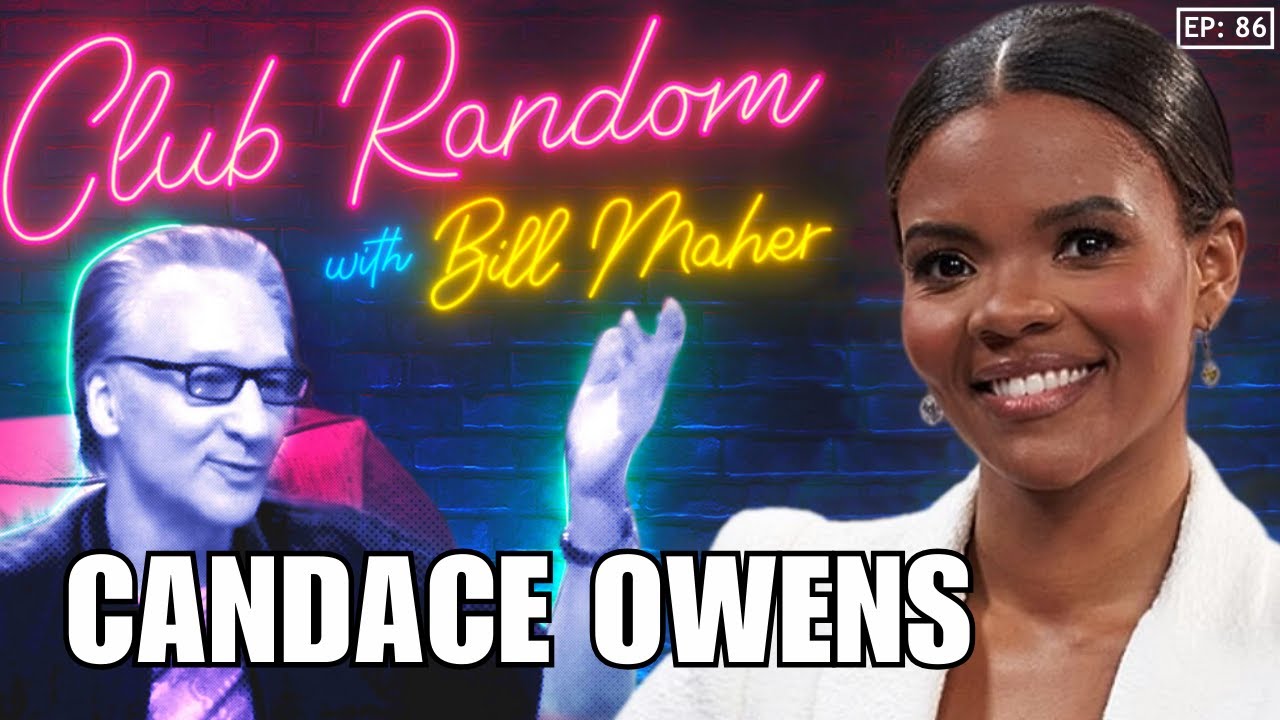
Candace Owens Debates Twenty Feminists on Sexual Revolution, Motherhood, and the Patriarchy
Candace Owens, author of the book Make Him a Sandwich, sits down with twenty feminists to debate three polarizing claims: that the sexual revolution has devalued women and made them less happy, that no career will give women as much fulfillment as raising children, and that we live under a matriarchy, not a patriarchy. Across heated exchanges, Owens challenges modern feminist narratives on happiness, motherhood, workplace fulfillment, and power dynamics. From discussions about domestic violence statistics and college debt to debates over biological differences and government influence on the feminist movement, Owens argues that women have been sold a lie about what brings true fulfillment. The feminists push back on her claims about inherent biological roles, the value of women's labor, and the definition of patriarchy itself.
The Sexual Revolution and Women's Happiness
Candace Owens opens the debate by claiming that the sexual revolution has devalued women and made them infinitely less happy. When Somaya challenges her with statistics showing that 60% of murdered women are killed by intimate partners, Owens questions what this has to do with the sexual revolution. She argues that people are generally more likely to be murdered by someone they know, and that men are less likely to be murdered by women simply because women commit fewer murders overall.
Owens maintains that the sexual revolution encouraged women to "give up their goods for free," which she believes has directly contributed to their unhappiness. She argues that encouraging men not to marry women or pursue long-term relationships has harmed women, as has pushing them into the workforce. When Julian, who uses they/them pronouns and teaches sociology and LGBTQ studies, argues that the sexual revolution brought empowerment and sex education that decreased STIs and abuse, Owens counters by questioning whether the government should be responsible for making people happy.
The conversation turns to queer theory when Julian explains identifying with all gender expressions. Owens presses the point that they're supposed to be debating female happiness, questioning how someone who doesn't identify specifically as female can debate whether women are happier after the sexual revolution.
Measuring Happiness and Defining Value
Zena challenges Owens on the premise that women have lost worth, arguing that this assumes women as human beings are worth less today than before the sexual revolution. Owens clarifies that women have devalued themselves by becoming overtly sexual, pointing to difficulties in finding committed partners and the marriage market. When Zena pushes back that this means a man's response to a woman's actions defines her worth, Owens argues that both men and women define each other's worth, with the ultimate goal being family formation for happiness.
Owens cites Nordic countries as examples, but notes that a 2023 scandal revealed many behavioral science studies on women's happiness were fraudulent and could not be reproduced. She argues that if feminism had truly made women happier, suicide rates among women should have decreased rather than increased. She points to rising rates of drug and alcohol consumption among women as evidence of declining happiness.
When challenged to prove causation rather than correlation, Owens argues that women are being put on an aspirational pathway that leads to unhappiness, including increased binge drinking and substance abuse compared to the 1950s.
Objectification and Rape Statistics
Nikki argues that rape rates have dropped by about half in the last 20 years, suggesting this contradicts the claim that women are more devalued now. Owens responds that rape is about power structure and objectification, not sexual gratification. She challenges the idea that women are less objectified today, pointing to OnlyFans, the Kardashians, and the prevalence of sexualized imagery in advertising and modeling.
Owens firmly rejects the notion that objectification has decreased since the 1950s. When Nikki mentions that women in the 1950s were pill-popping and viewed as house appliances, Owens counters that women are actually popping more pills now, with opioid overdoses among women increasing since 1999 at rates higher than men. She argues this demonstrates that entering the workforce has not reduced women's substance abuse problems.
Career Fulfillment Versus Motherhood
Owens presents her second claim: that no career will give women as much joy and fulfillment as raising children. John challenges this as an extreme position, questioning why having children would inherently make women happier. Owens responds that it's based on biology and natural order, describing children as "spiritually divine creatures" that bring fulfillment no other life experience can match.
She shares her personal experience as a New York Times bestselling author, stating she would choose her three children over her book Blackout without hesitation. When asked about a hypothetical girl who dreams of being an author, Owens suggests that even if such a woman publishes a book and has a child, she would agree the child was more fulfilling. She warns against women neglecting the pathway toward family because they think their career will "hug them at night" or comfort them on their deathbed.
Whitney questions why women don't stay home if they're inherently happier there, given that women make up 47% of the workforce. Owens attributes this to financial pressure created by feminist waves, arguing the government wanted women in the workforce to tax households twice. She emphasizes the financial burden of college debt, pointing out that most people take on six figures of debt to earn $35,000 annually, which doesn't lead to happiness.
The Exception Versus the Rule
When challenged about working while having children, Owens clarifies that she's an exception because she works from home without a boss and spends mornings with her children. She criticizes people in her position who preach that every woman can have it all, calling this unrealistic. The reality, she argues, is that most people are stuck behind desks doing work that doesn't gratify them while suspending time with their families.
Naima pushes back, arguing that millions of women successfully balance motherhood and careers, including Owens herself. Owens responds by citing studies showing that people on their deathbeds list giving too much to their careers as their number one regret, applying to both men and women. She warns against women suspending the pursuit of family to climb the career ladder, as many end up unable to find partners.
When accused of having no evidence and being evidence against her own claim, Owens clarifies that she's not saying women can have it all—which she calls an illusion stressing women out and contributing to pill-popping. She argues there's been more than a 1,000% increase in certain medication use among women. When challenged that men can be fathers and have jobs, Owens responds that women have been taught being a woman isn't enough and that they must also aspire to be like men, which she sees as the irony of feminism.
Economic Sustainability and Historical Context
Cassie brings up the economic reality that the average cost of raising a child is around $21,000 annually, questioning whether the society Owens describes is economically sustainable. Owens acknowledges it was sustained economically in the past but isn't currently. She also addresses being asked what decade she'd be comfortable living in as a black woman, choosing to park race politics aside and focus on the era when women understood raising children was fulfilling.
The conversation touches on government funding of feminism, with Owens pointing out that Gloria Steinem, a feminist icon, was funded by the CIA. She argues that the male-dominated CIA of the 1950s and 1960s funded feminist movements, questioning whether the government genuinely wanted women to be more free or had other motives for encouraging women to enter the workforce.
Living Under a Matriarchy
Owens presents her third claim: that we live under a matriarchy, not a patriarchy. She defines patriarchy as the idea that the American system is run by men and immediately disadvantages women, which she disagrees with. She argues that society is being influenced socially and politically by women, citing the #MeToo Movement as an example of women's political power.
Princeella counters with the denotative definition of patriarchy as father rule, noting that only 25% of the House of Representatives are women, 28% of the Senate, and only 3.3% of Congress historically have been women. Owens rejects the idea that disparity equals inequality, arguing it reflects biological differences in interests. She compares it to the fashion industry being dominated by women without anyone calling it a matriarchy.
Owens argues that women are allowed to be more vocal about problems, claiming that if women complain about men and reference the patriarchy, the media celebrates them, while men doing the same about women would be called white supremacists. She points out that women can vote and are voting men into office, suggesting this demonstrates power rather than oppression.
Education, Literacy, and Voting Patterns
Princeella argues that women voting for men doesn't disprove patriarchy because many women, influenced by lack of education, vote against their own interests. She cites that the average reading comprehension in the United States is sixth grade level and that according to UNESCO, two-thirds of the 7.7 million illiterate adults are women. She suggests that poorly educated people vote based on feelings rather than policy, with white women being the dominant voting population.
Owens asks if this explains why Kamala Harris lost, but Princeella redirects to the broader point about education levels. The discussion touches on classism, race, and how economic success influences voting patterns beyond simple gender dynamics.
Economic Power and Spending Control
A debater argues that by descriptive definition, patriarchy means men hold predominant power in political, economic, and social organizations. They cite that 90% of S&P 500 CEOs are men and 70% of board members and congressional members are men. Owens may argue there's a naturalistic explanation, but this would still constitute a "natural patriarchy," which feminists reject in favor of social pressure explanations.
The feminist debater notes that since feminism's rise, there's been an explosion of women entering these fields, though there's still a long way to go. They argue we're much closer to when women couldn't hold credit cards than to a system where men couldn't. Owens counters by asking who controls household spending, noting that women control 85% of household spending decisions. She argues she'd rather spend money than work to earn it, suggesting spending power is a significant form of power.
The debater responds that CEOs and board members aren't just working—they own shares and generate profit, which in a capitalist system is more valuable than spending. The conversation explores why women often handle grocery shopping and household purchases, with the feminist arguing this role was forced on women for millennia when they couldn't enter the workforce.
Changing Interests and Social Pressures
The discussion turns to whether interests are innate or socially constructed. The feminist points out that in the 1980s, only a quarter of college graduates were women, while now the majority are women, and about half of law school graduates are women. This demonstrates that as social pressures changed, women's interests changed too. They note that philosophers like Immanuel Kant and Hegel didn't even believe women could be reasonable, yet now no one would dismiss Owens's capacity for logic and reason.
Owens agrees women have entered college but argues they did so under external pressure, feeling they'd be failures without a degree. When the debater points out this admission that pressures shape interests, Owens clarifies they disagree on where the pressure comes from. She argues the pressure now is that women feel they must enter the workforce because there's no longer an understanding of coming together as family, with people marrying at 18 or 19 like previous generations. She sees this as a downside of feminism, with women no longer having that security and instead feeling pressured to take out loans for college.
Male Violence and Government Response
Paris presents statistics on male violence: 81% of women have been sexually assaulted, one in six have been raped, one in four are victims of domestic violence, 98% of perpetrators of rape and sexual assault are men, and 95% of perpetrators of domestic violence are men. Additionally, 70% of human trafficking victims are women. She argues that only one out of three rapes gets reported, and of those, only 7% end in jail time, suggesting the government doesn't adequately address male violence.
Owens responds that men are naturally inclined toward aggression more than women, which she's not shocked by. She notes that male-on-male crime rates show men kill other men more than women kill other women, which speaks to biological differences. She argues feminism tries to program people to believe men and women are the same, which she sees as a lie. The fact that men are more aggressive doesn't change biological hardwiring and has nothing to do with power dynamics, especially since the overwhelming majority of prison populations are male.
Owens points out that male aggression manifests positively when men defend the nation and go to war. She argues aggression as an aspect of masculinity has nothing to do with whether feminism is harming women today. When Paris connects this to power by asking about paid maternity leave, family court outcomes where abusive men access children, and the wage gap, Owens dismisses the gender pay gap as debunked. She argues it's not about devaluing women's labor but recognizing that brain surgeons make more than other professions regardless of gender.
Video Transcript
women, they don't want to stay at home when you pull them. They just want flexible working hours and flexible working conditions like you have. And I think we should all advocate for that. It's not one or the other. But when you sit here and you go, you'll be more fulfilled doing this than spend all your time doing that. We would love for you to leave the public eye and go focus on what makes you fulfilled. Okay. Hi, my name is Candace Owens. I am a podcaster, a mother, a wife, and also the author of the upcoming book, Make Him a Sandwich. And today I am surrounded by 20 feminists. My first claim is that the sexual revolution has devalued women and made them infinitely less happy. Hi. Hello. Hi. Hi. I'm Somaya. Somaya. Nice to meet you. I'm Candace. Nice to meet you, too. So my question for you is statistics show that 60% of women who are murdered are murdered by their intimate partners murdered by someone that they are in close relations with. Uh that's according to the UN uh from 2023. Yeah. So how is it that you know women are so valued you know quote unquote in the home and yet that's the place where they're at the most danger. Okay. So I'm not sure what that has to do with the sexual revolution. Right. sexual revolution. The sexual revolution gave I'm happy to answer it. I'm just saying that, you know, if you brought in that statistic, you are more likely in general just to be murdered by somebody, you know. So, of course, but men are much less likely to be murdered by, you know, their That's not true. Yeah, I'm sure. Because men are less likely to be murdered by women. Full stop. That's Yeah, exact. So, that statistic makes sense to me. I'm still not sure how this correlates to whether or not this sexual revolution increased women's ability to leave the house, women's ability to control their own reproductive capabilities, women's ability to, you know, control their own like capacity within the workforce in regards to their own sexual capacity. So, it is the very fact that like the sexual revolution happened that made our access to the workplace much more or or just the public sphere in general much more easy. So like without the sexual revolution, women would be much more confined to the place where they're at the most danger. Isn't that true? Uh so you think that just so I'm trying to understand your argument here, you think that if we didn't have the sexual revolution, less women or more women would be murdered? Are you saying that women are more women would be murdered? For sure. Okay. Um I disagree with that. I still don't think it has anything to do with the claim that women are infinitely less happy because of the sexual revolution which has deval less happy if you're being murdered. Oh, anyone disagree? Okay. Yeah. I don't Okay. Okay. There is definitely a correlation between personal relationships and domestic violence. And just to be clear, if we're talking about just like a monogous relationships, the most violent relationships that are on the books are between lesbian partners. Yes. when people are intimate. That's not that's not a truth. That is actually true there. No, the statistic you're talking about is people who have faced domestic violence. Lesbians, yes, are more likely to have faced domestic violence, but that's because they typically came from relationships with men in which lesbian relationships are the most violent relationships that we have on the planet. They can fact check that claim. The point being is that it's not exactly a stunning statistic to say that when people are in relationships period, whether those relationships are homosexual, whether they're saying that the sexual relationship Let me finish. I' I've let you try to explain how this is correlated to happiness and I I don't think it does. I I actually think you're you're having a different debate right now, but it Yes, absolutely. It makes perfect sense that you are more likely in general when you are in a relationship because people are driven by anger by people that they know whether or not we're talking about boyfriend and girlfriend, girlfriend and girlfriend, uh you know, a husband and a wife, a husband and a husband or a wife and a wife. Yes, of course, the instances of domestic violence are going to take place when you're inside of a home. But the sexual revolution, encouraging women to give up their goods for free, which is what I'm speaking about, and encouraging men not to marry these women or to have long-term relationships, what I am saying is a a direct contributor to their unhappiness because women are giving up their goods for free and women are now entering the workplace and that does not actually make them happy. Okay, pause. Sorry, you've been voted out by the majority. Please return to your seat. Hello. Hi there. How are you? I'm Candace. Candice. Nice to meet Nice to meet you. Um Julian, my pronouns are they, them. It's very interesting to think of it when we think about the gender binary. Um I it's, you know, how do we place value on human beings in general? And so when we think about, you know, placing value that comes from a p a place of power, right? So I think let's select like the Victorian era. you have this dominant group of people coming from white supremacy deciding who gets to have um a a a proper status in the world. And so that is already like placed taking human beings and devaluing them. And so what the sexual revolution did was to help people seek out empowerment which increased value no matter the gender. So when it comes to sexual revolution, let's look at one contribution is sex education. I'm actually an educator. I teach uh sociology and LGBTQ studies and I have absolutely seen the positive outcome with the sexual revolution and sex education and seen people empower themselves and with that comes uh safety when it comes to um decreasing STI uh abuse uh sexual assault again people get to empower themselves of all genders and I know earlier you mentioned about uh violence amongst uh lesbians and safic community which I do identify within all genders can be subjected to violence that was the point I was making. So, I wasn't sure of how her claim was relating to what we were talking about, whether or not it makes people happy or unhappy. Relationships are obviously a ground where there can be violence. I guess I could just wrap it up by saying like if we all have access to like sex education through the incredible work of feminists through the sex sexual revolution, we are able to gain access to information and gain skills to create an equitable society, egalitarian, within our relationships, whether they be platonic or romantic. I'm so grateful for those feminists who have fought for us so we can gain those spaces and create a healthier society. Okay. Are you a believer in the government doing everything that it can to make people happy? So when it comes as someone that teaches in the public sector, um I understand the concern when it comes about what is a teacher, you know, what kind of information they're providing to the students. Um I do believe that we as a teacher, I should be able to give that sort of information. Again, I teach college students. One of my claims is I believe that we should mandate uh uh sex education amongst college students. Um so yes, I do want the state I would like the government to give us those resources so we can implement that curriculum. Okay. Would you are you consider yourself a feminist? I'm assuming a queer feminist. There's there's diff there's variations, right? What is a queer feminist as opposed to a feminist? Just so I understand. Well, like so I heavily believe in queer theory. So you know the gender binary that we understand it comes from colonization. So someone who is mixed race um family from Mexico you know um we have the mushes of Mexico which is an indigenous tribe they believed in gender fluidity and then you have European colonizers coming who dismantle that and now everything that we understand when it comes to gender is a western lens. So from a queer you don't even think women exist. I'm guessing I think everyone should be empowered to figure out their identity and explore the language that best describes themselves. So freedom, America, right? America freedom and I want to believe in that when it comes to identity. Everyone should have the freedom to decide how they want to identify as long as they're not causing harm. But that's where we get into the debate. What is harm? So just again to be clear to go back to this claim, we are debating female happiness. You are saying you do not identify as a female. I identify with all gender expressions. So from masculinity to femininity. I So I'm just saying, are you just saying that as as a part of queer theory, you're debating whether or not women are happier after the se sex section revolution? I'm just trying to understand because it seems like you're debating queer theory as opposed to female. I believe all genders benefit from the sexual revolution. You've been voted out by the majority. Please return to your seat. [Applause] [Music] Hello, I'm Zena. Zena, very much like your name. Thank you so much. Nice to meet you. Can we start with the beginning? Do you identify as a female? I identify as a woman. Yeah. Okay. Right. So, I I do want to like get back to your premise. You're saying that women have been devalued, right, by the sexual revolution. This like kind of presumes two things. One, that there has been a loss of worth, right, for women. So you're saying that women have as human beings lost worth. Women who prior to their seol sexual revolution were worth worth more than women today. I would say that yes, women have devalued themselves by becoming overtly sexual. Uh that's my claim. So I mean also according to just and and let's not remove this from the other part of the claim which that has it has made women infinitely less happy. Right. So are you saying but you're saying that according to you women have been devalued? Not according to me. Um uh according to the time in which people are getting married, how difficult it is for people to find a partner that's willing to commit to them. And I think that's in large part due to the fact that women are offering sex for free because it was a main, you know, a major component of the sexual revolution was this idea. So a woman's worth is tied to her sexuality. It's not it's not tied to Well, absolutely. If you're going to be having multiple partners, you are going to be devaluing yourself. I you're worth less as a human being. Not as a human being. just, you know, in terms of trying to have a partnership and a productive relationship. Certainly, men are not going to be clamoring to have a relationship with somebody when there's the market is throwing them. A man's response to your actions is what defines your worth, right? Yeah. Well, um I would say that I would argue that at the what makes women actually happy is family. So, if you're interrupting, so just to connect the dots for you, when women are having sex with multiple partners, it devalues them for men, right? For men. So men define a woman's worth. Well, I would say both of them kind of define one another's worth because I think the ultimate goal for people to be happy is actually family. Okay. So you're saying in all cases a woman is going to be more fulfilled in regards to family. Like exactly what I'm saying. And this is going to work in all cases. You're saying there's no individual case in which a woman can feel you know fulfilled without being tied to other people in in the case of I think there could be an exceptional case for everything. I think there are exceptional cases. Uh but I think that if we all start trying to be the exception as opposed to recognizing the rule which is that people in life are more fulfilled when they achieve a family unit and when they have children, women in particular especially having aspiring to children then you are going to end up with a bunch of people who are unhappy because your job cannot replace the feeling of having a family. So what you're saying is we need to look at every individual case and see what is going to fulfill you or what is going to I guess essentially predict your happiness more because if we look at for example the Nordic countries right these are countries I'm talking about like Sweden Denmark right these countries tend to be like I think in the past 14 years they've been ranked as the highest in happiness and marital satisfaction from women right and we see that they also have been the most open regards to like you know sexual norms and and you know sexual roles right so and we also see that there's less rates of like STDs reported. Um we see um more um and that's also due to comprehensive sex education that's pushed in those countries. So we see that when we and that's like a direct result of the sexual revolution, right? So when we're seeing that direct reports of happiness, right, we don't have these same rates in America in these countries that are more sexually open, why would we see like those rates in those type of countries? So, I think you might be referring to this sort of mass-produced study that was a part of like a behavioral science study which said that women were the the happiest women in the world were women that were actually unmarried and had careers. No. Okay. Well, reported happiness. Okay. Sure. I'm talking about the same thing. It was reported happiness, but it could be a different there's tons of studies. The point being is that in 20 in 2023 there was this massive scandal where they recognized that a lot of these studies that were being produced behavioral science was proven to be a complete fraud and they were unable to reproduce these studies and they also found that the data had been faked. The data that we can look at that I think shows and you can let me know if you agree with this. If women and under the imagination of the feminist umbrella were really unhappy when they were in the home and then entering the workforce has made women happier and infinitely feeling more secure about themselves, we could, I think, reasonably expect that there would have been a decrease in suicide rates amongst women. You would have to go ahead and show how that correlation, right, is going to be a direct cause of women going into the workforce. Okay. Well, how can we measure? Then you have to give me a way that we can measure happiness. How can we measure happiness? I I would say suicide rates would be a good thing to look at. Drug, alcohol consumption would be a good course, right? But we have to we we can say I can say at this point in society, I don't think everyone is happy. I think there's a lot of things that we need to reconcile in society. That's what I'm getting at. But we have to look at the cause, right? Why are are these things predicted, right? And and for example, if we talk about men, there are a lot of things we can look at, right? That um that you know tend to predetermine suicide, right? But we can't say, "Oh, these two things are happening at the same time. This caused this other thing." Yes, that's right. But I do think that we can objectively say that women who are are committing suicide rates more than they were in the 1950s. Like it has it has actually increased marginally. That's not a sign that the us entering the workforce suddenly made us cause of the workforce. We've all we're also binge binge drinking at a higher rate. At a higher rate, how is this a cause of entering? I think women are being put on a pathway aspirationally. But you're going to have to You're saying you think this, right? But where is worth a cause? Like you're not you're not, you know, substantiating the claim. You're saying this is what I think. I'm seeing two. Okay. Pause. You've been voted out by the majority. Please return to your seat. Thank you so much. Great job. Great job. [Music] Hello. Hi. Hi. I'm Nikki. Nice to meet you. So when we're talking about the value of women uh on a societal scale and how we view each other, right, when you're devaluing us, you're objectifying us and and follow me, I promise. But rape rates have gone down by about half in the last 20 years, right? So if you're saying we're less valuable now, why wouldn't we be suffering at a higher rate? So is the argument that you're making, just so I understand, that because women are giving up sex for free, they're not being raped. Every study shows rape is not correlated with just sexual gratification. It is a power structure. Okay? So it is about objectifying and abusing women when you rape them, not about whether or not you want sex. What I am saying is that women are less objectified. So therefore, we are being raped less. Okay. So, you think that in today's society, cuz this is this is pretty wild for me. In the 1950s, you're saying women were more objectified than today in the land of only fans, the Kardashian clan, and women that are essentially putting up their boobs and butts for free on Instagram. You're saying we are now we've finally have achieved less objectification where women can't even get onto an advertising. you can't even advertise a bag without them having to be naked in order for them to get a career as a model. You're saying, "Oh, great. We've achieved actually less objectification." So, I'm not trying to suggest that I think that the overcommodification of women's bodies is positive. But what I am saying is that when you're going to the 1950s that we shouldn't put this glazed look of, oh, it was so happy we had single-income households and we got to stay home. We also had a pill popping problem. We also were viewed as maids like we were seen as a house appliance far more than we were as people. And so when you have that kind of objectification where you are in a subservient position, I think we're facing a different form today. But I think that rape is a signifier of a contradiction to your statement. Okay. Does that make sense? Um it doesn't make sense, but I I I do want to rebut it on a couple of points. So, first I just want to say suggesting that objectification is has gone downward since the 1950s is well that's just a firm no that is not the truth and you know that's not true. Wait, so do you but hold on let me let me answer your second thing. Second thing you you then brought up okay women were at home but they were pill popping. Well, it's you then have to acknowledge we're actually popping more pills now, right? So we have actually increased our amount of pill popping. women are having overdoses on opioids and on top of that since I think 1999 by rate we are increasing our opioid use compared to men. So women are not popping pills less because we're going into the workforce. That's actually not true at all either. Or so we're and we're also like I said to you consuming alcohol more and binge drinking more than we did in the 1950s which is why I was trying to get her to say we need to look at actually a reasonable give me any reasonable metric of how we can define happiness because it's hard right? Are you happy? Yes or no? Sure. But you're Wait, hold on. We're actually avoiding what my original point was was about rape being the signifier. Okay, pause. You've been voted out by the majority. Please return to your seat. Thank you. Nice to meet you. [Applause] Hi. Hi. I like your hat. Whitney Shanahan. Nice to meet you. I am fascinated by your claim uh that women have lost happiness since the sexual revolution since the 1950s. Do you think that there is any tie to happiness and freedom and happiness and choice? Because since 1950s, since the sexual revolution, women have gotten exponentially more freedom and more choice. And for me as a mother and as a woman having the freedom to choose what I do to make my own destiny makes me infinitely more happy than say back before the sexual revolution when I couldn't get a bank account couldn't get a home loan uh couldn't work outside the home couldn't travel around without a man uh couldn't control my own reproduction. So I feel that happiness personally my belief is tied to our ability to have freedom and I think that in the United States protecting freedom and our individual freedoms is what's going to lead us to happiness. Um did you go to college? Absolutely. Okay. Great. Did you? Yes, I did. So you have a degree? Absolutely. Now when you went to college, did you go to college because it was simply something that you wanted to do or did you think that I have to go to college because in order to get a job I have to have a college degree? I went to college for art because I was fascinated with art. Okay. Just answering my question. Did you go to co did was that the only reason you went to college or did you think that I might want to do something in art so I have to go to college like for my career? I went to school because I wanted to expand my horizons. I mean I think that's why most people go to university. Why? Why? That's actually that's actually not true. A lot of I I went and I think a lot of people go because there's a a pressure that if you don't go to college, you're going to be a failure. It's a choice. Everything's a choice. So taking away choices doesn't make people happier. Taking away I'm disagreeing with you on the idea that people are feeling more free by financial pressure. I think financial pressure makes people feel remarkably less free. So you want no bank accounts. Again, women not to have credit cards. I'm not saying that women shouldn't have access to credit cards or bank accounts. You're putting words in my mouth. So why don't you respond to the words that I'm saying? Well, less financial pressure. If I don't have a bank account, that's a lot less financial pressure. I guess that financial pressure in terms of most people that go to college, and I'm I'm counting myself among them. It's because typically in order to get the job that you're being sold is going to make you infinitely happier and infinitely more free. It just requires a college degree. And most of these people, to be clear, have to put themselves, the majority of people have to put themselves into debt. And I don't think anybody would describe debt as a form of freedom, right? I don't think anybody would realistically say, let's get back to happiness. So, we're here to talk about happiness and how the sexual revolution and we're not talking about college debt. I think it's important because we are we're talking about freedom. You just said that the reason why I feel happy is because I have more freedom. And I am saying that financial restraints and debt doesn't make people feel more free. Let's eliminate the debt. Let's eliminate college. Maybe we should have free college here in the US. That sounds great. Great idea, Candace. I love that idea. All right. Love it. Champion. Champion for the people, girl. Very nice. All right, return to your seat. Surrounded is now a podcast available wherever you listen. Search Surrounded, plug in, and stay part of the conversation. Anywhere, anytime. [Music] My second claim is that no career will give women as much joy and fulfillment as raising children. Not today. Hi, Candace. How are you? Hi. Nice to meet you. Nice to meet you. I'm John. Um, okay. So, I feel like a lot of your arguments today are very rooted in a sort of old school perspective. I have to be honest. Like I think, and I'm not trying to be insulting whatsoever, I feel as though most people would identify that claim as pretty extreme and pretty like children are extreme. Well, no, that that women would get more happiness inherently from raising kids than having a job or deciding what they want to do with their lives. Why is that? I'm I'm just curious. Why would having children, which is just a natural biological conclusion, be something that sounds extremely I just said inherently. Inherently, that's the inherent expectation that that's better for it's inherent because it's biological. So I think when we think about things that are inherent, I think biology is a good thing to start with, right? So biologically speaking, men and women come together, they form families, and that's the reason why you're sitting here. That's the reason that I'm sitting here is because biology is inherent. So I was saying it's just it's just natural order that we're speaking about, right? Okay, let's break it down. So why do why do you believe that? Why do you believe that? Why do I believe that? Why do inherently inherently are happier? Yeah. Okay. You keep stressing this word inherent. Yeah. I think because it speaks to natural order and every piece of life I think is enriched by children. You don't think it's natural for women to get to decide what they want to do with their lives? I do not think that saying women can decide whether or not they want to go to work or have children is problematic. What I'm saying to you is that women will get the most fulfillment from having a family because it's natural. It's natural, but also children are wonderful and beautiful and spiritually divine creatures. I mean, they're just they're amazing. There's everything about having a child. It Yes, it's a lot of work is just it's beautiful. I hear that. Well, okay. What if what if there's a a little girl born and it's her dream her entire life to be an author or to be you know on TV or any of these things and having children is very expensive. It takes a lot of time. So how is it better for that like and I understand this is hypothetical but that hypothetical little girl uh to have children than to pursue these things that would make her happy as she gets I just think that what if she publishes the book and she has a child she would agree with me that the child was more fulfilling and made her happy. That's what I'm happier than the book did is what I'm saying. And I say this as a published author of a New York Times. I I would choose my children over my best-selling book. And I was that little girl who had a dream that like, oh, it would be really great if I could share my thoughts and ideas in a book. But it is utteranity for me to reflect on that and say that I would have rather published Blackout than to have my three children. But why is it rather? You see what I'm saying? It's it's it's not rather. I'm just saying that's your claim is that it's better. be more fulfilled. Yes. So rather well if it's an either or if you're saying it's an either or I'm just saying that if these two things are happening have happened in your life the thing that will bring you more spiritual fulfillment will be children. And so women who are neglecting that who are neglecting the pathway to you know strive toward family because they think their career is going to hug them at night or they think that when they're on their deathbed their career is going to come up next to them and say you were so great to me. I think that they have stepped into a delusion and I'm hopeful that they wake up from it before it's too late. All right, pause. Sorry, you've been voted out by the majority. Please return to your seat. Hi. Nice to meet Nice to meet you. Okay, so currently women make up about 47% of the workforce. If this were the case and that women were just inherently unhappy or unfulfilled working and would just prefer to be at home, why don't they? Because it's we've made that due to prior feminist waves nearly impossible because now which I believe the reason that the government wanted women to enter the workforce was because it gave them an opportunity to tax a household twice. And so this goes back to what I was saying is that there's a lot of financial pressure that is being exerted on young women to enter the workforce and they do so blindly under this illusion that somehow entering the workforce is going to make you more fulfilled. Like getting yourself into six figures of debt going to college to then take on a career and be in debt and having to pay student loans while you make 35k is going to make you happier. And I'm saying that isn't actually true. Okay. So I hear that. At the same time, would you not agree that men and that women can both have a career and have children? I mean, you are actively doing that right now. And I want to be very clear because I am actively doing it right now. I would be someone that you would call an exception because I get to work from home. I get to wake up in the morning. I don't have a boss, right? I don't have to go into the office from 9:00 to 5:00. I get to then therefore spend the entire morning with my children. So you're an exception. And the 47% of women that make up our labor force are also an exception. No, the exact opposite. So, I'm trying to make it more realistic because I think it's it's really bad form when people who are able to stay at home, right, and are able to start working at, you know, 1:00 p.m. as I do after being around their children. The children are running around all day will then preach to you that every woman can have this. That's that's not the reality. The reality is that the overwhelming majority of people are stuck behind a desk all day and they're not happy. They're not doing work that gratifies them at all. and at the same time they're suspending. Well, that's just what career you've chosen. But I think that the issue with work a 9 to5 I think that's that's okay. Yes. But if it's the job that is making them unhappy, then maybe they should have chosen a different career path and not the structure of the career itself. But my issue with this is that not only is it claiming that women can't both be mothers and have jobs, which we know to be true because millions of women do that. My mother does that. You are actively doing it right now. But it also is qualifying what every single woman in this country wants without any clear evidence. I mean, there's 169 million women in this country over. How can you say that you know exactly what every woman secretly wants? Are you asking? I didn't. That wasn't my claim that I secretly know what every single woman wants. I'm saying that if you measure up at the end of your life, what brought you more fulfillment, your career or a child, children, raising children in your family, we will discover that and and there actually have been studies people that have gone to people on their deathbeds and the number one regret that people have was that they gave too much to their careers. And this includes men, by the way. Oh yeah, that's true. I mean, of course, human relation is going to be valued over money and profit. But at the same time, what does that even agree with my argument? You're agreeing with my argument. Humans prefer humans over a job. But that's not just singular to women. That's everyone. And my question is, what does that even have to like what is the goal of that? Should every woman quit working and just have a child? Well, I'm just trying to warn you that if you decide to suspend that pursuit of family because you think that you have to first climb the ladder, a lot of women make that mistake and they don't end up finding a partner. That's their right. It's free will. You definitely have a right to make you don't get to say what people should and shouldn't do. I didn't come I don't think my claim is this is what people should or should not do. I'm just simply stating that my claim is that you will be more fulfilled if you focus on trying you need to decide what other people are fulfilled by. Okay. I I am making my claim here that you will women are infinitely more fulfilled in the household and raising children than they are taking that 9 toive job. But you have no evidence of that. In fact, you are evidence against your own claim. I'm not evidence against my own claim. I'm saying that you're here at work right now. I'm literally I've literally said I am telling you women cannot have it all. That is an illusion and that is an illusion that is stressing women out and I think it is the reason why so many women are turning to popping pills. Why there's been such a significant more than a thousand% increase. But men can have it all. Men can be fathers and have a job but women can't do that. I don't think you can have it all. It sounds like you're devaluing women. I think that women can do everything that a man can do and men have done this historically throughout time and memoriam. I think women women is our topic debate topic today. So I mean women exist in a society with men. We are comparing women are trying to be both women and men and that is why women are unhappy today is because actually what's quite ironic about the feminist movement is that women are just trying to be people. I think women have been taught that being a woman is not enough and that you have to also aspire to be a man. And that's the irony. It's like a psychological conditioning. What feminists went out and did and said is that in order for women to have value, women need to be like men. And I'm saying that actually women and men are biologically different. There are differences in our behavior. there are differences in our desires and I think evidence of the feminist movement by the way shows us that because even when women enter into the college education space the pathways of career that we choose are different from men because we're biologically different right okay so let's say that this is true that women truly are more fulfilled at home now the average cost of raising a child a year is around $21,000 or more so my issue is are you saying that women should just suddenly stop working and now the onus is entire entirely on men. Like the society that you're pitching is not sustainable economically. It was sustained economically, but it's not right now. Pause. Naima, you've been voted out by the majority. Please return to your seat. Hi. Hi, Cassie. Nice to meet you. Nice to meet you. Um, so your claim is that women will be h happier at home. I think you're conflating though happiness with importance cuz I get what you're saying where a woman can write a book and have kids but the kids are always going to make her happier but I think it just means that kids are always going to be more important not necessarily make you happier but also piggybacking on Naima we don't live in an economy where people typically can have a one-inccome household whether it be the mom or dad that stays home. Um, and so I think, and you keep bringing up the 1950s, which cuz it was right before the I just don't know if that's the period of time that you want to go back to. Well, it's just I'm just going back to the first wave of feminism. You want to undo progress that's been done. So, I'm curious as to what decade you'd be comfortable living in, especially as a black woman. Okay. So, we're going to park aside the race politics because I want to I want to f focus on Okay. Then, as a woman, what period of time do you want to go back to? Uh just as a woman, I think that it was probably a better environment for women when we were we understood that raising our children was fulfilling. But some women still do understand that, right? And a lot of women and I'm here advocating for you to be able to live the life that you want and for other women to be able to live the lives they want. Do you have children? No. Okay. You have a career, I presume? Yeah. Okay. What What do you work? What field do you work in? I do hair. Okay. Wonderful. So I have both children and a career as somebody pointed out. And so the fact that I'm saying that you will be infinitely more fulfilled at the end of the day by raising your children than you will be if you come home and you say, "Wow, I really crushed it dying somebody's hair today." What is it exactly that makes you angry about hearing that? Like that's what I'm I'm actually trying I'm trying to get I'm trying to get to the implicit revolution. Here's the thing is that no one mentions children. No. See, no one's angry when you mention children. I get angry, I guess, when you mention that someone should have a children or you're trying to impose a lifestyle onto people that you want to live, which I think is kind of funny because as someone who's anti-feminism, you practice it more than most women do. I mean, every time you get on your podcast, every time you collect a check, you're practicing feminism. Okay. That's what you think. No, that's what it is. Because without feminism, you wouldn't be able to exist. Yeah. People keep saying I hate when people say that. It just shows that you you haven't done the research to even understand where the feminist or you don't know history which was discoverable that that's what I'm saying about you because it means that you don't understand that a bunch of government officials in the CIA funded the feminist movement. So for all of your hatred for the patriarchus so my question is is it bad that they funded it or bad that it just happened? Men wanted men wanted women to go into the workforce. the government which had a lot of men. It was being Are you talking about because World War II occurred and we had to go to factories and then when we left the factories they forced us back into the homes. That's not what I'm saying at all. So let me tell you what I'm saying and then you can respond to it. Gloria Steinum is considered to be a feminist icon, right? Because she led these protests. She also had a bunch of music festivals. She got students involved. It is just a fact that Gloria Steinum was funded by the CIA. Okay. The CIA being the maledominated CIA of the 50s and the 60s funded those movements. So what what what do you think was the explicit aim? Do you think it was because the government really wanted you to be more free that they wanted to encourage women to enter? Well, I have to be honest with you, I couldn't speak on behalf of the government, you know what I mean, and what their intention. Well, I think it's important because you just said that I don't know history. And I think it's pretty important if you're going to sit across from me and say, "I don't know history that you learn a piece of history and then question." You keep bringing up men and I think it's funny cuz we should talk about men more like you brought up suicide. They're four times more likely to kill themselves which is why and while women we're twice as more often on anti-depressants, but that's cuz we go out and do what we need to do to keep coping. And we need to focus on men and the patriarchy because it's actually oppressed them just as much as women now emotionally, right? Because when we're kids, we our parents teach us how to cross the street. Look both ways so you can get the other side unharmed. When a boy comes across a feeling, and I'm using men and boys here because they're the ones suffering, women are too, but emotionally when they come across a feeling they haven't felt before, we have to teach them how to get to the other side and cope with it. Otherwise, they stay where they are. That anger and resentment builds. That's the feeling they become most comfortable with. That's the feeling they go to first in most situations. So, we need to stop telling our boys that they don't cry, cuz they do. They just do it alone and then they become even more alone. All right. Uh, nice to meet you. Okay. So, you say that women are more fulfilled at home with kids than going out into the workforce or getting educated, but that just really doesn't bear out when you look at the stats. When you look at how working mothers are way less likely to be in poverty, maternal education is the number one predictor of childhood outcomes, better scores, uh getting higher incomes in the future, fewer behavioral problems, better mental health. So, it's weird to me with and college educated women are least likely to get divorced, and they're the only women, the top 10% of women are the only women whose marriage rates are going up. So, they're getting married, they're staying married, and their kids are doing better. When you look at stay-at- home mothers, you see that they're more likely to report being depressed. they're more likely to report having um anxiety and anger and all these types of things. So, how can you say that? Seems like a woman if you want to get married and have kids, you should go to college and have a career. So, I it sounds to me like we are looking at totally different statistics because everything that you said I I've actually read the exact opposite. I'm glad we're on a fact check show with you. Exactly. It's so exciting. That's going to be amazing. Okay. Because I know, like I said, I I think what we're talking about is that there was this widespread report on female happiness. And I I know that it was it was formerly debunked and it was that's not what I'm talking about. Pew Research, University of California. In fact, working mothers today spend more time with their ch children than women did in the 1960s that were at home. Okay. Well, women that I can tell you women that are at home are obviously spending more time with their children than the people who are at work and their children are not fairing off any better and they're fairing off worse. How are you measuring their children fairing off worse? Uh how likely they are to uh higher incomes, better scores, fewer health problems, fewer behavioral issues, and better mental. So the the just to get back to the claim that I'm making here is that it is obvious that women who have children are going to be more fulfilled. How is that obvious? Because you said so. No, it's not obvious because I said so. It's because when you look at all the statistics in terms of women who are choosing not to have families, they are, as the person who just sat here before you mentioned, they are suffering from more depression. They're suffering from more anxiety. And I and that's not true. Okay, it is true. It is actually true that women who are choosing their careers overstarting families are finding themselves leaning more onto on to medicines like Xanax, anxietyinducing medicines and depression because they suspended that time frame where women really should be looking to find a partner and to start a family because they were instead pursuing their careers. There has been a there it has been it is a dishonest it is is totally a dishonest narrative that men and women want the same things out of life. We don't we absolutely do not want the same things out of life. In fact, we don't even measure we don't even measure success the same. Men and women don't even measure success the same. So, but but tell me how the women who are working and getting educated, why are they fairing off better in all of these? I am telling you that I do not believe they are fairing off better in all of these men. I do not because because of what? I am telling you that we are looking at totally opposite statistics. Like, so you're sitting here telling me that the statistics show that women who are working are producing better children. But I am saying that women that grow up in a a two family home where the mother stays at home are fairing off better than the the children who are being raised in an environment where parents where both of the parents are away from the home. I do get to work from home. No, but you watch your show. You talk about all the nannies you hire and it's so hard to find a talked about all of the nannies I hire. But you have I spoke about how difficult it was to find a babysitter who knew how to cook a meal and that's because you don't need a babysitter. You're already you could retire right now. Let people respond to you when they're when they're speaking. You don't want to to respond to you when No, you don't want to. You want to be working, which is great. You're telling me what I want now and then accusing me of telling you, wait, are you you don't want to work? Can you just let me finish? Cuz you've said so many words that you just what you're trying to do here like your argument style is I'm going to say so much and not let her get a word in and then walk away and feel like I've won. We're not having a conversation because you've not let me respond to each one of your points. Okay. What I am saying to you, first to answer what you just said, which was a lie. What I spoke to about on the weekends is that it's been increasingly difficult to find a 25-year-old who even knows how to make box macaroni and cheese, right? It's and that's crazy. That's and that is in large part due to feminism. Women don't even focus. Women don't even focus. Like there's this there's this there's this idea that women shouldn't be cooking. Like there's something fundamentally wrong with women even learning how to cook. You know what I mean? You're spending as much time with your children as you possibly can because that's the way to get the most fulfillment. No. And that's what I'm trying to say. I am speaking to you as Stop. Okay. Could you please let somebody get in the word edgewise? You're not. You actually have not let anybody finish. And like I said, it's it's no one benefits when you're just speaking over me and not allowing me to respond. All you're proving is that you have an attitude and you believe in feminism, but you're not see that's what I'm saying. You just have an attitude and it's not it's not true. It's performative. Address my point. I will be quiet if you address my point. Does anybody actually feel here that I am being allowed to address any of her points when she just keeps running over me? Like you I'm literally trying to answer to your first point of you saying that I don't stay at home. Yeah, really weird. Fair point. Obviously, I get that you're all anti-Canis and pro- feminist, but also it's not productive if you're not actually Okay, address the point. You spend more time saying that I'm not addressing that you you don't have a chance to talk when you the whole time you could have addressed the point. You could have talked. I just want you to know that you're not coming across as somebody who wants to actually have a conversation. So, to get back to the claim because I don't even know where you're at. You're not talking. You're saying that I said stuff on my podcast. I'll go wherever you want to go. I'll go wherever. So, do you want to start with me working at home? Cuz I work at home. You just said something about me working. You travel all around the world. I you you do speeches and I love that. I love how ambitious you are. That's a really great trait. And if you were truly said that you would be more fulfilled. Now, one thing you do find is women, they don't want to stay at home when you pull them. They just want flexible working hours and flexible working conditions like you have. And I think we should all advocate for that. It's not one or the other. But when you sit here and you go, you'll be more fulfilled doing this and spend all your time doing that. We would love for you to leave the public eye and go focus on what makes you fulfilled. Okay. Hey, before we go any further, we want to take a moment to say thanks so much to Straight Arrow News for powering the fact checks in this video. Straight Arrow News is on a mission to raise the bar on journalism in a time of media bias and mistrust. Straight Air News helps you quickly find trusted information you need to understand the news, allowing you to dive deep into the topics that matter to you and the world around you. Their work is trying to break the bias bubble, helping you understand how every side of the political spectrum is reporting on a story so you get a full picture of the news. That's why we're so happy to be partnering with Straight Arrow News. They deliver the facts unbiased, balanced, and designed to make sense of a complex world, getting you the clarity you deserve and news you can trust. Go to s.com/surrounded or click the link in the description to check it out. By clicking that link, you're not just supporting this channel. You also take advantage of a better way to get the news. Welcome back to Trustworthy Journalism. Thanks again to Straight Arrow News for partnering with us on this episode. Now, let's get into it. My next claim is that we live under a matriarchy, not a patriarchy. Hi. Hello. Nice to meet It's a pleasure to meet you. I'm Princeella the Queen Maker. I love that. So, you say we live in a matriarchy. Can you give me the definition of patriarchy? Yes. Well, the patriarchy is the idea that the the the system our system in America is being run by men and that women are having to exist under a system that immediately disadvantages them because men are behind it. And I disagree with that pointedly. I think actually we're living in a society where people are being very much influenced socially and politically by women. Okay. So the denotative definition of patriarchy is father rule and where positions of government are held majority major majorly by men where women are largely largely excluded. So 125 House of Representatives are female and that's only about 25%. Right? And only about 28% make up Senate and 3.3% of Congress up until this date have ever been women. So by denotative definition, we literally live in a patriarchy. Yes. So I disagree with that. So I think what this gets to, which is actually an important part of the conversation, is that people always think that where there is disparity, there's somehow inequality. And I actually reject that entirely. I think it's just a difference in what we're interested in. I think we're biologically wired. We're interested in different careers. And just because we looked if we looked in the fashion industry and said, "Oh, well, it's being dominated by women." It wouldn't mean that, okay, well, that means that the fashion industry is a matriarchy and men have no sense. It just means have no ability to communicate how they feel in the fashion industry. I literally think that those numbers show that we're just biologically different. So, I actually think politically women have shown that they have a lot more power than men have. And I'm talking about just in terms of political movements. The most recent I can think of is the Me Too movement. Right? If a bunch of women get together and complain about a man and refer to the patriarchy and scream, generally speaking, and let me know if you agree, the media will celebrate that. If a bunch of men got together and were shrieking and speaking about women, generally speaking, the media would call them all white supremacists and say that we had a misogyny problem and that things were really wrong in society. Women are allowed to be more vocal in general about problems are. Well, let me let me speak to that. When we're talking about government and media, these are two different things. So under the denotative definition of a patriarchy by the percentages that are occupied in the government which is majority male defines us as a patriarchy. Now what it comes to for capitalism for marketing purposes and control for capital and revenue that is a totally different conversation. But who's making the laws? I don't think that women are the ones voting to have their reproductive rights taken away where you have rape, incest, and all of these things excluded to force women to be able to have I don't think women in government would largely vote against their own interests because it's majority male patriarchy. Okay. I think love that point. Are women allowed to vote? Oh, of course they are. Who's voting those that patriarchy? And then out of curiosity, no, I totally agree. And and and you want to know why? Because there are so many women who think like you. You submit to the idea of men ruling everything and your ideology is spread across a lot of women who also falsely believe to vote against their own interests just to complain about it in the end. You know, you earlier you said that, you know, women would be much more happier working uh at home. But don't you agree that it's human nature to want things that you don't have? So during the 1950s, which is something that you constantly bring up, you know, it wasn't until 1994 that it was legally illegal to beat your wife. And so what we're dealing with is people wanting something and then when they get it, they're not happy with it and then they have to revoke that idea for something else. And so what you're saying is that women vote for these things because they have the same mentality as you. Okay. So you're acknowledging that women have the freedom to vote. Yes. And you're saying that women are still existing mentally even with the freedom to vote. Correct. They are voting men in because we are still victims of No, I don't believe in victimhood. I believe in lack of education and lack of knowledge. Because one of the things that you also said, do you think that it could just be that more men are running for positions of office? No, not necessarily. Because remember the United States, the average reading comprehension of people in the United States is sixth grade. So we're not dealing with educated people. Lack of education is the cause for what we see in the world. And if we educate the women better because a nation can rise no higher than this woman. And if she reading and comprehending at a sixth grade level and popping out a lot of kids, you know, cuz the brokeest people in the world pop out the most kids. So if we have those people voting, of course they're going to vote against their interest because they voting for some utopian society that will never exist. Okay. So that's that's why you think Camala lost. This ain't even about Kamala. You're talking about women. No, but we had an opportunity. Yeah. Go ahead. We had a male running and we had a female running and it we actually showed that Trump increased the amount of women who voted for him. Right. So I'm I'm asking you, do you believe that the reason that happened was because women became less educated during that time? They've always been less educated. Do you know that UNESCO says that the that 2/3 of the 700 the 7.7 million illiterate adults is women illiterate and we have sixth grade educated people voting. And guess who that guess the dominant population? It's white women. And so guess what? Now you have to add a race element into that which you already know exists because we as black folks we ain't the dominant people voting people in. Okay. So now when we have to go into white supremacy and feminism now you have to look at the mind of the people who actually have economic success and what they're voting for because classism actually matters as well. So I'm sorry but a lot of people vote based on their feelings and not based on policy. Pause, guys. Yes. Sorry, you've been voted out by the majority. Please return to Thank you for the respectable conversation. [Applause] Hi. Hi. How are you? Great to meet you. I'm doing well. Nice to meet you. So, I view this argument as um a matter of fact, right? This is a descriptive claim about the uh culture reality we live in and uh patriarchy being uh a system in which men hold the predominance of power in both political economic and social uh methods of organizations. So S&P 500 companies 90% of CEOs are men board members 70% of CEOs are men 70% of congressional members are men. Now, you may provide some sort of naturalistic argument to why that is, but what you're essentially arguing then is that there's a natural patriarchy, which I think feminists would all disagree with. We think that there's um a clear uh social pressure as to why this is. And part of the evidence for that is since feminism's um you know, arise within our our public culture, we've now seen an explosion of women entering these fields, but we have a long way to go. But fundamentally, the claim regarding patriarchy or matriarchy, we are so much closer to where we were just a few decades ago or several a couple generations ago where women couldn't hold a credit card than a system where men can't hold a credit card. We're still much closer to that um form of society. Why would you say that we're closer to that? What do you mean by that? Did you just qualify that? Because in terms of economic power, so for example, house household wealth, women own 55 cents to every dollar a man owns. Who who controls household spending though? You talk about how the money's made in America. How is it being spent? Who's So, it's primarily spent by women as you've noted, but then the money where the profit's being generated. It's being generated by women. Would you rather be the people that are spending and deciding on what the money is being spent on or would you rather be the person that's just working to to earn it? You will CEOs and board members aren't working. They own the shares and they're they're making the profit. When you own it, you making you would Yeah. You would much in a capitalist system by definition you would much rather be making the profit than than spending. I would much rather be spending your money than having to work for your money. Just so you just so we are so totally clear here. I would much rather spend your money and have to go out and earn your money. Well, you're you're talking about wage laborers in terms of working. But in terms of No, I'm talking about spending power, right? Yeah. Well, sure. But that matters. If 85% of 85 cents of every dollar how that's being spent is being determined by women, that's a that's power that we can't say spending power is not power. Why why why do you think that is the case? It's because women are often relegated to the role of doing grocery shopping etc. because for for millennia now uh or from millennia up until now uh women were unable to enter the workforce and have economic political. Let's get into the reasons cuz you brought up something that men are the people that are at the top of these companies, these these Fortune 500 companies and political power. You're absolutely right. Why is that? It's it's it's primarily because we the women haven't broken the ceiling quite yet in terms of uh meeting uh men in terms of uh parody with with these sorts of powers. But what we've seen with the explosion of feminism is that women have actually begun to enter uh uh these companies have uh you know risen into both political and economic positions of power. But that continues to grow yearbyear which shows that these social pressures are actually breaking apart as soon as feminism comes into play. What that shows that women and men have different interests and I think this gets into what I was saying that just because you see a disparity does not mean that it's not just a disparity in what our interests are. that's what's being represented. I don't know why there has been this idea that women should want to aspire to work 80 hours a week in order to be on par with men. Do you think that interests are innate or do you think that interests are inate? So why is it then that for example in the 1980s only a quarter of college graduates were women where now majority of college graduates are women. That shows that because of the way that social pressures have actually changed, women's interests are actually now changing too. a majority I think or at least half of uh law school graduates are now women. It used to be the case in for example a few hundred years ago that a lot of uh primary philosophers like Emanuel Khan Hegel didn't even believe women could uh be reasonable. Now here you are today doing a debate with me where we're using logic and reason to get to the and nobody here would dismiss the claim that you can't be rational or logical or be for example a great lawyer because you're a woman. Right. So I I totally agree with you that women but I think they have actually entered into the workforce. I mean entered into college under this external pressure of feeling that if you don't go to college you're going to be a failure. So you admit that pressures are a part of the way interests work. Yes. But we're disagreeing on where the pressure is coming from. Like I think that now the pressure is that if a woman doesn't enter the force it's there's there's no longer this idea that okay we're going to come together as a family whereas there was this reality that there was this understanding that you would have a partner. People were getting married when they were 18 19 years old. our grandparents. Now it's because of feminism. And I'm saying this is actually this is the downside of feminism. Women no longer have that sense. They think that if you they have to be pressured to go take out a loan to go to college and then you have the pressure to get Well, they have the same pressures as men because women no longer rely on for an income. Pause. You've been voted out by the majority. Please. I did like our conversation. Might have to come back to you. Hi guys. Hi. Owens. I'm Paris. Very nice to meet you. Nice to meet you. So, can I explain to you why I believe we live in a patriarchy and why I believe we live in a society is preferential to men. So, I'm going to use the example of male violence. There's a lot of places I can look, but we're going to talk about that. 81% of women have been sexually assaulted. One in six have been raped. One in four women are the victims of domestic violence. 98% of perpetrators of rape and sexual assault are men. 95% of perpetrators of domestic violence are men. um actually uh in regards to human trafficking, 70% of human trafficking victims are women. So we're seeing a very clear issue of men being violent towards women. And then when we look at the way that our government handles that, one out of three rapes go reported and then out of the ones that go reported, 7% end in jail time. So if we're looking at that and we're looking at the fact that our government doesn't really get that worried about male violence. Well, so what I would say is going back to biological differences, men are naturally inclined more towards aggression than women are. So I I am not shocked by you telling me it's even if you looked at, like I said, male-on-male crime, you would see that there are more instances instances of men killing other men than there are instances of women killing other women. And that I think actually speaks to our biological differences, which is actually at the root of everything that I believe about feminism being a lie, is because they're trying to program people to believe that men and women are the same. Now, I don't think that pointing to the fact that men are more aggressive than women, which is a point that you and I 1,000% agree on, whether or not that manifests in the very wrong way, uh, men harming men, other men, which I think they do more probably than there than they are beating women, men, men on male on male violence, um, that manifestation doesn't change the fact that men and women are just biologically hardwired different. I think it's actually proof of that. I don't think it has anything to do with the fact of of power dynamics in this country because to the contrary, if you look at prison rates and talking about how disparities don't mean anything, the majority of overwhelmed people that are in prison are male, right? There's a reason for that. So when it manifests on in a good way, that male aggression, you know, is the reason why we have men defending us, you know, men that are willing to go to war and die for our nation. So aggression being an aspect of masculinity has nothing to do with the conversation of whether or not feminism is harming women today. I mean, I agree with you that women are biologically different men. But I don't what I want you to connect it to is I guess power because what I'm talking about when I say that we're existing under a matriarchy is that I believe that the social pressures politically and socially that are coming and even within our music if we talk about Hollywood it's very much has nothing like just because like who was on the top music charts or whatever are women. Okay, how many women have paid maternity leave? That's not like how how are how are things panning out in the family courts? Why are abusive men having access to their children? Like why are women making less than men? Like what I mean none of that means anything to me. So that gap obviously I'm sure you've recognized the gender gap has been debunked so many times it's almost foolish to debunk it again. Well, you could say yeah that most women will go into jobs where they're making less. But then it does answer the question of why do we not value women's labor? It's it's not that's not valuing women's labor. It's just a reality that if you are going to be a person that aspires to become a brain surgeon, you are going to make more money than a person that aspires to do something that's, you know, like in the household. Can we go back to the Bill Bian's question? Yes. Why does our country not persecute men then who are rapists? Well, the majority of people who are in prison are men. So, they I I I don't know what you mean that we don't prosecute men that are rapists. We even prosecute people. 7% go to jail. Only 7% go to jail. I don't know what that has to do with the question of whether or not we're living in a matriarchy or a patriarchy. Our government is prefe
Related Books
Browse Conservative Books