Sean Duffy Explains Why Senator John Fetterman's Shift Reveals More About The Democrat Party's Extreme Movement
Enjoying this? Share it with someone who needs to see it.
Up Next
Lara Trump Shares Personal Reflections on Donald Trump After Assassination Attempt at Republican National Convention
20:24
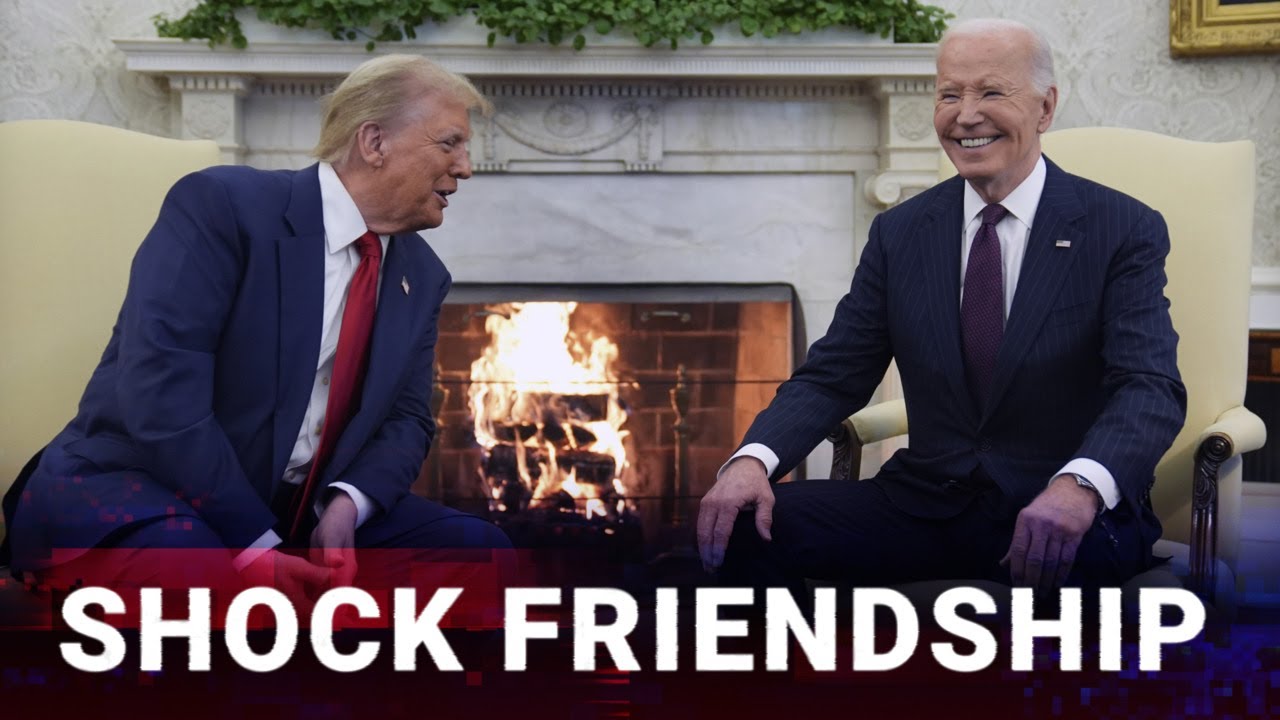
Joe Biden Welcomes Donald Trump Back to White House With Enthusiasm That Shocked the World
4:40
Charlie Kirk on Marriage, Momentum, and Standing Up at School Board Meetings Across Arizona
1:25:28
Sean Duffy Explains Why Senator John Fetterman's Shift Reveals More About The Democrat Party's Extreme Movement
Sean Duffy joins Will Cain to analyze Senator John Fetterman's surprising positions on Israel, border security, and American manufacturing. Duffy argues that Fetterman's stances wouldn't have been remarkable for Democrats in the 1990s, supporting Israel, protecting American jobs, and securing borders were standard positions. The real story isn't Fetterman's evolution, but how far left the Democrat Party has moved in recent years. From his recovery after a stroke to his calculated political positioning in purple Pennsylvania, Duffy and Cain examine whether Fetterman represents a return to traditional Democrat values or simply smart politics in a state that demands moderation. They also discuss the complexities of the U.S. Steel sale to Japan and what issues might surprise voters about Fetterman's record.
The Fetterman Phenomenon: Traditional Democrat or Strategic Politician?
Sean Duffy joins Will Cain to dissect what's really happening with Pennsylvania Senator John Fetterman, whose recent positions have surprised both supporters and critics. Fetterman's support for Israel, opposition to the U.S. Steel sale to Japan, concern about southern border security, and willingness to call out corruption in his own party—including Senator Bob Menendez—have raised eyebrows across the political spectrum.
But Duffy offers a compelling perspective: these positions wouldn't have been surprising at all for a Democrat in the 1990s. "This kind of feels like it's more in the mold of a Bill Clinton-esque kind of Democrat right now," Duffy explains. "He's not a conservative, he's not a MAGA Republican, he's just a Democrat who's trying to make some sense out of the craziness that we find right now in our world."
The Party Has Moved, Not Fetterman
Cain points out that Fetterman's positions on immigration, trade protection, and Israel support would have seemed standard for Democrats in previous decades. "The only real surprise would be the one where Fetterman, to your point, was interested in some logical consistency when it came to George Santos and Bob Menendez," Cain notes. "The rest of the positions are what used to be normal Democrat. So I feel like the reaction to John Fetterman says less about him and just more about the movement of the greater Democrat Party."
Duffy agrees emphatically, challenging the notion that Republicans have become more extreme. "Someone, you know, a lot of people have this conversation—well, the Republican Party has become so extreme. I'm like, really? Go back to Ronald Reagan, what's really changed on issues that Republicans care about?" He contrasts this with Democrats who "have moved to such extremes right now, whether it's on crime or on transgender issues or gay issues or border issues."
Pennsylvania Politics and Working-Class Roots
Both Duffy and Cain acknowledge that Fetterman's positions make sense given Pennsylvania's purple state status and his background as mayor of a working-class community. "He comes from money, but he was a mayor of a kind of a working-class community, and if you have friends in those communities and you go to a bar in that community and go to church or go to eat in that community, they'll tell you what they think," Duffy explains. "We should protect American jobs, we should not have a foreign country buy our steel mill—it should be American-owned."
Fetterman's ability to connect with working-class voters while representing a swing state gives him unique positioning. Unlike Wisconsin Senator Tammy Baldwin, who Duffy describes as "a voting record of a left-wing radical but she doesn't get a lot of press," Fetterman is anything but a wallflower. People know who he is, and in purple Pennsylvania, his ability to "walk this unique line" is both strategic and potentially authentic.
The Stroke Recovery: A Remarkable Transformation
Cain raises an important point about Fetterman's medical recovery. "There are people saying, 'Oh, maybe you should feel bad for anything you might have said to that.' I say I don't, because there was no guarantee that John Fetterman was going to regain his both his articulation but also the clarity of his thinking."
Duffy confirms the dramatic improvement: "If you listen to a speech now compared to four months ago, even that difference in time, it is remarkable the recovery that he's had." This recovery has allowed Fetterman to articulate his positions more clearly and engage more effectively in Senate debates, which may contribute to his increased visibility and influence.
The U.S. Steel Dilemma: Free Enterprise vs. National Interest
The discussion turns to one of Fetterman's most prominent recent positions: opposition to the sale of U.S. Steel to Japan's Nippon Steel. Both Duffy and Cain express genuine ambivalence on this issue, which doesn't break cleanly along partisan lines.
"I'm a free enterprise guy, and if someone comes in from Japan and offers more than an American company was going to offer, I'm like, that's free enterprise kind of at its finest," Duffy admits. "But I also want the jobs to stay in America, and I also want the companies owned in America too."
Cain shares the internal conflict: "I believe in free enterprise and I believe in the value of the shareholder. A shareholder is simply a property owner—there's someone who has invested some of their time and their hard earnings into owning something." He notes that U.S. Steel stock spiked 25% after news of the potential sale, meaning shareholders stood to benefit significantly.
However, both acknowledge that for Fetterman, the politics are clear. "Steel is so big in Pennsylvania," Cain notes. Duffy adds that "the owners of U.S. Steel did not consult with the union, and I think there was some requirement there where they should have. So he's coming down—the union doesn't like it, so he doesn't like it either."
Progressive Label: Campaign Strategy or Evolution?
One of the most intriguing questions about Fetterman is whether his current positions represent an evolution or whether he was always more moderate than his progressive label suggested. Cain recalls advice about running "the race that you're in," suggesting that Fetterman may have called himself progressive to win the Democratic primary but never truly held those positions.
Duffy finds this plausible: "Did he have to call himself a progressive to actually win the primary? That could be true." However, he also suggests another possibility—that the responsibility of being a senator changes how one thinks about issues. "It's one thing to sit back like we are in a podcast and talk about issues and dissect them. It's something else to actually have the voting card or the voting thumb in the Senate and to sit and look at what is the best thing for my country."
Duffy also points to the quality of information available to senators: "You never have better information than you do when you're in Congress. When I was a candidate, I thought I had a lot of good information. You get all the information that you could ever want, and it's the right information when you're in Congress. Maybe the fact is he's getting different briefings, different information, different staffers that is making him think a different way about the issues that he's confronted with."
Where Will Fetterman Surprise to the Left?
Despite Fetterman's recent moderate positioning, both Duffy and Cain expect he'll still vote with Democrats on many issues. "He's still going to show you at times, oh, he is on the left," Duffy predicts. "I think we do this a year from now, Will, and the list will be long of the stuff we're annoyed at Fetterman, because again, he's still a lefty."
Interestingly, Cain struggles to identify where Fetterman might surprise to the left, precisely because of the electoral calculation. "He's in a purple state, so he's not running again for another what, is it going to be five years? He doesn't have to worry about it for a while, and he's in a purple State, and he might as well pivot to win elections in the long term."
Duffy draws a comparison to Joe Manchin, who initially opposed Build Back Better but eventually voted for the Inflation Reduction Act. "We thought he was opposed to it, but in the end, he's the one that orchestrated the deal with the White House and gave us this massive Green Energy bill, green funding, massive debt, which has helped lead to more inflation. Before that vote, I thought he was kind of the savior to kill Joe Biden's Build Back Better, and he didn't."
The Senate Advantage: Six Years of Political Freedom
A key theme throughout the discussion is how Fetterman's six-year Senate term gives him political flexibility that House members don't have. Duffy, drawing from his experience in the House, explains: "Even in Congress, you have a two-year term. The first six months, you start taking votes, and you think that's going to be on the ballot a year and a half later, and it never is. You can take votes in the first six months that you might want to take you may not want to take in the last six months when you're up for election, because people kind of—there's some grace and they kind of forget."
For Fetterman, five years away from re-election, "this is not an electoral play. No one's going to remember these votes five years from now." However, they might remember if he didn't stand up for the steel industry and the union, which "is still pretty big and still pretty powerful in Pennsylvania."
The Verdict: Interesting, But Still a Democrat
Duffy's final assessment is measured: Fetterman will likely have "a few surprises where he comes out and says some common sense things, but by and large, he'll be a reliable vote for Chuck Schumer in the Senate, a reliable Democrat."
The conversation reveals that Fetterman's positions may be less about a dramatic personal evolution and more about the Democrat Party's shift leftward over the past decade. What seems surprising in 2024—a Democrat concerned about border security, supporting Israel, and protecting American manufacturing—would have been entirely unremarkable in the 1990s. Fetterman may not have changed as much as his party has, and his positioning in purple Pennsylvania simply requires him to appeal to voters who haven't moved as far left as the national Democrat Party has.