Six Moments That Cut Deep About Charlie Kirk's Murder and Where We Go From Here
Enjoying this? Share it with someone who needs to see it.
Up Next
President Trump Awards Charlie Kirk Presidential Medal of Freedom Following Tragic Assassination in Utah
2:57
Rob Schneider Reflects on Charlie Kirk's Legacy, Courage, and the Fight for America's Soul
17:02
Lauren Boebert Honoring Charlie Kirk: A Pioneer Who Moved Youth to Faith and God
9:40
Six Moments That Cut Deep About Charlie Kirk's Murder and Where We Go From Here
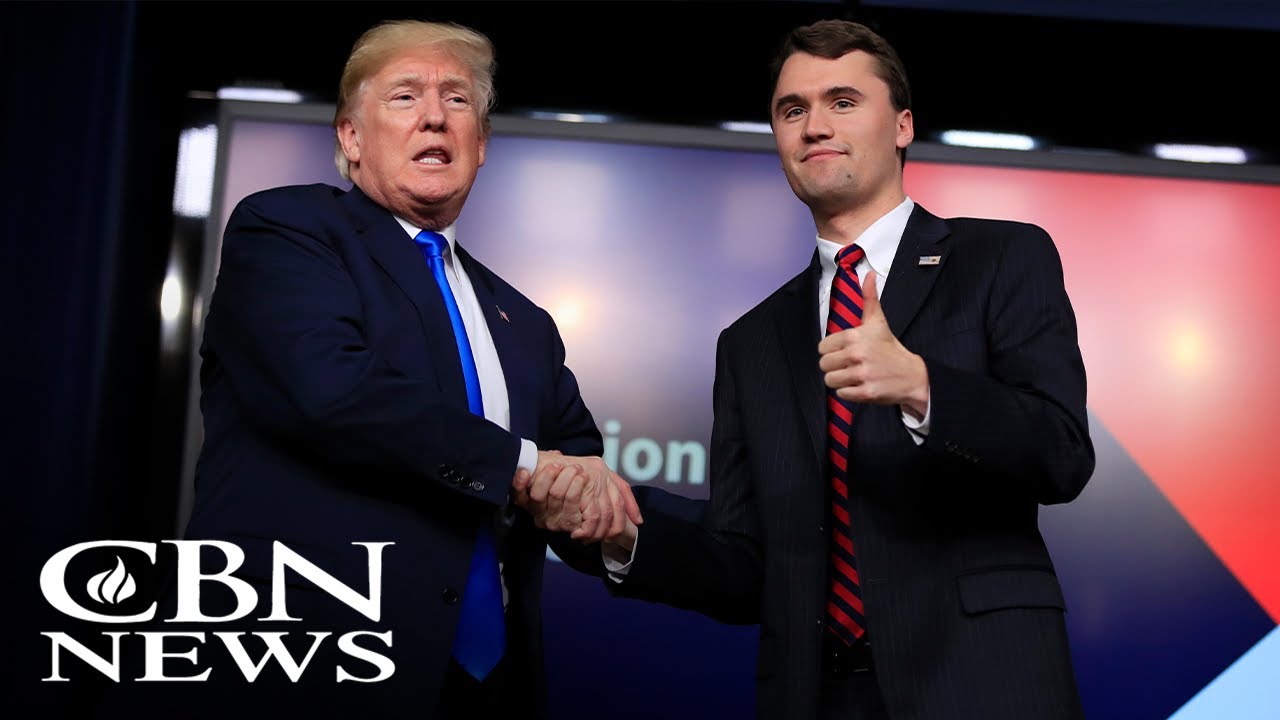
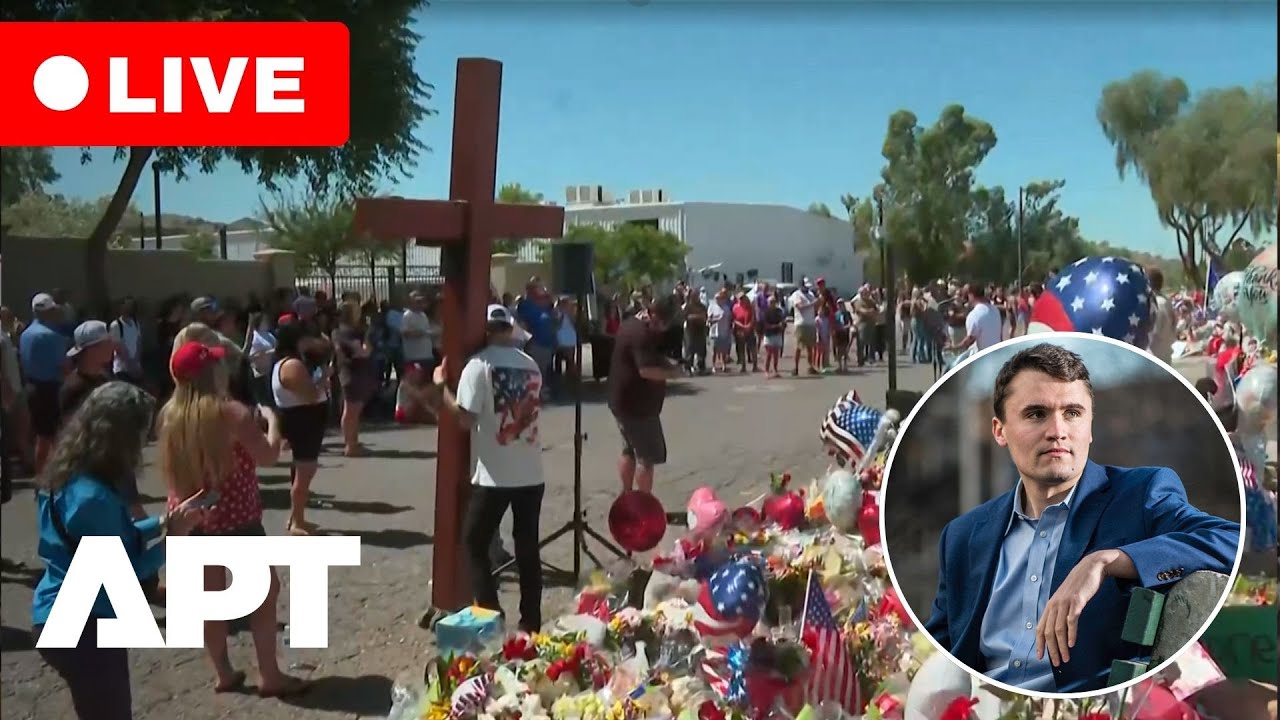
Charlie Kirk was shot and killed on a university campus at 31 years old, leaving behind young children and a legacy of championing free speech. His death resonates as a modern echo of an ancient tragedy—a man armed only with words of persuasion, cut down in his prime by violence. This isn't just about politics or activism; it's about the silencing of truth with bullets, the courage required to speak gentle answers in a world of harsh words, and the Christian hope that truth, though crucified, rises again. In this reflection, we examine six moments that made this tragedy unbearable, why it cuts so deep into the human story, and the distinctively Christian path forward in a polarized West.
Charlie Kirk, born October 14th, 1993, died September 10th, 2025, at 31 years of age. That's one of six things that got me about the killing, the murder of Charlie Kirk in broad daylight on a university campus in the States. I want to talk about six moments that had me in tears at points, then I want to talk about why this cuts so deep, and finally, where we go from here.
Number one: he was 31 years old. You shouldn't have to talk in the past tense about someone in their early 30s. This is the definition of a man cut down in his prime. It's not too much to say he could have been president. Charlie Kirk went around university campuses with a banner that served as a pretty good motto for what he was attempting: "Prove me wrong."
You might think that's needlessly provocative. You might think he was doing it for the clicks. I believe he genuinely believed, with his dying breath, in free speech—not just fringe speech. Too many people believe in fringe speech, that you should simply be able to say the edgy thing. I think he genuinely wanted to dialogue with people, genuinely wanted to change minds. And he was cut down in his prime, aged 31. Here is a flower cut.
A Father's Children and a Daughter's Question
The second thing that got me was seeing his family. I saw footage of his young children who were apparently there at the university campus—a three-year-old girl, an 18-month-old boy. That got me.
Thirdly, my daughter. As we prayed for Charlie Kirk—I heard the news that he'd been shot, and it was hours before it was confirmed that he died—we were praying for Charlie Kirk. "Who's Charlie Kirk?" asks my 10-year-old daughter. "Well, he goes on university campuses and he speaks. And actually, he's a Christian, too. We need to pray for healing for Charlie Kirk and we need to pray for his family."
My daughter said, "Are you going to get shot, Daddy?" "No, I'm not going to get shot. Why do you think I'm going to get shot?" She said, "Well, because you go on university campuses and you talk about Jesus. Are you going to get shot?" I don't think I am going to get shot. I don't think I'm like Charlie Kirk in the calling that God has on my life. But that got me. Are you going to get shot, Daddy?
The Violence of Silencing Speech
The fourth thing that got me: I saw it. I saw it on Twitter. The first few videos I saw of the campus event didn't have footage of the shooting, and I expected that to be the case on the very next video that I encountered. But I was wrong, and I saw it. I don't recommend seeing it. But having seen it, you cannot unsee the force, the violence of it all.
I don't know if the shooter targeted his neck, but a shot to the throat is a particularly violent, tragic, and emblematic symbol of trying to silence a man's speech. The difference between a man in the middle of speaking and being shot in the neck more forcefully than anything else shows the difference between words and violence. They are very, very different things. It is so tragic to see the silencing of words with the force of violence.
The fifth thing that got me was a BBC correspondent who finished his report about the shooting and just said, "He didn't even get to finish his sentence." I don't know if that really got me because I'm a speaker, or because Charlie was a speaker. He didn't even get to finish his sentence. Even if you execute people, you give them their last words, their final words. Even if you execute people, they get to finish their sentence. Charlie Kirk, whose whole life was given to speaking on campus, did not get to finish his sentence because of a bullet to the throat. That really got to me.
Those are five things that really got to me. I'll tell you the sixth at the end.
Why This Cuts So Deep
These moments have cut me deep. I don't know what's cut you deep about this moment. But here's why I think it cuts so deep: a man in his early 30s, armed only with words of persuasion, is met by violence and comes to a bloody end.
This cuts so deep because it resonates with the story. The tragedy of all history is the Word made flesh who comes unarmed. He comes only with words of life and he is cut down in his early 30s. The story of human history, the story that explains the world, the story that explains God, is that the Word is made flesh and, speaking only truth, he is struck down.
According to the Christian faith that Charlie Kirk shares, that is the most divine thing you've ever seen. God reaches down into the tragedy of human experience, armed only with truth, and he is met by violence. To see a bullet in hate fired at a throat speaking words is to be very deeply into the tragedy of this world. There is a weight to it all that I think is an echo of the great tragedy, which is also the greatest revelation of what we are like and what God is like.
What are we like? We are the sorts of people who silence the truth. When the truth comes, we crucify the truth. When the word is spoken, we silence the word. That is what we are like.
A Gentle Answer in a World of Harsh Words
But what is God like? My reading was Proverbs chapter 15: "A gentle answer turns away wrath, but a harsh word stirs up dissension." It paints this picture. Can you imagine the dissension of harsh words, harsh words, harsh words, harsh words going back and forth in a community, in a society, in a culture? Can you imagine such a thing? We're living through such a thing.
What does it look like to speak a gentle word in the midst of harsh words that are stirring up dissension? It is excruciating. And I use that word advisedly. It's excruciating. It is like the cross to bring a gentle answer when all is chaos, when all is hatred. And you might just get cut down for it. You might just get shot in the throat. You might just get crucified for it.
A gentle answer turns away wrath. But it does so by first absorbing that wrath. The Christian story is that the God of truth has descended into our chaos and our hatred and our dissension and has come armed not with violence but only with words. Jesus said, "Put away your sword, for those who live by the sword will die by the sword." He said that on the night of his death. He said to Peter, "I could call down 12 legions of armies on my enemies, but that is not the way of the kingdom. The way of the kingdom is to come with your face, in vulnerability, speaking only truth and persuasion."
To be cut down in that moment is a mini crucifixion because the crucifixion was the gentle answer that comes down into our hellish world. We silence that word. We crucify the truth. Wonderfully, the truth rises again. And that is part of the Christian hope that Charlie Kirk believed as well.
Jesus rose up again to turn the other cheek to a world that had killed him. He rises again and he says, "Peace be with you. Peace be with you. Peace be with you." And in receiving his peace, there is reconciliation for a wrath-bound world.
To meet dissension and anger and hatred with words is an incredibly Christlike thing. To be struck while doing so, to be killed, to be silenced while doing so is an extremely Christlike thing. But now to believe in the power of cheek-turning love, that in resurrection we can rise up again and offer ourselves again with the faith, the courage that Charlie Kirk had—that's what's called for in this moment and that's what I want to talk about in this video.
Three Futures for the West
Our last video on this channel featured Tom Holland laying out three futures for the West—a West that has been built by century after century of Christianization. It has three possible futures. Perhaps a fourth if you add in Islam, which we talked about in the last video. But here are the three futures that Tom Holland laid out.
Future number one: progressive liberationism. He called it Paddingtonism. It's this idea that we can jettison all our Christian baggage and just blast off into the stratosphere, having gotten rid of the booster rockets of Christianity. Now, off to oblivion we go. The "be kind" hashtag is our only slogan and away we go. That's future number one.
Future number two is the anti-woke backlash against that. Many people suspect that a progressive liberationism shorn of its Christian commitments merely has "be kind" as a thin slogan, as a thin cover for power. They suspect virtue signaling in the progressive liberationists, and therefore the anti-woke might start to doubt virtue itself. If progressive liberationism is power with a "be kind" veneer, then the anti-woke backlash will be power with no veneer.
Very often those in the progressive liberation camp look to anyone who disagrees with them as though they are this second camp. Those who saw Charlie Kirk as such a threat, I think, identified him as fascistic and hard-right and all the things that the progressive liberationists say about those who are politically to the right of them.
Charlie Kirk Was Not the Enemy They Made Him Out to Be
I don't know very much about Charlie Kirk. I don't follow him. Every now and again, a Christian will retweet something Christian that he said into my feed, and I'm glad for those things. I share a faith with Charlie Kirk. I suspect that I don't share some political beliefs with him. But to identify him as fascist or hard-right seems to me, from a great distance, to be absurd.
The inability to simply hear his views as one more view in the marketplace of ideas is a horrendous indictment. Charlie Kirk came to the United Kingdom and spoke at the Oxford Union and at the Cambridge Union. I don't think he did that well at the Cambridge Union. I think a lot of people actually bested him in a war of words. And I'm so grateful that that was a war of words at the Cambridge Union.
But to identify him as such a threat that he needs to be shut down or shouted down or shot down—unbelievable. Unbelievable.
A Return to the Source
So, we've got the progressive liberationists, we've got an anti-woke backlash, and there is a hard right. There are power plays that we should be worried about, not just from the left, but also from the right. Sure. But that's why we need this third future that Tom Holland spoke about: a return to the source, a return to Jesus.
A return to Jesus is neither the progressive liberationism shorn of its Christian values, shorn of its Christian commitments, nor is it an anti-woke backlash. At this stage, a lot of Christians will hear me and they'll say, "Ah, that's just third-wayism. That's the kind of Tim Keller-ite, Manhattanite, evangelical elite luxury belief that you could hold back in the 2000s. We're in the year 2025 now and we can't have such third-way nuance now."
No. Never has it been more important to differentiate in a third-way kind of manner because Christianity is not progressive liberationism and Christianity is not anti-woke backlash. Distinguishing between those two errors will be a huge part of how we respond rightly to this tragedy.
The Distinctively Christian Response
The distinctively Christian response to this tragedy is, yes, to be angered by it, to be saddened by it, to grieve with those who grieve, and to not put up with the shouting down and the shutting down and the shooting down of speech just because you disagree with it. That has always been appalling. But on the 10th of September, we saw it in all its vulgarity. A bullet to the throat of a conservative activist, a bullet to the throat of a speaker who was saying, "Prove me wrong." And instead of being proved wrong, he was killed. That is appalling. And we mustn't stand for it.
We must continue even more, with the courage of a Charlie Kirk, to continually offer speech to those who would violently oppose it. But we're only going to be able to find that courage if we believe in the risen Lord Jesus, the one who rises up again. The truth is silenced. The truth is crucified, but it rises again. The word is silenced, but it is spoken again. And when it is spoken, its message is peace.
With the convictions of the crucified Christ and the courage of the risen Christ, we are to go on speaking.
Erika Kirk's Final Tweet and a Prayer from Psalm 46
That's the sixth thing that cut me deep. I just want to finish with this because Erika Kirk's Twitter feed—her last tweet has had 22 million views as of this recording. It will have many more as it goes on. Doing the math, it seems like she wrote this before the tragedy. But never has a single tweet proved more apt for a moment than her tweeting out Psalm 46 verse one: "God is our refuge and strength, a very present help in trouble."
I just want to finish with Psalm 46 as a prayer for us all to return to Jesus in this moment. Will you take this as your own prayer?
God is our refuge and strength, a very present help in trouble. Therefore, we will not fear. Though the earth be moved, and though the mountains tremble in the heart of the sea, though the waters rage and swell, and though the mountains quake at the towering seas, there is a river whose streams make glad the city of God, the holy place of the dwelling of the Most High. God is in the midst of her. Therefore shall she not be removed. God shall help her at the break of day.
The nations are in uproar and the kingdoms are shaken, but God utters his voice and the earth shall melt away. The Lord of hosts is with us. The God of Jacob is our stronghold. Come and behold the works of the Lord. What destruction he has wrought upon the earth. He makes wars to cease in all the world. He shatters the bow and snaps the spear and burns the chariots in fire.
Be still and know that I am God. I will be exalted among the nations. I will be exalted in the earth. The Lord of hosts is with us. The God of Jacob is our stronghold. Amen.