Tim Pool & Charlie Kirk Debates Leftist Commentator Vaush on COVID Vaccine Mandates, Pharmaceutical Profits, and Medical Freedom
Enjoying this? Share it with someone who needs to see it.
Up Next
Charlie Kirk and Jack Hibbs Expose the Great Reset and the Global Agenda Behind America's Dismantling
20:05
Charlie Kirk and Candace Owens Challenge Gender Ideology, Big Pharma, and Modern Feminism at Wisconsin Campus Event
1:25:29
Charlie Kirk and Glenn Beck on Trump's Victory, Rush Limbaugh's Legacy, and Bold Personnel Picks for the Second Term
16:04
Tim Pool & Charlie Kirk Debates Leftist Commentator Vaush on COVID Vaccine Mandates, Pharmaceutical Profits, and Medical Freedom
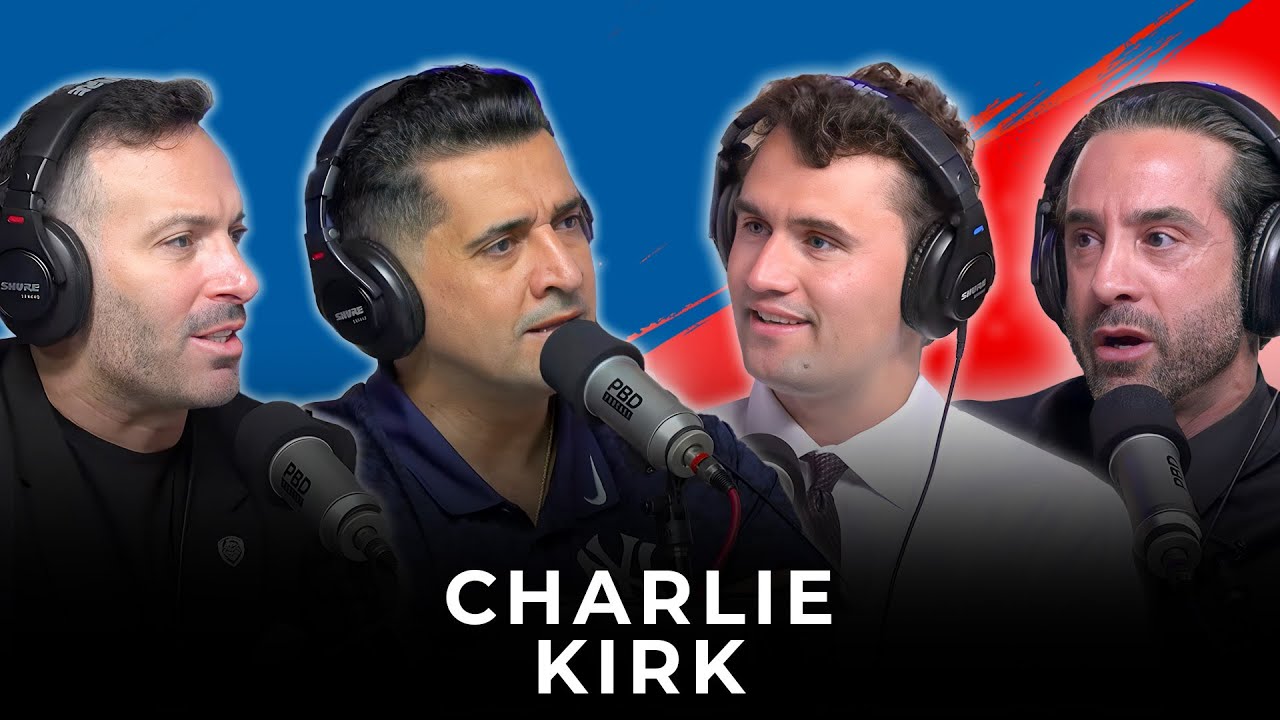
Tim Pool sits down with Charlie Kirk and a leftist commentator Vaush for an intense debate on COVID-19 vaccine mandates, pharmaceutical industry motives, and the balance between public health and individual liberty. The discussion covers everything from the effectiveness of vaccines like Pfizer and Johnson & Johnson to questions about alternative treatments like hydroxychloroquine and ivermectin. Charlie Kirk raises concerns about experimental medicine, adverse event reporting through VAERS, and warnings from scientists like Dr. Robert Malone who invented mRNA technology. The leftist guest defends vaccine efficacy while simultaneously criticizing Big Pharma's profit motives, creating an unexpected dynamic where traditional political positions seem reversed. They explore Australia's strict lockdowns, New York City's vaccine passport system, and whether medical decisions should remain between individuals and their doctors.
Tim Pool kicks off a substantive conversation on vaccine mandates by referencing the chaos unfolding in Sydney, Australia, where lockdowns have prompted massive protests and military deployment. The vaccination rate in Australia sits at a remarkably low 18%, and authorities have responded with increasingly aggressive enforcement measures. This sets the stage for a debate between Charlie Kirk and a leftist commentator about whether similar mandates could or should come to America.
The leftist guest acknowledges supporting certain vaccine mandates in principle, noting that standards already exist for vaccines like MMR for school attendance and travel. However, he expresses concerns about the haphazard implementation of COVID-19 vaccine passports, particularly in New York City, where people are expected to carry physical vaccination cards that were made too large for wallets and which many have already discarded.
Charlie Kirk's Position on Medical Freedom
Charlie Kirk positions himself firmly among the 100 million unvaccinated Americans, describing the COVID vaccines as experimental. He points to FDA and CDC statements from January acknowledging uncertainty, and highlights cases like Senator Lindsey Graham contracting COVID despite vaccination, and a fully vaccinated ship in the United Kingdom experiencing an outbreak. Kirk argues these vaccines function more like treatments than traditional vaccines.
Kirk emphasizes his opposition to what he calls "medical apartheid"—a two-tiered system that restricts unvaccinated people from Broadway shows and restaurants despite questionable vaccine efficacy. He points to Israel, which is 85% vaccinated yet facing renewed lockdowns, with most new cases occurring among vaccinated individuals rather than the unvaccinated.
The Irony of Political Positions
An interesting moment emerges when Kirk points out the irony of their debate positions. Traditionally, leftists criticize pharmaceutical companies while conservatives defend corporate interests. Yet here, Kirk finds himself questioning Big Pharma's motives—specifically those of Pfizer, Moderna, AstraZeneca, and Johnson & Johnson—while the leftist guest defends vaccine effectiveness. Kirk notes with amusement that he's the one criticizing pharmaceutical companies while his opponent appears to be "peddling the Pfizer vaccine."
The leftist responds by clarifying that his support isn't for pharmaceutical CEOs or their profit models, but for the tireless workers who developed these vaccines. He even goes so far as to say he'd support nationalizing the pharmaceutical industry, stating he would "unironically actually trust it more in the hands of our ineffective bloated government" than with the sociopaths currently running these companies.
VAERS Data and Adverse Event Reporting
Kirk raises concerns about the Vaccine Adverse Event Reporting System (VAERS), which shows over 7,000 deaths reported after vaccination. He notes that most submissions come from physicians rather than random individuals. The debate turns to how seriously these reports should be taken and what threshold of adverse events should trigger pulling a vaccine from the market.
The leftist guest explains that VAERS is a self-reported system where anyone can submit information, making it difficult to establish causation versus correlation. However, Kirk counters by asking what number of deaths would be concerning, noting that vaccines are traditionally pulled after just 15 attributable deaths. The question becomes: how do we know these 7,000 deaths were caused by the vaccine?
Both acknowledge this is a difficult question. The guest suggests that VAERS exists to identify patterns in adverse events, and 7,000 reports may indeed suggest something worth investigating, though he lacks the scientific credentials to make definitive claims.
Johnson & Johnson and Rare Nerve Disorders
The discussion shifts to specific vaccine concerns, including the FDA warning that Johnson & Johnson's vaccine might cause a rare nerve disease (Guillain-Barré syndrome). Kirk asks whether this worries his opponent. The leftist responds that while this deserves investigation, even if the claim proves true, unless the nerve damage is "apocalyptically severe," getting COVID would likely be far worse than potential vaccine side effects.
He also notes that Guillain-Barré syndrome is actually a known side effect of many vaccines, not unique to the COVID vaccines. The guest emphasizes that Johnson & Johnson isn't an mRNA vaccine, offering an alternative for those specifically concerned about mRNA technology.
Dr. Robert Malone and Scientific Disagreement
Kirk introduces Dr. Robert Malone, who invented mRNA vaccine technology and has expressed concerns about dangerous spike proteins in COVID vaccines. Malone encourages people to think twice before getting vaccinated, warning that this technology was rushed to market and could have unforeseen side effects. Kirk asks whether this expert opinion moves his opponent at all.
The leftist guest responds that while he respects Malone's credentials, the scientist wasn't directly involved in producing these specific vaccines. He argues that Malone's concerns should be addressed by the broader scientific community rather than taken as definitive. When asked whether he trusts Dr. Anthony Fauci or evolutionary biologist Dr. Bret Weinstein more, the guest deflects, saying it's about the global medical community rather than any single figure.
Tim Pool interjects, noting that ultimately this becomes a question of trust—which doctors and organizations you choose to believe—since most people lack the credentials to independently evaluate the science.
The Question of COVID Death Attribution
The debate addresses how COVID deaths are counted. Critics argue many deaths are "with COVID" rather than "from COVID," often involving elderly people with comorbidities. The leftist guest responds that COVID rarely kills directly; instead, it causes systemic breakdown that leads to other vital functions failing. He points to excess mortality data, which shows deaths above normal patterns starting precisely when COVID began, tracking almost perfectly with COVID death waves.
This data, he argues, proves that deaths aren't being spuriously attributed to COVID-19. Over half a million Americans have died—more than the combined death tolls of every war since World War II, including Vietnam. These are facts that don't require a virology degree to recognize.
Alternative Treatments and Trust Issues
Kirk questions why there's such emphasis on mass vaccination rather than alternative treatments like hydroxychloroquine and ivermectin. The leftist responds that hydroxychloroquine studies found it largely ineffective, with one French study stopping when people started dying of heart failure. He suggests the only reason conservatives champion hydroxychloroquine is because Trump mentioned it.
Tim Pool brings up that people have been taking ivermectin meant for horses, which the FDA explicitly warns against. He notes that just because an animal can take something doesn't mean humans can safely use the same formulation. Both agree that the fundamental answer is: talk to your doctor.
The Mandate Question and Individual Rights
When pressed on whether he supports mandating COVID vaccines the same way other vaccines are required for schools and travel, the leftist says yes, but clarifies he doesn't support requiring vaccine cards for restaurants or movie theaters as a permanent measure. He views that as a panic response rather than a sustainable policy. Long-term, he'd prefer integrating COVID vaccination into the same framework as other required vaccines.
Kirk and the guest find some agreement on yielding to individual rights when facing uncertainty. Kirk argues that as a 27-year-old, he doesn't consider COVID a disproportionate risk to his life, and he should have the right to decline an experimental vaccine. The American constitutional tradition, he argues, is to allow nuanced preferences and individualism for complex issues, not to bar people from restaurants for making different medical choices.
The Historical Context of Vaccine Mandates
The discussion touches on the history of vaccine mandates in America. The Supreme Court ruled on mandatory vaccination in 1904, establishing legal precedent. Even George Washington had his troops inoculated against smallpox during the Revolutionary War—though the process was far more primitive, involving blacksmith-forged needles and weakened samples.
The leftist argues that choosing not to vaccinate removes freedoms from others—specifically, the freedom to not grow up in a world plagued by disease. As COVID continues circulating and mutating, new strains will develop that could eventually overcome current vaccine effectiveness, threatening everyone. This makes it an international problem, not just an American one.
Long-Term COVID Effects Beyond Death
While acknowledging that death from COVID is most common among the elderly, the guest notes that younger people experience serious long-term side effects even when they survive. He knows people in their 30s who struggle to climb stairs months after recovery. Erectile dysfunction is listed among potential long-term effects for young, otherwise healthy men.
The current Delta variant represents just one mutation. If the virus continues cycling around the world for another year, there's no telling how severe future variants might become. This uncertain future, he argues, justifies aggressive vaccination efforts despite legitimate concerns about pharmaceutical company motives.
Finding Common Ground
Despite their disagreements, several points of consensus emerge. Both express deep distrust of pharmaceutical companies, acknowledging their role in the opioid crisis and their history of profiting from American deaths. The mRNA technology itself was developed through public funding—a collective effort both can appreciate.
They also agree that no one watching should take any participant's word as definitive truth. The most important advice: consult with your own trusted doctor. Tim Pool emphasizes this point, noting that YouTube is strict about COVID misinformation for good reason—these are complex medical decisions that require professional guidance.
The leftist guest makes a final point about alternative treatments: hydroxychloroquine and ivermectin haven't been FDA approved for COVID treatment. While people can ask questions, they shouldn't self-medicate with veterinary formulations that could cause serious harm.
Video Transcript
i suppose we can uh we can start with one of two things obviously i brought up critical race theory but also the vaccine issue i'm not sure if you guys have a preference for what you're talking about the vaccine why don't we talk about what's going on with uh vaccine passports sure we've seen in sydney for instance they issued a lockdown most or i should say enough people ignored it they went out in the streets and then this resulted in news articles saying chaos in sydney people aren't uh you know they're not following the rules the vaccination rate in australia is ridiculously low i think it's 18 really really low well then they called in uh police and they were big protests now they've actually deployed military so i'm curious if either if you want to jump in with your thoughts on mandates what would happen if they came here if you're for or against them look there are elements of mandates that i can agree with we've already set standards for other things like the mmr vaccine very basic standard vaccines that we expect everyone get before they can go to school travel and i think for the most part that's worked we've eradicated plagues from the world i think we should be proud of that with regards to kovitz since this is an ongoing pandemic we need to focus on approaches that are effective and that don't ostracize or exacerbate tensions with regard to the australian situation it's not something i'm extensively familiar with but generally speaking i don't think that cracking down on protests is going to be an effective way to incentivize people to get vaccinated what's happening in new york might be but my main issue with it is that i'm not entirely sure how they expect people to still have their vaccination card i know that there's been some confusion from the beginning as to whether or not you should keep that i know people have thrown theirs away they made it too big for wallets it just felt a little bit haphazardly planned from the foreground so that's unfortunate maybe they can find other ways to incentivize it like for example in schools where they have a direct access to government records where they wouldn't have to use those um those little cards you know that might be a little bit better i guess we'll have to see well not saying you believe this but some people on the left i never want to hear about the discussion of voter id ever again because now you can force people to identify their medical history to try to get into a restaurant in new york city yeah look i'm not getting the vaccine so i'm part of the 100 million people that are unvaccinated and it's an experimental vaccine the fda and cdc has said that in january it's questionably effective lindsey graham just came down with covid you had a vessel a ship in the united kingdom 100 vaccinated ship that came down with covid it's more it's more like a treatment than a vaccine i'll leave that conversation at dr brett weinstein and the people that really understand um how that works but yeah this is medical apartheid this is this is trying to create a two-tiered system where if you don't make the proper medical decisions you're not able to go to broadway shows or go into restaurants even when the efficacy of this vaccine is questionable at best we see that in israel an 85 vaccinated country that's about to lock down again and most of the new cases are from vaccinated patients not unvaccinated patients in israel so sorry you want to interject him but yeah yeah obviously against mandates and i think people should be able to make their own medical decisions i think it's pretty obvious well i disagree i think we actually have a we actually have a story wrote on timcast.com that our view of the lockdowns is that it's alarmism because a new study from the public health of england found the pfizer vaccine is 96 effective after two doses at staving off the delta variant and astrazeneca was 92 percent i could probably agree it's alarmism but it's enough of an alarm for the public health leaders to undermine the argument that the vaccine is a solution to what would possibly satisfy the public so i mean i was against the lockdowns in the first place let me be very clear when where's a thousand deaths a day not 334 but sorry go ahead well a couple of points on this first of all it's experimental in the sense that there was an expedited process for its release but there have been full and extensive studies taken on the safety and effectiveness of these vaccines the reason why the fda study hasn't been finished the reason why it hasn't been fully vetted isn't because they're looking for long-term health effects is because they're determining the extent to which it protects you over a long period of time ergo the fact of the matter is by all available data this is undeniably much safer to get the vaccine i mean by orders of magic let me ask you a question wait a couple things because you said a few things there um there are some instances where areas have more people being infected if they're already vaccinated but if you take a look at like this is like data mining if you take a look at the broader statistics especially here in america the number of people who have gotten breakthrough cases is something like 0.003 of people who have been vaccinated you can take a look at the numbers where is this new wave exploding it's in the unvaccinated in spite of the fact that fewer and fewer people are remaining unvaccinated the vaccinated stay relatively healthy and not only do they get infected way less often they also suffer far fewer severe symptoms their hospitalization rates have plummeted and their deaths are incredibly low compared to people who are unvaccinated this is by all means an effective vaccine what's your opinion of johnson and johnson the fda saying that it might cause a rare nerve disease uh yeah that's something that first of all when you take a look at that you have to recognize that even if that was the case which the fda says it is right well they're looking into it of course it doesn't they they've issued an official warning that it could issue a rare nerve disease that's a big deal could issue of course they're looking into it and that is something to look into and to be concerned about what's your opinion of vares the vaccine adverse event reporting system hold on first of all i'm just i'm just curious because this is let's let's do the gillian bear syndrome though i think yeah so of course stuff like that can happen now even if that claim is the case it would remain the fact that unless the extent of that potential nerve damage is just apocalyptically severe that the effects of getting covet would still be far far worse than the potential side effects of that vaccine however if you were to say let's say worst case you know johnson and johnson it's not viable that gets pulled we see what the consequences are that doesn't really speak against the greater viability of the vaccines i got pfizer for example we're talking hundreds of millions of people who have either been protected against the vaccine in part or if they get it or sorry against the virus or if they get it their effects their symptoms are much much much more so i just want to just kind of just play into the irony here that i'm the one criticizing the pharmaceutical companies and you're the ones that are you're the one defending i just think that's that's it i think it's delicious that's well wait that's extremely dishonest well but you're you're peddling the pfizer vaccine you're saying it's so effective wait i'm the one saying hold on maybe astrazeneca maduro johnson and johnson and pfizer this is let's let's let's let's talk about the points he's made and no i'm just i was just enjoying the irony well it's well the thing is it's not really like irony if you understand the issue at hand see my praise doesn't go to the pharmaceutical companies or their ceos it goes to the tireless workers who spend months and months and months developing these vaccines very who's getting rich well hold on have i at any point praised the distribution or profiteering system who do you think it's written for vaccine mandates this is pfizer's ceo nobody's talking about who gets rich this is a change isn't that your whole life hold up this is a toothless critique let's hold on let's try and go back and forth this is a toothless critique that you could apply to literally anything that you don't like everything in this country is manufactured to the property we don't mandate it and so you can't go to restaurants if you don't get one of these four major farmers wait wait i just want to say if that's your criticism that's one of many then you should so if that's the criticism you want to focus on i'm in favor of nationalizing the pharmaceutical industry i'm willing to take it that far but whether or not that's on the table and i can't just make that happen when we're talking strictly about the effectiveness of the vaccine it seems so let's not appraise of the capitalist industry behind no i was just enjoying the irony that it's not syringe well it's totally ironic because i'm the one saying that they might be lying to us you're the one that's saying it's super effective wait what usually if we were wearing our traditional uniforms right versus left it would be the other way around that's all i'm saying the only comments i'm what do you have to say about the vaccine adverse event reporting system that says well over 7000 people experience death after getting the vaccine does that worry you um the vera's system is entirely self-reported i don't think it's generally you think it's under-reported or over-reported with theirs it's almost impossible to say you know what varus is right can you tell me what there is is a government website that physicians or individuals can submit complaints or concerns after an adverse adverse event report from a vaccine since you cannot win in court against a vaccine production company then they go through some process where the government then can distribute some form of remedy if you had an adverse event reaction right that's what varies and researchers like it because if you take a vaccine or you get some other procedure any medical drug done you can report the effects there and it can be a way of gathering sort of aggregate data concerning the effects of these um of these potential treatments the problem is uh researchers don't use this as a bulletproof way of determining the outcome or effect of anything because they're literally just unvetted online submissions that anybody can put in so i ask you i ask you because i want to know how do you arrive at the conclusion that how many people did you say well it's versus own data is 7 000 plus and most of which by the way anyone can submit no asking by the way most of which are physicians submitted just so you know these are these are total number the most of the submissions on the vera's website are done by like family doctors or local physicians so i'm just i'm just asking but what what number of adverse event reactions would you say maybe there's something wrong but i'm asking 10 000 deaths how do you know these deaths no i'm just saying that's what vera says right no wait but i'm wait so i need to know that we don't so that's the question so wait is these just people who have died after taking the vaccine like they may have died from some medical incident afterwards and it just gets put up this is the question because usually a vaccine gets pulled when you have 15 attributable deaths we have 7 000 that we have to go through the question is when you call timeout and say maybe you're not answering the question how do you know that they're from the vet don't that's the point oh but you don't either but the position is let's mandate experimental medicine we don't know actually what's going on if you don't know then how can you say that medical doctor is the one uploading this information is there any methodology or we can have we do know who's actually uploading it we know that we know the entries are usually typically traditionally how about menstrual cycle disruption loss of nerve capacity unable to walk paralysis miscarriages um mood changes also you could go through the vares database like oh that's interesting what about the death let me let me interject 7000 plus that's a serious how do they know it's from the vaccine i keep asking you this you don't let me let me let me address two points one from each of you real quick so we can try and uh how do we know it's from the vaccine it's a difficult difficult question uh i would say that if you have a mass vaccination program which gives out 330 million doses or so and then people start saying hey i got the vaccine then this happened theirs isn't here to say it is or isn't they're here to say can we find a pattern in this and i think 7000 suggests there may be one at the very least uh i'm not a scientist so i can't i can't stress that i will also say however to charlie guillain-barre syndrome which i'm probably pronouncing wrong always mispronounce it bar there my understanding is actually a side effect of many vaccines yeah it is and so totally that's correct it could be well so so the issue i have is one of the things that brought up is that there's been how many you mentioned 100 million 160 million 115 i think it is millions who have been folding vaccines i think in that ballpark so of course you know if you if you you have something very different from uh uh any other vaccination we normally do because yeah we're not having everyone do it all at once yeah and so this is a mass inoculation thing and so here's why the american system should answer this question easily when you have any sort of uncertainty or disagreement yield to rights so yield to rights allow so to say no let me just fill out the argument right so for me for example i'm 27 i don't consider covid to be a largely disproportionate risk to my way of life i don't know about this vaccine i have gotten other vaccines in my life so i want to be able to have the right to say no to that so the american system constitution kind of like the tradition is to be able to have people have nuance preferences and individualism when it comes to these sort of complex issues not saying you can't go to a restaurant because we want you to take experimental medicine right so a couple of points on that first of all if we're speaking to legal rights the um supreme court found over a century ago that one came to vaccinations this was a special exemption from some people's rights to i will agree with you that the courts are not on my side in that one and there's a reason why because of course when you choose not to take the vaccine you contribute to the um removal of others freedoms see it's true you do have a freedom to not or to take a vaccine but i think other people should have the freedom to not grow up in a world ridden by plague and with the way this disease covid mutates with time as all uh diseases do inevitably if it continues to circle the world long enough and this is an international problem not just an american one uh new strains will develop which will slowly ebb at the effectiveness of this set of vaccines so it threatens all of us may i say one other thing sorry sorry um with all of that being said just to speak to vars varus is an incredibly effective system for locating and roughly attributing concerns related to the effects of drugs the problem is that there are several elements to this disease that make it really difficult to pinpoint anything specific the second the two of which being a hundreds of millions of people vaccinated that is a huge range to pull data from and b the you know uh propagandist fear campaign about an incredibly effective vaccine process that may lead people to misunderstandings just quick clarification uh are you for mandating the covid19 vaccine uh the same way we have other vaccines like school travel that kind of stuff yeah so like what if someone want to go to a restaurant or a supermarket or a movie theater i think that i mean we don't have that for other vaccines right like every time you go to a movie theater of a little card i understand that might be an effective panic measure but long term my goal would be to integrate it into the same revenue of vaccines i think that's a more reasonable response than some politicians i'm just gonna be honest people are panicking and i think that's a moral i just want to make sure we weren't having like you know misunderstanding no i think that's more of a reasonable answer i'm i just just curious just on the vaccine topic in general are you concerned by like dr malone coming out who literally invented the mrna vaccine and says that there's a dangerous spike protein involved and he encourages people to think twice before getting it uh does that move you at all well you're free to speak with your doctor when it comes to dr malone just his specific commentary he's specifically the guy who invented this type of valencia i'm not a phd and i doubt that he was directly involved in the production of these he literally invented this the mrna but with the like johnson johnson the pfizer the but he's very very aware of the sort of accelerated implementation he's trying to call timeout and tell people this is not like any other vaccine what does that worry you his claim is that it involves a spike protein it was rushed to market it's going to have side effects you don't understand it like i did i invented this and you got to think twice before mandating it or even taking it if you're under a certain age does that bother you what makes the current retinue of vaccines that we take the mrna process different from other doesn't involve the spike protein according to him the same composition as like the measle mumps rubella type vaccine or the chickenpox well those weren't mrna the process wasn't developed back during the mmr vaccine totally but some of them are getting updated for the more mrna type technology right he wasn't involved in the production of these modern vaccines how could he possibly have any comment on any of the rigors or tests because he invented this type of vaccine i'm just saying just does that bother do you think he's just like a fear propagandist and like no he may well have concerns but those are concerns that i would rather have addressed by the scientific community rather than with respect to you and myself youtubers well no i i agree so but the question is which scientists right so there's a lot of scientists speaking out against this dr brett weinstein dr malone what was dr brett weinstein he's an evolutionary biologist so he knows a little bit about how that's not foreign do you trust fauci moore or dr brett weinstein it's not about fauci it's about he's a virologist who's been wrong about everything it's about the global well hold on he's smiling with glee here it's the global medical community in this regard you mean like the w-h-o like just some this isn't some like pharmaceutical dr fauci push that wasn't broadly supported by any of the relevant experts in the mrna field which is not huge because it's a very new development um internationally there is a demand for these vaccines oh i wanted to just based on what you had said i can pull up reuters their fact check is that vaccines are not quote cytotoxic they want to mention that robert malone uh and they show the the brett weinstein podcast they show uh the post the fda was alerted months ago that the spike protein and the cover vaccines are cytotoxic toxic to cells the fda did nothing reuters says this is not true now the issue at hand is trust like you mentioned you said do you trust fauci or weinstein i don't know if there is a fact-based argument if you have the the doctors you trust and the doctors you trust or the organizations you you trust it's a it's a clash of who you believe to be honest none of us have the credentials to just come up with these arguments on their own there will always be bias in who we choose to believe however given the plurality of people seem to support the safety and the effectiveness of the vaccine and the fact that it doesn't take a virologist to notice that over half a million americans have died to covet more than the combined death tolls of every war since world war one combined including the second world war in vietnam those are things that i don't need to be a virologist to see can i see can i ask you a question though pretty bad uh the the one of the issues that's brought up frequently especially on twitter is that many of these covet deaths are died with covid as it's brought up where people would say something like uh it tends to be people who are over 70 or things like that i'm only bringing that up not to make the argument but because you said how would verse know if these are actually related to vaccines i'd love to respond to that if i may absolutely covet rarely like directly kills you like age it causes a breakdown in other vital functions that then their death can be attributed to such so for example of the many things that people die it's not really coveted it's just that covid blanks their entire system internally and eventually something fails something breaks and they die um there were people claiming that there were deaths being spuriously attributed to covet 19 very early on in this pandemic but thankfully we know that's not the case because if you take a look at the excess mortality numbers the number of people who should die every year in the united states because there's a very normal pattern you know normally with this many people in this country we see an excess starting when covet started that almost perfectly grafts onto the rising death waves of covet i mean it perfectly tracks onto that i just want to say for you charlie i think you know the issue i i see here is for me it's i can't trust or distrust i don't know you know i i think brett weinstein's a very smart guy and i don't think he's gonna lie to me and these doctors are very smart people then i see the government agencies that you know i don't always trust the government becoming honest i'm not a big fan but to believe that there's like a nefarious effort anything like that ultimately what it comes down to is in my opinion having a trusted medical professional that you can consult with well i totally agree and i think there could be an argument that if you're over the age of 70 that this vaccine might be a really good idea for you however to mandate it for schools and for colleges when these are highly complex medical decisions that's where i'm going to push back against it let me let me let me complex the johnson johnson vaccine is not an mrna vaccine though is that that's my understanding i i i don't want to speak out of turn i believe so i would love to be fact checked on that um i'm not totally sure at my memory so i i guess another question i have what do you think of alternative type treatments hydroxychloroquine ivermectin why the push for mass inoculation well because well hydroxychloroquine studies have found it largely ineffective there was i believe a french study that stopped when people started dying of heart failure i think the only reason the right diet is in this hills because trump mentioned it i don't think there'd be a push for it otherwise um the vaccines are the effective way of getting mass populations inoculated and while it is true that most of the people who die are ancient uh the fact remains that people experience long-term side effects from getting covet even if they survive i know people who are in their 30s and you know me a blistering 27 year old myself i'm not especially worried but i've heard them talk about how much harder it is for them to climb up flights of stairs i know that erectile dysfunction fellas is one of the listed potential side effects of getting coveted even young healthy no other problems it is true that death is most um comorbid with age and pre-existing conditions but still and that's not even to speak of the covet variants i mean right now you were on what delta but if it keeps cycling around the world let it go for another year who knows how bad this could get so uh johnson johnson is not an mrna vaccine so there's an alternative to mrna if you're concerned about it there was some guidance with the nerve disease with that sorry to interrupt i i do think we kind of overlooked something really interesting is that uh when did we mandate vaccinations in public schools uh well i know the supreme court case concerning this was in 1904 yeah so i would know it would have to have been earlier than that i know that washington even had his troops vaccinated though for smallpox smallpox was it yeah um which is pretty crazy inoculated not back yeah you're right right i don't know what they did hit people with a rock and then like it was like like a needle i think it was and they would like they would like prick you with a needle that had like a weakened sample and they would have had to forge that needle like with a blacksmith isn't that crazy to think about like washington's true like they still they i i know like someone pouring it and then like you know today it's just a machine that makes it it's just wild to think about well so man uh i i think the real issue for the most part is just mandatory well i i just also have another question do you think that there might be any bad motives behind these four companies astrazeneca moderna pfizer and johnson and johnson considering they are big pharma and they pursue profits which generally as a libertarian socialist you're skeptical of do you think maybe they might have nefarious motives oh their intentions are reprehensible they have for many years made money off the backs of american deaths the opioid crisis is almost entirely attributable to them and the sackler yeah i mean no moral love for these companies if this could be and by the way the mrna process was developed through public funding it was you know an effort invested in by the collective good something i'm generally supportive of when it comes to these companies themselves and when i say you know go get your pfizer vaccine whatever please do not mistake this or anything else that i say for an endorsement of the practices of these companies it is only through cruel twist of fate and the economic system we live in that they are the ones put in a position to handle this but it was the workers of those companies not the ceos who did the work i'm just i'm just curious does that ever make you stop short and say huh maybe they're trying to massively inoculate us on a vaccine that might not be as effective to try to pursue profit not well-being does that ever like enter into your consideration it's a consideration you should take about anything produced by any company that's run for profit which is everything you know uh basically every need in american society need is tempered by the knowledge that there are people out there who are paid very large salaries to sell it to you this is the case for everything we do everything we eat every time you run down main street or in my case i guess um uh uh you know the boulevards in los angeles um you're seeing the protracted efforts of a billion dollar industry to make sure you want things they're selling could that be the case for covid undeniably there was a profit incentive involved oh my goodness i'm sorry and there was probably a protected effort on the part of these companies to make sure they were the first and they probably took every dirty advantage but with the data available i have to still and much as i would say hey i would prefer eating mcdonald's food to starvation i have to say this is probably still something we should be doing do you want to do i don't want to stay we've it's been 20 minutes no for sure do you want to make a final maybe you would starve and say i actually think this has been really constructive and not like that you know inflammatory i think that deep down you have this kind of you know urge that i'm already there where maybe they want this thing to go on for another decade to go make another hundred billion dollars and maybe the cheap drug of hydroxychloroquine or ivormectin might work better than they might think i don't have that urge sir other studies would disagree with you earlier we could change the topic i just yeah i just think it's so i'll that was okay that was a healthy discourse can i meet in the middle on that one on that very last one i do not trust the pharmaceutical industries though the available evidence does seem to point to the effectiveness of the vaccines i say this uh nationalize the pharma industry seriously it could be used for the collective good and i would unironically actually trust it more in the hands of our ineffective bloated government than i would uh the sociopaths who run it currently so i'll i'll wrap this up by saying um always talk to your doctor that this is one of the biggest things like youtube is very strict on this especially but i genuinely think this is the right answer if you're watching this don't assume anyone here is right or wrong i mean there's i'm sure there are people who think charlie's made a bunch of good points and you have ultimately it's down between you and your doctor and i uh and i'll stress you know uh for whatever your opinion charlie i understand hydroxychloroquine and ivormectin haven't been approved by the fda and so that's just another option just asking questions whether it works or not so that's why i think it's really important because i think there there are i got to be honest in regards to ivermectin people have been eating horse paste that they sell i looked up what the fda says about it they say do not do this and they actually give a very good reason they say although people are claiming that you know if an animal can take it someone else can that's not true there are some things that dogs can't have that humans can so please talk to your doctor and i i definitely hope we can continue having questions debates about this stuff because this that that was vastly important i'm really glad you guys were able to kind of i hadn't even heard of the horse pace thing yes ivermectin is technically a drug for horses it's off label use oh yeah it's a dewormer and so you can go to like tractor supply and they have them they have a sign that says like do not eat this and please any drug for horses will burn a human out from the inside those things are yeah you're bending or they're they're titans thanks for checking out this clip from the tim cast irl podcast if you want to see the full show come back to this channel tim cast irl monday through friday at 8pm where you can leave comments and super chat and we actually will read your comments on the show don't forget to like share subscribe and if you want exclusive members only content segments you can't get anywhere else go to timcast.com become a member and we even have full bonus episodes thanks for hanging out and we'll see you all next time you