Charlie Kirk Predicts Republicans Will Keep the House in 2018 Midterm Elections Despite Skepticism
Enjoying this? Share it with someone who needs to see it.
Up Next
Charlie Kirk and JD Vance Expose Kamala Harris's Border Catastrophe and Missing Children Crisis in Arizona
26:42
JD Vance Warns Gen Z About Becoming Paupers in Their Own Country at High Point University
46:55
Charlie Kirk on Expanding Turning Point USA Worldwide and Why Republicans Must Fight to Win
4:06
Charlie Kirk Predicts Republicans Will Keep the House in 2018 Midterm Elections Despite Skepticism
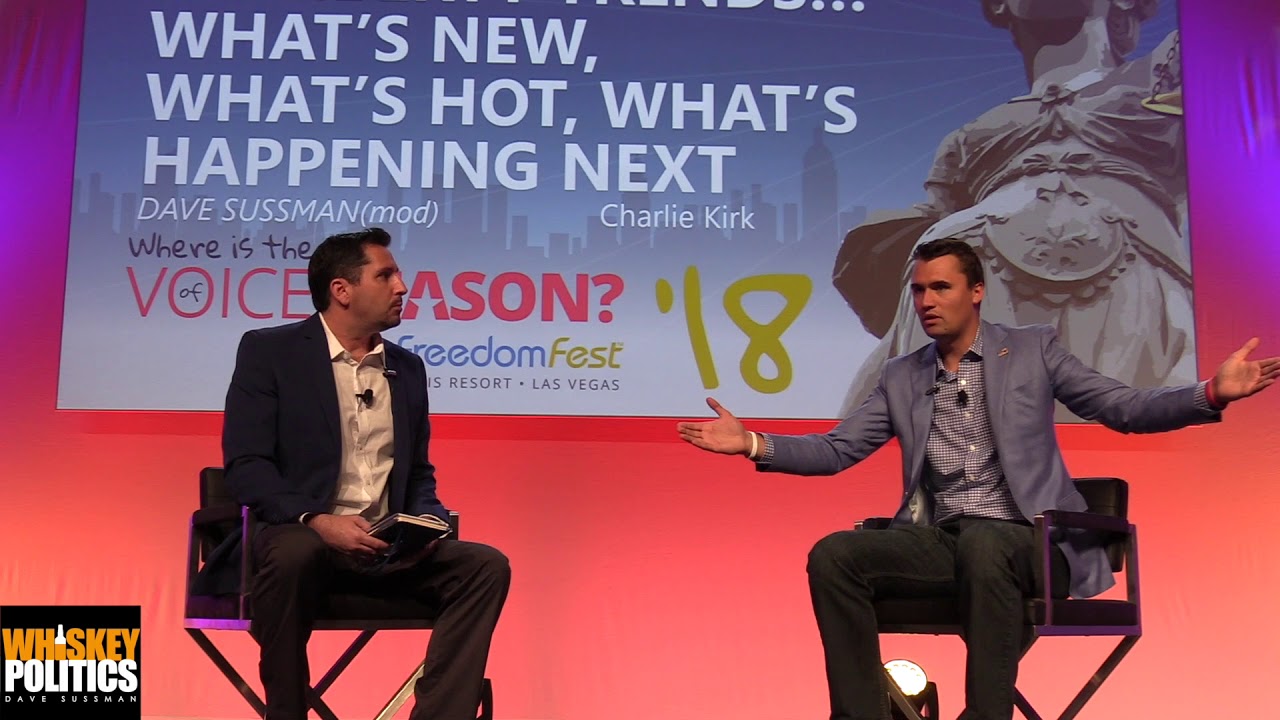
Charlie Kirk shares his bold prediction that Republicans will retain control of the House in the 2018 midterm elections, citing the booming economy, the Kavanaugh confirmation backlash, and energized conservative voters. While acknowledging the race will be tight, Kirk argues Democrats have become a "total and complete mob" and believes their actions during the Kavanaugh hearings, combined with Republican economic achievements, will drive voter turnout. He also addresses the immigration caravan approaching the southern border and emphasizes the importance of border security for stopping drug trafficking and crime.
Charlie Kirk offers a contrarian view on the 2018 midterm elections, confidently predicting that Republicans will maintain control of the House of Representatives. Speaking as one of five panelists—and the only one making this prediction—Kirk acknowledges the race will be tight but stands firm in his assessment. He points to three congressional districts where Republicans are positioned to flip seats currently held by Democrats, including one in South Florida, as evidence that the political landscape favors conservatives.
Kirk compares his confidence to the overconfidence Democrats displayed before Hillary Clinton's 2016 loss, suggesting that assumptions about a Democratic wave may be similarly misplaced. He expresses willingness to admit if he's wrong but believes the fundamentals favor Republicans maintaining their majority.
The Democratic Party Has Become a Mob
Kirk sharply criticizes the Democratic Party, characterizing it as having "lost all things of moral decency" and become "a total and complete mob." He cites what he describes as an "incredible amount" of violence against conservatives across the country as evidence of this deterioration. For Kirk, voting Republican represents a vote for order against chaos, a hedge against the disorder he associates with Democratic governance.
The contrast Kirk draws is stark: on one side, a party he sees as unhinged and dangerous; on the other, Republicans implementing "common-sense policies" that have stabilized the American economy.
The Kavanaugh Effect on Voter Motivation
Kirk identifies the Brett Kavanaugh Supreme Court confirmation battle as a major turning point in voter enthusiasm. He frames the Democratic opposition to Kavanaugh as a massive political fumble that has energized the Republican base like never before. Kirk poses the question to voters: if you want more of what happened during the Kavanaugh hearings, vote Democrat—but he doesn't believe any rational voter would want that.
According to Kirk, the conservative base is more fired up and ready to vote than he has ever witnessed, directly attributing this enthusiasm to the contentious Kavanaugh confirmation process. This energy, he argues, will be the decisive factor in Republicans maintaining control of Congress.
Economic Achievement as a Campaign Issue
Kirk emphasizes the Republican economic record as a central reason voters should support the party. He highlights job creation, low taxes, and reduced regulation as policies that have put America on a "completely and totally historic" growth trajectory. The economy has been stabilized under Republican leadership, and Kirk argues it's "very hard to vote against a booming economy" when voters are honest with themselves.
This economic success story, in Kirk's view, provides a compelling reason for voters to support Republicans regardless of other political considerations. The tangible benefits of economic growth should override other concerns when voters enter the polling booth.
The Immigration Caravan and Border Security
Addressing the caravan of immigrants approaching the Mexican border, Kirk confirms this is a significant motivator for conservative voters. He notes that reports suggest anywhere from four thousand to potentially ten thousand people are part of the caravan, though he mentions the Mexican government may have found ways to turn some around.
Kirk contextualizes the issue by noting that such caravans are not new—they've occurred over the past twenty to thirty years. However, he emphasizes that President Trump campaigned on building a border wall, and Congress promised to fund it. Now, Kirk argues, Congress must deliver on that promise.
The Case for the Border Wall
Kirk makes a multifaceted argument for why the border wall is essential, extending beyond simple immigration control:
National security protection
Domestic safety concerns
Stopping child sex trafficking
Preventing gun trafficking
Blocking MS-13 gang members from entering the country
Addressing the opioid crisis
On this final point, Kirk provides a striking statistic: 90% of all heroin and fentanyl comes across the southern border. In his view, if America wants to address its opioid problem, the logical step is to cut off the supply at its primary entry point. The border wall, therefore, isn't just about immigration—it's about addressing one of the most pressing public health crises facing the nation.
Confidence Despite the Stakes
Kirk acknowledges his optimism might be coloring his judgment, expressing hope that he's "not allowing optimism to get in the way of reality." Yet he maintains his position, drawing a parallel to Democratic overconfidence in 2016. Just as Democrats were certain Hillary Clinton would win and were proven wrong, Kirk believes current Democratic confidence about taking the House may be similarly misplaced.
He sees a potential fumble in how Democrats handled the Kavanaugh confirmation, and he's never witnessed the Republican base so energized. These factors, combined with the strong economy and concerns about immigration, lead Kirk to his contrarian prediction. If he's wrong, he pledges to be the first to admit it—but he's betting on a Republican victory that will surprise conventional wisdom.