Up Next

Charlie Kirk on Martin Luther King Jr., Socialism, Freedom and the Battle for Campus Free Speech
1:29:11

Charlie Kirk and Pastor Rob McCoy on Why Christians Must Engage in Politics and Government
47:40

Charlie Kirk Confronts Marxism, Evil, and the Church's Role in Modern America at Miami Synagogue
1:34:28
Charlie Kirk Explains How Turning Point USA Is Fighting the Cultural Marxist Takeover of College Campuses Across America
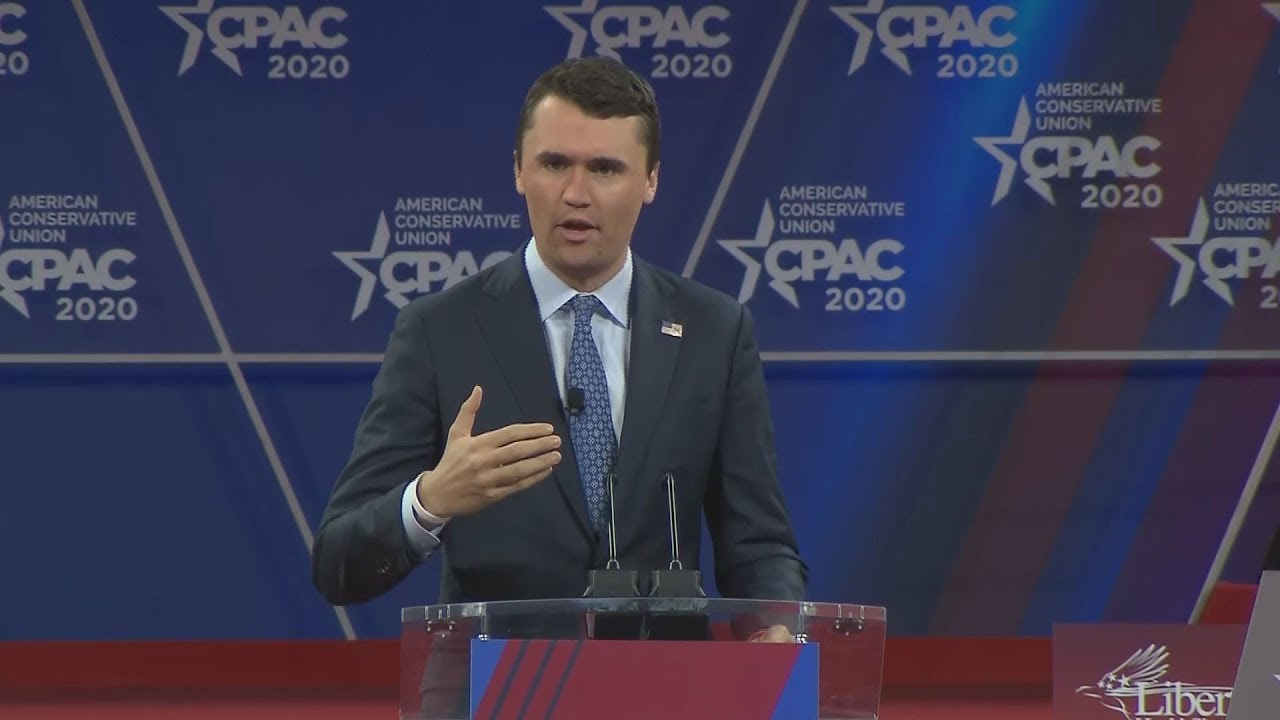
Charlie Kirk sits down with Dave Sussman of Whiskey Politics to discuss the state of liberty on American college campuses and the mission of Turning Point USA. Kirk shares how he founded the organization at 18 years old with no money or connections, driven by a passion for free market principles and American exceptionalism. From confronting postmodern Marxism in higher education to the rising interest among African American voters in conservative ideas, Kirk offers an unfiltered look at the battle for the minds of the next generation. He also addresses why President Trump represents significant progress for liberty, despite criticism from some conservatives, and explains why telling young people hard truths about personal responsibility matters more than crafted lies about systemic oppression.
The Origins of Turning Point USA
Charlie Kirk founded Turning Point USA at 18 years old in the northwest suburbs of Chicago. After not being accepted to West Point, Kirk considered himself part of the liberty movement, having spent his teenage years reading Milton Friedman, Ludwig von Mises, and F.A. Hayek. His teachers questioned why he kept mentioning these thinkers, revealing a gap in their own economic education.
Kirk started the organization with no money, no connections, and no idea what he was doing. He describes it as an "only in America story" where an 18-year-old with endless energy and enthusiasm for core principles could build something successful. When he tried explaining his organization to Italians during a European trip, they couldn't comprehend how successful businesspeople would voluntarily donate money to spread ideas without receiving equity or becoming shareholders. This cultural difference highlighted the unique American tradition of generosity and philanthropy that doesn't exist in the same way in Europe.
Today, Turning Point USA operates on 1,300 college and high school campuses across America, with Communications Director Candace Owens playing a major role in fighting the culture war in ways that haven't been done in years.
Challenging Marxist Indoctrination in Public Schools
Growing up in a public high school outside Chicago, Kirk was inundated with culturally Marxist and postmodernist ideas before he even understood what those terms meant. His education portrayed America's founding as an illegal formation built on stealing land from indigenous people, white supremacy, oppression, and exploitation—essentially the talking points of today's moderate Democrat Party.
At 14 or 15 years old, Kirk asked his teachers if there was anything good America had done. They told him no, it had all been terrible and evil. Faced with this narrative, he had two choices: conform or challenge. He chose to challenge respectfully.
Kirk discovered YouTube videos of Thomas Sowell and Milton Friedman that taught him more about economics in one sitting than his economics teacher knew. His teacher approached economics from a Keynesian Marxist perspective and had no real understanding of free market principles. Kirk realized he had a gift for language and dialogue that allowed him to challenge people effectively, but he also developed an impatience for the conflict and discussion that his questioning generated.
He discovered that many students in his class and local high school agreed with him but had never heard these ideas articulated. Kirk found his passion early, and he's not alone—millions of high school students are going through the same discovery process, finding videos, reading Ayn Rand and other great books, and pushing back against Marxist dominance in schools.
Defining Liberty for the Next Generation
Kirk considers himself a "conservatarian"—a mixture of conservative and libertarian. He defines liberty as being able to do whatever you want, however you want to do it, wherever you want to do it, as long as it doesn't harm someone else. This message can appeal to all Americans, though it's sometimes uncomfortable.
Defending liberty means you might have to hear ideas you disagree with, defend what's called hate speech on college campuses, be okay with someone using a substance you wouldn't personally use, or accept someone owning a firearm you wouldn't want to own yourself. Liberty isn't always comfortable. As Kirk puts it, "I would rather live in dangerous liberty than comfortable slavery."
The biggest problem with the left, according to Kirk, is their attempt to separate economic freedom from personal freedom. They claim you can say whatever you want but then take 90 percent of your money. This doesn't work because once government has the power to take your earnings, time, treasure, and talent, they will equally be able to censor your speech. The UK serves as an example, with London's anti-free speech legislation claiming to protect freedom of speech while maintaining huge social welfare programs.
Kirk's argument on college campuses is simple: "Don't tell me how to live my life and I'm not going to tell you how to live yours."
The State of Liberty on College Campuses
While Turning Point USA's man-on-the-street interviews often showcase students who appear uninformed, Kirk insists these are the exception, not the rule. He maintains an amazing amount of faith and confidence in his generation because it's not that young people are opposed to conservative ideas—they're not being exposed to them at all in the first place.
There's an intentional silencing by the left and Marxists to ensure these ideas aren't presented or given a platform because they're threatened by them. The left fears a marketplace of ideas and competition of differential opinions, while Kirk and other conservative speakers gravitate toward it.
Before any campus speech, Kirk implements a rule that speakers like Ben Shapiro have also adopted: anyone who disagrees goes to the front of the line. He sets up shop on the quad where all the traffic is, films for three hours, and does "Prove Me Wrong" or "Change My Mind" sessions where anyone can ask him anything about any topic. He's never seen a leftist come close to effectively challenging him because they're afraid of that kind of disagreement and dialogue.
The radicals and social justice warriors that Kirk has built a visible digital brand around challenging are a vocal minority, not a majority. Most young people couldn't care less about politics. If these ideas are argued properly and presented in ways students can understand, they'll default toward wanting to pay less taxes and not wanting government to tell them how to live, who to marry, or what to do.
Socialists and Marxists understand this default position toward liberty, which is why they sell socialism and Marxism as if it's the pro-freedom solution, claiming they're the ones who will defend freedom and liberty—the farthest thing from the truth.
The Movement Among African American Voters
Kirk points out that if Republicans win 15-20 percent of the black vote, the Democrat Party is finished. Currently, Democrats win about 80 percent of the black vote. There is no segment of the population except maybe Native Americans that has been lied to as much and had a greater disservice done to them than black Americans at the hands of the Democrat Party.
Every dysfunctional city in America—Oakland, Chicago, San Francisco—has Democrat councilmen, Democrat mayors, and Democrats across the board. Candace Owens makes the powerful argument: How is it that her grandfather, who grew up under segregation in a much more bitterly racist country, did much better than her father? The African American story got generationally worse as times actually got better.
Kirk attributes this to the Great Society passed by Lyndon Baines Johnson and the moral failure of the public education system. He no longer believes that Democrat leaders mean well but just have different solutions. He believes Democrat and leftist leaders want to keep poor people poor and their constituents dependent on government because controlling that segment of the population helps them win reelection.
Kirk cites Maxine Waters as an example—a "low IQ individual" who lives in a six million dollar house in Hancock Park outside her district while her constituency is one of the poorest in the entire country. What has she done to make African Americans' lives better? Nothing.
Republicans see a great opportunity because President Trump is unafraid to challenge issues that traditional Republicans considered third rail issues—illegal immigration, trade, and other matters that can be marketed toward a black population that has been totally lied to. Kirk offers one piece of evidence: during the State of the Union, the Congressional Black Caucus stayed seated when record low black unemployment was announced. They were upset, angry, and disturbed that black people are doing better because they know that if black people start having jobs, higher wages, and get off government assistance, they won't be Democrats any longer.
Success should be judged not by how many people are signed up for food stamps but by how many people are lifted off food stamps and out of poverty.
The Kanye West Effect
When Kanye West came out supporting Trump and declaring his belief in individuality and individualism, stating that having black skin doesn't mean he has to vote Democrat, he was attacked relentlessly. But unlike others, he didn't back down or apologize.
Candace Owens was with Kanye at TMZ during one of his most controversial appearances. Every music expert predicted Kanye had destroyed his career, but his album came out at number one in 83 countries—his best album ever. He never apologized for his support of Donald Trump or his support of individual thought and free thought. He said he's not a Republican or a Democrat but likes some things Trump is doing while not agreeing with everything.
Kirk's favorite part of the Kanye West story was when Chance the Rapper tweeted, "Not all black people have to be Democrats." People lost their minds, saying that's a horribly racist thing to say—which reveals the underlying racism of assuming black people must think a certain way because of their skin color. Chance later apologized, but the damage to the narrative was done.
Kirk argues there's nothing healthy about a segment of the population voting 95 percent for one party because no one has to compete for their vote. If it's automatic and incumbent, there's no collision of ideas, no competition for solutions, which is why battleground districts have so much competition and accountability while safe Democrat districts never have to prove results for their constituency.
After the Kanye West incident, a poll showed African American male support for Donald Trump doubled from 11 to 22 percent. Kirk notes this puts Democrats in the danger zone for presidential elections. At Stanford University, Turning Point captured a powerful video of a black student who said he was a Democrat and Black Lives Matter supporter until Candace Owens opened his eyes and got him "off the plantation." The video has 30 million views.
Turning Point's message to African Americans starts with simply considering becoming an independent—not having to be dogmatically leftist but willing to consider other ideas and opinions. Once that starts happening, there can be a real marketplace of ideas and competition for votes.
Personal Development Over Victimhood Culture
Kirk acknowledges it's difficult at times to sell ideas of economics to an audience programmed to focus on sociological issues, but there's a growing movement evidenced by the rise of Jordan Peterson. Young people are sick of hearing about societal and systemic problems and are much more interested in how to fix their own lives.
At the core, postmodernists and Marxists focus not on how individuals can improve their own lives—as Jordan Peterson advises with "sit up straight, make better choices, tell the truth"—but on the idea that society and culture are so broken that radical revolutionary ideas are needed to tear everything down.
At Stanford, Kirk encountered a student who wanted to play victim. When she claimed to be a victim despite attending Stanford as a black person, Kirk pointed out that's the last thing from victimhood—attending one of the most prestigious universities in the world is a big deal, not evidence of oppression.
If you're looking for someone to blame, you'll never run out of choices. The left understands this. But Turning Point is more than a political or philosophical movement—it's about personal development at its core. Hayek and Mises rarely talked about the betterment of the individual to overcome adversity, yet that's the story of Western civilization.
The contrast with the Soviet Union is stark: the Soviets focused on the collective and the greater good, yet 100 million people lost their lives in pursuit of that utopia. Western civilization starts with admitting that life is suffering and life is difficult. The question is what to do about it. Do we have huge social welfare programs and big government trying to rearrange our choices and societal imperfections, or do we admit life is suffering and learn how individuals can better their own choices and decisions?
We will endure adversity, imperfection, sadness, and disappointment. We'll fall short of the mark often. Many days we're not very happy. But that's okay. Admitting that and asking how to overcome it is the story of Western civilization, not the pursuit of utopianism. More people have died in the pursuit of utopianism than from any other idea in the 20th century.
President Trump and the Advance of Liberty
Kirk believes libertarians and conservatives should be very happy with the job President Trump is doing. He's by far the most libertarian president of our lifetime. What other Republican president would critique the Iraq war the way Trump has? Would Jeb Bush have done that? Would any other Republican candidate except Rand Paul have criticized US foreign policy decisions this way?
Would a traditional Republican president go to NATO and demand they pay up? Would they go to the UN and question why it even exists? Would they call up Pakistan and cut their aid? These are long sought-after libertarian objectives and goals, and real progress is being made.
On regulation, President Trump pledged to cut two regulations for every new one passed. He has cut 22 regulations for every new one—the first time in the history of the federal registry that it has actually decreased and shrunk. This represents the greatest deregulation in American history. 867 Obama-era regulations have been cut. Government is smaller today than when Trump took office, with 34,000 fewer federal employees because many quit rather than work for him and he hasn't filled the positions.
Nine out of 14 cabinet agencies are at least 5 percent smaller today than when Trump took office. He directed the EPA—which Kirk calls the "Employment Prevention Agency," not the Environmental Protection Agency—to cut regulations and redefine their approach to energy policy. America achieved energy independence for the first time in American history, a huge long sought-after libertarian goal that means not being dependent on maniacs like Saudi Arabia, who were behind 9/11.
On the courts, Neil Gorsuch and soon-to-be Justice Brett Kavanaugh are sympathetic with libertarians on most issues—guns, privacy, sovereignty. They're not perfect, but they're much better than another Ruth Bader Ginsburg. One out of eight of all Circuit Court judges in America have been appointed by President Trump, and they actually read and understand the Constitution—the foundation of Western civilization and the idea of liberty. These judges are far superior to those George W. Bush appointed, including John Roberts, who upheld Obamacare.
President Trump gets a lot of criticism from the Never Trump movement and intellectual conservative movement, some of which Kirk agrees with regarding policy disagreements. But there is unmistakable progress being made in the direction of making America more economically free and advancing liberty. We must recognize these gains where and when they happen and not be dogmatically against Donald Trump because of how he talks, because he wasn't your primary candidate, or because he doesn't understand "Road to Serfdom" the way you do. None of that matters as long as we're going in the right direction of liberty.
Addressing Never Trumpers and Trump Skeptics
Trump was not Kirk's guy in the primary—he supported Scott Walker, then Ted Cruz, then got on the Trump train. So the argument that he's a sore loser has no resonance. But if opposition to Donald Trump is rooted in being upset he's president because you thought he would lose, Kirk has trouble with that. If it's real policy disagreements, then disagree politely and intelligently.
The bigger point is that Kirk fundamentally believes America was on a predictable decline that would have been cemented with the election of Hillary Clinton. The left controls Hollywood, schools, and mechanisms of communication. The one thing they didn't control was politics and the courts. The left needed the courts to complete their fundamental takeover and transformation of the country.
Then came this billionaire from New York who communicated in a way most people in the intellectual conservative and libertarian community didn't understand. He won in a way many didn't predict. You can disagree with him on policy, but understand how amazing what he's accomplishing is versus what a traditional president would have been doing—even compared to Bush, who grew government through Medicare Part D and increased every government agency.
Trump is actually trying to consolidate government agencies. Mick Mulvaney, his director of Office of Management and Budget, came up with a government consolidation plan to consolidate four cabinet officials together and reduce government by 40 percent. Libertarians and conservatives should be applauding from the rooftops when this happens.
There are plenty of critiques Kirk disagrees with that have been done with the right tone and tenor—disagreement is important. But when it comes to personality disagreements or pejorative-driven insults, he doesn't have much sympathy.
Affirmative Action and the Racism of Low Expectations
Betsy DeVos wants to repeal Obama regulations on affirmative action, which Kirk considers reverse racism or racism as a whole. Most students repeat what they've been told about the president or certain ideas without much depth, as evidenced by man-on-the-street videos where students say Trump's Supreme Court pick is horrible before he's even made one.
Regarding DeVos's decision, Kirk believes affirmative action is a horribly racist idea that essentially says people will be judged on the color of their skin, not the quality of their intellect, leadership capacity, or merit. It's particularly discriminatory against Asian American students. A lawsuit filed against Princeton or Harvard showed that an Asian American had to score almost 20 percent higher than an African American student to get in.
Kirk thought society was trying to create a colorblind system where people are judged on the content of their character, not the color of their skin, as Martin Luther King said. He's very pleased affirmative action is being repealed and pushed back.
People say Kirk is offensive when he says white privilege is a lie, which he believes is itself a racist idea. He never tries to offend people—he just speaks the truth, and if that offends someone, he doesn't care.
When discussing taking race out of the college entrance equation and putting everyone on a level playing field, some worry that certain races' numbers may go down as a percentage of accepted students, potentially making UCLA 75 percent Asian. Kirk's response: So what? The NBA is 95 percent black—is that something to protest? He has no problem with UCLA being 75 percent Asian.
There are reasons Asian Americans do better at math and science, some linguistically based. Malcolm Gladwell did a study showing that Asian languages make it easier for young children to learn counting systems. For example, Japanese doesn't require learning new numbers after ten—it's "10-1, 10-2, 10-3" instead of "eleven, twelve, thirteen." This seems elementary but for an 8-month-old or two-year-old, it's exponentially less to learn, so they're exponentially ahead by age three or four.
Asian American culture also takes schooling very seriously, which should be applauded. Kirk has no problem if Stanford becomes 80 percent Asian if they're the smartest and most qualified. Saying it's horrible if Stanford becomes 80 percent Asian is racist. Imagine if someone said it's horrible if Stanford becomes 80 percent black—people would picket. Allow the smartest, most qualified people to go wherever institutions open themselves with their own qualifications. He doesn't care if it's all Asian American—if they deserve to be there, they deserve to be rewarded. That's how meritocracy should work.
Cultural Implications and Family Structure
This opens an opportunity for discussion about actual cultural implications—the breakup of families in inner cities, education, and how certain demographics put a premium on these values. Having this discussion with the next generation in an understanding way where they don't immediately yell racism is important.
The highest sin the left tries to paint against conservatives is racism, even though Kirk argues they are the true racists—everything they do is rooted in racial division and keeping people of different colors perpetually and continually poor.
Conservatives must challenge preconceived notions politely and intelligently. The number one thing Kirk hears is that he's coming from a position of privilege. Looking at the oppressed versus oppressor pyramid, he's at the top as the most privileged person, which is partly true—but his privilege has nothing to do with skin color. It comes from a two-parent household, suburban background, parents who didn't commit crimes, and higher median income. Nothing to do with skin color.
The left says white heterosexual Christian males are at the top of the oppressor pyramid, so Kirk is the worst thing that could possibly exist. That's why they hate him and say what he says is immediately discounted and dismissed because of who he is.
Kirk gave a black friend a Thomas Sowell book with no picture on the jacket. The friend called him saying the author was a horrible racist saying horrible things about the black community. Kirk revealed Thomas Sowell is black. The friend said, "Oh, it's fine then, it's okay." Kirk asked if it becomes more or less true based on the author's skin color, more acceptable for someone to criticize the black community if they're black. The friend said yes, absolutely.
This teaches messenger bias to young people—that somehow you cannot say certain things based on your skin color. But truth transcends color. Objectivity, facts, rationale, logic, history, and reason are all true whether a heterosexual white male or a lesbian black person says them. Society must get away from messenger bias suggesting you're not allowed to say certain things based on your skin color, background, or identity.
This shows how corrosive higher education has been toward telling students they should only accept certain ideas from certain people who look the way they look. It's one of the most catastrophic byproducts of identity politics, which is postmodernism and Marxism.
The Acceleration of Radical Ideas on Campus
When did this switch happen? Kirk notes that someone starting college in the mid-1980s during Ronald Reagan's presidency didn't experience this level of identity-focused education. Today, everything is viewed through the lens of skin color or sexuality.
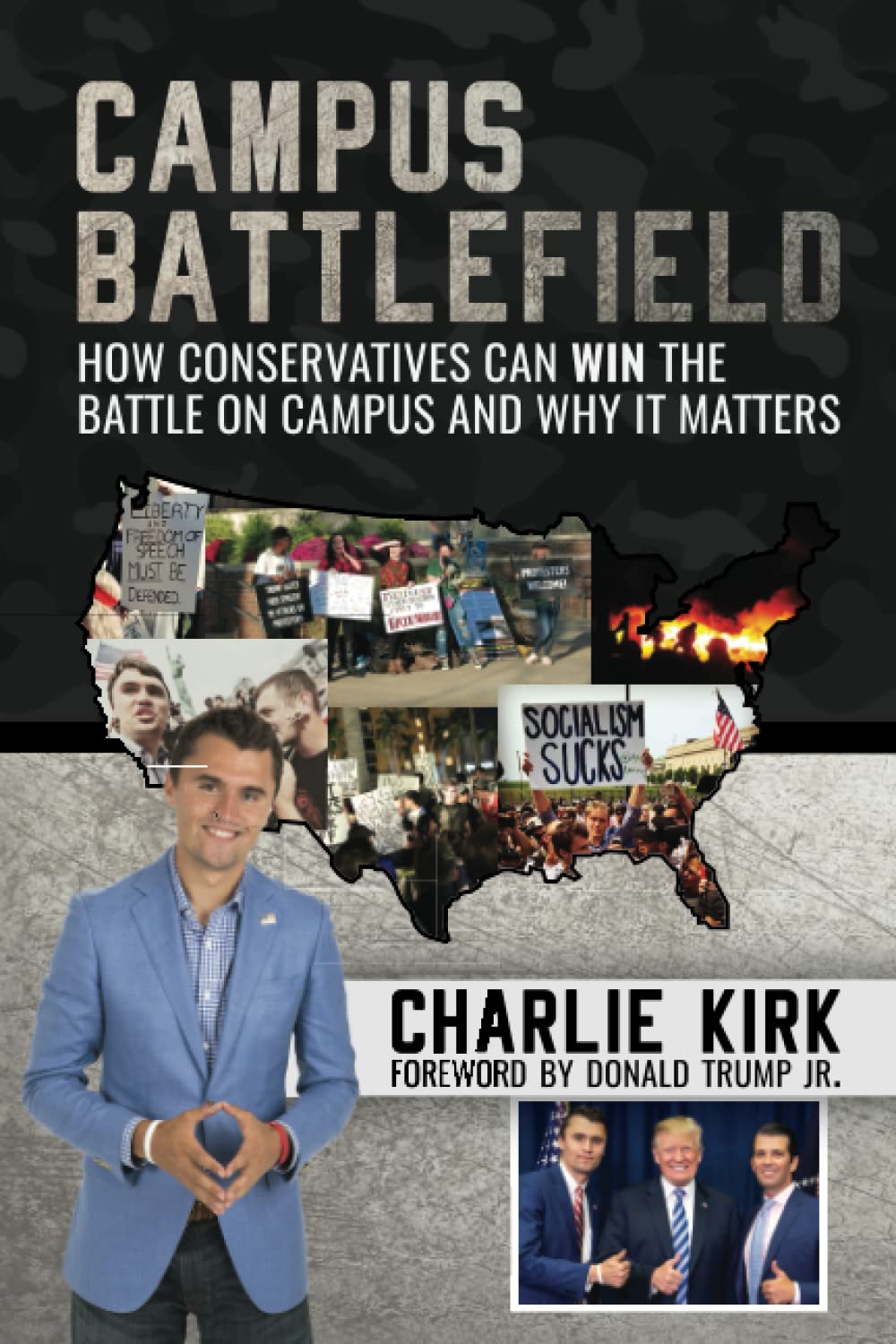
Kirk has a book coming out in September called "Campus Battlefield" that provides historical analysis of how this happened. From his firsthand experience, it's gotten worse in the last couple years. He's been doing this for six years, and ideas he hears repeatedly now he wasn't hearing three or four years ago.
For example, Kirk never cared about nor was concerned with how many genders there were—it wasn't something he focused on or considered a pressing issue. But now he's discovered there are supposedly 84 genders, and students are passionate about it. When he says there are only two genders, it's considered hate speech. Science is considered hate speech now.
He'll wear a shirt saying "There Are Only Two Genders" and administration officials will try to prevent him from entering campus because he's going to offend transgender students. When he tries to have an intelligent conversation about why saying there are two genders offends transgender people when it's not an anti-transgender shirt, they say there are unlimited genders, 84 genders. This is very new even for Kirk's experience.
It's happening worse and faster than anyone can imagine. These ideas have always been in higher education—the roots of postmodernism started in France and were introduced through Yale and the Frankfurt School. They've been given a bigger platform. But since the election of Donald Trump, the more radical ideas have been given an even bigger platform. Individuals on the fringe who are radicals are now being presented as the solution because traditional Democrat ideas are being dismissed in favor of democratic socialism, like Alexandria Ocasio-Cortez, the Marxist who won in Brooklyn.
The infiltration of postmodernist Marxist ideas is being given a bigger and bigger platform, and it's getting worse.
Politics Downstream from Culture
The pendulum has swung far in an extreme direction, with the left like Ocasio-Cortez going even further left. With big elections coming up, what is Turning Point USA doing to get people to the polls?
They're not doing as much on the political side—they're more involved in the culture war. Politics is downstream from culture, as the great Andrew Breitbart used to say, which is 100 percent true.
What Kirk considers a non-controversial statement opens every single speech: "America is the greatest country in the history of the world." Half the college audience will disagree with that. He considers it an irrefutable statement that Americans are the luckiest people ever to live.
America is 5 percent of the world's population but controls 80 percent of the world's economic output. Americans independently and voluntarily gave away $500 billion to charity last year—that's the combined GDP of Hungary, Belgium, Norway, Sweden, and Finland. That's what was voluntarily given to charity. Imagine how much more Americans would give if they didn't have a ridiculously high and cumbersome tax system.
Kirk says if the entire welfare state were abolished, he guarantees Americans would step up and make sure every poor person had a meal and every person who needed clothing would be taken care of. That's what makes America different than any other social welfare state.
The idea of American exceptionalism—that we should be thankful, not angry, that we live in this country, that we should have gratitude, not revolutionary ideas—that's the split. If we lose the culture, we'll lose everything politically. The defense of these ideas on campuses right now couldn't be more important because they're under attack and assault by committed anti-Americans and Marxists who no longer hide their Marxism. They say with great pride the greatest book ever written is the Communist Manifesto. They say with great pride that communism and socialism are the answer to America, that America is a racist, bigoted, xenophobic, horrible country that needs revolutionaries to take it over, destroy it, and reconstruct it.
The Failure to Teach Human Nature
Where do those ideas come from? Kirk sees an element of society that has failed teaching children the histories of Marxism, communism, and postmodernism. But it's even greater than that. History is one component, but what Marx got so wrong—though he observed some things properly, like the accumulation of wealth (his solutions were horrific)—was his analysis of human nature.
Marx thought human beings could be perfected, that we're a byproduct of broken systems and institutions, not broken people. We need to reinforce to youth that human beings are broken at birth, that we are sinful by nature. Kirk defends this from a Judeo-Christian perspective: we are not going to be able to create perfect systems ever, and we're not going to create perfect people.
Once you admit that individuals are self-centered and will adapt to their own best interest—which is a good thing, by the way, as self-interested behavior can be a virtue if you incentivize it—the question becomes: what economic, societal, or cultural system will use the worst inclinations of human beings for the greater benefit of everybody while also requiring good behavior and virtuous conduct?
That system is the free market. You cannot lie yourself to the top of a free market. John Stossel says this well: when he tried to find con artists who sold lies to the top, they always stopped at the mid to lower level of business. Really successful entrepreneurs had to conduct themselves in a semi-virtuous capacity.
Society is not teaching young people the truth of humanity—that life is suffering, human beings are broken by nature, and there will always be elements of brokenness, strife, and disagreement. Our system will always have a component of imperfection because we are imperfect by nature and at birth.
What system can allow us to endure this and eliminate as many imperfections as possible? That has always been the free market. The free market solves problems without central planning. The greatest example is the smartphone everyone carries. There was never a Central Committee in 1995 deciding everyone needed a supercomputer in their right pocket for only $400. It just happened because entrepreneurs find ways to solve problems by trying to make money, and the only way to make money is to solve other people's problems and give them something they want.
That's why Americans don't worry about electricity anymore, while most countries are amazed at the standard of living increases America has achieved. Society must be brutally honest with young people that life sucks, life is suffering, and no politician, government, or bureaucrat is going to solve these problems in committee. Young people will have to make better choices for themselves, get government out of their way, make good choices, and things will eventually get better when entrepreneurs solve those problems.
The Jordan Peterson Phenomenon
This is one reason Jordan Peterson has caught such an incredible wave of enthusiasm and social media attention, with millions watching him share this exact message. There is no perfect scenario, no perfect system. Certain things do suck, and you have to work at it. He talks about how the cure for inequality is worse than the disease.
From Kirk's experience, young people have been told well-crafted lies instead of hard truths. There is increasing hunger, desire, and thirst for someone to tell a 21-year-old student to stop believing in socialism and Marxism, that other people won't solve their problems. They're going to have to wake up earlier, sit up straight, dress better, make that extra phone call, do something they might not want to do. Stop blaming other people. Stop blaming a broken, institutionally racist, corrupt, bigoted, or homophobic culture to solve their problems.
When you're blaming the system, you're really just blaming individuals interacting with individuals. The best way to eradicate racism is the market. You can't be a racist when you're selling a product to someone—or you can, but you won't be very good at business because you'll lose customers.
Video Transcript
[Music] my name is Dave Sussman I am the host of a show called whiskey politics we're on America's voice network and you can also find us on YouTube ricochet calm and all of your podcast applications of choice iTunes stitcher Google Play and so on I'm delighted to be here today to talk about Liberty and there's no other person better right now to talk about Liberty especially when it relates to the next generation the Millennials as well as the college students then charlie kirk charlie is the founder and CEO of Turning Point USA and Turning Point USA is a national student movement and multiple universities all across the United States and he is in direct contact with those people that are going to be carrying the baton on the next generation so I'd like everybody to give a warm welcome to Charlie Kirk thank you thanks for joining us Charlie you bet so the subject of this interview today is Liberty just from a standpoint of where you've come from where you are right now you're speaking with college students all across the United States Turning Point is a massive organization how did you start turning point this is your baby right so I started this organization when I was 18 years old and the northwest suburbs of Chicago prior to that wanted to go to the West Point United States Military Academy at West Point didn't didn't ended up being the best thing that never happened to me and I was I'm actually still consider myself a member of the Liberty movement I remember being 14 15 and 16 years old reading Milton Friedman ludwig von mises FA Hayek all the great thinkers that have really articulated what Liberty means and how we're supposed to defend it in the philosophical basis of that my teachers would be a great who's this Milton Friedman guy and like why are you keep on mentioning him so I started this this organization when I was 18 I had no money no connections and no idea what I was doing so I was off to a good start but I really have lived they only in America story only in American put an eighteen year old with a pie-in-the-sky type vision endless energy and relentless enthusiasm for core ideas and principles be successful this could not have happened in Germany or France or Italy in fact I was in Europe a couple weeks ago trying to explain what my organization did to a group of Italians and I said you know we go to college campuses we educate around the ideas of American exceptionalism free enterprise and smaller government and they said we don't get it like how do you get money I said well I go to successful business people and entrepreneurs and I raise capital through our charity they said what do they get like equity they get are they like shareholders we don't understand and what are they get in return I said they get the fulfillment in the satisfaction that these ideas will be spread to millions and millions of people and fight the culture world what people would voluntarily give you money in America for something like they couldn't understand it culturally they don't understand the idea of generosity or philanthropy it's well why isn't the government is going to take care of that for you and so I am a byproduct of living in the greatest country in the history of the world and I'm now the luckiest 24 year old ever to live where we're now on 1,300 college school campuses we have the amazing Candace Owens who's our communications direct they're doing an unbelievably great job you should give it up we're really fighting this culture war in a way that has not been done in a long time so when I was 18 and that's in the 1980s or something but I wasn't focused on politics and if I was focused on politics it was from a leftist perspective because most kids lean from an emotional standpoint towards leftism liberalism what how does an 18 year old in your situation feel like he believes in conservative and Liberty based values so so growing up in a public high school outside of Chicago I was inundated with culturally Marxist post modernist ideas before I even realize what those terms even meant and I know it would always be about the forming of America put simply as I was taught was an illegal formation stealing the land from indigenous people built on the ideas of white supremacy oppressing those that could not defend themselves building a patriarchy and exploiting anyone that you say everything that you hear from the moderate Democrat party I was experiencing when I was 14 years old and I remember you know being 14 or 15 asking my teachers questions saying well there has to be something good that this country has done before oh no it's been all terrible it's been all evil it's a disaster so I would you have one of two choices you can either conform or you can challenge those are the two things you can do and I decided to challenge respectfully and I found on YouTube back when YouTube wasn't what it is today back in like 2006 I was you know youtubing videos of Thomas solo Milton Friedman of how to defend the free market and I ended up after one YouTube video more about economics than my economics teacher just obviously she had no idea what she was talking about she came in from a Keynesian Marxist perspective but I realized quite quickly I was given a gift of being able to have the gift of language to give the dialogue and be able to challenge people rather quickly but then I also had an equal Susy has impatient for that sort of conflict and then sort of discussion because it's important and I realize there are a lot of people in my class and a lot of people in my local high school that agreed with me and so I found this passion very early on and I'm not alone there are millions of high school students that are going to the same discovery process they're finding our videos reading the great books reading Iran you name it and they're pushing back against the marxist dominance in our cut in our high schools and eventually our colleges and so I was just lucky enough to do something about it and be successful Wow so you're in 1,300 universities that's a lot of students fine okay what is turning-point today doing to promote Liberty and what is the understanding of Liberty I mean it's a definition just start where at least from and I consider myself a Conservatorium so I'm kind of above a conservative libertarian mixture so I could be in both very libertarian a lot of issues more traditionally conservative on other issues Liberty to me is being able to do whatever you want however you want to do it where you want to do it as long as it doesn't harm someone else that's how I define Liberty and I think that's a message that can appeal to all Americans it's tough at times because that means you might have to hear ideas you disagree with that means you might have to defend what it's called hate speech on our college campuses that might mean that might mean you have to be okay with someone doing a substance that you personally wouldn't want to do yourself that also means that you might have to be okay with someone owning a firearm that you would want to own yourself but Liberty is not supposed to always be comfortable it's supposed to I would rather live in dangerous Liberty than comfortable slavery and I've always thought you make that argument to young people some some some students actually do want to be taken care of they would rather live a very simple mediocre life where they get stuff given to them and that that's fine but what the biggest problem is the left they always try to break economic freedom personal freedom no there's just freedom you can't you cannot sentiment freedom you can't say you can say whatever you want to say everyone I say it but then we're gonna take 90 percent of your money away from you it doesn't work that right as soon as you give the government to power they've got the power to take away your earnings they take away your time and your treasure your talent they will equally be able to censor your speech just look at the UK you know for the London for example with what's going on with their horrible anti-free speech legislation they say oh don't worry we're gonna protect freedom of speech we're gonna protect your ability to say whatever you want to say ever let us say it but we're gonna have you huge social welfare programs we'll look I mean they don't they don't have a commitment to the First Amendment like we do here in this country and so you can't separate freedom you can't separate Liberty so my argument on a college campus is don't tell me how to live my life and I'm not going to tell you how to live yours what's the state of understanding of that on the college campus I know you've done a lot of man on the street type interviews right challenging pokes at folks find these on YouTube by the way they're fascinating it will fill an evening with just anger and glee at the same time because you you understand that you're talking to kids that don't know anything right how much of those are the exception to the rule or how much of those are the norm I'd say they are the exception I I have an amazing amount of faith in confidence and in our generation I really do because it's not that young people are opposed to our ideas they're not being exposed to them at all in the first place there is an intentional silencing by the left by the Marxist to make sure these ideas are not being you know presented or give it a platform at all because they're threatened by them they're threatened by the idea of a competition of ideas having a marketplace of differential opinions is something that a left us in a mark a Marxist will run away from in fact I gravitate towards that when we go on college campuses you know this is a rule that a lot of no speakers are now instituting such as Ben Shapiro I say anyone who disagrees with me goes to the front of a lot we want that disagreement we want that kind of engagement before any campus speech that I do I will set up shop on the quad or the area where all the traffic is we'll film it and we'll do what's called prove me wrong or change my mind type three hours anyone can come up and ask me anything about any topic at any time I've never seen a leftist get even close to me now because they're afraid of that sort of disagreement and that dialogue but I will say this the the radicals and the social justice warriors that I have made a quite visible digital brand around challenging and making look silly and foolish they are a vocal minority they are not a majority they're not most young people couldn't care less about politics they really couldn't they might have a little opinion one way or the other but the deference will go towards government get on my life that's that if if argue properly and put forth in a way that they can understand and make an informed decision they'll say I want to pay less taxes I don't want government to tell me how to live who to marry what to do where to purchase my goods and services so there is that default position towards liberty and in fact the Socialists and the Marxists they know this so they sell socialism in Marxism as if it's the pro-freedom solution they say were the ones that are gonna defend your freedom and liberty which is anything it's the farthest thing from the truth but they understand that young people and people in general want to be free I want to talk about a couple of specific issues now last time you and I met you were with Candice and we had you on whiskey politics and it was a long form and one of the issues that we discussed and Candice really handed this up as well is the black youth ok african-american voters and their understanding of liberty and individualism and classic liberalism and we've seen subsequently since that point a massive movement right now which is mostly online that if I can arguably state I think really came from both of you and turning-point USA especially Candace Owens people are walking away from the left yes okay what are you seeing right now on the college campuses especially when it comes to the african-american vote I we see unbelievable amount of movement and mind you if Republicans win 15-20 percent of the black vote the Democrat Party is done I mean so thing about it Democrats win 80% of the black vote they lose everything and there is no segment of the population except maybe the Native Americans but there is no segment of the population that has been lied to as much and had a greater disservice done to them than black Americans at the hands of the Democrat Party there is no greater section of the population if you want to see an American ghetto I will show you a democratic church every screwed up city in America has Democrat councilmen Democrat mayors Democrat all across the board were there at the Oakland Chicago San Francisco it is all across the board yeah and you look at african-americans they were and this is this is an argument that Candis Owens makes very very well said how is it my grandfather who grew up under segregation and a much more bitterly racist country then my father is did much better and has done much better than my father so how is it that for the African American story you got generationally worse as times actually got better well it's because of the Great Society passed by Lyndon Baines Johnson it's because of the great moral failure of our public education system a government should get completely out of get education totally incomplete and I would make the argument growing up this is the business of big thing I want to express and some people might disagree with me growing up I was told to always give the benefit of the doubt to the opposition that Democrats they might I might disagree with them but they mean well they just have a different means to go about solutions I no longer believe that I believe that Democrats and leftists the leaders in particular I think the followers do meanwhile that there's a lot of good Democrat voters but the leaders they want to keep poor people poor in fact they're really good at they want to keep us as they want to keep their constituents dependent on government they want to keep people that are living in poverty continuing having to apply for food stamps and having to live in government housing because as long as you can control that segment of population you can win reelection ask-ask no one further than the con artist herself Maxine Waters who is a little IQ individual by the way she lives in a six million dollar house outside of her district Hancock Park yeah you know about I mean yeah and her constituency is one of the poorest yep in the entire country what has she done to make African Americans lives better and nothing is the answer and so for us Republicans we see a great opportunity because we have such unconventional president who is unafraid to challenge issues that traditional Republicans have always considered to be third rail issues and some issues such as illegal immigration trade things that things that can be marketed towards a black population that has been totally lied to and totally done a disservice the Democrat Party we can see that great defection starting to happen and I can submit one piece of evidence I was making an argument in a in a courtroom why is it that during the State of the Union the Congressional Black Caucus stayed seated when record low black unemployment was announced they were upset they were angry they were disturbed that black people are doing better because they know that if black people start to have jobs and higher wages and get off of government assistance they won't be Democrats any longer and that they're going to lose re-election so we have to make the argument that we should judge success by not how many people we sign up for food stamps but how many people we get off with foods things how many people that break out of poverty not sample that's the argument Kanye West came out supported Trump but mostly he stood up and he says I believe in individuality I believe in individualism I because I have a black skin does not mean that have to vote Democrat and he was Hillary he's got a little quiet sense what do you think's happened there I don't know if quiet I mean he's become he kind of came up with a boom gotta give him credit for that and he didn't back down so here's what I love about Kanye West unlike any other way Kandace was with him at what was that TMZ yeah you were there too okay so so I was so I gotta give him credit he comes out and says first before most I love the way Candace Owens thinks which started this whole snowball and then people lose their mind how dare you say something good about a black conservative he says oh yeah I think that's bad I'm gonna post a picture of me wearing a trump hat when they lose their mind even more and then even better he doesn't apologize doesn't apologize and every music expert you know they're almost as bad as the political experts by the way these musical experts they should all be fired they're they're horrible Kanye West has destroyed his career Bob Papa Papa comes out with an album number one in 83 countries best album he's ever had and he never apologized for his support of Donald Trump he was in support of individual thought and free thought and he said I'm not a Republican I'm not a Democrat but I like some things Trump is doing I don't agree with everything is that he's doing it and then my favorite of the whole a whole kind of Kanye West story was one chance the rapper tweets out not all black people have to be Democrats and people lose their mind they say what are you talking about of course they have to be democratic that's a horribly racist thing to say that black people have like you have to think a certain way because your skin color think about that I mean think about if you said that about any other segment of the population white people have to think of certain way Asian people that's a really really racist thing to say in any of course apologize oh no I didn't mean it that way then how did you mean it like that's it's such a simple thing not all black people need to be Democrats he tweeted that I would totally broke the internet in kind of support a Kanye and he comes out of college I'm sorry if I offended people that shows how out of balance our political dialogue and discourses and my argument to people that are on the left and and our black Democrats that want to serve their constituency there's nothing healthy about a segment of population voting ninety five percent here's why no one has to compete for their vote if it's automatic and it is considered to be just incumbent and this person is going to win then there's no collision of ideas there's no people trying to find solutions and so that is why battleground districts there's so much competition like we're going to prove this we're going to prove that and they have to be held accountable but if the person is always going to be re-elected in a democrat ticket they don't ever have to actually prove results for that district or for that constituency so I have a tremendous amount of respect for Kanye West and what he did he's an artist it's a very very talented artist but you got to give him credit anyone else would have defected or capitulated and would issue an apology in fact he doubled down in a TMZ he said I quote Democrats want black people to vote for them just for food stamps I mean that's a pretty amazing statement to hear from someone that is a top-tier celebrity that did not get a lot of play it's right it's right there on the interview but when we have celebrities saying that essentially attacking the welfare state it's like and by the way the last thing I'll say about Kanye he's retweeting and liking , soul tweets I think that's a pretty good thing Wow you know incidentally after that whole thing happened a poll came out and it said african-american male support for Donald Trump is doubled from 11 to 22 percent you were saying that they need 90 percent to win a presidential election it's doubled to 22% it's in danger zone it wasn't dangerous what what are you hearing on the college campuses right now especially with african-americans I mean look at least from anecdotal experience there was a great video that came out we did at Stanford University where a black guy comes up and he says I was a Democrat as a black lives matter guy Candace she open my eyes I'm off the plantation it's his unbelievable video if you haven't seen it it has 30 million views very very powerful and look Candice's holds a full message of which I'm in support of it I'm obviously a doctrinaire conservative libertarian in August's but our first message is just effect just become an independent don't have to be dogmatically leftists just consider other ideas consider other opinions you don't have to be so far to the left that you'll never consider voting or hearing the other opinion and once that starts to happen then you'll start to have a real marketplace of ideas in a competition different people's vote one of the things that I think has been extremely challenging for libertarians and conservatives or conservatory ins is messaging and I think this is really where what you guys are doing is so important today you go onto a college campus and you talk about free trade you talk about Liberty it's not a sexy message you talk about racism and homophobia that's emotional that really gets it so what are you doing right now especially when it comes to issues like free trade how do you convey that message to kids basically sure well it's difficult at times to sell ideas of economics to an audience that is kind of programmed to talk about more like sociological issues but there is a growing movement out there and it's evidenced by the rise of jordan peterson who i love by the way Jordan Peterson is absolutely great on that that people that young people in particular are sick of hearing about societal and systemic problems and they're much more interested of how I can fix my own life and so I left this at the very core what like what the postmodernist and the Marxists are focused on is not that the individual should ever improve their own life not as Jordan Peterson sighs sit up straight make better choices tell the truth all those sorts of things it's that we live in such a broken system is such a broken culture that we need radical revolutionary ideas that must all be torn down and so for a for a young person that thinks they're a victim and they're not and I joked around at Stanford and and I didn't need to make fun of this person but I get I did what am I talking of course I've never I mean of course she comes up to me and she says you have you have no sympathy or compassion for me about the bottom a victim okay tell me your tummy or tell me why your and then she had a tough upbringing sort of canvas so they want to play the victim with Olympics Candace is like a gold medal winner right she's like ten take on Michael Phelps of Goldman you know oppression Olympics that's all that's all horrible I said so you're a black person and you go to Stanford right and she said yes like the last thing from the victim like just to do something with your life you go to Stanford Stanford like I mean that's a real it's a big deal so now I know I'm such a victim I can't possibly ever succeed so if you're looking for someone to blame you're never gonna run out of choices and and the left understands this it's and and we are we are we are more than just a political movement even more than a philosophical one we're talking about personal development at this core because Miles's ferried hesitant to ever talk about the betterment of the individual to overcome adversity but that is the story of Western civilization it is the contrast of the Soviet Union where it was all about the collective it was all about the greater good even though hundreds 100 million people lost their lives in pursuit of the greater good in pursuit of utopia or are we going to have Western civilization where we start the conversation with we admit the following life is suffering but we admit that life is difficult okay we got that what do you do about it do we have huge social welfare programs and big government that's going to try to rearrange our our choices and our sociological and societal imperfections or do we admit that life is suffering and we learn how the individual can better their own choices and their own decisions so that we can improve and that we understand that we are going to endure a lot of adversity that we're going to endure it imperfection sadness disappointment we're gonna fall short of the mark a lot of the time there's many days or work we're not very happy but that's okay and you admit that but you say how am I going to overcome that that's the story of Western civilization not the idea or the pursuit of utopianism which the more people have died in the pursuit of utopianism than any other idea in the 20th century and so we reject that and there's there's a big interest in that at college campuses believe it or not so you're talking about these pivotal issues and these are the issues these are the structures of our of our great economic systems our philosophies and people seem to be getting it to a certain extent but then you have these issues like trade and and Trump and free trade and and and again we're talking about complex economic systems how is that being conveyed and what are people saying on those issues especially in the headlines today I don't know if I'm gonna win some favor or loose in favor but I'm missing to say this libertarians and conservatives but libertarians should be very very happily the job President Trump is doing I mean he's by far the most libertarian president of our lifetime night and and I look at what he's done what other Republican president would possibly critique the Iraq war the way that he's been critiquing you think Jeb Bush should be doing that you think that any of the other Republican candidates on the stage except Rand Paul would be would be criticizing US foreign policy decisions the way that he is doing this do you think that a traditional Republican president president would be going to NATO and say you have to pay up do you think that our traditional Republican president would be going to the UN and saying what why is this even exist like why are we involved in this in fact we do think you'd be calling up Pakistan and saying your aid it's cut it's done it's cut you got to pay up the point being is that long sought-after libertarian objectives and goals there is real progress being made in that direction now you look at that you look at the regulation I I've been going to this conference for a couple years now and I've heard we got a cut regulation we oughta cut regulation regulation is the real impediment of business and I agree by the way President Trump pledged on the campaign trail to cut two regulations from a new one that is passed he has cut 22 regulations for every new one that is it is the first time in the history of federal registry that it's actually decreased that it has shrank it is the greatest deregulation in American history 867 Obama era regulations have been cut government is smaller today than it was when he took office 34,000 less federal employees have jobs because they quit they don't want to work for the guy anymore so his unpopularity because of his craziness they quit and he hasn't filled the positions I think it's great 9 out of the 14 cabinet agencies are at least 5 percent smaller today than the day that he took office there's a lot of reasons for that but he's looking at every opportunity to try to shrink government he directed the EPA which I called the employment prevention agency it's not the Environmental Protection Agency he as PS cookie has directed them to cut regulation to redefine the way that they go after energy policy we are energy independence which by the way is a huge long sought-after libertarian goal right that we don't have to be dependent on maniacs like Saudi Arabia but by the way Saudi Arabia is behind 9/11 that would that reads that for finally energy independent for the first time in American history is a huge long sought-after goal let's look at the courts if you look at Neil Korsak and then now soon to be justice Cavanaugh on most issues there are sympathetic with libertarians on guns on privacy issues on sovereignty issues not agree with them on everything but it's a lot better than having another Ruth Bader Ginsburg wouldn't you agree for those of us that agree with traditional libertarian ideas and doctrine one out of eight of all Circuit Court judges in America have been appointed and implemented by President Trump they actually read and understand the Constitution the foundational what built wet Western civilization the idea of Liberty these judges understand all of them perfect no but again it's a lot better than the judges that george w bush was putting in there that gave us john roberts that ended up oh you know instituting obamacare what am I really getting at here President Trump gets a lot of flack he gets a lot of you know pushback from people in the never Trump movement and the intellectual conservative movement and delivered some of which I agree with some of the policy disagreements but there is unmistakable progress being made in the direction of being making America more economically free and more in the direction of real gains for liberty and we must recognize them where they happen and when they happen and not be dogmatically against Donald Trump because I don't like the way he talks or he wasn't my guy in the primary or he doesn't understand Road to Serfdom the way I do none of that stuff matters as long as we're going in the right direction of Liberty so when we're talking about for lack of a better term never Trump errs they want to reclassify themselves today I'm just a trump skeptic or whatever it may be today and we've had a few here as well and generally speaking they stand up for conservative values what do you think and from again going back to because we're talking about trends and Liberty so the trend is what's the next generation coming up with what is their perspective of what never Trump errs the the individuals that are out there that are saying yeah I'm a conservative but I have a problem with him because of the way he tweets or whatever I mean is is that is that the most critical thing to them style over substance look I kind of loved the tweets recently by the way that's just me I mean maybe I'm an outlier but they look like first of all Trump was not my guy in the primary so the idea that I'm a sore loser because I didn't support him that that argument has no resonance with me whatsoever I was a Walker guy than a Cruz guy that I got off the Trump train that was it okay me too fun okay but if your opposition to Donald Trump is rooted in that I'm upset that he's our president because I thought he was going to lose that that's I have a lot of trouble with that if it's real policy disagreements then do so politely and do so you know you mean of course no one's going to agree a hundred percent every issue unless it's yourself I'm gonna greet myself on every single issue because I you know I changed my mind and that's okay because that's what it's all about but but here's the bigger point though and this one of the reason I support Donald Trump is enthusiastically as I do is I fundamentally believe that America and the trajectory that we were we were on a predictable decline that would have been cemented with the election of Hillary Clinton they control Hollywood they control our schools they control the mechanisms of communication and the one thing they didn't control time in politics it's the courts the the left-knee Deportes to complete their fundamental takeover and transformation of our country and here comes this billionaire from New York that communicated in a way that most people did not understand and did not you know most people in you know the kind of intellectual conservative or Terran community not under standard and I sympathize with and he comes onto the scene and wins in a way that a lot of people would not have predicted but disagree with him on policy but also understand how how how amazing what he's accomplishing is versus what a traditional president would have been doing and I mean that even in the eyes of Bush I mean Bush grew government you know Bush was was was anything but a strong conservative I mean you look at Medicare Part B you look at the growth of federal registry look at every government agency seal being increased feel and but but Trump's actually trying to consolidate government agencies I mean under Bush did he have his director of Office of Management budget come up with a government consolidation plan like Mick Mulvaney just did by the way most of you probably didn't hear about the news he wants to consolidate like four of these cabinet officials together he wants to consolidate energy and commerce and education all in the one government agency and reduce it by like 40% we should be applauding from the rooftops when stuff player that is happening right and so there's plenty of critiques that I disagree with but have done so you know with the right tone and tenor I think that's it disagreements important but when it comes down to personality disagreements or pejorative driven insults I I don't have much sympathy for that are the kids seeing that are the kids when they can they separate it I mean I'll give you an example right now Betsy DeVos education she wants to repeal the Obama regulations for affirmative action which ivory right basically it's reverse racism or racism in a hole is there is there a push back on the college campus over this well it's difficult to say she did have been as in but at least reading the the social media kind of reaction to it and kind of what's what's going on most most students again they repeat what they have been told about the president or about certain ideas and they don't have much depth to it and you could see it was some of these man-on-the-street videos where they go and they talk to these students they say what do you think the Trump Supreme Court pick oh he's horrible if that we haven't made it yet that mean it's like right they they that always element but as far about that decision that Betsy DeVos put forth which is phenomenal I mean affirmative action is a horribly racist idea affirmative action essentially says we're going to judge people on the call of their skin not the the quality their intellect or their leadership capacity or they're married and it's very discriminatory against Asian American students in particularly and in fact there was a lawsuit that's been filed against either Princeton or Harvard that shows that an Asian American had to score almost 20% higher than an African American student in order to get into Princeton and Harvard I thought we were trying to create a colorblind society where people were you know as the great words of Martin Luther King we judged on the content their character not the color their skin so affirmative action is I'm very pleased that it's being repealed and then it's being pushed back but you know I can't really speak too much with the students reaction as to it but we we should never be afraid here's other things people say Charlie you're so offensive what you're saying you say white privilege is a lie you say all this with which it is and it's a racist idea but I never tried to offend people I just speak the truth and if that offends you I don't give it him so that's that's the way I go about it you know we've been talking about racism on college campuses and it's the first thing that comes up if you say something they disagree with you're automatically a racist or homophobic it's sexist whatever it may be and so if we're talking about taking that out of the equation of the college entrance exam putting everybody on the plane live a playing field there's those that will say okay well then all of a sudden the numbers of certain races may go down as far as a percentage of the students that accept it and all of a sudden UCLA is now all of a sudden seventy-five percent Asian again so what the NBA is 95 percent black people so what I mean like I mean is that something or something well I'm not protesting against it I mean seriously I mean I have no problem with UCLA being 75 percent Asian by the way there's reasons why Asian Americans do better at math and science and some of them is linguistically based because some people that do come from traditional Asian countries such as Japan Indonesia Singapore who actually look at the way they do their language it's a lot easier for young people to infants may the ages of eight months and three years to learn the counting system because essentially the Malcolm Gladwell did a huge study on this but essentially if you were to teach a young person to teach in Japanese for example just to count 1 to 20 they don't have to learn a new number when they learn the 11 essentially it's 1 2 3 4 5 6 7 8 9 10 but they say 10 1 0 then what 1 1 2 1 3 1 4 so they don't have to learn a new number therefore they could learn the counting system might seem very elementary and non points of consequential but for an 8-month hero or a two-year-old it's exponentially less amount that they have to learn so they can be exponentially added by the time they're three or four years old but also you look at the culture Asian Americans take schooling very very seriously that's that's a good thing right we should be applauding that so I have no problem people say well Charlie it's it's horrible if stanford becomes 80 percent Asian it's a really racist thing to say like what you anti asian-american I mean could you imagine if I say it's a horrible thing if you know Stanford becomes 80 percent black people would be picketing outside it's a horrible thing to say so I allow the smartest most qualified people to go wherever the institutions open themselves with their own qualifications I couldn't care less if it's all Asian American if they deserve to be there they deserve to be rewarded that that's that's a way of who meritocracy should exist is that an opportunity for us to have a discussion in society about the actual cultural implications of the family the breakup of the family in the inner cities or whatever it may be education certain elements of our society certain demographics of the society do put a premium on that sure is that a discussion that could be had and especially with the next generation coming up having that discussion with them in an understanding way where they don't yell racism and then debate well yet correct so the the highest sin that the left always tries to paint against us is that we're racists and that were even though they are the true racists but don't even get me started on that I mean everything they do is rooted in racial division and trying to keep people of different colors in them perpetually and continually poor continually for let's put out that out of you as a site subset for instance for a second but you have to challenge the the preconceived notions that they have and you do it politely and you do it intelligently and so the number one thing I always get is Charlie you are coming from a position of privilege so if you look at kind of the oppressed versus oppressor pyramid the the top of that pyramid you're looking at it I am the most privileged person they second okay which is partly true by the way but I have privilege that has nothing to a skin color has to do with I had it coming from a two-parent household and coming from a suburban background and parents that didn't commit crimes that came with a higher the median income had nothing to a skin cult right so let's just start with that but that's kind of a subset so if they say white heterosexual Christian males are the top of the oppressed oppressor kind of pyramid okay so I'm the worst thing that could possibly ever exist that's why they hatin they say Charlie what you say is immediately discounted and dismissed because of who you are what you say so I'll give you a funny story to kind of back this up I gave a black friend of mine at Thomas old book and I said read this you'll learn one he's okay fine and he's a living and so he calls me up and there was no picture on the book jacket it just said by Thomas soul I say that for a reason he calls me up and he says this guy's a horrible racist this guy says orrible things about the black community I said you do know Thomas soul is black right oh it's fine then it's okay oh wait a second so it become more or less true based on the author's skin color like it becomes more acceptable that someone can put forth criticism towards the black community are black leaders based on it being a black person and he said oh yes absolutely and so we teach messenger bias to young people that that somehow their their their you cannot say certain things based on your skin color make no mistake truth transcends color you know objectivity facts rationale and logic and history and reason those are all true whether it's a heterosexual white male saying it or a lesbian black person saying it right it's all the same and that's something we have to get away from that somehow do we have messenger bias that what you're not allowed to say certain things based on your skin color or your background or who you are but it just shows how corrosive higher education has been towards saying to students you only should accept certain ideas by certain people that look the way you look it is it is the it is the one of the most catastrophic byproducts of identity politics which is post-modernism it is absolutely as Marxist as well and when did this switch because again I started college in the 1980s mid 80s Ronald Reagan was still president it wasn't like this yeah there was fight you know racism and things like this but it wasn't it wasn't at this level today everything is viewed through the lens of your skin color or your sexuality when did it switch it's really a really interesting point I have a book coming out in September that's called campus battlefield that does the whole historical analysis of how this happened and I could tell you from firsthand it's gotten worse in the last couple of years I mean it I've been doing this now for six years some of these ideas that idea and I heard them so repeatedly I was not hearing three or four years ago and I'll give you an example I I couldn't care less nor should I'd never get any concern towards how many genders there were it wasn't something that I really focused my attention it wasn't something that I really was that concerned about or that I consider to be a pressing issue of our time but now all of a sudden I've found out there's 84 genders okay and something that they're really passionate about in fact they're so passionate that when I say there are only two genders that's considered hate speech science is considered hate speech now in fact I'll wear a shirt that say there are only two genders and there will be administration officials from the school trying to prevent me from entering campus because I'm gonna offend the transgender students and and I have an intelligent conversation well I I think I'm intelligent they have anything but intelligence and I say why is it taste good or this offends transgenders if it's not an anti transgendered shirt I'm saying there's two two genders you can pick what gender you want but they say well know that the gender there's unlimited amount of genders eighty-four genders this is very new I haven't even experienced so it's happening worse it's worsening and it's happening quicker than we can ever imagine and for a particular reason these ideas have always been there in higher education root of the post-modernism started in France introduced through Yale all that I started school yeah exactly the Frankfurt School exactly they've been given a bigger bigger platform but make no mistake since the election of Donald Trump the more radical ideas have been given a bigger and bigger platform the individuals that are on the fringe and that are the radicals are now being presented as the solution because they say traditional Democrat the you know Democrat ideas need to be dismissed we need democratic socialism life the Marxist that one in Brooklyn Society Oh Cortes exactly and so you see the infiltration these post modernist Marxist ideas being a giving a big bigger and bigger platform for the worst I would say yeah it's it's a pretty scary situation and unfortunately I feel like the pendulum has swung so far in an extreme direction and you just talk about Kozma Ortez at the left seem to be going even further left yes and we've got a big election coming up here and I know that you guys are really focused on the youth and getting the message out what are you guys doing to get action people to the polls yeah we're not doing as much on the political side we're more involved in the cultural world politics is downstream from culture as the great Andrew Breitbart used to say which is a hundred percent totally true and so what would what I never consider to be a controversial statement there's how I open every single speech I say America is the greatest country in the history of the world and half of the college audience will disagree of that I that to be an irrefutable statement that we are the luckiest people ever to live to live in America at this time we are five percent of the world's population we control eighty percent the world's economic output Americans independently and voluntarily gave away 500 billion dollars to charity last year that's the combined GDP of a hungry of Belgium Norway Sweden and Finland that's how that's it we end that's what we voluntarily gave away to charity every year imagine how much we would give away free didn't have a ridiculously high and cumbersome tax system and I always say if we abolish the entire welfare state I guarantee you that Americans would step up and make sure that every poor person had a meal and every person that needed clothing would be taken care of because that's what makes America different than any other social welfare state across the country but what's what what what what am I getting at here is that the idea of American exceptionalism that we should be thankful not angry that we live in this country that we should have gratitude not revolutionary ideas that we live in America that that's the split and I would continue to make the argument that if we lose the culture we'll lose everything politically and the introduction in the defense of these ideas on our campuses right now nothing could be more important because they're so under attack and they're so under assault by committed anti-americans and committed Marxists that no longer hide their Marxism they will say with great pride the greatest book ever written the Communist Manifesto they will say with great pride that communism socialism is the answer to America that America's a racist bigoted on the phobic horrible country and that we need revolutionaries to take it over destroy it and we can reconstruct what are those ideas come from from them what I mean I look at that as an adult and I say there's an element of our society that has failed fell teaching our children the histories of Marxism and communism and post-modernism well I think that's I think it's even greater than that the history's one component of it but what Marx got so wrong he got some I want to say correct but he observed some things properly some of what he observed was not incorrect such as the accumulation of wealth and stuff his solutions were horrific but the ones that thing he got wrong so repeatedly was his analysis of human nature was he thought that human beings could be perfected he thought that were a byproduct of a broken system and that a broken in institutions we're not broken people and so we need to reinforce to the youth is that human beings are broken at Birth that we are sinful by nature and here's the judeo-christian perspective coming at me and I will defend it you know as best as I can is that we are not going to be able to create perfect systems ever and we're not going to create perfect people and so once you admit that individuals are self-centered that they are going to adapt to their own best interest which is all a good thing by the way that self-interest behavior can be a virtue Matamata incentivize that's correct you need it that therefore what economic or societal or cultural system will use the worst inclinations of human beings for the greater benefit of everybody would also require good behavior and require virtuous conduct and that is the free market is that you cannot you cannot lie yourself to the top of a free market and so john stossel says this so well is that he used to try to find Connor I used to try to find people that would always you know essentially sell lies until the seafoot they always stopped at the mid to lower level of business is that the really successful entrepreneurs they had to conduct themselves in a semi virtuous capacity and so where this is coming from is we're not teaching young people the truth of humanity we're not teaching them that life is suffering human beings are broken by nature there will be an element of brokenness and strife and disagreement and that our system will always have a component of imperfection because we are in current we are imperfect by nature and imperfect at our birth so what system can then at least allow us to endure it and we can then try to eliminate as many of those imperfections as possible and that has always been in the free market the free market solves problems without us ever ever trying to centrally plan or solve those problems or solutions the greatest example is the smartphone that all of us have walking around there was never a Central Committee in 1995 it so we need to make sure that everyone has a supercomputer in their right hand pocket for only $400 it just happened and that's because when entrepreneurs go about something they find a way to solve problems I've ever trying to solve them themselves they're trying to make money and the only way you can make money is try to solve other people's problems and give them something they want yeah that's why we don't worry about electricity anymore yet most countries they're there they're amazed that we have the standard living increases that we have and so we have to be brutally honest with young people that life sucks that life is suffering that no politician that no government that no bureaucrat is gonna be able to come together in any committee and be able to solve these problems you're gonna have to make better choices for yourself get government the hell out of your way make good choices and things will eventually get better when entrepreneurs solve those problems absolutely I think that's one of the reasons and and you talk about Jordan Peterson at the end we've had him on our show I think that's one of the reasons why Jordan Peterson has caught such an incredible gust of enthusiasm and and and social media went he I mean millions of people are watching him out he's this exact message there is no perfect scenario there is no perfect system and yeah certain things do suck you have to work at it he talks about the cure for inequality is worse than the disease exactly right and and so there's a lot of points to that and but from my experience young people have been told well crafted lies instead of hard truth and there is a there is a increasing hunger and desire and a thirst for someone to tell a student that is 21 years old stop believing in socialism Marx's and other people to solve your pubs you're gonna have to wake up earlier you're gonna have to sit up strip you're gonna have to dress better you're gonna have to make that extra phone call you're gonna have to do something you might not want to do right stop blaming other people stop blaming a broken institutionally racist corrupt bigot or a homophobic culture to try to solve your pumps because when it comes down to it what you when you are blaming is really just individuals interacting with individuals the best way to eradicate racism is the market yeah I can't be a racist when you're selling a product to someone well you can either second be a very good at business you're gonna lose customers okay and so that's that's one thing we always have to do our time is coming to an end here a greatly appreciate you taking the time we this is a discussion we can have for hours because there are so many more aspects to it where can people find you Charlie you can follow me on Twitter of which I'm quite active at charlie kirk 11 or it's a great scene by the way I definitely follow it it's definitely controversial our websites TPS a.com they can visit us out it's turning-point USA but in closing just for those of you that are on the fence or not in support of the president just understand the historic gains that he's making you have to greet them on everything but we are definitely in the right direct from Friedman Liberty and never forget we live in the greatest country in history the world absolutely thank you so much and folks you can follow me at David Sussman to learn work whiskey politics on You Tube Facebook and everywhere else ricochet calm thank you all so much and again very special thanks to Charlie Kern thanks great job excellent thank you [Music] you [Music]
Related Books
Browse Conservative Books