True Crime Analyst Nick van der Leek Examines CCTV Evidence in Charlie Kirk Shooting: What We Miss When We Look
Enjoying this? Share it with someone who needs to see it.
Up Next
FBI Director Kash Patel and Utah Governor Announce Arrest in Charlie Kirk Assassination at Utah Valley University
4:31:53
Vinnie Politan Breaks Down Tyler Robinson's Confession, DNA Evidence, and Defense Strategy in Charlie Kirk Assassination Case
47:47
FBI Director Kash Patel and Utah Governor Spencer Cox Announce Arrest in Charlie Kirk Assassination Investigation
32:41
True Crime Analyst Nick van der Leek Examines CCTV Evidence in Charlie Kirk Shooting: What We Miss When We Look
Nick van der Leek, a true crime author and legal analyst examines CCTV footage from the shooting incident involving conservative activist Charlie Kirk, exploring how logical inference works in criminal investigations. Through detailed analysis of security camera footage showing the alleged shooter's movements, this examination reveals how easily our perception can be manipulated and why what we don't see matters as much as what we do. The breakdown focuses on understanding evidence through inference, asking whether Tyler Robinson was carrying a rifle, and demonstrating how the human brain fills in missing information, sometimes correctly, sometimes not.
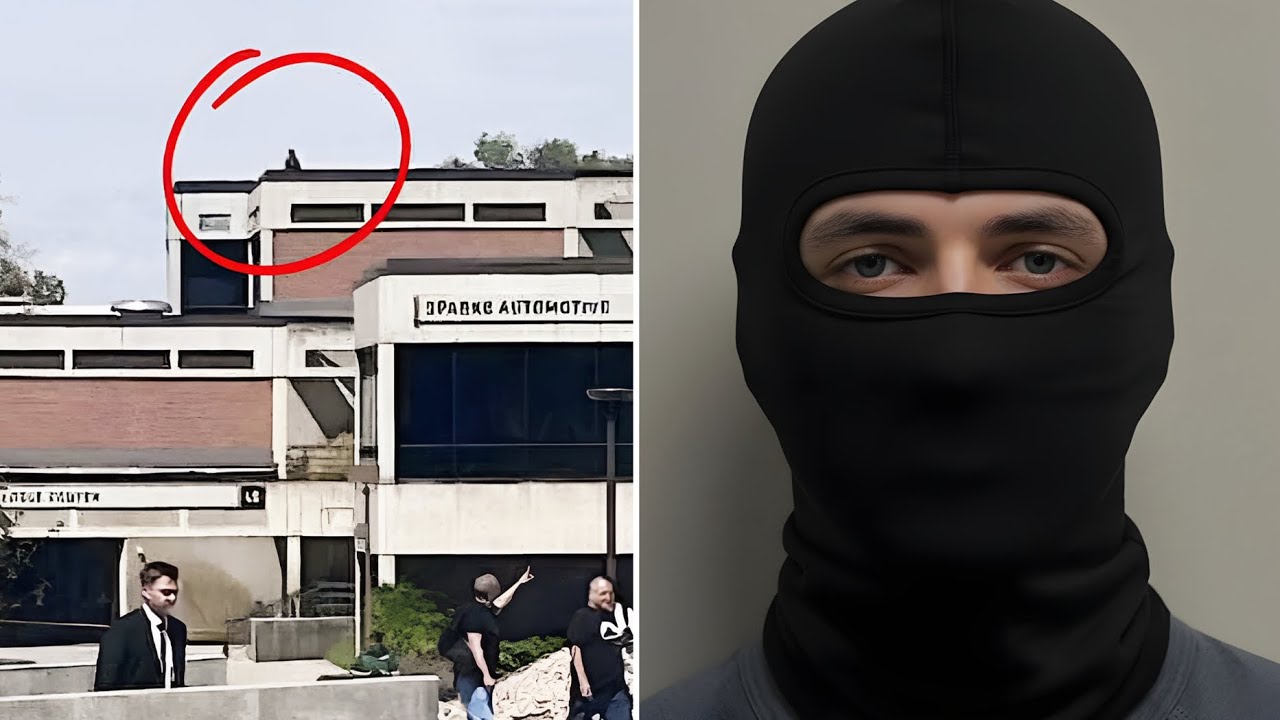
A detailed examination of CCTV security footage showing the shooter running along the roof of a building, climbing down the edge, and dropping down reveals something fascinating about how we process visual evidence. The central question posed is deceptively simple: Is the alleged shooter carrying a gun? The answer options are equally straightforward: yes, no, or maybe.
When watching the footage again—slowing it down, examining it from different angles, and looking for comprehensive details—the question shifts from what we're seeing to what we aren't seeing. The answer to the second question requires a technique called inference, a conclusion reached through logical reasoning based on evidence or background knowledge.
The Science of Visual Perception
Consider an upside-down triangle that isn't actually visible—it's the other shapes around it that lead to an inference. According to logical reasoning principles, an inference allows us to understand implied meanings and fill in missing information. However, the evidence needs to be true, verified, and credible. If the foundation is skewed, the inference might be logical but ultimately incorrect.
Many people manipulate this natural tendency to draw inferences by providing evidence or background knowledge that is intentionally distorted. They create false inferences because people are so easily inclined to draw conclusions quickly. The brain is designed to be economical and fast in its thinking, but this same efficiency makes it vulnerable to being tricked.
Examining the CCTV Evidence
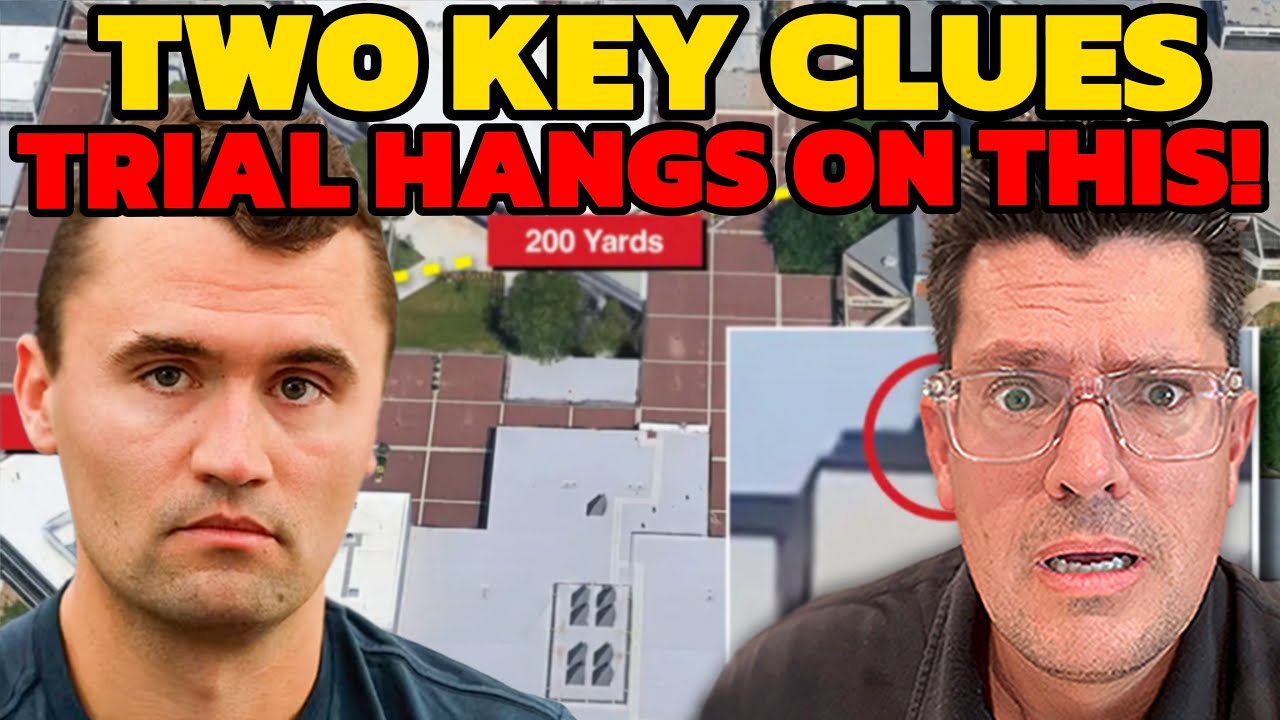
The available clues regarding whether Tyler Robinson is carrying a rifle can be found in several images. The footage shows him running along the top of the roof, walking up stairs with his right leg straight in an odd position, and jumping off the roof—quite a long drop. When examining these images, certain questions emerge about what we can and cannot see.
Can you see the shooter's nose in the footage? If not, does that mean he doesn't have a nose? The inference drawn without thinking is that this is a human being with a mouth, eyes, nose, and hair—specifically a male. Can you see his eye color? The inability to see these details doesn't mean they don't exist. These are all inferences drawn using ordinary logic.
The Limitations of Security Footage
The nuances of CCTV technology are important to understand. Sometimes a person can be visible one moment and gone the next on security footage. Does that mean they aren't there at all, or is there a gray area? When dealing with CCTV, especially at a distance, it's not always 100% accurate in terms of what we're seeing. It basically provides a rough idea rather than crystal-clear documentation.
What the Affidavit Reveals
The relevant text from the affidavit provides crucial context. A camera captures the suspect running across the roof to the suspected shooting position. Immediately after the shot is fired, a camera captures the suspect running across the roof carrying an item whose shape is consistent with a rifle. Notably, they don't say "with a rifle"—they talk about a shape and the shape being consistent.
The suspect is then seen climbing down from the roof. He appears to drop the item he was carrying as he hits the ground in a controlled fall. In the video footage, this is where inference becomes critical. He drops down from the roof, lands quite heavily, then moves slightly, bends down, and seems to pick something up. The only reason he's picking something up is because he dropped something. It's not clear what he's picking up in the footage—you can't see it—but the silhouette clearly shows the motion of picking something up.
The fact that you can't see him picking something up doesn't mean he's not picking anything up. This is another inference. He then picks up the item and runs toward the northeast end of the campus. When the affidavit says "picks up the item," they don't specify rifle, and they don't say "drops the item," but once again, that's inferred.
Following the Escape Path
Law enforcement officers followed the suspect's escape path to the northeast end of the campus where they believed the suspect left the campus and entered a wooded area. In that wooded area, investigators found a bolt-action rifle wrapped in a towel. There's also an inference here: How did this bolt-action rifle wrapped in a towel get to that wooded area?
The rifle contained one spent round and three unspent rounds, consistent with the facts officers observed. That phraseology—"consistent with the facts"—is asking us to draw an inference. Immediately after the shooting, no shell casings were found on the roof, suggesting a bolt-action rather than an autoloading weapon, with only a single round fired.
Analyzing the Shadow and Movement
We don't know exactly what footage the authorities used, and likely they have much more than what's been released. It's also possible that what we're seeing is what they're using. Where they refer to "a shape consistent with a rifle," that's an inference. At what particular moment a shape is visible is unclear, but it's very clear there is a moment when the shape appears.
Analysis by other investigators speculated on the area where the figure runs over the lawn after dropping down, casting a jagged shadow on the grass. He does seem to be carrying something in his left hand. From the text of the affidavit and from Robinson's own admission, he wrapped the rifle in a towel. Very likely, when he ran across the lawn in broad daylight, the weapon was loosely covered in a towel.
The Importance of Continuity
What's crucial to check in the video footage is the continuity. Notice how when he walks along the road, he suddenly appears almost indistinguishable from a figure walking a few meters in front of him. We also note how as the suspect shooter sees a white vehicle approaching just after he's dropped down, as he approaches the road, his gait, his attitude, his speed—all of these change. Why? Because he's trying to appear normal. He doesn't want to draw attention to himself.
Where he was running at one point, acting furtively and moving with urgency, as soon as he sees someone—knowing that someone can see him as well—he needs to blend in. He needs to look like anybody else who's walking around.
Hidden in Plain Sight
In the images prior to the shooting, we can see his right leg is straight in both images. He also appears to have some sort of padding, some sort of irregular material under his jeans to muddy the silhouette of what's underneath. That's quite clear in certain images. You need to pay attention to details in order to see these shapes that lead to the inference.
In the video footage, we also see him almost limping on the same leg while walking along a road in the neighborhood towards the venue. If you can't see the rifle, that's because he doesn't want you to see it. Consider this: If he has the rifle and you can't see it, can't even infer it, then he has outsmarted you.
The Psychology of the Crime
We know from the police narrative that the suspect left the rifle in the woods and after retrieving his vehicle, attempted to retrieve the rifle. Why did he do this? The psychology here is worth noting. He abandons the rifle temporarily so that in his change of clothing, he can be seen without being armed. He's trying to create an inference that if you see him, he's clearly not carrying anything. It's all about plausible deniability.
The location where his vehicle is parked is also difficult to access with a rifle in hand without being seen. Clearly this is the most vulnerable moment for the suspect. Imagine if the suspect had run from where he dropped off the roof to the parking lot right there while a car came down at that moment. If he had run to the vehicle with a rifle and opened the door, very likely he would have been seen. It's an interesting question: What was a better strategy—to run directly to the vehicle or to do what he ultimately did?
He did a week's planning and chose the strategy he chose. It didn't work out for him. The bottom line is if someone sees him with a rifle, he's caught. This is why he wants to interrupt the possibility of being seen.
Testing Your Perception
The key to inference is intuition, but intuitions need to be anchored in reality, not beliefs, in order for the inferences to actually work. How good are your perceptions, intuitions, and inferences? Consider a visual grid where at first glance the squares on various levels appear to be of different sizes. Look closer—all of those lines are actually parallel. In other words, if your inference was that they are not parallel or are on different levels, that inference is incorrect.
We don't like to admit mistakes. We don't like to be wrong. But understanding how easily our perception can be manipulated is crucial when analyzing evidence. Has your perspective changed after being shown how you can make an error where lines are actually parallel even though they don't look that way? Could you have made an error in terms of the rifle?
The examination of how the mind works when processing visual evidence and drawing conclusions reveals fundamental truths about human perception and criminal investigation. What we don't see can be just as important as what we do see, and our brain's efficiency in filling gaps can sometimes lead us astray from the truth.