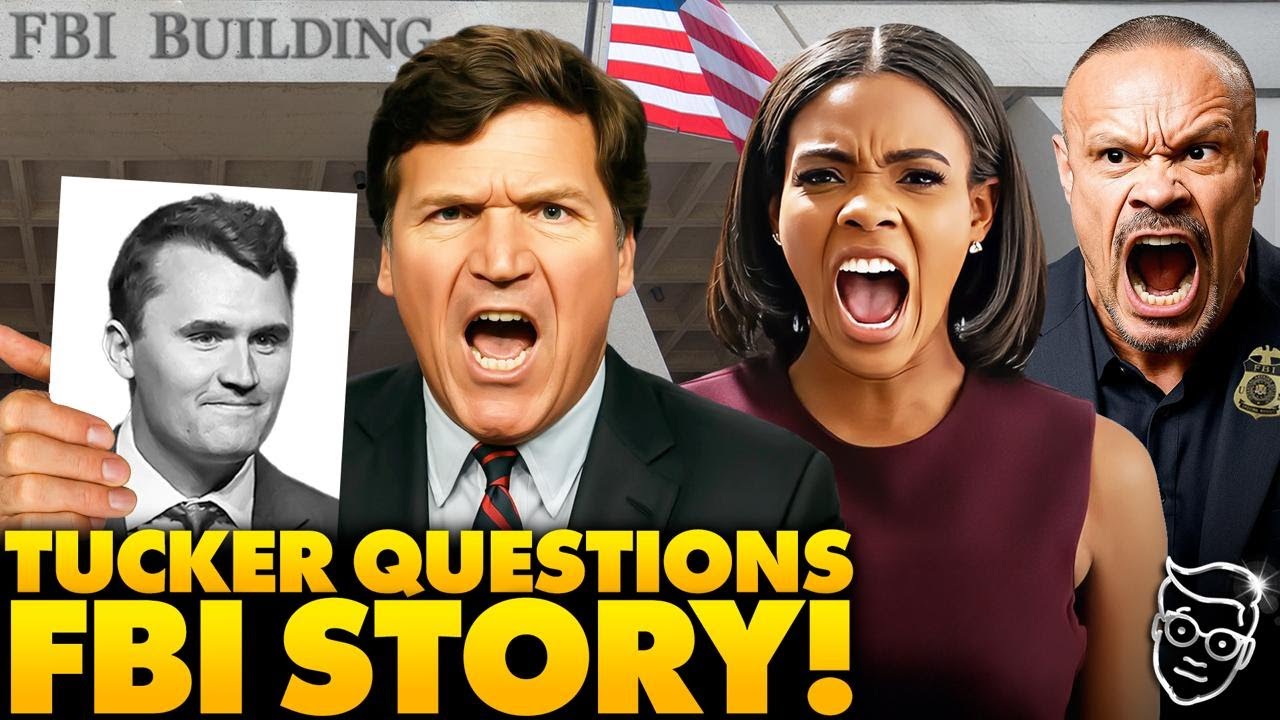
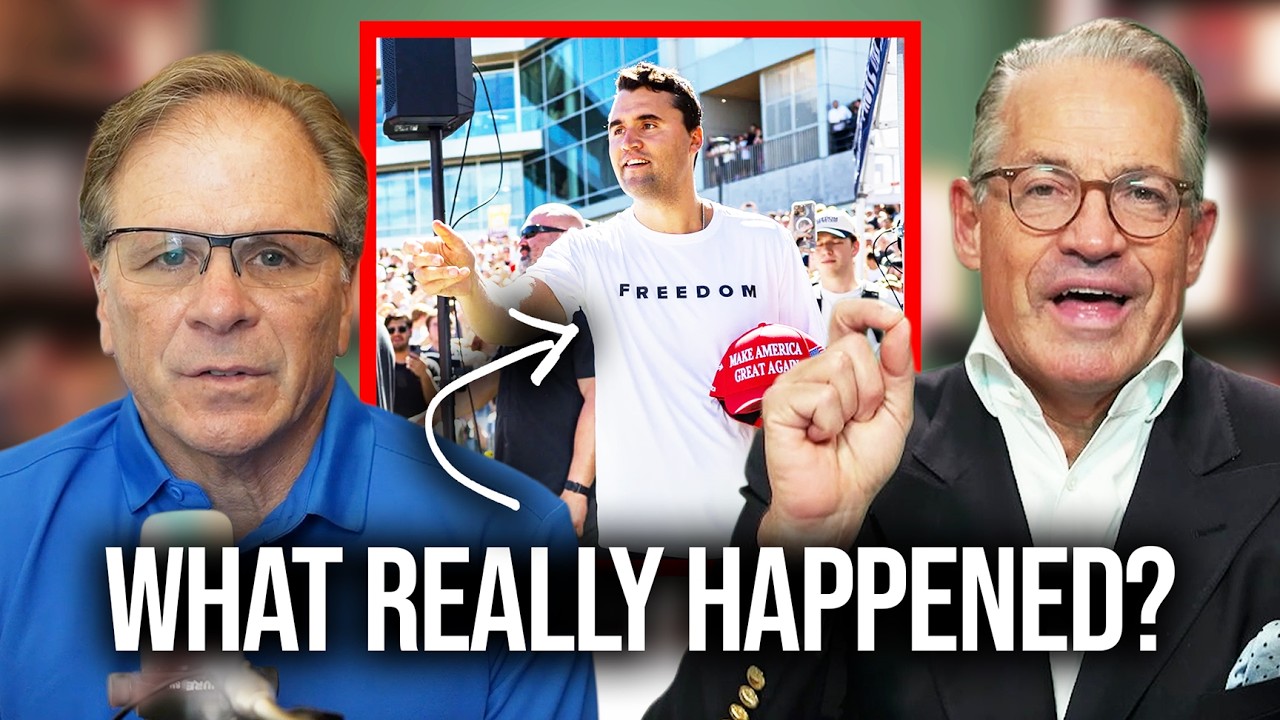
Tucker Carlson on the Charlie Kirk Assassination: Why Won't the FBI Release the Evidence?
Enjoying this? Share it with someone who needs to see it.
Up Next
Zach from WolvesAndFinance Investigates Shocking Evidence Government Is Lying About Charlie Kirk Shooting
21:35
Michael Franzese Analyzes Charlie Kirk Assassination Theories: Israel, Epstein, and God's Chosen People
56:39
The Assassination of Charlie Kirk: Demands for Transparency in Investigation and Trial Coverage
10:51
Tucker Carlson on the Charlie Kirk Assassination: Why Won't the FBI Release the Evidence?
Tucker Carlson opens up about the assassination of Charlie Kirk, expressing frustration over the lack of transparency from federal authorities. Months after the tragedy, Americans still don't have coherent answers about what happened. Carlson discusses the suspicious gaps in the investigation, unreleased surveillance footage, and why the government's burden of proof hasn't been met. He also examines why rage has turned inward among conservatives rather than demanding accountability from law enforcement, drawing parallels to other unsolved cases like the Las Vegas shooting. This candid conversation reveals the emotional toll on those close to Kirk and the troubling pattern of government opacity.
Months after the assassination of Charlie Kirk, Tucker Carlson says most Americans still feel they haven't received an honest set of answers from authorities. Whether people believe the official narrative about Tyler Robinson or suspect some other conspiracy, there's widespread dissatisfaction with how the case was handled by federal officials and law enforcement.
Carlson admits he didn't want to discuss the topic publicly because of his close relationship with everyone involved and the emotional weight it carries. He's scheduled to speak at Turning Point at Charlie's request, making the tragedy even more personal.
The Government's Burden of Proof
"The onus is on the government to prove it was a lone gunman," Carlson states emphatically. "That's up to them, not up to me. That's their job. I'm not accusing anybody. I don't know exactly what happened."
While acknowledging there's evidence suggesting Tyler Robinson was involved—including text messages and potentially the murder weapon—Carlson maintains he's willing to believe anything. But he insists it's the government's responsibility to prove their case to the American people.
Missing Facts and Internal Coherence
What Carlson finds particularly troubling is the lack of pressure on federal law enforcement to provide facts and tell a story with internal coherence. Despite enormous rage and different factions with different views getting mad at each other, there's been almost no organized demand for authorities to simply explain what happened in a way that makes sense.
"I want to believe it was a lone gunman who was a [something] or something," Carlson says. "I want to believe that. A lot better of an answer. A lot more comfortable. 100%. I want that. By the way, I'm a middle-aged man. I'm a normie. I don't want to believe anything other than what they tell me. But they've made it impossible for me."
The Question of Motive
One of the biggest gaps in the official narrative concerns motive. Authorities have suggested transgenderism as a factor, which Carlson says he opposes, but the explanation raises more questions than it answers.
"Was he transgender? Was he on hormones?" Carlson asks. "How do you go from being this seemingly normal person to murdering a stranger with almost a dead certainty you'll spend life in prison or be executed for it? Like that's a lot. That's a deep commitment. I'm not saying it doesn't happen. Of course it does. But like how did it happen in this case?"
He demands the facts be released and explained to the public, expressing frustration at being told to simply "shut up" instead.
Parallels to the Las Vegas Shooting
The conversation draws comparisons to the Las Vegas shooting, with both cases featuring critical evidence that authorities possess but haven't released. In Las Vegas, there's surveillance footage of the entire city and every hotel that could show the alleged gunmen and verify or disprove various aspects of the official story.
In Charlie Kirk's case, the surveillance camera that captured footage of the shooter running across the roof clearly has a view of the entire roof, including the shooting position. An investigator who visited the location personally confirmed this. "If you have the video of the shooter running to get off the roof, you have the video of him taking the shot," they noted.
These small steps toward transparency that could build public trust are conspicuously absent. "Why don't you take this step for trust?" Carlson asks.
The "Tainting the Jury Pool" Excuse
When authorities claim they can't release information because it would taint a jury pool, Carlson calls it "the dumbest thing I've ever heard." Drawing on his experience as a police reporter covering crimes for over 30 years, he notes that the first thing that typically happens after a major crime is authorities calling up reporters and telling them exactly what happened.
"That taints a jury pool. Yeah, it does. In favor of conviction," Carlson observes. "I've never heard anybody say anything like this. Doesn't make any sense. Like, what does it even mean?"
When Concealment Indicates Cover-Up
Carlson applies basic human psychology to the government's behavior: "When I act that way I'm covering something up. When you do too that's a human thing. If I'm hiding something if I'm lying about something there's a reason. And I'm not doing it unless I'm like some total sociopath freak. I'm not doing it for fun. I'm doing it because I'm trying to conceal something."
A younger voice in the conversation, someone from the 9/11 generation who was nine years old when those attacks happened, expresses the difficulty of not viewing government opacity as evidence of cover-up based on life experience and the pattern of historical government deceptions from Vietnam onward.
An Era of Escalating Mysteries
The discussion touches on whether information technology is increasing the frequency of major unexplained events or whether corruption is genuinely increasing as the American empire reaches its late stages. Every few years brings another massive event that feels like a cover-up, each one seemingly bigger than the last, from COVID to this assassination.
What makes the Charlie Kirk case particularly striking is that it happened under the Trump administration, with Trump being someone Kirk helped get into power. "You would hope that he has a coalition in place and that his government and his FBI and his people that they should have no greater motivation ever than to solve this crime," the conversation notes.
Rage Turned Inward
One of Carlson's central questions is why people who knew Charlie or who are saddened by his death—indeed, why all Americans—are turning against each other rather than demanding answers from the authorities whose job it is to provide them.
"It did feel like a fight amongst yourselves scenario," he observes, drawing a parallel to how racial issues are framed to pit blacks against whites and vice versa while "no one ever mentions like private equity."
Mass Formation and Narrative Control
The conversation identifies what appears to be a "mass formation psychosis" similar to what happened during COVID, but this time targeting the political right rather than the left. While COVID mobilized collectivist impulses on the left around protecting vulnerable people, the Kirk assassination narrative mobilizes the right around the idea that "they shot our guy" and leftists hate conservatives.
The observation is made that all the mainstream talking heads on social media who aren't independent are saying the exact same narrative, creating a spiraling effect that builds the mass formation.
Basic Questions That Remain Unanswered
Carlson's frustration centers on not even understanding what narrative he's being asked to accept. While his preference is for "an easy to understand non-sinister or less sinister explanation that involves one guy," the facts as presented don't support even that simple story.
Key questions remain:
Why is Tyler Robinson's roommate apparently in federal protection with no charges, even though released text messages show he knew about the crime beforehand and didn't report it?
Shouldn't someone who knew about the crime but didn't report it be charged as an accessory?
What about people who allegedly predicted the assassination on the internet before it happened—where are they?
Was the shooter actually transgender, and if so, how does that connect to motive?
The Implausibility of Ideological Murder
Carlson acknowledges that the left hated Charlie Kirk and celebrated his death, but killing someone you've never met over ideological disagreement is "a pretty abstract thing to do." Planning it out and going through with it requires either complete derangement or ideological motivation so profound that you're essentially a suicide bomber, knowing you'll die or spend life in prison for the murder.
"Tell me how the 4.0 student that like nearly aced his ACT became that," Carlson demands. The transformation from high-achieving student to ideological assassin requires explanation, not assumption.
Charlie Kirk's Legacy of Inquiry
Perhaps most poignantly, Carlson notes that asking honest questions was central to who Charlie Kirk was. People who respond to questions about the case with hostility and the dismissive "Oh, just asking questions" would have found Charlie himself saying, "Yeah, just asking questions. As is my birthright as an American citizen."
Carlson's close friendship with Kirk—"not just green room friends"—gives his perspective particular weight. He knew Kirk really well and loved him, making the lack of answers and the attacks on those seeking clarity all the more painful.
The conversation ends with a reminder that America's 250th birthday is approaching, a milestone that should prompt reflection on foundational American values like transparency, accountability, and the right to question authority—values that seem absent from how the Charlie Kirk assassination has been handled.