Up Next
Tyler Robinson Preliminary Hearing Day 4: Roommate Lance Twiggs Reveals Robinson Confessed to Killing Charlie Kirk
3:41:34
Andrew Kolvet Breaks Down Day One of Tyler Robinson's Preliminary Hearing in Charlie Kirk Murder Case
1:16:55

David Hull Testifies in Preliminary Hearing for Tyler Robinson, Suspect in Charlie Kirk Shooting at Utah Valley University
2:45:42

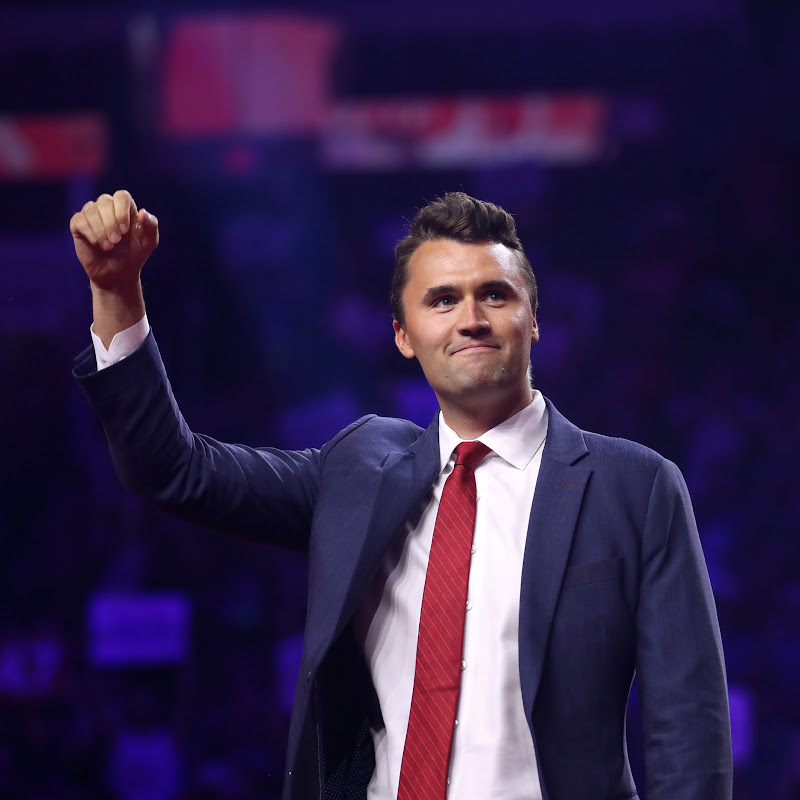
Charlie Kirk is the Founder and President of Turning Point USA, the largest and fastest growing conservative youth activist organization in the country with over 250,000 student members, over 150 full-time staff, and a presence on over 2,000 high school and college campuses nationwide. Charlie is also the Chairman of Students for Trump, which aims to activate one million new college voters on campuses in battleground states in the lead up to the 2020 presidential election. His social media reaches over 100 million people per month and according to Axios, he is one of the "top 10 most engaged" Twitter handles in the world. He is also the host of “The Charlie Kirk Show,” which regularly ranks among the top news shows on Apple podcast charts.
Subscribe on YouTubeTyler Robinson Preliminary Hearing Day 2: Surveillance Video Shows Suspect on Campus, DNA Evidence Links Robinson to Rifle and Screwdriver
On day two of the preliminary hearing for State of Utah v. Tyler Robinson, prosecutors presented compelling surveillance footage from UVU showing Robinson visiting campus four times on September 10-11, 2025, including video of an individual matching Robinson's description on the roof of the Losee Center at 12:23 PM, the exact moment Charlie Kirk was shot. FBI DNA analyst Amanda Baker testified that DNA testing linked both Robinson and Lance Twiggs (Robinson's roommate) to a towel wrapped around a rifle found in a wooded area and to a screwdriver recovered from the roof. Defense attorney Kathy Nester challenged the reliability of DNA mixture analysis, noting that Robinson voluntarily surrendered to authorities before investigators knew his identity. Judge Tony Graf ruled that an affidavit from Turning Point USA pastor David Englehart describing Kirk's political and religious views would be provisionally admitted as evidence for the victim-targeting enhancement.
Courtroom Protocol and Opening Statements
The second day of the preliminary hearing in State of Utah v. Tyler Robinson began with Judge Tony Graf addressing courtroom protocol, emphasizing the importance of maintaining security, dignity, and decorum throughout the proceedings. Judge Graf reminded all attendees that portable electronic devices were prohibited and that spectators must remain quiet and avoid any visible reactions. The judge also acknowledged the professionalism demonstrated by both defense and prosecution counsel during the previous day's proceedings.
Before testimony resumed, prosecutor Mr. McBride raised a procedural objection, noting that the defense had filed a standing objection regarding the use of reliable hearsay at the preliminary hearing. McBride requested that the court acknowledge this standing objection to avoid unnecessary delays from repeated objections on the same grounds. Defense attorney Michael Burt agreed to this procedure, provided that the objections were preserved for the record. Judge Graf accepted the standing objection but clarified that defense counsel could still make specific objections as needed.
Video Compilation of Robinson's Campus Visits
The prosecution moved to admit State's Exhibit 12.4, a compilation video of surveillance footage from Utah Valley University showing an individual believed to be Tyler Robinson visiting campus on September 10-11, 2025. Agent Hull testified that the footage captured Robinson arriving at campus in a vehicle at approximately 8:30 AM on September 10, visiting the amphitheater area where Turning Point USA had set up for an event, and then leaving. Robinson returned on foot around 10:00 AM, purchased food from Chick-fil-A in the Sorenson Center, and then moved across campus to a wooded area on the northeast side. Agent Hull noted that Robinson was no longer carrying the blue backpack he had when he arrived.
The video then showed Robinson returning to campus a third time, now wearing different clothing and walking with a noticeable limp or gate. Agent Hull testified that Robinson appeared to be carrying something down his pant leg, which investigators believed could be a weapon. The surveillance footage captured Robinson climbing stairs in the parking structure, crossing campus drive, and ascending the exterior staircase to the roof of the Losee Center. At approximately 12:22 PM, the video showed an individual rolling over a railing onto the roof, running to the southwest corner of the building, and lying prone at the edge. At 12:23:28, the individual stood up and ran across the rooftop, then jumped off the roof onto the grass below and fled toward campus drive.
Defense attorney Kathy Nester objected to the publication of the video, arguing that broadcasting it would seriously impact Robinson's ability to receive a fair trial. However, Judge Graf ruled that the video would be admitted into evidence and could be broadcast by the media. The judge noted that the video did not capture the actual shooting itself and that transparency was important to uphold the constitutional rights of all parties.
Enhanced Video and Zooming Controversy
The prosecution also attempted to admit State's Exhibit 12.1, an enhanced version of the surveillance video that included red circles highlighting the suspect, zooming in on key moments, and blurring out the faces of some bystanders. Defense attorney Nester objected, arguing that the enhanced video was cumulative and that publishing it would create unfair prejudice. Judge Graf sustained the objection in part, ruling that the enhanced video would be admitted into evidence but would not be broadcast in the courtroom or to the media. The judge stated that he would review the enhanced video privately on the courtroom monitors to assess its probative value.
After reviewing the zoomed-in portions of the video, Agent Hull testified that the enhancements made it much clearer to see the individual believed to be Robinson on the rooftop and to observe his movements. Hull noted that in the enhanced video, it was apparent that Robinson was carrying an item as he jumped off the roof and fled the scene. The prosecutor argued that the enhanced video was helpful for the court to see details that were difficult to discern in the raw footage. However, Judge Graf ultimately declined to publish the enhanced video to the public, stating that the unenhanced version had already been shown and that the enhancements did not add substantively different content.
Officer Contact with Robinson's Vehicle
Agent Hull testified that shortly after the shooting, at approximately 12:30 AM on September 11, a Spanish Fork police officer named Officer Goforth made contact with a vehicle driven by Robinson at the intersection of Campus Drive and 800 South. Officer Goforth noted the interaction and recorded a partial license plate number. When information became available that a vehicle matching that description was involved in the shooting, Goforth ran the partial plate and identified the vehicle as registered to Tyler Robinson and Amber Robinson. Hull stated that Officer Goforth believed the driver he encountered was Tyler Robinson.
Cross-Examination by Defense
Defense attorney Kathy Nester cross-examined Agent Hull, focusing on the limitations of the investigation and the evidence collected. Nester questioned Hull about whether he was involved in setting up security before the event and whether any bullets or casings were found on the roof of the Losee Center or in the surrounding area. Hull confirmed that no bullets or casings were found on the roof or immediately around the building. Nester also asked about an unfired bullet that was recovered from another building on campus. Hull testified that the bullet was believed to have come from an officer clearing his weapon, not from the shooting itself.
Nester challenged Hull's testimony about the video footage, noting that the surveillance cameras did not capture the shooter's face or distinguishing features. Hull acknowledged that the video on the roof alone, without additional context, did not reveal the identity of the individual. Nester also pointed out that in the video showing the back of the amphitheater tent at the moment of the shooting, no one was standing directly behind the center of the tent where Kirk was positioned.
Nester asked Hull about the discovery of the rifle in the wooded area and whether he was involved in processing the weapon. Hull confirmed that he was not present when the gun was located but that it was found in an area where Robinson had been seen entering on surveillance footage. Nester also questioned Hull about the Ring camera footage from the Noble family, noting that the Nobles had described the driver of a vehicle near their home as bald and stated there were three other people in the car. Hull acknowledged that this information was in the report but had not been mentioned during his direct testimony.
Nester emphasized that Robinson had voluntarily surrendered to authorities in Washington County and that no officers had gone to arrest him. Hull confirmed that Robinson had driven with his parents to the Washington County Sheriff's Department and turned himself in. Nester asked Hull if this was the first time investigators knew Robinson's name in connection with the case, and Hull responded affirmatively, stating that prior to Robinson's surrender, they had only had an image of a person of interest.
Redirect Examination and Officer Clearing Weapons
On redirect examination, prosecutor Mr. McBride asked Agent Hull to clarify his testimony about the unfired bullet found on campus. Hull explained that officers responding to an active shooter situation typically carry their rifles in a "cruiser ready" condition, meaning there is no round chambered. When deploying with a rifle, an officer would chamber a round. After completing their task, the officer would eject the magazine and the round, and sometimes rounds are dropped or not accounted for in the process. Hull testified that this is common practice among law enforcement agencies and that he had personally done this during training and in the field.
McBride also asked Hull about the item Robinson was seen carrying after jumping off the roof. Hull testified that in the enhanced video, it was much clearer that Robinson was carrying a black, longer object in his hand as he fled the scene. Hull noted that Robinson's limp disappeared after he left the roof, suggesting that whatever had been causing the limp was no longer in his clothing.
Sergeant Jennifer Felmina's Testimony on Evidence Collection
The prosecution called Sergeant Jennifer Felmina of the Utah State Bureau of Investigation, who testified about the physical evidence collected from the crime scene. Felmina stated that she was assigned to oversee the crime scenes and physical evidence on September 10, 2025. She confirmed that a screwdriver was collected from the rooftop of the Losee Center and that a rifle, identified as a Mauser 98 bolt-action rifle chambered in .30-06, was found in a wooded area northeast of campus. The rifle was wrapped in a dark-colored towel.
Felmina testified that the screwdriver, towel, and rifle were all sent to the FBI laboratory for testing. The screwdriver and towel were sent for DNA analysis, while the rifle was sent to the ATF laboratory. Felmina stated that she received a report from the FBI documenting the DNA testing results on the screwdriver and towel. The prosecution moved to admit the FBI report as State's Exhibit 31, which Judge Graf admitted into evidence and allowed to be published to the public.
FBI DNA Analyst Amanda Baker's Testimony
The defense called FBI DNA analyst Amanda Baker out of order to accommodate her travel schedule. Baker testified that she is a forensic examiner in the DNA Casework Unit of the FBI laboratory in Quantico, Virginia, and has been in that role for more than 10 years. She explained that her duties include reviewing evidence, determining which items need to be tested, creating an exam plan, reviewing data, drawing conclusions, and testifying if needed.
Baker testified that the case was designated as a "Priority One" matter, meaning that the FBI worked 24 hours a day, seven days a week until examinations were complete. She stated that evidence was delivered to the lab in stages, with some items arriving on September 11, 2025, and additional items following shortly after. Baker confirmed that she conducted DNA testing on the screwdriver and the towel and that male DNA was obtained from both items.
Baker explained that the DNA results from the towel (Item 7-1) showed a mixture of DNA from two individuals, one of whom was Lance Twiggs. The DNA results were 1.7 octillion times more likely if Twigs and Tyler Robinson were contributors than if Twigs and an unknown unrelated person were contributors. For the screwdriver (Item 8-1), Baker testified that the DNA results were 30 quintillion times more likely if Twigs and Robinson were contributors than if Twigs and an unknown unrelated person were contributors.
Defense Cross-Examination of Amanda Baker
Defense attorney Michael Burt cross-examined Amanda Baker extensively, focusing on the limitations and reliability of DNA mixture analysis. Bert questioned Baker about her initial determination that the towel sample contained DNA from three contributors, rather than two. Baker testified that after receiving an elimination sample from Lance Twiggs and comparing it to the DNA profile, she revised her conclusion to two contributors. Bert introduced a page from Baker's case notes showing that her technical reviewer initially disagreed with the three-contributor assessment but later agreed after discussion.
Bert challenged Baker's use of the probabilistic genotyping software STRMix, noting that the software produces different likelihood ratios each time a sample is run, even with the same input parameters. Baker acknowledged that the software uses mathematical modeling and distributions, so the exact numerical result can vary slightly each time, but typically within a magnitude of 10. Bert also questioned Baker about the PCAST report (President's Council of Advisors on Science and Technology), which raised concerns about the reliability of probabilistic genotyping for DNA mixtures with low-level contributors (below 20%). Baker testified that the minor contributor in both the towel and screwdriver samples was below 20%, but she maintained that her conclusions were reliable.
Bert introduced evidence showing that when Baker ran STRMix to compare Twigs alone to the towel sample, the likelihood ratio was 1, which would be classified as "uninformative" under the FBI's verbal scale. Despite this, Baker concluded that Twigs was a contributor to the sample based on her visual inspection of the DNA profile. Bert argued that this inconsistency raised questions about the reliability of Baker's conclusions. Baker responded that she used Twigs as an "assumed contributor" or "elimination sample" because investigators expected his DNA to be present, given that he was Robinson's roommate and the towel may have come from their home.
Bert also questioned Baker about "isoalleles," which are DNA sequences that have the same length but different internal sequences. Baker's testing method, short tandem repeat (STR) analysis, measures the length of DNA sequences but not the specific sequence of nucleotides within them. Bert introduced a chart showing that at several genetic locations, Robinson's DNA and the evidence samples had alleles of the same length, but it was unclear whether the sequences were identical. Baker acknowledged that her testing could not distinguish between isoalleles and that the FBI is in the process of implementing next-generation sequencing (NGS) technology, which would allow for sequence-level analysis.
Prosecution Redirect of Amanda Baker
On redirect examination, prosecutor Mr. McBride asked Baker to clarify her training and experience. Baker testified that she completed a two-year training program at the FBI, including coursework in the science of DNA testing, oral and written examinations, and moot court exercises. She stated that she undergoes annual proficiency testing and continuing education to maintain her qualifications. Baker emphasized that the tools she uses, including STRMix, have been validated both by the software developers and internally by the FBI laboratory.
McBride also asked Baker about the DOJ Uniform Language for Reporting and Testimony (ULRT), which limits the adjectives DNA analysts can use to describe their conclusions. Baker explained that under the ULRT guidelines, she is required to report the numerical likelihood ratio and use only approved verbal equivalents such as "very strong support for inclusion." She stated that the purpose of these guidelines is to avoid overstating the certainty of DNA results and to allow the fact-finder to assess the evidence independently.
Baker testified that degradation of DNA is normal and occurs over time, especially when DNA is exposed to environmental factors such as heat, UV rays, dirt, or water. She stated that degradation did not prevent her from reaching conclusions in this case and that the DNA profiles from the towel and screwdriver were sufficient for comparison. McBride asked Baker whether she followed the protocols of her accredited laboratory and whether she stood by her conclusions in State's Exhibit 31. Baker answered affirmatively to both questions.
Victim Targeting Enhancement and Exhibit 5.1
Earlier in the day, the prosecution attempted to admit State's Exhibit 5.1, an affidavit from David Englehart, a pastor, attorney, and board member of Turning Point USA. The affidavit described the organization's mission, Charlie Kirk's role as founder and CEO, and Kirk's public advocacy on political and religious issues, including traditional family values, orthodox Christian views on sexuality, marriage, and gender, and conservative political doctrines. The prosecution argued that the affidavit was relevant to the victim-targeting enhancement under Utah Code § 76-3-203.14, which applies when a defendant intentionally selects a victim based on the victim's political expression.
Defense attorney Richard Novak objected to the admission of Exhibit 5.1, arguing that it was not relevant to the probable cause determination and that it contained improper opinion evidence. Novak contended that the affidavit focused on Kirk's religious beliefs and Turning Point USA's religious mission, rather than Robinson's state of mind or perception of Kirk's political expression. Novak also argued that admitting the exhibit would create confusion and prejudice by suggesting that the case was about religion, when the information charged Robinson with targeting Kirk based on political expression, not religious belief.
Media attorney David Ryman intervened, arguing that there is a presumption that exhibits in a public preliminary hearing should be accessible to the public and that the defense had not met the high standard required to close the hearing or suppress evidence. Ryman emphasized that the public has a constitutional right to access judicial proceedings and that the defense's concerns about pretrial publicity did not justify suppressing evidence.
After extensive argument from both sides, Judge Graf ruled that Exhibit 5.1 was "provisionally admitted" into evidence. The judge found that the affidavit was relevant to the victim-targeting enhancement and to the issue of Robinson's motive. However, Graf stated that the exhibit would not be published to the courtroom or media at this time. The judge indicated that he would reconsider whether to fully admit and publish the exhibit later in the proceedings, depending on whether additional evidence was presented regarding Robinson's state of mind or perception of Kirk's political expression.
Conclusion of Day Two
At the conclusion of day two, Judge Graf adjourned the preliminary hearing until 1:00 PM the following day. The court had heard testimony from Agent Hull and Sergeant Felmina, as well as extensive testimony from FBI DNA analyst Amanda Baker. The prosecution had successfully admitted surveillance video showing Robinson on the UVU campus and DNA evidence linking Robinson and Lance Twiggs to the rifle and screwdriver. The defense had challenged the reliability of the DNA mixture analysis and raised questions about the investigative process. The victim-targeting enhancement remained a contentious issue, with Judge Graf's provisional admission of Exhibit 5.1 leaving the door open for further argument on the role of Kirk's political and religious views in the case.
Video Transcript
are also present.
>> Good morning.
>> Morning, your honor.
>> Good morning, your honor.
>> Good morning, your honor.
>> All right.
>> Kathy Netor, Michael Bert, Richard
Novak, Stacy Visser here for Mr.
Robinson, who's seated to my right.
>> Good morning, councel. Good morning, Mr.
Robinson.
And for the record, uh, the court also
recognizes the presence of victim
representative, Miss Erica Kirk. Good
morning.
First, with respect to courtroom
protocol to maintain security and decor,
any individual who exits the courtroom
during proceedings will not be permitted
to re-enter until recess. All council
are expected to take reasonable measures
to safeguard confidential communication.
Such measures may include the use of
screen screen protections on electronic
All right. Is it the audio working?
>> Web audio is not working.
>> All right, let's just take a brief
moment
and just let me know when it appears to
be working.
While we're waiting, uh, if you have any
water bottles or such, feel free to
drink them. It is a little bit warm in
here today, so I will be drinking from
my water, so don't don't hesitate to use
that if you need to.
>> [clears throat]
>> What's this?
[snorts]
I wonder why they're doing that.
Is Is it working?
>> Can you send them a link to the the
where where this is being streamed so
they have something to look at?
>> I see. All right.
All right. Let's go ahead. Audio may
have cut out. All council are expected
to take reasonable measures to safeguard
confidential communication. Such
measures may include the use of screen
protections on electronic devices and
care to avoid the inadvertent capture of
privileged or private discussions by
recording equipment or by those present
in the courtroom.
Second, the court will address the
camera operator and still photographer
and I will invite you to come forward.
All right. Today's uh the purpose of
this is to ensure clarity regarding the
expectations governing today's
proceedings. Could you both state your
name for the record?
>> Yes. Trent Nelson with the Salt Lake
Tribune as the pool steel photographer.
>> John Wilson from KSL Television video
photographer.
>> Good morning to you both. Have you
reviewed the court standing decorum
order? Yes, your honor.
>> Yes.
>> Do you understand the requirements set
forth in that order as they apply to
your activities today?
>> Yes.
>> Yes.
>> Do you require additional time to review
the order or to adjust equipment to
ensure compliance?
>> No.
>> No.
>> Okay. Do you anticipate any difficulty
complying with the order or today or
with the court's instructions?
>> No.
>> All right. Well, thank you. I appreciate
your cooperation today.
As we begin this morning, the court
wishes to acknowledge the importance of
the safety, dignity, and well-being of
all those who are present or who may be
present during these proceedings,
including the parties, council
witnesses, court staff, and members of
the public. The court is also mindful of
its solemn obligation to protect and
uphold the constitutional rights of both
Mr. Robinson and Miss Kirk.
In furtherance of those important
interests, all persons attending these
proceedings are reminded that portable
electronic devices are not permitted in
the courtroom or on the fourth floor.
The court also expects every person in
attendance will be treated with a
dignity and respect to which they are
entitled. Consistent with the court
standing to quorum order, all spectators
shall remain quiet, civil, and orderly
during all times.
Spectators shall not engage in conduct
that is distracting, disruptive,
provocative, disrespectful, univil, or
threatening in any manner. Spectators
shall not make audible comments of any
kind, shall not shake or nod their
heads, and shall not make gestures or
other visible reactions during today's
hearing. Spectators shall also not wear
or display pins, buttons, signs,
clothing, photo uh photo photographs, or
other items expressing support for or
opposing to any person connected with
this case or expressing any position
concerning the status of this case as a
capital offense.
The court appreciates the
[clears throat] cooperation of all
present in maintaining a courtroom
environment that is safe, respectful,
orderly, and faithful to the rights and
dignity of every person involved.
Turning now to council. Before we begin,
I wish to acknowledge the
professionalism, civility, and
competence demonstrated by council for
both the defense and prosecution during
yesterday's proceedings. It is evident
to the court that each of you approach
this matter with seriousness,
preparation, and a deep commitment to
your respected responsibilities.
The court appreciates the care which you
have taken in advocating for your
positions and the respectful manner in
which you have done so. Thank you. Do
either party require the benefit of the
record before we proceed?
>> The state does. Your honor, Mr. McBride
will address the court.
>> All right. And just as a reminder, the
microphones at council table are turned
off to prevent the inadvertent capture
of any communication. So if you would
like to come forward, uh thank you. And
turning to Mr. McBride.
>> Thank you, your honor.
>> Uh before this hearing, the defense
moved to over to uh
find article 1 section 12 of the Utah
Constitution, rule 7B, and rule 1102
unconstitutional as it relates to the
admissibility of hearsay and reliable
hearsay at this hearing. The issue was
extensively briefed and argued.
[clears throat] The court denied the
defense motion to exclude the use of
reliable hearsay at the preliminary
hearing. That ruling is at docket number
631.
In addition, defense council filed a
standing objection on July 3rd. That's
docket 678. The standing objection
reasserted the arguments made in and
defendants's previous motion.
Uh defendant continues to make these
same objections throughout the testimony
of each witness. I believe both
throughout the proceeding they have
continued to make objections. At this
point further objection is unnecessary
to preserve the record and causes undue
and unnecessary delay. This is needless
delay and we'd ask um the court to
acknowledge and the record to reflect
the standing objection and we also ask
the court to give an instruction that
continuing objections on this ground are
unnecessary. Of course, if relates to
some other ground or is some some item
that's particular to a particular
statement, that objection may be
appropriate. But at this point, we feel
that the repeated uh objections that
have been made and already been ruled
upon or unnecessary and cause undue
delay.
>> Thank you, Mr. McBride. To defense,
>> good morning, your honor Michael Bert
from Mr. Robinson. Uh we have no
objection to that procedure. As long as
the court makes a ruling that the
objections are preserved, we do think it
would uh expedite matters if we didn't
have to repeat the standing objection.
Uh there may be particular objections
that are not covered by the standing uh
objection we've made. And so we ask
permission to be allowed to make those
objections as needed.
>> Thank you, Mr. Bert. Thank you to both
sides. I appreciate uh the presentation
and and your argument about this. The
court takes no position in regards to
whether the objection is made again and
again or not. Uh I leave that to the
parties. I I recognize the need to
expedite this and if both sides
stipulate. I I will adopt the request
that the standing objection as it
relates to 1102
article 1 section 12 of the Utah
Constitution and all uh relevant uh
authorities that have been cited have
been noted in the standing objection by
defense is in place. However, if defense
feels the need to do that in order to
protect the constitutional rights of Mr.
Robinson, the court will not prevent
that nor stand in its way. This court is
not uh is is acting in the role of a
magistrate and will allow the parties to
move forward as as necessary. But as
noted, I will make that uh note that the
standing objection has been noted for
all of the uh
yesterday's proceedings and will be in
place throughout the the rest of uh the
preliminary hearing. Anything further or
any uh need for the record given the
court's uh statement?
>> Not from the state.
>> No, your honor.
>> All right. Thank you.
All right. The court acknowledges that
the exclusionary rule is in effect at
this time. Any witness who is subject to
exclus exclusion should be excused from
the courtroom and again I will leave it
to the parties uh to monitor the
courtroom to ensure that if a witness
has come in and they shouldn't be that
uh they are redirected. I invite agent
hold to return to the stand
uh to resume direct examination and
agent hold you are still under oath.
>> Mr. Sturggil.
>> Thank you, Judge.
>> And before we begin, uh, is there a way
to dim these lights just a tad like we
did yesterday?
Perfect. Thank you. All right. As uh as
of yesterday, there is also a water
bottle to your left. And if you wouldn't
mind just making sure that microphone is
directly in front of you. We want to
make sure that the record picks up uh
your testimony today.
>> Agent Hull and uh have you reviewed that
exhibit?
>> Yes.
>> And if you wouldn't mind just briefly
remind us what that uh exhibit consists
of.
>> The exhibit is a compilation
running video
footage.
>> Okay,
>> your honor. Excuse me. We can't hear the
>> That's what I hear. So, let's go ahead
and [clears throat] stop. I I'm not
hearing it. So, let's I'm going to have
you repeat. Let's test it. Go ahead.
>> Check.
>> All right. I believe that.
>> Thank you.
>> Mr. Sturgil, if you wouldn't mind
restarting. So,
>> I can do that, Judge.
>> Maybe bring the mic [snorts]
from the base a little bit closer to
you.
>> If that'll help.
>> All right. Let's go ahead and go back to
uh what's been marked as states exhibit
12.1. Uh I'd asked you a moment ago if
you'd reviewed that exhibit.
>> Yes, I have.
>> Okay. And uh would you just remind us uh
what that exhibit consists of?
>> It's a compilation of videos that were
part of the overall footage that was
obtained from the Utah Valley University
as part of the investigation.
>> And does that compilation video uh uh
from your point of view capture Mr.
Robinson arriving to and visiting the
UVU campus?
>> It does. Yes.
>> On September 10 on September 10th
through the 11th, 2025.
>> Correct.
>> Okay. And and again, I asked you this
question yesterday, but did you prepare
that video compilation?
>> I did not.
>> Okay. Do you know who did?
>> Uh the Utah County Attorney's Office.
>> Yeah. Does uh does that video and and
I'm referring to 12.1 exhibit uh states
exhibit 12.1. Uh uh does it uh include
all of the footage collected by the SBI
from UVU?
>> Uh it does not. No. Does that video
again 12.1 include all of the footage
you collected from UVU that captures who
you believe is Mr. Robinson walking
around campus?
>> Not all of the footage. No.
>> You reviewed this compilation with Mr.
Olsen, correct?
>> Correct.
>> And in its entirety?
>> Yes.
>> And uh he actually And then you
collected an 1102 statement from him.
>> I did. Yes. and and I believe that has
actually been admitted in the evidence
as states exhibit 12.3.
Uh did did Mr. Olsen uh refer to that
exhibit 12.1 in his statement?
>> He did. Yes.
>> Okay.
12.3.
I'm going to put on your monitor states
exhibit 12.3.
And I'd ask that you scroll down towards
the very bottom. And I I would ask that
you read from the statement specifically
what Mr. Olsen said about states exhibit
12.1 and and I I want to narrow your
focus. So I'm going to draw your
attention uh about 3/4 down the page.
There's a sentence that begins on the
left margin. I have reviewed. Do you see
that?
>> I do. Yes.
>> Okay. Would you please read that
sentence?
>> I have reviewed states exhibit 12.1 and
the recordings are true and accurate
including timestamps, dates, and camera
labels.
The only changes are some zooms and red
highlights which were not part of the
original recording.
>> Okay.
>> Have you I'm sorry.
>> Sorry. I didn't know if you wanted me to
continue or
>> No, [snorts] that's that's good enough.
Have you uh have you had a chance um
Well, you you review the raw footage
yourself. Is that correct?
>> Correct.
>> And and does does that uh comport with
with your uh viewpoint of that exhibit?
>> It does. Yes.
>> Have you had a chance to refer or I'm
sorry, review what's been marked as
states exhibit 12.4.
>> Uh, yes.
>> Okay. And when did you review that
exhibit?
>> Uh, this morning.
>> And who did you review that exhibit
with?
>> Uh, with Kimberly DFL.
>> Okay. Was there any conversation about
that exhibit?
>> Uh, no. I was just shown the video.
>> Okay. Nobody asked you questions or
suggested anything to you?
>> They did not know.
the um did did you prepare that exhibit?
>> I did not.
>> Do you know who did?
>> Uh the Utah County Attorney's Office.
>> All right. And and I'm referring
specifically to what's been marked
stakes exhibit 12.4.
Uh what what is depicted in that video?
Uh that video is again a compilation of
uh videos from the overall footage that
was obtained from Utah Valley University
for September 11th and September 12th.
>> And and how does it compare to what's
been marked as stakes exhibit 12.1?
>> Uh it appears to be the same footage. Um
however, on this particular version,
there were no um circles or blurs that
had been made to the video.
>> How about zooming in and zooming out?
Uh, no. There was no zooming or zooming
out.
>> Does it uh appear um to be identical to
to the raw footage that you've seen that
portrays this particular part of the UVU
surveillance video?
>> It does. Yes.
>> Judge, the state uh would move to admit
what's been marked stakes exhibit 12.4.
>> And your honor, we just object to the
publication of this for all the reasons
we argued yesterday. We think this uh
video is um going to play a big role in
the trial and to allow the public to see
it now would uh seriously impact our
ability to get a fair trial and we're
asking the court not to publish it.
>> Thank you. And Mr. s and to all council
um as it will apply to all council when
you are moving a piece of evidence uh
it's it's the three parts whether
admissibility into the record
>> to be published in the courtroom to be
published in the courtroom and captured
by the media so Mr. Sturggil as it's
your request what what are you
requesting?
>> First of all I clearly have moved to
admit the exhibit. I'd ask and judge the
presumption is that this is is a is a
public record and should be published.
And so our our the state's position is
that it should be published here in the
courtroom and it should be published in
such a way that that the media can can
capture it on video.
>> All right. Your honor, can I be heard on
that? Very briefly. You may if you would
approach the elector please and state
your name.
>> I'm David Ryman. I represent the news
media. I didn't make an appearance
because the news media technically
aren't parties but as you know they do
have the right to be heard on issues
like this and I've tried to keep that to
a minimum. But since this is the first
one coming up today, I thought it might
be helpful to just address it again. Um
there is a presumption not just that it
be published in the courtroom as we
talked about yesterday because the
participants or the the spectators in
the courtroom um have a right to know
what the court is viewing so that they
can understand how you're making your
decision. This seems like a very
important piece of evidence. It doesn't
seem like there is a a basis to keep the
people who are in the courtroom today
from understanding why um it's being
introduced. It is not like the videos
yesterday. My understanding at least is
in fact you can correct me if I'm wrong,
but we didn't object to the videos that
weren't published yesterday that were
graphic. We didn't object to the
non-publication of the autopsy report.
this the argument here that Miss Netor
just made is this seems really relevant
and that is precisely why it needs to be
public with the last thing I'll I'll
address is just EMC. Um this there is a
presumption that's a rule presumption
not a constitutional one that EMC is
allowed. Um and I think that for all of
the reasons that we've we've briefed
this for your honor several different
ways there needs to be a really good
reason why. um you know if it's being
published in a public proceeding in the
courtroom it should not also be um and
it should not also be allowed to be um
published to the media. So
>> thank you.
>> Thank you.
>> Mr. Sturgil, did you wish to respond or
perhaps uh give a little bit more detail
on what this video purports to show?
Well,
um, do you want me to profer that,
judge, or have the witness?
>> I'll defer to you.
>> Okay. Um, well, well, first of all, if I
could take one step back. Uh, let me ask
you, um, I may have misheard, but let's
just be clear about this video, the
compilation video. It includes video
surveillance from UVU campus from what
dates?
>> Uh, September 10th, 2025 into the
morning of the 11th, 2025.
And uh if you wouldn't mind uh just
describe in a bit more detail uh what
this compilation includes.
>> Uh the compilation uh shows the
movements of the individual believed to
be Mr. Robinson on Utah Valley
University campus. Uh arriving and
leaving in a vehicle, arriving and
leaving on foot and then returning and
leaving and then attempting to gain
access again in a vehicle. and uh his
movements throughout the day uh are
included in the videos also.
>> Is there any uh footage of
of the of the alleged shooting?
>> There is not judge.
>> Okay. I just wanted to clarify that,
Miss Nester, given that additional
information and anything further from
defense. Your honor, Mr.
Mr. Bert's going to he's the one who's
been litigating all of the First
Amendment issues. If he could address
Mr. Ryman's argument.
>> Yes, Mr. Bert, if you wouldn't mind
coming forward.
[clears throat] Judge, I wanted to
clarify one argument uh that was made by
council for the media yesterday and that
was the rules uh the rule 4-202.02
does not apply to the situation we're in
right now and that is wrong. Uh the rule
says that this rule applies to the
judicial branch
and uh 4-202.02J
O2J says the judge may regulate or deny
access to exhibits to ensure
a fair trial.
So I think that rule uh does apply to
our situation and the Supreme Court in
the Algier ALG
case 258 Pacific 3 589 applied the rule
in the context of an evidentary exhibit.
And I know the court has not mentioned
since council made that argument this
particular rule, but I think it does
apply here. And also applicable is the
Supreme Court's decision in the Kern's
case, which we talked about when we
argued the motion for denying access to
the cameras. And that case uh Karns
versus Tribune Corporation 685 Pacific 2
515 says that the standard the court
ought to apply in determining whether an
exhibit at a preliminary hearing should
be sealed is
one of a quote realistic likelihood of
prejudice.
And we we rely on the evidentiary
showing we've made in connection with
our motion to exclude cameras that there
is a realistic likelihood of pre
prejudice in this way. The court knows
and has access to the media coverage uh
up to the time when we litigated the
motion concerning uh closing this
hearing to the cameras. And the court
knows that one feature of the media
coverage has been a very prosecution
bias of every story that is that has
been published on this account. The
court also knows from that coverage that
that uh information is being widely
disseminated and you have found in
connection with the shackling issue that
the publicity in this case is likely to
reach jurors uh who will be part of our
jury pool.
And we've also submitted to the court a
public opinion survey which shows that
the me the prejuditial uh publicity that
the media has already generated in this
case has affected the jury pool. And so
those are all factors the court can
point to and rely on and conclude that
publication of this particular exhibit
um should not be allowed because there
is a realistic likelihood of prejudice
to Mr. Robinson's right to a fair trial.
So under that standard and under the
rule, the court ought to deny
publication.
>> Thank you, Mr. Birds.
>> Thank you.
>> Any final
argument from the parties before the
court issues its ruling?
>> Your honor, can I be heard on that
briefly?
>> Uh, yes, you may.
>> Thank you, your honor. David Ryman, I um
I just wanted to clarify. I think I
don't know that Mr. Burton, I
necessarily disagree about what he said
about the rule. What we were talking
about yesterday was something different.
That is the portion of the rule that
classifies um records that are in the
court file. You know, it's not the same
as what happens in a public hearing. And
Mr. Bert referenced the portion of the
rule that essentially just tracks the
constitutional standard which of course
you know controls here as to whether um
in this public proceeding it can be
closed in any way and non-publication of
of exhibits as a form of closure. So I
don't necessarily disagree. I would just
underscore a lot of what Mr. Burch has
said has been briefed at Nauseium at
this point. Um their position that
publicity is incompatible with um with a
fair trial. the Algy case he mentioned,
you know, it's I know that case. I
litigated that case. It involved a
confession that the court found public
because you have so many other tools to
seat a fair and impartial jury. And we
have cited that case repeatedly and so
has your honor, I think, recognized it
in your ruling saying pre-trial
publicity can coexist with um the
defendant's right to a fair trial. So,
the last thing I'll say is just that the
constitutional standard that I think
we're all agreeing applies here is is
weighty and difficult to overcome and it
is never satisfied as we've explained by
just generalized assertions that there's
a lot of publicity out there. It's got
to be something really specific and they
just haven't made that showing. And I
certainly don't think that a video that
apparently just shows the defendant
walking around the UVU campus qualifies.
>> Thank you. Anything
further
judge from the state? No. But I I I
think I'd like to be crystal clear. You
asked if there's any portion of this
video that captures and I believe you
asked of of the actual shooting. Um it
there's no video of that. There is
video, however, and you've heard
testimony related to this where uh the
the shooter goes to the top of the LOC
building, goes out to the edge of the
building, low crawls, and then leaves
after what we assume is the shot being
fired. That's as close as it gets. I
don't know if that makes a difference,
judge. I just wanted to make the record
clear, and I want to be crystal clear
with your honor.
>> Thank you. I appreciate that uh
clarification uh as it is guiding for
this court and
making its ruling.
I turn to
Utah. Well, let's let me pull this up.
So, rule 4-202.02.
I go down to
Well,
first it says statement of the rule.
Uh, one, presumption of public court
records. Court records are public unless
otherwise classified by this rule. Two,
public court records. Public court
records include, but are not limited to,
and I'm going to go down to 2J,
exhibits, but the judge may regulate or
deny access to ensure the integrity of
the exhibit, a fair trial, or interests
favoring closure.
And the court recognizes the importance
of the constitutional rights of Mr.
Robinson being upheld and protected. At
the same time, the court also recognizes
the importance of transparency and a
proper balance to ensure that the
constitutional rights of all parties are
upheld.
As it relates to this exhibit, uh I
believe it's 12.4.
12.4. Yes. Uh based off the
representation of what is in that uh the
court differentiates this exhibit from
the exhibits from yesterday, namely
exhibit uh 7, exhibit 8
and exhibit 9 uh as those are different
in nature and those uh go to uh issues
relating to Utah Constitution Article 1
section 28 as it relates to the
declaration of rights of crime victims
and the court also recognizes Utah rule
of evidence 1102 as it that is the
foundation that's being laid uh for the
admission of this exhibit. Having taken
in consideration all factors, the court
rules that exhibit 12.4 four is uh
admitted into evidence and shall be
played in the courtroom and may be
broadcast by the media
and we can proceed. Thank you, Judge.
Agent Hull, before we actually watch uh
states exhibit 12.4, I have just a few
questions. Yesterday, you testified at
the very beginning of your investigation
[clears throat] that you focused on the
video that captured the shooter on the
top of the Losi building. Is that
correct? Yes.
>> I believe you also testified that you
began by working your way and and this
is what I remember you saying, so
correct me if I'm wrong, but you in
essence testified that you began with
that video and you started working your
way backward and forward with the UVU
surveillance video in an effort to trace
the shooter steps on campus. Is that
right?
>> Correct.
>> Okay. Would you mind explaining just in
a little bit more detail what you meant
by that tracking forward and backward on
that video?
Yeah, we had a we had a known
[clears throat]
um when the shooting occurred
and and as the officer testified, there
was a video of an individual on the roof
at the time of the shooting.
And so the philosophy that we applied
was to take what we knew and then work
that forward through the timeline and
backwards through the timeline to try
and establish um where the individual
had gone from the rooftop or how the
individual had come to be on the
rooftop.
>> And and did that, for lack of a better
term, did that bear fruit? It did.
actually see from at least in part where
he came from and where that shooter
went.
>> Yes. More so where he came from. It was
very limited after the fact.
>> Okay. You you testified yesterday that
uh uh in reference I believe what's Mark
Stakes exhibit 21 um that you believe
Mr. Robinson visited campus at least
four times on the 10th and the 11th.
>> Correct.
>> And I think you re reaffirmed that
today. Did you do the did you do the
same attempt that is to track Mr.
Robinson through UVU surveillance video
during each of those four visits?
>> Yes.
>> Or or those other three visits, I guess.
>> Yes. On each occasion, we attempted to
follow the movements of of the
individual throughout campus.
>> And did you did you in fact see Mr.
Robinson on campus in surveillance video
that is not included in states exhibit
12.4?
>> Uh, yes. There is additional footage of
him on campus. Yes. Okay.
I'm going to have displayed on your
monitor.
What you're going to see is is a a
paused or a still image.
And I'm going to ask if you recognize uh
what you see that now, agent hall,
>> I do. Yes.
>> Okay. Do do you recognize what's
displayed on your monitor?
>> Yes. It's footage from uh the university
that was provided to us particularly of
the parking structure. Okay.
>> Does it appear to be states exhibit
12.4?
>> It does. Yes.
>> So, I'm going to go ahead and uh I'm
going to have this video run and then if
you don't mind as it's running, I'm
probably going to be asking you some
questions and so uh this video has no
audio. Is that right?
>> Uh no, there's no audio on the cameras.
>> Okay. Um let's go ahead and start the
video. Your honor, it's just not up on
the screen yet.
>> Let's go ahead and put it on all
screens.
>> No, I appreciate
>> it is uh so it is admitted and uh may be
published to the screens
and uh just want to make sure it's on
your screen agent. All right.
All right. Uh Mr. Sturgil, I'll you may
proceed.
>> Appreciate that, Judge. Thank you. Go
ahead.
>> Okay. Okay. What are we seeing here,
Agent Hall?
>> Uh, that's a vehicle is believed to
belong to Mr. Robinson arriving in the
parking garage on campus.
>> At what time in the morning? Is what?
Well, what time of the day?
>> Uh, it's approximately 8:30 in the
morning on September 10th, 2025.
>> And And what leads you to believe that
this particular vehicle belongs to Mr.
Robinson?
>> Uh, information uh that was provided um
regards to driver's license and
Department of Motor Vehicle records. The
vehicle fits the description of a
vehicle owned by Mr. Robinson.
>> Is is there anything unique about that
vehicle that stands out to you?
>> Uh the the shape of the vehicle is
individual in the the red t-shirt and
the shorts and the shoes.
>> And do you believe you recognize who
that person is?
>> Yes.
>> Who is that? I
>> believe that's Tyler Robinson.
>> Right. Where does he go from there?
>> Uh he heads out of the parking garage on
foot uh into the campus.
um and actually goes to the quad area of
the campus.
At that time, he makes contact with uh
some representatives from TPUSA
>> by quad area.
>> Sorry, the the amphitheater is is what
I've previously referred it to.
>> All right. So, he goes up on campus,
visits the the the amphitheater area,
the courtyard or quad.
>> Correct.
>> Um and and then what do we see here now?
>> He returns on foot back to the same
vehicle.
>> And what time is he returning back to
the vehicle? Uh, it's about 9:25 a.m.
And where is this parking structure
located on campus?
Uh it's it's just off of Campus Drive.
Um it's a short walk from the from the
amphitheater.
>> What do we see now?
>> Uh that's the vehicle exiting with Mr.
Robinson driving the vehicle.
>> Now what do we see?
>> This is Mr. Robinson returning to the
campus on foot from um the neighborhood
to the northeast. You can see he's
wearing the same clothing as in the
previous video
and he's carrying a blue backpack.
>> Describe the clothing.
>> Uh it's a maroon color t-shirt uh with
uh gray or olive colored shorts and then
Converse shoes.
>> And what time did he return to campus?
Uh just after 10:00 a.m.
>> And does he leave the parking structure
eventually?
>> Uh he does. Yes.
>> Okay. And during this visit, do you know
where he goes after he leaves the the
parking structure?
>> Yes, we we're able to track his
movements on campus. He went to
Chick-fil-A um in the Sorenson building.
>> Mhm.
>> And purchased some food, sat and ate the
food.
Then
>> I'm sorry.
>> Where did he purchase the food from?
>> Chick-fil-A in the Sorenson Center. And
and where is that in relation to the the
amphitheater or the the courtyard?
>> Uh it's it's kind of on the northeast
side of the amphitheater. It would be um
on the on the upper back edge of the
amphitheater, furthest away from where
the tent was that Mr. Ko was in.
>> And from there, where does he go? Uh
from there he moves across campus uh out
across campus drive uh into a wooded
area on what would be kind of the
northeast side of campus drive.
Um then returns back onto campus. Um
we noticed at this point that he's no
longer carrying the backpack that he was
originally wearing. Uh he moves through
the Gunther building and the computer
science building
>> and then
>> I'm sorry
>> and then goes where?
>> Then goes across the
to the the railing that gives access to
the roof of the Losi building.
>> From there
>> uh from there he comes uh back down the
stairs and uh walks off campus from that
point.
>> And and about what time was that that he
left campus that that second time? Do
you know?
>> Uh, I believe it was approximately 11:00
a.m. or just after if I recall. I could
verify from my notes if you need an
exact time.
>> Uh, yeah. If you don't mind,
[snorts]
>> that'll help you remember. Refer to it.
Don't read it out loud.
Let me know when you've had a chance to
look at that, would you?
Were you able to uh refresh your memory
as far as the time?
>> I was. Yes.
>> And what what time was it?
>> It was just prior to 11:00 a.m. when he
walked off campus.
>> Okay. And before we go any further, the
the parking structure that that he left
initially, where is that parking
structure in relation to the LDS
Institute building? I'm sorry. In
relation to
>> the LDS Institute building on campus,
>> um
I think it would be just to the north of
the LDS Institute building if I recall.
>> Do you recall whether it was adjacent to
the LDS Institute?
>> Yes, it is.
>> Okay. All right. Um
what what do we what do we see displayed
here now? Go ahead.
>> Uh this is a video of Mr. Robinson
returning back to campus the same way
that he did previously on foot.
>> And this takes just a moment.
And why uh well, let me ask you this.
You believe this is Mr. Robinson
returning to campus?
>> I do. Yes.
>> Okay. And and why do you believe it's
Mr. Robinson? Uh, the shoes are the same
and um the images that we have are
from from my viewing and and seeing Mr.
Robinson on the video, it's the same
person.
>> Uh, he's noticeably wearing different
clothing.
>> He is wearing different clothing and he
also is walking with a gate or a limp in
this video.
>> With a gate or what? A
>> limp. Okay.
Now, what do we see? Says
>> Mr. Robinson coming up the stairs of the
parking structure
again. and he seems to be having
>> and again were you able to track So were
we able to track Mr. Robinson
uh when he leaves this parking
structure?
>> Yes, we were able to.
>> Okay. So, when he leaves the parking
structure, where where does he go? Uh he
he comes up around Campus Drive as you
can see on the video here. There is a
there is a cut through there north of
the Losi building and that's Mr.
Robinson coming up the sidewalk. Uh he
has the noticeable gate or limp in his
walk. Um and then he moves south across
the
front of the Losi building
>> on the sidewalk.
>> Yes, correct. Okay.
he would be the rear of the two
individuals in this particular video.
>> So, so right now if you were to break
this picture into quadrants,
>> uh this is an image looking across the
parking lot to the Losi building and Mr.
Robinson is appearing on the exterior
staircase which gives access to the Losi
building roof and and the area where the
railing was.
>> And again, let's break that image into
into quadrants. Where where would he be
located if you broke it into quadrants?
It's in the top right and uh the
individual can be seen moving under the
notations that are on the video.
>> Okay.
>> And and what time is this?
>> Uh it's just afternoon about 12:15
>> on what day?
>> On December
sorry December September 10th 2025.
Okay.
>> What what just happened or what did we
just see happen? The individual actually
kind of rolls over the railing onto the
roof of the Losi building.
>> All right.
>> And again, in the top left corner, the
individual is now seen running across
the rooftop of the Losi building
to what would be the southwest corner
of the building.
>> Mhm.
>> Uh crouching down and then crawling to
the corner of the building.
And and this is at what time?
>> Um around 12:23.
I think the time stamp on the video is
12:22
>> on the 10th
>> on September 10th. Yes. 2025.
>> So we're clear. This is the roof of the
Losi building.
>> Correct.
>> Can you still see that individual?
>> Uh yes, you can. Lane prone.
You believe this to be Mr. Robinson?
>> I'm sorry.
>> You believe this to be Mr. Robinson?
>> I do. Yes.
>> And how long is he out there on the edge
of the building?
>> Um, just until the the reported shot was
fired at at 1223 and 28. individual then
stands up and then moves across the
building to the north.
>> Is that what we're seeing happening
right now?
>> It is. Yes. They move behind the the
atrium area on the rooftop at the
northeast corner where the white
triangle is.
>> Do you see Mr. Robinson now?
>> I do. Yes. He's just arriving at the
corner of the building
almost top center of the image.
What are we seeing now?
>> Mr. Robinson lowering and jumping off of
the roof of the Loy Loy building onto
the grass area and then moving away
towards Campus Drive.
He appears to be carrying some kind of
an object in his hand at this time.
So he's approaching
>> campus drive
>> and again broken into quadrants. Where
is he currently
>> in the top white right quadrant
>> and the time?
>> Uh it's 12:24 and 42 on the time stamp.
>> What do we see now? He then crosses
Campus Drive and drops down into the
wooded area on the far side of Campus
Drive.
>> And that is located in what part of the
video? What quadrant?
>> Uh, it would have been just off center
on the top left side.
>> What do we see now?
>> Uh, this is the intersection of Campus
Drive and 800 South. Um, there's a
vehicle attempting to turn right onto
Campus Drive.
Um, that's the vehicle that was driven
by Mr. Robinson.
>> And on this on the screen, where is that
vehicle that you're referring to
located? If you broke it into quadrants,
>> uh, it's on the left side on the on the
upper side, the upper quadrant.
>> Now, what do we see?
>> That vehicle is now pulling away and
heading east on 800 South.
And and what do you believe that that
vehicle was Mr. Robinson's vehicle?
>> Uh when that vehicle was stopped, it
actually made contact with an officer
who was doing security detail.
>> Okay. And do you know who that officer
is?
>> Officer Go forth.
>> Okay. And do you know which department
he works for?
>> Uh Spanish for police.
>> And did you have a conversation with Mr.
Go forth regarding uh this interaction
at that intersection?
>> I did. Yes.
>> And and what time was that interaction?
I'm sorry. Did I ask you that? uh was
approximately 030 uh 12:30 a.m.
>> Okay. Uh on the 11th
>> on September 11th, 2025.
>> So you talked to officer Goforth about
that contact on the corner on that or
during I guess during the early morning
hours of the 11th,
>> correct?
>> And and what did Officer Go forth tell
you about that interaction? Uh it it was
an interaction that
I guess I guess cop intuition, but there
was something about the interaction that
made him make a note of uh the license
plate of the vehicle. And then
subsequently
um when information was available that
that vehicle or a vehicle matching the
the description of that was involved in
the incident, he ran the information
that he had obtained from the stop and
was able to identify that it was uh
registered to Mr. Robinson and he had in
fact had contact with Mr. Robinson on
the morning of September 11th, 2025.
>> The the information that he ran do do
you want information? He when you say
that he ran information.
>> Yes. He ran a partial plate.
>> Okay. A license plate.
>> Correct.
>> And and based on that partial license
plate, he was he was able to identify
the the the owner of that vehicle.
>> Yes.
>> And did he tell you who the owner of
that vehicle was?
>> He did. Yes.
>> Okay. And who did he tell you that it
belonged to?
>> There were two registered owners of the
vehicle, Tyler Robinson and an Amber
Robinson.
>> Did he did he say anything about the
person that he actually interacted with?
>> Uh, yes. It was a male that he believed
to be Tyler Robinson.
Let's um let's return again to what's
been marked stakes exhibit 12.1
again you've reviewed that video.
>> Yes.
>> And the difference between 12.1 or
what's been marked stakes exhibit 12.1
and 12.4 for are are if I understand you
correctly are these enhancements that
we've been talking about.
>> Yes.
>> And and specifically what what be
specific
about the enhancements and let's go one
at a time.
>> Okay.
>> Um I think there's a reference to either
red circles or red highlights. I think
that's how uh Mr. Olsson described it.
Red highlights.
>> Yes.
>> Do you know do you know what he's uh
what is what's what is he referencing by
the red highlights or what do you
believe he's referencing? I believe he's
referring to red ovals or circles that
were placed over the image to identify
specific individuals of note.
>> And um these red circles are are they
are they permanent red circles? Are they
temporary?
>> I different.
>> I would assume they are temporary. I'm
I'm not very technological, but I
believe they would be overlaid over the
image.
>> And and I this is a is a bad question.
What I mean by that is is do they appear
and disappear quickly or or do they
linger or last for a period of time?
>> Um they're there for a notable period
but I I believe they come off the video
if but
>> All right. And um other than
well and and you said that the the
circles what do the circles do?
>> They identify an area or a person of of
interest within the video. And and
[clears throat] other than do that, do
the circles or the highlights um do they
do anything with regards uh to to the uh
the video itself as far as it accuracy?
>> Not to my knowledge. No.
>> Okay. The I think the next uh
enhancement that that has been mentioned
that we've talked about is there's some
blurring.
>> Yes.
>> Do do you know what that tell us what
that is? What blurring do you see in
state what's been marked as states
exhibit 12.1
uh that you now don't see in 12.4? for
>> if I recall, there were some individuals
uh in the parking garage footage and
their faces were blurred
>> is any anything other than faces being
blurred?
>> Uh not that I recall. No.
>> And and how often do you see the
blurring throughout the video?
>> I believe it's just in the in the
original sequence in the parking garage.
the um the other than the blurring um
does well does the blurring other than
obviously blur out part of the image
does it change or impact uh the the
accuracy in your mind of that part of
the compilation video?
>> Not to my knowledge. No.
>> And then the last thing is I believe is
there some zooming in and zooming out
that's in 12.1 that has been removed uh
from 12.4. What can you tell us about
the zooming in and the zooming out?
>> Uh, predominantly it's in the area that
was uh referred to as viewing the Losi
building rooftop.
>> I believe it focuses on the area where
Mr. Robinson comes up the stairs and
onto the rooftop. Uh, those portions of
that particular footage were zoomed in
for clarity.
>> Okay. Other than other than zooming in
and zooming out um does does at least
that enhancement to the video does it
change uh the content of the video?
>> No.
>> The accuracy in the vid of the video in
your mind?
>> No.
>> Okay.
is the uh are the enhancements in states
exhibit well it's been marked as states
exhibit 12.1
uh are they helpful in any way or what
what do they add or or take away from
that video? I think for people who are
not familiar with with the area and
what's trying to be shown, they allow an
opportunity for people to look at an
individual who we believe to be Tyler
Robinson and also specific movements um
with more clarity than the original
focal point gives.
>> So let's let's talk about the the
zooming in and the zooming out. It
sounds like it's specific to the the
Losi rooftop if I understand you
correctly.
>> Yes.
>> Okay. And and I think we we've all
watched that exhibit, correct? And and
although you can see uh Mr. Robinson and
his movements, uh is it fair to say that
it's difficult to to really see what's
going on?
>> That would be fair. Yes.
>> Okay. And and the the um the version
that's in 12.1,
does it does it facilitate at least that
part of the video um seeing Mr. Robinson
and and and tracking I guess his steps?
I believe so. Yes.
>> Judge,
>> at this point, I think in combination
with yesterday uh the foundation that
was laid yesterday, including uh the
written statement from Mr. Olsen, which
has been admitted into evidence and is
um well, it's already been admitted to
evidence. Uh we believe there's enough
foundation that uh at this point, we'd
also ask the court uh to admit uh what's
been March states exhibit 12.1. We think
it would be um well beneficial for your
honor to view it,
>> Miss Neester.
>> Thank you, honor. We renew our
authenticity objection and we also
object to the for admission purposes and
then we also object to the um
publication for the same reasons the
fair trial issues that we raised with
the unaltered version. Um, we believe
that the the presumption is is that this
is a public record uh that it should be
not only admitted but it should be
published uh here in the courtroom and
it should be published in such a way
that the media can have access to it.
>> All right. I I do have a question and
just uh directing your attention to the
Utah rule of evidence 403 to the last
phrase the last u
four words in that. Do you wish to
address that?
Judge, I'll
>> I'm going to have to look at 403
specifically for those last you want to
share.
>> I can read that or needlessly presenting
cumulative evidence.
>> So the court may let me just read the
whole rule for for completeness. The
court may exclude relevant evidence if
its prob probative value substantially
outweighed by a danger of one or more of
the following. unfair prejudice,
confusing the issue, misleading the
jury, undue delay, wasting time, or
needlessly presenting cumulative
evidence. I'm not looking at anything
else other than that last portion. I
recognize there is no jury. I am the
magistrate. I am the factfinder, but
just addressing that last point of rule
403.
>> Right, Judge? Well, I don't believe that
the evidence is cumulative. I think the
the each of the two videos, although
they portray
uh basically the same footage, um
there's there's characteristics of the
one that has been enhanced that I think
makes it easier for your honor to truly
see what's going on. Um and and for the
public to see what's going on. I mean,
we've displayed 12.4 for on on on the
video. And unless you have very very
very good vision or you've zoomed in on
that that uh monitor, you you really
can't see what agent has just described.
The character of 12.1 is it simply it it
it enhances um that that at least
important parts of uh that exhibit and
it just makes it easier to see not only
by your honor but also by the public. Um
and and specifically as it relates to
the uh the zooming in and the zooming
out.
>> Okay. Anything further from the parties
as it relates to
>> 12.1?
>> All right. Well, I will admit 12.1 into
evidence. Um, but as it relates to uh
playing it in the courtroom or on uh the
television, well, for the media, I find
that it is um
well, as the factfinder, I I will look
at the evidence and and and weigh it as
as a magistrate is required to do, but I
do not find it is uh
I I don't find it's necessary to replay
this video given the representation
that's the exact same video. The
difference being enhancements made. Um
if it was different in any way or if it
added to or subtracted from uh that
would be one factor, but because it's
simply the same video simply zooming in
with circles or or notations, uh the
court does not find that uh the interest
of justice requires it being played
again. uh but it is received into
evidence and will be reviewed by by
myself uh in determining a probable
cause determination.
>> And I appreciate that, Judge. And just
so we're clear, states exhibit 12.1 has
been admitted.
>> It is received into evidence. Yes.
>> And your intent is to review it in in
its entirety, but not here in the
courtroom.
>> Yes.
>> Um can I make one suggestion, judge? Um
or or or maybe one run request. I I I I
believe the most important part of the
most helpful part of this video is the
zooming in and the zooming out. And uh
that is a portion that if you want, we
could isolate that and only play that
portion of the video if you'd be willing
to publish that portion of the video.
And and that's really uh the the the
thrust of why we are trying to introduce
that exhibit because we we believe that
it's it's it's helpful to see it up
close and and unfortunately because of
the way it's formatted and the way it's
been recorded there there's no way any
of us can zoom in and zoom out on this
video to get a better look at what's
going on. And that's the reason why we
did what we did. uh but we had to
memorialize it and save it um and and
then present it in that way rather than
just present it in its raw form and then
have the ability to zoom in and out if
that helps your honor understand why
we're doing what we're doing.
>> All right. Uh Miss Netor to the second
request of not playing the whole video
in its entirety but simply the portion
with a zooming in. How long is that, Mr.
Sturgil? I
>> I think it's a couple of minutes. All
right, Miss Nester,
>> we object to the prejudice of that, your
honor, and ask the court to stand by
your previous ruling on that.
>> All right, here's Thank you. I
appreciate uh
both parties. What I will do is is uh
review this video in court and it will
be displayed to the monitor's council
table and to the court's monitor uh on
any portion that you wish to play for me
to look at. So all parties can see
clearly that the court is reviewing it
in court but I do not find that it is
necessary for its publication because
this is the exact same video. I
recognize it's zooming, but uh in in
balancing the constitutional rights uh
in in
there is nothing on this video from
what's been represented that the public
hasn't already seen. It's simply zooming
in and I don't find that that is
necessary or uh
and so in balancing the constitutional
rights of all parties. I'll view it on
the monitor. council's free to view it
with me as I'm looking at it, but it
will not be uh broadcast in the
courtroom or uh by by the video camera.
I appreciate that, Judge. I respect
that. I I think there's a a a natural
break where we can start and what I'm
going to ask is we simply play the the
>> You you will have this entire exhibit in
in evidence though. Is that is that
right? Yes, I will.
>> All right. Whenever you're ready,
council, as it relates to your monitors,
just as a caution, if you don't want it
to be wished to be picked up, and I'm
not saying it will. I know our camera
operator is being diligent in ensuring
that complying by the rules, but in in
an abundance of caution, this is just
your moment to to take care of your
screens if you feel the need to do so.
>> If I just have one moment. Hold on,
Kimberly.
Not sure where the power button is on
this.
>> There we go.
All right. Council for defense. Uh, are
we prepared? And for the state?
>> Yes, judge.
>> All right. Thank you. Having heard from
both council, I'll go ahead and review
it on my screens. It is not being
displayed in the monitor in the
courtroom. And uh uh you may present the
12.1 the portion you wish to for me to
view.
And just for the benefit of the record,
you want to put on the record the time
stamp of what you're playing, at what
point you're starting and stopping as we
go or when we finish is fine.
I just want the record to be complete.
There's a difficulty in doing that. It's
because we've zoomed in. It's it's
removed the time stamp on it.
>> Well, you can just give me the the count
the count on the bottom. There's a timer
at the bottom of the total length of the
video. So, that's fine. I'm just trying
to create a record of what exactly I'm
looking at.
Whenever we pause on the court system.
>> Oh, I see. No, it's limitations of
technology sometimes. Thank you for
letting me know.
>> All right. Hey, everybody. Uh, we are
here in studio. were monitoring the
second day of the preliminary hearing in
the state of Utah versus Tyler Robinson.
A huge, huge moment just happened where
the compilation video of Tyler Robinson
visiting UVU campus four times. Blake
and I were watching it. our jaws dropped
when you're looking at the time that you
know Charlie was shot and the time that
this individual went up on campus and
they track him uh you know in the
parking garage across the the different
areas of campus up under the roof. Uh it
was a really really powerful moment that
the judge allowed that to be seen by the
media. There was a back and forth
between the media and the defense uh and
the prosecution of the defense. We're
finally getting evidence that we've
heard for months exists and we're
finally getting to see it.
>> So, and now the there is a sort of John
Madden style video where they're zooming
in and putting circle marks where they
want you to kind of see the suspect
walking on campus and wherever else. And
so, the judge now has not allowed the
John Madden video seen to to be seen by
the public, but he's reviewing it right
now. So, we're going to throw back into
the courtroom again. A very, very
powerful moment that just happened. Uh,
when we hit breaks, we have guests
standing by that are going to help us
chime in. We got Will Chamberlain, Jay
Town, uh, both lawyers and both going to
help us break down what they've seen.
So, uh, stand by for that. And we're
going to just take the courtroom until
the next break.
All right. And it's been paused it looks
like at 6 minutes and 23 seconds.
>> I'm sorry,
>> Judge. Uh, at 8:23 we stopped the video.
>> Oh, 8:23.
>> 823. That's the count on the video
itself.
>> Thank you.
>> Okay.
>> All right. Thank you, Mr. Sergeel.
Um, agent hold, you were able to watch
that zoomed in version. Is that is that
right?
>> Okay. And was was there anything uh that
stood out uh watching that zoomed
version?
>> Um, for me on the zoomed version, it
it's apparent that Mr. Robinson, the
individual jumping off the roof, is
carrying an item.
>> Mhm. Okay. and and you can see clear the
clothing that that that he's wearing
>> to leading.
>> Strike that.
>> Mr. Stersel, do you want to respond to
the objection?
>> It is leading. Um
>> I'll go ahead and uh sustain the
objection and that uh you may move
forward.
>> Is it is it easier to see?
>> Um
well, strike that judge.
I'll let the video speak for itself.
Judge, I have nothing further with
agent. All right,
Miss Nester,
your honor, if I may have a court's
indulgence.
Thank you.
>> And I was just going to suggest that uh
it seems like right now is a good time
to take our morning break. It is uh
10:15. Let's come back at um let's come
back at 10:30 and we'll resume with
crossexamination of agent. Court is now
in recess.
All right, welcome back everybody. Um,
like [clears throat] I said briefly when
we started the hour, uh, really huge
morning in court and, um,
just to kind of go back in time, why
don't we bring in Will, Will Chamberlain
here, Article 3 Project and, uh, lawyer
himself. Um, Will, welcome to the show.
Thanks for uh, being on standby with us
this morning.
That was a continuation this morning uh
with that same witness
and they had blocked the judge had
blocked the sort of John Madden style
video from being submitted as evidence
and being broadcast to the public. The
the state the prosecution in this
instance went back and got the raw and
showed a compilation of the raw video
without any zoomins. The judge allowed
that to be broadcast. Uh what did you
see when uh in what I believe is the
most powerful moment of evidence so far
in the in the case?
>> Well, I mean it seems pretty clear they
have him dead to rights on the fact that
he was there, you know, four times in in
a little over, you know, well, I guess
once a week before and then three times
day of. Um, and I mean the fact that
they have him there, you know, in the
morning and then they have him there
right before the shooting and then you
have the the video obviously a little
smaller with the the person um who's uh
moving towards him, but it's I mean it's
pretty clearly Robinson too. This is I
mean extremely compelling video evidence
and obviously this is not going to be
the end of it, right? You know the video
evidence alone is damning but we've got
all the you know physical and forensic
evidence too. So, I think those who were
I think the big mistake that maybe those
who were skeptical were making was
assuming that only the evidence that had
been shown within 48 hours of the
shooting that was used to identify and
apprehend Robinson. But that was going
to be the only evidence that the
prosecution was able to present. And
that that's certainly clearly not the
case even after just this brief moment
here.
>> Yeah. and Blake I, you know, I was
sitting next to Blake when this
happened, but there was also the moment
when uh you see him coming down. He's
changed clothes. Um it's obviously the
moments leading up to the actual shop
being fired and he's got that he's got
long pants now. The first video in that
that morning, he was wearing shorts with
the same shoes. Then he's got pants and
he's got this
>> he can't walk. He's got he's basically
limping along or shuff whatever the term
is. He clearly can't bend his right leg
more than a few degrees. He's sort of
staggering up the steps. And they even
say in one of the videos when this
person gets on the roof, they say he
rolls over the railing. He doesn't
really clamor over it. He kind of has to
roll himself over it to get onto the
rooftop. All right. Well, we're going to
take a quick break here uh because we
are on Real America's Voice. Um just
stand by. We'll be right back. Okay.
All right, welcome back everybody. Um,
so much was made. Uh, and we've got Will
Chamberlain, Article 3 Project, uh,
joining us as well to help break this
down. Um, so I'm going to play this
video, which, uh, again, you know, we
were all watching it together in the
bullpen out here. And when you see Tyler
Robinson walking with this gate, this
limp, uh, I I found it to be one of the
most compelling moments. And then the
next piece in the compilation, you know,
we all know, we have the time stamp in
our head, 12:23. That's when Charlie was
killed. 12:23. And you're looking at the
timestamp on the video as he's going up
onto the roof. I mean, this is
extraordinarily compelling. Go ahead and
play uh, cut four. Uh, this is a video
of Mr. Robinson returning back to campus
the same way that he did previously on
foot.
>> You believe this is Mr. Robinson
returning to campus?
>> I do. Yes.
>> Okay. And and why do you believe it's
Mr. Robinson?
>> Uh, the shoes are the same and um the
images that we have are
from from my viewing and and seeing Mr.
Robinson on the video, it's the same
person.
Uh, he's noticeably wearing different
clothing.
>> He is wearing different clothing. And he
also is walking with a gate or a limp in
this video.
>> With a gate or what?
>> Limp.
>> Says Mr. Robinson coming up the stairs
of the parking structure.
Again, he seems to be having issues
walking.
And again, were you able to track So,
were we able to track Mr. Robinson
uh when he leaves this parking
structure?
>> Yes, we were able to.
>> Okay.
So that is presumably what's causing the
gate is that he has the weapon or a
portion of the weapon stuffed down his
pant leg. You can even see the uh
outline it seems. Well, um how
compelling is that to you if somebody's
outside of our orbit? I I want to make
sure I want to be totally dispassionate
here and just balls and strikes. What is
how compelling of evidence is that? It's
extremely compelling, right? They have
video of him walking normally and
running out like normally afterwards is
my understanding. Uh people, you know,
that doesn't make sense unless and
especially the fact that the timing is
happening right before the shooting.
like why why is this person walking like
that if he's not carrying a rifle um or
I'm sorry the barrel of a rifle in his
in his pants that uh and again I mean
the the fact again it's the timing and
and the combination of evidence here
like obviously he's trying you know he's
now wearing different clothing in
sunglasses and a baseball cap trying to
hide and change the appearance of his
identity um and with this bizarre
physical gate uh you know and it's like
he's not I mean think about it here's
Another way to think about it, right?
Like say he this was just some random
person who was injured like you know
theoretically then then why isn't he on
crutches? Why isn't he have something
that'll assist in his mobility? You
know, one of those little leg scooters
everybody has. Like no, this is
>> I mean there's a lot of none of this
makes sense uh and is easily explicable
like to to a normal person. Like clearly
there's something in in his pants and
that is a gun.
>> And as he said there, they're saying how
do you know it's Tyler Robinson? And
first he says it's basically the same
shape of person as they had earlier. And
he said they had the same shoes. So
changed his shirt, changed out of his
shorts to get into his, you know,
basically long sleeve, long pants so you
can hide stuff under your clothes, but
still has the same shoes, wearing
sunglasses, otherwise the same shaped
person. And of course, as we know, he
then walks to the roof of that student
center, gets onto it. We have this and I
think this is the clip where you can see
the time stamp again. All of us know
Charlie was killed at 12:23. We we like
will never get that number out of our
head. All right. And so to watch the
time stamp of the video and you watch
him get up there, it it's
very compelling. Let's just say that. Um
five.
>> And what time is this?
>> Uh it's just afternoon about 12:15.
>> On what day? on December,
sorry, December September 10th, 2025.
>> Okay.
>> What What just happened or what did we
just see happen?
>> The individual actually kind of rolls
over the railing onto the roof of the
Losi building.
>> All right.
>> And again, in the top left corner, the
individual is now seen running across
the rooftop of the Losi building
to what would be the southwest corner
of the building.
>> Mhm. uh crouching down and then crawling
to the corner of the building.
>> Can you still see that individual?
>> Uh yes, you can. Laying prone.
>> Laying prone. And then um
got another clip here, Will. Um but just
to highlight what you said, the the roll
over because again, he's got the gate,
something stuffed down his pants. He's
not walking normal. So he kind of rolls
over. can't stick his leg over the
normal way
>> uh to get onto the low C uh building
there. Uh and then here's the next clip
in the sequence of him then fleeing the
roof. Zot six.
>> You believe this to be Mr. Robinson?
>> I'm sorry.
>> You believe this to be Mr. Robinson?
>> I do. Yes.
>> And how long is he out there on the edge
of the building?
>> Um just until the the reported shot was
fired at at 123 and 28. individual then
stands up and then moves across the
building to the north.
>> Is that what we're seeing happening
right now?
>> It is. Yes. They move behind the the
atrium area on the rooftop to the
northeast corner where the white
triangle is.
>> Do you see Mr. Robinson now?
>> I do. Yes. He's just arriving at the
corner of the building
almost top center of the image.
What are we seeing now?
>> Mr. Robinson lowering and jumping off of
the roof of the Loy Loy building onto
the grass area and then moving away
towards Campus Drive.
>> So, the guy with the limp suddenly
became a lot more mobile right there,
right after 12:23 and 28.
um
which is as we all know uh the moment.
So
uh [sighs]
it's uh hard to watch to be honest.
>> Mhm.
>> So I don't know. Anybody else want to
chime in here?
>> Uh
>> yeah. Uh I mean I remember that footage.
that footage uh at least that little bit
of security footage that was uh
published pretty I think that was
published all the way back 48 hours
after the shooting by by the FBI when
they were looking for the guy and they
were sort of presenting the evidence of
why they thought this was the guy maybe
was at the apprehension I'm not sure um
but I remember that that footage and I
thought it was you know perhap one of
those things where once you understand
that it's like oh yeah clearly it's this
person right whoever you know you have
the timing in the background you know
that's when the shot just happened and
then you have a guy scrambling across
the roof and dropping himself down to
like clearly escape. Like if he was, you
know, a normal person, say just again
like let's let's try and construct sort
of innocent explanations, right? Why is
there a normal person on the roof? What
would they do? Well, they wouldn't run
and try and drop down 10 ft. Uh they
would just go down the go back the way
they came. They would walk down the
stairs if they're just a normal person
going about their day and for whatever
reason decided to take a brief excursion
to the roof for sightseeing or
something.
>> Uh but no, this is a person who's
running.
>> Hang right there. We got to take a quick
break um for Real America's Voice and
we'll be right back.
side are present in the courtroom and we
are picking up with crossexamination of
agent Hull. Miss Nester, your witness.
>> May I please accord? Thank you. Good
afternoon, Agent Hall.
>> Good morning.
>> You and I have met before, but just to
remind you, my name is Kathy Nester. I'm
one of the attorneys representing Mr.
Robinson.
So,
when did you leave
the SBI?
>> Uh, the State Bureau of Investigations.
>> Yes.
>> Uh, March of this year.
>> March of this year.
>> Yes.
>> So, you were involved in this
investigation from September to March
basically.
>> Yes.
>> And your new position at Post, what is
your new position?
>> I'm an investigative sergeant. So you
investigate potential wrongdoing of
police officers.
>> Correct.
>> Okay. Um so
when you were first brought into this
case in September, is it my
understanding from your testimony that
you were not engaged in any way with
this event prior to getting a call after
the shooting? Is that correct?
>> Correct. Does the SBI on occasion assist
other agencies with preparing for big
events like this or not? Is that's not
typically something you do?
>> Not something that I've ever been
involved with. No.
>> Okay. Um, and what time did you arrive
on campus that day?
>> Uh, I believe it was shortly after 1:30.
>> So, approximately an hour after um Mr.
Kirk had already been removed from the
>> approximately. Yes.
>> Okay. And were you involved in um
in um
putting up any drones into the air? Were
you part of that or were you not
involved?
>> No. No.
>> So,
how quickly after you arrived on scene
did you become aware that you were
actually going to be in charge of the
scene?
>> I believe it was approximately an hour
after. or what would have been
approximately 2:30.
>> So for the first two hours you were not
in charge.
>> Uh for the first two hours I wasn't I
didn't arrive till 1:30. So no.
>> Okay. And once you came from on high
that you were basically going to be in
charge of the scene. What was the what
was your first priority? What were you
focused on? Uh we were focused on
through our major crimes team and our
lieutenant putting together an
investigative team and developing
initial assignments and a plan as to
what we were going to do moving forward.
>> And part of that is protecting any
potential forensic evidence that may be
found on the scene. That's clearly
important, right?
>> Correct.
>> Preserving the scene,
>> right?
>> Correct.
>> But it sounds like that's not really
your area. that was more maybe agent
Felmina's area.
>> Agent Felmina was assigned to process
and document the crime scenes. Uh was my
understanding that the known scenes at
that time um amid the chaos had been
contained and had been secured by the on
the onampus officers who were already on
scene.
>> And what's your understanding of what
the known scenes were? In other words,
the area where there might potentially
be evidence that you needed to process.
I know that the amphitheater area was
was cordoned off and managed as best it
could with the with the number of people
that were there. I was also made aware
that there was a rooftop area that had
been secured and also an area off of the
side of that building that had been
secured by an officer
>> and that building was the Losi building.
>> Correct.
>> Wasn't there also a bullet found on
another building? I believe an unfired
bullet had been found on another
building at some point during my time
there on September 10th. Yes.
>> Which building was that, sir?
>> I don't recall.
>> Was that considered a scene that was
worth preserving?
>> Uh, it was not. My recollection is that
that was accounted for as an ejected
cartridge from an officer who had cycled
his rifle.
>> Okay. I thought you said it was a
unfired bullet and now you're saying it
was a cartridge.
>> When when a weapon is cleared
>> Uhhuh.
>> Um an officer would make his rifle ready
which would chamber around.
>> Oh, I got you.
>> My understanding was that that's how
that was accounted for.
>> So a officer claimed it that bullet
belonged to him or her.
>> That's my recollection is that that that
was how it was accounted for.
>> And when when was that accounted for?
>> I don't know specifically. Do you
remember what type of bullet that was?
>> I don't.
>> Was it a 30 odd six? Do you remember?
>> I don't.
>> Okay. Do you know where that bullet is
now?
>> I don't.
>> Okay. Um, so you had the amphitheater
area that had to be preserved. Um, and
how far out did that stretch? The entire
amphitheater or just the area around the
tent or what?
My understanding was the entire
amphitheater area was cordoned off and
there were attempts to secure the campus
itself with a perimeter of officers who
were monitoring or preventing people
coming and going.
>> When you arrived on the scene, were you
aware that an individual had been taken
into custody?
>> I had heard that. Yes.
>> Did you ever have any interaction with
that individual?
>> I did not.
And
were you advised at any point that that
person was no longer a person of
interest?
>> Information was passed down that the
individual was not considered to be a
suspect in the shooting.
>> And when was that timewise?
>> I don't recall specifically, but I know
I was on campus when I had heard the
>> So, whoever arrested him as a potential
suspect got that wrong. He wasn't the
actual suspect, right?
>> Sorry. Got what wrong?
>> That he was the shooter.
The person I believe to be the shooter
was not the individual who was taken
into custody. Correct.
>> And then was there anybody else taken
into custody as a person of interest?
>> Uh there were several people who were uh
detained for questioning and and who
were interviewed throughout the
investigation.
>> And none of those people were ultimately
they were all ultimately cleared by you
or somebody connected with you.
>> Correct.
>> And were there any other guns
confiscated on the scene that day? There
were other firearms that were located on
the scene. Yes.
>> How many guns were confiscated that day?
>> Um I I don't know specifically
confiscated, but I know that there was a
firearm found in a backpack that was
accounted for uh during the day.
>> What type of firearm was that?
>> It was a handgun.
>> Any other guns that were found on the
scene?
>> Not that I recall.
Do you recall an individual named uh
Noah Gonzalez being interviewed?
>> I don't recall that name specifically.
>> Um let me see if it refreshes your
memory that he was an offduty I think
maybe trooper that was on the scene that
day and that was involved in recovering
the holster.
>> I know that a trooper was interviewed
having been on scene. I don't recall if
it was Gonzalez. I don't recall the
name, but I do know there was a trooper
that was interviewed. Yes.
>> Okay. And
um just a moment, your honor.
>> And do you recall the trooper that was
interviewed saying that there was
actually a gun found in that holster?
>> I do not.
>> You do not?
>> No.
>> Okay.
>> Can we pull up?
exhibit whole 13
and just show it only to the witness for
right now.
All right. Can we go to page two of that
report? Do you recognize this report?
Have you reviewed it as part of your um
investigation duties?
>> I do recognize the report now. Yes.
>> Okay. And this is a report prepared by
um
actually Mr. Davis who's going to
testify later in this matter. Is that
right?
>> Uh correct.
>> Okay. And on page two, this is the
interview of Noah Gonzalez. Is that
right?
Uh, that's what it's stated on page one.
Yes.
>> And he's an offduty trooper who happened
to be there that day.
>> Correct.
>> And do you see on the second paragraph,
does that refresh your memory about
whether Trooper Gonzalez
um believed there was a gun found in a
holster in that area of the
amphitheater?
>> Trooper Gonzalez included in his report
that there was a gun. Yes.
>> Okay.
Thank you.
Okay.
When did you first um personally go up
to the roof of the Losi building? Do you
remember the time of that?
>> I don't recall. I know it was it was
dark when I went up to the roof, so it
would have been later that evening.
And at the time you went up there, there
was already crime scene tape that had
been placed around it.
>> There was there was an officer standing
security.
>> Right.
>> And to your knowledge, as the head of
the investigation, did they ever find
any bullets or casings anywhere on the
LC roof?
>> Not to my knowledge. No.
>> Did they ever find any bullets or
casings anywhere around the LC building?
>> When you say around the Los Ci building,
you mean how close? like immediately
around the Losi building. Correct. Not
to my knowledge. No.
>> Okay.
>> And then you've been talking a lot about
a timeline here that um seemed you
talked about it when you were watching
the video, but you also talked about the
fact that you developed a timeline. Is
that right?
>> Correct.
>> And can you pull up um hole one, please?
I'm pulling up on your screen your your
report that you prepared. Um, do you
recognize that?
>> That looks like September 14th, it says
date created.
>> And that's the place where if you could
go to page two, please.
Do you see down at the bottom where you
summarize Sergeant Bricker's report
listing the timeline?
>> Yes.
>> Okay. And so it was actually Sergeant
Bricker that prepared the timeline. Is
that right?
>> He prepared a timeline.
>> And you incorporated that into your
report?
>> No, I created a timeline.
>> You created your own timeline?
>> Yes.
>> Separate from the one that's in this
report?
>> Yes. Using using information obtained in
the investigation.
>> And when did you create that timeline?
>> Over the course of the investigation.
Over over a long period of time. after a
lot of reviewing video and and
investigative time.
>> Okay.
>> So,
as of September 14th,
Tyler Robinson had already turned
himself in to the authorities. Is that
right?
>> Uh, yes. I believe he turned himself in
on September 11th.
>> So, prior to the time that Tyler
Robinson turned himself in, had you all
prepared a timeline?
>> A documented written timeline?
>> Yes. Um, not to my knowledge. I don't
know when Sergeant Bricker produced his
specifically.
>> And And isn't it fair to say that
as of the moment that Tyler Robinson
voluntarily surrendered to authorities
in Washington County? As of that moment,
you all did not know who the shooter
was. Is that right?
>> We had identified a person of interest,
but we did not specifically know who the
shooter was at that time.
>> Okay.
And you became aware that Mr. Robinson
was voluntarily surrendering. How how
did you become aware of that?
>> That information came originally, I
believe, from the Washington County
Sheriff to the administration at the uh
the control center at the university on
the evening of the investigation.
>> Okay.
>> Or the second evening of the
investigation.
>> Right. We're going to get back to that
in a minute, but I just wanted to get
the timeline down. All right. All right.
Now, I want to go back to the videos
that we've seen and the um question that
I just asked before, which is, is it
fair to say that nothing about the video
of the individual on the roof revealed
to you? You couldn't see facial
features, you couldn't see what they
were wearing. Correct.
>> Of the individual on the roof.
>> Correct. Um, I know that there was a
meeting to discuss perhaps a pattern on
the front of the shirt that was observed
when the individual was jumping off of
the roof.
>> Okay, that's fair. But at that time, as
of the 11th, before Mr. Robinson turned
himself in, you all had not been able to
determine that. Is that right?
[clears throat]
>> Excuse me. Determine who he was or
determine distinguishing features?
>> Determine distinguishing features of
video of the person on the roof. Yes, we
had a a person of interest and those
images were released to the press.
>> You're talking about the ones in the
stairwell from the
>> correct
>> from the parking garage.
>> Correct.
>> But the video on the roof was not
distinguishable. Fair.
>> That video as a stand alone?
>> Yes.
>> Was not? No.
>> Okay.
And in fact, the video on the roof Well,
I'll strike that.
Is it true that you had um some
spectators that you interviewed that had
gotten a photograph a few seconds before
the shooting of someone on the roof?
>> Sir, I'm not sure I understand the
question.
>> Did you at some point in your
investigation collect from two young men
who were present at the event a video
that they had taken of someone on the
roof about 10 seconds before the shoot?
>> Yes, a video. Yes. Not photographs. The
video was collected from an individual
who had a a a video
>> and ultimately some screenshots were
taken out of that video. Is that right?
>> Mhm.
>> By
>> by you?
>> Not by me? No.
>> Okay, that's fine. It could have been
someone else.
>> Okay.
>> Um but did you see the video that those
young men took?
>> If you're referring to the video that is
looking north and shows an individual
dressed in dark clothing on the corner
of the roof, if that is the video, I
have seen that video. Yes. Did you
review the interview of those young men?
>> I did not.
>> Do you know what they how they described
the person on the roof?
>> Uh, I don't know if I read it or if I
heard it, but my understanding was they
believed it was overwatch or some kind
of a a police overwatch for the event.
>> Okay.
>> If that's my recollection.
>> And do you remember anything specific
about the person's build that they
discussed when they described the person
on the roof?
>> I do not know.
>> Okay.
There is um a portion of the video after
the individual jumped off the roof which
we all saw here where the individual
crosses I believe it's campus drive. Is
that right?
>> Correct.
>> And there's a moment where the
individual waits and there's two cars
that pass in front of him right in front
of him.
>> Correct. Um, and is this the moment
where you are sub submitting that he was
holding a gun in his hand
>> as he crossed the road?
>> Yes.
>> I from my observations would show that
he's carrying an object in his hand
that's concealed or in a bag and it is
long and has the appearance based on my
training and experience it could be a
firearm.
>> But do you see a gun anywhere? The
actual
>> in the video?
>> Yeah.
>> No.
>> All right. And did anybody that was
driving by on campus drive that day
report to you or any other investigative
entity, hey, we just drove by a guy with
a gun who was leaving campus and he was
standing right by my car.
>> We did not receive any reports to that
effect. No.
>> Okay.
Also, when you were revealing the
timeline,
uh exactly how long was there between
when the person was prone on the roof
and when the shot was taken? Do you
recall?
>> Uh if you if you would like to replay
the video, I can time it for you, but I
don't recall. It was my guess. My guess
I would estimate between 15 and 30
seconds.
>> So between 15 and 30 seconds to lay
flat, take a shot, and get up and run
off. Right.
>> I I think you asked how long he was
prone. I think it took longer for him to
crawl into position.
>> Okay.
>> And then establish a position. and then
take the shot. He appeared to be in
prone for approximately 15 to 30
seconds, but the video would verify
that.
>> Okay, thank you.
>> All right,
I want to talk to you for just a minute
about the video that was taken.
Um,
and I'm not going to get into the I'm
not going to show it just so in case
anybody's concerned about leaving the
courtroom. I'm not going to show it. Um,
but there was a video that was taken by
Mr. Ty Phillips from um behind the
individual that was speaking to Mr.
Kirk.
>> Correct.
>> And it showed like a dead-on view of Mr.
Kirk and his parts of his security team.
Is that right?
And then you also have video that you
describe that shows the back of the tent
um at the moment the shot happened. Is
that right behind Mr.
>> You're referring to the UVU video in the
breezeway?
>> Yes,
>> we have that video. Yes.
>> Okay. And can we pull up um the last
video? The last clip 49.
Um, I want to show you just you this
clip. Um, that is a little clip from
that video under the breezeway that's
behind the tent. Right. Correct.
>> And and just to be clear, this area
behind the tent would not have been
visible to anybody that was on the Losi
building. Is that fair?
>> I can't answer that question.
I
>> Yeah, sure.
And Miss Nester, as you're um playing
this, are are you just being cognizant
if the sound is on or not?
>> I don't want the sound. Please.
>> Okay. I just wanted to
>> Thank you for bringing that. Thank Thank
you.
>> All right.
>> No sound. I just want only the witness
to look at it. So, can you just watch
this clip for just a minute? this one
little clip of behind the breezeway at
the time of the shot.
>> That's fine. And so just as a reminder
to all the parties, if it's on your
monitor, please be cognizant of that. It
will not be displayed on the main
monitor. Miss, you may proceed.
>> Thank you.
>> Is it playing?
Okay. Do you remember that? Does that
refresh your memory of what's in that
clip?
>> Yes.
>> And having reviewed that at the time the
shot was fired, um, there was no one
standing directly behind the tent. Is
that correct?
>> Uh, you'd have to show me it again. I
wasn't specifically looking for that.
>> Okay.
>> But I can answer that question if I can
view the video again.
>> Okay.
And just before you do that, I think you
testified before that Mr. Kirk would
have been dead center behind that
banner. Is that right?
>> Approximately.
>> Okay. So, what I'm asking is if anyone
behind that banner, dead center behind
Mr. Kirk, if there was any people
standing there. Go ahead.
So there's a there's a videographer on
the right side of the tent and then I
can only see as far as the video allows
me to. So I can't speak to whether
there's anybody out of frame who could
have been behind the tent.
>> But what you can see is there anyone
directly behind the middle of the tent?
>> Yes, there's a videographer stood behind
the tent
>> to the right.
>> Yes, behind the tent.
>> Correct. But directly in the middle of
the tent, is there anyone standing?
There's no one stood in the middle
behind the tent. No.
>> Thank you.
>> All right. I want to talk now about the
TP. You can take it down off of the
screen. Thank you. I want to talk now
about the TPUSA video that you got. That
was the angle that was taken from behind
Mr. Kirk while he was talking, looking
out at the audience during when the shot
was fired. Do you remember that video?
>> The visual impulse videos?
>> Yes.
>> Yes.
>> All right. Is it true that Visual
Impulse provided four videos?
>> Uh, yeah. I believe there were four
total videos that encompassed everything
that they provided to us. Yes.
>> But the one that you showed, that's only
one of the four that they provided to
you.
>> Uh, that that one that was shown had a
Bates number. It was a an item that was
provided by Utah County Attorney's
Office.
>> Okay. But were there more that you
haven't seen in this courtroom in this
prelim that you got? There's the
original footage.
>> Okay. But were there other angles that
are not shown here in this prelim?
>> Yes.
>> Okay. That's what I was trying to get
to. Thank you.
All right.
Were you involved when the gun was
located in the um forest area?
>> I was not involved in the search for the
gun. No. Did you get notice when it was
located?
>> Um, from the footage that we reviewed,
we identified an area that we believed
could be potentially of evidentary value
and then it was secured and then I was
notified that as a result of that
search, a gun had been located. Yes.
>> Were you involved in the processing of
that gun? In other words,
>> boxing it, shipping it, sending it
wherever it was going to go to be
>> I was not. No.
>> Okay. Thank you.
>> All right. Now I want to shift to the
autopsy for just a moment. You were not
present at the autopsy. Is that right?
>> I was not.
>> Okay. So, anything you know about the
autopsy was not from personal
observation?
>> Uh, no. Other than from my meeting with
the the medical examiner and his report?
Um, no. I was not present.
>> Did you meet with the medical examiner
after he had conducted the autopsy?
>> I did. Yes.
And when you met with him, did you
provide him information about what you
all had learned in your investigation so
far?
>> Uh, we didn't have any reason to provide
any investigative information to him.
The purpose of the meeting was to
establish what information he could
provide to us.
>> Well, in fact, on the front page of the
medical examiner's report, he talks
about the investigation and information
he learned. Did he learn that from you
or did he learn it from someone else?
would be my recollection that he did not
learn that from us, but I couldn't speak
to how he did learn about it.
>> Okay. So, you didn't share with him your
conclusions about what happened or how
Mr. Kirk was injured or anything like
that?
>> That's my recollection.
>> Okay. Thank you. And isn't it also true
that fingerprints that were taken um
from Mr. Kirk and autopsy photos were
provided to you on a CD?
>> Yes. Was there anything else provided to
you from the autopsy other than that?
>> Other than the CD and the report?
>> Yes.
>> Not to me? No.
>> Okay.
>> You did mention not to you. Were you
aware of anything else from the autopsy
going to anyone else?
>> I believe standard practice is anything
of evidentiary value that the medical
examiner collects is transferred through
a chain of custody.
>> And are you aware of anything that was
transferred after Mr. Kirk's autopsy?
I'm aware that there were items
transferred for evidence. Yes.
>> What items?
>> I believe some uh fragments of a bullet
casing. Um I know Mr. Kirk's personal
items uh to be returned to the family.
Um that's all I can recall off the off
the top of my head.
>> Do you know how many fragments from the
bullets?
>> I don't.
>> Okay.
Now I'd like to talk a little and you
>> we interviewed her to verify the
authenticity of the video. Yes.
>> And were you involved in that interview
>> with Miss Noble?
>> Yes.
>> And do you recall what they told you
about what they remember seeing in and
around that car that night?
>> Uh I don't recall. I I just know we were
there to verify the video. I didn't
conduct an interview with Miss Noble at
that time.
>> Okay. Can we please bring up whole
Sorry, just a moment.
Let's see.
Poll 48. [clears throat]
This is Miss Noble's interview. Do you
have it?
>> All right. Do you remember that looking
at that interview? Does that refresh
your recollection?
>> I remember reading the report at some
point. Yes.
>> And do you remember that the nobles told
you that the driver of the vehicle was
bald?
>> I I do remember that being in the
report. Yes. And you didn't mention that
today when you were talking about that
ring camera, did you?
>> I did not.
>> And did they also tell you there were
three other people in the car?
>> Yes, I believe they they thought that
was the case.
>> Okay.
>> I want to go back if I can to the scene.
um the scene itself, pres the
preservation of the actual scene where
the um where Mr. Kurt passed. Um did you
all have K9 dogs at any point that
sniffed that area?
>> I don't know specifically that area, but
I do know that canines were present or a
K9 was present on the day.
>> But you don't know what task the K9 was
given?
>> My understanding was that it may have
been used in an effort to track an
individual that had jumped off the roof,
but I don't know for certain. And
obviously that didn't produce any
results or we would have heard about
that, right?
>> Yeah. Not that I was made aware of.
>> Okay. Um
were
do you know when the tent and the stuff
was actually removed from the scene?
>> I don't I would imagine it had been at
least a couple of days if not longer
than that before anything was removed
from the scene. You didn't have to give
permission to remove the tent?
>> Me personally, no. No.
>> So, you're not sure when it was removed?
>> Nope.
>> Um, and were you involved in the
decision to pave over the dirt that was
under the tent
>> at UVU?
>> Uh-huh.
>> No.
>> Did you know that happened?
>> Only because it was in the news.
>> All right. But you don't know when or
who ordered that?
>> Nope.
And it's true that during the time
before Mr. Robinson turned himself in,
you all received lots and lots of tips
from the public. Is that fair?
>> Correct.
>> You received tips of death threats that
Mr. Kirk had received before the day
before the shooting. Is that right?
>> I'm sorry. Did we receive threats that
Mr. Kirk had received before the event
or
>> Let me clarify. That was a confusing
question.
>> As you were going through tips that the
public was giving you, did you receive
tips about online death threats that had
been made against Mr. Kirk prior to his
death?
>> There was a a huge variety of of tips
and information and suggestions that
were being provided by the public.
>> Okay. And a lot of those some of those
filtered through you, right?
Uh some of them filtered their way down
to ours, but predominantly that was
being handled by our state information
and analysis center that had been set
up.
>> And you also got multiple tips about
potential suspects, people who thought
they recognized people in the picture,
right?
>> Yes. There were different calls and and
information provided by the public.
>> And you had quite a few of those.
>> Correct.
>> And then Mr. Robinson turned himself in,
right?
Yes.
>> And is it your understanding that the
individual they used to facilitate Mr.
um Robinson turning himself in was
someone known to Mr. Robinson personally
that had been connected to law
enforcement.
>> I know he was known to the family. I
don't know his connection specifically
with Mr. Robinson, but I am aware that
someone was used to facilitate Mr.
Robinson turning himself in.
>> And were you aware that he was um one of
his Boy Scout leaders? Did you know
that?
>> I think I had heard that at some point.
He there was a connection. I just I
don't recall specifically what it was.
>> And um Mr. Robinson, in fact, no police
went to go arrest him. He drove himself
or he was driven with his parents to the
Washington County Sheriff's Department.
Correct.
>> That's my understanding. Yes.
>> And he voluntarily walked in.
>> That's also my understanding. Yes.
>> And that was the first moment you ever
knew his name connected with this case.
Uh yeah, aside from the image that we
had, that was the first time that we had
a name of an individual who who had
taken responsibility. Yes.
>> And did you personally ever meet with
Mr. Robinson?
>> I did not.
>> And as far as you know, Mr. Robinson did
what he said he was going to do. He told
the police he was coming. He was coming
peacefully. He was coming with his
parents. And that's exactly what
happened.
>> I don't know any of the specifics of how
he was arranged to turn himself in.
>> Okay.
>> In in terms of what you've described. I
just know that it was being facilitated
with the the sheriff's office.
>> Okay. Court's indulgence for just a
moment, your honor.
>> Yes.
Just going to go back to a few things
that Miss Netor asked you about. First
of all, the the unfired bullet that you
referred to, it's your understanding
that um that bullet was accounted for.
>> That's my recollection. Yes.
>> Okay. And it possibly belonged to an
officer that could have maybe been
clearing his weapon.
>> Yes, that was that was the that's what I
recall being told about that particular
item. Yes.
>> Are you aware of um if on the 10th there
were police officers present that were
actually securing buildings and securing
rooms here at UVU?
I know prior to my arrival um there was
it was a dynamic and active scene that I
believe was originally being treated
that there was an active shooter on
campus.
>> So there was a large rapid response of
law enforcement um who were actively
trying to clear secure and ensure that
the campus was safe if that if that
answers the question.
>> The entire campus.
>> Yes. Correct.
>> Okay. and and what what types of
officers uh were there clearing the
campus?
>> Originally, they would have been uh
probably local units um who would have
responded, but subsequently uh specialty
teams would have been deployed uh to do
a more methodical search of the campus
and what we would call a clearing of the
campus.
>> And those specialty teams and and any
other officers, how how were they how
were they equipped? Like what what type
of equipment were they? I believe most
officers carry a sidearm, a handgun,
>> and most officers uh in this day and age
are equipped with a rifle platform as
well.
>> Okay.
>> When you said that it it was possible
that that round uh was from an officer
clearing his weapon, what what exactly
do you mean by that?
>> Um our standard practice in our
department is to carry a rifle cruiser
ready.
>> Uh which is we carry our rifles in a
situation which is called cruiser ready.
>> What does that mean? means we don't have
a round chambered. Um so if an officer
deployed with his rifle, he would
chamber a round. Uh once he had done
whatever task it was that he was doing
in order to put that weapon back, he
would eject the magazine and eject the
round. Sometimes in doing so, rounds are
dropped or not accounted for.
>> Okay. Have you personally done that
yourself?
>> I we do that at training and I've done
that in the field as well. Yes.
>> Okay. and you're aware of is that
something that's common among police
officers in this situation?
>> I believe for most agencies that's
that's how they carry their their
weapons, but I can't speak specifically
to agencies outside my own.
>> Do do you have any idea how many
officers were were were dedicated or
sent out to clear the campus?
>> I I can tell you I had to park on
University Avenue and walk all the way
onto campus between hundreds of police
cars. So I would say hundreds if not a
thousand officers high hundreds would
have responded to the campus that day.
[snorts]
Now I'm going to ask you about uh Miss
Nester asked you about um
your observation of of seeing uh Mr.
Robinson with something in his hand. And
I think I think she was asking you about
Mr. Robinson just prior to crossing
campus drive uh following the shooting.
Do you remember that question?
>> Uh, yes. I think I was asked whether he
had a gun in or I had seen a gun in his
hand in the video
>> and and you and you said that you did
see something in his hand.
>> Correct.
>> Okay. I want you to go back as far as
you can remember. At what point um after
Mr. Robinson stood up on top of the Losi
building and ran across, I believe to
the north northeast corner, when did you
first notice uh in that video something
uh in his hand? The f the first time you
can clearly notice he has something in
his hand without a doubt is when he's on
the white triangular portion
>> on the north east corner of the Losi
building preparing to jump and it's very
apparent he has an item in his hand.
>> And that's based on your observation of
the videos.
>> Correct.
>> Okay. And is it easier to see in that
that enhanced video?
>> The the zoomed version of the video
makes it a lot clearer to see. Yes.
Okay.
And then after he drops down off of the
roof of the Losce building, do is there
any time between that point in time and
making his way to Campus Drive uh that
you believe you see uh again something
in his hand?
>> Uh as Mr. Robinson lands on the grass,
it's it's almost like he either drops it
or or
goes into a crouched position and then
when he returns up from that, it is
again clear that there is some kind of
an item in his hand. Yes.
>> Okay. Can you be more
specific or describe in more detail?
>> It appears to be black and it appears to
be longer.
>> Okay. Anything else about that item?
>> No.
>> Okay.
I believe it was exhibit nine, states
exhibit nine that Miss Nester pulled up
on the screen and she had you look at
that and I believe I believe what you
looked at was beginning a still image
but then a few moments or a few seconds
of that video and that's the UVU tunnel
video. Is that right?
>> Uh the breezeway underneath the Hall of
Flags. Yes. And and the view is is from
behind where I believe you testified
that Mr. Kirk was on the other side of
what appears to be a banner.
>> Sure.
>> In that tunnel view.
>> Yes.
>> And and on the other side of that banner
is the tent and then the rest of the
courtyard. Is that what you're saying?
>> Do do you remember seeing the banner?
>> Yes.
>> In the video.
>> Okay. And and
>> you're referring to the the back of the
pop-up tent,
>> correct? Yes. Okay. Yes.
>> Okay. And and do you remember um what do
you what do you remember about that
banner?
>> Uh it has some kind of an emblem on it.
Um and it forms the back portion of the
pop-up tent.
>> Is it is it opaque? Is it transparent?
>> Uh no, you can't see through it. It's
white
>> and and you cannot see through it. No.
And um how much of the tunnel
um does that banner I I guess if it's
opaque obstruct?
>> I I couldn't say. I'm I can I'm assuming
it's a 20x 20 gazebo. So it would block
out the area of the back of the tent
that you can see
>> would not be able to see through it. You
would not be able to see through it from
the the audience side of the
amphitheater.
>> And and and what about the tunnel side
of that that banner? Can you see through
the tunnel side in the opposite
direction?
>> You cannot. No.
>> Can you see Mr. Mr. Kirk on the other
side of that banner?
>> You can't. No.
>> Okay.
You you
Well, we exhibited or Miss Miss Nester
had you watch just I believe just a
brief few seconds of that video. That
that exhibit is actually much longer
than what we just looked at or what m
Miss Netor had you look at. Is that
right?
>> Correct.
>> Okay. And leading up um and again I'm
referring to that view, that tunnel view
of that uh surveillance camera leading
up to the shot. What's going on behind
that banner?
>> There are representatives, I believe, of
TPUSA, but there are representatives of
TPUSA. There are law enforcement
representatives. I don't know if there's
any student body, but essentially people
are moving to and fro behind that area.
A couple of individuals are retrieving
items from a vehicle. Uh but there's
consistent movement behind and in that
area.
>> Okay.
>> Directly behind the banner,
>> correct?
>> Uh Miss Nester asked you about um the
wooded area
that today and yesterday that you
witnessed Mr. Robinson enter a wooded
area on at least two occasions. Is that
fair to say?
>> Uh yes. on on his second visit to the
campus and uh on the visit where the the
incident took place
>> at least on those two occasions. Didn't
the wooded area that he entered, were
they different parts of the wooded area
or was it the same parts of the
>> They appeared to be the same.
>> You're aware that a a rifle was
eventually discovered?
>> Yes.
And and was it your understanding that
that rifle was discovered in a wooded
area?
>> Uh was it was in the wooded area where
we believe Mr. Robertson entered the
wooded area? Yes.
>> Okay.
>> And that rifle was discovered on the
10th.
>> Uh yes.
>> Miss Nester asked you about a variety of
tips. Tips including threats to Mr.
Kirk. Uh I think before the event.
>> Yes.
>> And did you follow up on those tips?
>> Uh after tips have been put through a
process and and been analyzed and
screened. Anything that appeared to have
relevance to either the investigation or
a credible threat was managed by the
various entities involved. Yes.
>> Okay. So managed by law enforcement. So
>> correct. It
>> did you personally follow up on any of
the attempts? I don't think I personally
did, but I worked closely with people
who did.
>> The point is, I guess, is that those
tips were followed up on. Is that fair
to say?
>> To the best of our ability. Yes.
>> Okay. And then Miss Nester also asked
you about tips, I believe, of people um
reporting to police that they felt like
they knew who who the shooter was.
>> Yes.
>> Okay. So, identities of possible
shooters.
>> Correct.
>> Did did law enforcement follow up on
those tips as well? They did.
>> Miss uh Miss Nester finally uh Miss
Nester asked you or well
she asked you um
whether
Mr. Robinson voluntarily went to the
sheriff's office down in in um southern
Utah. Is that right? Yes.
>> Okay. That was a Washington County
Sheriff's Office.
>> Yes. Okay.
>> You understood that he turned him well
he he he showed up there voluntarily. Is
that right?
>> Correct.
>> What was your understanding as to why he
was showing up there voluntarily?
>> Uh he had informed I believe his
immediate family that he had been
involved in the shooting and that he
wanted to turn himself in.
>> Nothing further.
in in the video that um
uh we've already talked about the video
where Mr. Robinson stands up and runs
across the top of the Losi building. Is
is there do do you notice whether at
that point
uh after he stood up until you you see
him last at least in that part of the
video do you notice whether he's walking
or running with a limp?
>> Uh he is not from the time he left the
after going over the railing when we see
him on the video move out to the
position
>> correct
>> and then leave the position there is no
longer a vis
no follow up your honor. All right. May
agent Hull be excused?
>> Yes, sir.
>> All right. Agent Hull. Thank you.
>> We have just a minute to
>> All right. Let's take a fivem minute
break and uh allowing parties to confer
in a brief recess.
All right, welcome back everybody. Uh so
that was a interesting back and forth.
Uh we kind of saw some of the
uh I think from Kathy Nester, the
defense attorney's cross-examination of
that witness. You know, she's obviously
trying to poke holes in some of the ring
camera footage, which I think is fairly
fairly flimsy. I mean, trying to
remember what cars drove in front of a
person's house would be extremely
difficult. And then you actually do have
the ring f footage, which is
>> what it is, right? So, I don't know what
uh I don't know what they would make of
that or if that would be compelling
evidence to a judge or jury. Then you
see the cross-examination by uh the
state u going back kind of and and
reacting to some of Kathy Nester's uh
cross and I felt like there was he did a
fairly thorough job of kind of plugging
in all those holes. uh you know they
they keep talking about this
bullet casing not being found on the
roof. Um that has been sort of dealt
with as well that if you have a
bolt-action rifle and you only fire one
shot, it doesn't eject the casing that
was found later. So So anyways, lots of
interesting back and forth. We're going
to take a quick break here uh with
Okay,
we're I guess we're going to keep going.
>> Not no brain. All right, that's good. We
prefer it that way. Uh I would say I
think we got it mixed up there whether
we were in break already, but uh no. So
>> Oh, I see. Yeah.
>> The most important thing I mean we we
got that a little bit is that they
established
>> they basically asked them did you have
any suspects before Tyler Robinson
turned himself in?
>> Yeah, that's a very that's a very good
point.
>> I think they might be setting up as in
you didn't really deduce that it was
Tyler Robinson until this happened. But
the flip side of this is that's
absolutely
devastating to people who are claiming,
oh, he didn't get turn himself in. The
weirder stuff that he was coerced into
doing this. Yeah. And it that was
actually kind of the I think a moment
that we you could skip over and kind of
not hear it, but the defense themselves
is admitting that Tyler Robinson turned
himself in. So, you know, what would
compel him to do that? Uh, besides being
guilty of the crime of the alleged crime
here, I don't know what what you could
surmise from that. Um, there was also
this um there was also this uh
interesting moment where
talking about like some of the camera
footage that there were there were
multiple angles or something. Uh, ST 12.
>> I want to talk now about the TPUSA video
that you got. That was the angle that
was taken from behind Mr. Kirk while he
was talking, looking out at the audience
during when the shot was fired. Do you
remember that video?
>> The Visual Impulse videos?
>> Yes.
>> Yes.
>> All right. Is it true that Visual
Impulse provided four videos?
>> Uh, yeah. I believe there were four
total videos that encompassed everything
that they provided to us. Yes.
>> But the one that you showed, that's only
one of the four that they provided to
you.
>> Uh that that one that was shown had a
Bates number. It was a an item that was
provided by Utah County Attorney's
Office.
>> Okay. But were there more that you
haven't seen in this courtroom in this
prelim that you got?
>> There's there's the original footage.
>> Okay.
But were there other angles that are not
shown here in this prelim?
>> Yes.
>> Okay, that's what I was trying to get
to. Thank you.
>> So, I don't really know what she's
getting at there. Um, all that that
video was turned over to authorities.
That's why they have it. Uh, so I don't
know if she's trying to get access to
that or doesn't have access to that. I'm
I'm not sure what to make of that uh
precisely.
>> It's always tough to see what they're
going for. As we've established, they're
really throwing every piece of spaghetti
at the wall to see what sticks. They are
they're ask they're bringing up every
objection they can. They're asking
questions that seem weird. We even heard
them ask him, "Did were you involved in
the decision to repave over where it
happened?" And he said, "No, I only
heard about that later."
>> Same.
>> And through the news, he said heard
about that through news reports. Yeah.
Which was the same for us. Um Yeah.
there. There's a bunch there. I It does
seem just initial reaction kind of the
way she's going through everything. It
does feel like they're just kind of
trying to I don't know, sort of poke
holes, blur the vision. Uh I think it's
important then to kind of go through
some of these different moments that we
have here. Right. So, just to recap for
the audience, we've got the medical
examiner's report says cause of death
was a gunshot wound to the neck. Right?
So, no exploding mic theory. Uh, CPSA
turned over HD video footage. That would
be Visual Impulse, turned over the video
footage from their camera shooting. So,
nobody tampered with that evidence. It
was turned over. The lead investigator
testified that the tip came when a
person, Tyler Robinson, turned himself
into the Washington County Police. So,
he did turn himself in. That's another
sort of thing that's been unclear.
Access to the rooftop. We heard from
that testimony
that he when he was walking with a limp,
he kind of rolled over the railing. So
it was the open to the public a small
guardrail that can be hopped over to
gain entry or in this case roll over. So
you don't need to be super tall. You
don't need to be super you don't need to
have like a huge vertical jump or
anything like that. He rolled over it.
that video is um has been presented of
that moment happening.
>> Uh so so there's just the the bullet
casing. We talked about that bolt
actions doesn't doesn't eject the casing
if one shot's firing.
>> Uh go ahead. You were I'm just think
some of the I'm relooking because we're
getting these videos coming in some of
the stranger objections. They they go
after the autopsy there. They ask were
you personally present there and he says
no. So So you're only getting this
secondhand. Well, yes, that is what
we're allowed to do in this preliminary
hearing. We will see um you know, the
medical examiner will almost presumably
come in or give some kind of uh make
some sort of appearance in the actual
trial, but for now, it is enough for the
police officer to say, "I have seen the
report and this is what it says." Uh but
they're they're they're really making a
lot of objections and I know some people
are freaking out about them. Remember,
Tyler Robinson is constitutionally
entitled to a defense, and you and I
both believe they have a pretty tough
job.
>> Honestly, it would be a tough job. I And
kind of just hearing Nester repeatedly
say Tyler Robinson turned himself in.
And sort of
>> that alone would be a really uphill
battle at that point.
>> Ask yourself, what would you do if you
were required professionally to do this?
>> Yeah. And so you're you're basically
casting any doubt you can, any
skepticism in any different piece of the
pie and the puzzle that they've put
together to try and I don't know just
inject any sort of doubt in the the mind
of the judge in this case because it's
kind of he's an audience of one right
here. But you know, it's a preview of
what the defense tactics are going to
be. Uh but yeah, just him admitting
alone. So it basically I'll read the
quote here and I think we're getting the
video. um as well. It says, uh, "Isn't
it fair to say that as of this is from
Nester, the the defense, isn't it fair
to say that as of the moment that Tyler
Robinson voluntarily surrendered to
authorities in Washington County, as of
that moment, you all did not know who
the shooter was? Is that right?" Even
the framing of that, you didn't know who
the shooter was.
>> Uh, that's interesting. Are you
admitting that this that Tyler Robinson
is a shdidentified
a person of interest? They didn't really
explore that, I don't think. Did they?
Was it Tyler Robinson or was it somebody
else?
>> You mean the the investigators?
>> When he says, "Yeah, we had a person of
interest."
>> We identified a person of interest. Uh
but we did not specifically know who the
shooter was at that time. I think I read
that as just I read that as just sort of
um him saying that we identified that
person, the suspect in the video. That
makes sense. Yes.
>> Yeah. Because he's saying we don't know
who we didn't know who specifically know
who the shooter was that time.
>> We knew who they were looking for.
>> Yeah. They exactly they they they knew
the person in the videos they'd seen who
they they thought was the person of
interest. You and then Nester says you
became aware that Mr. Robinson was
voluntary voluntarily surrendering. How
did you become aware of that? Uh and
Hull says that information came
originally, I believe, from the
Washington County Sheriff to the
administration at the uh the control
center at the university on the evening
of the investigation or the second
evening of the
>> ination. Just to help people have this
map in their head, Washington County is
down in St. George. That's actually many
hours drive away. This is in Utah
County. That's where Provo and Oram are.
And then Washington County is down in
the southwest corner of the state, close
to Nevada and Arizona. That's where
Tyler Robinson is from. That's where he
turned himself in. And so I I just want
to emphasize that point that this is a
completely separate police department,
sheriff's office that is bringing in
this information to them. Yeah, that's
that's a good point. Um, separate
sheriff's office. We're going to take a
quick break for Real America's Voice.
Again, the preliminary hearing is taking
a quick break. We're monitoring. We'll
be right back.
All right, welcome back. It appears that
the preliminary hearing is still uh
taking a break here. Uh we have Jay
Town, career prosecutor, former US
attorney. You can find him on exit Jtown
Alabama. Jay, uh there was uh this
obviously the back and forth between the
prosecution and the defense. Ultimately,
the judge Tony Graph agreed to take the
non uh edited compilation. So, he took
the raw footage kind of piece by piece.
We see that Tyler Robinson was on campus
four times,
you know. And by the way, we're looking
at the timestamps of that individual
that is presumed to be Tyler Robinson up
on the rooftop prone right there at
12:23 when Charlie was assassinated. and
then immediately runs off. And um you
know, we see the video with the limp.
How compelling, you've you've argued
these cases, you've you've you've been a
prosecutor. How compelling is that
evidence? And what do you make of the
defense's crossexamination
as well?
>> Yeah. So, I mean, these are big pieces.
I would say that the entire puzzle is
what gets you beyond reasonable doubt.
And so when you when you take the you
know what juries want to do is they want
to be certain especially in a death
penalty case uh if if death is to be
awarded they they beyond a reasonable
doubt is the legal standard but they
want to be absolutely certain which is
not the legal standard but to be able to
timestamp him to to be able to have his
parents recognize him uh in those videos
um that the uh you know there he is
walking uh coming in going out um those
videos, juries love that stuff. And I'm
I'm not talking about the judge. We're
way past probable cause already. Uh but
the the the jury will be able to be, you
know, they will be able to trust the
prosecution uh that uh this is an
absolute certainty that this is the man
who murdered Charlie Kirk. Now, any
defense cross, look, and we talked about
this yesterday, uh when when there's not
a real defense, you're going to try to
poke holes in every little word that is
used. Um you know, for instance, uh the
the officer yesterday said that he saw
an empty holster. He thought the the the
gunshot came from the eastern direction,
but then they saw a man was detained by
the stage, so he just assumed that the
police got it. Well, that's human
frailty. People think they could have
got it wrong. It's in an echo chamber
essentially. So, you know, that's why he
might have thought that. People were
like, "Oh, that was an amazing
cross-examination because now he didn't
really know which way, you know, he
thought that he wasn't certain which way
the gunshot came from." Well, it turns
out there's other forensic evidence uh
that suggests exactly where it came
from, right? To include the entry
[snorts] wound and and the uh and the
penetration of the spine of Charlie
Kirk. Tells you exactly uh what
direction that bullet came from. happens
to be the same direction of that rooftop
where that prone position was. Right.
So, uh,
>> hey Jay, the I'm just getting told in my
ear that they're just coming back. Uh,
but I have so many questions for you,
you know, so we ran out of time here.
Uh, but we got to take back the uh the
trial here. Thank you, Jay, for the
hearing.
>> 5.1, if I can approach the bench.
>> Yes.
Thank you,
>> honor. There will be an objection and we
want to be heard on the objections and I
didn't know this was coming now. It
could be a lengthy call.
>> All right. Let me just uh
do you wish to identify what states
exhibit 5.1 is?
>> Yes, your honor. Uh, exhibit 5.1 is a
self- authenticating 1102 statement um,
issued by
David Inglehart
from Turning Point USA.
All right. And
again, I say it's a self- authenticating
document. As you can see there, it's got
the admonition on page one. Um the body
of the of the uh 1102 statement is there
on pages one and two. Um I would say
number four is kind of the foundational
statement, paragraph 4, but the self
authentication part portion is the
notary acknowledgement on page three.
All right,
turning to Mr. Novak.
>> Thank you, your honor. Thank you, Mr.
McBride. Um so the court obviously
because the court can decide how much of
this we discuss in open court, how much
we discuss
um at the bar so to speak, sidebar. Um
there's initially a fundamental
relevance problem with this
um 1102.
Um there are also
there there are other issues but I think
that just to help the court
parse the evidentiary issues we should
start with the relevance.
Um
there are sub issues. There's there's
also a problem under 1102 because if the
court looks at the last paragraph of
this Mr. Englehart, who is the purported
author,
refers to himself in the third person.
So, it's not clear to me who actually
wrote this report.
And as your honor knows, 11:02 says that
prosecutors are not to assist witnesses
in writing their own 11:02 reports.
Um, I that's not um my primary concern,
although I think it is an important
issue because that's what the rules
require. But the real question is
relevance. And I guess the question is,
does the court want me to um do the
speaking objection? Because the court
said no speaking objections. Should we
approach sidebar? How does the court
want to handle it? Um but people can
move their exhibits and evidence when
whenever they wish. Um I just I I wasn't
aware we were going to do it at this
moment. I'm ready to proceed, but the
question is how the court wants to
handle these objections. I'm prepared to
keep going in open court, but it's what
the court referred to as a speaking
objection.
>> No, I appreciate that. Uh, as it relates
to
>> Well, so here's my question for you, Mr.
Novak, as as you're and again, I I
appreciate your discretion and and
highlighting that point.
Do you anticipate your argument being of
the nature that would uh would
defeat the purpose of
if the court does not admit this that
you've already let the cat out of the
bag with your argument or do you feel
that you can make your argument without
compromising
u what is in the 1102
so the purpose of if of excluding it is
still preserved
Um,
I'll go as far as I think we can go and
then we'll just see. I mean, I do think
I don't I am not trying to um conceal
from anybody in the courtroom or the
public
>> of course
>> our concerns about relevance. So, why
don't I taking the court's lead go
forward publicly with my concerns about
relevance and if we reach a moment where
it feels like further argument may
deprive Mr. Robinson of his fair trial
rights we can approach.
>> All right, we'll proceed.
>> Okay, so then um
what I'm going to do is I'm going to
point out that this proposed exhibit
which is the 1102 statement of Mr.
Engelhart
is basically four paragraphs. The fourth
paragraph identifies Mr. Angelhart,
although I say in the third person, as a
pastor and as an attorney who was a
friend and a counselor to Mr. Kirk
and was um involved in leadership of
Turning Point USA.
So that identifies who the author is.
Beyond that, it's not really relevant to
any of the issues
um before this court. Paragraphs one,
two, and three.
Paragraph one talks about
TurningPoint USA's status with the
Internal Revenue Service,
the purposes of Turning Point USA
um within the context of um the Internal
Revenue Code
and um
sort of what I'll just refer to
generically as the goals and objectives
of Turning Point USA.
Um, and it also then talks in the second
paragraph about Mr. Kirk's relationship
um with TPUSA.
None of this is
um
unknown information that he was a
founder, that he was the chief executive
officer, that he was the president of
the board until his death. Um, so I'm
I'm still not sure what the relevance
is. And I guess actually what I should
say is I don't believe there is any
relevance of any of this information.
Paragraphs two and three
are
um
and actually I'm going to preface this.
My discussion of this is within the
context of the rules of evidence and
there's nothing that I'm going to say
here that is meant to
um deriggate, criticize, question Mr.
Engelhart's beliefs, what he says were
Mr. Kirk's beliefs.
Um what Mr. Engelhart says he believes
um are tenets of Christianity. That's
not what we're talking about. What we're
talking about is whether this document
is admissible in this proceeding under
the rules of evidence.
>> Okay.
>> Okay. So, paragraphs two and three
include not only Mr. Engelhart's
opinions,
and now I'm going from relevance to
opinion evidence. It's not clear to me
whether it's lay opinion evidence,
whether it's expert opinion evidence,
but it's Mr. Angelhart's opinions about
a branch of Christianity, his opinions
about a portion of the Bible.
Um,
he quotes the Bible
and he talks about Mr. Kirk's
uh, religious beliefs. And I could go
into more detail, but the court has the
exhibit in front of it itself.
So, none of this is relevant.
If the court looks at the information
that is the document which lays out
um the allegations against Mr. Robinson
when I use the word information I'm
talking about the court document.
There are with respect to certain counts
what Utah code uh refers to as a victim
targeting enhancement
that is alleged with respect to count
one. It is alleged with respect to count
two.
It is alleged
with respect to count seven.
And may I step away just to get my
laptop?
>> You may. Thank you.
>> [clears throat]
>> uh and as the court knows
um but I want the record to be clear
when I refer to the um what the
information calls the victim targeting
enhancement that's Utah code section
76-3-203.14,
which the code calls the victim
targeting penalty enhancement.
The information alleges,
and this is um I I'm emphasizing this,
that Mr. Robinson intentionally
selected Mr. Kirk
because of Mr. Robinson's belief or
perception
regarding Mr. Kirk's political
expression and I'm going to focus if I
may the court's attention on two things.
One is whose state of mind are we
talking about when or whose state of
mind is the statute talking about
and what aspect of the victim targeting
enhancement is being invoked here.
The latter is
the state invoking
Mr. Kirk's political expression.
And now I'm quoting the statute as the
personal attribute
that the state alleges
is the gateway to this uh penalty
enhancement.
And if the court will bear with me
because there's a reason why we have
these hearings in public. There are
various categories
for a for alleging
uh I should say there are various
categories of personal attributes.
That's the phrase the legislature uses
which um authorize the pursuit of a
penalty enhancement. And those personal
attributes are listed in the statute A
through R.
I'm not going to read all of them
because the court knows the law. But
political expression is subsection K.
that is separate and distinct
from the personal attribute that the
legislature calls religion
which is subsection M. So what we have
is an allegation
that the personal attribute
which is one of the elements of this
enhancement
um the allegation
um that Mr. Robinson
um selected Mr. Kirk was be based on his
political expression. That's actually
the exact same word phrase political
expression as is in the statute
subsection K
subsection I'm sorry um the 1102
statement is predominantly about what
Mr. Engel Hart describes as
traditional Orthodox Christian values
that he believes in that he believes Mr.
Kirk believed in.
And I understand in today's world that
there is um a crossover between religion
and politics. I think we can all
acknowledge that. But the but the
legislature and the information
um here are focused on political
expression.
So I'm concerned that 1102
state the 1102 statement of Mr.
Engelhart
um goes far beyond
the
um scope of what would be admissible
if the state has it to prove that Mr.
Robinson targeted Mr. Kirk because of
Mr. Robinson's
um
belief or perception concerning Mr.
Kirk's political expression.
The second element of this is that the
victim targeting enhancement focuses on
the allegation of what is in Mr.
Robinson's state of mind, not what is in
Mr. Kirk's views or deeply held beliefs,
sincere religious beliefs. Um,
and so the evidence that the state needs
to present is not what Mr. Kirk believed
or said or what TPUSA stood for. Um,
it's what was in Mr. Robinson's head,
if anything, about selecting Mr. Kirk
because of Mr. Kirk's political
expression because that's the
information.
So
why TPUSA exists, what its founding
beliefs are, what its leaders beliefs
are, what Mr. Englehart believes
Christianity is or is not,
um, is not relevant.
And that's why we think it should not be
received into evidence. There's a second
level here
which is
Mr. Engelhart's
statements about what
um is in the Bible specifically Matthew
chapter 9. And so I would just ask this
court the hypothetical question. if the
state asked the court to take judicial
notice of a portion of the Bible
in order to prove this enhancement
because I can't see where else it fits
into this case. I think if I may the
answer would be no. It's not relevant.
So instead what we have is the state
trying to use the affidavit of Mr.
Englehart pursuant to 11:02 to get the
court to essentially receive into
evidence the same information.
It doesn't really matter
here in this proceeding
what the book of Matthew says.
It doesn't matter what Mr. Angelhart
thinks. And again, I say this with all
due respect to Mr. Angelhart, who I've
never met. um
the book of Matthew means
or how one reconciles the book of
Matthew as he sees it with other views
on um
the the topics that are there. I mean, I
want to be careful and and
not suggest what other views are because
I I I I shouldn't be testifying about
different perspectives um within the
sort of the heading of religion. But it
doesn't really matter for this
proceeding what Mr. Anglehart's views
are, what Mr. Kirk's religious views
were what religious views TPUSA
endorses
um seeks to encourage others to adopt.
None of that um really matters.
There are multiple
opinions in this 1102
from Mr. Anglehart
and it's not clear whether the state has
thought about whether it's expert
opinion or lay opinion. Um I happen to
think that it's expert opinion that is
not helpful to the trier of fact in this
proceeding. That's your honor.
There is nothing in this that helps the
court resolve with respect to the victim
targeting enhancement whether Mr.
Robinson intentionally selected Mr. Kirk
because of Mr. Robinson's beliefs or
perceptions regarding Mr. Kirk's
political expression.
If the state comes back up here and
says, "No, it's lay opinion,"
we still have the question of whether
it's helpful to this court because the
court has to decide whether there is
evidence
um of the target enhancement in the way
I I think I've structured it.
So, it's not relevant. It's not
admissible lay opinion. It's not
admissible
expert opinion.
There are two aspects of rule 403.
One of which I'm prepared to talk about
publicly and one of which I think is
appropriately discussed at sidebar
because it does get into undue
prejudice.
The 403 here is that
receiving this document into evidence
is um
going to create confusion. It's going to
create chaos
um not by the trier fact but by the
future jury pool in this case for this
court to make a ruling that Mr.
Angelhart's opinions about religion,
about TPUSA's
views on
religious matters, that Mr. Kirk's views
on religious matters are in any way what
this case is about,
um, is going to create significant
confusion. And even if this court
doesn't
show the 1102 in open court or the
reporters who are here don't get to see
it or if the public doesn't get to see
it, receiving it into evidence in light
of the victim targeting enhancement that
the state drafted and charged um is just
going to create confusion.
Um
there may be outside of this case
litigation where TPUSA's
purposes and its mission and its
adherence to its mission um are
important and Mr. Anglehart's opinions
about that may be important in some
other context in litigation in public
discussions.
um it's not important here.
When I say important, I'm saying it's
not relevant.
So there's a 403 issue with respect to
confusion. There's a there there's a
constitutional concern that this type of
evidence being sanctioned by the court
um is going to suggest to the jury pool
um that this is a case about religion.
This is not a case about religion.
The state doesn't even allege this is a
case about religion. The state alleges a
one enhancement based on Mr. Robinson's
perceptions of Mr. Kirk's political
expression. So, I'm very concerned
um
that that this document even being
sanctioned by the court as admissible
for any purpose in this proceeding
uh is going to
um interfere with Mr. Robinson's
constitutional right to a fair trial,
which I think is a uh you know, sort of
an umbrella over parts of rule 403.
If at the time if there is a trial, if
Mr. Robinson is bound over and if there
is a trial and if the state wants to
profer Mr. Angelhart for some specific
evidentiary purpose
um that I'm missing
um
then we can we can engage in that. But
it seems to me that it's again a mixture
of lay and expert opinion which at this
stage um is more
prejuditial than probative.
Uh the other part of the 403 issue uh we
can discuss at sidebar whenever the
court's ready.
>> Thank you Mr. Novak.
turning to the state.
And so just to give an overview, what
I'm intending to do is address what Mr.
Novak has presented the state respond. I
may have some questions limited to
what's been presented. Now, of course,
that doesn't preclude uh doing uh
addressing the second portion of that in
whatever means is necessary to protect
constitutional rights, but we're just
focused on this portion right now.
Understood.
>> Thank you, Mr. McBride,
>> your honor. Uh, the evidence is relevant
to two points. One is to uh the
defendant's motive, which is not an
element of the offense, but none
nonetheless is powerful evidence,
persuasive evidence. and two, it is
relevant to the victim targeting
enhancement uh which has been described
and appears in the information. Um,
[clears throat]
the statement clarifies what what
Turning Point USA, what Charlie Kirk,
what Charlie Kirk's business was.
And uh
it it it I think as you read this um
statement, it's clear that uh Charlie
Kirk presented both uh religious and
political uh arguments and positions in
his presentations. And that that is what
paragraph 3 says.
um that he engaged others in tradition
in debate, discussion of traditional
family values, orthodox Christian views
on sexuality, marriage, gender, sex, uh
America's founding principles, political
doctrines, and so forth. He often spoke
specifically and attempted to persuade
attendees to follow an a mindset rooted
in orthodox, Christian, and politically
conservative values.
>> Excuse me, your honor. Can I lodge an
objection to Mr. McBride reading the
exhibit which we are discussing the
admissibility of and I'd ask the court
to strike his statements and admonish
him.
>> All right. So as it relates to reading
from the actual 1102 because it's not
admitted into evidence uh I I will well
before I do that let me turn to you
about the objection to make sure that
you are heard as well.
>> Yes. Uh, rule 104
requires the court to consider evidence
before determining its admissibility.
How can you determine whether an an
exhibit is admissible without knowing
what is contained in that exhibit?
That's what I'm putting in front of,
your honor, is explaining this is why
the the exhibit is admissible because it
contains this language that is relevant
and probitative. I don't know how I can
make an argument that something's
relevant and probative without saying
this is what the exhibit says. Well, and
Mr. Novak,
and I want to make sure you're I do see
you have a microphone. Go ahead.
Your honor is not a jury. Your honor can
look at the exhibit
[snorts] and determine for itself
whether it's relevant,
whether it meets other criteria for
admissibility.
It's not necessary for Mr. McBride to
read aloud in open court an exhibit
which
court has available to it. I'm not
saying that the court shouldn't read it.
I'm saying that it's not admissible.
Okay.
>> I understand that the court has two
roles. One under 104 and one is the
magistrate. But that doesn't require Mr.
Brook McBride to read in open court the
exhibit which we are discussing the
admissibility of. especially where I
have just expressed our concern that the
exhibit has a tendency to
um
infuse the issues in this case and
create fair trial risks for Mr.
Robinson.
>> All right. Thank you, Mr. Novak. Any
final thoughts before I rule on this
specific issue about reading from the
1102 by Mr. McBride?
>> Yes, your honor. I have to be able to
argue here. I have to be able to refer
to the exhibits. I can't do my job as an
attorney without being able to refer to
the exhibits.
Uh if the court doesn't want this to be
in public, then we've got to close this
proceeding. But I have to be able to
argue the exhibits. I don't know how I
can make an argument without actually
pointing to the language of the exhibits
unless I want to say, you know what I
mean? Or referring to line 13 is just so
cumbersome to do, your honor. And I
think my job and my duty to my client,
which is the state of Utah, and and to
their right to fairness, requires me to
make a good and powerful argument, and
that requires me to refer to the
exhibit. Um, so and I'll submit it with
that.
>> All right. Thank you to both of you. uh
in looking at this typically
uh in court uh when evidence is being
taken until it's admitted uh one doesn't
it doesn't come in for example if
there's a witness on the stand and one
is trying to get a piece of evidence in
that witness cannot read from the
document and prior to it being admitted
into evidence and so the court applies
that same principle here however uh the
difference is and noting Mr. Novak was
uh drawing points from this
specifically. He mentioned Matthew I
believe chapter 19
um in talking about certain points in
here specifically uh there is room for
it to be uh mentioned in argument in
order for the court to fully consider
what's before it. What so what I'm I'm
going to sustain Mr. Novak's objection
and simply say uh if you want to talk
about it conceptually, talk about the
points, uh you you certainly may, but
simply reading from it exactly saying
and I understand I don't want to
constrain either party from from being
able to make their full argument. But
quoting from it in open court uh I fear
does uh risk issues to the
constitutional rights of the parties. If
the parties prefer to go into a closed
evidentiary hearing on this issue in
order to be unrestrained and it appears
Mr. Novak has requested that for a
second portion of his argument. We
certainly can do so because I do not
want to put out evidence that is not
admitted uh in open court until the
appropriate time until the court has
gone through its
uh decision-making process on whether it
should be admitted or not. So to the
parties, if you feel you can move
forward on this first portion of it, I'm
happy to entertain that argument. If the
parties feel at this point, at this
juncture, that a closed evidentiary
hearing is needed in order to fully
explore all the issues, I will leave it
to the parties because I don't know your
arguments and I don't want to say
constrain you from saying, well, I don't
know what you're going to say, but
>> yeah,
>> I I can't read your minds and and and
the court will stay in its lane to
ensure that it's it's in the proper
judicial role. So, uh the objection has
been sustained uh to Mr. McBride, in
regards to your response, the rebuttal
to the argument by Mr. Novak, what is
your request?
>> Yes, your honor. Um, I do not believe
it's necessary to close this hearing. I
would argue against closing the hearing
on the admissibility of this exhibit.
However, um, the court needs to rule on
that on that issue before I launch into
the fullness of my argument because I do
not want to be admonished for discussing
an item that I'm asking to be admitted
into evidence in public. So I would ask
the court to make a ruling on the
closure of the argument about the
admissibility of this hearing so that I
can make that argument unconstrained
and a after that time I will after the
court rules on that I will make my full
argument.
>> All right. Well, what I'm trying to do
is you've heard the the the reasoning of
the court. I don't want to constrain you
if you're saying as you stated that you
want to best represent your client and
every attorney should be doing that.
that is your duty. I don't want if you
if you feel that a closing this hearing
to the public is necessary in order for
you to fulfill your duty, uh the court
will entertain that. But I I can't I
can't have it both ways. If you want me
to close the hearing in order for you to
be fully uh be able to argue freely as
you feel you need to, I will entertain
that. But I I I don't want to say, well,
I'm I'm not going to close the hearing,
and then suddenly the issue is, well, I
wasn't able to make a full argument. And
so So, do you need a closed hearing to
make a full argument to best represent
your client?
>> I think defense council is asking to
close the hearing so that the argument
can be made without the public seeing
it. I do not want to close the hearing.
I do not believe it's necessary to close
the hearing. That's not my motion. I do
however want to make a full argument
that requires me to rely on the evidence
and and quote the evidence as I have
done. That's my position. If I am not
permitted to quote the evidence in my
argument, then we need to decide whether
or not this hearing should be closed. I
would oppose closing it, but I do think
it's necessary for me to quote the
evidence.
>> All right.
Are you able to make your full argument
to the best of your ability to best
represent your client by simply
referring to the paragraphs and to the
lines so it is clear to the court what
you're talking about? There's no
ambiguity without quoting it verbatim in
open court.
Um,
>> no, I don't think so.
>> All right,
>> your honor, if you're going to make a
closure ruling, I'd like to be heard
before you do.
>> All right, I'll hear from you as well.
If you would like to come forward again,
uh, just Mr. Rymer, just stating your
full name for the record, for the
clarity of the record.
>> Sure. Thank you, your honor. David Ryman
again for the news media. Um, we have
briefed this issue a couple different
times so far. Sometimes there is a
misconception that I think is running
particularly through what Mr. Novak
argued that suppression hearings because
the evidence may be suppressed or
excluded or in lemonade hearings need to
be closed unless the evidence is deemed
admissible. That is the opposite of the
law that has been settled since the
United States Supreme Court decided
Waller versus Georgia. You can see it in
Karn's Tribune, which dealt with a
preliminary hearing and access to a
preliminary hearing where, as you know,
and as we've heard repeatedly today, all
kinds of evidence is presented at the
preliminary hearing that may not be
admissible at trial. And so the public's
the universe of the public's right of
access to p um which you know if there
even even is a trial and that's been
we've cited the court to you know
numerous cases on this and I don't have
the brief in front of me and there's a
docket is huge and I can find it for you
if you'd like but I just wanted to
correct the misimpression that the
public is not entitled to hear argument
and to see evidence just because it may
not be admissible.
Otherwise, we would never have
admissibility arguments in public. Um,
and I do want to just I'll just make one
other point. Um, current Tribune also
speaks to this and that is that uh if
you are if you do decide that there's a
clo and so let me just make two two
quick points to the 403 point. Just
because evidence isn't admissible is not
a basis to close the hearing. There may
be a 403 argument. I haven't seen this
document. I don't know what's in it.
Maybe there there is something
incredibly prejuditial. You would have
to make that decision. I'm at a loss. I
haven't seen it. Um I'm happy to take a
look at it and give you substantive
argument, but it's the same high
constitutional standard that you have to
satisfy in order to close it. Um and
then the last thing is just on the scope
of any closure. Current tribune speaks
and I know the court is aware of this.
um in ter if you are going to close it,
it needs to be um as minimal as possible
and it's my experience at least that
most of the argument about things in
this context can occur in open court and
if you want to have you know a closed
session or a sidebar or however you have
also done it in chambers I just ask that
it be as limited as as possible. Thank
you.
>> Thank you.
>> All right, Mr. Novak and appears like uh
would you like to respond to that before
and then I'll return to Mr. McBride for
any final thoughts and the court will
make its ruling. Well, I just wanted to
um
mention the Utah Supreme Court decision
in state versus Archeletta 857 857 P2
234
um where the this state's supreme court
reminds us that the first amendment
right of access is qualified
and that what needs to be um carefully
judged in light of the qualified right
of access with respect to preliminary
hearing exhibits. That was the issue in
state versus Archeletta is the
defendant's right to a fair trial. So,
we're in this slightly um twilight zone
situation where council for the media is
saying even if the court decides has
decided that the exhibits are not going
to be made available for copying and
inspection and the court may decide that
this exhibit is either not admissible or
admissible for the court's eyes only.
Um, Council for the Media is counseling
that the court permit Mr. McBride to
read the exhibit verbatim in open court
and that basically defeats
all of those principles. So, I I don't
think that's the correct path.
Council for the media is correct that
that the court's
ceiling or closure should be narrowly
tailored and the 403 issue which we are
prepared only to discuss
um because of the the sequencing of
things in this case uh in this
proceeding u we're only prepared to
discuss at sidebar has to do with
potential future evidence that the court
may receive in this hearing or it may
not. So, I'm not going to to address
other 403 issues uh in open court. If
the court wants to defer this entire
exhibit and discussion of it until later
in the proceeding, then um it may be
that that part of the 403 argument
doesn't need to be at sidebar. And I I
think we're all assuming that sidebar
proceedings in this preliminary hearing
are going to be part of the sealed
transcript until some later point in
time. In other words, it's not sidebar
just for the moment. It's because the
transcript's going to be sealed. So, it
very well may be that taking this issue
up at a later point in time in this
proceeding eliminates the need
from our perspective
for that 403 issue to be discussed. um
at sidebar or what council for the media
says in a closed proceeding. However, I
agree with the court that Mr. B McBride
can't um have his cake and eat it too if
he wants to make his argument and he
thinks that his argument requires that
he read an exhibit in court which we in
good faith are saying is not admissible
[snorts] um then we need to have a
closed proceeding. I'm not asking for a
closed proceeding. I was asking the
court to caution Mr. McBride not to read
into evidence exhibits that are not
received into evidence because that's
the same as Mr. McBride testifying.
>> All right. Thank you.
Anything further, Mr. McBride?
>> Just a note, I have not made my full
argument on admissibility. That's all.
>> All right.
All right. I appreciate the arguments by
the parties. Uh this is clearly
something that's very important to you
all and is important for this case. Uh
as is every piece of potential evidence.
I note that
uh Mr. Novak indicated that receiving
this
could create confusion for future
potential jurors.
and that he mentioned that uh it could
suggest to a potential jury pool that
this case is about religion.
However, what is happening at a
preliminary hearing is far different
than what happens at a jury trial. The
magistrate, myself, is the factfinder.
And
whether something becomes admissible at
trial is is far different than what is
admissible at a preliminary hearing. The
purposes are different. the standards
are different and uh different steps
need to be followed. Something could
become admissible at a jury trial, but
given the nature of a jury trial, more
steps are necessary. Uh under rule 1102,
one of the major differences is that
reliable hearsay is allowed in a
preliminary hearing under the Utah
Constitution and under the rules of
evidence 1102. that is far different
than that would ha what would happen at
a jury trial.
Uh taking this into consideration, I I
look to the information going to the
very beginning whether uh this is
relevant and as noted by councel looking
to count one which is squarely before
the court to determine probable cause at
the end of this proceeding and the court
is not weighing in whether it will reach
that or not. It's not predetermining
anything, but it what is before this
court under count one aggravated murder
which is a capital offense victim
targeting enhancement in violation of
Utah code annotated 76-3-203.14
sub 2 Tyler James Robinson intentionally
selected Charlie Kirk because of Tyler
James Robinson belief or perception
regarding Charlie Kirk's political
expression.
And so
if that was not here,
this this enhancement and it also goes
to count two, felony discharge of a
firearm causing serious bodily injury.
And I'm just reviewing. And then
finally, count seven, violent offense
committed in the presence of a child
uh where the victim targeting
enhancement also is in play because that
is part of the information that's
squarely before the court. This becomes
relevant. Now trying to determine what
is political expression versus religious
expression
that that's that goes into different
grounds but at this point the court
finds it is relevant for consideration
and if for the very least for argument.
What the court is going to rule is that
the need for a closed hearing is not
been met at this point because what
needs to be shown is prejudice.
um
or that the exhibit contains
inflammatory information that would
prejudice the jury pool that begins the
path where we can consider closing the
hearing from the public. However, that's
not what's before the court nor has the
court heard that and so the ruling of
the court is previously I sustained Mr.
Novak's uh objection and the court will
expound upon that that Mr. McBride in
his argument cannot read the entirety of
states exhibit 5.1.
Can he reference points of it and
specifically quote certain points the
court rules that he can? Just as Mr.
Novak pulled from this and it was broad,
but he quoted uh Matthew chapter 19. He
stated that this came from the Bible. He
talked about uh the going from paragraph
one where he quoted or at least drew
from about the Internal Revenue Service
and the type of business. And so there
is grounds for that to occur and for in
order for the court to consider the
argument fully and making the
determination whether it is relevant and
should be admissible. Therefore, the
court rules that Mr. McBride can
continue in his arguments in order that
uh the court can
can make its determination whether
states exhibit 5.1 is admissible or not.
Thank you. 5.1
is is a general explanation of what
Turning Point USA, Charlie Kirk's
organization is and was on September
10th. Um the exhibit describes the
events um that Turning Point USA holds
um
talking about at least 200 plus of these
events featuring Charlie Kirk as a
headline speaker had taken place by that
time. That's in paragraph three that
these events discussed is political
issues as well as religious issues.
those political issues and the the
portion I previously quoted talked about
um gender issues in particular, gender
uh uh sexuality issues, the difference
or the the Christian and political view
regarding um marriage and families and
gender identity
and that that information is relevant to
the motive that we are alleging in this
base. Um, and and it's also relevant to
the victim targeting enhancement, which
is in part a motive a motive type
enhancement.
And the evidence will be introduced
through or we will offer evidence
through other witnesses that talks about
some of uh the defendant's statements
that indicate um his um uh gender
persuasion and that he falls into some
of these um political and gender views
that Charlie Kirk uh argued against.
That's that's the relevance of this
statement is it shows Charlie Kirk
publicly um in front of large gatherings
of people uh debated and presented his
views his political views which were
tied to his religious views about gender
identity LGBTQ rights type issues and
the the relevance to that is the
defendant's motive is that he was on the
other side of of those views.
And you will see evidence that talks
about that through other witnesses that
talks about that that that being
[snorts] um the inference and the motive
that he had or the inference from that
evidence uh supports that motive which
supports the victim targeting
enhancement and frankly motive in
general which goes to identity.
For that reason, your honor, this this
exhibit is relevant. Um, I don't see the
prejuditial uh effect, unfair
prejuditial effect this would have on
the factfinder. Whether or not it has,
you know, some capability of prejudicing
the potential jury pool, I think that's
a completely different question. I don't
think it does. I think I think this uh
case has already um
highlighted the political issues that um
we're talking about here. And uh but my
job here is to present this case to the
court to you, your honor, for you to
make a decision. This this evidence is
admissible for that purpose. Whether or
not it's public for the for the uh or
published for the public to see is a
different question which I'll submit the
the the media is very capably
represented and I'll let them make the
argument on that point. But I would ask
the court to admit this exhibit.
Mr. Novak.
>> Thank you your honor.
um for says anything about Mr.
Robinson's state of mind should be
rejected out of hand. This exhibit does
not say anything about Mr. Robinson's
state of mind. And that's what motive is
and that's what um the victim targeting
enhancement adopted by the legislature
focuses on is the defendant's
perception.
If Mr.
Um, McBride wants to
propose
significant redactions
to this exhibit
so that your honor acting as a
magistrate can consider things that are
narrowly tailored to what the
information alleges, which is the alle
allegation is that Mr. Robinson
perceived
that Mr. Kirk had certain political
views. That's one thing. But this
document talks and and now Mr. McBride
um not to be colloquial has sort of
thrown down the gauntlet. This document
talks about
foreign affairs, political doctrines,
America's founding principles, cultural
trends,
um,
and what Mr. Engelhart refers to as
Orthodox Christian views on sexuality,
marriage, and gender/ sex. So this
document goes way beyond what the state
just
flagged for the entire world is their
view of Mr. Robinson's motive which has
something to do with
um
gender identity, gender ideology and
sexuality.
That's what Mr. McBride has just said
this case is all about.
this doctrine, this document goes way
beyond that. Um, and that's why it's not
it's not admissible. There may, as I
said, be other evidence
which Mr. McBride and the state want to
rely upon which they haven't presented
yet, and Mr. McBride hinted at that. So,
I think that it's um it's not admissible
at this point in time.
um I don't think it's it's um relevant
uh in the sense of
has a tendency to make a fact of
consequence more or less true. That's
the definition of relevance. So how does
this court go from what the state has to
establish which is motive or Mr. Well,
actually the state doesn't have to
establish motive. motive is not an
element of the offense, but at least
with respect to the victim enhancement,
according to the legislature, the
question is what is in Mr. Robinson's
state of mind. Um, the other thing I
want to say is that Mr. McBride did not
address the admissibility of these
opinions. Now, the court talked about
11:02, but 11:02 doesn't resolve all of
the other rules of evidence. It's just a
gateway for an affidavit.
So what we have in this document are
what I think are purport to be untested
expert opinions or at least lay
opinions. And the question is
under the rules of evidence is whether
this document is helpful to the court
when it makes a determination about
whether Mr. Robinson
perceived
that Mr. Kirk had certain political
views. So, where is the evidence that
Mr. Robinson in this document that Mr.
Robinson was aware of Mr. Kirk's
political views? Where is the evidence
in this document that Mr. Robinson
had
um
disagreement with Mr. Kirk's political
expression? None of that appears in this
document. Cannot, of course, express any
opinion about Mr. Robinson's state of
mind because he doesn't know him. Uh and
because that would be improper opinion
evidence under any rule of law. So for a
document to be received into evidence
that quotes
one very narrow piece of
religious doctrine
and that involves Mr. Engelhart's
interpretation of what that means.
I mean, Mr. Engelhart at the top of page
two is basically telling this court what
he thinks chapter 19 means. How could
that possibly be admissible in this
proceeding?
And how could it possibly be admissible
um for the purpose of this court
concluding what Mr. Kirk thought chapter
19 of Matthew means
so it's not relevant. It's improper
opinion evidence.
It's definitely over broad in terms of
the evidence the state is profering to
prove a very narrow point and it
actually doesn't get to that point which
is what was Mr. Robinson's state of
mind.
It also doesn't say
anything that Mr. Kirk specifically said
on September 10th
that Mr. Robinson may or may not have
heard or anything that Mr. Kirk said
before September 10th specifically that
Mr. Robinson may or may not have heard.
Nor has the state presented any
evidence. And as an officer of the
court, I would say I don't think the
state can present any evidence that Mr.
Robinson specifically heard Mr. Kirk say
a specific thing at a specific time.
There are some um statements which I
think that the state will say are
admissions by Mr. Robinson which
reference Mr. Kirk which we will get to
later. But none of those reference
specific statements by Mr. Robinson
about specific statements by Mr. Kirk on
any specific issue
um
that would even make a piece of of this
um
relevant. So, I'm pretty sure that I've
reached that point where anything more I
say I'm going to be repeating myself and
so I'm just going to stop unless the
court has questions.
>> I don't. Thank you. Well, I do have a
question as it relates to
uh political expressions. Does uh
religion or gender intersect with
political expressions?
>> I think that's a great question, but
probably not a question
to be answered by me in this proceeding.
That's actually a really really
complicated question that the state
um wants the court to say is a simple
yes.
>> Okay.
All right. Because I don't want to be
the expert.
I mean, the court's basically asking me
to testify. I'm I'm not trying to be
flippant. The court is asking me to
testify about where
religion and politics intersect and I
that's a fascinating question. The
question here is whether this document
the way it's presented, the way it was
written
um is admissible
under relevance and expert
um 70172
rules of evidence
to prove what Mr. McBride says the state
what he acknowledges the state has to
prove which is that Mr. Robinson had a
state of mind which was, let's just say,
hostile to Mr. Kirk's political
expression.
And I don't think that this court should
be deciding based on the record before
it where if at all politics and religion
intersect.
That's that's I mean if we want to if
the court needs to resolve that issue um
then the court also needs to resolve the
question of um
which religious philosophy are we
talking about?
>> Well, Mr. Novak, I bring that up because
you mentioned it and you said you cited
directly to the enhancement. You said
political expression and then you went
to the Bible itself and so it it
appeared to the court that you put it
into place. So, I just wanted to get a
little bit of uh guidance from your
position and so that that's the reason
for the question.
>> I I totally appreciate the question.
It's I I'm not suggesting your honor
that there's a problem with the
question. Any question that the court
asks is a question that council should
take seriously. The legislature
separates in the statute religion and
political expression. The state selected
the victim targeting enhancement
uh based on political expression only.
Now the state wants to bring I didn't
bring Matthew in. The state is bringing
Matthew in through Mr. Englehart.
>> I didn't bring the Bible to this
courtroom. The state brought it. And
that concerns me greatly because the
state is turning this into a question of
um whether
Mr. Robinson's
um views,
identity, life are anti-Christian. And
that's a huge problem. And the state has
created that problem.
And this hearing is being broadcast to
the entire jury pool. And that's what
Mr. McBride just did is he turned this
case into whether Mr. Robinson's
life is inconsistent with what Mr.
Angelhart calls
orthodox Christian views. I'm going to
stop right here because I think the
court knows what the problem is.
>> Thank you. All right. Anything further
before the court makes its ruling? I
appreciate the in-depth argument and the
uh passion uh behind the argument you
are advocating for your clients and I
respect that.
>> Yeah, your honor, I just say it provides
context for the defendant's state of
mind.
>> All right, that's all.
>> All right. In making this determination
whether it's admissible or not, I'm
going to start at the beginning which is
this. This is a preliminary hearing. The
purpose is to determine whether the
state has established probable Mr.
Robinson committed it. As it relates to
this case, as I turn to relevance, I
turn to the information as previously
stated. And is this relevant what is
before me? And without indicating my
decision on probable cause, because I am
not at that point, I'm withholding all
decision-making until all evidence is
properly before me. And so in this
ruling, it is not indicating either
direction that the court is heading.
However, the court finds that it is
relevant as it relates to the victim
targeting enhancement
uh as it relates to Charlie Kirk's
political expression. And the court
recognizes the argument made by defense
uh in regards to state of mind. And it
is because of both arguments uh that the
court finds that the well the court is
ruling that it is provisionally admitted
into evidence uh
and at such point when it becomes
relevant
uh based off what uh Mr. Novak has
talked about about Mr. Kirk's I'm sorry
Mr. Robinson's state of mind about Mr.
Kirk's political uh beliefs uh then at
that point whether it is admitted or not
into evidence will be decided upon. So
as of right now it is provisionally
admitted. uh because of that stance, it
will not be published to the courtroom
or media, but both parties can weigh in
on that when this is brought up again
and the request for it to be uh fully
admitted uh is made by either party. uh
then the court will re-examine whether
it should be published at that time to
those in the courtroom and to whether
that is um displayed uh or or filmed by
the camera. All right, let us proceed.
Well, let us proceed to lunch because it
is now 12:40. Uh it seems like a natural
place to stop. I believe everyone looks
um like they need a lunch break. So,
let's go ahead and break for lunch. Uh,
let's go come back at uh let's come back
at 1:15.
Well, let's see. No, that's I need to
give you a full lunch here. I need to do
my lawyer math and see what uh that
would bring us to. So, it's 12:40. Uh,
let's come back at 1:45 for lunch. All
right. Any party need the benefit of the
record before we break for lunch?
>> Not from the state.
>> No, your honor.
>> All right. Court is in recess until
1:45.
All right.
>> All right. Uh, welcome back. We're going
to take the last part of this hour to
kind of summarize what just happened as
we're getting it real time. That whole
proceeding I I I'm sure people were that
was weird.
>> Yeah, we're we're sort of wondering what
it was. Okay. Um that was in regards to
a
a statement from David Angelhart who yes
is a pastor and a lawyer and he's also a
board member Turning Point. Uh I believe
he was asked to sort of provide that
kind of as a statement of what does
Turning Point do, what does it believe,
what did Charlie believe, talking about
Christian beliefs, conservative values.
They're doing that because uh there's
something called enhancements.
Um and again, apologies if I get any of
the this slightly wrong just simply
because I'm not a lawyer, but there are
something called enhancements
>> necessary for a death penalty case. So,
you have to prove that it was done the
motive was done out of a a political or
religious
>> basically motive. The Supreme Court when
they briefly banned the death penalty
and then brought it back in the 70s,
when they brought it back, they said you
can't have the death penalty just be the
default punishment for first-degree
murder. You need some sort of
aggravating factor. And so states that
have the death penalty, such as Utah,
have these aggravating factors. common
ones is if you've committed murder
before, if you've uh if you killed a law
enforcement officer, if you killed
children, if you killed several people.
And so what they're going for here, you
could see this actually when they did
the charging document, they looked for a
few different reasons. This is one
reason, for example, they um I remember
in the original charging document, they
mentioned like other people were in the
area so that they could claim he was
endangering the lives of uh minors or
other people. But the one that seems to
be the strongest is that he was shooting
Kirk because shooting Charlie because of
his political beliefs and that is an
aggravating factor. Basically makes it a
form of hate crime,
>> right? Uh and let's we we have the we
have a I'm going to try and pull it up
here. Uh team, can you pull up the the
text message exchange, the highlighted
one, uh where it talks about some hate
can't be negotiated out. Um, I know we
have that. Let's, while we're while
we're trying to get that clip, let's go
ahead and play S 24. This is defense
attorney Novak arguing there's no
relevant information in exhibit 5.1,
which is this letter submitted by David
Angelhart 24.
>> What I'm going to do is I'm going to
point out that this proposed exhibit,
which is the 11:02 statement of Mr.
Engelhart,
is basically four paragraphs. The fourth
paragraph identifies Mr. Engelhart,
although I say in the third person, as a
pastor and as an attorney who was a
friend and a counselor to Mr. Kirk
and was um involved in leadership of
Turning Point USA. Beyond that, it's not
really relevant to any of the issues
um before this court. Paragraphs one,
two, and three talks about
Turning Point USA's status with the
Internal Revenue Service, the purposes
of Turning Point USA, and um what I'll
just refer to generically as the goals
and objectives of Turning Point USA. Um
and it also then talks about Mr. Kirk's
relationship with TPUSA.
None of this is unknown information that
he was a founder, that he was the chief
executive officer, that he was the
president of the board until his death.
So I'm I'm still not sure what the
relevance is. And I guess actually what
I should say is I don't believe there is
any relevance of any of this
information.
>> All right. So that's Novak. And by the
way, I I will just say I observed that
the judge Tony Graph looked for the
first time it just from my eyes. and was
just what I observed that looked you're
frustrated with just this constant
>> you know objection objection objection
objection and I would say that uh that
was kind of the first time I believe
check fact check me on this that Novak
has been heard audibly in the courtroom
during this preliminary hearing and his
tone is very gruff it's very sort of
commanding uh almost like he's trying to
dictate the terms uh to the judge so I
can imagine that could sort of be a
little exhausting. Uh, so throw this up.
We have this um, and you know, by the
way, this this text message exchange
between Tyler Robinson and Lance Twigs
that the state has presented. I had
enough of his hatred, some hate can't be
negotiated out. Now, that is Tyler
Robinson who is a, you know, I guess
former LDS, right? He was raised Mormon.
obviously uh was not living that way at
the time of the shooting because he was
living with his boyfriend. So, he had a
gay relationship with Twigs. Twigs was a
transidentified
uh guy. Uh and so it all of this is very
pertinent because I had enough of his
hatred some hate can't be negotiated
out. So these things are are relevant in
many ways. Uh there was this then a
discussion about should the
letter be submitted as evidence in a
closed hearing. So here's ST 25. This is
Judge Graph rules on objections uh on
this closed hearing. S 25
>> under count one aggravated murder which
is a capital offense victim targeting
enhancement in violation of Utah code
annotated 76-3-203.14
sub 2. Tyler James Robinson
intentionally selected Charlie Kirk
because of Tyler James Robinson belief
or perception regarding Charlie Kirk's
political expression. If that was not
here
this this enhancement and it also goes
to count two felony discharge of a
firearm causing serious bodily injury.
And then finally, count seven, violent
offense committed in the presence of a
child. Uh where the victim targeting
enhancement also is in play because that
is part of the information that's
squarely before the court. This becomes
relevant. Now trying to determine what
is political expression versus religious
expression
that that's that goes into different
grounds but at this point the court
finds it is relevant for consideration
and if for the very least for argument
the need for a closed hearing is not
been met at this point.
>> So it's not been met at this point with
a closed hearing. Then he goes on, Judge
Graph, uh, Judge Graph, uh, explains
what. So, he kind of splits the baby
here. Now, again, my interpretation of
this, and I think a lot of people agree
with me, uh, because I've got, like I
said, I got all these lawyers and
prosecutors that come out of the
woodwork. I didn't even know that I, you
know, that they they were paying
attention. But there, you know, it's
sort of signaling that the judge kind of
has an a I'm sure he's thinking that
there's enough evidence here, right?
Even just from the charging documents to
take this thing to trial. He's trying
not to step on any procedural trip wires
here that could cause a mistrial, could
cause this thing to get overturned upon
appeal, all these things. So, he's being
very deliberate. He kind of splits the
baby. see how he uh addresses this
objection from the defense here s 26
>> and so the ruling of the court is
previously I sustained Mr. Novak's uh
objection and the court will expound
upon that that Mr. McBride in his
argument cannot read the entirety of
states exhibit 5.1.
Can he reference points of it and
specifically quote certain points? The
court rules that he can. There is
grounds for that to occur and for in
order for the court to consider the
argument fully and making the
determination whether it is relevant and
should be admissible. Therefore, the
court rules that Mr. McBride can
continue in his arguments in order that
uh the court can can make its
determination whether states exhibit 5.1
is admissible or not.
Okay. So then so he splits the baby. Mr.
McBride of the state uh the prosecution
then is able to sort of paraphrase and
pull out aspects of the letter which uh
I'm I'm sure was honestly frustrating
for him not just to be able to kind of
read verbatim or frame it up. And you
could see that kind of frustration
between Mr. McBride and Mr. Novak on the
defense. So, it's just again technical
back and forth, very interesting, but
ultimately
it is the judge essentially ruled that a
we don't need to go to a closed hearing
for this and b he can extrapolate the
main takeaways of the letter from David
Angelhart to make the case that this was
an enhancement that warrants the death
penalty in this case. So that's what all
of that was about. It took about 40
minutes, 50 minutes. So you wonder how
long this stuff gets dragged out.
>> Yesterday we had that with uh with with
Hull where he they had about 45 minutes
of back and forth and they had a closed
door break for discussion on whether
he's allowed to identify the defendant
in the courtroom. And they they build it
up. They build it up and then they
finally are allowed to get to the point,
okay, can you identify? Yeah. It's the
guy between the two defense attorneys.
>> Yeah. Yeah. Exactly. Um
>> it's like watching
if you if you're familiar with the the
tea cere the the medieval tea ceremony
in Japan. Just something that could be
done in 10 seconds and it's going to
take all day.
>> Yeah.
Well, that was a a fascinating back and
forth and in a in a I think you know,
just to sum it up, I think the big the
big piece of evidence that was submitted
was that video compilation of Tyler
Robinson, the man that the investigators
identified as Tyler Robinson. They
repeatedly stated that it was Tyler
Robinson uh from the stand, officer
Hull, and they have him there multiple
times that day. They have him walking
with a limp with presumably a weapon in
his pant leg. They have him getting up
on the rooftop of the Losi center and
they have him jumping off.
>> They have him immediately jumping off
after 12:23
when we know Charlie was was shot and
they runs off the rooftop and throws
something down on the ground. I believe
uh that that video that video is is now
public record
>> and it's more video than we'd seen
before. And we're still we're still
waiting. Uh we basically have I think uh
we'll have who's the guy's going now and
at least one witness after that.
>> Yeah. And we still haven't got we still
haven't got to
>> we're still waiting on Lance. We're
still waiting on forensic testing to get
entered in. I assume there'll probably
be some further description of the
turning in process in Washington County.
Right.
>> I'm not sure how much we'll get out of
that. turned in.
>> Uh but we're waiting on all of that. Uh
we'll have about 3 and 1/2 hours of
continued testimony today. Once they get
back at 1:40 their time, they're going
till 5. Uh then tomorrow they'll be
starting after lunch. It'll be a half
day on Wednesday. And I guess we'll see
how long it takes. Some people have said
they think the prosecutions half of this
will be done by Wednesday. Y
>> but they found a way to elongate every
single aspect of this.
>> Yeah. So we'll see. Um, we're going to
just a note about how we're going to
handle tomorrow. So, when the live show
is tomorrow, there shouldn't I don't
think there's going to be a hearing
anything because it's going to be
scheduled for the afternoon as we
understand it. So, pres presumably
that'll be the schedule. If that's the
case, then we will do a normal live
show. will, you know, probably have an
opportunity to cover some of the other
news like Mitch McConnell's health, uh,
what's going on in the straight of
Hormuse, uh, Graham Platner. There's a
lot going on right now.
Bernie Sanders has actually called for
Graham Platner to step down, but there's
a lot of news going on and we're we're
going to cover that. Um maybe we'll
address some stuff from the the trial.
But again, we always have the after the
preliminary hearing wraps. Uh tonight we
will do a day two recap. Tomorrow we'll
do a day three recap uh all focused on
this trial. So stay tuned right here to
the Charlie Kirk show as we cover the
state of Utah versus Tyler Robinson. We
want justice for Charlie. That is u what
we want more than anything. And we want
to see the justice system play out. We
want to see um you know he is presumed
innocent until proven guilty. That's the
way our justice system works and we love
that. We love that and I think it's a
great heritage that we have and so we're
going to we're going to follow this beat
by beat day by day evidence exhibit by
exhibit. So uh stay tuned right here
just the facts and uh we appreciate you
guys tuning in and we'll talk to you
soon.
Even still, okay, it's it's a highly
graphic video. Okay. So, it is a
reprehensible act and
it I mean it would it would lead to
compelling evidence of course, you know,
if we're if we're watching that probably
has a better definition of quality video
or something we haven't seen yet. But
yeah, my goodness, it it is a
literally traumatizing video.
>> Kevin, what's it what's it looking like
on the ground there? You know, day two
of this pre-trial. give us kind of lay
us lay the land for us.
>> Absolutely. Yeah. So, it's about 90° out
here and I got to say right now I'm
feeling hotter than the sun because of
what the defense is trying to do with
this uh religious versus political uh
allegations here that they don't want to
have uh you know, Engel Hart's statement
presented with the prosecution admitted
as evidence. I think it's totally
ridiculous. like it it's really actually
uh burning me up inside. Charlie was
definitively always talking about
Christian values and turning point and
they brought up Matthew 9 and Matthew
19. Okay. And if you're aware of those
one of them talks about Jesus sitting
with the the publicans and sinners which
is exactly what Charlie did. Okay. And
it's also
>> uh Matthew 19 would be about the
marriage, sex, and divorce. So we have
these, you know, allegations again that
Tyler Robinson was uh this trans furry.
So that's, you know, not Christian at
all. But the point is we're looking at
aggravated murder. So the death penalty
would definitely be uh it would be a
conviction there because it's definitely
about religion. Okay. He has bullet
casings that say, "Hey, fascist catch
and bachelor." That is a definitive
anti- Antifa song and they're blatantly
anti-Christian.
So, it's just ridiculous. I think it's
absolutely relevant to the case.
>> It it is relevant and thankfully Judge
Graph seems to be provisionally allowing
it and because it does say something
about the defendant's state of mind. It
does say something about what Charlie
Kirk represented and his question, do
gender and religion and politics
intersect? Of course they do. I felt
like that was a rhetorical question and
and and Novak got backed into a corner.
As smart as that guy is, he got backed
into a corner. And Kevin, we only got
about two minutes left with you, but you
you went down the path of of
Christianity here and and how this does
play into it. I want to ask you, what
you think justice, since the name of
this special right now is called Justice
for Charlie. What will justice look
like? Because yes, the death penalty is
on the table. Some people have mixed
feelings about that. I'm sure you have
your own as a Catholic. We've got to
figure out what justice will look like.
Ultimately, we want the defendant
punished for his crime. But let me just
ask you from just a personal level. What
would justice for Charlie look like to
you?
>> Uh to me, I I I would favor the death
penalty. Sure. I mean, if he's found
found guilty, um you know, that's that's
that is actually debated in Catholicism,
but um you know, it's it's an egregious
act. Um it's not unwarranted by any
means. I mean we of course we preach uh
forgiveness and mercy but it has an
extent okay there is also justice you
know the Old Testament is full of God
you know God wanting God wanted to kill
uh all of everyone that was with Moses
in the desert in Exodus and Moses
literally had to convince God not to
kill everybody. So
>> yeah,
>> it's it has definite historical
precedence and yeah, I would be in favor
of the uh death penalty here if that
turns out to be the case. But that's
what they're trying to get away and, you
know, just have him rot in a prison
cell. And I'm against that, too, Bo.
Honestly, uh I don't want to be I don't
want to have people from Utah paying
taxes to, you know, keep Tyler Robinson
alive for the rest of his life.
>> That's a good point, Kevin. And I just
feel like there's a certain irony now of
of of Tyler Robinson saying he'd had
enough of Charlie's hatred. But there's
a difference between It's so funny to me
because hatred, he took hatred to a
completely different level. Now he's
hating what he considers the hater and
took the matters into his own hands by
killing that person. That's the
definition of hatred. That's violence.
That's when political rhetoric becomes
escalated. And absolutely that evidence
should have been admitted today. And I'm
so glad that Jud Judge Graph recognized
the applicability of it and admitted it.
Well guys, we'll just have to leave it
right there. We'll have more justice for
Charlie all week for you. Benny Ray
Harmony, Kevin Poic. Thank you guys so
much. We will see you soon. America's
Voice Live is next.
Never ever stop.
Court is now in session
noting the presence of all council and
all parties.
All right, Mr. McBride, turning to the
state.
>> Yes, your honor. Um, just by way of
preview, um, we are going to call, uh,
Jen Fuina,
um, sergeant with the SBI, but, um,
how we're going to proceed is we're
going to call her for a very limited
purpose. We're going to pause her
testimony. Defense is not going to cross
at that time, and we're going to call
uh, an FBI DNA analyst out of order.
It's a defense witness, but that's to
accommodate that witness's schedule.
State calls Jen Sergeant Jen Falamina
>> like to come forward and be sworn in.
>> The truth and the truth and nothing but
the truth. So help you.
>> Yes.
All right.
After you're situated, there should be a
bottle of water to your left, maybe
behind the monitor. And if you wouldn't
mind just bringing that microphone just
a little bit closer to you so it picks
up uh your voice for the recording. Mr.
McBride, your witness.
>> Will you please state your name?
>> Yes. Jennifer Famina.
>> Where do you work? I work for the Utah
Department of Public Safety.
>> What position do you hold there?
>> 25.
>> I was assigned to oversee the crime
scenes as well as the physical evidence.
>> And were you sergeant with uh the State
Bureau of Investigation at that time as
well?
>> Yes.
>> And uh do you have any kind of specialty
in your assignment there?
>> Yes, I do. Um I am currently overseeing
or I am the team lead over our evidence
response team within our division. um
that includes not only conducting
training but also attending training and
whatnot.
>> Okay. So if we hear er it means evidence
response team.
>> Yes.
>> Were you called to uh the crime scene at
Utah Valley University on September 10th
of 2025?
>> Yes, I was.
>> And were there multiple scenes that you
oversaw or helped process?
>> Yes. We've had some testimony about um
the rooftop of the Low Ci Center. Did
you oversee the or are you aware of uh
evidence that was collected in that
area?
>> Yes, I am.
>> Was there a screwdriver that was
collected from that rooftop?
>> Yes.
>> And do you know uh how that was
collected and what happened to that
screwdriver?
>> Yes, that was collected by the Utah
Bureau of Forensic Services Crime Scene
Response Team or also known as our state
crime lab. And do you know what happened
to that?
>> Yes, it was packaged and then um that
evening there was discussion on who
would take custody of the evidence and I
was there along with FBI. Then it was
decided that FBI would take custody.
>> And did that evidence actually go to the
FBI?
>> Yes, it did.
>> And was it sent for testing?
>> Yes, it was.
>> Where was it sent? Do you know?
>> It was sent back to their I guess their
equivalent of our crime lab.
>> Okay.
Um,
were there other crime? Are there other
areas there at Utah Valley University
that were also processed for the
presence of evidence?
>> Yes, there was.
>> Is there a wooded area that's northeast
of campus?
>> Yes.
>> Uh, what was found in that wooded area?
>> What was found there was a long gun that
was wrapped in a dark colored towel.
>> And you say a long gun. What is a long
What does that mean? A long gun.
>> Sorry. Um, that would be a rifle. So,
for uh to be more specific, it was a
Mouser 98 rifle.
>> Do you know what caliber that was?
>> It was a drove headed to a 3006 barrel.
>> And do you know what kind of action that
had? Was that a semi-automatic,
automatic, bolt?
>> A bolt action.
>> What is a boltaction rifle?
>> Uh, bas um I'm not too familiar with
guns, but I just know there's a bolt and
you have to pull it back. Okay. Um, and
what was done with that with that weapon
and that towel?
>> That was documented in place and then
eventually um, pictures were taken.
Sorry. It was documented in place and
then afterwards we rendered that gun
safe and then packaged the gun as well
as the towel.
>> What was done with the towel after it
was packaged? Uh the title was also
provided to the FBI
>> and uh those two items. Well, let me tie
up that thread. The gun, what was done
with the gun?
>> The gun was packaged. Um it was taken to
FBI custody. Then eventually it was
provided to the ATF lab.
>> Okay. So the gun went to the ATF lab.
>> Is that correct?
>> Yes.
>> The towel went to the FBI lab.
>> Yes. And the screwdriver went to the FBI
lab.
>> Yes.
>> Did you receive reports back from
testing that had been done on those
items?
>> Yes, I did.
>> I'd like to show you states exhibit 31.
[clears throat]
I think that's connected to defense
computer right now. Is there any way to
switch it?
Thank you.
Okay. I'm showing you here on the screen
um states exhibit 31.
Do you recognize that?
>> Yes, I do.
>> What is that?
>> This is the FBI report that was provided
to me by the FBI that documents DNA
testing.
>> And does that include testing that was
uh done on the screwdriver that we've
spoken about and the towel that we have
spoken about?
>> Yes, it does.
>> Okay. Uh, what I'd like you to do, um,
Kimberly, if you'd please just scroll
down so that Sergeant Famina can observe
this exhibit.
If I can add just a moment.
>> [snorts]
>> And
>> can you see who that report is signed
by?
>> Yes.
>> Who's that?
>> Amanda
Baker, I'm assuming is how you pronounce
your last name.
>> Is that in fact the report that you
received documenting the testing results
on these items and some other items from
the FBI?
>> Sorry. Yes.
>> And does it appear to be in an accurate
condition as to how you received it?
>> Yes. I'd move the admission of states
exhibit 31
>> defense.
>> No additional objections.
>> All right. So I'll note the standing
objection and and as it relates to
admission,
what is your request as to publication?
>> Um I move this admission and this
publication both to the court and to the
public.
>> All right.
Anything further, Mr. B?
>> No.
>> All right.
The court will admit uh states exhibit
31 into evidence and uh allow
publication of this exhibit to the
gallery and to the monitor on screen in
the courtroom uh and for uh the camera
to broadcast.
Okay. If you'll go to uh Kimberly, if
you'll scroll down to see on page one
where the screen will show items seven
and eight.
Sergeant Felmina, do you see the lines
that there that say item seven? That
line.
>> Yes.
>> And will you uh read that portion of the
report that that describes what item 7
is?
>> Item seven towel from around Mouser
Refle serial number 8863.
And there's also other some other
identification numbers. Is that the
towel that you found with the rifle that
day?
>> Yes, it is.
>> On September 10th?
>> Yes.
>> Item eight. Will you read what that says
is a description of item eight?
>> Item eight, screwdriver from perch.
>> And is that the screwdriver that you
described that was collected from the
rooftop?
>> Yes.
>> Okay.
If we can go to page three of six,
please.
Will you seven sub one will you please
read the result there? Um uh from the
title item seven um until the word
contributors
would have the describes
the court to be having criminal report.
And uh would you mind to repeat that but
with the microphone? I want to make sure
that the record picks up your objection.
>> All right. [clears throat] Either way,
if you want to come up, that's fine. Mr.
B.
>> Judge, the objection is that uh her
reading to the court what's in the
report is cumulative since we have the
analysts here who will be testifying to
what the report says and what it means.
So, you've got the report and evidence.
We don't need this witness is reading
the report to the court.
>> So, it's a 403 cumulative objection.
>> Mr. McBride, do you wish to respond?
>> My point is only to draw your attention,
your honor, um to the relevant results
that will be discussed by the other
expert as well as the the results of the
items we've discussed. The right the
towel and the screwdriver. That's all.
>> All right. the court will overrule the
objection and allow a brief uh overview
of it, not going line by line, page by
page. So, if it is brief, I'll allow
that.
>> Thank you. So, if you'll read um item 71
to the word contributors at the top of
that page, if you will.
>> Yes. Male DNA was obtained from item
seven sub one. Item seven sub one was
interpreted as originating from two two
individuals, one of whom is Twigs. The
DNA results from item seven sub one and
are 1.7 oillion times more likely if
Twigs and T Robinson are contributors
than if Twigs and an unknown unrelated
person are contributors.
>> Thank you. Let's skip down to item 81.
Do you see that bolded and underlined uh
line there?
>> Yes. And this is uh relating to swabs of
the handle area of the screwdriver.
Is that right?
>> Yes.
>> Will you read um those same two
paragraphs there? Male DNA ending with
contributors.
>> Male DNA was obtained from item 8 sub1.
Item 8 sub1 was interpreted as
originating from two individuals, one of
whom is Twigs. The DNA results from item
8 sub1 are 30 quintilion times more
likely if Twigs and T. Robinson are
contributors than if Twigs and an
unknown unrelated person are
contributors.
>> Okay, thank you. Uh, a couple of
foundational questions before we finish
for now. Um, first off, do you know who
Twigs is?
>> Yes.
>> Who is Twigs?
>> Twigs is Lance Twigs. He was a roommate
of Mr. Tyler Robinson.
>> And uh, do you know if Lance Twigs's DNA
was obtained uh, for this for comparison
in this test? Yes, it was.
>> And how was that DNA obtained?
>> It was obtained by law enforcement
officers.
>> And was that by a buckle swab?
>> Yes.
>> What is a buckle swab?
>> A buckle swab is basically like a Q-tip
or a swab that we'll just place in
someone's mouth and just scrub the
inside of their mouth to obtain the
cells.
>> And then that that Q-tip is then
packaged and sent to the lab for testing
and comparison.
>> Yes. And was the defendant Tyler
Robinson's DNA also collected in the
same manner?
>> Yes, it was.
>> Okay. Thank you. Nothing else.
>> All right, Mr. B. Cross-examination.
>> I'd like to reserve the right to cross
after the complete test
after the following.
>> Oh, would you mind grabbing the
microphone? I just want to make sure
what you what you say is on the record.
With the court's permission, I'd like to
reserve the right to cross-examine on
the area she testified about until she's
completed their testimony.
>> Okay. I didn't So, okay. I see what
you're saying. Uh, any input, Mr.
McBride,
>> your honor, that's what we expected to
happen. We discussed this beforehand. We
stipulate.
>> All right. Uh, that's fine. And so
should I have uh the sergeant step down
or
>> Yes.
>> Okay.
>> Sergeant, if you'd like to step down,
you're still under oath and so please
don't discuss your testimony with
anyone. And uh is she being asked to
exit the courtroom or what's the request
of the
>> Yes. to exit the courtroom at this time?
>> All right, agent. If you wouldn't mind
exiting the courtroom and then we'll
come get you when we're ready for you.
All right.
>> Thank you.
>> Thank you.
>> All right, Mr. Bert turning to you,
>> your honor. Out of order, the defense
would be calling u Amanda Baker.
>> All right, Miss Baker.
>> All right, Mr. Speaker, if you wouldn't
mind coming forward uh right up here by
the baiff and being sworn in.
>> [clears throat]
>> You do solemnly swear that the testimony
you shall give in the case now penny
before the court will be the truth, the
whole truth, and nothing but the truth.
So help you God.
>> Yes, I do.
>> All right, Mr. Speaker, if you wouldn't
mind being seated at the witness. Stand.
Once you're situated, there should be a
water bottle for you if you'd like
behind the monitor. And after you're
seated, if you wouldn't mind just
pulling that microphone close to you so
it picks up uh your voice. Okay.
>> Okay.
>> Mr. Bert, your witness.
>> Governor, we're going to need the
monitor switched over to our um side if
we can. [clears throat]
>> While we're doing that, good afternoon.
>> Good afternoon.
>> Tell us your name, please.
>> Hi, good afternoon. My name is Amanda
Baker. My last name is spelled B A K E
R.
>> And Miss Baker, what do you do for a
living? I am a forensic examiner in the
DNA casework unit of the FBI laboratory
located in Quanico, Virginia.
>> And how long have you been a DNA analyst
at that location?
>> A little more than 10 years.
>> And just in general, what are your
duties?
>> My duties are to manage a case. When a
case comes into DNA casework unit, I
will review any information associated
with that case. I will review any
evidence that is submitted for that
case. determine which items of evidence
need to be tested and which tests need
to be performed. I will then create
something called an exam plan. You can
think of this like a a to-do list to let
the biologist know which items I need
tested. Once that testing is complete, I
will review all the data, uh draw
conclusions in the form of a report, and
then testify if needed.
>> Miss Baker, in this case, were you
requested by the state of Utah to do
certain testing? Yes, I was.
>> And when were you called upon to do that
testing?
>> Uh, that was September of 2025.
>> And do you recall when the case first
came into your lab?
>> Uh, I believe we received evidence the
first time was September 11th of 2025.
>> And just in general, when it's called
the priority one uh level.
>> Yes, it did. And what that means is we
worked um 24 hours a day, 7 days a week
until examinations were complete.
>> And is it true that you were still you
were conducting the analysis as the
evidence was being inventoried?
>> That is true. Uh because of the
high-profile nature of this case, an
item of evidence would be submitted to
the lab. It would be inventoried by our
evidence management group and then sent
to the various units for testing. For
example, the DNA casework unit.
We would begin testing as additional
evidence was being delivered to the FBI
lab.
>> Now, as a result of your analysis, do
you produce uh case files?
>> Yes, I do.
>> And document your examination in other
ways?
>> Yes.
>> Do you have your case file with you?
>> Yes, I do.
>> Okay. And uh in your case file, are
there notes of conversations that you
have with people that are relevant to
your testing?
>> Yes. That's called our communication
log.
Now, um, do you have your case file
there in front of you?
>> Yes, I do.
>> I think the pages are numbered.
So,
I'll ask you to go to
page 22
of your case file notes.
>> Okay.
And if I could direct your attention to
the bottom of that page, there is a
communication log entry dated September
13th.
Do you see what I'm referring to?
>> Yes, I do.
>> And would you read to the court what
your entry is for that date?
>> Yes. This is my communication date.
Excuse me. Communication entry on
September 13th, 2025.
all spoke with FBI special agent Fulgar
and Utah SBI SA Dave Hull gave
technically reviewed results that
Robinson was included as a possible
contributor to the DNA from the tow and
the screwdriver. We discussed the
additional examinations conducted by DCU
and they both agreed that no additional
immediate comparisons are needed at this
time. All remaining comparisons will be
in the laboratory report. Is that an
accurate reflection of what you told the
agents at that time?
>> Yes, it is.
>> And you told them that quote, Robinson
was included as a possible contributor
to the DNA from the tell and the
screwdriver. Correct?
>> Yes.
>> Was the language that you used in
conformity with requirements that you
have for reporting out test results?
>> Yes.
>> All right. I'd now like to direct your
attention, if I could, to exhibit number
states exhibit 31
which is in evidence and I think it's
our tab two
and that's in evidence. So if you could
display that on the screen
>> Mr. Bird, are you requesting it to be
displayed to just your screens or to all
screens?
>> No, since it's an evidence journal, I'd
like it displayed um to the public.
Okay, let's go ahead and uh put it on
the main monitor as well.
Okay, could you go to page six, please,
and highlight the third paragraph.
This is your report dated September
15th, 2025. Correct.
>> Yes, that is correct.
>> So, this is two days after you had the
conversation with the agents as to what
your results were.
>> That is correct. Yes.
>> And in your report that you wrote two
days later, you included this language
that's highlighted there. Correct.
>> That is correct. This report conforms to
the Department of Justice uniform
language for testimony and reports for
forensic DNA examinations.
>> Correct?
>> Yes.
>> Okay. Now, I'd like you uh if you could
to take a look at that
standard that you referenced
and then I believe is that
and this will be just to the witness,
not to the public.
>> Okay.
Calling up tab seven.
>> Do you see that? See that on your
screen?
>> Yes, I Do you recognize this document?
>> Yes, I do.
>> And tell the court what this is.
>> This uh document is the approved
standards for scientific testimony and
reports for autotoal DNA testing.
>> And is this the the document that you
were referencing in your report?
>> One of them. Yes.
>> And is it a true and accurate statement
of what the policy of the FBI is in
regard to reporting DNA in a case of
this type?
>> Yes. I I move that document into
evidence honor.
>> So is it just this page or all the pages
because it says one of six?
>> Yes. So this would be the entire
document.
>> Mr. McBride.
>> I I don't see the relevance of this of
this document. I object on relevance
grounds.
>> Mr. Bert.
>> Governor. The document is referenced in
her report and it defines the uh
parameters of what her opinion means. So
I think it's very important for the
court to understand the limitations of
of the opinion.
>> States exhibit 31.
>> That's correct.
>> All right, Mr. McBride. Any further
thoughts?
>> No, I'll submit it.
>> All right. So states exhibit Well, I'm
sorry. How am I labeling this exhibit
for the defense? Your honor, we have our
exhibits organized by uh witness and we
will would be submitting to the court
electronic copies of these under um
named witnesses. So this would be Baker
7.
>> All right. Defense exhibit Baker 7 is
admitted into evidence and as it relates
to publication, what is your request,
Mr. Berts? Your honor, uh I would ask
that this be published since the report
is published and u this is important to
understanding the limitations of the
report
>> and so published in the courtroom and on
the monitor for the media.
>> Yes. Correct.
>> Any
thoughts, Mr. McBride?
>> No objection.
>> All right. It will be admitted and
published both in the courtroom and on
the monitor for the video camera.
Okay. So, this document has various
subjects. Correct.
>> That is correct. Yes.
>> And it in the beginning tells you how to
uh frame your testimony in terms of
inclusions or exclusions, mixtures, sex
determination, etc.
>> Correct. Yes. And then there's a section
called statements not approved for FBI
autotosomal
DNA testimony in our laboratory reports.
>> That is correct. Yes.
>> Okay. So if we could go to page five for
that statement.
Okay.
Under the topic absolute identification,
is it the policy of the FBI when you're
reporting out results that an examiner
may not state or imply that a match
provides an absolute identification of
the individual from whom the biological
material originated?
>> That is correct. And you were following
that policy in this case when you told
the investigators that this was a
possible match. Correct.
>> That is correct. Yes.
>> You never said it was an absolute
identification of Mr. Robinson, did you?
>> Correct. No, I did not. Now the second
uh guidance under that policy is an
examiner shall not use the expressions
reasonable degree of scientific
certainty. Reasonable scientific
certainty or similar assertions of
reasonable certainty in either reports
or testimony unless required to do so by
a judge or applicable law. You're not in
your report did not use any conclude any
language that suggested you were giving
an opinion to a reasonable degree of
scientific certainty.
>> That is correct. It was not
>> okay. Um and then the next one
and not that one. One more down. Not
going to talk about race ethnicity.
That doesn't apply to this case. Right?
But 5.4 Four says, "An examiner may not
state or imply that forensic autotosomal
DNA examinations have a zero error rate
or are infallible."
>> That is correct.
>> And you followed that policy in this
case, correct?
>> Yes, I did.
>> You're not in your report stating to the
court that your testing has a zero error
rate. Correct.
>> Correct.
>> You're not saying that the test is
infallible.
>> I am not. No. What is the source of
error rates in DNA testing?
>> Take that down.
>> Can you clarify your question?
>> Yeah. When it refers to don't state that
there is a zero error rate, what in
general are the sources of error in DNA
in the kind of DNA testing that you do?
>> A human error could be an error.
>> Anything else? um
not that I can think of off the top of
my head. One of the big things is
potential human error. Um I guess you
could also associate um the DNA testing
itself and how items are collected or
how uh those items are tested.
Now, to your knowledge, that policy
statement that we just read in exhibit
7, Baker 7, was based on a more general
Department of Justice policy. Correct.
>> Correct. Yes.
>> And that policy is called the Department
of Justice uniform language for
testimony and reports for forensic
autosomal DNA examinations using
probabilistic genotyping systems.
Correct.
>> That is correct. Yes. And could you
display eight for us please to the
witness?
>> Let me know when it's empty.
>> No, not on the big screen.
>> Okay. So, not to go on to this main big
screen.
>> Correct. This is just for the witness.
>> And you're familiar with that policy,
correct?
>> Yes, I am.
>> Okay.
Um, [clears throat]
and does it contain a statement that
support for inclusion is an examiner's
conclusion that there is evidentiary
support for the inclusion of a known
individual as a possible contributor to
the DNA typing results obtained from an
evidentiary. Right? Uh, does this
same policy state
at page four?
U
fourth down. One more. Nope. Next one.
An examiner does a policy state, an
examiner shall not assert that a
likelihood ratio of any magnitude
provides an absolute identification or
source attribution of an individual to
an evidentiary sample.
>> That is correct. Yes, it does state
that.
>> And you followed that procedure in this
case, did you not?
>> Yes, I did. You're not implying that
those numbers that a previous witness
quoted and are stated in your report
provides an absolute identification of
Mr. Robinson or Mr. Twigs.
>> No, I'm not.
>> Okay. Thank you. You can take that down.
Now, are you also familiar with a
concept called formal activity level?
>> Yes, I am.
>> Tell the court what that is. A formal
activity level is determining an
activity that causes a DNA causes DNA uh
to be left behind on an object.
>> And does your laboratory have a policy
about whether you can express opinions
about formal activity level?
>> We do have a policy and I cannot give um
an opinion as far as activity level
goes.
>> And why is that? Um that is because um
DNA can be left behind on an object for
numerous different reasons. Um so just
because DNA is on an item doesn't
necessarily mean that an individual
touched it or utilized that item. Um so
because of that we do not opine on what
activity may have occurred.
>> And consistent with that policy you
cannot tell if you interpret a piece of
DNA as being present on an item. You
can't tell when that DNA was deposited.
Correct.
>> I can't give an exact time. Um, but
there are some situations, you know, if
a piece of evidence has been buried for
a long time or um is in a river for a
long time. It would be my expectation
based on my experience that I probably
won't get DNA off of an item that's been
buried for 10 years, for example. Um,
however, I cannot give exact timing as
to when DNA was deposited on an item.
And I was talking more about a situation
where you actually find DNA on an
object, be it a gun or anything else.
You can't say when that DNA was
deposited. Correct.
>> Sure, that's correct.
>> Um, and how long in general does DNA
persist on an item once it's
you've made contact? How how does DNA
get deposited on an item in general?
>> Uh, in general, DNA can be deposited a
few different ways. um via body fluid
such as saliva or blood um or skin
cells. So touching an item or wearing an
item, DNA could be deposited. Um
[snorts]
once DNA is on an item, if it's
subjected to ideal conditions, it's out
of heat and high UV, um it's not
subjected to any kind of cleaning or
chemicals, it can persist on an item um
rather indefinitely. It can degrade
slowly over time. Um, but we've
certainly worked items of evidence that
are 40 and 50 years old and we've been
able to recover DNA.
>> Now, um, could you explain to the court
the concept of degradation of DNA
samples? What that means and what it
suggests with your testing?
>> Sure. So, degradation of DNA is breaking
up the DNA. So, if you think of DNA like
a long rope, it's essentially taking
that rope and cutting it up into pieces.
um degradation. Seeing degradation in a
sample could lend me to believe that
there may be um that that sample may
have been subjected to cleaning or high
heat um an extended period of time. So I
really I can't tell why an item is
degraded, but looking at my data, I can
tell if that sample is potentially
degraded or broken down.
And uh two of the items that you
examined were referred to as items seven
and eight. Correct.
>> That is correct. Yes.
>> One was a towel and one was a
screwdriver.
>> That is correct. Yes.
>> Uh were both those samples degraded to a
certain extent?
>> Um may I refer to my
>> Certainly. my data.
So item eight was the screwdriver from
the perch. Um I would say that there was
some degradation as I look at the the
DNA peaks or the DNA data. Um, in an
ideal world, if there's no degradation,
I would expect all the peaks to be at
the same height. Here, I see a ski slope
type effect, meaning that the data on
the left is a little bit taller than the
data on the right.
As far as item seven,
item seven was the towel. Um there was a
slight amount of degradation but not as
much as item 8.
>> Okay. And what is the effect of
degradation on production of the
al first of all what's an alil?
>> An alil is an individual's DNA type. So
we inherit half of our DNA from our mom
and half of our DNA from our dad. We're
looking at something called short tandem
repeats or STRs. These are small
segments of DNA that repeat themselves
over and over again. We all have those
same sections of DNA, but what might
differ amongst us is how many times it
repeats. And that's actually what we
inherit from our parents. Um, so for
example, at one particular location, my
mom may give me 14 repeats and my dad
may give me 15. So when I'm looking at
the DNA types, I would say that I have
two alals at that location, a 14 and a
15. As far as degradation goes, it could
cause some of those alals to do
something called drop out. Meaning when
I'm looking at the DNA chart or the DNA
data, I do not see information. I do not
obtain numbers at that particular
section of DNA.
And is it true that in the testing that
you were doing in this case, STR
testing, what you were looking at is the
length of the what I'll call, have you
ever heard the box car analogy?
>> I have. Yes.
>> Tell the court what that is.
>> So the box car analogy is how many times
that section of DNA repeats. Um, so that
section is essentially letters. So for
example, ACG.
So you may have ACTG repeated 10 times
or 12 times. Each of those um sections
of HCTG would be considered one box car.
>> And so when you're looking for alals,
you're essentially counting the box
cars. Could be seven box cars and that
that person would be a seven.
>> That is correct. Yes.
>> And from the mom and from the dad, he
may have inherited 10 box cars.
>> That is correct. Yes. And so that person
at that particular location would be a
710.
>> Yes.
>> And what you're doing in your testing is
comparing
those numbers to what you get from a
known sample to see if they match.
>> That is correct. Yes. Is
>> that true?
>> Yes.
>> Now, is it true that what you're me you
mentioned the ACT and G, correct?
>> Correct. Yes.
Is it true that you are not measuring
the sequence within the box cars? You're
just measuring the length of the box
cars.
>> That is correct. So the sequence would
be um equivalent to letters in a word.
What I'm looking at is the number of
words versus the letters that make up
that word.
>> And we'll talk about this a little
later, but people can vary not only in
the length of the box cars, but in the
sequence within the box cars. Right.
>> That is correct. Yes.
>> And [snorts] what your testing looks at
is just the length.
>> Correct. Yes.
>> Okay. Now,
for the And is it also true that you're
looking across many different locations?
>> Yes. So, at the FBI laboratory, uh, we
use a kit called Global Filer, and this
is looking at 21 different locations on
a human's DNA in addition to three sex
determining locations. That lets me know
if an individual is biologically a male
or a female.
>> Um, as between two individuals, 99% of
their DA DNA is exactly the same. Right.
>> That is correct. Um, and that makes
sense. We're all humans. We all have
arms, legs, and a head. less than 1% of
our DNA is what different it differs
amongst us with the exception of
identical twins.
>> Uh but with the one per within that 1%
you're looking at these length
differences. Correct.
>> Correct. Yes.
>> And you're looking at what you called
short tandem repeats.
>> Yes.
>> How many you said you looked at 25
locations?
>> We're looking at 21 um and three sex
type determining. So 24 total.
>> What are the sex determining lossi? Uh
so there is amalogenine um and that lets
me know um if an individual is male or
female and then there's two specific
male um sex determining locations. One
is Y Indel and one is Dys 385. Those
just let me know that those are specific
to male individuals.
>> Okay. And then for the other lo
locations you're looking at uh those
you're just looking for two types at
each location. Correct. Correct. Yes.
>> Okay. [snorts]
Now,
for the samples that you looked at, the
seven A and the AA,
did you get a full what's called a full
profile? Would be a profile where you
have all 23
locations present.
>> Um that is correct. So, a full profile
means I have uh DNA at every single
location. um it is above our threshold
and I'm seeing one or two pieces of
information at each location. Uh for
item seven, I did develop an uh a full
profile.
>> For item eight, you developed the full
profile.
>> Item eight was a partial profile. So I
[music] did not uh develop DNA at every
single location. Okay. So what that
means in your comparisons is you have
certain information in the question
sample that for whatever reason doesn't
appear. Correct.
>> Correct. Yes.
>> So you can't make a comparison at those
locations.
>> That is correct.
>> All right. [snorts] What makes it uh not
appear at certain locations?
>> Um so it could be that there's
degradation. Um so those uh larger
locations could be broken up so that it
wasn't detected during the DNA process.
um it could be a low-level amount of
cellular material to begin with. Um so
if I only have a few cells, I may not
have enough to detect at every single
location.
>> Okay.
And for the 81 sample,
did you measure
Mr. Robinson and Mr. Twigs's uh DNA at
the 23 locations
>> for item eight. Um I did not have a full
profile. So I did not have data at all
23 locations to compare it to either Mr.
Robinson or Mr. Twigs.
>> Right. But you had full profiles for Mr.
Twigs and for Mr. Robinson. Right.
>> For their known sample.
>> Yes.
>> Yes. So for their known sample um that
was a sample that was taken directly
from those individuals and I did develop
a full DNA profile.
>> Okay. And
just to illustrate how this works
[clears throat] um is one of the lowi
that you looked at called the Dys 391
loi?
>> Yes it is.
And what type
>> at that location, Mr. Robinson was an 11
>> and I think you said you inherit one
from your mother and one from your
father, but when you say he's an 11,
technically he's what's called an 1111,
correct? Uh so for this so DY 391 is
actually that male um location. So he
would not have or anybody would not have
inherited anything from their mother. Um
so at this location I would only expect
to see one piece of information and I
did see an 11 here.
>> Okay. And for the D3S uh LOSI what was
his type?
>> His type was a 17.
>> Now for that LOSI you'd expect two
types. Correct. That is correct.
>> And when you say he's a 17, do you mean
he's actually a 1717?
>> That is correct. He inherited 17 repeats
of that location from mom and 17 from
dad.
>> Other locations, for instance, the BWA,
he's type 18/19. Correct.
>> That is correct. Yes.
>> So, you're looking at those
and and what the machine produces are
peaks. Correct.
>> Correct. Yes. They're just spikes on a
graph similar to like uh spikes on a
heart monitor. And you said for 8A you
had certain uh locations where the test
sample didn't have any results.
>> That is correct.
>> So
at the Tox location,
Mr. Robinson is a type 89. Correct.
>> That is correct.
>> Mr. Twigs is a type 811.
>> That is correct. But when [snorts] you
looked at the sample ADA, it didn't have
any of those types.
>> That is correct. So I could not compare
at that location.
>> Now, are there certain rules for when
you exclude someone? In other words,
when you're comparing two samples, uh
are there rules which say here's here's
where I would conclude that he could not
possibly have contributed this sample?
>> Yes.
>> Your field has a lot of literature
written about it. Correct.
>> That is correct. Yes. And do you
generally like to keep up with that
literature?
>> I do. Yes.
>> Uh and across time there have been
several books, publications that attempt
to educate you and courts and lawyers on
the tech technical aspects of DNA
testing. Right.
>> Correct. Yes.
>> One of the books, the early one, DNA
technology and forensic science by the
National Research Council.
>> I'm familiar with that. Yes. That's an
authoritative book that was really one
of the first books on DNA testing.
>> Yes.
>> All right. And then by the same
organization, National Resource Council,
The Evaluation of Forensic DNA Evidence,
>> correct? Yes.
>> Published in 1996. So, you're familiar
with that as well?
>> Yes, I am.
>> And then there's an author, I believe,
who did his research work at the FBI,
uh, named Dr. John Butler.
>> Yes, I'm familiar with him.
>> And you have studied his work both
in your training uh and your continuing
education.
>> That is correct. Yes.
>> And he's got three current textbooks on
the topic that we're talking about.
Right.
>> I'm not familiar with how many textbooks
he has. I know at least the one
>> fundamentals of forensic DNA typing.
>> Yes. familiar with that.
Forensic DNA typing methodology.
>> Yes, I'm familiar with that one as well.
>> And forensic DNA typing interpretation.
>> Yes,
>> everybody in your field relies on these
publications. Uh, and you use them as
teaching tools.
>> Yes, I would agree with that.
>> And then [clears throat] in addition to
those books, there have been
studies that have been done on
particular topics. Correct.
>> Yes. This case we're dealing with
mixtures.
Correct?
>> Yes.
>> And mixtures present certain challenges
that are not present when the samples
are not mixed. Correct?
>> Uh not necessarily. Uh so first to
define a mixture that simply means DNA
from more than one individual in a
sample. Um so if I were to take a a sip
from a coffee cup and my husband were to
also take a sip, if I were to swab that
coffee cup, I would get a mixture his
DNA and my DNA together. As far as it
being difficult, um you can have some
mixtures where there's one contributor
that donates a lot of DNA and the second
contrib contributor donates a little
bit. Um for DNA interpretation, that is
not challenging for me. Where it can
become challenging is if you have four
or five individuals within that sample
all donating roughly around the same
amount, it may be challenging for me to
determine if a person is included or
not. And would you also agree that that
um
challenge exists in situations where you
have what are called low quantities of
DNA.
>> Again, that could be possible. So I
could have low quantities of multiple
individuals. Um which is simply just
saying that I I can't determine which
piece of DNA goes with which individual.
So that's possible.
>> What is drop in? drop in is where you
have environmental DNA that's not
inherent to that sample that's detected
during our DNA process. Um DNA testing
is very sensitive. Um so it could be
that we have a peak that's detected um
like I said from the environment
>> and what is dropout?
>> Dropout is when you have an alil that is
not detected or a piece of DNA
information that is not detected. So in
uh the DNA chart there is no number
associated with that particular location
>> and and degradation can cause dropout.
>> Yes.
>> So if you have a person at a particular
location that is a type 1415
and because of degradation that 15 drops
out. What you're seeing on your
chart is just the 14. Right?
>> That is possible. Yes.
>> And that presents a certain challenge
does it not? Because if the 15 is not
there, you could misinterpret that as a
type 1414. Correct?
>> Uh not necessarily. Uh so we have
thresholds. We have something called the
stochastic threshold. If that 14 is
above that stochastic threshold, I'm
confident based on our validation, our
testing, and my training that I only uh
the DNA type there is only a 14. If that
14 falls below that stochastic
threshold, that could be indication that
there is another peak. Um, so when I'm
interpreting, when I'm comparing, if
that 14 is below threshold and someone
is a 1415, I will not automatically
exclude them.
>> What is stochastic effects?
>> Stochastic effects.
>> I'm going to object at this point. I
think we've gone beyond the scope of uh
preliminary hearing. I think this is
getting into 702 material that's not
necessary for the probable cause
determination.
>> All right.
>> I think it Mr. Bert,
>> I think it goes directly to the
reliability of the testing results that
the state introduced. I think the court
has to understand the limitations and
the potential sources of error uh in
order to assess whether these results
are reliable.
And in regards to this line of
questioning, how far are you going to go
on this line of questioning?
>> I have this one question and I'm moving
on.
>> All right, Mr. McBride,
>> I'll hold them to that.
>> All right. Well,
Mr. Bert, uh, so the objection is
overruled. You may proceed with that
question.
>> You can answer.
>> Could you repeat your question, please?
>> Tell the court about stochastic effects.
>> Stochastic effects. when you have
low-level samples during the DNA copying
process um based on how the DNA is
copied, you could have um uh alals that
are um copied better than other alals.
>> Okay. Now, on another topic, um I
mentioned studies before. One of the
studies that you're familiar with is
called the uh PCAST report. Are you
familiar with that report?
>> Yes, I am. and uh tell the court what
that is.
>> PCAST report is PCAST stands for the
President's Council of Adviserss on
Science and Technology and this was a
committee that was found I believe under
the Obama administration that gave
guidance on different areas of forensics
>> uh including how to deal with mixed
samples and how to deal with samples
that have uh low quantity of DNA.
I don't know that I would agree that
it's how to deal with them. They gave um
uh some of their concerns on low-level
samples and mixtures,
>> right? Um and they also did a follow-up
report to assess whether using the kind
of software that you used in this case
had been established as reliable.
Correct.
>> That is correct. And what was the
software that you used in this case to
reach your
um statistical results?
>> The software is called Starmix ST R M
IIIX
>> and the Pass report specifically
addresses whether
reliable re reliability has been
established with respect to Starbucks.
Correct.
>> I I don't believe uh REI re excuse me
reliability came into question. Um, I
think PCAST thought that there needed to
be additional testing as far as mixtures
and low-level samples go.
>> Mixtures and low-level samples that had
certain characteristics, right?
>> That is correct. Yes.
>> Um, including mixtures where the what's
called the minor contributor
was in the sample below 20%.
>> That is correct. So, the minor
contributor would be an individual that
donated less DNA to that sample. Um so
PACS um called into question mixtures of
three or more individuals with that
minor or that low-level contributor
making up 20% or less.
>> Seven [snorts] and eight samples in this
case were both mixtures. Correct.
>> Yes, that is correct.
>> And did you determine what the
proportion of mixture was between what
I'll call the major contributor and the
minor contributor?
>> So I did not calculate that personally.
part of the StarMix software. Um, it
does a couple different things. One, it
takes a mixture and it uses math and
biological modeling to try to break that
mixture into its individual
contributors. Um, and then it also
calculates the likelihood ratio, which
is the statistic that I report during
that process. It does give an estimate
of the breakdown of those potential
contributors.
And what was first of all for the seven
sample was the minor in there at less
than 20%. According to Star Mix,
[snorts]
>> yes, it was uh for one of the runs when
I compared to Mr. Robinson conditioning
on Mr. Twigs, it was a 5% to 95%.
And I'm up for the other signal
for item 8. One of the contributors was
11% and the other was approximately 89%.
>> So below 20%, right?
>> Correct. Yes.
>> And the concern expressed in this
report which was written by experts in
your field. Correct.
>> Uh no, that is not correct. The PAS
report was written by individuals that
were not practitioners um or any type of
laboratory personnel.
>> Right. But they list the experts who
provided input into that report, did
they not?
>> Yes, they did.
>> One of them was Bruce Bedolei.
>> Correct.
>> Correct. Yes.
>> Who's Bruce Pedolei?
>> Uh he is a DNA expert within the field.
Well, he was the head of your unit for a
number of years before you came on
board, wasn't he?
>> He was. Yes.
>> Um, and he's written extensively on
forensic DNA testing, has he not?
>> He has. Yes.
>> Uh, the report also lists Eric
Gilkerson,
correct?
>> Uh, that name does not I do not recall
that name.
>> Forensic Examiner for the Federal Bureau
of Investigation Laboratory.
>> I don't recognize that name.
How about uh Bruce McFick
or forensic examiner, Federal Bureau of
>> Objection, your honor, I'm going to
renew my objection. I think this is be
beyond the scope of determining probable
cause. Uh the standards that apply here
are that the court weighs the evidence
in the light most favorable to the state
and avoids um credibility and uh
balancing the evidence of the stage. I
think we're far into 702 territory at
this point.
>> Mr.
Um I'm here to determine. So again, it's
directly relevant to reliability. Uh
this report criticizes
for the specific samples she's using
here the reli reliability of this
testing. And her response was, oh, but
they weren't experts. But the report
indicates that there were experts who
were consulted on this report. So I
think it is relevant and I think it goes
to the issue of reliability and it's the
only question I have on this area as
well.
>> Anything further Mr. McBride or do you
wish to respond to that?
>> Just that 702 deals with uh
admissibility. Uh it does discuss
reliability but it's directly related to
admissibility of the testimony at trial
um under the Utah Constitution. Um and
under the uh robust case law in this
area, the court does not weigh uh the
evidence, draws the inferences in the
favor most uh in the light most
favorable to the state and I I think
we're beyond that point now. We're
getting into the admissibility
questions.
All right. Anything further, Mr. Bert?
>> No, your honor.
>> All right. Well, uh, as this is the last
question, I I'm going to overrule the
objection, but as a reminder to all
parties that this is a probable cause
standard and as it relates to
well, I'll I will just leave it at that.
>> Are you familiar with that analyst?
>> No, I'm not.
>> Okay. Just to close a loop on the PCAST
report, what what they said in the
report was that published evidence
supports the foundational validity of
probabilistic genotyping with some
programs of DNA mixtures of three
individuals
in which the minor contributor
constitutes at least 20% of the intact
DNA in the mixture and in which the DNA
amount exceeds the minimum required
level for the meth.
Isn't that what they concluded?
>> That sounds accurate. Yes.
>> And and do you know why the level 20% uh
raises reliability issues?
>> I do not know.
>> Okay.
Um but you do know that in this case
both your samples had minor contributors
below 20%.
>> That is true. But in this case there was
also it was also only a mixture of two
individuals.
All right. Now, that's the next thing I
was going to ask you about, which is uh
what is NOOCC?
>> NOCC stands for number of contributors.
>> And when you use this program, this
genotyping program, StarMix, who decides
what the number of contributors is?
>> Uh that's my determination based on my
experience and training looking at the
data. Um I I that's something I input
into Stararmmix.
>> Right. [snorts] And that's a complex
determination, is it not?
>> Not necessarily.
>> Uh but it can be in some cases. Correct.
>> Uh it could be if again if there's
mixtures of a lot of individuals and a
lot of the uh peak heights, the size of
the spikes are relatively the same. It
could cause um it it could cause some uh
some trouble for me as an examiner.
>> All right. One of the groups that
studies your field is the National
Institute of
Standards and Technology.
Correct.
>> That is correct. Yes.
>> They're in the Department of Commerce,
>> I believe. So, yes.
>> Federal Agency.
>> Yes.
and uh they published a report in 2024
called forensic DNA interpretation and
human factors improving practice through
a systems approach. You're familiar with
that publication, right?
>> I am. Yes.
>> And was that a publication written by
scientists?
>> I I don't recall exactly who the authors
of that publication were.
>> Um
Okay. Let's
make sure
that the uh
>> It's a long report, right?
>> Yes, it is.
>> And you've read it?
I I've read highlights of it.
>> Is it true that one of the things that
they say in that report is
>> they have a section on the complexity of
number of contributor estimations.
>> Objection.
>> Are you
>> Well, same objection, your honor. Uh
this is beyond uh the scope of a
preliminary hearing. Again, we're
talking about uh
expert reports. We're talking about um
scientific studies. These materials are
all fine to consider at a 702
admissibility hearing at this stage
where again the light the evidence is
viewed in the light most favorable to
the state. This is unhelpful to the
court's determination, therefore
irrelevant to this proceeding.
>> Thank you, Mr. McBride. Mr.
your I think the report that the state
put in evidence uh as clarified by this
witness indicates that she reached the
conclusion that Mr. Robinson and Mr.
Twigs were quote possible contributors
to these two samples. And so the one one
thing the court has to weigh is what
what is the weight of that opinion given
the science or lack thereof?
And one of the important issues here is
how she derived these statistical
numbers. And uh as an offer of proof,
I'll indicate to the court that the
number is derived from this software
program.
And that that software program is
dependent in large part on how many
contributors the analyst puts into the
input of the software. And the numbers
can change uh if the number of
contributors is uh changed. And in this
case uh as as I'll show through the
examination, this examiner originally
thought there were three contributors.
uh and I will show to the court why she
changed her analysis
and will indicate through this
publication that there has been
criticism of the way in which
she determined the number of
contributors. So I think it's important
for the court to assess whether you've
got accurate numbers in front of you.
The state put in these astronomical
numbers and asked are asking the court
to give weight to them and I'm asking
the court to consider how those numbers
were arrived at and whether there are
reliability issues with regard to those
numbers.
>> So the concern that I have is I turn to
state via Ramirez 2012 U259 in paragraph
10. It states, "Furthermore, the
magistrate's role does not encompass an
assessment of whether such inference is
more plausible than an alternative that
cuts in favor of the defense. That is a
matter of factf finding which is left
for the jury at trial." And so, when I'm
staying in my role as a magistrate, I I
hear what you're saying, but my concern
is based off case law that dictates what
I as a magistrate should be doing. If I
want to stay in that lane, my fear is as
we go down further down this path, which
again is not precluding if this were to
proceed, if there were a bind over or if
there was a trial that
certainly that could be determined, but
at this point at this stage, uh I
how do you how do you weigh the this
issue as I'm weighing state v Ramirez in
deciding whether we're going past the
probable cause stage? Sure. And I think
the answer to that is we have to take
into account the ruling that you made in
this case, which is the law of this
case, which is when we objected to the
hearsay aspect of these DNA reports and
other reports, you ruled that you were
the ultimate determiner of the
reliability of the hearsay evidence
being uh admitted. And you will recall
that our argument was the statute was
unconstitutional because it was
dictating that you find certain evidence
to be reliable without considering
whether it was reliable. And your ruling
as I understood it
>> uh was no, you retain the ultimate
determination of whether the evidence is
reliable. And that's not a credibility
issue. It's is this reliable uh hearsay
that the state is offering? And so um
issues that go to whether these numbers
that the state is putting in front of
you are reliable, I think go directly to
the substance of your ruling, which is
that your role here is to determine
reliability of evidence. And I I'm
familiar with a case that the court
sites, but I think that has more to do
with weighing evidence and making
credibility assessments, whereas I'm
focused on what the court ruled, which
is we have to look at reliability here,
and that's my job
>> as a magistrate.
>> Mr. McBride, any final thoughts?
>> Yes. under rule 11, excuse me, 11:02b
4, this uh the the exhibit 31 is a is
considered reliable hearsay. Um in
addition
uh
credibility determinations are not
proper for the court to make here for
the whole reason that you know studies
supporting this supporting this science,
studies opposing this science, um
testimony from this expert or that
expert about what is reliable, what is
not, what's more reliable, what's less
reliable, factors that affect all those
determinations. Those are all very very
complex uh decisions. There will be
probably multiple day hearings dealing
with that and a probable cause
determination just not the place to
conduct that kind of thorough in-depth
and searching analysis rather the case
law the constitution of Utah that says
the only purpose of a preliminary
hearing is determine uh probable cause
the case law the rules that all say the
court does not weigh the evidence at
this stage but leaves that for a finder
of fact the jury in the end um that all
supports cutting this this line of
questioning off at this point rather
than going on for uh
into into greater depth, your honor. All
right.
Well, uh based off what's been presented
before me, I'm going to sustain in part
and deny in part the objection made. I'm
going to uh allow this question to be
asked. And so that is denying but
sustain in the sense that this would be
the last question. And if Mr. Bert would
chooses to may go on to a different
subject or different line of
questioning.
>> Sure. Um did that NS report conclude
that it remains unclear if visual
inspection renders consistent number of
contributor estimations across analysts
over time?
>> Can you repeat that?
>> Yeah. Did the report, the NIS report
that you referenced, uh, conclude that
it remains unclear if visual inspection
renders consistent number of contributor
estimations
across analysts over time.
>> I I think
I think that goes to the DNA evidence.
Um, again, we're we never truly know the
number of contributors in a in a
forensic sample. Um, so like I mentioned
before, you could have DNA mixtures that
are made of made up of two, three, four
individuals. I have training, I have
experience, I followed standard
operating procedures. Um, so I I'm
making the best determination based on
the evidence, the DNA evidence that I
have as far as number of contributors
goes.
Now, if I could, I'd like to return to
your case notes and could you uh display
for the witness
page 365
of tab number four.
And while he's doing that, by the way,
it's true that if you change the number
of contributors, you're going to get
different numbers from the software
program.
>> Uh it depends. So actually each time you
run the software you will get a
different number um based on the the
math that the software system does um
but there are studies and validations
that show we don't expect that math to
be um greatly different usually by a
factor of 10 changing the number of
contributors it depends if
[clears throat] you have a major
contributor someone who's made up who's
made up most of that DNA profile if I
originally interpret something as three
calculate a statistic If that major
contributor um is the individual that
I'm comparing to, if I change the number
of contributors to two based on the
studies and based on my own experience,
it doesn't change the likelihood ratio
of that major contributor by much.
>> But it does change it. Correct.
>> Yes.
>> And you just said I think that even when
you put in the same parameters, you
don't get the same answer if you run it
through SDR mix more than once. Right.
>> That is correct. based on how StarMix
utilizes uh math and distributions, you
will never get the same answer twice,
but it will be um no more than a
magnitude of 10.
>> So the uh that test is not reproducible
in the sense that you can run it a
sample or your assumptions in there 10
times, you could get 10 different
answers.
>> That is true. Again, all within the
first time I run Starmix, I'm not going
to get a likelihood ratio of 10 and the
second time get 10 quadrillion. I might
get 10 quadrillion the first time, two
quadrillion the second time. Um, but
even if I run it 10 times, I'm still
going to get around the same likelihood
ratio value.
Now, could you look at uh tab number
four, your case notes at page 365, if
you could bring that up for the witness,
let me know when you have that in front
of you. I think you need to scroll up
one page.
There we go.
Can you identify this page from your
notes?
>> Uh, yes I can. These were notes that my
[music] technical reviewer made and my
technical reviewer, they will review all
of my DNA evidence. They will draw their
own conclusions as far as number of
contributors and comparisons then
compare it back to my conclusions.
>> All right. So your or this is regarding
the seven sample correct?
>> That is correct. That is one of the
samples.
>> And your original assessment was that
there were three contributors to this
sample, right?
>> That is correct. Yes.
>> Uh and that conclusion was reviewed by a
reviewer.
Correct.
>> Correct. Yes.
>> She read the same electrofaroggrams or
the name for the output of this
technology you use. Correct.
>> She utilized the same uh
electrofpharoggram which is the the
chart that the DNA is on. And does this
page in front of you, is that an
accurate representation of your case
file?
>> Yes, it is.
>> I move into evidence page 365
and that would be
um
Baker 4.
>> Mr. McBride,
>> I'll object on relevance grounds.
>> All right. Did you want to respond, Mr.
Bert? Uh, your honor, it's relevant
because uh, the witness originally
determined that there were three
contributors
and I'd like her to explain to the court
how she reached that conclusion because
I think it does go to the reliability of
her testing here.
>> All right. So, as it relates to
Baker 4, um, and this is, uh, her
personal notes from Miss Baker as it
relates to
what I'm assuming is, uh, states exhibit
31, that these notes were prepared as
part of the
report in states exhibit 31. I will find
that it is relevant and that it is
admitted into evidence as regards to
publication. What is the request?
>> If I may clarify, I think the testimony
was that this was not her notes.
>> These were the notes of her technical
reviewer is what I heard.
>> If I please correct me if I misheard
that uh from both sides. I want to make
sure
>> I want to make sure. Are these Miss
Baker's notes?
>> Could I clarify that?
>> Absolutely. Uh, Miss Baker, these are
notes in your case file, correct?
>> These are notes in my case file, but
they're not my notes.
>> And you're the way your lab works, you
um, you're not the one that does all the
different analysts have input that then
all goes into the case file, which you
have access to and rely upon in
rendering your opinions.
>> That is correct. Yes.
>> All right. And this particular page is a
uh note written by your peer reviewer
that you relied upon.
>> Correct. After I made my interpretations
and draw drew conclusions, my technical
reviewer then reviews the data and draws
their own conclusions. So this was
created after I had already uh made draw
drew my own conclusions.
All right. I'm just trying to put it
together here.
So the question I'm trying to get to
council is was this particular I I
recognize it as it being prepared by
someone else but as it relates to states
exhibit 31 was this relied upon in order
for states exert 31 to be put together
as the report
because I'm trying to determine
relevancy as it relates to that and and
that's a crucial point I don't have the
answer to just
Okay. Um,
let me lay a more adequate foundation.
The, um,
the case file notes
are assessed by you at every step of the
analysis. Correct.
>> Uh, not necessarily at every step. Um
before I
issue a report, before I write a report,
I review all of the case notes. So that
will be any communication log uh
entries, any documentation from the
laboratory, the biologists that perform
the DNA testing. Um I will review all of
that, write a report, and then uh give
that to a technical reviewer. They will
draw their own conclusions to determine
if they agree with me. If they do, they
will sign off and then my report and my
case file will go for an administrative
report uh excuse me review to make sure
that the laboratory number is is correct
on all the pages um that if there's any
crossouts there's dates and initials and
so forth. Those two reviews have to be
done before I can actually make it a
final report and case file that gets
submitted um and sent to the field. And
in this case, correct me if I'm wrong,
but the sequence was you originally
determined in seven, sample seven, that
there were three contributors. That
conclusion got reviewed, then you ran
some further testing and then you change
your conclusion. Correct.
>> That is correct. Yes.
>> And and before you change your
conclusion, you of course go back and
look at what the reviewer said about her
review. uh that we would have a
discussion um if I say number of
contributors was three here she notated
that it was two we had that discussion
she agreed with three so for that step
of that process um because again we were
we're peacemealing this um typically in
a normal case we will work all of the
evidence I will write a report for this
situation I had DNA evidence coming to
me throughout the day throughout the
night so I had reviewers at different
steps which is not usual for a case.
Usually I have one reviewer. Um so in
this case that at that particular time I
had a reviewer then when I um was
submitted additional known samples and
use those for comparisons then I did
have additional conclusions and
additional reviewers.
>> But you certainly took into account this
notation on this page before you change
your conclusion. Correct.
>> I don't know that I would agree that I
took into account. We had already had
that conversation and again once I
received additional known samples and
additional information from the field I
then did um amend my conclusion and
these notes are kept in the ordinary
course of your business.
>> Yes.
>> And they're part of the case file that
you rely upon in reaching your
conclusions.
>> They are kept with the case file after I
draw my conclusions.
So you're I think there's a foundation
for this. The state has offered all
kinds of hearsay here and certainly this
is uh there's no question about the
reliability of the entries.
>> All right.
Anything further from the parties before
I uh weigh in on well make my ruling on
Baker 4?
>> No.
>> No. uh the court finds that it is uh
relevance and uh as it relates to states
exhibit 31 and Baker 4 is admitted into
evidence in regards to publication. Mr.
Bert, what is your request?
>> Uh that it be published.
>> All right. To in the courtroom
>> in uh both the courtroom and the to the
to the cameras.
>> All right. Any uh objection, Mr.
McBride?
>> All right. go ahead and publish that to
all screens and may be captured by the
media.
>> So these notations at the top there 71
male discuss 3 NOC and okay with three
could you translate that for us what
that means?
>> Sure. Uh so when my technical reviewer
took a look at the DNA evidence um she
determined that male DNA was present and
she concluded that she would have called
it a number of contributor of two. She
compared it to my conclusions. I said
number of contributor three. So we had a
discussion as to why she thought it was
two, why I thought it was three, and she
said she agreed um with me calling it
three based on her discussion.
>> Okay. So, was that an extended
discussion you had with her or just
>> uh No, this was a quick discussion and
this is not unusual. Um, we have
discussions like this during the
technical process quite often.
>> And the stamp on the bottom approved by
Tara Benson, is that the reviewer?
>> Yes, it is
>> talking about. All right. Thank you. Um,
now I want to ask you uh to look at page
128 of that same exhibit.
No.
>> Is this uh an electrofaroggram that is a
part of your case file?
>> Yes, it is.
>> And is this an accurate representation
of what's depicted on this page?
Yeah. 31 128.
>> Yes, it is.
>> I move that in the evidence runner. This
would be Baker uh
4, page 128.
>> Oh, I thought I already admitted Baker
4. Is this a different
>> uh
>> the previous one was Baker 4 as I
understood it.
>> Baker 4, page 365.
Okay. So, Baker,
>> and so this is Baker 4, page
128,
>> right? So, the previous admitted exhibit
is Baker 4 365. The current proposed one
is Baker 4, 128.
>> That's correct.
>> All right, Mr. McBride,
>> if I can have just a minute to update my
notes on those page numbers.
>> All right.
>> 365 was the previous one, unless I heard
it wrong.
>> Yes, that's right. All right. And the
current one is 128.
Uh first I'll note um this is the first
of seeing I'm seeing these as exhibits.
Um of course I have this file but I was
unaware that we were going to be uh
these are going to be offered as
exhibits. So I'm looking to find them in
my file as we go. Um, second, uh,
again, I'm going to object on relevance
grounds to the probable cause
determination. We're going through the
finite details of the analysis here. And
once again, I think these are
appropriate questions to raise in a 702
hearing, but when with the standards
that apply at the preliminary hearing
that I've already discussed, I think
we're beyond the scope of a probable
cause determination as we dive into this
evidence.
>> All right, Mr. Birds. Your honor, I
think this exhibit is particularly
important because the court does not yet
have in front of it what an
electrofaroggram is and how it's
interpreted.
And this particular page will illustrate
to the court how the analysts
interpreted the peaks uh on this elector
to reach the conclusions that she
reached that there were three and not
two contributors. And I think it will
assist the court in determining exactly
how this comparison process works and
what the output looks like. So the court
can see exactly how the interpretations
are being made.
>> And is this the dose that were relied
upon uh in
so I'm viewing today's exhibit 31 as a
summary and this more of showing the
work of how the summary was reached. Am
I misunderstanding how this fits in?
>> Uh, this fits into uh how the analyst
originally was of the opinion that there
are three people here and not two.
And and it um and she will go on to
explain how she changed the
interpretation from three to two. Um and
the the point of this is to illustrate
to the court um that this is a
subjective process to a certain extent
and that people can read these things in
different ways. Um and so uh I I think
it will help the court understand
exactly what's being compared here.
You've got peaks on a line. She will say
and and just to let the court know in
responsive to Mr. McBride's
uh statement that he was unaware that
this is going to be an issue. He and I
met with this analyst uh before the
preliminary hearing. The analyst pointed
this page out to us as being
illustrative of why she originally
concluded that there were three
contributors.
So, this is not something that's being
sprung on the on the state. uh he was a
part of that conversation and this
particular page was identified by the
analysts not by me. So it is important
to understand uh why we went from three
to two and what impact that has on the
uh on the numbers that the state is
offering.
>> All right. Anything further?
>> No.
>> All right. Under Utah rule uh of
evidence 1102
uh
B4 it says scientific laboratory of
forensic reports and records. I find
that this is admissible uh and may be
and is admitted into evidence as Baker 4
page 128 and is a request to public
publish this document.
Okay.
>> Was that Was that a Yes. Oh, okay.
>> Yes.
>> All right. So, published I'm assuming to
all to that screen as well. All right.
It may be published.
>> Uh council just as a reminder as this is
a probable cause. I understand and I
appreciate you giving me a a pointer of
where it's going, but I just as a
reminder as probable cause. Uh,
it it is admitted and you may discuss
it, but but I definitely want to keep
this within the track of probable cause.
>> Understood.
>> All right. Thank you, Mr. B.
>> Okay. Um,
is it true what I just told the court
that you pointed this particular page
out is illustrating why you originally
thought we had three contributors?
>> Yes, that is true. So explain to the is
this an an electrofpharoggram?
>> Yes, this is an electrofaroggram. Uh
each of those rectangles at the top for
example D2S441
that is that small segment of DNA that I
referred to earlier and each of those
peaks has a corresponding number that is
the alil. So that corresponds to the
number of repeats that an individual
inherited
>> and this is what you ultimately after
You get this electrofaroggram not
through running it through STR mix.
There's a different
uh device that you use to produce these
electropharoggrams. Right.
>> Correct. Yes. During the DNA process,
this is the last step of that process.
So what it's doing is it's um so we DNA
is found in cells of our body. We're
taking um those cells, we're breaking
them open with chemicals to release the
DNA from those cells. We're making
photocopies of those pieces of DNA so
that we can essentially see them. Um,
and then the last step is to separate
those pieces by size and the ultimate
output is this electrofaroggram.
>> Okay. And is it true that you set the
parameters for what the machine will pop
up in terms of numbering the alals?
>> Personally, I do not set that up. that
was done during our validation of the
chemicals and the software and the
instrument that we utilize. Um, but
there are parameters. Um, so the the
output of the DNA lets me know uh, for
example, the different types of alals,
but that's not a parameter I said.
>> I want to make sure you answered that.
Um, you set or your lab sets
what the machine does in terms of
labeling particular alals. Correct.
>> Uh yes, that's that's part of the whole
process in the validation. Yes.
>> So you could tell the machine, give me
all the peaks
at whatever level and label them as what
whatever else are.
>> I see. So yes. So during our validation,
we determine our thresholds, our
analytical threshold and that stochastic
threshold that I mentioned before. The
analytical threshold is a threshold that
was determined during validation that we
input into the software that I utilize.
Um that says for example our analytical
threshold is 150. Any peak that is 150
or greater the software system will give
me that alil call or that number for
that peak. any peak that's below the 150
um the software system will not give me
an alil call for it
>> even though it might be a true alil.
>> Correct. Yes.
>> So you could say and that you referred
to a measurement you refer to that as
RFUS right?
>> Yes that is that is the unit.
>> What does that mean?
>> Uh stands for relative fluorescent unit.
So in your lab you tell a machine only
label peaks that come above 150 RFU
>> the software that uh utilizes the
information from the machine. Yes.
>> However, it's true is it not that in
determining the number of contributors
you look below that 150 RFU level.
>> And that is true. Yes.
>> All right. Now on this, this is only
showing one, two, three, four different
locations, right?
>> Correct. Yes.
>> And you see a number of peaks at each
one of these locations. Some of them are
labeled, some of them are not.
>> Correct. Yes.
>> So tell us how you originally looked at
this and said there's not two
contributors, there's three.
>> Sure. So first what I do is I count how
many uh labels that I see. So, how many
of those little squares under each of
those locations? So, for example, at
D2S441,
there are three squares. Knowing that
one piece of information comes from mom
and one comes from dad. If it's a single
source profile from one individual, I
expect to see no more than two squares.
Because I see three, that gives me an
indication that there's at least two
individuals.
Same thing for the next D19S433
and as well as FGA. There were three
peaks that were called. So I knew this
had to be at least two individuals. Then
what I do is I take a look at the peaks
that are not called and determine could
there potentially be a third person
included. So, for example, at D2, um,
the location farthest to the left, I'm
asking myself that 12 in that bottom
box, is it the same contributor as, for
example, the 22 under FGA all the way to
the right because I see peaks that are
not labeled? It could be that the the 12
belongs to one individual and those two
peaks that are not called belong to a
second or third individual. and that at
FGA I could be seeing the 22 from that
third person but that second person has
dropped out because I'm able to use
information below uh the threshold and I
see peaks that gives me an indication
that I can increase my number of
contributors to three which I did in
this case.
>> Okay. And when did you reach that
conclusion
>> timewise?
Uh if I recall it was somewhere around
September 12th.
And when did you change your conclusion?
>> Matt, I would have to refer.
>> Sure.
I changed my conclusion on September
13th of 2025.
>> And explain to the court why you changed
your conclusion.
>> I was submitted an elimination sample
from Mr. twigs and an elimination sample
is a sample in which it's from a known
individual and then there's an
expectation that the individual's DNA
might be present. In receiving that
sample and talking to the investigators,
um it was decided that Mr. Twig should
be used as elimination. When I compared
him to this sample, all of the DNA um
unlike that major contributor matched to
Mr. Twigs. So because of that, I
determined that there's actually only
two individuals because those small
peaks, there was nothing left for a
third individual to be compared to.
>> Um, you use a phrase elimination sample.
That's typically used, is it not in a
situation where you're testing a sample
that uh has more than one contributor?
>> Um, not necessarily. An elimination is
just simply an individual that we're
expecting their DNA to be there. Um, so
for example, if we have a stolen
vehicle, I will I will request an
elimination sample from the known driver
of the vehicle so I can subtract out
their DNA to see what I have left over.
It doesn't necessarily have to be more
than one individual. There certainly has
been times where I only detect that
known expected individual.
And you said you had a conversation with
the investigators as to whether twig
should be included as
or you talked to them about whether you
should get elimination samples.
>> I talked to them uh with regards to if I
should utilize Mr. Twigs as an
elimination verse comparing him and
offering a statistic.
>> Okay. But in your report, you concluded,
did you not, that
one of the contributors
to both samples was twigs.
>> That is correct. Yes.
>> Right. You didn't just assume that. You
reached the determination that he was
the source of both those samples, one of
the sources. Right. I I don't want to
use the word source, but knowing that
there was an expectation that his DNA
could be present, when I compared him to
that DNA sample, I did see his DNA types
present. So, using the word assumed,
that that's verbiage that we use when we
calculate our statistical um uh
calculation. I'm letting the software
know I know this individual is there.
I'm assuming that they're there based on
my comparisons. I did see um evidence
that that person was there.
>> But I guess what I'm confused about is
we talked before about how your language
should never imply an absolute
identification. But in the body of your
report, you say that one of the
contributors is Twigs. You don't say
he's a possible contributor like you do
for Mr. Robinson. You say he is a
contributor, do you not?
>> I do. And with elimination samples,
that's slightly different. Um, so for
example, let's say I have a sexual
assault case and I have a vaginal swab
from a female. She has a consensual
partner. I can request an elimination
sample from that consensual partner. If
I see that they're present, I can say
they're present and say the DNA um
foreign to that victim and that
consensual partner is one person, for
example. So it it's it's different than
comparing a a known individual if
they're an elimination sample. I can say
that I expect their DNA to be there and
based on my interpretation and reviewing
that data, they are present.
>> And and based either on your
conversations with the agents or other
people, why did you think that Twigs was
someone whose DNA you would expect in
those two samples?
>> Um, so from what I recall, um, in
speaking with the investigators, Mr.
Twigs was a roommate of Mr. Robinson.
Um, and it was thought that those items
um came from potentially Mr. Robinson's
home. Um, and I don't recall exactly if
it was a situation where particular
towel was known to have been in that
house. I don't remember that exactly,
but in talking to the investigators
based on their investigation, um, it was
important to assume potentially Mr.
Twigs was present.
>> Right. Did any investigator ever tell
you that the towel did not come from Mr.
Robinson's home, but was found in a bush
out at the university? I
>> I was aware of that. Yes.
>> Um, so you knew that that towel was not
found in a place where you would expect
Mr. Twigs's DNA to be present.
>> That is correct. It was found outside of
a home. But again, based on speaking
with the investigators, they had um
information to suspect that that towel
came from Mr. Robinson's home and I
should utilize Mr. Twigs as an
elimination.
>> Right. And and again, you didn't assume
that. You actually concluded it based on
the match, right?
>> Uh based on reviewing Mr. Twig's DNA
profile to what I developed from these
items, I used him as an elimination
sample. Now you uh you did various STR
mix
what I'll call runs. Correct.
>> That is correct. Yes.
>> And the way this works is you input the
number of contributors.
You you determine that. And then they
also have something called HD and HP.
Right.
>> Correct. Yes.
>> Tell the court what that is. Uh so those
are different propositions. So when
calculating the likelihood ratio, uh
likelihood ratio compares the
probabilities of seeing a DNA profile
given one of two different scenarios or
explanations or hypotheses. One is that
a particular person of interest is a
contributor and the other is that an
unknown unrelated individual is a
contributor. So depending on um the
question being asked is how I set up
StarMix number of contributors. For
example, if I'm utilizing someone as a
known uh elimination sample, I will
apply their DNA profile both to HP and
HD.
>> And and the theory of this HP is the
prosecution hypothesis, right?
>> Correct. Yes.
>> And HD is the defense hypothesis.
>> Correct. Yes.
>> So, and and these are things you plug in
based on your understanding of what the
prosecution and the defense are
contending.
>> Correct. Yes. So how do you plug in the
HD in a case where you don't yet have a
defense postulating what their theory
is?
>> Uh so that is so HD or the defense
hypothesis is simply a the DNA profile
the probability of the DNA profile given
that it's another unknown unrelated
person to the um the prosecution's
potential person of interest.
>> Mr. I and don't want to interrupt your
line of questions, but we've been going
for just shy of two hours. Would right
now be a good time to take a break.
>> All right, let's take a 15-minute break.
Uh let's see. We'll come back at uh
3:50. Court is in a brief recess.
>> All right.
and uh Miss Baker, direct examination.
>> Thank you.
>> Mr. Bert, your witness.
>> Um M. Baker, would you take a look at in
your U notes page 24
of 379?
that very bottom of the page.
Did you write there on the 15th of
September 2025
uh spoke with special agent fulier gave
update on report timeline discussed that
upon review it was decided that
additional statistics needed to be run
report will still be issued with twigs
as an assumed contributor per previous
discussions with fulier and carmarmac
you see that
>> yes I do
>> and And what additional statistics
needed to be run at that time?
>> Uh so at that time I believe I ran
statistics um with [clears throat] just
twigs comparing that individual to the
sample. Um,
if I may refer, I think that was the
only additional.
Yes. After discussion with my reviewer,
it was determined that I was also going
to calculate a statistic or compare
twigs by himself, comparing him to the
evidence um and having that run in my
case file.
>> Okay.
And could you go to uh tab 38,
page 39?
>> Oh,
>> yeah. It should not be on the screen.
Let's pull it down from the screen.
Thank you. So, just to the uh monitors
of the attorneys and the witness, Mr.
Bert.
>> Uh just for the witness, runner.
>> Okay. Just for the witness.
>> 39. And this is it. Yeah. Page 39.
Is this the DNA report?
I'm sorry. The star mix report that you
that was produced as a result of your uh
inquiry
that involved a comparison of the sample
to Mr. Twigs alone?
>> Yes, it is.
>> And is that a six-page report?
>> Yes, it is.
>> And is it a true and accurate copy of
the STRM mix report for that particular
sample?
Yes, it is.
>> And move that into evidence. Ron, this
would be um Baker 38, page
39 through
44.
>> Baker 38, page 39 through
I I'm seeking admission as well as
publication to the audience and the and
the uh camera.
>> I just want to make sure I have the
label correct. Baker 38, pages 39
through 44. Did I hear that correct?
>> That's correct, your honor.
>> All right. To the state.
>> Yes, your honor. I object on grounds of
relevance to the probable cause
determination.
>> All right. And Mr. Bert, would you like
to respond?
>> Submitted, your honor.
So, I'm not not exactly sure what this
is in order to determine
>> how it fits into the probable cause
analysis. Uh,
>> so a little bit more information because
as of right now, I don't have enough to
admit it.
>> Understood. And I apologize to the
court. So the report that was admitted
into evidence uh has the conclusion in
it that both samples were contributed um
that Mr. Twigs was a contributor to both
samples. And this is the report that the
analysts ran in order to make that
determination, I believe.
>> All right. in and did that did these
reports
[clears throat]
were these made prior to states exhibit
31 being prepared?
>> Yes, that's correct.
>> All right. I will ad I will admit uh so
Baker 38 pages 39 through 44 is admitted
and may be published again as a reminder
uh for all attorneys uh this is a
probable cause standard. So uh if all
parties can just keep that in mind as
we're moving forward on this.
>> Sure.
>> Thank you.
>> Thank you.
So it may be published to all screens
number on this.
>> Yeah, it's page 39. No, but the actual
bait number.
>> Um,
>> so is this the report that you
referenced in your notes that you needed
to do run the sample through StarMix?
>> Yes. Now
at the top, this is the Starmix
unit dated September 15th and it relates
to item 7-1. Correct.
>> That is correct. Yes.
>> All right. And then down below that
uh the kit used if you could go to the
summary of the input.
>> You tell the software program
assume there are two contributors.
Right.
>> Correct. Yes.
>> You input sample 7A.
>> Correct. Yes.
>> And and when you input it, it's just the
raw data, right?
>> Correct. Just just the numbers from the
graph. the numbers and then
known contributor
contributors under HP the prosecution
hypothesis.
>> Correct. Yes.
>> Right. Um and you put in sample 61.
>> Yes.
>> Right. That's Twigs's known sample.
>> Correct. Yes.
>> And then the known contributors under
the defense hypothesis. You left that
blank.
>> Correct. Is that because you didn't know
what the defense hypothesis was? No.
>> No. Again, this the defense hypothesis
for this situation if I'm comparing
someone is an unknown unrelated
individual and that is taken into
account during the calculation.
>> Okay. And then you input that data and
what you get out from that is a
likelihood ratio. Right.
>> Correct. Yes.
>> So let's go to page two of that report.
And is this a summary of the results
from that test on the 15th in terms of a
likelihood ratio?
>> Yes, it is.
>> What is a likelihood ratio? What does
that mean?
>> A likelihood ratio is a statistic that
calculates the probability of seeing a
DNA profile given one of two different
hypotheses. One is that a particular
person of interest is a contributor and
the other is that an unknown unrelated
individual is a contributor. the
probability with the higher number gets
the support and the magnitude of the
support is determined by the ratio of
those two numbers.
That's pretty technical stuff, but the
the bottom line is that you you're the
software computes the numbers and then
you look at those numbers and determine
whether it has any significance, right?
>> Uh I don't know that I would say if it
has significance. I report the the value
that's calculated.
>> All right. And and why is one column
these columns relate to different what
are called population databases, right?
>> That is correct. Yes.
>> The one on the far left, BAH, is an FBI
population database on Bahamas
>> and African-Americans. Yes.
>> African-Americans. Another one for
Caucasians.
>> Correct. Yes.
>> SE is Southeast Hispanics.
>> Correct.
and then Southwest Hispanics.
>> Objection.
>> That's all I have on that. I'm just
trying to explain the chart.
>> All right. Well, there's an objection.
Let's pause and turning to Mr. McBride.
>> Sure.
>> Your honor, at this point, I'm going to
object on uh again grounds of relevance,
the probable cause hearing, state v.
Drosbeck, state v. Merryill um Xavier
Ramirez that the court has cited all
hold that uh the court should bind the
defendant over for trial unless the
evidence is wholly lacking and incapable
of reasonable inference to prove some
issue is supports the prosecution's
claim. I don't know that any of this
analysis goes to whether or not the
expert's um testimony and her report is
wholly lacking and incapable of of
reasonable inference to prove her result
in this case. We're far beyond this.
We're hours into this examination. This
feels like a 702 hearing to me. It it it
I think we're far beyond a probable
cause hearing. Your honor, I would ask
the court to um
uh sustain the objection, not allow
questioning on this or any other matter
that does not deal with the issue of
probable cause.
>> Thank you, Mr. McBride. Mr. Berts,
>> your honor, the state offered this
report on a very technical complex
scientific area of inquiry. I think the
defense is entitled to inquire whether
those conclusions are reliable because
that again is the court's ultimate
determination here. Reliability of this
evidence and the court can decide it's
not relevant. It's not it's I'm sorry.
It's not reliable. Therefore, I'm not
going to rely on that in determining
probable cause.
um and and that or the court could say
it is reliable and it bolsters up other
evidence that the court is going to hear
from. So the particular report in front
of us goes directly to the issue of
whether the expert uh correctly
concluded
that Twigs not was a possible
contributor but was a contributor. And
the state's theory here apparently is
that both Mr. Robinson and Mr. Twigs are
somehow connected to this crime scene.
So I I think when the court sees what
the numbers were generated and how that
compares to her own standards for
assessment, the court will see that the
conclusion is not justified that she
reached.
>> All right.
Well, I understand what both parties are
saying and uh at a probable cause
hearing. The issue is whether we walk
one mile or a 100 miles down the path.
and and so I want to keep it limited to
one mile and as opposed to a 100 miles
because that would exceed the probable
cause standard for a preliminary hearing
for what is before me. And so Mr. Bert,
as it relates to the objection,
uh I'm going to sustain it in part. If
you want to briefly address this and and
move on, uh you certainly may choose to
do so. But as it relates to uh
where we're at, um my hope is we can
keep this very brief as opposed to going
through all this so we can move on to
whatever else you would like to present.
>> Thank you. I we'll do that, your honor.
And in in uh in the interest of doing
that, could you bring up on the same
screen uh part of her report people's
exhibit 31
>> and let's take that off. I'm going to
need that up there because I need to do
>> Oh, so is it part of the same because it
was on that screen. I want to make sure
that what you're calling up on the
screen right now is is it part of this
that was already admitted or something
else?
>> It's part of this which has already been
admitted compared to people or plaintist
exhibit 31 which has also been admitted.
>> Okay. Thank you. I just wanted to
clarify.
>> Sure.
>> All right. So, um if you and do you want
that published on this all screens? All
right. Let's go ahead and do so.
And the chart I would like you to bring
up from that report is on page five.
Yeah. and just highlight that.
Thank you.
So what we've uh blown up there is from
your report plan 31
and you provided this chart in the
report. Correct.
>> That is correct. Yes.
>> Explain to the court how this works.
What what this chart is supposed to
represent.
>> Sure. So this is our verbal scale. In
addition to the numerical likelihood
ratio value that I provide, I also give
a qualitative or a verbal equivalent to
that numerical value that gives some
kind of context to to what that
likelihood ratio means.
>> Okay. And on the left um explain what
the greater than 1 million less than one
in a 100 means. What does that scale
relate to?
>> Sure. So that scale is the numerical
value of the likelihood ratio. So if I
have a likelihood ratio that's greater
than or equal to 1 million, I designate
that as very strong support for
inclusion. Um the next example, 10,000
to less than 1 million. I would say
that's very strong support for inclusion
and so forth.
>> So you need to reach a likelihood ratio
of two in order to get even limited
support for an inclusion. Correct.
>> Correct. Yes.
>> Okay. If you could not
reduce that
and go to page two of the report on the
left.
So from this chart when you ran
Mr. twigs against a sample. What was the
likelihood ratio that you determined?
>> I believe this chart is not the
comparison to Mr. Twigs.
>> That's not in the report.
>> The chart at the bottom of the screen is
not my comparison to Mr. Twigs.
Um,
let's verify that if we could take that
down the highlight
and repost um
38 page 45.
I'm sorry.
page 39 that is in in evidence.
There we go. Second page.
Is this the likelihood ratio from your
Twix comparison?
>> Yes, it is.
>> Okay. Now, what was the likelihood ratio
that you calculated?
Based on this chart,
>> the likelihood ratio was one.
>> One.
>> Yes.
>> So that doesn't rise to the level of
even limited inclusion. Correct.
>> Correct. It would fall under an
uninformative.
>> Uninformative. And yet you concluded
that despite this STR mix reading with a
a likelihood ratio of one that Mr. Twigs
was a contributor to both item seven and
item eight. Correct.
>> I did. So actually I I didn't utilize
this calculation to determine that Mr.
Twigs was a possible contributor or that
I could use him as an assumed
contributor. Um I I visually looked at
the DNA sample and the DNA unlike that
major contributor, he also had those
peaks. So that was one uh proposition or
one hypothesis that I determined that he
was uh an assumed contributor. Um there
there are multiple different ways. We
don't have a threshold. I don't have to
see two, four, eight peaks to determine
I think an individual is present. Given
that the field um submitted him as an
elimination, I assumed he was a
contributor. When I compared him to that
data, I did see his DNA present. So when
I calculated the statistic for Mr.
Robinson, I use Mr. Twigs as an
elimination.
Let me see if I understand that. The STR
mix that you relied upon to include Mr.
Rob, you in you relied on the STR mix to
include Mr.
Robinson as a possible contributor.
Correct.
>> Correct. Yes.
>> But when you ran Mr. Twigs's sample
through STRM mix, the result you got was
that he was not a contributor. Correct.
or that it was it didn't it was of no
not even of limited value in including
him
>> based on the Starmix run it was
uninformative but I did use uh my own
knowledge and training to determine that
I was going to utilize him as an assumed
contributor.
>> Okay. um your own knowledge in training.
Um is there some standard that you use
for deciding when not to rely on the
StarMix results and when to sort of
disregard it and rely on your training
and experience?
>> I can't say that I disregarded it. Um
when I'm comparing someone, that's my
first determination. Do I think this
person is potentially included or
excluded? If I determine that I think
they're included, I will run StarMix to
give weight to that inclusion.
Elimination samples are different. If
I'm told that an individual is submitted
as an elimination sample, I can assume
they're there. Visually, I'm able to
look at the DNA evidence and determine,
yes, I think there's enough evidence
there to assume that individual, which
is what I did here.
>> Okay. Um, at D16, Mr. Twigs was a 912,
right? According
to your elected paragraphs,
>> that is correct. Yes, Mr. Twigs was a
912 at D16.
>> 912. And did you find 912 in the at that
location in the 81 sample?
I'm sorry. Eight. The sample eight or
sample seven?
>> Sample eight.
>> The only piece of information I had for
sample 8 at item D16 was a 12.
And you said twigs at that was a 912,
right?
>> Correct. Yes.
>> But at that location, the evidence
sample was not a 912, but a 12.
>> That was the only piece of information
that was recovered at that location.
>> Let me ask you about
um
your interpretation rules for excluding
someone.
Is this an accurate statement? This is
from Butler's textbook. In forensic DNA
analysis, if any STR locus fails to
match when comparing the genotypes
between two or more samples, then the
comparison of profiles between the
question and the reference sample is
usually declared a non-match regardless
of how many other LOSI match.
>> Um, I would agree with that if it's a
single source sample. Um, so single
source again meaning from one
individual. If I have a DNA profile from
evidence and I compare it to a known
individual, if there's a difference at
even one location, I can say it's an
exclusion. If I have a mixture, it's not
that cut and dry. Um, I have to take
into account how many people are in that
mixture, how many pieces of information
I have, is there potential dropout. Um,
so it's just because someone may not be
present in a mixture doesn't necessarily
mean that I'm gonna automatically
exclude them.
>> I see at D19s, what was Mr. uh, Twigs's
type?
>> It was a 1416.
>> Did you find a 16 al in the uh in the
ADA sample?
>> No, I did not.
Okay.
Um, at th what was Mr.
Twigs's type?
>> He was a 79.3.
>> Did you find a seven al in the 81
sample?
>> No, I did not. But again, this is a
mixture and there is some dropout. So
just because I didn't see uh a seven for
example does not mean I would
automatically exclude someone.
>> It's a mixture. So there was some
dropout. So did you assume that
um at that location that the alil that
dropped out matched his alil?
>> Um at that location uh no there's only
um one individual represented there. So
when comparing an elimination I would
essentially ignore that location. I'm
looking at the other locations where
there was uh two individuals present.
>> Okay. Now, a couple more topics and then
we're done. Um
when you received this,
the evidence you got more than seven and
eight, correct? You got a number of
other samples.
>> Correct. They did.
>> Got a backpack
which you labeled as exhibit 9
and a bunch of items from that backpack.
>> Correct.
>> Correct. Yes.
>> You were event you were initially told
that those items related to things that
may have been discarded by the suspect.
>> Uh so initially we didn't have any
information. Um so we processed that.
Those are items that are good for DNA.
not having any information from the
investigators, we process them for DNA.
As the investigation continues, it was
determined that that backpack um was
potentially left behind by a by a
bystander and there was no comparisons
needed at that time.
Well, left behind by a bystander or
according to your notes at page 20, the
backpack belongs to Kirk's detaile.
>> Uh yes, based on individual that uh that
was not my communication [clears throat]
log, that was someone else within the
laboratory. That was the information
that they received. Before you received
any samples,
did you request
to perform what's called destructive
testing on the samples?
>> Yes, I did. And destructive testing is
um essentially consuming the sample,
cutting the the cotton off of the Q-tip
or the swab, subjecting it to testing.
There's nothing, so there's nothing
remaining. Um I have to request
permission to consume prior to doing so,
and I did in this case. And why did you
do that?
>> That is part of our protocols that we
have to request permission to consume
and we consume. So DNA, we can't see it.
So when an item is swabbed, we don't
know how much DNA is on that swab, if
anything, or how that swab was used. Did
someone just swab using one side of it?
Did they roll it and use all sides?
Because I don't know that it's our
practice to consume that swab. It's our
best chance of getting any DNA evidence.
And that's that's a determination that
you made in this case before you even
saw any of the evidence. Correct.
>> Determination to consume.
>> Yeah.
>> Yes.
>> Okay. Now, remember I referred to that
NRC report?
>> Yes.
>> 1996. Did they say there a wrongfully
accused person's best insurance against
a possibility of being falsely
incriminated is the opportunity to have
the testing repeated? such an
opportunity should be provided whenever
possible.
>> Yes, that does say that.
>> And does your laboratory have a a policy
standard 7.4 which says where possible
the laboratory shall retain or return a
portion of the evidence sample or
extract.
>> That is correct. Um and we do actually
return the remaining extract, the liquid
from our DNA testing. Um, so we did
consume the swab. However, there was a
small amount of liquid uh that was left
and returned
>> on some of the items, right?
>> I believe on all of the items.
>> Well, we'll get to that in a minute. And
that policy that I read is from your
your lab policy, right? The FBI's lab
policy.
>> Yes, it is.
>> And then is there also a similar policy
from
the quality assurance standards? the FBI
quality assurance standards which says
the laboratory must have a policy on
sample consumption. The policy is
expected to provide instruction for if
and when the laboratory may or may not
consume a sample and any documentation
that the laboratory
>> mix which were swabs from possible
smudge, swabs of hand swipe, swabs from
possible sweat drop, swabs from possible
smudge, swabs of possible smudge, and
swabs from possible sweat drop.
in addition to items 54 and 55
which were swabs of swiped finger areas
and swabs of stairwell stairwell
railing.
[snorts]
>> Okay. So when you wrote in your report
that those items were consumed
um which of those items and and by that
you mean the the actual
swab was consumed?
>> Correct. So a swab is just like a Q-tip.
So the cotton portion of that swab was
cut off the wooden stick, placed into a
tube, subjected to DNA testing. So we
consider that consuming. Um but again
there is liquid at that end of the
process that is returned to the field.
>> And the the normal procedure in terms of
sample preservation would be something
called sample splitting, right? You
split the swab and you use half. you
save half so that your testing results
can be replicated uh and retested.
>> Uh so yes. However, um again, I don't
know how an item is swabbed. So even if
I were to cut that swab in half, it
could be that I'm testing the half that
doesn't have any DNA and the other half
may have some DNA or the swab um may
have a little bit of DNA on one side and
a lot on the other side. So for the best
possible chance of getting a DNA
profile, it is our practice to consume
the entire swab.
>> So for the first six items, those were
swabs that were taken from the uh
northeast corner of the Losi building.
Correct.
>> Correct. Yes.
>> Um
and you
used all all of the swabs and you
concluded that there was no DNA present
on any of those items. Correct. That is
correct.
>> So you couldn't do any comparative
testing?
>> Correct. There was nothing for me to
compare to.
>> Okay. And what did you have left after
you did that in terms of the volume of
extract? What was left?
>> Uh so it was approximately 3 microl. Um
so a very small portion.
>> Very small portion. And you actually
used 10 microL to do your testing of
those samples. Right.
>> That is correct. Yes. So if you didn't
get any results with 10, what you left
over would not be sufficient to get any
sort of independent testing done.
Correct.
>> Uh it could be tested. However, my
expectation if I took 10 microL and did
not get any DNA, the remaining three
would also still not give me any DNA.
>> Okay. And
uh for item 55,
that was two swabs
of a stairwell from a stairwell railing
where the suspect touched the railing.
Right.
>> Uh as far as I know, they were swabs
from a stairwell.
>> And correct me if I'm wrong, but I
understand from your lab notes that you
took those two swabs and combined them
into one sample and then used the whole
sample. Right.
>> That is correct. Yes. Okay. Before you
did that, did you inquire whether the
two swabs came from two different areas?
For instance, maybe the suspect touched
it here, but the other sample was taken
somewhere else.
>> Um, I did not. They were both labeled as
coming from the same stairwell and they
were packaged together. So, our uh
policies and procedures is that we can
combine those two together.
>> And when you do that, you create a
mixture, right?
I don't know that I would agree that
combining the two would create a
mixture. Um given the item of evidence,
a stairwell railing. I don't necess
don't necessarily expect that one swab
would have one person, the second swab
would have a different second person and
combining the two of them creates a
mixture. Um however, I don't know that
for certain. But again, we're I don't
know is DNA present. So my uh our
procedure is to combine and consume
those swabs.
>> Okay. And in this case when you did that
what you got was a complex mixture
right?
>> I did I got uh DNA from more than five
individuals. So I could not provide a
conclusion.
>> All right.
No
Mr. And we are at the 4:30 point. I just
want to inquire with not applying
pressure.
>> Just trying to understand. Okay.
>> Be done with her.
Um,
we talked
earlier about your
testing
of the length of the DNA sequence, the
length of the DNA box cars, not the
sequence of ACT and G within those
sequences.
within those box scars. Right.
>> Correct. Yes.
>> And is it true that there are different
alals that have the same length when you
measure by STRs but have different
sequences?
>> Yes, that is possible.
>> And I'd like to show you a chart that
you have reviewed. I believe this is uh
could you bring up
34?
This is not uh in front of the uh
on the public screen just for the
witness.
>> Okay.
>> And is this a chart that you reviewed to
uh that I prepared to and you looked at
to see if I had correctly stated what
alals were found? Yes, it is.
>> And it does it as as it's presently
existing accurately state what the what
the alals are at each location?
>> Yes.
>> Okay. Um I would move that into
evidence. It's five pages and it's
Baker
34.
Mr. McBride.
>> Yes. I object. Unless this exhibit is
reasonably likely to defeat the
primmaaccia showing of probable cause,
this is irrelevant to the preliminary
hearing.
>> Mr. Burke, this exhibit and the next one
go directly to whether the comparisons
being made between Mr. Robinson sample
and the uh evidence samples are
usable and reliable to make a
determination that he is a probable
contributor.
>> I I'm not sure I'm following with what
you're saying on there. I maybe it's
just because it's late in the day. Could
you repeat that?
>> Um so this chart illustrates what alil
she found at each location for Mr. Twigs
and Mr. Robinson. And for the evidence
samples, the seven 71A and 81A, the
other alals are on here as well, but
we're going to focus on 7 71 and and 81.
And for instance, your honor, at the uh
you'll see that under
uh
the first reading there is for Tyler
Robinson at the D3 location. He is a 17.
Okay. And take that down. And then if
you go down to the 71
towel sample, which is what the topic is
of this report introduced by the state,
you'll see that she found a 17 there as
well measured only by the length
of the DNA strand. And what she's going
to testify to is at this location and si
five or six others there are alals all
of which measure here 17 but actually
contain different sequences
and that her testing that she used does
not measure for those differences
>> and so as it relates to probable cause
that's what I want to keep coming back
to
>> again if this was a trial this might be
a little bit different analysis of the
the the uh trial judge applies. But as a
magistrate
taking a look at this and looking at the
probable cause standard, how how does
this comport?
>> So it comports because it goes to the
ultimate opinion expressed in the report
that the state is offering that the
report offers
reliable support that Mr. Robinson is a
possible contributor and we're asking
the court to consider that the
comparisons are only based on a limited
number of uh lengthbased comparisons and
that there are sequence differences so
that she cannot distinguish and I
believe she'll testify she cannot
distinguish based on the testing that
she did in at least five separate
locations whether the evidence sample
and Mr. Robinson's sample or for that
matter Mr. Twig's sample matches
um the sequence differences here
>> and this is my final area and I think I
can do it very efficiently and I think
it is important for the court to
consider
>> especially as it relates to the
comparison to Mr. Robinson
>> Mr. McBride
>> and she is also going to testify that
the analysis she does is based on
looking at the totality and all of the
different um markers that match and are
consistent and that's how she comes to
the the opinion that she does. The point
is there are explanations that are
susceptible to different interpretations
and arguments. Ultimately, we're going
to have an expert test expert hearing
where all of the literature is going to
be before the court and the court's
going to determine if it meets a
threshold of reliability for admission
at trial. But at this stage, even even
granting that there may be some argument
that may come from defense council's
position, the court can't weigh it. This
does not go to the probable cause
determination. And uh I don't think it's
relevant. And and this exhibit in
particular is not relevant without the
testimony of of the witness. Um, and so
the exhibit should not be admitted on
his face either.
>> That's why I was trying to lay a
foundation that she would and offered a
proof to the court that she would
testify that in fact there are these
sequence differences at the five or six
locations,
six different locations relevant to m
the comparison to Mr. Robinson.
Um, and when the state says a court
cannot weigh it, the court can weigh
reliability. The court has ruled that.
So, we're we're simply asking the court
to take into account the limited nature
of these comparisons and the fact that
she cannot based on the testing that she
performed
tell the court whether there are
differences between uh at at these five
locations.
she can't match Mr. Robinson to the
question samples because she didn't do
sequence testing and she'll also testify
that the FBI is in the process of
implementing this kind of testing.
>> All right. Thank you to both sides.
I'm going to admit uh allow the
admission of this uh evidence, but I'm
also going to set a limit of um
a limited number of questions. I we are
now at 440. I I I this is on the cusp of
whether it is applicable to the probable
cause standard. I want to afford the
fence its full opportunity, but I still
have to rein it in to keeping it to
probable cause and not going into full
exploration because that's not the
purpose of a preliminary hearing. So, I
will admit uh Baker
34.
Um but Mr. Mr. B, I'm going to limit you
to how much time do you need to
>> I just need about four or five minutes.
I'm going to the next chart will be the
chart with the uh what are called ISO
alals displayed for the court so the
court can see what we're talking about
and that's it.
>> All right.
>> I'm just going to have her document that
in fact I've accurately stated what the
alals are that have sequence
differences.
>> All right. So it is Mr. McBride. Um,
just on on a second matter, which is I
need to cross-examine this witness.
She's got to leave town today. Um, I
would like 20 minutes to cross-examine
the witness.
>> All right. Well, we'll go with the uh
Mr. All I accept Mr. Bert's
representation is the amount of time and
I'm going to talk less because that's
consuming more time and uh also allow
the state uh the appropriate time for
crossexamination given the nature of
this witness having to travel. So, Mr.
Bert, I'll turn to you. This has been
moved into evidence. Do you want it on
the screens?
>> Um,
actually I don't need it on the screen.
Just in the interest of efficiency, pull
up the next one, please.
>> Okay.
I want
35.
Take that one down. And is this exhibit
the same chart with what are called the
isoles indicated?
>> Yes, it is.
>> And iso alles is a term used to refer to
these alals that have different sequence
but the same length.
>> Correct. Yes. So across the top there
for AL 17 and D3
there is a al AL 17A al 17B al 17 C
all with the same length but different
sequences for each of those three
>> correct yes
>> and similarly at VWA
where you say that the Mr. Robinson is
an 1819 and 18/19. In the evidence
sample, there's an 18A, a 18B, a 19A,
and and a 19b.
>> Correct? Yes.
>> And similarly for the other areas I've
indicated there, I've accurately stated
what the
different sequence alles are. Correct?
>> Yes.
>> So, I move this as if it into evidence,
your honor, and for publication.
>> Is this Baker 34? Uh yes 35
>> 30
>> 35
>> Baker 35
>> same objection your honor. All right.
I'll admit into evidence uh under the
previous statement as it relates to
Baker 34. It may be published.
>> And as you look at these five areas, you
can't distinguish the evidence samples
from Mr. Robinson based on the sequence
differences, can you? Correct. I only
you utilize length differences, STRs in
this case. Um, the FBI laboratory does
not use sequencing for nuclear DNA
testing, nor am I qualified in it.
>> Right. What is NGS?
>> NGS stands for next generation
sequencing.
>> And your laboratory is involved in
validating next generation sequencing.
Correct. We utilize next generation
sequencing for mitochondrial DNA, which
is a a different subset of DNA testing,
but not for nuclear DNA testing, which
is what we're talking about today.
>> All right. But the people who market
STRM mix also market a sequence
platform, do they not?
>> I'm not aware if they do or do not.
>> Um,
last question. and take a look at.
There we go.
Well, I'll save that for redirect. Thank
you.
>> Thank you.
>> Right. Turning to this state, Mr.
McBride.
Oops.
>> Good afternoon.
>> Good afternoon.
I want to start by asking you uh what
your training and experience is. First
of all, uh do you have any education?
>> Uh yes, I do. I have a bachelor's of
science and biology from Salisbury
University.
And do you after your uh bachelor's in
biology degree uh what did you do for
your career and in uh further education?
>> Uh upon graduating from college I began
working at the FBI laboratory as a
contractor. I was assigned to the
federal convicted offender program which
was a program under the DNA unit. Um
during that time I did that for
approximately a year and a half. It was
my responsibility to open and inventory
and barcode DNA collection kits sent in
from federal agencies across the United
States. I then became a biologists in
the DNA casework unit. I did that for
approximately 6 years. During that time,
I did the actual testing of items of
evidence. So, swabbing, cutting those
swabs, um producing the DNA profile. And
then in 2015, I accepted a position as a
forensic examiner, which I am still
today. I'm sorry. What year was that?
>> 2015.
>> So 11 years you've been doing more or
less the same duties you have now. Is
that right?
>> Correct. Yes.
[snorts]
>> I want to ask you about your lab's
accreditation. What is accreditation for
a laboratory?
>> Accreditation is a formal recognition
that our laboratory is following a very
strict set of standards. We're
accredited by ANAB,
the American National Standards
Institute, National Accreditation Board.
Um, and our accreditation
uh shows that I have the or we have to
follow standards such as I have to have
a certain education background, how we
process evidence, how we store evidence.
Um, every four years we're audited to
those standards, meaning an outside body
will come into our laboratory, look at
my training records, look at our
standard operating procedures to ensure
that we're following those standards.
>> And you mentioned your training. So,
what do you have to do as a as an
examiner there, as a scientist there for
your lab to maintain its accreditation?
So, for my training program, I had to
complete a two-year training program.
During that time, I learned the science
behind DNA testing, and I showed that I
understood that science by completing
oral board examinations and written
examinations. I also then had to show
that I could relay results that those
scientific results to a jury by
completing moot court exercises. And
before becoming qualified, I then took
something called a competency exam or
it's like a final examination to show
that I'm qualified to perform my duties.
During that accreditation or that audit
process, my training records were
reviewed to make sure that I had the
proper coursework, the proper um uh
college degree um as well as completing
successfully that training program. And
do you have to uh keep up with ongoing
education to maintain your uh do you
have a certification?
>> I I'm not certified. I'm qualified as an
examiner.
>> To maintain your qualification, do you
have to have ongoing education?
>> Yes. On a yearly basis, I have to
complete at least eight hours of
continuing education and this can be
done by attending conferences or
lectures or reading scientific
literature.
>> Uh do you also have to undergo
proficiency testing?
Yes. And a proficiency test is a test
that we receive from an outside vendor.
I process that test like I would any
other case and submit that um those
answers to determine if I'm satisfactory
or unsatisfactory. This tests not only
me to see if I'm still proficient in my
qualifications, but it also tests the
laboratory process to ensure that we're
getting accurate and reliable results.
Now, as you discussed your work in this
case, um you talked about your work
needing to be reviewed by another
analyst.
>> Correct. Yes.
>> And is that true in every single case?
>> Yes. In every single every one of our
cases, um they have to undergo a
technical review in addition to an
administrative review.
>> And it sounds like during those
technical reviews and administrative
reviews, there's discussions between you
and other analysts. Is that accurate?
>> Yes. And is that an opportunity for
training and learning as well?
>> Yes, absolutely.
>> And I I assume that training and
learning learning goes both directions
that you're learning and you're also
helping others understand your thought
process which may train them as well. Is
that accurate?
>> That's true. Yes.
>> The tools you use, are the tools you use
validated?
>> Yes, they are.
>> And what is what does that mean to have
a tool that you use validated? So a
validation is a thorough testing of a
process or procedure. Um so we before we
subject any evidence to testing we
ensure that those process and procedures
will work within our laboratory. Based
on the validation, we create something
called standard operating procedures or
SOPs. And these are kind of like
cookbooks. It gives us step-by-step
instructions on how to do our process
and procedures. And then both myself as
an examiner as well as the biologists
were all trained to those standard
operating procedures and tested to those
standard operating procedures during
proficiency tests.
>> Now you've talked about I think a couple
of the tools you use. One you call
StarMix. Is that right?
>> Correct. Yes.
>> And is that tool validated?
>> Yes, it's validated both developmentally
and internally. developmentally is it's
validated by the creators of the
software and then we also we the FBI
laboratory also tested StarMix to ensure
that it we could use it within our
laboratory and produce accurate and
reliable results.
>> Now when you say it was developmentally
validated is that in a peer-reviewed
study?
>> Yes, it is.
and is startly and internationally.
I want to go back to some of the
questions you asked on direct
examination. Um, you asked about an
exhibit 84, Baker 84, which is the DOJ
DOJ Ultra, which is the uniform
language. What does that stand for?
>> Unifor language for reporting and
testimony, I believe.
>> Okay. Um,
uh,
it talks about, um, language that you
should use and language that you
shouldn't use as an examiner and a
scientist. Correct.
>> That is correct. Yes.
>> Now, I want to ask you a little bit
about
uh what you do in when you when you have
a conclusion like you did in exhibit 31.
Um do you know
see
the the directive from the Department of
Justice limits the adjectives you can
use to describe the evidence and the
conclusions that you reach. Is that
accurate?
>> Yes, it is. And the thinking behind that
is to submit the statistical number and
let others decide meaning the you the
reader decide how they want to describe
that number. Is that accurate?
>> Yes, it is.
>> So for example, if we can look at
exhibit 31, if you don't mind publishing
that.
Yes. And that's been admitted. So, if we
can
put it on the screen
[clears throat]
and Kimberly, if you could scroll to
page three when that comes up.
Thank you. So, item 7 sub one
is the swabbing from the towel from the
rifle.
we have uh the number in a written form
in the second paragraph beneath the
heading and then beneath that you have a
table correct
>> that is correct yes
>> and uh the likelihood ratio
uh gives the number right that's the
likelihood ratio and that's stated in
sentence form in the paragraph preceding
the table correct
>> correct yes
>> the language the only language you can
use to describe what that number means
from the DOJ directive is very strong
support for inclusion. Correct.
>> Correct. Yes.
>> And the sentence there that says the DNA
results from item 71 are 1.7 octillion
times more likely if Twigs and T.
Robinson are contributors than if Twigs
and an unknown unrelated person are
contributors.
The reader can assign whatever value
they want to that. Correct.
>> What do you mean?
>> Meaning adjective to describe what that
means.
>> Sure. Yes. The adjective you can use is
very strong support
>> for inclusion. Yes.
>> Okay. For inclusion.
All right. [clears throat] If we go to
81, if you'll Kimberly, if you can
scroll down just to make that a little
bit easier to to view. Same question
there. The results are from 81 are 30
quintilion times more likely if Twigs
and T. Robinson are contributors than if
Twigs and an unknown, unrelated person
are contributors. Um the adjective
you're allowed to use is very strong
support for inclusion again. Correct?
>> Yes.
[clears throat]
>> Okay, we can take that exhibit down.
Thank you.
Uh
you were asked about formal activity
level and
you describe this as the lab cannot
testify about or you cannot testify
about what left what action left the DNA
on the object. Is that right?
>> That is correct. Yes.
>> Does that does that
>> uh DNA can get on an object via direct
contact? So an individual touching an
object. It can also end up on an item
via body fluids such as blood um or
through transfer. So if I were to touch
an object um and then that object is
given to someone else, my DNA could
potentially be on that other individual
through the transfer of DNA.
>> And uh your lab can or you're not you
cannot testify as to what precise action
left the DNA on the object. Correct.
>> Correct. I cannot. Okay,
same question about time. You can't
testify about the exact time that DNA
was left on an object, right?
>> Correct.
>> But there are some indicators that may
give some information about uh how long
and the conditions under which an item
under which DNA was placed on an item
like
degradation.
>> Uh yes, degradation or the condition of
the item. Um, so again, if a firearm,
for example, is in a a river, um, I
would expect with the the water rushing
over that item, I may or may not be able
to detect DNA. Um, also, if there's an
item of evidence that it's exposed to
the elements, something that's been left
behind 10 years ago, I don't necessarily
expect to recover DNA, but something
that may have been left yesterday, I
might be able to uh uh detect DNA. An
item that has been left in the dirt or
has been rubbed in the dirt, could that
affect your ability to recover DNA?
>> It could. Yes.
>> Could it also affect degradation?
>> Yes.
>> Um, can UV rays affect degradation?
>> Yes, it can.
>> Does degradation keep you from uh doing
your work?
>> No, it does not.
>> Um, is degradation normal?
>> Yes, it is.
Uh, does all DNA degrade?
>> Uh, it does. Yes.
>> I imagine if it's kept in a pristine
environment, it it would degrade less
than if it's kept in a or if it's found
in a less or uh
out in the open. Is that accurate?
>> Yes.
>> Okay.
You said with regard to the screwdriver,
there is some de degradation. Um, did
that affect your ability to reach
conclusions in this case? No, it did
not.
>> You said in on item seven, the towel or
the swab from the towel, there was
slight degradation, not as much as
exhibit 8. Is that accurate?
>> Yes.
>> Did that degradation affect your ability
to reach a conclusion here?
>> No, it did not.
You're asked about the PCAST report. Uh
you testified that that gave guidance on
different areas of forensic science. Do
you know what year that report was uh
published?
>> I I don't recall the year.
>> Uh do you know if it's been within the
last 5 years?
>> Uh no, it has not.
>> Meaning it's older than that?
>> Yes. Um, do you know if it's been the
last 10 years?
>> I I think it was 2016, but I'm not
entirely sure. I would say within the
last 10 years.
>> Let me ask you this. Has um the science
in your area, can I refer to it as
probabilistic genotyping?
>> Uh pro probabistic genotyping is the uh
math in my area. Yes.
>> The science in your area h and in your
field has it developed over the last 10
years? Yes, it has.
>> And have there been studies that have uh
made suggestions which have been
implemented in the field?
>> Yes.
[snorts]
>> You testified about um exhibit seven and
8 um that they both had mixtures.
Excuse me. Yes. Items seven and eight.
in your testing [clears throat] the the
of these items that they both had
mixtures and you stated I want to make
sure I understood this
you stated I believe that the minor
sample the minor contributor was less
than 20% and that it was actually 5% the
ratio was 5% to 95%.
>> For one of the samples yes
>> do you remember that?
>> Yes. Does that mean the 5% was from
Twigs and the 95% that that 945% is
assumed from the defend the the
>> Robinson?
>> When I calculate the statistic, uh
Twigs's DNA profile aligned with the 5%
contributor and Mr. Robinson's DNA
profile align better with the 95%
contributor.
>> Okay. Same question with regard to
eight. I think you said the ratio is 11%
from the minor and 89% from the major.
Is that Twigs being the the 11% and
Robinson being the 89%.
>> Yes, Twigs uh better aligned with that
11% contributor and Mr. Robinson better
aligned with that 79% contributor.
You're asked about Baker 4, an an
exhibit that was uh titled Baker 4 365.
Do you remember this exhibit by chance?
I don't have a copy of it. So, well, do
you have Baker 4 365?
Put that up.
And item seven is the towel, right?
>> Yes.
>> Item eight is the screwdriver.
>> Correct. Yes.
>> Thank you.
you know, um
it's 5:00. I'm going to wrap up. Um your
con We can go ahead and take that down.
I'm sorry. Thank you for helping out
with that. Um,
in reaching your conclusions, did you
follow um the protocols of your
accredited lab?
>> Yes, I did.
>> And uh
based on your training and experience
and following those protocols, did you
in fact come to the conclusions
described in exhibit 31?
>> Yes, I did.
>> Thank you.
>> Right, Mr. Bert.
And how much time are you anticipating?
>> Five minutes.
>> All right.
>> Um,
you referred on cross- examination to
your training in experience, right?
>> Yes.
>> Do you agree with this statement uh in
the PACASS report?
Experience or judgment cannot be used to
establish the scientific validity and
reliability of a metrological method
such as a forensic feature comparison
method. Moreover, a forensic examiner's
experience from extensive casework is
not informative
because the right answers are not
typically known in casework and thus
examiners cannot accurately know how
often they erroneously declare matches
and cannot readily hone their accuracy
by learning from their mistakes in the
course of casework. Do you agree with
that statement?
>> I don't. Um I think experience
They're right in the fact that we never
know the true answer. However, my
experience um means that I've seen a lot
of different DNA. I've seen a lot of
validation data. Um so that does help me
come to a conclusion.
>> Um do you agree with this statement? uh
by that same report, good professional
practices such as the existence of
professional societies, certification
programs, accreditation programs,
peer-reviewed articles, standardized
protocols, proficiency testing, and the
code of ethics cannot substitute for
actual evidence of scient scientific
validity and reliability.
>> I I don't think I agree with that
either. Um the the science has been
heavily validated and tested to show
that's reliable. Um being following
protocols that are based on validation
again shows that my results are accurate
and reliable as well as being
proficiency tested.
By the way, you said that that report
was not authored by experts, but the
head of that group was Eric Lander, who
is one of the uh foremost experts in the
area of uh forensic biology, is he not?
>> I that name does not ring a bell. I I
don't know who that individual is.
>> You don't know who Eric Lander is?
>> No, I do not.
>> Okay. When did you go to school? What
years?
>> Uh 2003 to 2007.
You said that STR mix was widely used
and that it's been validated. The PCAS
report said the problem is it's been
validated by the people selling the
product, right?
>> Uh develop developmental validation,
yes. Internal validation, no. A
laboratory that's going to utilize
StarMix has to validate within their own
laboratory. And the PCAS report said
that we need validation data not by the
people selling the product but by
independent scientists in order to make
this reliable. Right.
>> Uh they do and that's exactly what
happened. Uh there was 31 laboratories
that came together in response to the
PACS report and uh gave their validation
data on how they internally validated
StarMix. And then after that information
came forward,
um
the PACAS committee reviewed it and they
said PACAST was unpersuaded by
those studies. While likelihood ratios
are a mathematically sound concept,
their application requires making a set
of assumptions about DNA profiles that
require empirical testing. Errors in the
assumptions can lead to errors in the
results to establish validity with a
range of parameters. It is thus
important to undertake empirical testing
with a variety of samples in the
relevant range. And they specifically
address the studies you're referring to,
did they not?
>> I believe they did. Yes.
>> Yeah. Um, and then lastly, you said that
uh STR
mix is widely used, but as I understand
your testimony,
you didn't use it and rely upon it for
your conclusion about twigs, right? The
ex the the software told you there was
no support there for including them and
you ignored it and decided otherwise.
Correct.
>> I did not ignore it. Uh again, given the
type of sample, it was an elimination
sample. Um I compared that individual to
the DNA profile that I developed and
determined that I could conclude that I
could utilize him as an elimination
sample.
>> You said your laboratory was accredited,
correct?
>> Yes. But you're aware that in 2004 the
inspector general did a comprehensive
audit of your laboratory and publish a
report called the FBI DNA laboratory
report a review of PRA protocol and
practice vulnerabilities which find a
number of errors in the way that your
lab does testing. Correct.
>> Objection. The 2004 study is hardly uh
relevant to this proceeding 22 years
later. It's relevant because he's
relying on accreditation to somehow say
that these results are valid. This lab
was accredited when this study was done.
>> I'll allow this single question. Uh she
may respond. Uh so I'm overruling the
objection and then we'll continue to
move forward.
>> You're aware of that study, right?
>> Uh no, I'm not.
>> Okay. Thank you. That's all I have.
>> All right. Anything further for this
witness?
>> Yes. I think there's one followup needs
to be asked. Um you were you were asked
that or you testified you never know the
true answer with fieldwork. Correct.
>> Correct. Yes.
>> And that's compared to ground truth
studies where you do know the true
answer and you can compare the
conclusions that analysts draw with the
true answer the ground truth answer that
is the basis of the study. Is that
right?
>> Yes. And that is what our validation is.
>> Your validation actually studies ground
is a ground truth test in essence.
>> Yes. Okay.
>> Thank you.
Anything further for this witness?
>> Thank you, Maker. [clears throat]
>> Thank you.
>> May this witness be excused?
>> Yes.
>> Thank you, Miss Baker. You may step
down.
>> Thank you.
>> All right. Well, uh, does either party
need the benefit of the record before we
go into recess?
>> No, judge.
>> All right. Having both parties uh say
no, uh, we'll go ahead and, uh, be
adjourned until tomorrow at 100 p.m. We
do not have morning court for this
proceeding. and we'll start up at 1:00
p.m. in the afternoon.
Court is in recess.
Related Books
Browse Conservative Books