Up Next
Tyler Robinson Preliminary Hearing Day 3: Judge Rules on Lance Twiggs 11:02 Statement Admissibility and Publication Limits
3:31:02
Vinnie Politan Breaks Down Tyler Robinson's Confession, DNA Evidence, and Defense Strategy in Charlie Kirk Assassination Case
47:47
Tyler Robinson Preliminary Hearing Day 4: Roommate Lance Twiggs Reveals Robinson Confessed to Killing Charlie Kirk
3:41:34

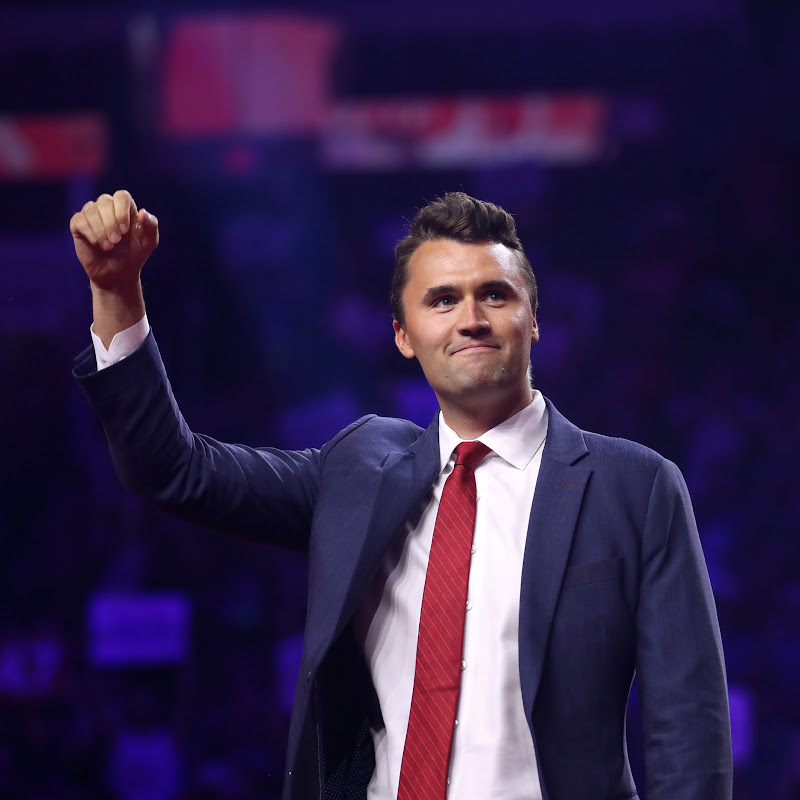
Charlie Kirk is the Founder and President of Turning Point USA, the largest and fastest growing conservative youth activist organization in the country with over 250,000 student members, over 150 full-time staff, and a presence on over 2,000 high school and college campuses nationwide. Charlie is also the Chairman of Students for Trump, which aims to activate one million new college voters on campuses in battleground states in the lead up to the 2020 presidential election. His social media reaches over 100 million people per month and according to Axios, he is one of the "top 10 most engaged" Twitter handles in the world. He is also the host of “The Charlie Kirk Show,” which regularly ranks among the top news shows on Apple podcast charts.
Subscribe on YouTubeAndrew Kolvet Breaks Down Day One of Tyler Robinson's Preliminary Hearing in Charlie Kirk Murder Case
Andrew Kolvet, Blake Neff, and Jeb Jacobi provide a comprehensive recap of the first day of Tyler Robinson's preliminary hearing in the murder case of Charlie Kirk. The team was joined by Graham Allen, who attended the hearing in person, and legal commentator Andrea Burkhart to analyze the proceedings. Key revelations included surveillance evidence showing Robinson on UVU campus four times on September 10th, Officer Bagley's testimony about finding a potential sniper position on the Losee Center roof, and the medical examiner's report confirming death by gunshot wound to the neck. The discussion covered the defense's objection strategy, the controversy surrounding edited video evidence, and the emotional toll on Erika Kirk and Charlie's parents who were present in the courtroom. With the preliminary hearing expected to continue for several more days and a potential trial not until 2028, this marks the beginning of what will be an extended legal process.
The first day of the preliminary hearing for Tyler Robinson, accused of murdering Turning Point USA founder Charlie Kirk, brought both anticipated evidence and emotional challenges for those following the case. Andrew Kolvet, Blake Nef, and Jeb Jacobi provided real-time analysis of the proceedings, emphasizing the profound personal impact this day had on everyone at Turning Point USA.
The hearing, held before Judge Tony Graf without a jury present, serves to determine whether sufficient probable cause exists to proceed to trial. The standard of proof is lower than an actual trial, and certain types of hearsay evidence are admissible that wouldn't be allowed in a jury trial. The defense has consistently objected to nearly every piece of evidence presented, a strategy that legal experts say is not unusual in death penalty cases but can risk frustrating the judge if overdone.
Key Evidence Presented
The state called two witnesses on day one: Officer Bagley and Agent Hall from the investigation team. Agent Hall's testimony revealed that surveillance video from Utah Valley University shows Tyler Robinson on campus four separate times on September 10th: twice in the morning, once during the shooting, and once in the early hours that extended into September 11th.
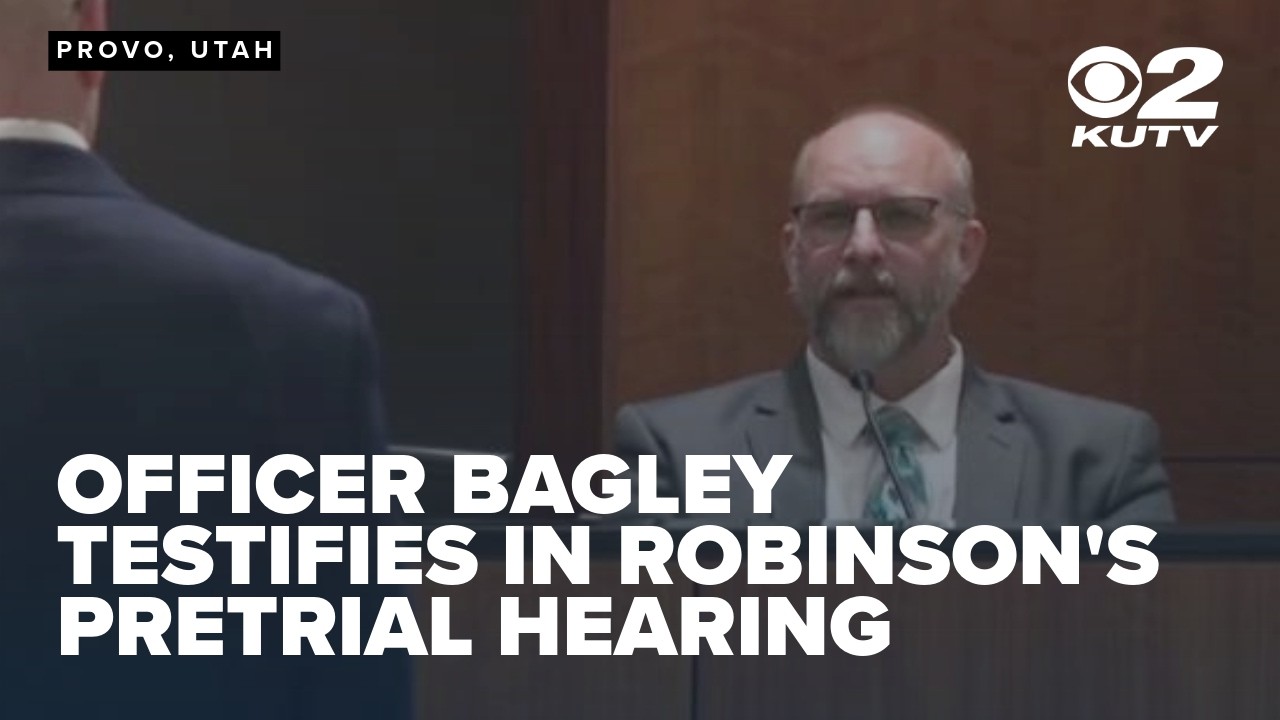
Officer Bagley provided testimony about his immediate response to the shooting. He heard what he identified as a rifle shot and quickly made his way to the rooftop of the Losee Center, which is accessible by public stairway. There he discovered a red and black screwdriver and disturbances in the gravel consistent with someone lying in a prone sniper position with a clear line of sight to where Charlie Kirk was speaking.
The medical examiner's report was referenced, confirming Charlie's cause of death as homicide by gunshot wound to the neck, putting to rest various conspiracy theories that had circulated online about alternative causes of death.
The Video Evidence Controversy
A significant portion of the day involved debate over a compilation video the state attempted to introduce. The video combined footage from multiple surveillance cameras showing Robinson's movements on campus. The defense objected because the prosecution had enhanced the video by zooming in on certain areas and adding circles to draw attention to specific individuals.
Judge Graf sustained the objection, not because the video was altered in any deceptive way, but because the person who made these editorial enhancements wasn't available to testify about what they did. The state indicated they would resubmit both the raw, unedited version and the enhanced version the following day, allowing the judge to compare them and understand exactly what modifications were made.
Legal commentator Andrea Burkhart explained this is similar to how sports commentators like John Madden would circle plays to help viewers understand what to watch. The issue wasn't the legitimacy of the evidence but rather the authentication process required by the court.
Courtroom Atmosphere and Family Presence
Graham Allen, who attended the hearing in person alongside Don Jr. and his wife Bettina, as well as Jack Posobiec and Brandon Tatum, provided firsthand accounts of the courtroom dynamics. He emphasized that Erika Kirk sat together with Charlie's parents, Rob and Kathy, throughout the proceedings, contrary to online rumors suggesting division between them.
The families comforted each other during difficult moments, including when graphic 4K video footage from the event was shown to the court. The judge allowed Erika and Charlie's parents to leave the courtroom before this footage was played, sparing them from having to see the most disturbing evidence.
Graham noted that Tyler Robinson sat only six to seven feet away from the families throughout the day. He and others observed moments where Robinson appeared to be laughing with his attorney, Katherine Nester, during proceedings, which struck many as inappropriate given the gravity of the charges. However, Andrea Burkhart explained this might be the defense team's attempt to keep their client calm during an extremely stressful process, even if it appears insensitive to observers.
Defense Strategy: Objection After Objection
The defense filed a standing objection to all of the state's preliminary hearing exhibits before the day began, then proceeded to object to nearly every individual exhibit as it was introduced. This created what some described as "trial theater" that slowed the proceedings considerably.
Andrea Burkhart explained this aggressive objection strategy serves multiple purposes for the defense. In a death penalty case, defense attorneys have an obligation to preserve every possible objection for future appeals. By objecting repeatedly, they ensure nothing is waived that could later form the basis of an appeal if their client is convicted.
However, this strategy carries risks. If the defense objects to everything, the judge may become desensitized to their objections, making it harder for truly important objections to stand out. Additionally, if this approach continues into an actual jury trial, it could frustrate jurors and make the defense appear obstructionist rather than protective of their client's rights.
One notable aspect of the defense strategy has been their consistent effort to keep cameras out of the courtroom and to limit what evidence is "published" or made visible to the public and media. Ironically, many online commentators accused the prosecution of hiding evidence, when in fact it was the defense objecting to the public viewing of exhibits.
What to Expect Moving Forward
The preliminary hearing is scheduled to continue for up to five days, though it may conclude sooner depending on how quickly testimony proceeds. The state plans to call four witnesses total and introduce 40 to 50 exhibits. Day one covered two witnesses and approximately a dozen exhibits.
Upcoming testimony is expected to include forensic evidence, DNA analysis, and potentially the recorded statement from Lance Twiggs, Robinson's romantic partner, who was interviewed by investigators. Judge Graf previously ruled that Twiggs would not need to appear in person, as his recorded statement would suffice for the purposes of the preliminary hearing.
The forensic phase will likely address questions about ballistics, the weapon used, gunshot residue, and DNA evidence collected from the scene. The state is building its case chronologically, following the timeline of the investigation rather than necessarily the timeline of events on September 10th.
The Long Road Ahead
Andrea Burkhart, who has extensive experience with death penalty cases, cautioned that even if the preliminary hearing concludes this week with Judge Graf finding probable cause, the actual trial is unlikely to occur before early 2028. She characterized this timeline as optimistic, noting that the massive amount of evidence to review, the complexity of forensic analysis, and the extensive pretrial litigation typical in capital cases all contribute to lengthy delays.
The defense has already indicated they will need to conduct their own investigation, including analysis of proprietary DNA software used by prosecution experts. Disputes over discovery, expert witnesses, and scientific evidence will consume months or even years before trial can begin.
For those following the case, including Erika Kirk, Charlie's parents, and the entire Turning Point USA community, this means years of reliving these events through legal proceedings. The preliminary hearing represents just the first step in what will be an exhaustive legal process.
Commitment to Transparency
Andrew Kolvet emphasized Turning Point USA's commitment to providing daily recaps of the preliminary hearing to ensure the public has access to factual information about the proceedings. With so much misinformation circulating online, including conspiracy theories about alternative causes of death and claims of prosecutorial misconduct, these recaps aim to provide a reliable record of what actually transpires in court.
The team expressed frustration with how quickly false narratives spread on social media, often based on incomplete clips or misunderstandings of legal procedures. They encouraged viewers to watch as much of the actual court proceedings as possible rather than relying on short clips that may lack important context.
Blake Neff noted that many of the day's revelations, while significant, were not surprising. The evidence presented matched what investigators have indicated all along: that Charlie Kirk was shot with a rifle from a elevated position, that Tyler Robinson was on campus multiple times that day, and that physical evidence at the scene is consistent with a planned shooting. The preliminary hearing is confirming what was already suspected rather than revealing unexpected information.
Personal Toll on the Turning Point Community
Andrew Kolvet opened the recap by acknowledging how emotionally difficult the day had been for everyone at Turning Point USA. Having to relive Charlie's death in such explicit detail, with evidence and testimony describing the event, has taken a significant toll on the organization.
Jeb Jacobi shared that his wife noticed something was wrong before the hearing even began, as he was visibly affected by the anticipation of what the day would bring. The prospect of Erika and Charlie's parents having to sit through graphic evidence was particularly distressing for those who care about the family.
Graham Allen emphasized his hope that when justice is ultimately served, Charlie Kirk's legacy will be defined by the life he lived rather than how he died. The focus on the legal proceedings, while necessary to achieve justice, inevitably keeps the tragedy at the forefront rather than Charlie's accomplishments and impact.
Addressing Online Misinformation
Several false narratives required correction based on firsthand observation. Rumors that Erika Kirk and Charlie's parents were not sitting together or were in conflict were completely false. Graham Allen confirmed they sat together, comforted each other, and spent time together during recesses.
Claims that the prosecution was hiding evidence or refusing to show cameras were also incorrect. It was the defense consistently objecting to the publication of evidence and arguing against cameras in the courtroom. The prosecution has generally supported transparency in the proceedings.
The controversy over the enhanced video compilation was mischaracterized online as evidence of prosecutorial misconduct or fabrication, when in reality it was simply a technical authentication issue that the prosecution is resolving by providing both edited and unedited versions for comparison.
One attorney who watched the proceedings independently contacted Andrew Kolvet to note that the defense's hearsay objections were "legally ridiculous and summarily overruled" by Judge Graf, suggesting the defense is aware these objections lack merit but is making them anyway to preserve issues for appeal.
Video Transcript
preliminary hearing recap that we're
going to be doing every day to break
down what happened in the preliminary
hearing of Utah, state of Utah versus
Tyler Robinson. Um, and we've got
myself, Blake Nef here. And now we have
Joe Bob, which is fantastic. Joe Bob,
welcome. Uh, there you are. And we've
also got uh Joe Bob does amazing work uh
for us. Uh, he's got a great show.
Amazing. Joe Bob for just for the
audience, you've been on the show
before, but just in case people don't
realize, you've been with Turning Point
for years. You opened for Charlie. You
traveled with Charlie at all the campus
events. um and you do a great uh show on
Real America's Voice. So, um God bless
you, man. Thank you for joining us
today. Uh it's been a heavy day and I
think that's where I'm just going to
quickly start. I have a whole breakdown
of all the facts and we have Graham
Allen joining us and then we have um
Andrea Burkhart who's a legal
commentator. She's going to join us for
the second half of the hour. So, but I
just want to start there. Um, I can't
stress to you enough of how much this t
day has affected me, has affected Joe,
Bob, Blake, everybody in this office,
everybody at Turning Point. It's so it's
so um excruciating actually to have to
be reliving all of this and to have it
like up front and in our faces again.
Um, so Joe Bob, maybe just tell tell
what it's like for you, my friend. You
know, I actually appreciate you starting
it off like that because coming into
this I this is uncharted territory for
everybody. Like I don't know if are we,
you know, supposed to break it down like
you know these super sophisticated legal
minds that of course we all are or or
are we supposed to be vulnerable about
the fact that this was a tough day? I
was walking around the house earlier
this morning and my wife is like, "Hey,
is something wrong?" And it's like,
"Yeah, there is." and it just was one of
those days where she could tell
something was wrong. Um, but it wasn't,
you know, it was just this sinking
feeling that you you had. And I I was
there last week at HQ and we're talking
with some people around there about what
this was going to be. And I same sinking
feeling when I, you know, kind of
realized the gravity of of Erica and
Charlie's parents being in the room and
what they were going to have to see
during this whole process that is is is
of course necessary to get justice. But
the very fact that you have to endure it
is is doesn't make it better, doesn't
make it good. It's it's still terrible.
And so, you know, while there's the the
kind of the the progression of this, the
proceeding of all of this is encouraging
in in the quest for justice, again, I'm
glad you started off like that cuz it is
a sinking like heavy feeling has been
around here all day.
>> It's so heavy. Yeah. Blake, I know
>> it's sinking in just this was a heavy
day, but with the knowledge this is day
one of a preliminary hearing that we
talked to various people. They said they
think it'll go at least three days. It
could go all five. And then that's the
preliminary hearing. We'll talk to
Andrea again and see what she thinks.
But she says the trial might not hit
until 2028. And then who knows how long
that will go and we might have to sit
through appeals for this. This is we
were getting a lot of well wishes. I
know you were. I was. And what I was
telling everyone telling people who
emailed is this is it's going to be a
long process and we are here to see it
through all the way to the end.
>> Um let's get into this. Um, I just want
to, it's a brief primer. Keep it on all
three of us so we can all chime in uh
intermittently as we go through. I'm
just going to go through a couple facts
since this is day one. I just want to
reiterate. So, Erica was in court today.
She was seated next to Charlie's father,
Rob, and his mother, Cath uh Kathy.
Katherine, I call her Catherine. Um,
they sat together. They did enter
through different entrances for security
purposes, but inside they sat together
and all the news reporting that I've
read is that they were comforting each
other, crying on each other each other's
shoulders. Um there was also um Erica's
sister, uh Erica's niece and nephew
representing the full extended family on
both sides, including uh many relatives
that uh couldn't be there, but they're
there in spirit with them. Don Jr. was
there. uh obviously a close friend of
Charlie's uh his wife Patina. Uh you
also had Jack Pobic, Brandon Tatum, and
Graham Allen who is going to be joining
us in just a second. But to reiterate,
this was the this is day one of the
preliminary hearing, not the trial. As
Blake said, there's no jury. The purpose
is for the state to present enough
evidence uh to the judge, Tony Graph, to
meet the probable cause threshold. uh
and if that threshold is met, then it
will go to a trial. Okay? So, during the
hearing, you see the state call
witnesses and the defense may
cross-examine them. Then, we saw that
today. The defense may also call
witnesses and the state may
cross-examine them, too. And there's a
lot of you'll hear a lot of mention of
hearsay. Well, the evidence governing a
preliminary hearing is different in uh
this case than a trial, right? So, the
standard of proof is lower. The purpose
um is you can you can admit what they
call credible hearsay. Okay. Blake's not
a lawyer, but he does play one from time
to time on on TV. Do you do you have any
like
>> it's just classic there's usually in a
normal criminal trial. You have the
right to confront your accusers. And so
a long established principle in our
legal system, I don't know about those
around the world, but certainly in ours
is you generally can't go, "Oh, this
offic you know a police officer will say
this person told me that." And in
reality, you could bring that person in
and instead you just have this secondary
hearsay. You can't have someone testify
that they heard something from someone
while that guy's denying it and say,
"Well, we just believe this officer is
telling the truth." Uh, and so the
example here where it's coming up, for
example, is they asked uh one of the the
second witness today what was in the
medical examiner's report, and he's just
saying, "Well, I saw this in the medical
examiner's report." And
that's a credible hearsay in the sense
this is a police officer who's
describing a document that he read while
they were preparing this case. In the
actual trial, we will be having the
actual medical examiner. Yeah. Exactly.
>> As a witness who will say, "I performed
this autopsy. This is what I found."
They can be cross-examined, but for the
case of for this sort of probable cause
thing, it's totally acceptable for them
to have a police officer say, "We have
this and we generally trust this
person." Unless there's an obvious
reason to believe that and it Judge
Graph has been very disciplined. He's
sort of balls and strikes kind of guy. I
think he's very cognizant of the fact
that he doesn't want to make a misstep
that could make it appealable or
whatever. Right. The defense has fought
very hard to prevent cameras in the
courtroom. Okay. They previously filed a
standing objection to the state's
preliminary hearing exhibits. Today,
they stated additional objections as
each exhibit was introduced. And that
was one of the big storylines today.
every single exhibit they would object
to. Uh so this why we saw a whole lot of
I would say theater trial theater from
the defense today regarding those
objections. The judge has been very
straightforward balls and strikes like I
said and it seems like the defense's
strategy has been to blur the focus,
right? They they're delaying. They want
to kind of slow things down, which is
not surprising given everything that
we've seen from this far. But you know,
at least that's my view, right? that
this blurring of the focus so they can't
lay out the details in a so as you as a
watcher and Joe Bob I'd be curious your
perspective just watching this
preliminary hearing trying to sort of
keep track of the details is difficult
because it's it's bogged down in so much
procedural back and forth so last week
on the turning point tonight show we
broke down to to the best of my ability
right I'm not an attorney but the
procedural process kind of like what
Blake had laid out kind of what you guys
have been talking about on the show
pretty consist consistently in that
there are different procedural rules for
the pre-trial and the actual trial. He
hearsay can be admitted. All of these
things uh the defense seem to be uh
trying to add the pre or had the actual
trial to the pre-trial, right? They they
tried to have all of the uh the rights
of the defendant that exist in the trial
to the pre-trial with just the constant
objections over and over and over again.
And I I hope my terminology is correct
there, but that's how I understood it.
But what I think was really interesting,
and I recognize people don't have, you
know, the full day to sit here and watch
this. But I I I would encourage people
to to watch a big chunk of it if they
can because what I saw as an observer
was prudence and discernment from the
judge. Every single thing, he took it
in, considered, decided whether or not
it was going to get played for the
courtroom and for the media. decided if
that was, you know, good or bad or or
uh, you know, obviously evidence
admissible and in inadmissible and you
really got to see the process of thought
that goes into it. It's not just like
this haphazard. And again, I don't know
why people would assume that it would
be, but it was really good to see that
reiteration of discernment on the bench
to go, here's what we're considering.
Here's all the processes laid out. And
and again, as more or less a lay person
when it comes to the the legal system,
it was good to see that
>> through the throughout the entire day.
Really?
>> Yeah. And I I'm told that we now have
Graham. Graham again, Graham Allen, he's
going to be we're going to be letting
him in. We um Graham was actually in the
courtroom all day. So, I'm going to
while the studio gets Graham uh checked
in here, I'm going to keep going with
some of these breakdown. We prepared a a
point by print point breakdown just
keeping notes all day. So um so all in
all the state is going to call four
witnesses and admit 40 to 50 exhibits. I
believe we do have the images of the
exhibits if we could throw those up.
Those are pieces of evidence. They
called two of those witnesses today and
admitted about a dozen exhibits. So, the
big big big takeaways and I'm and then
I'm just going to stop here with the big
takeaways and then I'm going to bring
Graham in is I think first Agent Hall
testified that Robinson was seen on UVU
surveillance video on campus a total of
four times. Four times
>> on September 10th before, during, and
then after the shooting that uh and so
that was a big one. Four times. Now,
we're going to get into the video
issues. I think we'll talk about that
with uh Andrea. The internet's I think
tempted to run away with that one, but
it there's nothing. So, um, and then
also that the medical examiner's report
listed Charlie's cause of death as
homicide by gunshot wound to the neck.
So, no exploding mic, no none of that
stuff. It the medical the straight
medical examiner's report says gunshot
wound to the neck. All right. And then
the other big takeaway is officer
Baggley confirmed that the roof of UVU's
Loi Center was accessible by public
stairway and testified that he climbed
to the rooftop immediately after the
shooting. There he saw a red and black
screwdriver and a disturbance in the
gravel which he described as markings
consistent with someone lying in the
prone position with a line of sight to
where Charlie was speaking. So I think
those from just an evidence standpoint,
those were were the big takeaways. Uh
Graham Allen joins us now. Um, Graham,
uh, so grateful to have you, man. And
from the bottom of my heart, thank you
for being in that courtroom and
supporting Erica and her family, Rob and
Kathy.
Um,
I I couldn't do it if I'm just going to
be honest. I I think I would have I
don't know how I would have reacted. And
uh, it
>> was a weird day. Weird day.
>> What was it like?
>> Uh, well um,
weird day. Tyler Robinson was maybe six,
seven feet in front of me the the the
entire day. Um, you know, I I've seen a
lot of people recirculating an, you
know, an old clip on the internet of him
laughing uh and things like that. What
what I can confirm, what I did see that
all of us saw that was on that front row
especially is Tyler Robinson was uh very
very active in wanting to see evidence.
But when he would speak to I I I saw the
back of his head when he would speak to
his lawyer, I could see his lawyer's
side profile and she was giggling and
she was laughing and so that that was
hard to see uh in the courtroom. Um, a
couple things I can put to bed. All this
crap about um, Erica and Charlie's
parents, not being on the same page or
they don't like each other, it was
complete garbage. I was on the same row.
It was It was uh, Erica, Charlie's
parents, uh, it was Jack Basobic, me,
Dawn Jr., all in the front row the
entire time. Uh when when we all got
went on recess and were in the holding
room, Erica's was with Charlie's parents
the entire time. Charlie's parents were
speaking to all of us and they were
talking to all of us. So all this
garbage that um Erica and the the wife
of Charlie Kirk and his parents that
they are not on the same page with each
other. That's that's total total lunacy.
Total garbage. I've also seen a couple
things again that you know they took our
phones from us so I'm I'm catching up to
what the internet is saying. Um I would
encourage everybody to watch as much of
the trial as they can because what a lot
of bad actors are doing is they're
taking clips of them introducing one
piece of evidence. For example, the
gravel at the top of the building where
the shot was taken. there's this there's
one picture that they put into evidence
and they're like, "It's kind of hard to
see the impressions that you saw that
day. Uh, is it not?" And the officer
says, "Yes, that's kind of hard to see
the impressions I saw." Well, people are
just clipping that and they're like,
"Oh, this is a this is a clown show."
Like, like, "Oh, just trust me, bro."
All this. But then the very next piece
of evidence that they introduce is an
even better picture showing obvious
indentations of of a of a grown male
that was in a prone position to take a
sniper style shot with a rifle. Like so
I encourage as many people as possible
to watch as much of the trial as they
can. I would also say that if you're
watching this and you're on a side that
that believes and I said this on my show
today, this is about getting justice for
Charlie, but if you're on this friend
side that's all about these conspiracies
and things, it appears to be the defense
that doesn't want any evidence
seen by anyone in any way, shape, form,
or fashion. it seems to be the defense
that is against anything being admitted
as evidence, being shown as evidence,
uh, all of those things. And so that was
that that was pretty shocking to me. I I
expected Anyway,
>> that's you can't you can't underscore
that point enough though, Graham, is
that uh the I I saw the same thing on
social media where people were like,
"Oh, they don't want to show any
evidence." And it's like that's the
defense. The defense is the one pushing
not to show evidence. The state has been
consistent like we want cameras, we want
to show all the evidence. And every time
the defense has come in with an
objection about it can't be on that
monitor or it can't be
published, which I guess is means
visible in the courthouse because it
hasn't been submitted as eving
technicalities to sort of limit the
publishing or exposure of said evidence.
And it just should be said uh you know
who someone was saying that today was
the start of a show trial and the real
truth is is everything about today has
indicated this is one of the most
methodical criminal justice proceedings
any of us ever have ever seen. It took
us 10 months to get to this point of a
preliminary hearing. Something that is
waved in a very large number of murder
trials. Something that happens within a
handful of days in plenty of other not
just robberies but murders. big cases
like this one here. They've taken ages
to get here. They have litigated every
single point about evidence, about
cameras, about timing, about
representation, and they will continue
to do so. And I think it was very
telling that other than those claims for
a lot of these people, uh, they weren't
even engaged today. They were picking
other fights.
>> Well, and I had I had a um somebody
who's not connected with Turning Point
and not connected like at all with the
trial, but he was just watching. He sent
me a text. He said, uh, the defense's
hear objections were legally ridiculous
and summarily overruled by Judge Graph.
The court was fully briefed on the
matter in advance of the hearings and
ruled, but the defense continues to
raise this objection. Anyway, so that
was some that's like a third part,
completely unrelated, but this is a a
guy that's a prosecutor and that he was
just like filling me in and I thought,
okay, that's interesting. And there were
definitely Go ahead.
>> Go ahead. Sorry.
>> No, no, no, please. Well, there were
definitely conversations about that. How
long is the judge going to allow, you
know, uh, you know, code 1102, section
12 to be, you know, repeated over and
over
>> to block the publishing of evidence.
Yeah,
>> correct. And there were a couple of, you
know, prior defense attorneys in there
that that that, you know, we were able
to have not in the court obviously when
we were, you know, in recess or whatnot,
you know, that would say that that's,
you know, it's it's not a good sign. You
know, obviously everyone's innocent
until proven guilty. Obviously, that's
the way our court system is done. But
but it's never a good sign when the
defense is just stalling like that over
and over. If I can talk about the video,
if you would call it any type of uh, you
know, small bump in the road, I I want
to put away any type of things because
we were also briefed on this as well.
Uh, the video is not dead that they
wanted to submit into evidence that the
judge said, well, you know, it's been
enhanced or whatever it is, like zoomed
in or circled around.
>> Yeah, I want to get to actually Graham.
Graham, watch this. Uh so we have this
clip and just it helps to kind of bring
some of this home. This is the this is
the clip. So this is uh when Judge Graph
rejects the admittance of the state's
compilation of videos. Now again we're
we're referencing when the state
presented uh was I think ex uh
questioning the witness and they said
four times and they had a compilation
where they put together those four
videos. This is that clip uh S 55.
This is a compilation video that was put
together from a bunch of different
sources by the county attorney's office.
Um, this individual did not create this
compilation. Um, can't testify to the um
accuracy of the actual um materials that
it was taken from. And furthermore,
um, Mr. Olsen himself is just referred
to by Agent Hall. He specifically says
people have altered these recordings.
They've zoomed in when the when the
actual recording isn't zoomed. They've
added little circles to people they want
you to pay attention to. They've blurred
people's faces out. So, I mean, it's
been clearly altered and it's not I
mean, they admit it's been altered. So,
we have real concern about authenticity
of it.
>> I'm going to go ahead and I'm sustaining
the objection.
All right. So, Graham, go ahead. Now,
now that the audience all caught up.
>> Yeah. So, so what the judge actually
like said, okay, to in that was not this
grand slam dunk like, oh, the, you know,
the the the state didn't get their
evidence. That's not what's happening.
Well, the judge, what he did in that uh
was he didn't have from the person on
the state side who actually zoomed in in
certain areas or put red circles around
to make it more easy what you were
seeing. It's kind of like telling John
Madden back in the day that he he
manipulated the footage that he's
replaying, showing you.
>> That's a perfect That's a perfect
analogy that this so it wasn't altered.
It wasn't like AI. What they did is they
to they used a John Madden style exactly
right where you know you he'd freeze
frame the NFL clip and he'd circle like
look what the ball's doing here and it's
going to shoot this way and watch
they're going to move this way. So they
were trying to spotlight different
things they wanted to draw attention to.
>> Correct.
>> And the the the video will be uh
resubmitted as evidence. The only
question is and it will make it into
evidence. It's only a matter of question
of in what form. Will it be the raw
original
form or will they cuz they're going to
resubmit the this this video as evidence
when the court's back in session
tomorrow morning.
>> Um however, we just don't know what the
judge is going to rule if it has to be
the rob. Either way, the evidence is
what the evidence is that they saw him
four times on campus.
>> Correct. from my understanding is it was
someone inside the state, you know, the
the prosecutions team that did it, but
they just didn't have a signed I think
they called it an 11:02 or something
like that. Yes, I did it. I I edited
this. Yeah.
>> Yeah. I didn't I didn't, you know, uh
edit or or redact anything. So, I from
my understanding, the plan is they're
going to submit both. They're going to
submit the un, you know, unenhanced
version along with the version they
wanted to yesterday. And from the way it
sounded with the judge, he's going to
watch both of them then at that point.
But you're right, it's going to be
submitted tomorrow officially in as
evidence.
>> Joe, Bob, you have something you want to
talk about,
>> Graham. So, one of the big uh social
media clips that
moving, I don't know is the right word,
but got a lot of attention was uh Judge
Graph watching the explicit video and
his reaction, which and probably is way
more tame than most people would react.
One, were you in the courtroom for that?
And two, what can you describe what that
was like watching those those videos?
And we have that clip here, Graham, if
you want me to show it. We I mean, it's
got the m It's the same one you posted,
Graham, on on X, so it's got a music bed
to it. But 56.
[music]
[music]
Yeah, it's wild to watch. It really is.
>> I was I was there. Uh we all were there
and so every one of the the the videos
that were graphic in nature were were
were admitted as evidence, but both the
the state and the defense
did not want it to be seen publicly uh
due to the graphic nature of it. because
we've all well the vast majority of
people saw the the horrific social
media, you know, iPhone images of uh
what happened to Charlie, but but
especially when the uh you know, the 4K
videos were were were put in there. Um
that was Yeah, that that was a tough
moment. That that was a really tough
moment.
So be to be clear though, Graham, these
were the videos that were rolling like
>> of the event. These are event these are
the 4K cameras that were around Charlie
>> and that were submitted that were handed
over to authorities the the the moments
after it happened, I guess.
>> And so they've never been publicly
viewed.
>> Correct. Yes. And so, you know, those of
us that were in the Rose, I mean, you
know, the audio is playing and we all
know exactly when when it happens. I
mean, you know, we've all heard the
moment, the question Charlie was asked
and his beginning to answer. And so, you
know, I looked around, you know, kind of
my left and my right, and everybody kind
of had their hand kind of clenched
because we all knew exactly when the
moment happened. and did
>> uh but but but on that video
specifically, I was looking right at the
judge when that happened and and so
yeah, it was um
>> yeah, I mean it's tough. It's tough to
look at and so uh his reaction is a real
reaction.
>> Um
you mentioned you were looking around to
people to your left and your right. Who
did I I know that Erica and her family
got the opportunity to leave during the
>> Yeah. I guess demonstration of certain
exhibits. Um were they able to leave
during that or were they still there
because the judge was just How did that
work?
>> Yeah. So so so they briefed us on that
when we were in a recess that because uh
but obviously Erica and and Charlie's
Charlie's [clears throat]
family, they did not they did not want
to see see that. A and so so we knew
that they were going to let us know when
that moment was going to happen. And so,
yes, Char or excuse me, Charlie,
goodness, Erica and Charlie's family
left. And so, the the only people left
on the very front row was Jack Bobic was
on my left and Don Jr. and his wife were
on my right. And that's all that was
left on the front row when Erica and and
Charlie's family left. And then, um,
Brandon Tatum and and others were were
behind us on the next row. Uh, so yes,
they did get an opportunity to leave,
but but it was kind of a a known leave
because they they didn't they didn't
want to see that, nor nor should they
have to.
>> No. And even the even just being able to
hear it. Um,
>> correct. Right.
>> Um,
yeah. I like I said, I'm just so glad
you were in there.
>> Something I didn't see people talking
about, and I wonder if you saw it. Did
you see people outside the courthouse?
um either
>> protesters uh people trolling them, you
know, making trying to make fun of it
the way we saw at our women's event or
even
>> maybe what's fringe YouTubers. Yeah.
What's it what's it like in the
vicinity?
>> Yeah. So, so where they have us all
entering in at it's it's pretty it's
pretty locked down. um that there is a
little bit of what looks like a parking
structure up on top and you have some
news crews that are like, you know,
pointing down and things like that. It
was mainly just media when we were
walking in. I mean, there's there's a
lot of videos on the internet of us
walking in to to the courtroom and
things like that. Um
I didn't see any protesters per se in
that exact moment. There were some
people that were trying to get Don Jr.
like to to to comment and things. And he
respectfully said, "No, I'm I'm here for
I'm here to support a friend. I'm I'm
not I'm not doing any on the record
stuff and things like that, which I
thought was very classy of him. You
know, he he's simply there for Charlie
and for Erica." And so I I thought that
that was a a really big thing because
it's not easy to sit in that courtroom
all day and listen and and just the
mundane of all of it. Um uh you know
there was another moment where that I
saw some people chattering about online
where uh you know Charlie's either Erica
and Charlie's parents or Charlie's
parents got up abruptly and left or
something like that. Uh from what I
understand uh Charlie's mom got a nose
bleed. You know it's dry weather here. I
don't think it was anything serious and
she was fine the rest of the day. Like I
said Charlie's parents were were great.
They were talking to all of us in the
recess rooms uh with Erica right there.
And so again, when I see all these
things and again, I was playing catchup
with my phone. Uh it's just it shows
shocking how many people have no idea
what they're talking about.
>> Well, and that's that's been my whole
experience of the last 10 months,
Graham, is you know, it's like
>> totally out of the loop.
>> The the the disconnect between re
[laughter] real life and like where the
internet will go for it. That's one of
the reasons we're doing this daily recap
because I want people to have somewhere
where they can just get the actual facts
from the case. Graham, um, and Joe Bob,
I want to work you in here, too. And
then we've got Andrea Burkhart. She's
actually standing by already, which is
great. Um, but Graham, what about uh
Tyler Robinson's family? Did you see
them? And did you know which ones they
were kind of? [clears throat]
>> I didn't know who they were initially,
but they were pointed out to me. So, the
way that we were lined up is it it's not
it's not like the courtroom like you see
on TV, you know, like where there's like
two distinct sides and there's like this
side and then that side. It was um four
rows horizontal to the actual courtroom
that most people saw uh you know from
the camera position. So the front row,
like I said, was was Erica and Charlie's
family, and then it was Jack Bobic, me,
Don Jr., his wife. The next row, Stacy
Sheridan was in there, Brandon Tatum, uh
several other people were on the back
row, and then the I I believe Tyler
Robinson's family was on the third row,
and then that fourth row was for just
some random public people that got, you
know, a seat in there, apparently. How
many people are we talking about,
Graham?
>> All in.
>> I think that were viewing it or in total
like just
>> like in total like how many people were
guests in that courtroom? I'm just
curious.
>> Oh, guests. Maybe maybe 40 maybe 50
people when it was all said and done.
>> Small still. It's
>> Yeah. And that's including the media.
And the media was sitting where normally
the jury would sit, I would imagine.
>> Got it. Graham, could you get a feel for
what the media might have been talking
about, chattering about, prepared to put
out? Was there any sense of that? Did
you get or did you not really interact
with the the media that was there too
much?
>> I You guys know me, I'm not a big fan of
the media. So, so, so I didn't I didn't
have it on my radar to to to like talk
to them specifically. I did note that a
lot of them were looking our direction a
lot of the time. It seemed like maybe
that was toward Erica or Charlie's
parents. Maybe that was towards Tyler
Robinson's parents. I I I don't know.
But but I did but I did note that they
were looking our direction an awful lot.
>> Graham, final thoughts here. We're uh
please uh any any final, you know,
things that you noticed or want to make
sure that we hear from you and then
we're going to take a quick twominut
reset break and bring Andrea Birkhart in
uh next. So, Graham, any final thoughts?
>> Uh, just just continue to pray for
Erica, for Charlie's parents, for for
for the family. Uh, this is day one,
right? And so, so it's just getting
started. Um, forensics and all that
stuff haven't even been introduced. I I
mean I mean, there's so much more to do.
>> Um, just continue to pray. And then I I
I said this on the show this morning,
when all this is said and done and and
justice has been served and all this, my
biggest hope and prayer is that
Charlie's legacy is what you know is is
the life he lived and not how he died is
is is my biggest hope and everything.
And so um we just want the truth and
this is actually how you get it and how
you actually get actual justice. So
>> yeah. Yeah. Exactly. Sunlight's the best
disinfectant. We want full transparency.
We want everything to be visible and
viewable for the I mean, not the graphic
stuff, candidly. I don't know. I mean, I
don't think anybody needs to see Charlie
being, you know, in 4K. I don't I don't
need to see that. Um, but either way,
Graham, I just want to finish with this
and say thank you again. Means a lot to
us on a very personal level, right? Like
everybody's, you know, you got your
show, we got ours and and influencer
blah blah blah, all that stuff. No, like
on a on a very personal level, it means
the world to us that you were in there
supporting Erica and Rob and Kathy and
um the whole family. So, thank you, man.
>> Least I could do.
>> All right, we're going to take a quick
break here. Um three I'm told it's three
minutes. So, three minutes. We're going
to do a quick reset, bring in Andrea
Birkhart, and uh we'll be right back.
All right, welcome back. Here we are at
the uh our preliminary trial day one
recap episode here. Got Blake Nef,
myself, Joe Bob is looks like we lost
Joe Bob actually. [laughter]
Uh but we have Andrea Burkhart, legal
commentator. Uh she's a trial and
appellet litigator. You can find her at
Substack. Andrea Birkheart.substack.com.
Andrea, welcome and uh thank you for
making the time. You've been covering
this um trial. Really, I've you've been
a source of information for me, too. You
have a way of looking at things and
insight because you've done this before.
Uh big picture, what do you make of
this? And then I want to get in of day
one. Then I want to get into what we can
expect tomorrow morning and and and
coming up next based on the exhibit list
that we that has been made public.
>> Yeah. So, so far there's nothing that's
happened that uh has has struck me as
particularly surprising. Uh every
jurisdiction has their their own rules
and their own ways of doing things and
so there can be a lot of variation in
kind of the specifics of of how things
happen. Uh but by and large just in
terms of what's being presented, how
they're presenting it, uh the volume and
nature of the objections that we're
getting from the defense as well, these
are all things that uh to my view uh as
as somebody who's handled these in in
similar kind of hearings before. Um
appears to be going largely according to
script uh consistent with the
expectations that uh that the parties
would have had for how a hearing like
this is expected to go. My I think the
big question that a lot of people have
and Blake and I were debating it and we
were talking to some other people trying
to figure out why uh I think I texted
you about it and I I think it's a you
had a great answer so I want you to
share it here. Why is the defense
basically trying to object to every
single exhibit? Right. What is the
tactic here? What is there anything to
read into it?
>> Well, I I think that is it is normal.
Uh, as always in a death penalty case,
you you you just do expect to see a
little bit more vigorous of a defense
than you you might in cases that don't
have quite as much at stake. Uh, that
said, it's always a bit of a strategy
call and maybe to some extent a style
issue as well. Um, h how attorneys to
decide uh to manage things like like
objections in a case. Uh what we saw
today was um just repeated objections.
There's there's already a standing
objection on the record that's that was
filed in writing. Uh but the defense is
taking the opportunity to reiterate that
objection, explain it uh multiple times.
Uh and so it it can perhaps come across
as a bit repetitive to be hearing the
same uh
>> Yeah. But can't that eventually sort of
backfire if you start frustrating the
judge? if you start sort of I don't know
just becoming coming off like
obstructionist
>> it can I mean that is the trade-off it
is a style choice to be aggressive like
that that that can be off-putting the
the risk is that uh if you simply flood
the judge's attention with everything
possible that that you could raise as an
objection then you run the risk that
when there's something really good and
really really strong it's going to be
lost in the fog of everything that
you've already thrown at him and he's
not going to realize ize, you know, oh,
this time, you know, they they really
mean it and there's there's really
something uh substantive here. Uh so it
is a little bit of a risky play. Uh but
just given their position and the fact
that they do have an obligation to make
the best record they can, looking down
the road and anticipating future appeals
and and future postconviction processes
to make sure that they're not waving any
possible objection that he could make uh
at any point of this process. uh that's
going to be a big driving factor for why
they are behaving the way they are.
>> Really fascinating and I do think it's
interesting especially if they try that
strategy in a trial which I know you've
warned us could be as late as 2028 which
I'm still like smarting from to be
perfectly honest. Um
>> but if they try that in a jury trial I
can imagine that would be very
frustrating for a jury. That would be
very frustrating for the entire legal
process. probably Judge Graph. Um, so
that's I think that's important to kind
of keep in mind. So I'll I'll I we
mentioned this in the first part of the
hour. Um, and I want to ask you this one
question, then we'll get into the
exhibit list and what we can expect
next. The I think the big bombshell
today, if there was one, I I certainly
took note, is that they've they the
state is claiming that they have
evidence of him of Tyler Robinson being
on campus four times the day of
September 10th. two times in the
morning, one time during the actual
shooting, and then one time in the wee
hours of the night that even bled into
September 11th. Uh, but then there was
this controversy about the video and
judge actually did sustain that
objection because the video has been
altered. Please explain how you perceive
that. I I know that the evidence is
going to be resubmitted tomorrow
morning. They're going to submit
apparently both the raw and the uh
edited. It's not AI edited. It's not
enhanced. It's not changed. They just
John Madden style zoomed in, drew
circles around certain things to draw
your attention to what they wanted you
to pay attention to. But what how did
you perceive that?
>> Well, I perceived a lot of this as a
little bit of a feeling out uh by
everybody to get a sense of uh what the
parties are going to try, what types of
uh limits, rules they're they're going
to try to to impose, and then what the
judge's tolerance is is going to be uh
within that within that playing ground.
Uh so what the prosecution was trying to
do is really not unusual. It's trying to
uh prepare an exhibit in a way that
maximizes its helpfulness. It's very
common particularly with things like
video evidence that there's a lot of
dead time and you don't necessarily want
to watch the whole thing. Uh it's just
wast wasteful and
>> yeah and you're not even sure where your
eye is supposed to be looking sometimes
if it's grainy or whatever. those little
aids can help like be like, "Hey, look
here." Because this is where the suspect
walks through the frame, you know, that
that to me makes a lot of sense. And but
they're saying it it adds bias or
something. Is that their argument?
>> Oh, no. The the only the sole issue that
came up really with this is that because
they didn't have the person who actually
prepared [laughter] those edits
available to testify or, you know,
submit a statement that explains what
they did and exactly what the
alterations were. uh that they weren't
sufficiently authenticated for purposes
of admission in court. Uh they are
basically resolving that problem by uh
as you said they're they're intention is
now to just present the the unedited uh
compilation of of the different video
clips that they collected. And so then
they'll be able to show the judge that
and that will enable him to then see
when he looks at the edited version what
exactly they did to revise it and to
draw it to his attention. So there won't
be any confusion about what was the the
raw video and what was added by somebody
uh for editorial purposes.
>> Okay. No, that makes a lot of sense.
Okay. So I want to um Yeah. Okay. So we
do have that clip. All right. Um 54 just
to underscore your point here, Andrea.
Stop 54.
>> We're going to resume with Mr. Hall
tomorrow morning.
>> Tomorrow morning. And let me explain to
to and I was going to explain this, but
let me explain why. Judge, our intent is
to prepare an un
an original version of the video that
has been in dispute today uh without the
circles, without the blur, and without
the uh the zooming in. And our intent is
to introduce that tomorrow as a
different exhibit.
Um and we just can't prepare that in the
next hour or so.
>> For today, uh agent Hall, you may step
down and uh we'll resume with your
testimony tomorrow morning.
>> All right. So that just just to sort of
bring it home, um I want to take our
attention to the exhibit list that's
been made public. And if I'm reading
this, right, so we got four witnesses
that they're planning to bring up. The
first two we've we've now met. Uh we're
we're halfway through with the first
with the second. It seems like we're
about to enter the phase of the
preliminary hearing where we start
getting into forensic, when we start
getting into DNA, and probably maybe uh
we might see that video from Lance
Twigs, who's uh Tyler Robinson's uh
lover. So, I I am am I reading that
right or do you think that the the
defense is slowing things down to the
extent that we're not going to get that
far tomorrow?
um where I expect we're going to go. Uh
it it appears to me that the state is uh
telling basically a chronological story.
They're they're putting this in in order
in in terms of the timeline. If that's
correct, then we won't probably get the
forensics until close to the end. Uh and
what we would instead get is uh leading
into the process of we've started uh the
identification of Tyler Robinson as the
suspect. We've introduced uh the topic
of his surrender, but we haven't tied
those pieces together. How Tyler
Robinson became known to the police, uh
how he came to be in custody, how some
of these pieces of evidence were
obtained. You know, how they were able
to get Tyler's DNA in order to do this
comparison in the first place. Those are
all going to follow on uh the story of
the identification, the surrender, and
then the arrest and taking into custody
se seizure of of additional evidence. I
think it's just looking at this. It's
exhibit 16 is the recorded statement
from Lance Twigs.
>> Uh which if you remember there was that
back and forth whether or not he was
going to be subpoenaed to come in. The
judge said he did not need to be
subpoenaed that the video would suffice.
Um but if you're talk if you're talking
chronological order then we probably
would get 16. It's right. I mean, I
would think maybe that could be
tomorrow, but that really makes sense to
me what you just said.
>> Although they seem to have followed this
significantly through chronological
order almost of
practically the order they got the
information in because they started with
you're at the scene, these are videos
that we obtained at the scene and then
here's the video we obtained from UVU
and then eventually maybe I'm totally
>> That's actually an interesting wrinkle
there. When you say chronological order,
Andrew, do you mean the the order by
which they got the in in at the evidence
and the or is it the as the events took
place that day on the 11th and so so
forth?
>> Yeah. No, I I think that's that's a good
good correction by by Blake. That's a
very good point. It's the story of the
investigation because that's really what
the probable cause hearing is focused on
is uh did the investigation produce
reasonable suspicion to believe that
that this person likely committed this
crime? Uh and so the the story of the
investigation is kind of a common way to
to frame that particular issue uh for
the court to understand what police
learned when they they learned it, how
it fit into their investigation, and
then from that what are the reasonal
reasonable inferences that you can draw
at each step along the way. So, because
this is kind of a check on the the the
police and the prosecutor's reasoning in
how they conducted the investigation, uh
the the chronological story of how they
conducted that investigation just tends
to be an easy way uh to to follow that.
>> We asked uh Jay Town this earlier. Um
but I wonder if you're going to give the
same answer as him. I just asked, so we
have the statement, this interview they
did with Twigs. It's
>> videotaped.
>> They're going to obviously introduce it.
Is it likely, you think, that we will
hear the whole thing played for us
tomorrow? Will they merely maybe show a
screenshot of it that it exists,
introduce a transcript? How much are we
likely to get of new information?
Because right now, we essentially only
have that this that this recording
exists.
>> Well, that's the million-dollar
question. Uh if I were going to uh you
know go go to the prediction markets on
this one just based on what we've seen
from Judge Graph so far, I would expect
that we are going to at least hear it uh
possibly see it as well. But um the
reason I say that is because while he
has certainly shielded uh some of the
exhibits from public view so far, those
have largely been grounded in concerns
about the dignity of the victim and just
kind of the common sense. There are
certain things that don't need to be on
TV blasted everywhere for uh you know
everybody to see for all eternity. Uh
this is not that. Uh that said, the
defense is going to have extremely
strong objections to this. They're going
to argue this is highly prejuditial to
the defense. It's the kind of thing that
um is going to people are going to form
opinions of guilt based off of it. And
so because of the potential to prejudice
the jury pool, uh it should not be be
made public. So far, that argument has
had uh really only limited success with
Judge Graph. uh his his view has been
that number one there are other
mechanisms that exist to deal with
pre-trial publicity. We call in large
jury pools. We do big jury
questionnaires. We do a lot of uh
individual questioning and and things
like that to root out people that have
either too too firm opinions about the
case or just know too much about it and
and can't put that aside. Uh but also
because you know this is I guess the
upside of the trial potentially being so
so far down the road uh is that the pre
prejudice has time to mitigate. Um you
know it's it's not like we're having
this hearing and then we're going to go
have trial tomorrow. So everything that
happened is is going to be fresh in
everybody's mind. There's a lot of time
for new information uh for memories to
fade and and things like that. So, uh,
if I were going to to predict it, I I
would predict that we are going to, uh,
be able to see that one. And that's
certainly the the outcome I'm hoping
for.
>> Yeah. So, the way this works, just to
bring everybody back into sort of a
procedural mindset,
the state goes first there. We they've
allotted five days for this, but it this
could and by it's like four and a half
because Wednesday is scheduled to be a
half day. So, do you if you're just
looking at how much progress we're
making, do you see the state going up
until taking up all that time until
Wednesday and then the defense taking
Thursday, Friday, or are you getting a
read of how this is going to work?
Because again, the state presents, the
defense is going to cross-examine, then
the then the defense gets to call their
witnesses, and the state will
cross-examine. So, just want to make
sure everybody's still tracking with us
on the actual uh Tik Tok here. uh
thoughts.
>> Yeah, I I think that's probably in in
about the ballpark that I would expect
the state to be done at this rate uh
probably by the end of Wednesday or
maybe partway into the day on Thursday.
It just depends on uh some of some of
the details of how these things flesh
out. Uh we are expecting the the three
forensic experts that uh the the defense
wants to call, the state did not object
to them doing that. So, these are going
to be uh analysts likely from the FBI or
the ATF. Um, and so I'm not really
expecting that to be uh extensive. They
they're not going to offer the same kind
of like long background testimony that
we're getting from these witnesses like
Officer Bagley and uh and agent Hull uh
who participated, you know, extensively
in different parts of the investigation.
So, there's just a lot of time and
material for them to cover. Uh the
forensics tend to be much more discreet.
Uh and so they do tend to go a little
bit faster for that reason.
>> Um okay. The So we've got I'm trying to
make sure we dealt with all of the
things I saw online. Erica was actually
sitting next to Charlie's parents. We
dealt with that. Graham did that. Um
the issue of the defense. It was
actually the defense that was trying to
block the presentation of the evidence,
not the not the state, not the
prosecution. And just to be expressly
clear, we are in favor of max
transparency here. We are um and then uh
you know the online chatter about the
compilation video that's going to be
resubmitted tomorrow. If you're now I
had there's a I have all these lawyers
in my life that I didn't realize that
are like texting me out of the blue. I'm
like, "Oh, hi. Nice. You know, I forgot
about you from high school." And you
know, like, but I [laughter] had another
one of these guys text me and he was
basically saying that he think his
basic understanding of the defense's
tactic here is sort of the the dog that
didn't bark, right? It's it's almost
like a a tell that they don't have a
better defense strategy that they're
going straight obstruction.
I mean, it am I reading too much into
that or is this person who gave me that
uh take?
Tell me if I'm wrong. All right. You're
the you're the bearer of good and bad
news. You call balls and strikes.
>> Sure. Well, look, uh, I did this job for
almost 20 years. Uh, so everybody has a
little bit of a different style and a
little bit of a different approach, but
there there are some pretty common
grounds, particularly with the folks
that I I relate to, which is the
professional public defenders uh, here
on this on this defense team. And so
there are certain things that I expect
to be the case given that uh I expect
that if there is a strong case for
factual innocence, the defense is going
to be asserting that. They are going to
assert it early. They are going to
assert it often. And that's because it's
just kind of routine. It's normal that
uh anytime somebody is charged with a
crime, uh there's a high volume of
information from the state side, from
the prosecution side about why the
charges are are being are being laid. Uh
but the defense side, you know, often
doesn't get heard. And so, you have
something that corrects some of that
information. You're going to bring that
out early. You're going to bring that
out often to try to correct some of that
uh just public opinion, public
impression about the case. Make sure
that they understand. there's there's
more to the story here. Uh, also just
seeing what has been focused on in the
litigation that's happened in in the
trial so far. Uh, some things stand out
to me. One is the absence of discovery
disputes. Uh, one of the online chatter
things that that happens periodically,
there have been some complaints, some
statements made about the record about
what the defense has or has not received
through the discovery process. Uh the
defense has by their own account
received a massive volume of
information, hundreds and hundreds of
terabytes of information, raw video
data, raw cell phone data, digital data,
uh lot a lot of this type of
information. And so there there may be,
you know, things around the edges that
the defense is unhappy with. Uh but so
far, none of that has risen to the level
of actually moving for a court order to
compel that it be produced to you. Uh
there may be reasons for that. Uh it may
be because they're just waiting till
this preliminary hearing is over. Uh it
may be because they don't actually have
a strong right to get what it is that uh
that they're that they're asking for. It
may be that some stuff has been able to
be resolved.
>> That's a really good point. So just
because so because I I'm just always
predicting where the internet is going
to go next. So they're going to hear the
defense go. We asked for this
information and they're not giving it.
And basically there are a lot of
explanations of why that why they may
not want to rush to give said uh intel,
right? They maybe they believe the
prosecution believes that they're not
entitled to such and such, right? Or
that they are planning on doing it, but
that you know, and what would be the
conflict resolution there? Would the
judge rule what they're entitled? It's
kind of case by case.
>> Yeah, it's it really depends on on what
it is that they're asking for. Uh, as
far as what is mandatory discovery in
Utah, it's very specifically
>> we're losing Rav and I just want to say
uh thank you Real America's Voice for
taking us. We're going to wrap up here
with Andrea in just a second. Uh, and
then Jack Poic's on next for Real
America's Voice. So, continue on,
Andrea.
>> Uh, so, um, yeah, there there there can
be a lot of different reasons why you
might be asking for something. Uh, and
and there's different levels of
entitlement to it. uh you Utah rule,
what you're entitled to as a mandatory
disclosure is very specifically defined.
Uh but there are typically always
catchalls where if if it's it's
necessary in the interest of justice, in
the interest of fairness or or things
like that, uh the judge can order the
prosecution to to have to provide it.
There's always complications in cases
where you have a state and federal law
enforcement involved in a state
prosecution. Uh this is a whole
complicated issue because of the
supremacy clause of our constitution uh
under which federal law enforcement uh
they're not bound by orders of a state
court. They can't be subpoenaed into a
state court. They can't be ordered to
produce documents by a state court. Uh
and so they have their own processes
that you have to work through in order
to get access to discovery from federal
investigators. This is something that
criminal defense attorneys are very
familiar with and and have to navigate
with some frequency, but it's not
commonly known uh by the public what uh
what that looks like. So, that can be
part of it. Part of it can be things
like we we already know one of the
requests that they've made is um they
want the source code for a proprietary
piece of software that was used uh to
calculate the um I'm going to use some
technical language here. the
deconvolution of the the mixture the DNA
mixture don't know which example exactly
but some of the DNA that was recovered
in this case was a complex mixture uh
they have to analyze it statistically
they use the software program and so the
defense is demanding the source code to
the software program I understand why
they want it and uh think that there's a
you know good reason why they should
have it uh but whether that is something
that the the court can compel uh a
private organization to turn over is a
question whether there needs to be some
kind of protection for their
intellectual property, you know, like a
New Zealand company or something like
that that owns the
>> I think it's Yeah. government of New
Zealand or government of Australia.
>> Right. So, so yeah. And so just leave it
to the internet, by the way, to take the
court's inability to compel a foreign
entity, a foreign private company to
give away its bread and butter, its
money maker to the state of Utah or the
defense of Tyler Robinson. I But but but
that'll become the next thing people run
with. Uh Blake, you had uh
>> Well, I just wanted to uh because I
think about it all the time. When we
last had you on, you predicted
we're probably only going to see the
trial early 2028, spring 2028.
Do you see any reason to adjust that
timeline due to events of the last
couple months?
>> Nope. Nope. I I I I continue to think
that that is and on I hate to say this,
guys. I really do hate to keep driving
this home, but that's optimistic. It
really is. There's just a massive
>> optimistic.
>> Yeah. early 2028 is optimistic. There's
a massive amount of investigation that
the defense is going to need to do and
there's a massive amount of litigation
that is already being foreshadowed uh
with things like the scientific evidence
and and stuff like that. And this is all
going to be very time consuming. Uh so
it's going to take a while.
>> Um there terrible terrible update but I
I appreciate the cander. The Andrea,
there has been reports from like News
Nation has a a reporter in there that um
Tyler Robinson Graham actually Graham
Sod so first town account from him as
well, Graham Allen did uh that that
Tyler Robinson and I guess his lawyer
Netor uh were were laughing and that she
was laughing. And I've seen that go
pretty far and wide.
You know, that's I I I'm just trying to
put my head in the psychology. If your
client is,
you know, standing, you know, trial for
murder, it's a capital case. You could
face the death penalty.
Why I mean, why would you be laughing?
Is this like is that a tell that that's
why they've been pushing so hard to keep
cameras out? Like maybe that's why they
want to cuz they cuz they realize this
kid's his own worst enemy in that way
just optically. But then I'm sort of
questioning like why is the lawyer
giggling too? I I I don't I just I can't
fathom that. Like this is a really
somber thing that's happening here.
>> Yeah, I I can absolutely uh appreciate
that perspective and I think this might
be one of those situations where there
they're just there is a disconnect
between uh the way that the attorney and
the defendant are encountering the
process and the way uh observers and and
even other participants in the courtroom
are the defense lawyers. Their primary
concern number one is their client's
well-being. Period. Full stop. Whether
he's guilty, whether he's innocent,
that's that's what their primary concern
is. And so court
for for the best of us is a is a
stressful it's a stressful process. Uh
and this is a young man who doesn't
appear to have any kind of criminal
history. This is a new experience for
him. It's very high-profile. They're
going to want to put him at ease. that's
going to be the one of their big
concerns is that he is not there racked
with anxiety that he uh understands the
process uh that he's comfortable with
what is going on. So uh it it probably
does look bad and I think if they were
thinking about it through that filter of
what is it going to look like to the
cameras watching uh they they might
behave different but that I don't think
that is their their their primary
consideration here. They want their
client comfortable and if that means
adding some levity, some dark humor to
the situation, Lord knows they are not
the only ones in this whole process that
have had to do that.
>> Yeah. Um I think um I think that kind of
sums it up for the day. Again, I think
the big the big revelations were the
four times they they've got evidence
that say video evidence of him being on
campus four times. Uh, Officer Baggley
heard a shot and he identified it pretty
quickly in his mind as a rifle shot. He
went up to the rooftop, saw what he
would describe as a sniper nest. Um, and
then, you know, I think the uh the other
big one was um, yeah, I think those were
the two big ones. Those were really like
the two from an evidentiary standpoint,
those were the two big uh, revelations
today. Uh Blake, Andrea, any final
thoughts of things that we should be
considering as we move into tomorrow and
then we'll wrap this up.
>> Um I am just continuing to expect uh you
know more of the same. Uh this is this
has been a a relatively organized
process. Uh just fairly simple uh in
terms of the the rulings and the and the
types of objections and things like
that. there have been a little bit of um
you know bumps in the road to sort out
with things like is the camera going to
get to show the exhibits to to those of
us at home and and things like that. Uh
but that's that's normal to work through
some of those growing pains. And so now
that everybody's on the same page about
what the expectations are, I think we
can expect a little bit more smooth
sailing from here.
>> One one last question here. I got a lot
of people reaching out to me just sort
of saying, I can't believe the defense
didn't wave the preliminary hearing. was
that an option that they had and what
kind of what's the calculation there? Uh
either way,
>> yeah, that's actually a great question.
Uh and so part of the reason why I
believe they didn't is because in Utah,
it's not entirely up to them. Uh the
prosecutor has a say in it as well. Uh
there is some case law out of Utah that
recognizes that the preliminary hearing
is also a right that the state has to
present the basis of its case and its
charging decision uh to the public. So,
uh,
>> had the prosecutor agreed to wave, then
then we would be having, you know,
potentially a different conversation.
But strategically, why people often, uh,
do choose to wave it is because of what
we're seeing. Uh, there's evidence
that's presented. And if the the
evidence we can assume is inculpatory,
it may not be the whole story, uh, but
it's the reason why there is a charging
decision. It's it's selected for that
purpose. Uh so it tends to be negative
for the defendant from the standpoint of
you know
>> well and is people having opinions about
innocence or guilt.
>> Yeah. Do we have uh any indication that
the prosecutor got to weigh in on this?
Is there do we know that the prosecutor
said, you know, hey, if you try and wave
this, we're going to reject it.
>> We don't. There's nothing in the record
one way or another.
>> Okay.
Any final thoughts?
I just uh as you said like the big
things we learned today I I feel some
it's good to take a step back because
we've heard so many insane things that
what we heard today there there were no
bombshells they were things we obviously
expected to hear which is we all I
physically saw Charlie shot by a rifle
shot and this officer says I heard a
shot a guy jumped up and waved his hands
around so I thought oh it was a
close-range thing and then I did the
math in my head he did he didn't have a
gun and that was a rifle shot.
>> And then he ran
>> then he went and looked for that and
>> we have evidence that Tyler Robinson had
been on the scene and fled the scene and
low they say we have the camera footage
that says he was on the scene multiple
times. We're just getting exactly what
we expected and that's what we wanted to
see.
>> Yeah. And and I got to underscored as
well that the we got the medical
examiner's reference to it that it was
death by you know rifle or a gunshot
wound to the exact, you know, exploding
mics and all that kind of stuff. You
know, the medical examiner's report now
confirms that.
>> Um, okay. So, I think that's going to
wrap it up for us today here. Andrea,
thank you so much for making your time.
I know you've been streaming all day and
taking questions all day. Um, I want to
give you a shout out to your your uh
your socials here again really quick.
Um, sorry I don't have them pulled up,
but I just want to make sure I reference
them. Andrea Birkhart, and that's burkh
a rt uh.substack.com.
Check her out there. And what's your
exhandle?
>> X handle is a Birkhart Law and that's
also on YouTube.
>> Okay. A Birkhart Law. Thank you so much,
Andrea. Thank you for making the time
for us. We really appreciate it. My
pleasure.
>> All right. Okay. Excuse me. We're going
to be doing this uh every day that there
is a preliminary hearing and just
recapping the big big takeaways um and
making sure that there is a we talk
about a court record. We want to make
sure there is a a a factual record in
the public and available to all of you
as you navigate this alongside with us.
And uh we appreciate you joining us and
we'll see you again tomorrow.
Related Books
Browse Conservative Books