2,422 videos 1,389,747,653 views US Joined Aug 30, 2018
Charlie Kirk is the Founder and President of Turning Point USA, the largest and fastest growing conservative youth activist organization in the country with over 250,000 student members, over 150 full-time staff, and a presence on over 2,000 high school and college campuses nationwide. Charlie is also the Chairman of Students for Trump, which aims to activate one million new college voters on campuses in battleground states in the lead up to the 2020 presidential election. His social media reaches over 100 million people per month and according to Axios, he is one of the "top 10 most engaged" Twitter handles in the world. He is also the host of “The Charlie Kirk Show,” which regularly ranks among the top news shows on Apple podcast charts.
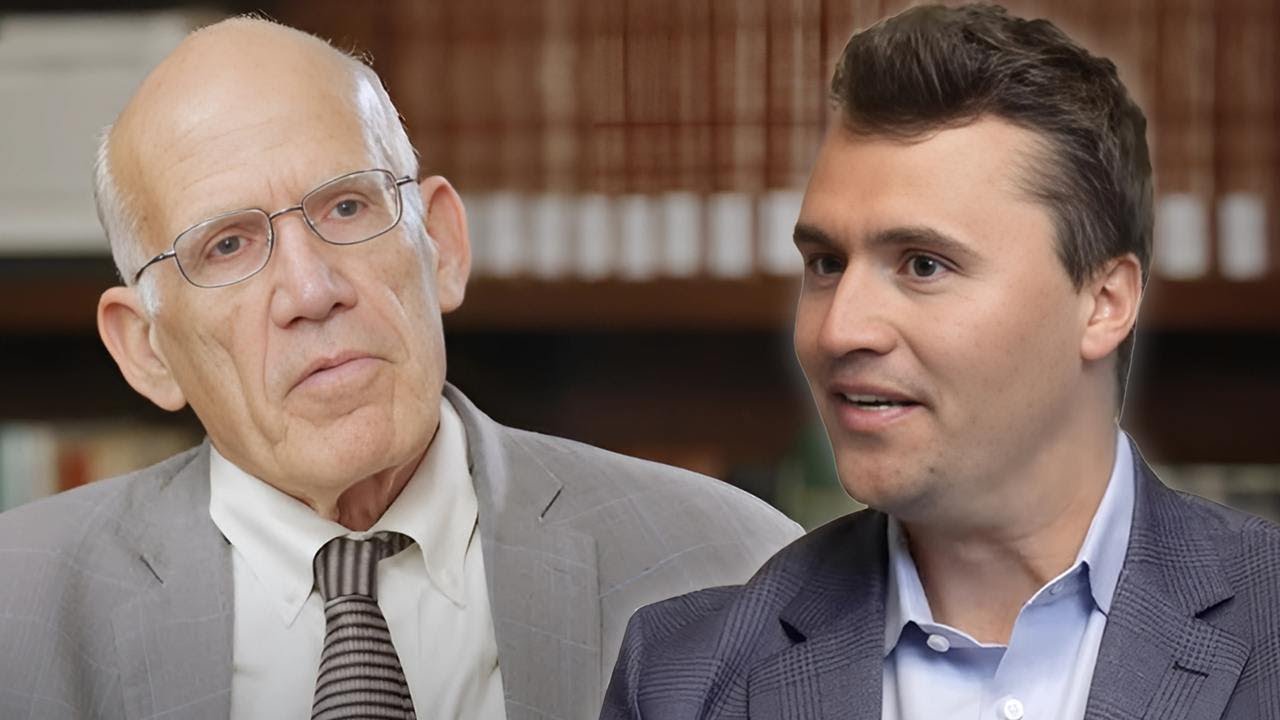
Victor Davis Hanson: The Democrat Party Doesn't Exist Anymore and Why America Needs Property Owners
Victor Davis Hanson joins Charlie Kirk to explain his controversial statement that the Democrat party no longer exists as a cohesive political force. The senior fellow at the Hoover Institution breaks down massive voter defections, declining birth rates in blue states, and the cultural shifts that transformed the party of the working class into an elite coastal phenomenon. Hanson connects ancient history to modern politics, arguing that a society of renters rather than property owners threatens American democracy itself. From the lessons of the Peloponnesian War to the dangers facing Ukraine, Hanson warns about existential threats that could end civilizations, just as they have throughout history.
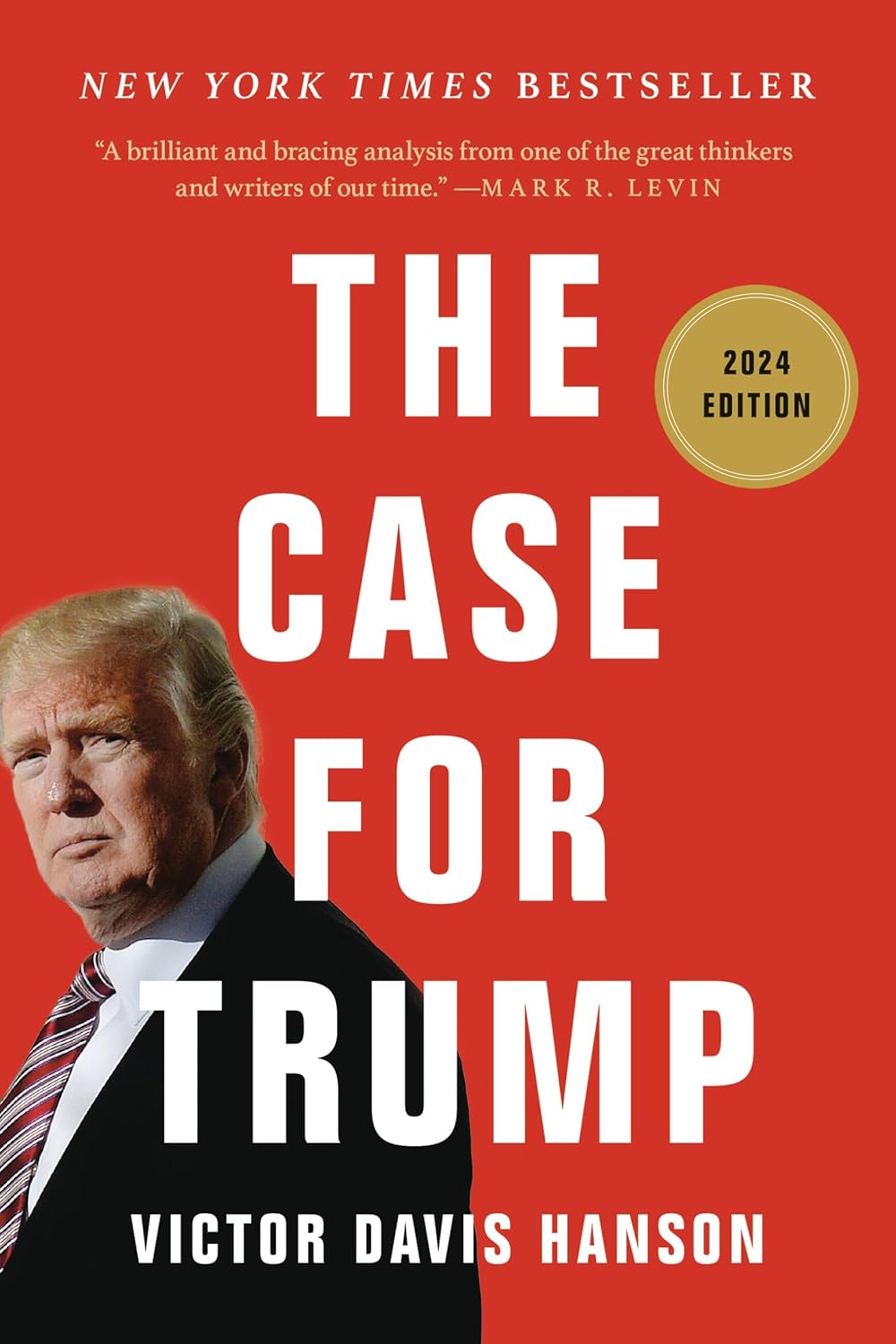
Victor Davis Hanson, senior fellow at the Hoover Institution and author of the updated paperback edition of The End of Everything: How Wars Descend into Annihilation, made waves with his declaration that the Democrat party no longer exists in any meaningful form. Speaking with Charlie Kirk, Hanson laid out the evidence supporting this claim, pointing to unprecedented shifts in voter registration and party affiliation.
For the first time in modern history, the Republican party has registered more voters in a defined period than the Democratic party. Simultaneously, massive defections from the Democratic party to independent affiliations have accelerated. The most striking change came in the voting patterns of minority voters. While the white vote remained relatively constant from 2016 through 2024, Donald Trump won the popular vote in his third campaign due to capturing 55% of Hispanic voters overall, with 23 to 25% of Hispanic males specifically, and 20 to 25% of black males. These demographic shifts represent a fundamental realignment of American politics.
Hanson noted that the Democratic party's approval ratings have fallen to approximately 35%, though he cautioned that in a binary election, a party can still win by simply positioning itself as the anti-Trump option rather than standing for specific principles or policies.
Why the Democratic Party Lost Its Way
Hanson identified several interconnected factors that led to the Democratic party's transformation and decline. The United States now has 50 million people who were not born in the country. When examining signature Democratic politicians like Ilhan Omar or others in the squad, Hanson observed that first and second generation immigrants were either not offered or not receptive to civic education, assimilation, and Americanization programs that previous generations experienced.
These new Americans arrived primarily from the former third world, and upon arrival, perceived that the left offered immediate benefits—free services, scholarships, student loans, DEI preferences, and affirmative action—while the right emphasized entrepreneurship and self-reliance. Hanson noted a split, with entrepreneurial immigrants working as electricians and plumbers increasingly voting Republican, while the elite first and second generation immigrants, particularly on matters concerning Israel and DEI, have had a powerful effect on shaping the Democratic party's direction.
The universities, according to Hanson, have moved beyond liberal bias into outright socialist bias, and these institutions have trained the elite of the Democratic party. Globalization favored bicoastal elites with global skills in media, law, high tech, and corporate boardrooms, while disadvantaging people in the interior engaged in natural resource extraction, farming, mining, timber, assembly, and muscular labor.
A vocabulary of contempt emerged—irredeemables, deplorables, clingers, dregs, chumps, and Biden's "garbage" comment—which became a kind of credo of the Democratic party. The professional classes believed they were smarter because they became wealthy through globalization, and felt they could concentrate on utopian agendas like transgenderism and the Green New Deal while losing touch with the old lunch bucket middle class that once formed the party's base.
Hanson contrasted this with the 1992 and 1996 Clinton convention agendas, when Democrats were paranoid about drifting too far, at least rhetorically, from the middle class. They advocated for closed borders, unions, tough policing, and even trying juveniles as adults in some cases.
Demographics and the Fertility Gap
Hanson pointed to fertility rates as another indicator of the Democratic party's structural problems. The top ten most fertile states, with rates ranging from 2.1 to 1.8 children per woman, are all red states. The bottom tier, with rates from 1.5 down to 1.3, are all blue states. Additionally, approximately 4 million people have relocated from blue states to red states in recent years.
There is a sense within the Democratic party, Hanson observed, of paranoia about their model of the blue state professional, especially women who may have one or no children and who want to concentrate, as Alexandria Ocasio-Cortez said, on things like global warming rather than child-raising and traditional families. This demographic reality influences the type of person who attends anti-ICE and radical demonstrations—disproportionately single women or professional women.
Adding all these factors together, Hanson concluded that the Democratic party has fundamentally changed and will need to experience a McGovern-like disaster before it awakens to its problems.
The Mamdani Phenomenon in New York City
Charlie Kirk pressed Hanson on an apparent contradiction: if the Democrat party is collapsing, how does one explain the likely victory of democratic socialist Mamdani in New York City's mayoral race? Mamdani wrote an op-ed stating that his platform centers on affordability and democratic socialism, quoting Martin Luther King: "Call it democracy. Call it democratic socialism. There must be a better distribution of wealth for all God's children in this country."
Hanson acknowledged that Mamdani will likely win, but explained that he'll do so on the basis of only 11 to 15% of the resident population voting. Mayoral elections don't generate the turnout that presidential elections do, and the vote will split three ways between Mamdani, Curtis Sliwa, Eric Adams, and Andrew Cuomo. The combined vote for non-Mamdani candidates will probably reach about 50%.
New York is structurally different from the rest of America, Hanson explained. About 30 to 40% of the population lives under rent control, and probably over a million people either work for city or state government in New York or for affiliated NGOs with government contracts. This creates a constituency naturally inclined toward government expansion.
Hanson noted that New York previously elected moderates or conservatives like Rudy Giuliani and Michael Bloomberg, so the shift to Mamdani requires explanation. He attributed it to the professional class he described earlier—especially single, urban, highly educated metrosexuals who feel that despite their superior morality, intellectual ability, education, and degrees, they're not receiving the advantages they believe they deserve. Mamdani's appeal combines this upper white professional class with the subsidized poor, but Hanson emphasized this coalition is not representative of America in general.
Property Ownership as the Antidote to Socialism
Charlie Kirk proposed that Mamdani-style politics would only spread if America becomes a nation of renters rather than owners. Private property ownership, he argued, is the greatest deterrent to Marxism. Hanson enthusiastically agreed, citing historical precedent.
Hanson wrote a book called The Other Greeks about how the origins of Western culture occurred around 700 BC when radical changes in land ownership, population increases, and the rise of a small but predominant agrarian class of ten-acre farmers created the conditions for democracy. Similarly, when the United States was founded, 90% of people were agrarian. Jefferson said that when people are piled up in cities and don't own property, consensual government won't work because it depends on autonomous, self-reliant persons to take on the responsibilities of self-governance.
The problem, Hanson noted, is that homeownership has stagnated around 60 to 62% across administrations and decades—about the same percentage as the labor participation rate. He attributed this partly to the rise of the welfare state creating laxity and dependency, but also to interest rates being too high and regulations too steep.
In California, the average small 1,800 square foot home costs a million dollars with 7% interest rates. To the degree people are buying or have houses, they're inheriting either the house, a second home, or the capital from their parents who came from a different generation when buying a home was much easier.
Hanson observed that Republicans have to address this issue, and it's taken the party some time to adjust to being a populist, nationalist, middle class party. Previous Republican leaders like Mitt Romney, John McCain, and the Bushes focused on lowering capital gains rates, privatizing social security, and deregulation. While there was logic to these positions, they ignored the reality that the middle class is the largest group in America, and you can win elections if you have free market solutions to the inability to buy homes.
The Psychology of Ownership Versus Renting
Kirk recounted a conversation with a hedge fund type who argued that ownership is a failed and old concept—inefficient compared to renting, which maximizes returns. Kirk asked Hanson what it would mean politically for the country if America becomes a society of renters, setting aside the economics.
Hanson replied that renting makes people dependent on a landlord. They don't know when they're going to have to leave. If the window breaks, they don't feel responsible for fixing it. They won't paint the interior. Renting doesn't require self-discipline, reliance, or independence.
When you own your home, nobody can take it away from you. You can fix it up, improve it, and pass it on to your children. This creates a larger idea that you fix things, take care of them, and serve as a custodian. The renter mentality, by contrast, assumes somebody else will take care of problems. Renters don't worry about taxes or interest rates. They only get mad at their landlord for increasing rent without understanding why.
Kirk asked when was the last time Hanson washed a rental car. Hanson admitted not usually—you return it dirty because someone else is going to take responsibility for it.
What Is an American?
Kirk asked Hanson to answer the fundamental question: What is an American?
Hanson provided three criteria. First, an American is somebody who accepts the general principles of the Constitution and consensual government. Second, it's somebody who empirically—not just by blind obedience or doctrine—believes that the United States is singular and better than the alternative. Third, and most importantly, because America is the only real successful multi-racial democracy in history, an American believes their superficial appearance, ethnic or racial background, and religion are incidental to who they are. What's essential is that they're an American, an identity that transcends race, religion, gender, and sexual orientation.
If America doesn't maintain this standard, Hanson warned, it will end up like other large, multi-racial, multi-ethnic democracies that don't work—like Brazil or India, where caste systems, racial tensions, and racial essentialism dominate.
Kirk noted that people like Mamdani, Ilhan Omar, and others do not share American values or worldview. Many American traditions are Anglo at their core, and the country needs to move beyond the idea that simply having paperwork organized makes someone an American. Full spiritual and emotional commitment—what the Greeks called thumos—must be bought into the nation.
Hanson agreed, noting that America can afford to be selective because it takes in more immigrants, legal and illegal, than all other countries combined. The Trump administration is starting to recognize that America can ask prospective immigrants if they're acquainted with the English language, the Constitution, and whether they genuinely want to be American.
The problem, Hanson explained, is the nature of contemporary immigration. Most immigrants now come from Asia, Africa, and Latin America. The moment a person crosses the border, the left greets them saying they're a victim who has legitimate grievances against the majority culture. They're offered subsidized loans, affirmative action, separate graduations, and separate dorms. They're taught to be angry at the country, and told this anger will be lucrative and advantageous. This stands in stark contrast to the melting pot, integration, and assimilation model that built America.
The End of Everything: Lessons from Civilizations That Vanished
Kirk gave Hanson the opportunity to discuss his book, The End of Everything: How Wars Descend into Annihilation, and asked specifically about the Peloponnesian War and its impact on Athenian democracy.
Hanson explained that he examined four societies in history—ancient Thebes, the Aztecs, Carthage, and Byzantine Constantinople—asking why they were utterly destroyed. Most wars do not lead to complete annihilation where the culture, language, and everything vanishes. These civilizations were destroyed because they had unrealistic views of their robustness, they were in decline but didn't recognize it, they didn't recognize that people genuinely wanted to destroy them, and they didn't realize their enemies had the ability to destroy them.
This pattern happens throughout history and remains relevant today because humanity keeps dismissing threats from biological weapons, nerve gas, artificial intelligence, and atomic weapons. It doesn't mean we've reached the end of history. This can happen again if nations are naive.
In the epilogue to his book, Hanson listed all the existential threats made by North Korea, China, Turkey, and Russia to destroy not just enemy armies but entire civilizations. He wanted to give readers a description of how total destruction happened in the past and whether it could happen in the future. His conclusion: it could happen again somewhere, especially as evidenced by the situation in Ukraine.
Ukraine, Nuclear War, and Trump's Humanitarian Concerns
Hanson noted that when Donald Trump told Zelenskyy "you're on the bridge of nuclear war," he was saying—fair or not—that when you attack Russia without nuclear weapons while they possess them, and they may be humiliated, you must be careful what happens. Trump wasn't saying Ukraine shouldn't defend itself. He was trying to make them aware that this scenario never occurred during the Cold War.
In Cold War proxy wars, the two rivals never engaged on the doorstep of one nuclear power with the other threatening them. When Cuba was armed by the Soviet Union and pointed missiles at America, the United States said no—the Soviets had broken the rules. The West must be careful now. While Hanson resents what Russia has done and supports Ukraine, he acknowledges the West is using Ukraine as a proxy to hurt Russia.
What was unique about Trump, Hanson observed, is that he's the only person talking about the million to million and a half wounded, dead, and missing. No one else discusses these casualties—only Trump does, treating it as a humanitarian catastrophe comparable to Stalingrad. Trump has more of a moral compass than almost any president in the last 100 years, Hanson concluded. He cares about people who aren't even his own citizens and is willing to try to solve wars that don't have an immediate impact on the United States.