Wilfred Reilly Debunks The Myth That American Slavery Was History's Worst And Most Unique
Enjoying this? Share it with someone who needs to see it.
Up Next
Michael Knowles Reveals How Chester Arthur Transformed From Political Boss to Reform President
5:41
Milton Friedman's Revolutionary Journey: How One Economist Changed the World Through Freedom and Free Markets
1:26:44
Stephen A. Smith Sits Down With Candace Owens: Black Conservatives, Harvey Weinstein, and Why Democrats Lost
1:01:59
Wilfred Reilly Debunks The Myth That American Slavery Was History's Worst And Most Unique
Political science professor Wilfred Reilly dismantles the widely taught narrative that American slavery was uniquely evil and unprecedented in human history. Drawing from historical evidence, Reilly reveals that slavery existed across nearly every major civilization, from the Aztecs and Romans to the Arab world, and that generational slavery, chattel slavery, and the slave trade were common throughout history. While acknowledging the horrors of American slavery, Reilly argues that today's educational focus on America as uniquely oppressive ignores historical context, overlooks how the British and Americans led abolition efforts, and has worsened rather than improved race relations according to Gallup polling data.
Americans today are taught a particular story about slavery: that the United States was the worst offender in history, that American slavery was fundamentally different from all other forms of slavery, and that the United States invented rather than inherited this institution. According to the dominant educational narrative, American slavery was uniquely evil because slaves were reduced to chattel property in a way that supposedly never happened elsewhere in human history.
Wilfred Reilly, a political science professor and author of "Lies My Liberal Teacher Told Me," challenges this narrative with historical evidence. The claim that only American slavery treated people as property is, according to Reilly, complete nonsense. Generational slavery—where children of slaves were automatically enslaved—was extraordinarily common throughout history. Slavery around the world was simply slavery, with similar brutalities and dehumanization regardless of location.
The 1619 Project and Educational Distortion
Partly due to the New York Times "1619 Project," students are now taught that "America's slavery was unlike anything that had existed before." This educational approach positions America as the worst society in history, one that committed evils no other civilization ever perpetrated. Reilly, who identifies as black, Irish, and Native American according to family history, acknowledges that these are three peoples who have experienced considerable historical suffering. He sees nothing wrong with acknowledging historical mistakes.
However, Reilly finds it extremely odd to focus exclusively on the negatives of American society while exaggerating those negatives. This selective historical focus creates a distorted understanding of both American history and world history.
The Numbers Tell a Different Story
Americans are commonly taught that slavers caught people in Africa and shipped them to the United States, but few learn that most slaves were not actually shipped to America. Between 10.7 million and 12 million slaves from Africa went to the New World during the Atlantic slave trade. The United States received under 400,000 of them—less than four percent of the total.
So why the extreme focus on slavery in the United States? Reilly offers one explanation: a lot of black people survived in America. While slavery was harsh in the United States, it was considerably less harsh than the conditions slaves faced clearing the Brazilian jungle, where mortality rates were far higher.
The Modern Implications of Historical Narrative
A common argument defends emphasizing white abusiveness by pointing to the disadvantages faced by modern American blacks, who possess less capital—both financial and educational—than other groups. The reasoning suggests that highlighting historical abuse might somehow address these disparities.
Reilly rejects this logic entirely. Pointing out how abusive white people were historically will not provide black Americans with more capital. Most problems in the modern black community, he argues, have nothing to do with historical ethnic conflict that ended 160 years ago.
The Impact of the Great Society Programs
Instead, Reilly traces most contemporary problems to the Great Society welfare programs that began in the 1960s. Crime in the black community increased approximately 800% between 1963 and 1993. Racism did not increase during this period—in fact, it decreased. What changed were the impacts of Great Society welfare programs that, despite good intentions, created perverse incentives and damaged community structures.
Slavery Was Universal Throughout History
Reilly argues for teaching the complete truth: that almost every society throughout history practiced slavery. The Aztecs, Persians, Egyptians, Greeks, Romans, Vikings, and most extensively, the Arab world all engaged in widespread slavery.
The Arabs were probably history's premier slave traders. They sometimes captured poor whites from Slavic countries—so many blonde slaves were taken from this region that the word "slave" itself derives from "Slav." These Muslim traders, many of whom were dark-skinned or even black, gave the world the very term for enslaved people.
Sexual slavery was very much part of the global slave trade. When a group was defeated in war, the men would typically be killed or sold as farmhands, while women were often sold as harem girls or prostitutes. More than a million Europeans were enslaved by Muslim traders.
The Arab Slave Trade's Massive Scale
The Arabs targeting Africa removed approximately 17 million people—significantly more than the entire Atlantic slave trade. This inconvenient historical fact rarely appears in American textbooks that focus intensely on the transatlantic slave trade while ignoring the even larger Arab trade in African slaves.
Britain and America Led Abolition Efforts
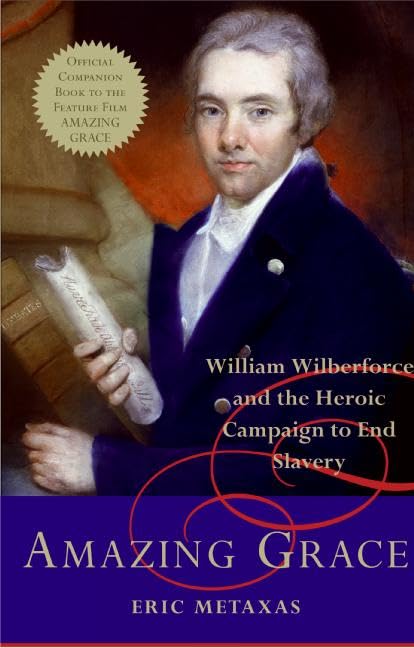
The British and then the Americans were among the rare peoples who moved to abolish slavery for moral reasons. The British Navy, in a story almost no one knows today, sank 1,600 slave ships and freed 150,000 enslaved people. The British had simply had enough of the practice and took aggressive action to end it.
Meanwhile, Saudi Arabia only abolished the slave trade relatively recently. The Global Slavery Index estimates that even now, although slavery is officially illegal everywhere, there are more than 700,000 slaves in Saudi Arabia. In regions where western influence was minimal or absent, slavery persisted for much longer—and in some cases continues today.
The Consequences of Selective History
American slavery was undeniably horrible, but it was not unique in its horrors. American culture would be healthier if students learned about the universal nature of slavery throughout human history. Paradoxically, schools dwelling on America's evils has not helped Americans overcome them.
Gallup polls demonstrate that after schools started focusing intensively on oppression, race relations actually got worse rather than better. The idea of generational slavery and slave trading were not unique to America. Teaching them as if they were creates resentment, division, and a distorted historical understanding.
The Case for Incremental Honesty
Reilly concludes with an important principle: you don't need radicalism to critique the worst excesses of an existing system. All you need is incrementalism and honesty. Honest assessment of history, including both America's failings and its role in ending slavery, provides a more accurate and ultimately more useful understanding than selective narratives that exaggerate American uniqueness in evil while ignoring similar or worse practices elsewhere.
The goal should be teaching complete history—acknowledging American slavery's horrors while placing them in proper historical context alongside the slavery practiced by virtually every other civilization, and recognizing America's role in the abolition movement that sought to end this universal human evil.












Comments
Be the first to comment on this video.