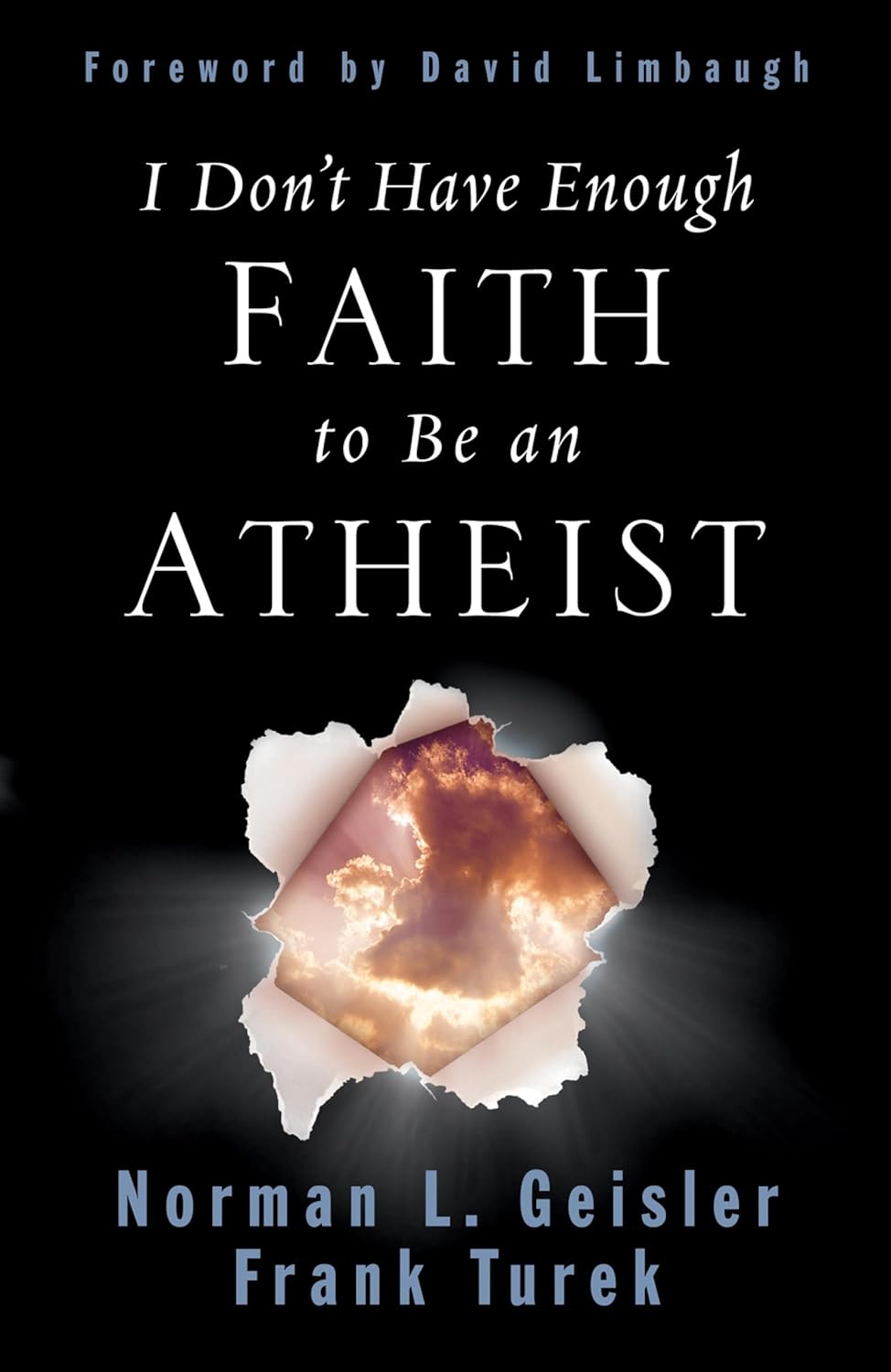
If you really know the gospel, there's no area of your life the gospel doesn't touch. If your politics are separate from what your understanding of the gospel is, then you don't really probably understand the gospel. If your ethics are separated from your biblical worldview, you probably don't understand your biblical worldview. How can you separate your Christianity from your views on abortion? How can you separate your Christianity from your views on LGBTQ and social justice? >> The Bible has at least a principle that can be applied and speak to any sort of cultural topic that comes across our social media news feeds or even into our real actual lives. that Charlie was so misrepresented and and I wrote if he wasn't primarily known for his Christianity, it's because voices like this one demonized and misrepresented him while convincing the church to separate their faith from their ethics and from their politics. Hey everyone, welcome to the I Don't Have Enough Faith to be an atheist program. I'm Alisa Childers. I'm here with Natasha Crane and we're filling in for Frank Turk today because frankly he's a little busy. Many of you have just heard about Frank and his ministry cross-examined this week because of his many media appearances, his white hot gospel fire speech at the Charlie Kirk Memorial. and uh he asked Natasha and I to fill in for him this week and we have a lot of thoughts. So today we're going to be talking about all the events of the past week and then ultimately we're going to drill down into what we see as some false narratives taking shape out in social media land and they have to do with politics and religion. So, as could have been predicted, there are media outlets out there that are now warning everyone to beware of the marriage of church and state and about the dangers of Christian nationalism. We're going to talk about all of that in a moment, but first, I want to get personal. I want to talk about all that we're seeing, all that the Lord is doing following the horrific martyrdom of Charlie Kirk. So I don't think it's an exaggeration to say that it has set off a chain reaction all over the world. It has changed us. It's changed me. And I want to give some personal reflections. But first, Natasha, I want to get your thoughts on how you're processing all of this. What are your initial reflections? Has anything actually changed for you as a result of this tragic event? Yeah, it's been a really difficult couple of weeks and it's made me like everybody else reflect on so many things. But I think what has really come to the forefront for me when I examine myself and my own reaction to this is realizing how much I personally in my ministry and writing and speaking, I have idolized precision. >> Yes. And I have idolized being able to make sure that every single thing that I write down on social media in in my articles, whatever it is, that every single thing I say is just as perfectly worded as it can be. And I have been really reluctant to do things anything where I would do the same kind of ministry but in a different format where I can't be so precise. So people always ask me, "Hey, why don't you do YouTube?" Well, I don't want to do YouTube because that's too risky to me. That is too much speaking off the cuff. I'd have to do too many edits if I were going to get that right. And I was just really convicted when this happened that people are left and right are taking what Charlie said out of context. They're giving him all kinds of labels. They're calling him names, things that aren't true when you actually look at the context of what he said. But he was never afraid of that. He got out there and his goal wasn't to not be precise, but he was willing to get out there and share truth and engage with people in these real time conversations, not afraid that every single word was going to be in some way perfect. He prioritized getting the truth out over his own personal safety. >> And I was just so convicted of that because so much of the time I idolized that personal safety of precision. And I actually shared about this on social media. I wrote kind of a an in-depth blog post on Facebook and X about it. And Alisa, I was shocked at how much that same thought resonated with people. It it sort of went viral on both of those platforms where hundreds of people were commenting and saying the same thing that they were paralyzed by wanting to make sure that when they shared truth, it was just perfect. And so, I think this is something that a lot of us do struggle with. And I hope that Charlie's life will encourage us to all realize that the impact of our words does not depend on us. It doesn't. It depends on God. And we need to get out there. Life is short. We need to do what God has called us to. Leave the results to him. >> I love it. And I I've told you this many times because I've sat on Q&A panels with you. We do the Unshaken Faith podcast together. And unprepared and unfiltered. Natasha is my favorite Natasha. So, I'm really excited to see you get out there with a little less maybe precision. But I man I have been overwhelmed by God's mercy on our country. I can't even believe what I am seeing all across the country. And we're going to talk more about this in the final segment. The revival, the really true revival that I believe that we're seeing. People that you thought were beyond help. People that you never thought God could reach are sharing on social media that they're curious about Jesus. That they're going to church for the first time. That they have given their lives to Christ. they've trusted in Jesus. I had a girl reach out to me from my high school that I went to high school with who just became a Christian last week and I was texting with her, helping her find a good study Bible. And man, I am so just grateful. That's my first reflection. Just grateful for what God is doing in our country. But more personally, like you, Natasha, I'm I'm so grateful for God's mercy on me. So almost immediately after Charlie's assassination, the Lord just started convicting me of things in my own heart. Things like things I didn't even know were in there. Like I thought I was kind of bold. I thought I had courage. And to my shame, the Lord was showing me the fear, the pride, the self-p protection that was in my heart. And just that ugliness that was in there. It's such a mercy that he and I feel like he's doing this. He's doing this with so many people just convicting us to repent and that's that's the mark of a real revival is real repentance. So he gave me I don't deserve it but he gave me that gift of repentance and grace and I wanted to share a prayer that I was praying uh just those first few days uh after the assassination. I just started praying, may God shine the full disinfecting power of his light on every dark and unsanctified corner of my heart and use this tragedy to purge every last drop of fear and cowardice that still resides there. And I just been praying that and I posted that on social as well and invited people to pray that along with me because it's got to start with us saying, "Lord, shine your light. Show me what I need to repent for. Where have I not been courageous?" Because I think the thing so many of us realized in the past several days is whatever we thought about Charlie Kirk before, whether we were very familiar with what he did or we just knew the narrative of what he did, things are different. And I I think lots of people have expressed a sentiment similar to this one. Charlie had more courage than any of the rest of us do in, you know, on our best day. Like 10 times the courage any of us have. So I think he's given us an example to follow in that. And ultimately too, I think a lot of people were surprised to see how Jesus first he was. He was ultimately and primarily an evangelist. And it's just exciting to see a lot of people wake up to that. And the second part of my reflection here is that, you know, we we all got a front row seat to the endgame of all the, for lack of a better word, wokeness that we've all been fighting against for the past few few years. You know, I've seen well-meaning people on social media saying things like, "Hey, we just need to learn to talk to each other. We just need to all come to the same table, put our differences aside." But as well meaning as that is, that's actually really not the problem in our culture right now. I think the biggest problem is that half our country has been totally indoctrinated by the Marxist idea of oppressed versus oppressor. And what they don't realize is the solution to that ideology is not reconciliation. It's not unity. It's not coming to the table to talk. It's actually a theory of conflict. And according to that ideology, the only resolution is revolution. It's violence. And I think that is ultimately what we're saying. This is good versus evil. It's tyranny versus freedom. And because of the cowardice of a lot of our Christian leaders, sadly, people have bought into this in the name of some sort of misguided empathy. And ultimately what it brings about is violence. And here's a an example I saw this week from a well-meaning Christian, but basically saying that when our words overstep, when we uh, you know, insist on our right to say our opinion, we're actually doing violence. And we've been convinced as a culture that words are violence. But think about the end result of that. If words are violence, then violence becomes a justifiable response to words. And so even well-meaning posts like that are perpetuating this oppressed versus oppressor narrative. And it's really a product of the dripping poison of that worldview. And I think that's what we're seeing. This is a clash of good versus evil. And Natasha, I'd love your thoughts on this. Uh, I don't know if you saw Elon Musk was asked, you know, why was Charlie killed? And he put it so succinctly and it was kind of sad to me that Elon Musk was able, a non-believer was able to recognize the reality even better than a lot of pastors and a lot of Christians. He said Charlie was killed for showing people the light and that and he was killed by the dark. Did you see that? >> Yeah, I I did see that. And it's interesting because, you know, it makes you wonder, well, what what is Le Elon actually thinking about in terms of the light and the darkness, right? Because he's he's not a Christian. Um, and so he's he's seeing that there is light and there is darkness, but we have to define what that light is so that we can actually draw people to the Lord. >> Absolutely. Well, when we come back, we're going to dig down into politics and religion. We're going to talk about our Unshaken Faith conference and podcast we want to invite you all to be a part of. We'll be right back. We are very excited to let you know about a couple of things coming up with our very own Frank Turk. We have a couple more of our Unshaken Conference dates. I want to tell you where those dates are going to be and when and how to register and then I want Natasha I want you to tell us all about what we're going to be talking about. I am really fired up. I am pumped up for our unshaken conferences. We've done several dates already over the past of the last year or so and it has been so wonderful to come together and Frank Turk, Natasha and I to talk about ultimately our goal was to go to churches and talk about some of the topics that a lot of churches are afraid to talk about. Things like the radical queer theory that's coming for our kids. Talking about things like deconstruction, critical theory, critical social justice, abortion. We're talking about all of it. And we're coming on October 25th to San Clemente, California. We're going to be at Calvary Chapel South OC. And also on November 8th, we're coming to Dallas. We're going to be at Stonebrier Community Church. And we would absolutely love for all of you to join us for a day of being with like-minded Christians who are fired up about this stuff, who want to be equipped about how to talk to their pastors about this stuff, talk with their friends, their uh social circle, their small groups, their children. We really want to equip you to be able to talk about these topics from a place that's bold and courageous, but loving and relatable. So go to unshakenconference.com. You can register for both of those events today at unshakenconference.com. Natasha, tell us about the theme which this year is exposing the darkness. Yeah. So, exposing the darkness and that comes from Ephesians 5:11, take no part in the unfruitful works of darkness, but instead expose them. And so, that is really what we want to do with this conference. And you know, it's interesting because it was about four years ago now that Alisa and I first talked about developing this conference because we were saying, you know, there are a lot of apologetics conferences that kind of come and go out there, but it's hard for to get people really interested in direct apologetics. A lot of times they don't feel the need for it unfortunately, right? But we said we really need to tackle some of these cultural issues that are out there and bring the apologetics into it. And that's why we started this unshaken conference. And so we just want to really equip everyone with these cultural issues like Alisa said that churches don't want to talk about. And you know it's been an interesting journey to find the churches actually who are willing to host us. This has been really eyeopening to me and I mentioned this because it ties into our topic today. We have done the conference now for three years. We've done 10 dates. We have two more dates this year. So we've done quite a few of these. But it's really exceedingly hard to find a church that has enough seating to do something like this that's willing to host a conference that tackles these topics. We're talking about the sanctity of life and agenda and sexuality and justice. We're we're talking about all the things that Alisa mentioned and when people see this this list of topics, they have given us all kinds of responses like well our church has some different views. We have people who have different views on those things. They're afraid to lose people. They're afraid that people will walk out of their church because we're coming to address these things from a biblical perspective. I always want to say, you know, if you are afraid because people in your church have different views on these things, maybe that's the problem. Maybe the problem is that there are different views in your church and one of those views does not line up with what the Bible teaches. It's it's been really, like I said, it's been eye openening and in that process for me because I have been shocked at how many churches will not host us when they see these basic topics about persevering assault and light in the public square that their members might find controversial. So, we are so grateful for the churches that have hosted us and for the two churches that we're going to be at this fall, Calvary Chapel, South OC, and Stonebrier Community Church. We say thank you. Thank you for being bold enough to bring us in to talk about these issues issues from a biblical perspective, not shying away because it's quote unquote controversial. >> Yeah, I've been very thankful as well for all the churches that there were some, you know, many churches didn't even bat an eye. Yes, absolutely. We need to talk about this. Bring it. And you know, I got to say, and I got to give a shout out to the Calvary Chapels that Calvary Chapel is kind of my roots, but a lot of the Calvary Chapels were really open and welcoming like, "Yes, yes, come." That's right. and uh and many and others as well. And so we are very grateful. And you know, Natasha, I think part of the problem that we ran into when we were trying to get churches to host the Unshaken Conference is the endgame of what we're seeing today. You have a lot of these sort of elite evangelical voices that have tried to convince us to not get political. And this has been a consistent theme since really before 2020, but that's when it really began to ramp up. We were told in the name of, you know, gospel fidelity that we shouldn't talk about things like politics that, and here's the thing that I began to see, that my eyes began to be really open to is it was such a trick of the of our enemy, right? of the the master deceiver uh our enemy of our soul who is a really master manipulator is that there would be a biblical topic like say take the the topic of abortion abortion is not a political topic it's a biblical topic but because the culture made it political a lot of churches stopped talking about it and now I'm starting to see pastors who would say well we don't really want to talk about the LGBTQ issue because that's political we don't get political I was actually invited to speak to a church and the pastor wanted to have a meeting beforehand and he said, "I want to make sure you don't get political." And so I asked him, "What does that mean to you?" Because I'm not going to get up and start campaigning for a candidate if that's what you're worried about. And he basically explained to me that he did not want me to talk about pronouns. He didn't want me to talk about transgender issues. And in his mind, that was a political topic. And so, Natasha, this is your bread and butter. You've written a phenomenal book that absolutely every Christian needs to read, and it's all about this topic. It's called When Culture Hates You. So, give us uh maybe just a little bit of an overview of the biblical view of how Christians should engage in politics. And then I want to drill down into some of the false narrative that we're seeing even under the big evangelical tent. >> Yeah. Yeah. Well, I think the most important thing that we can do as Christians right now, especially with all of the very heavy conversations that are going on on social media, is to stop and define politics. Because if you have a misunderstanding of what politics is fundamentally, then you're going to be afraid of being involved in politics. So politics is just the way that people living in communities make decisions about how they're going to live together. It's really that simple. When you have communities, whether it's a local community, you're talking about the county level, the state level, the federal government level, at whatever level you're talking about, it's how do you make decisions about how that community will live together. And ultimately, everyone is advocating for what they think is going to be the best for human flourishing, for the common good. The problem is is that people have different ideas about the common good. What is actually good? And people are going to define that differently based on their worldview. So, as Christians, we need to be really clear on this and what God's definition of good is based on what he's revealed in scripture. Because if we're not, we're going to get confused because the culture will say, "Well, this is good over here. This is what is good." Because otherwise, you're harming people. We have to get our definitions of good and bad and right and wrong, harmful, helpful. We have to get all those definitions from God himself. And the tricky thing is is that when we're advocating for what is actually truly good according to God's standards, that is going to be against what people want for themselves. A lot of times this, I think, is the trickiest things for Christians to get our arms around because if people say, "Hey, I just want you to leave me alone. I want to be able to do my own thing. You know, I want to be able to transition genders, for example. This is what I want, so leave me alone." We have to be able to understand as Christians that if we're advocating for the common good and if that's not what's actually good for people then we still have to advocate for that according to what the Bible says and it comes back to Romans 13 which is the longest sort of exposition on this in the New Testament. And the bottom line is that says that we are that the purpose of government is to promote what is good and restrain what is evil. So, as Christians, let's be really clear on what is good and what is evil according to God's standards. This is the purpose of government and let's advocate accordingly. A lot more could be said about that, but I think that gives a kind of a starting point for this conversation of okay, well, if something's political, it just means that this involves us coming together in the public square to say this is what we want for our society as Christians, as citizens of a country where we're based on a constitutional republic. We want to advocate for what's actually right in God's eyes. And that's what it comes down to. We shouldn't be afraid based on all these labels that they throw out at us like we'll talk about with Christian nationalism for example. Right? I'm seeing a lot of conversations on X that really reflect the lack of biblical disciplehip in the area of religion and politics and how our Christianity plays itself out in the public square as we advocate because you know there's just some some broader thoughts that I've been having is first of all who wouldn't want I mean ask yourself this question if you're listening to us who wouldn't want your politicians that lead your nation to preach the gospel on TV Why would you not want them to acknowledge Jesus Christ as Lord and pray for the nation? If you don't want that, maybe, as Ali Bestucky uh pointed out on X this morning, maybe you've been brainwashed because I want that. Why wouldn't you want to advocate for policies that protect the unborn? Why wouldn't you want to advocate for policies that bring about the ultimate justice? You know, I I saw this sort of conversation happening about Erica Kirk when she so beautifully forgave uh her husband's killer and people on X are saying, well, you know, but he still has to be punished or maybe you you know, we don't want to forgive him because then he can't be punished. And that just betrays a lack of biblical disciplehip in this area for most Christians because there's a difference between the individual Christians being willing to forgive a great evil, but then the respon the biblical responsibility of the state to punish that evil with the sword as the Bible says. But I want to talk about Christian nationalism. So fast rewind to 2017. This is back when I was really trying to not be political. And I wrote an article that had zero politics in it. I mean, nothing political. It's 100% theological. And for some reason, this article went viral on progressive Twitter. And immediately, I just saw meme after meme after meme about how I was a white Christian nationalist. It was like Trump memes, all this stuff. And I was thinking, what is going on? I was so careful to not get political. And that's when I learned that it does not matter how a-political you try to be as a Christian. You are going to be called a Christian nationalist if you are a biblical Christian who is trying to live your Christian faith out in the public square. I mean, that's just a just get used to it. Remember when we were little kids and you'd say, "Sticks and stones may break my bones, but words will never hurt me." Right? We got to get back to that because we have to get comfortable with being called names because that is what every Christian is facing now. If you're vocal at all about LGBTQ issues, if you're vocal about critical theory and social justice, you're going to be called a Christian nationalist. Um, I I was sort of giggling to myself because I I don't know if you saw this, Natasha, but Christianity today, which typically has been the one that kind of leans left, punches right, is very concerned about Christian nationalism, they were called a Christian nationalist organization by some secular outlet today. And it the irony of that is kind of funny to me. But when we come back, we're going to talk more about Christian nationalism because Natasha has a great chapter on that in her book, When Culture Hates You. So, we'll be right back and we'll continue the conversation. [Music] If you happen to see the memorial to Charlie Kirk, I hope that you're encouraged by how many people so clearly and so boldly preached the gospel, including our own Frank Turk, to the whole world. I was so encouraged to see that I actually got to be there in person and as an attender and I just can tell you that it was one of the sweetest events of my life. Everybody I mean hundreds of thousands of people gathering around the arena. Everybody was polite and courteous. There was this sense of deep joy in the arena. But as we're seeing, there are a lot of media outlets that are trying to paint Charlie Kirk's memorial as a dangerous display of Christian nationalism. So, here's a couple of uh outlets that I saw. This is from, I believe, the New York Times said, "At Kirk's service, an extraordinary fusion of government and Christianity." And then the subtitle is the memorial reflected the degree to which conservative Christianity had melded with Republican politics in the Trump era. That was the takeaway from the New York Times. Here's Jamar Tisby who wrote the book The Color of Compromise. He said, "Now that everyone has seen the blatant white Christian nationalism on display at the Kirk Memorial political rally, here are some resources to help you learn more and resist more effectively." And then he promotes his book, The Color of Compromise. So, according to people like the New York Times and self-professed Christians like Jamar Tisby, that was a political rally and we need to resist that. That's Christian nationalism. That's white Christian nationalism. Now, Natasha, you have an artic uh sorry, a chapter in your book about this. And I'd like to get your thoughts when you know you've been called a Christian nationalist. I've been called a Christian national. We're all called Christian nationalists. Now what is going on with that label Christian nationalism? Well, it's kind of like what we were talking about with the politics and defining the word. No one is working from the same definition of Christian nationalism. So, it just gets thrown around, especially by the mainstream media in this way that makes everyone think that this is this really dangerous, awful thing, but no one's taking the time to stop and define it. And there might be some cases of it that would be problematic uh from a biblical or a civic perspective. And then most of the time it's not. So I actually dug into this when I was doing the research for my book and I looked at hundreds of pieces of content from mainstream media videos, written content, everything to understand when they use the term Christian nationalism, they're not going to be taking the time to carefully define it, of course, but what do they actually mean as you can infer from the examples that they give. So that was my project. And when I got into that, what I found was that in the vast vast majority of cases, I mean at least 90% of the cases, all it meant when they were talking about a dangerous Christian nationalism is that there were Christians who were advocating for public policy according to their biblical values. That's what it meant. So you would see these articles, for example, where it was talking about a dangerous Christian nationalism coming to all 50 states. And if you look at the examples that they gave, you could find that Christians were advocating for what they called anti-trans laws, which of course from a Christian perspective, we are advocating for the good of trans people. So that is not an anti-trans law. But just the fact that we were advocating according to what they saw as biblical values was considered to be dangerous, anti-democratic, and theocratic. And this is just and it's so unfortunate that so many Christians don't have a background in what the Bible teaches about about the purpose of government and what we should be advocating for. And a lot of Christians don't have a background even in how our government functions. And so we come to believe these labels that the mainstream media puts out there. When we advocate for our views within a constitutional republic, we have just as much right to do that as anybody else. There's nothing dangerous about it. There's nothing anti-democratic. We're not going around our given form of government to try to sneak our ways in the back door. Like this is really dangerous and anti-democratic. We're not doing that. We are actually advocating exactly as is intended within our form of government. And a theocracy, for the record, means that a government is formally recognizing a deity. most most of the time when Christians are advocating for their values, they're not suggesting that we actually establish a state church. Now, that is a conversation that is happening in some places. That's a different conversation though, and this is what's fascinating to me because you would think that that is what the mainstream media would be concerned about. Hey, look over here. Look in this corner. There are actually Christians who want to establish a new state church. You would think that's what they're talking about, but they're not. They're actually just talking about Christians advocating for policies according to our biblical values and contrary to the popular moral consensus. That's what it is. So they get very nervous when they see that there is this quote unquote mixing of what they see politics and religion at something like the memorial. Unfortunately, a lot of Christians are being shamed by it. And and I see that even online when I post about these things and I posted an excerpt from my chapter on that and there were people commenting and and they were saying, "Yeah, but isn't it kind of concerning to see this mix? The mainstream media does not care about whether you're putting the state before your spiritual health. They don't care. They just don't want you to advocate for biblical values." In some research that was released a few years ago about the political and religious views of progressive Christians versus conservative Christians, one of the results of that study showed that for progressive Christians, they begin with their politics. That's kind of their foundational worldview and then their theology flows downstream from their politics. Whereas on the other hand, for the conservative Christians, they started with their biblical worldview. In other words, their theology is what informed their politics. And I think what's so hard for many people out there to understand is that for Bible believing Christians, our politics is is downstream and an outflow of our theology. And so that is at this moment in time going to line up more with the Republican party. That doesn't mean the Republican party is perfect. It doesn't mean that we don't de have in-house debates about what we should or shouldn't do. It doesn't mean everybody agrees with everything Trump says. But there is this kind of general sense that our biblical worldview is what informs us to advocate to protect our young people from the surgeries and the medications that will scar their bodies for life. It's what uh drives us to defend the unborn and seek to end abortion in our lifetime. And it's just it's it's also I think kind of hypocritical because there is nobody more political than the progressive quote unquote church uh progressive quote unquote Christianity because it's not Christianity as Frank has many times pointed out. It's not progressive, it's regressive. But that is the most political type of quote unquote Christianity there is. I mean, we have Democratic politicians campaigning in progressive and left-leaning churches, and yet that's the group that tends to lecture the other side. You know, don't you guys shouldn't get political. Uh just this week, Phil Viser of the Holy Post podcast on Holy Po re reposted Holy Post Media a quote that said this, "Christians don't put our hope in defeating our political enemies here and now. Our hope is in the resurrection of the dead and and life of the world to come, which frees us to reject the world's weapons and tools of power and choose the way of Jesus. Instead, there's instead there's like this assumption that if Christians are advocating for certain pal policies, they're just trying to seize power. I'll never for the life of me understand why they feel that way. Now, I'm sure there's bad actors on both sides. There are people who are always going to be attracted to whoever has the power. But seeking to advocate for real justice to protect people even to protect people from the uh things that are coming in across the border. That is not just a seize of power. That's not just reaching to try to be the one in power. That's because we actually want to advocate for real biblical policies. Natasha, you've got a great section in your book about that talking about power. um help us work that out. Like what is why are they saying that and is that the reality? Well, this is another one of those words where, you know, it comes back to the definition. They keep using the word power in a negative sense to convince us all that if someone's seeking power, that's inherently a bad thing. But that's sort of ridiculous because power can be used really well or it can be used really poorly. There's nothing inherently bad about power. So just think to yourself, if you could have the power to do good for our country, God's good. If you had the power to do that, would you want that power? Yes, of course we would. Right? Like we want the power to do what's right. That's what government's about. Government means we're putting people in power with the ability to execute what is good and to restrain what is evil. And it takes power to do that. And in the book I talk about, you know, use what I call the slavery test to kind of look through all these types of obje objections that you hear a lot of times from the left. And and it goes something like this. You know, if if I said instead, hey, we shouldn't have worked to end slavery because we shouldn't have sought the power to do so. Does that line up in your mind? Does that objection line up? And of course it doesn't. we would all look back and say, "Yes, yes, it was the right thing to do to end slavery, to advocate against this evil institution. It was the right thing to do because it was objectively evil." And we needed the people in power with the authority and the ability to actually make that happen in society. We needed those people to do that. And so, it's just it's one of those things that people keep repeating and it's meaningless and it's always coming from that kind of progressive left who's saying, "Hey, you know, it's this false dichotomy, right? It's like either you're going to try to get power in the world or you're going to follow Jesus. No, you follow Jesus and Jesus is of primary importance. We're not saying anything other than that. But given that Jesus is of primary importance, we want to live our lives and our societies where we are looking out for the good of our neighbor. And part of loving our neighbor is to advocate for what is right. And sometimes that comes about through political power. And I just wanted to give a couple of quick statistics too, Alisa, from what you had said about kind of like this double standard that you see out there. I mean, for the record though, according to the research of American adults who identify as historically black Protestants, 80% lean Democrat. Of American adults who identify as Buddhist, 69% are Orlean Democrat. Of American adults who identify as Jewish, 64% are Orlean Democrat. So, we could keep going through these, but researchers found that more than half of every single religious group leans Democrat except two. One is evangelical Protestants. Only 56% lean Republican. And then Mormons, 70% lean Republican. Isn't that so interesting? But we never hear anyone else called out for bringing their faith into their political views. We don't hear anyone certainly on the left saying, "Hey, historically black Protestant church, 80% of you are lining up on this side over here. We need more of you to kind of move over to the right." We don't see that, right? We don't see mainstream media saying, "Man, this is really crazy like the mixing of these religious beliefs with the left. We need to do something about it." No, we don't see that. It's because that's not what it's really about. It's really just that they don't like that we're advocating for biblical values that run contrary to the popular moral consensus. That's it. It's a double standard, >> right? It is a double standard. And there was a tweet here from uh the president of the National Association of Evangelicals. He said, "There's a universal grief at the loss of a life, but there's also grief of the for the moment that we're in and the polarization that has led to a very dangerous pattern of political violence. Are we uh contributing to the social chaos or are we those who will solve this issue with our words rather than physical violence?" And on face value, like that sounds good, right? don't want to solve our problems with physical violence. But we're going to unpack what's underneath this uh tweet when we come back. So stay tuned and we'll be right back. [Music] Walter Kim, the president of the National Association of Evangelicals, said, "There's a universal grief at the loss of a life, but there's also grief for the moment that we're in and the polarization that has led to a very dangerous pattern of political violence. Are we going to be contributors to the social chaos, or are we those who will solve this issue with our words rather than physical violence?" What do you think, Natasha? What's your response to that tweet? >> Well, it it kind of goes along with this narrative that we were talking about before the break about polarization. You know, when think about for a minute why people are talking about polarization, that being the main narrative. For example, Phil Fischer said, he tweeted when when Charlie Kirk had just been murdered, just heard that Charlie Kirk died. Truly sad. Our polarization is killing us. If you look for that word polarization on X, you will see it come up over and over. So why are people talking about that? Well, it comes back to the fact that there is this narrative from a lot of church leaders, people within the church. I want to emphasize that there is this narrative that there's something inherently wrong. If Christians tend to line up with one political party more than the other, it's this idea that we need to be nonpartisan and that if we're nonpartisan, then you're going to see a more equal distribution between the two sides. So when they start talking about polarization in that sense, it's kind of a backhanded way of saying, "Hey, see what happens when we're all lining up too much on one side rather than the other." And it just it it it's frustrating. Honestly, it's frustrating to me to see that because if you just think through this logically, if you have two parties and you have certain biblical truths that as a Christian you should hold to, what are you going to do? Are you going to just have to distribute yourself no matter what so that we're roughly equal on two sides so that we don't have polarization? What is the inherent good in not being polarized in that way? It doesn't make sense. And it it comes back to all those statistics too that that I was talking about before the break that all these other religions are lining up even more strongly with one political party than the other. So there's even more of this polarization within their religions. But no one's getting called out for that again because it's not really about the polarization. It's just that they don't like the direction in which a lot of Christians lean. But I think we just have to remember that there's nothing inherently wrong with lining up with one side more than the other. If there is indeed one side that more completely or not completely but that more consistently lines up with biblical truth on these things. So it's not polarization that is killing us. it is the nature of what we find on one side of the other and we can talk about that >> right and there's also I think this sense in which we're they're trying to persuade Christians to compartmentalize their faith away from their ethical opinions away from their political opinions and it's actually a brilliant strategy because if you can convince a bunch of Christians like to just talk about the Bible just talk about the gospel well if you really know the gospel. There's no area of your life the gospel doesn't touch. If your politics are separate from what your understanding of the gospel is, then you don't really probably understand the gospel. If your ethics are separated from your biblical worldview, you probably don't understand your biblical worldview. And I think this was really on display with another tweet from uh Phil Viser where he said uh actually this was a quote from the Holy Post podcast. He said the number of people who are saying he meaning Charlie was killed for the faith. He was killed because he was Christian. He said I just I don't know what world I don't know how you come to that conclusion when that's not primarily what he was known for. It's not his. He had some debates not involve Christianity but the majority of his debates were about hot button social issues. So Viser is separating Christianity from hot button social issues. I don't understand how you can do that. How can you separate your Christianity from your views on abortion? How can you separate your Christianity from your views on LGBTQ and social justice? The Bible has at least a principle that can be applied and speak to any sort of cultural topic that comes across our social media news feeds or even into our real actual lives. And so I on X I responded to that and I and I said this because it was really caught my attention how he said that's not what he was primarily known for. And I'm like well yeah that's not what he was primarily known for because he was so demonized. Charlie was so misrepresented. and and I wrote, "If he wasn't primarily known for his Christianity, it's because voices like this one demonized and misrepresented him while convincing the church to separate their faith from their ethics and from their politics." And I think that's a really big trick for Christians to watch out for. Anybody that's telling you that you don't get to have an opinion on biblical marriage or sexuality or abortion or any hot button social topic, if they've separated that social stuff from the Bible, then don't listen to them because the Bible speaks to these issues. And um you know, I had an interesting conversation with somebody about a year ago, maybe not quite that long ago, who was ultimately going to sever working with me because they thought that I was speaking out too much against critical theory and the critical social justice that has just infected the church. And I was trying to explain to this person, but this is a biblical issue. And they said, "No, it's a social issue. This is an agree to disagree issue." And I think so often people try to take those issues and and cordon them off and say, "Well, this is something that we can agree to disagree about because it's a social issue, not necessarily a biblical one." But these are not just social issues. These are real sin issues. These are these hit the core of primary doctrines. When we redefine sin, then we're redefining what the gospel is because obviously Jesus came to save us from our sins. And I don't know, you have any thoughts on that, Natasha? >> Well, yeah. I mean, going back to what what Phil Viser said that you responded to there, you know, it's almost like he's implying, you know, if he if if Charlie had just kept his faith the primary and only thing, then nothing would have happened to him. And it's like, what case are you trying to make there? What are you trying to say that, you know, if you actually apply your faith in the public square that that's that's what's going to get you in trouble? And it actually is a lot of times what gets you in trouble. Uh it is it to imply that we just shouldn't speak out on those issues, it almost sounds like that. And I don't want to put words in his mouth there, but you know, if like you said so well in that tweet, your response to that, if Charlie was primarily known for his political activism, a lot of that just comes from how people have painted him. And I love the tribute that that Frank and the cross-examined team put together to Charlie early on after this happened that just showed clip after clip of Charlie proclaiming the gospel to people because that was where his politics were coming from. It was coming from his biblical worldview and his biblical convictions, applying it in every aspect of life. And and the irony in what Phil said is that there there's some truth to it that if you're just a Christian who never says anything, that if you never speak up and you're just, you know, I'm in my living room, my faith is just between me and Jesus, then then probably no one's going to come after you, but that doesn't mean that you're doing what you should, >> right? >> And and that's what is so missing in these conversations that that ultimately Charlie was working out his faith in every area of his life. Well, I want to take the the few minutes that we have left here to talk about the hopeful things that we're seeing all around the globe. I just saw a tweet from Kat Phillips from Daily Wire and he said, "This is what revival looks like." And he showed a photo of several high school students that were so inspired this week that they went to the mall, they set up a table, and they were giving out free Bibles. And they made a little sign that they colored with their markers that said, "Ask us a question." It it said, "Let's talk. uh do you need prayer? Uh and and they just offered for people to come talk to them about Jesus. And this to me is a mark of real revival. I think there there are a lot of times people use the word revival a little too broadly like you know getting you know catching feelings in a worship service or something like that. That's actually not what I would call revival. Revival is going to be hallmarked by a real change of heart, real true repentance. And I think Natasha that we're seeing that even among our own community. We both have expressed at the beginning of this show how that happened in our own hearts. We're seeing social media post after social media post of people saying, "Oh, I went to church for the first time." There's that precious video out there that many of you have seen about the man whose wife bought him a suit and he said, "I'm going to I'm going to honor Charlie by going to church and being a good dad for my family." And so, I I think it would be wise for us to end with maybe some action points. I I'll I'll say a couple and I'll throw it over to you, Natasha. I think now is the time, Christians, to get active in disciplehip. People are going to be flocking to our churches. They have been flocking to our churches. They're going to need help. Get outside your comfort zone. And I'm talking right to myself. We Natasha and I are both actually very introverted. So, it's not comfortable for me to reach out to somebody and say, "Hey, can I can I do a Bible study with you?" But I I am purposing in my heart to do that. In fact, I reached out to two people this week that I have been neglecting to really look after spiritually who are not walking with the Lord. And I just said, "Hey, do you want to do a Bible study with me? We can go through this book. We can meet once a week on Zoom and talk about it." I offered to send a care package to another friend that I'm going to send her a Bible. I'm going to send her a couple of apologetics book. I don't have enough faith to be an atheist and uh the story of reality by Greg Kokal. What are some things like that that you can do this week just with people that you've seen on social media? And I would also encourage you to pray for all the people that are celebrating Charlie's death who are posting memes. Guys, these are the captives that are being held behind enemy line lines by doctrines of demons. These are the people that we need to save that Charlie lived to save. So, let's not get cynical, jaded, or hard-hearted. Let's pray for these people. Let's even reach out to them. Offer for them to DM us, talk to us about Jesus and how much God loves them because we want to free those captives. We don't want to be cynical and sarcastic, but we want to set them free. We got a couple minutes left. Natasha, what are some action points that you want to give our audience for today? >> Well, that's so good everything you just said. And I guess I would just go back to the beginning of this episode where I was talking about, you know, don't be so caught up in the precision of what you're saying. It's not that we want to be less precise, but we don't want to be paralyzed by precision. And I think there's a difference there because we can really get to that point of idolizing, you know, I I have to do this just right cuz I don't want to make a misstep. And it it comes back to pride. I really do think it comes back to our pride that we want to make sure that we're not going to do something that's going to make us look bad or create this awkward situation. So, I would just encourage everyone to really just get out there and share truth with someone. And it doesn't have to look the same way as it does for anyone else. You don't have to start a podcast. You don't have to go out there and suddenly speak on stage. I mean, we're not saying that. But we're saying in your own sphere of influence, how many people are there that you can reach out to? How many people can you have that Bible study with or have that conversation with? So, look in your own area and just share truth because that's what is so needed today. Amen. Well, you can check us both out at the Alisa Childers podcast, the Natasha Crane podcast, and we have the Unshaken Faith podcast, which is coming back. That's wherever you subscribe to your podcast, you'll find those. Thanks so much to Frank Turk for letting us take the wheel today, and God bless you all. Get out there and disciple some new Christians. We'll see you next time. If you're looking for solid answers to life's biggest questions, don't miss the latest episode of I don't have enough faith to be an atheist. Find it on Apple Podcast, Spotify, Pandora, iHeart, One Place, and Podchaser. Tune in, discover the truth, and share it with someone who needs it. Let's keep spreading the truth together. [Music]












Comments
Be the first to comment on this video.