Up Next

Tyler Robinson Murder Case: Legal Experts Break Down Video Evidence and Prosecution Strategy
13:14

Andrew Kolvet Recaps Tyler Robinson Preliminary Hearing Day Five: Enhanced Video Shows Shooter in Prone Position Taking Fatal Shot at Charlie Kirk
1:02:40
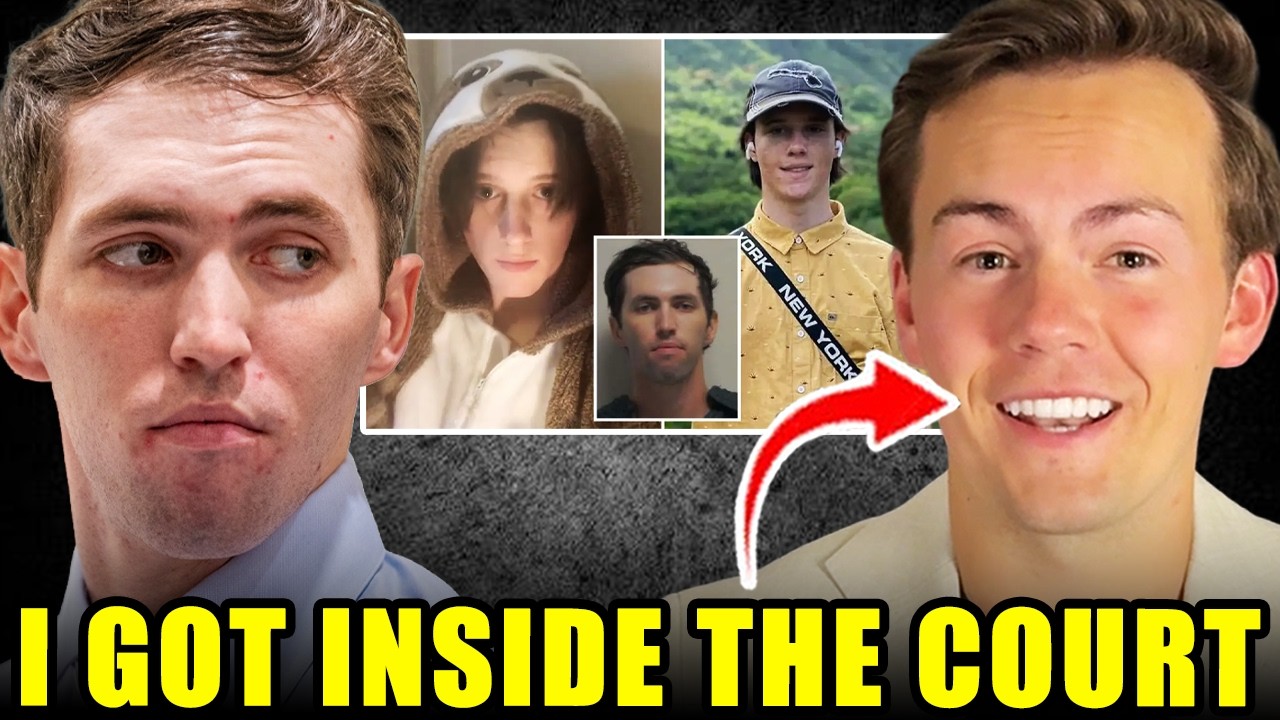
Joshua Carr Reveals Bombshell Evidence From Inside Tyler Robinson's Preliminary Hearing: Confessions, DNA, and Courtroom Drama
1:41:15

Charlie Kirk is the Founder and President of Turning Point USA, the largest and fastest growing conservative youth activist organization in the country with over 250,000 student members, over 150 full-time staff, and a presence on over 2,000 high school and college campuses nationwide. Charlie is also the Chairman of Students for Trump, which aims to activate one million new college voters on campuses in battleground states in the lead up to the 2020 presidential election. His social media reaches over 100 million people per month and according to Axios, he is one of the "top 10 most engaged" Twitter handles in the world. He is also the host of “The Charlie Kirk Show,” which regularly ranks among the top news shows on Apple podcast charts.
Subscribe on YouTubeAndrew Kolvet and Blake Neff Break Down Day Three of Utah v. Tyler Robinson Preliminary Hearing
Andrew Kolvet and Blake Neff provide an in-depth recap of day three in the Utah v. Tyler Robinson preliminary hearing. The session focused heavily on procedural battles over evidence redaction, particularly surrounding Lance Twiggs' recorded interviews and the Discord confession timeline. Despite limited new evidence presentation, the day revealed the defense's aggressive strategy to block public access to potentially damaging testimony. Legal analysts Liz Wheeler, Viva Frei, and Jack Posobiec join to discuss DNA evidence, video footage analysis, and the mounting case for probable cause against Robinson in the assassination of Charlie Kirk.
A Day Dominated by Legal Wrangling
Day three of the preliminary hearing in the state of Utah versus Tyler Robinson proved to be a study in legal procedure rather than explosive revelation. Starting at 1:00 PM Mountain Time, the session lost half a day to extended arguments about evidence admissibility and redactions. Despite the procedural focus, two significant developments emerged that point toward a third major conclusion about the strength of the prosecution's case.
The central question remains straightforward: does the state have probable cause to proceed to a full trial? According to legal observers present in the courtroom, the evidence presented thus far has been extraordinarily compelling, even if today's session bogged down in technical disputes between prosecution and defense.
The Timeline Controversy Resolved
One of the most persistent conspiracy theories surrounding the case centered on the timeline of Robinson's Discord confession. Critics claimed Robinson could not have made the confession because police would have already seized his phone when he turned himself in.
Testimony established that Robinson turned himself in to Washington County Police at approximately 9:00 PM local time. However, the Discord confession was posted at 9:57 PM Eastern Time, which translates to 7:57 PM Utah time—a full hour before he surrendered to authorities. This timeline was confirmed through a video from content creator Turkey Tom, who obtained screenshots with timestamps from a friend in Robinson's Discord circles.
Furthermore, Robinson was not formally arrested until probable cause was established around 4:00 AM. He was held in a back office rather than a cell during this interim period, meaning he potentially had access to his phone for hours after turning himself in. This completely dismantles one of the primary conspiracy theories that had generated millions of views on social media.
Video Evidence and Physical Appearance
Compelling visual evidence emerged comparing Robinson's appearance in the holding room video to surveillance footage from the day of the shooting. In both instances, Robinson wore a similar colored shirt and hat—potentially the same items. He was also wearing Converse shoes in both videos, according to testimony.
Independent reporter Taylor Hansen conducted an on-site investigation at UVU campus, recreating Robinson's movements from the surveillance footage. Hansen, who stands exactly six feet tall, demonstrated that the person in the surveillance video appeared to be approximately 5'10" to 6'0" tall—consistent with Robinson's height as documented in police records. This investigation directly refuted claims circulating online that the person in the video was significantly taller than Robinson, with some conspiracy theorists claiming the individual must have been 6'4" or taller.
Hansen's investigation also addressed claims about lens distortion and camera angles, showing how the specific positioning and camera equipment can create optical effects that must be properly understood when analyzing surveillance footage.
DNA Evidence Clarification
Testimony from a DNA analyst revealed that biological samples from both a screwdriver and towel found on the roof contained DNA matches. Contrary to misinformation spread immediately after this testimony, approximately 89-95% of the DNA on these items matched Tyler Robinson's profile, while only 5-11% matched Lance Twiggs, Robinson's transgender partner.
The presence of Twiggs' DNA raised questions about his potential knowledge of or involvement in the plot, though legal experts cautioned against jumping to conclusions. As cohabitating partners, shared DNA on household items like towels and tools would not be unusual. However, the fact that these specific items were used in the commission of the crime does warrant further investigation into what Twiggs knew and when he knew it.
The Defense Strategy: Maximum Redaction
A clear pattern emerged during day three: the defense is fighting aggressively to limit public access to evidence. After successfully obtaining significant redactions to the compilation video shown on day two, defense attorneys moved to block or heavily redact the recorded interview with Lance Twiggs.
The defense argued that presenting this evidence publicly would be so damaging that it would prejudice Robinson's right to a fair trial by effectively broadcasting a confession to the world before trial. The judge initially made one ruling, then quickly agreed to additional redactions just as audio was about to be played.
Jeffrey Neiman, representing the Kirk family, made a powerful statement advocating for maximum transparency. He argued that if evidence is being admitted in the preliminary hearing, it should be made public without redactions. Neiman emphasized that lack of transparency would create doubt and distrust in the judicial system—the opposite of what anyone should want. He noted that the court has tools at its disposal to ensure a fair trial without suppressing public access to evidence.
The Probable Cause Standard
Legal analyst Viva Frei, a former litigator, provided important context about the burden of proof in preliminary hearings versus trials. At this stage, prosecutors must only demonstrate probable cause—a significantly lower threshold than the "beyond a reasonable doubt" standard required for conviction.
Frei argued that the evidence presented thus far easily clears the probable cause hurdle. Robinson's DNA on items found at the crime scene, video footage showing him on campus four times (when he was not a student), his mother's identification of him from surveillance images, his possession of the clothing and shoes seen in the footage, and the timeline of his confession and surrender all constitute substantial probable cause.
According to Frei, each of these four major evidentiary pillars could potentially support probable cause independently. Together, they create an overwhelming case for proceeding to trial, even if reasonable doubt arguments might be raised during that later proceeding.
Distinguishing Questions from Conspiracy Theories
Multiple analysts emphasized the importance of distinguishing between legitimate questions and unfounded conspiracy theories. There are valid questions that deserve investigation: Was Lance Twiggs a co-conspirator? Who else might have been involved? What was the security situation on campus? Was Robinson radicalized by others? Did the group "Armed Queers SLC" play any role?
However, these questions differ fundamentally from conspiracy theories that manufacture facts, misrepresent evidence, or require belief in elaborate schemes without supporting evidence. Examples of such theories include claims about exploding microphones, Israeli intelligence involvement, body doubles, and suggestions that prominent conservative figures were somehow complicit.
As Viva Frei noted, conspiracy theories become problematic when they are both unsubstantiated and unfalsifiable—constructed in such a way that no amount of contrary evidence can disprove them because any evidence is simply incorporated into the conspiracy itself.
The Cost of Justice
Jack Posobiec, reporting from inside the courthouse for Human Events Daily, noted that the trial could ultimately cost Utah taxpayers upward of $10 million. Robinson is represented by Richard Novak, a high-profile defense attorney from Southern California known for constitutional defenses and aggressive litigation tactics.
The preliminary hearing alone has already consumed three full days, with significant time spent on procedural arguments rather than evidence presentation. Judge Graf expressed frustration with the pace, noting that proceedings were supposed to conclude by end of business Friday.
Supporters of Robinson in the Courthouse
Taylor Hansen reported encountering individuals at the courthouse who appeared to be supporting Robinson. Some wore "freedom" shirts and were camping out overnight to secure seats in the limited public gallery. These individuals, when approached for interviews, recognized Hansen as working with front lines coverage and refused to speak on camera.
Hansen noted that these supporters are effectively taking seats that might otherwise go to UVU students who witnessed the shooting, Charlie Kirk's supporters, or members of the media. Their presence highlights how the case has become a focal point for certain online communities that have embraced conspiracy theories about the shooting.
What's Next
Day four of the preliminary hearing is expected to finally include the Lance Twiggs interview material, albeit with significant redactions. The judge indicated that most of the redacted content would be text messages that have already been published in charging documents.
The prosecution still needs to present additional witnesses and evidence to complete its probable cause case. Based on the pattern thus far, each major piece of evidence is likely to be preceded by extended legal arguments about admissibility and redactions.
For those following the case, the key takeaway from day three is that while procedural battles slowed the presentation of evidence, the underlying strength of the prosecution's case continues to be apparent—so much so that the defense is fighting vigorously to keep the most damaging evidence from public view during these preliminary proceedings.
Video Transcript
All right, welcome everybody. We are
back for our day three recap of the
state of Utah verse Tyler Robinson
preliminary hearing. just to set the
stage. Again, this is about probable
cause. All right. So, that is the bar
that the state is trying to meet in all
of this. So, we're trying to see if this
is going to go to a full trial. I think
it's been pretty compelling evidence
thus far. Today started at 1:00 uh
mountain time. And so, we lost out on
half a day and it just got bogged down
in a bunch of arguments, but there were
some significant things that happened.
>> Not a lot of significance. Well, there
was there's two things and it kind of
leads to a third big thing. Here to help
us break this down
>> is Liz Wheeler, host of the Liz Wheeler
show on Blaze TV. She's been doing
amazing work. Uh really heroes work,
Liz, on what you've been doing. Just
factchecking, factchecking,
factchecking. Give us your perception of
how it's gone so far and today.
>> Hi Andrew. Hi Blake. Um, yeah, my small
service, you know, to honor Charlie's
legacy, is just to make sure that I can
help untangle the truth as the truth
comes out. I think the three days,
especially the first two days of this
preliminary hearing, the probable cause
hearing, have been incredibly damning
for Tyler Robinson, which is maybe not
unexpected for some of us who've been
tracking the facts and the evidence from
day one. Um, but it's also been a very
revealing couple of days for um for
applying these facts against the
delusional conspiracies that we know
have, you know, taken root among so many
on our side. So, when we saw the video
yesterday of Tyler Robinson's movements
showing up four different times on
campus, um that's incredibly revealing.
Watching him scale that staircase,
seeing how easily accessible the roof
is, watching him lie prone on the corner
of the roof, and then the moment that
the shot is fired, get up and run away,
jump off that roof, seeing him limp as
if he has a rifle down his pants, um
which of course is the allegation. These
are incredibly telling things. Hearing
the testimony about the DNA that on the
towel and the screwdriver which were
found on the roof um that were, you
know, allegedly used by Tyler Robinson
to see that the vast majority of the DNA
samples on both of those items was a
match for Tyler Robinson and that a
small portion of the DNA found on those
items was from his transgender lover,
Lance Twigs. These are incredibly
revealing things to see today. I think
the timeline of when he turned himself
in about 900 pm mountain time which
would have been local time um to the
Washington County police and then seeing
that juxtaposed against when he made
that confession to the Discord chat that
he was part of. Um that would have been
over an hour the the confession would
have happened over an hour prior to him
turning himself in to hear the testimony
that he was then not formally arrested
until they had probable cause and that
maybe happened at 4:00 a.m. local time.
These are incredibly revealing,
incredibly damning pieces of evidence
against Tyler Robinson. And the thing is
this is just a preliminary hearing. This
isn't even necessarily like the good
stuff or the most compelling evidence.
This is just enough to establish that a
trial should take place. And I'm glad in
a sense that America's watching because
I'm glad that they can see these facts
for themselves. Finally,
>> it's not only preliminary to the actual
trial. Today was practically preliminary
to the evidence that even the witness
was going to present because as we'll
get into, a very large portion of today
was extended debate, extended back and
forth about what will actually be shown.
So, we heard this agent he that
interviews were conducted with Tyler
Robinson's mother, with Tyler Robinson's
father. They never really got into what
was said in those interviews, only that
they happened. They talked about getting
this statement from Lance Twigs and then
twice. They interviewed him twice, they
said. But then we got very extended
arguments about how much is going to be
redacted. We got uh statements from the
defense that basically said if the
evidence they're planning to show here
is shown, it would basically be
broadcasting to the world what the state
will call a confession and it would be
prejuditial to his right to a fair trial
for that to be shown before the trial
itself. So, we got more signs today that
the evidence against Tyler Robinson is
extremely strong and the defense is very
aware of that. So, even if we're not
able to see all of it, it does look like
we're likely to get a lot of this
redacted when it does finally air
tomorrow. Uh, but we're we're just
slowly grinding away. Probably the other
highlight of the day for me is actually
early on where Judge Graph just he
essentially gives a statement that's
saying we are supposed to get this done
by the end of business on Friday. So can
we please try to hurry it up is more or
less what he's
>> saying. Exactly. Well and I want to go
back to what you just said Liz that the
timeline piece of it we know that
certain purveyors of this propaganda
this conspiracy stuff like Baron Coleman
have made much about the timeline that
he could have never confessed because
they would have had his phone already.
Well, the timeline got established today
and that was a very key part of what we
saw in this case. And I want to play
something from this Turkey Tom video.
Watchers of our show know that I've
referenced Turkey Tom. This is a
whistleblower friend that approached
this YouTuber and said, "Hey, I I
actually know these guys. I hung out
with them a lot, and this is exactly how
they talked, the the text messages." He
confirms that this is the language they
used for each other. and he also shared
with him this Discord confession. And it
was the first time we'd seen the Discord
confession with a timestamp and a time
zone on it. So, go ahead and play this
Saut 70. And it's a short clip, but it
establishes the timeline
message to their old friend group
server. It's interesting to me that he
sent it in this server and not to
Lance's new server because I'm not sure
why that is. It could just be that he
was less familiar with the people there,
but based on the kind of messages sent
there, which we're going to go over
later, it could be that he wanted to
avoid having anyone say something that
resembled support for his actions in the
original
9:57 p.m. EDT, which would have been
7:57 Utah time. And then we find out, we
hear from the testimony today that he
turned himself in approximately at 9
local time. So he sends that Discord
chat almost an hour uh probably a full
hour before he turned himself in.
>> So gone is one giant conspiracy on the
timeline.
>> Yeah. And there's actually additional
element to that too is when he turned
himself in. We saw that video today of
him being uh held at the Washington
County Police Department, but he wasn't
held in a cell. He was held in basically
a back office until, like I said, they
established probable cause and formally
arrested him, possibly around 4:00 a.m.
We actually don't know when he lost
access to his cell phone. He could have
had access to I mean, he could have had
access to his phone in that room. We
don't know that.
>> Yeah, but Liz, here's the thing.
>> We don't know that he didn't have it
then either.
>> Yeah, but even if they took it away from
him right at 9:00 when he turns himself
in, which we have no reason to believe
at this point,
>> he still had time to make the
confession. And there has been literally
millions of views on social media.
>> Yeah.
>> Pontificating about this one piece. And
now I want to show you something here.
Show show this uh these two images. By
the way, guys, I'm going to show this to
to Liz. I think this is a really big
deal here. Um so we see this image, the
first one. Put it up when you can. And
this is in the holding room, Liz. So
notice that the color of the shirt, the
hat, this is what he's wearing. Okay.
Now go to the image that we saw in the
compilation video the day before. Notice
the color of shirt and the hat. So we
have been told Liz that there is even
with this the social media of it all. We
have been told that there is no proof
that that's actually Tyler Robinson. It
doesn't matter that his own mom
recognized him from the images that were
published from the surve where he's
wearing different clothing where he's
trying to hide his
>> appearance. But this is the looks like
the same shirt and same hat. I can't say
that definitively. Maybe he had a number
of them or something. Or maybe it's a
slightly different shirt in a similar
color. But the hat, look at these back
toback. Just keep going back and forth.
This looks like the exact same person to
me. Liz, am I missing something here?
>> No, I think not. I think one of the
things that I pointed out on X earlier
and of course it was Candace Owens
yesterday who was not just asking do we
have definitive proof that the person
that we see in this and it is a grainy
video. I think there was a clearer video
that was played in court to my
understanding the clearer video hasn't
been released to the public. We just
have the grainy version of it.
>> Right.
>> It was Candace Owens who wasn't just
saying how do we know this is him
because we can't see his face clearly.
She was denying it was him. She was
casting doubt actively on whether this
was him. And my point was just um well,
his own mother identified him from a
grainy still that was taken from these
videos that was released by police on
the day that Tyler Robinson committed
this crime allegedly. Um and so who are
we going to believe here? Candace Owens,
who doesn't seem to have an idea of how
this this process works, the judicial
process, or how to establish whether
there's probable cause, or his own
mother, who not only identified him, but
this has got this is one of the I can't
even fathom what that must be like for
parents. You know, a parent's worst
nightmare turning in their own son for a
hideous crime they believe he committed
because she recognized him from this
video. Um,
>> I can't imagine that either, Liz. I'm so
glad
>> Yeah. I'm so glad you brought that up
because,
>> you know, I I actually they have a soft
spot in my heart because they did the
right thing. I don't know their family
story at all. I don't know any of it,
but that they did a brave thing. I have
a lot of respect for that. Actually, I
want to play this clip. This is from
Jeffrey Neman, who is a family
representative inside the courthouse for
the Kirks. And I just want to point this
out uh very clearly. One side is arguing
for max transparency. The other side is
obstructing anything being shared with
the public. And I don't the cynic in me,
Liz, is kind of assuming. I hope I'm
wrong. I But it the cynic in me thinks
that maybe it's because they want all
these conspiracy theories to run wild.
They want less that's plainly out there
because they understand that the more
the public sees the more that that the
credibility of the conspiracy crowd is
getting just uh crippled completely. So
here it is. This is uh Jeff Neman
advocating on behalf of the family ST
71.
>> All right, council if you would like to
state your name.
>> Your honor, Jeffrey Nyman, on behalf of
the Kirk family. Uh, I've been very
hesitant to speak up at these
proceedings. We understand it's the
state and the defense and the judge.
You're all doing your job. Uh, but I
feel as if we need to. I want to be
clear as to what the Kirk's family's
position is on all of this. The Kirk
family believes strongly that if the
evidence is being admitted in this
preliminary hearing, it should be made
public for the world to see. No
redactions. This court has tools at its
exposure, tools at its disposal to make
sure the defendant receives a fair
trial. You'll use them if you find that
you need to.
That's it, your honor. To not be
transparent here, to not be open, to not
let the world see what happened will
create doubt and distrust in the
judicial system. And that's not what
anybody wants. That's not what any of us
believe should happen here. And we'd ask
the court to consider the position of
the family in making its ultimate
decision. Thank you.
I thought that was a really important
moment from today, Liz, because, you
know, we get uh a lot of people chipping
at us on online that we don't we have no
questions. We don't want any No, we have
lots of questions. We want max
transparency. We want the world to see
the process play out, the legal process
play out. And so, I just want to
highlight that. I thought it was
powerful that that uh Jeffrey Nyman
chose to stand up in that moment. I
thought it was critical. Um, Liz, I I
only have you for three more minutes and
I know you got to go. Uh, I want to
highlight what you were talking about
because I think you've articulated it
very well, better than anybody I've seen
online. When it comes to the DNA, you
you there was explain the the the uh
stories that were floating around on
social media and how you rebuted them.
>> Yeah, let me comment on the Kirk family
lawyer for just a second, too. I know
that the argument from the other side is
that it could taint the jury pool if
some of the more damning evidence is
shown and in a regular trial that may be
an argument that carries some water.
That's true. But the the the
counterargument in this particular case
because it's such a high-profile case is
that the conspiracy theories which are
so abundant surrounding the murder of
Charlie Kirk and who was involved in
that could also taint the jury pool. And
so I think it is in the interest of the
American people to see this evidence
because god forbid you get a jury pool
that's full of people who, you know,
bought into some of those conspiracies
because they didn't have the access to
see some of this evidence that could
change their minds because let's be
real, everyone in the country is aware
of the facts of this. You're not going
to get a jury pool of people that are
like, "Oh, I didn't know who Charlie
Kirk was. I didn't know the details of
this. I never saw the video. I know
nothing about it." That's not going to
happen in a high-profile case like this.
And so I think maximum transparency is
the wisest course of action. and it is
fair in our judicial process given the
circumstances of this particular case.
That being said, the DN the DNA evidence
uh that came out today or the analysis,
it there's there's fake news
immediately. Anytime that a piece of
evidence is damning to Tyler Robinson,
the fake news propagated online
proliferates instantly. And that
happened again. U I think this was
actually late yesterday that the
testimony came from the DNA analyst that
said, "Listen, of this screwdriver and
of this towel that were found on the
roof, there were several DNA samples
that were found." Instantly, the
propagators of fake news online claimed
that the majority of the DNA was Lance
Twigs and only a fraction was Tyler
Robinson. And the point of propagating
this lie, of course, was to cast doubt
on whether Tyler Robinson was actually
the one who committed this crime because
that's key to the conspiracies. he
cannot be the one who committed the
crime in order for the vast global
conspiracy um that's been painted by
Candace Owens to be real. But of course,
that wasn't true. If you listen to the
testimony, I posted this on my ex
account, the video of it. The DNA
analyst said there were multiple DNA
samples. Yeah, you can see that on the
screen that were found on the towel and
the screwdriver. About 5% of it was
Lance Twigs and 95% was Tyler Robinson's
or a match for them on one item. And on
the other item, a fraction, 11% matched
Lance Twig's DNA and 89% matched Tyler
Robinson, which makes sense. I mean,
they were they were gay lovers. They're
going to have the stuff in their
apartment, which you can assume, I
suppose, that this is where this this
stuff came from, is probably going to
have some of their shared DNA on it.
That's not something that should
surprise anyone. I think it probably
does bring up questions, questions that
we've had for a long time since, you
know, we initially found out who who did
this. um whether Lance Twigs knew about
it or was involved. I mean, I assume
those are those are questions that will
be answered in the days and weeks and
months to come. Um but the fact the the
lie that was propagated initially was
just that it was just a lie. And I I
hope it actually serves to open people's
eyes because when you see a lie like
that and then you see the actual
testimony that contradicts the lie and
you realize that the liars were lying,
you should ask, well, what else are they
lying about?
>> I think that's really well said, Liz.
And by the way, I know you got to go,
but you've been on the record now
predicting the next conspiracy theory or
the next, you know, wild hair that they
chase. And then literally within
minutes, all the usual suspects take
that thing that you predicted cuz you're
watching it live and you're like,
they're going to go with that. I know
it.
>> They're not very original people. So, I
wouldn't even put it beyond them to
listen to what Liz or someone says and
go, that's a great idea. Exactly. I
should run with it. Or
>> they'll [laughter] frame it this way.
It's like they're taunting us. They're
telling us what they did. Exactly. This
is how they operate.
>> Uh well done, Liz. Thank you for taking
some time tonight. I know you got a busy
schedule. So, uh God bless you. You
seriously are doing heroes work. Um
>> you're you're you're out you're out in
front. Well, I hopefully you're not
inspire you're not inspiring some of
this. I don't think that's true. Uh so,
thank you again for joining us. Liz
Wheeler, host of the Liz Wheeler Show.
Have a great rest of your night.
If you're wondering, uh, they are, you
know, who is currently running with, uh,
you know, the video of him turning
himself in is a body double. I don't
know why they would need to fake that
because they did have to get him in
custody at some point.
>> I mean, like, for real, you got to, a
lot of things got to line up, including
how tall he is, uh, which [laughter] is
another really funny one. Uh, here to
help us, uh, do Oh, actually, let let
the team bring him in. I'm sorry, team.
But we're going to have Taylor Hansen,
who's actually on the ground, uh, doing
reporting for TPSA front lines. he's
going to come uh and join us. And he
actually went on campus, went on campus
to where some of these videos from the
surveillance videos are being broadcast.
Right. So, we're we we've got the
compilation video. There was a lot of uh
let's just say noise being made about uh
exactly how tall Tyler Robinson is and
did that compare to how tall the
gentleman in the video was. So, let's uh
we've got I think a couple of these
clips. Maybe we can use this as we bring
in uh as we bring him in. Okay, how
about this? Let's play 67 while we bring
Taylor Hansen into the show. It was the
third and fourth stair. So, he has his
foot roughly right here, right here.
It's about as close as you're going to
be able to replicate. And obviously have
the retaining wall behind me. Keep in
mind, my camera is not roughly at the as
close as we can get to the exact same
angle. Uh, it's touching the bulb of the
other security camera. They are
different cameras though, so there's
going to be a different effect. This is
just how cameras worked. Camera 101.
Science. Awesome stuff. Hand roughly on
the wall. Have the same spacing. At
least as close as we can possibly get.
This is what it looks like. Okay. He had
his head slightly down. Not all the way
down. It was roughly about here. I'm 6'
tall. Obviously, I'm a lot wider than uh
Rob Robinson would be in this case, but
this is about as close of a replication
as you can get.
All right, Taylor Hans Hansen joins us
now from TPSA Front Lines, independent
reporter on the ground there. How you
doing, Taylor? Uh quite quite quite the
uh project you endeavored upon uh at UVU
campus. First of all, just like how
creepy was it to to be there and kind of
retrace those steps?
>> Uh yeah, defin it was definitely creepy.
That's one way to put it. I've been
there a few times since uh Charlie was
assassinated and I was there actually
the day of uh right afterwards and then
the the following day as well and the
feeling kind of never goes away to put
it in perspective. There's always
something in the air.
>> So, uh where are you at right now? Is
that the courthouse that you're at?
>> Yeah, I'm right outside the fourth
judicial courthouse here in Provo, Utah.
>> Okay. All right. So, going back to that
clip, I don't know if you saw it. we
were bringing you in at the same time,
but you know if did you guys do sort of
markings and actually I think you in
that clip you went with the fact that uh
Robinson is 5'10. I actually think he's
6 foot.
>> This is debated because I think there's
some I think there's a police processing
document or something where it says 510.
I It's one of those things. How much of
their hair do you measure all of that?
But
>> all right,
>> getting deeper into this. I mean, the
claim when they were getting whipped up
by the conspiracies is that this person
is well over six feet. He must be 6'4,
6'5, 68, who knows? And I think that's
trivially easy to debunk through what
Tyler's been doing. Or even in the video
footage, you can see he passes by
another guy in the stairwell, and that
guy is clearly much taller than him.
Well, and there was also that woman that
was the young woman walking past him and
you know it looked like they were almost
equal height. But explain what you were
talking about. First of all, you you in
that clip you say it's going to be
impossible for me to perfectly match
this because of camera angles, because
of different lenses. I mean, you tried
to match the angle as much as you could,
but it's going to be impossible to
match. And then also because you've done
a lot of camera work over the years,
Taylor, explain how something on camera
can be deceptive to, you know, the
person that's viewing it. Like it, for
example, I always use the example of Tom
Cruz. Tom Cruz I thought was like a tall
man and then I found out later he's 5'7
and you know what I mean?
>> No one was ever more betrayed than he
had this big man crush on him.
>> That's not true. That's not true. Uh but
he is a good actor. I have to give it to
give it to him. But the point is how
explain how that can be deceptive.
>> Yeah. Well, I mean everything is angles,
everything is lighting. I mean, granted,
I mean, you have to keep in mind that
the the footage that, you know, Candace
and others are pulling and referencing
in regards to him being taller than, you
know, he was prior in the first time
that, you know, the alleged assassin
came onto campus, he is actually farther
away from the railing. So, that can also
kind of factor into the angle into where
he how much he slumped over. But the
actual lens used in the security
footage, I mean, I don't have access to
the UVU security cameras. So, you know,
I wish I did, but that's not how it
works. And the lens is going to capture
things differently than, you know, an
iPhone 17 camera, which is what was used
to film this video. Um, you know, the
iPhone 17 completely different lens than
what the actual security footage is, you
know, that's being portrayed here in the
preliminary hearings. So, it doesn't
matter how much comparison you're
giving, you can only get so much uh I
would say when using a different camera
lens to actually being entirely
accurate. I tried my best had, you know,
held it up. It was touching the same
height. It was literally touching the
actual UVU security camera to basically
try and replicate that. And regarding,
you know, 510, 6 foot, I believe I had
seen online that the uh the new thing is
that, you know, the second guy that came
through is a different guy and he
appears to be anywhere between 6' to
6'4. And I figured I would go because
I'm exactly 6 foot. And you can see, I
mean, I am taller than that person in
the video. And in the later videos, I
imagine you guys will show, there's a
retaining wall with a line that is
clearly about halfway through uh the
person's head that is walking through
the tunnel. and I go who is six foot I
go and stand next to it and it's
touching my shoulders essentially. So
there is clearly a height differential
uh taking place in regards to this.
>> Well let's let's show that 68
>> is obviously the tunnel where it came
down the retaining stairs. What's
interesting about this once again camera
differentials but we're about matching
roughly as close as we can heightwise.
Look in the Robinson video he's about
right here. Okay. roughly about somebody
that would land at 510. It's about right
in the middle of his face. I'm six foot.
This is barely above my shoulders. So,
there's a a clear difference taking
place right here. So, this is the
staircase right after rotating wall I
was just showing you in the tunnel.
Comes up this right side of the rail.
walking with one fairly straight leg
going up.
Roughly right about here is where you
see that girl come down the staircase
right next to him. And he keeps his head
slightly down obviously cuz my phone is
right underneath the camera as close as
we can replicate. He swings close to
this railing right here. Then he swings
out wide again.
So, you know, I I think this is
interesting and I because now I have a
question about um I don't know that it's
relevant, but so here here's the image
that Candace Owens published originally.
She cut off the top of his head, which I
think was first indicators. Notice how
you don't see the top number. You get up
to about 70 in, which would put him at
510. But here is the actual.
So, it goes all the way up. And to
Blake's point, maybe he's 6 foot, maybe
it's 5'11 and a half or something. I
mean, who knows? It's it like to your
point, it's like how much of that is
hair? I don't know.
>> But it's an approximation.
>> So based on those two images that now go
back to that retaining wall, what what
are the takeaways? Draw our eyes and
ears to what needs to be seen by the
audience there, Taylor.
I mean well you see that there I mean it
would say that it's almost roughly the
same but it is just slightly different
to kind of drive that fact that okay
even if he is 510 then it doesn't matter
in this scenario because one camera
angles play into it but me as a six foot
tall man I am completely different than
what that video essentially portrayed
and that also leads into angling that
leads into me using my iPhone camera so
the idea that this is kind of the new
narrative it's debunked in itself I
don't even need to go down there to
really even raise this argument. But the
internet has kind of been taken over in
a sense with these conspiracy theories
and I can understand questioning certain
things. It's human nature. But when you
can't actually question things of
substance when the goalposts
continuously move, I figured I would go
down to the campus and you know actually
draw attention to this. So let's see
where the goalpost move the next time.
Essentially that's my goal is to see
okay what are we actually going to talk
about that has substance. Why don't we
watch the preliminary hearing, see the
evidence come out. I'm out here every
single day reporting on what's going on
both inside and outside the courtroom.
All of these people online, they are not
here and they're not here for a reason
and the only, you know, clips that
they're actually using are clips
completely taken out of context. That's
what I've noticed.
>> Yep. I totally agree there. So, I want
to So, because you're there, Taylor, and
thank you for doing that. That was
really interesting. And it it does show
that you guys are you're probably a
little bit taller than him and but it it
shows that that you basically is what it
what we would have expected that that
based on where your shoulder lines up to
his, etc. Plus, he's also hunched over
with the gun potentially, you know, down
one or two legs. We're not sure how
exactly how that was.
>> I'm significantly wider as well. That's
that's another big factor.
>> Yeah, totally. All right. So, here's
another thing because you're actually
there on the ground covering this. I I
saw this, you know, there's this uh
there's this uh I forget Elizabeth Lane
or something. There's this whole crew of
these people that are devoted they have
a cult-like devotion to these conspiracy
theories and there they were spotted out
there. You can show this. This is from
Tammy McDonald 17 on social media. It
says Candace's favorite Russian spy is
at the Tyler Robinson preliminary
hearing today. Her words, not mine. Of
course, she didn't wait in line. one of
her cronies held a spot since 2:30 this
morning. Okay, that's interesting. Uh,
and then we have we have some some
videos
of you can I guess throw the B-roll.
They're literally posting
uh yeah, images of them like camping
out. Uh, very happy, jolly, you know,
happy golucky, which is weird. Uh,
actually, this is a murder trial and
they're very excited to be waiting in
line. What are you seeing when it comes
to this? Is this like Did you see these
people? What's the scene like outside of
the courthouse?
>> I'd say it's about 95% press given the
national attention that this trial has
drawn, but you do have people that are
camping out. And I did actually see
these people today. I did not interact
with them, but I interacted with another
group of people yesterday that I had
gotten a tip from, and it was a
left-wing journalist that actually
tipped me off to it. They were wearing
freedom shirts um believe it or not and
I guess they are pro Tyler Robinson
essentially and I attempted to interview
them. They almost immediately clocked me
as contracting with front lines. They
had seen my work in the past and they
were not were not willing to speak on
the issue. And of course I told them,
you know, I'll be polite. I just want to
know your opinion. Why are you here? Why
are you sitting in attendance? What
interest does it have to you? And they
weren't willing to talk to me. So every
single day, at least so far, you do have
people that do are basically coming in
here getting access to the preliminary
hearings that are pro Tyler Robbins.
>> Yeah. And they they are actually getting
access, right, Taylor?
>> Yes.
>> Yeah. They like you said, they're
camping out. These people are staying
overnight in a lot of cases. So they're
the very first to actually get access.
And there's only a limited amount of
spots. So they're essentially taking up
the places of people. I mean, there's
children out here. There were people
that attended UVU that witnessed it
firsthand that actually wanted to get in
today that weren't able to get in.
>> Well, it doesn't surprise me because,
you know, it's it's a cult. You know,
you know, those are the people that are
going to have this cultish devotion to
this, I think, misplaced moralizing
about this, right? Wearing the freedom
shirts. Yeah. They're part of a a whole
contingent online that wants to rip down
Charlie's organization, attack his widow
and his family. Uh, but they see
themselves as the defenders of the of of
Charlie's legacy, which, you know, I I
think that's Erica's job personally, but
that's but that's fine. Anything else
you want to bring up, Taylor, that you
want our audience to be aware of that's
happening around the courthouse or what
you're witnessing?
>> Yeah, I mean, just uh I would say get
your information from the actual
preliminary hearing. It's live streamed
for a reason. Watch it all if you have
time. Don't just go on social media, you
know, because all these clips are being
taken out of context. You know,
obviously Lance Twigs was a very big
focal point today. Yesterday, it was DNA
evidence. So, every single day we're
seeing new developments and it's always
being taken out of context. So, if you
actually want to understand what's
taking place during this preliminary
hearing, you need to just watch the
thing,
>> however slow it goes. Yeah. And it's
very slow. It's uh it's very slow. Uh
Taylor, thank you so much for your
reporting. Uh appreciate you making some
time for us tonight. Great job, man. Of
>> course. Thanks for having me.
>> All right, we're going to welcome in uh
Poso in just a second. He's uh Jack
Bobic's been on the ground. He's been in
the courthouse. He's been doing a lot of
media. Um so, you know, we're going to
get to him when we can get to him. I
don't really uh fully know his timeline
because he, like I said, has been all
over the place. I do want to show uh
this clip and it's we have it loaded as
72. It's the rice rifle disassembled and
put in both pant legs. This is a really
interesting visual because it shows how
easy and how quick it is to disassemble
a rifle and also how you could store it
in your pant legs. Uh sat 72. assuming
that since this was the longest piece
and that it was causing so much uh
hiccup in his giddy up that this is
probably maybe what was sitting on his
right leg. So
[sighs and gasps] cuz when you do see
him walking he's kind of this arm is not
moving right now as it sits the muzzle
of the rifle is just below my knee.
We saw him moving with no hip movement,
but he was still able to move his knee.
I can still bend my knee. The stock is
significantly thicker than the barrel
and the receiver action, especially back
here at the butt. This is going to be a
little trickier. I wonder if it can go
in this side
and under the arm.
Let me pull it back up under.
Okay.
What that looks like from the front.
Is there any indication that you got
that?
How's my movement? I'm moving out of how
I move. I think that may be part of the
limp was that he was trying to move
without printing the rifle.
Let's see how it was. cuz in that one
couple of shots that he's got his arms
out. He's walking up the stairs.
It's not out of the realm of possibility
that she can walk.
>> All right. I just wanted to show that as
another example. There's a series of
these guys. they tend to be, you know,
gun afficados and really into that space
and they're breaking down how that limp
could happen, how you could assemble a
rifle on a rooftop. And I just think
it's really really interesting and I
think really helpful to understand what
what probably happened. Uh we're going
to take a quick break here as we always
do at the halfway point. Um we've got
Viva Fry and Jack Pasoba coming up next.
Hang right there.
All
right, welcome back everybody. We have
Viva Fry on the show. I always want to
say Viva Frey because the spelling, but
he is a former litigator. He's a
YouTuber, Rumbler. He's a content
creator. He's a Canadian, but now he's
an American.
>> That's rough.
>> No, no, no, no, no, no. He's he's fully
reformed. changed. All right,
>> Viv. Welcome back, my friend.
>> We believe in we believe in personal
growth.
>> Not not not fully reformed yet, but God
willing. And I'll I'll you're in
process. You're in process. Um Okay. So,
Viva, you are always a guy that and I
actually love this because I believe
Hey, Tyler Robinson is innocent until
proven guilty. I believe that is
sacrianked in our system. I believe the
evidence is is very compelling, but I
believe he's innocent until proven
guilty. And you are a guy with nuance
takes. You're a guy that kind of sees
both sides. You you're you're willing to
hear out the more conspiratorial uh end
and you're also willing to hear out the
people that like, hey, it's pretty
obvious
from that vantage point, what are you
seeing? What what how is this going so
far?
>> Well, from that vantage point, I will
now be on the I'm in on it because I'm
with TPUSA and Andrew Kulf. Like this is
how lunatic the internet has become.
How do I see it going right now? I
happen to think there's substantial
primaasy evidence to indicate Tyler
Robinson was on the roof, pulled the
trigger, was identified by his mother,
etc., etc. We're living in a world now,
by the I'm not in a steam sauna. This is
just a backdrop. We're living in a world
now, however, where people have not
>> No, no, no. People like, "Hey, Aviva,
don't don't do vlogs from the Steam song
anymore." [laughter] But we're living in
a world where people have sort of gotten
back into the realm of the Alex Jones
Infowars Sandy Hook level psychotic
conspiracy everywhere. Where now people
are saying, "All right, I believe
everything we're being told is a lie, so
I'm going to not believe anything except
for that which I've convinced myself of
already." I don't know if Tyler Robinson
pulled the trigger. I don't know if he
was on the roof and he was the one who
who fired the gun. I know what the
preliminary evidence looks like right
now and I know it's being adjuced at the
preliminary hearing. But the insane
conspiracy theories that are being
floated that are implicating everyone
and anyone involved that are
unsubstantiated and unfalsifiable in
their vagueness. I mean, I I I'm seeing
Sandy Hook 2.0 recurring right now. I
appreciate there are some issues with
the prosecution. There's some issues
with the investigation and there's some
issues with the evidence. All right,
fine. I can appreciate that. But to go
from there to say that it's exploding
microphones, Israel did it. And not that
Israel might not Israel might have had a
hand in this, but until you can provide
the slightest shred of evidence other
than I can divine an intention or a
motive, you have to admit that from the
evidence that you have right now, if you
have a more plausible theory than the
one being presented, which is Tyler
Robinson was on the roof, took the shot,
had the rifle, had the moment, had the
opportunity, if you have a more
plausible theory to present, you can go
ahead and present it, but you don't get
to manufacture facts out of whole cloth.
off. You don't get to misrepresent what
is being adjuced at this preliminary
hearing in terms of the DNA evidence.
Whether you believe in DNA evidence or
not, don't misrepresent which percentage
it's favoring. Whether or not you
believe that Tyler Robinson was not able
to have the rifle in his legs, if you
misrepresent that he was shifting his
limp from the right leg to the left leg
without contemplating the idea that it
might have been a reverse image mirror
of the video, you don't get to make up
facts. You don't get to misrepresent
law. You don't get to say he's innocent
because they haven't proven beyond a
reasonable doubt that he's guilty at a
preliminary hearing, which itself is
probable cause. I mean, we're in a realm
now where it's I guess in a way it's the
ultimate flattery to Charlie Kirk, which
is the loss is so great, the loss is so
monumental that people have to come up
with concoctions to try to make sense of
what is a senseless crime. But
preliminary hearing is going the way
it's going. The evidence indicates on
probable cause that Tyler Robinson
should go to trial. If people think that
the video evidence is not clear-cut, not
sufficiently clear that his own mother
identified him, you can raise reasonable
doubt at the trial. Right now, it's
preliminary hearing, probable cause, a
lower threshold, and people don't get to
make up facts and misrepresent things to
promote their insane uh conspiracy
theories that are not tethered to
reality. Well, you know, it's funny
because I've heard I thought that was
really well said, um, Vivo, because, you
know, one of my frustrations in all of
this is that because there has been so
many allegations heaped on the org,
heaped on Erica, heaped on myself,
whoever, Ben Shapiro now is is is in
the, you know, the uh the attention.
So,
here's what's interesting, though. I I
have questions. I do have questions. I
want to know did was Lance Twigs
actually a co-conspirator. You know,
when I hear there's only six police
officers at campus, that's frustrating
to hear, like in a in a really deep,
profound way. I want to know, was he
radicalized by somebody? I want to know
about Armed Queer's SLC. I want to know,
was there money involved? I want to know
who knew what when. I have lots of
questions. But what we're dealing with
here and now is whether or not Tyler
Robinson was the guy who pulled the
trigger. Okay? And can you get prove
probable cause to take this to a full
trial? Okay, I want to show these two
images back to back to back because this
was actually something that happened
today. We got to see the video of Tyler
Robinson in the holding room after he
turned himself in. Okay, that's him.
That's him from That's a still from that
video. Okay, now go to the still from
the parking garage the day before.
Similar shirt, similar hat. And I was I
think from testimony that he was wearing
Converse shoes when he turned himself
in. And I believe that's what was
described in this image as well. So go
back to that other one.
And by the way, you see a profile shot
of him in another time. I just like this
one cuz the shirt is clear. And go back
now to the parking garage. Go back and
forth. Viva, I'm told there's no
evidence that that's him. I'm looking at
that going, "That looks like him." Uh,
and I guess the newest the newest uh
theory is that this person in body is a
body double.
>> Body double. There we can never see
face.
>> Even though it was with a family friend
>> and it was with his parents.
>> Yeah.
>> No, appreciate appreciate that. Like,
okay, fine. You say it's a body double,
then try to raise that as reasonable
doubt. Right now, we're at probable
cause as to whether or not he committed
the crime for which he should stand
trial. And I appreciate people saying
the video or the images of him in a
black shirt and the different clothing
doesn't look like him. Okay, fine. You
you can raise those arguments. Right
now, you're at probable cause for the
aggregate of the evidence. His DNA is on
the gun. Not the gun, sorry. His DNA is
on the uh screwdriver and the towel. And
he was on campus. He was not a student
on campus. His own mother called him in.
This is the probable cause stage of it.
If you want to argue it's a body double,
it's not him, they don't match up, he's
got a limp switching from leg one leg to
the other, you'll do that at trial. And
it's not to say he's got to prove his
innocence. It's that probable cause
versus proof beyond a reasonable doubt
are two different thresholds at two two
different stages of the proceedings. And
people need to understand that. The
bottom line, he was arrested, detained
in the clothing that he appears to be
wearing the day before on campus. That's
probable cause on his face. Set aside
the DNA. set aside the text messages
which people can tear apart on trial.
But this is the insanity that the the
I'm calling it psychotic delusional
insanity that Ben Shapiro the news of
the day. He admitted on his show he got
a call his his security got a call from
Charlie Kirk security right after the
shooting saying uh you know an update of
sorts on the shooting and people are
like that's crazy. They deduce from that
that he was somehow in on it that MSAD
because his his security or former MSAD
that that's how they would coordinate
between the two of them to confirm that
the takeout by MSAD has been
established. I mean, it's so insane that
you would go with that outlandish theory
as opposed to these are prominent
conservatives and at the time after the
shooting, my understanding is, you know,
people were fearful that this might have
been a coordinated attack targeting
other prominent conservatives, Candace
included, by the way, by her own
statements and that they jumped to the
his agent, his security or former MSAD
agents, and so they are calling to give
him an update on the confirmation of the
MSAD assassination hit on Charlie Kirk.
I mean, you're dealing with people
positing theories that really can never
be falsified and that don't even make
sense on the simplest, most reasonable
interpretation of things. So, my
interpretation is that more likely than
not, Ben Shapiro got a call said Charlie
Kirk's been assassinated. I think people
knew he was dead well in advance. Uh,
watch your back, Tucker Carlson. Watch
your back. We don't know if this is
isolated. The shooter is still on the
loose. But this is the delusion of
conspiracy theory that they're that
they're people are entertaining right
now. When it comes to the actual
evidence, yes, they now have evidence.
He was detained in the clothes that he
was appeared in in the on the campus the
day before. Maybe he's got a good
defense. Maybe someone else was wearing
the exact same stuff. You'll get to the
beyond a reasonable doubt at the trial
on the merits. right now it's probable
cause and whether or not more likely
than not a crime has been committed for
which this individual whoever he may be
should stand trial.
>> I mean I genuinely think you could not
merely get probable cause. You could
probably actually get a conviction on
the standalone element of any really of
the four things, if you want to say the
four legs of the stool here, which is
the video footage of his car and him on
the campus where he is at the time of
the shooting from the DNA evidence that
we have on the towel and on the
screwdriver and possibly on the gun.
Eventually, it will turn out, which
again we can trace back to him, from the
text messages, and from his interactions
with his parents and turning himself in.
I think any one of those legs of that
stool would be enough to clear probable
cause and probably get a conviction. And
instead, we have all four of those
things.
>> And I think it's fascinating at that
point to highlight the the constant
objection objection objection from the
defense. We saw this first with the
compilation video, which was a huge
bombshell. I mean that that video alone
that compilation track tracing his steps
on campus the four times he visited
according to the state was a really big
revelation. Social media was I mean on
fire about it yesterday.
This is the second time that they seem
to have been fighting tooth and nail to
block at least certain parts of this
Twigs video recording interview. Right.
So, I can only imagine that it's going
to be the next big explosive piece of
it. I'm It seems like the judge is going
to be redacting a number of uh pages
from the 22page kind of um transcript of
it, which means we're going to we're
going to lose big chunks of it, which
the family representative for the Kirk
family said, "We want it all published.
If you're going to admit it as evidence,
we want it all published." And then the
judge says, "Hey, just to call my shot
here, most of the stuff we're redacting
is just the text messages which have
already been sort of publicized in the
charging document."
>> Yeah. And
>> no, true.
>> But yeah, but the judge said he's going
to consider it. It's just a question of
not really not publishing it to the
public. So it's not that it's not going
to be factored into the judge's
decision. He's going to determine
relevance. So he'll he'll consider it.
But again, at this stage, come trial
time, everything's going to be
different. It's going to sort of start
from from scratch. But just to, you
know, to get to the issue that like you
can convict him on any one of the four
things, you know, no, the text messages,
the providence, the authenticity needs
to be proven. Uh, his DNA, that's a
double-edged sword. Just to not get into
the conspiratorial ground. If there's 89
and 95% DNA of of of Tyler Robinson,
there's five and 11% of somebody else.
Is a five and 11% of it being someone
else reasonable doubt? You couple that
with all of the other circumstantial
evidence and you know it'll be a
separate issue to prove at trial. So I
don't think you get there on the
preliminary hearing even based on what's
been adjuced. But what you do get here
and this is where people accuse me of
buying into the Fed narrative and they
call me, you know, gobbler of the Fed
slo. I I sincerely and genuinely believe
other people were involved and right now
we're getting confirmation of it. Tyler
uh sorry uh Twigs was more involved than
we ever thought. if his DNA is on not
just the towel. A towel is easier to
understand DNA on the screwdriver. You
know, Lance Twigs knew that Tyler
Robinson was engraving whatever fascist,
you know, thing he was engraving on
bullets. So, you're dealing with people
who were aware of a plot in advance.
Couple that with the actual evidence.
>> Viva, Viva, hold on. On that note, you
you can't deduce that yet that Twigs
knew about the plot. I have stated
multiple times from this chair that if
we do find out that he was engaged as a
co-conspirator or in had advanced notice
that this was going to happen and they
tried to cover their tracks with these
text messages, I want the guy held
accountable to the max extent of the
law. Don't get me wrong, but you can't
deduce that from the fact I mean they
were gay lovers in living in the same
house. The they could have shared
towels. They could have shared even
screwdrivers. It might have just been
Lance's
>> could have been his Lance's screwdriver.
I'm just saying I could I don't think
you could deduce
>> that he was complicit or a
co-conspirator just from from the
>> Well, no. Well, complicit when when he's
texting his lover. Remember when I was
engraving the bullet casings? I mean,
that's not something that you witness
your lover doing. You don't ask second,
you know, questions about.
>> I mean, that's something an Antifa
person would do, I would say.
>> Well, you know, he could have just been
I mean, listen, I agree. Like I've never
engraved a bullet with, you know, screw
communist or something like that. But I
they if you I don't know if you've seen
the turkey tom uh video. If not, I I
actually put it on X today. I really
encourage you to see it because it's a
whistleblower friend that reached out to
this YouTuber and it's I think it's got
like almost close to two million views
on this thing. He published it all the
way back in like what October or
November. It was about it was October
>> and it is an inside look into this world
that that these kids were living in. I
actually was talking to a reporter
that's on the ground reporting there
gave me a call today and he watched it
last night and he was like whoa like it
it it is and I think the word he used
was like now you can see really clearly
how you could the moral disassociation
and just disassociating from reality
that the this world they were living in.
Lance Twigs was super manic. He was uh
prone to these huge emotional shifts and
waves. Uh and you know, uh Robinson was
comforting him according to this friend,
right? And I have every reason to
believe that that video is credible.
I've been told it's credible. So
it's like you could see why this world
was completely bizarre and weird. And it
doesn't necessarily lead me to believe
that Twigs knew anything was about to
happen.
>> Well, no. If the turkey video was the
one describing a prior um incident where
two lovers, you know, got themselves
basically to get psychotically enveloped
in a murder conspiracy. I'm not sure if
it's that video you're talking about.
>> It's it's it's a friend that is
describing the world that they were
living in. It it's it you know, Lance
Twigs would nest. He would get really
depressed and he wouldn't get off the
floor out of the living room and he
would just sort of slowly gather like a
hoarder all these objects around him.
Lots of drug use. Uh was it black
market, HRT? Um, lots of drinking, lots
of vaping. Uh,
>> you might be we might be describing sort
of the same thing when I say that that
that Lance Twigs had
>> I see I see what you did there. I see
what you did there.
>> No, cuz like it is you're describing a
world of of abject insanity, which I
have no doubt is this. But the bottom
the bottom line when people are posting
online in advance, something big is
going to happen at you know University
of Utah State. Wouldn't it be great if
if Charlie gets shot? That leads me to
believe that, you know, above and beyond
Lance Twigs being somehow, if not
involved, at least aware of, other
people were as well. And when I say like
I I don't buy the, you know, buy I don't
buy anything. I question everything. And
I I don't take for granted that that
Tyler acted alone was the only I don't
believe he was. And whether or not if
it's
>> No, go for it.
>> Viva, you just made me think of
something. Um, I I want to play this
clip again, which is interesting. I I
didn't clock it until you just said what
you said. I posted this on X and then we
just played it. Uh, I believe it's uh
cut 70. This is from that Turkey tom
video talking about which Discord server
he confessed in cuz apparently he was
active in two.
This isn't I I I don't know if there's
anything here, but play cut 70.
>> Confession message to their old friend
group server. It's interesting to me
that he sent it in this server and not
to Lance's new server because I'm not
sure why that is. It could just be that
he was less familiar with the people
there, but based on the kind of messages
sent there, which we're going to go over
later, it could be that he wanted to
avoid having anyone say something that
resembled support for his actions in the
original. So, that's where he's
confessing, right? And that's the time
code uh 9:57 Eastern, which would have
been 7:57. He turned himself in around
9:00, so about an hour later. Uh, it's
interesting because there's two
different Discord servers he was
involved in.
>> Two two that we know of. Right. Right.
>> Not to not to get too conspiratorial,
but when we're told that uh Thomas
Krooks was not involved in any social
media activity and then, you know, you
get reports coming out that he had
multiple social media footprints.
Do I believe that that Tyler Robinson
was only involved in two Discord chats?
What service? No, I don't. And I'd love
to know each and every individual who
was on them, if they've been
investigated, how people knew allegedly
apparently in advance something was
going to happen, how his, you know, he's
confessing to his boyfriend about
remember when I was engraving those
bullets. And then he goes to the Discord
servers to confess to what he did where
on the Discord servers, even according
to the official narrative, they're
already talking about having noticed
what happened to Charlie Kirk. I mean, I
I don't believe that there were only two
Discord servers. I don't believe that
there was nobody of relevance on any of
those Discord servers. I don't believe
that George Zinn, that old pervert, who
was subsequently arrested for and
pleaded guilty to child sex abuse
material on his cell phone after he
admitted or purported to admit that he
was there as a distraction to the
shooter to allow him to get away was
there by accident. So, all that said, do
I believe that it was an exploding
microphone that MSAD planted because
they used pages to kill some terrorists
in Gaza and the West Bank? No, because
there's no evidence to suggest that at
this point in time. Do I refuse to ever
believe it possibly in the future? No.
But there needs to be evidence to
support certain things.
>> That's exactly right. That's what what
you said is is key. I mean, my mind is
completely open to all of Listen, I want
to know the truth. I totally I have lots
of questions when it comes to
First of all, you you said it exactly
right, Viva. Is there evidence? Do you
have actual proof or is it just vibes
and like gut feeling? Okay, that's not
how you convict people. That's not how
you you do this in our process. Thank
God, by the way. And secondly, if that
stuff comes out in the future, it's not
like I'm going to fight it. I think
there's this perception among some
online that like we're like, I don't ask
questions. Like, no, no, no, no, no, no,
no, no. I want to know the truth on all
this stuff. But what I'm looking at, the
evidence that has been presented at
court in this preliminary hearing to to,
as you said, reach the burden of
probable cause is extraordinarily
compelling. Um, you know, and I just I
think there's some people that won't
believe their lying eyes, you know.
>> Well, there are people who still insist
nobody was killed at Sandy Hook. Uh,
there are people who insist that the
destruction, you know, tearing down and
raising of the building at Sandy Hook
was an indication that no one was killed
there. Do I think it was suspicious?
Yes. Because I think the, you know,
Sandy Hook school was destroyed to cover
up some of the corruption of the school
that they didn't actually invest the
monies that they were given in, uh, you
know, for the purposes of gun safety. Do
I think it's weird that they raised,
leveled, and dug up the dirt of the
crime scene here? I can appreciate the
official narrative which is that you
know University of Utah wanted to clean
up a traumatic crime scene so they could
get back to university activity as as
normal. If I believe and I and I might
very well that you know there might have
been people at the university that were
involved in not securing the roof
telling TPUSA that the roof was secure
that they don't need their own drones
and might they want to destroy and cover
up and uh you know bury their own crime
scene. I could believe that too. But you
know, again, theories, beliefs, and that
for which you have the slightest shred
of evidence are three different things.
And I'm able to understand and
distinguish between what I believe, what
I can prove, and what I can reasonably
argue. And for the time being, if
there's a better theory than Tyler
Robinson, having taken the shot, I
appreciate all the holes everybody wants
to poke, they'll do that at trial.
That's what good lawyers do. He didn't
have enough time to assemble the gun. He
couldn't have been running around with
it in his legs. It's not him in the
black shirt versus the maroon shoot.
Sure. Sure. They they'll raise that at
trial. But until there's a better
theory, and until there's the slightest
shred of evidence to support exploding
mic theories, a second gunman theory, a
trapoor theory, until the slightest
shred of evidence to to support that,
you can float unsubstantiated and thus
unfalsifiable conspiracy theories.
That's right.
>> It makes you look like an idiot. And it
makes you look like an idiot and
untrustworthy. But the bottom line right
now in the ordinary course of criminal
prosecution,
preliminary hearing, probable cause,
here's Tyler Robinson. Here are some
images sufficiently clear that his own
mother identified him. The rifle
identified by his father, fragments
determined to be a bullet, not an
exploding microphone. And if it is an
exploding microphone, my goodness, the
defense will be that much easier come
trial time.
>> There you go. And by the way, medical
examiner says it was a gunshot wound to
the neck. Uh there's no mention of an
exploding mic or anything like that.
>> They just Viva, we gota we got to go.
I'm so sorry. Um we're gonna do a little
bit of a handoff here with Jack over to
his show. That was excellent, my friend.
Thank you so much.
>> Thank you very much. Godspeed, everyone.
>> God bless you, man. All right. Uh I
believe we've got Jack coming in. Not
yet. All right. Well, we're gonna I
guess uh Real America's Voice is going
to stick with us. And just a word about
them. Rob Parker. Uh, thank you guys so
much uh for bearing with us this week
and supporting what we're doing,
recapping this, staying, you know, very
uh trying to stay very on message, very
focused on just the facts, okay? And
trying to rebut some of the more
conspiratorial stuff that's coming out
that's unsubstantiated. And to Viva's
point, it's not that we don't have
questions, we just don't have evidence.
So you can have all the vibes and you
know whatever else you want to have, but
if you have no evidence and you're
accusing innocent people or innocent
things or innocent groups, then that's
reckless. And we don't do that. We stick
to the facts. It's what the state has to
do. That's what, you know, we try and
live by. Um, and I think there the
evidence in and of itself is very
compelling. One other thought that I
think Viva brought up is that that it's
this sort of compliment to Charlie that
people because Charlie was so important.
He was so incredible and so uh uh just
influential that I think it's hard for a
lot of people to think, hey, maybe it's
this dude, 22-year-old that just climbs
up on a roof.
>> It's not satisfying to think that some
weird loser who lived with his furry
boyfriend and they did a bunch of drugs
and lived in their furry nest that that
guy could almost just
>> change the course of history. He could
he could kill a world historical figure
like Charlie because he was a wretched
person who embraced violence. And that's
what drives a lot of theories. It's just
like we get the stuff with Kennedy
because you don't want to believe a
president can be taken out that way.
>> Totally. Totally. We have Jack Pobic
now, Human Events Daily. He's been on
the ground in the courthouse. Jack, good
to see you, man. Uh give us a little
color from the scene today.
Yeah, look, um, you know, I I'll be
blunt. I'm I'm kind of hot about what
happened in in the court today. Um, we
did not get what we were told was going
to happen. Um, we did not get the Lance
Twigs video, which was um said from the
very start that that's where, in fact,
the defense was the one that first
stipulated it that it was going to be
coming. Um, we had kind of been
expecting, I think, to get at least, uh,
if not the full video, but at least the
audio of the recording with Lance Twigs,
which is the the trans boyfriend. And
the defense
moved to block this, moved to redact
this. And the judge in instead of he he
made one ruling and then was about to
allow the audio to be played and then
very quickly agreed to even more
redactions. And this of course happened
right about so it's around the four
o'clock hour lo four four o'clock hour
local
>> and they you know basically said oh we
don't have time for this now so we're
going to break early and it's something
where I I'm looking at it going look I
want justice here but at the same time
as that I think transparency is part of
that justice and having full
transparency means having full access to
the evidence and this individual who was
closer to Tyler Robinson than anyone um
in terms of, you know, leading up to the
shooting. I it seems to me that his
evidence would be extremely relevant.
His testimony would be extremely
relevant. Not just this interview, but
he conducted another interview in April
of this year. And the fact that we have
been blocked from seeing that is I'm
just I'm just livid. I'm I'm livid. And
I'm am I would say I'm I'm just
speechless that here we are 3 days now
that we've spent in this courtroom and
we're still not getting key evidence
like that.
>> Jack, you know what's interesting?
There's taking so much time. I mean
these they're fighting tooth and nail.
First it was in the compilation video
which was extraordinarily damning. Then
they're fighting tooth and nail on this
Lance Twigs recorded interview which I
agree. How is that not the most relevant
thing to establishing the fact that this
guy confessed, the fact that he had a
motive, and the fact that uh he had
this, frankly, a gay lover that also
contributed to the motive and he was the
closest person to him. This seems like
the the the most relevant piece of
information.
>> Well, at this point, they they basically
said it themselves when the defense is
objecting. And they basically say this
evidence is going to be so strong that
presenting it now will prejudice
>> his right to a fair trial because they
will blast it out to everyone. And
basically they're saying everyone will
see the evidence published in all the
news outlets about how Tyler Robinson
confessed and is guilty and so you just
have to save that for the trial or it
will be unfair. That's basically what
the defense is arguing.
>> Yeah. And and and just to say, Jack, I
read somewhere that it's going to be $10
million that this could cost
>> upwards of $10 million by the end for
the state of Utah to defend this this uh
Tyler Robinson because it's going to
drag out so long like this.
>> Well,
and and and that that you know, it it's
it's clearly um look, they've got a a
very high-profile defense lawyer, uh
Richard Novakin from Southern
California. He is extremely well known
for uh his defense of clients and he's
extremely well known for this type of
litigation where he's able to come into
the courtroom and bring, you know, bring
up these constitutional defenses and
you're going up against um these Utah uh
Provo, Utah County uh attorneys and they
don't have anyone from out of town
coming in who's, you know, bringing in
the big guns, so to speak. And so when
you're looking at when you're looking at
the case, you know, for I guess I would
speak to a lot of like the the
misinformation that I see out there as
well because where people saying, well,
you know, I don't want to hear the
government narrative. I don't trust the
government cuz you know, Fouchy and
COVID, etc. Sure, fine. There's lots of
reasons to not want to trust the
government, believe me. But I'm not
asking to hear the government's
argument. I don't want to hear that at
all. In fact, I want to see what the
evidence is. And then I want to hear the
direct testimony of the person who knew
Tyler Robinson best. That's Lance Twigs.
That's why they're fighting so hard to
block this. And it seems as though Twigs
was given uh we're told he was given
this limited immunity, use immunity in
the case for his testimony. um that he
has been cooperative to a point at least
in terms of turning over his cell phone.
So that's how we got the uh text
messages, the Discord messages, etc. And
so the idea that we can't see that
evidence and that the public can't see
that evidence, it it seems to me as
flying in the face of the ideals of not
just victim rights for uh Erica and and
Charlie's parents who this has been an
incredibly trying week for them. There's
no question having to sit there uh just
feet away from Tyler Robinson and to go
through all of this again and and this
is just the start. This isn't even the
actual trial yet. But then to be told
that you can't even have that evidence
to be played in open court, it it really
really creates a situation that's
incredibly frustrating having sat there
now for 3 days. And don't get me wrong,
I think we've seen a lot of evidence,
but when knowing that there is more
evidence out there that is still being
held back creates a massive frustration.
>> Jack Poba, Human Events Daily. He's been
in there uh being a support to the
family and reporting the facts,
reporting what he's seen. Thank you so
much, Jack. I appreciate it. We got to
take a quick break because we got to
throw to Jack. Jack is going to take it
from here on Real America's Voice. Once
again, thank you to Parker and Rob Sig
for supporting uh these shows. Uh we'll
see you guys back here again same time
tomorrow night.
Related Books
Browse Conservative Books