Tyler Robinson Murder Case: Legal Experts Break Down Video Evidence and Prosecution Strategy
Enjoying this? Share it with someone who needs to see it.
Up Next
Glenn Beck Confronts Conspiracy Theories Surrounding Charlie Kirk Murder Investigation in Provo, Utah
14:26
Andrew Kolvet and Blake Neff Break Down Day Three of Utah v. Tyler Robinson Preliminary Hearing
1:12:15
Tyler Robinson's Preliminary Hearing: New Evidence Links Suspect to Charlie Kirk Assassination
6:01
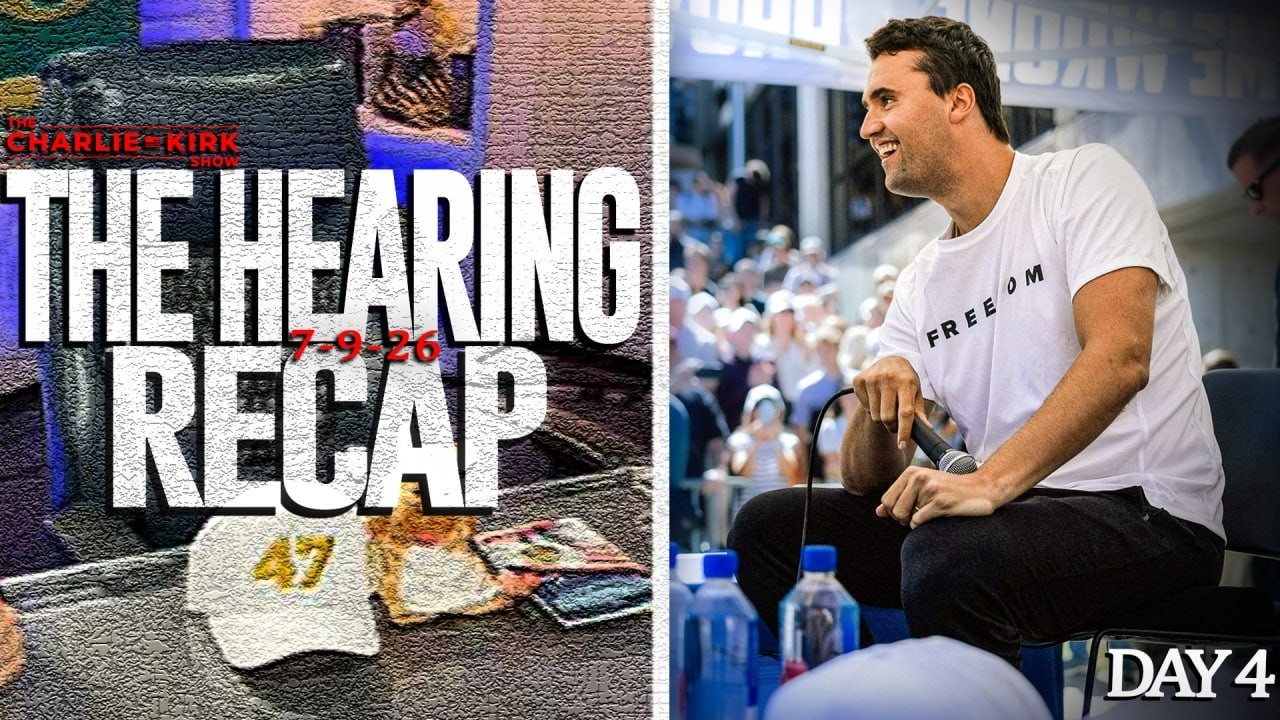
Tyler Robinson Murder Case: Legal Experts Break Down Video Evidence and Prosecution Strategy
Legal analysts including Mark Geragos and Janna examine the prosecution's extensive video evidence against Tyler Robinson in the UVU campus shooting case. The discussion covers unusual aspects of the preliminary hearing, including the prosecution's decision to present a comprehensive case rather than the typical abbreviated version. Experts debate the effectiveness of this strategy, considering both public skepticism and potential jury pool influence. The case features extensive surveillance footage allegedly showing Robinson's movements before, during, and after the September 10, 2025 shooting, though questions remain about missing cell phone data and DNA evidence. The panel explores what prosecutors must prove and why this preliminary hearing has become unexpectedly lengthy and detailed.
The preliminary hearing in the Tyler Robinson case has become notable for its extensive presentation of video evidence. Legal experts are questioning how prosecutors plan to definitively prove that the individual captured in surveillance footage arriving at the UVU campus at 8:30 AM, leaving at 9:25 AM, returning on foot after 10:00 AM with an outfit change and appearing to limp, and ultimately appearing on a rooftop is actually Tyler Robinson.
One significant gap in the evidence presentation so far has been the absence of cell phone data or vehicle tracking information. This type of digital evidence played a crucial role in other high-profile cases, and modern vehicles routinely collect extensive location data. The lack of this evidence has raised questions among legal observers about whether it will be presented later or whether prosecutors have an explanation for its absence.
The Standard of Proof at Preliminary Hearings
Legal experts emphasize that preliminary hearings require only probable cause, not proof beyond a reasonable doubt. Mark Geragos compared the current video evidence to "bloodshot eyes in a DUI case" - suggestive but not conclusive on its own. The standard for these hearings is significantly lower than what would be required at trial, meaning prosecutors need only convince the judge that there is probable cause to believe Tyler Robinson committed the crime.
DNA evidence and confession statements, when combined with the video footage, are expected to strengthen the prosecution's case substantially. However, at this preliminary stage, the absence of certain types of evidence like cell phone tracking data stands out, particularly given that Robinson allegedly texted Lance Twiggs later that evening about the incident.
Cell Phone Data: A Notable Absence
The lack of cell phone evidence in the preliminary hearing has sparked significant discussion among legal analysts. In modern criminal cases, cell phone data typically provides crucial evidence about a suspect's location and movements through GPS features, cell tower triangulation, and application usage. If Robinson planned the attack and left his phone elsewhere, prosecutors could argue this demonstrates premeditation. Alternatively, if the phone was present but not yet introduced as evidence, it might be saved for later in the proceedings.
Experts note that most people who plan crimes are aware that smartphones are traceable and either leave them behind or use burner phones without advanced tracking features. The prosecution's strategy regarding this evidence could indicate whether they believe Robinson planned the attack or whether technical limitations prevent them from accessing the data.
Detailed Timeline Established Through Surveillance
Testimony at the preliminary hearing has walked through a detailed timeline of events on September 10, 2025. Surveillance footage allegedly shows an individual arriving at campus at 8:30 AM, departing at 9:25 AM, and returning around 10:00 AM on foot wearing different clothing. The prosecution argues the individual appeared to be limping because of a long gun concealed in his pants.
Additional video evidence presented shows an individual at approximately 12:15 PM rolling over a railing onto the roof of the Losee building. At 12:22-12:23 PM, footage allegedly captures the same individual running across the rooftop to the southwest corner, crouching down, crawling to the corner, and ultimately lying prone. The shooting occurred at 12:23 PM. Prosecutors are building their case piece by piece, connecting Robinson's vehicle reentering campus, the outfit matching earlier footage, and the individual on the roof.
Prosecution Strategy Under Scrutiny
Legal experts have expressed surprise at the prosecution's decision to present such an extensive case at the preliminary hearing stage. Typically, preliminary hearings are brief affairs lasting just hours, with prosecutors presenting only the minimum evidence necessary to establish probable cause. In this case, the hearing has extended to five days, allowing the defense extensive opportunity to cross-examine witnesses and begin building their counter-narrative.
Some analysts suggest the prosecution may be attempting to preemptively address public skepticism and conspiracy theories surrounding the case. Others question whether this strategy might inappropriately influence the potential jury pool. The debate highlights a tension between public transparency and preserving the integrity of the trial process.
Defense Strategy and Cross-Examination
The extended preliminary hearing has provided the defense with an unusual opportunity to test prosecution witnesses and evidence before trial. Mark Geragos noted that defense attorneys should use preliminary hearings to question witnesses, test evidence, and explore weaknesses in the prosecution's case. However, he emphasized that this is not the trial itself, and the strategies employed at this stage differ from those that would be used before a jury.
The defense appears to be taking full advantage of the prosecution's decision to present a comprehensive case. By thoroughly cross-examining each witness and challenging each piece of evidence, they are laying groundwork for potential trial defenses while also gauging the strength of the prosecution's evidence.
The Circumstantial Evidence Debate
This case represents what legal experts call a "classic circumstantial case." While extensive video evidence exists, prosecutors must piece together multiple elements to prove Robinson's guilt. Rarely do criminal cases feature direct video evidence of the moment a crime is committed. Instead, prosecutors must connect various circumstantial pieces - vehicle movements, clothing changes, location data, and witness testimony - to build a comprehensive narrative.
Despite the extensive surveillance footage, which captures nearly the entire sequence of events leading up to and following the shooting, some observers remain skeptical. The phenomenon of "truthers" - individuals who maintain conspiracy theories regardless of evidence presented - has emerged in this case as it has in other high-profile prosecutions. Legal experts note that true conspiracy theorists cannot be convinced by any amount of evidence, making efforts to address their concerns potentially futile.
Cameras in the Courtroom
The case has renewed debate about cameras in courtrooms, particularly for high-profile trials. Mark Geragos noted his evolving position on the issue, now believing that cameras serve a vital function in what he calls "supersized trials." Transparency in the judicial process can help the public understand complex legal proceedings and reduce misinformation.
However, concerns exist about whether extensive media coverage of preliminary proceedings might prejudice potential jurors. The purpose of preliminary hearings should not be to influence jury pools in either direction. The prosecution argues they are "unpoisoning" a jury pool that may already have misconceptions, while critics suggest this approach itself constitutes inappropriate jury influence.
Public Perception and Jury Pool Considerations
A notable aspect of this case has been the divided public reaction. Despite extensive video evidence presented at the preliminary hearing, significant segments of the public remain skeptical of Robinson's guilt. This skepticism has manifested in social media discussions and even direct contacts to legal professionals providing case analysis.
The phenomenon mirrors patterns seen in other high-profile cases. Even when defendants eventually plead guilty, some observers maintain alternative theories. This reality raises questions about the prosecution's strategy. If the goal is to convince committed skeptics, the effort may be wasted. However, if the target audience is potential jury members who have genuine doubts rather than firm conspiracy beliefs, the extensive evidence presentation might serve a legitimate purpose.
What Comes Next
Following the preliminary hearing, if the judge finds probable cause exists, the case will proceed to trial. At that stage, prosecutors will need to prove Robinson's guilt beyond a reasonable doubt to a unanimous jury. The evidence presented at the preliminary hearing provides a preview of the prosecution's likely trial strategy, though additional evidence - potentially including cell phone data, vehicle tracking information, and forensic evidence - may be introduced.
The defense will have the opportunity to present their own evidence and witnesses at trial, something they cannot do at a preliminary hearing. The extensive cross-examination conducted during the preliminary proceedings will inform their trial strategy, potentially revealing weaknesses in the prosecution's case that can be exploited before a jury. The outcome will ultimately depend on whether prosecutors can connect all pieces of their circumstantial case into a narrative that convinces twelve jurors of Robinson's guilt beyond a reasonable doubt.