Up Next

Candace Owens Reveals Explosive 911 Call Evidence and Utah Medical Examiner's Sudden Resignation in Charlie Kirk Investigation
49:39

Baron Coleman Reveals Flight Timeline Evidence That Could Shatter Charlie Kirk Investigation Alibis
3:49:23
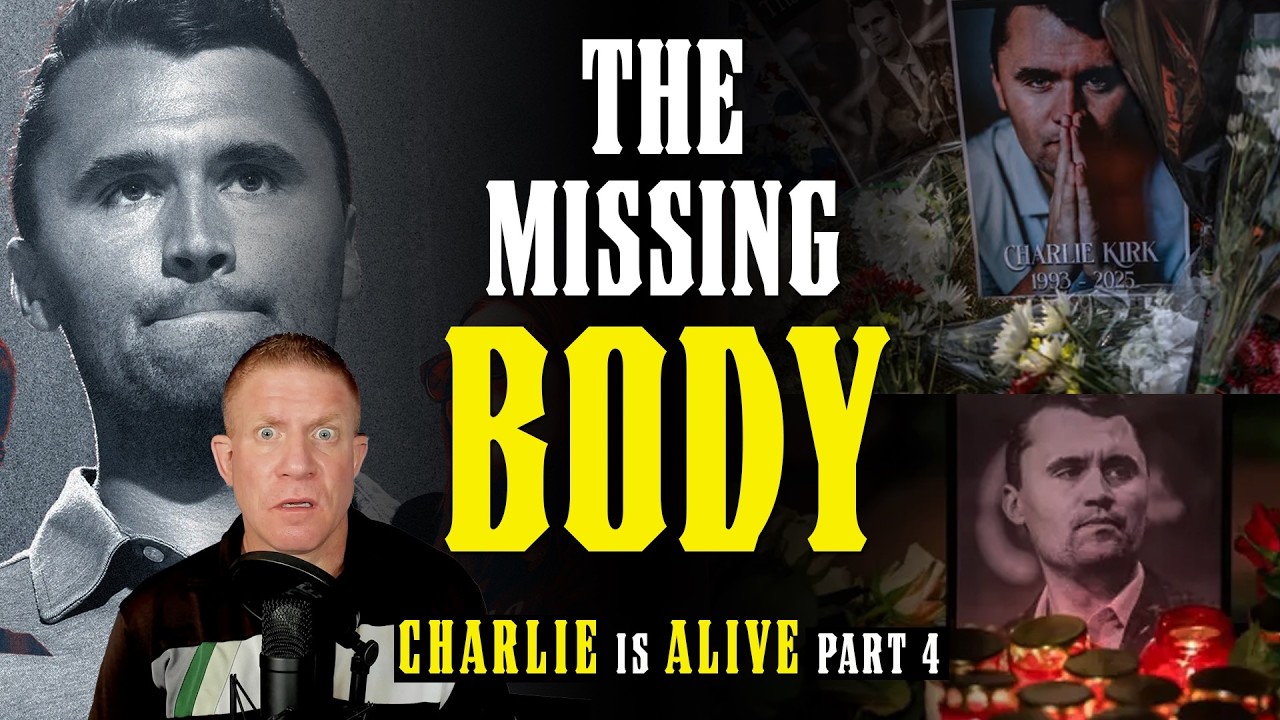
Jesse ON FIRE Uncovers Shocking Evidence in Charlie Kirk Burial Mystery and Tyler Robinson Case
51:49
Baron Coleman on Fame, Truth, Podcasting, and the Charlie Kirk Case. Inside the Mind
Baron Coleman joins for a raw, unfiltered conversation covering his journey from practicing law to full-time podcasting, the explosive growth of his show, and his deep-dive investigation into the Charlie Kirk case. He discusses the challenges of independent media, the importance of integrity in reporting, his appearance on the Candace Owens podcast, and his current theories on what really happened to Charlie Kirk on September 10, 2025. Coleman breaks down his investigative methods, the pressure of broadcasting to tens of thousands live, and what it takes to maintain credibility in an era of rampant misinformation. Expect candid insights, hard questions, and a behind-the-scenes look at the life of one of podcasting's most talked-about voices.
From Law to Podcasting: Baron Coleman's Journey
Baron Coleman has experienced meteoric growth in the podcasting world, going from a few dozen subscribers to nearly 200,000 across YouTube, X, Rumble, Locals, and Spotify. His appearance on the Candace Owens podcast, viewed by millions, catapulted him into mainstream attention, and his name has been mentioned on The Jimmy Dore Show. Coleman recently retired from practicing law to pursue podcasting full-time, a decision that reflects both the success of his show and his commitment to independent media.
Coleman practiced law for years, working in civil and criminal courtroom litigation, corporate in-house counsel, and various sectors including banking, IT contracting, and healthcare data analytics. However, his true passion remained broadcasting. He spent seven years doing a daily three-hour radio show, followed by several more years of part-time radio work, and eventually launched a Sunday night podcast to "stay sharp." That podcast unexpectedly took off, leading him to leave his legal career behind.
"I really loved broadcasting," Coleman explained. "I always thought if I could find a way to get back into it full-time, I would. I always envisioned that would be through radio, but then podcasting started taking off. So here I am."
The Transition to Full-Time Content Creation
The shift from radio to video podcasting presented new challenges. Coleman noted that while he had TV experience from a weekly panel show, the constant presence of a camera during three-hour uninterrupted streams required adjustment. On radio, he produced his own show, controlled the board, and managed six-to-eight-minute segments with built-in breaks. Podcasting eliminated those natural pauses.
"It's different sitting in one spot for three hours without being able to go to the restroom or take a break," he said. "On the radio, I really worked the mic. I was all over the place. I was very animated. Trying to keep it a little calmer for the cameras has been a different experience."
Coleman's support system includes his sister, a nurse with 30 years of experience, who recently joined him full-time to handle administrative work, email management, and other tasks that were consuming hours of his day. This allows Coleman to focus on content creation and writing, which often takes six to eight hours for a single show opening.
Behind the Scenes: A Day in the Life
Coleman's daily routine centers on research, writing, and preparation. He wakes around 7:00 or 7:30 a.m., having shifted from his earlier 5:00 a.m. wake-up time due to late-night post-production work. He avoids coffee for the first two hours after waking, believing it's healthier to let sleep chemicals clear the body first.
His mornings begin with checking that all content from the previous night uploaded correctly to YouTube, Rumble, and Spotify. Then he begins reviewing the eight to ten story ideas he's actively researching. While listening to other podcasters — including TriggerSmart, Coach, Ian Carroll, Jesse ON FIRE, and WolvesAndFinance — he conducts research, digs through tax documents, corporate filings, FAA registrations, and other source materials.
"I'll start writing around 9:30 or 10:00," Coleman said. "Once I get that first sentence out of my head and on paper, I write like a crazy man. I write very quickly with mistakes. I never hit backspace. I just vomit on paper, and then I'll put it aside. While I'm writing, I'll say 'insert fact, insert fact,' and then I have to go back and find all the facts to support everything I just said. Sometimes the facts aren't what I thought they were going to say, so I've got to go back and change it or delete paragraphs."
Coleman creates a detailed run-of-show in Google Docs, hyperlinking all supporting documentation — videos, tax forms, websites — so he can pull them up instantly during the live broadcast. If he finishes early, he tackles his email inbox and monitors X for breaking developments. Sometimes he changes his entire show plan two hours before going live.
"That probably most famously happened when Candace showed the picture of the SUV and I saw all the fragmented plastic in the back while she was talking, and I thought it was an exploded mic," he recalled. "I was editing the run of show while my countdown was going on."
The Pressure of Broadcasting to Tens of Thousands
With 20,000 to 25,000 people watching live, Coleman feels the weight of maintaining credibility and integrity. He refuses to waste his audience's time with poorly researched or low-value content.
"I commit to doing four shows a week, but I commit to doing four well-produced, well-informed, entertaining shows," he said. "If I can't come up with four one week, I'm doing three. I'm not going to just come on air and waste people's time. I was a voracious consumer of talk radio and podcasts, and I would get so mad when someone's podcast was a waste of time. I can't get that time back. I'm not doing that to somebody."
Coleman spends countless hours running down leads that never make it to air. He digs into people's backgrounds, flight records, corporate documents, and personal histories, only to discover there's nothing reportable. "That time is just lost," he said. "But I'm not going to just go with something just to go with something. If it doesn't add value to what I'm covering, I'm not going to bring it up."
The Candace Owens Experience
Coleman's appearance on the Candace Owens podcast was a career milestone. He met Candace for coffee beforehand, texted with her regularly, and felt completely at ease when he arrived at her home for the taping. Armed security met him in the driveway, but when he looked through the front door and saw Candace and her team prepping, he simply walked in.
"They didn't even break," Coleman laughed. "They just looked up like, 'Hey, grab a seat.' She is so easy to talk to. She is exactly who she is in real life. And I had a good friend from politics call me and ask what she's like in person. I said, 'Dude, she is so much smarter than you think she is.' I think she lulls people in with something that sounds pretty crazy, but it's like half of what she knows, and then she gets people to respond, and then she has the rest of it. It's really sharp."
Coleman felt compelled to sit still during the taping, a challenge for someone who is naturally animated. "Candace's show was a nightmare because of that," he joked. "I felt compelled to be super still that whole time."
Investigative Methods: From Courtroom to Podcast
Coleman's legal background informs his investigative approach. In law, he was bound by rules of evidence — the UCMJ in military trials, federal rules of evidence in federal court, and state rules in Tennessee, Alabama, and Florida, where he is licensed. Getting a document admitted required laying the proper foundation and navigating strict procedures.
"Now I don't have that," he said. "I can just throw documents up whenever I want. That's a really nice piece of freedom. But I still try to hold myself to some sort of universal standard. I don't want to enter into defamation, not because I could get sued, but because I don't like being wrong."
Coleman's go-to verification method is obtaining source documents directly — corporate filings from state databases, tax forms, video and audio evidence. When relying on human sources, he seeks photographic or documentary corroboration. He also learned from a law school professor who staged a dramatic classroom confrontation, then had students write down what they witnessed. When the professor showed video of the incident, no one was correct.
"Her purpose was that eyewitness testimony generally sucks," Coleman explained. "People aren't lying. They're wrong. That happens a lot. Especially in a traumatic experience, the angle of the video is often misleading. People bring preconceived notions and biases."
Coleman noted that people's recollections evolve over time, sometimes without them realizing it. "They'll go back and watch a video of themselves describing it, and they're like, 'I didn't realize my story had changed so much.'"
The Charlie Kirk Investigation: Current Theories
Coleman approaches the Charlie Kirk case by asking whether there's evidence Kirk was supposed to survive September 10, 2025. His investigation focuses less on the wound itself and more on the behavior and travel plans of those around Kirk that day.
"The first thing I looked at was a leak that confirmed, in my opinion very confidently, that Brian Harpole, who was the lead security contractor for Charlie Kirk, did not have plans to leave Salt Lake City," Coleman said. Based on documentation he reviewed, Harpole had no return flight to DFW, no flight to Colorado where Kirk was expected to speak the next day, and no flights to any other events, which was inconsistent with Harpole's pattern of booking flights 10 to 20 days in advance.
"If you weren't planning on going, you probably had a good idea he wasn't walking out of there," Coleman reasoned. "If you had a good idea he wasn't walking out of there, it wasn't Tyler Robinson from the Losee Center with a 30-06 from his grandpappy."
Coleman is open to correction if additional evidence emerges. "If Harpole provides additional evidence, I'll be happy to correct that, just like I did with the Sam triple-zero flight from Camp Springs to Colorado Springs."
Coleman believes the operation would have included multiple redundancies. "You wouldn't just pin it on one potential opportunity to kill him. You would have it in duplicate and triplicate. You wouldn't leave it up to a 20-year-old kid on a roof 140 yards away. Even if someone is highly trained, they could still miss. Why would you chance that?"
He considers multiple possible causes of death: electrocution, an exploding microphone, a manually broken neck (which he finds plausible based on reported injuries), a taser, or an injection. A hypodermic needle was visible on video just before Kirk went down.
"Maybe they did two, three, or four different things to make sure he was dead," Coleman said. "My current operating theory is it was multiple causes of death, any one of which may have been able to kill him, all of which together were guaranteed to kill him."
Debunking Conspiracies
Coleman has encountered numerous theories in his investigation. The silliest, in his view, is that Charlie Kirk is still alive and the whole event was staged with a hologram.
"I just refuse to buy that," he said. "I know there's probably 10% of people following the investigation committed to that position, but holograms need something to project against. Kirk walked around throwing out hats beforehand. Holograms don't throw hats. Rick Cutler jumped over the table and didn't knock down glass or anything else. It just doesn't fit."
Coleman also dismissed the "cell phone pistol" theory involving a man in a white shirt shaking his hands. "No one's going to shoot anybody like that. You're not going to hit anything. Plus, I've seen the video from behind. He didn't get hit from behind." However, Coleman hasn't entirely ruled out that the man in the white shirt had some sort of timing role, as his movements appeared synchronized with Dan Flood's actions.
Similarly, Coleman doesn't believe Rick Cutler fired a palm pistol from his sleeve, but he hasn't ruled out that something on the sleeve was involved in timing or coordination.
Coleman also addressed claims that the surgeon who treated Kirk made certain statements about the injuries. After talking to multiple people who know the surgeon, Coleman concluded the doctor never made those statements. "I'm not sure who Candace spoke to, but I think she said something similar."
Calls for Transparency
Coleman argues that Turning Point USA could easily disprove his theories by releasing evidence: full video footage from behind Kirk, video of Tyler Robinson getting into position and taking the shot, the autopsy report (which Erika Kirk owns and could release), or autopsy photos.
"Show me he had a flight planned after September 10th," Coleman challenged. "Show me more pictures from the SUV. Release the full video footage. You could put all this to bed instantly. Law enforcement agencies release body cam footage to quell the public when there are riots forming. They compromise the investigation to satisfy the public that everything's on the up and up. They could do it."
Coleman pointed to the Luigi Mangione case, where video of the CEO being shot was released almost immediately. "We watched that guy get shot in the back a thousand times in two days. Why can't they release Tyler taking the shot?"
Responding to Critics
When asked how he responds to claims that independent podcasters are just chasing money and making things up, Coleman's answer is simple: "Prove me wrong. Show where I've gone astray. As long as I'm telling the truth, people are justified to tune in and listen. If you believe I'm just making stuff up, show me they weren't at Fort Huachuca. Show me he had a flight planned after September 10th. These are easy things to show me."
Coleman is frustrated by Turning Point USA's approach of sending legal letters to Wolves and Finance and Candace Owens rather than simply providing evidence to correct the record. "I think most people are like me. If you said something that turned out to be wrong and TPUSA sent you evidence of that, why would you not correct it? Why would you want to mislead someone? That's dishonest. I don't want to be dishonest."
Faith, Fitness, and the Future
Coleman's Catholic faith plays a significant role in his life. He attends Mass regularly and takes his faith seriously, though he acknowledges making mistakes in his past. His faith influences his commitment to honesty and integrity in his work.
"I'm not going to BS people and lie to them just to run a show or get clicks or say something outrageous just for the sake of saying it," he said. "If I say something, I believe it. And I'll tell people if I believe it 100% or if I'm holding back."
Coleman also coaches CrossFit classes, a passion that complements his podcasting work. He emphasizes the importance of fitness, particularly for people over 40.
"Your body is not a Ferrari," he said. "A Ferrari gets more valuable sitting in a garage doing nothing. Your body sitting on a couch doing nothing is just dying in slow motion. You need to push your body to the absolute max several days a week. The more you can squat, the more pressure you put through your legs, the more your body goes, 'Oh, we're still alive. Let me pump out hormones like we're still alive.' If you're just sitting around all day, your body's like, 'Oh, we're dying. I'll give you hormones for death.'"
Coleman believes maintaining leg strength and grip strength after age 40 can lower blood pressure and increase lifespan. "If you can get into a squat position where your hips are below your knees and stand up with no hands 20 times in a row, you're probably going to be independent for quite a while."
Looking Ahead
While the Charlie Kirk case dominates Coleman's current focus, he has other interests he plans to explore. He's scheduled to interview Roger Stone about Stone's book on the JFK assassination, a topic Coleman finds evergreen. "JFK was 62 years ago and we still don't know what happened. You can always bring that up anytime."
Coleman is particularly interested in historical figures like William Joseph Casey, CIA director under Ronald Reagan. Coleman named one of his children after Casey, whom he views as a tragic figure who may have spawned the Iran-Contra affair and been involved in cocaine shipments into the United States in the 1980s.
"I would love to interview him because I have a lot of questions about the cocaine shipments into the United States in the '80s. I think it wrecked our country, and I think it's beyond dispute it came from the United States government. I would want to know to what extent he was aware of it, maybe even participated in it or constructed it."
Coleman also believes there will always be events that demand investigation. He pointed to the Las Vegas shooting as an example of an unresolved case that, had he been podcasting at the time, would have received the same treatment he's giving the Charlie Kirk case.
"If a national treasure can be taken down under mysterious circumstances and they tell us all to just go away, nobody's safe," Coleman said. "If you get invited to speak somewhere, you're not safe if they can just kill people and walk away and act like everything's fine. The more I put this timeline together, the more I think there's no way this is Tyler Robinson. There's too much going on that all points to the same thing happening to this guy."
Video Transcript
[laughter] I got some discretion. >> Hey everyone, we are just going to give people a few minutes to come in. Checking all our different levels and uh making sure we're good to go. Welcome to the stream. Let's see. Make sure Rumble >> 96% of your poll said I would wear a hoodie, but they were confused because they didn't know I was going with the Brandy and Billy. [laughter] Yeah, Brandy and Billy are pretty awesome. >> Yeah, they're great. They got great merch, too. >> Do they ever end up going to see Ian? I know that was supposed to happen. >> Well, I I don't know if I should have said that. Maybe that's a surprise. No, they didn't. [laughter] >> To be confirmed at a later date. >> Yeah. Yeah. Yeah. Yeah. >> All right. See, [snorts] Rumble good to go. All right, we are live. Live. All right, let's check this poll. 862 volts. Would Baron wear a hoodie or dress up? Would he dress up [laughter] for this thing? 96% hoodie, but not sure what color. Did anyone guess the color correctly? Who Who had Brandy and Billy show merch hoodie? You won. All right, we are quickly getting to that number. So, we'll start here any second. And anyone that's joining, make sure you guys hit that like. That's what makes this go out. That was what that's the only thing that YouTube likes. >> Yeah, they get Man, you when you figure out the algorithm, the show just gets pushed right on out. When you when you can't figure it out, people are like, I don't understand why no one will see me. I I I'm I I podcasted to friends and family only for a long time before I figured out the algorithm and then all of a sudden it gets a lot lot easier. >> All right. Yeah, let's go ahead and uh we'll go and get started. All right, everyone. We appreciate you being here. Obviously, it's lunchtime and some people are working and that kind of stuff, but this is Baron's day off. So, he is uh giving us his attention and his time on his day off. So, definitely give him a lot of love for that. But, we are going to uh dive deep into the heart of free speech with our esteemed guest whose insights promise to challenge the status quo and inspire the future. Going from just a few dozen subscribers, when I first saw him, he only had a few dozen subscribers on YouTube to now he's basically at 200,000. and he'll be there any day. And um X, Rumble, Local, Spotify, he's kind of taken over everywhere. And um being featured on Candace Owens podcast, which is viewed by millions. He was mentioned on Jimmy Door. Jimmy Door, if you're watching this, reach out to him. Get a hold of him. Get those things arranged. And uh becoming a household name. I give you Baron Coleman, ladies and gentlemen. Show him some love in the chat. >> Uh appreciate you having me. It's been a lot of fun. >> They don't know how much fun we had before we went live. Yeah, >> this is like the second interview. [laughter] [snorts] >> Baron got a suntan. Is that true? >> No. Baron changed the lighting because Trigger has such fantastic lighting being a video professional. I was sitting over here in a a cavern of doom. So, I uh I just I just changed the lighting a little bit. That's all. >> And yes, unfortunately Baron will not be live this evening. It's his day off. >> Yeah, I I mentioned that on the show yesterday. I was taking a day off. I I have to I have to have time for my family. Uh, and when you when you do a three-hour podcast in the evening, that that really takes away of your ability to, you know, sit down, eat dinner, hang out on the couch, have some fun, >> which I've coined since a barathon >> because you're doing three hour marathon. All right. >> All right. Quick housekeeping items. Make sure you hit the like and push this out. Um, subscribe here and on Real Baron podcast. If you are not already subscribed, go check out Baron and we'll have more information specific about that later as well. And any questions you want to ask, put them in the chat. And obviously, we give preference to super chats, but I will try and mix in some regular questions as well. And special thanks to channel members, Patreon, and moderators. And on my channel, and Baron's both, this is something that's been happening is if you think you're subscribed, make sure you double check because about 50% of you that have checked, you were unsubscribed without knowing. So, make sure you do that. >> All right. >> I don't understand why that happens. I mean, that's that's got to be something intentional, I would assume. >> Uh, I would hope not, but I I've heard it from a lot of people. >> Yeah. >> All right. So, what we'll do is um I have a series of a bunch of different questions that kind of mix like like this is going to be some personal stuff, some investigative stuff. We'll kind of be all over the place, but um I'll try and keep it in somewhat of a a good flow for you. So, retiring from being a lawyer to going allin now. You've retired from from lawyers, uh the lawyer life, I should say, and you did that for a long time, and now you're a full-time podcaster, meaning you support your family with this. What's harder, court arguments or YouTube trolls? >> Um, well, YouTube X. Um, I get I get a lot of that. And and I I never understood why Joe Rogan used to say, "Don't read the comments," until I I started getting more comments and I was like, "Okay, I'll quit reading the comments." >> Um, no, I mean, I I enjoyed practicing law. I practiced um I did a lot of courtroom stuff uh both on the civil and criminal side over the years. Um I worked at a bank, I worked at a you know like an IT contractor, I worked um at a a healthcare data analytics firm. I mean I've I've worked at a bunch of different places and um I I really like broadcasting. I' I was a full-time broadcaster for seven years. I had a daily three-hour radio show for um for seven years, six years. and uh and then did part-time fill-in radio work for three or four years on top of that. So I've been on the air a long time, had you know was on a TV show for two or three years once a week. Um and so I I've got a lot of broadcasting experience and I I really always loved it and I always thought, man, if I could find a way to get back into it full-time, I would. I always envisioned that would be through the radio and [clears throat] I sort of just did the podcasting on Sunday nights just to stay sharp and then uh and then it started taking off. So here I am. So, since you've like revealed your face and everything and you're kind of out there both audio and video, has that changed anything significantly or do you feel like the same person talking on radio back then? >> Uh, it's it's a little different. It's a little different having a camera in your face. Um, I did, like I said, do a TV show, but it was a panel TV show. There were four of us on it. Um, and it was just once a week and it was an hour or actually it was 30 minutes. I mean, it was a quick show. Maybe it was an hour. I can't remember. Um, so it's it's a little different, but it it has a a radio feel. I produced my own radio show. Well, the first six months I didn't because I was learning the business, but after after about six months, I started producing my own radio show, meaning I sat behind the controls, got us in and out of breaks, brought the music in and out. Um, it was a talk radio show. And it it's different because on a talk radio show, you're going six to 8 minute segments at a time, not three hours uninterrupted without being able to go to the restroom, without being able to take a break, uh, stretch your legs. So, you know, sitting in one spot, leaning forward because you want to look engaged and and you know, I'm very animated. I don't know if you figured that out yet. I have a hard time sitting still. Candace's show was a nightmare because of that. >> Um, I felt compelled to like be super still that whole time. >> So, um, but on the radio, I really worked the mic. I was all over the place. I was I was very animated and um and so it's trying to keep it a little calmer for the for the cameras been a different uh been a different experience. >> Well, let's pick up on that too. So, walk us So, obviously a lot of people are huge fans of Candace, right? From a lot of different angles. So, walk us through your experience being on the Candace Owens podcast. And not only that, you were actually at her house. So, did you have any like pre-show jitters, fears? Like, how was that experience? >> Uh it it wasn't. No, she puts you at such ease. Um, and we talked on the phone. We'd met in person for coffee. We've texted quite a bit. Um, I So, no, I did I I honestly just I felt bad after I walked in. I realized it. I saw him through the window and I just walked in her front door and I got in. I was like, well, but you know, you get met by armed security in the driveway, so I didn't feel like I you know, they didn't surely they didn't think I was breaking in. Um, but I just walk in the I looked through the door. I was about to knock on the door and I saw they were sitting there and I was like, I'll just walk in. I walked in and they didn't even break. Like they're sitting there prepping for the show. It was two or three hours before the show started. I can't remember which. And they just kind of looked up like, "Hey, grab a seat." So, uh, she is she is so easy to talk to. She is so exactly who she is in real life. And I had a good friend of mine from politics who's who's been around politics a long time. He called me the other day. I hadn't talked to him in a while. And he and he said, "You know, what's she like in person?" And I said, "Dude, she is so much smarter than you think she is." Like, she is so much smarter than she you think she is. I do. I think she lulls people in with this, you know, she'll say something that sounds pretty crazy every now and then, but it's like half of what she knows and then she gets people to respond and and then just, you know, it has the rest of it should they take the bait and it's it's really sharp. I mean, she is something. She is something. >> Trap is set. >> Yeah, I saw Brandy and Billy in the chat. I got your hoodie on, girls. [laughter] And if you guys aren't already following Brandy and Billy, make sure you go over and show them some love. It's Brandy and Billy Show, and they are on YouTube and X and Instagram and Tik Tok, I believe. >> They're everywhere. >> Everywhere. >> They're all over the country, too. They travel for stories. They're They're not like me. >> Yeah, they're in the field for sure. So, Dropping Law for podcasts, how is your support system for this new adventure you are building? I know you mentioned like maybe your sister would be joining you. Um, did you want to update some people on like kind of what's to come as far as that goes? >> Yeah. Um, so I I obviously did everything myself because I didn't have the means to pay anybody. Um, and it it just it just grew out of control. Like my email inbox is completely out of control. I have to have I have to have full-time help. Just to tangle that. >> Um, you know, responding just just I have to have some help. I have to have some help. And so I was talking to her. She's a nurse. She's been a nurse for 30 years or so, maybe more than that. Um, and she's brilliant. She's very funny. She's very smart and she can do anything she puts her mind to. Um, and uh, great jeans. She's got, you know, no, I'm just kidding. Uh, [laughter] but she um, so she was talking to me and I said, "How, you know, I hate to be forward, but how much do you make? Can I afford to hire you?" >> And um, and so we came to an agreement. I couldn't afford to hire her, but we came to an agreement where she could leave her job and come work for me full-time. And that is going to take um so much pressure off of me because right now I'm spending hours a day on the administrative side and it does take a lot of time on the administrative side taking care of everything. She can now handle all that and I will be able to focus more on just content creation, writing. My opens take a long time to write. They are um not >> No, no. Some of them are upwards of six or eight hours of writing. Now I do use tools to factf find, you know. >> Yeah. Research. >> Yeah. I mean, I I'll I'll like the you know, I'll look and say, you know, uh what was the date of Dale Earnhard's crash, you know, for from last night and and you know, so I'll use some tools to to scrape some data, but the actual writing, I enjoy writing. Like I I my computer, if I ever die and they dig into my Dropbox, I've got a lot of stuff written in there that I've written over the years. um fiction stories, non-fiction stories, um just bios of people that that I meet and I'll I'll I don't know, I'm weird like that. I like to write. I've always liked to write and so I it is a writing outlet. It's a creative writing outlet on a daily basis or three or four days a week. And um and so I do I do spend time to write and the shorter ones are two or three hours. The longer ones can take the more fact-based ones can take upwards of five, six, eight hours. And so that will give me more time to do that kind of stuff instead of rushing around to the last second to put a show on the on the air at 6 or 7 o'clock at night. >> Well, I think a lot of people don't realize how much work goes into being a creator. >> So like people see these live streams that go three hours and you tell them you you know maybe you write three or three to five hours or something a day, but they don't see the time watching other stuff, researching other people, watching other podcasters to get more information, being on X, do like it's like a it's almost like a 247 thing when you're not sleeping. It's it's a lot more work than people think. >> It is. And how many rabbit troll trails I run down that don't make it to the air because they end up dead ends. And so I you know how many how many people I've dug into and spent dozens of hours scouring through their lives to realize there's nothing to this guy. >> This guy's clean as a whistle. Um and that that time is just lost. I mean I I have a better understanding of who that person is, but it's it's of really no value. Um, and so that that happens. Flights, uh, locations, you know, I dig through tax information. I'll I'll dig through, uh, formation documents, FAR registrations, and you get to the bottom, and you just realize there's there's nothing to this. And so, I've just wasted 12 hours of my life that I can't put on air. There's nothing there's nothing reportable here. And I'm not going to just go with something just to go with something. If it if it doesn't add value to what I'm covering, then I'm not going to bring it up. Well, like you said too, a big part of your integrity is you said that if you put even if you put a show together that has some stuff, if you don't think it's a good show for the audience, you won't even waste your time doing it. And I think that's a huge difference from a lot of other people who will do a show just to do a show and you're like, you know. >> Yeah. No, I mean, that's a commitment I've made. I I commit to doing four shows a week, but I commit to doing four well produced, well-informed, entertaining shows. And if I can't come up with four one week, I'm doing three. I'm not going to just come on air and waste people's time. You know why? Because I am a I am a consumer of of for years I was a consumer of talk radio. Like back to high school and college and um and then I did talk radio and I was a consumer of talk radio and then when the podcasting medium came around about 15 years ago it started to become popular. Uh I consumed a voracious consumer of podcast and I would get done with someone's podcast even if it was just 30 minutes if it was a waste of time I was so mad. And I thought, I can't get that time back. And I'm not doing that to somebody. If I feel like I'm going to waste your time, I'm not doing it. >> So on your podcast, we know there's a lot of conspiracies that go around, especially around Charlie Kirk. >> So what is the silliest conspiracy that you've debunked or that made you laugh out loud? For me, it was the hologram. >> Uh yeah, the whole Charlie's still alive. I just I just refuse to buy that. Um, I know that there's probably 10% of the people following the Charlie Kirk investigation that just committed to that position, but I refuse to buy that. The um the next silliest one was the guy in the white shirt shaking his hands like this. Now, I I'm not ruled out that that guy is involved in some way because the it looked like he went to do it and then he >> do what >> you talking about? The phone pistol that like folds open. Is that >> Yeah, the guy >> he shot him. Yeah, the he was on Charlie's like uh what 3:00 or 4:00 over here to the right >> and um you know, no one's going to shoot anybody like this. You're not going to hit anything. You're you're a gun guy. No one would fire a pistol that way. And if you did, you wouldn't be accurate enough to hit something. Uh plus I've seen the video from behind. He didn't get hit from behind. I can assure you that. >> Um >> and Cutler, right? Like Brick Cutler, you know, doing like a a palm pistol shooting at an awkward angle from down below from his arm. You'd be lucky if you could hit Charlie's whole body, let alone in his neck or, you know, his head. >> But I will say the guy in the white t-shirt that they said was the cell phone pistol, he looked like he was about to do the shake the first time and looked over at Dan Flood and timed it with Dan Flood doing this. So, I've not ruled out that that guy has some sort of a timing connection >> cuz the first time he did it was when Dan Flood went to touch his arm and the second time is when the bang happened. And so, I've not ruled out a timing thing. And the same thing with Rick Cutler on his sleeve. That's not a palm pistol, but I'm not ruled out that there wasn't something going on on that sleeve. I don't know what that could have been. >> Something synchronized. Interesting. >> But it wasn't a It wasn't a palm pistol. There's no way. >> And yeah, I mean the whole with me the hologram thing. Obviously, you see like the Michael Jackson in Vegas thing. He's moonwalking across the stage, but it's a very controlled environment and it usually has to be pretty dark and it's only from one angle. If you were beside him, you wouldn't be able to see him. You can only see him from the front. So to me, there's no way that could happen. Um, let's see. >> Not only that, he walked around throwing out hats beforehand. I mean, holograms don't throw hats. Sorry. >> Well, and holograms need something to project against. >> Yeah. >> And then you have Rick Cutler jumping over the table. He didn't knock down glass or anything else. So, it just doesn't fit. So, you went from Alabama radio to Tennessee podcasts. And obviously, we've seen, you know, you did this new audio and video setup. >> Yeah. >> You had a couple couple blurry days, but you got it figured out. Now you're all crispy, right? You're in HD. So, what's the worst technology fail that you had in radio? >> Oh, in radio. Um, so one day we lost our ability to go to break. It was the first time I'd ever had to do three hours uninterrupted. The computer would not let us go to a break and so we couldn't take calls either. And and I was I overprepared on radio just like I overprepare a lot of times on a podcast. You know, like last night I had to cut some material because it just got too long. And uh because I try to structure everything in my head. It's about a five minute intro. It's it's a 12 to 20 minute opening and then I like to take the the content to an hour hour and a half mark and then and then do super chats. Um and it kind of breaks it up into into three three different components. I did the same thing on radio. And if it would get too long, I would just, you know, take a stack of papers out with me that that I didn't cover that day and maybe I'd throw them out, maybe I'd cover them the next day. Uh but one day on radio, the computer went down. We were on We were on Windows uh XP, believe it or not. >> Yeah. And it and they had stopped supporting it and >> and so the radio the uh XP crashes and we're stuck on air for and it happened right when I got on air at 9:00 in the morning. I couldn't even take the first news break. And so I was like, "All right, we're live and we're going to stay live." And we stayed live for three hours. And that means no bathroom break. And and you know, like I plan accordingly now because I know I can't get up for three hours. But when you're on radio and you think, "Okay, I go on at 9:06. My first break's at 9:14. I'll just run down to the bathroom if I need to." And then I know I've got a break at at, you know, 9:22 and 9:30 and 9:41 and 9:52. So I knew all my breaks lined up uh cuz they were they were pretty hard breaks, most of them. And um and and when your ability to go to break when you've set your life up six to eight minutes at a time goes away, that was a that was a pretty bad fail. Um, one time we were covering a former governor who sort of still ran everything in the state and right as we were getting to I was putting a story together. Right as we were getting to the most damning part, our tower crashed. >> Like the tower shut out, which means >> Yeah. Yeah. Yeah. So, we were still streaming live but only, you know, 100 200 people would listen to the the stream on a smartphone. Everybody else, you know, thousands of people listening over the air and they crashed and everyone was like, "Oh no, the governor's up there pulling the plug on the tower." So yeah, just let you know technology is part of it particularly in radio that's an old terrestrial medium that uh that that's very high-tech and and not there are very few radio engineers still on earth that is a dying breed and they've most of them have gone fully digital even the ones that still are. >> Yeah. >> So as a former lawyer turned investigator what's the most surprising overlap between your legal research that you used to do which was very in-depth. You had to make sure everything was perfect because you had to be within the confines of the law whereas now you have a little bit more freedom. So, how does that kind of transfer over into doing the research you do now towards these conspiracy theories and the Charlie Kirk case, for example? >> So, in law, you're bound by the rules of evidence. If it's in a military, I did military trials a lot. So, you you're bound by the UCMJ if you um you know, the federal rules of evidence in federal court, the Tennessee rules of evidence or the Alabama rules of evidence in in state court or Florida. I'm licensed in Florida, Alabama, and Tennessee. I've lived in all three states uh practicing law. So, um, you know, you're bound by the rules of evidence. So, and if you want to get a documented in, for example, you've got to lay the proper predicate. You got to you've got to lay a foundation. You have to know how to, you know, to to do the give and take with the witness to allow to get the judge to allow the document to be seen either seen by the witness or seen by the jury. Uh, I don't have that now. Like, I can just throw documents up whenever I want want. And that is a really nice piece of freedom. Um, so, [snorts] so that's probably the biggest difference. I mean, the investigatory mind is still the same. I still, um, I still try to hold myself to some sort of a, a universal standard, even though it's not required in podcasting, obviously. I don't want to enter into a defamation certainly, not because it's not because it's wrong or could get me sued, but because I don't want to be wrong. I don't like being wrong. Now, that happens. You're going you're sometimes going to go down a path and someone's going to call you or tell, and it's happened. Um, I won't say when, but but astute listeners will probably be able to figure it out where I had to actually correct and say, "Nope, I was wrong on this one." Um, I'll tell you. I got a call from an AP reporter who was like, "I was in the Oval Office with JD Vance when you said he was on the plane." >> Oh, yeah. >> And I was like, "Well, I didn't say he was on the plane." I said, "I thought he was on the plane." She's like, "Well, I can assure you he wasn't." >> And so, um, but I did. I came on the next day and said, "Hey, I saw video of him in the office." Like it's possible that I was lied to, but at least I'm telling you I saw the video and it was presented to me as footage that was recorded of him in the office at this particular time. And I I tend to believe it. So I'm I'm willing to make a correction and that's why I am kind of miffed really with TPUSA's approach where they're sending out letters to Wolves and Finance or sending out letters to Candace. I think most people are like me. I think you're probably that way. If if you said something that turned out to be wrong and TPSA sent you evidence of that, why would you not correct it? Why would you want to mislead someone? That's dishonest. And I I don't want to be dishonest. Well, we know there's a group of people that they they do it obviously just for the money, just for the clicks, just for the views, just for the um the recognition and that kind of stuff. And they kind of just honestly they just pull it out of their ass, right? Um, but yeah, 100%. If if I say something and it's incorrect, I will correct it because that's the correct thing to do. I don't want to mislead people and I don't want to spread misinformation. >> Yeah. >> Now, this this next question is kind of interesting. You kind of answered it the other night when you said that you liked a certain era of Charlie, but if you could time travel, what moment in the Charlie Crick saga would you witness firsthand? >> That's that's uh both time travel and location travel because I I would have to get in the room. I would love to be um at the Candlewood Suites September 8th and 9th sitting in the lobby >> and in uh Sierra Vista, Arizona. I would love to sit in the lobby at the Candlewood Suites that that time. >> So, quick follow up on that. A lot of people have asked, do you have any followup on the uh possible viewing of a beautiful woman wearing certain clothes with blue eyes in that location? >> Patience, dear wife. >> Patience. >> Patience. We're on day 33 of her not providing an alibi. There's a reason for that. Allegedly not providing an alibi. Not that I've seen. Not that I've seen. Yeah. Now, this one's interesting. I know you've talked about a few people already. I think JFK was one of them, but if you can interview literally any any historical figure in the world at any time period, who would it be? >> William Joseph Casey. Uh he was the CIA director under uh Ronald Reagan. I'm fascinated with the man. I actually named a child after him. I give away one of my kids' names. Um I I I think Bill Casey is perhaps one of the more fascinating uh unknown I don't say unknown because a lot of people know who he is, but one of the most fascinating stories in American history. He is a self-made man. He went into the publishing business. Um he really wanted to be Secretary of State. He helped Reagan win in ' 80s so that he would be Secretary of State and they stuck him at CIA and he was kind of pissed off about it. But he became one of the most effective CIA directors of all time. I would love to interview him because he sort of I think if I had to guess he spawned the Iran Contra >> affair. Um he was very involved in what was happening in Nicaragua at the time. And I have a lot of questions that if I could put truth serum in them. I have a lot of questions about um you know the the cocaine shipments into the United States in the 80s that because I think it wrecked our country. it it and I I I think it's beyond dispute it came from the United States government. I would want to know to what extent he was aware of it and um maybe even participated in it or constructed it. I'm not saying he did. Um I've gone from viewing him as a hero to viewing him as somebody almost a tragic figure >> and I've not yet gotten to the villain stage, but um >> I'm I might head that way one day and and if I could interview him, maybe I would conclude he's a villain. But for a long time, he was a hero because I looked at this guy, I was like, man, he he did whatever it took to keep communism out of the Western Hemisphere, at least out of the northern North America, Central America area. And um and so I looked at him as this just unbelievable hero. Joseph Persco wrote a great book on him called Casey. Uh anybody looking for a book to read is phenomenal. Great, great biography. I like biographies a lot. He would probably be one person I would love to go back and interview in his prime, you know, like 198586, right in the thick of all of it and and ask him what he knew about what was going on because I think it's fundamentally changed the nature of of the United States, everything that took place back then. >> Yeah. I think um things were a lot different back then. There were a lot less eyes. They got away with a lot more, it seemed like. >> Yeah. Yeah. Well, without people knowing. people know things now that they still get away with, but yeah, we won't we won't go into that, >> right? >> So, um, what's the craziest listener email or comment you've received since starting the podcast >> besides besides >> Yeah. Yeah. Yeah. Joe Joe's Joe's Joe's. >> I get a lot of them. Um, I get a lot of emails from people that, you know, I don't I don't respond to, but they they're they're kind of wild. Um, and I I really wonder, are they okay? Like, are these people in touch with reality? And and I'm not confident they are. I'm not confident all of them are. I don't want to betray any confidences, but I I mean, I get stuff where people claim to have seen things and then I think they couldn't possibly have seen it. So, I'm not going to I'm not going to respond to it. I think some people just want to insert themselves in a story and uh and that happens a lot, unfortunately. Well, I think some people are very convinced on what they think they saw, and they keep running with it, even if there's something contrary in the evidence. >> Yeah, >> I see that a lot. >> Yeah. I had a great um a great evidence professor in law school, my second year of law school. Her name was Aviva Orinstein, and she was brilliant. She was so smart, funny, uh lovable character. I think she still teaches at IU. I think she's still a professor, an evidence professor there. But she um obviously would be 20 years older, 25 years older now, however long ago I was there. But she um she did something to us that I I was not expecting. There's 150 or so people in this class. It's one, you know, one of those huge stadium style classrooms. And right in the middle of class, some dude burst open the doors. It's like one of those rooms where there's four sets of double doors to get in. It's that kind of a that kind of an auditorium. and and he burst through the doors and they start screaming at each other in this random language. And I'm like, "Oh my gosh, is I mean I mean they were screaming, pointing, yelling, you know, and then she threw a bunch of papers at him." And then he turned around and ran off. >> And she was like, "Oh my gosh, everybody take out a sheet of paper right now. Write down everything you just saw. We might need to record this. Write it down." >> And so I'm like dutiful. I'm like, "Yes, ma'am." You know, I'm writing, writing, writing. And then she showed us a video of what happened. >> What happened? Nobody was right. Nobody was right. And her per her purpose was eyewitness testimony generally sucks. Um and we put so much value on it. You know, you put somebody in the dock in a in a trial and they say they saw it. The jury's like, "Oh, it must be exactly what happened. Why would they lie about it?" >> They're not lying. They're wrong. And and that's that happens a lot. Unfortunately, people are just wrong. Especially in in a traumatic experience. You see someone get shot and killed. You see somebody get stabbed. you see somebody yelling and fighting and then you know um even the the angle of the video often is is um is um is is often uh misleading. So it's it's it's I I think a lot of my email I think a lot of my emails of people who claim to have been certain places or seen certain things some sometimes that's that's the problem you know they're bringing preconceived notions and biases you know. She asked us what language were they speaking, what uh I mean there were like 25 different answers. People like, "Oh, I speak Dutch. I know that was Dutch." And they're like, she's like, "How would I know Dutch? [laughter] I'm a little Jewish woman from Brooklyn." >> So, >> well, it's also interesting, too. I've heard, and maybe you can confirm this, people have a certain story what they think they saw when something happens, especially traumatic, and over time their story will actually change from the same person. Have you seen that as well? >> Yeah. Yeah. Yeah. It evolved. Um and and sometimes they don't even realize it's happening. They go back and watch their own a video of themsel describing it and and that person's like I that is sorry I didn't realize my story had changed so much. >> So as we know at some point the Charlie Kirk case will be closed maybe right maybe it'll be another MLK or JFK but um and a lot of eyes on it but eventually it will probably slow down as far as social media and stuff goes in the podcast. So, what other types of like topics and events do you plan to cover on your podcast in the future? Is there anything that you have that's kind of on the horizon? >> Yeah, I can always look back. I mean, there's a lot of events that that I've talked about or thought about covering, you know, past events. I think I'm gonna have Roger Stone on this week. Um, he reached out uh and and wants to come on and talk about the JFK book he wrote. It's phenomenal. >> That'll be awesome. Yeah. >> Yeah. JFK's evergreen. I mean, that was what 62 years ago and and we still don't know what happened. So that's um that's evergreen. You could always bring that up anytime, but but I want to do it on a schedule that works for him. So that's uh that's one that I want to like a show I want to do. I don't want to spend months or or whatever doing that. But there's always something like when the Vegas shooting happened, we never got resolution on that at that, you know, had I been on the air at that time, I would have actually I was on the air on the radio, but not on podcast. Uh somewhere in the radio archives of that radio station, they have recordings of dozens of hours of me talking about Vegas, like I'm doing with Charlie Kirk now. Um and and you know, so there's always going to be something to talk about. This is obviously a concern for me. It's a huge concern for me because I I think if a national treasure can be taken down under mysterious circumstances and they tell us all to just go away, nobody's safe. >> Yeah. >> Nobody's safe. I mean, if you if you get invited to speak somewhere, you're not safe if they can just kill people and walk away and act like everything's fine. And the more I put this timeline together, Daisy May's helping me put the timeline together uh in the background. She's one of She's a great listener. >> She's great. >> Yeah. She's phenomenal. And she's helping me put this uh timeline together. And as we add stuff to the timeline and I start looking at I'm thinking there's no way this is Tyler Robinson. No way. There's too much going on that all points to the same thing happening to this guy. Hm. That's interesting. Yeah, I think a lot of people lean in that direction, but I want them to get into the trials, not the pre-trials, and they're kind of dragging it out, but I think that's, you know, somewhat expected, right? Trying to buy time. >> Um, but criminal trials take a long time to put together. They're they're theater and so everything has to be done ahead of time. Everything has to be decided. We don't want to. We're not stop. We're not once we start the trial. We're not This is, you know, a little inside baseball and it and it it it sort of destroys every TV show and every movie you've ever watched about a courtroom drama, but very little is decided at trial. Almost everything is decided ahead of time. What comes in, what you're allowed to say, what words you can use, and and it takes a long time to get all that worked out pre-trial. What experts can come in, what they're allowed to say, all that. So, >> so for everyone that's watching, make sure you hit that like and make sure if you're not already subscribed to Baron, make sure you go over to Real Baron podcast basically on every social media. Are you on Instagram and Tik Tok yet or no? >> I have a Real Baron podcast Instagram. I've done nothing with it, but I did reserve it. And I just reserved a uh Baron Coleman on Upscroll just so no one else would steal my name. >> Um >> I heard about that yesterday. That app. >> Yeah. >> Kind of like the new Tik Tok. Yeah. Oh my gosh, guys. Have you Are you following this ICE stuff at all? >> Yeah. >> Okay. My wife just texted me now. She is not a conspiracy theorist. My son ate ice earlier today. There was just ice in his poop. >> And we're talking about ice outside, [snorts] not the Border Patrol ICE FBI. >> Yeah. Yes. So, ice is not normal. Whatever's going on out there. I I I I told you I had to go to the gym at noon. So about and we left about 11 to go 11:10 I think 11:10 exactly. I walked out of the door. I took a big I took a big old chunk of ice from outside and I put it on a plate. It was still there when I got back after 1:00. >> That's not normal. >> Well, and there's also a video of someone melting it, right? They're holding it up and they're trying to burn it and it's just scorching black. It's not melting. >> Yeah, that that ice there's something weird. I don't know if there was something in the atmosphere that that ice, you know, the the the the water particles clung to and it was kind of like a um it's serving as sort of an antifreeze or something, but that's not normal. Your kid should not have ice in his poop like it should have melted long before. Something weird's going on. >> No, they saw something similar to that. I think there was floods. Was it in Texas? One of the kids got flooded out. >> Yeah. >> And [clears throat] the guy the guy who actually seated he's the one that actually does the cloud seating. He had a company that does cloud seating. Yeah. >> He said that they dropped these particles out and then people would actually see like blue balls all over the ground. >> So, yeah. So, maybe it wasn't natural possibility. >> That's That's weird. I got to I got to talk to her when we get off the air. I need to I need to find out about the ice poop. >> You need to go to the ER or anything. Are you good? >> No. No. He'll be fine. >> No, he's a tough little kid. He's only five. They're resilient at that age. >> So, now if you were not podcasting, what career might have you pursued? So, obviously you did law and law. It paid well. [laughter] >> No, [clears throat] I um I enjoyed practicing law. I enjoyed what I did. So, what I did at the the company where I was, I was the I was the general counsel, but I was also the the EVP of of legal and operations. So, I kind of, you know, was over the whole operation side and I really enjoyed that. Um I had a had a really great job. I mean, I really really enjoyed my job, but uh it was becoming where I would be at work all day and all I was thinking about is producing content for the show. You know, I was thinking of things I wanted to talk about. I was, you know, crafting the opening in my head while I was supposed to be working and I was like, I can't justify pulling up a sheet and start writing in the middle. I'm on the clock, you know. I'm I'm not going to steal from the company. Um, but then I would get off and I would immediately start writing for the next day's show and I would stay up till 11, 12 o'clock working on the show and then I would wake up at, you know, five and it would just wear me out. So, um, I would have stayed practicing law. I I enjoyed it. I don't know that I would have ever gone back to like a trial um, firm, but um, being in house I really enjoyed being an in-house lawyer. I liked it a lot. >> What about CrossFit instructor? >> I do that. I coach CrossFit classes. Um I uh that's what I was doing at noon. I was coaching today. I uh >> it up. >> Oh yeah. Yeah. >> Oh yeah. Okay. >> Oh yeah. Um you want to see it? [laughter] >> Um I'll record one and send it to you. How about that? Um no I uh I enjoyed that. Like we were doing some deadlifting today and there was a new guy and it was it was fun to, you know, get his feet in the right position, get his hips at the right height, get his get the right bend in his knees, keep make sure the weight is over the midfoot, make sure he he's pushing away from the floor, not pulling with his back, make sure his neck's in a neutral position. So, I enjoy that. I enjoy the technical aspect of CrossFit and um obviously staying fit is uh is critical. You know, the you're on a continuum. You're somewhere, you know, we talk about the autism spectrum. Well, there's a fitness spectrum, too. >> Yeah. you know, if you're if you're at one, you're almost dead. If you're at 99, you you got good blood pressure, blood sugar, you're fit, everything's great. The the closer you could get to 99, the longer uh or the better your life is going to be, the higher quality your life is going to be. You're not going to be in pain all the time. You're not going to, you know, your your back's not going to hurt, your hips aren't going to hurt, you're not going to, you know, struggle to stand up out of a chair. You're going to have plenty of leg leg muscle to to keep you mobile well into your later years. And so I I I encourage people to um to get fit. It's important. It's an important part of uh you know, your body is not a Ferrari. A Ferrari gets more valuable sitting around in a garage doing nothing. And your body sitting around on a couch doing nothing is just dying. That's all it's doing is dying in slow motion. So you need to push your body um to the absolute max several days a week, two, three, four days a week. And um and you'll be you'll be better off for it. >> Yeah. Yeah, I've heard some studies about muscle mass in your legs can decide how long you live as you get like enter your elderly years, I guess. Um, so anyone >> is No, I thought you were done. Go ahead. >> Yeah. So, apparently like if you're 40 plus, especially if you're 50 plus, if you can keep your legs strong and your grip strong, >> then that will actually make your blood pressure lower and increase your lifespan in theory, right? So my thought on that is as long as you're using your legs, like if you're squatting below parallel, not just, you know, getting to a chair that is >> Yeah. where your where your hips are below your knees, if you can get down into that position and stand up with no hands, just stand up out of your chair, you know, with no hands and you can do that in your, say you're in your 60s or 70s, if you can do that 20 times in a row, you're probably going to be independent for quite a while. When you're 30, 40, 50, and your body's going through those hormonal changes that we all experience at this age. I'm 46 years old. I'm no I'm no exception to that. The more you can squat, the more pressure you put through your legs, the more your body goes, "Oh, we're still alive. Uh, well, let me pump out hormones like we're still alive." And your hormone profile will look a lot more like a 25-year-old than a 45year-old. But if you're just sitting around all day, your body's like, "Oh, we're dying. I'll give you hormones for death." you know, and and all of a sudden you're 45, but your hormone profile looks like you're 65. All your plumbing doesn't work. All your you know, your blood pressure is all screwed up and and um so yeah, I you know, work your body, people. Work your body. >> And that can boost your HGH a lot too as well, right? >> Yeah. All your hormones. Yeah. >> Yeah. And um I know a lot of people too, like I have brothers, they're already taking TRT >> and they're in their 40s. That seems early to me, but um you know, we have a lot of estrogen in our environment, so maybe that's part of it. So, this is a member question from one of my members. So, obviously you do a lot of investigation. What's your go-to method for verifying your sources during the investigation? Do you have any lawyer tricks that you can uh share with the with the audience? >> Verifying your sources, obviously, if you can get a source document, that's that's pretty bulletproof. like if you can get a corporate document from a from the state filing and not just look at something floating around on X, go verify it yourself. So any source document you can verify. If you're talking to someone, you know, try to get some verification out of that person. That that helps as well. So don't just take someone's word for it, but but look for photographic evidence, you know, video, audio. that's getting a little more difficult as AI advances and and becomes pretty fancy, but um it uh you know, there's no real trick to it. It's it's curiosity. You know, why is someone qualified to be an an investigator? They're they're intellectually curious. They genuinely um My dog may start barking. Someone's knocking on my door. Uh they're genuinely curious. They want to know the answer and they they think this is why I like Brandy and Billy so much. They are very good at saying who should we talk to and they'll call they'll pick up the phone and call people like random people >> and people's family and yeah everything. >> Yeah. >> Yeah. Um you know like when I was trying I'll give a little secret away on the Charlie Kirk investigation. When I was trying to figure out if the doctor was in on it or if the doctor really said that about the um the manneck >> Yeah. the surgeon. >> Yeah. I talked to a lot of people that know that guy. A lot. Uh, and I concluded very quickly he never said that. >> Yeah. I think I'm not sure who Candace spoke to, but I think she said something similar as well. >> I know who she spoke to. >> So, in your humble >> believer. >> Yeah. So, in your humble opinion, what is your because everyone's gonna ask this, right? This probably this is probably in the questions that are coming up. In your humble opinion, what's your current theory or what threads have kept your attention around the Charlie Kirk case? So, we've seen several different theories. We I think a lot of people agree that it might have not have been a bullet, right? So, what's your what's your current theory or what's the closest thing to what you're kind of leaning towards, if anything? >> No, I I am leaning towards um so so I back up and start more globally. Is there evidence that Charlie Kirk was going to survive September 10th? And if there if there's evidence he was not going to survive September 10th, then what was happen? You know, who who who would be able to ensure he wasn't going to survive? And the first thing I looked at was we had a leak that that confirmed beyond in my opinion uh very confidently confirmed. It's in my opinion based on documentation I reviewed that Brian Harpole, who was the uh lead security contractor for Charlie Kirk, did not have plans to leave Salt Lake City. >> Yeah. >> Uh he had a flight into Salt Lake City from [clears throat] what I was told and what I was able to review. Now granted, there may be other things I didn't see and I'm willing to make that correction and I've offered this to him. If he if he will show me evidence that that this isn't correct, I'll be happy to correct it. But I've seen evidence that he did not have plans to leave Salt Lake City. There was no return flight to back to DFW. Nor was there a flight to Colorado the next day where Charlie Kirk was expected to speak. Nor was there a flight at all to any event which based on the documentation I reviewed uh was inconsistent with Harpole's pattern. So if you always book your flights 10 to 15 to 20 days ahead of time or more and now you have two, three, four events within that time window immediately after UVU, but you didn't book any flights, you weren't planning on going. That was my that was my conclusion. Now, if you weren't planning on going, you probably had a good idea he wasn't walking out of there. If you had a good idea he wasn't walking out of there, it wasn't Tyler Robinson from the Losi Center with a 30 six from his grandpappy. And so I I sort of back my way into that more than looking at the wound and suggesting the trajectory doesn't work or looking at the u you know the the mass of the bullet or the speed of the bullet as it arrives to the target and the energy transfer from the projectile into the body. I'm not even looking at all that at that point. I'm looking at, hey, guys on his teams didn't have on his team didn't have travel arrangements, that's that's problematic. Now, if they did have travel arrangements and and the person and my source just didn't give me complete information, then I will make that correction. >> Yeah. >> Because I'm only going on based on what I've seen and if he provides additional evidence, then I'll be happy to uh to correct that. Just like I did with uh the Sam triple0ero flight from Camp Springs to Colorado Springs. I'll be happy to correct that. So, I look at that then I say, "Okay, well, if it wasn't Tyler Robinson, what was it?" And how could someone be so sure? You wouldn't. Just like we were talking before we came on. You don't go live on a podcast without backups, right? You got a backup camera, you got a backup mic, you got a backup um soundboard, you got a backup docking station, you got backup monitors. Everything's backed up. You wouldn't get on an airplane where if the engine failed, you're going to die. There's all all airplane systems are in duplicate and triplicate, right? If it's a if it's a critical system and it goes down, there's a backup because you're in the air. Just pull over on the side of the road. You crash, you die. Uh and and airplanes typically don't fall out of the sky. I mean, it's the safest mode of travel by far. So, if you you know, when I look at that, I think you wouldn't just pin it on one potential opportunity to kill him. You would you would have it in duplicate and triplicate. And so that's when I look at things like electrocution or I look at things like uh an exploding microphone or I look at things like potentially a manually broken neck which I think is very much a possibility based on the injuries that were documented or that we were told were documented. >> Yeah. >> So I look at this and think, well maybe they did two or three or four different things to make sure he was dead. Um you know was he tased? Was he was something injected into him? We did see a hypodermic needle right before he went down. Um there there's just there's just so many possibilities. And if if you knew he wasn't going to leave, you would not leave it up to a 20-year-old kid on a roof 140 yards away. That just wouldn't happen. >> And yeah, I agree. Even regardless of training, you can take someone who's highly trained and put them in that situation, they could still miss. So why would you chance that? >> Right. Right. So um I just don't uh I mean that's that's got my current operating theories. It was a multiple multiple causes of death. Any one of which may have been able to kill him. All of which together were guaranteed to kill him. >> Yeah, it's interesting. I like that approach though, like starting from the top, like why would it happen? Who would do it? Who benefits from it? All those type of things. And then work your way down to what actually happened, which we may never know, right? >> Hopefully we will. >> Hopefully. So, how has your faith influence your decision to pursue truth seeeking in your podcasting? I know you've mentioned faith a few times. >> Yeah. Um, you know, I went to mass this morning. We take our faith very seriously in this house. Uh, doesn't mean we've lived perfect lives, made mistakes in my life, obviously. Um, but, you know, we we do try to to be serious about it and take it seriously. And I um you know I I I guess my faith influences it in that I'm not going to BS people just and lie to them just to like you said earlier just to just to run a show or just to get clicks or or say something outrageous just for the sake of saying it. If I say something, I believe it. Like I I believe everything I've gone with so far that it that at least and I'll tell people if I believe it 100% is the cause or 100% happened or if I'm holding back. Like I'm pretty confident he didn't have plane tickets out of there, but I'm not going to say he didn't because maybe he used a different airline. Maybe he booked through somebody that wasn't an employee of his. Maybe he there's could have been any number of ways that that he um that there were plane tickets I haven't found. And I'm willing to correct that. But I will say this, the person I talked to was pretty confident he didn't have plane tickets out of there and plane tickets anywhere else afterwards. Now, this is an interesting one because I've heard this many times. Um, how do you respond to claims from people that independent podcasters like us are just chasing money that we're just making things up to uh put on a good show? >> Prove me wrong. >> Yeah, prove me wrong. Um, show where I've show where I've gone astray. Because as long as I'm telling the truth, then fine. Then people are justified to tune in and listen. I'm justified to keep saying what I'm saying. Prove me wrong. If if if you don't if you believe that I'm just over here making stuff up, show me that they weren't at Fort Wuka. Show me he had flight a flight a flight planned after September 10th. >> Yeah. >> You know, the these are easy things to show me. Show me uh more pictures from the SUV. Show me more pictures from and around there. Go ahead and release the full video footage from behind him. I mean, you could they could put all this to bed instantly. Show me the video of the of the guy getting in position and taking the shot. You know, this is not a normal investigation all the time. You know how many times a law enforcement agency releases body cam footage to quell the public? It's not normal, but it happens. Uh, in a in an officer involved shooting, a lot of times they will release the body cam footage because there are riots forming and the public safety is in jeopardy and they say, "Hey, we will compromise the investigation in order to satisfy the public that that everything's on the up and up." So, they they obviously could do it and it's not normal, but they could do it. They could release the autopsy report that it's not I mean, Erica Kirk could release it tomorrow. She owns it essentially. >> I mean, autopsy photos. There's so many ways you could prove us wrong. >> One, like Manion, right? He shot the CEO >> and they released it. >> Everyone's seen it. So, why can't they release Tyler taking the shot? Why not? >> Yeah. I mean, we watched that guy get shot in the back a thousand times in two days, right? It was it was obvious somebody did, whether it was Luigi or whether it was a lookalike. I don't know. I mean, that's up to them. They'll have to to prove beyond a reasonable doubt it was him. But I I did think that was odd that he was and I actually commented on my podcast long before you guys ever found me. Uh I thought it was odd that he was found in a McDonald's seven states away, but he forgot to get rid of the gun. He forgot to get rid of the manifesto. He forgot to get rid of the written confession. Now he he could have made it very difficult on the police and he didn't. He did everything in his pos possible to make it easy. So, >> so this is um I want to give people some like a glance into kind of your daily routine. So, on a typical day, you're setting up for a real Baron podcast. >> You're starting to do your research. You're starting to write, >> you're trying to, you know, you start getting into that mode. >> How does that how does that day look? Like, what do you what's going through your head when you're preparing for something like this? because I don't know if a lot of people realize if you're not already subscribed, he'll have 20 25,000 people watching. So, when you have that many people and you have that many eyes on you, you have to come out with something that's legit and you have to be able to perform and that kind of stuff and be consistent and have integrity and everything else. And you've done it over and over again. So, how do you prepare for that? >> Um, so my day is pretty consistent. It always has been. And I'm not necessarily a creature of habit as much as some people are in their day. Now my hours have shifted a little bit. I used to wake up around 5:00 and now I'm waking up around 7:00 just cuz I'm going to bed later. Um like you you probably get the same thing, a giant adrenaline dump as soon as you get off the air. Um you know, your adrenaline's been rolling this entire time and then you get off the air and it's like you get this dump. Um sometimes I don't get off the air till 10 or 10:30 and I can't. And then you got post-production, right? You got to do some trimming. You got to get it up. You got to, you know, >> upload it to other platforms. You've got to, you know, do all your post-production stuff. You got to add chapters and all that. And so that takes 30 minutes or an hour. So by the time you get done, it might be 11, 11:30 before you're even ready to go to bed. I like to get clean before I go to bed. So then you got to take a shower. That wakes you up a little bit. So I may not get into bed until 11:30 to 12:30. Sometimes 1:00 in the morning. I can't wake up at 4 anymore like I used to. So, um I will wake up at at 7ish 7:30 some days, which which seems so lazy to me, but it's um it's becoming a new habit. I don't drink coffee for two hours when I get up because I think it's terrible for you. So, I try to hold off as long as I can. Uh let all those sleep chemicals get out of your body before you have the first cup of coffee. This is actually only my second cup of coffee right here today and it's already 3:00. And so, um, I will kick into my office and, um, make sure everything's still rolling from the night before. If I did a show the night before, you know, make sure everything's still up, YouTube hadn't complained about anything, which sometimes they do. >> Yeah. >> Um, and you got to argue with them the next day. Hate that. But make sure everything's still up and running. Make sure Spotify is up and running. Rumble's still up and running. And then um and then I'll start thinking about usually I have eight or 10 stories or eight or 10 um things that I'm running down in my head and I'll think which ones should I cover today and then I'll start playing um some podcasts in the background while I do some research and I'll listen to you. I'll listen to coach. I'll listen to you know Ian if he's if he's done a show. I'll listen to Jesse. uh Valhalla sometimes uh if he looks like he's covering something. So I will um I'll go through and listen to a few people while I'm doing some research and then I'll start writing um usually around 9:30 or 10 in the morning, sometimes 10:30, I'll start writing and I usually start with the first sentence. I don't know what it is I want to do, but I'll start with the first sentence. And once I get that first sentence out, that's how I've always written. Once I get that first sentence out of my head and on paper, then I write like a crazy man. Like I I write very quickly mistakes. I don't correct anything. I never hit the backspace. Just go vomit on paper and it's almost illeible and then I'll put it aside. I don't want to look at it again. >> And and while I'm going I'll say insert fact, insert fact, insert fact, insert fact. Now I got to go back and find all the facts to support everything I just said. Sometimes I look and the facts are not what I thought they were going to say. So I've got to go back and change it or delete paragraphs or rework it. So that takes time. I mean, that's a multiple hour process of just writing the opening. While I'm writing it, I'm taking breaks as things pop in my head that I want to run down. Like, oh my gosh, I want to run down the crazy lady who lives over in Arrington, Tennessee. Um, Lori Cardardoza Moore, who's a freaking nutcase. Uh, my opinion, not not yours. Uh, and not a fact certainly, but my opinion, she's she's a lunat. And so, I want to look up, you know, where does she get her money? And so I I go pull her tax returns and I I start looking at that and I I think well where's she spending on how much are they spending on? And so I'll just start and then I make notes like I I I write notes on paper the oldfashioned way. And then once I do that I open a Google doc and I do a run of show like how I want to structure the show. It always starts with the open. So the open is also on a Google doc and I link it into the run of show. So all I have to do is click it and it pops up on the screen. And then I'll I'll I'll do my open and then I have either one, two, or three stories typically I'll cover depending on how long I think they'll take. And then I'll put all my supporting documentation that I want to show on air, whether it's a video timestamped or whether it's a, you know, a 990 form or some website, but I'll I'll hyperlink those into the run a show. And then when I feel like I've got, you know, a a good show lined up that's worthy of people's time, then I will go back to the open and I'll I'll edit it down a little bit. Not perfectly because as you'll see, I trip all over it when I do it live. If I Now, maybe when my sister comes on board, I'll have more time to do that. Um, but I will um I'll go down and edit it down. Now, if if I get to the end of that and I've still got a couple hours, that's when I go to the emails and open it up and start looking through emails, get on X, look around, see what other people are talking about, you know, and sometimes you change your mind 2 hours before a show and go, I don't want to go that way, you know, and um I'll work this open into this story. And so you you switch and you cover a new story or what happens sometimes is I'll watch Candace, you know, she usually goes an hour or two before I go and then I'll look at it and be like, I gotta follow up on that. You know, >> now I'm editing the run of show while my countdown's going on. Um that that probably most famously happened when she showed the picture of the SUV and I saw all the fragmented plastic in the back while she was talking and I thought it was an exploded mic. Like it sure >> that show. Yep. Yeah. I I don't know. Have you ever showed your audience what those road mics look like in person? >> I've got one. Hang on. I'll go grab it real quick. Okay. >> I've got one and and I'll show you why I'm so confident. Give me just a second. >> Yep. And while he's doing that, make sure you guys hit the like and subscribe. And we are going to get to your questions after we get done with my questions. So, if you have I see there's there's some that are being queued up. And uh Kelly Raybon is helping us out by getting all the questions organized. So, make sure huge shout out for her. Make sure you go follow her as well. So, this is the Go3. This he I think he was wearing a Go One, but this is the Go 3. Um, but they look like this. This is a a road wireless microphone. They're about 2 in 1.8 in each way. And you'll notice the plastic on the front is shiny and the plastic on the back is flat. That is ABS plastic. It's the same plastic that they put in all basically electronic devices and everything else. And what he has is, and my clip is over there, but he has a me a magnetic clip. So, the microphone stays under here like this. And the magnetic clip goes on the back. And these are really good microphones. Really really good microphones. And they record locally. Um, and they and they record wherever you tell them to record at the same time. And it's it's it's just a fantastic piece of equipment. You know, everybody who does any content creation, if you ever think you might want to do content on the road, you need that microphone. I think, you know, or a DJI version of it, but I like this one better than the DJI. But it's it's it's high quality mic. I see why he uses it. I I see why they they had one on him, but I also see why if that thing exploded, it would have little broken, fragmented pieces of shiny and flat black plastic everywhere. And you could see it on the platform he was sitting on after he you could clearly see it was not there before he went down. Afterwards, you could clearly see two or three pieces of that fragmented plastic where he was. You could see it all over the SUV where he was as if they took the shirt off of him and it fell out onto the floor. And that and I've also seen additional photos from inside t
Related Books
Browse Conservative Books