Up Next
Zach Costello Defends Open Investigation Into Charlie Kirk Assassination After Heated Paramount Tactical Debate
1:13:41

Mysterious Aircraft Activity Surrounding the Charlie Kirk Assassination: Investigating the Unexplained Flight Patterns
1:15:29

Candace Owens Reveals Never-Before-Seen Footage of Terryl Farnsworth After Charlie Kirk Incident
54:51
Baron Coleman Uncovers Shocking Inconsistencies in Charlie Kirk Case: A Deep Dive into the Evidence
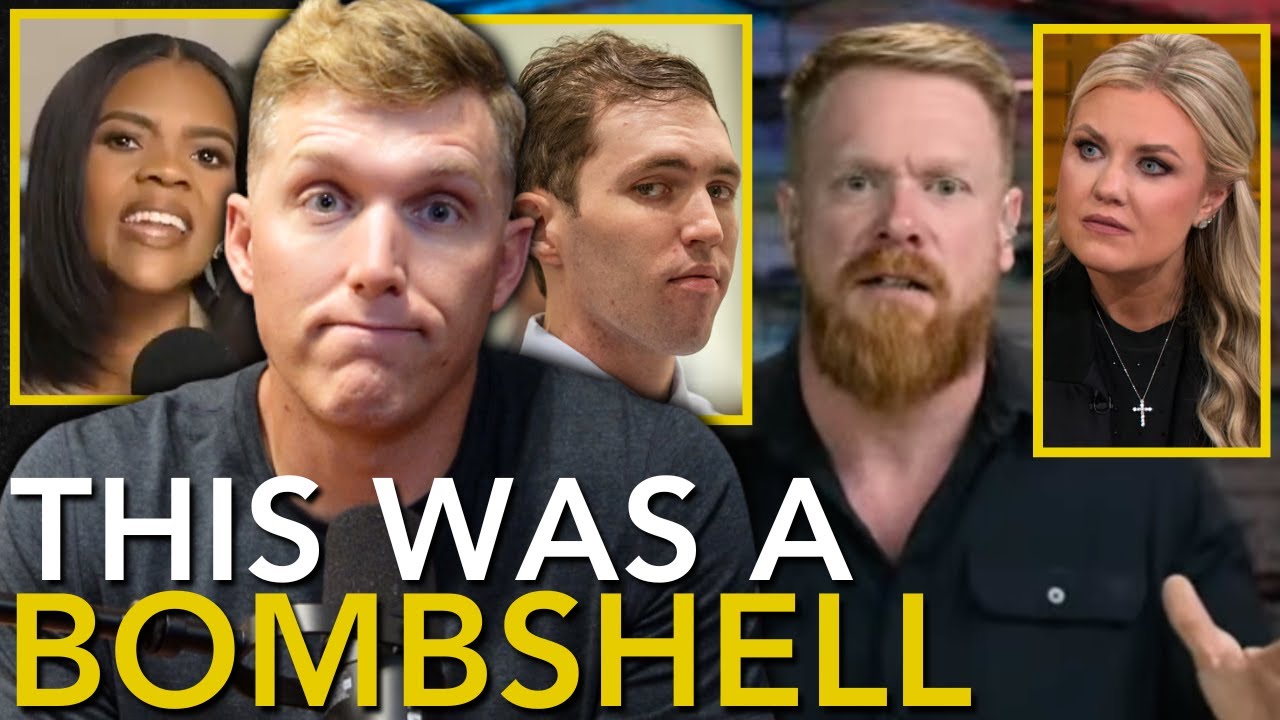
Baron Coleman, a lawyer turned podcaster, joins Julian Dorey to dissect the Charlie Kirk case in unprecedented detail. From Google Trends analysis revealing suspicious searches before the incident to medical evidence that challenges the official narrative, Coleman walks through months of investigation that has raised serious questions. He explains why the prosecution's case appears to crumble under scrutiny, discusses the peculiar behavior of key figures in the aftermath, and reveals conversations with sources close to the case, including Tyler Robinson's family, who maintain his innocence. This comprehensive examination challenges viewers to question what they've been told about one of the most significant events in recent political history.
The Binary Choice: Tyler Robinson or Multi-Agency Cover-Up
Baron Coleman doesn't mince words when describing the Charlie Kirk case: it's either Tyler Robinson acting alone with a 306 rifle from the Losee Center rooftop, or it represents one of the largest conspiracies in modern history—a multi-organizational, potentially international operation involving the highest levels of multiple agencies. There is no middle ground.
Coleman, a lawyer with backgrounds in civil litigation, medical malpractice defense, and HIV criminal defense, has spent hundreds of hours investigating the September 10, 2025 incident at Utah Valley University that claimed the life of Charlie Kirk. What began as casual Google Trends analysis evolved into a comprehensive examination that has made Coleman one of the most requested guests in podcasting circles.
His investigation reveals layer after layer of inconsistencies, unexplained behaviors, and evidence that seems to contradict the official narrative at nearly every turn.
Google Trends: The Digital Breadcrumbs
Coleman's investigation began with a tool most people didn't know existed or understand: Google Trends. Having used this analytical tool in previous consulting work, Coleman applied it to high-profile cases, including mass incidents, to identify suspicious search patterns.
What he discovered was startling. The name "Lance Twiggs"—Tyler Robinson's alleged accomplice—appeared in searches from overseas locations and Washington D.C. going back years, to when Twiggs was just 16 or 17 years old. These weren't random searches; they showed a pattern consistent with someone being monitored or tracked by intelligence agencies.
Coleman also found searches for the names of surgeons at Timpanogos Hospital appearing from Israel and Washington D.C. in June and July 2025—months before the incident. Why would anyone in Israel be searching for multiple surgeons at a Utah hospital? Why would someone in D.C. need that information?
The Google Trends analysis revealed what Coleman calls the "Lance Twiggs component"—evidence suggesting Twiggs may have been an asset or operator from his teenage years, making him the perfect candidate to manipulate a vulnerable, chronically online young man like Tyler Robinson.
The Medical Evidence That Doesn't Add Up
Perhaps the most damning evidence against the official narrative comes from the medical examination itself. According to prosecution filings, Charlie Kirk's vertebrae from C2 to C6 were "obliterated" on the left side, and his spinal cord was "traumatically absent" in that region.
Coleman consulted with neurosurgeons and medical professors who all reached the same conclusion: if the spinal cord was completely transected at that level, Kirk would have lost all muscle tone from the neck down within one-tenth of a second. His body would have immediately gone flaccid. He would have collapsed instantly.
But that's not what the video shows. Kirk maintains posture, clenches both fists, flexes his elbows, keeps his knees out, stays erect, and his head remains up. He slowly releases the microphone rather than instantly dropping it. This physical response is medically impossible if his spinal cord was transected.
Coleman also questions the nature of the wound itself. Ballistics experts he consulted—including snipers and firearms specialists—conducted numerous demonstrations showing that a 306 round from 138 yards would have passed completely through the neck, likely killing anyone standing behind Kirk. Yet the bullet allegedly stopped in his neck, which even the surgeon quoted by Andrew Kolvet called a "miracle."
The Preliminary Hearing: A Prosecution Disaster
The five-day preliminary hearing in early 2025 revealed more problems than it solved. Coleman points to several critical issues:
The prosecution showed security footage allegedly depicting Tyler Robinson returning to retrieve the gun at 12:47 a.m.—roughly 12 hours after the incident. But on cross-examination, it emerged that the witness who captured this footage saw "a bald man driving the car with three passengers." The prosecution had conveniently omitted this detail during direct examination.
Jack Posobiec, who was given a seat by Erika Kirk herself, claimed to have watched video in the courtroom showing Tyler Robinson "walk up, line up the trigger, pull the trigger" and kill Charlie Kirk. Multiple other attendees immediately contradicted this claim, saying they saw only "a blob" that could have been anyone.
Lance Twiggs testified via Zoom rather than appearing in person—highly unusual for a preliminary hearing. When shown six photographs allegedly depicting Tyler Robinson on campus, Twiggs initially said he couldn't identify the person with 100% certainty. Only after hemming and hawing did he suddenly claim the last two photos "definitively" showed Robinson, despite having just said he couldn't identify him.
Perhaps most tellingly, Tyler Robinson's parents were not called as witnesses, despite TPUSA representatives claiming for ten months that Robinson had "confessed to his parents." If this confession existed, it would be documented, and the parents would provide bulletproof probable cause. Their absence from the witness list speaks volumes.
The Timeline Problems
Coleman identifies numerous timeline inconsistencies that raise serious questions about the official narrative.
Tyler Robinson allegedly invoked his Fifth Amendment right to silence at 6:25 p.m., but the defense filing doesn't specify which day. Coleman's analysis of context clues—including Robinson's statement that "his office is closed for the night" and "my parents are trying to get in touch with him"—suggests this occurred on Thursday, September 11, not Friday, September 12.
If Robinson invoked his right to silence on Thursday at 6:25 p.m., that means the Discord messages allegedly sent by him at 7:57 p.m. came after he'd already told law enforcement he wouldn't talk. This creates an impossible scenario: Robinson refuses to speak to police but then confesses to a Discord chat that anyone with the link can access forever?
Furthermore, Robinson allegedly told Lance Twiggs he "intended to take this to my grave." Yet he supposedly confessed to his parents, to a Discord chat, and via text messages—none of which behavior is consistent with someone trying to keep a secret.
The autopsy presents its own timeline problems. According to defense filings, all autopsy photos were dated September 10—the same day Kirk died. Kirk's body allegedly didn't arrive at the medical examiner's office until close to 9:00 p.m., yet the autopsy was completed by midnight. This means they autopsied what would have been a warm body, contrary to standard practice of cooling bodies to below 40 degrees—a 6 to 8 hour process.
The Security Team's Failures
Coleman acknowledges he's not a personal security expert, but several aspects of the security response trouble him.
Multiple security team members stated on record they were concerned about the roofs. If you're concerned about roofs, you have three options: station people on the roofs, place someone at a high vantage point with roof oversight, or conduct the event from a different security posture. They chose none of these options, instead allowing Charlie Kirk to sit in a vulnerable position while hoping no one would be on the roofs.
After Kirk was hit, the security team dragged him away with no attention to head and neck stabilization, despite an obvious neck wound. For someone with extensive neck trauma, this handling could have caused additional damage.
The claim that they "only had permission" to be in certain areas doesn't hold up—Tyler Robinson allegedly didn't have permission to be on the Losee Center roof either, but he supposedly got there. If a civilian could access the roof without permission, surely one of 12-13 security personnel could have done the same for overwatch purposes.
The Erika Kirk Problem
Coleman initially gave Erika Kirk the benefit of the doubt, defending her against critics who questioned her behavior. But the book tour in December 2025 changed his assessment.
Her appearance with Bari Weiss was "so performative, so strange" that Coleman could no longer dismiss concerns about her behavior. The over-the-top expressions of loyalty to Israel, the inconsistencies in her stories, and the peculiar timing of her appearances all raised red flags.
Coleman notes that Erica's stories rarely hold up under scrutiny. The tale of meeting Charlie at Bob's Burgers in New York conflicts with Tyler Bowyer's account of them dating in Scottsdale first. Her claim of graduating summa cum laude with a double degree has been questioned. Even small details like which beauty pageant was her second (or sixth) don't match across tellings.
Most problematic is her alibi for September 10. She claims she was at a clinic with her mother watching the live stream—unusual because live streaming wasn't something TPUSA typically did. Terryl Farnsworth told Candace Owens they were "trying something new" by streaming "back to the ops in Arizona." Why would Erica be watching a routine college campus event live while with her seriously ill mother?
Sources within TPUSA have told Coleman that Erica is "not super supported" by top people, including some who put on a supportive face publicly. She's described as "not really running things"—a figurehead rather than an actual leader.
The Scene: Choreographed or Coincidental?
When Coleman syncs the video footage from the ground with the footage from the roof, what emerges looks less like chaos and more like choreography.
Dan Flood steps forward and touches Charlie's right arm approximately 400 milliseconds before the incident. Brian Harpole, who had been standing in roughly the same position throughout, takes a step back. A woman emerges from behind the screen to hand someone mints—which he pockets without eating. The sound system experiences feedback precisely when Hunter Kozak stands to ask about transgender violence. Phillip Goldsberry Jr. turns his head away from Kirk half a second before the bang.
Coleman emphasizes this may all be innocent coincidence, but when viewed in sequence with knowledge of what's about to happen, it appears as a series of signals: "I'm clear. I'm clear. I'm clear. Bang."
The cameraman behind Charlie immediately turns after he goes down—not to run for his life, but to film where they'll extract Charlie's body. Mikey McCoy appears to be on his phone (though he claims he was plugging his ears). Frank Turek says he was on FaceTime with his adult son watching the event, but his phone screen appears black in the footage.
The Physical Evidence Questions
The bullet fragments present their own mysteries. An ATF examiner testified that seven fragments were removed from Kirk's body, but she only received four in a manila envelope for testing. Where are the other three pieces? Are these even the same four pieces that were removed from the body?
The fragment measurements raise additional questions. The examiner described the measurement not with precision but with a range: 0.286 to 0.301 inches. A 306 round is called "30 caliber" because it's theoretically .30 inches, but a 306 is actually .308 inches (the bore is .30, but the grooves are .308). If a .308 round passes through a bore with .308 grooves, the jacket should measure closer to .308 where the ridges contacted it, not .286 to .301.
Coleman also notes the rapid movement of Kirk's road microphone and necklace in the frames immediately before visible injury—movement inconsistent with a gunshot to the neck. The microphone moves from the right collarbone to the middle of the neck in 1/15th to 1/30th of a second. The necklace charm, hanging below the sternum, shoots up toward the neck at nearly the speed of light.
In October 2024, a medical professional contacted Coleman suggesting the injuries looked more like electrocution than a gunshot, noting that if the spinal cord was transected, "something had to be powering his nervous system that's not his brain"—and the only thing with power that Kirk was holding was a microphone.
The Crime Scene Cover-Up
Perhaps nothing symbolizes the problems with this case more than the literal covering up of the crime scene.
Within 24 hours of the incident, text messages obtained through FOIA requests show UVU officials were already discussing digging up the area. They didn't just pave over it—they removed approximately 10 inches of soil before bringing in paving contractors.
The official explanation suggested concern about biohazard from blood, but as Coleman notes, crime scenes with blood occur daily across America without being immediately excavated and paved over. The area was already blocked off. Rain, sprinklers, and hoses could have addressed any biohazard concerns.
The speed of the cover-up mirrors similar actions at Parkland High School and Sandy Hook, though Coleman notes that Columbine High School—site of the incident that "kicked off the school incident craze" in 1999—remains standing.
The Tyler Robinson Question
Coleman remains open to the possibility that Tyler Robinson was involved, but not in the way the prosecution claims.
He believes Robinson was likely in Orem on September 10, possibly as part of a group planning some form of disruption at the event. Whether Robinson was a willing participant or a manipulated patsy remains unclear, but Coleman sees Lance Twiggs as the key to understanding Robinson's role.
The Google Trends data showing Twiggs being searched from suspicious locations for years suggests he may have been an asset or informant. A troubled young man like Robinson—chronically online, sexually disturbed, with family problems—would be vulnerable to manipulation by someone connected to intelligence services.
Robinson's family maintains his innocence. Coleman has spoken with sources who have direct contact with the family, and they've never believed he did it. They deny he confessed to them, deny he turned himself in out of guilt, and dispute the entire narrative. The fact that they weren't called as witnesses at the preliminary hearing, despite ten months of claims about a confession, strongly suggests no such confession exists.
Why This Matters
Coleman frames the stakes clearly: if the case against Tyler Robinson erodes, people will reach the same conclusion he has—that this was a sophisticated, multi-agency operation. And if that's the case, those leading the investigation become problems that need to be addressed.
He approaches the investigation "soberly and seriously" with plans to "be around a long time," but acknowledges the sadness of living in a country where covering a news story requires being careful about one's safety.
The cheerleading for Tyler Robinson's conviction "in the absence of any evidence" raises obvious questions about why certain people are so invested in that outcome. Coleman believes the prosecution cannot prove their case at trial, where they won't be able to clip videos selectively, omit inconvenient witness statements, or avoid cross-examination of their weaknesses.
At a criminal trial, the defense gets to introduce evidence. The full context of the hallway footage, the identity of the figure on the roof, the missing minute and 4 seconds, the clothing change in the woods they claim happened, the Chick-fil-A visit they can't prove—all of it will face scrutiny they've avoided thus far.
Coleman's conclusion is stark: "If this is the only case they have, if this is the best they've got, then you can't convict, because it puts everyone else in jeopardy." The foundation of American criminal justice is that it's better for guilty people to go free than for innocent people to go to prison.
The Path Forward
Coleman continues to investigate, hosting lengthy live streams multiple times per week where he examines new evidence, takes questions, and refines his analysis. His audience has grown from 35 viewers to thousands, with over 150 episodes dedicated to the case.
He emphasizes that his questions come from a place of love for Charlie Kirk—love shared by millions who made Kirk a bestselling author, filled arenas to see him, and traveled long distances to attend his events. These people deserve answers.
The silence from TPUSA, the condescending responses when they do address questions, and the mean-spirited attacks on those asking legitimate questions all reflect poorly on an organization that exists because of the devotion Kirk inspired.
Coleman's message to TPUSA is simple: answer the questions. Explain the inconsistencies. Provide the full footage. Show the receipts. Make your case to people who loved Charlie Kirk and want to know the truth about how he died.
Until then, the questions will continue, the investigation will proceed, and the official narrative will face the scrutiny it has so far avoided.
Video Transcript
[music]
Baron, you're the most requested guest I
have maybe ever had in my life. I've
never seen so many people DM me and
comment to have you on. So, thank you
for being here.
>> I appreciate you having me. I had um I
had no idea. I had no idea. You told me
that when we talked on the phone and I
thought, why? I mean, I think that
listen, you have covered this case three
to four times a week for hours at a time
since, and we're talking about the
Charlie Kirk case, obviously, basically
since right after September 10th when he
was killed. It is obviously a case that
to say it's a mess would be putting it
lightly. And there have been a lot of
narratives put out there that people are
right to question. And I think because
like in in speaking with people before I
was really really familiar with you
because of the depth that you have gone
into it and looked at it as a litigator
which is your background. I think people
have a lot of respect for that and
they're like hey we've seen so many
times before where major cases happen
and it's clearly just to swipe it under
sweep it under the rug and years later
people still talk about it like what the
and now we're living through it and
people don't want to make that mistake
again.
>> You're talking about like JFK
>> of course that's the number one example
but plenty of them. MLK, which is down
south by you
>> as well, you know.
>> Yeah. RFK. Um even even cases people
don't think about like Ronald Reagan
getting shot.
>> Um but probably a cover up.
>> Uh really?
>> Oh, yeah. Yeah.
>> What makes you say that? I don't know as
much about that one.
>> Uh I'm not prepped to talk about it, but
um the
Anyway, yeah, it's it's it's [laughter]
a cover. I I don't want to get I don't
want to get myself in any more trouble
than I'm already in.
>> Why do you think they do this over and
over again throughout history? like even
after they not just kill people but
cover it up so blatantly in so many of
these cases you just mentioned
>> because they can they can there's no one
to stop them. Um I mean what are we
going to do about it? Even if they came
out and said, "Yeah, we killed Charlie
Kirk. Get over it." What are we going to
do about it? I
>> mean most people are going to go back to
work the next day. They're going to go
to their kids' volleyball game. They're
going to pay their mortgage. They're
going to pay their power bill. They're
going to watch the Braves and they're
going to wake up the next day and do it
again. So why why would they worry about
it? There are no consequences. They've
proven time and time again they can get
away with it. So why bother?
>> But have they ever admitted it like with
some of the other ones? They've never
outright admitted like yes, we did this.
>> Well, they like Operation Northwoods,
they admitted they were going to do it,
blow up an airliner. Um so yeah, I
[clears throat] mean they they have
admitted things in the past and what
nobody rioted over that. Nobody
>> tried to overthrow the government.
Nobody voted anybody out of office. Life
just went on. Everybody woke up the next
day and went to work.
>> Hey guys, three quick things. Number
one, if you haven't subscribed, please
subscribe. It's a huge, huge help.
Number two, if you'd like to join my
Patreon for early uncensored releases of
the full episodes, you can join via the
link in my description or in the pin
comment below. And number three, if
you'd like to join my clipping community
for a chance to make content from the
show and make money, you can join via
the Discord link in my description
below.
Yeah, sometimes I wonder about that
because like the Northwoods one is a
great example, but [snorts] again it was
like they admitted it way later and it
was like, oh, we're just planning it
out. Whereas it's like think of one
where it's not one person. Maybe like
911 and there's a lot of fishy stuff
happening there obviously. Let's just
say in that world they admitted like oh
by the way wasn't what we told you maybe
we had something to do with this. I do
wonder if you'd be wrong about that and
some people really would be out in the
streets considering all the other
socioeconomic issues that the country is
having right now.
>> I I just I I I don't believe they would.
I I honestly don't believe they would.
And it's, you know, take Charlie Kirk
for example. You know, we don't know who
killed Charlie Kirk, how or why. Um the
government's given us a narrative that
that it was Tyler Robinson alone on the
Los Center rooftop with the 306.
And and most people look at that and
say, "Hey, that doesn't make any sense.
that that that doesn't add up. I was
talking to a student from UVU the other
day and he's involved in the TPSA
chapter and I said, "How many people in
that chapter believe that Tyler Robinson
did it?" He goes, "Oh, it's probably
8020."
>> Which I thought was pretty low. Uh I
figured it'd be closer to 100%. TPSA's
been leading the charge that Tyler
Robinson did it.
>> And then I said, "What about the regular
students? You just walk around on
campus. Have you ever talked to anybody
else?" He said, "Yeah, I've talked to a
lot of people." And I said, "What do
they say?" And he said, "Nobody believes
he did it."
>> Believes he did it at all.
>> Yeah. Nobody believes Tyler Robinson did
it. And I asked him why and he gave me
reasons why. But but what you know UVU
students aren't out riding in the
streets. They're not skipping classes.
They're not demanding justice. They're
just waking up the next day and going to
biology.
>> So why do you do what you do?
>> I'd like to find the answer. I I I think
it'd be really interesting to take a
case like this that's been crowdsource
investigated, run it all the way down to
the end and see where it goes. It's It's
really never been done in real time
>> as far as like a major assassination
goes like for for a public figure.
>> Yeah. For a public figure. Like you
know, you had the Karen Reed case.
People talked about it. Last night on my
show, I covered Adnan Sayed,
>> but that was 22 years later that people
ran that down,
>> right? That was like one of the original
podcasts.
>> Yeah. Well, it was one of the original
big true crime podcast. Yeah.
>> Yeah.
>> Yeah. That case was crazy because he was
an unknown guy and it showed like I I
saw I saw your intro on that I think two
nights ago in the live but like you know
it was an unknown guy. I remember that
case very well to where he was routing
away in prison for a long time and then
literally just cuz that one lady I
forget her name but decided to do that
podcast series and like bring it in a
conversational way the people it ended
up changing the outcome of the case
which is pretty crazy to see the power
that that had early days of podcasting.
>> Yeah. Her name is Sarah Koig. Um, it was
a serial podcast and she deserves an
award. I mean, she she changed that not
just that one kid's life, but she
changed the power structure when it
comes to podcasting because all of a
sudden, average people on the street
said, "You know what? I've got a
computer. I've got spare time. Um, this
case doesn't look right. So, maybe I
should should open my computer and start
looking at property records and looking
at maps and looking at timelines." And,
you know, that's that's the last thing
you want if you've covered up a crime
successfully. The last thing you want is
hundreds of thousands of people opening
up browsers every day and going, "What
can I find today?"
>> Yeah. Do you think it's because the the
context you were bringing it up
obviously was related to like all the
[ __ ] people get for looking into the
Charlie Kirk thing, but do you think
it's also crazy that, you know, a guy is
killed extremely publicly who also
happen to be wellknown that people just
seemingly don't want to actually they
want to close their eyes and be like,
you know what, he's he's dead. That was
horrible. Let's move on. when in reality
there could be something way deeper to
it.
>> If you're asking me, do I think there's
an incentive for the average person to
look away? I I think there's a huge
incentive for the average person to look
away. The consequences of Charlie Kirk
being killed
um well, it's a it's a binary decision.
It's a binary choice. You have two
choices in this case. You can have um
Tyler Robinson alone and if it's not
Tyler Robinson alone, it is an it is one
of the largest conspiracies to murder
someone in the history of the world. Uh
it is a multinational conspiracy. It is
a multi-organizational conspiracy and it
goes to the very top of every
organization. It's it's not a situation
where you can say, "Well, maybe TPUSA
got together and decided to kill Charlie
Kirk."
>> Well, TP USA can't get the crime scene
covered up. TPUSA can't get the uh Utah
County Sheriff's Office and the
Washington County Sheriff's Office to
comm to to commit to a story about when
Tyler Robinson turned himself in. TPSA
can't get the FBI to um show
[clears throat] edited footage in a
certain way to make it look like Tyler
Robinson did it. [clears throat] TPSA
can't get multi- um Tyler Robinson
impersonators walking all over campus in
maroon shirts. So, it's it's not it's
not a situation where any one
organization could pull it off. This is
a massive organizational uh effort, a
massive multi-organizational effort, or
it's Tyler Robinson. And so, I think a
lot of people look at that and say,
"Ugh, I don't want to understand the
consequences of that. I don't like the
consequences of that. So, therefore,
I'll just accept Tyler Robinson did it
and I'll move on with life."
>> Do you think there's a possibility that
he did do it? It's just him.
>> Yeah. Yeah, you think that's
>> I'm I'm open to the fact that Tyler did
it.
>> Um probably more than than other people
covering it.
>> I don't think it's likely. Um I I think
starting with the gunshot wound, you
have uh very serious issues that I
frankly almost refuse to accept. Um
injuries that now in the last couple of
days have come out that seem entirely
inconsistent with the 306 wound to the
neck. Um
but I'm open to it. I'm I'm open to to
being wrong on the nature of those
injuries. I'm open to being wrong on the
fact that it doesn't look like there's a
3006 on the roof on the video footage we
have. But maybe there is. Maybe he was
holding it some weird way. What I'm not
open to is is people refusing to
investigate. People looking the other
way. People just accepting what the
government says, saying, "Well, the
government spoken. Well, the government
spoke on 911. The government spoke on
JFK. The government spoke on RFK. The
government spoke on Martin Luther King.
All of those aren't what we were told.
And so don't tell me just to accept the
government's narrative. If you have a
reason to accept Tyler did it, that's
fine. So let's examine those reasons.
And then they start throwing out
reasons. Oh, there's DNA. Oh, there's
this. There's that. Okay. Well, I have a
problem with each of those issues.
>> Mhm.
>> And we could take them, you know, I'm
sure we'll talk about it.
>> No, we're going to do it.
>> I [laughter] figured we would. Um,
>> it's just a little preview right now.
>> Yeah. Yeah. Yeah. But but if if if
you're going to tell me, oh, these are
the reasons. Here are the five stock
answer reasons that that I believe Tyler
Robinson did it. And then I have a
question on each one of those reasons
and you say, "Okay, we're done talking
about it. Go away. You're evil." That's
crazy.
>> That's nuts.
>> It's crazy.
>> Yeah.
>> You know, Ridge, they make amazing power
banks, luggage, premium everyday gear,
and wallets. And this year, for the
sixth straight year, Ridge is back with
their legendary sweep stakes. And this
time, it's bigger than ever. From July
24th through September 8th, two lucky
winners will get to choose between a
Lamborghini Huracan Stado, a Ford
Hennessy Velociraptor, a souped-up Ford
Bronco, or $100,000 in cash. Y'all know
I'm going with that Lambo if I have the
option. But with any of those four, you
can't lose. There's only 1500
Lamborghini Huracan Dorado that even
exists, and Ridge is giving you an offer
to own one. It's a naturally aspirated
V10 and has 610 horsepower. You imagine
driving that thing around? And the
Hennessy Velociraptor also has an insane
558 horsepower twin turbo. It's
basically an American muscle car built
into an all-terrain truck. Finally, the
customuilt Bronco is coated in
scratchresistant Kevlar armor and riding
high on massive 37in off-road tires. The
best part of all, you can enter
completely free at ridge.com. And if you
want to boost your chances, you can earn
additional entries by picking up Ridge
gear during the sweep stakes. Whether
it's a power bank, wallet, luggage, or
something else you've had your eye on,
you'll earn extra entries with your
purchase. You've heard me talk about the
Ridge 2.0 wallet before. It's their most
refined wallet to date and designed to
pair perfectly with their new tracker
card. So, are you ready to upgrade your
wallet and maybe even your ride? For a
limited time only, head to ridge.com,
link in my description below, and use
code julian dory at checkout for 10% off
your order and a chance to win Rididge's
biggest sweep stakes ever. No purchase
necessary to enter, but every dollar
gets you more entries. So once again,
that's Ridge.com, link in my description
below, and use code julian dury. After
you purchase, they're going to ask you
where you heard about them. Please
support our show and tell them I sent
you. I just I mean, I've seen so much
[ __ ] that it it's hard to be surprised
by things anymore. Especially just even
if you looked at the last six years
alone, I could go way further than that
obviously, but even the last six years
alone, it's really hard to be surprised
by stuff. But I was telling you this on
the phone when they had the fifth day of
that preliminary hearing and I guess
that was the day where they played the
security cameras footage in the
courtroom. They didn't release that
publicly at the time and all that. We
were DEF and I were about to go on air
for our weekend episode and about 5
minutes before the video of Jack Pobiage
talking to the camera saying he just saw
the whole thing. I watch Tyler Robinson
walk up, line up the trigger, pull the
trigger, do the whole bit, saying it
with a very straight face, very good
acting, Jack, I gotta give you that.
But, you know, he goes through this and
I've never liked that guy at all. But,
De pulled up the video and I'm like,
okay, I I mean, there were 200 people or
whatever in the courtroom. I don't see I
don't see how he'd lie about that, but I
don't know. Isn't is an Epstein binders
guy. We'll play it. So, we play it on
the episode right when we get off the
episode. Twitter's like, "No, the
prosecu here's a video of the
prosecution saying that video doesn't
exist. No, that's not what happened.
There were other people in the
courtroom. Here's what they said they
saw." I'm like, "Can we even get any
modum of like truth here from [ __ ]
anybody at this point?" It's just wild
to me that people would be that brazen
to do that. Um, it's it's not though. If
you're trying to plant the narrative,
you have to have co-conspirators
planning that narrative for you. It it's
interesting to me that Erica chose to
take to court with her. You know, she
was given, I don't know, 10 seats, 15
seats. whatever. She could have taken
family. She could have taken friends.
She took social media influencers. She
took Brandon Tatum and Jack Bobic and
Graham Allen and like that's that's how
they got in.
>> She brought them.
>> Yeah. They didn't have to camp out
overnight. Everyone else in that
courtroom was either media had an
allotted media slot. Uh a member of
Tyler Robinson's family or had one of
their slots, a member of Erica's family
or had one of her slots, or they had to
camp out overnight. Jack Basobic wasn't
camping out overnight. He showed up in a
Ferrari.
drives Ferrari
pays well I guess be a spokesman
[snorts]
>> I mean you might be able to make a
living being a a paid hack I don't know
I've never tried it
>> here's the difference though in 1964
65 in the years after JFK TV was brand
new there was no internet the government
just saying shut the [ __ ] up this is
what happened there was a lot more of an
opportunity to do that now with the
power of people having one of these in
their hands at all times just to capture
everything. The idea that you could walk
out of that courtroom and not think that
there's going to be a million people
[ __ ] a lot more than that as would
turn out refuting what you said based on
other people who were in there who can
have the same power to come out there
and say what they saw. That's where I'm
I'm like it feels like the Truman Show a
little bit.
>> Yeah. I think they feel like they have
so much money and power behind them that
they can just roll over and crush the
little guy. Crush the little guy's
voice. So, you know, Brandy Webb, Billy
Sisleani, they were both in there. Um,
those were two of the girls that came
out and said, "We just saw a blob." You
know, it could have been Bigfoot, it
could have been a blob, it could have
been a fat ch Chinese guy, it could have
been Tyler Robinson. We just don't know.
Uh, you can't tell. Um,
but but they don't have millions and
millions of influencers. They don't I
mean millions and millions of followers.
They don't have millions and millions of
dollars behind them. Um, what TPSA has
behind it is the basically the full
weight of the federal government right
now. They are they are just a another
they've become another wing of the
government just like Heritage Foundation
is. They're just another Heritage
Foundation. They're Heritage Foundation
2.0.
>> And Charlie Kirk had a mission. It was
to take econ economic libertarianism to
college students.
>> Um Charlie's gone. And that mission is
completely gone.
>> It's gone.
>> It's completely gone. All they're doing
now is taking whatever main mainstream
mainline Republican talking points exist
and they're just pushing it out to the
boomer class that's watching Fox News.
That's all they're doing. And the
question is why why do they even exist?
What's the point of an organization
that's doing that? We have organizations
that do that. We have Fox News. We have
Heritage Foundation. Why do we need TPS
USA to do the same thing?
>> Right. When you talk about them being a
wing of the federal government, I think
you make a good point. There's a lot of
these kind of think tank type places
that'll be attached at the hip to the
government over time and now in recent
years we're able to actually see that.
But what about all the people in
government within the federal government
who are like from the left side of the
aisle and don't like this current
administration and would have every
reason to try to subvert it? Why don't
they subvert TPUSA, for example, more
given the fact that they don't really
have any leg to stand on anymore? I I
think you're falling into the trap of of
thinking there's two teams and and I
don't think there is. Um it's a uni
party system. Uh there's a very narrow
band of accepted thought
>> and as long as you're in that band,
they're going to let you say whatever
you want. You can't get over here and
you can't get over here.
>> But you if you're as long as you're in
here, we'll we'll play like there's two
teams in here. We we'll we'll let you
put on different jerseys. We'll let you
go out and play games. We'll let you
argue over abortion. We'll let you argue
over tax cuts. you know, do you want to
give a 2% tax cut to millionaires or a
1% tax cut to millionaires? That's your
call.
>> Um, and you guys can get really down and
dirty and you can call each other names,
but don't get out here into the populous
wings of the left or right. Stay out of
that. And that's why because they're on
the same team. They're all on the same
team.
>> I think you're right about that. I do
agree. But I gotta ask because you know
it they're obviously an organization
that was like associated with one
candidate getting in there. And I think
to add to your point there as well,
we've seen that with like Trump coming
in, he campaigned on X, Y, and Z and has
done A, B, and C instead. And it's kind
of proven. It's like if anyone was going
to be kind of an outsider, even though
he was a billionaire, it was like, all
right, that's the guy. And now he's
surrounded by people that seem to be
prototypical like swamp creatures. And
he it's his fault. I mean, it's his
fault. He had he had two terms.
>> Uh the first term he came in, he
basically
staffed his entire administration with
people who despised him, who hated him,
um who were on the team.
>> And so all of his uh populist rhetoric
was was for not. He wasn't able to
implement any of it, if he even wanted
to. Um then he gets beaten down, kicked
out. Um, Joe Biden comes in, reverses
everything he stood for, everything he
tried to accomplish, and then Trump runs
again. And I was very skeptical uh of
Trump running again. Uh, opposed him
initially. Finally got
>> Why were you skeptical?
>> Because he didn't do anything the first
time.
>> You know, there was no border closure
like he promised. There was no turning
the government back over to the people
like he promised. If you go back and
listen to his original inauguration
speech, if he would have accomplished
that, I would have been the biggest
supporter of Trump term two there was.
But he didn't accomplish any of it.
Instead, he put people, like I said, in
the intelligence communities that hate
his guts. He put people in the defense
department that hate his guts. He put
people in his own white house, the chief
of staff that hates his guts. Um, and
and then he turns around and says, "Ah,
the whole system, I can't get anything
done." Well, yeah, [laughter] you put
these people in here who are causing you
to not be able to get anything done. And
so, I figured he would do the same thing
in the second term. I had no idea he was
going to do what he's done so far. Um,
what he's done in in Trump 2.0 this
second term is the biggest betrayal of
campaign promises probably in American
history. Uh, I can't think of a single
president who has done more to betray
the people who voted for him, who put
their names on the line for him, who
hosted him on their programs, who
campaigned for him. uh than Donald Trump
uh in this term. I can't think of one.
>> I think you're right about that. It's
been we've been saying it's like
opposite day every day with with the
things he'll say. I mean, even some of
the lines about the war like, "No, I
don't think about the average American
at all. I just need Iran to not have a
nuke." I mean, roll the tape from like
October 2024, he's literally saying like
you can just reverse that line like the
Eyes Wide Shut song. Like that's what
he's saying. And yet he went in and did
this stuff. And it it you wonder cuz
it's a good point. He surrounded himself
with a lot of the wrong people in term
one. Then he goes on Joe Rogan right
before the election and that was
something he actually admitted to. He
usually doesn't like admit to any
[ __ ] weaknesses, but he's like, I
think I hired some of the wrong people,
but then comes in and does it again and
lets them move his red line
on everything. I still there has to be
something else there to me. I don't It
could be a litany of things, but there
has to be something else there. Well, he
took a lot of money from people who have
have policy preferences that are in
direct opposition to what he campaigned
on.
>> That's true.
>> Um, and so that that never helps you
accomplish your mission. Um, but no, he
went out and hired uh a bunch of flawed
individuals and and I'm not sure how to
get around this problem. You know, if
you're president, I'm not sure how to
get around this problem because you've
got to survive the Senate confirmation
process in order to get some of these
really high-end appointments. Mhm.
>> And the Senate confirmation process is
not going to be kind to someone they
can't control. And um you know, you look
at u you know, the the intelligence
committees,
a lot of those people are not going to
to be kind to having a um an appointment
from somebody who truly is independent
and actually cares about the average
American. They're just not going to be.
So, they're not going to approve that
person. Um, I think you see it right
now. I hate to hate to mention
particular Actually, I'm not going to.
Uh, I think you see it right now with uh
some appointments that that Trump has
wanted to make that have really been
pushed back hard on because people in
the in the Senate look and say, "We
can't control this guy. We're not
there's no way we're going to let this
guy." So, Trump immediately abandons it
and then goes to to one of their people
>> and and those people are working against
him or they're working against us.
They're working against us and they're
working against his campaign promise to
work for us.
>> Yeah. I think an example of one of the
people that obviously got a lot of push
back back at the beginning was RFK. And
I kind of wondered like how that did end
up getting through because there was so
much opposition,
but then you see him come in and it
becomes like a very one-dimensional
focus, which I I appreciate you looking
at food. I'll take something over
nothing. I I do want to say that. But
like he was going to look at a lot of
different things and now he's not. So
it's like you kind of box in you're like
here's a great white shark
>> but he's in a little container. He can't
swim in the ocean.
>> Yeah. He's not really been able to go
after vaccines. He's not really been go
able to go after food dyes and food
colorings. He's not been able to go
after um anything. I mean he is totally
boxed in. And he started abandoning that
in the confirmation process. So you knew
right then whoever was shephering him
through the process was saying, "Look,
you're not going to get in if you say
what you really believe. You're just not
going to make it." And so even during
the confirmation process, there was a
conversation people were having like,
"Do you think he's really changed his
mind on all this stuff? If he is he just
saying this, but he'll get in and
actually do the right thing?" No, he's
not. Um, and I think he's probably a
generally decent person and he he really
believes the things he's been saying for
the last two or three decades. Um, but
you just can't play the game and keep
your job.
>> Obviously, something like this is not
fixed overnight by any stretch. It's
kind of a generational thing where we've
built up so much decay in the system
that has allowed us to get to this point
where 90-year-old people can hold office
for 60 years and [ __ ] keep getting
paid by the same people. But if you
could wave a magic wand and fix it over
a 20, 30, 40year period, how would you
do that?
like the money in the system and how
candidates could actually then do what
they campaign to do. That's how I should
ask it.
>> So, I gosh, that's I've never been asked
that question. Um I I think it starts
with the judicial branch. Um I might be
biased that way being a lawyer.
>> Um but the Supreme Court is beholden to
the same factors I was just telling you
about with with uh other presidential
appointees.
>> Uh the difference is they have a
lifetime appointment. M
>> so that the there's a little less
pressure after they get through the
system. They can kind of change if they
want to. Um but in order to survive and
get on the Supreme Court, for example,
you have to go through the Senate
confirmation process. If you walked up
there and you said, "I believe Article 1
Section 8 is too broadly interpreted.
It's [clears throat] a commerce clause."
I think the dormant commerce clause is a
joke. It need both of these doctrines
need to be completely reversed. We need
to take the Constitution back to the
bare bones of what it was originally
intended to do.
excuse me.
Um, you wouldn't survive the appointment
process. And so I think we maybe need to
radically reinterpret what advice and
consent means from the Senate in order
to allow the president that we elect to
to have freer to put the right people in
those positions. The president wins.
He's the one who campaigns. He's the one
who goes to in theory all 50 states.
He's the one who uh makes all the
campaign promises. We're going to do
this. if we're going to do that and then
the Senate really gets to decide
uh which of those we're even going to
entertain, which of those we're even
going to allow to be again within that
little window we're allowed to play in.
>> Uh if we want to broaden that window, it
has to start with the court system. Um
we, you know, we we tell our our
kindergarteners and our fifth graders
that we have three branches of
government. They're equal and they hold
each other accountable. We don't. We
have a a tyrannical judicial system that
can override anything that the Congress
and the president do. They can throw out
any law they want for any reason. They
can make up stuff on the fly. They can
add laws that don't exist. And there's
nothing the Congress or the president
can do about it.
>> They're just completely beholden to the
system. And so I think it starts there.
Um but but that the fix to Congress I
think also could fix the appointments
because if you could I mean the fix the
the fix to the Supreme Court also could
fix the appointments. Advice and consent
should not be we're going to drill you.
We're going to put you through the
Clarence Thomas Robert Bour treatment.
We're going to embarrass you. We're
going to research everything you've ever
done. We're going to turn your life
upside down.
>> Advice and consent should really be, oh,
he's been a lawyer for 30 years. Fine.
Put them on. you know, we're just making
sure we're not putting the the the dog
catcher on the Supreme Court. That
that's what it should be. Um, and it's
not it's not it's it's it's a radically
different process, I think, than the
founders intended. And I think it's
designed to protect the system, not to
protect us.
>> When did you reach that conclusion? Was
that like during your legal career, or
was it even earlier in law school when
you were studying how it's set up? So, I
had um I had one of the most brilliant
people I've ever met was my first
amendment teacher my second year of law
school. Uh her name was Susan Williams.
She's a professor at Indiana. She is
absolutely brilliant. We disagreed on
every political topic you could imagine.
She is a radical leftist. I am a
pretty far of of of center right.
[laughter]
>> He's he's given a little little smile
back.
>> He's heard me say a lot more than you
have. [laughter]
Um, but no, I uh I'm I'm pretty I'm
pretty far of right. Uh pretty far off
center to the right.
>> And I was even more so in law school.
And um really
>> Oh, yeah. I was
>> I was I was still young. I was in my
early 20s. I was I was
libertarian-minded. You know, we don't
really need rules and structures and
governments and and and most of this
stuff should be, you know, I was kind of
one of those cut the cut the federal
budget by 90%. We'd probably be a lot
better. you know, get rid of the Federal
Reserve and everything will work itself
out.
>> Well, there there's an argument with the
Federal Reserve. That's certainly
>> Well, if sketchy to say the least,
>> if if you don't mind a 15 to 20 year
economic collapse and reset. [laughter]
>> Yeah. Well, that's the problem. Now, we
set it up. It's like a [ __ ] time
bomb,
>> right?
>> Um [snorts] but but when you're when
you're 23 24, you're not thinking of
those things,
>> right? Um but but we went through this
first amendment class and we get to the
very end of the course and we are um and
we're diagramming the first amendment.
It's just the whole semester is one
clause of the constitution just or one
one section of the constitution just the
first amendment and we're diagramming it
and I have this giant two uh double
length poster board and I'm writing in
little bitty font and I've got the whole
thing filled up and there's arrows and
there's this and there's that. And so as
I'm studying for the final exam, in law
school, you just get one grade. You get
the final exam, that's it. There's no
quizzes. There's no test. They don't
care if you show up. It's just what what
do you get on this one test? So I wanted
to make sure I got it right. So I make
office hours with her. I go to my
appointment. I I show her my poster
board and I say, "What do you think of
this? Does this look about right?" And
she's looking at it and she goes, "Yeah,
you know, I think you'd be fine if you
followed that." And I said, "Can I ask
you a question?" I said, "The First
Amendment is like a couple of sentences.
Isn't it kind of ridiculous that we have
all of this?
>> [laughter]
>> and she said the the the Supreme Court
doesn't tell us what the Constitution
says. The Supreme Court tells us what we
as a society today wish it said
and it it stuck with me and it it it got
me rolling down that road.
>> The Supreme Court doesn't or the
Constitution first amendment doesn't
tell us what to say. It tells us what we
as a society interpret it to say.
>> So the Supreme Court looks at the
Constitution and they say, "Hey, where
are we today?" Um, well, today most
people kind of kind of favor gay
marriage. So, let's read it into the
Constitution because we wish they said
that.
>> Uh, the Constitution doesn't say that a
a second grade teacher can't can't
silence the political speech of a a
second grader, but we kind of wish it
said that. So, let's read that into it
because we as a society have evolved to
a point where where we don't think
second grade teachers should be
silencing the political speech of second
graders. So why don't we go ahead and
read that into it? And and they do they
do radical uh things to to to bind their
decisions on on individuals that frankly
are not in the Constitution.
And so I remember in law school thinking
there's got to be a way
or at least it would be better if we
could pull back this structure
completely get rid of this structure and
and just and just go back to the words
say what they say. And if the words
don't bind the municipal government of
Toledo, Ohio, then they don't then the
Toledo, Ohio has to figure out a way to
either bind themselves or they they
won't have a government oversight. They
won't have federal government oversight
on those certain areas. Uh I mentioned
the commerce clause earlier. You know,
if you if you grow your own wheat in
your own field and you feed your own
cows with it, um the federal government
can stop you. They can come to you and
say, "No, you can't do that."
>> They can.
>> Oh, yeah. Absolutely. Supreme Court is
that's good law in the Supreme Court.
>> Um there's a case right on point on
that. Um
>> it's a good law.
>> Good law means it's it's it's
not been reversed.
>> Okay. Got it.
>> So um yeah, like uh well I don't want to
go through specific examples, but there
there are a lot of frankly egregious
things that this country's done that are
considered still good law. Um like the
Japanese internment camps, those have
never been reversed by the Supreme
Court.
>> Those were okay by the Supreme Court.
And that that's still good law. What did
they base that on when they okayed that?
So that would have been
[cough and clears throat] back in 1942
right after Pearl Harbor.
>> Yeah, I'm not an expert on the the
Koramasu case, but it's it's I know it's
not been reversed.
>> I know that that right now that we
probably wouldn't go that route as a
society, but but there's nothing in the
law that says you can't.
>> Um
and and a you know, you
that radicalizes a law student, that
radicalizes a 22, 23, 24 year old kid.
Now, if you're
>> It radicalizes you.
>> Yeah, it does. It's radicalizing. Like,
that's that's the kind of thing that set
me on the path to sort of this political
activist mindset.
>> Uh I didn't really have one prior to
that. I wasn't I I listened to a lot of
talk radio in college. Like, while
everyone else was listening to to the
the coolest music out, I was listening
to AM radio. [laughter]
>> That doesn't surprise me.
>> I was kind of that guy. I always wanted
to be in talk radio. I used to I used to
drive down the street when callers would
call in and ask a question. I would turn
the radio off and I would answer it as
if I was the host. I was practicing.
>> So, are you one of those guys? It's
like, yeah, we have to honor our
commitments to the good people of Iraq,
like, you know.
>> Yeah. I don't know. Yeah, I I bought
into all that initially. Um, you know, I
remember where I was the night they
started bombing uh af Afghanistan and
Iraq and uh in response to 911. I was um
I bought into the whole thing. You know,
it was probably six, seven, eight years
down the road after 911 before I started
thinking,
>> right? [clears throat]
>> Something's wrong here.
>> I've been micro doing something new
lately, and it's not what you think. A
lot of people refer to it as nature's
wine. The mushroom I'm talking about is
Amanita Muscaria. You know, the red one
with the white spots that you've seen in
every video game and folktale ever. But
here's the thing. Unlike psilocybin
micro doing, ammonita doesn't push you
into a psychedelic headsp space. It's
more of a gentle nervous system reset.
It calms you down without making you
foggy, helps you focus without the
jitters, and makes you sleep way deeper
without the hangover. A lot of people
are using it as an alcohol alternative
or a replacement because it gives you
that relaxed, warm feeling without the
downsides. No paranoia, no next day
brain fog, no dependency issues. You can
take it in smaller doses throughout the
day to lock in on what you're doing and
really get into that flow state. I
personally like taking it before I go to
bed sometimes when I really need to wind
down. Helps me get deeper sleep, gives
me vivid dreams, and I don't wake up
without any hangover, and I'm ready to
go the next day. And the brand I trust
for this is Amitara. They're the real
deal. Clean sourcing, no synthetics, no
sketchy additives, and they actually
educate people instead of just pushing
product. Amitara has 500 milligram
capsules and gummies. Beginner friendly,
legal, and actually works. So if you
want to try Amitura for yourself today,
head to www.urara.com/go/julen.
That link is in my description below.
And use discount code JDP22 at checkout
for 22% off your order. Once again,
that's www.mitara.com/go/julian.
Link in my description below. Use code
JDP22. In fairness to you, most people
did. Most people did.
>> Yeah, but why? I think I, you know, I
think at the time I'll refer to what Tim
Dylan says on this where he talks about
how when things were good enough and
everyone could, you know, buy their
home, go through life, follow the plan,
live decently, have their family, go to
college, the whole bit, they were
willing to shut their eyes more and take
the propaganda and just be like, "Yeah,
sounds right."
And then once those things started to
degrade, and he has a very funny rant
about this that's way better explained
than me, but like once those things
started to degrade, i.e. now you get to
the generations we're at now, whether it
be Gen Z, millennials, and even Gen X,
people started to go, "Wait a [ __ ]
minute." And to me, like a a line in the
sand is 911. Cuz look at every single
There were things that happened in the
buildup to that to be clear, but like
look at every single thing
socioeconomically, culturally that has
happened since then.
So would you think it was is more of the
early 90s when people started waking up
before 911 but they were willing to put
up with it or do you think it was after
911 four five six years later maybe
maybe the housing crisis in 0708 where
people were like this this isn't working
something's not right here and and what
the hell happened in New York
>> right so I wasn't alive in the early 90s
so I can't really answer that part what
I can say is that I do remember like as
a young kid on even like on YouTube I
think in the early days you'd start to
see six seven years later people making
documentaries on like this wasn't what
we were told and then to your point when
the housing crisis happened and people
lost their money overnight and
everything they got mad and we saw the
political ramifications of that you
watch Occupy Wall Street and the Tea
Party come up at the same time populist
hard left hard right whatever you want
to say you know they had the same
problems they had different solutions
but they had the same problems and at
that same point people started looking
at the narratives they were fed more in
my opinion. I'm sure there were people
looking before that, but more to where
they'd even look at 911 and events like
that and be like, "Yeah, there were no
WMDs in Iraq. Why do we think it was
just a couple planes hitting the
buildings?" Yeah.
>> You know,
>> I I think the no WMDs in Iraq was a a
real wakeup call. You mentioned Jack
Bobic earlier walking out with with just
bold confidence saying, "Oh, I saw it. I
saw I saw the gun. I saw his face. I saw
the pull the trigger. I saw him kill
Charlie Kirk. And then we, you know,
when when people realize that he didn't,
I mean, it's kind of a wakeup call. We
watched [ __ ] Powell with real authority
stand up there and explain why he knew
there were WMDs and here are the trucks
that are carrying it around and here are
the facilities and [clears throat]
>> here's the intelligence that we have
that tells us this is existing and then,
you know, 10 years later they go in
there like, yeah, they didn't really
have anything. Uh, I I do think that was
kind of a a radicalizing moment for a
lot of people.
>> Yeah. And that goes to your point, by
the way. It's like that didn't put
people in the streets once that was like
all but admitted or actually straight up
admitted with some documentation as
well. Everybody woke up and went to
work.
>> Yeah.
>> And and that's the key. Everybody keeps
waking up and go to work.
>> Yeah.
>> Um I had a conversation with somebody
yesterday and we we sort of talked about
the same thing
>> and um he asked a version of the
question you asked, not not really the
way you did. Um,
but you know, if you're trapped in the
debt cycle, you know, you got a mortgage
on your house. Um, if you if you don't
go to work the next day, you can't pay
your mortgage. You get kicked out. Uh,
your kids play a couple of sports. If
you don't go to work the next day,
they've got to come home. They can't
they can't do that. Uh, maybe you're in
a decent school district and then you
don't go to work the next day. You you
you're out of that school district and
now you're moving somewhere where your
kids aren't going to get as good of an
education.
that that fiscal pressure to remain in
compliance is is real. It's very real.
And it starts with
>> starts with the cost of housing. It
starts with the the the monthly mortgage
stroke. And as long as you're paying a
$2,000 mortgage and and 1,800 of it is
going to the bank and 200 is going into
to the house. Um you stay trapped in
that cycle. You can't get out of it.
You're you're you're basically there
forever.
>> Yeah. Yeah. We've seen that with a few
different things in society. But leading
up to the
to the part where you had this professor
in college who had a totally different
political set of beliefs, but like the
way you were able to look at the first
amendment really opened your eyes. You
said you were already at that point like
really like radical libertarian. What in
in your childhood like what made you
outside of listening to AM radio in
college like was it earlier than that
where you're looking at things like the
Fed and stuff like that and saying you
know what this is all [ __ ] What
caused that? No, I don't think it was
the Fed. Um,
it it was just just a philosophical
underpinning that, you know, you look at
history, you look at the first people
that arrived in America, it was sinker
swim.
>> Yep.
>> Uh, and what it created was the
heartiest stock of people that ever
lived.
>> The hardiest stock of people.
>> Yeah. Because in order to get here, I if
you were going to show up in America in
the 17th century, um your survival rate
might be 50% for a year. You might not
even survive the trip over here.
>> Yeah. High.
>> Yeah. And so you had to give up a life
of comfort in Europe. Um it might not,
you know, not comfort by the way our
current standards, but but 17th century
comfort. You had to give that up. You
had to have some reason to want to do
it. uh political freedom, religious
freedom, whatever it is. So, your
philosophical idea led you to risk your
life just to make a voyage that might be
a couple of months and then you show up
on the shore and there's nothing.
There's no safety net. There's no
infrastructure. There's no roads,
bridges, libraries, um there's no
grocery stores. You get a bow and arrow,
maybe a gun. Um, you
you know, you hunt, you fish, you farm,
you you figure out how to make
community, you uh go meet some people
who have your back when you're sleeping,
and you'll have their back when they're
sleeping. And and you either you either
survive or you don't.
>> And so what we ended up with is you took
the bravest people of that society
>> and then they came over here and only
the heartiest of the bravest survived.
And so their kids were the kids of the
heartiest and bravest people of of at
the time was sort of the most advanced
society which was was sort of the
western European model at the time.
>> So you you
your first generation, your second,
third, fourth generation Americans on
into the late 18th century when the
revolution happens, those are a
different type of people than were left
in Europe at the time.
>> That's right.
>> They absolutely were. It's it's it's
indisputable. Even the people who came
here not by choice, uh the the the
slaves that came over, they might not
survive the journey.
>> Oh yeah.
>> They came over into hellish conditions
when they arrived. Um you know, it would
have been easy to succumb. It would have
been easy to quit, to give up. That
meant death. So it would have been easy
to die. Uh but they didn't and they
survived. And so when they finally
gained their freedom, they were the
hardiest stock of people. And so the
society mixed and mingled and it, you
know, obviously had its had its ups and
downs along the way. But that was sort
of the birth of the American dream. And
if you look back at where I was growing
up in the mid to late 90s and you you
started looking around and thinking, oh
my gosh, you know, we we ride it over a
3% tea tax. And and now, you know, you
live in California, more than half your
paycheck goes to the government. Plus,
then you got to pay taxes on everything
you purchase. then you got to pay taxes
on when you die, you got to pay taxes so
that your kids can inherit what you've
already been triple taxed on. And it's
it's it's that sort of a mindset. Um
because the the answer was always if you
if you don't have this type of
government, someone might suffer. And
I'm thinking, yeah, but our whole
society was built on the fact that
someone might suffer. That was the great
grand American experience is that you
might suffer. You probably will suffer,
but if you're good enough, you're going
to make it.
>> If you're strong enough, you're going to
make it. You might have to catch a few
breaks, but you you'll make it. You can
you can come here and you can make it.
Uh, and by the time I was in high school
going into college into law school, the
mindset of the country had completely
shifted to, you know, let's let's slow
everything down for the absolute weakest
members of society. I'm not saying the
weakest members of society should be
cast aside and killed. That's not not
the point of the the the story. But
but it was it was sacrificing that
Americanism is is what I felt like it
was. And so it was kind of a
>> I was predisposed to be radicalized.
Let's say that.
>> Now, what made you want to be a lawyer?
>> Uh I never wanted to be a lawyer. Um I
wasn't sure what [clears throat] I
wanted to be. I got out of college and I
got a job with the state in the
department of revenue, the property tax
division. I was basically data injury.
>> You were one of them.
>> Yeah.
>> Coming after it. You have a gun come
after us for our taxes?
>> No,
quite the opposite. I was in a cubicle
under a fluorescent light with no
windows and a giant building with
thousands of employees and every Monday
all the um the DMVs would have mailed in
all their paperwork and I had to put it
into the computer.
>> So, let me get this straight. You were
radicalized on the fact that they used
to ride over 3% taxes and now they're
giving up half their paycheck, but then
you work under flesh fluorescent lights
to find the people who aren't paying
that [ __ ] tax.
>> Well, it was I was recording car taxes,
but Yeah. Yeah. Sort of,
>> right?
>> Yeah. No, I mean, it's it's it's how
easy it is to succumb to the system. I
[laughter] Now, to be fair, I to be
fair, I worked there seven and a half
weeks and I quit. I quit at lunch. I
walked out at lunch and I didn't go
back.
>> Uh, not in protest. I I had gone to my
boss and I was I was basically just
doing data entry. Um had a college
degree and and I was doing data entry
and I I went to my boss and I said,
"Hey, you know, the internet exists." It
was in it was in its nent form for most
people. Most people weren't using it all
that much. This was 2002.
>> Okay.
>> Um but I was like, "Hey, we got this
thing called the internet. These people
are putting their this data into a
computer. Why don't we just put a system
so that when they put it in on their
end, it goes into the system that I'm
entering in on on my end and then I
don't have to do it. He's like, well
then what will you do? And I thought,
surely you can find some better use for
my talent, my my massive [laughter]
talent than punching, you know, numbers
on a keypad all day. And uh he said,
"Well, let's just let's just we'll think
about it.
>> Go back to your desk." And I I I went
back and I thought, gosh, this isn't
this isn't for me. About that time, the
department lawyer came by and he noticed
I was kind of underworking and he was
like, "Hey, will you help me?" I was
like, "Sure." [clears throat] And so, he
gave me uh a couple of code books and
he's like, "I need to look up these code
sections and I need you to kind of tell
me in these code sections what do you
think how it applies to this thing over
here and just put a post-it note on
there when you find it and then we'll
talk about it." I was like, "Okay." It
was the best day I'd ever had at work.
Any job I'd ever had.
>> Why'd you love it?
>> It was a puzzle. It was a It I love
puzzles. I grew up doing puzzles. Um I
like playing puzzle type games. I liked
reading the choose your own adventure
type novels when I was in fifth grade.
Um and it was a puzzle. It was it was a
hey this is this is what we have as a
soc as a society has decided um how
we're going to manage and structure
ourselves and these are the these are
the words we're going to use and if you
can go through and figure it out then
you can apply it over here.
>> Um and it was it was good. It was
intellectual. It was a break from from
just punching numbers in. Hey, you know
this county had this much this county
had this much doo. It was it was it was
fun. It for me it was fun. And so I did
it at the end of the day. We sat down
and talked about it and I just said,
"How do you become a lawyer?" And he was
like, "Well, you go to law school." I
was like, "All right, duly noted." And
so I I thought might I don't know, is
that like a master's degree? Is it like
one extra year of school? I had no idea.
I knew nothing about law school. Never
even considered it. Uh so I started
looking into it and I realized it was a
three-year program and it was expensive
and it was hard to get into and you had
to take a test and it kind of measured
your logical thinking capacity and your
reading comprehension. And I was like, I
don't know, you know, it seems like a
hassle. So, I went and talked to my wife
about it and um and she was like, you
know, if you think you want to try, try.
I was like, all right. So, I kind of
started looking into it and then a
couple of weeks later at work, I just
had enough and I left at lunch and I
just didn't go back.
>> And um
>> married though already and now you give
up the paycheck and you're going to go
to law school.
>> Yeah, but I hadn't decided to go to law
school yet. I went back and started
working at a restaurant as a
[clears throat] bus boy. I was just
like, I'd rather make $60 tipouts at the
end of a shift than walk back into that
building. I couldn't do it. I just could
not do it again. I couldn't do it
another afternoon, much less another
day. Um, and I had a friend who was a
manager of a restaurant. I was like,
give me a job doing anything. He's like,
all I got is a bus boy position. I was
like, I'll take it.
>> You'd be the coolest bus boy of all time
today. Imagine like going to a table
listening. That Charlie Kirk shit's
[ __ ] by [laughter] the way. It's
like, give me your plate. But anyway, so
I I started looking into it and I signed
up for the test and I took it and I did
all right and I to I gave my wife a
number. I was like, if I get this number
on the test, I'm going to go and uh and
I got above that. So I I I applied and
and got in and went.
>> Did you have kids already when you were
going to school? All right. So you
didn't have kids?
>> No, we didn't have our first kid until
the May, excuse me, the November after I
graduated in May.
>> Got it.
>> And you kept going.
>> Hadn't stopped since.
>> Yeah. Very good for procreation over
here.
>> Yeah, for sure. I' I've I've got eight
kids. Uh but we haven't had one in 5
years. So the the spot may have been
turned off.
>> The spot's turned off now. Is that like
official or just like accidental?
>> Oh, no. It's it's uh we we've taken no
active steps to prevent anything.
>> Okay.
>> Well, we're Catholic at heart.
>> All right. Clearly. Clearly. So, you go
to law school. You do the three years
there. And this is what was interesting.
And we had a chance to talk about this
on the phone, but I've been talking with
some friends this week, some who know
you really well and know your story,
others who hadn't heard of you and were
looking at some of your clips obviously
cuz you were going to be coming on the
podcast at some point. But where did you
start in your legal career? Because
where you ended up is pretty wild. But
where where did you what type of law did
you begin with out of law school?
>> So when you're in law school, a lot of
people say, I want to go I want to be a
criminal defense lawyer. I want to be a
mergers and acquisitions lawyer. I want
you don't really get a choice. You know,
you go and you can you take the job you
can get.
>> Um and that's if you want the biggest,
best, highest paying job you can get.
>> And so during your into your second
year, you start interviewing for the big
jobs. They have onampus interviews. You
apply, you do all this stuff.
>> And the only jobs I was getting offered
were basically carrying briefcase around
jobs. They were the the higher paying
jobs in the bigger markets. Um, you
know, I went to IU, so Cincinnati,
Detroit, Indianapolis, Chicago,
Midwestern type stuff. And, um, and I
[clears throat] didn't want to do that.
Like, I wanted to be in a courtroom. I
took a lot of trial advocacy classes. I
took a lot of public speaking classes in
college. Um, I was horrible at public
speaking when I first started. Horrible,
horrible.
>> I was a nervous wreck anytime I had to
open my mouth to talk to somebody. And
>> look at you now. [clears throat]
[laughter]
>> Well, I don't have my cough button, so
I'm like,
>> you have a what the [ __ ] button?
I'll hit that every time. Yeah,
>> I'll hit that every time I cough.
>> There you go. [snorts]
>> Um but uh but I wanted to be in a
courtroom and so I started applying to
sort of smaller firms because I was
talking to a professor and they're like,
"Look, if you if you go to one of the
big firms, you're just going to be
carrying a briefcase. You might be
reviewing depositions. You're going to
be doing a lot of paperwork. You're not
going to be in a court for a decade or
more. So, um why don't you look at
smaller firms? They don't pay as much,
but you'll get more experience." And I
found a really small firm. had four or
five lawyers. Um, but when I
interviewed, I told the guy straight up,
he's like, "What do you want to get out
of this job?" And I was like, "I want to
try cases.
>> I want to be in a courtroom." He's like,
"I can get you a trial in in 12 months."
He's like, "We try cases all the time."
I was like, "I love it. Let's do it."
>> Um, so I was taking depositions, you
know, six or eight weeks after I got
there. Whoa.
>> Um, solo, you know, solo.
>> Yeah. Like, that's Mrs. Tanner. This is
what she's alleging happened. Review the
case. Go take her deposition.
>> That's kind of nerve-wrack. Six to eight
weeks into doing the job. Yeah. Yeah.
>> On the record, that's very
nerve-wracking.
>> I mean, smaller cases, but yeah. Still,
>> and it was it was mostly car wrecks and
and little things like that, but uh it
was good experience. It was good
experience getting in there and figuring
out how a case work from the beginning
to the end. You know, that you're
actually preparing for your closing
argument while you're taking your
deposition. Everything's building to
that closing argument, even though 95%
of the cases aren't going to trial.
Maybe 99% aren't going to trial. Uh then
I tried my first case about nine months
after I got there, and I fell in love
with it. Like, I was hooked. That's all
I wanted to do is play.
>> What did you love about it?
>> Um, it was theater. It was performance.
I was not a theater kid. I didn't watch
a lot of movies, but um, something about
that struck me. I remember preparing for
the the closing argument. Uh, the key to
this whole case was this woman is lying
about her injuries and we had her on the
record lying and we were going to hit
her over the head with it and it was not
going to look good to the jury and it
was going to be fun and so we're
building up to that. But then it's time
for the closing and the senior partner
there is like, "All right, here's what
you're going to do." He goes, "When you
get your closing done, you're going to
lean out over the jury box. You're going
to stick those arms wide open." He goes,
"And you're going to whisper, "This
ain't her first rodeo." He goes, "That's
your money line. That's the line that's
going to win the jury."
>> Write that down.
>> Yeah. Yeah. Yeah. Yeah. I've actually
used it twice.
>> No. No. He's a script writer.
>> Oh, is he? Oh, dude. It was This was
It's theater. all all especially civil
trials, they're just theater.
Everything's already known. Both sides
have disclosed everything. You're just
going in and acting it out for a jury.
>> And um and so I did it, man. I was
nervous. I I I practiced in the
conference room a hundred times. I was
like, "They're never going to buy this."
He's like, "It doesn't matter." He's
like, "You're going to get caught up in
the moment. You're going to nail it."
And so I went through my whole closing
and I had my exhibits and I was this
side and this side and check out line 13
of her deposition where she lied about
it on stand. And then I thought, "All
right, here we go." And I leaned out
over that jury and I put my arms out
just like we'd practiced and I was like,
"This ain't her first rodeo." And the
jury, you know, the the seats start
swinging and their eyes get big and I
thought, "My god, I'm hooked." Like, I
can't I [laughter]
I want to do this every day the rest of
my life.
>> Can't believe they bought that [ __ ]
>> Yeah, we won that case. It was 5
minutes. I thought they
>> five minutes.
>> Yeah, five minute.
>> They didn't even get the pizza.
>> No, no, no. They didn't even I don't
even know how they had time to elect a
foreman. We I was in the bathroom like
they walked into the jury room.
>> Um I actually have that uh jury verdict
framed. It's in my office.
>> Um it was my very first jury verdict and
and it was a defense verdict in our
favor and I have it framed.
>> But um but I I walked into the bathroom
and someone knocked on the door and
they're like, "Hey, the jury's back."
And I was like, "Oh, they must have a
question." You know, cuz it was
seriously like 5 minutes. And uh walked
in the courtroom and they came filing
back in and gave a defense verdict for
our for our client. And I thought, "Oh,
this is easy. law is easy. [laughter]
Why do people act like this is hard?
And so I was hooked, man. I I just
wanted to try cases. And so I stayed
there for I don't know 18 months or so.
Uh I was licensed in Alabama at the
time. Um I thought I might want to
practice in sort of the panhandle of
Florida because that was sort of our
area. So I went and got a got my license
in Florida as well. You had to take the
bar again down there. They don't they
don't accept reciprocity in Florida. But
um so I went and took the bar down
there. And after I had a Florida
license, I didn't realize this, but
around town, word gets around and you
become more marketable. Um, so I had
other firms kind of calling saying,
"Hey, you ever you ever thought about
doing this? You ever thought about doing
that?"
>> Um, and so there was a a guy that was
working for a firm that that only had
really one client. It was a it was a
large bank. And he was like and there I
mean they were based in the bank's
headquarters and he was like, "You ever
thought about doing foreclosures?"
>> Foreclosures?
>> Yeah. And I was like, "I don't know,
man." What year is this?
>> This was 2008.
>> Hot time for that.
>> Well, that's why they were scrambling
trying to find more foreclosure lawyers.
>> He was like, "Look, we'll give you the
whole state of Florida."
>> The whole state?
>> Yeah. He's like, "Just under your wing.
Build the whole department up. Just go.
Just figure it out cuz we got a bunch of
them and we don't know what to do and
better if we handle it than give it to
someone else."
>> You just foreclosing on Florida men as a
job. I'm not jealous of that.
>> It So, Florida has judicial foreclosures
so everything has to go to court.
>> Okay. U and a lot of people knew that in
'08 it was becoming very fashionable to
fight them and and delay them because
you know you're not paying a mortgage
during that time.
>> Um and so I was there for a while and
then that bank folded. That was one of
the casualties of the foreclosure
crisis.
>> Um they were very property heavy in in
Nevada and Texas and Georgia which were
three of the worst worst hit states.
>> And so I saw the inevitable end coming
um and left there and thought hey if the
Florida license is more valuable I'll
just move down there. So, we moved to
Boca Raton, Florida, and I got a job at
a um a malpractice defense, medical
malpractice defense.
>> You were a Catholic in Boca Raton?
>> I was uh there were a couple of us.
>> A needle in the haststack.
>> There were a few of us there. Um
actually, they had pretty pretty decent
Catholic churches there. Uh several. And
they had a a Catholic monastery around
the corner from where we lived. Um and
they had an Opus Day
>> uh boy center, the male and female
center there. And so they're
>> they're the ones that like whip
themselves and [ __ ] right?
>> Uh yeah, I'm not in it, so I don't know.
That's the that's the rumor. Uh but it's
usually a sign you've got a pretty
conservative Catholic area. Yeah. Um if
if they're present.
>> And actually went on a retreat there and
it was really fascinating. Um
>> you can't talk about it though.
>> No, you could talk about it. I mean,
it's just
>> spiritual lessons.
>> Again, I'm getting a look like you
>> a lot of rest. You don't piss off the
security guy. [laughter]
He gives me the wrong look and we have
to leave. Um but no, it's um it's you
know that that was sort of the evolution
of my career. It was all sort of on the
civil side and while I was doing the
medical malpractice defense, we had an
HIV case. There was a kind of a long
story, but a guy who got in a car wreck
and he ended up HIV positive and and he
was trying to blame the hospital for
giving him tainted blood.
>> Well, he he got in a wreck and he got
HIV positive after that.
>> That's that was his story. Yes.
>> Okay.
>> Okay. Whether we believe that, I don't
know, but that was his story that no
risk factors, it had to come from the
hospital.
>> Um, and so you you when you're doing
medical malpractice defense, you have to
become an expert in every area that
you're working on. So if it's
compartment syndrome in the thigh, you
are the world's foremost expert in
compartment syndrome of the thigh
>> for the purposes of that case.
>> Solve the puzzle.
>> Yeah.
>> Yeah. And so I started working on the um
that that case, that HIV case, and I
learned a ton about HIV testing, about
the history of HIV, about HIV itself,
what it is, what it isn't, and um start
talking to experts to prepare for
depositions. And while I'm doing all
that, there's a um [clears throat]
there's a story, I think it was on MSNBC
or Fox News or something, but there was
this woman in Central Florida who had um
been diagnosed with HIV. She was having
sex with a partner, didn't disclose it,
and she was facing 30 years in prison
>> cuz she gave him HIV.
>> Well, he Well, you just assumed that he
he actually didn't serial convert. He he
was HIV negative, but it doesn't matter.
Um, it the crime is having sex without
disclosure in Florida. It's a patchwork
of crimes across all 50 states, but each
state is has a specific statute.
>> Um, and and serial conversion is not a
part of it in Florida. So, I reached out
to his lawyer. I reached out to her
lawyer. I figured out who her lawyer
was, and I just reached out and said,
"Hey, you know, this may sound weird. I
do civil work. I don't do criminal work.
I don't know if this will even work, but
I I have a defense in mind that might
actually work for your girl." And he was
like, "Tell me about it." So, we we set
up a time, sat down for a couple hours,
and talked about it. And he was like,
"You want to come trial with me?" And I
was like, "Sure." So, we we got an
expert. We showed up to trial. And the
prosecution is looking at they have this
open and shut case, right? They have a
test in their hand. What what what more
do they need? And we show up to trial
and they realize they're completely
unprepared. And I kind of made an
off-handed comment to the prosecutor
when she asked, you know, what what what
are you going to have an expert do? And
I was like, well, we're going to get
them in under 702 and we're going to
here's where we're headed. Um and
instantly they gathered and came back
like, we'll cut a deal.
>> Wait, what's a 702?
>> It's just a declaring someone an expert.
>> Okay.
>> Um getting them in that, you know, not
different from a treating physician.
>> Wait, why' they why' they make a deal
that easily? Like what were they so
afraid of? you
>> because our expert was going to
challenge the diagnosis and they didn't
have anybody there. They didn't even
have a records custodian to bring the
test in.
>> Challenge the diagnosis that she had
HIV.
>> Yeah.
>> So, you didn't you thought it was
possible she didn't have it at all?
>> I didn't say that.
>> Okay. You But you're saying you could
argue that in a court of law that that
there's a realm of possibility that's
reasonable doubt that she didn't have
HIV.
>> I didn't even say that. I I I felt like
we had a defense that could make it
impossible for them to prove it
>> um or make it very difficult for them to
prove it.
>> When you were studying HIV before this
case came up because you were looking at
it in reference to cases you were
trying. What as someone who then became
an expert on it like what do you think
were the most misunderstood
publicly accepted points about HIV at
the time?
I think the the number one misunderstood
point that I came across was that it's
easy to catch that that if you have sex
with somebody a couple of times, you
have a very high likelihood of getting
it.
>> Um the studies don't bear that out.
>> They don't.
>> No, there there have been there have
been studies that have followed
discordant couples for years. Uh
discordant meaning one's positive, one's
negative. Um, some of them had protected
sex, some of them had halftime
protected, halftime unprotected, some
some of them had all protected, uh,
unprotected sex. You had straight
couples, gay couples,
>> years.
>> Um, the the statistics on those studies
are shocking.
>> It is, it is a shockingly difficult
thing to sexually contract. Shockingly
difficult. And that's probably the most
misunderstood component of it. And all
of these criminal laws are based on the
fact that it's easy to contract. That
that it's almost like getting shot with
a gun. like your likelihood of dying is
pretty high.
>> And um and that's probably the most
misunderstood part of it.
>> So you go down, you try this case, they
make a deal. She was facing 30 years.
You said they gave her like 5 days
probation or something.
>> Yeah. So uh the
>> hell the deal?
>> We were getting ready to pick a jury on
a Monday and they were like, "Look,
there's a there's an HIV education class
on Friday. we will enter into a
probation period for her that as soon as
she finishes one of those classes, the
probation will terminate and um she can
go to the class Friday. And so that was
it. She got she essentially got 5 days
probation.
>> They went from 30 years to 5 days
probation.
>> Yeah. And so that's when I realized,
hey, wait a minute, we have something
here. Like we we have something we can
we can take this and market it
>> um and and get criminal clients. But
that was to me a down the road thing. I
wasn't something I was considering in
the moment. And I and I started getting
phone calls from people because they
they saw the outcome. There were a lot
of people facing similar um criminal
charges and they were watching these
other cases to see what might happen to
them, what defenses they might be able
to raise. And I started getting phone
calls from clients and from lawyers
around the country like, "Hey, how did
you do this? What what what's the secret
sauce? What's the magic?"
And so as I would talk to them, it was
it was illuminating um to to hear their
reaction like this is not something
they'd ever considered. This defense was
not something that that had ever crossed
their mind. They were going to go in
there and and argue just a basic uh they
didn't have sex or he he had told her
and it's he said she said and
>> it's doesn't go well for the HIV
positive person. Mhm.
>> And so, uh, as we started challenging
the test, we started having a lot of
success initially, but then there were a
lot of groups that found out we were
doing it. A lot of, uh, HIV interest
groups that did not like the fact that
we were doing this this defense.
>> Why? Um,
I I can't get into their head and and
know precisely why, but the reasons
articulated to me were that it was
undermining the confidence of HIV
testing, that it was uh allowing bad
people to to do bad things um and get
away with it.
>> Um, that it was challenging the HIV
establishment. What I one thing I did
not know going into this was the HIV
establishment is huge. It is
>> HIV establishment. Oh, it's massive.
Massive.
>> What do you mean? Like
>> uh the the number of scientists whose
entire jobs
>> um rest on the HIV
status quo, uh the number of viologists
out in the field, the number of of
medical doctors, clinics, pharmaceutical
companies, uh professors,
people in government. you have this
entire structure that's designed around
HIV, which is a disease that that
afflicts relatively few people compared
to other diseases that don't have the
same type of structure around them.
>> You know, on a on a per patient basis,
the amount of money spent on HIV versus
the amount of money spent on cancer is
shocking. It's absolutely shocking.
>> A lot higher. Oh, I I don't know the
numbers the current numbers off top my
head, but let's say it's like $32,000
per patient versus like 600.
>> Whoa.
>> I don't I don't I don't remember the
numbers off top of my head, but in terms
of research and study and everything
else, I mean, it's it's shocking.
>> So, it's a similar psychology in your
mind to like creating an industry out of
stopping homelessness and then you
create jobs that are [ __ ] 300k a year
that people don't want to stop. So, they
have no incentive to stop homelessness
and the homeless rate stays the same. Is
that what you're saying about HIV
effectively with the establishment?
>> Close, but yeah.
>> Yeah. Wasn't Fouchy was like really
involved with the early HI to go there.
So,
>> he he was he was uh
>> we were solving it.
>> I I I like to tell people I hated Fouchy
a decade before anyone else had heard of
him.
>> So, you knew all about that like AZT and
all that.
>> Oh, yeah. Yeah. AZT was I don't I'm
gonna get in so much trouble. Um,
>> [ __ ] it. You're here. You're in Jersey.
It's time to get in trouble.
>> Yeah. A act killed a lot of people. A
lot of people took ACT thinking it was
their their lifeline and it just
destroyed their immune systems,
destroyed their livers, and destroyed
their life.
>> Um,
>> and you found out all this when you were
becoming an expert on natural.
>> I don't want to say expert. I I don't I
I decry that, but
>> but very well spoken person on the
subject matter.
>> I I I became pretty knowledgeable on it.
Yes. Um, you know, I read read every
textbook I could find on HIV. Talked to
every expert I could talk to. uh deposed
or cross-examined dozens and dozens of
experts on HIV. Um I I never one time
met a treating physician who knew
anything about HIV at all.
>> Really?
>> Yeah. None. They they knew nothing. They
knew that there there was a test that
existed and there were a few drugs they
could try. That's all they knew. They
knew nothing about it.
>> U most of the experts didn't know much
about it.
>> They knew they knew almost nothing about
it. They couldn't describe it. They
couldn't describe the means of
infection. They can't describe the uh
cause of CD4 depletion, for example.
Like they they just I'm I'm think what
do you guys study all day? What do you
do? What do you do to to to to support
this 30, 50, 70 billion dollar business?
Right?
>> You guys don't know anything. Uh I
actually went back the other night and
read an old deposition I did with uh the
top HIV expert in Indiana on a criminal
case I was working on in Indiana. And it
was this was more than 10 years ago.
This may have been 12 years ago. And I
went back and and looked at the
deposition. I read the whole thing. It
was 300 something pages.
And I was aruck
at how little this woman knew. At one
point in the deposition, she says, "I I
don't even I maybe I'm not the expert
they need. Maybe they need to get
someone else." She kept saying, "I'm not
a bench scientist. I'm I'm not a do, you
know, I'm not a a treating physician. I
I don't know. I don't know." I'm like,
"What do you do?" So, uh, but yeah, it's
this this whole industry is has popped
up and it's it's ferocious. It destroys
people who challenge it. It absolutely
chews them up and spits them out and
destroys them.
>> You seem to be a guy, and I I mean this
as a compliment, you seem to be a guy
that when you [snorts] cease anything
that doesn't make sense, where an
accepted narrative has just been, for
lack of a better word, accepted. You
want to be the dude to go stick your
finger on the coffee and [snorts] hold
it there until it [ __ ] starts to
burn.
>> I'm a populist at heart. Mhm.
>> Um I don't [clears throat] like
establishment narratives that are
accepted without without true
understanding.
>> Um I think people people should
understand what they believe and the
establishment narrative should be
supported with uh with both fact-based
evidence and a logical explanation.
>> When you do all I mean you've done how
many depositions in your career?
Hundreds maybe thousands.
>> Not thousands.
>> Not thousands.
>> Not thousands. Uh more more than 100.
>> More than 100.
How would you like because again that
one was 300 pages so I'm trying to that
was probably hours maybe four or five
hours
>> six or seven hours. Yeah.
>> Okay.
>> When you go to prepare for these things
did you have like a specific
psychological way you wanted to work
yourself towards questions or did you
like to do it a little bit more free
flowing knowing that you had a full
grasp of the information you were going
to be asking them about? [snorts]
>> Yeah. I never had notes in front of me
because I had a strong enough mastery of
the subject that I didn't need the
notes. Um, you know, I I ordered every
HIV test kit from every manufacturer,
uh, memorized the the label. Um, and so
the label.
>> Yeah. So, it didn't matter what test
ultimately the person got, I was aware
of of what the test was and what its
limitations were. Uh, there's always a
limitation section on these test kits.
Um, I knew I knew what disclaimers they
put in there in terms of all of them.
disclaime well I shouldn't say all of
them because I haven't looked at them in
years but at the time all of them
disclaimed the ability to diagnose HIV
and that was um always a shock for the
treating physician to learn in a
deposition
that they diagnose somebody based on a
piece of paper that disclaimed the
ability to diagnose somebody that's
[ __ ] nuts man [clears throat] that's
[ __ ] sometimes I do think about not
to take a shot at the entire lawyer
industry it is an important industry but
like it's so big that there's so many
little things that go into it once you
so many people in a room. Like I worked
at a bank when I was out of college and
I used to joke they just put [ __ ] a
thousand lawyers in the room to argue
over one line that then they'd legislate
across all [ __ ] 40,000 people at the
company including people that do nothing
that has to do with that line. And
sometimes I wonder if you just like took
lawyers and made the population 50%
overnight if maybe we'd have a little
bit more freedom and leeway and
efficiency to be able to figure some
things out.
>> There are rent seeeking lawyers. M
rentse seeeking lawyers.
>> Yeah, there there are rentse seeeking
lawyers. Um it's a known hazard in the
community. Um but there are also some of
the best people I've ever met are
lawyers. Some of the smartest people.
>> Um some of the kindest, most giving,
most loving people who um sacrifice
their own sanity for their clients. And
>> it's not all of them. U but it's enough
of them that it reflects well on the
community. Uh, I'm I'm not a lawyer who
badmouths lawyers. Um, there are bad
lawyers. There are bad garbage
collectors. They're bad accountants.
They're bad mechanics. There are bad car
dealers. They're bad um everything. Bad
podcasters. Uh, but they're also the
best people on earth in every one of
those professions. And, you know, just
because someone deals with a bad one
doesn't mean everyone's bad.
>> That's right. And I think it's something
it's actually a theme that's infected a
lot of different industries. The lawyer
is the example I'm using right there
because you're referring to like
disclaimers on medicines that probably
got put there by a lawyer. But like
every industry in today's society
because we are so large of a society and
there's so much [ __ ] going on, there is
a level of group think that can infect
things I think easier than ever before.
And it's because there's now all
different sectors of opinions. It's no
longer like you have one and two. Now
you got the internet. So you can have a
thousand different groups fighting it
out like they're on the last [ __ ]
chance power ride right there over one
thing.
>> And what you have now is uh the
population gets involved in the fight.
It used to be relegated to the experts
and the lawyers and the the business
people in that industry. Now it's
anybody. I mean you you can go on
Facebook or X or or Reddit and any
industry has citizen experts that know
more than the experts in the industry.
It's crazy. That's why I'm always uh
just I don't know if it's humorous, it's
kind of tragic when people are like,
"Oh, he learned on Google. Oh, he's an
internet expert." I'm like, the the
entire world's knowledge sources there.
>> Whatever whatever your experts learned
at Harvard, that's also available on the
internet for anyone smart enough or or
or with with the desire to go look it
up,
>> right?
>> Like, you know, Harvard is no longer a
gateway to to being smart. you know, you
don't have to go there. Um,
the entire world's knowledge base is is
at your fingertips. We carry it in our
pocket. And um, yeah, there's a lot
[clears throat] of crap on the internet.
There's a lot of bad bad information on
the internet. There's a lot of good
stuff on there.
>> Oh, sure. Yeah, it's a it's a mix. I
think there's something to be said for
that as well, cuz I think it cuts both
ways, too. I think you'll have expert
class who just poo poo everyone's
opinion when in fact they may actually
be more informed at this point based on
accessing the world's full information.
And then you'll also have some people
sometimes to your point that will use
the internet the wrong way and go all
the way on things and have complete
confirmation bias on every single thing
they ever look at such that they think
they're an expert and they're really
not. But there's got to be some sort of
like in this brave new world we got,
there's got to be some sort of balance
made there to where you know the expert
class and the internet class can
actually have conversations where
they're trying to seek a solution. I
think there's no better example right
now than like the Charlie Kirk case
where you have that which we'll get to
in a minute. But before you got to doing
what you do now with the full streaming
on the case which of course I want to
talk about, you did these HIV cases for
a lot of years and then there was
another type of law you did between
then.
>> Yeah. So the HIV industry sort of burned
itself out, the HIV criminal defense
industry because um
so there's the 50 states, but there's
also the the military side. And the
military side we were particularly
active in
>> the military side.
>> Yeah. So the military had a lot of HIV
people charged with that crime. Um,
>> and we sort of legislated ourselves out
of that because uh there was a case that
went all the way to the calf, the uh
court of appeals for the armed forces
that that reversed the armed forces
ability to enforce the way they were
charging people with HIV.
>> Uh, and that sort of instantly overnight
dried up most of the HIV cases out of
the military. Um, and by that time there
was a a group that was led by a
professor, I can't remember where he
was, out of Massachusetts or
Connecticut, somewhere in the Northeast,
and he started showing up with his
little minions at all of our cases. And
he would get the prosecutors prepped for
our defense and and help them get in
touch with their own experts and all
that. Um, he's not a bad guy. He just,
you know, he was part of the HIV
establishment. He he wanted to see it
perpetuated. And um and so it just
became time to move on. You know, I I'd
done it for four or five years. It was
it was plenty fun. Uh it was a lot of
travel because these cases last week and
we were trying, you know, if you try a
case a month even
>> um you're gone 2, three, four weeks a
month.
>> That's hard with a young family, too.
>> Yeah. And my fifth kid was born while uh
right after I got back from a a trial.
And I just thought, you know, this is
this isn't right for me. Like, this
isn't right for my wife. This isn't
right for my kids. I I need to do
something else. So, I went into uh
broadcasting for a little bit.
>> Um opened a consulting shop with a buddy
of mine and
rounded up some clients and and started
a talk radio show and and did that for
>> a talk radio show?
>> Yeah. News and views from 9:00 to noon.
>> We didn't talk about that on the phone.
So, you were doing it. Well, cuz you
kind of skipped that part. You said I
was doing the HIV law and then I went to
I I got a I got a general counsel job.
Like, you skipped the middle of that.
So, you were doing you went back to
scratch the itch and you went to the
original
>> college Baron's love of AM radio.
>> I did. I always wanted to try it. I
always wanted to try it and
>> Well, obviously obviously you're good at
it. Well, I had I had an opening in my
life and so and I knew somebody that
worked at the station and we were
talking and he was like, "Look, we've
got an open spot from 9 to noon. No
one's ever made talk radio in this
market work in that time period. So,
just understand you'll probably fail. It
won't be any good.
>> Challenge accepted."
>> Um, he said, "We're running Laura Ingram
there right now just on a, you know,
just grabbing her from satellite, but if
you want it, you can have it." And I was
like, "Let's do it." Um, and so I
started and I was a nervous wreck. My
early shows are terrible. I still have
them u recorded somewhere and I've gone
back and listened to them occasionally.
They were awesome.
>> We got to find the Baron Files.
>> No, you don't. Don't go looking.
>> We're digging.
>> Don't look. Um
>> digging. Amanda, let's get on it. Make a
note.
>> She'll never find them.
>> She'll find them.
>> Uh I mean, they're out there. But I uh
so I did that for a while. I did that
for several years. Um 9 to noon every
day. Put a show together in the
afternoons and evenings. Got up in the
morning. Um went to the station, put my
final touches on the notes, and did a
show every day. And I was still
practicing law in the afternoon, just on
a private basis, but not not super busy.
>> It was mostly focused on the radio.
>> Where were you living at this point?
>> Uh, McGomery, Alabama.
>> Okay.
>> McGomery, Alabama. Um, WACV. It was a it
was a it was a fun little job. Um, and
um,
and then that sort of ran its course. I
did that four or five years and I was
like, so then I tried another market. I
went into over to Auburn and was driving
over there every day to do a radio show.
Uh, and I was working in-house for a guy
and that's kind of where I got the
in-house bug.
>> I was I was he owned the radio station.
He was like, "I can't pay you much on
radio, but I've got this in-house
position if you want to come by the
office for a few hours a day." He was
doing commercial real estate. And so I
went over to him and then co happened
and I was working for him doing a little
local radio show in Auburn and that was
it was a great show. I thought it was a
lot of fun and um but when COVID hit the
commercial real estate business just
collapsed. Yeah.
>> And he was, you know, he probably didn't
need to be paying a lawyer to sit in his
office every day,
>> uh, with the way that was happening. And
so I started looking around like, what
else can I do? And that's when I, um, I
went to work for, um, a defense
contractor, but it was like an IT type
of job. Uh, buddy of mine was the the
manager of operations over there, and he
brought me in, and it was uh, it was a
lot of fun. I was there for a little
while. Um it was kind of a hybrid work
from home position particularly during
the co era.
>> Certainly no like trial law at this
point specific
>> paperwork looking at deals um finding
deals uh bidding on deals you know it it
was just a lot of fun. It was it was it
opened my eyes to the the world of
government contracting that I didn't
know existed. And so I did that for a
little while and I ran into a buddy of
mine at a a high school football game
and they were hiring a lawyer at a
healthcare data analytics firm and uh
seemed like cool opportunity. I really
liked him. I had a lot of respect for
him and always had I'd known him since
high school. Known of him since high
school and so um
I went to work for him and um stayed
there for four or five years and then
that sort of ran its course. Uh, no, but
then that's when I started doing the
podcast um and on on the Charlie Kirk
stuff and it started taking off a little
bit.
>> You had said you were doing a little bit
of the podcast like on the side doing
other things and then this happened and
you kind of went full boore into that.
>> Yeah.
>> Where were you on September 10th when
Charlie was coming?
>> I was sitting at my desk where I podcast
every day. I was sitting at that desk.
Um, I was uh working uh for the
healthcare data analytics company, but I
was working from home that day and uh
got a call from a buddy of mine who's a
longtime political operator and he was
like, you know, Charlie Kirk got shot. I
was like, what? He was like, dude, yeah.
And I thought, no. So, I jumped on the
internet. Like, all I could see was the
headlines at the time because it was too
early. The videos hadn't started coming
out. The pictures weren't coming out.
>> So, you were right on it.
>> Yeah, it was it was pretty quick. I
mean, I I don't want to say a m to the
minute how many minutes it was, but it
was pretty quick. It was before the
videos and the the pictures started
dropping. And then the first video that
dropped was that kind of distant video
and it looked like he got shot in the
chest cuz his shirt jumped and I and we
were still on the phone. I was like,
"Man, it looked like he got shot in the
chest." He was like, "Yeah, I don't
know." He's like, "I just heard he got
shot and he may not make it." I was
like, "What? How?" Like, you know, maybe
it winged him on the shoulder kind of,
you know, you could see the shirt jump
on the side. And I kept rewinding it and
looking. And I was like, "Dude, I'm
telling you, it look like I hit him in
the chest. You know, he might be all
right." And so we were guessing, you
know, what kind of person would do it?
Would it be a radical leftist? Would it
be some, you know, uh uh person who's
opposed to the bombing of Iran in in
June? You know, what who who could it
be?
>> And while we're doing that, then the
uplose video got released and I came
across that and I just I I just gasped
in horror.
>> Yeah.
>> And he was like, "What?" And I said,
"Don't watch it."
>> And I actually talked to him about a
month ago. He said he's never watched
it. Um, someone who knew Charlie um and
and had, you know, been around the block
a long time. And I was like, "Don't
watch it." I was like, "It's so
ghastly." He was like, "Describe it." I
was like, "His neck exploded." He was
like, "How?" I said, "Look like got shot
in the neck." I was like, "I don't
know." I said, "But I said, I've never
seen that much blood come out of a small
a small spot in one in one time in my
life. I didn't know it was possible."
He's like, "Was it like squirting?" I
was like, "No, it was like someone
opened the bottom of a gallon jug and it
just fell out of the side of his neck."
>> Yeah.
>> And um and so we stayed on the phone for
a while and I kept looking up
information and I think we were still on
the phone when he was when the rumors
first started breaking about an hour
later that he had died. Um
>> I mean once you saw it, didn't you once
you saw that video, didn't you think it
was
>> Yeah, I kept telling him that I didn't
think it was possible that he lived.
>> You know, I I I just said, "I don't see
how you live after after that. Even if
it's just from blood, even if it's not
from trauma, just from blood loss
itself, right? That was so much blood.
Um, that's [clears throat] where I was.
I was sitting at that desk, uh, looking
at a monitor in the position where my
camera is now.
>> Monitor's moved over since, but yeah.
>> Now, were you thinking anything at the
time or was it just pretty much like all
of us were just shocked that this
happened?
>> When I say thinking anything at the
time, were you already wondering like,
"Oh, what the fuck?"
>> No, I wasn't skeptical yet. Um,
my major thought was the security of
people I knew who who kind of not not as
public obviously as Charlie, but people
who who did the the podcast circuit, the
speech circuit, you know, who who were
out in public, who were at rallies, like
this is the guy I was talking to was one
of those type of people. And I just
said, you know, don't I wouldn't go in
public for a while.
>> He's like, I'm not. And he was talking
to other people at the same time by
text. And he was like, everybody's
saying everybody's locking down.
nobody's going anywhere right now until
we figure out what's going on.
And um [clears throat]
I think that was the natural reaction
was just fear. It was just a fear of
what? What the hell? Like this is really
brazen.
Yeah. The idea that
you know, especially in America, someone
would ever be killed by anyone
regardless of who
actually ended up doing it or was behind
it and whatever. The idea that someone
would be killed on the basis of their
political beliefs, which unfortunately
has happened many times before is just
it it's still insane to me. It's insane
to me that in in this case in 2025,
something like that could happen. It
could happen so publicly. It could
happen where there's thousands of people
right there in the iPhone era where
everyone's got their camera out and you
know people are going to be able to see
this forever. You think about that guy
he had Charlie Kirk had kids. they're
gonna grow up one day and chances are
they're gonna see that video. And it's
like that still doesn't register for me
that that's like a thing today.
>> Yeah. Speaking of that, I mean, it was
it was odd that there was so little
footage that came out.
>> Um, you I think thousands of college
students gathered anywhere.
>> People four angles, four
>> something. I mean, it was just maybe six
total, I think, that have been released.
Maybe only four.
>> Um,
>> not including the back camera. I'm
talking about just iPhones, I want to
say.
>> Yeah, I think. They have four, five, six
cameras at most. Um, including the the
UVU review camera angle where they the
school itself was filming,
but it's
it it was just a shocking
moment. Um, I was not the biggest
Charlie Kirk fan. Uh, I wouldn't say I
was opposed to Charlie. I never spoke
out against him. I didn't like have a
visceral reaction to hearing his name,
but I I always thought he was was was on
the team, you know what I mean? like in
the middle on the uni party.
>> He he had started kind of speaking up on
the Israel issue a little bit towards
the end of his end of his life, but
prior to that, I mean, he was he was
just sort of a water carrier for
whatever mainstream Republican uh
thought was at the time. And that's
that's not really my brand of politics.
And so I I I always sort of viewed him
that way. I [clears throat] also had a
friend one time tell me, this was before
he died,
how much money they thought he was
making. And I was just shocked. Like it
it floored me when I heard the figures
that were coming out. Um that he was
saying and he
>> Are you able to say that? Like what he
was estimating?
>> Yeah. I mean, he was saying 25 to 50
million a year he thought he was pulling
in. Uh which which he asked me, "What do
you think he's making?" Because he had
just heard somebody that supposedly
knew. Um and this was probably 6 months
before he died. And uh I said, "I don't
know. I bet he's making two to five
million." He's like, "I think it's like
25 to 50." And I was like, "What? How?"
I was like, "How?" He was like, "How,
deaf?"
>> Yeah.
>> What [laughter] are we doing wrong?
>> He's like, "He's got the podcast. He's
got his salary from the place. He does
real estate deals. He's involved in
private equity. He's a bestselling
author." He's like, "Man, all that money
adds up."
>> Yeah. He's got a few other lines of
income. Didn't think of that.
>> Yeah. He wasn't all in on one one line.
He's a sharp guy. He was a sharp guy for
sure.
>> He was a very sharp guy. Um, even those
who disagreed with him, like I disagreed
with him on a lot of issues,
>> never one time felt like he was a
dishonest actor um or like a sellout or
a bad guy necessarily. Maybe a sellout a
little bit, but not a bad person. Like I
never thought he was
>> secretly in the mob out killing people,
you know? I just I just thought,
>> you know, this is a guy who figured out
how to play politics at a very high
level on a team that I'm not on. Mhm.
>> Um, and so that was kind of my my
thought on Charlie.
But, you know, as we were as we were
talking about it, the the fear was sort
of the overriding
um thing in the moment was just a a
really terrifying situation that that a
guy could really just get shot in the
neck. We were actually talking about, do
you think it was, you know, a leftist or
that? And I kept looking at the video
and I was like, I hate to sound gruesome
and I hate to like do gunshot analysis
in the moment. I said, but I think the
shooter was left-handed. And he was
like, "Why?" I was like, "Because I bet
you he was aiming for his mouth or his
nose and it was kind of down to the left
and your first shot on the range is
usually down to the other side." Um
>> I was like, "I bet you he he got a
little anxious on the pole, you know,
first human kill or whatever." And uh so
I mean that's kind of the the thought
process. We were just sort of working
through it from the very basics. There
was no thought of really who was
responsible or or some grand conspiracy
or some you know multi- agency cover up
in the moment. It was just sort of like
what kind of crazy person would do this,
>> right?
>> Yeah.
>> When did you do the first podcast
discussing it at all? Was that a day
later or two days later?
>> I think it was like a
uh he died on a Wednesday. I think it
was Sunday.
>> Okay. Now, that was so Tyler Robinson
was arrested at well, they tell us he
was arrested sometime on Thursday
evening and then it was announced I
think Trump announced it that Friday
morning, two days after the killing on
Fox and Friends like, "Yeah, we got the
guy, whatever. Nothing to see here." And
so Sunday would have been a couple days
after that. At this point, were there
parts of the story that you were already
like, "Wait a minute. This isn't this
isn't clicking?"
>> Yeah.
So I I had a when I was doing a
consulting job a long time ago. This is
I don't know a decade before Charlie
died. Um we were doing some consulting
on a team for a grocery chain. And one
of the components of the consulting gig
was um was Google trends analysis.
>> And so we would look at you know what
kind of what kind of trends are are
mid-30s women looking at when they go to
the grocery store? you know what what's
the cool new hip snack? What what's
everybody looking for?
And so I had I had used that in the past
because I I recognized the power of that
analysis to realize these are real
searches. Like these are actual searches
that people are doing. This isn't just
Google telling us what they think people
are looking for. It's taking a sampling.
It's not every search ever run on
Google, but it's taking a sampling and
they won't they a special sauce. They
won't tell you how many are in the
sample or what percentage it is, but you
can be sure that if if someone in
Lincoln, Nebraska
searched for the Atlanta Braves on June
3rd of 2025, that that search took
place.
Somebody there did that or somebody with
an IP address originating from there
made that search. And so I had I had
thought while I was doing this stuff
with the grocery store, I kind of
thought, wouldn't it be interesting if
we could look at sort of mass shootings
and things like that, there's always
this, oh, he's a it was planned, he's a
psyever.
And so I started looking up mass
shooters as they would happen or
high-profile [clears throat]
crimes as they would happen and look and
see,
were these terms searched, was this
guy's full name searched anywhere it
shouldn't have been? Um, and so I I' I
did it with different things and I
talked to a guy I was working with at
the time and we were talking about the
Thomas Matthew Crooks and I'd done this
the search with him and you know, hey,
he pops up in Washington DC the week
before he pops up over
>> Interesting.
>> Yeah. And so, um, and again, why is he
popping up there? Now, do I know it's
that Thomas Matthew Krooks they're
looking for? No. It could be any Thomas
Matthew Krooks. But if you put it in
quotes, you know it was searched in that
order. Um, and you then can look and
say, "Well, he wasn't searched in
Virginia. He wasn't searched in West
Virginia, but he was searched in DC or
he was searched in Maryland or he was
searched in New York." And um,
[clears throat]
so you can't say who's doing the search.
You can't say why they were doing the
search. You can't say that it was
definitely that Thomas Matthew Krooks,
but I started doing it for all these
things. And it was always really
interesting uh, to me. And I was sort of
in my mind had created this uh fake mass
shooting or real mass shooting. Fake
school shooting or real school shooting
based on these searches.
>> And so after the Charlie Kirk shooting a
day or two later, the guy was like,
"Have you done it with that guy that got
arrested?"
Uh Tyler Robinson. I was like, "No."
>> He's like, "You should." I was like,
"All right."
So I did. I started looking at Tyler
James Robinson. Tyler Robinson. Um I
looked in Utah, Arizona, Washington DC.
Um, I always found that you get an
interesting hit in the northern district
of Alabama around Huntsville because the
FBI head headquarters or FBI centers
there. Um, [clears throat]
[snorts]
>> few other things in Huntsville, too.
>> And so I started looking at all of the
names associated with the case. Lance
Twigs, Tyler Robinson, and I started
seeing this really weird things. And I
was talking to a buddy of mine um, and I
was like, "What do we do with this?" And
I was like, "I should give this to
podcasters." And so I I would I would
take the screen caps and I would email
it to Ian Carol, email it to Candace
Owens. Now that I'm on the receiving end
of those emails, I realize how insane
[laughter]
that email had to sound insane.
I'm so [cough and clears throat]
terrified of going back and even reading
it cuz I don't want to see myself in
that light
>> cuz I get these emails now, you know,
from people with with the yarn boards
behind them, you know.
>> Yeah, we get a few.
>> And um but I was trying to get the
information out to someone else. I
didn't want to cover it because I felt
like, you know, it sounds dangerous
because Israel was a country that kept
popping up in these searches. And um and
so finally, no one would bite on it. No
one would email me back and I was like,
you know, to hell with it. We'll just do
it ourselves. So I fired up the camera
one night and just went over it. And and
like my normal [snorts] 35 people
watching, maybe 50. Um not a lot of
people were watching uh your humble host
at the time. And um and so I you know do
my show, turn the camera off at the end,
didn't think much about it, went to bed
[clears throat] a week later, you know,
I I did another show the next Sunday
night because I'd looked and I I found
out the name of the surgeons at
Tempenogus Hospital. And so I looked all
them up and I found the name of the
lawyers that were involved. So, I looked
them up and I started seeing these
really weird patterns that why is
someone in Israel searching seven
surgeons that work at Tempenogga's
Hospital in June and July of 2025?
Like, why?
>> Kind of weird.
>> Yeah, it's really weird.
>> And you can't tell me the searches
didn't take place. They did. Um, it's
possible somebody in West Virginia had
an VPN that they had set to originate in
Israel and they were doing the searches.
Like I don't know why the searches were
coming out of Israel, but I know they
were. Um, and they were coming out of
Washington DC and they were coming out
of uh other places they shouldn't have
been. Like I could see someone in Utah
saying, "I need surgery at Tempanogas.
Who are the surgeons?" And looking them
all up. I can't see someone in
Washington DC doing that. I can't see
someone in Israel doing that. It didn't
make sense to me. So I went and covered
that. And then [snorts] as we would
learn more and more information about
the case, I would always do this Google
Trends analysis. So I end up doing like
six or eight weeks worth of shows on
just Google Trends. I didn't I covered
no other aspect of the case really. And
then there were a couple other mass
shootings that popped up along the way
and I would cover those as well. Um
there was one in North Carolina, a guy
shot up a bar and I looked his name up
and I was like, this looks like a fake
mass shooting and here's why. And then
there was a guy who uh went after a
Mormon church or something in Michigan
at the time
>> and I was like, I think that might be
real because I can find no evidence
anyone was looking for this guy. Um but
I just it was going through these
different things. Um, and
[clears throat] I'm, you know, I'm a
consumer of live podcasting. And so Ian
Carol was doing free speech Friday. My
wife said, "Oh, I got to get gas. I got
to go somewhere in the morning." So, um,
I'm going to go get gas. And I was like,
"Let me go get gas. I'm just going to
watch a podcast anyway." So, I put the
podcast up on the dash of the minivan
and I'm driving to Kroger to get gas and
Ian Carol comes on and my I'm all
excited because I know what I'm doing
for the next couple hours and I I always
look forward to that show. I loved it.
And, uh, he's like, "Man, we got
something interesting tonight. we've got
this guy, this new podcaster. He's got
like no subscriptions. No one's ever
heard of this guy. He's like, "But he's
doing great work." And I was like, "Hell
yeah. Who is this guy? I cannot wait.
Put me on someone new. This is great.
I'm tired of listening to the same
people." [laughter]
And um and he was like, "His name is
Baron Coleman." And I was like, "Oh no."
[laughter] I was like, "This I did not
need this." Um and so I called my wife
and I was like, "Turn Ian on. This is
this could this could be weird."
>> [laughter]
>> Um, and so then I get home that night
and I've got, you know, hundreds of
emails of people like, you know, hey, I
found you online. I'm like, oh gosh, you
know, I've taken no steps to protect
myself in any way really. Um, and it
just sort of took off from there. You
know, I had 300 and something subs and
it went to a thousand and it was I
remember being on a plane with my
sister, uh, going to my niece's wedding
and and I looked and I was like, I got
3,000 subs. I was like, I never thought
I'd have 3,000 people watching my show.
That's crazy.
And uh and then I went back and looked
at the old episodes. They had like 20
30,000 views. I'm like, who the hell is
watching this? You know, why would
anyone tune me in?
>> Get shout out by Ian.
>> Yeah, it made it made a huge difference.
And so it it just sort of t took off
from there. And I didn't want to be
pigeonhold as the Google Trends guy. And
I felt like that had kind of run its
course. And I felt like I, you know, was
was a decent enough broadcaster that I
cover other stuff. And if people were
interested at all in the Google Trends
stuff, maybe they'd stick around to hear
me cover other stuff, too. So, I started
looking at other aspects of the cases. I
got interested in them.
>> Before we get to that, on the Google
Trends thing, this is just something I
always wonder cuz it's kind of wild when
you look after something crazy happens
and then you'll see like, as you said,
the full name with the middle name
searched in places. And I I'm always
like trying to put myself in the seat of
people part of like a conspiracy to do
this. And I'm like, yeah, human beings,
even ones that are supposed to be smart
in dark positions, they make stupid
mistakes. But why in so many instances
do you think people actually like take
the time on Google without doing
anything? Maybe they put a VPN on, maybe
they do that, but like don't you think
they could get like an Edward Snowden
NSA computer so that it's not through
[ __ ] Google that they're searching
for a guy? Or maybe just don't search
for the guy that's going to be in the
middle of your conspiracy altogether?
Like why do they do this [ __ ] and leave
a trail other than to make sure someone
smart like Baron Coleman catches it
because they want you to?
>> I don't think most people knew this tool
existed. Um I had to introduce people to
the tool. Most people had never heard of
it.
>> Really?
>> Yeah. Most people did. I mean most of
the people watching the show had never
heard of it. Had no [clears throat] idea
the capacity of it or how powerful of a
tool it was or what it was even doing.
>> Yeah. It's been around a while.
>> Yeah. It's been around since ' 04. I
think it's been around a long time. But
[snorts] that ambiguity or that lack of
knowledge or or maybe just ignorance in
its classical sense, that ignorance of
Google Trends allowed people to attack
the tool or attack the use of the tool
in the Tyler Robinson case because
people were like, "Oh, that's not what
Google Trends is. You can't you can't
identify a single search." Well, no, you
can. You know, if that search shows up,
that search was done. It was done. It
absolutely happened. Um,
and so it's, you know, I think part of
it is people just didn't realize it
existed. I I do see now that these
searches are not being run on a lot of
these mass shootings. It used to be
almost all of them. Almost all of the
mass shootings you could find the
shooter searched in particular
jurisdictions in advance, 3 to six
months in advance, and then again a
month in advance, then again a week in
advance. A lot of times a day or two
before. Um,
>> that's so strange. Yeah, it it it's it's
just wild.
>> Um and there's some that you couldn't
like uh the the shooter down at Parkland
um in Florida. [clears throat]
>> I could find
>> Nicholas Cruz.
>> Yeah, I think that was his name. I could
find nothing on that guy and that was a
kind of a a weird situation there. Like
that's one I expected to find a lot on.
I found nothing.
>> Um
>> there's no lights in that kid's eyes.
Nothing nothing home there.
>> He went and got a Coke at a Subway and
just like chilled out.
>> Yeah. Like that's that's a different
type of
>> different type of person.
>> Yeah.
>> Um
yeah, no lights. That's a good way to
describe it. Um but anyway, so yeah, I
mean that's that was kind of the
limitation of the Google Trends is just
that people weren't familiar with it.
But because people weren't familiar with
it, I think it had value because people
were just googling names. They're like,
"Oh, we're using a guy named Thomas
Matthew Krooks. Let's look him up. Let's
check his Does he have a social media
profile?" You know, what's he is there a
picture online? What are they going to
see when they when they Google his name
after this happens? Uh, I don't know
that that's what was happening. I can't
say definitively that's what's
happening. But in the absence of of hard
knowledge, the mind kind of runs wild on
these things.
>> Yeah. Now, the first few weeks when
you're doing that and focusing on the
show with the Google Trends though,
there's a lot of information coming out
from the government fast and furiously
about, you know, what they are saying
happened here. This is what it is. This
is, oh, there were texts with Tyler
Robinson, his alleged lover, by the way.
His lover was trans. There's that angle
here. He wrote this stuff on the
bullets. What was standing out to you
again outside the trends right away that
you're like, "What the [ __ ] That
doesn't make sense." Like from the jump.
Um, [sighs]
it's hard to it's hard to to dissociate
the Google Trends analysis I was doing
because the the Lance Twigs thing was
always suspect because Lance Twigs was a
far more persistent result on Google
Trends for a much longer period of time
than Tyler James Robinson was.
>> Really?
>> Yeah. Overseas and in District of
Columbia. Um he would pop up from time
to time going back to when he was a a
teenager, 16, 17 years old. Um you would
you would see him with his full name
Lance Tyler Twigs and Lance Twigs.
>> How old was he now in 2025?
>> Oh, 22 maybe three. So
>> So several years.
>> Yeah. Like 2021 22 it starts popping up.
>> Interesting. Um, and my thought in this
is, you know, how do you become a psy? I
think I think there are hundreds of
thousands of available psies at any
given moment. Um, probably because
people are looking up stuff online they
shouldn't be looking up. They're saying
things in Discord chats they shouldn't
be saying. Uh, they're trying to meet up
with people they shouldn't be meeting up
with. Uh, primarily young people. Mhm.
>> And so you end up with this pool of
available people that [clears throat]
any one of them would rather go to
prison for accessory to a murder than
what they're what they're trying to do
online.
And um so it's hard to to to segregate
those two things in my mind. It's hard
to take the the story of Tyler Robinson
that we're being fed without the Lance
Twigs component being this persistent
showing up looking to me like a federal
operator or at least an an asset of some
sort from the very beginning from his
from his late teenage years. And you
know then the stories come out that his
parents were having a lot of problems
with him and you know his grandparents
were having problems with him and you
know twigs
>> twigs. Yeah. And so it looks like you
have a problem child who's chronically
online, who's u obviously sexually
disturbed.
God knows what his internet search
history look like. God knows what kind
of Discord groups and Reddit pages he
was looking at and all kinds of other
stuff. A guy like that is ripe, you
know, to we we can offer you a way out
of this.
>> And and so I sort of always took it from
that perspective. That's sort of what
made me starting to that's what made me
start to be skeptical of the whole story
from the beginning is is the Lance Twigs
component, not the Tyler Robinson
component.
>> That's interesting. So, you were pulling
on to that more. Was there a thought
there early on where you're like,
damn, I wonder if Tyler Robinson even
did this alto together?
>> Yes. Um, I was willing to accept he did
it initially. Uh, I kind of took it at
face value.
>> Why? Why did you take it at face value?
Yeah, thank you. Um, I have a mute. I I
don't know if you've ever watched me. I
cough a lot. It's just Yeah, I've seen
you do it.
>> It's just part of me. So, I have a I
have a mute button that I've installed
and I I use it a lot.
>> Um,
but um
I was willing to accept Tyler did it,
but I was willing to accept he was set
up to do it.
>> Set up to like like he was
>> not brainwashed, but but pushed,
radicalized. M
>> uh n n n n n n n n n n n n n n n n n n n
n n n n n n n n n n n n n n n n n n n n
n nudged, you know, we got to do
something. He's coming on campus. You
know, this is our chance. You you're the
guy. You you you know, you got the gun.
You you know how to shoot. That kind of
thing. I I kind of always assoc I I I
associated Lance Twigs with a setup from
the beginning. And I associated Lance
Twigs with a kind of an asset aspect
from the beginning. And so it was easy
for me to see kind of that two steps uh
to Tyler Robinson. It wasn't until I
sort of got fascinated with watching
people try to recreate the shot, a 3006
shot, and they were shooting absolutely
everything and, you know, Green Bay
podcasters and sniper podcasters saying,
"This is not a 300 6. It had to hit body
armor. It had to have hit something
else. It had to be a lower caliber
round. It had to come from a different
direction. There's no way a 300 6 from
that direction did this damage. It's
impossible."
And that's sort of what led me to, well,
maybe there was something else. Maybe
there was another person. Maybe it was
some, you know, Chris Martinson had that
theory that he was shot with a lower
caliber round from a different angle.
>> And so I sort of ran down that rabbit
hole for a while.
>> Did Chris have a like have someone in
the crowd that he could point to on that
or was he was he just basing it off what
he could see ballistically?
>> Uh, no, he didn't. I don't think he ever
pointed anyone in the crowd. I think he
was thinking Saenson Center roof.
>> Um, okay. Because that's the right angle
to uh to do the damage that was claimed.
So that's a different roof than the one
that Tyler was allegedly on.
>> Yeah. So the this the the Losi center is
pretty straight ahead, you know,
[clears throat] maybe offset a degree or
two. I think it was 9 degrees offset. Um
the Losi center roof is is kind of to
Charlie's I don't know 10:00 or no not
10 o'clock. What is that? Whatever that
is over there. Yeah, 10 o'clock. And
that would be more of an angle because
remember Andrew Kovette came out with
that tweet allegedly
>> Oh yeah.
>> quoting the doctor saying that his
>> Can we pull that tweet up, Dave? I love
that one. Oh my god.
>> His C1 through C6 were impacted.
>> A miracle.
>> Yeah. And so Martinsson, I think, is
trying to to reconcile damage to the
vertebrae with with angle of a a gun,
the angle a gun would have had to come
from in order to do that damage. Um, and
so he was sort of leaning towards the
Losi Center. I was still thinking
gunshot at the time. I mean it it you
know this was late September early
October but I was I was sort of on the
gunshot train but not a 306 from the
Losi center again because all the
ballistic experts they were shooting
thousands of things. I mean they were
shooting steel plates and cast iron
skillets and stop signs and uh they were
shooting ham bones and uh ham hawks and
necks and pigs and cows. I mean, they
were shooting everything and it was just
blowing right through everything and
they were shooting it from 142 yards and
and it would just blow through
everything and it would blow through the
concrete block after it blew through
everything. And so it never made sense
to me that a bullet could arrive from
the Losi center at that angle, a 306
round with that much energy and and stop
in his neck within like what three
inches,
>> right? And but Deep just pulled up the
tweet. This was from I believe September
20th, 2025, 10 days after the one you
referenced with Andrew Kovette and I
when I did the podcast with Joseph Scott
Morgan like we read this one out too
because even if somehow this were true
and to be clear I don't believe this.
It's like the fact that he wrote this
whole thing out presumably read it back
to himself cuz the grammar looks good.
So seems like [cough] he edited it and I
don't know if he did the old rule my mom
used to say which is count to five
before you press send. But like the fact
that he pressed sen on this in a nation
that was once told that a magic bullet
went through [ __ ] 40 different
regions to somehow kill the president of
the United States
>> and thought this was not going to be
taken the wrong way blows my mind from
like a just intellectual discourse
level. But just to read it for people to
have context so you understand what we
were referring to. This was Andrew
Kovette on September 20th, 2025. He
says, "I want to address some of the
discussion about the lack of an exit
wound with Charlie. I'm usually not
interested in delving into the most of
this kind of most of this kind of online
chatter and I apologize this is somewhat
graphic but in this case the fact that
there wasn't an exit wound is probably
another miracle and I want people to
know I just spoke with the surgeon who
worked on Charlie in the hospital. It's
interesting from a HIPPA standpoint but
that's neither here nor there. He said
the bullet quote absolutely should have
gone through which is very very normal
for a high-powered high velocity round.
I've seen wounds from this caliber many
times and they always just go through
everything. this would have taken a
moose or two down, an elk, etc. But it
didn't go through. Charlie's body
stopped it. I mentioned to his doctor
that there were dozens of staff,
students, and special guests standing
directly behind Charlie on the on the
other side of the tent. And he replied,
quote, "It was an absolute miracle that
someone else didn't get hit." His bone
was so healthy and the density was so
impressive that he's like the man of
steel. It should have just gone through
and through. it likely would have killed
those standing behind him, too." In the
end, the coroner did find the bullet
just beneath the skin. Even in death,
Charlie managed to save the lives of
those around him. Remarkable.
Miraculous. Well, and I agree with him.
It would have taken a miracle. Like
there's there's he he even admits again
taking this at face value, which I don't
take anything he says at face value. Uh
but if you take that at face value, the
surgeon comes right out and says, "Hey,
this doesn't happen. this a 30 odd six
doesn't stop in that little bit of soft
ne soft tissue in the neck. It just
doesn't happen. That's not a thing that
happens. It's a miracle that it did. Um
and so even that you look at that and
you say, "Okay, it wasn't a 306 to the
neck. It it couldn't have been. It would
have gone through."
>> Would it matter? So what was the gun
used here again in Mouser? Is that
right?
>> Yeah. So, when you're seeing all these
different demonstrations from beretss
and and snipers and stuff like that who
are doing this like like qualified guys
who are doing it online, were you seeing
it with people using all different kinds
of guns, including the gun or a similar
one that was used here?
>> Yeah, they were using everything down
to, you know, 223 up to a 300 6. And,
you [clears throat] know, nobody knew at
the time. Was it a frangible round? Was
it uh, you know, 150, 170 grain? Was it
180 grain? Nobody knew what it was. Um,
but they were committed to the 306
narrative. And it doesn't matter what
you put in a 300 6, it's going through.
I mean, people,
>> uh, Jesse on Fire and Heavy Duty Country
did a a demo with frangible rounds.
These are frangible rounds from like the
1940s.
>> Can you explain that to people who don't
understand guns and bullets out there?
>> Yeah. So, so a a regular full metal
jacket round is designed not to break
up. It's supposed to go through. Um, a
frangible round is designed to break up.
It's supposed to hit something hard and
stop it. It stops redirection. It stops
um people, you know, innocent bystanders
from getting hit.
>> And so it's um it [clears throat] it
will turn kind of to dust if it hits the
right uh right density of an object,
>> but
>> can it like mushroom too? And like
>> um so that you're thinking of kind of a
a soft point that will that will sort of
mushroom when it hits. Um, but no, I
mean, a fangal round typically is not
going to mushroom. Okay.
>> Um, full metal jacket
can have a little mushroom mushrooming,
but it's not designed really to do that.
>> Um,
but yeah, I mean, it did it didn't
matter what they threw at it. Anything
they fired went through
much thicker things than a neck, much
denser bone than vertebrae. And so, you
know, instantly I began to doubt that
narrative and I'm thinking, okay, if it
wasn't a 306
and it wasn't from the Losi Center,
where would where'd it come from? It had
to had to be a gunshot, right? Where did
this gunshot come from? And so I sort of
ran down that rabbit hole for a while
before you realize that rabbit hole
doesn't hold much weight either. Um
because even a lot of the lower caliber
rounds are going to to pass right
through that. I mean, it's just a neck
is not that much tissue. It's soft, you
know. Um,
>> as you're thinking about this at this
point, where's your head going with what
this was? Did you have any idea of like
in your opinion what this could be or
who might be behind it or things like
that or was it too early?
>> No, it wasn't too early at all because
again, the Lance Twigs component made me
think there might be some sort of
government aspect to it. I I couldn't at
the time
think of why the government would want
to kill Charlie Kirk. That didn't make
sense to me. He'd been a huge friend of
the president, you know, rightly or
wrongly credited with getting the
president reelected. He was friends with
the president's son. He was uh, you
know, business partners with the
president's son. And so, in my mind, I'm
thinking, okay, if this is a government
operation, it has to be rogue. It has to
be something that that is operating
below the office of the president, but
at a high enough level that you could
actually pull this off. You're not going
to get like a bunch of E5s out there
like, let's kill Charlie Kirk, you know,
and run and do something. So, you know,
that's sort of where my mind was. Was
this was probably a domestic military
operation, but below the office of the
president.
>> Did you have a motive in in mind or like
a reason they would want Charlie Kirk
gone?
>> The Iran War.
>> That was why.
>> Yeah. I mean, that's the only thing I
could think of. He was he was pretty
adamant and and a lot of the clips were
starting to get replayed. The the clip
from the PBD podcast back in 2023.
>> I remember that when it came out.
>> Yeah. That was pretty devastating. That
was like I would cite that to people at
the time and I'm like Charlie Kirk was
saying [laughter] this. I'm like, this
is the most [ __ ] you know,
pro-Israel kind of dude ever saying this
like five days after October 7th where
he was talking about the I've been to
that guaza border, you know, I don't
know how.
>> It wasn't only that, though. He seemed
to have insider knowledge of the plan uh
looking back because
>> he said, you know, I I don't even want
to use the word. He said, but okay, I'll
use it.
>> Ethnic cleanse it.
>> They're going to ethnically cleanse it,
you know. And at the time, I thought,
how can you ethnically cleanse Gaza?
That's crazy. You'd have to either kill
everyone or relocate. I mean, that
didn't even make sense. But looking
back, you go, "Oh,
maybe he did know something." And maybe
that knowledge, as he continued to turn
and and push harder on that subject,
maybe that knowledge is what got him
killed
>> at the time. At the time, and this is a
way different world then, but
[clears throat] I remember watching that
at the time. And when he did the like
[sighs and gasps] and like looked up to
the sky like this, I was like,
you know, I'm not I wasn't even going
where you just were with like, oh, maybe
he knew like something about it, but I
was going, what is the weight behind
that? The weight of him just giving an
opinion on this, saying, hey, I'm just
throwing this out there. Don't shoot the
messenger, but may maybe it could be
this. Like you could tell he was like,
am I really going to [ __ ] say this?
Do I did I take enough day to [ __ ]
send it to [laughter] say this? You
know, and then he did. Well, he he
looked up he was he was recalling a
conversation in my opinion. He was
recalling a conversation. He he was
looking up like what what words did he
use? Okay. Used ethnically cleansing.
That's that's that's how I took it.
>> Um
you know and then and then they tried in
vain for two years to get him back on
the team and weren't successful.
>> Here's the thing though. He from what I
could see and I'm just seeing social
clips at the time. I can't say I'm like
the closest person watching Charlie Kirk
while he's doing this, but like I would
see clips pop up of him doing things,
not even on college campuses, but like
at conferences and stuff like that. I'm
talking in 24 25 where like the Israel
topic would come up and he would
voseiferously defend it. And we now can
see from like some texts and stuff
behind the scenes and conversations that
were happening in what I've seen,
especially until those recent texts that
Candace put out, which I think is
something we got to come back to, but
like July 2025, August 2025, the
Hampton's meeting, you know, when he did
the thing with Dave Smith and Dave Smith
talks about what they talked about
offstage before that debate at the end
of of July 2025. That's where you could
start to see him at least like saying
some things out loud on his show when
you look at clips. But before then,
after the PBD thing, what he thought
privately is one thing, but everything
he still did publicly to me was very
much still like
defending the shield here.
>> Yeah. Until until August, that's when he
started uh dropping the mask a little
bit. Um the Megan Kelly interview, I
think it was August 6th.
>> Yep.
>> Um
>> two days after the Hampton. Yeah, he he
that was the first time I recall him
publicly dropping the mask after that
PBD interview and you know uh so
in my mind in you know going back you
were asking me where I was in September
October it wasn't an international
operation but I thought it probably had
international okay
because of the searches that originated
from overseas
>> and you were thinking it's interesting
though that that early you were already
[clears throat] thinking the Iran war
Because again, the narrative, huge air
quotes there, but the narrative at the
time was, "Oh, we did that 12-day thing.
We came in and bombed Florida. The
nuclear now you and I know this
[ __ ] but the nuclear the nuclear
stuff's gone. So, we've stepped out and
we're not going to war." And so, in my
head, I was like, "Yeah, I'll believe
that when I see it,
>> but at the same time, I will admit I
still wasn't thinking like from that
point, June 2025, I wasn't thinking
sometime in the next 12 months, we're
going to seriously be looking at boots
on the ground like as a real plan in
Iran." And then that became like a
within nine eight nine months
conveniently after Charles Charlie's
dead they were already talking about it
like okay we're starting a war now and
maybe we're going to put boots on the
ground.
>> Yeah. I mean but it you knew I knew
everybody in the leadup to the 12-day
war. We all kind of had the same thought
or a lot of us on on our side of
[clears throat] that issue had the same
thought which was this this is going to
spiral out of control into World War II.
You know the Iranians are proud people.
they're not just going to let people
come in and bomb them and and go, "Okay,
well, we're sorry, guys. Sorry about
that." Um, [clears throat]
it had the it had the potential and the
capacity to get very ugly very quickly.
Um, and and Charlie coming out talking
about it in the way he did,
it it just that's a problem if you're
going to go forward. That's a problem
you have to deal with. You you can't
just leave that that loose end hanging
out there. Why not deal with it earlier
though if they knew that that was
already a thing he was thinking behind
the scenes? The reason I asked that is
because by the time if it is alleged
like they did deal with it in September
2025 respectfully the horse has left the
barn. You look at people below 55 in
this country left right it's very
unifying issue like what the [ __ ] was he
even going to do about it at that point?
He was getting killed by his own people
on
>> Well, we don't know that they didn't
try.
So, you know, the fact that something
happened on September 10th doesn't mean
that there wasn't a very similar
operation in place in April
>> uh in December the month the year before
that. Like you you can't you can't say
definitively this was the only time that
they tried. And had they gone on
September 10th and something went wrong
and they called off the operation, you
and I would not be sitting here talking
about it. Um maybe they would have done
it September 29th or October 5th. you
know, we we don't know that this was the
only time that he walked into a death
circle and and and
there was a plan to take him out.
>> Uh it it could have been like what if it
had rained that day,
>> right?
>> You know, if if if the plan is to take
him out, you're not going to let a rain
shower ruin it. You're going to just
Okay, here's our backup plan. Here's the
next place we're doing it. You know,
it's not lost on me that that all of his
first events were like in Colorado and
Utah. They're all right there together.
So
>> how prior to September 10th when he was
going back out on this tour publicly at
colleges, you know, in the year before
that, how good and deep, you know, by
manpower was his security team
everywhere he went? How much did we know
about that?
>> I want to say Brian Harpole said they
typically carried six with them. Um, and
that was on the Shawn Ryan show. And I I
don't don't quote me on that because
maybe he said five or seven, but I I
want to say it was six because I
remember I remember the impression it
left with me after that show was that
they had doubled his security for that
day and I think he said they had 12 or
13 people on the ground that day. Um and
so that would be I think fairly average
for him.
>> Now obviously you know he's not a
president so it's not a secret service
team. it doesn't have, even if it's a
deep security team, it doesn't have that
kind of resources. But, you know, from
what you've been able to gather
in the past, was there a protocol with
any of his security teams when he would
go do public events outdoors that were
near roofs where they would scan some
roofs and and see if there were any
security limitations on those?
>> I have no idea.
>> Okay. That'd be interesting to know if
they had ever done that. I think it it
had crossed their mind because multiple
of them in the aftermath
have commented on the fact that when he
walked in, they looked up and saw the
roofs and it made them uncomfortable.
>> Um, I can't imagine that was the first
time it had dawned on anybody that
roofs, particularly in light of what
happened in Butler the July before. I
can't imagine that's the first time it
had ever dawned on anybody, roofs are a
major vulnerability.
>> Sure. Yeah. I I would especially after
Butler, you would think you'd be
thinking that [ __ ] everywhere. This
is [clears throat] over a year after
that. The the other thing that was weird
right from the jump to me, I talked with
you about this on the phone, but I'll
never forget when So, he died on a
Wednesday and then Friday morning, like
we said, that was when they said Tyler
Robinson had been arrested. And then I
had a wedding to go to on Saturday that
was like 6 hours away. So, I was going
to get up early and drive there. So,
Friday night, I'm sitting in here. I'm
working and I see something on Twitter
that his wife Erica is gonna come out
and give a statement. So, I'm like,
"Okay." So, I pull up the live stream on
YouTube and I just remember seeing her
walk in and the only thing I felt was
guilt because right away that thing in
my gut that goes, "What the [ __ ]
Something ain't right here. This ain't
real. What?" I've never had that thought
in a situation like this before. It was
blinking on a 12.
>> Yeah. And I'm watching this and I'm like
and you know everyone's I'm going to
Twitter and everyone's like praising
her. There's like a mass like campaign
of people being like, "Oh my god,
bravest woman ever." You yada yada yada.
And I remember shutting the computer
afterwards and like just being quiet.
And I'm like, "That's an impure thought.
So mean. This is a grieving widow. Don't
think that." But then I'm driving to the
wedding the next day and I'm thinking
about it in the car. I could not get it
out of my head. And so Sunday morning
driving back from the wedding back up
here, I call up my buddy Danny Jones and
it was like the two of us were like
coming out of the closet cuz I'm like,
"Hey man, you know, we talk like every
day like, "Hey, what's going on?" I'm
like, "You watch that thing the other
night?" "What [snorts] thing?" "Oh, oh
the thing with the wife." I'm like,
"Yeah,
[snorts] what? What do you think?" And
he's like, "Bro, it was so weird." I'M
LIKE, "OH MY [screaming] GOD, IT WAS SO
WEIRD TO ME, TOO. I WAS OH MY GOD, I
FELT LIKE I COULDN'T TELL ANYONE about
this." He's like, "Dude, something's
off." And he's like, "Even my wife said
it."
>> And you know, women pick up on that [ __ ]
real good. They they know that [ __ ] And
we were just talking about it and I'm
like, "What is that?" And you know,
still the narrative was you'd go on
social media, most people were like,
"Oh, she's so brave." And then you get
the WWE wedding with the Vicks in the
[ __ ] you know, no ugly crying. Yeah,
>> I know people grieve weird, but like at
what point was it the WWE wedding or
funeral? I'm sorry. Was it before that?
Was it after that? At what point did you
start saying to yourself, "Wait a
minute. Something ain't right there."
>> Yeah. So, it wasn't that for me. I mean,
I I watched it. I watched the speech and
looking back at it, it sends all kinds
of crazy alarm bells off, but at the
time, you know, whatever. And actually
the guy I was talking to when we were
first learning about it in real time and
the pictures were coming out, the videos
were coming out. Um, he called
[clears throat] me back, I want to say
Monday or Tuesday, so what is that, like
the 15th maybe, something like that. Uh,
it was a day or two before she was
announced that she was going to be the
the the person. And he said, "Hey, I've
got some information out of TPUSA. I
know who they're going to put in in
Charlie's place." because we had talked
about the day he died. We had talked
about who would [clears throat] take
over TPSA as just even if it's just a
placeholder. And he had mentioned Tyler
Berer, he had mentioned Benny Johnson,
he had mentioned um Justin Strife, the
COO, you know, he had just been
appointed to this new executive role.
Why not just put him in there for a
little while? Um and then he had
mentioned Erica Kirk and I was like, who
the hell is that? [laughter] Like who is
Erica Kirk? You know, I didn't know who
Charlie's wife was. Yeah.
>> And um and then I saw her give that
speech and then he called me back a
couple days later. He's like, "They're
going to give it to Erica." And I was
like, "Why?" And he was like, "I" I was
like, "You know what? I actually
probably still had that text." Um I
think the initial part of the
conversation was by text. He said, "Um
I I I was like, well, you know what? I
think it's the right thing to do in the
short run because I viewed Tyler Boyer
as a as an opportunist and and kind of
shady. Uh Benny Johnson, I thought was
like a total disaster." And you know,
TPSA at the time, even if you didn't
like Charlie, it had value. Um, it it
had the ability to turn voters out for
um for conservative causes, Republican
candidates at the college level. It just
did. Um, and you know, some of the
states where,
you know, are decided by 500 votes or a
thousand votes or 10,000 votes, turning
out a couple college campuses might make
the difference.
>> Um, I don't I don't I don't think he's
the reason Trump won either election.
People say that a lot. and he's credited
with that, but I I'm not sure that's
true. But but some of the states get
pretty tight and turning out uh a bunch
of college kids could be helpful. Um
and so I thought, okay, yeah, Erica's
probably not bad. She didn't do a
terrible job in that speech or whatever.
Um
but before the memorial, uh I had a
friend who was going to go to the
memorial and and backed out and decided
not to. He's like, "This is too weird.
Something way too weird is going on with
this. M
>> um this is I don't feel comfortable with
it. Already booked a plane, already
booked a hotel room, and just said, "No,
I'm not going."
>> Um and so there there was already this
weirdness that was going around in
advance of of the big shebang. Uh the
WWE, what do you call it? WWE wedding.
>> WWE funeral. Sorry.
>> Funeral. Whatever.
>> Felt like a wedding.
>> Uh it did. I mean, she wore white.
>> She dressed like it, too.
>> She wore white. Um, but yeah, I mean I I
think
I I look back and say, "Hey, let's let's
assume this was an operation to kill
Charlie and and everyone was in on it."
Like everyone Charlie knew was in on it.
They've done absolutely everything wrong
to get away with it. Absolutely
everything. Uh starting with bringing
Erica out. Like she's been a disaster.
um
you know, as you as you dig into her
past, as you uncover her prior
statements, as you look into
inconsistencies and and stories she
tells, uh on down to how they met, I
mean, frankly, Charlie was in on that
inconsistency as well. So, um
>> what was it? They were in a customs line
in Israel or something.
>> Well, that's that's when she says she
first saw him. Um, but you know they
there's this story that that their first
date was uh at Bob's Burgers in New York
City and that you know Charlie slid into
her DMs and very slightly invited her to
a job interview and then turned it into
a date and and said I want to date you.
I don't want to hire you. So this is
like a cute fairy tale story. Um I think
it's probably mildly illegal by HR
standards but
>> I was going to say seems like a cross
line but
>> but we'll let him have it. We'll let him
have it.
>> He didn't hire her I guess. So
>> yeah, he didn't. So maybe maybe he got
away with it. Um but then Tyler Boyer is
seen on a podcast saying, "No, no, no.
They went on a date before when she was
here in August, the month before that or
two months before that." And and you
know, I was hyping Charlie up for the
date. They went to a gym together. And
so I mean like everything about
everything she says falls apart under
the slightest bit of scrutiny. And she's
just
>> strange.
I mean, even if she's an innocent grie
grieving widow, she's the strangest
innocent grieving widow of all time. So,
if you're trying not to draw scrutiny to
the situation, running her out there is
the worst thing you can do.
>> Yeah.
>> Had they just put her away for like even
a year, you know, hey, we've decided
we're going to let Erica Kirk run this
thing. She's going to be the CEO, but
we're giving her the year on a sbatical
to spend with her family. She'll be in
charge. She'll be overseeing everything,
but she has expected to keep no office
hours. She's going to do no events.
she's gonna go and grieve.
Um, and Justin Strife is gonna run the
place in the meantime, or Tyler Boyer's
gonna run the place in the meantime. I
don't think there would be a lot of
scrutiny on this case. I think a lot of
the scrutiny comes from the feeling you
had that September 12th, the feeling
your friend had that September 12th, the
feeling your friend's wife had that
September 12th, the feeling a lot of us
had by the end of the the WWE funeral.
It was just too weird. And then by the
time she's showing up at events, tossing
out merch, coming out to fireworks, and
I mean it's it's everything went wrong.
And then it's like they realize, oh
well, this version of Erica Kirk's not
working, so let's let's let's overrect
>> and let's go to she's only going to wear
black now. Whenever she's seen in
public, she's going to wear black.
>> Except the time she's in her Little B
Peep outfit. Then we're going to then
she's going to be Little B Peep if she's
in Arkansas.
>> Like, who is she? No one dresses that.
You see how I'm dressed?
>> Yeah,
>> I wear hoodies. That's what I wear.
>> Um I wear hoodies and t-shirts. If you
catch me in a little B Peep outfit,
something's gone terribly wrong. I'm not
I'm not being myself. [laughter]
>> So I I think there's um
I I think I think what you perceived
maybe other people took longer to
perceive, but I think it's it's sort of
ubiquitous by now.
>> Yeah. And and like you said, it's it's
the optics of it too that you just it
from a PR perspective, which shouldn't
be what this is about, by the way. It
should be about an investigation trying
to get to the truth here. But just at
the top layer of PR, the fact that
people around TPUSA presumably couldn't
see that this was
she just made it worse every time she
went out to the point that she was still
given, you know, live speeches on his
show that's somehow still named after
him even though he's dead, you know, in
like April and May. I'm like, guys,
>> it's been seven months. The polling's
in. You know, this is a Jeb Bush.
>> It's not working. Is this is Jeb Bush?
Please clap.
>> Right. [laughter]
>> But it's it's got to be, you know, I I
didn't I haven't covered this case a ton
on the show. We we talked about it
>> probably about three times before other
than we were live on air when when it
happened. Obviously, we [snorts] were
like all stunned. I was with Nate and
and Chris from the religion business
when that happened, September 10th. But,
you know, I didn't do like full podcasts
on it. And then couple things happened.
My my guy Allessie, who's been with me
forever, was up in town. He lives down
in Florida now and and he came up here.
So, we recorded one on his podcast when
he was here and he asked me about it a
little bit and we talked about in some
of those clips, especially the ones with
Erica went a little viral where I gave
some opinion. Then I had Clint Russell
in here as well and we talked about it
for about 15 minutes. But until I had
Joseph Scott Morgan in here to like just
break down the forensic side of it, we
hadn't talked about it in depth. But you
have you've done 150 plus episodes on
this at this point and you know you were
talking about this right away. So you
know what was it like in in October you
know to be raising those kinds of
questions even about someone who's like
a grieving widow and all that at a time
where like you know a lot of people
might take that the wrong way even if
that is like what we are clearly feel
many of us were clearly feeling and
seeing. Was that a little nerve-wracking
to talk about it that way? I didn't talk
about her.
>> I didn't I didn't I gave her the benefit
of the doubt
>> um for months. And
>> what changed?
>> The book tour uh in December. It was so
bizarre, so weird.
>> Um the interview with Barry Weiss, uh
the Fox and Friends appearance.
Um every I watched all of it and every
single appearance she did that week. I
think it was like December 10th to 15th,
something like that. It was mid It was
mid December. Um, every single
appearance she did that week was so
bananas that I thought I've gotta I I I
would fight with my listeners because I
at the end of my show I'll do Q&A and
I'll just pull up questions and I you
know depend on how late I want to stay
up but sometimes I'll do two hours of
just Q&A with people just boop boop just
questions questions questions.
>> Um, and I was fielding questions on a
daily basis at the time. Erica's too
weird. You're being too nice. She's not
a grieving widow. She killed him. And
and I was like, "Guys, you can't say
that." And I was like, "I've never lost
my spouse. My spouse is very much alive.
We've been married 25 years.
Everything's fine." You know, um that I
don't know what I would be like if if
she was suddenly murdered the next day.
I have no idea how I'd react. Maybe I
would be weird. Um maybe I would act
strangely. I'm very um very much not a
public crier. Um I' I've gotten sad a
few times in public and I'm the most
awkward, sad public person you've ever
seen. I hate it. I'm trying to stop it
at the same time and I I just don't like
it.
>> Um it's a very vulnerable position and
if you don't like feeling vulnerable,
you don't like being emotional in
public. And you know, I kind of looked
at her through those eyes. Maybe she's
just very vulnerable. She's had a
vulnerable childhood. She had vulnerable
relationships. She not very confident in
in her emotions. She doesn't know how to
handle them, so she acts weird. I really
This was not me just playing the game.
This was not me just talking points. I
genuinely thought she was acting weird,
but I genuinely didn't know what to make
of it and was unwilling to comment on
it. And then the book tour happened and
I thought, "No, this there's something
wrong here." Um, particularly the Barry
Weiss interview. I mean, that that was
that was so performative to me, so
strange. um the the love for our
greatest ally and and and I mean
[clears throat] it was like so over the
top and I thought no there's something
here. This this is not right. I did I
still at the time would not come out and
say and I I don't believe I've ever said
she killed Charlie Kirk or she planned
to kill Charlie Kirk or she was in on it
but I have allowed my mind to speculate
and I
>> Yeah. [clears throat] What does it
speculate? Well, I mean, it speculates
that that she doesn't have a very good
alibi for where she was uh on September
8th and 9th. It speculates that she
doesn't frankly have a very good alibi
for where she was on September 10th. Um,
>> where did she say she was again?
>> She said she was at a on September 10th.
>> Yeah,
>> I think she I think her current story is
or story maybe has not changed. She was
at a clinic with her mom. Um, she was
watching the live stream, which is
unusual because that live stream
supposedly was not something they
typically did. that was something new
they were doing that day. Um, and
Terrell Farnsworth told Candace Owens
that they were live streaming, quote,
back to the ops in Arizona, that they
were trying something new. Um,
and the fact that she's at a clinic with
her very ill mother, and I I do believe
her mother's very ill. Uh, the fact that
she was at a clinic with her very ill
mother, but she's watching the live
stream of her husband do something he's
done what, a thousand times,
>> right? like why why are you watching
that one that day? I mean, you know,
Utah Valley University, fine university,
not knocking it. It's not Harvard. Um
it's not, you know, it's not uh Ohio
State. It's not UCLA. It's not one of
the bigger super high-profile
universities in the country. It's it's a
it's a good school in the heart of Utah
that has some great students and
professors, I'm sure. Um, but it's not,
you know, if if you're going on a
college tour and you're talking on all
the college tours, 100 college campuses
a year or whatever he was doing, Utah
Valley University is not one that would
stand out and say, "Oh my gosh, this is
the one I've got to watch live as it
happens."
>> And [snorts] so she says she's watching
it and she's watching him throw out
hats. So obviously they're live
streaming the the hat throwing. So who
was live streaming the hat throwing?
Because all the other cameras were just
focused on Charlie. They were just set
up on Charlie. Um, so who's going to be
sitting.
>> Yeah.
>> Yeah.
>> The three.
>> So, not when he's out standing in the
front.
>> Yeah. So, so whose camera is she
watching? Whose camera's fixed on him?
He's throwing out hats. Then she says
she puts her phone face down because
she's with her mom. And then she said
Mikey called a few seconds later after
it happened.
>> Mikey McCoy.
>> Mikey McCoy, the um Charlie's chief of
staff. Uh and and I think a pretty close
family friend of theirs. And um
and and you know
that's a that's a that's a good story,
but is that the Bob's Burger story? You
know, did they actually go on a date in
Scottsdale before they went to Bob's
Burgers? Did they you know, that's a
that's a pretty cool story, but did did
you actually graduate Suma Kumlai, you
know, from with a double degree from
wherever, uh Arizona State? Uh that's a
pretty cool story, but was that really
only your second pageant or was it your
sixth? The problem with Erica is it's
tough to believe her stories because so
many of her stories don't hold up under
scrutiny.
>> That's right.
>> And so, you know, if someone asks where
were you on that day, you saying I was
with my mom is not very compelling
because you say a lot of things that
that when you scrutinize them don't
really hold up. One of the things I
would do if I was her PR person is I
would I would get I would get a hold of
everything she's ever said publicly from
the from the time she was 16 doing
beauty pageantss until yesterday and I
would somehow whether you feed it into
chat GPT or uh whether you just create a
spreadsheet or just memorize it. I would
figure out what your story is and I
would make sure you either never address
anything on that story ever again or you
clarify it.
>> Yeah.
>> Um I would also if I was TP USA call
everybody into a conference room and say
the next person that lies is fired. The
next person who tells a story that's
inconsistent is fired. Like we have a
massive credibility gap. It's starting
at the top but it's bleeding through
everybody. Andrew, your Twitter feed is
a disaster. it is so easily disprovable
uh on on many occasions. So, let's stop
this. Let's stop just winging it. Let's
get some discipline. Let's get some
messaging. Um and let's stick to it. And
if you if if it's not on the sheet, you
don't know. If they ask where you were
on this day and it's not on the sheet, I
don't know. I'll check my calendar and
get back to you. Uh because we're only
talking about what's on this sheet from
now on. Um but that's that's supposedly
where she was on September 10th. Um and
I don't know that I believe it.
Do have you had I presume people from
TPUSA reach out to you behind the
scenes?
>> Yes.
>> Lots.
>> Lots of them. Like high up people as
well, I take it.
What's without revealing specifics of
stuff you want to keep private? Like
what's the nature of that? Shut the [ __ ]
up or like, hey, we want to write your
path here. You actually have this wrong.
We could help you out with that. Like
what what are they what are the types of
things they're saying to you? I've been
given a lot of corrections um where I've
speculated on things and they say here
here's what actually happened.
>> Um and I've subtly made those
corrections without burning a source.
>> Got it. Um [clears throat] I've had uh
so meaning you had maybe sources that
were around TPUSA or in it that maybe
told you something that then wasn't true
verifiably and you're like okay so I
don't want to burn them but
>> well or I had said something u publicly
on a on a podcast and somebody said well
this you didn't quite get it right
here's what really happened
>> and then you know I can I can subtly
make that change over the next few weeks
without anyone really realizing that
I've talked to
Um, so that's happened a few times. Um,
and I've I've had good contact with a
couple of particular people who
um who have given me the temperature of
what it's really like in there right
now.
>> What's it like in there right now?
>> Um, she's she's not super supported
um from from some of the top people. Um,
>> including people that maybe are putting
on a face publicly.
>> Oh yeah. Yeah. Um, that's what I'm told.
I can only I can the information is only
as good as people tell me, but um not
super supported, not really running
things. Um is kind of the you know, you
guys keep saying she's running it into
the ground. She's not running much of
anything. Um
and that's, you know, that's
that's the two big things. I mean, I'
I've gotten specific piece of
information I'm not going to talk about,
but but that's sort of the
that's sort of the general consensus
that I keep getting. Got it.
>> When he was when he was shot, obviously
we've seen all the video after that.
Guys,
>> we use the word shot. Oh, very loosely
there.
>> Yeah, loosely there. But, you know, when
when he was when he was hit and went
down and everyone sees the blood come
out and then you see the security team
converge, they obviously ended up taking
him carrying his body back to the truck.
There was no ambulance near there, I
guess, at the time. So, they take him to
the truck and what was it? Five guys in
the car with him.
>> Yeah.
>> Okay.
What are some of the things there that
you've taken issue with as far as what's
been reported about what happened with
his body just going from the point of
attack to the car to the hospital?
>> You know, I I can't second guess the
security team um and say what I would
have done differently because I've never
worked personal security. I've never
been trained for it. I don't know all
the things that go into it. um you know
it's easier to hire someone to do it
than try to figure it out yourself. Um
it's
but when you look at it
just based on their statements there are
a lot of things I think probably went
wrong from the beginning. For example,
we we talked about the roofs.
>> Mhm.
>> I think three or four people from TPSA
have been on record saying that they
were concerned about the roofs.
Well, if you're concerned about the
roofs, you have two options. Well, three
really. and they took the third option
and it didn't work out. Uh the first two
options though could have kept them
alive. Number one is you either solve
the roof problem by putting your own
people on the roofs
or you put somebody at a high position
that has roof oversight. Like I've done
big events. I've been at big events um
bigger events than that frankly. You
know, tens or hundreds of thousands of
people and I know the security protocol
that we were told. you know, hey, you'll
have something in your ear. If you hear
a certain word, that's stage clear.
Everyone's gone. Show's over, folks. You
know, sorry, you will not be getting a
refund. Goodbye.
>> Um,
why why wasn't that in place? Why didn't
they have somebody at the highest point?
If they're worried about the roofs,
figure out which roof is the highest and
stick somebody up there. And the second
you see somebody in all black climbing
on a roof, whatever the code word is,
purple, purple, purple, purple, purple,
show's over, folks. Charlie's gone.
Sorry. Sorry to end it 8 minutes into
the program, but you know, he's in Salt
Lake City before anyone knows what
happened. Um, you know, if you're if
you're not going to do that,
[snorts] then then you have to
conduct the entire thing from a
different security posture. In my
opinion, you have to you have to uh if
you're not going to have somebody at
High Point watching the roofs or you're
not going to have somebody stationed on
the roofs, you have to have security run
in mind with the roofs are a primary
concern. So maybe you're watching roofs
from the ground. Maybe you have somebody
stationed in a different place. Maybe
you move the tent. Maybe you delay the
event an hour to to reconvene um from a
slightly different angle or a slightly
different location. I don't know. But I
know the third option is the one they
chose. And it's was it was hey Charlie,
we don't like the looks of these roofs.
These roofs look dangerous. You look
like you're at risk. Here, sit here. Do
your show here. We'll make sure nobody's
overlooking the roofs. We'll make sure
nobody's on the roofs. Just have a seat
here, sir. you'll be fine. That's that's
that's not it. I mean, I I I' I've said
this many times on my show. If I'm
hiring security people, I'd rather have
somebody smart than beefy.
>> You know, the fact that you can roll
around and shoot a gun while you're
rolling is not as impressive to me
>> as watching around as I'm walking down
the street. Uh not as impressive as
having situational awareness and enough
of an IQ that you can detect, hey,
something's not right. I don't feel
good. Let's let's go a different
direction. Let's get out of here. Um,
>> so his IQ is pretty good, man.
>> He's a very smart guy. [laughter]
>> Stuck me that way.
>> We IQ people. We IQ test people. Um, no,
[snorts] but I mean I that's that's more
of a concern to me, you know, because
once the shooting starts, you've lost.
>> That's right.
>> You know, the game's over. Um,
I I tell people this with a lawyer all
the time. Don't get sued. Once you get
sued, you've already lost. I don't care
if you win, you've lost. It's going to
cost you a lot of money. It's very
inconvenient. It's very
>> Lawyers win.
>> Yeah. Um there with with free speech and
journalism there are some protections uh
because you can always you know like
anti-slap statutes for example. I'm sure
you're familiar with with what you do.
>> Um but
but I I think from a a prehow posture it
seems to me evident on its face that
there was a failure. U but that's not me
coming and saying Brian Harpole's group
failed Charlie and got him killed.
That's not the point. My point is, as
we're secondg guessing and looking, the
next time somebody does an event and
someone doesn't feel comfortable with
the roofs, let's let's evaluate the
roofs. Let's let's think about it and
let's let's evaluate whether we should
do the show at all or should we put
people in different places. The excuse
they keep giving that, oh, we only have
permission to be in this area right
here. Well, Tyler Robinson didn't have
permission to get on the Losi Center
roof either, but he did. That's their
story.
So, if he doesn't have permission to get
up there yet somehow manages to, you got
12 or 13 people with you and you can't
put one person on the highest point in
the facility that's overlooking the
tent,
>> the Losi center would have been a pretty
good place.
>> You'd have had operational oversight
over the entire field. Well, that sounds
like a great place to be,
>> right?
>> Um, when did this this particular
security team though, cuz again, this
was a new this was a new tour he was
going on. This was the first one.
They put this team together shortly
before that, right? It was it those guys
hadn't all worked together for Charlie
Kirk prior to this point or am I
misremembering that?
>> I think the base of the team had worked
for Charlie Kirk for a while.
>> But not every single guy on the team
together working for him.
>> I don't I I don't know whether we can
say they've never worked for him, but I
know that they hadn't spent years
working with him. I think we can safely
say that.
>> Got it. All right. So,
you talked about the 306 and some of the
issues with, you know, wondering how the
hell that bullet could have been stopped
and all that. And you mentioned, what
was the gentleman's name again who who
initially had the shot from another
>> Chris Martinson.
>> Chris Martinson. So, you mentioned his
theory. What do you like?
Bad visual [clears throat] to give, but
gun to your head. What do you think
actually killed him?
>> I don't know.
>> You don't know?
>> I don't know. Uh, I don't think it was a
gunshot. Um,
I I I don't I don't necessarily think it
was a single modality. Um, I think it
could have been multiple things taking
place at once. You know,
>> what do you mean by that?
>> Uh, well, I mean, if you're going to if
if if you've made an operational
decision to kill Charlie Kirk, are you
going to have the entire operation rest
on a single point of failure? In other
words, are we going to put a sniper on
the roof and hope he kills him? you
know, people get shot point blank in the
head and live. Um, if the goal is to
kill him,
>> that's right.
>> You want him dead. Like, you do not want
him walking out of there. Um, and so
[clears throat] maybe you maybe you have
built-in redundancy, you know, when you
get on an airplane if there's no there's
no critical uh function that that rests
on a single point of failure. There's
there's backup, usually usually
triplicate backup. Um, that's why planes
don't fall out of the sky very often.
Cars are different. Cars have single
points of failure, but you just pull
over to the side of the road. You can't
pull the plane over to the side of the
road. You know, it's going to fall out
of the sky from 35,000 feet. So, um,
most critical functions are are
redundant. And I think in this
situation, you probably have redundancy.
>> Um, and so it's undeniable to me that
something moved his something caused his
shirt to move in a very unnatural way
that's inconsistent with a bullet.
>> Um, the road microphone. Um, actually
travel with them. I have them with me.
Uh, the road microphone goes from his
right collar all the way towards the
middle of his neck. Um, those have mass.
They're not easy to move. Uh, his
necklace, which is hanging down.
>> They have what? I'm sorry.
>> They have mass. I mean, they're they're
they're not they're not styrofoam.
>> Mass like masss.
>> Yeah. Mass. Yeah.
>> Yeah. I mean, they they have they have
substance. They're not they're not the
heaviest things in the world, but
they're not the lightest things in the
world. to get one to move at that pace
in two frames of a camera. You know,
you're talking a 30th of a second, a
15eenth of a second to move from your
right collar bone to the middle of your
neck in in a 15eenth of a second or 30th
of a second. That's very, very fast.
Something caused that. Um, did it
explode? Did something eject out of it?
I don't know. Uh, was it damaged? Did it
did it remain whole? I don't know. U, it
would be easy to prove it remained
whole. just, you know, those those those
record on a 32-bit waveform. Just
release it, you know, or show us that it
kept recording. I think you could fake
it, but at least you could try to show
that it didn't explode. Um, so his
microphone moved, his necklace that the
charm was hanging down in the pictures
down below his sternum, like right below
his zyoid process right there. Um, it
shot up towards his neck at basically
the speed of light. I mean, it it it was
so fast. What caused that? That's that's
not a gunshot wound to the neck. That
necklaces don't jump that high. Uh when
you're struck in the neck, there are
some angles that look like the the
necklace on the back of his neck, the
chain on the back of his neck goes
straight back off his neck, or at least
his shirt goes straight back off of his
neck. And you can still see the neck,
and I don't see a hole.
So, if the gunshot wound to the neck is
supposedly causing all this stuff, why
is this happening before a hole appears
in his neck? Now, it's possible the hole
was super small, but it didn't look
super small with that much blood coming
out of it. Um, so there's there's just a
lot of problems with the gunshot
narrative that I default to the fact
that there's something that was acting
on his
on his body. There was some force that
was acting on his body. uh whether that
force came from the microphone, from the
necklace, whether it was some high-tech
force that we don't even know exists,
you know, some sort of [snorts] uh you
know, for lack of a better word, like an
EMP or something that blasted at him all
at once. I really don't know the answer
to that. Is there a way that whether
it's in like Chris Martinsson's lane of
the of a second an actual second shooter
down there different gun is there a way
that if someone's shooting from much
closer than 138 yards as it was alleged
where Tyler Robinson shot that you know
[snorts] the kinetic energy or types of
things that could happen could explain
the movement of the mic of the shirt of
the of the chain in the back and all
that in a more satisfying way than what
they say happened from 138 yards. away.
>> I think the closer you are, the more
force a 30 caliber round arrives with,
the more likely it is to blow out the
back of his neck. Um, so I'm I'm not
entirely satisfied with that, but I
think, you know, I I don't think he was
shot with a bullet. If he was, it was a
redundancy because the injuries are, in
my opinion,
>> and the people I've talked to, I've
talked to several medical professionals
last couple of days since the uh since
the prosecution filed their motion that
included a few lines from the medical
exam. Um,
>> they they filed it.
>> Yeah. I mean, there there's injuries
from the top of his heart to the top of
his head. Um, it's it's really difficult
for me to accept that all of that took
place from a single gunshot wound.
>> So, injuries meaning like internal
bleeding, bruises, every like a litany
of things,
>> hemorrhaging. Um, I I'm not a doctor and
they were big words and I had to look up
every word just to understand what they
were saying. Uh, but I mean even like
the parietal lobe of his brain above it
was damaged. I mean, you're talking like
two feet worth of of injuries. Um, it
it's it it it's something that's just to
me unprecedented. Like I I looked and
looked for examples of those types of
injuries from gunshot wounds. You can't
find the collection of them in any
single gunshot wound to the neck that
that I could find. I did not look at
every medical exam ever conducted in
history, but
>> that' be interesting. It's way above my
pay grade. Way above mine as well.
That's interesting that it's that
>> it's a tremendous amount of of of um of
damage.
>> The the most telling thing that they
filed in their motion was that he his C2
to C6 was obliterated.
>> Is that what they wrote?
>> Yeah. The the left side, so the side
where the wound was
>> u from C2, which is way up here, to C6,
which is down here. The left side of all
those vertebrae were completely
obliterated. and his spinal cord was
traumatically absent in that range.
Meaning there was no connection from his
brain to his body at all.
>> That's so even beyond death when he was
hit, he was a quadriplegic. Am I hearing
that right or I totally [ __ ] that up?
>> Yes, according to the medical exam.
>> Okay,
>> but then now go back and watch the
video. And I can't play the video on
YouTube. Neither can you because YouTube
doesn't like that video. But if you go
back and watch the video after this all
happens, after his C2 to C6 spinal cord
is completely gone, traumatically
absent, completely transected from
>> fences.
>> Do what?
>> He fences, right?
>> He he he clenches both fists. He flexes
his elbows, his knees stay out, he stays
erect, his head stays up.
>> And there's no way, again, way above my
pay grade, there's no medical
explanation for that being physically
possible.
>> No. I talked to a neurosurgeon yesterday
after that came out or two days ago,
whenever it was. Um, I talked to uh a
professor of that that I can't remember
what his title was, but it was long. Um,
and I had them go over this with me line
by line and both of them agreed and the
professor started giving me citations to
PubMed papers that demonstrate that it's
impossible that once you lose the once
it transexs you have about onetenth of a
second before everything goes flaccid.
And and and the way he described it was
he said I'm not saying flaccid like he
would have dropped the microphone. I'm
saying he would have lost all muscle
tone from the neck down. Like every
muscle would have turned into just goo.
It would have just complet his knees
would have collapsed. He would have
fallen immediately off the chair. His
head would have immediately fallen over.
He would have he wouldn't have held on
to the microphone and then slowly let it
go. Like we watched the video together.
>> Yeah.
>> He wouldn't have slowly let go of the
microphone. Everything would have
collapsed. The gravity would have taken
over to his body in instantly. like he
said like a tenth to a tenth and a half
of a second is all you have left. Once
those electrical charges are gone, the
body's done. It's no longer receiving
any input whatsoever from the brain.
[snorts] So I look at that and I say,
"Okay, well something obviously was
still acting on his body." I had
speculated in October because of um
because of a medical professional who
contacted me and and he said at the time
that it looked more like electrocution
than a gunshot to him because
>> electrocution. Yeah. He said because
because of the flexion and this was
after the Andrew Kovvette tweet is what
prompted him to to reach out because he
said, "Hey, if if he had that much
damage to his vertebrae, his spinal cord
likely was transected and he wouldn't
have been holding on to anything.
Something had to be powering his nervous
system that's not his brain." And the
only thing he was holding on to that had
power was a microphone. He said, "Have
you looked into the fact that the
microphone may have lit him up?" And so
I started looking up um video of singers
who would touch those same SM58 Sure
microphones and they did the they did a
lot of the same stuff, you know, and
fall back to the to the stage. Um so I
don't know. I really don't know what it
was. Um, but I I'm confident
99.9% confident it was not a 306 to the
neck. That that would not produce, in my
opinion, and I'm not a doctor, but I
have talked to them and they're
confident as well. Uh, it wouldn't
produce those damages. Like something
else was going on. Um, it's possible he
was struck with something in the neck
other than a 300 6. Um, it's possible he
was electrocuted. It's possible
something happened to the road
microphone. It's possible something else
was strapped to his body that we don't
even know was strapped to his body
because they were trying something new
and streaming back to the ops in in
Arizona. Um but but to me the 306
narrative died with that filing.
>> Uh and keep in mind when a medical
examiner does the exam, they're not
watching the video. They're just
describing what they see.
>> Yeah. you know, and they might very well
have seen that damage, but they didn't
know he was still flexing and had this
apparent decorticate posture after his
C2 to C6 was traumatically absent. So,
you know, to answer the question, how
did he die? I don't know.
>> Um, what do you make of the bullet? Did
we have a picture of that, D? bullet
they released at the preliminary hearing
where they put out it was with like a
measuring stick.
Again, I do live in a country where they
released they talked about a magic
bullet. So,
>> yeah. [laughter]
>> Well, this is not does go up a little.
>> This is not only a magic bullet, it's a
missing bullet. Um the the
lady who tested it for the ATF, the lady
who testified about the testing for the
ATF
um read from a report where seven
fragments were removed from Charlie's
body.
>> Seven fragments.
>> Yeah. But she only received four in an
envelope. In a manila envelope, she
received four of the seven. I would
think in a murder investigation, you
would want if you pull something out of
his body, that would go along with the
rest of the evidence. Where are the
other three pieces? Are these the same
four pieces that were pulled out of his
body? I don't know. U it's possible the
autopsy photos will will show that yes,
in fact, those were exactly what was
pulled out of his body. But we also
don't know the chain of custody of his
body. Um he wasn't taken by ambulance.
He was surrounded by security people
>> who didn't guard the roof.
>> Um so that's the casing.
>> Yeah. the one that was at, sorry I
forgot to say it. The the one that
actually showed like the aftermath of
it, they released a trial, you know,
when we did solo number 23 after JSM. I
think I put that link in that Google
Drive folder. That would have been like
three weeks ago, so it should be there.
But it shows it next to like an actual
measurement so you can see like how the
bullet allegedly changed and all that.
But like
>> So do you think you would you had used
this word a few minutes ago? I want to
make sure I understood this. You said
there could have been something that was
a redundancy. Yeah. Meaning like maybe a
bullet was fired after he was already
hit with something else.
>> Well, so this would be an example of
redundancy. I'm not saying this is it,
but let's let's throw everything in
together.
>> That's it.
>> Um, you've got, let's say he was the mic
electrocuted him. He was shot in the
neck. The road microphone exploded. They
broke his neck under the table. They,
you know,
>> broke his neck under a table. But what
I'm saying is you every theory out there
is it could be pulled into this
redundancy,
you know. Um, in other words, he's
walking in and he's not walking out,
>> right?
>> We we'll kill, you know, we'll rasputin
this guy all at once if we have to. Um,
but once we once we give the signal,
once we give the go-ahehead, which may
or may not have been, you know, steel
third,
>> uh, you know, I'm still amused by Dan
Flood stepping forward and touching his
right arm and everyone's like, "Oh, it's
something he did all the time." I'm
like, "Okay, show me him doing that all
the time." That was such a weird,
bizarre uh, and and probably the if it
was a total coincidence, it was the
worst timing
>> to step forward about 400 milliseconds
before uh, your guy's killed. That is
one thing about this. It's like if for
some reason like the Fed narrative were
mostly right or whatever, the number of
things that were the worst possible
coincidental timing, forget chaos. I
know things are chaotic,
>> but like you couldn't have drawn it up
any better.
>> Yeah. I mean, you don't have an
ambulance. Your security guy steps
forward and does this. Your your uh your
your resident theologian who just
decided to show up is grabbing his hat.
You know, you've got like
the the number of terrible coincidences
that would take place if this was just
Tyler Robinson on the roof. Um
it it would it would be an interesting
uh discussion.
>> Yeah. Now, what So, De, this has the
measurement on it from the ATF or
whatever. This is what they allegedly
released. This is where So, we're going
to be doing a podcast, you and me, later
with Joseph as well, which will be cool
to have you two be able to go back and
forth on stuff like this. So, we should
probably kind of save this for that cuz
I'm not the guy. But,
>> he still shouldn't be right there. You
come here. You stand right here. Do not
move from this spot. Yeah.
>> Don't walk around. Don't pour water.
>> Don't pour water on the [snorts]
surface, please. The crime scene.
>> I beg you. Well, I'll profer that the
guy walking around talking to those two
cops,
>> grabbed the chair, set it up onto the
camera, took the cameras down, moved
them, set them on the table, uh removed
some object from it. We we believe it's
the SD card. That's his story. Removed
something from the camera, and then
walks off. Is that Does that fall below
the standard to allow that to happen?
[laughter]
>> Can I play that on a loop?
>> Yeah, that's
>> I just wanted that on the record. Yeah,
that's
>> there was something he was explaining
with the measurement here and how that
would have turned out that way. But what
you're seeing is essentially
I from what my eye test can see that's
like a mushroomed kind of bullet like it
hit a wall and stopped.
>> Well, that's just the jacket. That's not
the bullet. So that's
>> right down there. That is
>> Yeah, that's the front and back of the
same fragment. That's a fragment of the
jacket.
>> Oh wow.
So the little pieces at the top, those
are little pieces of bullet
>> up up there where it says 8A 6B.
>> Well, B through E are little pieces.
>> Okay. So that would be among the seven
fragments that she's talking about. Yes,
the ATF would Okay. All right, that
makes sense.
>> So [snorts] what you're seeing at the
bottom is the front and back of the same
piece.
>> Okay.
>> Um and she described what what was
interesting to me about that was she
described the measurement not not with
precision but with a range.
>> [snorts]
>> She said the range was 0.286 or 287
something like that to 0.301 in a 30
caliber round is called 30 caliber
because it's in theory30 in. So,
but a a 300 6 is actually 308 in. Um the
bore diameter is30,
but the grooves inside the bore are 308.
Mhm.
>> And so if you take a 308 measured round
and you slip it through a bore that's
30, but the ridges are 308,
you should, in my opinion and from what
I've been able to research, have a
jacket fragment that measures closer to
308 on the where the ridges are.
>> Um, there's some compression as it goes
through the bore. U, but I'm not sure
you'd lose all of it. But that's
obviously for people smarter than than I
am.
>> What were the things in the five-day
preliminary hearing
that stood out the most to you that you
felt were just
didn't help matters?
Uh well, the the biggest inconsistency
of the entire five days, in my opinion,
they had video footage they showed that
they alleged was Tyler Robinson coming
back to try to retrieve the gun at 12:47
a.m.
>> So, 12 hours later.
>> Yeah, roughly 12 hours later. And they
show a car that looks a lot like a Dodge
Challenger, and it's rolling up. And
this is recovered from doorbell cam
footage from across the street.
They they show a little clip of it. It's
very muddy. It's very blurry. You can't
see what's going on, but you can see a
door open. You can see headlights and
tail lights, but they they clipped it. I
mean, they kept they just kept showing
you a little piece of it. Little piece
of it. Little piece of it.
>> And then the prosecution, you know,
finishes their examination. And then on
cross, the defense is like, "Hey, um,
the lady who took that, she saw a bald
man driving the car with three
passengers, right?" And the guy was
like, "Uh, I don't know. I don't know."
Uh, and he she's like, "Well, that's the
statement she gave, right?" He's like,
"Well, yeah, she did do a statement
where she said she thought she saw a
bald man driving with three passengers."
>> Sorry, we forgot that one.
>> Yeah. Okay. That would have been good
information on direct. Yeah, that would
have been really good information on
direct. You know, when you're trying a
case, you're not only trying your
strengths, you're also looking at your
weaknesses. U now, granted, this isn't a
trial. You don't have a try or fact
there. I mean, judge kind of sits as a
try or fact as a magistrate, but but you
you certainly are trying because of how
public this is, trying to capture the
public's trust. To me, the prosecution
has to have an explanation for that.
Like, why did she think that? That might
be a good time, if you're going to
introduce that footage, that might be a
good time to go ahead and bring her in
and let her explain why she thinks she
saw that. Maybe she has glaucoma. Maybe
she hallucinates. Maybe she takes
ambient. Maybe she, you know, has a
history of mental illness. Maybe she
wasn't wearing her glasses that night.
Uh, but why?
>> You know, if you have a statement from
somebody that says, "Oh, you're saying
that Tyler Robinson's car that was
actually driven by a bald man and he had
three passengers in the car."
That was a huge problem in my opinion
because it showed to me it showed the
prosecution was dishonest. M
>> they knew that existed and they did
their direct examination and never
mentioned it. And I guess they thought
the defense either wasn't going to see
it or wasn't going to bring it up. I
don't know why they would think that. Um
but that that to me is is evidence, big
evidence that the prosecution's hiding
the ball on this on this case.
>> It's another strange timeline thing.
There's a lot of strange timeline things
in this case, especially as it relates
to Tyler Robinson. Like what? [sighs]
[gasps]
>> The fact that he So, you and I talked
about this, but I'm trying to think like
what you said was off record with this.
I don't want to say anything wrong.
>> Well, don't risk it. [laughter]
>> All right.
>> We'll clip it out.
>> All right. I have a thought. You and I
will talk about that after. Maybe I'll
bring that up tomorrow. So, let me let
me punt on that for a second. But, like,
you have the video of him
>> that's more HD walking around in
hallways around the building. This
wasn't a school he went to or anything.
So, it's like that's interesting that he
was there so we can at least place him
like at the place. And then the video of
him that we referenced earlier that Jack
Pizobia claimed to see things that
clearly he didn't see, you know, up on
the rooftop is from far away. And this
is someone who at the time when you
review that video because now there's I
think it's the same one but it's more
it's better rendered the one that
Candace put out. You can see it closer
and you can see a figure who does not
appear to have a leap, a a limp, sorry,
a figure who is moving very quickly as a
result. Does not appear to be physically
hiding a gun in his pants as we had seen
in some of the other videos as well. And
who then gets down into a position, but
we can't see him take out a gun or pull
a trigger or anything like that. He does
a military crawl on the way there, which
would suggest he's extremely highly
trained like he was in the military,
which this kid was not, and then is able
to get away quickly and run again
without a limp off the building
presumably with the gun. And to me, this
was like a bit of a shocking video to
see because to me, it's like, first of
all, question, and I'd like to pose this
to you. Do you think that's Tyler
Robinson?
>> No.
>> Okay, let's start there. So, you don't
think that's Tyler Robinson
>> on the roof? But you do. But the video
of him walking through the hallways,
that's him. So where do you think
>> I don't think that's him in the hallways
either?
>> You don't think that's him in the
hallways either?
>> No.
>> I I don't think you can tell. And and in
fact, Lance Twigs when he was doing his
1102 statement via Zoom for some reason
and not in the courtroom or not with a
court reporter.
>> Is that strange to do it that way in a
preliminary hearing?
>> Yes.
>> Okay.
>> Yeah. Um I I think so. I mean, I think
it's highly unusual that you would
introduce a Zoom call as evidence in a
in a preliminary hearing. Yeah, it's
very unusual to me.
>> Um, but they show those six pictures
that they have of the alleged Tyler
Robinson on campus
>> and they said, you know, can you
identify the person in there? He's like,
well, not 100% not based on those
pictures. And he's looking at all six of
them,
>> all six pictures. And his face is
visible and everything else. and he
says, "Well, yeah. I mean, you know,
based on the clothes, he he, you know,
he's wearing jeans. You know, he's got
those shoes. Uh, he likes to wear hats.
He's wearing a hat here. I've never seen
him in that hat, but he's wearing a
hat." Yeah. And the sunglasses. Yeah.
And then, so you can, in my opinion,
it's almost as if somebody's off screen
going, "Dude, that's him." You have to
say it's him because he's like, "Oh,
yeah." And in those last two,
definitively I can say that's him. But
yeah, exactly. but he had already
said that he couldn't identify him and
he was already looking at those two
pictures. So, what changed in that 30
seconds of himming and hawing?
>> Um, it didn't it didn't leave a lot of
confidence that that's Tyler Robinson.
It didn't leave a lot of confidence that
Lance Twigs thought it was Tyler
Robinson.
>> Do you think Tyler Robinson was on
campus that day?
>> I think he was in Oram. Uh, I don't know
whether he was on campus. I've not seen
uh evidence that's convincing that he
was on campus.
>> Do you have And this may be like way
outside the scope. I'm just asking, but
do you know a reason why he would have
been in Orm?
>> No. I mean, I I operate under the
assumption that he was there to engage
in some sort of criminal conspiracy,
whether that was to kill Charlie Kirk or
cause some sort of mischief at an event
or what, but but I do think he was
probably there
as some sort of a group that he believed
was going to pull off some sort of
criminal activity. uh that would put him
in worm. Whether or not his role was to
ever be on campus, I don't know.
>> So, I'm playing out a pure spec total
hypothetical here, but in that type of
scenario, could it be something where he
and a group of people who may disagree
with Charlie Kirk's beliefs were
colluding to disrupt an event like that?
[snorts] And perhaps because they're
talking about that on digital spaces,
that could be picked up by other people
who view that as a very advantageous
cover to be able to do something a
little a lot worse than that. Do you
think something like that is a plausible
scenario?
>> Uh plausible, sure. Um you're you're
giving a lot of credit to these Discord
groups that they're not infiltrated with
with bad actors on purpose.
>> Oh, sure. That's Yeah, absolutely. and
that they're not manipulating these
groups and that they're not the ones
making these comments and they're not
the ones opening these ex accounts
saying, "Oh, something bad's going to
happen,
>> right?"
>> Um, but yeah, I mean it, you know,
taking it in a very favorable light,
sure, something like that could happen.
>> Okay.
Do you think based on the video, again,
this was what Candace put out the other
day, but based on that video, do you
think that the person there, if it
wasn't Tyler Robinson,
is someone who, whether it was a gun
that we can't see very well, that might
be a different kind of gun, or with some
sort of trigger to do something else, is
the person who actually pulled off
killing Charlie Kirk.
No, I mean I I think the person on the
roof was one of two things. Either it
was another step of redundancy. Uh
meaning the person did have a gun, but
it wasn't a 306 because I don't see a
306 up there, but has some sort of
weapon up there that could that could
kill Charlie Kirk if needed. And let's
say
let's just assume the signal was Dan
Flood stepping forward touching his arm.
I'm not Dan, don't sue me. I'm not
saying that's a signal. I'm just saying
let's let's just assume pure
speculation. Um, but let's say that is a
signal and he sees the signal and then a
second goes by and nothing's happened
yet. Now you shoot, you know, in other
words, you're the backup to the backup
to the backup. Um, or that guy was just
a decoy. They needed to see somebody on
that roof because that was going to be
the story. And we had to capture them on
video. So, you got to get up there. You
got to lay down in position. You got to
run off. Don't worry, our camera's way
back there. No one's going to see what
you're doing. They're not going to see
your face. Just jump up. Um,
you know, I I think the person on the
roof was likely one of those two roles
and not actually the one who did
anything on that day.
>> Now, I started to make that timeline
point a couple minutes ago, but didn't
want to go on that other thing. We'll
talk about after so I can make sure I
know what I say. But wasn't there also
like with these Discord messages that
did look some of them highly suspect
from the get- go to me? But wasn't there
something where some of them were
allegedly sent after he allegedly had
been arrested according to what the
story is
>> as well? Yeah. So there's there's a lot
of debate on that. Um, I was looking at
the filings and I noticed in the
defense's filing that they made along
the way, one of their filings, they
referenced a timestamp when Tyler
invoked his Fifth Amendment right to
silence, but they didn't put a date on
it. It just said 6:25 p.m. And so I
thought, what was 6:25 p.m.? Where was
that? So, I was looking for context
clues in that statement. And he made a
comment about, uh, the lawyer's office
that I want is closed for the night. He
said, "I'm looking for a lawyer here.
His name is XYZ," whatever his name was.
Um, and he's he's it looks to me like
he's very clearly invoking his right to
remain silent for the first time.
If you assume that 625 is accurate, and
I don't know why the defense would put
the wrong time in there, so I assume
it's accurate. You look and you say,
"Well, there's really only two options
of when that conversation could have
taken place. It could have taken place
on September 11th, which is a Thursday,
which is the day he turned himself in.
or it could have taken place on
September 12th, which is a Friday,
>> which is the day after he turned himself
in. And even on the their the official
narrative timeline that 6:25 p.m. would
be like 21 hours after he turned himself
in. And so knowing those two facts, it
has to be one of those two times, 6:25
on Thursday or 6:25 on Friday. Go back
and look at the context again. I'm
looking for a lawyer here
u named soand so. Well, here would have
been Washington County. That's where he
turned himself in because the lawyer he
named was practicing in Washington
County. He wasn't practicing in Utah
County. He wasn't from Utah County.
That's four hours away. Why would he
say, "I'm looking for a lawyer here."
Then he says, "My parents are trying to
get in touch with him. His office is
closed for the night." Closed for the
night, not the weekend. If it's 6:30 on
Friday, do you say the office is closed
for the night? What lawyer opens up on
Saturday morning? The fact that he's
saying, "My parents are trying to get in
touch with him," means that he had just
spoken with his parents and knew they
were trying to get in touch with him and
that his office was closed for the
night.
>> That's more consistent with a Thursday
night where [clears throat] he had just
spoken to his parents minutes before
than it is Friday night where he hadn't
spoken to his parents in 21 hours and
has no idea what his parents have been
doing for 21 hours. Maybe they did get
in touch with a lawyer. Maybe they've
already gotten him. Maybe maybe his
office isn't still closed for the night.
We have no idea what's going on. So, I
looked at all those context clues and I
raised the possibility that that
conversation actually took place on
Thursday, not Friday. Well, if it took
place on Thursday at 6:25, it took place
an hour and a half before the Discord
messages went out at 7:57.
>> And so, that [clears throat] led me to
believe it's possible those Discord
messages were fake. They weren't from
him at all. Uh, and they're inconsistent
with taking your right to remain silent.
You're going to invoke the right to
remain silent to the sheriff, but you're
going to confess to anybody with an a
link to a Discord chat forever. That's
going to be there forever.
>> Yeah, it's very
>> Anyone who ever gets that URL can log in
and see your confession, but you don't
want to conf but you want to invoke your
right to remain silent and then go back
to his text messages to Lance Twigs. I
intended to take this to my grave. Okay.
Well, you taking it to your grave.
You're talking to your alleged boyfriend
about it. and then you go and and
confess to a Discord chat that you don't
you've not even met all these people in
there. You don't even know who all these
people are.
>> Um
>> yeah,
>> it's it's totally inconsistent. So, I
looked at all that and I concluded that
it very likely was a Thursday afternoon
invocation of his fifth amendment
rights, not a Friday afternoon
invocation. And if that's the case, um
do we have any other context clues?
Well, we didn't at the time, but a few
weeks later, couple months later, maybe
maybe a month or two later, the defense
file uh the prosecution rather files um
an exhibit list. And on the exhibit
list, they list out by bait stamp number
the exhibits they tend to offer. One of
those is Tyler Robinson in the
Washington County Sheriff's Office on
September 11th.
>> That's the same bait stamp number that
was cited in that original
>> 6:25 PM time stamp. So, I look at that
and say, "No-biner." Obviously, that was
September 11th at 6:25 p.m. This is a
huge problem. Third time, third context
clue came during the preliminary
hearing. They wanted to show that his
clothing when he turned himself in was
consistent with what he was wearing on
that day. So, they wanted to show him at
the Washington County Sheriff's Office
in the maroon t-shirt.
When they do, they zoom it in so you
don't get the time stamp on that
security footage. That was a big
indication to me that that very well
could have been that. The fourth context
clue is
uh one of these press outfits in Utah, I
don't know, I don't want to cite the one
because I don't want to cite the wrong
one, but one of the press outfits in
Utah wanted to get a copy of the footage
of him turning himself in. They wouldn't
release it to him.
>> Do you think they'll release that at
trial? Is that
>> I honestly don't know because turning
yourself in is not part of the crime.
So, they don't have to. You could
convict him without turning that in.
It's possible we'll never see that. And
then they lied to the press and said
that they had deleted it because it it
extended beyond the retention fee.
>> The prosecution said that
>> the Washington County Sheriff's Office
said that
>> and then the Washington County Sheriff
miraculously resigns in March of this
year under a cloud of suspected bad
behavior. And so you put I put all that
together, five, six pieces of context
clues, some of which are really solid in
my opinion, like the base stamps number.
And I and I think some of those discord
messages may have come after he turned
himself in, which raises suspicion on
every
>> That's right.
>> statement that he made about he did it.
Have you spoken, and if you can't talk
about this, no problem, but have you
spoken with
any sources
in or around or in some way connected to
the knowledge of like the thinking of
his family and where they stand on
whether or not at this point whether or
not they believe he actually did it?
>> Yes. Uh they don't believe he did it.
>> Would So is it fair to assume you're
referring to like his mother and father
don't believe that?
>> Yeah. Um
[clears throat]
There's a there's a guy on X. Um I know
him. I believe him. Um
I have personal knowledge that he has
spoken to the grandmother.
>> Okay. [clears throat]
>> And that's well known. Tyler
>> the grandfather's gun, right?
>> That was that was the alleged thing.
Okay. Y [cough]
>> and he [clears throat] has spoken to the
grandmother and I've seen text messages
between the you know family. They don't
believe he did it. Um they deny that he
confessed to them. They deny that um
that he turned himself in because he was
guilty. Um
they don't think he did it. Now,
>> did they think he did it at the time?
>> No, they've never thought he did it.
>> They never thought it.
>> And what's miraculous is that we get to
the preliminary hearing. We've been told
for 10 months by TPSA people, by their
spokespeople, by their hangers on their
paid contributors. We've been told for
10 months that he confessed to his
parents. And that's a key component of
this. That's why we know he did it. He
confessed to his parents, he turned
himself in. He confessed to his parents,
he turned himself in. We heard this for
10 solid months. We get to the
preliminary hearing, they're not even on
the witness list. Like they You talk
about bulletproof probable cause. If
your mom gets on the stand and says,
"Yeah, he told me he did it."
>> Yeah, you're [ __ ]
>> It's over. We don't need a trial. I
mean, at that point, I'm going, "Well,
maybe I'm wrong this whole time." Could
part of it I got to ask it this way as a
devil's advocate. Could part of it be
like there's no way my baby did that and
like it's just setting in after enough
time to think about it being like you
know what I just don't believe it.
>> If his parents told law enforcement that
he did it that would be documented. If
you put him on the stand and they deny
that he said it you impeach him with the
documentation.
>> Um he didn't tell them. I'm telling you
that is so so much evidence that they've
been lying to us this whole year.
Otherwise, we would have heard from him.
What do you make of the And it'll be
interesting to talk about this with with
you and Joseph to go back and forth on
it because he's more familiar with the
actual process and what it could or
should have been. But what do you make
of the handling of Charlie's body from
from what we know from when he was
declared dead at the hospital to when
there's [clears throat] video taken that
we can determine around the time it was
taken of Erica allegedly over his casket
where he has an imbalmed body being
prepared to be flown back to Arizona
which was less than 24 hours later or
around 24 hours later.
>> Um it's too fast uh way too fast.
[cough and clears throat] We also have a
filing from the defense where they talk
about the autopsy photos and the autopsy
photos, they want all of them and they
said they were all dated September 10th.
He died on September 10th,
>> right?
>> He allegedly didn't even get to the
medical examiner's office until close to
9:00 that night.
The autopsy was done by midnight.
I mean, I I'm I'm looking forward to the
conversation with Joseph because
>> I'm curious if that if that sounds
unusually fast. Um I would think they
would be autopsying a warm body
>> at that point. When did they cool him
down?
>> Um the standard I think and he'll know
more than I do, but from what I can tell
from the people I've talked to from the
uh research I've done, it looks like
most of the time an autopsy is done with
a body that's been cooled down to below
40°. M
>> when did they cool him down? That's a 6
to 8 hour process. Um
and and why such a hurry? Why why do it
in the middle of the night? Why not? If
you're going to do an autopsy and it's
only going to take a couple of hours,
come back at 8:00 in the morning when
everyone's fresh, had a night sleep,
gotten a good breakfast, drank a cup of
coffee. All right, let's roll him in
here. He's been cooled down. Let's see
what's going on in here. You know,
nothing's changing between 900 p. p.m.
and 8 a.m. Why Why this massive hurry?
Um,
so I I I am very much looking forward to
that conversation. Uh, I have no
interest in trying to change his mind on
anything, but I have a lot of questions
that I think he as an expert would be
able to answer.
>> I think it was going to be amazing cuz
like the combination of you looking at
it from an investigative litigation
standpoint and him looking at it
strictly from a forensic standpoint.
[snorts]
>> Yeah.
>> Will be great because that was the other
thing that when I had him in here, I
didn't do a good enough job of, you
know, making it clear with him. We're
just looking at like the forensics of
it. all the other stuff around it and
the things leading up to it. That's not
his lane. But, you know, we'll talk
about it tomorrow cuz you're going to be
here as well and it'll be interesting to
see if those worlds kind of collide.
But, it was I remember and I called him
when like a few days later when I was
thinking about it because I put together
the timeline in my head once you put out
that post of like when that must have
been based on when that flight was at
5:00 PM or whatever to go to Arizona the
next day. And I was like, that just
seems like,
>> you know, this is very high-profile
killing. I would think you're doing a
little extra. I know every body is
supposed to be treated the same, but I'm
thinking, you know, maybe you do a
little more crossing the tees and dot in
the eyes with this one with a public
execution like that. That's just me, but
I don't know. So, it'll be interesting
to to see what he thinks there. But
also, I referenced it a little bit ago
and forgot to ask you about it.
Obviously, when a scene like this
happens, it's chaos. People react in
weird ways in certain ways. That
includes people in the audience, but
again, public event. We have different
videos of the immediate aftermath. You
see weird things like someone taking
down the camera, taking out some cards,
and then you know that whole thing and
whatever. Was was there anything there
besides the security team that we kind
of talked about that stood out where
you're like
that that doesn't make sense at all. I
don't know why someone would do that in
that scenario.
>> Yeah, I mentioned Dan Flood stepping
forward and touching his arm. Um
[clears throat] I I'll say it till I'm
blew in the face. That was the weirdest
thing I've ever seen uh from an alleged
security person.
>> Um and if you take it if you take that
video footage and you line it up with
what's going on on the roof uh which has
been done, it's even weirder.
>> Uh because you see lots of different
things taking place. U no longer is it
just Dan Flood stepping forward. Now you
have Brian Harpole taking a step back,
>> right?
>> Um he had been standing roughly in the
same position the whole time. He's now
um there's a woman who comes from behind
the screen right as the guy starts to
get into place and she hands him some
some mints he said and he takes the
mints. He doesn't eat him mints. He just
sticks them in his pocket. Well, why is
she passing out mints if you know so it
[snorts] seems like was she sitting back
there waiting for I I don't know and I'm
not accusing anyone
>> but was you know was she sitting back
there waiting for a guy to you know
start running into position? Uh why why
was the sound bad all of a sudden when
Hunter Kak got up to start asking
questions? The sound seemed fine while
the first guy was asking questions. Now
the guy that wants to get up and ask
about transgender violence uh starts
asking questions and we get all this
feedback in the system.
>> Uh why did Philip Goldsbury Jr. turn his
head uh away from Charlie Kirk before
the shooting? Like I mean or before the
bang like half a second before. Um,
what you know once Brian Harpole steps
behind Frank Turk, uh, Frank Turk then
turns towards Charlie Kirk and grabs his
hat. Well, when he grabs his hat, Dan
Flood looks at him and then looks to the
left for some reason. And we don't know
who he's looking at and then he steps
forward and touches his arm and then you
hear the crack. Like, all that may have
been innocent. All may have been
innocent.
>> Weird though. But when you look at it
and you put it in that video footage of
the guy running on the roof and you
watching it, you're watching it all take
place, it almost looks like a
choreographed dance. Now again, may turn
out Tyler Robinson did it with a 30 odd
six from the Losi center roof and that
was just the most un unfortunate series
of events that's ever happened, but it
looks like a series of signals. I mean,
even the guy asking the question turns
and does something that that starts the
casket. I mean, the whole thing is
weird. And, you know, it might only be
weird because something happened.
>> It might be we, you know, maybe maybe
lots of people asking questions turn
their head and and look at somebody and
play with their glasses. Maybe lots of
people grab their hat. Maybe lots of
people get mens and reposition
themselves. Maybe lots of people step
forward and do this right before a uh,
you know, during a speaker. But when you
watch it in context, knowing that there
was a loud bang that killed Charlie, now
it starts to look like this
multi-acceted,
multi-step check off like, "Yes, my I'm
clear. Yes, I'm clear. Yes, I'm clear.
Yes, I'm clear. Yes, I'm clear. Bang."
Um, and so I I don't know. Um, you ask
what's weird in that moment? That is
that is weird. Um, the cameraman behind
Charlie immediately after he goes down
turning and not running for his life,
but turning to film where they're going
to pull Charlie out. That's weird. Um,
>> that was strange.
>> That was strange. Um, the fact again
that they just yanked Charlie off the
ground. He's got a a neck wound,
obviously an injury to his neck. There's
no head and neck attention whatsoever,
and they just drag him off with his neck
literally dangling. Um,
>> there was the kid on the phone, too. Was
that Mikey McCoy?
>> Yeah, he he denies being on the phone.
Uh, he says he was plugging his ears,
but there's also footage of him way off
in the back, and he's still doing this,
you know. Is he still plugging his ears
or is he have a phone in one hand and
he's plugging the other ear so he can
hear better?
>> Um, you know, Frank Turk saying he was
on FaceTime with his son. His son's in
his 30s. Why is he on FaceTime in the
middle of a Wednesday watching Charlie
Kirk uh take questions on transgender
violence. What a weird thing to watch in
the middle of the day. Um, and the video
footage behind him doesn't look like
he's on FaceTime. Looks like his
screen's black. So, what is he watching?
Um, and and lest you say maybe you can't
see it from video, he is on FaceTime
earlier and you can see the FaceTime
screen, so why can't we see the FaceTime
screen now that you claim you're on
FaceTime? Just way too many weird things
that popped up every step of the way.
And um, [clears throat]
you know, the conclusion I draw is it's
weird for a reason.
>> Yeah. Have you had a chance to speak to
anybody whether it's in the family,
around the family, friends,
people that would have been had access
to his body or whatever over the next 24
hours. Have you had a chance to speak to
any of them about observations they had?
>> Charlie's body of his body of the people
around him when the family came in, what
reactions there?
>> I don't I don't I don't want to talk
about that.
>> I I don't Maybe. But you don't want to
talk about that.
>> Okay, no problem.
>> And then the the whole paving over the
entire thing a couple days later,
you know, again, not a cop that optics.
>> That's where we get the term cover up
from,
>> right?
>> You cover up.
>> You literally covered it up.
>> You covered up the crime scene.
>> Like, is there any explanation for that
that is even reasonably decent?
I thought I I thought there might be and
then Tom Fitton from Judicial Watch did
a public records request and got a bunch
of text messages about the crime scene
that took place the next morning.
>> Okay.
>> And the next morning they were already
talking about digging it up like inside
of 24 hours it seemed like. I may be
wrong on the exact timing, but it was
the next day. Uh they're already talking
about digging it up. They they didn't
just dig it up. I mean, they dug up like
10 inches of soil and got rid of it.
[snorts]
Is there a reason to do? And they did
that before having a paving contractor.
So, who could come in and put down the
pavers?
But is there a reason to do that? I
don't know, man. I I've never run a
university where someone's been shot and
killed on campus. Um, it's, you know, he
bled a lot.
>> Mhm.
>> It's possible. They thought it's a
biologic hazard. Um
>> Oh, come on. You can you can block that
off.
>> You could block it off. And And they did
block it off. It was blocked off for a
long time. Um,
you know, and you it rains and you have
sprinklers and you could you have hoses
and Yeah, there you know you don't pave
over every crime scene. Yeah. So, lots
of crime scenes take place in America
every day.
>> Maybe they maybe they were worried he
had he had HIV. Maybe.
>> Yeah, it could be. That's could be that
>> they're going to pick it up. You'd know
something about that.
>> Yeah. Not not a uh not a typical uh
route of contraction, but um but no, I
mean, you're asking me for any reason.
Maybe any reason could be they didn't
want people out there walking around on
Charlie's blood or where he died. And so
you put down pavers to out of out of
respect, out of, you know, whatever. But
I I don't I don't see it.
>> Yeah.
>> I mean, it doesn't make sense to me. It
looks like you're covering up a crime
scene.
>> Yeah. Jo Joseph covered the Cobberger
case a lot out in what was that in
Idaho. And he was even saying back then
how much how pissed off he was. They
raised that house like a couple months
later. Yeah.
>> And they did it because it was in the
middle of like a bunch of college
housing where a bunch of kids were still
going to school and it was obviously a
very traumatic event
>> and like it was a couple months later
though and he was pissed about that and
this is like a couple days later. Yeah.
>> They're doing this. Just block it off.
It's it's a public assassination. like
it that I've never been able to get
around like what what the [ __ ] was that?
I
>> I can't either. Um they did the same
thing at Parkland High School. They did
the same thing as Sandy Hook. Uh it's
interesting that the the school in
Littleton, Colorado, they kicked off the
school shooting craze back in was that
99. Uh Harris and
>> Cleboline.
I couldn't think of the name of the
school. Um it's interesting that
school's still there.
>> Yeah.
>> Uh they didn't knock it down.
>> Yeah. Wasn't it Parkland? the one where
they where they kept stuff so preserved.
Maybe I'm thinking of the wrong one.
They kept it so preserved though that
the jury was able to visit it and it was
as if nothing had happened there.
>> U maybe I don't know. Uh
>> there was one of them where they they
did that correctly and it's like why you
should do that here?
>> I I think it's interesting. I mean um
you know they they've they've other
famous cases they've redone the crime
scenes. They did it at the the Bundy
address where
allegedly OJ Simpson uh killed Ron
Goldman and Nicole Brown. They they've
redesigned that. They've they've redone
that. But that was what, a decade later,
right?
>> Decade and a half later, right?
>> Certainly after the trial.
>> Yeah.
>> Um
>> that's fine.
>> Yeah. Yeah. So, I mean, at the scene,
Yeah. There's a there was a lot of weird
stuff um that took [clears throat] place
at the scene. I'm still weirded out by
the fact that Mikey McCoy and Danny
Phillip were both wearing backpacks on
either side of Charlie Kirk when their
car was like 10 ft away. Put your
backpack in the car. It's blocked off.
You've got it blocked off with police
tape and gates. Why are you walking
around in 91° heat and in long sleeves
and a backpack?
>> But what would
what would the suspiciousness of them
having a backpack be?
>> I don't know. I'm just saying it's
weird. Like, put your backpack down. No
one else was wearing backpacks on the
team. They're the only two and they were
positioned basically equidistant with
Charlie, making almost like a little
triangle with Charlie. I I don't know
why that is.
>> How long from him walking up from behind
when he got out of the car to walk up
there and did the hats and then sat
down? How long was it approximately from
then until he got shot?
>> I I I heard 17 minutes and 28 seconds,
but I could be wrong. Maybe that's maybe
maybe it was a minute or two longer. I
don't know why that number's coming to
my head.
>> It was quick. Yeah, I'm a backpack guy.
Like I I take it places. I could see me
like accidentally like leaving it on and
just chilling there.
>> But you don't accidentally leave it. You
showed up in a car. You grabbed it out
of the car and put it on your back,
>> right? Cuz I went to I got to a new
place. I don't I'm not as aware of my
surroundings. I take the backpack out of
out of the car. I don't know where the
car is going while I'm here. Maybe it's
sitting here. Maybe it's not.
>> You know it's going. It's sitting right
there. It's 10 ft away. Yeah.
>> I would probably take it. I would
probably take my backpack.
>> That one I'm going to push back. I'll
allow it.
>> Yeah, I'd probably take my back. That's
just me.
>> Yeah. Um but I mean I look at things
like that and I think it's weird. Um
[clears throat] I think it's weird that
that uh Nate Walker [cough] in the
immediate aftermath was picked up on
video upstairs. I mean, this is the guy
who was carrying Charlie's binders and
he's, you know, uh helping I don't even
know why he's there. He's only been
working there a month or so, I think.
But he he shows up and he's helping
Charlie with his binders and he has a
little passenger bag with him. And then
a minute or so after the the event,
everything's chaotic and and Adam
Bartholomew from Life is Driving YouTube
channel is live streaming and he's
flipping his camera around and Nate
Walker's up on the roof. Like why is
Nate Walker on the roof? What's he doing
up there? Where was he? Was he taking a
leak? You know, I
maybe it was innocent. But I think this
is where silence really works against
TPUSA.
Because in in a situation like that, the
first time somebody asked a question
about why was Baron Coleman doing this,
I would say, well, Baron Coleman was
doing this because of he That's right.
You know, I drank four cups of coffee on
the way in and I had to go to the
bathroom.
>> Nothing to hide.
>> The event that started, I'd already done
my job. I'm wandering around campus.
Yep.
>> You know, what are you talking about?
>> Um, but the silence when these issues
are raised, they pick and choose which
ones they're going to address. And when
they choose to address it, they do it in
such a condescending, nasty, mean way
that it it's it's like a it's like a
corner dog, you know, like stop stop
attacking us. These are legitimate
questions. It's a murder. You know, a
lot of a lot of pe the reason you have a
job, the reason all these people at TPSA
are employed, they're 700 plus
employees, the reason there's four
different TPUSA organizations, the
reason there's a podcast, the reason you
guys are all at that event that day is
because a lot of people really love
Charlie Kirk. Really deeply loved him.
They were willing to travel a long way
to go see him. Uh they turned out at
college campuses, they turned out in
arenas, they sold out places, they
bought his books, they made him a
multiple time bestselling author.
These questions are coming out of love.
A answer the freaking questions, you
know. Answer the questions. These people
want to know why Charlie's dead and you
you sitting back and acting high and
mighty and being condescending and being
uh acting like you're above everybody
else and you don't have to answer
anything and anyone asking any questions
evil or corrupt or demonic or or has bad
motives, you know, that reflects so
poorly on those people. That's that's
that's not that's not the posture to
take when someone that
>> was truly loved by a lot of people by
millions of people is tragically died
and it looks weird. Answer the
questions.
>> I completely agree. It is a case study
and PR disaster that will probably make
an actual case study at some of these
colleges and when they studied in
business school in the future and it
should. But what are how do you think
the prosecution is going to go about
proving their case at trial? I don't
think they can.
>> You don't think they can?
>> I don't think you can prove a case
unless they're sitting back on evidence
that unless they gave all of their
weakest evidence at the probable cause
hearing. I don't think they can. Um,
you're going to have a hard time
convincing people that figure running on
the roof had a 30 odd six in his hand.
Um, keep in mind at trial you're not
going to be able to get away with this
clipping up videos and not showing us
everything.
>> At the probable cause hearing they were
sort of the architects of the evidence.
>> At the criminal trial, the defense gets
to introduce evidence.
>> That's right. And so you can't show us
the purported Tyler Robinson walked to
the top of the stairs and then jump the
camera forward a minute 4 seconds. What
was he doing for that minute 4 seconds?
Did he talk to someone? Did he text
someone? Was he on the phone? Did he did
he raise his hands and and signal to
somebody? Did he flash a flag? Like what
was he doing? Um you're not going to be
able to to get away with this. Oh, we
think he ran into the woods. Well, why
why do you think he ran into the woods?
Where's the rest of the camera footage
that shows that he even ran towards the
woods? Did he cross the street? Did he
walk down this way? You know, when do
you next see him? Do you ever
[clears throat] see him again? Uh, you
told us he changed clothes in the woods.
Why do you think he changed clothes in
the woods? You know, what evidence do
you have for that? You're not going to
be able to get away with all this stuff
at a at a actual trial. You're not going
to be able to get away with, oh, here's
a guy in a maroon shirt. We think it's
Tyler because he drove in in a
Challenger. Well, that's not the only
Challenger that's ever been sold. That's
not the only red shirt that's ever been
sold. Give us more.
>> Give us way more than that. Uh, oh, he
went and ate Chick-fil-A, but we're not
going to show you any footage of him
eating Chick-fil-A. We're not going to
show you a receipt that proves he was
back on campus. Just trust me, bro. He
was there. No, not going to be able to
pull that off either. Um,
there's so much of this that they're
only able to to get away with right now
because the defense was limited on their
ability to push back on it. They
couldn't they couldn't really turn it
into a trial. Uh, because that's not the
standard at the probable cause hearing.
The prosecution is the architect at the
probable cause hearing. And so it it'll
be it'll be really interesting to see if
the text messages can hold up under
scrutiny. It'll be interesting to see
how Lance Twigs actually does on a
stand. He's obviously expected to be
horrific or he would have been there.
>> Um so we can anticipate his his
testimony will will be terrible. Uh
it'll be interesting to see if the pro
if the defense calls Miss Noble, the
lady who saw the bald man with the three
passengers. I would call her.
>> Yeah. If assuming she'll talk to me
ahead of time and tell me why she thinks
that and if not, I mean, you can't get
her statement in. You're going to have
to call her as a witness. But, you know,
assuming she'll stick to that statement,
and if not, impeach her with the
statement. Okay? You're saying you
didn't see a bald man.
Do you remember making a statement to
the police? I mean, you might not be
able to introduce it as evidence, but
you can impeach her with it. Um
there's there's a lot that the
prosecution is not going to be able to
to um to overcome. I think for example,
they lost him on camera at the most
critical juncture. They admit they lost
him on camera. Well, you you said that
you thought you saw Tyler Robinson in
the hallway
>> walking up the stairs and then they say
he disappears from camera
>> and all of a sudden we have what looked
like a trained assassin appear on the
roof and military crawl into position
holding a non-existent 30 six and lay
down and take a a non-existent shot. How
do we even know that's the same guy? You
know, let's say we can say that's Tyler
Robinson in the stairwell. It's not
illegal to be in the stairwell.
>> There's nothing illegal about being in
the stairwell on a public college
campus. He can walk around any stairwell
he wants. Nothing illegal about eating
Chick-fil-A. Nothing illegal about
driving into parking lots. Nothing
illegal about walking around campus. So,
putting him on campus is really
irrelevant. What the question is, who
the hell was that on the roof?
>> And if you lost Tyler Robinson from
camera and you can't definitively
identify the guy on the roof, and it
doesn't you can't definitively identify
what's in his hand, and you can'tident
definitively identify he took a shot,
you're going to have trouble proving
your case. One more piece of evidence,
and I assume the defense would track
this person down. And I think I could if
I had a half a mind to do it. There was
somebody who put on Instagram a video
from directly below the Losi Center.
Like seconds after the alleged shot.
Seconds after. The crowd is still
fleeing and running crazy.
>> I've seen this video. Yeah. Yeah.
>> And they said the shot came from down
there. [clears throat]
>> If there's one person in that entire
facility who would be able to put a shot
on the roof, it's the person standing
directly below the roof.
>> Right.
>> And they said the shot came from down
there. Um
there there's there's a lot of problems
with this case and it it puts me in
grave fear for Tyler Robinson's life
because if all the hopes and dreams of
putting this case to bed rest on us
having to believe Tyler Robinson did it,
you can't take this case to trial,
right?
>> It's a disaster. It's an absolute
disaster. And the more they come and
tell you that it's definitive and it's
bulletproof and well, pardon expression,
um that that it's it's open and shut,
the more they howl about that, the more
I believe that they don't believe it
either. They they agree with me that
this case is lousy and they feel like
they have to go out and put the sell job
on it in order to convince people it's
not. I don't think people buy it.
>> I don't think a jury will buy it.
you you really strike me as a guy who
wants the truth here just like you said
and like I've been extremely impressed
obviously like watching some of your
streams catching up on that because
you've been doing that for a long time
talking with you today and getting to
see it face to face like how you lay it
out talking with you on the phone and
going through it like you're an affable
guy you're extremely smart you dig into
all these things and you're asking
questions that to subweet what you said
a few minutes ago are questions that
people of all backgrounds deserve to
know about this because it was such a
public horrific assassination. But then
particularly the people who were fans of
this guy deserve to get answers to these
things to get closure if you can even
get that on on on a case like this. But
you know I I think it's I think it's a
mess. I think there what you're laying
out makes a really good case that there
is a strong possibility Tyler Robinson
is a pathy and like he didn't actually
do this. Do you ever worry about if even
if there were a bigger story there
behind him doing it, if in fact he did
do it, that like you and some other
prominent people, whether it be Candace
Owens or the handful of people who are
really going at this, you guys would be
responsible for the actual killer of
Charlie Kirk going free by poking so
many holes in this case?
>> No, that that [clears throat] doesn't
cross my mind
at all. Um, the foundation of the
[clears throat and cough] the foundation
of the American criminal justice system
is that it's better that innoc that
guilty people go free than innocent
people go to prison. It should be an
extremely high bar for the prosecution
to be able to put somebody in prison to
deprive them of liberty or their life.
>> I agree.
>> And if they can't build a better case,
then he needs to go free. If this is the
only case they have, if this is the best
they've got, then then you can't convict
them because it puts everyone else in
jeopardy.
>> Put the system to the test.
>> Yeah. It puts everyone at jeopardy. Uh
I've represented some really horrific
people.
>> Um
>> and on the criminal side when you want
to do that.
>> Yeah. Well, I want to say horrific
people. I've represented some people
accused of some really horrific crimes.
Really horrific crimes. Um I didn't have
any moral issue whatsoever with
representing them because
it's it's better to keep the system
honest.
>> You know, if if Julian Dory doesn't want
to be falsely accused of a crime, we
need a robust criminal justice system.
That's right. that can ensure the only
way Julian Doory goes to prison is if he
committed a crime. And if you committed
a crime and you get away with it, that's
that's the cost of keeping the system to
a very high standard. Um I I don't think
he did it. I'm open to the fact that he
did it. Um but if they can't convict
him, that's their problem, not mine.
>> Yeah. My friend Brian McMonicle was on
the show back in episode 115. He's a
really prominent defense attorney. He's
the guy that got Bill Cosby
[clears throat] off.
>> Okay.
>> And then quit. And then Bill [snorts]
Cosby got convicted.
>> That's a poor choice of words with
>> Bill. Very poor choice of words, but
[laughter] you know what? I don't think
he was Bill Cosby's type.
>> I don't think he's the only one that got
Bill Cosby off,
>> but he [laughter]
I walked right into that one. Pause. But
he said you can run the tape on that
episode. He describes it the same exact
way and and I and I believe him on how
he looks at it from like a moral
standpoint and a constitutional
standpoint. And that's what this
country's built on. So I I I think
that's I think that's a great answer.
But le last thing before we get out of
here and then we'll be doing another
podcast. So stay tuned for that one.
That's going to be really good. But you
know, you do have security
>> and I I guess I understand that as well.
But you know, are you are you fearful I
I guess of of your life and and the work
you're doing being a little too public
and asking a little bit too many
questions maybe people don't want asked?
>> Uh fearful. No. Um I don't want to say
fearful. I'm I'm careful. Uh
there's a lot writing on this more than
the the jeopardy of Tyler Robinson. Um
if if it wasn't Tyler Robinson we talked
about earlier, it's a it's a binary
choice. It either was Tyler Robinson
alone on the Losi Center with a 306 or
it's a multi- agency cover up that could
be international in scope and goes to
the very highest levels of government
with every person involved.
um with every agency involved. And
that's the concern. That's the concern
that if the case against Tyler Robinson
erodess,
then people will come to the same
conclusion I come to. And if people come
to that conclusion, then the people who
uh are leading the charge to investigate
this uh they become they become a
problem. They become an issue. Um,
and so I I think, you know, being
careful is is a responsible thing to do.
I've got eight children. I've got a
grandchild. I've got a wife. Um, I'm the
sole provider for all of them.
>> It's a big house.
>> Yeah. Holy [ __ ]
>> Um, and so it's [clears throat] a uh
it's it's something I I approach soberly
and seriously and and you know, I've got
I've got plans to be around a long time
and um
>> You look healthy.
>> Thank you. And I'm and I'm I'm I'm happy
and I've got plans for next week and
next month and next year and 10 years
from now.
>> That's right. I didn't see him
experimenting with belts before.
>> No, no, no. I didn't wear belts.
>> Um
>> don't own a belt.
>> Is that your rule? Don't wear belts.
[laughter]
>> So, no. I mean, it's just uh
you know, it's a it's a sad statement
that anyone should be fearful or or or
have to be careful
um for covering a news story. Like,
that's really sad. That's a sad
commentary.
>> It's a sad commentary of where we are.
But when you when you when you hear
people on the other side
cheerleading the
the way they are for um for the
conviction of Tyler Robinson in the
absence of any evidence, it raises the
obvious question of why.
Um and it's the why that that causes me
to be careful.
Well, you're doing some really
impressive work and it's also, you know,
done in in a way like you have to
balance also being entertainment
entertaining but also asking the right
questions and being respectful of the
process too
>> and and doing that in in the right tone.
I think you do a great job with that.
So, for people that haven't seen Baron's
channel, that's going to be linked right
there. You can go subscribe. But you and
I will be doing that podcast, Joseph
Scott Morgan. It'll be coming out the
same week as this one. This one will be
first. That one will be an episode or
two later in the same week, so you guys
can check that out. It'll be a fun
conversation, but thanks for doing round
one right here.
>> Appreciate you having me.
>> All right, everybody else, you know what
it is. Give it a thought. Get back to
me. Peace. What's up, guys? Thanks so
much for watching the video. If you have
not subscribed, please hit that
subscribe button before you leave, as
well as leaving a like on the video.
It's a huge, huge help. You can join my
Patreon via the link in the description,
and you can also join my clipping
community via the Discord link down
below. See you for the next episode.
Related Books
Browse Conservative Books