Up Next
Joshua Carr Reveals Bombshell Evidence From Inside Tyler Robinson's Preliminary Hearing: Confessions, DNA, and Courtroom Drama
1:41:15

Brandon Tatum Breaks Down Charlie Kirk Trial Evidence: Tyler Robinson Confessions and Conspiracies Debunked
39:13
Tyler Robinson Case Update: Defense Attorney Analyzes Charlie Kirk Assassination Legal Strategy and Court Proceedings
30:12

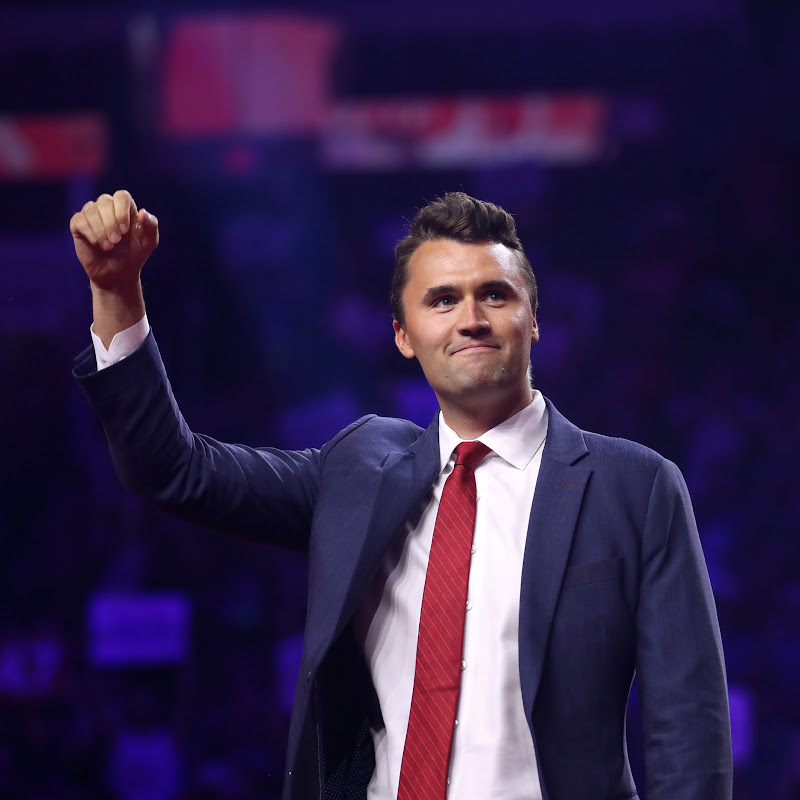
Charlie Kirk is the Founder and President of Turning Point USA, the largest and fastest growing conservative youth activist organization in the country with over 250,000 student members, over 150 full-time staff, and a presence on over 2,000 high school and college campuses nationwide. Charlie is also the Chairman of Students for Trump, which aims to activate one million new college voters on campuses in battleground states in the lead up to the 2020 presidential election. His social media reaches over 100 million people per month and according to Axios, he is one of the "top 10 most engaged" Twitter handles in the world. He is also the host of “The Charlie Kirk Show,” which regularly ranks among the top news shows on Apple podcast charts.
Subscribe on YouTubeBlake Neff and Brandon Tatum Break Down Day Two of Tyler Robinson's Preliminary Hearing
Blake Neff, Officer Brandon Tatum, and Jeb Jacobi analyze the second day of Tyler Robinson's preliminary hearing in the shooting death of Charlie Kirk. The day brought substantial evidence including surveillance footage showing Robinson on the UVU campus four times on September 10th, DNA evidence linking him to items found at the scene, and text messages between Robinson and Lance Twiggs discussing the attack. The panel discusses the strength of the prosecution's case, addresses conspiracy theories circulating online, and examines what jury selection might look like in this high-profile case with the help of jury consultant Jo-Ellan Dimitrius.
Surveillance Evidence Places Robinson on Campus Multiple Times
The second day of the preliminary hearing in State of Utah v. Tyler Robinson brought what many observers called bombshell evidence. After legal wrangling the previous day, prosecutors successfully introduced a compilation of surveillance footage showing Robinson on the Utah Valley University campus four separate times on September 10, 2024: twice in the morning, during the actual shooting around 12:23 PM, and once in the evening bleeding into the early hours of September 11th.
Officer Brandon Tatum, who attended the hearing in person, described it as "an incredible relief that we can match up common sense with evidence." The footage showed Robinson was stopped by law enforcement at 12:30 AM on September 11th, where officers identified both him and his vehicle. This identification was then compared to previous surveillance footage, confirming Robinson's presence on campus despite living approximately 200 miles away and having no connection to the university as a student.
The defense fought vigorously to prevent the video compilation from being shown, arguing there was "a realistic likelihood of prejudice to Mr. Robinson's right to a fair trial" if the footage became public. Judge Tony Graf ultimately ruled the unedited raw footage compilation could be admitted and broadcast, though he rejected a more annotated version that included circles, zooms, and other visual aids that might have made it easier for the public to follow.
Defense Doesn't Contest Robinson's Campus Presence
A significant aspect of the proceedings was what the defense didn't argue. As Tatum pointed out, "The defense isn't even objecting to the prosecution claiming this is Tyler Robinson. He did this, he did that, he walked here." The defense team never contested that Robinson was on campus or that he was the person shown in the surveillance footage.
This stands in stark contrast to conspiracy theories circulating online, particularly claims by some commentators that Robinson was never at the scene or that a body double was used. Tatum emphasized that people should "question what a person is getting their information from" when claims are made without evidence, especially when even the defense isn't making those arguments.
Blake Neff highlighted a crucial moment in testimony when investigators were asked if they had identified a suspect before Robinson turned himself in. The answer was no—they had identified a person of interest from surveillance footage but didn't have a name. Robinson's voluntary surrender, facilitated by his parents and reportedly a scout master with law enforcement connections, came as new information to the command center at the university.
Text Messages Reveal Motive and Post-Shooting Actions
Prosecutors presented text messages between Robinson and his boyfriend Lance Twiggs that appeared to establish both motive and Robinson's actions after the shooting. In one message, Robinson stated: "I had enough of his hatred. Some hate can't be negotiated out."
Other messages showed Robinson discussing attempts to retrieve his rifle from campus: "If I'm able to grab my rifle unseen, I will have left no evidence. Going to attempt to retrieve it again. Hopefully, they have moved on. I haven't seen anything about them finding it yet." This text potentially explains Robinson's return to campus late on September 10th into the early hours of September 11th.
These messages became central to the prosecution's effort to establish enhanced charges based on Robinson allegedly killing Kirk for his political and religious beliefs. The defense attempted to create a distinction between religious and political motives, but as Tatum explained, "Charlie Kirk's religious beliefs or his political beliefs was stemmed from his faith. Tyler Robinson's hatred towards Charlie Kirk was political, but Charlie's political statements were faith-driven statements."
DNA Evidence Links Robinson and Twiggs to Crime Scene Items
Forensic testimony consumed several hours of the hearing, with a DNA examiner presenting evidence about items recovered from the scene. A towel and screwdriver found near the Dairy Queen behind the shooting location contained DNA from both Robinson and Twiggs.
The examiner testified that the DNA results were "1.7 octillion times more likely" to have come from Twiggs and Robinson than from Twiggs and an unknown person for one item, and "30 quintillion times more likely" for another. Some online observers seized on the fact that Twiggs's DNA was more prevalent on the towel, but as the panel discussed, this likely reflects the items came from their shared residence.
The defense conducted an exhaustive cross-examination of the DNA examiner that lasted approximately three hours, leading Judge Graf to remind counsel multiple times that this was a probable cause hearing, not a full trial. Tatum suggested this was a deliberate tactic to "prolong and draw the thing out" and potentially prevent the prosecution from effectively presenting all their evidence.
Twiggs is believed to be cooperating with prosecutors and may have received limited immunity in exchange for testimony. As Tatum explained, "The reason why you would give somebody limited immunity is that they are involved to a point where the things that they say could get them in trouble." He speculated that Twiggs may have helped Robinson prepare equipment for the shooting.
Additional Evidence Addresses Online Speculation
Several pieces of evidence addressed conspiracy theories and questions that had been circulating online. When asked about an unfired bullet found at the scene, investigators explained it was consistent with standard police procedure. Officers carry rifles in "cruiser ready" condition with no round chambered. When deploying the weapon, they chamber a round, and when securing it afterward, they eject the magazine and round. In the chaos of an active shooter situation, rounds can be dropped or lost.
Importantly, the unfired round was a 5.56/.223 caliber, while the autopsy showed Kirk died from a .30 caliber round, making any connection between the dropped police round and the fatal shot impossible.
Regarding claims that no footage of the shooting exists, Neff clarified this was a misunderstanding. When prosecutors said their video compilation didn't contain footage of the shooting, they meant it didn't contain graphic imagery of Kirk being shot—information relevant for Kirk's widow Erica, who was present in the courtroom. However, the compilation did show a suspect accessing the roof, assuming a prone position at approximately 12:23 PM (the exact time witnesses heard the shot), and then fleeing the scene.
The Human Moment: Erika Kirk's Compassion
Amid the technical testimony and legal maneuvering, an Associated Press reporter captured a moment that those who know Erika Kirk said perfectly embodied her character. During an emotional moment in the hearing, a woman named D. Branch who had lined up at midnight to secure a public seat began to tear up. Erica, sitting nearby, reached over and offered her a tissue.
Branch told the AP reporter during the lunch recess: "She doesn't know if I'm team Erica or not, yet she handed me a tissue and I lost it. She didn't know if I was a friend or not and she showed love."
Jeb Jacobi reflected on the moment: "In the midst of all of this, in trying to sort through all of the stuff going on in the actual court, I couldn't help but just like, isn't that Erica? Like, isn't that just typical classic Erica?" He recounted his first meeting with Erica after the shooting, when she broke away from a group to give him a hug, and how that simple act of kindness reflected her consistent character.
Looking Ahead: Death Penalty and Potential Plea
The prosecution is working to establish enhanced charges that would make Robinson eligible for the death penalty, specifically that Kirk was killed for his religious and political beliefs. The defense's vigorous efforts to exclude certain evidence, particularly the David Englehart letter about Kirk's faith and the organization's purpose, suggested they're fighting to keep death penalty enhancements off the table.
Tatum raised an intriguing possibility: "It could be a very likely scenario where if probable cause is established, they're not going to—I just don't see them having a chance in the court of law and therefore they may even plead guilty at the end of this probable cause hearing." He noted that Robinson's team hasn't entered a plea yet, and if the evidence proves overwhelming and the death penalty remains on the table, a plea agreement might become more attractive to the defense.
The preliminary hearing's purpose is solely to establish probable cause—a much lower standard than the "beyond a reasonable doubt" required for conviction at trial. The evidence presented thus far would only need to show a reasonable person could believe Robinson committed the crime, not prove it conclusively. Multiple legal analysts, including some on Fox News, characterized the evidence as a "Mount Everest amount" pointing toward Robinson's guilt.
Jury Selection Challenges in the Social Media Era
In the program's second segment, jury consultant Jo-Ellan Dimitrius joined to discuss the unprecedented challenges this case will present during jury selection. Dimitrius, who worked on the O.J. Simpson defense team, the Kyle Rittenhouse defense, and the Daniel Penny defense, brought extensive experience with high-profile cases.
Dimitrius explained this will be "the first high-profile public assassination of a political figure in the social media era," creating unique complications. Both prosecution and defense will have access to potential jurors' social media accounts, and Dimitrius warned about the possibility of jurors with hidden agendas who might "scrub their social media" once they learn they're being called for this specific case.
The judge has several tools at his disposal to protect the integrity of jury selection, including sending questionnaires to potential jurors without revealing which case they're being considered for, and controlling the timing of when parties learn juror identities. Graf is expected to be "very very protective of these jurors," keeping their identities confidential and potentially redacting identifying information from questionnaires before releasing them.
Because this is a potential death penalty case, jury selection will involve two phases: first determining guilt, then, if convicted, determining punishment. Potential jurors will be questioned extensively about their views on capital punishment, their trust in law enforcement, their familiarity with firearms, and their political leanings.
Dimitrius suggested the prosecution will likely want "older individuals" who are "law and order" oriented, trust police testimony, and have familiarity with rifles. The defense would typically seek those skeptical of police, without weapons experience, and more politically liberal—particularly people who would have difficulty applying the death penalty.
The defense may file a change of venue motion, arguing Robinson cannot receive a fair trial in the current jurisdiction due to pretrial publicity. However, Dimitrius noted such motions rarely result in moving a trial out of state; typically cases move to a contiguous county, allowing the same judge to preside while drawing from a potentially less-exposed jury pool.
Addressing the Conspiracy Theory Problem
Throughout the discussion, the panel addressed the persistent conspiracy theories that continue to flourish online despite mounting evidence. These theories range from claims that Robinson wasn't present at the scene, to allegations of body doubles, to elaborate scenarios involving foreign intelligence agencies—none of which have been raised by Robinson's actual defense team.
Neff pointed to what he called "the dog that didn't bark" phenomenon: the defense isn't arguing anything about "exploding mics, Egyptian planes, Mossad, Epstein." Their actual legal strategy focuses on technical evidentiary challenges and trying to exclude certain damaging evidence, not on presenting alternative theories of the crime.
Tatum emphasized that people should "look at the evidence, quit listening to people online, especially those who do not have law enforcement experience or experience doing investigations." He encouraged viewers to watch the actual hearing proceedings and "make the determination on your own, but it has to be rooted in facts and it has to be rooted in evidence."
Jeb Jacobi referenced 2 Timothy 3, which warns of people "always learning but never able to come to a knowledge of the truth." He observed that for a certain segment of observers, "nothing is ever enough. The DNA evidence, the video evidence, the admission of guilt, all of these things, it's all fake."
The panel noted that when they step away from the intense online discourse surrounding the case, they find most people in their daily lives have only passing awareness of the details, if they're aware of the case at all. This suggested that despite the intense online attention, a significant portion of the potential jury pool may not be deeply contaminated by conspiracy theories or predetermined conclusions.
What's Next
The preliminary hearing will continue with additional evidence and testimony. The prosecution is expected to present Lance Twiggs's videotaped statement, which the defense will not have an opportunity to cross-examine due to Rule 1102 in Utah procedure. His testimony is anticipated to be particularly significant given his intimate knowledge of Robinson's state of mind and actions before and after the shooting.
Additional forensic evidence, ballistics testimony, and witness accounts will likely be presented before Judge Graf makes his determination on probable cause. Given the substantial evidence already presented—surveillance footage, DNA evidence, text messages, and Robinson's voluntary surrender—most legal observers expect the case will proceed to trial.
The question of whether prosecutors will formally seek the death penalty remains unresolved, though they are clearly preserving that option by establishing the enhanced charges related to Kirk's religious and political beliefs. That decision may influence whether Robinson's defense team ultimately seeks a plea agreement or proceeds to trial.
For those following the case, the preliminary hearing provides a preview of the prosecution's case and the defense's strategy. While the standard of proof is lower than at trial, the evidence being presented now will form the foundation of the eventual trial, should the case proceed that far. The hearing continues to be livestreamed, allowing public scrutiny of the judicial process in this historic case.
Video Transcript
All right, welcome everybody. We are
live here for our special day two of the
state of Utah versus Tyler Robinson
preliminary hearing. Uh we've got so
much to get to. We've got uh myself,
obviously Blake, Brandon Tatum, Officer
Brandon Tatum, and Joe Bob. All there.
There you can see him right there.
Gentlemen, thank you so much for coming
and joining us. Uh Brandon, I know you
were in the courthouse all today. I I
can't wait to dive in and get your POV.
I want to set this up just really
quickly for our audience before we get
into it. The day two was, I think, uh an
absolute bombshell of a day. uh there
was more probable cause, which again is
the standard in a preliminary hearing to
take it to a full trial. Okay, the
morning started off huge. And gentlemen,
this is where we're going to start. We
we left off last night where they were
trying to submit this the state was
trying to submit this video compil
compilation and they had sort of a John
Madden style version of it that they
were not allowed to do. But this morning
they got the compilation in. It was more
of the raw footage version of it, but it
was huge. huge, huge, huge. Uh there was
now we've established that Tyler
Robinson was on campus, the UVU campus,
four times. Uh twice in the morning, uh
then during the actual uh shooting and
then once in the evening that actually
bled into the early hours of September
11th.
Uh Officer Tatum, I want to start with
you, sir. What was that like watching
that footage and hearing for the first
time four times on the campus of UVU?
>> Yeah, I can say uh thanks for having me
on. I I can say it was an incredible
relief um that we can match up common
sense with evidence and get it presented
in court as a probable cause, you know,
effort. And because a lot of people were
saying that, well, not a lot of people,
I think people without a connected brain
stem are saying that Tyler Robinson
wasn't even on the campus whatsoever.
And obviously we see him on camera
verified. He he was even stopped by law
enforcement at 12:30 a.m. on on the 11th
uh where they identified the vehicle and
they identified him as a person driving
the vehicle. Then they com they compiled
that and compared that to some of the
videos that they had uh from previous
days and it and or the previous day and
it's clear that Tyler Roberts was the
one driving the car on campus even
though he's not a student on campus. He
has no reason to be there. He lived
probably 200 miles away. So it was
damning evidence for the for the defense
team.
>> Yeah. And and
>> which they themselves were aware of.
>> Yeah. This is this that's the other part
here.
>> The first hour of today was back and
forth where they basically were again
were arguing can we please not show this
sequence of video even the unedited
version can we not show it because there
is a a quote a realistic likelihood of
prejudice to Mr. Robinson's right to a
fair trial. that basically this video
getting out there would be so viral, so
widely seen, it would just make it it
would make it too difficult for Robinson
to have an untainted jury someday.
>> Yeah. Well, that I mean, as soon as as
soon as this went out, it went viral all
over. Joe Bob, what did you see from
your perch uh as soon as that that video
evidence was made public and was
actually broadcast too to Judge Tony
Graph's credit?
>> Yeah. So to to back up to the kind of
the procedural part of it, uh there was
obviously arguing over whether or not
this should be shown and it was
interesting to see I think he's an
attorney representing the media side of
it saying hey well if Judge Graph is
going to make a decision on whether this
is going to proceed to trial everybody
needs to see what he sees unless of
course obviously it's graphic that way
so they if he makes an assess when he
makes an assessment people can believe
that assessment which is is an
interesting dynamic in in the courtroom.
Obviously, uh we're all grateful that
this footage is now out uh and public.
Uh in terms of the internet reaction, um
it it it was it was huge. Like,
everybody I knew shared uh at least some
version of one of the several videos
that came out and the normal people
reacted like, "Yeah, this kind of seems
like something we knew, something we
knew was coming and and now it's here."
And then you've got, you know, 2% of the
population who then decided to take it
and run a different direction. Well, but
but but but like, okay, well, there's
nothing you can do to please those
people. Uh, but overall, this, as
Brandon was saying, kind of put to bed
uh a lot of the
I I don't even know what to call it. The
the craziness that was out there. Uh
Tyler Robinson wasn't even on the
campus. Okay. Uh thankfully we finally
have footage now to uh to make sure that
that uh that that gets put to rest.
>> All right. So I I totally agree. There's
still going to be, you know, theories
that emerge that are, you know, I would
say divergent from what the state is is
posting. We're seeing those online. I
Brandon, what was it like in the
courtroom when that was happening? Uh it
it felt like there's been a couple
instances where I've seen Judge Graph
actually get a little bit you can see
his patience is wearing thin. He's very
good at keeping a dead pan uh
presentation, but you could see there
was a couple moments and then finally he
rules on this. What was it like in that
inside the courtroom when that was
happening?
>> Well, for for me it was an incredible
relief. I I think I can echo the
sentiment of of most people that was,
you know, that's on the Charlie Kirk
team. Charlie Kirk's side is that
initially it was questionable whether or
not they were going to get this amount
of evidence or this type of evidence
into the trial. Um but towards the end
of the day yesterday we kind of knew
that if we prepared it right um the
evidence would be admissible. Um but it
was a it was a sigh relief and
especially because we were able to you
know I think it was a give or take cuz
it was a sigh relief because we were
able to get the information in.
Therefore the world can see that Tyler
Roberts was it's evidence that he was on
campus. But but the thing that was a
little disappointing in part was that
there was the other variation of the
video that had some circles and zooms
and blurs on it that I think would have
been more appropriate for the audience
uh at large. You know, people in the
courtroom, we we could see what was
going on. We knew what we were looking
at. I mean, it's pretty obvious, but to
the public with that video being
displayed the way it was, it's not very
easy to see unless you zoom in. So, the
video that the judge allowed to be
admissible in court but not viewed by
the public uh was a video that I think
would have been a lot easier uh for
people to digest online. And but
overall, I think it was incredibly
powerful and I think it was a sigh of
relief that we were things were going in
the right direction for the for the
Charlie Kirk team.
>> Uh I saw that you posted some kind of
selfie videos, Brandon. Uh I don't know
if those are on break or whatever dur
during uh today in in the middle of the
the different uh breaks and in in the
action, but you were talking about this
theory of like the pathy theory and you
were talking about uh could other people
have been involved and that we're still
kind of dealing with this this notion of
and I think you know this is coming from
Candace that you know she doesn't even
believe that he was on campus that day
and she doesn't believe that this guy
was the right height. or whatever. Let's
go ahead and play this clip and I'll
have you respond. 34.
>> I don't
>> Who do you think is behind this?
>> I don't think Tyler Robinson was there.
>> You don't think he was there?
>> I think he's a total psy. I think they
get look alikes and they get everybody
wearing the same outfit. I think he
played a role and I believe that what he
did was he picked up clothes and he
dumped them behind the the Dairy Queen.
I think he had a role.
What do you make of that?
>> Well, I I I think people should be able
to digest this information and say if a
person is going to say he wasn't even
there, he was a psy and there's no
evidence whatsoever presented to back
that claim up, then you should probably
question what a person is get where the
person is getting their information
from. It is clear as the noonday son, he
was on campus four times. and for him
being a a body double or something like
that. Even the defense isn't arguing
this. This the thing that people need to
understand is that if how is somebody
how is somebody who's not associated
with the case, has no investigative
skills, is not investigating anything,
you know, any substantive thing um going
to argue something that defense isn't
even arguing. They're not arguing that
Tyler Robinson wasn't wasn't on campus.
They're not arguing against that. You
know, the funny thing that I found in
this point, Brandon, that's such a good
point. But another thing is as well is
that the on campus and and the defense
isn't even objecting to it because you
would think that the defense will object
to it because it's still a probable
cause hearing. They haven't determined
that they have probable cause to believe
yet that Tyler Robinson is in fact that
suspect. But the defense isn't even
objecting to the prosecution claiming
this is Tyler Robinson. He did this, he
did that, he walked here. And and I'll
tell you something else that the defense
messed up on. um because they're, you
know, they they're not doing an adequate
job when it comes to this is that she
tried to be impartial when she said a a
suspect jumps off of the roof. Then she
says, "And then he did this." It's like,
"Well, wait a minute. I thought you were
articulating that this is a kind of an
impartial person. How do you know if
it's a male or a female? None of these
things have been presented yet. Why are
you saying he?" It's because they know
for a fact that it was Tyler Robinson.
And at least I think they believe it was
Tyler Robinson. And those things are
being brought up in court. I I encourage
people to look at the evidence. Quit
listening to people online, especially
those who do not have law enforcement
experience or experience doing
investigations or those who won't even
interview people with experience. You
you you have to put those things
together. So, listen to what's going on
in the hearing, make the determination
on your own, but it has to be rooted in
facts and it has to be rooted in
evidence.
>> Yeah. I I think what we'll see we're
we've seen it the last few days and we
will see it in the weeks, months,
potentially years to come is that people
who are committed to this line of
reasoning that Robinson is a psy that
Robinson wasn't there that Robin that no
one fired a shot from the top of that
building. I don't think they're really
motivated by believing a particular
source. I think they're motivated
frankly by by malice. they want to
believe a certain line and they don't
they genuinely don't care what the
evidence is. Uh but fortunately I think
most people aren't going in that
direction. I wanted to flag another
thing that was very strong uh besides
the four times on campus. Uh I think
this gets at the crux of why we can be
so confident in this case that they
actually asked uh investigator Hull, did
you guys have a suspect in this case
until you got news that someone had
turned himself in? and he said the
answer is no. In fact, I think we we
didn't get a chance to play that
earlier. Let's play it now. Uh they're
asking about this. This is clip 17.
>> And isn't it fair to say that
as of the moment that Tyler Robinson
voluntarily surrendered to authorities
in Washington County? As of that moment,
you all did not know who the shooter
was. Is that right?
>> We had identified a person of interest,
but we did not specifically know who the
shooter was at that time. Okay.
And you became aware that Mr. Robinson
was voluntarily surrendering. How? How
did you become aware of that?
>> That information came originally, I
believe, from the Washington County
Sheriff to the administration at the uh
the control center at the university on
the evening of the investigation.
>> Okay.
>> Or the second evening of the
investigation.
>> So So that just lays it out. They did
not this he didn't get arrested because
they'd identified him uh through a story
we've already heard that his parents
became suspicious. They brought in
pictures of him a friend. I believe they
said it was a scout master of his who
had a former sheriff something like
that. They loop him in into the part of
the process and he turns himself in.
>> He calls and said, "Hey, if we bring if
you know if he turns himself in
peacefully, can we do it that way?" They
agreed. He goes and turns himself in.
And they didn't they had these their
command center at the university did not
know they they had a person of interest.
Presumably they'd identified this person
they'd seen on cameras. So they were
releasing photos. But I think my
interpretation of that was they did not
have a name. They didn't have a name.
>> They didn't have a particular person
they were on a manhunt for
>> and then they learned that he had
voluntarily turned himself in. That's
the defense. That's the defense attorney
saying that Tyler Robinson turned
himself in. And that's another thing
that these people online have tried to
deny ever happened.
>> Go ahead, Brandon.
>> Yeah, this is this is incredibly damning
to the defense
when you have no idea who the person is.
Why would a person that had nothing to
do with this voluntarily turn himself
in? It's not like they had his name,
right? It's not like they said Tyler
Robinson did it. We're looking for this
guy and then he said, "Okay, okay, y'all
got me. I'm gonna turn myself in without
incident." No. this person voluntarily
said, "I am surrendering, taking
responsibility for killing Charlie
Kirk." Like, I I don't understand how
anybody's still questioning whether or
not this this boy is involved in this.
He voluntarily did it. This is this this
flies in the face of the of the of the
theory that he's somehow being used by
somebody else. If if somebody turned him
in, meaning somebody snitched and said,
"Hey, it was him." and they went and
picked him up and it happened that way,
then I can see somebody saying he's a
pacy or something. But why would your
parents who love you presumably I see
him in the courtroom and and they go,
I'm just going to make this up. I'mma
act like my son did this heinous crime
that's going to put him in a in a bad
light for the rest of his life. It's
going to go down in history if he's
found guilty that he killed one of the
most incredible men to ever live in the
United States of America. And you
telling me that parents just turn him in
because one day they just got a wild
hair and thought it'd be cool to turn
their son in for this and he could be
put to death over this. I think it I
think the case is closed on that.
>> Absolutely. And Joe Bob, I want to work
you in here in just a second, but but
what what we're talking about I think is
a really important vein and that is
>> what the defense has already just sort
of admitted to that Tyler Robinson
turned himself in. You know, it's like
they it's the dog that didn't bark kind
of thing. that you know this is what's
interesting. There's a uh some of there
was an analyst on Fox News who said it
was a mount Everest amount of of
evidence presented against Tyler
Robinson. And these are people that that
know prosecutions that no criminal
defense and prosecution. So, but it's
crazy cuz like what else is the defense
not saying, right? They're not saying
anything about exploding mics. They're
not saying anything about Egyptian
planes. They're not saying anything
about MSAD. They're not saying anything
about reicside. They're not saying
anything about any of that stuff. So, I
just I I just like to our point here
kind of like keeping us focused on on
what the evidence actually is saying to
us. Now, I I I think I have more I want
to say, but I I I was going to work in
uh Joe Bob here. Joe Bob. Well, I I
don't want to I don't want to jump ahead
too far in the day, but there's the
commentary that I saw online uh was when
they got to the DNA portion of it and
the examiner there uh wouldn't say, "Oh,
definitive this, definitive that." Um
when actuality, it's US DOJ policy that
examiners don't use definitive language
when presenting DNA evidence. uh and
specifically in a pre-trial. Um and and
to that point on the on the crazy side,
uh if the the word show trial has been
thrown around, if this were a show
trial, why would any of the evidence be
inconclusive? Okay, wouldn't wouldn't
all of that be tied up? And and also, if
it's all a lie, if all of this stuff is
made up, then you can't use it as your
argument. you can't use the perceived
inclus inconclusivity as part of your
argument. So, the whole thing crumbles
in the conspiratorial mind. And and you
know, I I I pulled up a a Bible verse
here that's I'm sure been referenced a
number of times. This is second Timothy
3. Uh beware of the worms who gain
control over gullible women who are
loaded down with sins and swayed by all
kinds of evil desires. Always learning
but never able to come to a knowledge of
the truth. And isn't that exactly what
we are seeing in real time? Just, well,
nothing is ever enough. Okay, so the DNA
evidence, the video evidence, the
admission of guilt, all of these things,
it's all fake. It's it's
>> I love that you brought this up, Joe
Bob. I love that you brought brought
this up and and Officer Tatum, I'm going
to appeal to your experience as a police
officer here. Uh there a lot has been
made about this uh Ring camera footage
that shows Tyler Robinson's car going in
front of it and I guess the owner of the
house remembers somebody baldled with
three pe driving the car and with three
people in it or something to that
effect. So everybody's saying, "Oh, see
it wasn't Tyler, you know, driving it or
whatever." But the Ring camera shows
what actually happened and that's that
the car was driving by the house. So
explain the difference between witness
eyewitness testimony recollections, you
know, the human frailty of memory versus
the video evidence from pulled from that
ring camera.
>> Well, thank you for uh going to me with
this one, but um I I think that people
have to understand that they're looking
at the totality of evidence and in a
actual trial. It's beyond a reasonable
doubt. So there is a burden that you
have to prove that's beyond a reasonable
doubt. So, you put all the evidence
together and this is why they don't just
talk to the people that live in the
house and get their written statements.
That's why they have a video because
sometimes people in a in a haste or
people could be misidentifying certain
things. That's why you can't go on their
testimony alone either. You have to look
at the video and say, "Okay, now we get
what they have said. This is their ring
camera, but what do we actually see?"
There are people that can look at we can
all all of us can look at the same
person and we may get their height
different. You go, "Hey, man. I think
they do the 6'3. Somebody say 61.
Somebody say 510. You take the the
totality of evidence and you put it
together and build uh a testimony of
what happens. You don't take little
parts here, parts there, and try to make
a whole case on it. They're going to
look at the vehicle as one element of
placing him on campus, but they have a
plethora of other evidentiary points
where they see him here physically
getting in and out of the car. the
traffic stop that happened at at 12:30
on on the 11th where they where a police
officer identified the vehicle and him
driving the vehicle around the same time
that he's being, you know, seen on the
on the uh ring camera. So, they're going
to put all of this stuff together and
they're going to be able to present that
before jury and they're going to have to
prove beyond a reasonable doubt. Now, I
want people to be very clear on this
because you can't put the cart before
the horse. This pre-trial is a probable
cause hearing. That's right. So all of
the evidence that's being presented now
is not does not have to be tested
against other experts and scrutinized
and cross-examined. It just needs to be
presented and eligible to be presented
in a pre-trial. So the win here would be
probable cause being established to go
to trial. Now here's the other thing
that could happen in this that I think
people need to consider because Tyler
Robinson's team and the defense haven't
put in put in a plea. So it could be a
very likely scenario where if probable
cause is established, they're not going
to I just don't see them having a chance
in the court of law and therefore they
may even plead guilty at the end of this
probable cause hearing. So that's why
sometimes it's referenced in the court
that there may not be a trial and that
is because if the evidence is
overwhelming, they may uh plead guilty.
>> That's a fascinating fascinating. Uh
it's a fascinating idea I hadn't
considered yet. Um, here's one other
thing that I want to get your take on
because I saw this going around on
social media as well and this is uh
again when the examination of officer
Hull was uh ongoing the they the defense
brought up the fact that there was
another bullet uh found on site. Let's
go ahead and get this and I want to get
your take on it. 32
>> the unfired bullet that you referred to.
It's your understanding that um that
bullet was accounted for.
>> That's my recollection. Yes.
>> Okay. And it possibly belonged to an
officer that could have maybe been
clearing his weapon.
>> Yes, that was that was the that's what I
recall being told about that particular
item. Yes.
>> When you said that it it was possible
that that round uh was from an officer
clearing his weapon, what what exactly
do you mean by that?
Um our standard practice in our
department is to carry a rifle cruiser
ready.
>> Uh which is we carry our rifles in a
situation which is called cruiser ready.
>> What does that mean?
>> Means we don't have a round chambered.
>> Um so if an officer deployed with his
rifle, he would chamber a round. Uh once
he had done whatever task it was that he
was doing in order to put that weapon
back, he would eject the magazine and
eject the round. Sometimes in doing so,
rounds are dropped or not accounted for.
>> So, I I don't know if you've ever been
part of a cruiser ready team, Brandon,
or if you have any experience with this,
but explain clearing the chamber, what
this means. Uh, have you ever
encountered an instance in your your
professional career where a bullet went
missing? Explain all of that to me and
and how do you account for how many, you
know, how much ammo you have as a as a
police officer, etc.
>> Yeah, perfect. I think every police
officer in America probably uh go by
these standards. They call it cruiser
ready. So, you don't want to have a
round in the chamber while you're
driving around with your rifle in the
car because if something goes wrong,
well, it it depends, but mo more than
likely you don't want to have it that
way cuz a lot of people carry their
rifles in a bag in the trunk. And so,
you don't want something to happen where
you get into a crash or something hit
the trigger and a round goes off from
the back of your car. So, you you ride
with no uh round in the chamber.
Normally the boat is is is you don't
want to have the bolt locked either
because then you can drop a round in if
you hit a bump. So you you normally have
the chamber the bolt forward with no
round in the chamber. Now when you get
out the car cuz it's time to get busy,
you got to chamber one and so a lot of
times they'll rack one and put it in the
chamber. Now if you don't get into a
shooting or anything, you got to get the
gun back ready to put back into your
vehicle. So a lot of times what you do
is you drop the magazine out and you and
you you know you hit the round and it
comes out. Now, in a campus situation
where there's an active shooter
potentially, I could see an officer
getting their rifle ready and leaving
the round because they don't have time
to stick around and wait for it. A lot
of times what I would do is pick my
round up, right? Because you have to be
accounted for every round that's in the
magazine. So, it is a possibility that
an officer could have done that where
they ejected a round because they were
getting ready to make their their rifle
ready to put back in the car. Now,
another scenario that could have
happened that I think that the detective
uh or or the investigator alluded to was
there are sometimes where in the heat of
the moment, you may not know if you have
a round in the chamber or not. And so,
you you're going to make sure that
there's one in chamber. So, you may rack
it in order to make sure there's one in
the chamber, but there's already one in
the chamber. So, you accidentally eject
the round out. Now, if you're doing that
in a heated situation, you're not going
to go back and grab the round. You're
going to go and you're going to go
wherever you need to go with your rifle
loaded. So that could have been the
case. But nonetheless, we all know what
the autopsy has alluded to, at least the
evidence that have been presented that
it was a 30 caliber round that was found
in Charlie Kirk's body. So the the round
that was found on the ground on the
other rooftop was a 5.56 223. That's not
consistent with the caliber round that
was found in Charlie's body. So that is
not applicable whatsoever anyway. So, I
think that if somebody wanted to
question that, they should they should
divert to what the detective said or or
the investigator said on the stand as
this could be the possibility of that
round um ending up where it's at. Plus,
he was told that that was the case in
the first place.
>> Yeah. And I I I think that is a great
explanation honestly and your personal
experience with this is invaluable. Um
and they and it would make sense by the
way I believe the round was found on
another rooftop and I'm sure that that
was kind of the first place these guys
were going to go check anyways. Right.
So uh
>> or or they may have already been on a
rooftop or or some to some degree. Um
and then that could have been the reason
why they ejected around right there on
the on the on the turf.
>> No, but it was a great explanation
actually. Um, so the uh we have a couple
other we have a couple other clips on
that, but I think I think we've kind of
dealt with that. I wanted to get to this
this point in the proceeding where it
was David Engelhart's letter
>> and it was kind of a a a purpose of the
org and Charlie's faith and man that
took so long so much back and forth. I
think it was um the lawyer's name was
Novak for the defense and and that was
another moment where I saw the judge get
visibly sort of his patient was patience
was wearing thin. Uh Joe Bob uh were you
watching that? And I mean as as a
non-legal expert I who who is a
Christian who you know who knows
Charlie's how his faith was so
intermixed with him with what he did his
campus debates. What was going through
your mind in that moment?
>> Yeah getting pulled a lot of different
directions. One is probably similar to
what Judge Graph is feeling. It was like
this is this is a lot for this. Um to my
understanding again not a lawyer. It
would would have been some sort of
enhancement to the charge. Uh being that
Charlie was an outspoken Christian. Uh
there's obviously a cultural angle of
the organization and did Tyler Robinson
act on Charlie's faith uh or the the
cultural presence of the organization?
Uh which is obviously why they would
include uh the letter. I think there's
there's a part of me there's a lot of
obviously there's a lot of evidence
there is this super necessary especially
with how long uh that took but then
there's another side of me that thinks
you know so often there are um instances
where where something happens to a a
some sort of I don't know racial
minority or ideological minority and
that's the only thing that matters it
was a a Muslim person here who's the
victim of something or a gay person here
is a victim of something and almost
never never is it brought up uh okay
well the victim was a an outspoken
devout Christian as was the case in in
Charlie's case and so while I I you know
there's not going to be an enhancement
that's going to be at least again to my
non-awyer understanding that's going to
be uh higher than aggravated murder it
it is good to put it out there and be
public about it hey this was at least
part of the decision decision uh that a
char that Tyler Robinson allegedly made
to kill Charlie. And Charlie was
motivated purely by his faith.
>> Yeah. And and you know, he's he's in a
rel he's in a gay relationship with a
transidentifying
person, Lance Twigs. Obviously,
>> and by the way, I recommend anybody out
there I I think I'm going to tweet this
out soon just to kind of help get it
back out there, but the the Turkey Tom
uh video I've been told has been
authenticated. Turkey Tom is a YouTuber
who interviewed extensively one of their
roommates or friends that kind of lived
and kind of hung out with these guys and
and can give a very first person
experience of what it was like to be
around their relationship. And I mean
it's it's a very depraved
>> Lance twigs nesting
>> nesting the the the audible u sexual
relations upstairs the the manic
depression the drug
>> where everyone kept speculating oh my
love actually that is how they talk to
each other. Yeah, that is how they talk.
And by the way, throw this uh up here to
your point. Throw this up. Uh this is
the 143. This is uh what investigators
say they found these text messages
between them. And to your point, Joe
Bob, this enhancement of that that
Charlie was killed for his political and
religious beliefs. I had enough of his
hatred. Some hate can't be negotiated
out. Uh, ironically here in this same uh
text though, by the way, it explains why
we might have seen uh Tyler Robinson on
campus that night, right? Because he
goes, "If I'm able to grab my rifle
unseen, I will have left no evidence.
Going to attempt to retrieve it again.
Hopefully, they have moved on. I haven't
seen anything about them finding it
yet." So, that might actually kind of be
that full circle from why he went back
on campus late in the evening on uh
September 10th into the wee hours of
September 11th. But that first part is
establishing motive. And that was what
that letter was all about. And you're
right. You're not a lawyer, but I've
I've been talking to lawyers all day,
and I'm sure Brandon understands this.
Well, the death penalty has to be you
have to establish these enhancements,
which would be, you know, killed for
religious political beliefs, right? So,
the defense is trying to undermine this
argument and take the death penalty off,
which makes me think, Brandon, kind of
about what you're talking about with
this potential plea deal if he's going
to plead at the end of this, right? Cuz
if they could establish, if they could
get the enhancements off by Judge Graph
and get the death penalty off the table,
they might be more motivated to take
this thing to full trial. But if they
know they're staring at a death penalty
trial, you know, that might factor into
their calculus. What do you think?
>> Yeah, I think they have to utilize some
tactics here because I think the
evidence is pretty overwhelming. And
when they finish putting all the
evidence together, I think it's going to
be very clear to anybody who's willing
to listen, but they they do have to the
prosecution does have to prove um
probable cause for uh 10 different
charges. So you have 10 charges. They're
going to have to methodically go through
and say this is our probable cause
statement that a person who observed
this evidence would reasonably believe
that Taylor I mean that Tyler Robinson
did this. They got to go through every
element and one of the elements is the
enhancement. And the enhancement is very
clear that Tyler Robinson opposed
Charlie Kirk's religious beliefs. He
propos opposed his political beliefs.
And here's one thing that they were
trying to differentiate which I think
the judge caught. The defense wanted to
make a difference between political and
faith. And
>> these two things overlap. Charlie Kirk's
religious beliefs or or his political
beliefs was stemmed from his faith.
Yeah.
>> And so, uh, Tyler Robinson's hatred
towards Charlie Kirk was political, but
Charlie's political statements were
faith-driven statements. So, his
lifestyle that he lived, Tyler Robinson
lived, um some of the reasons why he
hated Charlie with was all coupled with
his political beliefs and faith. Now,
this is the reason why this is very
important that they're going to have to
prove later on in in this hearing is
that they charged him with a enhancement
based on political beliefs. And so, the
defense is trying to say these trying to
say these two things are different. So
the prosecution didn't meet the burden
of identifying that this is political
inside of this statement from Eckles. I
think I may have said his name wrong.
>> Anglehart
>> Anglehart Anglehart because Anglehart's
document was was mainly religious.
>> But I think the prosecution to be able
to identify that there is no separation
between these two things. They're
they're virtually the same. and that
Tyler Robinson's lifestyle was
antithetical to what Charlie was saying,
which is why he wrote those things and
then eventually shot and killed Charlie.
>> I want to get to two more things here.
Um, I want to get through the DNA, which
was a really, really laborious thing. I
mean, I don't know. I see you shaking
your head. I mean, it was hours. You can
tell that they brought this this
attorney on to the defense team
specifically for forensic
cross-examination cuz this guy was
asking very much in the weeds. And
eventually the judge did basically try
and rein it in because it was dragging.
>> It was going and going. I I just want to
make sure we play this because we did it
came after our last segment just where
they're asking. They had items that had
intermingled DNA of Lance Twigs and
Tyler Robinson, and they were laying out
the odds that this was anyone other than
Tyler Robinson on this object. Uh, let's
do clip 31.
>> Male DNA was obtained from item seven
sub one. Item 7 sub one was interpreted
as originating from two two individuals,
one of whom is twigs. The DNA results
from items 7 sub one and are 1.7
octillion times more likely if Twigs and
T Robinson are contributors than if
Twigs and an unknown unrelated person
are contributors.
Male DNA was obtained from item 8 sub1.
Item 8 sub1 was interpreted as
originating from two individuals, one of
whom is Twigs. The DNA results from item
8 sub1 are 30 quintilion times more
likely if Twigs and T. Robinson are
contributors than if Twigs and an
unknown unrelated person are
contributors.
>> Do you know if uh Lance Twigs's DNA was
obtained uh for this for comparison in
this test?
>> Yes, it was.
>> And how was that DNA obtained?
>> It was obtained by law enforcement
officers.
>> Okay. So, quintilion. I don't even know
what that is.
>> That's after a trillion.
>> That's a lot. Um I don't know. I'm I'm
not good at the maths, but I can tell
that's that's a lot. And the first one I
think was 1.7 octilion. So eight eight
times alen. And so that's
>> so I want to I want to make a point here
because I've seen the internet running
wild with this one too. So Lance Twig's
DNA was also found on the towel and a
lot of it actually and I don't want to
get like down some weird, you know, you
know, rated R kind of thing, but it's
these were two men that were living
together and who knows where that towel
came from. I'm just going to leave it at
that. Okay.
>> Well, some people have been running with
that. It had apparently had more of
Twigs's DNA on it than Robinson. Same
with the screwdriver. I wouldn't be
surprised if the obvious explanation is
that Robinson just took those items from
Twigs.
>> From Twigs. Yeah. So, but here here's
let me just make this clear clear. Um,
as a reminder, Twigs is believed to be
cooperating with the prosecution and may
be receiving a limited immunity in
exchange. Now, of course, and I think
Tatum, you said this uh on one of your
videos, if it comes out that he actively
participated in the murder, that
immunity would presumably go away and I
would be totally in support of that.
Okay? As I would be in support of if it
comes out and is revealed that other
people had fornowledge, other people
radicalized him, other people were
involved. That's not what this case is
about. This case is about did Tyler
Robinson kill Charlie? Okay. I still
have questions about how did he get
radicalized? Who influenced him? How did
he get to that point? A thousand
billion%.
And and I have questions about Lance
Twigs. A lot of questions about Lance
Twigs. But for this purpose, he is a
state witness against Tyler Robinson. Uh
Officer Tatum, do you have anything
specifically you want to say about that?
Yeah, I I think that to kind of sum up
this uh DNA question mark, it's I think
that the purpose of the questioning by
the defense was to just prolong and draw
the thing out. They never got to any
foundational conclusion. It I don't
understand how the judge allowed them to
do this for 3 hours. This is a probable
cause hearing. The only burden that the
state needs to prove is that is this
admissible and is the the uh
documentation reliable because the
source is reliable. That's it and it
should be admissible in court. They drug
this thing on and the judge said several
times reminding both council that this
is a probable cause hearing. So, I I
think that this was just a tactic by the
defense to draw this thing on so that
the the the defense or the prosecution
couldn't cross-examine the witness and
get the facts out the way they should
have been presented. Um, also the Lance
Twigs thing, the limited immunity, the
reason why you would give somebody
limited immunity is that they are
involved to a point where the things
that they say could get them in trouble.
And so you say, "I'm going to give you
immunity up until the testimony that you
give and you could give us the testimony
and you won't go to jail over this."
Now, if we find out later through other
investigative methods that you were
involved, you're still going to go to
jail for that. But the testimony that
you give, because it could be
incriminating to you, and obviously it
probably was. That's why they gave him
limited immunity. You can feel free to
tell us everything you know and how you
were potentially involved in this. Now,
the DNA aspect of it is that I think
they were trying to prove that the items
couldn't have been something that wasn't
associated to to Tyler Robinson because
if the towel was just found in the
bushes, it could be anybody's towel. The
towel could have been, you know, placed
there by somebody else. But because
Lance Twigs and Tyler Robinson's DNA are
on the items, it draw it it draws the
connection to Tyler Robinson because
they live in the same place and the
items must have come from his house. And
so when you have the gun, you have I
mean at least the screwdriver and the
towel, both of those things associating
the two individuals together would
indicate that this couldn't have been
external. This couldn't have been
somebody planting it on Tyler Robinson
and and and putting his DNA on there
mysteriously. It had to have been
something that came from a a domain or
dwelling that they both shared. And I
think Lance Twigs may have prepped some
of this stuff for him,
>> which is probably how he got the partial
immunity.
>> And then they're going to he going to
testify against Tyler Robinson in court.
>> Uh, one other thing here real quick and
then I want to throw to Joe Bob with
this story that came out from inside the
court in Erica. But um you know I see
people saying that you know the is there
any footage of the shooting and the
prosecution saying no. You guys have
probably seen this. A lot of people are
running with this on social media.
>> Don't run with anything.
>> That is not what happened. Uh what
actually happened and this is about the
compilation
video. They're asking it basically was
there anything visible about the
shooting in that video.
>> A and they said no. In that specific
exhibit, they were asking, "Is there
footage of the of the shooting in it?"
They said, "No."
>> But but even then, even then, we don't
need to go for that far down it because
we have footage of the same person
showing up on campus repeatedly, him
going into the position where our
ballistics evidence and our video
evidence suggests the bullet came from.
>> He's there at the time the shooting
happens. He's running away after. You
don't need a video of someone firing a
gun if you have every single piece of
surrounding evidence supporting the idea
that someone went there and shot a gun.
>> So, to be clear, no, the prosecution did
not say there's no footage of the
shooting. The prosecution said the
exhibit, which contains a compilation of
surveillance footage of Robinson moving
around on campus, didn't cons contain
graphic footage of the shooting. That
was relevant. By the way, Erica needs to
know that stuff, too. the the the the
victims sitting in the courtroom need to
be aware of that. Go ahead, Mr. T.
>> Yeah. Yeah. Andrew, I I think you made
an incredible point that I think if
people weren't sitting in the in the
courtroom, they wouldn't have understood
this. The purpose of the clarification
and and the prosecutor actually came
back and clarified that there is video
of the suspect getting on the roof,
going to a prom position, and the shot
is believed to be fired during that
position. But they wanted to clarify so
that Erica didn't have to be in the
courtroom
>> witnessing Charlie getting shot. So they
were saying that it's not graphic in
nature. So you're going to see the the
suspect get on a rooftop. He's going to
get into a prone position in this area.
We believe the shot happened. It's not
very clear and conclusive, you know,
that the shot happened. But you can use
the reasoning.
>> But but by the way, the time stamp is at
12:23 when he's sitting in the prone
position, which is exactly when Charlie
was
and he also admitted to it, right? So,
you got you got a ton of people that
heard that the shots happened. You have
him on the roof at the time that the
shot happened and then you got him
turning himself in as a person
responsible for shooting Charlie Kirk.
So, I mean, this this is why they put
the totality of evidence together and
they have to prove beyond a reasonable
doubt. And I think that with the
evidence that we see, it's going to be
it's not going to be a challenge for
them to prove to a juror to a jury to
say, do you believe beyond a reasonable
doubt that there's no reasonable doubt
that Tyler Robertson did this when they
put all the evidence together? And it's
going to be clear. You you you don't
have a video of a guy who was identified
by his parents going up the stair
stairwell getting into a prom position
admitting that he took the shot. The
shot is being heard by multiple people
at the same time. they even look back at
the direction where the shot came from
with a clear clear line of sight. I
mean, you don't get all of that and and
people have a doubt. It's going to be
very clear with the totality of evidence
in my opinion that he was 100% the one.
And Lance Twigs is going to be a the key
in this case. And I think that as the
pre-trial continues, his testimony is
going to get brought up. And I cannot
wait to hear what he has to say. And I
wouldn't imagine that if he's a witness
for the state, he must be giving
incriminating evidence that points to
>> toler. And reminder everybody, the cop
from yesterday said, "I heard a rifle
shot. I identified as a rifle. The
medical examiner report identifies the
cause of death as a gunshot wound uh you
know to the neck." So there's I mean
there's all kinds of stuff that when you
when you talk about this totality of
evidence, Officer Tatum, Joe Bob, you
wanted to bring this up this uh there.
So apparently Erica, there was a story,
>> you know, they're going to claim that I
planted this story. I had no idea about
the story. I didn't even know what
al.com was, but anyways, go ahead.
Please tell everybody. No, it was uh so
during the during the trial, you're
you're watching on screen, but there's
obviously a lot of lulls and boring
moments, for lack of a better term. And
so I I sometimes take the time and
scroll through some of the live feeds on
different newspaper websites. The New
York Times has a a live updated feed. Uh
the Associated Press also does, too. So
I was scrolling through the Associated
Press and during the lunch break, uh I
don't know if this is on video, but it's
in print. Uh the Associated Press
reporter asked one of the people who was
inside what the experience was like and
I think we have a graphic of it. It says
a woman attending the hearing says it's
been emotional. D Branch, this is again
I'm reading from the Associated Press
who had li lined up with friends at
midnight to get some of the few public
seats in the courtroom said she teared
up during the hearing and Erica Kirk
reached over and offered her a tissue.
Uh I'm quoting from Branch here. She
says she doesn't know if I'm team Erica
or not, yet she handed me a tissue and I
lost it. Branch said during the lunch
recess she didn't know if I was a friend
or not and she showed love. And I in the
midst of all of this in trying to sort
through all of the the stuff going on in
the actual court, I I couldn't help but
just like isn't that Erica? Like isn't
that just like typical classic Erica?
And one,
>> well, for those of us who know her,
yeah, it is Joe Bob. But yeah, everybody
that got that's normal that know Erica,
we're not shocked. You know what I'm
saying? This is what she does.
>> It's that's just so the the first time
that I saw Erica, you know, kind of face
to face after all of this happened was
backstage at a big event in Phoenix. And
I, you know, I I didn't I don't know
what to say. Like what what what do you
say? I mean, obviously I've talked to
her before, but like what do you say?
And she's walking down the hall and goes
out of her way. I think Andrew, you were
there. Breaks kind of the the big pack
that she's in. Comes over and gives me a
hug and says, "Good to see you." And I
like I I I lost it. But also, that's
that's just the person that she is.
Like, it's showing kindness and love to
anybody in the vicinity uh who's willing
to accept it. That's just Erica. And
when I was scrolling through this, I was
like, "Yeah, like that that tracks uh
you know, amid all of this stuff." Of
course, yeah, this this is this is
classic air.
>> For our real America's voice, we're
going to take a a 90 second break really
quick or two minutes, whatever they tell
me to. Officer Tatum, Joe Bob, thank you
guys so much for joining us. We are
going to be joined next by an expert on
juries and she's got a CV that'll blow
you away. We're going to be right back.
All right, welcome back. Uh, that was an
excellent, excellent, uh, recap with,
uh, Officer Brandon Tatum and Joe Bob
Typhie. We are now joined by our next
guest who is a jury consultant.
>> She's a jury consultant,
>> which I think is really important in
this instance. And you want to bring her
in?
>> Yes. Yes. uh we she's actually a local
in this area, so we're hoping to have
her in, but she had uh uh something pop
up with her work and so we're having her
by Zoom. We're joined by Joelyn
Demetrius and uh correct me if I got any
of this wrong, but you have quite the CV
as a jury consultant. Uh for those who
are not familiar with her, she helped uh
she helped out with the uh OJ Simpson
defense team with their jury selection,
which a lot of people regard as quite
the feat of jury selection. More
recently, you advised uh Daniel Penny's
defense team, the Kyle Writtenhouse
defense team. So involved in three of
the most uh
>> high-profile trials that we've had. And
we wanted to have you in to because
we're already looking ahead. This is a
preliminary hearing, but we're looking
ahead to the trial that we know will
eventually be coming and what sorts of
strategies even now the prosecution and
the defense might be looking towards
because we know this is
>> Yeah. And and my my main interest, Joe
Ellen, is just because this is the first
high-profile public assassination of a
political figure in the social media
era. And how does that change everything
with all the conspiracies and stuff? So,
welcome to the show. Thank you for for
joining us.
>> Well, f first of all, Andrew and Blake,
thank you so much. And I'm sorry I
couldn't be there in person, but I'll
definitely uh take a rain check. I would
love to be there in person. Uh what a
lot of people don't know about my
background is that um actually probably
the first eight years of my career, uh I
did capital cases in California. Um so I
am intimately familiar with uh what is
not only happening now in the
preliminary hearing but what will happen
at trial and as you know and you've
probably had guests that have shared
right now uh the responsibility is up to
the judge that the prosecution has to
show probable cause that the judge would
then say okay I've seen uh enough
probable cause we'll move on to the
trial and of course the trial is a whole
different um uh standard. The standard
being reasonable doubt. So, you're
right. Um I think Andrew, in talking
about social media and the impact that
that is going to have and is already
having on the jury population in the
state of Utah. Um you know, so many
things are being said uh from both
sides, all sides of the spectrum. And
you know, depending, I think, upon where
you rest politically, um, you know,
people are picking up on those things
that tend to support what their
political views are. You know, in a
preliminary hearing, what's uh unusual
certainly is that the defense does not
have to put on uh any witnesses. They
only have the ability to cross-examine
the witnesses. What to me is fascinating
at this point is that the prosecution I
think very adroitly
has indicated um pursuant to a rule 1102
in Utah that they're going to be putting
on uh Tyler's roommate via the the uh
video that he took while he was um he
was being investigated uh so that the
defense will not have that opportunity
to cross-examine am everything now is
going to be viewed through that fine
tooth comb called the camera in the
courtroom and and I can certainly speak
to cameras in the courtroom uh certainly
based on what we saw in in OJ how uh you
know my goodness we had witnesses that
were impacted by uh other witnesses and
their testimony and reactions to the
testimony and now it's certainly just
balloon wounded because of social media.
Uh so what's happening right now in the
jury pool? You know, I think to some
degree we all want to think how much uh
they're paying for their gas or where
their next meal is going to come from.
They're not necessarily going to be uh
glued to social media about this. Well,
>> that said,
>> oh, I I want to I want to go at that a
bit, Joelen, which is when we get to
jury selection,
what level of selection are they going
to have here in terms of are they going
to be trying to find people who are
really oblivious, who maybe can't
remember who Charlie Kirk even is?
>> I have a question on that, too. Like,
are are they able to say who do you
follow on social media? Can they
actually like review like who they
follow and who they engage with? Is that
level of granularity available to the
prosecution and the defense? A
>> absolutely. And and I would certainly,
and I say this to my clients, I think
there's a level of uh perhaps misconduct
by attorneys who don't use uh social
media searches. What what I'm worried
about as a consultant and I think any
consultant who may be working on this
case um or weighing in about the case is
that uh someone who may have a an
agenda, a hidden agenda um you know,
they may choose to if they find out
they're being um uh summoned for jury
selection, they may sadly uh scrub their
social media if it has something that is
favorable to Charlie or something that's
uh favorable uh to to Robinson. And
that's where so much is going to go into
both the teams on both sides about uh a
juror questionnaire to ask specific
questions about knowledge about the
case. Um to look at their social media
um what their um what their internet um
collection may be. Um, and then judging
all of that by what the oral responses
are during the voyagire process. What's
interesting about a capital case is that
there's two phases. The first is the
guilt phase. The second is what we call
the punishment phase. And that would be
hypothetically if the prosecution goes
ahead and charges the death penalty uh
they would be uh questioned about their
views about the death penalty. Um, so
there's a lot of layers to jury
selection u that will occur um you know
uh if the judge sends this to trial. Um
and certainly social media is a huge
component of that for for both sides.
>> Joan, so what so I'm just curious kind
of the sequence of events here. So a
person gets a jury summon in the mail.
they have to show up for, you know, to
to the court or whatever. At what point
is, say, the state in this instance, the
prosecutors aware of their jury pool
that they have, and would would they be
aware that that person is going to be
brought to, you know, say in this
instance, the Tyler Robinson trial
before the juror does. So, I'm I'm
getting to the point of would they would
the jury even know they have time to
scrub their social media account because
they're thinking, "Oh, I'm going to get
called for the Tyler Robinson trial."
>> You know, a great great question,
Andrew. And and every judge is
different. Um I can share with you that
uh when I worked on the Enron case,
obviously that's not capital punishment,
but um summons were sent out to jurors.
I I want to say like gosh uh two months
a month and a half before the actual
trial. The questionnaires were then sent
out by the court to the jurors um and we
the teams were able then to review the
questionnaires um prior to ever seeing
the jurors. So your your question as to
when both sides would know who these
people are is really going to be
contingent upon the judge in this case
and how he's going to uh proceed with
the process. And I'm sure there will be
motions on both sides about how that
process should exist. Um, should it be
that uh those people that are summoned,
they receive a questionnaire uh in the
mail or uh in other cases uh that hasn't
happened until the jurors have actually
showed up in the courtroom? Um, needless
to say, I I think the judge um is is
very uh solemnly looking at all of these
things and ultimately determining
what is going to give the best
information without being too invasive,
I guess, to to a juror's uh privacy,
which um in in a death penalty case, you
know, I I don't see how you can be
somewhat invasive.
>> Yeah. And Joan, we're gonna say uh a
quick goodbye to our Real America's
Voice Partners who's been taking this.
Uh but I think you answered the question
that the judge does have at his disposal
different mechanisms to sort of kind of
make sure that the jurors, potential
jurors don't even know what case it is
that they're answering the questionnaire
for or the timing of it. Uh because that
does seem like a concern. If if I'm the
defense, I'm probably going to want, you
know, certain people to be following
certain people on social media. If I'm
the prosecution, I would want the
opposite. So, hang right there, Joelen.
But this was great. Real America's
Voice, thank you. We'll see you
tomorrow. We're going to continue on
with Joel Ellen right here on the
stream. Um, so, uh, continue on, Joelen.
I didn't mean to cut you off there, but,
uh,
>> No, that's okay.
>> Yeah, but it it it it's good to hear
there's that both the defense and the
state can file motions, uh, to the judge
to determine the process for jury
selection. That's a huge huge insight.
So, thank you.
>> Well, you know, the the other part of
this, Andrew and Blake, is that um I
suspect um I don't know for sure, but
the defense may file what's known as a
change of venue motion. And in a change
of venue motion, um you're saying to the
court and to the prosecution, we cannot
get a fair trial here. We've conducted a
survey. We found that 80% of the people
in the county in which the case will be
held uh think that our client is guilty.
What happens in that situation?
Obviously, there's a hearing and um
whomever does the survey is brought in
to testify.
uh should a judge decide that in fact
there is uh enough evidence for a change
of venue, the judge then has the
discretion about where to move it to. Um
it's very rare, very very rare to have
it moved out of state. What more
traditionally happens is the trial would
be moved to probably a a contiguous
county. um the the county that it's in
right now. Um the judge may say, "Well,
we're going to move it to such and such
a county, which is contiguous, because
you don't want to create a lot of um
problems for witnesses that would be
coming in to testify. Um
>> would the judge the judge the judge
would stay put though on the on the
trial, right? That that wouldn't mean
like a new judge gets appointed or
something."
>> No, that a good question. Um no. uh the
judge generally generally goes with and
that's one of the reasons that they
choose contiguous counties because you
know if you were to go from I don't know
a county in northern Utah to you know
something like down in St. George um you
know that might be problematic for the
judge as well. So everybody's um uh you
know everybody who's participating all
the witnesses the lawyers you know all
of that would be a factor I think in the
judge's ultimate determination.
So, there's a there's a big elephant in
the room with this case uh that we're
all thinking about, which is besides the
more direct questions of guilt or
evidence with Tyler Robinson. We know
there's been a lot of really weird
conspiracy theories surrounding this
case, people have been pushing them for
the past year. People have been still
pushing them as hard as ever over the
past few days. And we've noted the
defense lawyers don't seem to have made
many gestures in the direction of that.
They did ask one of the witnesses if he
was involved in the decision to pave
over the site of the shooting, which
there's been some discussion about, but
there's not too much about exploding
lapel pins, anything of that nature. And
so I was wondering if you have thoughts.
First of all, even if the defense aren't
talking about that, is it possible that
they'll be making maneuvers when we get
to jury selection to make it possible
for one of those people to get on a
jury? someone who's not going to care
about evidence, someone who's going to
believe really delusional things,
something who someone who might have
that agenda you mentioned, get me on the
jury and I'll do what I feel like.
>> And let me just boil it down. I mean,
the people that are kind of part of
this, I mean, it is it's almost cultlike
in the way that they sort of believe the
opposite of the facts, right? It doesn't
matter what the fact says, you cannot
convince them that that there's anything
to them that it's all fed slop. It's all
narrative, right? even though there's
like DNA and fingerprints and
>> and so three things that I I guess I
would get at which is one is the defense
thinking about this is there strategies
they would do two are there strategies
the prosecution can do to get ahead of
this and I guess three biggest picture
of all uh how can the judge handle this
case to how do you handle it if there's
if there's a a cult out there that could
potentially taint your jury pool
>> um great all all Great questions. Um,
and it suffices to say, number one, yes,
the defense is looking at all of these
aspects. Um, they have to, uh, they have
to look at, you know, the the crazy
components that are out there and the
not so uh, crazy components that are out
there. I mean, goodness, like in in OJ,
we remember hearing about the Colombian
uh, necklace uh, you know, uh, during
some of our meetings. So it it suffices
to say they are definitely looking at
that and I think that the prosecution is
too. There's so many different um issue
areas that you know were were I working
with either side, I'd be looking at
that. I'd be looking at um people's um
personal use um and understanding of
guns. I'd be looking at their views of
law enforcement. I'd be looking at their
views of um First Amendment, free
speech, oh my goodness, political views.
Um and and I think and I I don't know
this to be the case, but I think that
the the defense um has utilized a a
consultant in the past. I don't know the
individual's name or the company name.
Um but my guess would be that they're
probably already taking a look at some
of those issues. You kind of wonder, to
Blake's point, when they brought up the
paving over of the crime scene, which
again something we learned about on the
news, just like the uh the witness that
was testifying today, it you you you
sort of wonder um
I don't know just how how much that has
crept in to the psyche of the of the
jury pool and and you know, how do you
how do you find anybody in a case this
high profile that is kind of dispassion?
ately removed from it and is able to
look at something objectively. I will
tell you to something that you said it's
we're so close to this. This is sort of
all consuming all day. It's what we do
today. It's what we did yesterday. It's
what we're going to do this week. But
when I go out in, you know, in the real
world and I talk with, you know, when we
me and my wife are hanging out with
friends or whatever, they have no idea
that uh, you know, I'm in a Twitter feud
or uh, you know, something like that.
They have they have no idea about so
much. And it's actually really
relieving. So I I do sort of understand
what you're saying that there's a lot of
people out there that are not tuning
into this 247, you know, getting the
full Tik Tok of it every day. So let's
hope that there's still enough untainted
potential jurors out there.
>> Well, you know, in for both sides
perspective, really the only thing that
you can hope for is um you know, people
will will know about this. You hope and
you pray um during the process of jury
selection and the trial that those 12
people ultimately that you do select are
able to listen and only focus and only
make their determination on the evidence
that they've heard in the courtroom. And
you know, sadly, you know, we learn
about bizarre things that happen all the
time, like Alex Murdo, what happened
with the the court clerk in that case
influencing verdict. Um, but I I think
hopefully that's the rarity and and I do
believe that people take jury service
and they want to do the right thing. Um,
but now there's so many other factors
that are out there. The one thing I can
tell you for sure though is that this
judge will very much protect the
identity of those jurors and that jury
panel when they come in. And how is that
done? Well, first of all, you know, the
media is never allowed to take photos or
video of of jurors. Secondly, uh if a
questionnaire is used, um only the
number of the juror will be used. Um and
sometimes a judge if they release the
completed questionnaires, they will
excuse me, they will black out elements
that might um in some way identify them
like where they work, um how many kids
they have, something like that. Um, so I
I can assure you just based on uh what
I've read about this judge, he will be
very very protective o of these jurors
and you just hope that there isn't
somebody that has a hidden agenda for,
you know, for either side that ends up
coming in on this jury panel.
>> Uh, you're an expert on jury profiling.
I think was it you created the the
perfect juror that the OJ team wanted to
look for?
What would we you say? What's the ideal
type of juror that you maybe might
anticipate for the prosecution in this
case? And I suppose for the defense, if
you're willing to speculate on that, I
don't want to put you on the spot.
>> That's okay. Um I get put on the spot
all the time. So traditionally um in
this kind of case um you would want to
be from the prosecution's perspective
you know clearly you want somebody who's
law and order somebody who um doesn't
nec believes in the credibility of the
police doesn't necessarily uh discount
what their testimony may be um I suspect
you would probably want somebody who is
f has familiarity with weapons u rifles
in particular
um you you know, you're generally, I
think, looking for older individuals.
What's interesting here in in Utah is is
the religiosity component of this case.
Um, and by that I refer to the large
number of LDS uh individuals who live in
Utah. Um, you know, there I actually
kind of uh was looking at this the other
day. Um the from what I understand the
LDS church does not have any public um
uh statement about the death penalty.
They kind of leave it up to the
individual
uh their individual congregation as to
what would u you know make up their
mind. But clearly the prosecution is
going to want somebody if in fact um
they do charge um uh Tyler with the with
the death penalty um they want somebody
who's going to be supportive of that. On
the other side, on the defense side,
you're going to be looking for those um
individuals who, you know, opposite um
don't necessarily have the trust for uh
the police. You're looking for
individuals who don't have u experience
utilizing uh weapons um that can be you
know perhaps led by an expert in any way
um that they can. Um also I think
politically you're looking for people
who are more liberal traditionally in um
in in capital cases that's what you're
looking for. uh people who would have a
difficult time themselves applying the
death penalty. I mean, for me in this
case and what I know about this case,
you know, I I I think from a defense
perspective, they would be looking
towards that second phase in terms of
who are the people they're going to want
to eliminate, who are the dangerous
people to them, and who are the uh the
people that might be favorable to them.
So, just as a very general proposition,
I think those are areas that both sides
would be looking at.
>> I think that's really smart. And I just
want to give some free advice to the
prosecution. Not that they'll probably
listen to me, but
>> cut everyone who listens to true crime
podcast.
>> Yeah, exactly. If you're really obsessed
with uh Netflix true crime documentaries
or YouTube shows, uh basically I would
say cut all like 20 to 40 year old white
women. uh just in case. Too many too
many instances of that. But that's me,
John. I'm not putting words in your
mouth. I'm just It's just free advice.
I'm putting it out into the world. Um
but this has been really fascinating, by
the way. Totally fascinating.
>> See, Andrew, I I think you've got a job
as a jury consultant. Um you know,
you're making
>> Yeah. I I I have too much lived
experience. I don't need like a survey.
I I could just like basically size size
you up and kind of know where you're
going to be. a lot of times. Anyways, u
and I'm not saying all 20 to 40 year old
white women. I'm just saying there's a
higher proportion in that particular
crew. Okay. Um this has been amazing.
Joel, we want to respect your time and
the time of our audience. We try and
keep the the nightly recaps on the
tighter side. So, I think we're going to
close out here, but thank you so so
much. Uh a really incredible insight,
especially on how the judge can um kind
of protect the jury pool from knowing
which case they're going to be a juror
on and the social media scrubbing. That
was really fascinating. So, thank you
and we're going to have you on again
soon if you're willing. If you'll if
you'll come back on with us, so we need
to have her here.
>> Absolutely. I'd love to. This has been a
treat. Thank you.
>> Awesome. Great. Well, have a great night
and God bless you and thank you so much.
That concludes our night two um of day
two of the preliminary hearing in the
state of Utah versus Tyler Robinson. Uh
please let us know if you have any other
questions. Sends us emails at
freedomcharlkirk.com. freedom
charliekirk.com. If you have questions,
that means we should probably be trying
to provide answers. So please send us
those questions and we'll get right on
it. Uh until tomorrow, God bless you.
We'll talk to you then.
Related Books
Browse Conservative Books