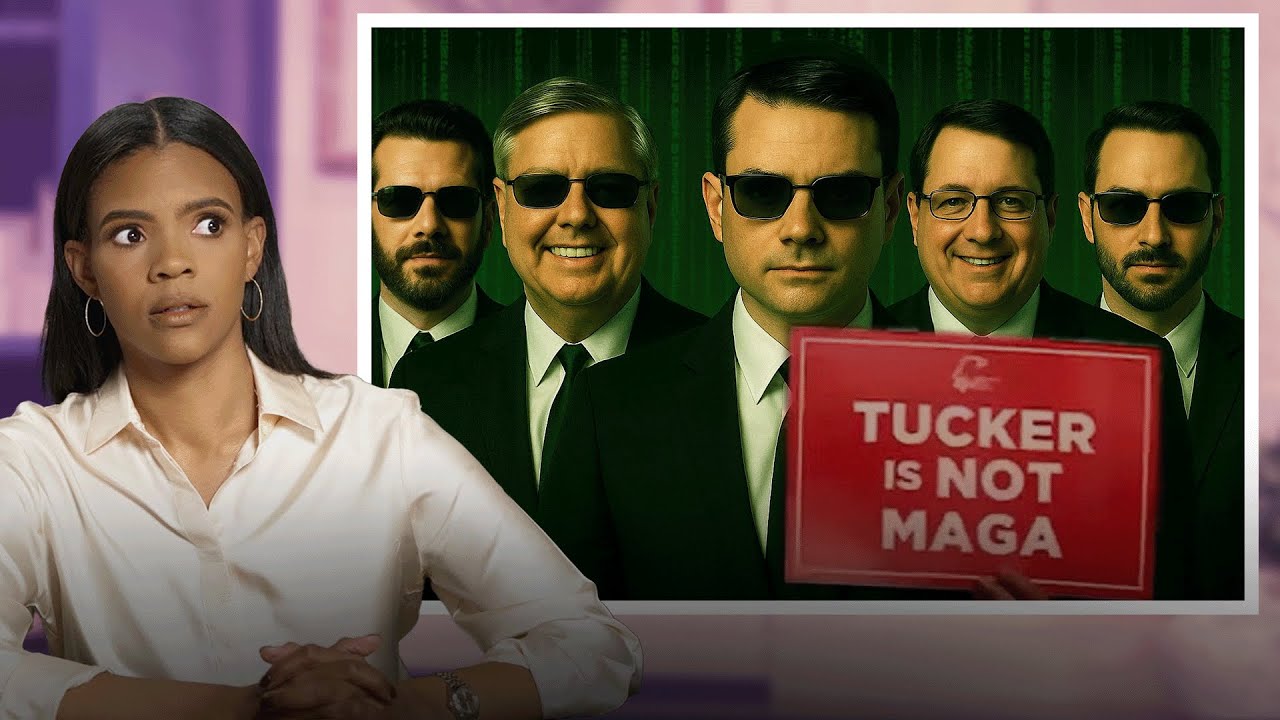
Brandon Tatum Confronts the Conspiracy Theories Surrounding Charlie Kirk's Death and Candace Owens' Dangerous Claims
Enjoying this? Share it with someone who needs to see it.
Up Next
Officer Tatum Defends Charlie Kirk's Pro-Israel Legacy Against False Narratives After His Death
30:10
Brandon Tatum Breaks Down Charlie Kirk Trial Evidence: Tyler Robinson Confessions and Conspiracies Debunked
39:13
Candace Owens Uncovers Shocking Details Behind Charlie Kirk Assassination and Turning Point USA Cover-Up
56:19
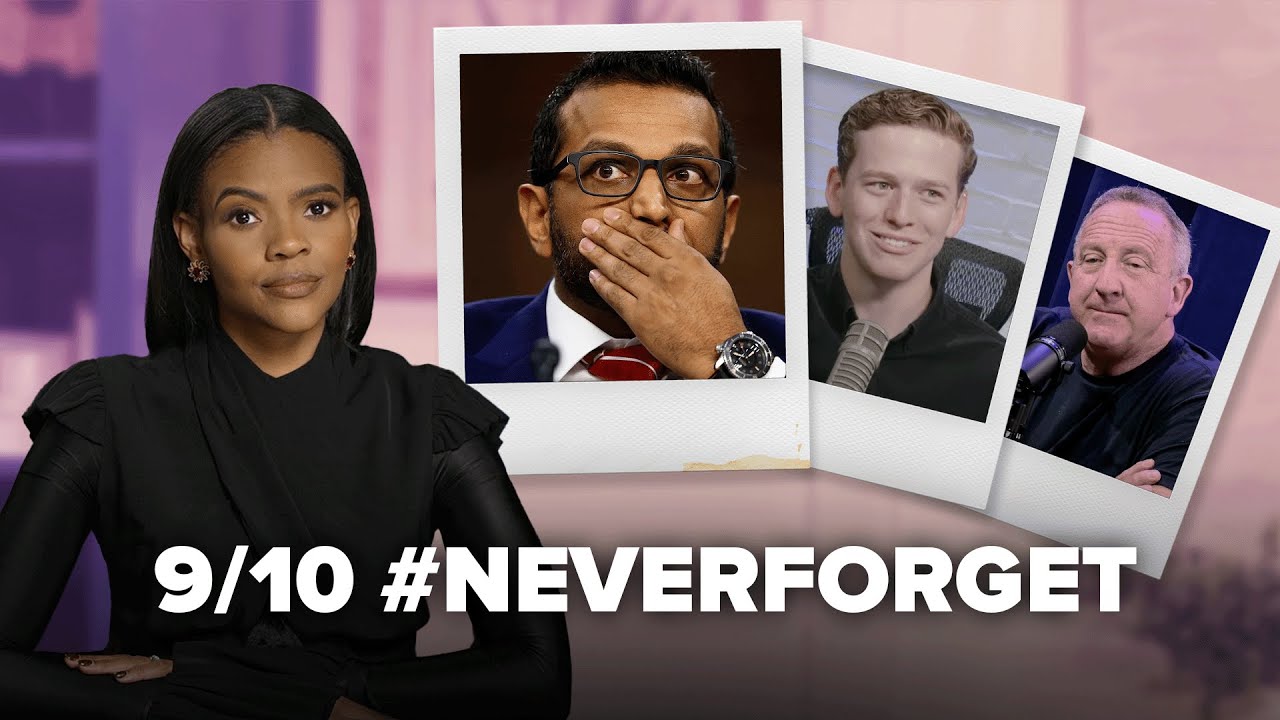
Brandon Tatum Confronts the Conspiracy Theories Surrounding Charlie Kirk's Death and Candace Owens' Dangerous Claims
Brandon Tatum, former police officer and prominent voice in the conservative movement, addresses the disturbing conspiracy theories swirling around Charlie Kirk's assassination. Tatum examines the accusations against Turning Point USA leadership, Erika Kirk, and others close to Charlie, explaining why these claims lack evidence and how they've derailed what should have been a moment of spiritual revival. He also discusses Candace Owens' role in spreading these theories and the spiritual dangers of anti-Israel sentiment that seems to accompany this descent into conspiratorial thinking.
A Former Officer's Perspective on Baseless Accusations
Brandon Tatum brings his law enforcement background to bear on the conspiracy theories surrounding Charlie Kirk's death. As someone who knew Kirk personally since 2018 and attended his wedding, Tatum is uniquely positioned to address the accusations being leveled against those closest to the fallen conservative leader. He expresses bewilderment at suggestions that Turning Point USA had anything to do with Kirk's assassination, pointing out the obvious flaw in such logic: Charlie Kirk was the lifeline of the organization, and his death would mean the end of careers and purpose for everyone involved.
Tatum emphasizes his investigative mindset as a former police officer, stating he evaluates everything through an evidentiary lens. He challenges those making accusations to present actual evidence rather than speculation. Regarding the arrest of Tyler Robinson, Tatum has read the probable cause affidavit and finds the evidence compelling, including parent identification from surveillance footage, a confession to parents, DNA evidence on the trigger and ammunition, and ballistic analysis. He questions why people would rather believe unsubstantiated online theories than the documented evidence presented to the court.
The Spiritual Component Behind the Madness
Tatum identifies what he believes is a spiritual dimension to the conspiracy theories and accusations. He notes a pattern where individuals who develop hatred toward Israel seem to spiral out of control in other areas. Drawing on biblical concepts, he suggests these individuals may be given over to a reprobate mind, referencing the scriptural principle that those who bless Israel will be blessed, and implicitly, those who curse Israel will face consequences.
He cites examples of public figures who have become "unrecognizable" after turning against Israel, including Tucker Carlson and Marjorie Taylor Greene. Tatum admits he once thought Jewish people overused the term "anti-Semitic," but now recognizes that people truly are anti-Semitic, and the Jewish community can often identify it before others can. He notes that critics never seem to express reasonable disagreement with Israeli policy; instead, they jump immediately to extreme accusations of genocide, apartheid, and occupation.
The Damage Done to Charlie Kirk's Legacy
One of Tatum's most poignant observations is how the conspiracy theories have hijacked what should have been a moment of spiritual revival. When Kirk was first killed, Tatum believed God would use the tragedy to bring people to faith in Jesus Christ, and initially, that seemed to be happening. The conversation focused on Kirk's Christian witness and the lives he had touched. However, the conspiracy theories have completely changed that narrative.
Now, instead of discussing revival and Kirk's faith, people are consumed with unfounded theories about explosive lapel microphones, drones, Israeli involvement, and accusations against his closest friends and family. Tatum finds this shift itself to be evidence of spiritual warfare, suggesting that Satan is working to prevent the good that could have come from this tragedy. The fact that the conversation has moved so dramatically away from people coming to faith in Christ reveals the true nature of what's happening.
Defending Those Falsely Accused
Tatum is particularly disturbed by accusations against people he knows personally and knows loved Charlie Kirk deeply. He mentions Mikey McCoy, Rob McCoy, Erika Kirk, and Frank Turek as individuals who have been implicated or questioned despite their obvious love for Charlie. He points out that Mikey McCoy was Kirk's constant companion and best friend for years, and that Rob McCoy was Kirk's pastor who married him and Erika.
Regarding Mikey McCoy's behavior immediately after the shooting, Tatum offers a law enforcement perspective: what some are calling suspicious was simply human behavior in response to watching your best friend get shot in the neck right in front of you. He challenges armchair analysts who think they know how they would react in such a horrific situation, noting that it's easy to judge from behind a screen but entirely different to actually experience such trauma. The accusations have led to death threats against innocent people, adding another layer of damage to an already tragic situation.
The Candace Owens Factor
While acknowledging his long friendship with Candace Owens and describing her as "like family," Tatum doesn't shy away from addressing her role in spreading conspiracy theories. He notes that he and Owens disagree on many points related to Charlie Kirk's death and Israel. Despite their disagreement, when Owens claimed the French government was trying to assassinate her, Tatum reached out in concern, demonstrating his continued care for her wellbeing.
Tatum describes Owens as stubborn but typically someone who digs deep to find truth, which makes her current trajectory all the more puzzling to him. He expresses a desire to sit down with her and understand what information she has that he's missing. However, he's clear about the damage being done by her platform and influence, noting that her large audience is being pulled into believing things that lack evidentiary support. He sees her descent into conspiracy thinking as following the same pattern as others who have turned against Israel.
The Problem of Conspiracism in the MAGA Movement
Tatum addresses a broader issue within conservative circles: the pendulum swing from trusting institutions too much to believing every conspiracy theory. He acknowledges that 2020 was a wake-up call for many people who realized they had been lied to about elections, vaccines, COVID, and other major issues. This realization led many to appropriately question what they had been told.
However, Tatum observes that some people have swung too far in the opposite direction. While it's foolish to believe the Warren Commission report, that there's no deep state, that Biden was fairly elected, or that the vaccines were entirely safe and effective, it's equally foolish to believe that the Earth is flat, we never landed on the moon, or that Hillary Clinton is a lizard person who was hanged at Guantanamo Bay. He notes that some people will now believe any theory they see online, and these are the individuals gobbling up the unfounded theories about Charlie Kirk's death.
A Call for Evidence-Based Thinking
Throughout the conversation, Tatum repeatedly returns to a fundamental principle from his law enforcement background: show me the evidence. He's willing to consider any theory if someone can present actual evidence to support it. Whether it's claims about Israeli involvement, Turning Point USA complicity, or stolen camera footage, Tatum asks for proof before accepting accusations.
He notes an disturbing phenomenon: people demand extensive evidence for the truth but will believe lies with no evidence whatsoever. Someone can make a wild accusation online and gain immediate followers, while those presenting documented facts from court filings and official investigations are attacked as not asking enough questions or not truly caring about justice for Charlie Kirk. This inversion of evidentiary standards is particularly dangerous when it comes to serious accusations that can destroy reputations and lives.
The Personal Cost and the Path Forward
Tatum shares that the first time his wife ever saw him cry was when he learned of Charlie Kirk's death while live on his podcast. As a father himself, he was struck by the tragedy of a 31-year-old man with young children being taken so violently. He describes attending Kirk's wedding and knowing Erika, emphasizing the real human relationships that make these false accusations so painful.
He's particularly heartbroken by the implications against Erika Kirk, noting that if someone were spreading lies about him after his death, his own wife would be unable to remain silent despite their Christian faith. The fact that Erika has shown such restraint while dealing with both the loss of her husband and attacks on her character speaks to her character. Tatum imagines the devastation of losing a spouse and cannot fathom how Erika continues to function while people question her love for and loyalty to Charlie.
Despite the damage done, Tatum expresses hope that truth will ultimately prevail. He believes that when the case goes to trial and evidence is presented in court, many people who have believed conspiracy theories will be shocked to learn the truth. He prays that those spreading false information, including Candace Owens, will come to their senses and recognize the harm they've caused. Most importantly, he hopes the conversation can return to what matters most: Charlie Kirk's faith, his witness for Christ, and the spiritual revival that could still come from his tragic death.