Charlie Kirk and Danny Shelton on Honoring the Sabbath and the Ten Commandments in Modern Christianity
Enjoying this? Share it with someone who needs to see it.
Up Next
Charlie Kirk Sits Down with Bill Maher on Club Random: Discussing Faith, Politics, and Cultural Battles
1:10:43
Charlie Kirk Confronts Pastors Who Refuse to Talk About Politics from the Pulpit
1:27
Charlie Kirk Defends Biblical Marriage Using Scripture and Church Tradition in Heated Campus Debate
9:07
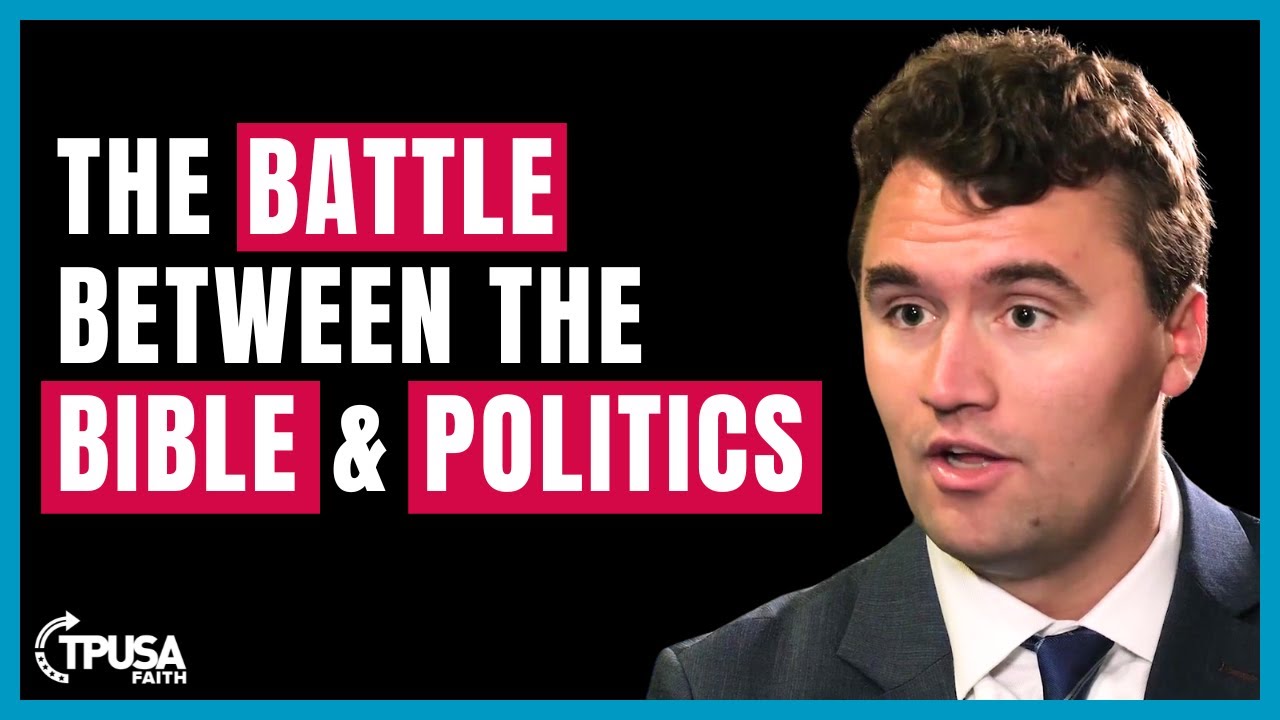
Charlie Kirk and Danny Shelton on Honoring the Sabbath and the Ten Commandments in Modern Christianity
Charlie Kirk sits down with Danny Shelton to explore the significance of the Sabbath in Christian life. Kirk shares his personal journey of keeping the Sabbath and explains how it connects to Jesus Christ, creation, and the fight against modern nihilism. Shelton, author of The Ten Commandments Twice Removed, addresses common objections from pastors who claim Christians are no longer bound by the law, arguing that both government and the church have removed the Ten Commandments from their proper place. Together, they discuss how the Sabbath distinguishes between those who see existence as a mistake versus a miracle, and why honoring it remains essential for freedom and worship of the Creator.
Charlie Kirk begins by explaining the deep connection between the Sabbath and Jesus Christ. He emphasizes that in Jesus, believers find their ultimate rest, fulfilling the promise that the Sabbath provides. Just as God rested on the seventh day and saw that it was good, Christians are called to find their rest in Christ Jesus.
Kirk addresses what he sees as sloppy and misleading Christian teaching that suggests Jesus does not want believers to honor the Sabbath or that Jesus broke the Sabbath. While acknowledging he is not a theologian, Kirk maintains that Christians believe in a triune God, and the Sabbath predated the law. It was mentioned by Christ several times and emphasized throughout scripture.
The Two Greatest Miracles of Christianity
Kirk identifies two miracles that Christians must remember on a daily and weekly basis: the creation of the world and the resurrection of Jesus Christ. These are the two biggest miracles that make Christianity what it is, and the Sabbath connects significantly to both.
The Modern Battle: Mistake Versus Miracle
Looking at the modern world, Kirk identifies two fundamental types of people. The first believes that human existence is a mistake—a happy accident where evolution, consciousness, reason, and favorable environmental conditions all came together by chance. The second category believes that existence is a miracle with intentionality behind it.
By honoring the Sabbath, whether people realize it or not, they are pushing against the dark nihilism that has infected the modern world. Nihilism believes there is no purpose and no meaning to existence. By honoring the Sabbath, people stop what they are doing and declare that everything matters because there is intentionality behind creation, and they honor the Creator because there is creation.
Worshiping the Creator, Not Creation
Kirk points to Romans 1, emphasizing that Christians must never worship creation. The warning is clear about those who worship nature or the sun. Believers are to worship the Creator, and Shabbat gives the opportunity to worship the Creator of the heavens and the earth.
Responding to Theological Objections
When asked how he responds to pastors who say Christians are no longer under law but under grace, Kirk acknowledges he is not properly equipped as a theologian to engage in theological debates. However, he offers his perspective through a practical question: Do you believe that God would prefer you to turn off all devices, stop working, and worship Him for 24 hours with your family, or to run around town, go to bars, and continue in corporate work? Which is more godly? If the Sabbath is more godly, then why won't pastors say that from the pulpit?
Kirk points to Jesus's teaching that upon all the laws and commandments, two hold supreme: Love the Lord your God with your heart, soul, strength, and mind (Deuteronomy 6), and love your neighbor as yourself (Leviticus 19). The Sabbath represents a cathedral built in time—part of the schedule dedicated to the Lord.
Kirk admits that the flesh fights against honoring the Sabbath. The temptation to do a two-hour Sabbath or to do a little bit of work represents the flesh and the enemy. If it were easy to honor the Sabbath, God would not have to command it repeatedly. The depraved nature wants to prioritize materialism over the Creator and fleshly pursuits over the elevation of the divine.
Danny Shelton on The Ten Commandments Twice Removed
Danny Shelton, who has learned through decades of study despite not attending seminary, wrote a book with Shelley Quinn called The Ten Commandments Twice Removed. The title reflects two removals: first, the government has removed the Ten Commandments, and second, the Christian church has removed the Ten Commandments—a tragedy that goes against God's commands and wishes.
The Sabbath Before Moses
Shelton clarifies that the Ten Commandments were not given only to the Jews at Mount Sinai. During creation week, God rested the Sabbath. Looking at Genesis 26, it mentions that Isaac and Jacob kept the laws, precepts, and promises. When Cain killed his brother Abel early on, he knew he sinned, showing awareness of God's law before Moses.
The Christian Church as Enemy of the Commandments
Shelton makes a bold statement: one of the biggest enemies of God's commandments is the Christian church today. The reason is that the Christian church often says the Ten Commandments were nailed to the cross and Christians are not under that old law.
Shelton shares a story about visiting a big Baptist church where the preacher said he was not under the old Ten Commandment law. After the church took up tithes and offerings for both their Sunday morning worship and a separate offering for Shelton, he began to gather up all the money from the tithes and offerings. When the pastor objected, Shelton asked what he was doing wrong. The pastor suddenly believed in the Ten Commandments because Shelton was going to steal his money.
The reason the Christian church insists the commandments were nailed to the cross, Shelton argues, is because of the one commandment they do not want to keep: the fourth commandment about the Sabbath. Nowhere in the Bible does it say the Ten Commandments were nailed to the cross. What was nailed to the cross were the law of ordinances and Moses's ceremonial laws.
Understanding Sin and the Law
Shelton defines sin according to 1 John 3:4: Sin is the transgression or breaking of God's Ten Commandment law. He addresses the question about the 613 laws of Judaism by pointing to Colossians, which says the ordinances were nailed to the cross, but that refers to the ceremonial laws, not the Ten Commandments.
The old covenant involved the sanctuary system where people brought lambs and shed innocent blood as a shadow of things to come, allowing people to be saved before Jesus. When Jesus died on the cross, He gave His life willingly, and that became the atonement for sin, doing away with the old covenant and ceremonial law. But Christians are still under the Ten Commandments.
New Testament Affirmation of the Commandments
Jesus says in the New Testament, "If you love me, keep my commandments." James says, "If you keep the whole law, yet you offend in one point, you're guilty of all." This was written after the crucifixion and resurrection, possibly 30, 40, or 50 years later. Nowhere did Jesus or the disciples writing scriptures in the New Testament say that since the resurrection of Christ, you do not have to keep the Sabbath anymore. The Sabbath is perpetual.
The Difference in Deuteronomy
Kirk adds an important detail about the Ten Commandments being repeated in Deuteronomy. While Exodus 20 and Deuteronomy present identical commandments, there is one difference in how the Sabbath is presented. In Deuteronomy, Moses says to honor the Sabbath because the people are no longer slaves like they were in Egypt.
Only slaves work all seven days. It is a commandment that keeps people free. Kirk points out how many wealthy slaves exist in places like Scottsdale, Arizona, who work seven days a week despite having big mansions.
Moses's farewell address in Deuteronomy came after he spent 40 years with complaining former slaves who tried to kick him out, wanted to go back to Egypt, and remembered the food being better there. Moses went to God multiple times asking to be taken out of his misery. In his farewell address, Moses wanted to remind these former slaves that as they were about to enter the land of milk and honey, if they wanted to be free, they should not work for seven days.
Kirk references ancient Roman, Greek, and Spanish literature where Jews who honored the Sabbath were made fun of by occupying forces. The Romans would mock them for not working all the time. Yet the Jews are still around, and the ancient Roman Empire is not.
The Sabbath and Freedom
Kirk emphasizes that if you want to be a free people, you must honor the Sabbath. You cannot have a free society if you are working seven days a week. You will be a slave to something in the worst possible way.
Shelton adds that Jesus made a farewell speech in Revelation: "Blessed are they that do his commandments that they might have right to the tree of life and enter into the gates of the city." Again, this affirms the commandments after the resurrection.
Why Preach Against Sin Without the Law?
Shelton challenges preachers who preach against LGBTQ and abortion but say the Ten Commandments were nailed to the cross. If the Ten Commandments were nailed to the cross, why would those things be wrong? Paul says in Romans 3:31, "Do we do away with the law? God forbid. We establish the law."
Salvation by Grace, Lost by Rejecting Truth
In closing, Shelton emphasizes that the end result of honoring the commandments is to make heaven our home. When people surrender, submit, and commit their lives to Jesus Christ, they are saved by grace. No amount of works will get anyone into heaven. People cannot be saved by keeping the Ten Commandments, but they can be lost by not keeping them when they reject what they know to be truth.
Shelton clarifies that people who keep Sunday or other days are not necessarily lost. God has people in all churches, and there will be people in heaven who probably never set foot in a church but did not reject what they knew to be truth. God winks at ignorance, so if somebody does not know something, they will not be held accountable for it.
Christians serve a loving God who gave His life on the cross of Calvary so that His death would not be in vain and everyone has the chance of eternal life because of His great love for fallen humanity.
Shelton expresses excitement about Kirk's forthcoming book and thanks him for his work for the cause of God. He leaves Kirk with copies of his books, including The Ten Commandments Twice Removed and The Truth About the Ten Commandments, hoping that people will see that God in His infinite love, wisdom, and love for fallen humanity is making a way to escape eternal death and receive eternal life with Him in heaven forever.