2,422 videos 1,389,747,653 views US Joined Aug 30, 2018
Charlie Kirk is the Founder and President of Turning Point USA, the largest and fastest growing conservative youth activist organization in the country with over 250,000 student members, over 150 full-time staff, and a presence on over 2,000 high school and college campuses nationwide. Charlie is also the Chairman of Students for Trump, which aims to activate one million new college voters on campuses in battleground states in the lead up to the 2020 presidential election. His social media reaches over 100 million people per month and according to Axios, he is one of the "top 10 most engaged" Twitter handles in the world. He is also the host of “The Charlie Kirk Show,” which regularly ranks among the top news shows on Apple podcast charts.
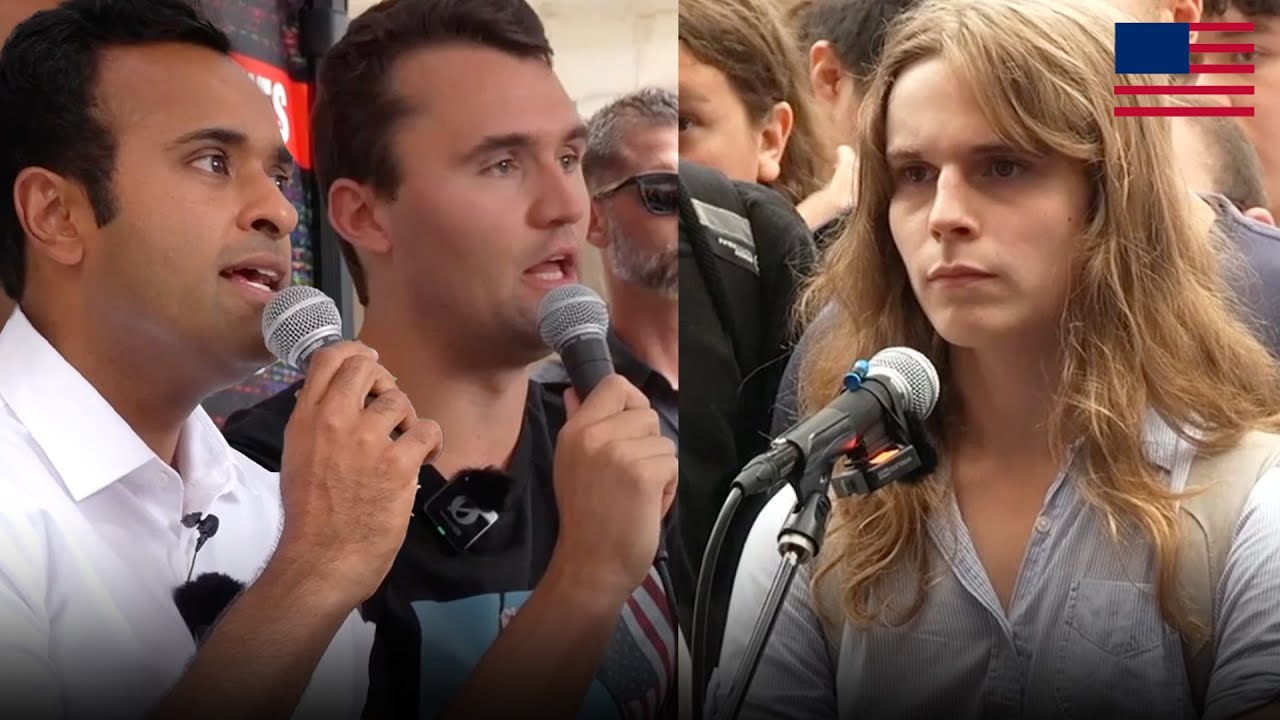
Charlie Kirk and Vivek Ramaswamy Face Off with College Students at Pittsburgh Campus Prove Me Wrong Event
Charlie Kirk and Vivek Ramaswamy set up their signature 'Prove Me Wrong' table at the University of Pittsburgh, engaging first-time voters and self-described leftists in heated debates about abortion, the Electoral College, trans rights, foreign policy, and America's role in the world. From a student advocating for criminalizing mothers who have abortions to a leftist Catholic questioning what conservatives actually conserve, the conversations reveal deep divisions on campus. Kirk and Ramaswamy defend their stances on decentralized government, the nuclear family, and America First foreign policy while fielding criticism about debating unprepared students and editing content to make people look bad. The exchanges showcase the ideological battleground of Pennsylvania ahead of the 2024 election.
College Campus Conversations in Battleground Pennsylvania
Charlie Kirk and Vivek Ramaswamy brought their 'Prove Me Wrong' format to the University of Pittsburgh campus, setting up an open microphone for students to challenge their conservative positions. The event drew a diverse crowd of first-time voters, registered Democrats, independents, and self-described leftists eager to debate issues ranging from abortion policy to American foreign interventionism.
The location was strategic. Pennsylvania represents one of the most contested battleground states in the 2024 election, and engaging young voters on college campuses has become central to the conservative movement's outreach strategy. Kirk defended this approach when challenged by a student who questioned why he spends time debating college students rather than people with similar media training.
"Are you a voter?" Kirk responded. "We're talking to voters in the key state of Pennsylvania that will determine the future of Western Civilization."
The Abortion Debate: Compassion Versus Consequences
One of the earliest and most contentious exchanges centered on abortion policy. A student challenged Kirk's stated position against criminalizing mothers who have abortions, asking how a law could exist without consequences for those who break it.
Kirk explained his reasoning through two main arguments. First, he opposes any retroactive enforcement of laws, noting that you cannot make something illegal and then punish people for actions taken when it was legal. Second, he expressed compassion for women who have abortions, arguing they are often lied to and manipulated.
"My heart goes out to women that have abortions because they're lied to and manipulated," Kirk said. "It's based on one very simple medical principle: the lack of informed consent. I do not believe women largely when they get abortions know what they're doing. They're not given ultrasounds for their baby, they're not informed of the gruesome and graphic details surrounding their procedure."
Kirk argued that the justice system should focus on abortionists who perform the procedures rather than the women. The student pushed back, suggesting that the person "killing her baby" should also be held responsible, but Kirk maintained his position that the woman is often not the one performing the act and may be forced into the situation.
Ramaswamy Addresses Race and the Curry Comment Controversy
A student identifying as part of Bridge Pittsburgh, an organization focused on civil discussion, asked Ramaswamy about racially insensitive comments made during the campaign, specifically referencing a comment that if Kamala Harris got elected, the White House would smell like curry.
Ramaswamy clarified that Trump did not make that comment and described himself as "pretty thick-skinned." He said he can tell the difference between someone making an earnest joke and someone with genuine ill will toward Indian people. However, he pivoted to discussing what he sees as a more significant issue.
"I actually think we have seen an unusual uptick in anti-Black and anti-Hispanic racism in the country, and I would have never thought we're going to see it," Ramaswamy said. "I think we've seen it as a reactionary response to the anti-racist movement for the last 10 years because there's no better way to foster racial animus than to take something else away from someone based on their skin color."
He argued that when people are denied federal aid, college seats, or jobs because of their skin color, they develop negative attitudes toward those favored by race-based policies. Ramaswamy placed responsibility for this division at the feet of Kamala Harris and the movement she represents.
Trans Rights and Age Restrictions
A nervous student named Jean challenged Kirk and Ramaswamy about what she called their "dangerous agenda," particularly regarding abortion and LGBTQ rights. After some back and forth about style versus substance, Ramaswamy laid out his position on trans issues.
"If you're a fully grown adult, 18 or above, you're free to live how you want, dress how you want, marry who you want," Ramaswamy explained. "But you are not free to indoctrinate children in schools who are not yet of the age of consent."
He drew parallels to other age restrictions, noting that just as a 17-year-old or 15-year-old cannot get a tattoo on their own, children should not be able to make permanent medical decisions before age 18. He also stated that while adults can claim to be a different gender, they cannot claim trophies in women's sports competitions, enter women's locker rooms, or change language standards.
The student insisted that Ramaswamy wasn't understanding the implications of laws being passed in Congress, but when pressed for specifics, she could not cite particular legislation. Ramaswamy suggested this was a result of media narratives rather than actual policy proposals.
What Do Conservatives Actually Conserve?
A self-described leftist Catholic student posed one of the most philosophically challenging questions of the event: "What do conservatives actually stand to conserve whenever you shift left every single time the Overton window shifts?"
The student pointed to historical examples like integration, LGBTQ rights, and immigration, noting that conservative movements have consistently failed to preserve the social positions they once defended, and that things once opposed by conservatives (like slavery and segregation) are now universally recognized as wrong.
Kirk responded by distinguishing between things that were never worthy of conserving (like slavery and segregation) and things that are (like the family). However, the student pushed back on the concept of the nuclear family, arguing that multigenerational households are superior and that the 1950s single-family household model has been destructive.
Ramaswamy conceded the point about multigenerational households potentially being more ideal than nuclear families, but argued that nuclear families are still far better than single-parent households from a statistical standpoint. He cited data showing children from dual-parent households are eight times more likely to graduate high school and 10 times less likely to end up in prison.
However, Ramaswamy offered a more profound answer to the core question: "What happens when the thing that you seek to conserve no longer actually exists? I actually think the conservative movement right now needs to recreate. I think we have lost those founding ideals, so we're not in the mode of just defending a thing. We've defended the castle, the castle's empty, so now's a moment where we actually have to rebuild the thing."
The Write-In Biden Movement
In a surprising moment, a first-year voter named Ryan appeared with a sign reading "Write in Biden." He explained that he and his roommate started a movement because they believe the Democratic Party turned their back on Joe Biden too quickly.
"I thought it was going to be a disagree, I totally agree," Kirk said, noting that Democrats went from supporting Biden one night to removing him from the ticket the next. Ryan characterized himself as someone whose ideals mostly align with Biden's positions.
Ramaswamy seized on the moment to criticize what he called "the managerial class" controlling both parties. "The people we elect to run the government should be the ones who actually run the government," he said. "Joe Biden has not been given the freedom to do that."
When Ryan noted that Trump also receives substantial money from private donors through 501(c) organizations, Kirk corrected him, stating that Harris was actually receiving five times more money than Trump from such sources. Regardless, both Kirk and Ramaswamy expressed openness to getting mega-money out of politics entirely.
The Electoral College Debate
A student from Texas named Ezra challenged the Electoral College, calling it "DEI for the Republican Party" and arguing it unjustly empowers rural states. He pointed to Hillary Clinton winning the popular vote but losing the presidency as evidence of the system's unfairness.
Ramaswamy responded by explaining that America is not a direct democracy but a constitutional republic—a union of states, not just a random assemblage of geographic land masses. He argued the Electoral College ensures states have a say in the process, just as the Senate balances out the House of Representatives.
"In a constitutional republic, it's not just about what you get, it's also about what you give—your civic duty to your country," Ramaswamy explained. "Part of what our founding fathers envisioned is we had voters who actually knew something about their country."
When the student pressed on why someone's vote in Wyoming (three electoral votes for 700,000 people) should count more than someone's in Texas (38 electoral votes for 30 million people), Kirk argued the comparison was actually proportional and that the Electoral College forces candidates to engage with diverse states beyond coastal corridors.
Kirk emphasized that the system is not static—different states become battlegrounds over time. Ohio used to be critical but no longer is, while Georgia and Arizona have become newly competitive. "What the Electoral College does is it forces candidates to go into places outside of the coastal corridor and win over voters of the people that actually make the country work," he said.
Ramaswamy concluded by noting that if three-quarters of Americans wanted to change the system, they could do so through constitutional amendment—a mechanism the founders built in. The fact this hasn't happened suggests most Americans, when they think about it, support the Electoral College.
JD Vance and the Future of the Republican Party
A moderate student suggested JD Vance was a poor vice presidential pick and that someone like Ramaswamy or Marco Rubio would have better united the ticket. Ramaswamy responded with a personal endorsement based on their relationship from law school.
"I happen to have gone to law school with him. We were fellow Bengals fans, we both grew up in Cincinnati," Ramaswamy said. "He is a man whose personal character as a father, as a husband, as a friend, I can just attest to. That is the kind of person you want in American politics today."
When asked about the future of the Republican Party post-Trump, Ramaswamy outlined his vision: "Do we want to get in there and replace a left-wing nanny state with a conservative nanny state? My view is here's where the Republican Party needs to go: three-word slogan—shut it down. Get in there, shut down the federal bureaucracy, shut down the foreign policy nanny state, shut down the domestic nanny state, revive pride in this country."
He emphasized that November is not the finish line but the starting line for the movement.
America First Foreign Policy Versus Interventionism
The final extended debate came from Brandon, a self-described interventionist who asked if Kirk and Ramaswamy considered themselves isolationist. Both rejected the label, with Ramaswamy explaining they are "America First, not America only."
Ramaswamy clarified his position: "Is it in America's interest to provide protection and security guarantees to allies? It often is. But I have one rule of thumb: you got to ask them to pay for it, at least their fair share."
He specifically criticized NATO countries for not meeting their minimum commitment of 2% of GDP on military expenditures, calling Germany's behavior an example of how "Uncle Sam has become Uncle Sucker." Ramaswamy argued this creates moral hazard, making other nations more likely to start wars when they don't bear the full cost.
Brandon defended interventionism, arguing America is "the city on the hill" and "the world police" with a responsibility to deliver democracy globally. He specifically defended the Iraq War as justified based on Saddam Hussein's treatment of the Kurdish population, even if not for the stated WMD reasons.
Kirk pressed him on whether the American border should matter more than wars abroad. Brandon responded that both should matter equally, explaining that America's borders abroad, like the NATO frontier with Russia, are still borders requiring attention.
"I had hope for you, Vivek, but your foreign policy is what turned me off," Brandon admitted, identifying as a Democrat. Kirk responded with surprising appreciation for the honesty: "As someone who is an interventionist, you have found your home. The Democrat Party is the party of reckless war and invading foreign lands and turning their back on the American people."
The exchange concluded with Kirk praising Brandon's honesty, noting that many Republicans and Democrats try to pretend their party's foreign policy failures don't exist, but Brandon was straightforward about his interventionist beliefs.
Video Transcript
all right everybody who's ready for a little bit of prove me wrong disagreement and I brought B ramaswami everybody big fans you're you're vbec who ran for president right R oh that's that's just great um I've got a question that I think has been on everybody's Minds a lot I really speak for the people here um I just want to say like what do y'all think unlimited bacon or no games or unlimited games no games but no games all right next question wait will not be tolerated thank you very much sorry I'm really nervous I'm really nervous yeah that's great thank you have a good one can I have a hat ADV thank you Charlie you've stated that you're not into criminalizing the mother for an abortion why is that like how can we make a law that has no consequences well there's there there's two parts of this right the first of which is no person should advocate for retroactive enforcement of something that was once legal to then make illegal we can agree with that right right no matter what the law is you cannot claw back for example if all of a sudden the government says you can't have a public assembly like this and that that is effective tomorrow they can't go back today and put us all in prison right so that's number one retroactive number two my heart goes out to women that have abortions right because they're lied to and manipulated and it's based on one very simple medical principle the lack of informed consent I do do not believe women largely when they get abortions know what they're doing they're not giv ultrasounds for their baby they're not informed of the gruesome and graphic details surrounding their procedure instead the justice system should be focused on the abortionists that are actually doing that procedure does that make sense I mean I guess but the person also committing the crime like killing her baby is I feel like should also be held responsible like how can we ban abortions and and the mom just still be let go yeah we're just not going to agree I just don't she first of all she's not doing the ACT many times she's being forced into that situation by someone paying for that abortion such as a uh someone that she might have had a relationship with or even in terrible um pimps also do it as well but we're not going to agree because I think our posture on abortion should be compassion for the women that have abortions and get abortions and justice for the industry that lies to them okay than thank you thank you all right everyone sh Shuffle around Shuffle around okay hi um I'm Rachel I already off the bat I do not agree with a lot of politically what I if you have to say but I am a part of bridge Pittsburgh which is a organization that believes in having civil discussion without yelling at each other so I actually have some friends from turning point back there even though I am a registered Democrats so what's up Jesse um my question is actually for you VI first off thanks for coming uh second as a person of color and as someone of Indian descent does it offend you whenever there's comments made about Cala and some racial insensitivities on that does that offend you in any way or hurt you or does that drive you to still try to be representative of your party even when those comments are made by your party give me a specific comment okay well for example the recent thing that was um if Cala got elected the White House would smell like Curry is that offend you in anywh or is that just like drive for you to for the record Trump did not say that no Trump Trump Donald Trump did not say that but it was still implied as there's a presidential election he's I'm actually I'm pretty thick skinned guy I can tell the difference between somebody who has an Earnest joke and the person who actually happens to say that I happen to I happen to know is doesn't have ill will towards Indian people but if you're going to joke my only rule is you better apply 360 Dees okay you can't apply it selectively here's actually my view on this is a lot of indian-americans across the country actually have been somewhat disappointed for a long time about KLA Harris's willingness to engage with and listen to a lot of the concerns even of the indian-american community I'll tell you what one of them are is relating to Merit Merit in getting into college Merit in getting into jobs without regard to your skin color your discrimination I think most people want that better life for their kids and so I think most people think about that regardless of their skin color but if you're thinking about actual concerns of the indian-american community that's probably very high on the list and KL Harris is failing to embody that now for me my own view is let me level with you a little bit I actually think we have seen an unusual level like this in the last year okay and it's it's strange a small uptick in anti-black and anti-hispanic racism in the country and and I I would have never thought we're going to see it here's why I think we've seen it I think we've seen it as a reactionary response to the anti-racist movement for the last 10 years because there's no better way to Foster racial animus than to take something else away from someone based on their skin color so when you say you don't get that federal aid or you don't get that seat in college or you don't get that job because of your skin color you're going to have a negative attitude towards the person who was favored because of their race okay and this is what's going on in Springfield too by the way when I'm visiting tomorrow no in a certain sense if you're going to put 20,000 people who are not going to be able to integrate into a community into that Community I sympathize with people who are suffering as a consequence of that that's necessarily going to spawn a reactionary respon I did agree with you on that when you said that earlier and then but then you can't blame the reactionary response and say they're responsible for the division I think it's a lot of those policies that created that division in the first place and and bluntly I do put a lot of that at the feet of kamla Harris and the movement that she represents so that's where I'm at on it thank you for the question thank you have a great day yeah you too thank you do you feel uh proud of yourself for debating college kids um who are unprepared to speak in front of an audience like yourself uh hold on hold on hold on um you're 30 years old we we can agree you're 30 years old right do you think that's a little bit silly are you a voter I am a voter I'm reg I vote and you vote so I'm talking to voters of this country that will determine the future of Western Civilization that's what I'm doing here today yeah wait hold on how is it any different than a professor talking to you than a professor talking to you who who are you well enough important enough for you to come up to a microphone she came in with actually when I first saw this ad I thought it was like a like an improv comedy thing it looked so ridiculous that I didn't even think it was real um well no you could see look how popular Trump is on your campus how does that make you feel that that's not comedy that that is a five alarm fire for kamla Harris cuz she's probably going to lose Pennsylvania look but no I just want to be clear is there something wrong with talking to voters no there's nothing wrong with talking that's what we're doing here today it's an open mic I think that you push a dangerous agenda such as your stance on uh abortion rights for example here we go okay so so let me ask a question what is what is your name Jean Jean and what is your understanding of the current Republican party's stance on federal intervention and abortion well I know that they want to bring it back to the states right so the so it sounds like you do know that the Republican party's current stance on abortion is they're against a federal ban on abortion I do understand we're talking about a presidential election as the important election that we're talking about here I understand that yes great so again I I think this open dialogue is great I think it's great you're here challenging Charlie and I think it's great that he's willing to travel campuses across this country to talk to the Next Generation we need more conversation now where's the disagreement though on content cuz you could criticize style or why you're talking to people or dunk on someone personally but you actually disagree with I agree with the way that you edit content and specifically frame it so that people look bad talking to you you the way that you edit your content WE Post unedited content let me just let me just ask you one thing though because we could you could personal personal insults can fly in all directions where is an area where you have a disagreement with the conservative movement with Donald Trump with Charlie Kirk perhaps with myself I was a presidential candidate last year I think we need to talk about that more in the open and the more we do the stronger our country is going to be we got a long line of people but I want to hear from you one substantive area where you have an authentic disagreement and I'd be glad to address it I'm sure Charlie would too just in any anything political relating to any political topic where you have a disagreement let's air it okay um I disagree with uh the some of the uh laws that are being pushed in Congress um that are against the lgbtq community and the trans Community okay so let's talk about that I'm going to give you my view and then I want to hear yours okay my view is that if you're a fully grown adult 18 or above you're free to live how you want dress how you want marry who you want if you want if you're over the age of 18 I agree but you are not free to indoctrinate children in schools who are not yet of the age of consent you are not free just as you're a 17-year-old or a 15-year-old can't get a tattoo on their own I don't think that you should be to go or until the age of 18 and so the lines that I draw here is that men are free to claim to be women in swiming swimming pools you're not free to claim trophies in a women's sports competition you're not free to enter a women's locker room you're not free to change a language and you're not free to actually indoctrinate our children who are under the age of five in schools do we agree on the fact that adults should be able to live freely while still treating children differently if so we're on the same side of this issue listen I agree with the majority of what you said however I I don't think that you're understanding the um the implications of the laws that are trying to be passed look we got Head Start in the conversation we got a long line behind you but my only ask is forget the personal attacks or the stylistic attacks focus on substance the more we debate that the stronger we're going to be as a country thank you for coming thank you I don't think you're focusing on substance though that's the issue hold on he he intentionally tried to provoke substance out of you and you said well I'm worried about some laws Congress should pass I have to ask what laws are you talking about can you be specific I'm sorry I'm very nervous but uh this is what you do this is what you do you take people and you put them under the spotlight and you well hold on I I didn't I didn't ask or you to come up here you voluntarily came to the front of the line you didn't have to do that you're purposely antagonizing people on campus asking people to come up by spreading your weird agenda how what what agenda is I'm confused though so Charlie I'll I'll say this we we'll we'll end on this and we'll go to the next question when I was 18 and I'm not going to blame you for this I also took for granted a lot of the stuff that the media force fed me cuz that's what you know at the age of 18 you say there are some vague laws making their way through Congress that hostile to trans I don't think those laws exist but I don't blame you if that's what the cable media is feeding you but let's get to the specifics and then we're able to actually have an open dialogue and that's one of the things I've learned over the last 20 years I think that the issue is is we're getting our media from different sources both people are getting media from these skewed sources the facts that you're presenting are not always correct and that's why we're here with no TV screens between us so people who have policy based substantive disagreements we invite those I think that's how we're going to get our country back and as it relates to trans which you brought up 18 or above you're free to live how you want you're not free to force that onto somebody else or especially kids and if we agree on that we some progress thank thank you disagreements yeah I like that it's a very interesting sign it says WR in Biden I'm intrigued I'm intrigued we can bring we'll bring him up in a little bit how are you doing um my name's Co I'm a first year voter as well this year um I'm not I'm an independent like I haven't I'm not left or right yet but I'm just wondering where are your underlying values at as to why you became a republican like what are the morals behind it yeah I mean I'm probably a a not a great example to ask cuz I'm not a politician by background I'm a businessman I ran for US president last year as a Republican but I said this countless times and it might have annoyed some people in the party I wasn't running as a republican I'm running as an American okay and that's actually what I care about or our pro-american values where do I derive my values as a political leader in the country starts with the Declaration of Independence and the US Constitution I believe the people we elect to run the government even if they're the ones I disagree with the people we elect to run the government should be the ones who run the government not the unelected bureaucrats who put up puppets as their US president I'm pointing to Biden he's not even running the country right now we call call him the US president he's not the functioning US president that's not a democracy I believe in Merit that the best person should get the job Free Speech open debate and so all I'd say is if you want to call yourself an independent that's a pretty good thing to be hard to argue with being independent-minded but stand for the values enshrined in our Constitution and the Declaration of Independence and if there's a point in the future 50 years from now where the Republican Party abandons that then I'm not a republican anymore I'm sorry the Republican Party actually was the party that stood against slavery back when Abraham Lincoln was president and it's a party that stand against enslavement today but if that ever changes in the future then I'm out of the Republican party I'm into the pro-american movement and the reason I vote and stand for election as a republican is because right now that is the pro-american party in America yeah and I'm a conservative and vote Republican um because I think the founders got it right I think the founders understood human nature I think that they understood the form of government and they understood that people are best served when Liberty is recognized as given by a Divine a Divine source not as a government source that decentralized power is best that three branches of checks and balances and consense to the Govern is the correct way of governing a country um the conservative movement understands and appreciates Our Roots um going back to 1776 and trying to ask the question are we are we leaning into the founders vision of this country and so uh those those are the values that I uh that I hinge upon we should give that guy wants to be heard all right he he'll come up day yeah he wants to be heard just one second we're going to give him a chance or else we're going to we may be here know it's fascinating right in Biden yeah it's a new movement me and my roommate have started really trying to take it off here so like this okay I see I see yeah I think uh the Democratic party turned their back on Joe Biden way too fast it was like overnight one night they were all supporting him the next night I look at Twitter bam no longer voting for him he lost the ticket overnight so I mean nothing's more undemocratic than that I thought it was going to be a disagree I totally agree and so I guess you're more liberal leaning probably maybe I'd say most of my ideals align with Joe Biden no no that's fine and why do you think that Democrats saying they're the party of democracy were able just to remove a candidate that should bother more people right well I think it's not necessarily something with the Democratic party I think Republicans would do it as well I think it's just an issue of the two- party system honestly that's my so you know look I mean Charlie and I share this in common we're not afraid to and have not been afraid to criticize the Republican party when necessary right I just think in both in the in the political system right now overall in general what do we have you got a bunch of Puppets who are wielded by the managerial class including a mega donor class sure that uses politicians as pawns you see it in the Democratic party you see it in the Republican Party we're in a unique moment in the history of the Republican party it wasn't this way for most of my life right but we're in a unique moment where the person who happens to be the Republican nominee is independently a billionaire and is at least you may disagree with his policies but he's at least not somebody who's controlled by that machine people may not like him for a lot of reasons but what I think is one of the things we probably share in common because I could tell from your sign is I said it before I'll say it again the people we elect to run the government should be the ones who actually run the government and Joe Biden has not been given the freedom to do that and I think that I think if we agree on that much call that an agreement rather than a disagreement I think the issue is though although Donald Trump is a billionaire by his own right if you look at you know FC vers citizens united the Supreme Court case Donald Trump's also getting an insane amount of money from private donors you know 501 C's Harris is actually getting far more I mean I it's like 300 million to 200 million I don't think it's five times more it's five times more it's not even closer don't think that's true either way if you want to get mega money out of politics I think you're going to find some allies here and thinking about ways to do that for the system you're only just a kind of a wonky thing it's it's more than what open Secrets reports however um I think this is an admirable uh Crusade thank you and uh we'd like to we're going to publicize on our social media channels kind of interesting to me yeah I think it's a unique movement I just wish more people would consider Joe Biden for 2024 I think we turned our backs on him way too fast okay I'd love what's your name man I'm Ryan Ryan what's your last name Ryan Farah Ryan Farah start a movement let's see how he he's trying to change the world thank you I was lovely talking to you guys thank [Music] you yeah I'm Julia I'm also a firsttime voter I just have a simple yes or no question if if the only way to ban abortion forever would be to bring back slavery would you do it no no no I I I wouldn't bring back slavery to try to limit murder no okay what kind of outrageous question is that by the way it's I'm just curious just yes or no can I ask you a question then sure if if the if the only way to limit human suffering is to ban abortion would you ban abortion to say that again ask that again if the only way to limit human suffering is to ban abortion would you ban abortion no it was an honest answer okay it was an honest answer yeah I just know we dis we probably disagree with you pretty deeply on that but thank you when does Life begin in your estimation I just wanted to ask that yes or no that's it no sure but when does Life Begin that's all I wanted to ask was it yes or no it okay I I could tell You' thought deeply about this topic okay thank you great yep next question yep you yeah you can work your way up guys can you can you do me a favor if you're a supporter make room for the disagreements please okay thank you hello mr's uh Kirk and uh ramas Swami right yeah yeah uh so I wrot pronunciation right there I appreciate that thank you yeah um so I'm a sort of I'll just I just want to preface by saying I'm not a conservator I'm a pretty committed leftwing oh got sorry I always have a problem with the microphones uh I just want to preface I'm not conservative I'm a pretty committed leftist Catholic um but I am curious like what do you or I guess conservatives generally like stand to conserve whenever you shift left every single time the Overton window shifts like on certain like topics like I guess cuz like like integration um lgbtq plus Rights Movement um immigration as well like it seems like I guess ideological State apparatuses have like obviously we think slavery is wrong right you know like that's clearly wrong but it's also 150 years of state sponsored education create and that sort of thing in the same way we have I guess 50 years of integration being promoted and like that which I'm not against it all right I think these are very good things but it seems like things that previously tried to conserve or conservative movements in the past have always failed to actually conserve specific social issues like that did you say you were a leftist Catholic leftist Catholic yeah that's amazing social conservative fiscal liberal okay that's fair I wouldn't say that's a leftist Catholic though I don't that you're something else then yeah it's like yeah like sort of a American solidarity party kind of okay yeah but not like Liberation theology I can I can get down with it a little bit but not not terribly so yeah like Oscar RAR is a Saye I would say so what you're trying to pinpoint is a little bit of a logical fallacy is you're saying that okay that slavery is bad segregation is bad and but there's other things that are worthy of conserving like the family yeah yeah and that's where we're where our emphasis is on correct kind of but you guys are just going like I think the nuclear family has sort of been the death of am in a lot of ways like we need multigenerational households like um like my mother didn't grow up in a nuclear family she lived with her grandfather and stuff like that I feel like the 1950s these sort of single family households are very destructive for the United States in the way that we sort of perceive things like you just send older people to that's a a smart point but I think V can yeah so I think that first of all let's look at it in a political context outside of the religious context and I'd love to come back to the religious context after that yeah so from a political context you're eight times more likely to graduate from high school you're 10 times more likely not more likely to end up in prison if you grow up in a single parent household rather than a dual parent household you're more likely to end up in poverty if you grow up in a single parent household so I actually believe the nuclear family has been the single greatest building block of not only the United States of America there's actually true for societies across time even dating back to Aristotle believing that the polity was built only around a strong household unit and it's very personal to me I mean people often use the word privilege okay well I mean I actually didn't grow up in wealth I grew up with the ultimate privilege of two parents in the house instilling in US belief in the family and belief with a faith in God and so I think that that is inherently good just economically if you're talking about economical and social outcomes I agree multigenerational is actually probably more ideal than nuclear but you can agree nuclear better than single I don't view nuclear as I don't view as nuclear as incompatible we've had grandparents I think it's a stage of degrad it's a stage of degradation I would say of that's probably fair but I mean I think multigenerational is a really beautiful thing I I concede that point I totally um and so where what's the disagreement nuclear embedded in multigenerational I guess my original question was like cuz also since you would also agree that the nuclear family is a degradation from the multigenerational at least way yeah yeah in some ways yeah obviously but like what have conservatives conserved on social issues like like I mean 20 like 20 30 years ago a presidential candidate couldn't have said gay marriage was okay oh yeah okay not disagree with legalizing gay marriage something Rel we have we repealed roow versus Wade that's a big deal it was kind of a dead letter though I mean like there's certain like like Casey and stuff like the the RO the RO thing was what viability and then it went up to 15 weeks or something then there's other well Parenthood was in 1992 and we lost that case 5'4 because of Anthony Kennedy's decision opinion sub case law and stuff like that really does no I know but what what have conservatives conserved not enough not enough but we did repeal versus Wade gun rights are more abundant than we've ever seen in this country which I think is a very very good thing second amendment protections Ronald Reagan banned machine guns yeah okay you're right we can nitpick certain individuals but I mean b bum STS if your contention is that the conservative movement has not been good enough at slowing down the leftwing machine you're totally right yeah I don't disagree the goal shouldn't be slowing down though I think cuz like I said like I think my issue with you is that you always go left with the Overton window sh and that it seems like well pick did you hear my discussion on abortion earlier or on trans stuff or I I don't agree with you on abortion I mean like I'm like I'm anti-g Griswald be Connecticut or whatever Connecticut be Griswald I think that was like even worse than Roby Wade in terms of Supreme Court decisions I mean because there you also get to the right I want to get I like this guys philosophical I'll tell you one thing where where I I don't know Charlie and I haven't talked about this but I'll tell you where I am I actually gave speeches about this last year which is that what happens when the thing that you seek to conserve no longer actually exists I actually think the conservative movement right now needs to recreate actually I think we have lost those founding ideal so we're not in the mode of just defending a thing we've defended the castle the Castle's empty so now's a moment where we actually have to rebuild the thing in some cases from a clean edifice so I think that's an exciting moment and I'll just close on you a philosophical question I'll give you a philosophical answer different people are wired in different ways and generally it tends to be like liberal Progressive people who have the more sort of creative nature versus a conservative nature is much more of a conservative pattern of of thinking and conserving right now the Paradox for the conservative movement is I think we actually need leaders in the conservative movement who have that creative Creator mindset because the thing we've sought to conserve in so many ways actually ceases to exist so it was a deep question we could probably continue this in a way that doesn't uh doesn't leave everybody else hold everybody else hostage just one thing to wrap up would you support expanding welfare because abortion is there's obviously the French of rape incest all stuff like that life of the mother but would you support expanding welfare to help because it's off abortions often an economic issue as well you wouldn't to prevent it no that just sounds evil to me that just s well hold on that's a good interesting point so we've expanded social welfare we spent $20 trillion in the last 60 years has that has that made abortions go down I don't believe the answer is no it's gone up so actually the more we've spent on social welfare the more abortions we have so you're coming at it from a faulty premise people do not have abortions cuz a lack of stuff they have abortions because they don't think it's a human life I mean i' I've seen sex hous it's pretty rough out there like like a lot of I'm not doubting that however you and I will both agree people murder or do not murder whether or not they believe it is right or wrong not whether or not you're driving a Cadillac or a bicycle all right thank you very much thank you okay geez Louise try try to talk right into the mic please all righty uh hey Charlie how's your your uh how's your tea first of all my tea yes good thank you all right so um first of all first of all I'd like to ask why um you're spending your time debating college students instead of people who have similar media training or experience to you I mean it's already been asked are you a voter I am yeah we're talking to voters in the key state of Pennsylvania should we not do that uh I mean I'm I'm fine with you doing that it just seems a little bit asymmetric if you don't we want to win election right so do a lot of conservatives come to this campus not really well that's why we're here okay all right yes uh disagreements you can work your way up yes wow look at all those disagreements I know it takes a while takes a couple hours yeah hello um I have a disagreement with you guys I believe that the Toral college is unjust and should be abolished and Mr ramaswami I believe since you ran for president I'd like to hear from you first sure so I think this is a common this I know this is near and dear to Charlie's heart oh okay let's start with that well what I that is a great question asra I like that what let's start with that so I'm make sure I'm responding to the question what is the definition of justice okay so we talk a lot about like Dei programs and that sort of thing and people being you know unjustly put into these like positions I believe that the Electoral College is Dei for the Republican party where Hillary Clinton won the popular vote but lost the presidency because of the Electoral College because it empowers rural States more by giving them the electoral votes do you believe that the Senate is unjust I believe the Senate needs to exist okay so so because that's the whole principle is that we don't just live in a direct democracy we live in a constitutional republic and that means a few things first is it means that we are really a union of States we're not just a random assemblage of geographic land masses called states that we call a union that means something where part of it is direct representative democracy but part of it is also making sure that states actually have a relative say in the process that's how you get the Senate versus the house to balance it out same thing with respect to the history of the Electoral College this is about making sure that we're being thoughtful about the step of who's actually the US president while channeling the Democratic will through the manner enshrined in our Constitution and here's the biggest difference between a republic and a democracy this is relevant to a lot of young people is in a constitutional republic it's not just about what you get right in democracy you get a vote you think about what is it what does it mean to be a citizen about what you get in a constitutional republic it's also about what you give it's about your civic duty to your country and I think that part of what our founding fathers Envision is we had voters who actually knew something about their country you know every legal immigrant who comes to this country has to pass a Civics test before they can vote well frankly the sad truth is most voters would fail that if they took it today that would make our founding fathers roll over in their graves and so I think that we got to get Beyond this idea that we're some kind of direct democracy we're actually a republic where people have responsibilities and States actually have some level of distributed say to make sure that two cities in New York and California don't govern who actually leads the entire United States of America and I will I will push back look at the current Battleground States the the the blackest state in the country is getting a lot of attention because of the Electoral College Georgia one of the most black states in the country north Carolina is getting a lot of attention Atlanta is one of the biggest Metro areas in the country it would get attention whether or not they had the 16 Electoral College vote the Republican party has a cushion they have States like Wy that nobody lives in let consistent V first of all 700,000 Americans live there so let's not talk down to our fellow citizens okay but why does their vote right why does their vote go farther than mine who's from Texas hold on a second um Rhode Island and Hawaii are small and that helps Democrats right yeah I think that's bad too okay got it but it doesn't just help Republicans what it does is it requires candidates as V aply put it to have a preference on States we are not a national project first and foremost we are a collection of sovereign states that come together as a national project and the founders wanted a decentralized way of doing elections and I think it's actually a really good thing that this state which is incredibly diverse very difficult to be able to win will determine the entire election I think Pennsylvania is a great picture of the country and you guys get a lot of attention because of it now you might you in Texas well in Texas it actually might become a Battleground State one day the thing about the Electoral College is that certain Battleground States rise and certain fall Ohio used to be a Battleground State now Arizona is a Battleground state Georgia never used to be a Battleground State now it is Florida used to be and so what the Electoral College does is it forces candidates to go into places outside of the coastal Corridor and win over voters of the people that actually make the country work such as Pennsylvania Wisconsin Georgia and Michigan it doesn't answer the question though why somebody's vote in somewhere like Wyoming which has three votes for 70,000 people versus Texas 700,000 700,000 versus Texas's 38 for 30 million that doesn't make any sense that's actually proportional though because it is proportional because okay then would you get rid of Wyoming as statehood to be consistent should Wyoming exist as a state absolutely well but their vote should be the same as mine so I I got I got a solution to this and it's a policy Electoral College well it's not the one that I that I made it's the solution that our founding fathers made which is that if we don't like that the United States of America we got a way to change it yeah it's a constitutional amendment so so you agree with me I I don't agree with you because I wouldn't vote for it but if if if your view is that this is anti-democratic there's a way to change it where if 3ars of people in this country wanted to change it that would change in an instant and so there's a mechanism to go through it so just like the gentleman earlier who was founding a movement you know there could be a movement that says we want a constitutional amendment to abolish the electoral college but they haven't managed to convince enough people in this country that it's worth it and the reason why is there was actually a justification for it turns out that most people when they think about it actually do land with Charlie and I do on a popular vote basis across the country that wouldn't be a weighted vote by the way so so you're talking about actually overturning it through the Constitutional Amendment then Wyoming doesn't actually get more votes you're talking about just three quarters of the overall States and three4 of the vote in Congress which is proportional representation so there's a way to fix it that our founding fathers I mean these guys were Geniuses they had built that into the system I agree I love my country I'm a patriot yeah if you convince your citizens then that then maybe that will be true 50 years from we don't believe that majoritarian ways of doing elections is the best way we think that why not well because we're not an up or down majoritarian democracy we're we're a decentralized country of States first and I'll keep on saying that that sovereign states matter that's what makes us different than France and Germany and Belgium and the United Kingdom is that we're a bottomup form of government not a top down form of government Germany also has strong state governments not as much actually during Co when edicts were done in Germany it was straight from the centralized government no it's like they did not have provinces like Bavaria did not have a different covid policy than you know Berlin they didn't have in America Co was a great example of why we have decentralized States states were able to make different decisions California lost their mind I don't disagree with you on this I love our country what I'm saying is you haven't addressed why somebody in Wyoming should matter more on the Electoral College basis than me in Texas it makes no sense I reject the framing one person one vote no that's not the it's never been that way though not in presidential elections okay no it's not one person one vote is majoritarian democracy instead it's the states get appropriated but you haven't told me why that's better you've told me that it is the way it is I'm attempting to as I said we're a bottom up government not a top- down government it decentralizes power it also requires leaders as I've said to to hear the needs wants and concerns we're not going to agree here and that's fine so so I'll give you I'll give you an image unfortunately I can't show you the image like right now but you can look it up all right somebody made this image of what the electoral map could look like if the Electoral College was was abolished you would have two blue dots one around New York and one around the west coast of California the entire rest of the map of the United States of America from Texas I can assure you there would be several blue dots there but but but I'm saying that I'm saying that in theory you could have an election where it would just be those two blue blots and the rest of the entire map is red and you would still have an outcome where you would have a blue president in the United States and it could be in R do vote and and so and so the answer is that would feel unjust for a lot of those other states that deserve to actually be respected as states in the union we have the senate in the house for the same reason that we have the Electoral College we need to balance the way in which those sovereign states are still a part of the Union I know you may not find that persuasive that's the reason but if you convince other people across the country you'd be able to overturn it in a constitutional amendment it's just that that hasn't happened in the first 240 years of our constitutional family thank you very much hello I just wanted to ask about Donald Trump and his VP picked JD Vance so I think JD Vance was a poor pick by Donald Trump I'm pretty moderate I think somebody like vvec or Marco Rubio or somebody else would have United The Tick Ticket and build a better coalition to win the election for the Republican party I just wanted to hear your thoughts I mean you're obviously flattering me I appreciate that but I I'll tell you I know JD personally I actually happen have gone to law school with him it's actually a rare way to know somebody long before politics yeah we were fellow Bengals fans we both grew up in Cincinnati about you know Greater Cincinnati about uh you know about 10 15 minutes from each other until we were six he's a he's a I can say this in a way that a lot of people may not know from seeing somebody on TV you know to ask like all the questions about character of leadership he is a man whose personal character as a father as a husband as a friend I can just attest to that policy views aside is the kind of person you want in American politics today and I think if more people are able to see that across the country they'll understand why I believe he's going to be a great vice president that's the true and honest answer and I appreciate the kind comments thank you and then I have another question where does the Republican party go or like past post Donald Trump like what's kind of the future of the Republican Party well I look I think that there's there's a couple of there's a couple Forks in the road here's here's where I think here's where I think we need to go CU we're going to face this debate do we want to get in there and replace a leftwing nanny state with a conservative Nanny state my view is here's where the Republican party needs to go three-word slogan shut it down okay get in there shut down the federal bureaucracy shut down the for policy Nanny State shut down the domestic Nanny State revive pride in this country and the key next step to getting there the unambiguous next step is putting Donald Trump in the white house which is why I'm supporting him we're not done that this November is not the Finish Line This November is the starting line that's the way I look at it thank you thank you so much y thank you yes uh disagreements I can see you yep here to disag great we have a disagreement please uh alter the mic it's like all the disagreements got out of class at 2 p.m. or something hi uh Mr umwami hi Mr Kirk um so my name is Brandon um I oh boy there's a lot of folk back there they don't like you very much um so find out my main disagreement with you guys at least in my opinion would be uh I think you guys are a bit of isolationist could would you call yourselves isolationist I would not would you Charlie we're America First not America could you elaborate on that position I was about to okay we're America first but not America only okay okay and and here's what that means I'm not an interventionist okay I think our foreign policy should reflect whatever best advances America's interest now I'll just summarize as in a punch line because we got a lot of questions to get to yeah is it in America's interest to provide protection and security guarantees to allies it often is but I have one rule of thumb you got to ask them to pay for it at least they're fair share I'm against the nanny State domestically but I got to be consistent I'm against the nanny State internationally too and I'll give you NATO as one example of that all right most of the countries in NATO do not pay for the minimum amount they've already agreed to pay in the Treaty of NATO 2% of their GDP on Military expense for their own National Defense they're not doing it today Germany is arbitraging the United States of America and I think that's wrong and I I think that Uncle Sam has become Uncle sucker Uncle sucker know more and you know what that's not just for the money people think I say this for the money the money matters we have 34 trillion in national debt it's going to fall on your generation shoulder heavier than that backpack you're wearing by the time you grow up appreciate that so it's already heavy you're feeling the burden of it but it's not just for the money other nations are more likely to start wars when they don't bear the full cost of those Wars It's a concept that you call moral hazard in economics where you don't bear the full burden of the risks that you take so it's not just your taxpayer money it's not even Me and Charlie be long gone before most of you okay it's your future money and your future national debt but it's not just that it's more likely to drag you into a war because some other country doesn't have the incentive to bear the cost if the United States is subsidizing it that's my answer so not not I'm America first I'm not an isolationist but I do think that those who we support should pay their fair share and that's not too much to ask okay so I I would say it's very interesting that you say that because like I I am personally an interventionist I believe in the idea that we are the city on the hill we're the beacon we're also the World Police and in in that role we should maintain a world that has free and functioning democracy meaning so for example you were talking about the Iraq War earlier the Iraq War I believe in my personal opinion was a Justified War not for the reasons why they claimed it was justified in wmds but because of what Saddam Hussein was doing to the Kurdish population in Iraq and gassing them and gassing his own people and so I believe that it is the responsibility of the American people as the holders of that torch of democracy to deliver that democracy and make a lot of Republicans might agree with you Charlie and I don't and that's what understand I understand Dick Cheney definitely agrees with you no but but really I'm just curious uh Iraq Afghanistan Libya parts of Syria Ukraine do you think those are successes so I would say it it would depend on how you grade a success but I would say particularly Afghanistan Afghanistan is the key failing Point although Iraq is somewhat stable it is it's a kind of a moderate Case by yeah so it's it's moderate right but for for Afghanistan that's the real failure and that's where I think the Biden Administration really failed and that that exit strategy was not operated poorly we shouldn't have left in the first place we should have made sure that the government was ready and willing to actually be able to take care of the people so let's see if we can agree on something if you had to choose and you don't but if you had to choose should the American Border matter more than Wars abroad I would say it should matter as equal it should equal really yeah you think that our border should matter as much as something happening overseas I think our our status as a world power as the superpower of the world is not just that we have borders um here domestically but we have borders abroad that are I guess you could say more um ephemeral or whatever they are still our border with like Russia for example with NATO that is still a border that we should be paying attention paying attention to and focusing with we are I I just believe that Germany needs to be paying more so that's go next we could go all day on this pull we love this I you I mean I I had Hope For You VI but like I I'm a Democrat personally but like and I'm sorry you know whatever but I'm Catholic and you know it's whatever but basically I just think that you were so good I just your foreign policy is what turned me off I think but I will say as someone who is an interventionist you have found your home the Democrat Party is the party of Reckless war and invading foreign lands and turning the back on the American people so you're right you he's a lot more honest than I'm not saying it sarcastically I know I mean you're you're at home honest I'll be real I'll be realistic our part not going to lie yeah our our party thinks Iraq was a mistake Libya was a mistake Sy Syria is a mistake Afghanistan was a mistake and we're able to have a serious conversation because you're actually honest about it a lot of Republicans and Democrats Tred to pretend otherwise and I appreciate the hon I think that's the problem with politics lack of honesty