2,422 videos 1,389,747,653 views US Joined Aug 30, 2018
Charlie Kirk is the Founder and President of Turning Point USA, the largest and fastest growing conservative youth activist organization in the country with over 250,000 student members, over 150 full-time staff, and a presence on over 2,000 high school and college campuses nationwide. Charlie is also the Chairman of Students for Trump, which aims to activate one million new college voters on campuses in battleground states in the lead up to the 2020 presidential election. His social media reaches over 100 million people per month and according to Axios, he is one of the "top 10 most engaged" Twitter handles in the world. He is also the host of “The Charlie Kirk Show,” which regularly ranks among the top news shows on Apple podcast charts.
Charlie Kirk Challenges Wisconsin Student on Kamala Harris Accomplishments and Trump Economic Record
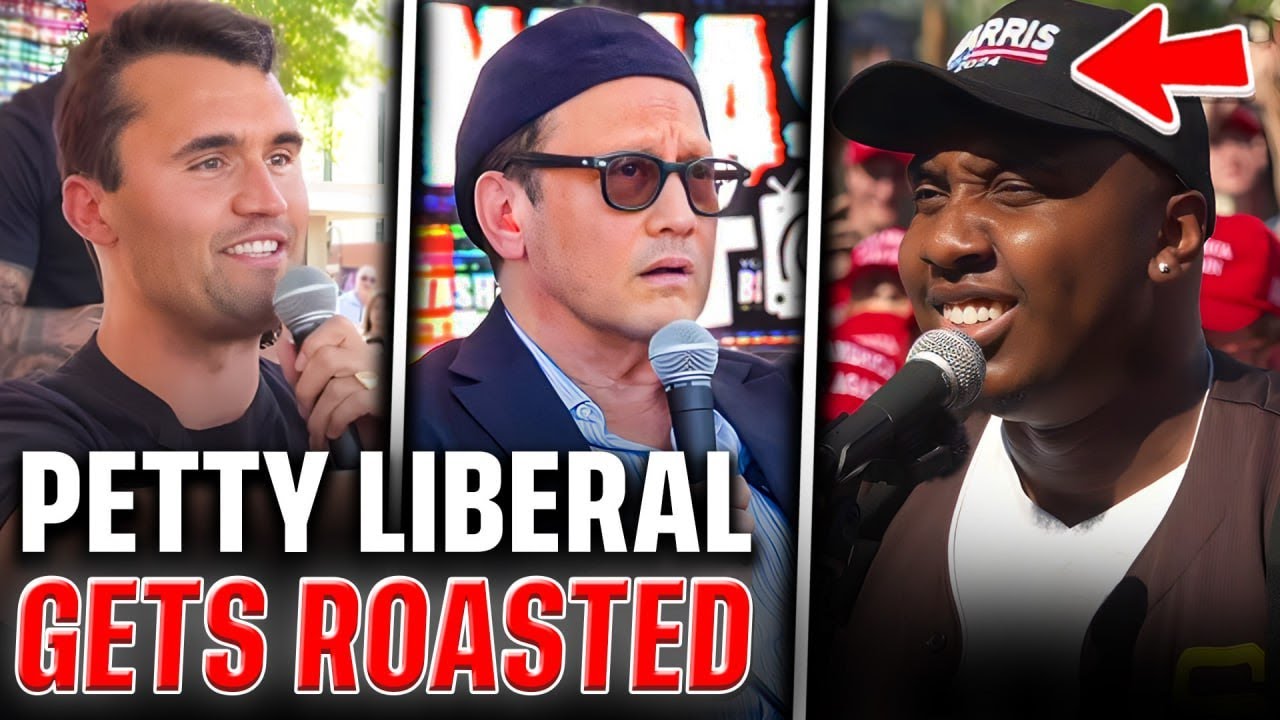
Charlie Kirk engages a freshman college student at the University of Wisconsin-Madison in a spirited debate about presidential records, economic policy, and regulatory reform. When the student admits she plans to vote for Kamala Harris despite being unable to name a single accomplishment, Kirk walks her through Trump's economic achievements including seven million homebuyers under 30, historic wage growth for blue-collar workers, and four years without new wars. The conversation touches on everything from student loans and business regulation to foreign policy and the realities facing young Americans trying to buy homes in an economy with interest rates approaching 10%.
Charlie Kirk opens the conversation by highlighting a striking statistic: seven million people under the age of 30 purchased homes during Donald Trump's presidency. He contrasts this with the current housing market, where interest rates have soared from 2% during the Trump years to upwards of 10%, making homeownership increasingly difficult for young Americans.
When the student suggests COVID-19 partially caused the economic changes, Kirk acknowledges the pandemic's role but emphasizes that Trump oversaw what he describes as the greatest economy in American history for young people, driven largely by aggressive deregulation efforts.
The Hidden Cost of Regulation
Kirk pivots to explaining how regulation disproportionately impacts small businesses versus large corporations. He uses a concrete example: the paperwork burden created by post-financial crisis regulations.
When Americans want to buy a home, they must sign hundreds of pieces of paper. For a small community bank like a hypothetical Bank of Madison with 15 employees, this paperwork represents a significant drain on time and resources. For JP Morgan, a multi-trillion dollar corporation, the same paperwork is negligible.
Kirk argues that Trump's approach of eliminating five regulations for every one new regulation helped level the playing field. Most regulation, he explains, isn't about meaningful oversight but rather endless paperwork that must be notarized, reviewed by lawyers, and approved by committees—burdens that small businesses simply cannot afford.
Government-Created Monopolies
The conversation shifts to monopolies and corporate power. Kirk makes the case that most modern monopolies exist because of government support rather than free market dominance. He points to pharmaceutical giants like Pfizer, AstraZeneca, Moderna, and Johnson & Johnson, which maintain their positions as vaccine manufacturers thanks to government funding through NIH and vaccine programs.
The same pattern exists in other industries. Major food companies receive enormous agricultural subsidies, and big oil companies benefit from substantial government support. Kirk's solution isn't stronger federal government control but rather empowering small competitors through reduced barriers to entrepreneurship.
The Entrepreneurial Burden
Kirk emphasizes that excessive compliance requirements make it nearly impossible for the next generation of entrepreneurs to succeed. When a would-be founder must spend their time navigating regulatory compliance rather than building their business, innovation suffers. The next Elon Musk might never get Tesla off the ground because they're drowning in paperwork rather than creating jobs and wealth.
Trump's vision, according to Kirk, was to liberate American entrepreneurs from this unnecessary burden, allowing them to focus on what they do best: creating value, generating employment, and building prosperity.
The Kamala Harris Challenge
When Kirk asks the student who she's voting for, she responds that she'll probably vote for Kamala Harris or write someone in. Kirk immediately asks what Harris's greatest accomplishment is. The student admits she doesn't know and couldn't name accomplishments for Trump either, explaining that she doesn't follow politics closely.
When pressed on why she would vote for Harris, the student explains she's a registered Democrat and mentions Project 2025 as something she disagrees with. Kirk challenges this reasoning, asking why someone would vote for a candidate without being able to identify a single accomplishment.
Trump's Economic Record for Young Workers
Kirk systematically lays out Trump's achievements for younger Americans. Under Trump, people the student's age—18 years old—were able to buy homes. Blue-collar workers, like the student's electrician brother, saw their wages increase more than any other group. The economy reached historic highs.
The student receives this information with skepticism, questioning various points but ultimately unable to counter the specific economic data Kirk presents.
Peace Through Strength
Kirk transitions to foreign policy, noting that Trump was the first president in 40 years to not start a new war. Under Clinton, Bush, Obama, and Biden, America entered new conflicts. Under Trump, there were none.
He walks through the contrast: Putin took Crimea under Obama and invaded eastern Ukraine under Biden, but during Trump's presidency, Putin didn't take any Ukrainian territory. Kirk attributes this to Trump's diplomatic approach combined with credible deterrence—Putin believed Trump would respond forcefully to aggression.
The body count tells the story: hundreds of thousands of Ukrainians died under the Biden-Harris administration's watch but not under Trump. Thirteen American soldiers died in a single day during the chaotic Afghanistan withdrawal. American hostages with U.S. passports were killed in Gaza—citizens who had been attending a concert in southern Israel when they were kidnapped.
The Current State of America
Kirk concludes by painting a stark picture of America under the current administration. The country stands on the verge of a potential World War III. The dollar has lost value at unprecedented rates. The BRICS alliance grows stronger as American influence wanes. Homeownership has become a distant dream for most young people.
The economy, Kirk argues, is worse for everyone in the room than it has been in over 30 years. These aren't abstract political talking points but concrete realities affecting the daily lives of young Americans trying to build their futures.
The Challenge
As the conversation wraps up, Kirk issues a challenge to the student. She'll be attending the Alabama-Wisconsin game the following Saturday. If she can find a single accomplishment of Kamala Harris and come tell him about it, he'll engage further—but only if she says she's voting for Trump.
The student who asked the original question about environmental regulation receives a hat for her willingness to engage. Kirk thanks her for the dialogue, demonstrating the kind of respectful but challenging discourse he aims to foster on college campuses.
The exchange exemplifies the gap between political party identification and substantive policy knowledge that exists among many young voters. The student admits to planning to vote for a candidate whose accomplishments she cannot name, simply because she's registered with that party—a phenomenon Kirk suggests represents a broader problem in American political discourse.