Charlie Kirk Confronts Protesters at Supreme Court Kavanaugh Confirmation Rally in Washington D.C.
Enjoying this? Share it with someone who needs to see it.
Up Next
Charlie Kirk on Why Dialogue Saves Nations and What Happens When Americans Stop Talking
0:47
Charlie Kirk and Frank Turek Examine Evidence for Christianity and the Implications of Roe v Wade Reversal
1:14:18
Charlie Kirk and Candace Owens Launch Turning Point UK Amid Protesters and Free Speech Crisis
1:51:23
Charlie Kirk Confronts Protesters at Supreme Court Kavanaugh Confirmation Rally in Washington D.C.
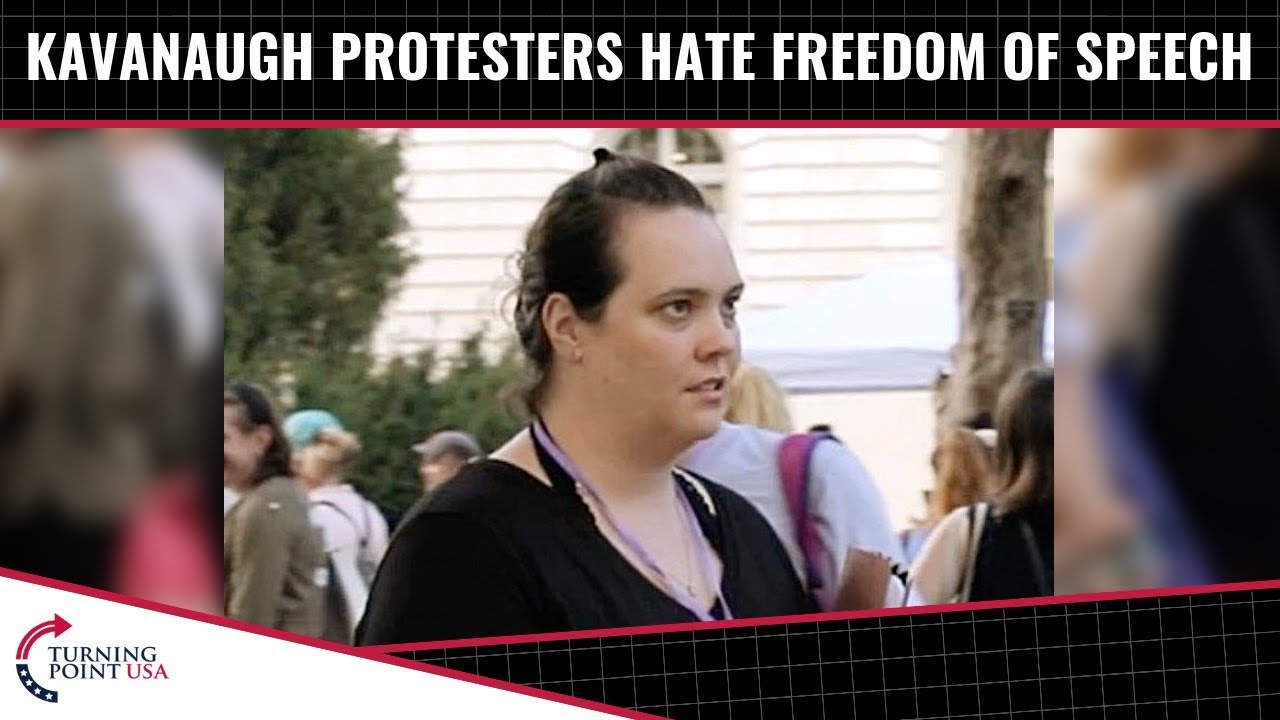
Charlie Kirk walks through a crowd of anti-Kavanaugh protesters outside the Supreme Court, attempting to engage demonstrators in conversation about their opposition to the nominee. What unfolds is a telling display of the left's refusal to engage in dialogue. From accusations of racism quickly dismantled, to protesters demanding he leave public property, to complete silent treatment from sign-holders who can't articulate their positions, Kirk captures the fundamental breakdown of civil discourse. The interactions reveal a pattern: when challenged on their claims or asked to explain their positions, protesters either walk away, call for his removal, or refuse to speak altogether.
Charlie Kirk positioned himself among protesters rallying against Supreme Court nominee Brett Kavanaugh outside the Supreme Court building in Washington D.C. What he encountered was a revealing snapshot of political discourse in America—or rather, the lack thereof.
As Kirk approached demonstrators holding signs opposing Kavanaugh's confirmation, he attempted to engage them in basic conversation about their concerns. The responses ranged from hostility to complete silence, painting a picture of a movement built more on slogans than substantive arguments.
The Racism Accusation That Fell Apart
One of the first interactions involved a protester who quickly labeled Kirk as "racist" and "sexist." Kirk's response was immediate and pointed: "I'm racist? I have a black communications director. How am I racist exactly?"
The question hung in the air unanswered as the accuser walked away without providing any justification for the serious charge. This pattern would repeat throughout Kirk's time among the protesters—serious accusations made without evidence, followed by retreat when challenged.
Kicked Off Public Property
In a particularly ironic exchange, Kirk was told by organizers that they had a permit for the area and were "only allowing people to film that are actually with our group." Kirk was essentially being told he couldn't stand on federal government property.
Kirk pushed back: "You should have them come and tell me I can't be on U.S. federal government property. Isn't speech and assembly fundamental to our republic?"
The organizer's justification was that Kirk was "putting people on camera without their consent," despite the fact that the protesters themselves had cameras everywhere and were staging a public demonstration. Kirk pointed out this contradiction, asking if stepping into their area made him "a problem" while standing just outside it was acceptable. The organizer confirmed this Orwellian logic: "Yep exactly."
The Silence of the Sign-Holders
Perhaps the most telling moments came when Kirk approached individual protesters holding signs and simply asked them to explain their positions. One man named Jim, when asked what he didn't like most about Kavanaugh, responded only: "I'm just here holding the sign."
Kirk's reply captured the absurdity: "Good, you should pay attention to the sneakers though."
Another protester wore a shirt with a message, but when Kirk asked what it meant, he received only the silent treatment. This became a recurring theme—people willing to hold signs and make public statements, but unwilling or unable to defend those positions when engaged in conversation.
Protecting the Vulnerable—But Not All of Them
In one exchange, Kirk raised a question about intellectual consistency. Someone mentioned "protection of the vulnerable," and Kirk asked a logical follow-up: "If you want to protect the vulnerable, how can you not protect the unborn?"
The question went unanswered, with protesters simply walking away or refusing to engage.
The Party Switch That Wasn't
Kirk challenged another common talking point when someone brought up race and the Republican Party. His question cut through decades of political mythology: "Why is it as the South got less racist, it got more Republican?"
The question addresses a fundamental contradiction in the left's narrative about the so-called "party switch." If Republicans are the party of racism, how does one explain the fact that as the South became demonstrably less racist over the decades, it simultaneously became more Republican? The protester had no answer.
What the Silence Reveals
As Kirk noted while filming, "I always love talking to people I disagree with. I can't get people to talk to me." He drew a larger conclusion from this experience: "This actually does add up to why the left hates free speech. Free speech makes a lot of sense."
The observation strikes at something deeper than just one protest. When a movement is built on emotional appeals, character attacks, and slogans rather than reasoned arguments, free and open dialogue becomes a threat rather than an opportunity. The protesters Kirk encountered were prepared to hold signs, chant, and make accusations. They were not prepared to defend their positions in conversation.
One organizer was overheard saying, "We are probably really pissing him off right now." Kirk's response suggested otherwise—he appeared energized by the encounters, confident that the footage would speak for itself.
The Kavanaugh Confirmation Reality
Kirk raised the inevitable question to the protesters: "What happens when he actually gets confirmed? Like all this effort, all this commotion..." He walked through the math: "The court will go 5-4. It'll be Kavanaugh, Gorsuch, Alito, Thomas, Roberts and maybe one Ginsburg or—it's gonna go 6-3, 7-2. Then what?"
The protesters had no answer for what comes after their demonstration fails to achieve its objective. The protest appeared to be an end in itself, not part of any coherent strategy.
A Movement Built on Avoidance
The final instruction heard from one protester to another summed up the entire experience: "Just don't talk to them."
This wasn't spontaneous advice—it appeared to be the strategy from the beginning. Don't engage, don't debate, don't explain. Just hold the signs, make the accusations, and retreat when challenged.
Kirk's time among the Kavanaugh protesters revealed a movement uncomfortable with the very principles it claimed to defend. They occupied public space but wanted to control who could stand there. They made their demonstration public but objected to being filmed. They made serious accusations but couldn't substantiate them. They held signs but couldn't explain what they meant.
The silent treatment Kirk received wasn't just rudeness—it was a window into the intellectual bankruptcy of a political movement that has traded argument for assertion, dialogue for denunciation, and persuasion for performance.