Up Next

Charlie Kirk Debates Student on Holocaust Versus Abortion and the Moral Worth of Human Life
15:02

Charlie Kirk Defends Pro-Life Stance with Split-Ticket Voter in Powerful Campus Exchange
10:17
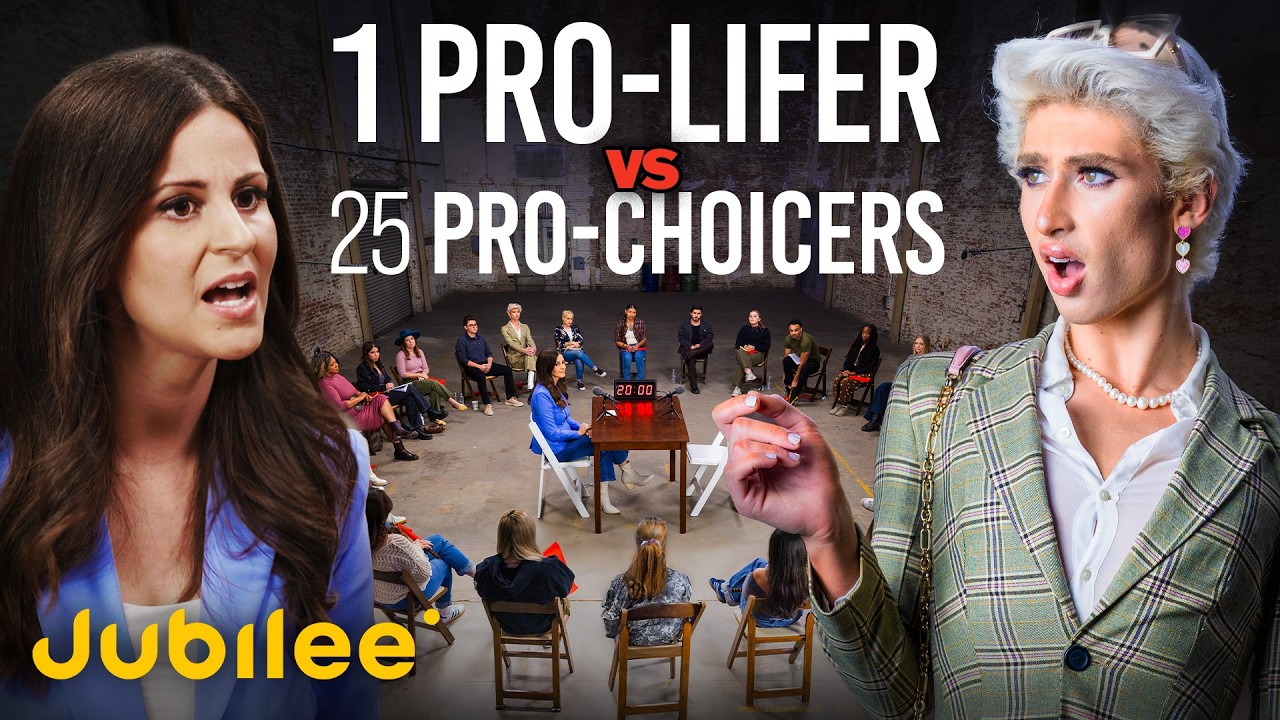
Lila Rose Debates 25 Pro-Choice Activists on Abortion Rights, Bodily Autonomy, and the Right to Life
1:41:10
Charlie Kirk Debates Comedian Ben Gleib on Abortion, Human Life, and When Personhood Begins
Charlie Kirk faces off against comedian Ben Gleib in an intense debate about abortion, examining the fundamental question of when human life begins. The conversation explores everything from the science of embryology and constitutional protections to economic hardship, rape exceptions, and racial disparities in abortion rates. Kirk argues that life begins at conception and that 62 million abortions represent a moral crisis, while Gleib contends that life begins at birth and women must retain bodily autonomy. The debate touches on adoption, foster care, the role of men in abortion decisions, and whether religious beliefs should inform public policy in a democracy.
The Structure of the Debate
Charlie Kirk opens the debate by welcoming comedian Ben Gleib to discuss abortion in a structured format. The debate begins with two-minute opening statements, followed by one-minute responses, before transitioning into an open exchange. Kirk emphasizes that two people who were thankfully not aborted will be discussing this contentious issue, setting the tone for what becomes a passionate confrontation over fundamental questions of life, personhood, and women's rights.
Opening Arguments: Bodily Autonomy Versus Protection of Life
Gleib opens by acknowledging the irony of two men debating an issue that primarily affects women, then quotes a satirical Washington Post article highlighting what he sees as hypocrisy in the anti-choice position. He argues that forcing women to undergo months of pregnancy and childbirth while refusing minor inconveniences like mask mandates reveals inconsistent values. Gleib emphasizes that abortion restrictions disproportionately impact people of color and that politicians who restrict abortion simultaneously cut funding for healthcare and schools. He closes with a stark question: would Kirk rather his future daughter die seeking an unsafe abortion or make a safe choice for her own life?
Kirk responds by reframing the debate around what he calls age and size privilege - the idea that older, larger people are claiming the right to deny existence to smaller, younger beings. He argues that the science of embryology clearly establishes that human life begins at conception, when distinct DNA is formed. Kirk contends that 62 million abortions since Roe v. Wade constitute a genocide, with 31 million of those being female lives that never had a chance to exist. He emphasizes that 900 black babies are aborted daily in America, calling this a racial justice issue. Kirk presents a three-part syllogism: it is always wrong to intentionally kill a human life; abortion intentionally kills a human life; therefore, abortion is morally wrong.
When Does Life Begin? The Central Question
The debate intensifies around the fundamental question of when human life begins. Gleib argues that if life truly began at conception, people would celebrate birthdays from that moment rather than from birth. He uses the analogy of baking a cake - ingredients aren't a cake until the baking process is complete. Kirk challenges Gleib to specify exactly when human life becomes worthy of constitutional protection. Gleib responds that life begins at birth, which he describes as the only universal marker everyone agrees upon.
Kirk pushes back, asking if it's acceptable to terminate a child right up to nine months of full development. Gleib states he personally doesn't believe in late-term abortion but thinks human life should be protected when it becomes viable outside the womb - when it can survive without being physically connected to the mother. Kirk challenges this definition by pointing out that even two-year-olds are completely dependent on their mothers for survival. Gleib clarifies he means physical attachment and nutrient dependency, not the general care all children require.
The Science and Development of Fetal Life
Kirk presents specific developmental milestones to challenge Gleib's position. He notes that at 22 days after conception, the child's heart begins to circulate blood. By six weeks, the child's eyes, eyelids, nose, mouth and tongue are formed. Electrical brain activity can be detected at six to seven weeks. By ten weeks, the child can make bodily movements. Kirk emphasizes that as early as 12 weeks and certainly by 20 weeks, an unborn child can feel pain.
Gleib disputes several of these claims, particularly the notion of a true heartbeat at 22 days and the ability to feel pain as humans understand it. He argues that registering physical stimuli without consciousness or context isn't the same as experiencing pain. The exchange becomes heated when Gleib shows photographs comparing a dolphin fetus to a human fetus, arguing their similarity proves that at early stages, a fetus isn't yet distinctly human. Kirk adamantly maintains the human fetus is absolutely a human being, though he's momentarily fooled when Gleib first labels the dolphin fetus as human.
DNA, Distinct Life, and the Sperm Argument
Gleib repeatedly challenges Kirk by asking about sperm, which contains DNA and is alive. If life with distinct DNA deserves protection, Gleib argues, then every act of masturbation would be genocide. Kirk responds that sperm alone doesn't constitute a complete human life - it's only when sperm fertilizes an egg that new, unique DNA is formed. This fertilized egg, Kirk argues, is distinct from both parents and will develop naturally if not interrupted.
Gleib counters that an embryo isn't truly distinct because it's physically attached to and completely dependent on the mother for all nutrients and survival. Kirk argues that dependency doesn't negate personhood, pointing out that many born humans depend on others for survival. The debate circles around whether physical attachment and biological dependency make something part of the mother's body or a separate being using the mother's body for sustenance.
Rape, Incest, and Hard Cases
Gleib repeatedly brings up rape as a reason abortion access must be preserved, arguing that forcing rape victims to carry their rapist's child to term compounds trauma. Kirk asks what percentage of abortions are due to rape. When established that it's less than one percent, Kirk argues this rare case shouldn't determine policy for the vast majority of abortions, which he claims are done out of convenience.
Gleib objects to the word "convenience," arguing it dismisses the real economic hardship and life circumstances that make women not ready to have children. He emphasizes the trauma of forcing rape victims to give birth and then either raise their rapist's child or undergo the additional trauma of adoption. Kirk presents photographs of two babies, challenging Gleib to identify which was conceived through rape and which through consensual sex. Kirk's point is that both babies are equally human regardless of the circumstances of conception.
Economic Arguments and Support for Mothers
Gleib argues that Kirk and other pro-life advocates force women to have babies but then refuse to support policies that would help them raise those children. He points to Kirk's opposition to legislation that would provide $225 billion to support early childhood care, contrasting this with acceptance of trillions in tax cuts for the wealthy under the Trump administration. Gleib argues it costs approximately one million dollars to raise a child over a lifetime, and forcing birth on women in poverty situations while refusing to fund support programs is cruel.
Kirk responds that there are already substantial social welfare benefits available, estimating approximately $55,000 per year for someone with a child, which over 18 years approaches the cost of raising that child. Kirk also advocates for adoption, noting there are two million families waiting to adopt children in America - twice the number of annual abortions. He argues that if abortion were eliminated and adoption made easier, every child could be placed with a waiting family.
Gleib counters that there are already children stuck in the foster care system who cannot find adoptive homes, and that Kirk's position skips over the experience of the mother - the physical, emotional, and economic toll of pregnancy and childbirth, followed by the trauma of giving up a child for adoption.
Racial Disparities and the Eugenics Connection
Kirk repeatedly emphasizes that abortion has a disproportionate impact on communities of color. He states that 900 black babies are aborted every day in America, and that in Texas, 70 percent of all abortions are minorities, with 37 percent being black babies. Kirk asks why Gleib is comfortable with this disparity and connects it to the history of Planned Parenthood founder Margaret Sanger, whom he identifies as a eugenicist.
Kirk quotes Sanger as saying "we don't want the word to go out that we want to exterminate the black population" and "human beings our goal is to eliminate human beings who never should have been born at all." Gleib says he's never heard these quotes and doubts their authenticity, but states that if they're true, he obviously condemns them. He argues that Kirk is inappropriately trying to dictate to the black community what they should do, while Kirk accuses Gleib of wanting fewer black children. Gleib responds that he wants exactly the number of black children that black mothers decide they want to have.
Religious Beliefs and Constitutional Questions
Gleib argues that America is a democracy, not a theocracy, and that Kirk's evangelical Christian religious beliefs inform his abortion stance but shouldn't be imposed on others. He notes that Judaism teaches that life begins with the first breath, not at conception. Kirk insists he hasn't made a single religious argument during the debate, relying instead on the science of embryology and moral philosophy.
The constitutional discussion centers on Roe v. Wade. Gleib argues the 14th Amendment's due process clause and the right to privacy protect abortion. Kirk counters that the Constitution never mentions abortion and questions how seven unelected men on the Supreme Court can create law rather than Congress. Gleib responds that the Supreme Court interprets the Constitution and that these seven men had empathy to recognize they don't understand what women go through in pregnancy. Kirk cites even Justice Blackmun's own law clerk calling Roe v. Wade "one of the most intellectually suspect constitutional decisions of the modern era."
The Texas Law and the Future of Roe v. Wade
Kirk expresses support for the Texas abortion law, which restricts abortion at six weeks of pregnancy - a point at which he argues the child's eyes, eyelids, nose, mouth and tongue are already formed. Gleib opposes this law as forcing women to give birth before many even know they're pregnant. Kirk states his hope that the Texas law will lead to Roe v. Wade being overturned, returning abortion policy to individual states as the Tenth Amendment intended.
Personal Positions and Late-Term Abortion
In a revealing moment, Gleib states his personal opinion that late-term abortion in the third trimester is wrong unless there are serious abnormalities that would prevent the child from surviving or the mother's life is at risk. This surprises Kirk, who calls it news that Gleib would support preventing late-term abortion. Gleib emphasizes this is his personal view but notes that less than one percent of abortions occur in the third trimester, and those cases almost always involve life-threatening situations for the mother or fatal fetal abnormalities.
Women as Decision-Makers
Gleib repeatedly accuses Kirk of skipping over the mother in the discussion, focusing only on the fetus while ignoring the physical, emotional and economic experience of the woman who must carry the pregnancy. He argues that forcing women to give birth, especially in cases of rape or when they're not ready for children, shows a lack of respect for women's autonomy and full personhood.
Kirk responds that he cares deeply about mothers and wants to protect them from an abortion industry that he believes exploits them. He distinguishes between women who have abortions, whom he says deserve empathy and compassion as victims of the abortion industry, and abortionists themselves, whom he holds responsible for what he calls murder. Kirk argues that his position isn't anti-woman but pro-life for both mother and child, advocating for support systems like easier adoption rather than abortion.
Final Arguments and Personal Attacks
As the debate concludes, both participants become increasingly heated. Gleib calls Kirk a "C-rate political hack" while Kirk calls Gleib a "B-rate comic." Gleib accuses Kirk of being obsessed with women's uteruses and wanting to control women's bodies. Kirk accuses Gleib of being indifferent to genocide and advocating murder.
Kirk summarizes his position: Gleib believes that because someone is older and bigger, they should be able to terminate younger, smaller human life. He reiterates that 62 million human beings have been killed since Roe v. Wade, with 900 black babies killed every day. He emphasizes that there are two million families waiting to adopt for every abortion that happens.
Gleib closes by telling any woman watching who is being pressured not to consider abortion that she can safely obtain abortion pills online from other countries if necessary, and that abortion is very safe and healthy. Kirk responds that advocating for this "scares" him as it's advocating murder. The debate ends without resolution, both participants firmly entrenched in their opposing positions on one of America's most divisive moral and political questions.
Video Transcript
welcome to bait night everybody my name is charlie kirk tonight's topic is abortion but as always the conversation can go anywhere tonight's guest is ben glebe he has been a comedian for some time on all the late night shows and i think you're really going to enjoy this back and forth buckle up let's get started [Music] hey everybody welcome to this episode of debate night with us tonight is ben glebe i say that right perfect kirk right extraordinaire that's what they call me we are honored to be here tonight to be discussing all sorts of things but specifically we're going to be talking about abortion the way it will work it's very structured and then we will enter into the laissez-faire and regulated portion of the conversation feel free feel free to interrupt each other and have all sorts of fun and so we'll be two minutes two minutes and then a series of one minute back and forth and then off to the races opening statement will go to our guest and we have here today on the set two people who thankfully were not aborted so ben first statement for you when we're done with this debate maybe you'll be questioning that statement about you about yourself we'll see thanks for having me thank you um so this is obviously a pretty contentious issue one that affects women around the country of course so i think it's best that two men are debating it and it is actually though i say that sarcastically but really it is because we all need to be able to support each other and so i wanted to i prepared some things to say at the beginning just food for thought to go i'd like to start by quoting a woman who wrote a very interesting article in the washington post very funny article too she said about some of the hypocrisies of this position being anti-choice we believe in freedom your fists must stop where my nose starts except this one minor thing is obviously not a big deal where you have to use your body to build another body from whole cloth give it eyeballs and a circulatory system undergo months and months of creeping bodily horror as your torso becomes unrecognizable to you familiar smells become off-putting and then at the end of this process you have a human being from you have to arrange a life compare that minor barely palpable discomfort with the shocking invasive horror of placing a strip of fabric across your nose when entering a business for three to five minutes i shudder just imagining it you can cough and breathe on however you like it's a god-given right nothing worse as a human than to have to conceal your exquisite nose we don't believe in restricting anyone from living as he chooses unless of course it's tangible minor things like who wants to vote or get abortions or both of which are going to disproportionately of course impact people of color but does that matter i guess not after all it's your body and of course we view your autonomy as sacred and worthy of protection it's just that if your body contains a uterus it does not technically belong to you it's more of a vacant lot for us to regulate as we see fit and your neighbors to be encouraged to sue about so no matter our race our gender or our zip code that's the end of the quote this is me now i believe we all should be able to come to a consensus that we can decide for ourselves whether and when to have children but a handful of politicians today are trying to pass laws that destroy our freedoms undermine our rights and endanger our futures they make decisions that force people to struggle to simply make ends meet or care for their families and then shame and blame those that they force that into and while they're busy fighting for our most basic rights they hand the money that they take from our health care and our schools to our kids futures and their corporate donors we are in a democracy not a theocracy and it's nuts to allow government to think they can have a say in the choices a woman makes for her own body and the last most important point is that by doing this women will die young girls will die without safe places to go for abortions they will still find a way to get our daughters friends nieces teachers mothers will die would you rather your daughter die if you have a daughter one day or make a safe choice for her own life or decide to start a family for her own life and if you choose die how is that pro-life thank you okay so i think the entire kind of framing of this debate first needs to start with the type of privilege that we have both you and i have age privilege and size privilege to say that we believe that certain life should not exist there's been 62 million abortions in america since the ruling of roe versus wade so if you go to just a seventh grade textbook of what is a living being or what is a being that has some sort of life it will say that it's distinct and that is whole what makes a human life so incredibly unique and so magical is you do not need to encourage or tell that life to grow it's not like a corvette on an assembly line is that that human life will develop naturally this really kind of goes down to the question of when does human life begin when does personhood begin and the science of embryology says very clearly that life human life begins at conception now speaking non-scientifically as a moral argument we have overseen the slaughter of our fellow citizens over the last couple decades this is a genocide dare i say a holocaust of our citizens that has occurred since roe versus wade you talked about women well just statistically half of the 62 million abortions since roe versus wade are 31 million women that never had the chance to live we have a luxury and a privilege that we are able to say we are old enough and developed enough we're larger and we're older to say to another life right now that's in the womb that you have no right to exist you talked briefly about the racial part of it 900 black babies a day are aborted every single day in this country we need to have a moral question here of when does life begin what is a human being if it is not your dna it is not your choice and we as a human as a society of human beings the least we can do is ask ourselves the question are those people are those persons in the womb worthy of protection i would contend absolutely it is the most important moral question i think we as americans and we in a free society can debate and discuss that all life is worthy of protection loves it so lots of problems with what you said let me start picking them apart first as a jewish person i take large offense to comparing a life that never got to exist to a holocaust which killed my family who did get to exist and were snuffed out to say those are even comparable is deeply offensive but let's put that aside for a second you said that the definition by your own words and by the science of embryology is that life is distinct but an embryo is not distinct of the mother whom it is literally attached to and dependent on it for all nutrients and all survival if it can survive in this world if it can take a breath and go on to live that is a distinct being and you've got a great argument there but without that you simply do not and you also contradicted yourself when you said that it is life and then a minute later you said never got the chance to live a life had a chance to live if it's a life right so in fact it did not have a chance to live because it's not a life yet until it is born boo yeah baby okay so you understand how dumb that argument is i don't understand that's like saying you never had a chance to live if i killed you right now what i'm saying is that this baby was alive and it got murdered in the womb therefore it never had a chance to live past the point of it being alive what i meant is that it never had a chance to live to a five-year-old birthday or a 15-year-old birthday or a 30-year-old birthday again using age and size privilege that you have and i have you say you know what we should be able to quash and quelch the 62 million human beings that never had a chance to live outside of the womb here's the basic syllogism that i bring as a pro-life advocate it is always wrong to intentionally kill a human life abortion is intentionally killing a human life therefore abortion is morally wrong and so you're going to be making an argument about choice but some choices are wrong for example it's wrong to kill human beings so you're going to have to make an argument to the audience why either a this is not a human life or b why the mother has the right to murder her own child sure i'm going to choose the former of those options why i do not believe it is a life and it's easy to make that point but let me first say this you are saying that it is a life that got snuffed out and i don't mean to pull my age privilege on you but i'm a little older than you how old are you charlie 27 27 how come you didn't say 28 because i'll be 28 in two weeks but if life begins a conception you're 10 months older than that and you actually are 28. why don't you say 28. because that's the way we categorize birthdays that's the way you celebrate your life is the way we acknowledge life that's the way we cut the birth day begins when you are born if life begins a conception if life begins at conception you would count your life from the moment that egg was fertilized when you were the size of a poppy seed not even a poppy seed but after a couple days of poppy seed size life that you're celebrating that great birthday but you don't because you don't actually believe that it is a human life you do believe the if you believe the science it's quite obvious that it is the germ of a life it's the beginning of a life it's the beginning of a gestation of a life if you're building a cake baking a cake you take the ingredients when that cake is done you got a cake no one is saying it's a cake when it's ingredients that will become after baking a cake and if you throw that cake away because it doesn't come out properly into ever being a cake you don't say man you just threw away a perfectly good cake no you say that cake never became a cake so i'm just curious and we'll just kind of go into the unbreak sure so when does human life begin i think the human life begins at birth at birth yes so it's okay to terminate a child right up to nine months full development full birth for full breath feeling all of it no i don't i don't personally believe that no so when is a human life worthy of constitutional and legal protection i believe that a human life becomes one that we should do our damnedest to protect when it is viable outside of the womb that's my belief what do you mean viable like when you can survive without the mother being connected to something that's all that's three or four years old if you can hunt and gather on yourself a two-year-old is totally dependent on the mother should we be able to kill two-year-olds you should you should have seen me as a two-year-old i was very crafty so how about 18 months listen some kids can survive on their own so your moral position is to be able to kill six month olds because they have to breastfeed for their mother no no no i'm simply saying when something is attached and dependent on the nutrients of life like dependent on the ability no a six-month-old a six-month-old's gonna go hunter and gather content gather and grow their own crops nobody could probably crawl around and find some some crumbs on the ground we live in a society that's a degree of dependency of crumbs created by somebody else you understand everything is dependent on your hunting and gatherings depending on being animals a 15 year old or a 20 year old has the reason the capacity the maturity to be able to not be depend on other human beings i don't know if you've seen that so so so your moral position is that if you are dependent on another you should be able to be terminated no okay so what is your moral position when does human life begin that should be protected by the law i think human life should be protected by the law when it is born because that is the only marker we all agree on yourself i'll tell you why because you yourself have said that it was a really well made point that you made and i'll quote you back to you you said we have a universal standard for when death is but we do not have the universal standard for when life begins and we should and then you go on to say i and i believe life begins a conception yes but you then put your own personal belief at the end of that great quote we do currently have a universal standard that we all agree when life begins at least and that's from birth some believe it begins earlier but not all if you want if your argument is to change how we do birthdays i'm totally on board for that fair enough so i'm actually 28 years old thank you if you want the you and someone changes wikipedia if you want the universal standard you so seek the universal standard we currently have is from birth so my very important point to you here is if you want to work harder to get that universal standard to change and to convince the populace to get on board with redefining that do so with argument do so with fair good faith argument to get the population on board and change the position of the country great i'm all for you trying to do that but until you do the universal standard of when life begins is when somebody is born life doesn't exist without being alive in life in the world life is life until you're in the world and have a consciousness and the ability to think and to experience [Music] [Music] so life begins when life begins that's the current definition of of it and its definition of words the science of embryology is when deoxyribonucleic acid is formed so i just want to make sure we're clear that's the science of embryology not of lifology that's when an embryo made up a word called lifology and you made up a science of embryology as though that did not make a science of embryology it is a well-studied yeah but and well you're jumping and leaping that that is what life is so wait that's when dna is formed it's okay just to eliminate it it will never be formed again it is distinct it is unique yes the science membranology says it starts at conception well that's a great that that's the 62 million human beings that were never able to yes yes and live outside of the womb and you're a genocidal murderer every time you masturbate charlie why because there is dna in sperm and it is a distinct thing that's swimming around never formed never fertilized hundreds of millions never fertilized within that tissue and flushing down the toilet why and never fertilized with an egg so let me ask you a question why is that your line if you're because that's what i said when a unique dna is formed with an egg that's what the science of embryology and the science of science also says the science of science science of science you understand how dumb you sound right science of spermology also says that sperm is alive do you deny sperm is alive do i deny that sperm is alive that is my own sperm and your fixation with sperm is like creepy and kind of weird with women's wounds is creepy and kind of weird actually even it out my moral position to protect the unborn is one that i wish you had i wish you had that same dedication to protect the born children in this world well i do so let me ask you a question at most terms the child's eyes and eyelids no nose and mouth and tongue have form terminated that's okay child's eyelids nose mouth and tongue terminate well they're not real human ones they're developing got it so electrical brain activity can be detected at six or seven weeks and by the end of the eighth week terminate not a human it's not a human got it okay by ten weeks after consultation by the way the child can make bodily movements it's half a centimeter big at this point and point so two five of an hour i'm taller than you so i should be able to terminate you no because we're talking about scale how tall are you i'm six four much taller than you six one so so your moral argument is taller people should be able to terminate smaller people got it from that's what you said it's small therefore you determine it no you're as early as 12 weeks and certainly by 20 weeks an unborn child can feel pain is it okay to terminate a child that can feel pain pain that is that is a disputed scientific fact because pain without the ability to understand any sort of context is not pain as humans know it they register what is happening but it is not pain as though oh man this hurts so if something can't register the pain it's okay to torture something correct if it can't register the pain so so if you if someone is on a ventilator someone is in comatose and you torture them that's morally acceptable cannot register the pain then it's not registering the pain let me ask you a question are you okay with abortions for people that found out they are pregnant with down syndrome children i wouldn't do it are you okay with is it morally okay for a society to embrace that i haven't thought about that i think a lot of people with down syndrome live beautiful lives so are they worthy of protection that's not a fair thing to ask why because i'm saying that fetuses with down syndrome or fetuses without down syndrome are not children so you're going to a specific within the whole but i'm arguing that all of it is not a human life yet so you're going specific so let me ask you a question what species is it on the animal kingdom if it's not a human life what kind of life is it it's not a life yet what you just said it was a human life well i did not say it was a human life so it's not alive it is not so so something with eyelids nose mouth and a heartbeat is not alive is it dead so a sperm with dna and a head that can swim and find an egg is not alive is it dead well it's it's not been fertilized with an egg with it fertilizing it is because according to science of embryology that sperm when it is firm with an egg creates a new being of deoxyribonucleic acid that is formed that is magical unique and distinct only to that moment therefore worthy of conception and begins the process of the development of a full human being where the sperm independent of that does not have that again your fixation with sperm kind of weird my sperm is magical and unique and worthy of of of you know whatever you know the conception you said too i got good sperm and just that's just a public service announcement for people that want to know that you can't say my obsession with the first building block of like life is weird but your obsession with six hours later or three days later when it hits an egg is not weird but you admit there's something magical that happens once that that sperm and egg meat that a human life begins that process begins that a new dna is formed where two beings become one don't you admit that i think it's as magical as the incredible thing that we are given sex drives that compel us to ejaculate and that compel women to drop an egg to have the potential to receive life that is as equally magical but you don't contend those are lives you don't think someone having a period let me answer your questions and you don't think sperm so ejaculation so since you're so bizarrely fascinated with sperm and you're bizarrely fascinated with women's bodies and regulating them even though you're not a woman i am very fascinated in saving babies lives and i will not stop i'm not basically getting for that so let me ask you a question since you're fixated on sperm a sperm absent meeting an egg does what it dies once a sperm meets an egg uninterrupted from abortion interference does what oftentimes it will fertilize it obviously not and live no and begin and grow and continue to continue the building blocks and live a full life not true so your argument of your kind of creepy fixation with sperm which is that the sperm absent the fertilization of the on eggs so your followers cannot want that to spur you have a creepy fixation with controlling women's bodies so stop that phrase in life stop that phrase it grows if i'm making things you're the one that wants to interfere and charlie destroy point because if you should be able to grow if you want to make a scientific argument i have then don't make a stupid point over and over again about part of that scientific i'm just clarifying the lack of wisdom in your argument or if you say sperm independent of meeting an egg does what it dies if it's so once the sperm meets the egg uninterfered by an abortionist that does what it dies no it lives a sperm meeting and sometimes yes sometimes no but when it does develop it it eventually becomes a life when it's born or means when it's born or our fellow human beings and when it doesn't when it leads to a miscarriage or an ectopic pregnancy it doesn't lead to those things and then abortions can or not even abortions dnc procedures can help clear that out so the woman can go on to have a family in the future let me ask you a question you're so against abortion and protecting lives and i'm very pro-baby but you are okay with abortion if it saves a woman's life why so actually i'll clarify that that's so exceedingly rare and in fact great over 1 000 ob gyns nurses and neontologists sign a declaration stating quote as experienced practitioners and researchers in gynecology we affirm that direct abortion the purposeful destruction of an unborn child is almost never medically necessary to save the life of a woman so in the extraordinarily rare case which is so hard to find and pinpoint uh-huh it's not so hard to find it happens and there's many very right well there's one documentary gyn say no that's great and there's a lot that say yes and it happens and you're where it happens so try not to use a distracting statistic well you're you're okay with it in those rare instances why because there could be other children in the future right that's my whole argument however if a woman's not ready to have a child now there could be other children in the future when they are ready to raise them i will eventually i will correct my own previous statement by saying i don't even think it's ever medically necessary because these 1 000 ob gyns and nurses have said you can have cesarean sections that's not to say there might not be necessary medical treatments but to use abortion as the medical necessary treatment i think is almost never the case whatsoever case closed no you can't say case closed well i'm going to trust the 1000 obgyns who say it's hard to pinpoint and it's rare but not trust the 1000 objectives i don't know who they are there's millions of ob gyns out there the 1 000 say you're wrong and the 100 million others say that i'm right let me ask you a question you retweet planned parenthood quite a lot sure um what do you have to say about the planned parenthood founder margaret sanger who's a eugenicist who says we don't want the word to go out that we want to exterminate the black population does that bother that planned parenthood as a eugenicist organization i've never heard that quote how about this one i doubt the authenticity of that quote but if it's true i obviously condemn that quote how about this one from planned parenthood founder margaret sanger human beings our goal is to eliminate human beings who never should have been born at all or birth control is nothing more or less weeding out the unfit are you comfortable associating yourself with eugenicists i'm not comfortable associating myself with your genesis or that quote if that answers your question can i ask you a question um sure because i got plenty for you awesome how many children do you have none yet why well i got married in may so it's a work in progress so you're working on having kids soon why haven't you adopted yet are you going to adopt kids that are in need of help so i do kind of live a busy life but i would love to adopt actually it's on the table okay awesome so charlie's going to adopt soon excellently at eight weeks we have tails uh at eight weeks and uh uh embryo has tails do humans have tails charlie i'm sorry what serious question do human beings have tails i'm not exactly sure the essence of this do human beings have tails do you have a tail you know i have never met anyone with a tail i'm not exactly sure the other exactly but fetuses have tails kind of proves that at that phase they are not a human being they got tails humans don't have tails we're not dinosaurs let me even show you a photo if i may okay do you truly in your heart of hearts truly believe that this is a human being this without a doubt without a doubt yes this is a dolphin fetus so without a doubt a dolphin fetus is a human being this is a human fetus look how similar they look but quite different dolphin you just confirmed that a dolphin in in life do you confuse dolphins for human babies often so let me go to sea world and you're like someone's got human babies in that aquarium get the human babies out of the aquarium well you labeled it as a human fetus no i did not dishonestly no i did not i didn't label it as anything let me let me say human fetus let me ask you a question though so let's let's hold up those two pictures sure is there a moral difference between the dolphin and the baby at this stage no no no you just confirmed it now let me ask you a human and a dolphin is it okay to kill one not the other is there a difference morally between a human and a dolphin i don't like to kill dolphins but when they're like do you like to kill babies no i don't and when they're living i certainly am not in favor of killing either but obviously i'm protecting that human hold up hold up the human one sure is that not alive no it is not alive well then well how is it able to have a heartbeat it's attached to an alive being called a woman wait so the must have a heartbeat does it no it doesn't have a true heartbeat or yes it does at some point it does 22 days after conception the child's heart begins to circulate not alive that is also disputed science after six weeks the child's eyes and eyelids nose and mouth and tongue are formed it is not a heartbeat at 22 weeks so wait hold on it's either dead or alive which one is it that is not true it is becoming pick one it's dead currently oh it's alive it's not alive so you were once dead you defined life as distinct it's not distinct it's attached totally somebody's feeding it distinct means on its own is it not attached to its mother that's a different that's autonomous distinct is the same distinct means it has its own dna its own composition that's the definition the word distinct is its own dna and composition well that's the incorrect so it's it is unique so sperm and so is eggs and so is everything dolphins are unique that doesn't mean you you can't or can't kill them you put them in aquariums there's a million abortions every single year do you think that's too many or not enough i think it's whatever the mother decides with her own family is the right move for their life and it's none of our damn business so if a mother murders an 18 month old is that okay no it's not the human being it's an obstacle so it becomes a human being the moment it comes out of the womb right so what do you say about the youngest pregnancy ever done 22 weeks and one day that baby is now one year old was that not a human being when it was delivered by c-section i don't follow say it again so last year the youngest ever human being on record was delivered at 22 weeks and one day that baby is now one years old since the time okay of that birth this is now a living baby you're correct that's okay so as soon as it comes out of the womb it is living that is correct if it's alive when it comes out of the womb we don't know right a lot of babies die at childbirth that's why you don't know not a lot of babies diet children a lot very very low can someone google that for me please can you please google how many babies die at childbirth every year we have some of the lowest child birth mortality rates in the no we thankful no we do not we have some of the highest we have some of the highest united states infant mortality rate places a 16th among the nations of the world how many nations thousands of infants die each year because of inadequate medical care that you often vote against and don't support i'm not elected official but you support things and you have the influence of millions you don't have a vote are you suppressing your own vote now too or just others are you saying that i vote in congress i'm saying that you vote in elections and you decide who goes to congress do you not and do you not support bills or not support bills based on your massachusetts i know you're getting you're getting really worked up no i'm not so let me also also we ranked 33 out of 36 in the organization of economic cooperation and development nations oecd nations ranked by u.s news and world report for prenatal and early childhood care that you often do not support in fact recently when biden suggested just 225 billion dollars to support children more in the early years of their lives you went against it and said oh capping it while theoretically paid empty lip service to it and said well theoretically it's a good idea 225 billion dollars is so expensive and it caps the amount they can spend on their children at seven percent of income a year and by doing that there's no incentives then for them to seek cost-effective care when you had no problem with donald trump spending eight trillion dollars giving trillions and trillions of tax cuts to millionaires and billionaires and raising the national debt to 27 trillion dollars can i be no issue with that but helping the kids that you care about so much the babies you care about so much that you want to force women to give birth to them and then they can go themselves once they're born because you don't give a and you vote against it constantly bravo what a hill to die on i have no idea what the heck you're talking you don't well you've been on the record about it that's pretty incredible you don't know what i'm talking about one of your your your notes i've got a lot let's talk about the holocaust that's happening in our country so for the holocaust again you're gonna have a problem with me because again my family dies let's let's dive right into that so there's a holocaust happening in our country of a million abortions of a year of our countrymen that's your offensive water so the holocaust that's occurring administered by planned parenthood has a disproportionate impact in the black community in texas seventy percent of all abortions are minorities and 37 percent of all abortions are blacks why are you okay with that why are you okay with dictating what the black community should do now charlie kirk should decide what the black community does actually i want more black people do you want less you should tell them how many babies they should have i want to protect all black babies except with funding so here's the results with helping them have easier you want less black children i want more black children racist positions oh no you're the racist position i want the exact number of black children that the black communities decide that they want and black mothers decide they want to give birth to and not force them to do so and especially not force them to do so and then not provide any of the funding necessary to lift them up out of oftentimes poverty situations oftentimes you are forcing people to not only then give birth to babies they don't want but then you're sliding them further into poverty it costs about a million dollars over the course of a lifetime of a child to raise a child and it's easy for you to say you're a trust fund baby was born rich that's easy for you to say when you've never had to struggle for money these people are born in difficult circumstances they get pregnant accidentally or at the hands of an abuser the hands of a rapist the hands of of a mistake when they were 16 maybe it's their third child and their husband and them had sex and accidentally got pregnant and you're forcing them to have it and sticking them further and further in poverty with no effort and no funding to help lift them out of that but you care so much about babies that you think are dolphins so what percentage of abortions are rape that are attributed to rape do you not think rape exists i do what percentage of abortions are attributed no but any of them is too many since you're any american any pregnancy what percentage of abortions are attributable to rape i don't know the answer to that what what is the number one reason given for abortion in america do you know that one in four answer the question the number one reason given for abortion is they are not ready to have a child so you're okay i just want to make sure the moral position not a child unless it's born even though it can feel even though it can breathe even though it has a heartbeat because i can't breathe no we already went through this all right so feeling you're entitled to your own opinion not to your own correct correct you too you are taking the anti-science position no no not from as early as 12 weeks and certainly by 20 weeks an unborn child can feel pain and by 10 weeks after conception the child can make bodily movements electrical brain activity could be detected to six or seven weeks i've never denied they are not growing into becoming human beings but what percentage of abortions do you think are attributable when people say i got it because i was raped what percentage i bet it's a pretty low percentage yes less than one percent yes but that's one out of a hundred so most are abortions out of convenience but you convenience is a word you use to frame it as somebody being irresponsible not being ready to bring a child into this world it's not convenience it's smart family planning that you are against you're against planning parenthood you want you're for forced parenthood you're not fortunate let me ask you a question you're not for life you're for fourth birth the rape question aside well why the rape question assignment because it's such a small thing but the legislation you keep taking these slices that you don't want to deal with and throwing them away since you did some images let me wait hold on one second so when a child is born and or when a child is going to be born and risk the life of the mother you say that's so rare it doesn't count when someone is raped that's so rare it doesn't count one in a hundred times though it happens well certainly why do you not why do you not push for legislation that has exceptions for raven incest why well because it's just equal human life and i'll prove it to you so equal human life so which one of these i have two pictures one of these babies was conceived in rape one of these babies was conceived in a consensual relationship which one's which you know why obviously i don't know the answer to that because they're both human beings no because i wasn't involved in the traumatic life experience of the mother that one of them resulted in rape and one didn't so one of them every time you speak about abortion you always skip over the mother who gives life to that baby and raises just about it right maybe which one of these babies no was formed in a consensual relationship or not let me make sure i understand the question here let me understand the question your question is which one of these babies was born in a consensual relationship which one was born over the incredibly traumatic mind-numbing horrible horrific experience of having to carry to term the child of your rapist of your daughter of your daughter watching at home's rapist that he wants to force anybody have a pro-birth forced birth opinion will make you carry to terms and be the mother of a rapist tell the difference be cast out of yourself they're both human beings that deserve to be able to live and you skip over the care and the trauma of the human beings of the mother let's talk about the mother i do care about the mother i care about the mother so much zero percent you hear that i want to talk about this so let's talk about adoption how many families pretty good how many families do you think are waiting for children right now to adopt in america charlie you're aware that there are far more ballpark there are far more babies in foster homes and i mean in the foster program and then just think again there's not enough yes there's not enough yes guess what how many families are waiting to adopt right now in america on waiting lists i don't know the answer just just a little bit a million two million okay and how many abortions are there every single year your point is what yes your point is what just take a guess your point is what let's say it's exactly two million i better got you so there's twice as many families waiting to adopt and we terminate children we are aware they're also children who are in the adoptive care system that cannot be done are you aware of that yeah why do you think they're in the adoptive care system in the foster care system because a lot of people are forced through restrictive abortion laws that people because like you you're some people who don't red tape so we should make it easier to adopt do you agree sure okay so we agree so therefore if we get rid of abortion we have enough families waiting to adopt and every child will be taken care of yet again we have solved the abortions for everybody because ben agrees no because enough families to adopt no all the abortions can go away and everyone gets it because well and ben would have to go back to obsessing about sperm look how well you again skipped right over the mother you refuse to talk about the mother or the experience of giving birth because you don't know what it's like let's take a look let's skip right over it let's see here let's make everyone who's raped force them to have a baby go through that trauma and then the trauma of giving up the baby for for adoption just so people can have a baby that don't currently have one how about also not traumatizing women and respecting the autonomy of women why is it that you are in favor of limited government in every way as small of government as possible except in the uterus of women so if it's not you're deciding for a woman what it does hilariously that's you because you want to put the abortionist in the uterus i want to respect women's choices to make the decision best for their family and their lives what i want is to make it illegal for abortionists and the abortion industry to continue to massacre and create a genocide and holocaust killing all the dolphins the dolphin holocaust must end you're right we have to stop that's charlie kirk's point everybody see he's obsessed with women's uteruses and he wants to kill as many dolphins as possible so ben let me ask you appreciately obsessed with women's bodies telling them what they can and can't do making them give birth even if they're ready so ben let me ask you a question and he wants to make sure that don't ask you a question all right all right we stopped the dolphin genocide let me ask you a question is abortion ever wrong is abortion ever wrong you need to more specific i don't that means is abortion never wrong i don't know what you mean by that is it ever wrong to conduct an abortion or facilitated abortion i think in my again personal opinion if it is towards the end of a term and a child is viable a potential child is viable on its own outside of the womb and it's not for some serious abnormality that would make the child very likely to not survive long in life or to risk the life of the mother i think that would be a pretty wrong thing to do that's my opinion why shouldn't the laws reflect that then i'm okay personally with the laws reflecting that you what i'm okay personally okay so preventing late-term abortion i'm okay personally but again i'm not a woman so i'm speaking kind of out of turn here but i personally don't love the idea of a late term abortion but you're against news abortion in any way that that that's correct yeah but i'm just that's actually news i didn't realize that was your position my personal but then like what week would you draw that because then like i said when it when a child is likely to be viable outside of the world so the third trimester then for me personally i'm personally okay with that but our instances like i said when that when that needs to be done and did you know since you love throwing stats at me that less than one percent of cases is it a third trimester abortion and those cases are almost always when it is the life of the mother or serious abnormalities that the child would not survive which case i'm not against if it's less than one percent then we should be able to to abolish it and now the texas law which you have been a big critic of yes is at six weeks six weeks which we've already stated the facts at six weeks the child's eyes eyelids nose mouth and tongue are formed that sounds like a human being not a dog oh the shape of them they're still webbed they're still sitting there i don't know how boring your life has been life is not this sitting in jail floating ah that's not life life's out in the world so let's ask you questions life's out in the world over five maybe this is why you go home and you just chill at home like ah over 500 000 people are currently hooked up to a machine in comatose according to you being a webbed person or being somewhat non-human is okay should we just pull the plug of all of them no because developed living human beings are different than ones by your own terms are not living let me quote you yet again you said on your youtube quote planned parenthood conducts 300 000 abortions a year yes that is 300 000 murders that and then the second part of the sentence that is 300 000 lives that never had a chance to exist you're by your own words you know what i mean by no i don't know by your own words you said embryos and fetuses do not exist it's your words they've never had a chance to exist that is a sloppy no it's a perfect argument no you know that's sloppy so let me ask you a question i'm speaking of the phase that you think is the same as a dolphin let me ask you a question you are saying that i can't tell if it's a dolphin or not but i must protect it but then you also say it fetus does not exist never has a chance to exist it has not lived yet you're 27 not 28 you said it yourself let me continue on your 28th birthday i will take you to sea world and we can look at the dolphins and be sad about it happy to have another nine months onto my birthday which is a really bizarre argument but amazing arguments let me know that's changing your birthday for it let me let's let's say you were right so for a second we just decided it i'm right for a second and that's the do you ever doubt that 62 million abortions is something that we should be worried about something that's wrong with that all the let's just use the racial thing which you tend to always try to incite all the black babies that were never born all the hispanic babies that were never born does that ever bother you does it ever bother you that you still despite me making this point already are trying to dictate for these communities of color what they should do with their families and then once you force them to have this baby you don't help them at all okay let's talk we'll talk about both of them number one sure i will with every ounce of my being intervene to dictate that babies are allowed to live you seem indifferent to that and no babies and dolphins that's fine that's okay you compared them and you said they were a hundred percent human life you dishonestly put up both pictures i would expect the same from you know a b rate copy you did like you same kind you're a b rate commentator you did the same exact thing let me continue by saying um which you could you did the same thing with your photos he couldn't tell the difference between a human being conceived in rape yes or in a concern that proves my point better so let me ask a question i couldn't tell the difference because exactly venuses are not distinct special beings until they are born let me ask you that's why you can't tell the difference between rape fetuses and consensual fetuses or dolphin feces or human fetuses if it's not you're doing my point twice if it's not your dna why should it be your choice exactly it's not your dna so why are you choosing for these women it's not the dna of the baby ben no it is half the dna of the mother and half of the father so should the father ever say i think the father should be able to consult with the mother if your mother so jesus did a father overwrite an abortion you just said charlie of course not he should not be able to override it it's the mother's choice it's half his dna so he should be consulted that would be nice you know most states it's illegal it's not legal to do it it's not illegal to consult a father you don't have to consult it by law fine because it's the woman carrying it if it's not your just said if it's not your dna you shouldn't have a say that's right so the mother and the father it's not their dna so why do you have a say in in babies of which you have none of the dna well it's like saying why do you have a say why do we have singing laws and theft laws rape laws and arsenal because those are to protect human beings which people who are living in your opinion in the opinion of embryology you you happen to be an evangelical you happen to be a catholic correct not even close you're not a catholic you have a card for that you're an evangelical christian what are you evangelical evangelical christians okay and and you're a b-rate comic right and you're a c-rate political hack what's your how did your netflix we can throw names all we like it was trending on netflix for two years have you ever been on netflix you should go for it it's one of the top platforms out there in the world i heard they took it off yeah they did after two years they took it off great point you ever been on netflix i wouldn't also got a show dropping on disney plus soon so please check that out my goodness they couldn't pay me to be on that awful platform yeah and i would not have you on a family-friendly platform that's for sure with your obsession women's uterus is they probably i strongly make sure that doesn't happen i want to see as many babies live as possible your religious beliefs inform your opinions on abortion yes i haven't made one religious argument this entire time for sure but all i'm saying is you keep saying that life begins at conception that's an idea you have informed by your religious beliefs judaism judaism says life begins with the first breath no it does not yes it does that is a misinterpretation judaism exodus judaism gives preference to so the woman not the unborn female you want to talk about the torah and that's my religion so what does it say in jeremiah i knew you before what i have no idea you were in the womb what did it say in leviticus about understanding well somebody wrote that i knew you before you're in the room yes somebody called jeremiah a minor character in the bible the bible's beautiful but it's allegories so if you're going to take the specific words and say it's some kind of scientific book it's not a scientific book it's a good moral guide of god in your opinion but you can't enforce your religious opinion on the world that's why we on the countries i've been making secular arguments sure so if i'm just asking as someone who says you were offended by the holocaust where millions of jews were killed why are you seemingly indifferent with the millions of americans that are being killed because they're not americans you have to be born on u.s soil to be an american again you prove my point no thank you human beings the definition of an american is being born on u.s soil born so born or naturalized no americans are killed every year let me ask you abortion thank you another point the black people the black panthers said which i disagree with with the black panthers on a lot but they said that abortion is a black genocide on the community good for them are they wrong yeah they're of course wrong i've been arguing this whole time it is not a genocide genocides are genocides and genocides take place of humans not of undeveloped but still developing fetuses that will become human but what do you think are dolphins what species is a fetus on the animal kingdom hierarchy it is homo sapien or no it is a part of a woman human being that is growing what species is a woman a woman is a human being a fetus what species is it it will become a homo sapien so it's not current when is what does that species change at birth we keep how hard is this condition so you're making an argument yeah that all of a sudden the baby goes through metamorphosis of a species change that's a unique and very bizarre oh no i never said species change i said it's becoming a full living breathing so but what is it before so what species is a fetus you got to organize it somewhere on the animal kingdom where is it what is it homo sapien oh it's hearts it's a human homo sapien part you just admitted to know and what species is sperm it's it's what is it either human nor what species is the egg it's an undeveloped part of a male or an undeveloped part of it and a fetus is an undeveloped baby no it's very much developed no it's not it's developing the whole time until birth that's the whole process new dna is formed new dna is formed the whole time up until birth no no the new dna is formed right at that moment no yes it is the new dna is the sperm and egg meat that's called conception and the science of embryology say that is a human life and each egg that drops unique dna in that egg and using dna in the millions and millions of sperm that goes and fertilizes that egg and we said what what happens to an unfertilized egg the sperm dies and what happens to a pregnancy that doesn't go to term it dies your point is what that it's a human life no that it develops uninterrupted from an abortionist intervention no there's miscarriages all the time of course that doesn't that doesn't make it not a life so when a miscarriage happens should be grieved is a woman a murderer of course not that happens through and many difference or there could be chemical pregnancies other honest questions honest question do you have any friends who've ever had an abortion yes okay and i grieve for them you grieve for them because they were taken advantage of by people like you and the abortion industry right they were taking advantage of that's how they feel that's how i feel many of them by the way if you want to talk about the mental health cost that women have after an abortion i'm happy to talk about how most women regret having abortions about how they have psychological damage social damage spiritual damage that is that they wish they could take it back that is a bs talking point you know it's actually a scientific fact that abortion is unsafe abortion is terrible abortions are very very safe and are very healthy to do and in fact for any woman watching this that is being forced to not consider an abortion as an option if they are not ready to have a child because maybe their husband or their partner or their parents are not allowing them to do so please know you can get pills online from other countries even if you have to that can do a safe painless easy at home abortion and you will not have to deal with any problems health-wise and you're going to be all good so know that options out there for you i got to be honest please keep your mind ease of which advocating murder scares you keep saying murder and you also think fetuses are dolphins so you don't ever take in a point that you already lost so just so let me be clear your main argument you keep on resorting back to is you have two pictures of thing of a human being and a dolphin that looks similar and you think as if that's some sort of your own words is that embryos haven't had a chance to exist yet that fetuses haven't existed yet existed the way you and i have yes right so now you now you are worth shopping something i said on a radio show on youtube just no got it alive your own youtube channel so your own youtube channel let me ask you a question here which is what is a human being a living breathing out in the world entity let me ask you a question what is a mother the thing you keep not wanting to talk about um a mother is a woman who has a sperm and egg fertilized and the and human life has begun and does she have uh autonomy to make her own decisions do you think she's a full human being well this is where you stepped in it you think you if it's if it's not her dna it's not her choice that's a moral argument it is her dna no no it's not and it's her body and it's her body it's not her dna it's new dna has formed of a new being and as soon as that new being is created she does not have in my opinion the legal well she currently has the legal authority in some cases legal authority and constitutionally protected authority you like the constitution don't you you care about it where in the constitution does it protect abortion the 14th amendment and the fifth what does the 14th amendment say the 14th amendment where does it say the word abortion it protects your liberty where does it say the word and there cannot be infringements and the due process clause to your liberty and to your so right to privacy and the government should not go into your body why are there no rules or laws that that affect a man's body what if we said here's how we're going to reduce abortion charlie is every man including you charlie kirk newly married has to get a vasectomy it can be reversed when you're ready to have a baby would you be okay with it no because it doesn't involve a certain human life let me ask you a question what do you mean oh no no it doesn't because who you are you're saying men are not responsible at all for unwanted prejudices you believe women you're saying men are not responsible at all for unwanted pregnancies hold on i don't know are you are you are you understand where you are say that again are men responsible at all for unwanted pregnancy or just a woman's fault yeah probably right so then shouldn't the laws also enforce something on them then if this is such an epidemic that you call a genocide no because you have a new being that is created so we should allow women women are just empty vessels so men should not be involved in making decisions for women's healthcare right correct so then you think roe versus wade is a mistake because it was seven men that made that decision so we should repeal it doesn't make any sense because all men shouldn't dare make decisions for women no you can advocate for the repealing seven men made a decision that was terrible seven empathetic men that don't have oh i thought you said we shouldn't make decisions for women shouldn't seven men everybody except obviously supreme court who we have empowered to make sense i thought we should trust women you just scoffed at laws a second ago but you seem to be a man of law typically and so typically what's the worst that protects abortion what was it passed by congress okay once again let me finish the statute and there's my point here you see it never those seven men on the supreme court were able to have empathy and realize they don't know what a woman goes through to give birth and how it affects every part of their life going forward and so they realized that the government something you're typically in favor of small limited government not infringing on people's liberties or lives infringe on that's not what they decided they decided and it's now protected by the constitution so i can just say 2a then second amendment is incorrectly and we can do any regulation on it i say that all the time so the clerk first said that roe versus wade is intellectually suspect the most intellectually suspect constitutional decision of the modern era the clerk for justice blackman who wrote the opinion for roe versus wade the 72 decision that allowed 60 million of the dissenting opinion no justice blackman was the majority opinion this is the clerk for justice blackman who said it was one of the most intellectually suspect constitutional decisions in the modern era when did congress and my assistant at one time said i was an that doesn't make it the law i mean what kind of no no hold on a second do we make law through congress or through a decision of the courts do we make law through congress or decision of the courts yes congress makes law and the bans until not the federal government so what does the tenth amendment say ben what does the tenth amendment says that anything not delegated to congress will be left to the states and the people but but this was decided yeah by by a group of unelected seven men who you say shouldn't make decisions oh okay right we have to trust women i never said that overturned no i never said they didn't get to decide things that had their own independent abortion ban you're obviously twisting my words very strongly there because obviously there's time to make decisions for the country if there was such a mandate what's the law that allows abortion not supreme court decision what's the law charlie the supreme court decides on court cases and they decide whether it is constitutional or not and backed up by the constitution that you and i both hold so dear right so they codified they codified this it's a decision that's correct and you can't you can't scoff at supreme court decisions and then say that then the texas law is not a law no we're going to hopefully overturn roe versus wade through the texas law the point is that it was never passed by congress great luck trying to force women to have babies they don't want aren't ready for and let me ask a question babies from rape some babies from abuse so great hill to die right now make sure you don't women i'm sorry you have to listen to this rape aside statistically it is one percent so that's millions of questions that's millions of let me ask you a question how do these other women get pregnant then huh sexy no i'm actually i can explain sex to you i know you're newly married so they made a man love each other they made a decision and then they want to terminate and murder that child who made it because the one million people having abortions every single year so why why all of a sudden should we they are absolutely oftentimes with terminating human life they're not decisions because they had a consensual relationship for you 25 you don't accidentally impregnate your wife that would be really hypocritical all abortions in this country are done out of economic convenience do you think that's okay economic convenience is such a stupid backwards low iq phrase for you to use economic convenience what you actually mean is they cannot possibly afford the million dollars it will take to raise a child that you can afford because you were born into privilege and they weren't but you're so privileged you also want to force them to have a baby and then vote against legislation what is the average social welfare benefits for somebody annually with a child what's the number of it what's the annual benefit i don't know how do you tell 55 000 a year what's that times 18 times 18 years i don't know roughly uh half a million dollars right around seven hundred thousand dollars almost just about what it cost to raise a child so there's plenty of social welfare benefits in place so don't give me this idea because that's assuming every dollar of that goes to that child that assumes every dollar of that year you vote against increasing this funding you vote against paid maternity leave you push against paid maternity and paternity leave you you push against helping increasing prenatal care you push against making sure this is that there is more support for helping raise these let me clarify only want to force people to have babies they don't want and you don't actually care about it because you've proven time and time again here that you don't even know exactly what a baby is you said with your own words that it's not a life until it's born never had a chance to exist you only want to do it to get more followers and to be able to keep your followers on a hook because the anti-choice movement never even used to be an issue conservatives cared about pre-roe v wade it was about segregating schools that was the big issue that was the conservative movement hung their hat on you are all over once once i'm making great points all over the place you're damn right and so once the sentiment of the country shifted against that and they lost that hook on people's playing to their fear and emotions they had to shift to another emotional issue that played on misogyny and racism without being overtly misogynist and racist so they instead said let's control women's bodies and therefore help keep communities of color down help keep women down and help have men decide like men like you decide what's best for women even though you can't be pregnant never will be pregnant and if you ever your wife hopefully i hope for you have the life you want gets pregnant you raise a family you'll have the means to take care of them so it's very easy for you to send a high horse and say you gotta also have a baby well good for you that's real nice since they don't have the money to do so do you actually believe this what part all these great points that you haven't been able to disprove any one of them actually we've gone through plenty of it and just to recap age privilege and size privilege ben believes just because you're older and bigger you should be able to terminate human life he's been unable to pinpoint when you come in human life and i have been at birth 62 million that human beings begin life at conceptions of embryology no it doesn't you have been unable to pinpoint human beings on the ladder of the building the animal kingdom ladder it's the building block 900 black babies are killed every single day ben is indifferent to that no i want there are 30 decide for their own community waiting families for every one abortion that happens everywhere and there's children that are stuck in the adoptive system forever 70 of all abortions are minorities and it really goes down to this moral question and the moral question is whether or not we believe human beings are worthy of protection no no i believe you all the time saying you don't believe they are believe they are worthy no you vote all the time against protecting living human beings you only vote i'm pushing hold on a second to protect the unborn so this is a slanderous lie i want school choice because i care about all human beings i want more police because i care about all human beings i want strong borders because i care about human beings it is a lie and it is insulting to anyone who is pro-life to act as if we are only pro baby everything that we advocate at this organization and over here is about the betterment and the flourishing of humanity protection of your rights strong education the ability to read the ability to go to school not have to live in gang infested neighborhoods by the left that is a garbage everything that i advocate garbage is to advocate for the human being no you from the moment of conception true to the to the last gasps alive what you think will help communities that you don't understand and aren't part of you think there should be more police so the ability to read is something that i'm saying reading is great but you constantly denigrate the black lives matter movement and the opinions of the black community that tell you what you are telling them and dictating as their white savior what they should want is not in fact the reality they live you're telling them more police they say we desperately need other ways we need to shift funding into social workers into health care into into help other community help and you say instead you tweet about how one of the founders of black lives matter bought a house patrice callers has four homes you don't want and got rich while her followers still can't educate she's not allowed to get rich you are but she's not well patrice cullers goes on bashing capitalist enterprises saying that she's a marxist gets rich while her followers continually have to send her kids to bad schools so we only have about a minute remaining so i just wanted to say one last question for you why are you friends of murderers which what on earth are you talking about you said you have friends who've had abortions and you believe abortion is murder why are you murdered i'm glad you asked that question thank you abortionists are the murderers women that have abortions no are you saying it's a genocide they have been oh so women have been captured by the abortion industry they should be given empathy respect care and compassion abortionists should be you don't care thank you guys thank you [Music] okay what were you saying ben i don't remember um uh y
Related Books
Browse Conservative Books