Charlie Kirk Confronts Rabbi on Socialized Education, School Choice, and Religious Brainwashing Claims
Enjoying this? Share it with someone who needs to see it.
Up Next
Charlie Kirk Defends Trump at Oxford Union Debate: Has the President Gone Too Far?
50:38
Charlie Kirk Debates Student on Israel-Palestine Conflict: Can Two Different Realities Ever Find Common Ground?
17:47
Charlie Kirk Defends Christian Values and Death Penalty at Florida State University Campus Event
19:50
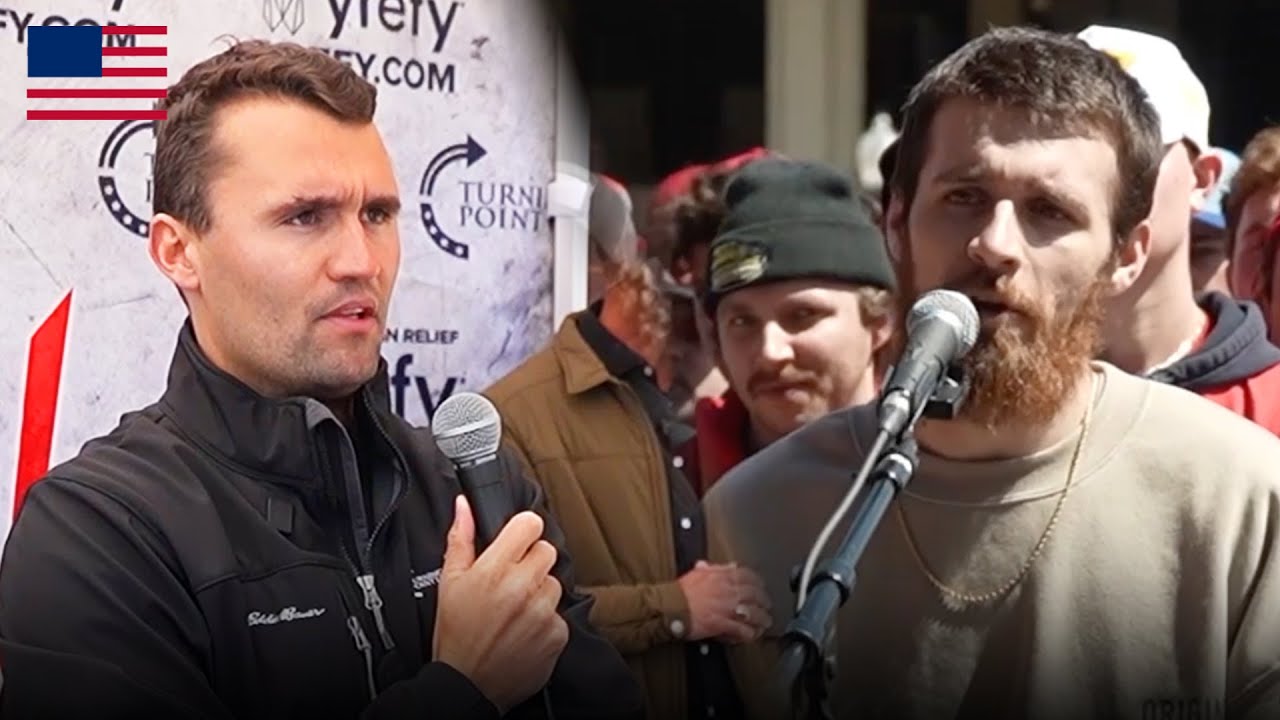
Charlie Kirk Confronts Rabbi on Socialized Education, School Choice, and Religious Brainwashing Claims
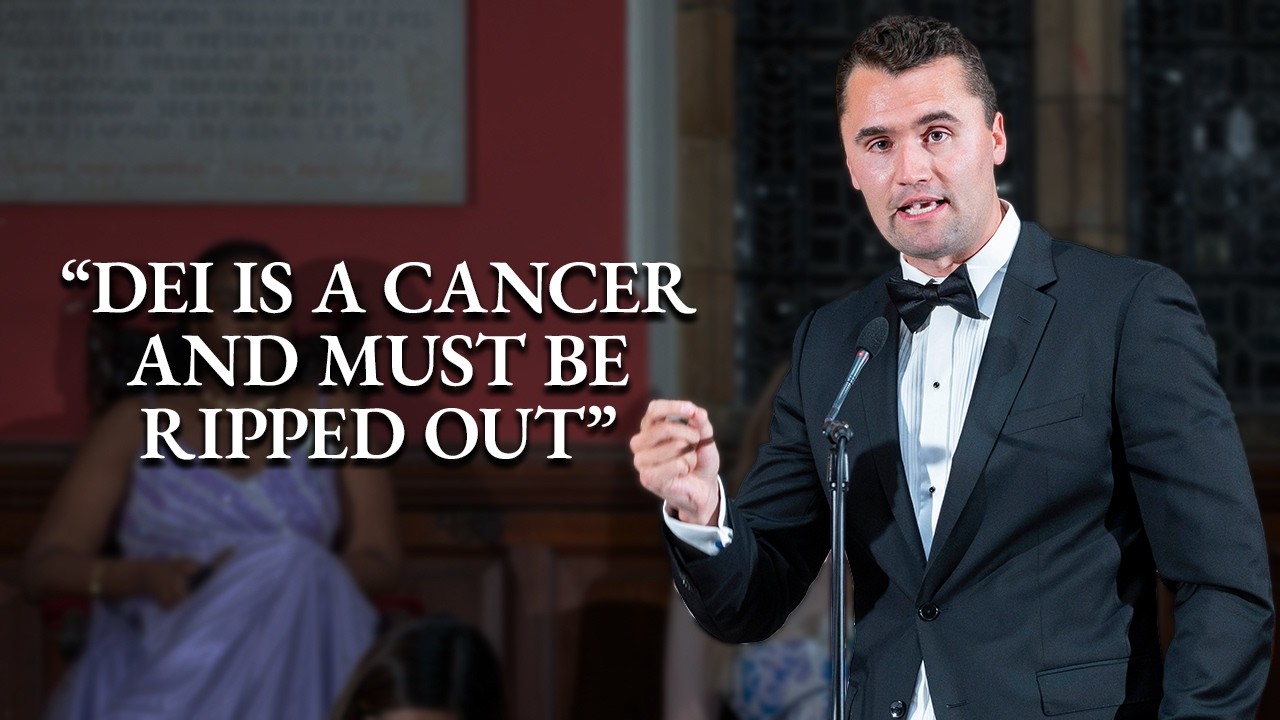
Charlie Kirk engages in a tense exchange with a rabbi who defends socialized education while simultaneously criticizing religious schools for 'brainwashing' students. When the rabbi dismisses Jewish day schools and parochial institutions, Kirk challenges the apparent contradiction, how can someone support universal education yet oppose alternative schooling models? The conversation escalates when the rabbi questions Kirk's understanding of Judaism, prompting Kirk to defend his knowledge of the Torah and his right to free speech as an American. Kirk ultimately reaffirms his unwavering support for Israel and the Jewish people despite their disagreement.
The conversation begins with a discussion about socialized education, with the rabbi arguing that everyone should receive an education regardless of their ability to pay. He characterizes this as a socialist concept that makes America great, emphasizing that every person in the United States should be educated regardless of their financial means. However, he acknowledges that this ideal is not being realized under the current educational model.
Religious Schools and Brainwashing Accusations
When asked whether Jewish day schools provide better education than public schools, the rabbi makes a striking claim: he doesn't believe in orthodoxy because "they brainwashed their kids," so he doesn't support Jewish day schools. Kirk presses further, asking about parochial and private schools more broadly. The rabbi maintains his position, insisting that these institutions are "brainwashing their kids."
Kirk identifies an apparent contradiction in the rabbi's stance—supporting universal education while condemning alternative educational models that many families choose for their children. This tension between supporting educational access and dismissing religious education becomes a focal point of their exchange.
A Heated Debate About Religious Authority
The conversation takes a sharp turn when the rabbi attempts to challenge Kirk's understanding of Judaism. The rabbi references Reform and Reconstructionist Judaism, movements that don't interpret the Torah literally. Kirk, identifying himself as an evangelical Christian, pushes back against the suggestion that he lacks knowledge about Judaism.
The rabbi then tells Kirk directly: "You don't know anything about Judaism." Kirk defends himself, asserting his right to speak freely as an American: "I have a right because it's America because I say whatever the damn I want."
Defending His Knowledge and Right to Speak
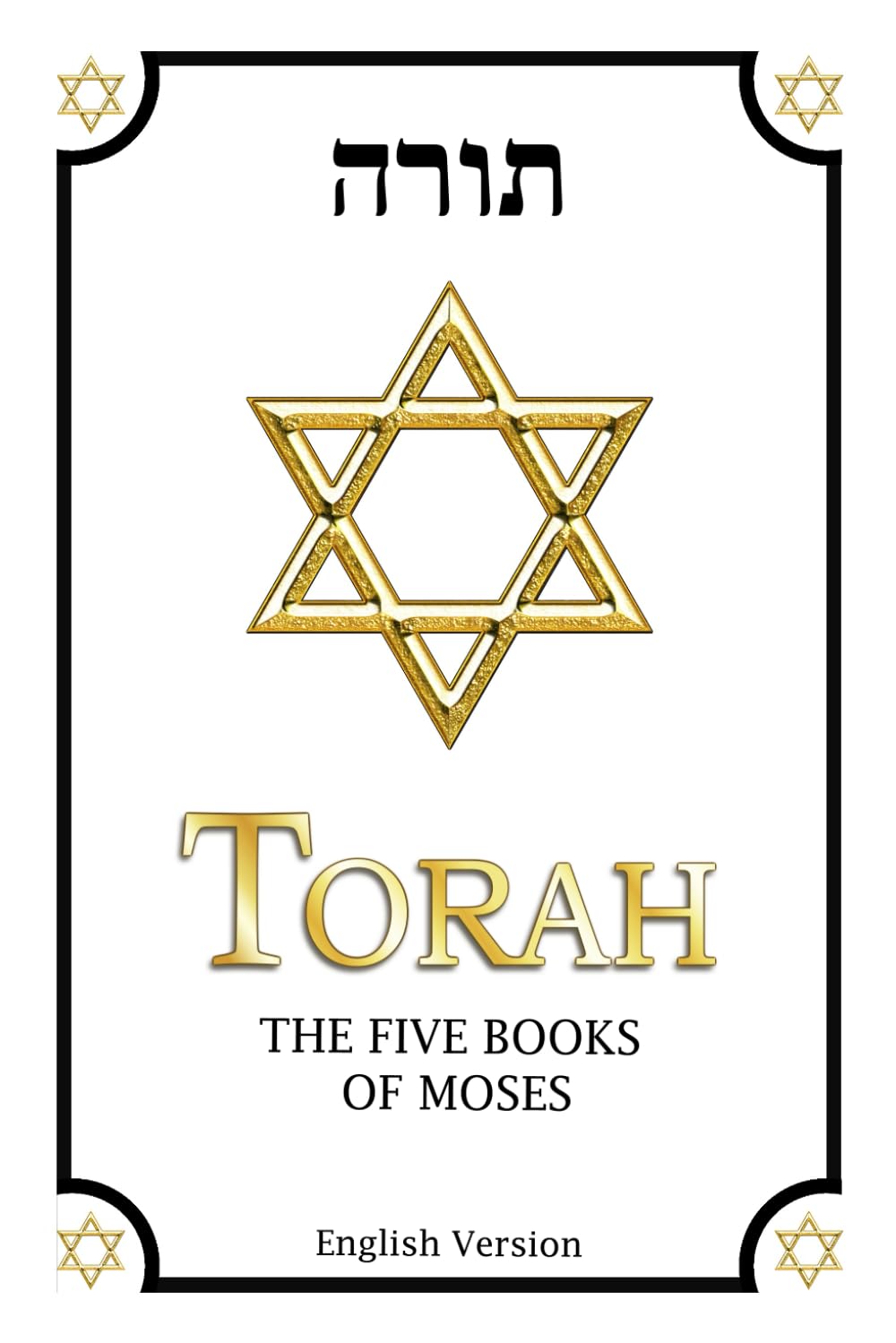
Kirk makes several pointed arguments in his defense. First, he challenges the notion that he reads a different book than the rabbi, noting that Genesis, Exodus, Leviticus, Numbers, and Deuteronomy appear in his Bible just as they do in Jewish scripture. He refuses to accept that he's unfamiliar with the foundational texts that both traditions share.
Second, Kirk takes issue with what he sees as the rabbi's attempt to silence him. He calls it "underneath the moral stature of a rabbi" to tell him that he doesn't have a right to criticize.
Historical Context and Christian-Jewish Relations
The rabbi responds by placing their exchange in historical context, noting that "Jewish people have had Christians tell Jews what their religion means for a long time." He asserts that Jews don't need Christians to explain what Judaism is about, touching on centuries of tension and misunderstanding between the two religious communities.
Reaffirming Support for Israel and the Jewish People
Despite their disagreement, Kirk concludes the exchange by making an emphatic declaration of support. He states unequivocally: "You will find no better or bigger defender of the state of Israel, the Jewish people than me. No one, period, bar none."
This final statement serves as Kirk's way of separating theological and political disagreement from his broader commitment to the Jewish people and their homeland. Even in the midst of a contentious debate about education, religious interpretation, and the boundaries of interfaith dialogue, Kirk seeks to establish that his support for Israel and Jewish communities remains unwavering.