Up Next

Charlie Kirk Defends Christian Support for Trump Against John Piper's Biblical Objections
10:39

Charlie Kirk Debates Kansas University Students on College as a Scam and Marxism Versus Fascism
42:32

Charlie Kirk Challenges Economics Student on Why College Fails to Teach Thomas Sowell and Milton Friedman
2:57
Charlie Kirk Debates 20 Woke College Students on Abortion, College Scams, and Gender Identity
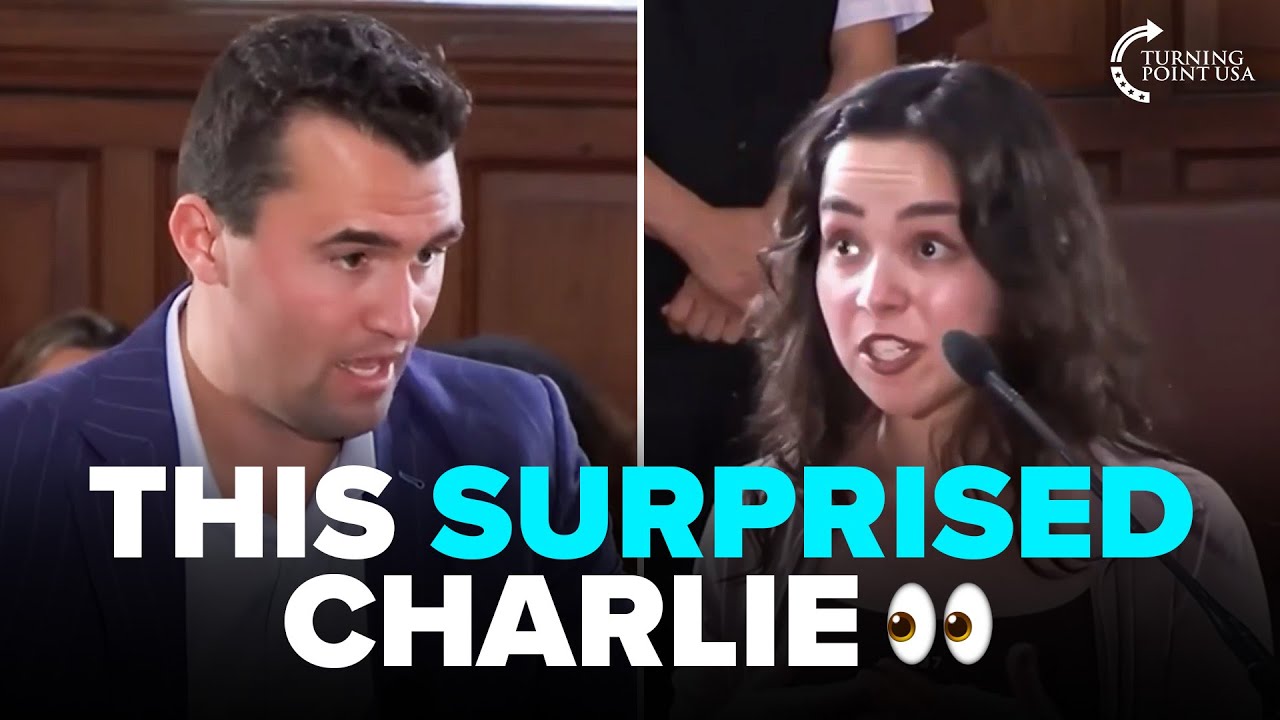
Charlie Kirk, founder of Turning Point USA, faces off against 20 college students in heated debates covering abortion, the value of higher education, and transgender identity. The discussions expose fundamental disagreements on when life begins, whether college serves students well, and how to define basic terms like 'woman' and 'man.' Kirk challenges students on circular reasoning, the cost of education, and biological definitions while students push back on religious arguments, social constructs, and edge cases. The exchanges reveal the deep philosophical divides shaping campus culture and American politics.
Opening Salvo: Abortion Is Murder
Charlie Kirk opens the debate with a direct claim: abortion is murder and should be illegal. He establishes definitions with the first student, Juliana, agreeing that abortion is the forcible ending of a being in utero, and murder is the intentional taking of life. When Juliana invokes the Bible's call not to judge, Kirk pushes back, asking whether society should prevent murder. The conversation shifts when she distinguishes between cells in utero and a living being.
Another student, Naia, challenges Kirk on viability, stating that a fetus becomes viable at 20 weeks. Kirk corrects this to 24-26 weeks, noting that 93% of abortions under Roe v. Wade occurred in the first 13 weeks. He presses her on moral worth: what makes a six-week baby with a heartbeat, DNA, and brain waves less valuable than an 88-year-old with dementia? Naia argues the fetus is not yet a baby but a parasite that cannot survive outside its host. Kirk counters by asking if a four-month-old baby requiring breast milk is also a parasite, highlighting the dependency argument's logical flaws.
Defining Life and Moral Worth
The debate intensifies when a student tries to refine the definition of murder, arguing that killing in self-defense isn't murder. Kirk agrees but anticipates the abortion-as-self-defense argument. The student then asks about IUDs, which can prevent implantation of a conceived zygote, effectively killing it. Kirk acknowledges that preventing implantation after fertilization is an act of killing, but distinguishes between women who unknowingly have IUDs and abortionists who deliberately perform procedures. He argues that abortionists, not women, should face legal consequences for third-trimester abortions.
When another student, Deen, asks about cases where the mother's life is in danger, Kirk acknowledges this rare exception, though he notes a growing consensus among pro-life advocates that abortion is never medically necessary. He suggests cesarean sections as an alternative. The conversation becomes heated when a student presents a graphic hypothetical about a 10-year-old rape victim. Kirk maintains that the baby should be delivered, arguing that human rights don't depend on how one was conceived. He reframes the scenario: rather than compounding evil with murder, society should respond with good.
College as a Scam
Kirk shifts to his second claim: college is a scam. He defines a scam as an institution where the majority of people don't get their money's or time's worth. A student named Maddox argues that college serves the betterment of one's soul and society, preparing students for life and citizenship. Kirk agrees this is what college should be but questions whether it delivers. He points out that majors like gender studies teach that men can give birth—a claim Maddox tentatively affirms, saying people assigned male at birth might be able to. Kirk seizes on this as evidence of college's failure.
When another student defends gender studies as essential for society, Kirk challenges her on basic economics, asking about Milton Friedman, Thomas Sowell, and Ludwig von Mises. She can't name them, reinforcing his point about educational quality. Another student admits some classes feel like a waste of time, which Kirk argues is scammy, especially when students go into debt. He notes that the majority of college graduates end up in jobs that don't require their degrees, and 11 million job openings in the U.S. don't require college education at all.
The Cost and Value Proposition
Kirk emphasizes that the national graduation rate is 59%, meaning many students pay for college but never finish. He argues that society and government push students into college through subsidized loans and cultural expectations, especially in upper-middle-class homes. Students counter that individuals make their own choices, but Kirk points out the enormous pressure and financial support from parents who co-sign loans and subsidize lifestyles.
One student, Al, argues that 86% of people with bachelor's degrees earn more than those with only high school diplomas. Kirk disputes this, explaining that the statistic is skewed by the top 10% of earners—doctors, lawyers, and engineers. The vast majority of students study communications, social sciences, or humanities, which don't command higher salaries. Meanwhile, apprenticeships for plumbers, welders, and electricians offer $80,000 to $100,000 starting salaries without college debt.
Challenging Gender Identity
Kirk's third claim is that trans women are not women. He defines a woman as an adult female with XX chromosomes. A student named Sam counters that a woman is someone who identifies as a woman. Kirk rejects this as circular reasoning, comparing it to saying a table is something that identifies as a table. Sam insists that self-identification is sufficient, but Kirk presses for an objective definition.
Juliana argues that women are more than their chromosomes, pointing to intersex individuals as evidence that sex isn't binary. Kirk clarifies that intersex conditions are mutations of the binary, not separate categories. Juliana also says her trans friend is "more of a woman" than she is, prompting Kirk to ask what makes someone more or less of a woman. She struggles to articulate a clear definition, eventually shifting to social norms and personal qualities rather than biology.
Debating Definitions of Gender and Sex
Parker enters the debate, defining a woman as someone who desires to align with social and cultural norms associated with the female sex. Kirk asks him to define a man, which Parker describes using XY chromosomes. Kirk then asks whether God the Father has XY chromosomes, pointing out that God is referred to as "he" and "Father" without having biological sex. Parker admits God doesn't have chromosomes but maintains that Christ incarnated as a man. Kirk argues this exposes the incoherence of Parker's definition.
Another student, Mason, accuses Kirk of plagiarizing Matt Walsh. Kirk brushes this aside and engages on the substance. Mason argues that sex is bimodal, not binary, because intersex individuals exist along a spectrum. Kirk counters that intersex conditions still fall closer to one sex or the other based on dominant characteristics. Mason shifts to gender as a social construct, arguing that gender is performative and based on social norms, not biology.
The Sports Argument
Mason uses sports as an example, arguing that rules are arbitrary and created by society. Kirk agrees that sports categories are created but points out they were designed around biological differences—males weren't wrestling women in ancient Greece. Mason argues that we can change the rules to include trans individuals, but Kirk insists that body composition, bone density, and testosterone levels create unfair advantages. The debate ends without resolution, illustrating the fundamental disagreement over whether gender identity or biological sex should determine social categories.
Video Transcript
do you think men can give birth I think that uh yes or no question I think that a person who is assigned male at Birth I don't think they a signed male at Birth so people are not male at Birth I think that a person see your evidence that college is a scam my friend so what do you say in some cases women without your these are murderers of course not they're not murderers we the difference between an IUD killing a conceived zygote and like a mother going to Planned Parenthood and killing the petus in her room that was actually the best point somebody made it's not about the the cells it's not about no no no I'm speaking no I'm speaking no I'm speaking no I'm speaking no I'm speaking no I'm speaking no I'm speaking hello everyone I am Charlie Kirk founder of Turning Point USA and uh I am surrounded by 20 woke college kids my first prompt is abortion is murder and should be [Music] illegal all right can I maybe go okay hello what's your name Juliana nice to meet you nice to meet you can we get our terms right first yeah okay abortion is the forcible ending of the viability of a being in utero otherwise known as a fetus do we agree that's what abortion is okay yeah okay great and then murder is the intentional taking of Life different than killing or sudden death so murder would be the intent with intent taking another life do we agree with that okay okay and then we agree that murder in general in society should be illegal yeah okay great so yeah no I do want to preface that I'm a Catholic so I think one really important thing that the Bible says is to not judge and just going back to the topic um I think there's a big difference uh between you know cells in utero than a living breathing existing being and while um I do believe it's murder and that's just my personal belief right I don't believe in telling people what to do with their bodies that's not up to me and it's not up to us as well as Christians to judge should we prevent murder in society for sure yeah I should be illegal but I think that it's really different right because you know these people aren't sorry nice to meet you okay nice to [Music] meet okay what's your name NAA nice to meet you okay can I just ask um at how many weeks do you think that a fetus is V viable well viability and moral worth are two different things no but I'm asking you at how many weeks do you 20 weeks a baby can survive outside of utero so it's actually 24 to 26 weeks 20 the youngest ever in a niku unit actually happened in San Diego not far from here and Sur survived at 20 weeks okay so under roie Wade 93% of abortions happened in the first 13 weeks of pregnancy that's 93% of the abortions happened well before a fetus is technically viable as a form of let's go into VI ability so what is it about let's say a six week baby that has a heartbeat its own DNA fingerprint brain waves that is less moral worth than an 88-year-old right now with dementia in a home down the street that person requires assistance requires help what why is it that the six week baby is of less moral worth well first of all it's not a baby it's a fetus what does fetus mean a fetus is in utero what does fetus mean in Latin what the I'm sorry is this a it means little human being his smile is very creepy okay um smiling is creepy no your smile specifically but let's go back to we're losing track here no but but is what species is the fetus the fetus is not a species yet it's technically classified as a parasite until it is viable now I want to talk I can't really get past that are you saying you saying a baby is a disease or a tumor a parasite is not a disease and a tumor those are not the same thing a parasite is defined as something that cannot survive outside its host a baby before it is viable cannot survive outside of a woman's womb got it so let's let's extrapolate that is not a living organism are are old people with Alzheimer's and Dementia that are being assisted every day are they parasites no they're not parasites they're human beings who are on the brink of death got it so my going my four-month-old that requires mom's breast milk and requires daily changes and feedings cannot survive without its own is my four-month-old the parasite your baby can breathe on its own your baby can drink water from its mouth to its stomach but but it canot your bab can eat can it hunt can it gather can it reason but that's not what qualifies something as being a living organism being a living organism simply means can you survive outside of a womb outside of your host got it so I just want to make sure I'm clear why does that then equate to moral viability it equates to Scientific viability why under what standard because it is not alive and you are advocating for the rights of something that is not technically a life got it so what is is something while sacrificing the needs of the human woman who is alive got it so but a a a mom can survive yes without the baby in her uhuh right yes the baby cannot survive without the mom yes but a mom cannot survive without her lungs so it's not her body it's in her body it's not her DNA so it's not her choice so it's a it actually is directly her DNA it's it is 100% it's 50% of her DNA after DNA he's going to win I'm telling you this this this this could take a while okay first of all do we have our terms correct we agree actually no so first of all I'd like to refine our terms I have two points to bring up after that though so you Define murder is like intentionally like killing a human being I think that's a very poor way to Define murder because if someone were to like break into my home and point a gun at the heads of me and everybody I love and I intentionally kill them to prevent them from un from killing my family I don't think I murdered them right so I would Define murder as the unjustified termination of a human life you're making a good point let me further clarify then so self-defense is very warranted exactly right but I I can see where you're going to go with how that has to go with abortion but we can go down that journey in a second yeah so I mean like I I kind of do want to give you my argument and so far as why I'm pro-choice why I think it's Justified but first I think that you know your position is quite absurd right because you're saying that it is murder to kill a human being right at any point in development especially when it's in the mother's wom my question to you would be well does this make women with iuds murderers because it is the case that in some scenarios an IUD will allow for conception to occur meaning there's a unique human life there but it will prevent its implantation intentionally killing it well no preventing implantation is not necessarily the same thing as terminating a fertilized egg for example if you take Plan B for again it's not it's not the same thing preventing the production of proest progesterone is not the same thing as terminating a fully a a being that has been fertilized you do not know for a fact that the egg has been fertilized you do not know that when even IUD okay yeah so preventing a fertilization or implantation to the uter lining is killing a conceived zygote so what happens a sperm goes into the egg right the egg becomes fertilized it's a conceived zygote in some cases it will prevent the implantation of the conceived zygote killing the conceived zygote in some cases correct so what do you say in some cases women are murderers of course not they're not murders we do not know for a case that's that's like saying that every so what's the difference between an IUD killing a conceived zygo like a mother going to plann Parenthood and killing the fetus in her room well so you asking you're asking two separate things if they if they knew for certain to be more clear that I have a fertilized egg and I'm going to take a drug to prevent that fertilized egg from attaching to their uterin wall then yes that is an act of killing or murder of course okay so do you think all murderers should go to jail do I think all murderers should go to jail I mean on the third on third degree murder however no I don't think women that got abortions or had iuds should go to jail because I think that they have been deceived by mass culture M Mass propaganda secondly the people who should go to jail are the abortionists who are the ones that have been putting the abortion pill the ones that have been doing procedures the ones that have been going into the third trimester and breaking babies backs and inserting them with syringes while the babies are crying and suffocating being born alive and then being dead on the operating table that is who should go to jail oh that was actually the best point somebody made we'll have to we'll have to talk about [Music] it okay whenever I'm talking about this discussion um I always go to the question of what about in The Case of the mother when her life is in danger because I'm a big believer I don't I don't know I'm still iffy on if I think it's a or if it's murder or not but even so I mean I don't want to say murder is Justified guys wait let me just get this one point and then you can vote me out give me one second um say the mother gets pregnant and she knows that if she gives birth she's going to die she has some kind of Health complication then what do you do in section I don't know what that means to C-section they an ins guys wait hold on give me one second go right they go right below the belly button and they deliver the baby and therefore she doesn't have to give birth it's technically birth but it's much safer so that's that's actually safer than an abortion procedure sorry sorry [Music] Lily hello how are you hi what's your name Deen nice to meet nice to meet you um I would say with abortion I think uh it's it's very complicated but I think the issue that I have primarily with your stance of being pro-life that there's no Nuance um there's women who are being forced to travel hundreds of miles to access abortion care even in cases of rape in certain States that're they're not giving any sort of um allowance for that and I think um you know a lot of people who are pro-life they they say that they're pro-life but I feel like they're really Pro birth because in you know with Firearms uh the United States has some of the highest firearm deaths um out of oecd Nations right and we can acknowledge that that's for children who are actually living in um so I feel like abortion while yeah it is I can I can definitely see your point I I just think that it should be allowed in some circum yeah great um I'm happy to get into the gun violence stuff later but I want to really stay focused on abortion right you can see you can say you see my point can you see the world also where since we know it's a human life that it should be illegal since we don't allow murder in our society well that's that's that's where I have an issue because abortion is not being done willy-nilly it's it's like the life of the mother's always how many abortions do you think we have every day in America guess I'm not sure I'm not sure guess I I'm I'm honestly not sure maybe I don't know a th000 4,000 a day so it is kind of willy-nilly we have 1.6 [Music] sorry hello hi um I just want to clarify the thing that you're aiming for is less abortion right that would be you would want or at least eventually it's also a protection of those that can't protect themselves but yes and that's why once we after the reversal of Row versus Wade we saw abortions go down dramatically in Texas Alabama Mississippi we saw thousands of babies that are now alive and well that are able to have amazing lives thanks to the reversal of Row versus weight uh I don't think a lot of that is true um it is but it's not true because when you make abortion illegal it doesn't actually decrease the amount of ab a nice talking point in Texas the numbers show differently birth has gone up yeah legal goes down but illegal abortions still happen abortions still happen outside of whatever data you're show that's not true but let's just say so 40% so well if you if you want to well first of all if you count the abortion pill you're right but that's a separate thing than a chemic chemical abortion and surgical abortion different things and I'm not debating I'm not I'm not debating you I'm debating her so if you want to do the flags and come back in try and be faster next time so let me ask you this so the question is we should try to limit unjust suffering of human beings right sure okay that's my position is that there's unjust suffering of anywhere between 1.4 to 1.6 million abortions a year of human beings that are being massacred in the womb and so that's not a woman's rights issue that's not a men's rights issue that's just a human rights issue okay the best way to decrease abortions happening is proper sex education limiting abortion and making abortion illegal does not actually decrease the amount of abortions that happen so what is your evidence of that what is my evidence of that because we have increased sex education last 30 years we've had no our sex education is so bad in America well by bad what do you mean by that we have we have more access to birth control for young kids we have more kids that are learning you birth control at a younger age we have more of that in our public school system and we've seen all the trends actually go in a negative Direction so in fact we see that the more sex exucation there is the the more disturbing those Trends are so you say that let me ask just one more thing you say that if we make abortion illegal people will still do it should we then just make gang violence legal because no I'm saying if you actually wanted to decrease the amount of abortions that happen you wouldn't be advocating for a like to make abortion illegal you'd be advocating for Alles that logic apply to stealing looting kidnapping ARS sin and murder well actually it does because those are results of different societal issues that you should be educating yourself on rather than making ital front can we should we make kidnapping arson burgly murder legal because they're symptoms of something else we should be helping Society heal from those things got answer the question we want less of those things so we just make them legal will get less looting you know actually I'm going to let someone else thank you very much [Music] hi Parker nice to meet you yes nice to meet you Charlie big Tick Tock guy here so like uh pedophiles people who were married to children in the past and normalized in that Society should they go to prison should pedophiles like if you could go back in time would you put those pedophiles in prison that was that married those children because it was normalized they were deceived into thinking it's okay would you put them in prison you had to slow down file should get the death penalty no so you'd go back in the past you give them the death penalty even though they were deceived into thinking it was okay but you said people who get abortions who are women shouldn't go to pris but it's not currently illegal okay regardless at that time at that time it wasn't no I would not go back and retroactively enforce laws where things were currently not illegal you wouldn't put pedophiles in prison in the past hold on a second when was it ille when was it legal in America well child marriage was legal in America throughout the early 1900s and especially throughout most of society for thousands of years especially in the Old Testament and in the Bible hold well hold on hold on a second so where where where is the levitical law that allows you to marry a child oh yeah can you name the verse so well I can't name the first but the particular conditions that are enlisted in the Bible are that you have to beat physical maturity and emotional maturity which is extremely vague and throughout Society has been seen there is not a verse but let's kind of go back back under your VI let's go back to well generally agreed upon it's 18 years old but let me ask you but you but you because you you don't go based on what's General you go based on the b i I say 18 years old but let me ask you a question where's when when does Life Begin conception like conception great so good so should we protect our life at conception I care about Senti in life not not so when do brain waves start you think brain dead people should be able to pull the plug on like family should be able to pull the plug on individual got to answer the question when do brain when do brain waves when do brain waves start uh you can see brain waves around 6 to 8 weeks which in brain dead individual there are brain waves as well so the brain waves necessary to produce a subjective experience are met until around 2 can you see it from my perspective that at six to eight weeks those brain waves will actually increase not decrease if allowed the process of development to continue did you know those same EEG scans exist in brain dead people that you don't think are the difference with the brain dead people is that the likelihood of those brain waves actually increasing is very low at 6 to eight weeks when by 15 weeks they can hear the it's irreversible sensation that's what brain death is I know that it's not coma but you're you're you're doing a red herring go back to it's not what's a red herring six a red herring is where you you avoid the topic and you say something that is uh adjacent or symmetrical to what I'm saying but not actually I'm saying me that's not that's not a red herring a six to8 week baby if they're allowed to continue to develop what ends up happening uh at a certain point it will become a sentient being in the future the same way if I keep engaging with my girlfriend there'll be a baby in the future yet I don't care about unless you're infertile which we don't know but so let's let's see let's see the the process of development right why answer my question why do you have the ability or the right should those child P3 go to prison the process of should the pedophiles Go to Prison from 1904 how many pedophiles are alive from 1904 they're not alive right I meant like if you can go back in the past hypothetically speaking and you could put them in prison would you put them in prison I would have killed them myself if I was aive back okay so then so then you don't apply it based upon what people are deceived to believe you apply based on what you consider think should whys CL constructive debate if you keep on talking over me I was finishing my statement you were talking over me let me ask you a very simple question do you think it would be a good thing if we had less abortions in America um it depends on the context like are the abortions prior to sentience yes all abortions yeah no it would not be necessarily better unless it is the case of the people didn't want the abortions and it would be negatively impactful to their health medically speaking L abortion uh after sentience yes okay so you you believe in an 8we abortion ban yeah no no no I don't I don't sorry I believe in an abortion ban after 18 through 26 weeks okay that's that's a more reasonable position I have to give you credit for that it's similar to Trump's 15 weeks yeah so why why do you think that most people don't share your view on that um well people just don't know really know what sentience is there's not a lot of conversation about abortion and these conversations are very difficult like they're conceptually hard to go through and I understand why a lot of people don't understand their positions on it I think people cutting off I thought thought we weren people I was actually complimenting [Music] I how are you nice to see you um so I just have one question there's like in any case you don't think there's any case where abortion should be legal there's a very very rare couple cases okay so you do think that a couple cases it is legal if if if cesarian section is not going to save the mother's life and the mother's life is actually at risk which is debated amongst growing numbers of OBGYNs okay that is the only case where abortion should be should be allowed but people say it is a growing consensus in the pro-life world that abortion is never medically necessary okay so if you had a daughter and she was 10 and she got raped and she was going to give birth and she no wait oh and she was going to give birth and she was going to live would you want her to go through that and carry her that's that's awfully graphic answer it's no but it's a real life scenario that happens to many people the answer is yes the baby would be delivered okay great so I that's insane um but let me tell you why no hold on let me ask you a question there's two ultrasounds I have one is a baby conceived in one is a baby conceived by a loving couple which one is which which which person here which person here was conceived by tell me which one was conceived by you don't know exactly cuz it's all human rights and it's all human beings matter it's but it's about your daughter who's passed to give birth to it and it's going to be tortured by that for the rest of her life that's going to take away every freedom she's ever going to have that's going to ruin her life she's going to grow up and going vitim crime the the point is how you were conceived is irrelevant to what human rights you get when hold on one second if a person conceiv the walks down the side of the street it's not like they don't get First Amendment rights or second amendment rights or the worst thing to do to that do the daughter is to then say hey we're going to go murder the being in inside of you they wouldn't even know like listen they they wouldn't know listen listen listen listen but wouldn't it wouldn't a better story to say something evil happened and we do something good in the face of evil instead of saying we're going to do evil and then murder the being because we're going to we're going to we're going to Pander to the evil no what makes what makes the West great is that we do good after evil not evil after evil it's not about the being and the the cells it's not about no no no I'm speaking no I'm speaking no I'm speaking I'm speaking no I'm speaking no I'm speaking no I'm speaking no I'm speaking no I'm speaking thank you so it's not I'm not talking about that I'm talking about the person no I'm talking about the person who is dealing with the pregnancy I am not talking about the cells I don't I don't care listen the fetus the whatever I don't care about that right now until it is formed there is if there is a 5-year-old child who is pregnant and the baby is two weeks in can't get pregnant actually they have and they have given birthy old have given pregnant correct there is one recorded case of a 5-year-old birth is that is that is that common yes not it's common for 5-year-old get sometimes and it's they get pregnant I think they should be able to have medical access to something that could save not only just their life but like their Lively Hood how many how many I'm curious how many I hope your daughter lives a very happy life and gets away from you okay so that is really nasty and so her her belief system just so we're clear is that the time's up yeah no I got it it's fine I mean it's insanely nasty and we'll talk again my next claim is that college is a scam hello hello hello what's your name I'm Maddox how are you doing good so college is a scam well let's define our terms College being traditional for your college of course University not Community College or Technical College course a scam if we can agree on a definition is where a majority of people who will go through the institution or business uh they're not getting their money's worth their time's worth um and they're being deceived when they sign up so do we agree on those terms yeah perfect okay well what would further definitions what do you think is the purpose of going to college the purpose of college should be a traditional liberal arts education the pursuit of what is good true and beautiful okay that's not what it is uh it should be the betterment of yourself and your soul uh nurturing your character uh and becoming a better citizen understanding the deeper things in life at the very least though it should be preparing one for the job market do you think college does those things I think it does uh but I would add on to your point that I think not only is it for the betterment of your s but it's the for the betterment of society we need historians we need certain majors that may not make as much money I think those are for the betterment of society would you agree that there's some Majors that may not make money but are still essential to it depends do you think that getting a degree in gender studies is good for society uh I would agree yeah why why would studying gender not be good for study well learning that men can give birth is not exactly a good use of time is it is that what they're teaching in college right now colleges yeah according to the Center for Disease Control they no longer say women can give birth they say birthing person okay do you think men can give birth do I think men can give birth I think that uh yes or no question I think that a person who is assigned male at Birth I don't think they assign mail at Birth so people are not male at Birth I think that a person see you're evidence that college is a scam my friend college is a scam you're not you're lacking in a lot of here we can continue right now so gender studies do you think that studying gender is uh uh not Essential should we not deepen our first of all I don't think gender we're going to get there later I don't think gender exists I think that there are two Sexes infinite personalities and genders however let's get back to the core contention can I ask my question again real quick well I want to get back to my core contention a scam so the majority of kids that go to college if they end up getting a job at all they end up getting a job that does not require a college degree do you think that certain jobs that may not associate with a direct major can incorporate skills that you learn from a major I think I'm personally I'm an econ major and depending on what job I do in the future I can still use the skills earned from so tell me about Milton fredman tell me about Milton Freedman he is an economist from how about Thomas Soul Thomas Soul lud vanus lud well I will say that first how about I'd love to see you answer the gender studies question we will get there later that's that's what psychedelics are for uh who's [Music] next um well I think it's difficult to think about just one major thinking about just gender studies like sure like not everyone should be a gender Studies major we need doctors we need lawyers we need everything however why does it matter if 10 people want to be a gender Studies major and it matters to them like not everyone can be a lawyer not everyone can be a doctor there needs to be some people and you know what yeah it sucks that some people do go to college and get a degree and then they end up not in a Workforce for that but I don't think that has to do with like college was a scam it's more like maybe that just wasn't the path for them or that life choice was just too hard to get for them but some people are able to go to college and get a degree and use it and that is super important because imagine if no doctors went to college they just like I think I can do it well of course doctors and lawyers need credentialing right but well less than 5% of all people that go to college end up studying medicine or in legal the vast majority go into soft social sciences Communications with the humanities so you're in college or have been is that correct yeah are you forced to take classes that you think are a waste of time yeah I'm for you know what on so they're taking your money and they're forcing you that they're a waste of time that's kind of scammy right oh I think that some classes o some so you have to probably go in debt right depends okay are you going you going are you going into debt no okay well that's good I picked a school that actually offered me a scholarship someone else is paying for your college oh I I don't know depends on me I mean that school that wanted to give me an opportunity but that's not what we're talking about we're talking about talking about the scam element right so you said that there are some classes that if students had to go into debt or had to pay for would not be a good use of their time so it's not representing students well well do you think like high school is scam then cuz I had to pay for high school but I didn't I'm not going to use AP US History in my psychology degree ever well I think AP US History is actually a really good use of time knowing about your country and your history and well but I'm not going to use that in my career that's what we're talking about in the career path for college let's go back to what I said right we said traditional college right fouryear college and what a scam is we're a majority a majority of the people that will go through the Enterprise the business or the institution are not getting their time Worth or their money worth so therefore I go back to my core contention which is a majority of kids that exit College will not use their degree at all when they go to find a job but if you ask them do you think college was a scam I don't think majority of them are going to say yes some of them will some of them are going to well not everyone who's being scammed actively knows they're being scammed people still buy erectile dysfunction drugs off the internet and they get scammed that's their own personal choice of course people have choices to be scammed I'm not saying they don't have a choice I'm making an observation analysis of the institution for example flying Spirit Airlines kind of a scam should be shut down there is some yeah agree there are some things in life we have to take a step back and like oh the consumer is not being well served you want to shut down a bunch of majors in colleges that you think are scams no I never said that so what would your proposal be to fix the scam of college there is no proposal I'm simply the contention is college is a scam so then what's the point of that statement to get you to agree but like what would that do like what do you want to fix in college that's going to help in not be a scam let's we can get to step interval two as long as you can agree that college is a scam no cuz not for everyone for me I'm using a degree that's going to help me help people make better what are you studying psychology and criminal justice okay so and it's being paid for by somebody else which is which is fine that's good so psychology and criminal justice um do you do you absolutely need to get a degree to be able to get you do yeah I really I mean like I could I guess study it all on my own but it's just like makes more sense to go and have all these experience I'm getting like wonderful experiences internships all through my college that's helping no it's just that this is a paway that's really helping me so you know there's 11 million jobs open in the country right now that don't require a college degree okay then the people who want those jobs can go get those jobs I'm not one of those push too many kids into college no okay so the national graduation rate is 59% if I asked the room everyone would agree that they know some people that went to college that did not graduate yeah right so we're probably sending too many kids into this institution but if they might have been able to do it then like why is it not worth it to try and to push yourself to get a better education and go further that's a bad thing right but some people are able to work through that and it's like an opportunity thing when an institution is multi-trillion dollars in scale involves 23 million of our citizens every four years and is not actually better in the country for example if College was so great we would see incomes going up for Gen Z and Millennials we'd see more people able to own homes kids wouldn't I'm telling you this is so ableist what you're doing by the way I'm telling you right hello what's your name Al nice to meet you okay so let me start by saying well first of all you said we're sending too many kids to college who's sending them who's forcing them guidance counselors parents Community are they forcing them are they signing them up themselves forcing I never said forcing but you can have nudging and forcing are two different things we also subsidize College through the federal government so you guys get subsidized interest rates scholarships and Loans so the taxpayer is nudging students and gently and sometimes forcely pushing them into college and you would agree it is an expectation if you grow up in a upper middle class home to go to college you would agree with that so there's a societal cultural push I didn't grow up in an upper middle class so okay well but do you would you see it from their would you see how that's that argument is correct I guess there might be a pressure but no one's sending them you're sending yourself well of course well we're all over the age of 18 right when you're in college so you're sending yourself but that's besides let's be honest I mean for that's a silly argument yes they're technically send themselves I was just at Arizona State University moving everyone had their parents there they were co-signing on loans they were there helping pay for stuff parents the ones that are still checking in they're the ones that largely subsidize their lifestyle hey Mom can you vend me Veno me 3,000 bucks so that I can go out an extra night yes of course when you're 18 years old you're the one signing on the dotted line but there's enormous pressure and nudging and cultural expectation that students go to college right okay I think the problem here is that it's it's up to the person you're you're not you can't just go to college and expect to come out with a degree you have to put the work in you have to put the work in you have to make connections and some people might think college is just four years of partying and drinking and making friends whatever but you have to actually put the work in and if you put the work in you make connections then you can find a job right outside of college well no not not doubting that you can't find a job it's just that 52% of them get a job that doesn't require them to get the degree but most jobs offer intent to pay if you have a degree and 86% 86% of people with a degree get paid more then people with just a high school diploma that's only if you count the ones at the top 10% of in income iners so not if you count Humanities not if you count um people that study in the uh social sciences if you count medicine or you count law that's absolutely correct however the vast majority of kids that go to college are not studying medicine law engineering business finance they're studying Communications social scien or Humanities which are on the lower income ladder so as I mentioned we have 11 million job openings in this country right now that do not require a college degree I'm guessing in this room that within four to five years you guys would killed to be able to earn 80,000 $80 to $100,000 a year yes do you know that in States across the country and in cities they're offering apprenticeships become plumbers and welders electricians that doesn't require for your college degree entrance salary $80,000 a year but again 86% of people with a bachelor's degree earn more than people with a high school dipla no 86% of all people with a bachelor's degree if you take out the top 10% it's actually lower than those that don't go to college so the reason that number that average goes up is because the the doctors and the engineers and the lawyers are the ones that bring that average so significantly up but let me ask you a question that do you think that there's any waste at all in the current College model do I think there's any waste I don't think we need all of it okay good what part um well you have to start with your core classes and it's like high school you're taking the same classes in do you think like for example um do you think that it's okay nice to meet you [Music] wow I'm Emily nice to meet you Emily thank you um earlier said that about 5% of college students are going into fields of like medicine law and Engineering was it let let me clarify yes as far as they're going to be able to get postgraduate degrees so they will go all the way up and get their jurist master or they will end up passing the bar or becoming a doctor right so it's easy to say doctors lawyers but Health Care Professionals if you count nurses or people that work in healthcare that number is closer to 20 25% okay so 5% um who has a doctor can you like raise your hand if you have a doctor like a medical doctor a doctor yeah like a medical doctor yeah you do okay um 5% is still a lot of people right of course but that means 95% might not need to exist at the institution I don't think that's the takeaway just because 5% which is still millions of Americans all across board but if you were to say hey we only have medical schools only have legal we can get rid of gender studies get rid of so what's what's the contention well gender studies is actually if you look on like the pre-law track gender studies is a pre law track if you're going to be a lawyer you have to study gender studies and other social cult point that college is a scam why would why would a lawyer need to study gender studies should a lawyer know the law it's a social science the law you think the law isn't inadvertently affected by social cultural and gender Norms of course it is but shouldn't they first know the Bill of Rights the Constitution The Federalist Papers we learned that in high school okay so what is marber versus Madison I haven't been in high school for a really long time I'm not trying to be a lawyer Lear yeah so I mean high schools are brown what was Brown versus the Board of Education that's for desegregating school okay good yeah which project 2025 wants to like defund the Department of Education who wrote the Constitution founding fathers 1778 I don't know it wasn't 17 at 78 I don't know yeah you don't know no okay well this is the point is that you don't learn it in high school you don't even learn it in undergraduate and our our law school is not learning it so maybe well I'm not in law school no the point is that you were saying they already learned it and they don't I don't want this to be a pop quiz or trivia I didn't go to college and I'm asking you very basic Civic questions and you're paying to go to college and you can't answer them that's so fair but I think thank you [Music] sorry I have a question is church a scam no because church is honoring the Divine and the internal and the good and the true and the Beautiful is college but it but it deceives people because you you give a promise of everlasting life which you don't actually get because Christianity is contradictory logically speaking do you want to get into a theological debate or are we going to talk about college because I complet completely disagree Jesus Christ is my Lord and Savior and we will have eternal life okay so how if there is a perfect being that created the world how could we exist in an imperfect world I'm happy to have this discussion can we go back to college though because do you think because that's a little bit of a red herring and a little bit of a rabbit hole tell me what that has to do with college being a scam well I do think college can be a scam for certain people I don't think it's a scam for everyone for people like me college was very beneficial for me for sure I'm asking you based upon your definition of a scam do you consider the Christian Church a scam of course not it's giving people life and treat teaches them goodness Christianity is false then that's a deception okay but you think it's false I don't we can agree to disagree also I'm not agreeing to disagree on that but we're not talking about we're not talking about the church we're talking about college right so again also people are not paying to go to church are they but it's a redu absurdum you know that is ask the question what's a redu out ofum uh that's a Latin term that means reducing down to the lowest common belief correct yeah so I'm taking am I right I didn't go to college I knew that I'm taking your particular position let let me ask you a question without you interrupting me do you pay to go to church uh no I don't some people forced to pay based upon their particular denomination in today do you pay to go to church depending on the church no no you don't do you have to go to debt and to go to church uh in some circumstances people do because they have to give up 10% of their income to be able to do that which people can't circumstance well they're LDS you understand that a lot of LDS Churches specifically require 10% they don't require it and you're talk do in plenty of places well you're asking Mainline Christian isn't their stigmatization if you don't do that okay you're good at interrupting not good at answering well you haven't answered any of my questions yet I did say no church is not a scam church is the bride of Christ college is a scam and college is people are going into debt they're paying a lot of money but I want to ask you a question you said it's a scam for some people who is it a scam for yeah for people who specifically aren't ever going to use it never use any of the knowledge that they from it well you say 52% I don't think you can grant qualify 52% of people don't do that for example for example my job that's not going to be recommended like as like an economics degree and most economics Majors AR going to go into Tik Tok debating online but I use the information that I learned in college in like on in my job on a daily basis so I still qualities that are then used in my job later on what percentage of kids that go to college are being scammed can you I don't think I don't think anyone knows that it's dependent upon an individual I have no clue shouldn't we try to find out well if you'd like to find some empirics on that I'd love to see it I I just did so 41 41 well well the Department of Education is a source no the Department of Education doesn't say 41% of people it was a scam for or that they didn't use any of the information they learned in college you are you are using so are you saying none of them use any of the information can I say three words without you interrupting me do any of them use the information L on can I say five words that interrupt you've interruped me multip time multiple times so since you say college is a scam for some people it's a ballpark for the kids that do not graduate 41% that ended up going and not graduating were they scammed uh no just because you go and pay for a particular thing but then you don't follow through with it doesn't mean you were scammed maybe they were you decided to pay for it oh you could say some people are misled some people are sing to these things some people are met in are misled in the church and you never answered my question on that because you're trying to I did take that time down so you don't have to answer the question about Christianity because you know your world if you looks terrible well what about Christianity you want me to answer we're talking I think it's false because I was saying is is church a scam if church is a scam that'd be predicated off of the idea that you're deceived into believing that there's everlasting life specifically from Christianity again so Christianity has to be true so can you grant that what's the argument Christianity is true did the resur what the argument you're going to let me finish three words in a row appreciate it okay did the resurrection happen uh I don't think the resurrection occurred okay I disagree okay so let me ask you a question a perfect Creator is it possible for them to not desire something imperfect a perfect is a perfect Creator I'm sorry what there's a perfect creator that desires everything that's just perfect how can they desire something imperfect flaud well because maybe they want to get to know themselves maybe they want to see their own creation maybe they love want get to know them can I can I finish can I finish talking here okay maybe because God loved the world so much that his creation which rebelled against him given agency and Free Will rebelled against them then got eternal life what we actually deserve and then sent his son on a rescue mission to save us from that the church is the bride of Christ will save us from Damnation that we deserve college is far from the Bride Of America it's currently scamming the Youth of this country and sending them into Oblivion didn't answer the question I I did no you didn't say how they could desire something imperfect how how well God can anything that later God can do anything so even something logically contradictory it's not logically contradictory so desire something imp an un can an Unstoppable can an Unstoppable object can an Unstoppable object hit aable Force hey before we go any further we want to take a moment to say thanks so much to straight arrow news for powering the fact checks in this video straight arrow news is an app and website that is on a mission to raise the bar on journalism in a time of media bias and mistrust their team of journalists believe that unbiased news should be the standard and not just the exception so they report down the- Middle with facts delivering news without bias filter or spin plus their media Miss tool allows you to discover news that's being underreported or not even reported at all by different sides of mainstream media that's why we're so happy to be partnering with straight arrow news the work they're doing gives us a complete picture of the news straight from our phones and tablets with their app go to san.com slss surrounded or click the link in the description to check it out by clicking that link you're not just supporting this channel you're also supporting a group of journalists that are raising the bar on news and focusing on serving you unbiased straight facts thanks again to straight arrow news for partnering with us on this episode now let's get into it yeah my next claim is that trans women are not [Music] women okay what's your name Sam nice to meet you uh let's define our term uh a woman is an adult female of XX chromosomes you tell me what is a woman I think a woman is somebody who identifies as a woman got it so that's not a definition that's like saying a table is something that identifies as a table give me an objective definition of no it's not a table is an object well tell tell a table can't identify as anything it doesn't haveo you have to give me an objective definition of what a woman is if I decided right now that I wanted to identify as a woman I would be a woman okay but that's not that doesn't answer the question I know but right now I'm a man right so if that happened right now woman once once a person makes the decision to identify as a woman woman that's a separate issue what is a woman that's the definition no I know but you have to tell me what a person who identifies thems as a woman but you have ident how do you know that they are that thing how do I I don't need to know what they I can ask them if I want to know but there needs to be you need to tell me what that thing is though somebody who we're not getting anywhere we're not getting any it's important because it's like saying a giraffe is a thing that looks like a giraffe or a coyot thing that looks like a coyote it's called circular reasoning you have to give me a actual definition I don't have to I I did give you a definition no you said that a woman is something that thinks they're a woman that doesn't give me a definition that simply what would you consider a definition then an adult female with XX no no I mean like what what makes that a definition hello hi Juliana jul um I don't necessarily think that you can define a woman just by her chromosomes women are so much more than that they come in a variety of shapes sizes colors and I don't necessarily think that you can count out somebody who's trans just because they don't have a certain set of chromosomes there are also people who are born I'm trying to I'm drawing a blank uh intersects so XX y or Y YX or just yeah or like x0 nothing so so natural mutations upon the binary essentially right yes so but but they don't have both sex organs that both that both operate right yeah but that also I don't think necessarily works right because if it's X there's a so you're either more male or more female right so you might have both a penis and vagina but there's never been a case of someone who can impregnate themselves okay I also don't necessarily think that uh works for this situation but um I also want to say that one of my best friends is trans and I would say that she's more of a woman than I am I think that women Define themselves by multiple things not just their sex organs if somebody asked me who I was as a woman I would not say I have a vagina totally fair no I think you said something smart so you said that person is more of a woman than you are therefore you're greatting off a definition of something accomplishes Womanhood what is that I think it's well that's the thing too and I I do think that gets a little complicated right because there are social norms for a gender but I do think we try to break that right for sure but you said that specific friend is more of a woman than you are why I think she's a better person than me I think she Liv women are better people she's a better woman than I am I'm not saying women are better people no but what what makes a woman a woman because you said she's more of a woman than you are so I want to know what that definition is right okay I'm going to let somebody else go thank you okay all right Parker what is a woman uh a woman is an adult human person that has a desire to be in accordance with a particular set of Social and cultural norms that are typically associated with a female sex Define a man associate you're looking at one XY chromosomes and okay do does God the father have XY chromosomes Incarnation we literally have a religious a father and he's he him but he's not a man we have a religious so a man is someone with XY chromosomes but he doesn't have XY chromosomes he's still a man he still use prefer actually very interesting in the original Hebrew Adonai do you know what Adon is it's the Hebrew word for God it's actually genderless but in this in actually in the scriptures they use he right and they use the masculine Jesus Christ came to Earth as a man not as a woman not as gender queer but let's go back to but God the father is a man right All fathers are men well first of all there's a trinity so God the father is neither man nor woman he is omnicient omnipotent he is all being on top of so why do you use he well I did not the scriptures do you could use woman you could say her you could use him but the way that the language is structured again it is so the God the father is so above gender it is so above any of our understanding with glory and understanding again because you have to make a choice either he or him him or her in the Original Scriptures let's go back to I'm Happ father AR so I'm I'm so some fathers are not men and boys not men or boys I'm sorry some fathers are not male no of course they are I'm not wait so God the father is a male hold on God the father so where where do we get God the father from what what Greek word from your scripture well from ABA right which is a very close personal ter you're not answering my questions and you bring up random language that doesn't matter well it actually does no it doesn't but let me let me get down to the root of it because I CU he's not a man you know he's not a man under your worldview yet you still use his preferred pron you still call him a man you don't do that with trans people because you're transphobic that's why okay got it but Christ is a man I'm happy to get into the sexuality and gation not of the Trinity okay before Incarnation there's no penis there's no XY chromisms there's no small G second let's think about it if that's correct how is it then Jacob saw the face of God okay so if there's hold on if there was not before the Incarnation how did Jacob see the face of God how did Jacob wrestle with God characters can have faces without biology how did Jacob wrestle with God so so okay do you think that he has a body well or was that a figurative notion of of wrestle that's that's a mystery of the scriptures I'm not here well it is I'm not here to debate theology can we go back to we talking about he does he actual biology you keep trying to Pivot because you know this debunks you what what biology does your God have what what well the one of Christ Our Lord the I meant before Incarnation well I I to be honest I don't quite know and I don't think the scriptures are you don't know what a man is well you can't Define what a man is it's a little opaque again you're looking at a man but your your video the largest video on Tik Tok is what is a woman 20 million views but you don't know what a man is on your own world VI I said you're looking at a man right wait but God the father doesn't meet that criteria am I looking at a man okay good just make a man that's de beating you in that's fine so let me ask you a question though so do you think that anybody can become a woman um I think that anyone who meets my criteria is a woman what's your criteria again adult human person that has a desire to be in accordance with a particular set of Social and cultural norms that are typically associated with the female sex can Society ever be wrong sure but like it's it's it's a it's a desire to be in accordance with a set of Social and cultural norms can I become if I black face no because it's not a desire that you have to be in accordance with particular because race is defined phenotypically based upon the expression to other people but you're by some standard you're judging that do you think there's a phenotypical expression of someone who's white and someone who's black like I see you're white because you're phenotypical expression right so but do you think but Rachel doelle that said she is black and culturally black is she black does she does she have phenotypically uh characteristics we would associate phenotypical I'm not sure what that word means photp it's going to be the like the the expression yes okay so she she she could pass as a black person wait so she doesn't have the melanin content she's borderline no okay so then she's not black okay so you're able to say who is black and not black that's how we Define it in society no okay got it so but is there an objective definition of who is Black wait language is all subjective Linguistics professionals indicate it's subjective language is all subjective yes absolutely every word you just used was created by other human beings that are engaging in conversation you might think it's created by God but even then it's still subjective now wewh God subject now we're getting similar is the word and the value behind murder objective or subjective well I think morality is subjective but you think it's subjective too because it comes from God that's interesting wait does it come from God or independent of God well no it's of course it comes from God it's Transcendent being that's subjective yes it is if it comes from God it's it's specifically subjective it comes independent of God then it's objective what you just told me is is also comp moral antirealism so let's go back to the Ten Commandments you don't understand meta ethics well I I hold on a second what does subjective morality mean what does subjective morality means that it it comes in everybody's own opinion their own form not dependent on a stance God is a stance and that's the truth of morality so if let's let's let's believe do you believe in the if everybody believed in the concept of God the Transcendent God that there was a Ten Commandments and we should live by them right is that objective morality no just because people agree do make it objective again independent of stance AG is what is objective morality that sorry thanks we we'll be back at it next time Mason get are you nice to meet you okay so I think it's a little scummy that you're plagiarizing the whole Matt Walsh thing like your thing is the worship of Israel like that I pay him royalties okay for sure well do you want to talk about sex first or do you want to talk about gender I don't think gender exists I think it's a it's a it's a term that John money and Judith Butler created over the last 40 years that basically is a filler for personalities okay well if we're talking about sex which it seems like you're saying is the exact same thing um would you say sex is binary by definition for sure yes absolutely okay so you're already in correct like sex is not binary it's bodal so if you look at a distribution graph we're going to see people in two camps majority of the time but there are going to be externalities on both ends of the spectrum and in the middle we talk about inter however with intersects though they are mutations of a binary correct no we're we're talking about on but which we're talking about an entire Spectrum which which by definition defeating your expression of what a binary is by saying that there are externalities but but let me ask you a question that like xxy you're trying to create this own box and then use any examples that are outside of that box you brought up justify that box again you brought up interex we're talking about reality you brought up intersex what sex organs which one is more dominant what do you mean in an xxy situation can you explain your your point of view obviously you have more female characteristics than male characteristics in an xxy or it might be y YX one of the one of the two the point is that you do you do not have both we could see people with female reproductive organs that have XY and we can see the vice versa people with male reproductive organs that have ex sex so I think you said something about gender though I think that's more inter to get into do you understand how the convers we moving off of sex CU you're seing that argument no I'm not seing it you want to keep going into it we can if You' like okay so so besides male and female what categories exist we we have people that are interex we have people that are on the other ends of the bodal distribution gra are you are you aware what bodal means versus binary um somewhat of an understanding okay well you can be presented with a graph after this by the people that you brought with you but it's it's actually B distribution just like constantly going to condescending type talk is not going to be fruit I'm just trying to match your energy with the people that you treated that were trying to have a trans women are not women do you agree with that uh I would say that trans women are women because people that exist under the category of women people that exist under the category of men are still humans so that category how how is that defined well I wouldn't limit it to things like genitals or things like chromosomes which seems like you want to do um what type of genitals would you say I have since there OB genitals I'm not obsess genitals but I could do a blood sampling right now and I could see exactly what you are because every single one of your trillions of cells are either coded with XX or XY no no how much surgery or whatever I think that you are man but you could fool me you could take hormones you could play camouflage like I could fool you to be Hispanic if I had the right Hollywood makeup director that doesn't mean that you are the thing though but but you're going from an objective biological perspective which we've already talked about with sex I'm talking about a social construct or a social utility so like if we were at a restaurant right I'm sitting down and I'm sitting down at the table and you're telling the waiter hey I want to go sit with blank what would you use with you he doesn't know my name yeah I'm sitting over there that guy yeah yes correct guy you're going to typically use he or him or you're going to say that guy like you just said correct because you're ascribing the male gender to me based on my I say I could be an error maybe you are a biological woman and then you'd correct yourself right that take may maybe maybe not so that's what we that is exactly what we're trying to say we're so the question is that do you think that Womanhood can then be assumed just through costume design it's not costume design what is it then it's performative social characteris so you could act that's what gender is great it so you could it's like a theater troop it's not a theater troop these are social these are social can be appropriated no they're C they're categories that's what it is so so there's nothing inherent about the chromosomes there's nothing that correct wow we disagree so there's nothing inherent about having a period or being able to give birth or the specific hormonal makeup in different cultures we've ascribed that to Womanhood if you go back to other cultures spending thousands of years you'll see a difference when it like for example the Mayans had plenty of people that were schizophrenic right so that means nothing to me right okay we have people that say they're hearing things from God would you say that schizophrenic well not necessarily it built western civilization and common law and due process and individual rights defense of The Unborn and the greatest civilization ever you know that voice from God happened to build the greatest nation ever to exist in the history of the world that's fine okay I think the minds would say the same thing that's the problem with presuppositional arguments is that you could say mean God's telling me right now do you think that's real can we go visit the M Nation they didn't last that long did they yeah overkilling and violence and you can justify that if you like you mean all the child sacrifice this is the kind of that why I'm trying to match it is because you mean all the child sacrifice the mines and incin dead on the top of temples great civilization you want to go back in the Old Testament let's bring Parker up in here talk about all the the child child marriage we can talk about the justification of R where was child sacrifice ever in the Bible um when Isaac or Isaac was almost sacrificed by his dad he wasn't though because at the beginning of Genesis so God just said like no just kidding dog don't actually why because at the beginning of Genesis 16 said I'm going to test to Pro obedience yeah that's right so now you know it so actually no there was no child sacrifice in the Bible it was a Prohibition on child sacrifice the but anyway that's a little bit of a rabbit hole do you understand at least can you sympathize with our perspective okay that that I'll calm it down a little bit I apologize for the con I mean you're doing it's it's fine but you see where this could get wildly out of control at least on the I don't see how it get out of control because even in sports for example you think that there's no there's so this is this is something that we might be able to agree upon right Sports were not archaeologically dug up right the rules of sports they are things that we've created as a society we have decided as a society the most Fair categorization is male Sports and female sports now as we've been able to understand or at least bring into the Forefront people who don't identify with the bind we still have to allow all people that are women in the women's category and all men that are men in the women's category that includes CIS and trans if you'd like to change that category because you think it's unfair we can do that that's what's awesome about arbitrary rules is we can decide hormones I might not know this but like when the Greeks started the Olympics 2,000 years ago did they have like a bunch of dudes wrestling with women I don't even think they allowed women to compete well I might be wrong on that but that kind of proves the point though that there was a what did we do to allow women we changed the rules right no but that by definition therefore there is something from body composition bone mass long density testosterone and estrogen rates so Endocrinology is different if you if you'd say the majority of males in the botal distribution graph we're going back to that you can say hey we we want this level of hormones in this particular category and we can separate it by hormones I agree with you that a majority of men are majority of sity you got to be like 99.9% I don't know Ronda Rousey could kick my ass I will say that no for sure but I mean but could she kick Conor McGregor's ass well now we're talking about the Peaks right she said theend no because you
Related Books
Browse Conservative Books