2,422 videos 1,389,747,653 views US Joined Aug 30, 2018
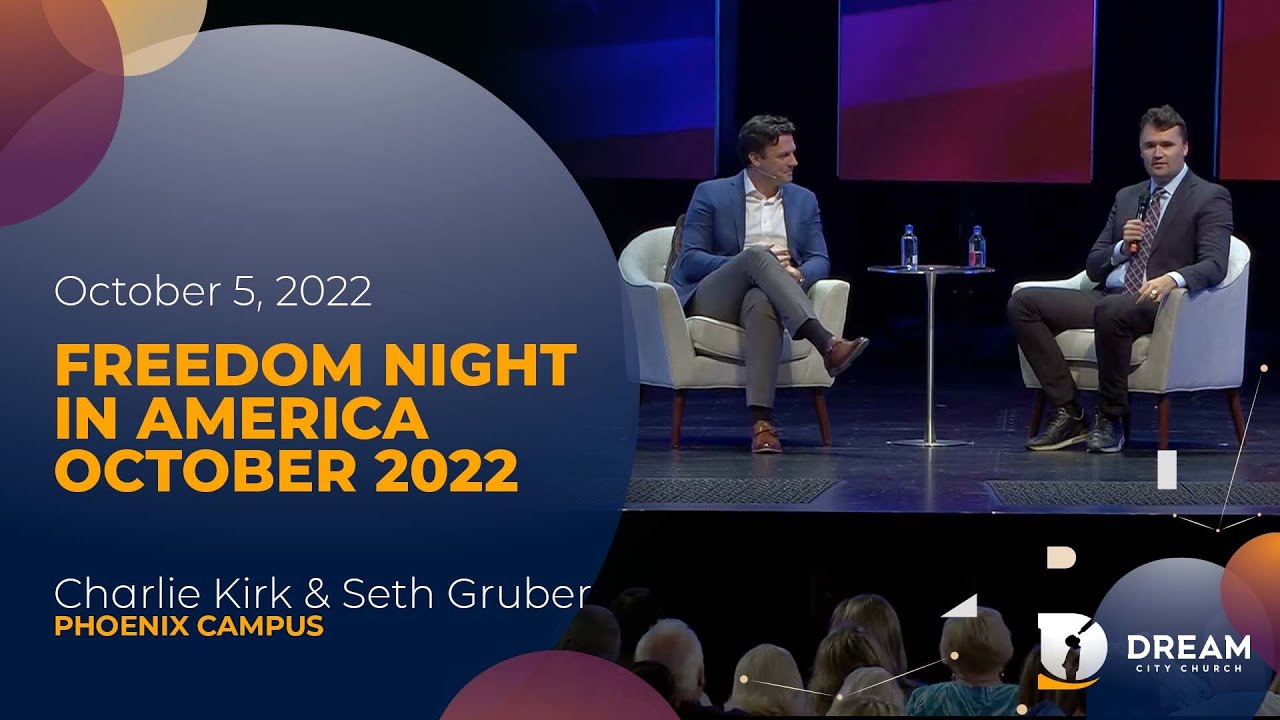
Charlie Kirk is the Founder and President of Turning Point USA, the largest and fastest growing conservative youth activist organization in the country with over 250,000 student members, over 150 full-time staff, and a presence on over 2,000 high school and college campuses nationwide. Charlie is also the Chairman of Students for Trump, which aims to activate one million new college voters on campuses in battleground states in the lead up to the 2020 presidential election. His social media reaches over 100 million people per month and according to Axios, he is one of the "top 10 most engaged" Twitter handles in the world. He is also the host of “The Charlie Kirk Show,” which regularly ranks among the top news shows on Apple podcast charts.
Charlie Kirk Debates Student on Holocaust Versus Abortion: A Moral Philosophy Showdown
Charlie Kirk faces a challenging question from a university student who claims the Holocaust was worse than abortion based on the victims' ability to feel pain. The exchange becomes a deep examination of moral philosophy, human value, and whether worth is determined by development, experience, or something more fundamental. Kirk dismantles arguments rooted in feelings and emotionality, returning repeatedly to Western principles of universal human equality. The student eventually concedes on eugenics but maintains their position on pain as a measure of moral significance. This debate reveals the profound philosophical divide on what makes a human life worthy of protection.
A university student approached Charlie Kirk with a pointed challenge about a statement he had made regarding the Holocaust and abortion. The student recalled Kirk saying that while both are distinct evils, abortion represents a greater magnitude of evil than the Holocaust. Kirk clarified his position: the Holocaust was in some ways far more evil in its intent, but regarding sheer magnitude, the abortion crisis surpasses it.
The student came prepared with research, noting that since Roe v. Wade was ratified in 1973, abortion numbers are simply larger because the practice has continued for a longer period. They argued that if the Holocaust's mass genocide had continued at its rate of approximately 6 million killed per year, it would have progressed to 12 million, then 18 million, but was stopped because it represented totalitarian genocide.
The Pain Argument
The student then introduced what they believed was their strongest argument: the capacity to feel pain. They cited that 93% of abortions occur in the first trimester—approximately 58 million 590,000—and referenced data suggesting that pain receptors may not yet be developed at 12 weeks of gestation. By their calculation, this would mean only 88,200 abortions per year after the first trimester where babies are likely experiencing pain.
In contrast, the student argued that every single person in the Holocaust—approximately 2 million per year—who could feel pain did feel that pain. They concluded that 2 million actual people, including kids and adults who were starved and worked to death, represents a more significant moral tragedy than 88,200 life forms that probably aren't feeling pain.
Kirk's Response: Human Life Has Intrinsic Worth
Kirk's response was immediate and direct: a human life is a human life regardless of how advanced it is or whether it can feel pain. The ability to feel pain doesn't determine moral worth. When the student pressed that Kirk had said abortion was worse, Kirk reiterated it was worse in numbers, while acknowledging the Holocaust was worse for two specific reasons.
First, the Holocaust eliminated such a significant portion of the Jewish population that nearly half of all living Jews were essentially vaporized. Second, there was an intent and evil in trying to eradicate an entire religious people—something that is not unparalleled but has only happened four or five times in history.
Kirk then challenged the student directly: what is the moral difference between a four-week-old baby who may or may not feel pain versus you or me? Why does the student matter more than that four-week-old baby?
The Experience Defense
The student's answer revealed their moral framework: they have past experiences and future experiences, while the baby only has future experiences with no past. They believed they've probably affected and impacted more people in both positive and negative ways than a four-week-old embryo has.
Kirk immediately identified the implication: under this moral worldview, people gain more value the older they get and based on what they've done. This would mean an 82-year-old has more moral value than an 8-year-old. Kirk pointed out that the West was actually built on the opposite idea—that we sacrifice the old for the young. During COVID, however, society inverted this principle, sacrificing the young for the old.
The Down Syndrome Test Case
To test the student's logic, Kirk introduced a real-world scenario: in Iceland, if you have a Down syndrome baby, you must get an abortion. The student immediately agreed this was terrible, but Kirk pressed the contradiction—if abortion doesn't matter that much because it's just a clump of cells, why is mandatory abortion for Down syndrome babies terrible?
The student responded that if it directly impacts the mother's life or baby's life, abortion is important, but the government should never mandate it. They emphasized the pro-choice slogan: your body, your choice. The issue in Iceland, they argued, was that it's entirely left up to the government rather than the individual.
The Sex-Selection Question
Kirk then pushed the logic to another extreme: if a mom finds out she's having a girl but wants a boy at three weeks, should she be able to abort based on sex preference? The student's answer was shocking—yes. When Kirk questioned this, the student doubled down, saying if the baby is going to be born to a mother who doesn't want that gender, the child shouldn't be born to that parent in the first place.
Kirk identified this as eugenics—the same philosophy underlying Nazi ideology. He explained that DNA testing is now advanced enough at 3 to 6 weeks to predict almost everything about a baby: height, average IQ, eye color, likelihood of being overweight, and sex. Under the student's logic, if you get anything you don't like from these tests, you simply invoke "my body my choice" and terminate the pregnancy, treating baby-making like customizing a Ford Explorer.
The student initially tried to defend the position as ethically problematic but consistent with their framework, but Kirk pressed harder: sex-selective abortion is Nazi eugenics philosophy—eliminating those we don't want based on predetermined characteristics.
The First Concession
At this point, the student made their first significant concession, admitting Kirk got them on that one. They acknowledged that upon reflection, you shouldn't be able to kill your baby just because you don't like the gender or other characteristics. Kirk graciously accepted this acknowledgment.
However, the student still maintained that when balancing the numbers, the Holocaust lives were more significant because every single person absolutely had the ability to feel pain, unlike the majority of aborted babies in the first trimester.
The Foundation of Western Morality
Kirk concluded by presenting the foundational principle: in the Western moral worldview, there is no difference between a three-year-old in the audience who has very few friends and might be living on some homestead versus a 30-year-old who is very connected and wealthy. Human value is not determined by connections, wealth, or development.
When the student objected that a baby in utero is "leeching" off the mother's resources and isn't its own being, Kirk pointed out that all babies leech for the first three years of life. His 10-month-old doesn't hunt, gather, or work. The student countered that the baby isn't directly attached to Kirk's body, but Kirk responded that at 22 weeks, a baby can survive apart from the mother.
Kirk reframed "leeching" as "giving"—the mom gives life to the baby through the umbilical cord. From a purely moral standpoint, setting aside religious arguments, we were all given life by a mom who gave us nutrients through an umbilical cord, and we should honor that. This is the moral cycle of life: to whom much is given, much is expected.
The Irrefutable Starting Point
Kirk established the foundational fact that even pro-abortion advocates acknowledge: human development has a starting point, and that starting point is conception. Whether you call it a fetus, embryo, or little one, it's all still a human being. It doesn't transform from one species to another at 10 weeks—it's human development throughout.
Using reason, Kirk argued: if it's human development and it is a human being, then human rights apply. The first of all human rights is the protection of life.
The Final Exchange
The student attempted one more angle about medical testing and parental consent for different age groups, but Kirk brought the conversation back to the fundamental issue. He told the student they have a lot of thinking to do about this, and that's okay because it's not their fault.
Kirk explained that the pro-abortion worldview will collapse if you remove feelings and hyper-emotionality. There is no defense using agreed-upon Western reason and morality—principles like we don't kill people smaller than us, we don't eradicate those with less money or worth, and we believe in universal human equality.
Universal human equality is the overarching Western ideal, enshrined in the Declaration of Independence: all men are created equal. Kirk's conclusion was definitive: if you believe in universal human equality, there is no room for abortion in that society. It simply does not exist within that framework.
The student suggested Kirk also had thinking to do, but Kirk responded that he's thought about this his whole life. After the exchange, Kirk thanked the student and promised to include both their initial answer and their corrected position on eugenics when the video was edited, ensuring fairness in representation.