2,422 videos 1,389,747,653 views US Joined Aug 30, 2018
Charlie Kirk is the Founder and President of Turning Point USA, the largest and fastest growing conservative youth activist organization in the country with over 250,000 student members, over 150 full-time staff, and a presence on over 2,000 high school and college campuses nationwide. Charlie is also the Chairman of Students for Trump, which aims to activate one million new college voters on campuses in battleground states in the lead up to the 2020 presidential election. His social media reaches over 100 million people per month and according to Axios, he is one of the "top 10 most engaged" Twitter handles in the world. He is also the host of “The Charlie Kirk Show,” which regularly ranks among the top news shows on Apple podcast charts.
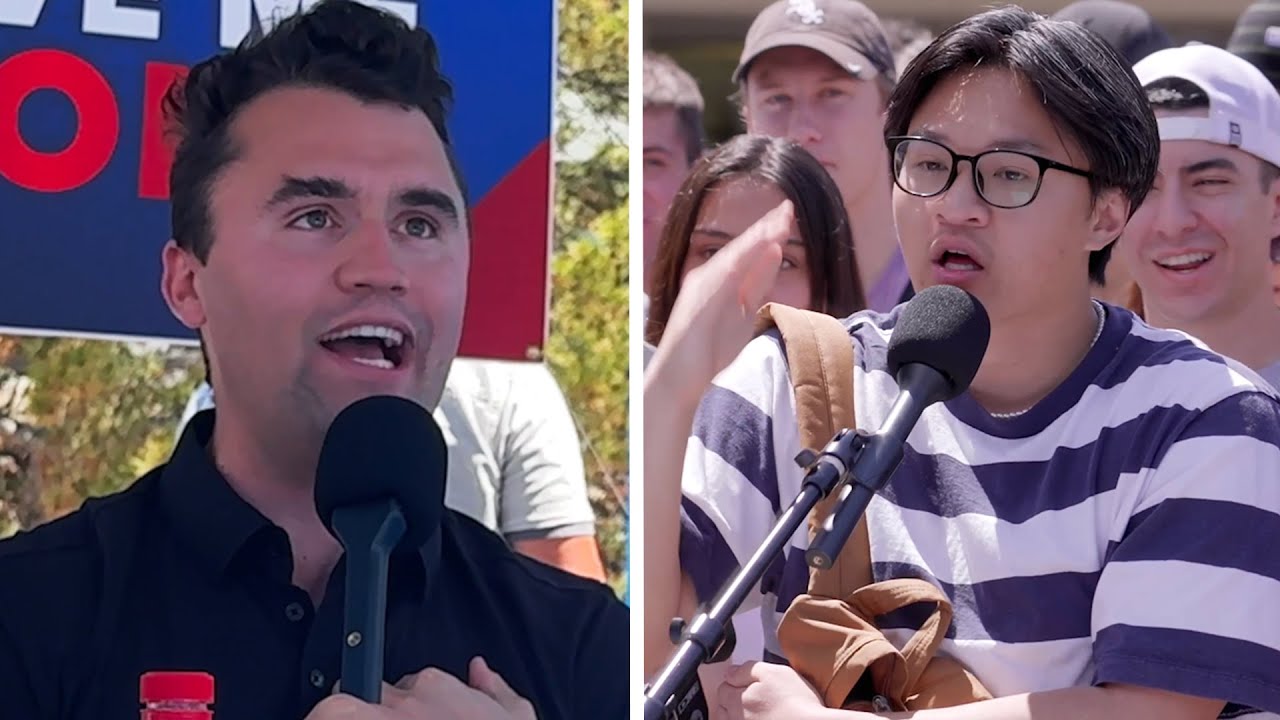
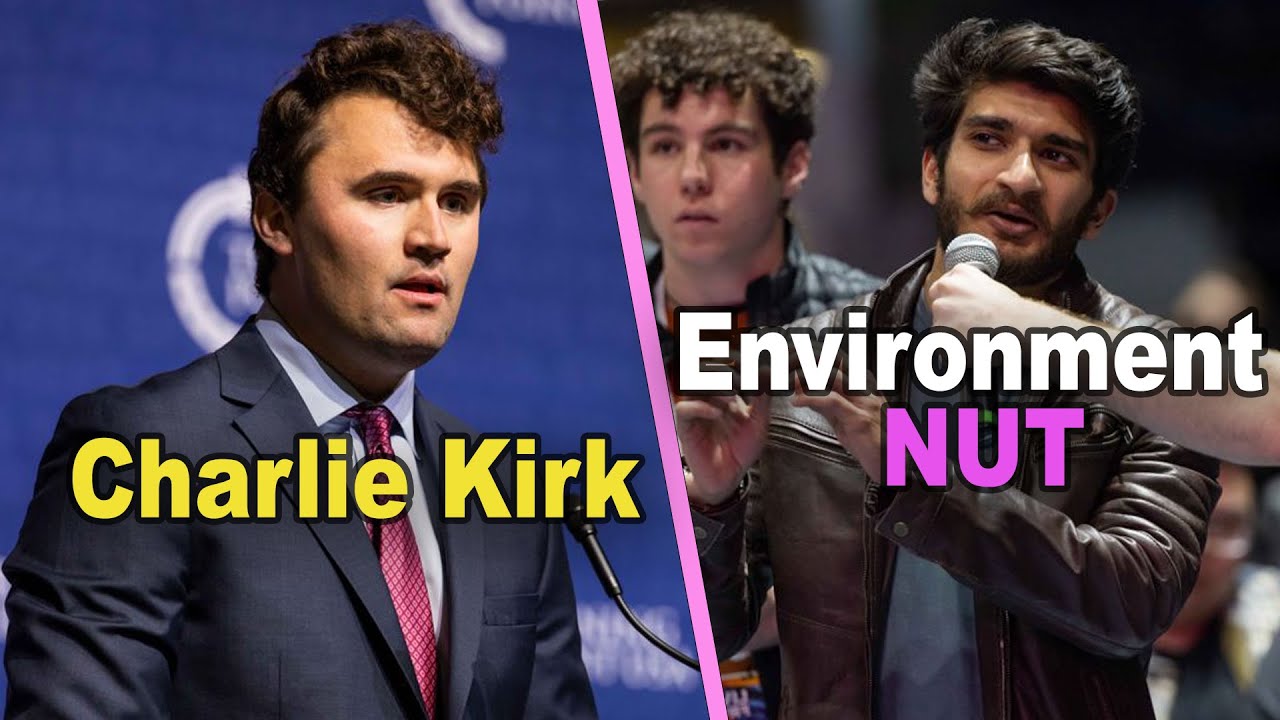
Charlie Kirk Debates Animal Rights, Factory Farming Subsidies and Republican Free Market Principles at University of Wisconsin Madison
Charlie Kirk fields a challenging question about animal rights and government subsidies for animal agriculture at the University of Wisconsin Madison. A student questions whether Republican commitments to personal responsibility, protecting the unborn, and free markets should extend to opposing factory farming subsidies. Kirk argues that while animals deserve humane treatment under Christian principles, humans possess unique moral status due to reason and soul. He critiques current agricultural subsidies not primarily for animal welfare concerns, but because factory farming produces unhealthy meat that harms human consumers.
The Question: Republican Principles and Animal Rights
At the University of Wisconsin Madison, Charlie Kirk received a thought-provoking question connecting Republican principles to animal rights and agricultural policy. A student challenged Kirk on an apparent contradiction: if the Republican Party values personal responsibility, protecting sentient unborn life, and free markets, shouldn't these principles extend to questioning government subsidies for animal agriculture? The student noted that the government subsidizes animal agriculture far more than fruits and vegetables, which both distorts the free market and results in the slaughter of sentient beings.
The Hierarchy of Rights: Human Exceptionalism
Kirk responded by establishing a fundamental distinction between human and animal rights. He began with a simple question: Is an animal a human? When the answer came back negative, he pointed out the logical conclusion—animals therefore do not possess the same rights as humans. While we have certain protections for animals like dogs and cats, Kirk noted, we don't extend First Amendment protections to dogs or give them the right to bear arms. The comparison, he argued, demonstrates that animals and humans operate on different moral planes.
Kirk emphasized that some advocates push the idea that animals and humans exist on the same moral level, though he clarified that wasn't necessarily what the student was arguing. However, he identified a broader movement suggesting we should stop eating meat because it's harmful to animals. Kirk rejected this framework, insisting that policy should prioritize what's best for human beings first and foremost.
Christian Stewardship and Humane Treatment
While maintaining human moral superiority, Kirk acknowledged religious obligations toward animals. As a Christian, he noted, there are clear prohibitions against torture or unnecessary slaughter found in the Noahic Covenant and repeatedly throughout Scripture. Christians must be humane in their treatment of animals, he affirmed. This represents a balance—animals deserve proper treatment without being elevated to human moral status.
The Case for Eating Meat
Kirk made an affirmative case for meat consumption based on human welfare. It's good for human beings to eat meat, he argued, and good for them to have access to animal products. He contrasted this with synthetic alternatives, specifically calling out Bill Gates' efforts to promote fake meat. The implication was clear: natural meat consumption aligns with human flourishing in a way that processed alternatives do not.
Kirk extended this human-centered framework to environmental questions generally. When faced with environmental decisions, he argued, the primary question should always be what's best for the human species—not what's best for trees or snakes. While those considerations have importance, human welfare takes precedence.
The Follow-Up: Negative Rights for Animals
The student pressed further, arguing that while animals obviously shouldn't receive irrelevant rights like voting or driving, they should have basic negative rights—specifically, the right not to be mistreated or killed. The student pointed out that we already have such protections for cats and dogs, along with cruelty laws for farm animals.
Kirk countered with examples of when we do kill dogs: in kill shelters, when they bite their owners, or when they contract rabies. He highlighted the difference in treatment: when a human gets rabies, we treat them; when a dog gets rabies, we typically euthanize the animal. This difference exists, Kirk explained, because we don't treat dogs and cats at the same moral level as humans.
Reason, Soul, and the Speaking Being
Kirk articulated the philosophical foundation for human exceptionalism. Human beings possess a soul and the capacity for reason, giving us the unique ability to make sense of the natural world. Dogs, by contrast, only have senses—they lack reason. A dog cannot recognize that it's a dog, Kirk noted, though he acknowledged some disagreement on this point. Humans are "the speaking beings," possessing rational faculties that fundamentally distinguish us from animals.
While reaffirming that no animal should be mistreated, Kirk pointed out the logical conclusion of the student's argument: if animals cannot be killed, this would eliminate meat consumption entirely. He suggested this position would be quite unpopular at the University of Wisconsin Madison, joking about getting rid of bacon.
Factory Farming Realities
The student escalated the discussion by describing specific practices: pigs killed in gas chambers, male chicks ground up alive in the egg industry because only female hens lay eggs. These practices exist, the student argued, because we view animals as lacking sufficient rights to protect their lives. The student clarified that the argument was for rights relevant to animals, not irrelevant ones.
The student then posed a hypothetical: if Kirk were a dictator, would he ban killing pigs? Kirk declined to take that position, stating he would leave such decisions to the free market.
Common Ground: Opposition to Agricultural Subsidies
Interestingly, Kirk and the student found agreement on agricultural subsidies, though for different reasons. Kirk acknowledged that factory farming has significant problems, but he framed these primarily in terms of human health rather than animal welfare. Factory-farmed meat is simply not as good for the humans who consume it, he explained.
When the student pressed whether the Republican Party, committed to free markets, should be directing billions of dollars toward subsidies for animal agriculture, Kirk agreed with the critique. He stated he's not a huge fan of subsidies for things that make people fat and unhealthy.
The student asked directly: if Kirk were in a voting position as an elected leader, would he vote against such subsidies, and should Republicans do the same? Kirk confirmed that while he's not in a voting position, he would advocate against most current agricultural subsidies.
The Exchange's Significance
This exchange demonstrated how questions of animal welfare, free market economics, and human-centered ethics intersect in contemporary political debate. While Kirk and the student approached the issue from different moral frameworks—one centered on human exceptionalism and welfare, the other on extending protections to sentient animals—they arrived at similar policy conclusions regarding government subsidies for factory farming.
The conversation revealed that opposition to agricultural subsidies can unite those with very different underlying philosophical commitments, creating potential coalition-building opportunities on specific policy questions even when fundamental values diverge.